My Name Ain’t Suzie (花街時代, Angie Chen, 1985)

Angie Chen’s response to The World of Suzie Wong, My Name Ain’t Suzie (花街時代) opens in the present day with its heroine apparently a gothic mystery, a Miss Havisham-style recluse and ghost of old Hong Kong trapped within the apartment of a legendary madam from old Shanghai. This conception of her turns out to be something of a myth in itself, as accidental witness to history Dick recounts to a young man working as a delivery boy (Jacky Yeung Tak-Ngai) for his ever evolving chip shop that she is actually still a wildly successful restauranteur and fixture in the local nightclub scene. 

This small enclave of Wan Chai, however, seems to have become a kind of ghost town having been largely abandoned as the American sailors who were once its main clientele stopped coming after the twin waves of the Korean and Vietnam Wars. Shui Mei (Pat Ha Man-Jik) now owns this block which signals her eventual mastery over the world in which she lives, if also her loneliness and isolation, occasionally staying in Miss Xiao’s (Angela Yu Chien) old apartment as if unable to let go of the irresolvable past. Her story is then, at least in part, a chronicle of the nation’s own post-war history as she successfully adapts to the times, yet retains a sense of melancholy nostalgia for an older Hong Kong which is fast disappearing as the Handover looms closer.

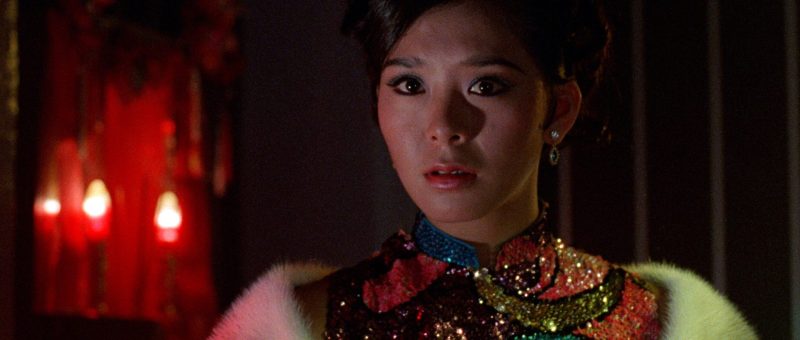
Indeed, Shui Mei’s life begins in an impoverished fishing village which is set a stir by the return of Monroe, a seemingly glamorous woman dressed in the latest fashions and handing out sticks of gum to the awestruck locals. Sex work is seen as a pathway out of poverty and towards the new modern society that Monroe represents. Having been raped by three local boys, it is also in a way Shui Mei’s means of rejecting her victimisation and asserting full ownership over her body even if, in other ways, she is exploited by brothel owner Miss Xiao, herself an exile who fled to Hong Kong from the formerly glamorous and sophisticated international centre that was Shanghai.

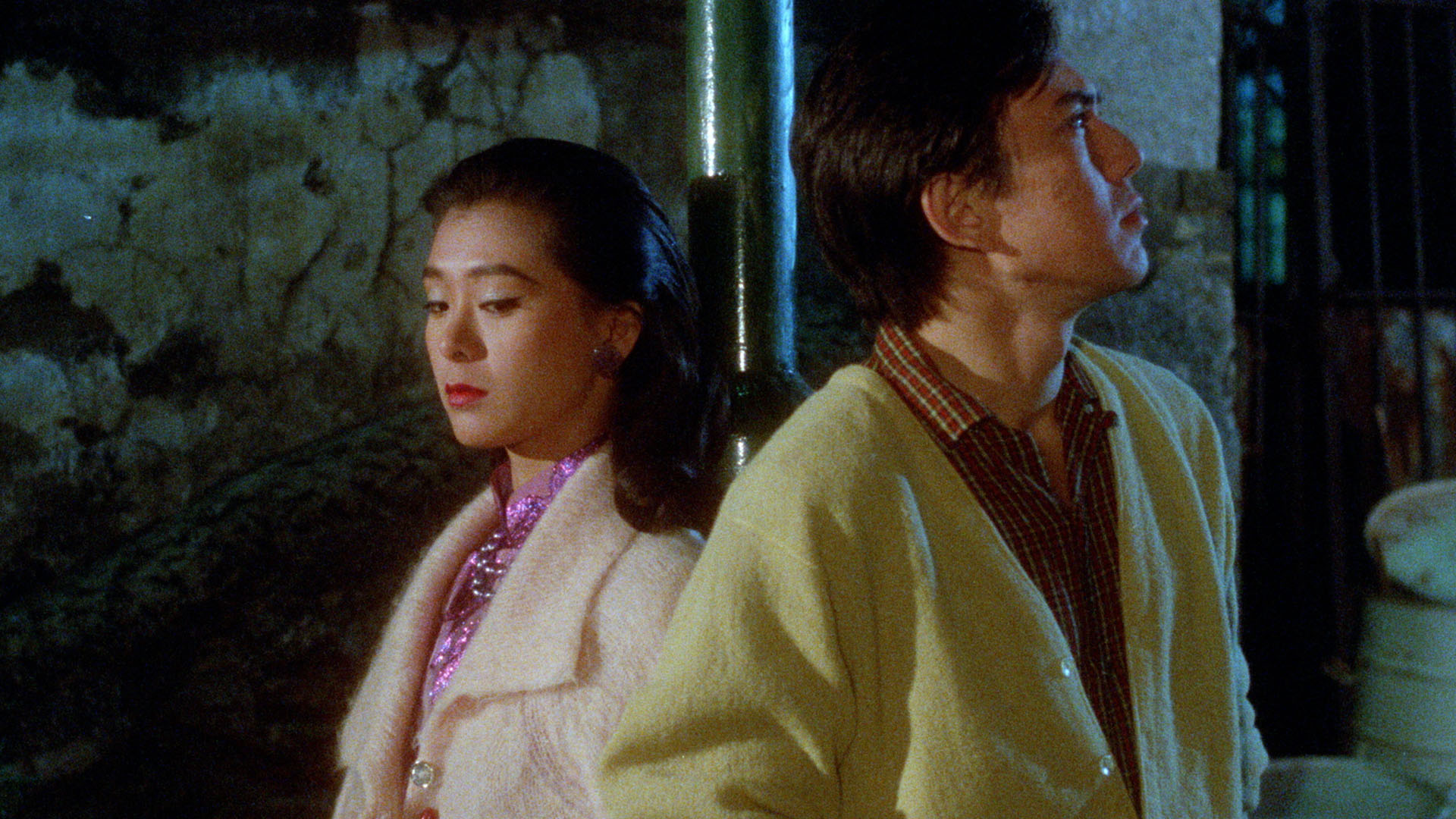
While working as a bar girl in Wan Chai, Shui Mei falls for Miss Xiao’s adopted son, Jimmy, on whom she has a quasi-incestuous fixation. Rather than casting an actor already under contract to Shaw Brothers, Chen cast a then unknown Anthony Wong, billed under the name Anthony Perry, through extensive auditions largely for the similarities he shared with the role. Like Jimmy, Wong was abandoned as a small child by his father, a British colonial official who already had a wife and children in the UK with whom he later emigrated to Australia. Jimmy’s idolisation of Hollywood icon James Dean and desperate search for his biological father, an American seaman, are symbolic of the search for cultural identity in a Hong Kong caught between a series of colonial influences while denied the kind of mastery over itself that Shui Mei eventually achieves.

Shui Mei’s relationship with Jimmy causes a rift with Miss Xiao that leads to her exile from Wan Chai, though Jimmy proves to be a faithless lover. After years of boasting of the revenge he’ll take for his mother’s suicide when he finds his father, Jimmy is seduced by promises of American wealth and comfort and accepts his invitation to return with him to the US, callously abandoning Shui Mei. Years later, when he returns with his two young sons, he has become in some ways very much Americanised. He complains that his first wife lacked a strong work ethic while having adopted an orientalist idea of the submissive hometown wife who will work hard in his business and raise his children. Though still resentful over her abandonment, Shui Mei harbours a lingering desire to rekindle the romance of her youth only to be cruelly disillusioned. Jimmy has forgotten her. He has not come back for Shui Mei, but is clearly in the market for a much younger woman, eventually marrying one of Shui Mei’s proteges at the bar she has opened in another part of the city after saving money made through temporarily working as a streetwalker.

This does, however, reinforce the idea that Shui Mei cannot rely on a man to save her but only on herself and female solidarity. When her new bar is targeted by triads, she enters a partnership with Sister Ying (Deanie Ip Tak-Han), the former wife of a gang boss who has pull in the underworld and a habit of chasing off gangsters with meat cleavers. Though the relationship is heavily implied as both a romantic and business partnership of equals, Shui Mei does not quite accept its validity due its same sex nature and wonders if she can really stay with Ying forever while tempted by the prospect of a more conventional, heterosexual union with Jimmy along with an easy life in America having run herself ragged creating a business empire and suffering the physical affects of a violent triad attack.

Though the end of her story may seem sad, Dick explains to his young delivery boy that Shui Mei refused to be beaten and got back up again each time she was knocked down, which perhaps provides a more positive prognosis in the shadow of the Handover. In one sense, she may have become a ghost of old Hong Kong as her silhouette now appears at Miss Xiao’s window, but may otherwise have avoided her fate. Despite their falling-out, an ageing Shui Mei returned to care for Miss Xiao who unlike her had been left behind by changing times, abandoned by all including her adopted son Jimmy who returns only after her death following many years of estrangement. Though Shui Mei may be consumed by an irresolvable nostalgia, like the nation itself she has progressed from her life in the impoverished fishing village to become an economic powerhouse while achieving total mastery over herself as an independent woman.


My Name Ain’t Suzie screened as part of Hong Kong Film Fest UK.

Trailer (English subtitles)

The Wild, Wild Rose (野玫瑰之戀, Wong Tin-lam, 1960)

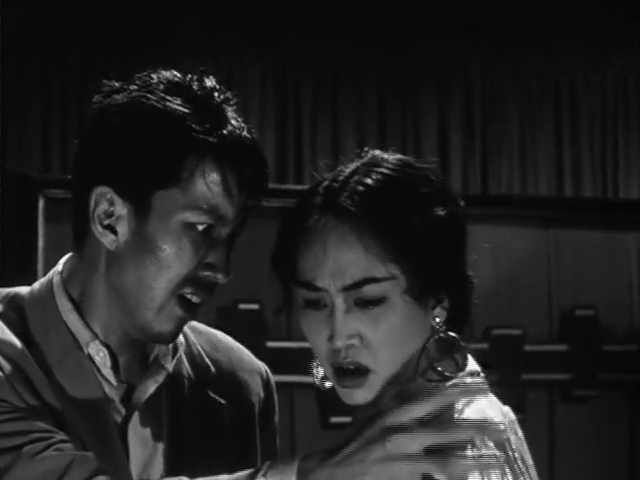
A free-spirited nightclub singer’s dreams of love are shattered by fragile masculinity and an unforgiving society in Wong Tin-lam’s take on the classic opera Carmen, The Wild, Wild Rose (野玫瑰之戀, yě méiguī zhī liàn). Where similar films of the era may paint the heroine’s plight as punishment for her subversion of societal norms, Wong’s musical noir implies that perhaps she was too good, too pure-hearted for the increasingly selfish and judgemental society around her while the man she loves is simply too weak to accept her transgressive femininity. 

It’s with the man, Hanhua (Chang Yang), that we first enter the world of the EW Ritz cabaret bar. An “elite” English graduate, Hanhua has fallen on hard times and unable to find teaching work has been forced to take a job he sees as sordid and degrading as a pianist in a nightclub. He and his teacher fiancée Suxin (So Fung), literally the girl next-door, joke about it outside, Hanhua asking her if she’s worried about all the “pretty bad women” in such establishments and pointing at his engagement ring as an amulet of protection against predatory femme fatales. Once inside, however, he’s instantly captivated by the alluring singer, Sijia (Grace Chang), who nevertheless takes against Hanhua because unbeknownst to him he’s displacing her regular piano player, Old Wang (Lui Tat), who’s being let go by the greedy boss for showing up late because his wife is seriously ill. 

Unable to accept such callous behaviour, Sijia tries to use her position to speak up on Wang’s behalf and almost loses her own job in the process while irritating her stage rival and the boss’ squeeze Meimei (Shen Yun). While Meimei sings a quiet romantic ballad on the dance floor, Sijia embarks on a crowd-pleasing, gender-bending routine in the bar which proves both that she is the star in this establishment and that she can bend the crowd to her will turning them on whoever she sees fit. After a fight breaks out, Hanhua finds himself physically restraining Sijia to prevent her from stabbing Meimei with an icepick. Though this originally annoys her, Sijia is quite clearly turned on watching Hanhua fight off all of the other men who rose up to defend her honour. Once he is wounded, she again asserts her authority by calling them off and proceeding to flirt with Hanhua who leaves with Suxin vowing never to return. 

But as Old Wang had said, it’s tough to find a job these days and faced with his mother’s excitement about his new career prospects Hanhua has no choice but continue working at the Ritz. We can perhaps tell something of Hanhua’s background from the interior of his home which though modest has a large classical portrait on one wall and is otherwise neat and well organised. He evidently envisaged a conventional middle-class life for himself and is humiliated to have been reduced to a mere piano player in a backstreet bar, the kind of place that he sees as sordid and dangerous and would not ordinarily think of himself visiting. He sees Sijia in much the same way but perhaps stops short of admitting her danger, refusing to look at her or only with contempt while furiously denying his barely controlled desires of the kind which were perhaps unleashed by the fight at the bar. 

Yet all the qualities which attract her to him are the ones he eventually wants to destroy in her rebellious goodness and refusal to follow the unjust rules of her society. She tells him point blank not only in her song but repeatedly to his face that she is a fickle woman who believes there are no good men and is essentially in this only for a good time for as long as it lasts. In fact, her interest in him largely stemmed from a bet with a guy at the bar that she couldn’t seduce him in 10 days, stung by his rough rejection of her after the fight. But Hanhua is too conventional a man to understand or accept her. He gives in to his desires after discovering that she slept with a rich man only to get the money for a life saving operation for Old Wang’s wife, witnessing her self-sacrificing goodness and therefore deciding that she is “worthy” of him after all. Ultimately he expects her to play the role of a conventional housewife, refusing to allow her to continue singing in nightclubs even while he is unable to find another job having served time in prison for bludgeoning her abusive ex. His fragile masculinity had also caused him to blow up at Suxin when she went to the headmaster at her school and asked him to give Hanhua a less degrading job, humiliated to have a woman beg for him just he is humiliated to be supported by Sijia and especially by her doing a job he thinks is somehow improper. 

It is not Sijia who ruins Hanhua, but Hanhua himself and the toxicity of conventional social codes that feed into his sense of resentment. His obsessive desire to possess Sijia, to dominate and tame her, drives him to drink and uselessness to the point he completely degrades himself, pathetically pleading with Sijia not to leave, prepared to allow her to return to work or even take other lovers if only she does not abandon him. Sijia meanwhile is in a sense tamed by her love for Hanhua in that she decides that love is sacrifice, that she must live a more conventionally proper life as Hanhua’s wife and eventually that she must separate from him in order to preserve his future. In this she is redeemed in the eyes of Suxin and Hanhua’s mother who realise that she is a good woman who genuinely cared for Hanhua, but is finally done in by her goodness. Her morality cares nothing for properness and all for humanity, her kindness to Old Wang and her best friend eventually repaid while all Hanhua can think of is a redemption of his masculinity through violence driven just like Don José to the peak of madness in obsessive love. But there’s more than just inevitable tragedy in Sijia’s fate, there is a deep sense of injustice and that Hanhua’s actions were as much about stifling her transgressive goodness as they were about vindicating himself as a man which in any case is only pathetic in its unrighteousness. Masterful in its musicality, Wong’s romantic noir positions its heroine as dangerous but only because she is better than the world around her and the world around her knows but does not want to see. 


The Wild, Wild Rose screens in Amsterdam on 27th/29th/31st October as part of this year’s Imagine Fantastic Film Festival.

Moon Warriors (戰神傳說, Sammo Hung, 1992)

“In fact, some stories are true. Especially the heartbreaking ones” according to a melancholy fisherman in Sammo Hung’s tragic wuxia romance, Moon Warriors (戰神傳說). Arriving in the middle of a fantasy martial arts boom, Moon Warriors boasts some of the biggest stars of the day in a beautifully composed tale of intrigue and derring-do as well as featuring an A-list creative team with such high profile talent as Mabel Cheung, Alex Law, Ching Siu-Tung, and Corey Yuen also involved in the production. 

Somewhere in feudal China, 13th Prince Shih-san (Kenny Bee) is on the run after being usurped by his evil brother, the predictably named 14th Prince (Kelvin Wong Siu) who burnt down his castle and has been following him throughout the land razing villages wherever he goes. Accompanied by trusty bodyguard Merlin (Maggie Cheung Man-Yuk) who is silently in love with him, Shih-san is desperate to get in touch with the Lord of Langling (Chang Yu), also the father of his betrothed princess Moony (Anita Mui Yim-Fong), in the hope of uniting their forces to retake the country together. Meanwhile, goodhearted yet eccentric fisherman Philip (Andy Lau Tak-Wah) is doing a spot of hunting in a bamboo grove during which he notices Shih-san and the others wading into a trap and leaps to the rescue, helping to despatch the black-clad assassins. As Shih-san is badly injured, he takes them back to his cheerfully idyllic village, serves them the local delicacy of spicy shark fin soup, and generally befriends them before 14th Prince’s goons track them all down again at which point he takes them to his secret hideout which turns out to be an ancient temple dedicated to Shih-san’s emperor ancestors. 

We find out just how evil 14th Prince is when he gets his minions to kill all of Moony’s ladies-in-waiting and dress up in their clothes to mount a sneak attack on the Langling estate while holding on to the pretty kites Moony was flying before the gang arrived. Though petulantly flying kites seems like quite a childish activity for a princess about to be married off, Moony more than holds her own in the fight even if finding it difficult to deal with having killed someone for the first time. Sent to protect her, Philip is less than sympathetic, but after a few arguments, a near death experience, and some magic glitter, the pair begin to fall in love, which is a problem because Moony is betrothed to Shih-san. 

What develops is a complicated love square in which Merlin pines for Shih-san who seems more interested in Philip, while Philip repeatedly tries to leave the group because of his conflicted loyalties and a feeling of inferiority as a peasant suddenly mixed up in imperial intrigue and forbidden romance. Moony tries to give him her half of a precious jade talisman which plays beautiful music, but her melancholy suggestion that it will sound better with his flute than with the other half which is held by Shih-san flies right over his head. Shih-san, meanwhile, who was spying on them talking, suddenly decides to give him his half too, leaving Philip holding the whole thing. Merlin, as it turns out, has a series of interior conflicts of her own that leave her resentful of just about everyone except Shih-san. 

Eventually, however, nowhere is safe from the destructive effects of political instability and Philip’s fishing village is soon a target for the vicious 14th Prince, ensuring he enters the fight with the help of his improbable best friend, a killer whale named “Sea-Wayne”. Before the romantic dilemmas can be resolved, the courtly intrigue collapses in on itself, fostering an accidental revolution in the literal implosion of an old order, suddenly becoming dust as in some long forgotten prophecy. In a strange moment of flirtatious smalltalk, Philip had remarked that legend has it the flowers in these fields are only so beautiful because they grow on top of bodies buried far below, something he later discovers to be more than just a fanciful story. 

There might be something in the tragic tale of two branches of elites destroying each other in order to take control of a disputed territory while the ordinary man is left behind alone to reflect on the fall of empires, but perhaps that’s a reading too far in a melancholy wuxia of 1992 and its unexpectedly gloomy ending in which true feelings are spoken only when all hope is lost. Nevertheless, with all of its high octane fight scenes, painful stories of romance frustrated by the oppressions of feudalism, and surreal killer whale action, Moon Warriors is a strangely poetic affair as doomed love meets its end in political strife.


Trailer (no subtitles)