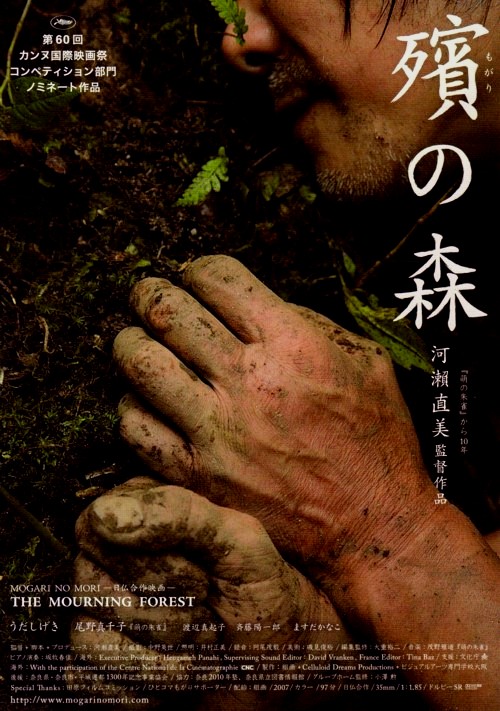
The Mourning Forest (殯の森, Naomi Kawase, 2007)

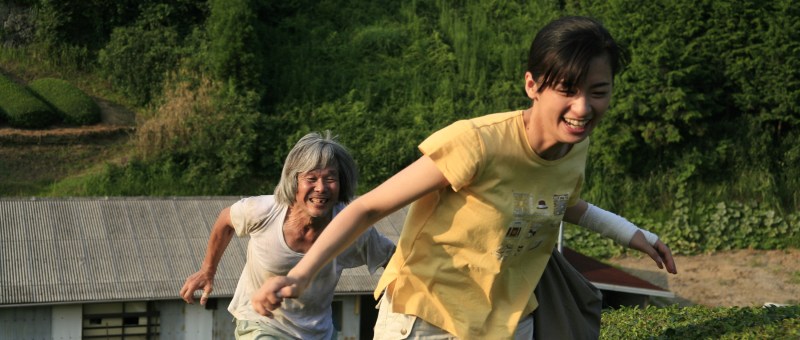
“There are no set rules,” according to the reassuringly steadfast head of a rural nursing home in Naomi Kawase’s The Mourning Forest (殯の森, Mogari no Mori). Uttering the phrase several times in many different contexts, the words prove truer than they first seem, eventually reassuring the grief-stricken heroine that there is no right way to feel or correct way to mourn, simply a gentle process of accommodation. An unexpected Palme d’Or winner, Kawase’s fourth feature sees her shifting into a more familiar arthouse register yet maintaining her trademark style as two lost souls, one old and one young, search for the “end of mourning” in the beauty of nature. 

The young one, Machiko (Machiko Ono), is a recently bereaved mother who has just taken a job at a local nursing home. We never find out exactly how her son died, in fact we only infer he did from the photo and incense on Machiko’s makeshift altar, but a later conversation with her presumed husband encourages us to assume that she blames herself for his death. Consequently, she perhaps recognises something in the dead-eyed vacancy of one of the home’s residents, Shigeki (Shigeki Uda), who crosses out the middle character, meaning 1000, in her name to make it read the same as his late wife Mako’s. Mako (Kanako Masuda) died 33 years previously, which according to the Buddhist priest visiting the facility means that her spirit will soon be leaving this plane for good, transitioning to the other world to become a Buddha.  

Something in Shigeki, whose name literally means “stimulation” though it is in fact the actor’s own, is awakened by the priest’s pronouncement, encouraging him to embark on a long-delayed journey. The priest too had been responsible for the initial connection between the two grieving souls, giving a perhaps insensitive lecture on the difference between living and existing which lies apparently in the ability to feel alive, something which neither of them perhaps do. For unclear reasons, Machiko agrees to travel with Shigeki to look for his wife’s grave, deep in the forest. Unfortunately they get into an accident on the way and while Machiko goes to look for help, Shigeki wanders off with the consequence that the pair of them eventually end up lost in the woods. 

“I was lost but now I’m here,” Shigeki finally explains, fighting his way through what was assumed to be dementia in his quest to say goodbye to his late wife for good before her soul leaves this world. The pair traverse somewhat difficult terrain, culminating in a painful episode in which Machiko begs the older man not to cross a wild river as if he were determined to cross the styx, or then again perhaps there is another explanation for the rawness of her distress. “We’re alive” they exclaim as they warm themselves by an elemental fire, settling the priest’s question once and for all as they press on in search of a grave and each of making peace with the past. 

As Wakako (Makiko Watanabe) had said, there are no set rules for mourning. Shigeki lived with his grief for 33 years and only found the courage to face it in the knowledge that there was no more time. Yet he reassures Machiko that “the water of the river which flows constantly never returns to its source”. In travelling with Shigeki, Machiko too begins to reckon with her grief, finding a kind of release in his catharsis and witnessing the proof of his long years of devotion suddenly given new purpose. She too is able to lay her mourning to rest in the natural beauty of the verdant forest.

Beautifully capturing the majesty of nature, Kawase shifts away from her trademark style swapping anarchic handheld for stateliness in the stillness of Machiko’s grief while quietly observing the ordinariness of the nursing home even as one resident relates her own grief in having lost a child. Filled with a deep sadness in its melancholy meditation on love, death, loss, and grief, The Mourning Forest is nevertheless a strangely uplifting, elegiac experience in which an old man and young woman find strength in their shared connection as they journey together towards the end of mourning and, perhaps, a rebirth in making at least a kind of peace with their grief and their longing.


Original trailer (English subtitles)
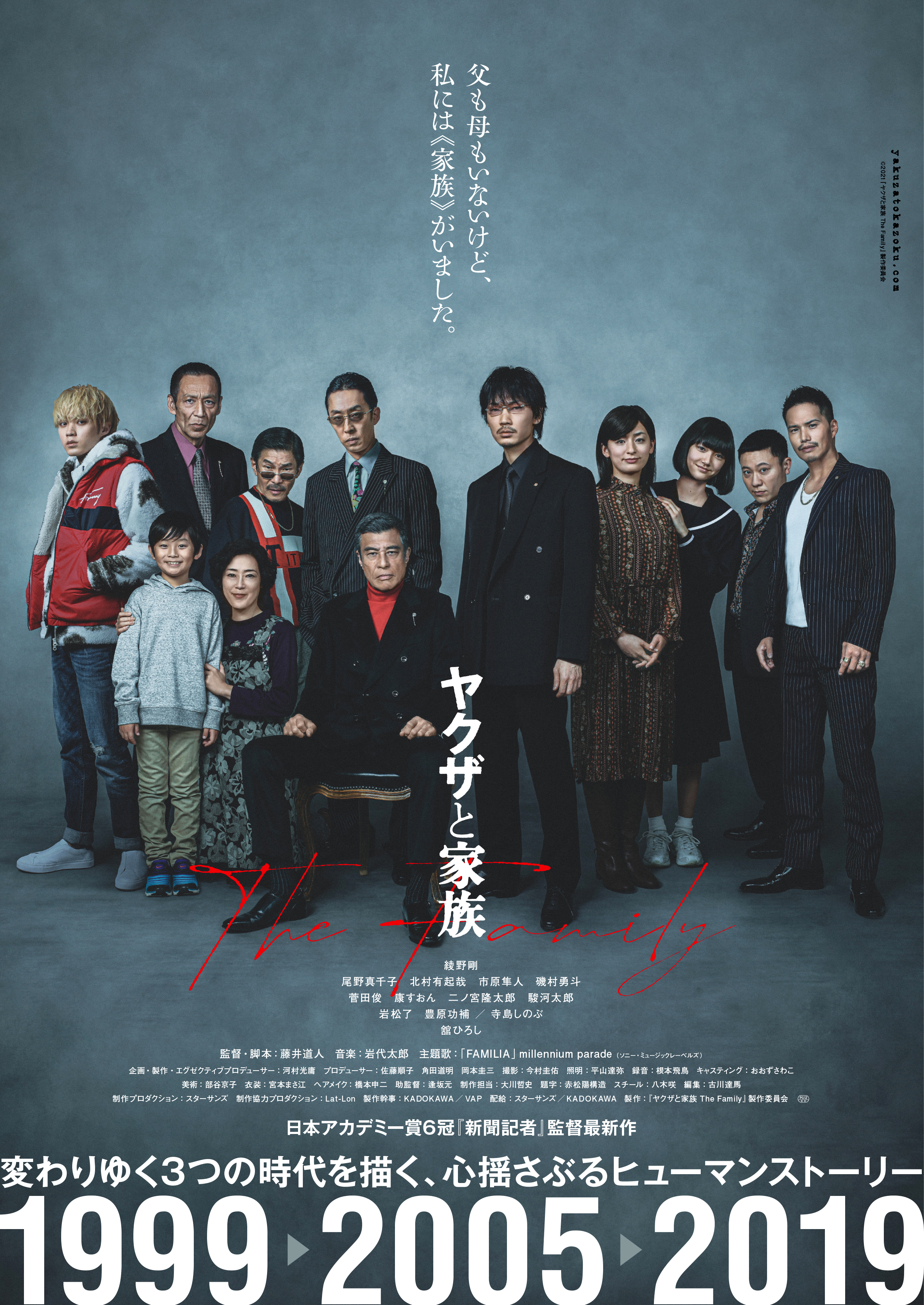
A Family (ヤクザと家族 The Family, Michihito Fujii, 2020)

“No one can survive as a yakuza in this world” according to another orphaned son playing the long game of a crime adjacent existence in Michihito Fujii’s melancholy gangster drama, A Family (ヤクザと家族 The Family, Yakuza to Kazoku The Family). The yakuza, or at least yakuza in the movies, has long been a relic of the Showa era rendered increasingly irrelevant in a society no longer in need of its dubious claims of protection. In truth, it’s hard to mourn the passing of organised crime, but Fujii at least finds a kind of pathos and infinite sympathy for these men for whom the gangster brotherhood took the place of a family even if one with a self-destructive legacy. 

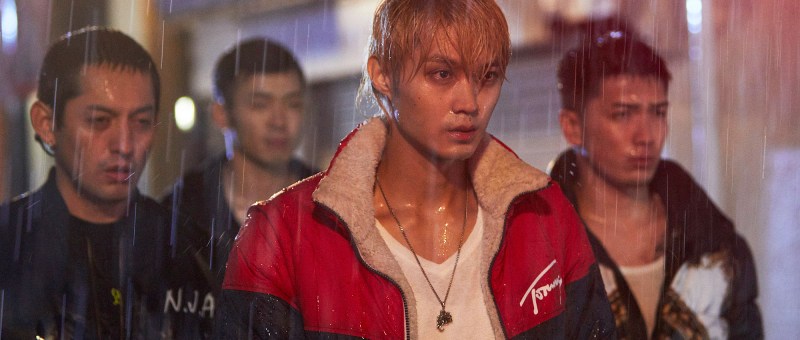
To begin with, petty street punk “Li’l Ken” (Go Ayano) wants nothing to do with the yakuza, seemingly the only guest at the funeral of the drug dealer father he resented other than a corrupt cop from the organised crime squad, Osako (Ryo Iwamatsu), who expresses regret that had he simply arrested him perhaps Ken’s father would be still be alive. Visiting another “familial” environment, a Korean barbecue run by the maternal Aiko (Shinobu Terajima) herself the widow of a gangster currently with a baby on her back, Ken gets himself noticed by local mobster Shibasaki (Hiroshi Tachi) by taking on some punks who stormed into the restaurant and attacked his guys. Explaining that his guys don’t associate with drugs, Shibasaki offers him a job which he refuses but having his card in his pocket literally saves his life when he’s pickup by rival gang leader Kato (Kosuke Toyohara) after having stolen and then destroyed some of their stash after stumbling across a drug deal. The course of Ken’s life is set, he joins the Shibasaki gang along with his two delinquent friends and accepts Shibasaki as his “oyabun” or “father”. 

In Shibasaki, Ken finds a father figure more palatable than the one he lost. As in many a yakuza movie, the Shibasaki clan is positioned as “good yakuza” of the old school kind who believe in things like duty and honour and are apparently pursuing the path towards becoming “true men”. The rival Kyoyo, by contrast, are “bad” new yakuza who no longer play by the old rules and make their money through destructive vices such as drugs. The expected turf war does exactly materialise though the uneasy truce between the rival gangs becomes increasingly strained as the economic situation of millennial Japan begins to shift, the local town council apparently set on demolishing the red light district as part of their plans for redeveloping the city. Kyoyo would rather take over its entirety, pushing Shibasaki to retreat in exchange for a small amount of monetary compensation while shady cop Osako tries to play the situation to his own advantage. 

Yet it’s also clear that the yakuza as an institution is on its way out. After a 14-year prison term, Ken emerges into a very different world in which organised crime has been hounded further into the margins thanks to effective, though the film would also argue inherently vindictive, legislation. No one can make any money anymore, and the slightest slip up can lead to arrest. The Shibasaki gang is now a handful of old men, most of the guys having moved on only moving on from the yakuza life is not easy as Ken’s old friend Hosono (Hayato Ichihara) explains. In order to rejoin regular society, a former yakuza must endure five years in the wilderness unable to open a bank account or get a regular job leaving them with few possibilities for basic survival that enable them to leave a life of crime. Now with a young daughter and job in waste disposal, Hosono is nervous and reticent, reluctant to be seen in public with Ken lest he be tarred with the criminal brush and lose access to the new life he’s managed to build for himself as a responsible husband and father. 

Urged by Shibasaki, Ken eventually leaves one family for another in reuniting with a woman he loved before prison who has since made a respectable life for herself as a low level civil servant but once his life of crime is exposed by a thoughtless colleague at his new job in deconstruction, he discovers that there is no place for a “reformed” yakuza in the contemporary society because in a sense there can be no such thing. Once gangster always a gangster, there is no path forward. Complaining that Osako has stolen his right to life, Ken is told only that the yakuza lost human rights long ago. 

“They’re my family. No reasons are needed” Ken replied when asked why he became a yakuza, but he continues to find himself torn between the various concepts of family and the inheritances of his two very different father figures. “Your time is over old man”, Aiko’s fatherless son Tsubasa (Hayato Isomura) tells an unrepentant Kato attempting to hang on to his territory in the face of a younger generation operating on an entirely different level, rejecting the codification of gangsterdom but seemingly embracing its romance. Tsubasa too is later sucked in by the hyper masculine revenge drama of the yakuza way, seeking vengeance for the death of his father and apparently prepared to ruin his life in order to gain it. It’s for this surrogate son, now a kind of father figure himself, that Ken will eventually make a sacrifice. A sad tale of dubious paternal legacies, frustrated fatherhood, life’s persistent unfairness, and a perhaps uncomfortable lament for a bygone Japan defined by giri/ninjo conflict ruled by manly men, the ironically titled A Family has only sympathy for those trapped by an inescapable spiral of manly violence but also reserves its respect for those who know their time has passed and elect to end the cycle in order to set their “sons” free. 


Original trailer (no subtitles)

DitO (Takashi Yuki, 2024)

A defeated boxer and absent father rediscovers the will to fight after an unexpected reunion with the daughter he abandoned to chase his dreams in Takashi Yuki’s Philippines-set sporting drama DitO. The title translates simply as “here” which is what Eiji (Takashi Yuki) and those around him eventually accept themselves as being, striving to create a place for themselves to belong rather than fruitlessly searching for one and finding themselves denied.

A contrast is eventually drawn between Eiji, an ageing boxer who remained in the Philippines when his wife (Machiko Ono) and child returned to Japan, and Joshua, a 17-year-old aspiring boxer and surrogate son figure whose boxing dreams are suddenly dashed by unexpected defeat and the death of his father from a long illness. Faced with these two blows, Joshua declares that he’s going to choose his family in giving up boxing to look after his younger siblings in direct contrast to the choice Eiji made to let his family leave him so that he could continue chasing a boxing glory he never achieved. 

When his now 17-year-old daughter Momoko (Momoko Tanabe) shows up out of the blue and tells him her mother has passed away, he’s a defeated figure still nagging his kindly boss Tamagon to set him up with a fight though having apparently fallen out with his coach some years previously. Her father’s living conditions evidently come as a shock to Momoko as she winds her way through the narrow alleyways of a local slum towards a small courtyard where Eiji lives in a home stewn with cardboard boxes that has no functional gas supply or other cooking facilities. In her youth, she’d seen him as a hero who keeps fighting no matter what, but here he’s clearly given up and is far from the saviour she hoped he’d be after travelling all the way from Japan where she believes she has nothing and no one to go back to. 

Meanwhile, as he reminds her the Philippines is not Japan and she finds it difficult to adjust to an environment that much less safe at least for women as her father cautions her not to go walking around alone and especially at night. Tamagon and coach Sese also paradoxically remind them that they shouldn’t trust Japanese people after the pair are scammed by an offer of an apartment which in truth seemed far too good to be true by a pair of Japanese expats apparently expressly targeting their fellow countrymen. Yet as she said, everything she has left in the world is “here” and so Momoko too decides to forge her own future in the Philippines rather than go looking for one if while also recapturing the past of her happy childhood memories from when they all lived together as a family. 

As Sese says, Eiji’s internal battle has narrowed his vision of the world and cost him the will to fight must as Joshua says that in understanding his fear he has lost the desire to fight it in the anxiety that he may lose. What they learn is that they must stand and fight for what they want, never giving in win or lose, though they will always have the familial solidarity of the boxing gym whatever else may happen to them. Essentially a family drama, the film is in part a tale of father and daughter learning to reconnect but also of the importance of making an active choice to “here” rather than passively existing in a place not of your own choosing. 

Momoko’s decision to clean her father’s long neglected house is not only a symbol of her desire to lighten his life and jolt him out of his inertia, but of a determination to make a home for herself and maybe even get the gas turned back on so she can use the kitchen. Nevertheless, it’s also clear that “here” is wherever you are and the thing is to embrace the now or change it and fight for your place to belong rather than let it beat the spirit out of you. In the end being a hero really just means staying in the fight with no fear of losing because you know you won’t stop fighting.


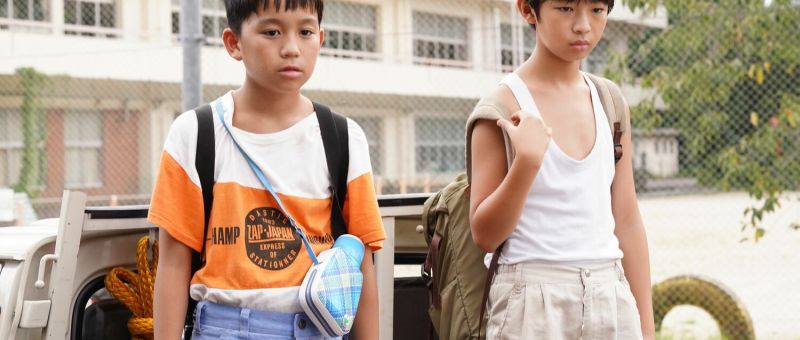
Sabakan (サバカン SABAKAN, Tomoki Kanazawa, 2022)

A melancholy middle-aged writer looks back to a climactic summer of his youth and the ghost of fractured friendship in Tomoki Kanazawa’s heartwarming nostalgia fest, Sabakan (サバカン SABAKAN). A classic summer adventure movie, the film finds a sense of warmth in childhood memory but also reflects on all that at the time it was impossible to understand along with a sadness in the inevitable end of summer as two boys chase the spectre of dolphins in an otherwise tranquil seaside town.

In the present day, Takaaki (Tsuyoshi Kusanagi) is a struggling author and divorced father already behind on his child support. When he mentions working on another novel, his agent laughs at him that books like that don’t sell while trying to convince him to take a job ghostwriting for an Instagram influencer going viral for her dieting tips. Perhaps because the agent had described his writing as “quick and easy to read”, essentially anonymous and empty, he begins meditating on his childhood self repeatedly praised for his writing by a teacher who is perhaps a little easily moved. 

The summer of 1986 was the beginning of the Bubble era and Takaaki’s memories are indeed filled with a series of cultural touchstones such as the idol Yuki Saito whose poster the young Takaaki sometimes kisses after dancing around singing her hits. All of which is one reason why the poverty of his classmate Kenji (Konosuke Harada) has made him even more of an outcast bullied by the other kids who follow him home and make fun of the rundown house with tarp covering the roof that he lives in with his mother (Shihori Kanjiya) and several siblings. His fisherman father died some years ago and his mother works in the local supermarket doing her best to support five kinds on a part-timer’s salary. Kenji takes a liking to Takaaki because he’s the only kid who didn’t join with the others when they laughed at him, more or less blackmailing him into a summer adventure looking for dolphins in a cove over the mountain. 

Even the younger Takaaki reflects there probably weren’t any dolphins in the first place, Kenji just wanted to go on adventure with him and didn’t otherwise know how to ask. A careless word from his otherwise warm and supportive mother provokes a minor rift in the boys’ relationship that despite himself the younger Takaaki didn’t quite understand causing him to pull away from Kenji in an unwarranted sense of rejection unable to recognise that he is simply awkward and has low self-esteem which caused him to question the reality of their friendship. In any case though they are later separated by unexpected tragedy, their connection becomes a touchstone for each of them reminding them that they are not alone even if no longer together. 

Kanazawa captures an impish sense of fun the boys’ adventure as they find themselves in a tricky situation with a trio of thuggish delinquents and meet an equally melancholy teenage girl at the shore who stares mournfully at a washed up can of Korean soda and explains sadly as she looks out over the sea that she herself has not been there yet. The Yuki Saito poster comes down, signalling the arrival of a coming of age and the putting away of childish things as Takaaki moves into a more concrete adulthood while still floundering in adolescent confusion and the inability to fully understand his new friendship or its growing importance in his life. 

The adult him understands only too well, meditating on his memories and triggered by nostalgia on seeing a can of mackerel and remembering the carefree summer of his youth. The rediscovery of a childhood bond begins to open him up both artistically and in his relationship with the wife and daughter from whom he is separated. Told with humour and warmth, the film is filled with a sense of childhood wonder and the comfort of the everyday largely undimmed by the entrance of tragedy and the essential sadness of summer’s end. Even so it allows its melancholy hero to find a kind of salvation not only in childhood memories of dolphins and canned mackerel but in the enduring quality of a friendship that itself may have become distant.


Sabakan screened as part of this year’s Camera Japan.

Original trailer (no subtitles)

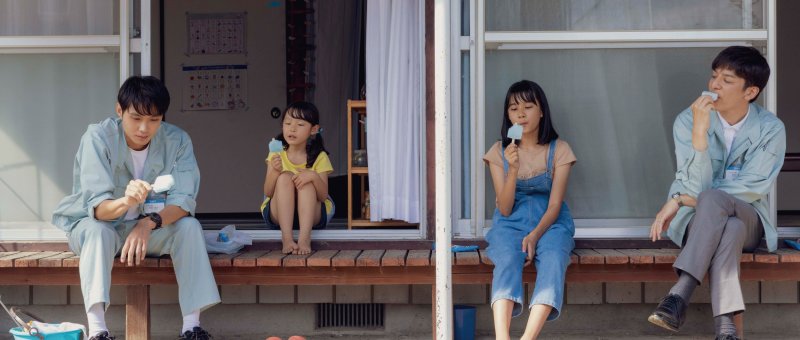
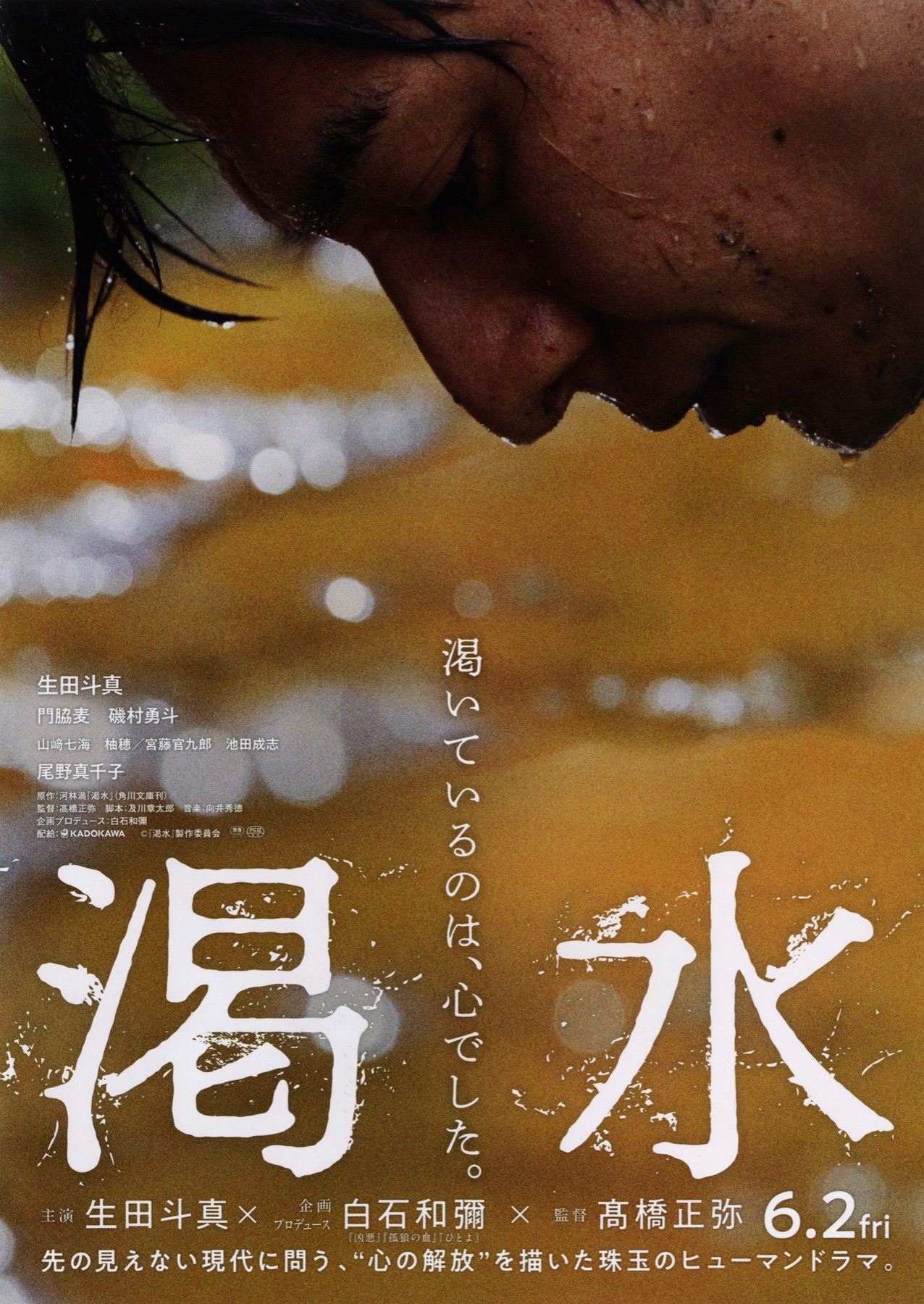
The Dry Spell (渇水, Masaya Takahashi, 2023)

A literal drought becomes a metaphor for bureaucratic heartlessness in Masaya Takahashi’s empathetic social drama The Dry Spell (渇水, Kassui). Inspired by Mitsuru Kawabayashi’s 1990 novel, the film puts a contemporary spin on prejudice and poverty as a collection of officials from the waterboard point at airconditioners and mobile phones while asking why the residents have fallen into arrears with their water payments only to reflect that yes, water like air and sunlight should be free.

The argument that one of Iwakiri’s (Toma Ikuta) colleagues makes, is that they have a right and a duty to charge for the water supply to support the nation’s infrustructure along with their advanced purifcation system which keeps people safe. Iwakiri isn’t so sure about that, but as others later say of him he’s a man who’s made of water himself. He doesn’t like his job but he doesn’t really dislike it either and justifies himself that it’s not him turning people’s water off so much as it’s a natural consequence of them not paying their bills and all they need to do to get it turned back on is settle them. But then as another colleague who eventually refuses to continue cutting people off suggests, every time you do it you lose a little piece of your soul. 

Iwakiri may not have had much of a soul to begin with. He’s as dried up as the town in the middle of a recordbreaking drought and heatwave. Having endured a difficult childhood, he’s become alienated from his wife and son who have decamped to her hometown with no clear indication of when or if they’ll return. That may be one reason he finds himself empathsithig with a pair of sisters who have been abandoned by both parents and are living alone in a house that has already had its gas and electricity supplies cut off. Iwakiri turns off their water supply because it’s the rules, but begins to hate himself for doing it and develops a desire to go against the flow for the first time in his life.

Keiko (Nanami Yamazaki) and Kumiko (Yuzuho) are a pair of water babies who have a yearning for the sea and the father who was apparently once a sailor but seemingly disappeared a year previously while their disappointed mother does her best to support the family through sex work which is as she points out the only line of work open to a single mother with limited qualifications. Iwakiri advises her to apply for benefits but she refuses on the grounds that she doesn’t want them poking around in what she describes as a complicated family situation which makes plain her predicament. But even as Iwakiri begins to meditate on his own paternal failures, his partner Kida (Hayato Isomura) flows in the opposite direction keener to hold onto his job after he learns he’s a baby on the way and unwilling to rock the boat despite how much he may also feel that water should be free. 

In any case, Iwakiri is trying to un-dam himself, waiting for the great big rain that Kumiko says will make everything go back to normal. Except it won’t, at least not literally  though it will in some senses open the flood gates liberating Iwakiri from his emotional repression and the girls from their illusions accepting that they are now alone but will always have each other. As he points out, they are just watermen and there’s not much they can do for the struggling people whose supplies they’ve cut off. It wouldn’t help to pay their bills for them even if they could, and in a better world water should indeed be free though it becomes much harder for them to justify their complicity with a heartless system that can arbitrarily remove access to something so essential for life. Takahashi flits between cheerful scenes of ice lollies in the sun to the cruel realities of the lives of Keiko and Kumiko who continue to long for the sea as does Iwakiri in struggling to repair his relationships with his wife and son while trying to escape the legacies of own traumatic upbringing. The film doesn’t offer any easy answers, but does perhaps suggest that the rain will bring change and the promise of a better future.


The Dry Spell screened as part of this year’s Camera Japan.

Original trailer (no subtitles)

Plastic (Daisuke Miyazaki, 2023)

A young couple bond over their shared love of an obscure 70s glam rock band, but soon find their youthful romance eroded by the realities of impending adulthood in Daisuke Miyazaki’s warmhearted coming-of-age tale, Plastic. Emotional distance becomes a persistent theme as mediated through a message into space that might take light years to arrive not to mention the reply, which seems to echo the couple’s inability to communicate despite their star-crossed connection.

Jun (Takuma Fujie) and Ibuki (An Ogawa) bond after realising they are both fans of 70s band Exne Kedy, talking for hours at a small cafe only leaving when the place closes. Having recently relocated to Nagoya from Tokyo, Jun enrols at Ibuki’s high school and joins her after school club much to the chagrin of her two friends. The pair eventually become a couple going on a series of wholesome dates including a trip to watch Sad Vacation in a cinema and are apparently very much in love but a year later the novelty has begun to wear off. Ibuki is studying for university exams and bound for a top institution in Tokyo while Jun is planning to drop out and pursue music full-time. 

Perhaps slightly more conventional, Ibuki berates Jun for his impracticality asking how likely it is he’ll be able to support himself with the kind of music he makes. Later she has some kind of flash forward in which she imagines herself supporting him financially while he’s not even playing guitar anymore and they’re arguing about responsibilities for rent and living costs. She breaks up with him in the carpark of a convenience store but perhaps regrets it, keeping up a half-hearted friendship while he remains lost and lovelorn pursuing music on the side while working part-time. “Plastic” becomes a kind of metaphor for their relationship, something which should have lasted forever but has been subtly undermined by the microorganisms of conventionality and contemporary capitalism until it eventually broke apart. 

The distance between them is likened to that of the space radio broadcast which might not reach its target for 25,000 light years. The message was sent the same year that Exne Kedy broke up, and may well be delivered a little more than 50 years later at their reunion concert only as the narratorial voice over explains, that’s largely up to chance. Swapping notes on studying in the same way Jun’s mother and grandfather had talked about seeing Exne Kedy in concert, Ibuki’s parents had compared their flashcards to modern apps and joked that maybe someday education would all be online as in fact happened during the pandemic. Having swapped her rural home for the bright lights of Tokyo, all her classes are online which ironically gives her more time to spend with her friends but also leaves her exhausted and distant. 

When Jun wonders if his music is like the broadcast, destined not to arrive for thousands of years so he’ll never know who got it. Another school friend, Ayumu, asks him if he’s sure he hasn’t just missed a reply 25,000 years in the making which is sort of ironic because he’s clearly missed that she’s been trying to answer his message only he’s too hung up on his ex to notice. Later she asks him to move in with her, pointing out that she’s right there not 25,000 light years away like Ibuki who is now living with a DJ who doesn’t even know who Exne Kedy are. The two of them are far apart but somehow still connected, not least by their love for the band which may eventually reunite them. 

Exne Kedy is modern day creation by Ide Kensuke who had previously released the album Kensuke Ide With His Mothership ― Contact From Exne Kedy and the Poltergeists and makes a self-cameo in the film in a surreal scene featuring the band whom Ibuki and Jun unexpectedly run into doing an impromptu performance in the middle of a forest singing a song that echoes the state of the couple’s relationship in which a lighthouse no longer illuminates and cannot light the way. Yet there is always a sense of the couple as a pair of flashing beacons waiting to pass close enough to each other to be able to convey a message. Featuring cameo appearances from (former pop star) Kyoko Koizumi and Machiko Ono, Miyazaki’s strangely charming youth movie is surprisingly sincere in its romanticism but equally in its critique of the world that frustrates it while suggesting that music may once again save the day.


Plastic screened as part of this year’s JAPAN CUTS.

Original trailer (no subtitles)

Amiko (こちらあみ子, Yusuke Morii, 2022)

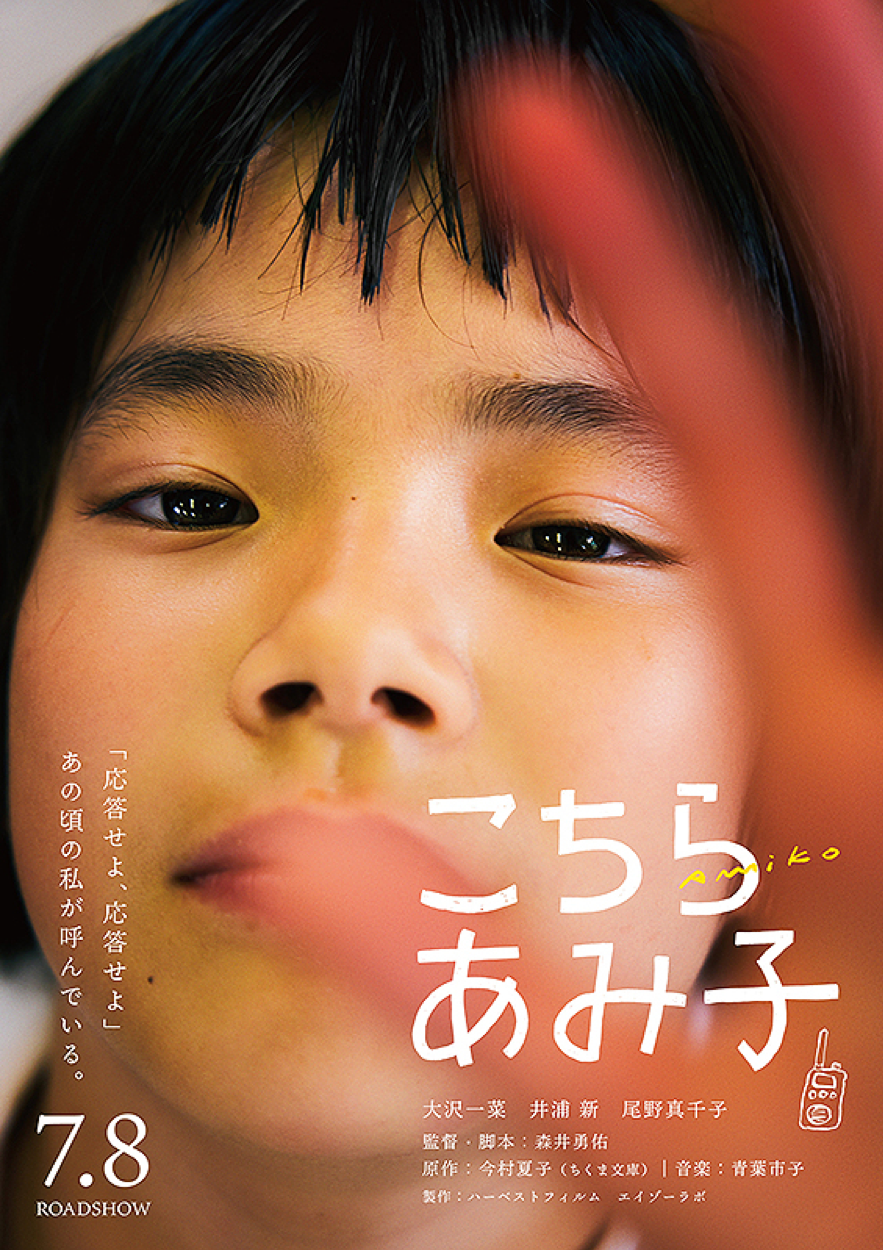
Is there a sadder thing than a solo walkie talkie? The heroine of Yusuke Morii’s quirky dramedy Amiko (こちらあみ子, Kochira Amiko) is given a pair of retro presents for her birthday, a set of toy radios and a disposable camera each intended to help her bond with the baby brother expected to join the family in the immediate future, but the sad fact is that Amiko has no one else to communicate with and largely lives in her own little world like a ghost in her own home. 

Even so, she doesn’t seem to be particularly lonely and is only just beginning to realise that she’s a little different from the other kids. Living in a nice house in tranquil seaside town in Hiroshima, Amiko appears to be a happy little girl with a loving family around her even if her relationship with step-mother Sayuri (Machiko Ono) who teaches calligraphy in a back room may be a little strained. Sayuri disapproves of Amiko’s unusual behaviour and for some reason does not allow her to join the other children at the classes leading Amiko to peer in from a crack in the door until one of the other kids inevitably notices her. 

In an odd way, Amiko’s situation improves when the family encounters a tragedy, losing the baby they’d all been so excited about welcoming. Touched by her attempts to look after her as she recovers at home, Sayuri warms to Amiko and embraces her as a daughter finally inviting her to take part in the calligraphy classes once they resume. But a well-meaning gesture on Amiko’s part that from an adult perspective is insensitive and inappropriate throws Sayuri into a depressive spiral from which she never recovers. The rest of the family describe Amiko’s gesture as a “prank” as if she did it with malicious intent when really it was just her way of dealing with her grief. Of course, everyone else is trying to deal with their grief too and each going about it in their own way so they don’t have time or really the inclination to sit down with Amiko and help process what’s just happened to their family. 

Amiko becomes convinced that there’s a ghost haunting her balcony and it must be that of her younger brother who hasn’t made it to Heaven yet and is trying to come home, though her attempts to ask her father about it see her literally pushed away while he can’t see her confusion as anything other than a hurtful fantasy. There is indeed a ghost haunting her family, but it’s the grief they cannot share with each other or bear to explain. Amiko’s older brother Kota (Kensei Okumura) begins to go off the rails and then leaves the family entirely to join a biker gang instead. Amiko’s father (Arata Iura) doesn’t even bother to look for him, expressing only mild confusion when Amiko points out that Kota doesn’t come home anymore answering only that he’s sure he saw him “the other day”. 

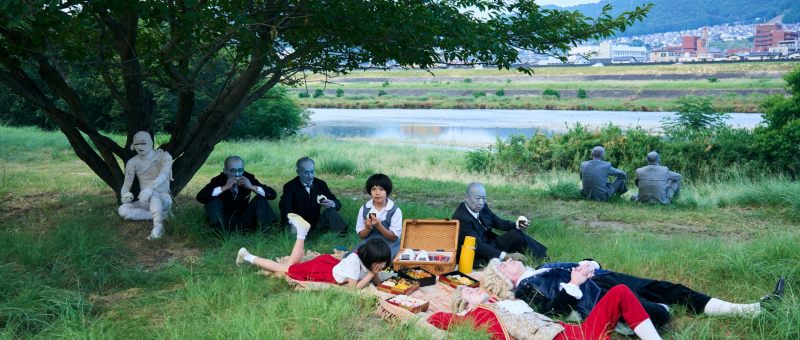
It’s no wonder then that Amiko retreats into a fantasy world, singing a song to herself to ward off ghosts while followed around by several of them including for some reason mummies and people from 18th century Europe. She in turn follows a boy she likes seemingly oblivious to the various ways he attempts to avoid her, while otherwise ignoring a loudmouth kid who is the only other person willing to talk to her despite her classmates’ conviction that she is simply “weird”. Amiko maybe beginning to realise this herself, wondering if her forced courtship may have strayed into the “creepy” and asking directly for advice wanting to know what about her seems to make others uncomfortable or embarrassed. After a period of mild neglect, Amiko even starts walking around school in bare feet because she doesn’t have indoor shoes or clean socks but most seem to just regard it as another expression of her oddness. As the other kid points out, it’s both a symbol of her “freedom” and one of the reasons she gets bullied. Amiko’s story is sad, but Amiko doesn’t know that and simply goes on living in her own little world with its strange logic simply waving to the departing boats of the floating dead with a cheerful “I’m fine” while otherwise abandoned on an unfamiliar shore with only herself to rely on.


Amiko screens in Frankfurt 8th June as part of this year’s Nippon Connection.

Original trailer (no subtitles)

Thousand and One Nights (千夜、一夜, Nao Kubota, 2022)

“I can reach the mainland by rowing boat, but why won’t my feelings reach you?” a plaintive song asks in Nao Kubota’s melancholy tale of perpetual longing and continual loss, Thousand and One Nights (千夜、一夜, Senya, Ichiya). A lingering ghost story, Kubota’s contemplative mood piece sees two women, one old and one young, take different paths in the wake of their abandonment but perhaps finding themselves no less unhappy when left with the unanswered questions of a sudden absence. 

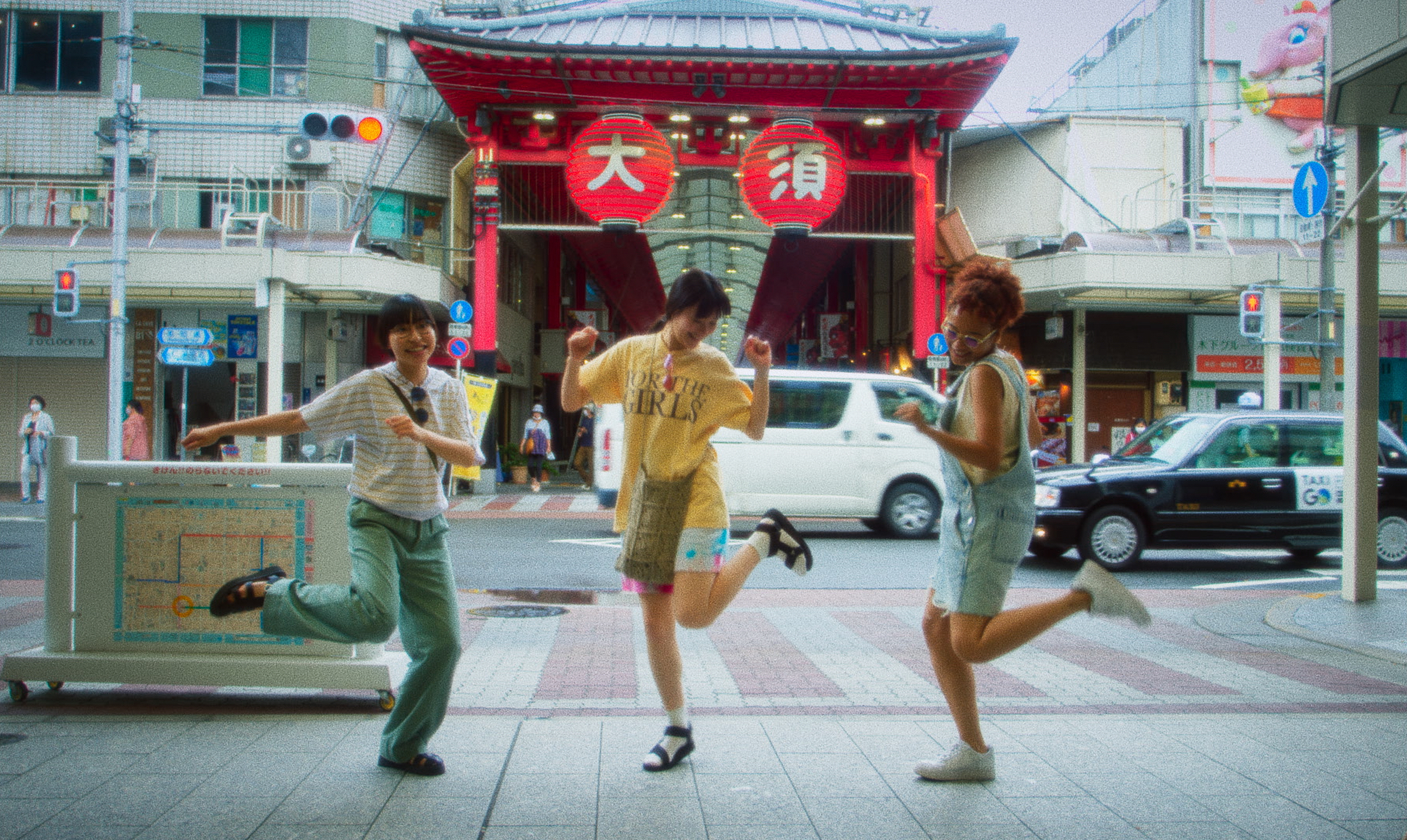
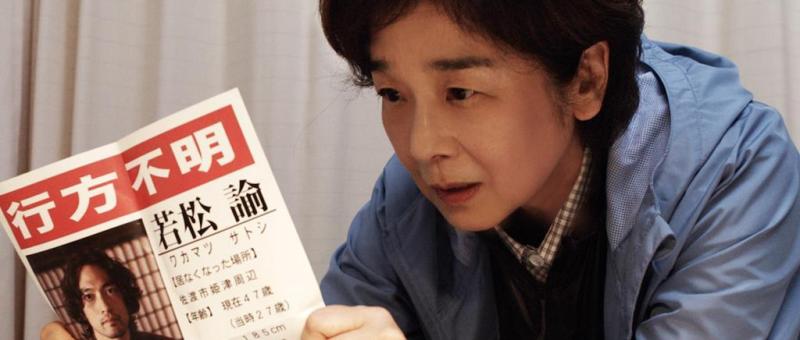
On the island of Sado, fishwife Tomiko (Yuko Tanaka) has been waiting for her fisherman husband Satoshi to return home ever since he said he was “just going out for a bit” thirty years previously. Many in the community view her with a mixture of pity of revulsion, seeing her as close to madness in her refusal to accept that her husband will never come back to her. Meanwhile, the former mayor Taisuke now retired to take care of his bedridden wife, puts another young woman, Nami (Machiko Ono), whose husband Yoji (Masanobu Ando) similarly just went out for a bit two years ago and never came back, in touch with Tomiko hoping she can help her investigate what might have happened and if Yoji may be among the small number of presumed abductees taken from the island by the North Koreans. 

Sado does seem to have a large numbers of “missing” people, which in itself is not such an unusual phenomenon given how easy it can be in Japan to simply “evaporate” and start again somewhere else. The island was also the site of a handful of confirmed abductions by North Korea in the late 1970s, dangling another unanswered question in front of the women wondering if their husbands might have been spirited away and prevented from contacting them no matter how much they may have wanted to. Nami is herself third generation Zainichi Korean and wonders if that might have had something to do with Yoji’s disappearance, though in contrast to Tomiko her goal is less reunion than a simple desire to know why. She wants to give herself permission to move on, having drifted into a relationship with a besotted colleague (Takashi Yamanaka) she may not actually quite love but offers her a quiet and conventional life of security she’ll never now know with Yoji. 

Nami does, however, feel a degree of shame in her desire to put the past behind her as if she were betraying a romantic ideal in being unable or unwilling to give up her life in waiting as Tomiko has done. She fears Tomiko may resent her, but she doesn’t, not really only acknowledging that she’s made a different choice. Like Tomiko, Nami is left with unanswerable questions, wondering if Yoji simply walked out on her because he grew tired of the inevitability of their life together, if he was bored, or lonely or depressed. Perhaps he met someone else, had an accident and lost his memory, fell off a cliff or was killed in some other way and someone covered it up. Perhaps he’s dead, perhaps he’s in North Korea. Perhaps it’s all the same. 

While the community pities Tomiko in her martyrdom, they attempt to pressure her to move on by agreeing to marry local fisherman Haruo (Dankan) who has long carried a torch for her even since they were children. Yet in the irrationality of romantic longing, Haruo cannot understand why Tomiko will not give up on Satoshi even as he is unable to give up on her despite her frequent and unambiguous rejections of his overtures. There is a particularly unpleasant quality to his obsessive ardour as his mother (Kayoko Shiraishi) comes round to plead with Tomiko to marry her son and his work colleagues organise a kind of intervention asking her to give in because he’s going out of his mind. He runs her down, says she’s “withering away” and only he can save her while worryingly possessive and controlling even threatening suicide and later going missing at sea just to make her feel guilty and worry about him. 

Even Tomiko’s mother is suffering the pain of lost love, hugging her late husband’s prosthetic leg as she sleeps while excusing the drunken violence that Tomiko says left her with a lasting fear of men by explaining that the war changed him. Tomiko complains that no one ever tells her anything important and that they always leave, but equally refuses to reveal very much important to anyone else keeping her feelings largely to herself remaining something of an enigma, uncertain if her constant waiting is more habit than devotion. In all these tales of frustrated longing from Taisuke and his ailing wife to Satoshi’s parents who rarely talked of their son only for the father to tell the mother on her deathbed that he was still out playing, there is an inescapable loneliness in the essential inability of conveying one’s true feelings that leads some to simply make their exit without saying a word. 


Thousand and One Nights screens at New York’s IFC Center on Feb. 12 & 15 as part of ACA Cinema Project’s New Films From Japan.

Original trailer (no subtitles)

A Madder Red (茜色に焼かれる, Yuya Ishii, 2021)

©︎2021 "A Madder Red" Film Partners

A single mother and her son face the myriad injustices of the modern society with dignity and grace in Yuya Ishii’s quietly seething pandemic-era social drama, A Madder Red (茜色に焼かれる, Akaneiro ni Yakareru). The heroine is constantly asked why she isn’t angrier, those around her confused by her stoical attitude and tendency to simply sigh and say “let’s get through this” rather than railing against the persistent unfairness that defines her life but then she doesn’t have a lot of time for being angry nor would it particularly help her situation or bring about change. All she can do is persevere in the hope that it won’t always be this way, her run of bad luck will end, and she will eventually be permitted to rest. 

Ishii opens the film with a 3D model simulation of a traffic accident in which a cyclist is killed by an out of control car on a zebra crossing in an otherwise tranquil residential area. Ryoko’s (Machiko Ono) husband Yoichi (Joe Odagiri) is sent flying and ends up squished like a bug on the windscreen of a vehicle travelling in the other direction. The driver, an elderly man later revealed to have been living with Alzheimer’s, mistook the accelerator for the brake but as he had been a prominent local official the matter was swept under the carpet and he faced no consequences. What people can’t seem to understand is why Ryoko chose to attend the old man’s funeral when he eventually died. It seems attend was all she did, but the man’s son had security throw her out and his lawyer accuse her of “harassment” while expressing anger and resentment that her presence tarnished his father’s lavish ceremony when he had been such a good a man. Her presence perhaps annoys him because he knows on some level he’s in the wrong, while her strength and dignity shame him knowing that they should have just apologised. The lawyer implies she’s being unfair targeting the family who were not themselves responsible for the accident, except that in a sense they were because they failed to protect the old man by continuing to allow him to drive by himself. 

Ryoko refused the compensation money for this reason, that they tried to settle it with cash as if her husband’s life had no meaning. She lives in subsidised government housing, but doesn’t claim any benefits supporting herself after she was forced to close her cafe through a part-time job in a supermarket floristry department and after hours sex work. “Break a rule, break your life” she teaches her 13-year-old son Junpei (Iori Wada) yet constantly falls foul of rules written or otherwise while doing nothing wrong in the eyes of those who rant about benefit scroungers and routinely belittle those without means. She’s taken to task by her manager for taking home flowers that were due to be thrown out and for taking a phone call outside the store after clocking off, but when they fire her on a pretext to hire the daughter of a prominent client who can’t find a part-time job because of the pandemic, they refuse to honour the two month notice clause in her contract. Similarly when bullies from Junpei’s school set fire to some books left outside their apartment, they are the ones who have to move for violating the rule about causing a disturbance to the other residents. 

Given all of this no one can understand why Ryoko isn’t seething mad. She still pays for her father-in-law’s nursing home and even child support for a girl she’s never met fathered by Yoichi with another woman. Struggling herself, the child’s mother later turns to a sleazy friend of Yoichi’s, Ryu (Tateto Serizawa), to petition Ryoko to increase the child support but like her also worries that it “doesn’t seem right” to further burden a woman who is also struggling to raise a child alone just like herself while Ryu, as he had unsuccessfully with Ryoko, attempts to extort sexual favours in return for his assistance. Ryoko does these things when she doesn’t strictly have to and many people wouldn’t less out of pride or stubbornness than because it’s the right thing to do and if she can satisfy herself that she’s done right by others even if they’ve not done right by her then she maintains her dignity and their scorn can’t harm her. 

Even so, sick of being treated like a bug Ryoko’s rage eventually begins to boil over her subdued outfits giving way to a fiery red as her hopes of escape are once again dashed on realising a potential romantic suitor only ever viewed as a plaything. Everyone is always telling Ryoko’s that she’s “strange”, “weird”, “crazy”, in her passive resistance living by her own rules while constantly betrayed by those of others which they only enforce when it suits them. Ishii flags up all of her various expenses on the screen making it clear just how much it costs for Ryoko to be this poor while she seemingly grins and bears it. Then again as the film’s only title card tells us Ryoko is a good actress, and perhaps she has to be to get by in this indifferent society filled hidden suffering and an almost sadistic lust for self-preservation. “Mom, it’s all too much” Junpei sighs as he comes to an appreciation of his mother’s fortitude and her desire to simply “get through this” as they ride a mamachari towards a glowing technicolour sunset which ironically enough refuses to end trapping in them in this space of grief and unfairness but carrying with it a far off hope perhaps cruel in its elusiveness.


A Madder Red streamed as part of this year’s Nippon Connection.

International trailer (English subtitles)
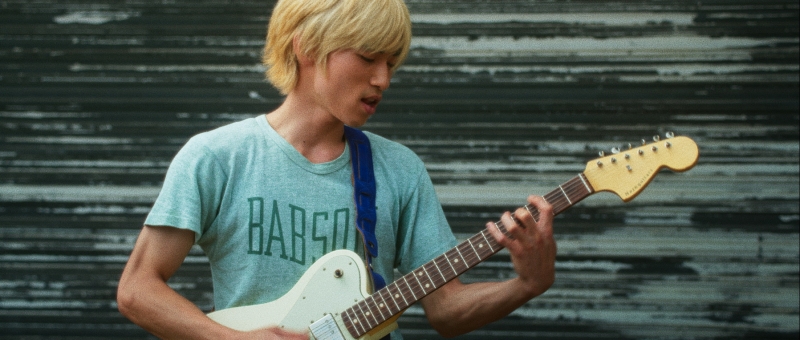
Images: ©︎2021 “A Madder Red” Film Partners

Funky Forest: The First Contact (ナイスの森 The First Contact, Katsuhito Ishii & Hajime Ishimine & Shunichiro Miki, 2005)

“Is that normal?” someone asks watching a previously mild-mannered doctor having a right old go at a tiny man baby currently attached to a high school girl’s armpit after being pulled free of its aquatic carapace, “don’t be rude” his companion shushes him. Katsuhito Ishii, Hajime Ishimine, and Shunichiro Miki’s Funky Forest: The First Contact (ナイスの森 The First Contact, Nice Mori: The First Contact) became the best known example of the short-lived trend in surreal comedy which came to dominate a certain kind of Japanese cinema from the late ’90s to early 2000s while perhaps surviving into the present day in a more arthouse friendly form in the deadpan absurdist cinema of filmmakers such as Akira Ikeda (Ambitious Places, The Blue Danube) or Isamu Hirabayashi (Shell and Joint).  

Even so, Funky Forest is wilfully anarchic skipping between a series of interconnected skits that eventually coalesce as something like a unique universe loosely revolving around three “unpopular with women” brothers and a “delusional” high school teacher in a non-relationship with a former student who thinks he’s seen a UFO and is engaged in a battle to save the aliens from the planet Piko-Riko. Two and a half hours long, which is admittedly pushing it for a non-linear sketch comedy, the film is split into two parts, Side A and Side B, joined by a short intermission after which the surrealism intensifies, the design of the title cards changes, and the action shifts in focus from a quiet onsen to an ordinary high school where the teacher and the two adult brothers each work. 

The action begins however with a pair of manzai comedians seemingly performing on some kind of space ship and to an audience consisting of identical military personnel each like the comedians dressed in white and silver while the show is broadcast to a man sitting in a tiny pod-like dream ship. The “Mole Brothers” recur throughout, their set routinely dividing one skit from another while one, Kazushi, also turns up on his own in a couple of other sketches as part of the great connected universe, and though their act being kind of a dud is part of the joke their variety-style humour is an otherwise key indicator of the kind of comedy which is being employed and subverted even as the action becomes ever more surreal. As it happens, each of the major plot strands seems to lead us towards a dance sequence such as that which closes the first half in Takefumi’s (Ryo Kase) strange fever dream which culminates in a Mandarin-language group routine and the first appearance of the weird, shrimp-like creatures which dominate Side B. 

Side B is indeed somewhat through the looking glass as we find the high school kids literally playing these alien creatures like musical instruments some of which need to be plugged in to the human body in one way or another such as the strangely cute rat/shrimplike beings which attach directly to the tongue. Sitting right in front of the high school class which is taught by lovelorn brother Katsuichi (Susumu Terajima) is none other than the film director and Neon Genesis Evangelion creator Hideaki Anno who later turns up again to discuss contemporary anime with guitar bother Masaru (Tadanobu Asano) in one of his many part-time jobs, though the class also includes the young primary school student who featured in the first skit in which she lamented having so much homework and escaped to the dreamscape in order to fight giant orbs with her mind. 

In an odd way perhaps that’s what our three directors are doing too, away on flights of fancy which make little literal sense but seem to have their own internal logic even though the directorial force the film presents is an adorable little scottie dog whose thoughts are translated by someone wearing a giant papier-mâché head. “Thinking is too scary, so I’ll forget about it”, someone explains which may be good advice in deciding to just accept the crazy randomness and play along. Often interrupting the action by cutting to black to mimic old-fashioned channel hopping the directors also throw in a random 20s intermission in the middle of a scene, animation of various styles, and surreal body-horror-adjacent practical effects, before winding up at the funky forest itself, a weird dreamscape somewhere in Hokkaido ruled by a dream-hopping girlband.  “What a strange dream” one character exclaims though in the great scheme of things perhaps it’s easier to make sense of a dream than a defiantly surreal reality.  


Funky Forest: The First Contact is released on blu-ray in the UK on 21st March courtesy of Third Window Films alongside quasi-sequel Warped Forest in a set which includes a feature length commentary from all three directors and a series of deleted scenes.

Original trailer (English subtitles)