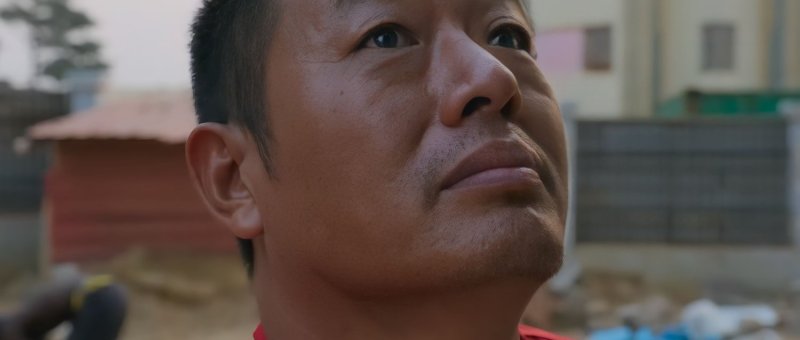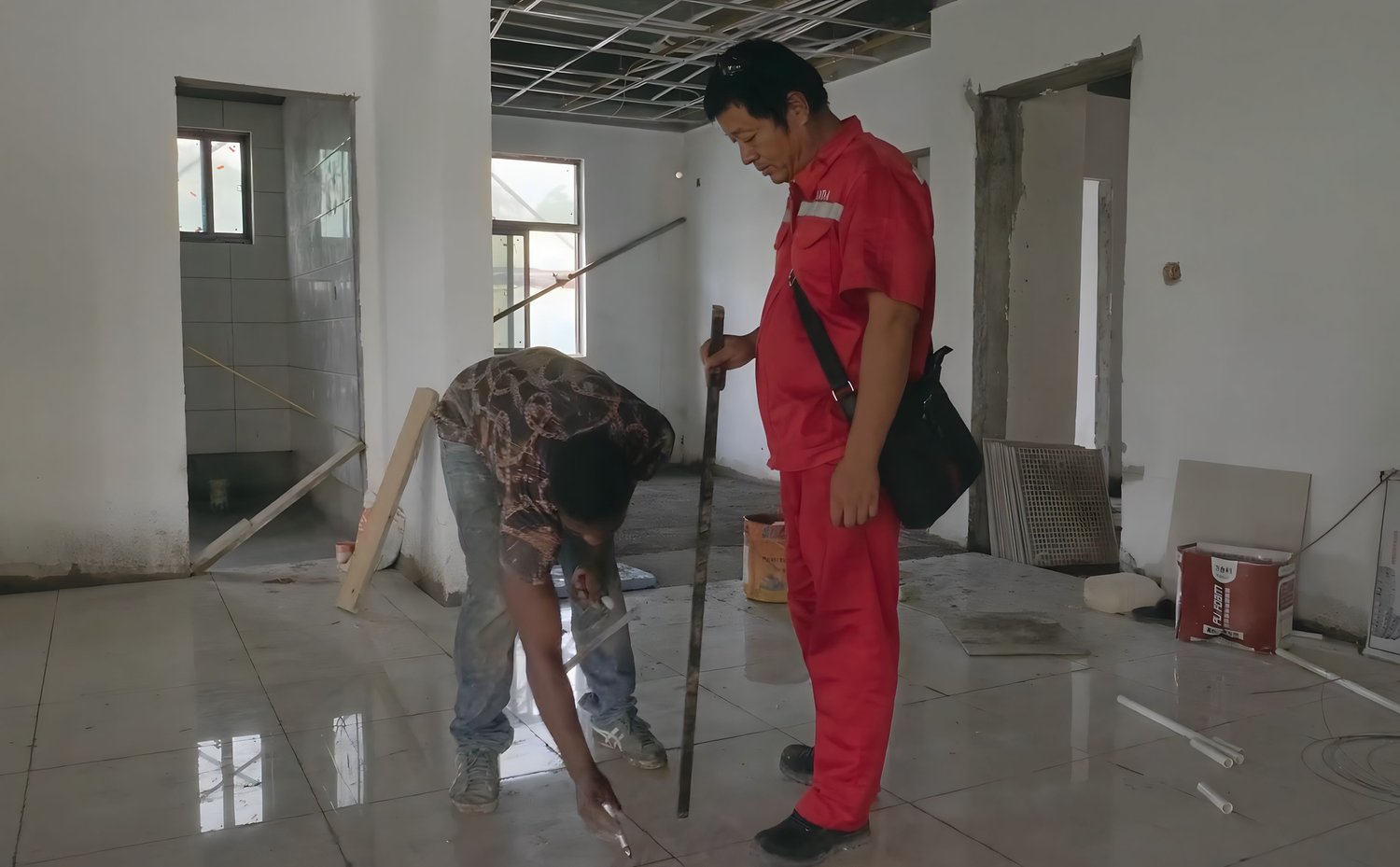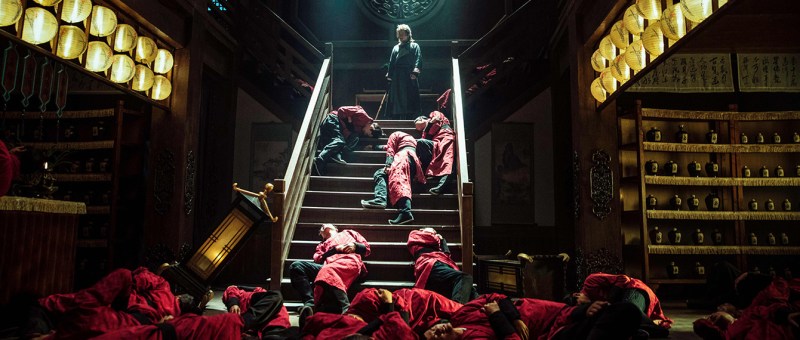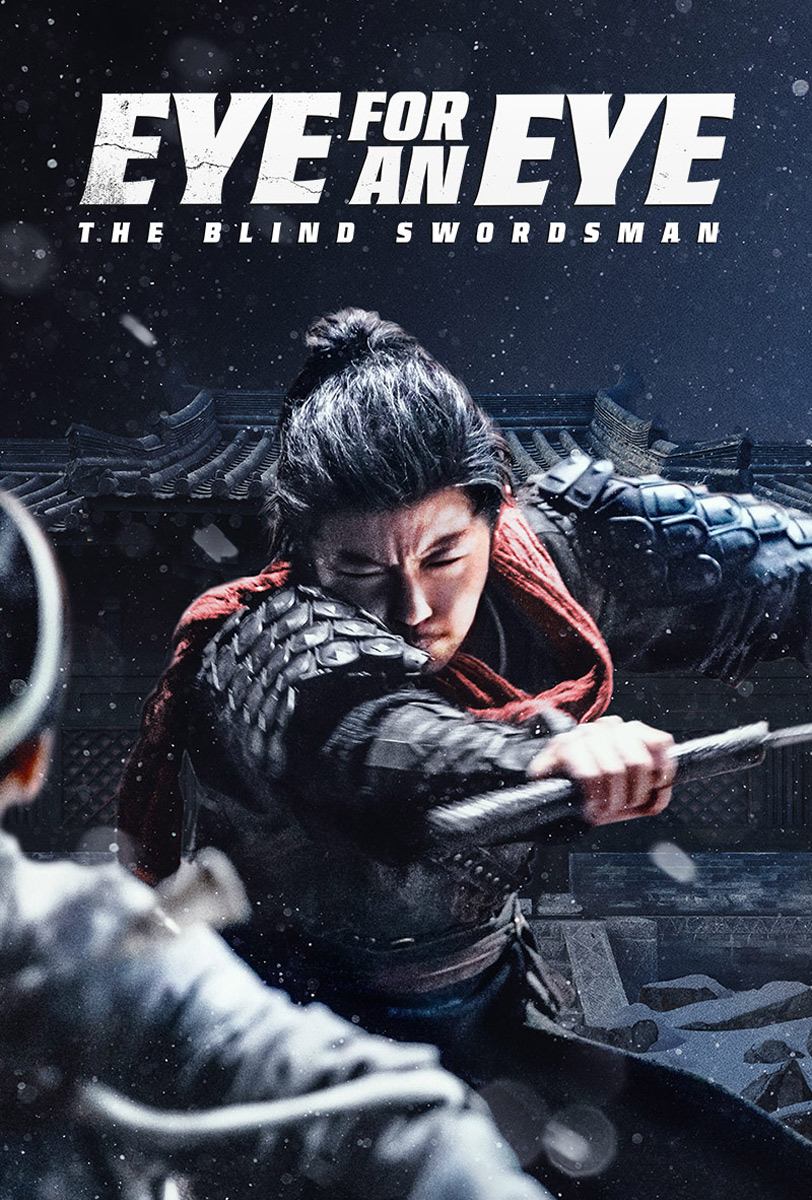
Creation of the Gods I: Kingdom of Storms (封神第一部:朝歌风云, Wuershan, 2023)

A bad ruler, like a bad father, has only bad lessons to teach his sons and will receive the same in kind in Wuershan’s beautifully produced fantasy epic, Creation of the Gods 1: Kingdom of Storms (封神第一部:朝歌风云, Fēng Shén Dìyī Bù: Zhāogē Fēngyún). Inspired by the classic work of 16th century literature also known as Investiture of the Gods which serves as a kind of foundation myth, the film is the first of three and a 10-year labour of love from the director that began shooting in 2018 and took nearly four years to complete post-production. 

As the opening title card explains, the film focusses on the fall of the Shang dynasty at the hands of its last king and King of All the Realms Yin Shou (Fei Xiang), known posthumously as King Zhou. He is first introduced, however, through the eyes of the young man that is really the hero of the tale, Ji Fa (Yu Shi), who describes him as a hero of the kind he dreams of becoming. Yin Shou is charged with leading an attack on the compound of rebellious lord Su Hu who has refused to pay his taxes, taking with him the four hostage foster sons of the primary dukes along with that of Su Hu himself. The boy is sent to plead with him but gets no reply. In a show of what seems like kindness, Yin Shou asks him what sort of father his must be to give no reply and formally adopts the boy but only in the knowledge that honour dictates he now take his own life as proof of his loyalty to the Shang. 

These young men, Ji Fa included, are forced to ask themselves to whom they owe their loyalty, a man who gave them up and may long have forgotten them or Yin Shou who has in a sense raised them and demands their loyalty. Ji Fa is fiercely loyal to Yin Shou and thinks him everything a good father, a good commander and eventually king should be. Yet Yin Shou has extremely strong second son syndrome and resents his father and older brother for treating him as an also ran. Ji Fa meanwhile is still naive and egotistical, coming to the palace dreaming of becoming “a hero” with only a superficial understanding of what that would mean and easily swayed by Yin Shou’s majesty while Yin Shou in turn rejects his own son ironically fearful of him as a rival having watched the old king die at the hands of his brother while privately pleased that he will finally take his rightful place on the throne only to be told that the kingdom is in peril and the only way to save it is to commit public self-immolation. 

When the legendary heroes Jiang Ziya (Huang Bo), Nezha (Wu Yafan), and Yang Jian (Cisha) turn up with a magic scroll that can undo the Great Curse bearing down on the land, Yin Shou describes it as blessing on realising the talisman gains in power the more souls it receives. There may be something a little chilling the contemporary echoes of his paranoid authoritarianism as he actively begins to round up subversive elements even as he takes as a mistress the daughter of a man he beheaded who in reality took her own life and has been possessed by a fox spirit though it is also quite ironic that it is Su Daji (Narana Erdyneeva) who will bring down the Shang. 

In any case, Wuershan brings the classic tale to life with a sense of magic and wonder painstakingly recreating the fantasy world of feudal China with its beautiful landscapes marred by chaotic infighting and destabilised by dysfunctional filiality. In the end, Ji Fa will return to his true father and with him the path of righteousness which will overcome the Great Curse and begin to restore order laying the foundations for the Chinese society. Meanwhile, in this age of demons and strange creatures, interventions from the heavens and the mortal world in so much chaos that Nezha has been brought in to help, Wuershan discovers a kind of soulfulness embracing the timeless quality of this ancient mythological tale yet grounding it in a well honed sense of emotional reality.


Creation of the Gods I: Kingdom of Storms is in UK cinemas now courtesy of CineAsia.

Trailer (Simplified Chinese / English sutbtitles)

Seven Days in Heaven (父後七日, Essay Liu & Wang Yu-Lin, 2010)

A young woman embarks on what she describes as the most ridiculous journey of her life after her father passes away and she must return to her hometown for a series of incredibly involved traditional funeral rites in Essay Liu and Wang Yu-Lin ’s lighthearted drama Seven Days in Heaven (父後七日, fù hòu qī rì). Perhaps the intent is more to keep the mourners occupied in a slow burn dissolve of their grief than it is to console a parting soul but in any case Mei finds herself meditating on the past and her already fading memories of her late father. 

The strangeness begins at the hospital where Mei (Wang Li-Wen) and her brother Da-zhi (Chen Cha-Shiang) are repeatedly asked to explain to their father, who has just died, that they are taking him home. In the transport ambulance they ask if the family is Buddhist or Christian, and then simplify the question to whether they use incense sticks when a confused Mei is uncertain how to answer though as it turns out the rites they will be performing are largely Taoist. Anyway, the driver accidentally puts in the wrong tape and they get a blast of the Hallelujah chorus before he switches over to a series of sutras instead. A similar confusion sets in once they arrive back at the house where the funeral is being managed by a distant relative who works as a Taoist priest performing rituals largely concerned with death. 

A running gag sees these familial relationships so tangled that they need lengthy explanations, Yi (Wu Peng-Fong) the priest explaining to Mei’s cousin Zhuang (Chen Tai-hua) that he should have been calling him “brother” and not “uncle” while as it turns out Yi still carries a torch for Zhuang’s mother, Feng (Angie Wang), who left him to work in another town and married a wealthy man. Currently in Paris, she does not return for her father’s funeral and sends her son instead who is equally mystified by these strange rituals and decides to film them as part of a university project. 

Yi consults some religious calendars and schedules the days of the funeral accordingly from when they close the coffin to when they conduct the final rites with Mei and Da-zhi merely expected to keep up. A detached Mei explains that as the daughter she’s explicitly instructed when to cry and when not to, forced to run in and wail by the coffin on cue. Yi’s partner, Chin (Chang Shih-Ying), herself works as a professional mourner wailing on the behalf of others merely altering the identity of the deceased but in this case the siblings are alternately bored and run ragged, possibly too exhausted by the process of mourning to fully process their grief. 

Zhuang’s film exposes the labour involved as he closes in Da-zhi explaining that he has to sweep up the ashes from the burning of ghost money. He asks him how he feels about his father’s death which might in itself be a little insensitive especially while pointing a camera in his face and he snaps back that he doesn’t know. Mei meanwhile is repeatedly drawn back to memories of her father, picking out a picture of him singing karaoke for the altar only to be told off by the older relatives. Zhuang eventually photoshops it to replace the mic with flowers and the background with a more appropriate scene of mountains and rivers. She doesn’t tell her friends her father passed away until months later and still finds herself forgetting, brought to tears on accidentally reminding herself to pick up some “longevity” cigarettes for him on a trip back from abroad only to realise there’s no need anymore. “Please stow your emotions” she imagines hearing the captain say in her father’s voice as she strives to accommodate her grief. 

Filled with a series of humorous digressions from Yi’s love life and their late father’s ability to charm his nurses even at death’s door, the film paints a warm and nostalgic portrait of small-town life and the various rituals that go along with it, including a small tangent on political corruption as a host of politicians are obliged to attend the funeral, because of the aforementioned ill-defined familial relationships, and send elaborate gifts including a large tower of beer cans that later collapses and requires even more tiding up. Finally the siblings must burn their mourning clothes as if symbolically moving on from their seven says in “heaven” and returning to their everyday lives but discover perhaps that grief is an ongoing process the rituals of which may continue long after the funeral is finished.


Seven Days in Heaven is available to stream in the US Sept. 25 to Oct.1 as part of the 17th season of Asian Pop-Up Cinema.

Trailer (English subtitles)

Bad Education (黑的教育, Kai Ko, 2022)

According to a jaded policeman in Kai Ko’s directorial debut Bad Education (黑的教育, Hēi de Jiàoyù), only 10% of people are good and 10% bad with 80% somewhere in the middle depending on the circumstances. As another person puts, even bad people have principles and in an odd way it’s a sadistic gangster who becomes a moral authority teaching the trio at the film’s centre a few valuable lessons in just how far south something can go when you allow yourself to be swayed by peer pressure and adolescent bravado. 

Perhaps intended as a graduation prank, Chang (Berant Zhu) suggests he and his friends Han (Edison Song) and Wang (Kent Tsai) exchange otherwise unspeakable secrets to cement their ongoing friendship through the threat of blackmail and exposure. Chang tells a frankly disgusting story that he raped and impregnated a young woman with learning difficulties while Han claims that he bludgeoned a homeless man to death but no one noticed. The only one to be going on to university, Wang does not have any particularly dark secrets to share. All he can come up with is that he once read his father’s texts and found out he’s having an affair, while otherwise confessing to having stolen the answer sheet to a test. As expected, Chang and Han don’t like his answers and begin to threaten him, pushing Wang back towards the edge of the roof as if they meant to kill him so wouldn’t spill the beans. 

Chan and Han were of course bullshitting, they haven’t done anything of the sort, but they manage to persuade Wang that he’ll have to do something similar to complete the pact. They challenge him to throw paint at a gangster which turns out to be an incredibly bad mistake though to be fair to them, Chan and Han may not have expected Wang to actually do it. It’s only then that they start to realise they aren’t children any more. Actions will have consequences and even if, as Mr. Hsing (Leon Dai) the gangster boss later says, they haven’t done “anything wrong” they’ve gone about everything in the wrong way and will eventually have to pay. Chan looks up at him pleadingly and answers like a child that he’s sorry and won’t do it again, but Mr. Hsing points out that whether he does it again or not is of no interest to him. It’s not what this is about. 

What it’s about is perhaps a different kind of “graduation”, leaving the innocence and naivety of childhood behind for the cynicism of adulthood and the moral greyness of grownup society. Then again, they weren’t all that innocent to begin with that they could come up with heinous crimes to confess and imagine that their friendship would survive it. The policeman says that 80% of people could go either way in most situations, himself included it seems, painting a fairly bleak picture of the contemporary society. Chased through the city by Hsing’s foot soldiers, Chan and Wang end up stealing a taxi from a taxi driver who had just raped the young woman passed out drunk in his car though no one makes much of an effort to help her as each remains fixated on their personal goals such as escaping and fleeing the city. 

In the opening scenes, a lobster had been plucked from a tank and had its legs cut off in a moment of foreshadowing while customers in Mr Hsing’s seafood restaurant with greasy mouths suck on shrimp whose corpses they soon spit out and discard. Something quite similar happens to the boys as the cracks in their friendship are further exposed. Even back on the rooftop, they’d reflected on the class difference between them with Wang, whose father owns a factory he is expected to take over, the only one going to college, while Chan jokes about becoming his driver and Han remarks that he’d like to drive a Maserati (one stands across from him as he’s viciously beaten in his underwear by Hsing’s goons). 

Figuring out they have no underworld connections, Hsing asks for money and the boys immediately look to rich kid Wang only he refuses because it’s too embarrassing to ask his dad for that amount of cash. Engaged in some kind of sadistic power play, Hsing tries to get them to cut each other’s pinkies off with the guys each turning on and blaming each other. Chan too tries to argue that they came back to save Han so he owes them (only they didn’t), while later blaming Wang for going ahead with the dare rather than himself for setting up this stupid prank as a means of having something to remember in their old age. Later he admits his insecurity, uncertain of his own future and frightened that his friends will leave him behind but it’s already too late. Wang ironically fulfils the pact, his graduate rosette fluttering as he does so as if to remind us that he’s now “graduated” from childhood innocence, but ironically destroys rather than cements the boys’ friendship with one chaotic night of violence and terror. Incredibly dark with moments of bleak humour, Bad Education offers a lesson in retribution and the costs of peer pressure and bravado and leaves each of its heroes changed, if not slightly broken, by the realities of a duplicitous adulthood. 


Bad Education screened as part of this year’s New York Asian Film Festival

Teaser trailer (Traditional Chinese / English subtitles)

No More Bets (孤注一掷, Shen Ao, 2023)

That the two biggest hits at the Chinese box office in summer 2023 both had a strong anti-gambling message perhaps hints at a contemporary anxiety, though No More Bets (孤注一掷, gūzhùyīzhì) is clearly the more direct of the two even if it also shares with Lost in the Stars its echoing of a theme in contemporary mainstream cinema that Chinese citizens are safe nowhere other than China. Then again, that particular message maybe somewhat disingenuous seeing as the villains here are all themselves Chinese if operating abroad to try and evade the law. 

This ambitious programmer Pan (Lay Zhang) learns to his cost when he abruptly quits his job after being passed over for a promotion in favour of someone with an influential father and accepts a too good to be true offer from what he’s been led to believe is a gaming company in Singapore. Soon enough, however, he realises their brief stopover is actually their destination and he’s been trafficked to another South East Asian nation where he is forced to participate in online gambling scams. Pan is however a righteous young man and immediately takes a stand, explicitly telling his captors he won’t do their bidding though they viciously beat him. Eventually he teams up with the slightly less conflicted model Anna (Gina Jin Chen) who vaguely understood the job when she agreed to it but not that they’d confiscate her passport and she’d be unable to leave. 

Like Pan, Anna accepted the job while frustrated by the vagaries of her industry after being unfairly let go by her agency after her photo was used on a flyer advertising sex work without her (or their) consent. Like those who play the games, she was suckered in by the promise of easy money that could be earned quickly and didn’t really think about the implications of what she was doing. That the film positions the victim, Tian (Darren Wang), as an incredibly wealthy young man who had access to vast generational wealth avoids the implication that some are drawn into scams for the same reasons that Pan and Anna were in they feel a sense of impossibility in their lives because of societal unfairness and economic hopeless but nevertheless paints his gradual descent into madness and addiction as a personal failing born of his insatiable greed rather than a misfortune that might befall anyone with a smartphone. Even so, if a highly educated young man can be tricked by such an obvious scam it suggests that it really can happen to anyone. 

At least, the film seems to say that in any case it’s bad to gamble but you should definitely think twice about promises that sound too good to be true, especially if they involve offers of work abroad. A series of talking heads interviews (with blurred faces) from victims of trafficking at the film’s conclusion all advise viewers not to travel to other countries to work, while several remark on how relieved they felt to see Chinese police when they were eventually rescued. Uniformed police also give a press conference during the film insisting that they are doubling down on combatting fraud and other kinds of cybercrimes while Inspector Zhao (Yong Mei), whose speech bookends the film, struggles to get anything done because the crimes are taking place overseas and therefore outside of her jurisdiction. Then again, the entire operation is run by Chinese businessmen who try to engender a sense of loyalty and rebellion among the men whom they’ve essentially enslaved by making them think that they’re merely rebelling against an unfair society by taking the money of the “greedy” people who play their games and redistributing it to their own, downtrodden families. 

Pan is trying to do the right thing, but often does it in the wrong way actively putting others in danger while trying to find a way to blow the whistle on the whole operation in the hope of being rescued while even Inspector Zhao at times seems dismissive, failing to take the claims of Tian’s girlfriend that he’s being swindled out of his entire family fortune by online scammers seriously until it’s too late. Even so, Shen crafts an often tense tale of escape as Pan does his best to send out coded messages under the noses of his kidnappers while unwillingly participating in the fraud hoping that eventually someone will figure out what’s going on and put a stop the cruel cycle of misery once and for all. 


No More Bets opens in UK cinemas 8th September courtesy of CineAsia.

UK trailer (English subtitles)

Flaming Cloud (三贵情史, Liu Siyi, 2023)

Regrets can turn into curses too, according to a melancholy middle-aged woman in Lin Siyi’s beautifully designed romantic fable, Flaming Cloud (三贵情史, Sānguì qíng shǐ) The English title refers to the deaths of gods and goddesses and a physical harbinger either of the joy of reunion or the sorrow of parting. Of course, in one way it’s all the same, every hello is also a goodbye and a curse can also be a blessing depending on how you look at it. 

As the narratorial voiceover explains, the heavens is where all of this starts as bored gods in a casino on a cloud place bets on the lives of mortals. A young woman approaches and places a wager on the existence of true love which is immediately countered by the bar’s musician. To carry out the wager, the gods decide to curse the then baby Sangui that anything he kisses will fall into a deep sleep until he kisses his one true love. 

A kind of reverse sleeping beauty, the film follows Sangui’s path through a fairytale world where he meets various others suffering in similar ways to himself but is otherwise regarded as an outcast because of unusual ability to put people to sleep. A young woman, Yuyu (Zhou Ye), who thinks he might be her prince, introduces him to a “witch” who promises to cure his curse if only he’ll treat her chronic insomnia in which he’s had not a drop of sleep in the last 12 years. What he discovers is that she is not a witch at all but the faded star, Yuexin (Yao Chen), who tells him that she cannot cure his curse for there is nothing really wrong with him and some might even see his ability as a gift, especially those like her who have trouble sleeping. 

Yuexin’s insomnia is born of past regret and the pain of lost love. She can’t sleep because she lacks the courage to face her past, while Sangui too is afraid unable to search for the girl he believes to be his one true love whom he met in childhood in case she has forgotten him or like everyone else regards him as a “freak”. Yuexin warns him that if he never gains the courage to look for Tingting (Zhou Yiran) he may regret it in time and that regret could become its own kind of curse. But in the fairytale society of White Stone he discovers only more prejudice and cruelty, stumbling on a hidden factory staffed by enslaved workers who describe themselves as being, like him, “freaks” unlikely to be missed by the world above. The villain is an exploitative factory owner whose business model is dependent on their forced labour though a mysterious ally has been helping them by smuggling medicine through the steampunk pipes that puncture their environment. They alone stand up to the factory owner, insisting that the workers are “no different” from themselves and defiantly resisting the authoritarian austerity of a wicked stepmother turned capitalist fat cat. 

But the film’s Chinese title reminds that this is a story of Sangui’s love and whether his curse can be lifted or not. Yuexin realises that the choice she made may have been mistaken, while the musician who bet against the existence of true love later admits he did so because he knows it’s real but the reality is painful for him or else he just wanted to see it proved and send a message to his own lost love that they would one day meet again. Even so, that doesn’t necessarily mean there will be a happy ending. The course of true love is always bittersweet and whichever way you look at it destined to end in a farewell though that doesn’t mean it isn’t worth following and not doing so out of fear is as Yuexin discovered only to suffer from the curse of regret. Featuring exquisite production design from the opening animation to the whimsical fairytale town gleefully melding eras from Yuexin’s flapper-esque costuming to the 1950s aesthetic of the factory owner’s wife and the steampunk quality of factory itself, Lin Siyi’s charming romantic fable is as much about middle-aged regret for the forgotten dream of love as it is about finding the courage to seek it out no matter the risk. 


Flaming Cloud screened as part of this year’s New York Asian Film Festival

Original trailer (English subtitles)

Miss Shampoo (請問,還有哪裡需要加強, Giddens Ko, 2023)

A ruthless gangster’s quest for vengeance is put on hold when he falls for a cutesy hairdresser who hides him from the bad guys who knifed his treacherous boss in Giddens Ko’s adaptation of his own short story Miss Shampoo (請問,還有哪裡需要加強, qǐngwèn, háiyǒu nǎlǐ xūyào jiāqiáng). Part gangland drama part zany Taiwanese rom-com, the film nevertheless hints at institutionalised corruption in local politics while simultaneously mocking the awkward positioning of the “gangster” in the contemporary imagination as both a romanticised outlaw and despised member of society. 

Bruiser Tai becomes the head of his gang when his boss, Hsing, is murdered by Thai assassins presumably hired by one of the other local bosses in a dispute over urban development contracts that may also threaten an upcoming election. Tai doesn’t seem to know a lot about that or how seriously he should take advice from one of the other bosses that he should look inside his own organisation when considering who might have wanted Hsing dead. In any case, at the present time all he can think about is innocent hairdresser, Fen (Vivian Sung), who hid him in the back of the salon when he was trying to escape the assassins. It’s not long before he’s deciding that he needs a haircut, as do several of his men who more or less take the salon over as the gangsters’ coiffeur of choice. 

Fen is not actually a fully trained hairdresser and had been mainly handling the shampoo which might explain some of her more avantgarde efforts even if she later seems to find a groove in giving the gangsters the kind of hairstyles they wanted but didn’t know how to ask for. The effect may be short lived leaving Tai with ridiculous blond dreadlocks for the rest of the film but perhaps nothing says love more than being willing to look like a complete idiot to avoid hurting your crush’s feelings. A baseball obsessive, Fen is herself somewhat on the margins and currently dating a graduate student who looks down on her and doesn’t take the relationship seriously. Even her mother tells her he’s too good for her, suggesting they should continue placating him because he’s “better” than they are while she remains unable to stand up for herself. 

Perhaps surprisingly, the family are later family acceptive of Tai’s attempts at courtship despite knowing that he’s a “gangster” with only the worry that he may turn into a “scary ex” if Fen eventually decides to break up with him. But the relationship does however place a strain on the gang with some members frustrated by Tai’s lovelorn indifference to the gangster code as he continues to neglect avenging the boss’ death in favour of pursuing a romance with Fen. While his friend flirts (almost literally) with betrayal in chasing a new cryptocurrency future with a similarly fed up underling from a rival gang, Tai starts to wonder if he’ll have to make a choice between his life an underworld high roller and his love for the civilian Fen while slowly coming to the conclusion that being the boss might not be all it’s cracked up to be. 

A recurrent baseball subplot hints at another kind of justice built on teamwork and mutual feeling that eventually comes to the rescue both romantically and physically as Tai deals with his gangster drama and Fen with her romantic doubt after realising that Tai is a gangster after all and underworld betting is destroying the game she loves so much, while otherwise playing into the message of new beginnings as Fen continues to support her longtime baseball idol as he prepares to transfer to a Japanese team at the comparatively late age of 30. Ko plays with meta humour in the final assurances that this is a New Year Movie (though it wasn’t) so must have a happy ending while otherwise indulging in zany gags like invisible guns as a repeated gimmick to get names out of people who didn’t want to give them, aside from all the ridiculous hairstyles Fen accidentally gives her customers while trying to capture their true essence. Nevertheless, the sleazy atmosphere and vulgarity often sit uncomfortably with the sweetness of the central love story in what is otherwise an ironic take on the quirky rom-com.


Miss Shampoo screened as part of this year’s New York Asian Film Festival.

Original trailer (Traditional Chinese / English subtitles)

Deep Sea (深海, Tian Xiaopeng, 2023) [Fantasia 2023]

“For you who passed through the darkness” runs a dedicatory title card at the conclusion of Tian Xiaopeng’s stunning animated drama, Deep Sea (深海, Shēn Hǎi). Aimed squarely at younger audiences, the film is an exploration of depression and despair as the young heroine is plunged into a dark sea feeling that her life has no value but there encounters a fantastical world of colour and light while chasing the ghost of the mother who abandoned her.

As if to signify her loneliness, the film opens in a blizzard in which Shenxiu (Wang Tingwen) desperately searches for her mother only for her shadow to turn into a strange, many eyed monster. Back in the “real” world, she’s off on a family holiday with her father, his new wife, and their baby son, the family of three sitting in front while she remains behind on her own wearing the red hoodie that once belonged to her mother. About to get on a boat for a six-day cruise, she drafts a message to her mother about how excited she is to see the ocean but then scrolls back up and remembers all the times her mother didn’t reply and the times she did to tell her she’s busy and wishes Shenxiu wouldn’t contact her if it isn’t urgent. She deletes the message and rejoins her family but they’re so busy fussing over the baby that they don’t have time for her either and in fact seem to have forgotten that today is her birthday.

Venturing out on the deck in a storm, Shenxiu is sucked into a tornado in which she sees the outline of her mother and meets a strange sea creature, Hijinx, from a story her mother had told her believing that it has come to guide her to where her mother is living. Before too long she arrives at a bizarre floating restaurant where aquatic creatures go to eat run by “avant-garde” chef Nanhe (Su Xin). In some ways, Nanhe comes to represent her mother in that he first rejects her, insisting that she’s bad luck and kicking her out but later takes her back and tries to make her happy in an effort to stave off the “Red Phantom” that threatens to consume her, taking on the form of her mother’s red hoodie in which she attempts to bury herself as a symbol of her loneliness and despair. 

Beautifully animated, the world of the restaurant is a silkpunk paradise of chaotic action, part pirate ship and part fantastical submarine powered by walruses on stationery bicycles. Tian Xiaopeng makes fantastic use of the projector screen to illuminate Shenxiu’s fantasies, neatly including a cartoon within the cartoon in a more traditional 2D style while otherwise reflecting Nanhe’s broken dreams for a homeland he says he can never return to. Shenxiu too shifts between alternate “realities”, experiencing brief flashbacks to happy memories of her mother and others of less happy times as she’s sent for counselling by a school concerned she seems withdrawn only to be told the solution is to smile more so she’ll fit in better encouraging her to bury herself and her feelings under an affected facade of cheerfulness for the comfort of others.  

Nanhe’s final acceptance of her comes when he tells he that he hopes all her future smiles will be from the heart unlike the clown face he sometimes wears with its eerie, false grin intended to ward off other people’s discomfort but largely masking pain in himself. He also tells her that though the “real” world may seem grey and miserable in comparison to the dazzling colour of her dreams, there will bright moments waiting for her that no matter how small are worth living for. It might seem a heavy message to deliver to small children, but also one that some may sadly need to hear. Tian opts for a more realistic conclusion than many might expect in which Shenxiu but nevertheless allows her to punch through her loneliness and despair into a happier existence bonding with her stepmother and seemingly better integrated into her family no longer feeling excluded or alone. Absolutely breathtaking in its execution, Tian’s incredibly rich fantasy world is a riot of whimsy but also tempered by a deep empathy and compassion for anyone who’s battled their way through a dark sea. 


Deep Sea screened as part of this year’s Fantasia International Film Festival.

Original trailer (English subtitles)

The Abandoned (查無此心, Tseng Ying-ting, 2022)

Just about everyone in Tseng Ying-ting’s psychological thriller The Abandoned (查無此心, Chá wú cǐ xīn) has been in some way left behind. The title most obviously refers to the body of a murdered woman unceremoniously dumped in a local river though as we later discover she wasn’t so much abandoned as returned, but the investigating officer is also battling her grief in feeling abandoned by her husband who took his own life and it could as well apply to the liminal status of migrant workers in Taiwan who have been largely abandoned by a society that is increasingly dependent on their labour. 

As policewoman Wu Jie (Janine Chang Chun-ning) points out to rookie Wei-shin, if she found a body she’d obviously call the police but if you can’t call the police because you’re afraid they’ll deport you you might have no other option than to make it go away. But the strange thing is that Waree’s body was left where it would be found and Jie will later claim that it is in a sense Waree who “saved” her by unwittingly frustrating her attempt to take her own life while consumed by grief and guilt over her husband’s death. Later it seems as if the killer of these women, each of whom has their heart and ring finger removed, intended to send the bodies back to their exploitative employers making a grim a point while leaving them with an impossible choice knowing that they can’t very well go to the police and risk undermining their entire business enterprise which relies on the labour of workers of who’ve either left the positions the visas they were granted were originally for or never had any in the first place.

Waree’s former boyfriend You-sheng (Ethan Juan) is left with just such a dilemma when the body of another woman, Yeti, is delivered to their factory calming the worried workers while secretly burying her himself in the mountains little knowing that a similar fate has befallen Waree whom he’s been looking for ever since she dropped out of contact as has her sister Saipin, also an undocumented worker from Thailand. The killer seems to target these women because he knows it’s unlikely anyone will look for them though they also have personal motives in their own sense of abandonment, resentful in feeling as if they’ve been deceived in love while unable to see how the other party may have felt trapped and exploited while their passport was held captive depriving them of the free choice to leave. 

As it turns out, the person who left Waree’s body in the water did it because they were worried she wouldn’t be able to return home, not wanting her to be disappeared in the way their employer might have wished her death hushed up like so many other anonymous workers whose families never hear of them again but at least acknowledged. Wu Jie is also unable to return home, mostly sleeping in the car directly below the bloodstained bullet hole under which her husband shot himself. Her boss ironically tells that if her heart remains in the car she’ll never escape, echoing the missing hearts of the murdered women taken as grim trophies by the heartless killer. 

Ironically enough, to solve the case Wu Jie must regain the desire to live finally facing her abandonment along with her grief and guilt for her inability to save her husband while working with the conflicted You-sheng who similarly feels both abandoned and guilty in the failure of his relationship with Waree whom he was reluctant to marry and might have saved if he had. Tseng aptly demonstrates the precarious position of undocumented migrant workers in Taiwan who are often exploited by their employers and rendered invisible by a society which largely treats them with disdain while left vulnerable to crime and violence in being unable to turn to the authorities for help. He also hints at a degree of misogyny present in the police force as Jie is at one point asked to leave the case as the higher ups don’t like the idea of two women working together while Jie simultaneously feels pressured to stay knowing that the situation is too complicated for an earnest rookie to manage on her own. Exploring the grimy underbelly of an otherwise prosperous nation, the film has only sympathy for those have in one way another been abandoned and can see little prospect of escape from their fear and loneliness. 


The Abandoned screens July 26 as part of this year’s New York Asian Film Festival.

Original trailer (Traditional Chinese / English subtitles)

Images: @Renaissance Films Limited. Love Me Tender Production Company

A Woman (孔秀, Wang Chao, 2022)

Adapted from Zhang Xinzhen’s autobiographical novel Dream, Wang Chao’s A Woman (孔秀, Kǒng Xiù) charts an ordinary factory worker’s path through the Cultural Revolution and gradual disillusionment with Maoism before eventually achieving her goals of becoming a novelist amid the social transformations of the 1980s. In some ways a victim of her times, Kong Xiu is ironically an “ironclad” woman overcoming all hardship but it seems unable to escape the patriarchal oppressions of a conservative society.

Opening in 1967, Xue (Shen Shiyu) is told by her mother that at almost 19 she is old not to be married and dutifully becomes the wife of a local man, Hanzhang (Wang Xuedong), whom she quite likes because he is an intellectual even though that is quite a problematic thing to be in the early days of the Cultural Revolution. Xue had once been told that she was the best writer in her class and gifted a book of Grimm’s Fairytales by her proud father, but partly because she is a woman and partly because of the times she is not permitted to finish school and begins working in a textiles factory. Nevertheless she feels proud to be a “worker” and seems to have bought into the Maoist ideology she is regularly required to chant out before work which insists that they serve the only god that matters in the Chinese people through the practice of their productivity. 

Chanting about feudalism and imperialism, Xiu is blind to the ways in which it is only the author of her exploitation that has changed for it is still others that profit from her labour giving little back with false promises of social good. She finds herself torn between two worlds, rejecting the feudalistic values of the peasant village where she grew up for the shining modernity of the city. Five years into her marriage, Xiu has two children and has moved into the factory women’s dorm while her relationship with the weak-willed Hanzhong flounders amid their obviously different desires. Hanzhong’s mother objects to Xiu’s modern womanhood, merely sneering when she explains that she’s a “worker” and viewing her as a failed wife who shirks her duties to their family by not returning on Sundays, her only day off, to help out on the farm. 

Meanwhile, she’s grown tired of Hanzhong’s sexual demands especially as he becomes Indignant on being asked to wear a condom and she wants no more children. She has already had more than one abortion and is warned by the doctor that she may be endangering her long term health if she carries on doing so with the same frequency. After divorcing Hanzhong she marries another man and has another son but almost dies in childbirth while her second husband, Yang (Zhu Dongqing), does not even bother to return until after the child is born. Dong, her first son, had been considered part of her husband’s family and so she lost him in the divorce, while Yang begins to reject her daughter, Xue, once his own child is born leading her to live with her widowed aunt, Jun, who explains that she wasn’t all that broken up about her husband’s death. He was a nice enough chap but the marriage was arranged by the Party and they were never really man and wife. 

A teenage Xue who’s taken to listening to cassette tapes of Teresa Teng songs in the park with a local boy throws back at her mother that she has no right to speak because she has never known love, something the film suggests that both Xiu and her sister have ben robbed of because of the oppressively patriarchal social codes of the feudal village and the Communist Party respectively. Xiu’s second marriage is worse than her first as Yang is violent, strangling or smothering her during sex she otherwise rejects, but she feels she cannot leave him once he becomes ill and is physically disabled. Meanwhile, her pride in her role as a “worker” at the factory begins to weaken as she sees through the cult-like chants and is tacitly accused of being a counter revolutionary for her lack of commitment having been betrayed by both her husband and someone she thought a friend who report her for having said out loud that the factory’s productivity drive was just PR fluff and lies knowing that they produce shoddy goods and cut corners just to look good on paper. 

The film begins to open up in the late 1970s once Mao is gone and the Cultural Revolution ended, Xiu remembering a love of literature while there is a sense of exuberant freedom now that you can read Rousseau out loud in the market square. The universities have reopened and even those of Xiu’s generation who missed out consider applying to make up for lost time, but then again attending a book party with sympathetic colleague Comrade Wu (Yu Qingbin) who has long carried a torch for her their brief moment of courtship is abruptly cut short when a patrol passes by and they have to turn out the lights for fear of being caught dancing. When Xiu eventually achieves her dreams and has a story published in the Workers’ Daily, the factory suddenly decides she’s a good role model after all and an embodiment of the spirit of the times even recruiting her to give a speech and displaying her manuscripts for the other workers to read. 

“It’s the past, don’t let it trouble you,” Xiu remarks on receiving a long overdue apology and in many ways it seems to be the way she lives her life which has been filled with hardship and heartbreak from the broken relationship with her eldest son who declines to return her letters to her seeming loneliness once again returning to the village a new woman but one also who stands astride the contradictions of a new China. Each step of her life is accompanied by the sound of a train, heralding her path towards “modernity” if coloured by a sense of loss in the persistent memory of what it once took from her. A poignant examination of the destructive social codes not only of the feudal era, but the false promises of equality under Maoism and the terrors of the Cultural Revolution, Wang’s drama may subversively suggest that it isn’t all sunshine and roses in an unseen contemporary China but nevertheless ironically hails its heroine’s “ironclad” resilience in the face of persistent social oppression.  


A Woman screens July 23 as part of this year’s New York Asian Film Festival.

Trailer (English subtitles)

Images: © LOCO FILMS all rights reserved

Geylang (芽籠, Boi Kwong, 2022)

Close to the end of Boi Kwong’s Geylang (芽籠), a young woman compares herself to a butterfly whose wings have begun to disintegrate, trapping in her in the environs of the famous red light district along with several others who all seem to have been the victim of cruel coincidence one rainy night. The world is indeed shades of grey, each of them having “good” reasons for behaving the way they do but also perhaps also selfish, or greedy, or merely afraid and seeking escape. 

The strangest thing about this night in Geylang is that in the morning before it the body of a sex worker, Xiao Ling, was discovered near a remote stretch of road, only pretty much everyone seems to have forgotten about her and she is both incredibly central and an incidental detail in this karmic whirlpool of greed and desperation. Meanwhile, another sex worker, Shangri-La, is kidnapped by a crazed doctor trying to find a kidney donor for his seriously ill little girl. Shangri-La had also been in the middle of a blackmail plot against a politician running in the local election over a compromising video assisted by her pimp, Fatty, who is busy trying to care for his elderly father who has dementia. Meanwhile, activist lawyer Celine argues with her husband who is standing for office on a platform of cleaning up Geylang and is therefore unsupportive of her desire to continue to protect sex workers from violence and exploitation. 

What looks like simple greed turns out to be desperation born out of love and despair which nevertheless leads to little more than self-destruction. In a sense they are all seeking escape from Geylang, Fatty quite literally trying to run to Indonesia after his father ends up stabbing a loanshark to death, save perhaps Celine who may be seeking escape inside it in detailing her traumatic past and marriage to an abusive husband whom she no longer loves. The quest to retrieve the compromising video turns out to have a different purpose than we first thought, exposing another kind of prejudice that leads to shame and repression but also heartbreak and the hurt of betrayal. Love doesn’t have much currency in Geylang save perhaps the parental in the wholesome relationship between Fatty and his dad even if it is to an extent inverted in the mad doctor’s unethical determination to steal Shangri-La’s kidney. 

Even so, the election’s hypocrisy hangs over the rest of the action as a politician makes speeches about wanting to clean up the area as if the people who live there were just rubbish to swept away. Celine who runs Project Angel protecting vulnerable women working in the red light district feels differently but even she eventually reflects that the best way to protect herself is by gaining political power in addition to that granted to her by social position and wealth. She gives as good as she gets protecting a transgender sex worker from harrassment by a pair of obnoxious men but is also herself a victim of the ingrained misogyny of the world around her in which women’s bodies have been commodified yet have little value. Everyone seems to have forgotten Xiao Ling already, though there is quite a lot going on this particular night, as they scrabble for an exit.

Shot with noirish flair, the film surprises in its frankness amid the otherwise conservative Singapore painting a vivid picture of the other side of the underworld peopled by ordinary men and women just trying to by often in quite difficult circumstances. The irony is that the reason the video was so important wasn’t in its salacious content, but what it captured by mistake long after most had already stopped watching once again rendering its subject forgotten, a random after thought or loose end destined to remain untied. Dark moments of nihilistic humour hint at the sense of despair along with the cosmic irony that has drawn each of these people together united by their desire for a better life for themselves or others and their willingness to do whatever it takes to acquire it while seeking a way out of the neon-lit hell of Geylang only to realise that their tattered wings may no longer be able to carry them.


Geylang screens July 21 as part of this year’s New York Asian Film Festival.

Original trailer (Traditional Chinese / English subtitles)

Images: All Rights Reserved © 2023 MM2 Entertainment PTE Ltd J Team Productions PTE Ltd