Hello! Tapir (嗨!神獸, Kethsvin Chee, 2020) [Fantasia 2021]

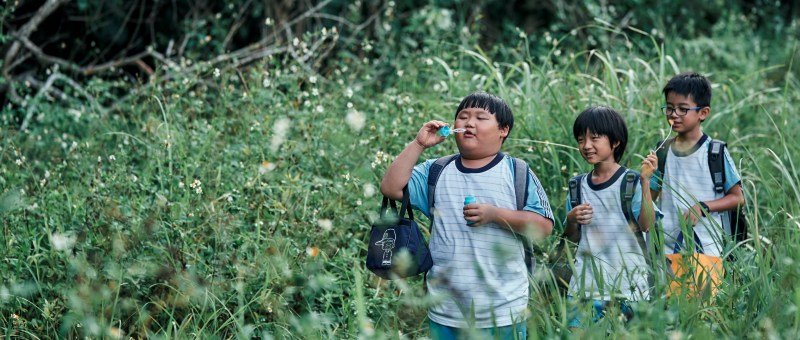
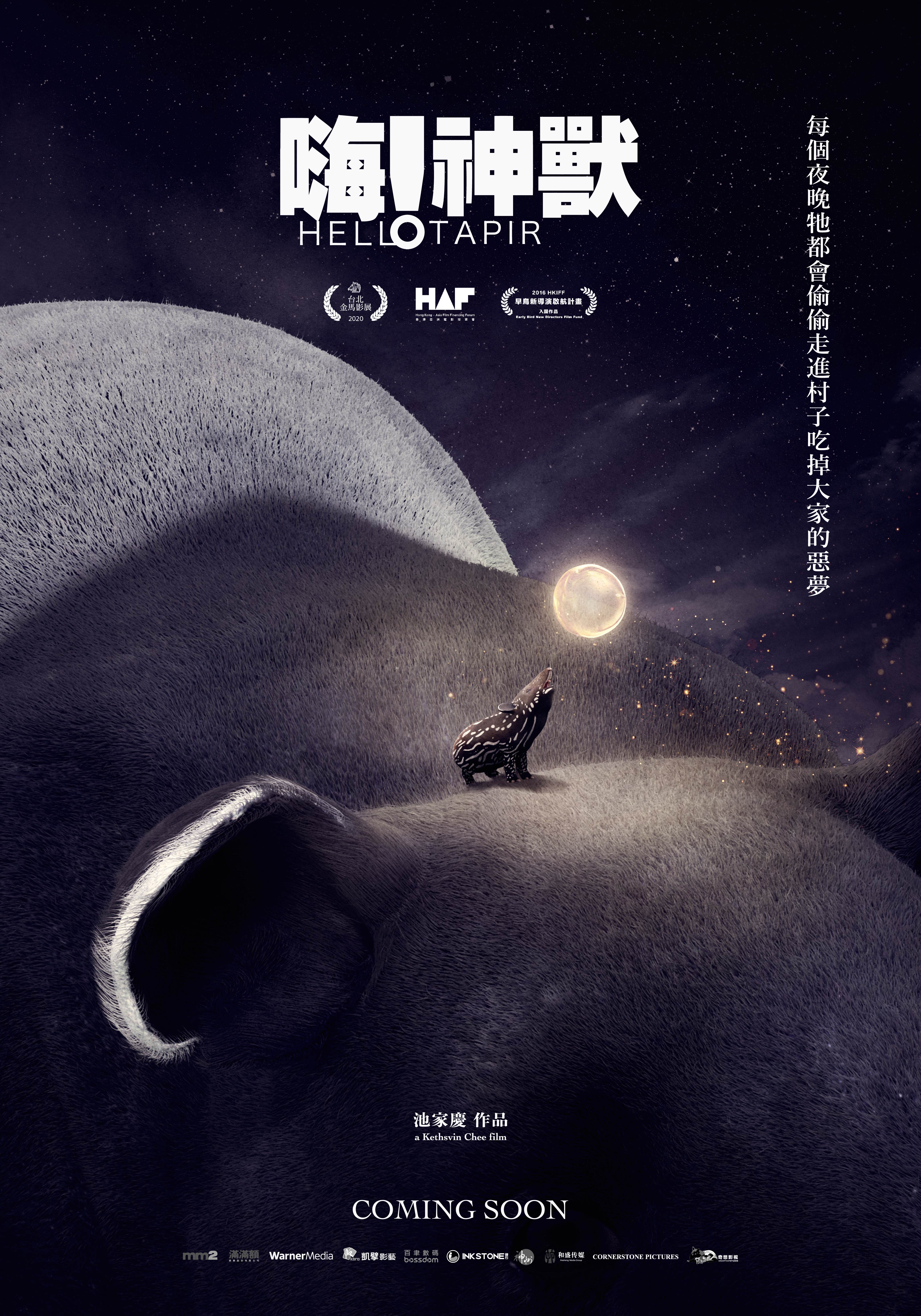
“In this world, everything disappears eventually” according to the prophetic words of the absent father of young Keat in Kethsvin Chee’s charmingly retro children’s fantasy adventure Hello! Tapir (嗨!神獸, Hāi Shénshòu). At heart a tale of grief and a small child’s acceptance of death, Hello! Tapir is also one of gentle adventure as the hero and his two friends search for tapirs in the undergrowth but eventually discover an accommodation with loss in the knowledge that nothing’s ever really gone even if you can’t see it. 

Keat (Bai Run-yin) lives in a small fishing village with his fisherman father (Lee Lee-zen) and grandma (Lü Hsueh-feng) who sells seafood at the market. Captivated by his father’s improbabe tale of having encountered a tapir who eats people’s nightmares in the forest, Keat implores his dad to take him to see it too but Keat’s father Sheng is always too busy and often reneges on his promises. Ominous winds start to blow when news of a typhoon is broadcast over the radio while Keat is angry that no one woke him before his father left on the boat as he had asked them to do. Sure enough, not long after Keat discovers a commotion at the harbour and gathers there has been some kind of accident at sea. His father hasn’t come home and his grandma is frantic but he’s just a little boy and no one is telling him anything. 

Told from a child’s point of view, Chee’s melancholy tale perfectly captures the confusion and resentment of a small boy in the midst of crisis. Keat cannot conceive of the idea his father may never come home again, replying to his friend’s questions that he’ll be back maybe tomorrow or the day after that. After all, he was supposed to take him to see the tapir. Because he’s sure his dad’s coming back, he grows resentful towards his recently returned mother (Charlie Yeung Choi-Nei) who left the family some time previously and had been living in Taipei and his grandmother for taking his father’s place away by boxing up his clothes and preparing to sell the fishing boat which came back empty on its own for scrap. 

Meanwhile he attempts to secure his father’s legacy by searching for the tapir on his own, encountering a baby which later leads him into the forest and towards its giant parent sucking on golden nightmare orbs all the way. Tapirs are obviously not native to Taiwan and so their presence is as decidedly unexpected as their unusual appearance. You would’t expect to see one wandering through town unless it had recently escaped from a zoo, but they are perhaps Keat’s way of processing the loss of his father the adult tapir gently showing him what it was he most wanted but feared to know while comforting him with its reassuringly warm presence. 

On the cusp of adolescence, Keat finds himself squarely between two sets of overlapping worlds caught between the fantasy of nightmare-eating tapirs and the reality of his grief while also remaining firmly in the realms of childhood having innocent adventures with his two friends as they try all sorts of tricks to draw out the mystical creatures just as his mother deals with the difficulties of planning a funeral and making plans for the future without overburdening her son with impending change. Nobody tells Keat anything because he’s just a child and they think he won’t understand, but he understands that they’re not telling him and the knowledge further increases his sense of loneliness and alienation left entirely alone with his grief and anxiety. 

A beautifully drawn magical realist fable, Chee’s charmingly old fashioned kids fantasy adventure makes the most of its idyllic seaside setting replete with a warm and friendly atmosphere despite its concurrent tragedy. Keat is forced to face the reality of his loss, but does so while maintaining a sense of wonder for the natural world secure in the knowledge that all things disappear in the end, but it isn’t the end of the story and death is merely another part of life. Warm and empathetic, Hello! Tapir paints its coastal setting with an uncanny sense of magic coupled with a cosmological sense of security as its young hero begins to come to terms with his loss thanks to the gentleness of sleeping creatures. 


Hello! Tapir streamed as part of this year’s Fantasia International Film Festival

Original trailer (English subtitles)

The Sadness (哭悲, Robert Jabbaz, 2021) [Fantasia 2021]

“You’re just like me, violent and depraved” a crazed aggressor sneers, almost victorious in his defeat in having goaded his target into bashing his head in with a fire extinguisher. A defiantly depraved tale, Robert Jabbaz’ zombie-adjacent horror The Sadness (哭悲, Kū Bēi) as the title implies suggests that the propensity for violence and cruelty lurks within us all merely waiting for some kind of trigger, in this case a deadly virus, to set it free. 

The film opens, however, with tranquility as young couple Jim (Berant Zhu Ting-Dian) and Kat (Regina) cuddle in bed before Kat’s alarm goes off. The mood begins to sour when Jim reveals they’ll have to cancel their upcoming holiday because he’s been offered work on a film and that is apparently something that’s been thin on the ground. As he turns on the TV, a pundit and a scientist argue about the “Alvin virus” which many people apparently believe is only a cold, though those people are obviously quite wrong (sound familiar?). The virologist continues to explain that the danger is the virus contains similar genetic material to rabies and he fears it may soon mutate into something seriously worrying. In any case, he finds it suspicious the virus has fetched up on the eve of an election and hints at the dubious immorality of politicising a public health crisis. Jim first encounters the afflicted on spotting an elderly person in a bloodstained nightgown who later turns up at his local cafe to bite several members of the clientele who then turn on him seemingly consumed by a violent and irrational rage.

Kat meanwhile experiences something similar as a madman with a knife rips through the carriage of the MTR in which she is currently sitting. Yet, as we discover, the violence and sadism is not entirely indiscriminate but informed by the underlying “sadness”, resentment, and anxieties of the infected person. Kat’s day had got off to a bad start when the middle-aged creep (Wang Tzu-Chiang) sitting next to her kept trying to chat her up only to go off a rant about the entitlement of pretty women when he’s only trying to be friendly after she threatens to call the police because he’s ignored all of her polite hints and requests to be left alone. Crazed, the train creep continues to stalk her determined to get his revenge. His rage and violence is fuelled by the pre-existing condition of his misogyny. 

The fact that Kat appears to be otherwise immune to the virus may suggest that she is a fairly well-adjusted person with no underlying sadnesses or personal resentments, yet she is apparently still capable of great violence when presented with the right trigger(s), in this case being existential terror. The infected meanwhile profess themselves in a state of ecstasy as they indulge their darkest desires. Jabbaz’ gore-fuelled odyssey is in truth a little too depraved, the sickening scenes of sadistic violence accompanied by copious amounts of blood not to mention scattered innards and severed limbs. “This is my kiss, I’m kissing you to death” a woman preens while holding a circular bone saw seconds after revealing that she always had trouble making friends but is beginning to feel as if she’s finally found her crowd. 

A minor irony is that this pandemic anxiety is expressing itself in Taiwan which up until recently at least had done a stellar job of suppressing COVID-19 largely thanks to the opposite of the impulses on display here. Yet there is also something of obvious satire in certain people’s refusal to listen to the science even as the president’s head literally explodes live on TV, while Jim picks up a brochure for reasonably priced apartments only to be told that the pandemic has also “depressed” the property market. His next-door neighbour, Mr. Lin thinks Alvin is a conspiracy theory designed to create economic instability those in the know can profit from later. He seems to have a nasty cold, but refuses to go to the doctor because it seems like a lot of bother when they’re just going to tell you to stay at home and rest. Mr. Lin’s theories are in part vindicated by another scientist who also thinks the government has been ruled by political concerns, too afraid of the economic consequences of a lockdown to contemplate ordering one even while knowing not to do so endangers public health. “Everything must be politics. There’s no room for truth” he laments, though as it turns out he isn’t free of his own darkness either. 

Not for the faint of heart, Jabbaz’s absurdist satire is a depraved journey through every kind of human degradation imaginable darkly suggesting that sadistic violence is never as far from the surface in the ordinary person, or indeed in ourselves, as we’d like to believe. “It feels like I’ve finally found a purpose in life” a member of the infected dreamily explains, embracing his life of ultra violence apparently freed of the burdens of contemporary civility. 


The Sadness screened as part of this year’s Fantasia International Film Festival.

Original trailer (English subtitles)
Anima (莫尔道嘎, Cao Jinling, 2020)

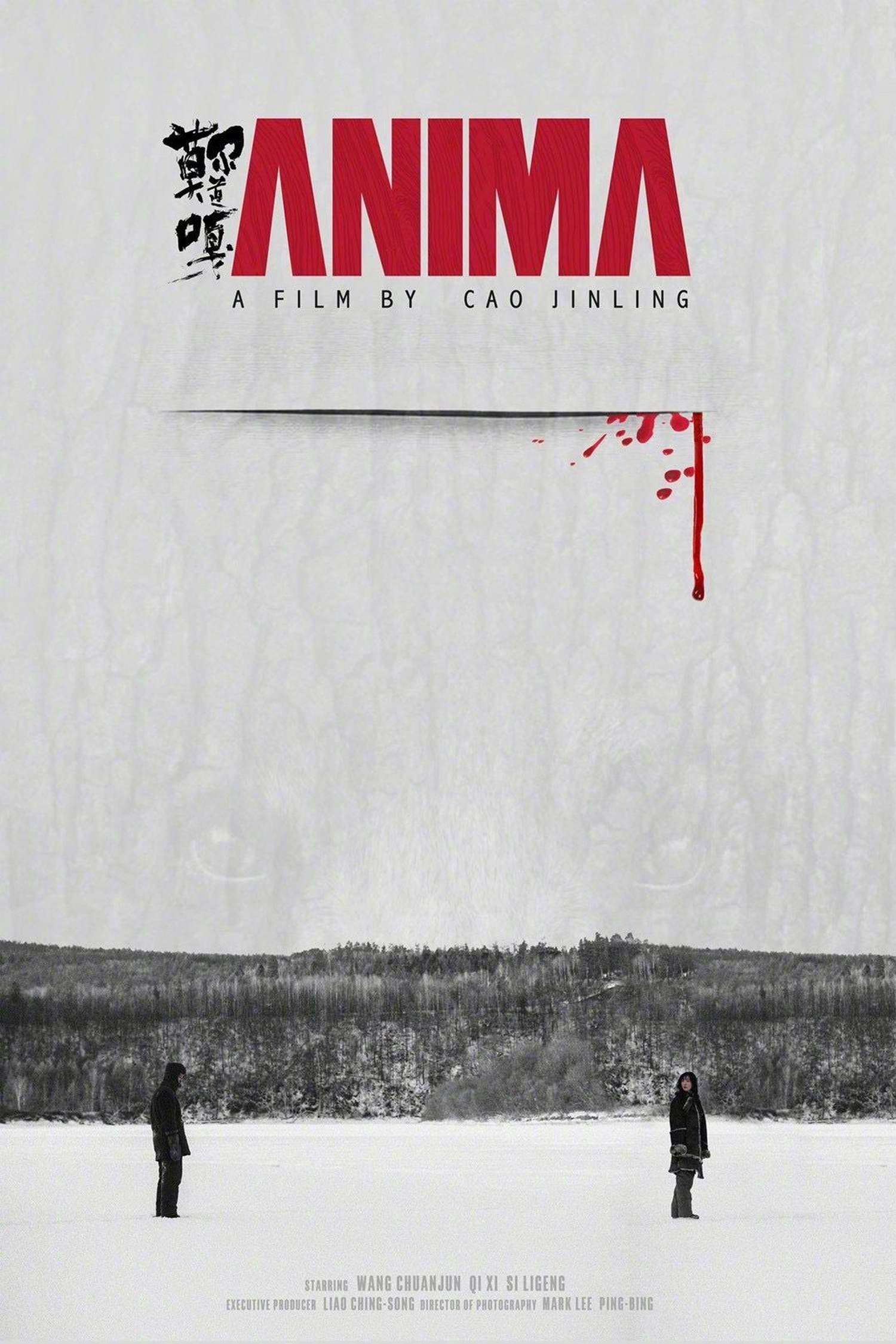
“The trees are not yours. You can’t protect them” an adopted son is repeatedly told, except they are his to the extent that they belong to everyone and the consequences of not protecting them, as he will sadly discover, may prove catastrophic. Set mainly in the 1980s in the remote Inner Mongolian mountain region of Moerdaoga National Forest Park, Cao Jinling’s timely eco drama Anima (莫尔道嘎, Mòěrdàogá) asks what happens when you pull the pegs out of the earth and then take them to market, linking the ‘80s economic reforms with the advent of environmental destruction, but eventually finds a kind of serenity in the beauty of the natural world and man’s innate connection with it. 

Linzi (Wang Chuanjun), so named because he was found abandoned in the forest as a baby, recounts his tale as a letter to the son he has never met beginning with the moment of childhood trauma which forever altered his destiny and set him at odds with adoptive brother Tutu (Si Ligeng). Out playing one winter while the grownups hunted, Linzi fell into an ice cave and found himself face to face with a bear. Though he felt sure the bear would not harm him, it panicked on hearing his mother’s cries. Hoping to save his brother, Tutu shot the bear but their mother was also killed and, as bears are sacred to the indigenous Ewenki tribe, finds himself an outcast for this act of spiritual transgression. The three remaining family members move to the edge of the forest in order to evade the bear’s curse, eventually joining the local logging industry though Linzi finds himself conflicted in his love of nature while all around him are content to ride roughshod over its majesty. 

While Linzi remains a guardian of the forest living a traditional rural life, Tutu is modernity personified falling in with a gang of shady gangsters running an illegal logging and smuggling operation. While the smugglers might be thought of as the bad guys, the logging company are little better. Linzi’s boss expresses exasperation with his reluctance insisting that if they don’t cut the trees down the smugglers will while constantly banging on about his quotas. Obsessed with making money and fearful of an oppressive social order, no one is thinking very much about the long term consequences of deforestation even as Linzi tries to explain to them that it takes a long time to grow a tree and they’re in danger of running out. When the literal flood comes, it will have devastating consequences for all involved. 

Aside from their differing views on the tradition/modernity divide, the relationship between the brothers further declines when Linzi encounters a feisty widow living alone in the forest (Qi Xi), herself transgressively killing bears for reasons of revenge seeing as her late husband was eaten by one. Linzi shyly falls in love with her, but so does Tutu who finds it difficult to accept the idea that his awkward younger brother has got himself a wife. “I am cursed forever” Tutu dramatically cries after having committed a double transgression of killing another bear and presenting its pelt as a wedding present, and then attempting to rape the bride. So traumatised is he by a sense of spiritual corruption that Tutu no longer feels connected to nature, an exile from the natural world, and self-destructively embraces the worst aspects of modernity believing that he deserves no better. 

Yet even Linzi finds himself betraying his ideals in order to feed his family, falling victim to the “tree breath spell” after participating in the removal of a great old tree. People keep telling him that he doesn’t own the trees and therefore has no right to decide what is done with them, but like everyone else he’s a man of the forest continually displaced while his world is dismantled all around him. He tries to warn the loggers they’re going too far, but they don’t listen to him until it’s already too late. The authorities attempt to fix the problem with a program of “reforestation” but if the price of untempered capitalism is the destruction of the natural world it is nothing more than an act of intense self harm. Linzi attempts to hold back the tide, but is himself exiled from modern society, a sprite bound by the forest unable to leave its boundaries and condemned to watch over it for all eternity as if in penance but also in deep love for the wonders of the Earth which few are now privileged to see. 


Anima screens on Aug. 8 at Film at Lincoln Center – Walter Reade Theater as part of this year’s New York Asian Film Festival.

Original trailer (English subtitles)
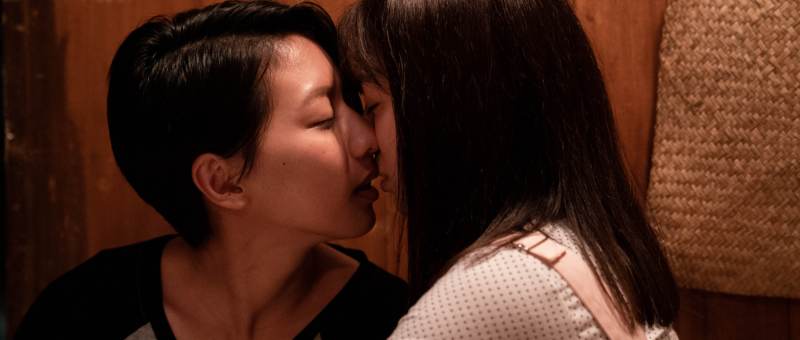
The Two Lives of Li Ermao (他她:李二毛的双重人生, Jia Yuchuan, 2019)

“The only thing I’ve ever wanted is someone with whom to live a normal life” Li Ermao explains thinking she’s found it only to have it slip through her fingers once again. Photographer Jia Yuchuan first met Ermao while working on a project with the LGBT community becoming as she describes it something like a big brother. Following her over 17 years, Jia’s documentary The Two Lives of Li Ermao (他她:李二毛的双重人生, Tā Tā: Lǐ Èrmáo de Shuāngchóng Rénshēng) witnesses her constant search for acceptance in a rigid and conservative society the pressures of which also contribute to her sometimes self-destructive behaviour. 

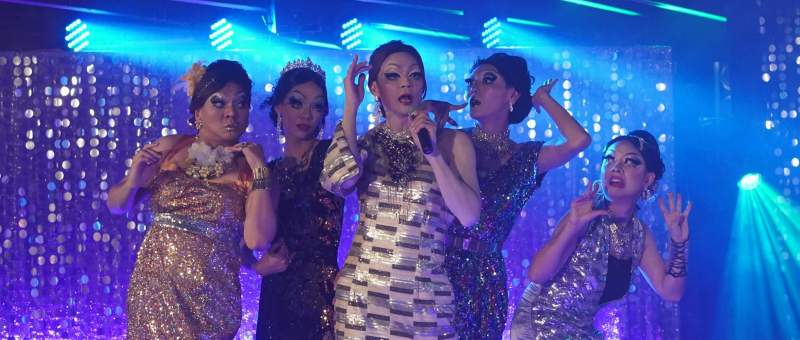
As Ermao explains in an opening onstage monologue, she is not a man dressing as a woman though once thought of herself as crossdressing before living as a “ladyboy” and now identifying as a transgender woman. Jia begins in a sense with her high point at which she has achieved a degree of success as a cabaret performer despite having no formal training in singing and is in what seems to be a positive and loving relationship with a young man, Jiang. Things start to go wrong when Ermao fails to capitalise on the possibility of recording an album while her self-destructive gambling habit begins to eat away at her relationship with Jiang who eventually leaves her. 

As Jia explains, Ermao would often drop out of contact with him for unexplained periods of time despite describing him as an indispensable big brother. After another self-destructive episode renting out her spare room to randomers from the internet to escape her loneliness, Ermao next calls Jia to introduce him to her new boyfriend, Long, over whom she has apparently just attempted to take her own life prompting him to call the police which ends both with her being evicted by her fed up landlady and arrested for the possession of illegal drugs. 

Worried about her elderly mother, Ermao takes Long with back to her hometown but quickly finds herself conflicted in this even more conservative environment where she’s “Li Guomin’s son”, the villagers by turns bemused and scandalised by her feminine appearance. Ermao ran away to live on the city streets following the death of her father who, we learn, was a notorious people trafficker who kidnapped and sold women and children including Ermao’s younger brother who he sent away to Hainan while rumoured to have eaten the corpse of the stillborn baby who would have been Ermao’s elder. This might go someway to explaining the animosity with which she is held in the village, along with the fact that as she’s been away so long and was not expected to return other farmers have long since colonised her land and are not minded to return it. Stubborn, Ermao pitches a tent and tries to make a living chicken farming on the tiny patch that remains in the hope of funding the completion of her confirmation surgery but is finally forced out by the local mayor who describes her as an “unwelcome stranger” in their community and asks her leave. 

Falling still further, Ermao finds it impossible to gain steady employment as a transgender woman eventually when getting back touch with Jia having made the decision to essentially detransition, preparing to have her implants removed while presenting as male in order to continue working at a factory producing components for iPhones. She fears her coworkers finding out that she is transgender and for good reason as she’s later brutally beaten by a male middle-aged colleague. Despite this she seems in a sense happier to have been reaccepted by her hometown, but soon finds herself rejected once again on learning that she is HIV+ and coming to the conclusion that she is “harmful to others” and should choose self-isolation. 

Despite their long years of friendship, Jia is not always sympathetic to Ermao’s plight nor does he condone her sometimes self-destructive behaviour or tendency to overdramatise while uncomfortably asking where a woman like Ermao belongs in the contemporary society before finding that it may have no real place for her. Rejected in the city and finding no refuge in her hometown, Ermao’s reversion to a male persona cannot help but feel like a defeat, her gradual decline from brassy cabaret star to melancholy recluse a result of her battering at the hands of an unwelcoming society unprepared to accept those who do not conform to its rigid ideas of gender and sexuality.


The Two Lives of Li Ermao screens at Genesis Cinema on 19th July as part of this year’s Chinese Visual Festival in partnership with Queer East.

Love Poem (情詩, Wang Xiaozhen, 2019)

“Dedicated to my dear wife” runs the ironic closing statement of Wang Xiaozhen’s meta marital drama, the equally ironically named Love Poem (情詩, Qíngshī). A love poem does indeed appear if in slightly different contexts, full of adolescent ardour and unrealistic promises of eternal devotion, while the marriage at the film’s centre begins to fracture under the weight of its focus. “I went too far to make this film” director Xiaozhen sighs, breaking the fourth wall in a moment of self-reflection that asks what’s left behind if you mine your personal life for art. 

Wang plays, at least, a version of himself, a film director harangued by his extremely fraught real life wife Zhou Qing who, in the handheld claustrophobic opening sequence which consists entirely of a long take focussed solely on her as she holds their snack-obsessed daughter in the back of the car, repeatedly accuses Xiaozhen of having an affair before asking for a divorce when they reach the house of her grandfather who lies dying and bedridden. The pair argue about the usual things, money mainly, but also the application of it. Xiaozhen is irritated by what he sees as his wife’s disrespect of his family having left their daughter with his parents over the summer but given them a token payment which might be the most insulting of all, no real use in failing to cover the child’s expenses while commodifying a family service which ought to be given if not exactly freely then with the expectation of reciprocity. She meanwhile later accuses him of exploiting her father who died shortly afterwards in order to make to his previous film while also failing to care for the family economically. He alternates between angrily implying that he indeed has been having an affair and pleading with his wife not to divorce him, claiming that he’s done nothing wrong while admitting that there might be someone else he fancies but it’s never gone further than that. When Xiaozhen gets into the back of the car with his wife, the fourth wall seems to dissolve entirely. He tries to comfort her, reminding Qing that it’s “only acting” even as their personal lives seem to have bled into the screen unbidden. 

Appearing an hour in only after this emotionally intense conclusion to the opening episode, the title card divides one “scene” from another as we find the couple again only changed. Xiaohzen picks up Qing, the camera now static and mounted on the bonnet, but this time she’s wearing glasses and has a calmer, softer demeanour. We can gather that in this scene she’s roleplaying the part of the “other woman” her first half counterpart was so incensed by, though the setting has changed to some years previously as Xiaozhen crassly elaborates on his romantic dilemma revealing that his girlfriend may be pregnant in which case he’ll be getting married and becoming a father, before confessing his feelings to another woman. She rightly takes him to task for his inappropriate declaration of love, taking the other woman’s side, while he expounds on his now or never emotional logic insisting that he had to say something now before the window forever closes but indifferent to the consequences for either of his two women. Once again the lines start to blur, the conversation diverges from its scripted direction while Xiaozhen the director reasserts himself. Qing becomes upset, reminding him that she’s not a professional actress and that his insistence in forcing her into the role of his lover is nothing if not cruel. “You don’t even see me as human” she complains, wondering if Xiaozhen views her as anything more than a prop for his movie making, while he admits in a shockingly honest moment that “seeing you cry makes me feel happy”.  

What are we to make of these scenes from a marriage, scenes and a marriage which are clearly in some senses and others “staged”? Xiaozhen is both director and husband, terrorising his wife and exploiting his relatives in order to create his art, but perhaps discovering that when you mine your personal life for inspiration all that’s left is a burrowed out husk of a former love. Then again, is this film actually a love poem in itself, an apologia of an imperfect husband to a long-suffering wife forced into a role she might not have elected to play? Truth and fiction and seem to blur uncomfortably in Wang’s meta meditation on the relationship between art and life, the performative qualities of “husband” and “wife”, and the potential costs of acting out your personal dramas onscreen but even in his self-lacerating cruelty Wang leaves himself the escape valve of irony as the emotional intensity dissipates in the Hong Sang-soo-esque cutesiness of the closing titles. 


Love Poem screens at the BFI Southbank on 17th July as part of this year’s Chinese Visual Festival.

As We Like It (揭大歡喜, Chen Hung-i & Muni Wei, 2021)

“It’s the crazy madness we call love” according to a series of bemused bystanders in Chen Hung-i and Muni Wei’s modernist take on the Shakespeare play, As We Like It (揭大歡喜, Jiēdàhuānxǐ). As the reframing of the title implies, no longer pleasing “you” but “we”, Chen and Wei’s all-female adaptation is an attempt to reclaim the stage taking a swipe at the Elizabethan prohibition on actresses while undermining the notion of a gender binary as the various lovers pursue their romantic destiny in defiance of heteronormative ideas of sex and sexuality. 

Rather than palace intrigue, however, the force which sends Rosalind (Puff Kuo) into the forest is romantic failure coupled with filial and financial anxiety. Her father, the Duke, has been missing for seven years and will shortly be declared dead at which point his company will be divided between the father of her best friend, Celia (Camille Chalons), and a random young man named Orlando (Aggie Hsieh) she was previously unaware of. Hoping to locate him, she winds up at a street fight in which she becomes Orlando’s eyes and he falls in love with her at first sight. For unclear reasons and drawing inspiration from traditional Taiwanese opera, Rosalind then decides to pose as a man, taking the name of Roosevelt, and later teaming up with Orlando in the hope of finding the Duke. 

Despite its best intentions, the awkward irony at the centre of As We Like It is that it accidentally ends up re-inforcing the patriarchal ideology it otherwise seeks to critique in that Rosalind’s romantic adventure turns out to be a series of manipulations at the hands of her long absent father. A romantic exile, it is she who remains unsure of her feelings, unwilling to admit the possibility that she is finally in love with Orlando and hiding behind the mask of masculinity in order to test her would-be-lover’s sincerity. The strange scavenger hunt the pair are forced to follow in order to find their way to the Duke amounts to a forced courtship, each of the pitstops another level up in terms of romantic intimacy culminating in an oddly eroticised ear cleaning date. While Orlando vacillates over whether it’s OK to fall for a boy because he reminds you of a girl, Rosalind is tasked with rediscovering her faith in romantic love which she does but only after talking to her father first. 

Celia, by contrast, seizes her own agency by defiantly seducing sometime antagonist Oliver (Joelle Lu) and becoming pregnant by him even before marriage. In this instance, Oliver is still the villain attempting to steal the business, even going so far as to send his thugs to chase Orlando down, the implication being that Celia’s love softens and then corrects him so that he might reconcile with his brother. Yet the final showdown introduces a new villain in the figure of Charles (J.C. Lei), Oliver’s chief thug apparently harbouring an unrequited crush on his boss and therefore extremely resentful of Celia. Yet her taunting of him asserting that hers is the final victory because she has done what Charles never could in conceiving Oliver’s child seems to fly in the face of the film’s otherwise egalitarian views on love, negating not only same sex love but also love between those unable to produce children uncomfortably heading back into a gender binary which makes maternity the essence of womanhood. This message is perhaps undercut by the closing moments in which Oliver and Celia argue about whether to buy boy clothes or girl clothes for the baby only for the shop assistant to advise a neutral white and cede the “choice” to the child in time but nevertheless seems an odd means of defeating the spectre of the unexpected antagonist driven to a dark place by the “madness” of love. 

Love’s “madness” may be the central theme though the sense of a world turned upside down is undermined by Celia’s maintenance of her position as a princess rather than relegation to the role of a peasant even as it affords her unexpected agency over the surprisingly pliable Oliver. The world’s uncanniness is fulfilled by its unreachability, set in an “internet-free” district of near future Taipei enhanced with frequent onscreen graphics where people send each other “slo-express” letter-pressed telegrams in place of “text messages” delivered by the human touch, implying perhaps that our increasingly depersonalised society is actively frustrating the path to love even while the idea of the idyllic and utopian Forest of Arden seems to have been co-opted by venal developers. Nevertheless, journeys end in lovers meeting to quote another play and love’s madness is eventually cured in its fulfilment. 


As We Like It screens on July 8 and streams online in Switzerland until July 10 as part of this year’s Neuchâtel International Fantastic Film Festival (NIFFF). Readers in London will also have the opportunity to see As We Like It at Genesis Cinema on 16th July courtesy of Chinese Visual Festival & Queer East

Original trailer (English subtitles)

Hail, Driver! (Prebet Sapu, Muzzamer Rahman, 2021)

“Big city, small people, tough life” a jaded sex worker commiserates, slowly bonding with an illegal taxi driver trying to find a way to live in contemporary Kuala Lumpur. The ironically titled Hail, Driver! (Prebet Sapu) casts its cosmically unlucky hero adrift, literally roaming the city and coming in a sense to a new understanding of it thanks to his impromptu conversations with fares many of whom are only slightly more lucky than he is. Yet while his radio constantly updates him on the upcoming elections, he struggles to believe that real change is possible or that he will ever find a way out of his itinerant poverty. 

Aman (Amerul Affendi) was once a writer, but times have changed and no one buys magazines anymore. He’s been living with his sister in the city, but his brother-in-law makes no secret of his unhappiness with the situation, arguing with his wife about Aman’s inability to contribute economically to the household. Hoping to make some extra cash, he decides to make use of his sole inheritance from his late father, a rundown but reliable and recently serviced vehicle, to become a driver with ride hailing app Toompang. The only problem is that Aman has no official driver’s licence and is unable to get one because of his colour blindness, while the car is technically not of a sufficient standard to be used as a taxi. Paying a middle man for fake documents, he begins working but is quickly made homeless when his brother-in-law changes the locks while he’s out one day and announces he’s bringing his own brother to live with him instead forcing Aman to make the car his home, using public conveniences to wash and occasionally sleeping in 24-hr establishments such as laundromats. 

Aman’s plight is an encapsulation of the problems of the modern city, the radio explaining that house prices are a major point of interest in the upcoming elections. He searches for affordable accommodation but finds nothing suitable while quizzing his various fares about their living conditions, whether they rent or own their homes and how much they pay. One woman with a young son explains that of course she rents, there’s no way she could buy on her low salary while starting a business of her own is, she claims somewhat crassly, a no go because of the “flock of immigrants” in the city. Another of Aman’s fares reveals he came from Bangladesh some years ago, works in a hotel, and shares a reasonably priced apartment with his brother. Meanwhile Aman ferries sleazy politicians and their much younger mistresses to just such establishments. 

It’s his innate kindness, however, which eventually allows him to move forward after accidentally bonding with Chinese-Malaysian sex worker Bella (Lim Mei Fen) who came to the capital from Penang in search of a better future. She offers to let him use her spare room in return for his services getting to and from her clients, but even as they begin to develop a kind of mutual solidarity Bella confesses that she’s never felt a sense of belonging in the capital while her abandonment issues, her mother apparently living in the US after leaving her behind at five years old, have left her feeling spiritually homeless. “Not all dreams can be achieved” she advises Aman, each of them united in a sense of defeat as they reflect that nothing ever changes hearing the news that the party in power has again won the elections despite the ongoing problems in the city. 

Filmed in a crisp black and white, reflecting both Aman’s colour blindness and sense of hopelessness, Hail, Driver! paints an unflattering portrait of life on the margins of a burgeoning metropolis but eventually finds a degree of possibility in the unexpected, perhaps in its way transgressive, connection between the Malay taxi driver and Chinese sex worker who eventually find a sense of belonging, of home, in each other even as they bond over shattered dreams and urban disappointment. A striking debut feature Muzzamer Rahman’s empathetic drama captures the elusive city in all its unobtainable beauty, apartment blocks literally towering oppressively over the kindhearted Aman, but finally suggests that freedom may lie only outside of its repressive borders. 


Hail Driver! streamed as part of this year’s hybrid edition Udine Far East Film Festival.

Original trailer (English subtitles)
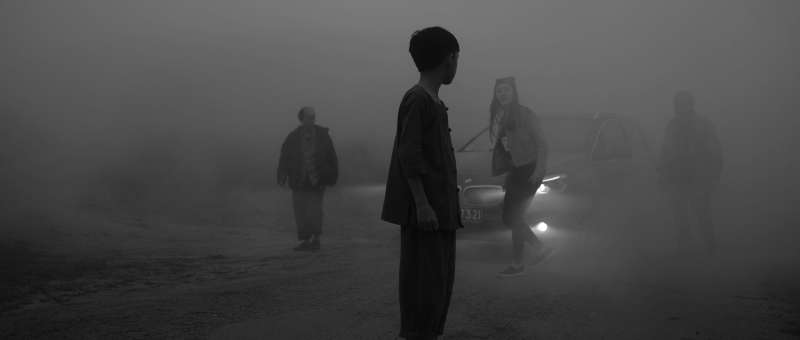
Like Father and Son (拨浪鼓咚咚响, Bai Zhiqiang, 2020)

A grieving father and orphaned little boy eventually find mutual solidarity in an increasingly duplicitous society in Bai Zhiqiang’s warmhearted road movie, Like Father and Son (拨浪鼓咚咚响, Bōlànggǔ Dōngdōng Xiǎng). Travelling the modern China in search of the boy’s missing father, the pair encounter only greed and selfishness but discover perhaps something in each other that repairs their sense of despair as they bond in their shared sense of loneliness, each in their own way “left behind” and looking for someone who’ll look for them. 

Pedlar Guoren (Hui Wangjun) makes a living transporting goods from the cities and selling everyday items to customers in remote villages, even running a digital portrait service for those without access to photographic equipment most of which seem to get used for funerals. It’s in one such village that he first encounters little Madou (Bai Zeze), a “left behind child” raised by his grandmother but rejected by the other kids and longing for his absent father to return. Having overheard Guoren mention that he’s headed to the town where he believes his father is working, Madou tries to catch up to him in the hope of giving him his school report to show his dad so he’ll come back but is unsuccessful. When his grandmother suddenly passes away leaving him all alone, the other villagers seemingly rejecting him, Madou decides to take drastic action stowing away in the back of Guoren’s van only to be discovered after accidentally setting off a box of firecrackers and setting fire to half of Guoren’s stock. Though reluctant, Guoren ends up agreeing to take the boy to find his father in the hope of gaining compensation for his lost merchandise while half suspecting that Madou’s dad may have already moved on. 

Embittered and cynical, Guoren is consumed by grief for his young son who passed away of an illness, displacing his hurt by channeling his pain into anger towards an old friend who he believes cheated him out of money he could have used to pay for additional medical treatment. Perhaps for these reasons he has ambivalent feelings for Madou, at times despite himself sorry for him but also fed up, irritated to have been saddled with his boy when so cruelly robbed of his own. He doesn’t really mean it, but Guoren often cynically suggests selling Madou into China’s child trafficking network if he can’t get someone to accept responsibility for him by paying compensation for all stock that he destroyed.

The frequent, if sarcastic, references to child trafficking are only one example of the ills that plague the modern society. During their journey, the pair find themselves stuck in the mud and despite working together are unable to free the truck only for a passing motorist to stop and offer to help but only for a small fee. Stopping off in a small town, Guoren allows another shop owner to “borrow” Madou for a short period only to discover him being forced to beg in the street with all the money going straight into the shopkeeper’s pocket. Migrant workers they question looking for Madou’s father soon descend into a mass argument about unpaid debts and who owes who, while other labourers hold up cardboard signs featuring their skills in the hope of being hired by passing vans.  

Madou is himself a “left behind child” one of many in modern China raised by grandparents in the country while the parents work in the cities to provide for them. Lonely, Madou longs for his father and blames himself for his continual absence. Guoren meanwhile also blames himself for the death of his son but vows revenge on his friend in order to avoid facing the pain of his grief. They are each in a sense left behind, little Madou breaking down in despair in the realisation that he is entirely alone, that he has no more family and nobody wants him while Guoren clings fiercely to the memory of his son. Awkwardly bonding as they travel, Madou picking up a talent for market selling, the pair eventually develop a sense of connection that begins to heal their familial wounds, Gouren discovering a surrogate son while Madou finds the father figure he’d been looking for. A warmhearted yet also melancholy tale of intergenerational bonding Bai Zhiqiang’s gentle familial drama may find itself in an increasingly greedy and self-interested society but eventually allows a ray of hope in the genuine connection between the orphaned boy and grieving father.  


Like Father and Son streamed as part of this year’s hybrid edition Udine Far East Film Festival.

Original trailer (English subtitles)
Bumming in Beijing: The Last Dreamers (流浪北京, Wu Wenguang, 1990)

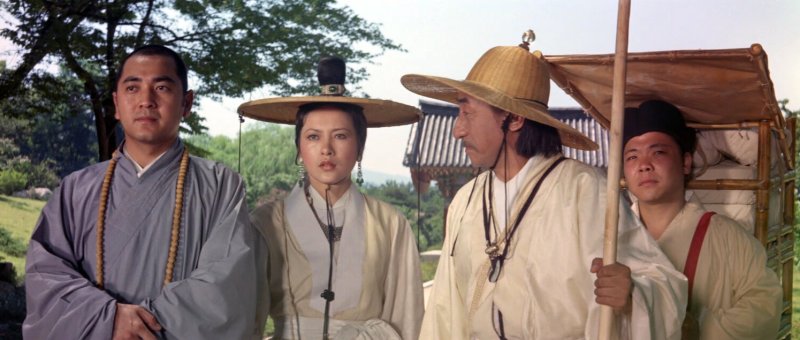
Wu Wenguang’s seminal documentary Bumming in Beijing (流浪北京, Liúlàng Běijīng) opens with a stark title card explaining that it was filmed between August 1988 and May 1990. Perhaps for obvious reasons, the film never mentions what happened between those dates and is in a sense defined by the things it doesn’t say. Often regarded as the father of Chinese independent documentary, Wu’s shooting style breaks with the accepted norms which had favoured meticulous control by shooting handheld and in 4:3 with a grainy camcorder as he interviews his counterculture friends accidentally documenting their lives on either side of an unbreachable divide. 

As the opening explains, his subjects are a group of 20-something bohemians who have each rejected their State assigned jobs and relocated to Beijing, without proper residence permits, to participate in an artistic and cultural revival in which anything seems possible. Zhang Ci was a magazine editor in her hometown but hated it and came to Beijing to be a freelance writer. Zhang Dali studied book binding in the city and stayed on living as a freelance painter, while his classmate Gao Bo did the same thing but is a freelance photographer. Also a freelance painter, Zhang Xiaping was working as a scenic artist in Yunnan and has only recently come to the capital, while Mou Sen, originally from Tibet, is a struggling avant-garde theatre director. 

While perhaps fulfilling the starving artist stereotype, what Wu discovers in the stories of his friends is a sense of despair and inertia at odds with the supposed hopefulness of the times. Ci often appears on the brink of tears as she talks about her life, obviously dissatisfied and uncomfortable with the harshness of her living conditions making use of the facilities at the near by university, offended and perplexed when foreigners compliment her on her bohemian lifestyle. Dali too declares himself bored with Beijing and its dull culture vultures while lamenting that it’s impossible to make a living as a freelance artist, only foreigners have money to buy his paintings and there aren’t many of those around. There is perhaps a sense of artistic rivalry between Dali and Xiaping who appears to have achieved a degree of success preparing for a big solo show while complaining that she hates selling her paintings and would almost rather sell her body. 

Dali and Bo expand on the phenomenon of “Cen Fan” as they sheepishly convince friends currently doing better to spot them dinner, while Bo declares himself a vagabond at heart but also remarks on the various anxieties of living on the margins trying to make rent in a fracturing Beijing. They each insist that they live for their art, Mou Sen certain that there could be no life for him without theatre, but some also dream of more conventional lives, Ci and Dali longing for materialist comforts of a decent home and a car even if in his case he wants these things to facilitate his art rather than to improve the quality of his life. Increasingly despondent, they discuss the idea of going abroad, Ci eventually making a, it’s implied, cynical marriage to an older American man to get a visa to emigrate while Dali eventually marries an Italian and Xiaping an Austrian. When Bo takes a job in Paris, Mou Sen is the only one left behind yet even he had mused on the idea of marrying a European in order to see Europe while admitting the possibility he may find a nice Chinese girl he likes and simply marry her. 

The artists’ mass exodus seems to run in tandem with the shockwaves of Tiananmen, as if they have given up on the prospect of social revolution and concluded that their only future lies abroad. Shortly before we are told she has left for Vienna, Xiaping appears to suffer a period of mental distress culminating in a public breakdown in a KFC from which Mou Sen and Wu himself had to rescue her, an incident which seems overly pregnant with symbolism as if the rapid changes of the modern China have fractured her mind. Wu never mentions Tiananmen, how could he, and it seems he encountered a degree of resistance including distressing footage of Xiaping’s manic episode (not for reasons of taste or privacy but shame on the part of the authorities), but the sense of painful defeat echoes all the same in a well placed title card as the artists make their exit signalling both the death and the failure of this short-lived counterculture movement. 


Bumming in Beijing: The Last Dreamers is currently available to stream in the UK as part of the Chinese Cinema Season.

The Road (大路朝天, Zhang Zanbo, 2015)

“Build a good highway and honour local people” runs a banner at a construction site in Zhang Zanbo’s observational doc The Road (大路朝天, Dàlù Cháotiān), though as we’ll discover in the end they’ll do neither. An allegory for the progress of the modern China, Zhang’s chronicle of a Hunan highway lays bare the various states of decay at the centre of a contradictory society in which money rules all and there is no longer any such thing as wrongdoing only acts which must be compensated for. 

Divided into four sections, Zhang’s documentary first asks us, indirectly, who the highway is for. The State began this project in 2009 as part of an economic drive fuelled by a good old-fashioned public works programme improving infrastructure across the country. Yet the highway will have little direct benefit for those who live beside it, something to which the construction teams seem to pay little mind. An elderly woman living alone in a traditional home pleads with a team blasting away at the mountain behind her to stop because they still haven’t compensated her for damage to her house, but they routinely ignore her and later the son who returns to advocate on her behalf. Because of their explosions, the old woman has a hole in her roof and being elderly would not be able to repair it herself but the construction team continue to refuse to help, irritatedly blaming her for not understanding them because they speak different dialects while fobbing her son off explaining that he needs to contact a different department because compensation and repairs are not in their remit. 

A secondary problem is that though the highway is a government project it’s been outsourced to a private engineering firm who view their responsibility solely to fulfil the contract and build the road while the Party officials who hired them utter vaguely menacing phrases about quashing any and all opposition. The locals often don’t seem to have been aware that any construction would be taking place or that their land and homes may be zoned for demolition. They complain that they’ve not received compensation they were promised for previous infractions and largely remain uncooperative while the construction teams assume that they’re simply angling for more money while insensitively digging up old graves and destroying ancient shrines still in use by the local community. Saving a giant Buddha statue one of the construction leaders seems to feel some remorse, chastened by another bystander that Buddha is unlikely to look fondly on him now he’s put him out in the rain. The team then erect a makeshift canopy hoping at least to keep his head dry. 

Another farmer meanwhile complains that his tree is holy and has an earth deity underneath it, advising the team to get a priest to bless it first only to be reminded that there’s no way on Earth the Communist Party could be involved in something so superstitious. The farmer lets rip, openly calling the Party greedy and corrupt while others in the village agree that the State continues to confiscate their property without warning or fair compensation. “The government owns you and your tree!” the representative claps back, denying the locals any sense of personal agency as he continues to encroach on their daily lives, merely reminding them they’ll be adequately compensated for relocating which many of them, including the old lady and her son, eventually do.

Compensation is always being promised but is rarely delivered as the labourers find to their cost, offered danger money and bonuses for working in obviously unsafe conditions but refused even time off or expenses when injured on the job. Ironically enough, workers’ rights are at the forefront of no one’s minds even as a bust of Chairman Mao (born in this very area) rests on the boss’ dashboard. When they ask for fair pay or treatment, the workers, like the locals, are accused of being selfish and money grubbing actively standing in the way of their nation’s progress. Instead of looking after their employees, company bosses schmooze local authorities, often handing out little red packets to smooth the path ahead but the construction firm too eventually finds itself on the receiving end of governmental extortion when the local road bureau try to shut them down over missing permits and later send in armed thugs when they refuse to pay leaving some employees in the hospital with multiple stab wounds awaiting further compensation either from their company who put them in a dangerous position or from the state authorities. 

If all that weren’t worrying enough, inspectors at the site find multiple issues with build quality that could endanger public safety. They seem frustrated that corners have been cut and insist that certain sections be entirely rebuilt before the project can be passed. 37 bridges had apparently collapsed in China since 2007 presumably because of the same lax safety culture while it seems the company was never penalised for breaching regulations in part because of all that schmoozing. The workers and the locals, we later learn, eventually got a degree of compensation, but Zhang’s unflinching doc nevertheless lays bare the degree to which the modern China continues to consume itself in its all encompassing obsession with “modernisation”. 


The Road is currently available to stream in the UK as part of the Chinese Cinema Season.