Suburban Birds (郊区的鸟, Qiu Sheng, 2018)

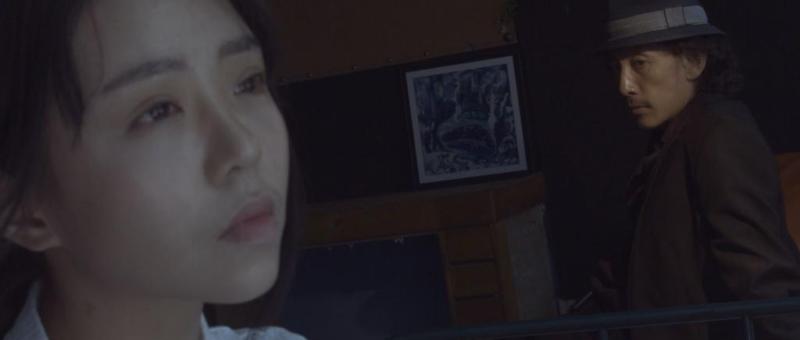
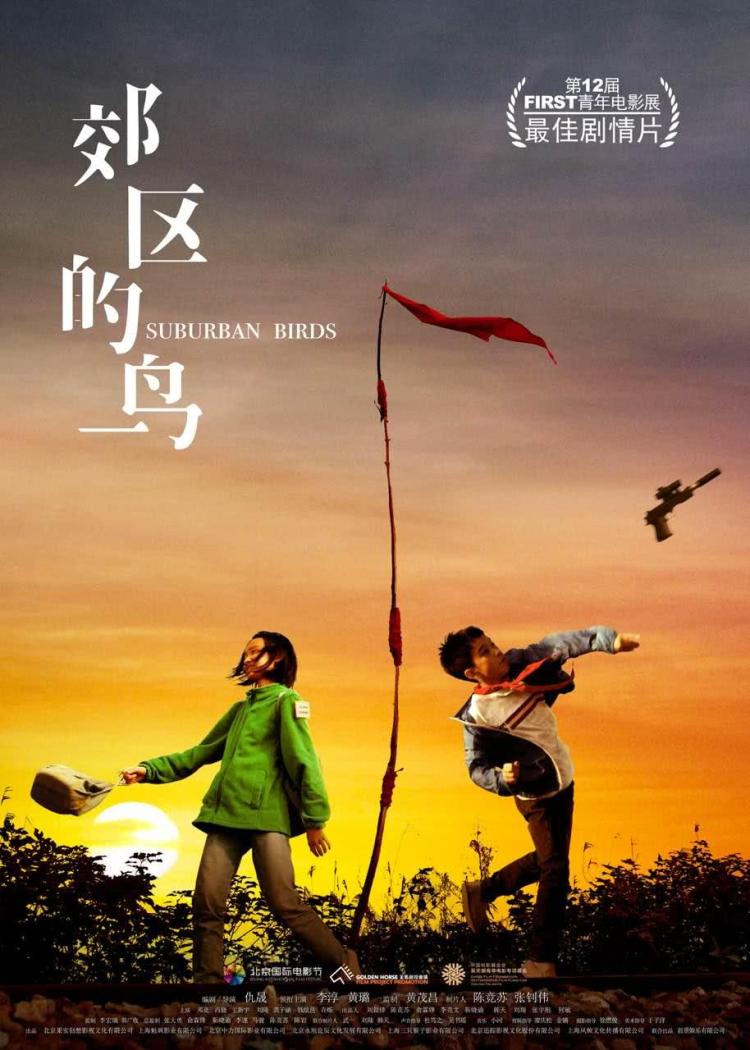
Suburban Birds poster 1Everything is collapsing in the strangely entropic world of Qiu Sheng’s Suburban Birds (郊区的鸟, Jiāo de Niǎo). Time and memory conspire to confuse and confound as man-made structures devour the natural pleasures of human existence, stepping in time with China’s rapid urban development in a hasty march towards a fractured future. Our hero dreams of finding rare avian life, but remains shackled to the earth as an agent of both destruction and creation – literally “engineering” the future while attempting to repair the mistakes of the past.

Xiahao (Mason Lee) is currently working for a government-backed team of surveyors trying to solve a massive subsidence problem which has rendered a brand new estate unfit for habitation. The subsidence problem, besides being dangerous and apparently unpredictable, is also expensive – the city is footing the bill for putting an entire neighbourhood up in a hotel while essential works on a new subway line needed to serve it are also on hold. The engineers are doing their best, but they seem ill equipped to investigate and feel both under resourced and under appreciated. The youngest member of the team, Ant (Deng Jing), is even thinking of quitting because he gets all the rubbish jobs and his girlfriend thinks there’s no future in his career seeing as there’s relatively little scope for advancement save becoming the “boss” which doesn’t actually pay very much. In between drinking, arguing, and investigating, Xiahao strikes up a relationship with one of the evictees – the pretty hairdresser “Swallow” (Huang Lu), to whom he eventually offers to show the elusive birds.

Meanwhile, a second tale takes over when Xiahao investigates an abandoned school and discovers a diary written by another Xiahao (Gong Zihan) which details the various adventures of a group of adolescent friends. Whether in reality or just in the older Xiahao’s imagination, the kids from the book echo people in his adult life from the members of his engineering team to the two female evictees he encounters at the hotel. The younger Xiahao could perhaps even be an echo of the older one’s real or imagined childhood – the aesthetics are distinctly ‘90s but the adventures are infinitely timeless. Little Xiahao and his friends communicate in person and go outside to play, fully existing in tune with their surroundings and as much part of the natural world as the “suburban birds” looking for a perch in a land under permanent construction.

Yet modern China somehow works its way into their idyllic world. The kids play in the ruins of broken broken buildings, are literally injured by the ruptured landscape, and finally begin to disappear one by one. Eventually the streams cross – the young Xiahao and the other boys come across the older Xiahao and his team dreaming away under greying skies while their optical level looks silently on at nothing. The kids stick a piece of chewing gum on the lens – an act which is both intensely irritating for the slumbering adults and a literal proof of their material existence within the same plane if not definitively the same time.

Xiahao’s dreams, as he recounts them to his bored coworkers, revolve around a terrible gushing of water as a powerful drill inexplicably turns to liquid. The loudmouth party man tagging along to chivvy the crew towards a completion of the paperwork even in the absence of a safe and workable solution, has an appropriately bawdy theory but the dream itself is later echoed by the boys who find themselves charged with carrying a large butt of water through their school until its weight gets the better of them. Xiahao is convinced that leakage lies at the heart of the subsidence problem, that shoddy workmanship and bad weather have conspired to ruin the ambitions of human engineering. Public safety is not such a concern as faith in local government. Not only has an all encompassing hunger for progress robbed the land of its beauty but has begun to erode itself from the underneath leaving only a perilous fall to the chasms below.

Xiahao dreams of a more innocent time. His ringtone alarm features bird song which is either so real you can’t tell the difference, or the ironically named Swallow has never actually heard it before outside of the movies. He wants to find the elusive “suburban birds” but turns to the internet to do so, eventually wading back into into a dream in which children play freely among the greenery while singing semi-ominous communist songs about how the future belongs to the young. A riddle besets them all – what is both long and short, fast and slow, and whole yet may be divided into many parts? The answer seems to be time, or perhaps memory, hinting at the way past haunts the future as a squatting tenant of the present which can neither speak nor stay silent. Forgetting, like the water pouring in through the inexpertly poured concrete of a half constructed subway tunnel, erodes the foundations of conscious thought. You can’t build a future on emptiness, and if there’s nowhere for the birds to sit what sort of future is it anyway?


Screened at the 2018 BFI London Film Festival.

Original trailer (English subtitles)

Interview with director Qiu Sheng from Locarno

Ash is Purest White (江湖儿女, Jia Zhangke, 2018)

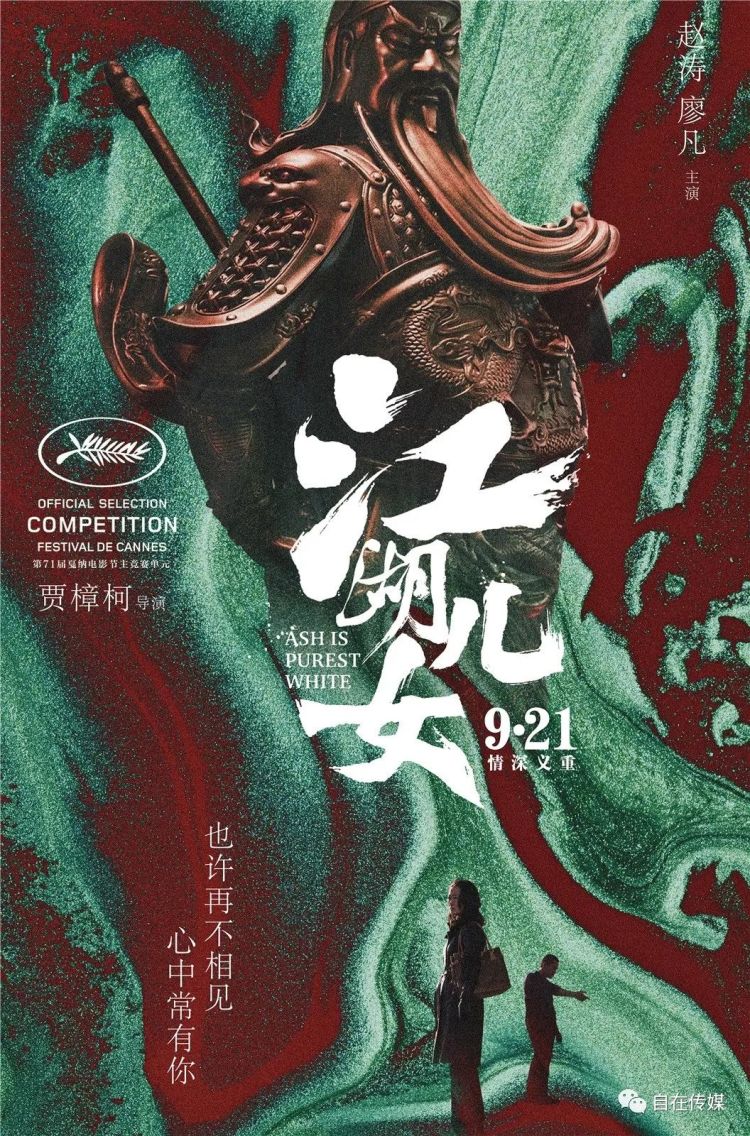
Ash is purest white poster 1Jia Zhangke returns to the world of crime for a slice of jianghu blues in his latest chronicle of modern China through the eyes of its ordinary, downtrodden citizens. Self referential in the extreme, Ash is Purest White (江湖儿女, Jiānghú Érnǚ) is a sad story of conflicting values and missed connection as a lovelorn woman proves herself too good, too pure, and ultimately too strong for the weak willed man she can neither love nor abandon. Times change and feelings change with them. To survive is not enough but integrity comes at a heavy price in a land where everything is for sale.

Echoing the time jumping narrative of Mountains May Depart, Jia opens in 4:3 and in 2001 as Qiao (Zhao Tao), sporting a black Cleopatra-esque haircut (the same as that worn by the identically named heroine of Jia’s own Unknown Pleasures from 2002) takes the bus into town. The first lady of the local “jianghu” underworld, Qiao is the devoted righthand woman of petty gang boss Bin (Liao Fan), enjoying the loyalty, honour, and respect of all in the slightly depressing environs of a small corner of dusty Datong. Bin is a walking monument to the idea of “jianghu” as mediated through Hong Kong action movies, swaggering around with a gun in his belt to prove that he’s the top dog in this tiny town. To live by jianghu is know that someone is always coming and when another prominent gangster is offed by young thugs, it’s not long before they come knocking on Bin’s door. Humiliatingly thrashed in the main square, Bin is only saved by a heroic intervention from Qiao who takes up his gun and fires into the air, a look of imperious authority on her face even as her eyes flicker with fear and excitement.

Qiao didn’t shoot anyone, but as the gun was illegal and she brought its presence to the notice of the police she gets into trouble anyway. A fierce devotee of the jianghu way, she refuses to give up Bin and insists the gun is hers and always has been. The gun was not hers in a real sense, and though she intends to lie in order to protect the man she loves from her mistake in firing it, spiritually speaking she and the gun are one. Having admired Bin’s skilful defusing of a petty gangster dispute without needing to use it, Qiao picks up the pistol and turns it over in her hands. The irony is, Qiao doesn’t need the gun but it completes her all the same, or at least completes the image she has of herself as an action movie heroine. Bin, however, has the gun because he doesn’t believe in himself in the same way Qiao does. He knows he’s weak and that his time is limited.

When Qiao is sent to prison for five years, she fully expects to find Bin waiting for her on the other side when she gets out. In the meantime Bin has proved true to form – he’s found himself another powerful woman to hide behind, though this time he’s chosen (or, in reality, is chosen by) one with good connections rather than fighting spirit. Bin has left the world of jianghu behind to try and make it in the rapidly developing capitalist economy, but as Qiao tells him when they finally reunite she had to live as a jianghu just to find him. Alone and friendless, betrayed by her love and disrespected by her new environment, Qiao turns to a cheeky strain of petty crime to get by – taking social revenge by attempting to blackmail random men over secret affairs, gatecrashing wedding parties for food, living by her wits on the streets and, if she’s honest, enjoying it.

Qiao is, in a sense, living in an imagined past. The frequent strains of Sally Yeh’s theme from John Woo’s seminal noir-tinged hitman drama The Killer underscore the yearning for an era of heroic bloodshed, brotherhood, and honour which never really existed outside of the movies. While Qiao grips her gun and fires in the air, Bin lights a melancholy cigarette watching Taylor Wong’s Tragic Hero, grumpily passive as always. Qiao saves Bin, more than once, but he can’t forgive her for it or reconcile himself to his own lack of resolve.

The film’s Chinese title, loosely translated as “the sons and daughters of jianghu” hints at the power of this double edged inheritance in which the archaic social codes of brotherly honour and loyalty are both barrier and bridge in an increasingly amoral society. Jia shows us a world of mine closures and forced migration, revisits the Three Gorges damn in which the past is sunk to pave way for the future, and introduces us to a modern day prospector with a big idea about UFOs. Bin, weak and opportunistic, doesn’t have the ability to ride the waves of China’s changing tides, but Qiao doesn’t have the will. Burned right through to her jianghu core, she sticks steadfastly to her code as she retreats to her spiritual home but owns her place within it even as the modern world rises up all around her. Qiao’s independence is both victory and defeat, an echo of the failed ideologies of a nation drunk on capitalism in which newfound freedom confuses and corrupts in equal measure. Nevertheless, there is something tragically romantic in Qiao’s lovelorn longing for a more passionate era in which the bonds between people still counted for something even if their demands were not always fair.


Screened as part of the 2018 BFI London Film Festival.

Short clip (English subtitles)

Full version of Sally Yeh’s theme from John Woo’s 1989 existential hitman noir The Killer

Drug War (毒戰, Johnnie To, 2012)

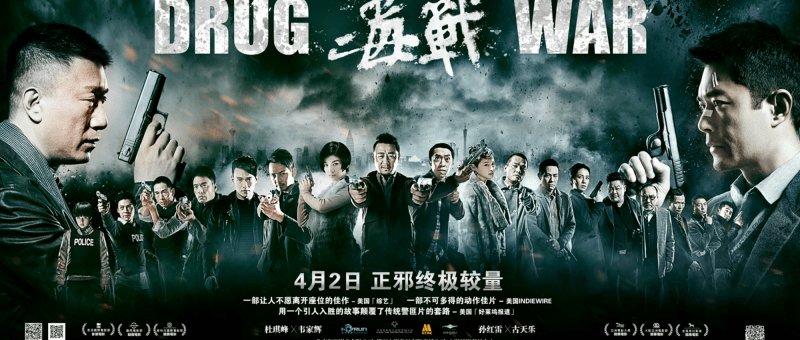
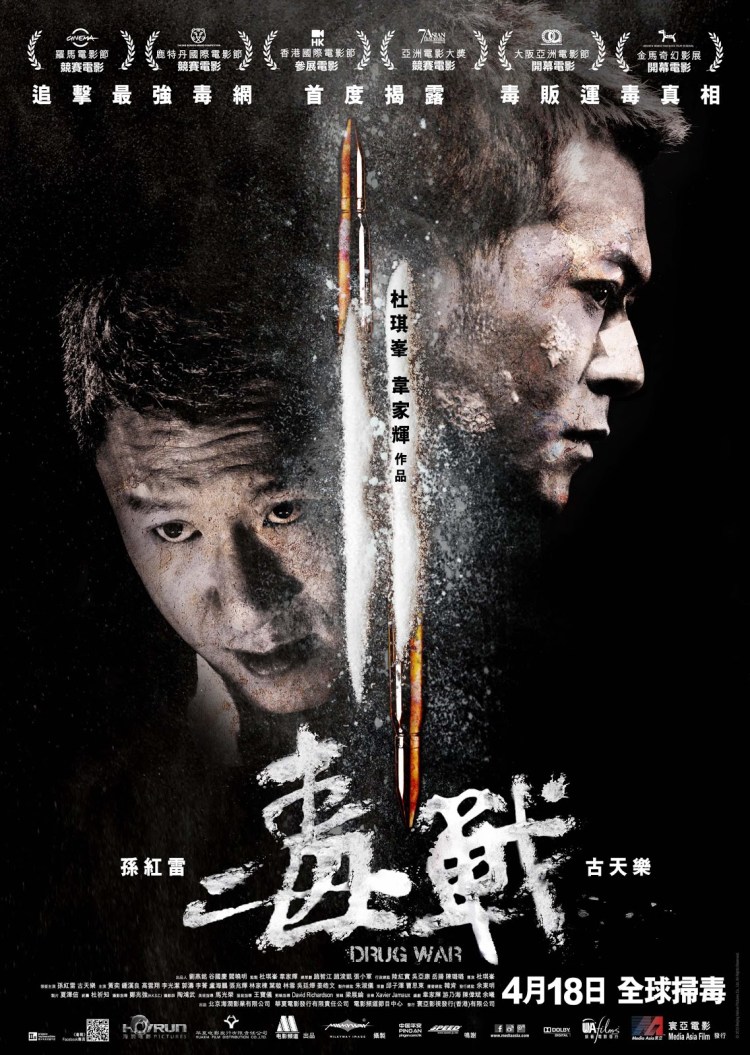
Drug War posterIn the world of the Hong Kong action flick, the bad guys are often the good guys, and the “good guys” not so good after all. Even crooks have their code and there are rules which cannot be broken ensuring the heroes, even when they’re forced into morally dubious acts, emerge with a degree of nobility in having made a free choice to preserve their honour over their life. In Mainland China, however, things are a little different. The bad guys have to be thoroughly bad and the good guys squeaky clean. You won’t find any dodgy cops or dashing villains in a thriller from the PRC where crime can never, ever, pay. And then, enter Johnnie To who manages to exactly what the censors board asks of him while at the same painting law and chaos as two sides of the same coin, each deluded and obsessed, engaged in an internecine war in which the idea of public safety has been all but forgotten.

The film begins with the conclusion of an undercover operation run by Captain Zhang (Sun Honglei) in which he successfully disrupts a large scale smuggling operation. Meanwhile, meth cook Timmy Choi (Louis Koo) attempts to escape after an explosion kills his wife and her brothers but drives directly into a restaurant and is picked up by the police. Timmy soon wakes up and tries to escape but is eventually recaptured – from inside the chiller cabinet in the morgue in a particularly grim slice of poetic irony. Seeing as drug manufacture carries the death penalty in the PRC, Timmy turns on the charm. He’ll talk, say anything he needs to say, to save his own life. Including giving up his buddies.

Timmy is, however, a cypher. His true intentions are never quite clear – is he really just an opportunist doing whatever it takes to survive, or does he still think he can escape and is engaged in a series of clever schemes designed outsmart the ice cool Zhang? Zhang takes the bait. Eyeing a bigger prize, he lets Timmy take him into the heart of a finely tuned operation even playing the part of loudmouth gangster Haha in a studied performance which reinforces the blankness of his officialdom. Zhang is certain he is in control. He is the law, he is the state, he is the good.

Could he have misread Timmy? Zhang doesn’t think so. Timmy remains calm, watchful. Eventually he leads Zhang to a bigger drug factory staffed by a pair of mute brothers who have immense respect for their boss. Suddenly Timmy’s impassive facade begins to crack as he tells his guys about his wife’s passing but it’s impossible to know if his momentary distress is genuine, a result of mounting adrenaline, or simply part of his plan – he does, after all, need to get the brothers to give themselves away. Unbeknownst to Timmy, however, the brothers are pretty smart and might even be playing their own game.

To pits Hong Konger Timmy against Captain Zhang of the PRC in a game of cat and mouse fuelled by conflicting loyalties and mutual doubts. Whatever he’s up to, Timmy is a no good weasel who is either selling out his guys or merely pretending to so that he can save them (or maybe just save himself and what’s left of his business). Zhang, meanwhile, is a singleminded “justice” machine who absolutely will not stop, ever, until all the drug dealers in China have been eradicated. Yet isn’t all of this destruction a little bit much? Zhang doesn’t really care about the drugs because drug abuse wrecks people’s lives, maybe he doesn’t really care about the law but only about order and control, and what men like Timmy represent is a dangerous anarchy which exists in direct opposition to his conception of the way the world ought to work.

There is a degree of subversive implication in the seemingly overwhelming power of the PRC coupled with its uncompromising rigidity which paradoxically makes it appear weak rather than strong, desperate to maintain an image of control if not the control itself. The final fight takes place in front of a school with a couple of completely non-fazed and very cute little children trapped inside a school bus – Timmy does at least try to keep them calm even while using them as part of his plan, but Zhang and his guys seem to care little for the direction of the stray bullets they are spraying in order to win the internecine battle with the drug dealers and stop Timmy in his tracks once and for all. A pared down, non-stop action juggernaut, Drug War (毒戰, Dú Zhàn) is another beautifully constructed, infinitely wry action farce from To which takes its rather grim sense of humour all the way to the tragically ironic conclusion.


International trailer (English subtitles)

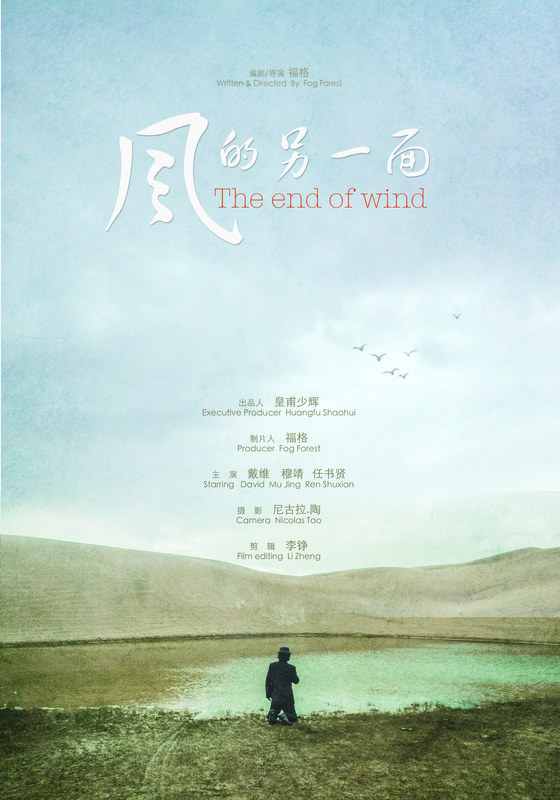
The End of Wind (风的另一面, Fog Forest, 2018)

The End of Wind posterDoes beauty still exist in the world or only in the minds of lonely people? Director Fog Forest wants to know if there is anything pushing back against the forces of indifference in his debut feature, The End of Wind (风的另一面, Fēng de Lìngyī Miàn) which follows the melancholy fates of three individuals each looking for connection in an increasingly apathetic society. A salaryman with an existential crisis, a man wrongly imprisoned for a violent crime, and a young woman whose escape from North Korea led her straight into the hands of human traffickers, ponder if life is still worth living when the bonds between people have become so weak and distorted.

Wang Ran, a frustrated company man and all round snappy dresser, has long been in a depressive slump. Lamenting the attitudes of those all around him, he resents their all encompassing greed and self-interest. He can’t understand why they are so keen to destroy the “beautiful things” of the world in order to continue their quests towards materialist success. Then again, Wang is no longer sure that the “beautiful things” really exist outside of his own mind and if they do he has no idea how to find them. Meanwhile, Yang Botao has just been released from a ten year prison sentence for a crime he did not commit only to find that his mother passed away while he was inside and his father has spent all their money trying to get him released. To make matters worse, Yang is also suffering from kidney disease thanks to constant beatings from sadistic prison guards. A series of events brings the two men together when they decide to rescue a young woman, Kim Meishan, who escaped from North Korea but fell into the hands of human traffickers when her father was killed during the journey.

Each of the three protagonists is looking for some kind of connection which will restore their will to continue living even when life is so obviously meaningless and depressing. In order to find his purpose, Wang gives up his job and goes wandering, living in bare apartments and trying to make connections with kind people he finds along the way. Yang too decides to set off on a journey when his attempts to restart his life are frustrated by an inability to find a job in his hometown where the spectre of his “crime” haunts him everywhere. Unlike Wang, Yang decides to try rekindling an old connection in looking for a woman he knew before he went away who has apparently moved on, possibly to the North West. A true journeyman, Yang becomes the conduit which delivers the path to destiny that Wang has been seeking when his delivery job brings him into contact with Meishan who is able to pass him an SOS in the form of a cassette tape. Intended for her long lost mother, the message is in Korean and Wang is therefore unable to understand it save for identifying Meishan’s distress and realising that he has received a literal cry for help.

Though helping Meishan, Wang’s sense of purpose beings to return, warmed by her desire for life as evidenced by her ravenous hunger. In her he perhaps comes to believes that the “beautiful things” he dreamed of really do exist, and can be found by building genuine connections with others even if they are not supported by common language. His final answer is, however, not quite so positive and all three of our protagonists realise different destinations in their mutual quests for fulfilment. Having been abandoned by all each exists separately, unable to reconcile themselves either to the compromises of the consumerist world or discover a new one through forging bonds with other similarly lonely people. Wang’s world is one of imperfect destruction, surrounded by ruins and filled with nihilistic emptiness from which there may be no escape. Or perhaps, the only possibility of escape ends in an “end” which is not an end but a release. Poetic, if at times obtuse, Fog Forest’s debut is a noirish exploration of the sadness of being alive but one which offers no sign of hope for a society in terminal decline.


The End of Wind was screened as part of the 2018 Raindance Film Festival.

Original trailer (english subtitles)

Fat Buddies (胖子行动队, Bao Bei’er, 2018)

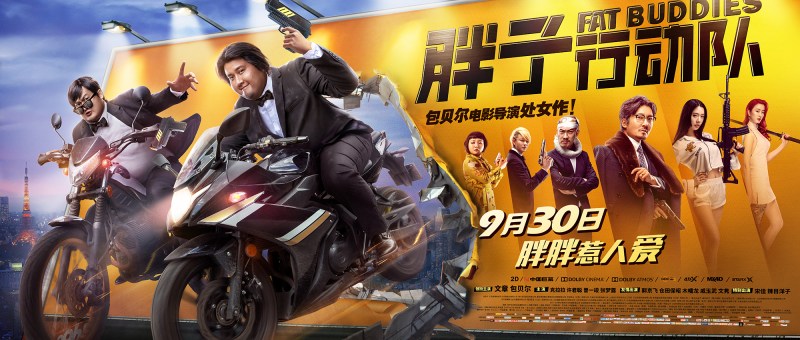
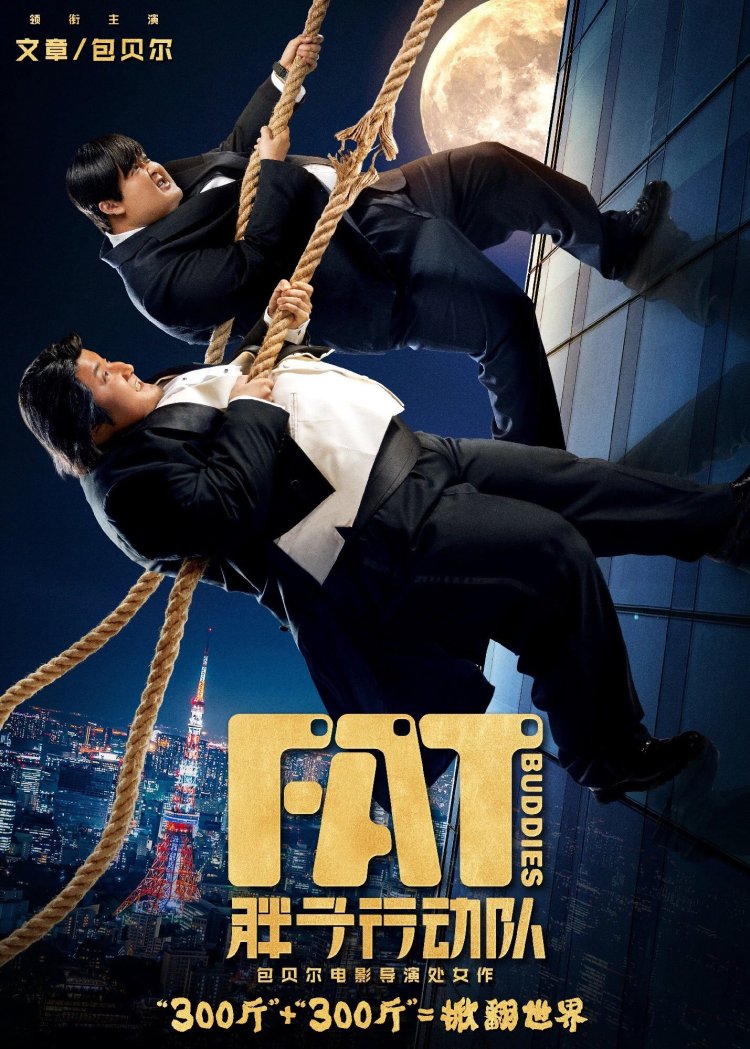
Fat Buddies posterChinese cinema hasn’t exactly had the best record when it comes to dealing with atypical heroes, but then no cinema really has. Gazing at the poster for Fat Buddies (胖子行动队, Pàngzi Xíngdòng Duì) – the debut directorial feature from actor Bao Beier who also stars, one can’t help but assume the next two hours will be one long joke at the protagonists’ expense, but to its credit Fat Buddies is not (entirely) the film it seems to be and, ironically enough, there is more going on beneath the surface than an excuse to have at a “permissible” target.

The hero, played by Bao Beier himself, is a very rotund security guard currently working in a hospital in Tokyo for reasons which will (mostly) be explained later. Though Hao is a cheerful and friendly man with a strong sense of justice, he is ostracised by the (strangely large number of) other guards and has no real friends save his extraordinarily beautiful Japanese wife. Hao’s life changes forever one day when another large Chinese man calling himself “J” arrives at the hospital and causes a ruckus by trying to escape without paying. J convinces Hao that he is an international super spy on a top secret mission and that he needs Hao’s help to get out of the hospital so he can save the world. Believing he is finally being given the chance to become the agent of justice he’s always dreamed of being, Hao is only too eager to oblige.

Strangely enough, the entire film takes place in Tokyo even though the heroes and antagonists are all Chinese. Even so, it never resorts to the comedic caricatures common in recent mainland cinema when depicting the Japanese with even the police characterised as dedicated and efficient if sometimes a little overzealous and misguided, though one does wonder if the setting was chosen solely for the sumo associations of the grand finale. There is however a degree of bite in Hao’s view of himself as a non-Japanese person living in Japan who is married to a Japanese citizen and speaks the language fluently but still remains an outsider both because of his unusual appearance and because of his nationality (with a mild implication from some that perhaps the two things are not entirely unrelated). In an early set piece, Hao and J find themselves trying to infiltrate an upscale party where they have unwittingly stolen the clothes of a pair of famous dancers and eventually end up improvising a strange routine to a bawdy song which is all about being a “foreigner” in Japan who “doesn’t understand Japanese but loves Sora Aoi” and then continues in a similarly lowbrow vein with a mix of Mandarin, international English, and intentionally broken Japanese.

Rather than a two hour fat joke – though there are a fair few of those in a recurrent motif of J getting stuck in things Pooh-style and losing his trousers in the process, the the major message is that the pair are fine as they are and apart from the aforementioned problem, their size is not a barrier to being able to do anything they want including taking on international spy missions. Despite his happy marriage, Hao still suffers from loneliness and low self-esteem due to a lifetime of being looked down and on belittled, unable to make friends because of prevalent social stigma towards those on the heavier side. The solution, however, is not a makeover or a crash diet but a gradual process towards Hao regaining his sense of self worth and realising he has plenty to offer the world despite what anyone else might say. Similarly J, who experienced rapid weight gain after a life threatening injury and also suffers from narcolepsy, proves that he is still able to do his job even if he benefits from having a partner around when he randomly falls asleep at inopportune moments.

Fat Buddies isn’t claiming to be high art and there is certainly enough of the low humour the title implies to keep those enticed by the poster happy enough, but there is also genuine heart in its odd couple buddy comedy as the two similarly under-appreciated big guys bond in their shared desire to reclaim their sense of dignity and refuse to be shamed or belittled just because of their size (even if they are otherwise quite bumbling and inefficient in their mission). Strangely uplifting, Fat Buddies is an extremely silly comedy starring two men in fat suits repeatedly bumping into things but like its heroes refuses to be bound by stereotypical conventions and manages to make heartwarming drama out of its admittedly ridiculous premise. 


Fat Buddies is currently on limited release in UK Cinemas.

International trailer (English subtitles)

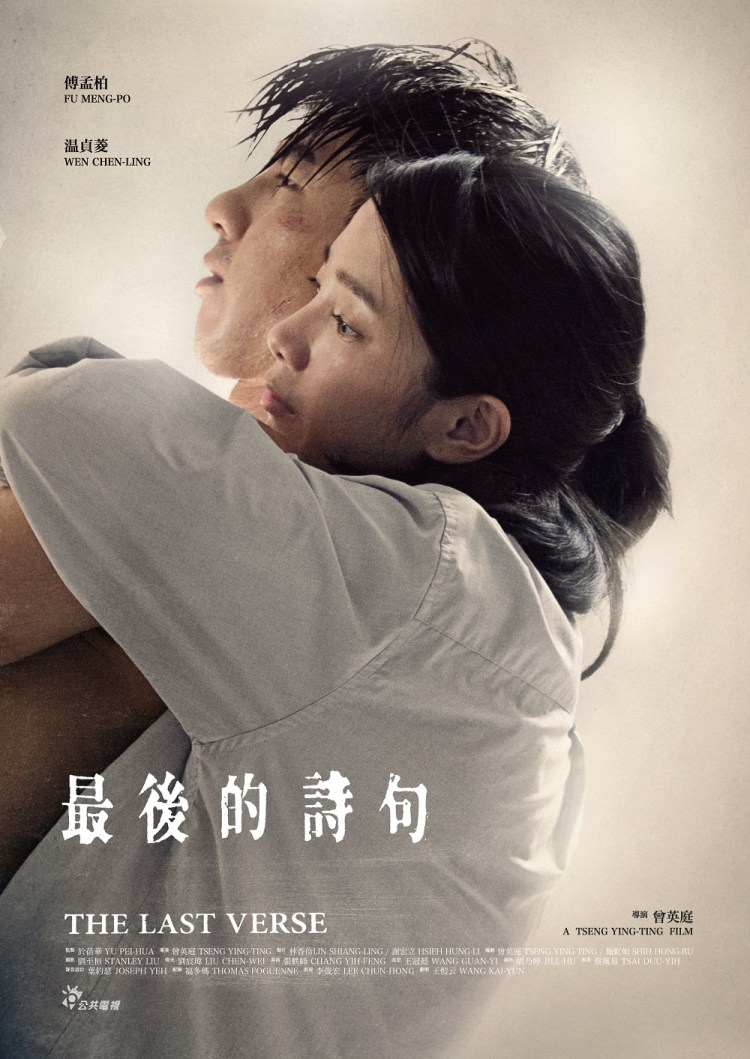
The Last Verse (最後的詩句, Tseng Ying-Ting, 2017)

The last verse posterThe dreams of youth seem destined to elude two idealistic Taiwanese romantics as they fall in love, out of love, into debt and then despair. Set against 16 years of turbulent Taiwanese history, The Last Verse (最後的詩句, Zhòu de S) follows two ordinary teenage sweethearts whose humble dreams of conventional success are consistently undermined by familial legacy and economic instability. Society crushes the dreams of those who refuse to abandon their youthful idealism, but then again perhaps they destroy themselves through chronic insecurity and a refusal to address their own failings rather than conveniently assigning blame to all but themselves.

In the golden summer of 2000, Ren-jie (Fu Meng-Po), nicknamed “poet” meets Xiao-ping (Wen Chen-Ling), the love of his life. The pair start dating and are sure enough about their future to be discussing long term financial plans, but Ren-jie still needs to complete his military service and so their lives are currently in a mild hiatus. Everything starts to go wrong when Ren-jie receives visit a from his estranged father – a broken shadow of a man whose wife left him because of his drunken violence in the face of the humiliating failure of his business when his towel factory went bust. Ren-jie didn’t want anything to do with his dad and sent him packing, only to bitterly regret his decision when he commits suicide on the way home by gassing himself in his car.

This original failing is the fracture line from which all Ren-jie’s subsequent sufferings unfold. Despite signing away any right to his inheritance in order to avoid taking on his dad’s debt, Ren-jie can’t shake off the vicious loansharks his dad once borrowed money from. Having managed to get a well paid, if morally dubious, job as an investment broker Ren-jie’s life ought to be progressing towards middle-class success. He lives with but is not legally married to Xiao-ping who also has a good job at a magazine, but is putting off legalities until the advent of financial stability. Ren-jie is therefore stubborn. He won’t pay the gangsters off because he doesn’t want his father’s legacy and resents their intrusion into his otherwise “respectable” life. He will learn, however, that there are things that cannot just be overcome through bloodymindedness and his male need to avoid being seen to back down is primed to put those he loves in great danger.

Ren-jie’s life is indeed ruined by the precarious era in which he lives as well as the legacy of that which came before, but his destruction is also at his own hands as he falls into a well of toxic masculinity which eventually leads him to harm and then betray the innocent love of his youth. During Ren-jie’s military service, some of the other men suggest staying on in the armed forces – most laugh off the idea but it does at least offer a secure paycheque, a fixed term contract, and the possibility for advancement – all things useful if, like Ren-jie, what you want is to get married and start a family even while still relatively young. Ren-jie, however, did not take this path. We don’t find out why he lost his well paid banking job, if it was the gangsters or the economy, but a few years later sees him an embittered estate agent trying to sell rundown flats in the middle of a housing crash to clients who know they’re better off waiting. Embarrassed not to be able to “provide” for a “wife”, Ren-jie’s male pride cracks under the twin pressures of being forced to give in to the gangsters and fearing that he is not good enough for Xiao-ping, paranoid that she will eventually leave him for someone with more money.

Xiao-ping, however, remains fiercely, idealistically in love with the boy she met at the river all those years ago. Ren-jie, making a common enough though self obsessed mistake, fails to see that financial success is not something that Xiao-ping worries about in any other way than wanting to see the man she loves fulfilled. What Xiao-ping wants is a conventional family life, but Ren-jie’s constant money worries and personal insecurities consistently deny her before he eventually makes another cruel and selfish decision that will only cause her additional suffering.

Ren-jie’s internalised self-loathing eventually boils over into violence, recalling the unwelcome legacy of the father he did not want to become. Yet Ren-jie is also a failure, a drunk, a violent man having meaningless sex with married women in empty apartments in order to try and reassert some kind of control in his largely powerless life. Unfairly burdened by his father’s literal debts, a legacy of violence, and the crushing hopelessness of his existence, Ren-jie has lost the sense of “poetry” which so endeared Xiao-ping to him all those years ago at the river. The memory of those sunswept days, romanticised as it might be, becomes both a touchstone and a dangerous symbol of all that has been lost and can never be regained. Unable to reconcile themselves to the compromises of adult life, the ballad of Ren-jie and Xiao-ping is destined to end in tragedy, self-inflicted wounds the only escape from the crushing hopelessness of a relentlessly indifferent society.


The Last Verse was screened as part of the 2018 New York Asian Film Festival.

Original trailer (traditional Chinese subtitles only)

Interview with director Tseng Ying-Ting from the 2017 Busan International Film Festival.

Kaili Blues (路边野餐, Bi Gan, 2015)

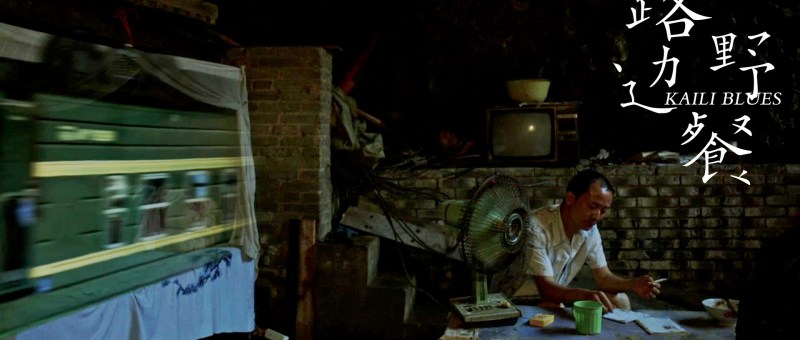
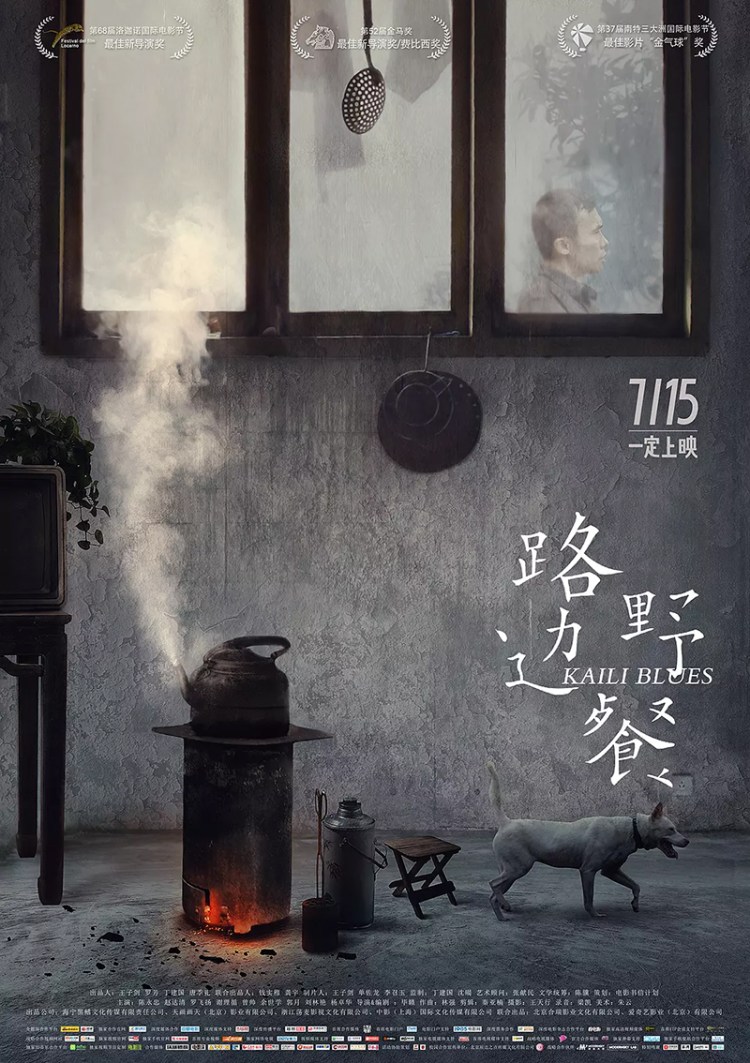
Kaili blues poster 5“There is bound to be one who will return, to fill an empty bamboo basket with love.” intones the lonely poet at the centre of Bi Gan’s Kaili Blues (路边野餐, Lùbiān Yěcān) part way through his strange odyssey through the tiny yet infinite village of Dangmai, a place either out of time or entirely made of it. Longing, regret, the temporal impossibilities of memory, injustice, disappointment – a lifetime’s unresolved emotional trauma works its way into a dreamlike exploration of the past as a work in progress, half built but already obsolete. Time is just memory mixed with desire, in the words of another poet, and contrary to conventional wisdom, perhaps it does not flow ceaselessly in only one direction.
Our hero is Chen (Chen Yongzhong) – a middle aged doctor and published poet who once served time prison and inherited the money to start his clinic from his mother who passed away while he was inside. His major preoccupation in life is his young nephew – the son of his half-brother, the aptly named Crazy Face (Xie Lixun). Crazy Face is, to put it mildly, not a reliable father and often locks his son, Weiwei (Luo Feiyang), in their apartment while he wastes his life drinking and gambling. Chen has taken it upon himself to ensure the boy is well looked after – taking him on days out to the amusement park, buying him nutritious dinners, and just generally keeping him company. Chen is even prepared to adopt the boy, but Crazy Face is resentful and vindictive, irritated their mother left the family home to Chen and not to him. Eventually, Crazy Face “sells” Weiwei to an old man in another town, Zhenyuan, and Chen decides to try and fetch him back while delivering a long overdue message from his assistant to a man she once knew there before the cultural revolution who is now gravely ill.

Chen himself was once abandoned in Zhenyuan, by the mother who now haunts his dreams with the sound of lusheng pipes and memories of the Miao people who are now themselves rapidly disappearing. All Chen can see of her in his dreams is her shoes with their floral embroidery, distorted by their journey in the water. His assistant urges him to burn some paper money for her that she can use in the afterlife but to do it when no one’s looking – such ancient superstitions, like the lusheng pipes, are not to be seen or heard in the new “modern” China. Even Chen’s clinic is due to be pulled down, rendering the animosity between himself and his unhinged brother all the more pointless.

Looking for the lonely boy, who is also in a way himself, Chen chases ghosts of future and past. His passage to find the famed lusheng players and the last remnants of the Miao is precipitated by an act of fate – a young man’s attempts to kick start his motorbike to give his “girlfriend” (he seems to think that what she is, she may feel differently) Yangyang (Guo Yue) a lift fails miserably and she gets one from someone else, enabling Chen to climb on. Later we learn the young man’s name is Weiwei, and his mission is that he wants to make time run backwards because Yangyang is leaving to go to Kaili to work as a “tour guide” (it remains unclear who needs a tour in Kaili) and says she will only return if he can “turn back time”. Whether this Weiwei is somehow the teenage version of the boy Chen was looking for or not, he shares his obsession with imagined time, scrawling fake clocks on trains so that time really will be running backwards as one train passes another as if travelling into the past.

If the future can yield its ghosts then the past can too. A young hairdresser is the spitting image of Chen’s late wife who, according to a story he tells her disguised as that of a friend, he discovered had died while he was is in prison but had written him several letters in advance to hide the truth. Chen’s strange life, his time “on the streets” and accidental involvement with a stoic loanshark who accepted the death of his son at the hands of an enemy but demanded vengeance for his severed hand, might as well have been a dream for its all meandering disappointments. The gangster is now a horologist, as luck would have it. Even dreams have their logic. Only on arrival at his secondary destination does it all come together, the dream world and the real somehow merging and becoming whole once again. The past is a call that can’t be answered, but must be heard all the same.


International trailer (English subtitles)

End of Summer (西小河的夏天, Zhou Quan, 2017)

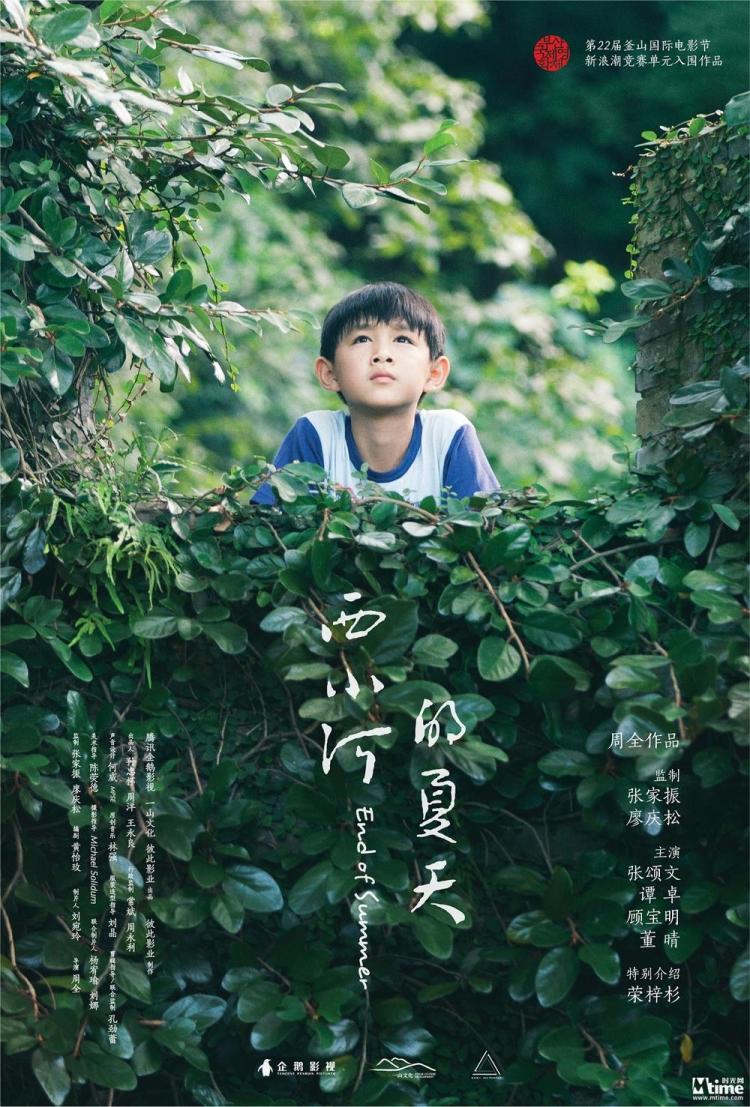
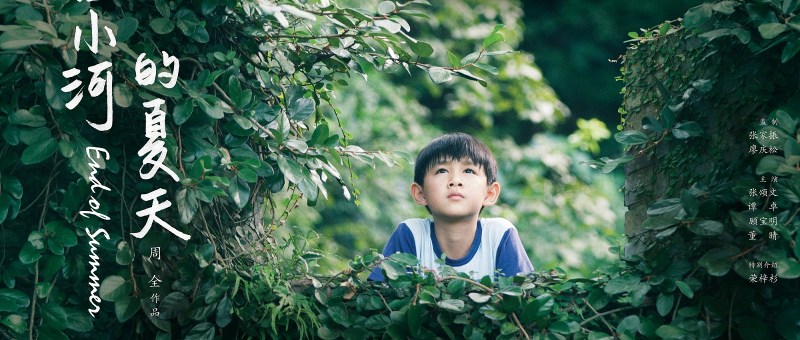
The End of Summer posterMany things were changing in late ‘90s China. For one little boy in the summer of 1998, however, nothing much mattered beyond the World Cup which was being broadcast in its entirety for the very first time. Part nostalgia fest for a more innocent world, Zhou Quan’s End of Summer (西小河的夏天, Xī Xiǎo de Xiàtiān) is, as the title implies, a story of befores as its various protagonists attempt to resolve a series of personal crises that will lead to great changes preceding the autumn of 1998.

Football obsessed little boy Xiaoyang (Rong Zishan) has to keep his love a secret because his dad, Jianhua (Zhang Songwen), thinks all sports are frivolous and has forbidden his son to play with the other children. Jianhua is also a high ranking teacher at Xiaoyang’s school and demands high levels of discipline and commitment from his family, even forcing Xiaoyang to dob one of his friends in under heavy questioning about a playground fight. Bored and lonely at home, Xiaoyang has begun to bond with an older man at their courtyard who also loves football and has promised to help Xiaoyang train for the upcoming school tryouts next term if only he can persuade his dad to sign the consent form.

Meanwhile, there’s trouble brewing on the home front. Xiaoyang’s mother Huifang (Tan Zhuo) is a successful Peking Opera performer whose career is skyrocketing now that she’s been nominated for a prestigious award. Jianhua has also been earmarked for a promotion at work and is covering for a sick colleague, but the arrival of a new teacher threatens to dangerously unbalance the carefully won equilibrium of the Gu family.

Miss Shen (Dong Qing) is indeed a harbinger of social change. The polar opposite of Huifang, Miss Shen is a hippyish free spirit who plays the guitar and sings folk songs in a local cafe with her boyfriend. She teaches the children English through singing songs and playing games, always cheerful and energetic with an adorable smile and easy going personality. Xiaoyang proves himself unusually astute for his years when he misinterprets an innocent scene between Miss Shen and his father, correctly guessing that Jianhua has developed a mild crush on the lovely young woman though perhaps not realising that Miss Shen is merely naive and entirely oblivious to her boss’ ulterior motives.

The camera first catches Xiaoyang caught between two football teams, standing motionless and staring vacantly ahead. He remains caught between two worlds while prompted a little early towards the compromises of adulthood as he experiences the moral outrage of realising his rigid, authoritarian father maybe breaking all the rules of conventional morality by stepping out on his mum. A victim of China’s one child policy, he is often intensely lonely, left alone at home with nothing to do but study while his mother is out rehearsing and his dad increasingly staying out late to offer “guidance” to Miss Shen.

Xiaoyang’s loneliness finds a mirror in the grumpy old man from across the way, Zheng (Ku Pao-Ming), who appears to have fallen out with his family and is missing his own absent grandson, Bao. Zheng picks up the fatherly responsibilities Jianhua has failed to fulfil – supporting Xiaoyang in his football dreams, giving him little bits of life advice, listening intently to his worries regarding his parents’ marital problems without trying to sugarcoat the seriousness of the issues or making a pretence of humouring a perspicuous little boy as they turn detective and catch Jianhua in the act but just miss out on his humiliating defeat and the epiphany which accompanies it as he is forced to confront the fact that he has become a sad old man. Jianhua’s major problems stem from an intense lack of self confidence as his growing son begins to reject his rigid authority and his wife’s increasing success punches a hole through his male pride. Temporarily boosted by the possibility of a promotion, he decides to try rebelling by chasing a younger woman who is very much not his type, little knowing that she sees him only as a venerable teacher and is shocked by his improper interest in her.

Meanwhile change is on the horizon everywhere. The courtyard is earmarked for “redevelopment”, and Mr. Zheng’s family are constantly trying to convince him to come and live with them in the city. By the end of the summer everything will have changed, some things for the better and some perhaps not but there will at least be a shift as each is forced into a reconsideration of their present circumstances. End of Summer is gentler than its title would suggest, a wistful look back one dramatic summer in the childhood of a sensitive little boy, but what it lacks in impact it makes up for with sincerity and a good deal of warmth.


End of Summer was screened as part of the New York Asian Film Festival 2018.

International trailer (English subtitles)

Interview with director Zhou Quan from the 2017 Busan Film Festival.

Spring Fever (春風沉醉的夜晚, Lou Ye, 2009)

Spring fever posterLou Ye has never especially cared for the views of China’s famously draconian censorship board. 2006’s Summer Palace earned him a five year ban for its scenes of full frontal nudity and references to Tiananmen Square Massacre (or, as later claimed, for “failing to meet appropriate standards for sound and picture quality”). 2009’s Spring Fever (春風沉醉的夜晚, Chūnfēng Chénzuì de Yèwǎn) was therefore shot on the fly in Nanjing in direct contravention of the director’s loss of official status – something he later got around by listing the film as a Hong Kong/France co-production so it could be entered in the Cannes Film Festival in a move which can’t have done him any favours with SARFT. Once you’ve been banned, you might as well go all in and there can be few better ways of reminding China’s “conservative” censors that you didn’t ask for their opinion than opening with a lengthy and extremely matter of fact love scene between two men.

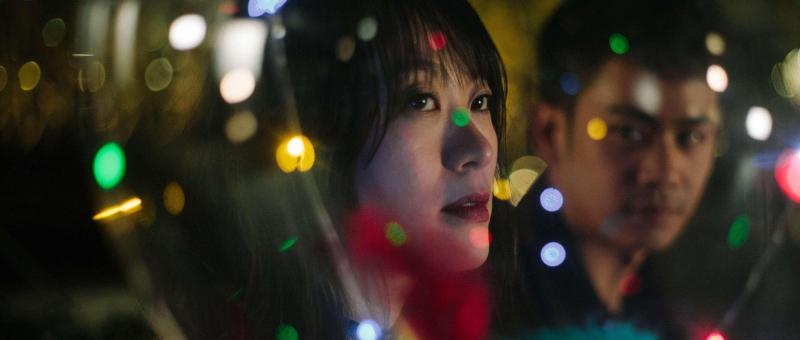
Lou opens with floating spring flowers giving way to two men in a car whose hands delicately brush as they approach their destination – a remote cottage in which they intend to have a secret tryst. The tryst, however, will not be so secret as they assume. Private investigator Luo Haitao (Chen Sicheng) has been tailing the men on the behest of a suspicious wife, Lin Xue (Jiang Jiaqi), who suspects her husband, Wang Ping (Wu Wei), is hiding a secret but never guessed it was another man, Jiang Cheng (Qin Hao). Luo dutifully reports his findings to Lin, but urges her not to look too closely at the photographs. Finally he points out her husband’s lover at his workplace, a travel agents with a conveniently large glass frontage. Wang Ping, in a motif that will be repeated, wants to introduce his wife to his lover, perhaps hoping to ease the blow or smooth a path towards maintaining both relationships simultaneously. Seeing as Lin Xue has already seen Jiang and knows perfectly well who he is, the plan goes wrong and provokes a confrontation which eventually sends Lin Xue storming into Jiang’s workplace to out him in front of his colleagues, at which point Jiang decides he’s had enough and breaks up with Wang. Wang, however, can’t seem to get over him.

Meanwhile, Luo has continued following Jiang even though the investigation is over. Through extended trips to drag bars and underground music venues, Luo eventually becomes involved with “the other man” but he too has a girlfriend, Li Jing (Tan Zhuo), who works in a factory and seems to have something going on with her shady, Cantonese-speaking boss.

Abandoning the overt political contexts of his previous films, Lou circles around two concentric love triangles each of which has Jiang Cheng in the centre. Though it’s unclear whether Jiang Cheng is living as an “openly” gay man – the reaction at his workplace to Lin Xue’s outburst would suggest not though it doesn’t seem to cause him any problems with his employment, he is the only one of the three men to exclusively embrace his homosexuality. He does not have a girlfriend, is well known as an artist at a local drag bar, and makes no real effort to hide who he is even if not making a particular point of it. Both Wang and Luo seem to struggle with the nature of their feelings for and relationship with Jiang, neither one quite able to give up on the idea of “conventional” life. Wang, apparently infatuated with Jiang and unable to live without him, still seems to want to remain within his marriage despite his wife’s increasingly possessive behaviour, dreaming of an arrangement where he could perhaps have the best of both worlds. Luo is less conflicted. He pursues Jiang while his relationship with Li Jing flounders, but feels himself responsible for her wellbeing and unable to abandon her entirely in the knowledge that she is in a fragile state.

Quickly fed up with all these girlfriend problems, Jiang never asks either man to make a choice even if he eventually feels there is no way either relationship can continue. As Jiang’s story, the women perhaps get short shrift with Lin Xue’s villainy eventually turning violent as she becomes the embodiment of a repressive society intolerant of homosexual relationships, berating Jiang for corrupting her husband, humiliating her, and ruining her marriage all in front of his gawping colleagues in an act intended to destroy his life completely. Li Jing, meanwhile, has a much more sympathetic reaction to discovering the true nature of the relationship between the two men, allowing the three to continue as a trio until she eventually decides she is probably a third wheel and needs to get on with her own life. Nevertheless, the three options available to our heroes appear to be suicide, violence, and melancholy. Jiang, remembering the painful poetry of Yu Dafu read to him by the now long absent Wang, laments that he has perhaps “missed the love” that was his “destiny” like a flower blooming in the wrong season.

Despite being among Lou’s most straightforward narratives, Spring Fever lacks the cohesion of the fractured Purple Butterfly and allows its minor political contexts to melt into a background of generalised melancholia as if in echo of a generation’s apathy and confusion, caught on the cusp of change but unable to decide on a direction. Jiang’s sadness endures as a romanticised notion of impossible loves, but floats away on a spring breeze, devoid of hope or purpose.


Available to stream on Mubi UK until 24th September 2018.

US trailer (English subtitles)

Summer Palace (颐和园, Lou Ye, 2006)

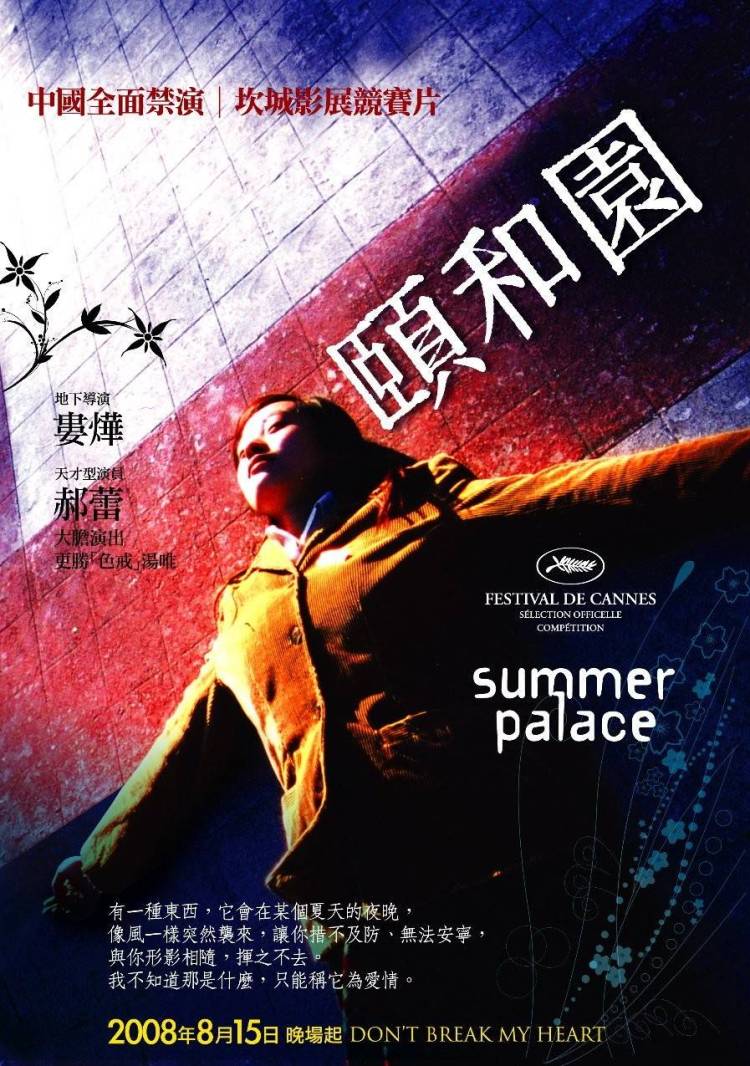
Summer palace posterThe personal is political for Lou Ye. Much as he had in Purple Butterfly, Lou paints love as a spiritual impossibility crushed under the weight of political oppression, though this time he leaves his protagonists breathing but wounded. Summer Palace (颐和园, Yíhé Yuán) is a member of a not exactly exclusive club of films deemed too controversial for the Chinese censors’ board. In truth, there are a number of reasons Lou’s wilfully provocative film might have upset the government, but chief among them is that he breaks a contemporary cinematic taboo in setting the Tiananmen Square massacre as the political singularity which causes the implosion of our protagonists’ youth, rendering them stunned, arrested, and empty. Personal and national revolutions fail, leaving nothing in their wake other than existential ennui and an inability to reconcile oneself to life’s disappointments.

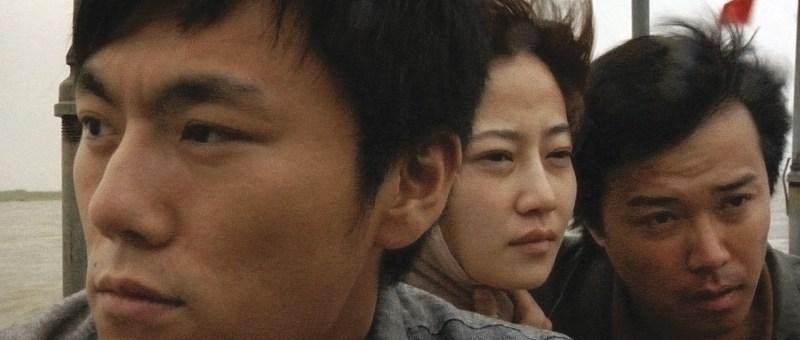
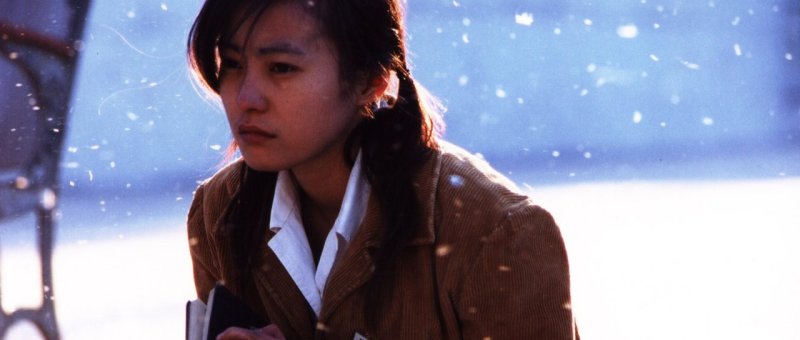
In the late ‘80s, Yu Hong (Hao Lei) gets a scholarship to study in Beijing and prepares to leave her home in a small rural town near the North Korean border for the promise of big city life. Yu Hong craves sensation, she wants to live life intensely and the inability to connect on a true, existential level leaves her feeling progressively empty and confused. A chance meeting with another girl in her dorm, Li Ti (Hu Lingling), brings her into contact with Zhou Wei (Guo Xiaodong) – a brooding intellectual and latterly the love of Yu Hong’s life, though one she becomes too afraid to embrace.

Yu Hong’s personal revolution, her quest for spiritual fulfilment largely through physical contact, occurs in tune with the chaos of her times. This is Beijing in 1988. The air is tense, anxious, as if hurtling towards an unavoidable climax. Yu Hong is not particularly political. She sees the protests, perhaps she agrees with them, but when she boards a pick up truck full of students waving banners and singing songs she does so more out of excitement and curiosity than she does out of commitment to political reform. Her tempestuous love affair with Zhou Wei mirrors the course of her city’s descent into chaos. Everything goes wrong, her heart is broken, something has been damaged beyond repair. Tiananmen Square, referenced only obliquely, serves as the event which traps an entire generation shell shocked by the brutal obliteration of their youthful hopes for a better world, leaving them imprisoned in a kind of limbo which prevents the natural progression from the innocence of youth to seasoned adulthood. They want the world to be better than it is but had the belief that it ever could be so brutally ripped away from them, that they are left with nothing more than a barren existence in which they cannot bear to touch the things they desire because they cannot believe in anything other than their own suffering.

Yu Hong’s early college days, marked as they are by rising anxiety, are also jubilant and filled with possibility. She dances innocently, nervously in a disco with Zhou Wei while a cheerfully wholesome piece of ‘50s American pop plays in the background – it’s this image Lou returns to at the end of the film. Something beautiful and innocent has been destroyed by an act of political violence, ruining the hearts of two soulmates who are now forever divided and bound by this one destructive incident. Yu Hong drops out of university and goes back to the country, bouncing around small town China occasionally thinking of Zhou Wei as an idealised figure of the love she has sacrificed, while Zhou Wei goes to Berlin and occasionally thinks about Yu Hong and missed opportunities. When they meet again years later it’s not an act of fate, or faith, or love but a prosaic interaction that leaves them both wondering “what now?”. There’s no answer for them, the future after all no longer exists.

As in Purple Butterfly, Lou makes history the enemy of love. Yu Hong didn’t ask for Tiananmen Square, she wasn’t even one of its major participants simply a mildly interested bystander, but she paid for it all the same in the way that history just happens to you and there’s nothing you can do about it. The youthful impulsivity, the naivety and craving for new sensations and expressions of personal freedom are eventually crushed by an authoritarian state, frightened by the pure hearted desire of the young to take an active role in the direction of their destinies. The quest for love and freedom has produced only loss and listlessness as a cowed generation lives on in wilful emptiness, their only rebellion a rejection of life.


Available to stream on Mubi UK until 10th September 2018.

Short scene from the film featuring “Don’t Break My Heart” by Heibao (Black Panther) which is also referenced in the poster’s tagline.