A Land Imagined (幻土, Yeo Siew Hua, 2018)

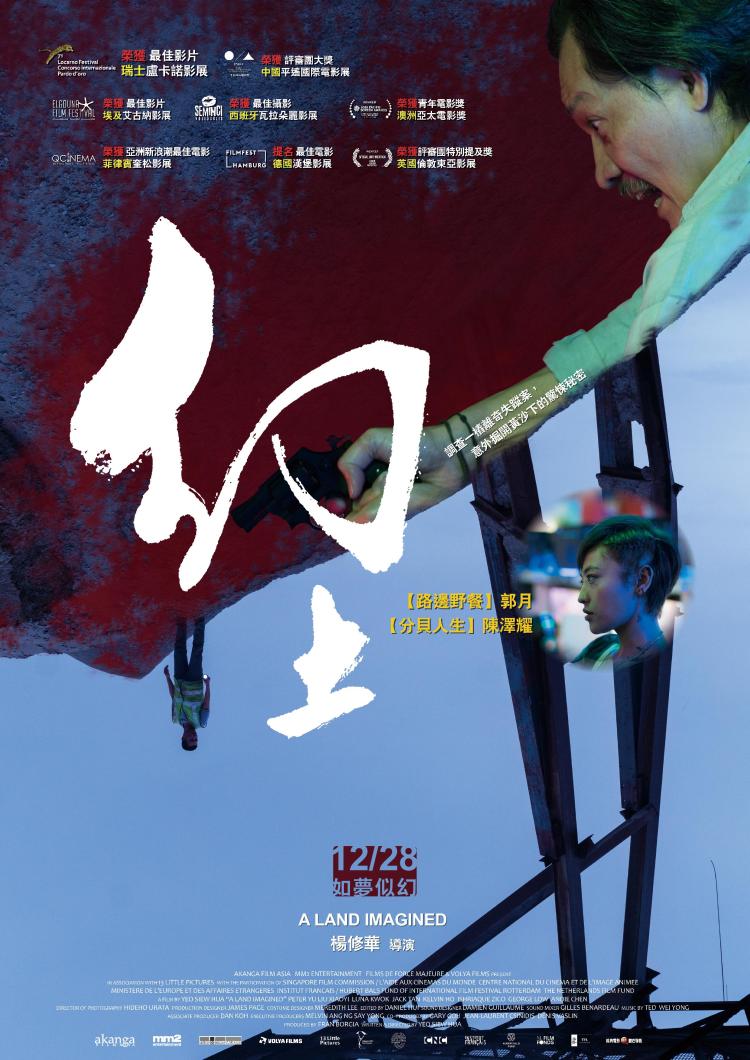
A Land Imagined posterAs the world gets bigger and smaller at the same time, it’s as well to be asking on whose labour these new lands are being forged. Yeo Siew Hua’s Locarno Golden Leopard winner A Land Imagined (幻土, Huàn Tǔ) attempts to do just that in digging deep into the reclaimed land that has made the island of Singapore, an economic powerhouse with a poor record in human rights, 22% bigger than it was in 1965. A migrant worker goes missing and no one really cares except for an insomniac policeman who dreams himself into a kind of alternate reality which is both existential nightmare and melancholy meditation on the rampant amorality of modern day capitalism.

Lok (Peter Yu), a hangdog middle-aged detective, is charged with looking for Wang Bi Cheng (Liu Xiaoyi), a missing migrant worker from China. Just who it was that noticed Wang’s absence is only latterly explained and in suitably ambiguous fashion, but the fact remains that there is an empty space where a man named Wang used to be and Lok is the man charged with resolving that space no matter who might or might not be interested. We discover that Wang was injured on the job, almost sacked and then reprieved to drive the workers’ bus where he befriended a worker from Bangladesh, Ajit (Ishtiaque Zico), who later disappeared sending Wang on his own mirrored missing persons case in which he begins to suspect something very bad may have happened to his friend.

Despite his presumably long years on the force and world weary bearing, Lok is refreshingly uncynical for a police detective but apparently extremely naive about the city in which he lives. Stepping into the world of Wang Bi Cheng, he is shocked to discover that people live “like this” – several men crammed into in tiny bed bug infested rooms so brightly lit from outside that it’s difficult to believe that anyone gets any sleep at all. Wang, in any case, like Lok did not sleep and gradually migrated over to the 24hr internet cafe across the way where he developed a fondness for the spiky proprietress, Mindy (Luna Kwok), while repeatedly dying in videogames and being trolled by a mysterious messenger who may or may not have information about his missing friend.

Like Lok, Wang Bi Cheng cannot sleep but lives in a waking dream – one in which he envisages his own absence and the two police detectives who will search for him, not because they care but because it’s their job and they’re good at it. Men like Wang are the invisible, ghostly presence that makes this kind of relentless progress possible yet they are also disposable, fodder for an unscrupulous and uncaring machine. Asked if it’s possible that Wang and his friend Ajit simply left, the foreman’s son Jason (Jack Tan ) answers that it’s not because the company keeps the men’s passports, adding a sheepish “for their own protection, in case they lose them” on realising the various ways he has just incriminated himself.

Yeo opens with a brief and largely unrelated sequence of a young Chinese migrant worker climbing a tower in his bright orange overalls. Later Lok reads a newspaper report about this same man who tried to launch a protest in having been denied his pay and forced to endure dangerous and unethical working conditions. Meanwhile, Mindy the internet cafe girl, is forced to resort to taking money for sex acts in order to make ends meet. Like Wang, she dreams of escape, of the right to simply go somewhere else without the hassle of visas and passports. Wang jokes that the sand that built the reclaimed beach they are sitting on came from Malaysia, and that in a sense they have already crossed borders, offering to take Mindy away from all this (for a moment at least) in his (borrowed) truck but knowing that their escape is only a mental exercise in transcending the futility of their precarious existences.

Indeed, Yeo seems to be saying that Singapore itself is a “land imagined” – constantly creating and recreating itself with repeated images of modernity. One could even read its artificial territorial expansion as reshaping of its mental landscape while all this progress is dependent on the exploitation of wayfarers like Wang and Ajit wooed by the promises of wages higher than in their home countries but left with little protection and entirely at the mercy of their unscrupulous employers. Yet a strange kind of affinity arises between the lost souls of Lok and Wang, united in a common dreamscape born of sleeplessness and lit by the anxious neon of rain-drenched noir as they pursue their parallel quests, looking for each other and themselves but finding only elusive shadows of half-remembered men dreaming themselves out of existential misery.


A Land Imagined screens as part of the eighth season of Chicago’s Asian Pop-Up Cinema on March 20, 7pm at AMC River East 21 where director Yeo Siew Hua will be present for an introduction and Q&A.

Original trailer (English subtitles)
What’s For Dinner, Mom? (ママ、ごはんまだ?, Mitsuhito Shiraha, 2016)

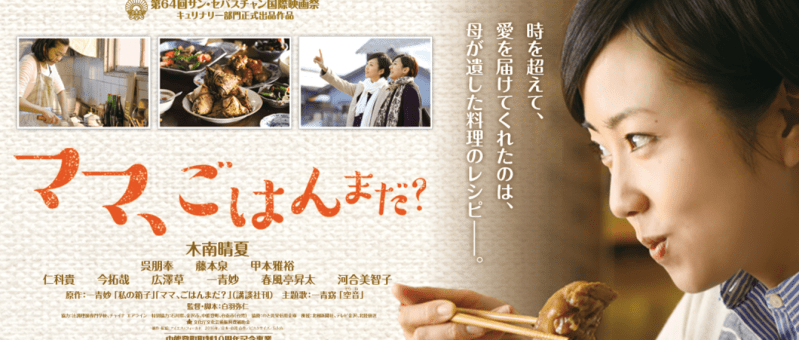
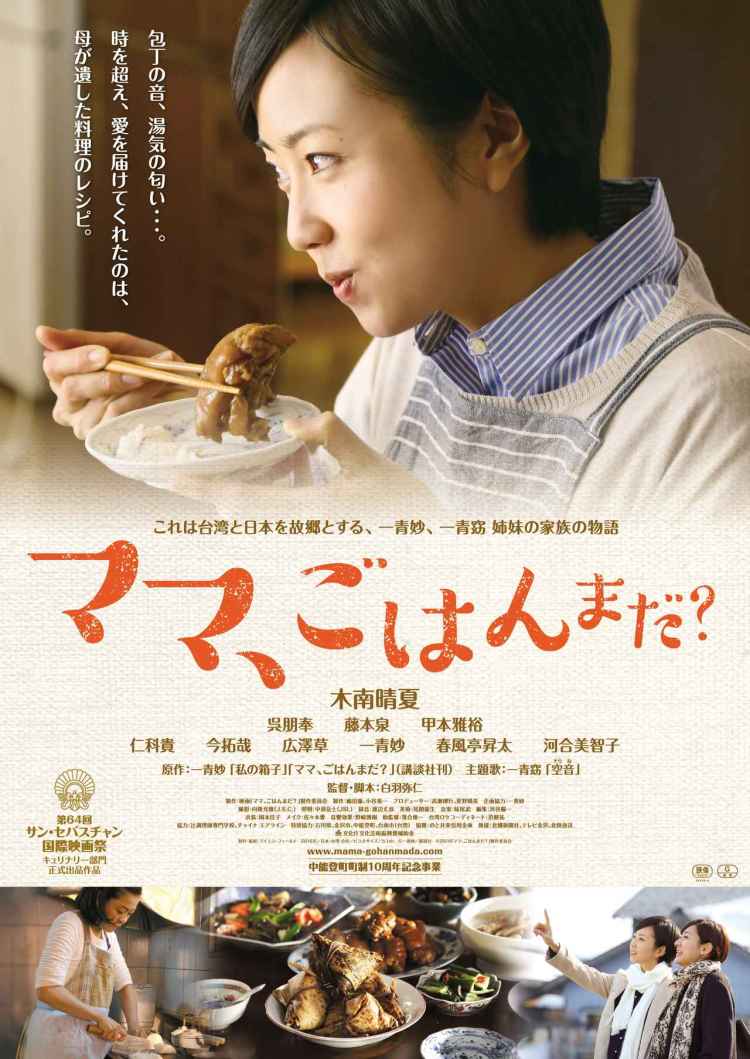
What's for Dinner Mom posterJapanese cinema has a preoccupation with mothers and the nature of motherhood, but the mothers of the typical “hahamono” tend to be either saintly, self sacrificing figures whose selfless love often goes unrecognised, or problematic matriarchs whose fierce love and desire to protect their children has caused them to transgress and perhaps lose their children’s love. The mother at the centre of What’s For Dinner, Mom? (ママ、ごはんまだ?, Mama, Gohan Mada?) falls into a more realistic category – loving, self sacrificing, imperfect and perhaps sometimes misunderstood but always doing the best for her two daughters even in difficult circumstances. Where What’s For Dinner, Mom? differs from the accepted pattern is in its use of the domestic world to ask questions about culture and identity, and about all the various ways one never quite knows one’s family.

Tae (Haruka Kinami) and Yo (Izumi Fujimoto), sisters and now middle-aged women, are preparing to clear their family home 20 years after the death of their mother (Michiko Kawai). What’s taken them so long to make the decision is never revealed but both are as happy as possible about the idea and it seems Tae and her husband plan to knock the house down and build their own on the same plot – not quite so radical a thing as it might sound, Japan has no real housing market and “modern” houses are often knocked down and rebuilt every 20 to 30 years. Whilst packing things away, Tae finds a small box full of her mother’s keepsakes – chiefly letters and photographs along with a handwritten recipe book she began keeping in 1972.

Though Tae has lived in Japan for all her adult life, she was born in Taiwan and is half Taiwanese. Tae’s father passed away from lung cancer when she was small, but was a depressed, sometimes difficult man with ambivalent feelings towards his home nation. His own family had come from the mainland, but he’d lived in Taiwan under Japanese rule and attended university in Japan. He felt himself to be Japanese and was constantly upset and angry about the turbulent political situation of the post-war nation, facing its own series of identity crises and a protracted period of oppressive martial law.

Nevertheless, after their unpredictable whirlwind romance, Tae’s mother Kazue moved to Taiwan to live with her husband’s family and became determined to adapt to the local culture – chiefly through food. After her husband died in Japan, Kazue kept Taiwan alive for her daughters through continuing to cook the dishes she’d learned from her friends and family in Taiwan (even though her intensely “Japanese” husband only ever wanted to eat yudofu). Though Tae at one point urged to her mother to stop cooking Taiwanese and give her stereotypically cute high school bento, she quickly realised her mistake and Kazue’s unusual Taiwanese cooking became a local hit (even boosting the availability of the previously unobtainable pig’s trotters).

Despite her love of the food, Tae has all but forgotten her Taiwanese roots since her mother’s death and doesn’t know how to cook any of the dishes herself. Tae’s mild identity crisis comes to the fore in the second half of the film, though it’s an oddly under developed plot strand given the centrality of the cuisine. When she eventually makes the decision to visit her father’s remaining family, Tae seems to understand Taiwanese Mandarin but usually replies in Japanese (her uncle, accompanying her, is fluent). Like Kazue’s diary, Tae’s reminiscences are accompanied by on screen intertitles written in Chinese characters drawn childishly (even the characters which are identical to those used in Japanese are somewhat awkwardly rendered), which points to a kind of duality but is never really resolved even if Tae is able to explain a strange childhood memory and bring a piece of her past home with her.

Through her food odyssey and return to source, Tae is able to appreciate her mother’s love and sacrifice from an adult perspective, no longer left with teenage resentment and unfair anger over her early death but reclaiming her happy memories and appreciating the hardship her mother must have faced as a single mother in pre-bubble Japan. Despite its warm and fuzzy tone, What’s For Dinner, Mom? occasionally seems as if it wants to do something bigger by briefly introducing larger themes – Tae’s father’s depression, illness, the difficult political situation of post-war Taiwan, and the complex interplay between the two nations, but is content to settle back into a comforting “hahamono” tale of selfless motherhood finally appreciated only when it’s too late. Nevertheless it does what it set out to do in telling the story of a warm and loving family anchored by a kind yet determined woman and tables full of wholesome home cooking offered with an open, internationalist, heart.


Original trailer (English subtitles)
Pegasus (飞驰人生, Han Han, 2019)

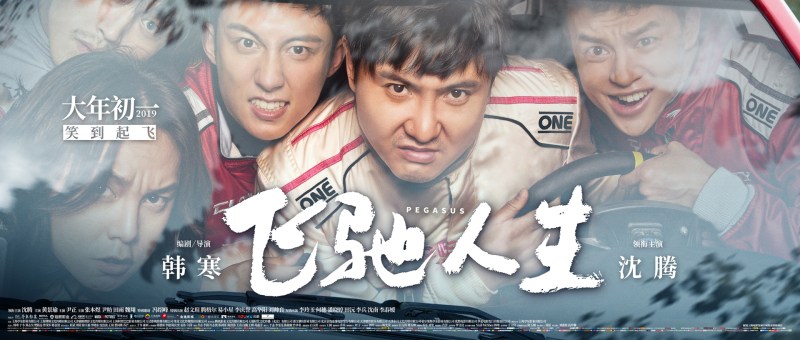
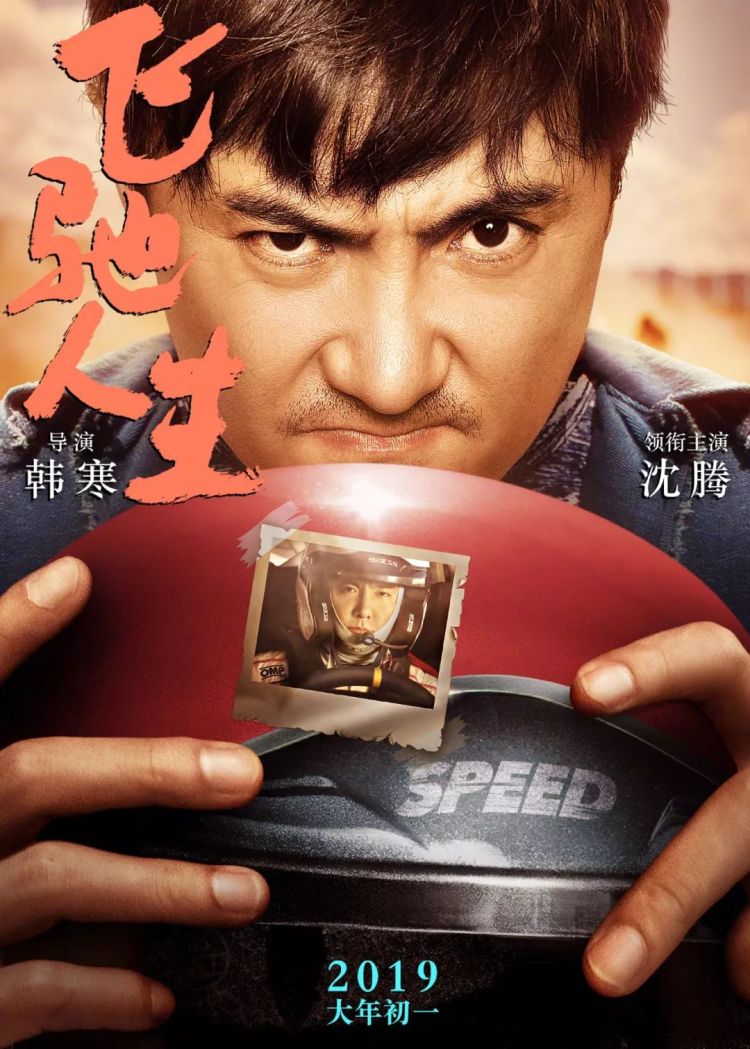
Pegasus poster 1Traditionally speaking, New Year has often been a time for reconsidering one’s life choices, but can it ever really be too late to make up for past mistakes and charge ahead into a better future? The hero of Han Han’s New Year racing drama Pegasus (飞驰人生, Fēichí Rénshēng) is determined to find out as he tries to bounce back from disgrace and failure to prove to his young son that he was once a great man and not quite the hangdog loser he might at first seem. His battle, however, will be a tough one even with his best guys by his side.

Zheng Chi (Shen Teng) dreamed of racing glory and won it. He was a champion, the face on billboards across China, but a minor scandal put paid to his success and his driving and racing licenses have been suspended for the last five years during which time he’s been humbled and lived a workaday life as a fried rice stall vendor raising a young son alone. Now that his suspension is up for reconsideration, he’s beginning to wonder if he might be able to return to his rightful place at the centre of the podium but he’ll have to eat a considerable amount of humble pie if he’s to convince anyone that he’s a person worthy of respect now that he has nothing.

Director Han Han is, among other things, also a rally driver himself though his positioning of the sport within his tale of middle-aged loserdom is a slightly awkward fit. Racing is an expensive hobby, it quite literally relies on the involvement of those who have vast resources of disposable cash they can use to sponsor drivers so they can improve their equipment. Though a driver’s skill, and their relationship with a co-driver, are not insignificant parts of the equation, it is nevertheless true that money rules all when it comes to buying advantage (perhaps much like life).

Chi’s problem isn’t just his age, but that he’s up against extremely rich young guys with inherited wealth like his rival Zhengdong (Huang Jingyu) – a pretty boy with celebrity following and seemingly infinite resources. Han sets Chi’s struggle up as one of the chastened everyman – someone who came from nothing and made it only to crash and burn but still has the desire to get up and try again. He struggles on through various obstacles including bribing a driving instructor to get his licence back and charming a suspension board into letting him back in the game but discovers that friendships formed when successful might not survive a fall from grace. He can’t get the same kind of access as he could when he was riding high and no amount of chutzpah will make up for the disadvantage incurred through not having the kind of wealth that enables Zhengdong’s ongoing rise to glory.

Nevertheless, perhaps Zhengdong is simply a realist when he advises those looking for absolute fairness not to bother getting involved with racing. He’s not a bad guy, if somewhat insecure in feeling as if his own success has been enabled only by Chi’s fall from grace and perhaps he wouldn’t be top of the podium if the best driver hadn’t been hounded off the track. What we’re left with is an awkward admission that what makes the difference is men like Zhengdong deciding to feel philanthropic, though in this case he does so out of a sense of sportsmanship and a not entirely altruistic desire to prove himself by ensuring the participation of a worthy rival. Given this boost, Chi’s quest necessarily leaves the realm of the everyday loser and returns to the rarefied one of success enabled by privilege.

The final messages are also somewhat ambivalent in their death or glory, live full throttle intensity as Chi’s lectures on driving become lectures about life, affirming that those who win are the ones who drive fastest while making the fewest mistakes. Chi is not unencumbered, he has his son and therefore a responsibility to another which is sometimes forgotten in his own quest for glory which, we are reminded, carries risk and danger. Perhaps what we’re asked is if the gentle pleasures of a simple life selling fried rice for decades are worth giving up the hyper acceleration of a life measured in seconds following a dream. Chi might have found his answer, but it comes at a cost and he’s not the only one who’ll be paying it. As New Year messages go, it’s a decidedly mixed one which might not offer much positivity for the average middle-aged loser longing to relive their glory days in service of a dream which might long have flickered out in an increasingly unequal society.


Currently on limited release in UK cinemas.

Original trailer (English subtitles)
Fall in Love at First Kiss (一吻定情, Frankie Chen, 2019)

Fall in love at first kiss poster 2Our Times’ Frankie Chen Yu-Shan returns to the tricky world of high school romance with an adaptation of the perennially popular ‘90s manga, Itazurana Kiss. Fall in Love at First Kiss (一吻定情, Yī Wěn Dìngqíng) is in fact the third time the manga has been adapted in Taiwan following a hit 2005 TV drama and a remake in 2016. Updated for the present day, Chen’s adaptation retains the manga’s trademark zany humour and often questionable approach to romance but imbues it with characteristic warmth and mild social commentary.

Our heroine, Xiangqin (Jelly Lin Yun), falls hopelessly in love with high school superstar Jiang Zhishu (Darren Wang Talu) when she accidentally trips and kisses him on her first day. Zhishu is, however, somewhat untouchable to a Class F no hoper like Xiangqin – Class A students like him have their very own building inaccessible to those without the proper credentials. Despite outsmarting the system in order to hand him her letter of confession, Xiangqin is cruelly rejected with a video of Zhishu’s cool response going viral among her friends. However, when Xiangqin’s house is demolished thanks to an extremely localised earthquake, she finds herself moving into Zhishu’s family home (it turns out their dads are old friends) where she might perhaps be able to get to know him better.

Like the original manga, Fall in Love at First Kiss revolves around Xiangqin’s lovelorn existence as she becomes increasingly obsessed with her apparently unrequited love for the sullen Zhishu whose behaviour is often hard to read. Zhishu’s mother (Christy Chung), a highlight of any adaptation, is a woman much like Xiangqin which is to say extremely cute and cheerful. Having long wanted a daughter she is delighted to have Xiangqin move in with the family and is virtually painting a nursery in the hope that Xiangqin and Zhishu might one day end up together. This is however partly because she knows both her sons are objectively awful – a pair of self-centred, emotionless hyper rationalists and overachievers who might be popular thanks to their successes but have few friends owing to not being very nice. She hopes some of Xiangqin’s unsophisticated cheerfulness might help open them up to the pleasures of being alive.

Zhishu, however, blows hot and cold. He ignores Xiangqin’s attentions until the point she vows to move on, at which time he kisses her to prove that despite everything he is still the sun in her mad little solar system. This is obviously not a very healthy relationship dynamic even as it insists that Zhishu’s arrogance is part of his “cool” rather than a symptom of his insecurity. Even his final declaration of love is shot through with “you know you want me” logic rather than a heartfelt explanation of his reasoning for having been so cavalier Xiangqin’s feelings. Nevertheless, like every other “difficult” romantic hero, we eventually discover that Zhishu is just awkward rather than actually cruel as he finds himself continually conflicted in wanting to be nice to people but somehow thinking it would be inappropriate to do so.

This is largely because he and his brother are snobbish elitists who’ve been led to believe that social inequality is the proper order of things. Xiangqin, a proud Class F sort of girl, wants to show him that they are all “on the same page”, equals despite what the “rankings” might say. Nevertheless she does this in a rather odd way by remaining deferent to his supposedly admirable qualities and following him around despite his constant rejections. In any case, Zhishu’s class conflict is at the heart of his emotional repression as he struggles with his filial duty to inherit his father’s company when what he’d really like to do is become a doctor to be able to help people – a choice he doesn’t quite feel he has the freedom to make and one which feels too warm and fuzzy for the ultra-capitalist, success at all costs philosophy he seems to have been brought up with by everyone except his cheerful mother. 

Sadly Zhishu does not undergo much of a humbling and remains annoyingly successful and prince-like, while Xiaoqing does not suddenly discover her own worth or another purpose in life, but they do perhaps begin to find happiness in acknowledging their fated connection. Chen keeps the increasingly absurd action grounded as time moves on at frantic pace from high school first love to awkward grown up confession but manages to find the sweetness in a sometimes problematic romance as her lovestruck heroine does not much of anything at all other than remain true to herself in order to win her man.


Currently on limited release in UK cinemas.

Original trailer (English subtitles)
The Island (一出好戏, Huang Bo, 2018)

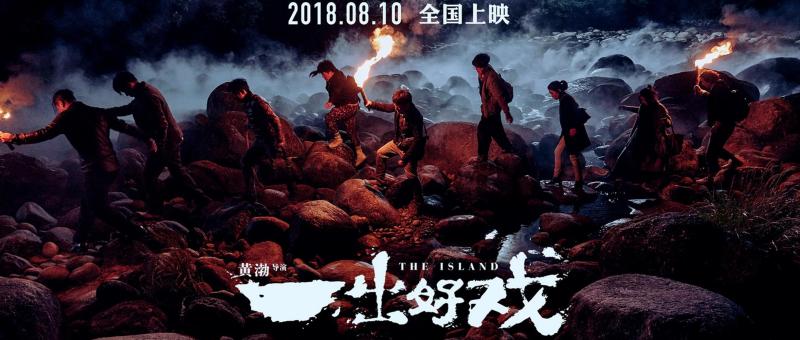
the island poster 1Comedy seems to have regained its bite of late. Filmmakers seeking to deliver pointed barbs at the modern China are pulling away from the traditionally safe areas of the period drama for a natural home in satire which for the time being at least is running rings around the censors’ board, albeit in a subdued fashion. The directorial debut from comedic actor Huang Bo, The Island (一出好戏, Yìchū Hăoxì) offers a mini lesson on the perils of untapped capitalism, tyranny, propaganda and “fake news” agendas in the form of a genial romcom in which a nice guy loser makes himself the king and wins the heart of his fair princess only for his empire to crumble under the weight of his own conflicted moralities.

On the day a meteor may or may not be on course to fall to Earth, dejected middle-aged office worker Ma Jin (Huang Bo) is off on a “team building” trip with his colleagues which involves a lengthy journey on an aquatic bus. Ma seems to owe money to just about everyone but swears he will soon pay them back, meanwhile he’s also hoping to get close to office beauty Shanshan (Shu Qi ) on whom he has a longstanding crush. At long last, it seems like Ma’s ship has finally come in – on checking his lottery numbers, Ma realises he’s the jackpot winner and can probably quit his boring job as soon as they dock, possibly even sweeping Shanshan off her feet as he does so. Alas it is not to be as seconds later the meteorite strikes engulfing the duck boat in a tsunami and eventually marooning the entire party on a deserted rocky island somewhere in the middle of the sea.

Huang wastes no time mocking modern consumerism. Ma Jin is now a millionaire but it couldn’t matter less. Likewise, slick boss Zhang (Yu Hewei) is at a similar impasse. He’s supposed to be in charge, an innovator and entrepreneur with all the ideas and a clear path to success but he is stunned and can only scream into the ocean while vowing to use his vast wealth to buy a new ship. The passengers look for leaders, some sticking with their social superior Zhang while others start to flock to the energetic bus driver Wang (Wang Baoqiang) who offers more practical solutions having discovered an abundant crop of fruit trees during an early exploration of the terrain. Wang used to be a monkey keeper and quickly assumes control with an authority born of strength and dominance as well as the withholding of the means to survive from those who do not submit to him.

It’s not long before some of the passengers long to be free of his oppressive yoke and the ideal opportunity arises when capitalist boss Zhang chances on a ready supply of capital in the form of a shipwrecked, upside-down boat which is laden with supplies. Ma Jin and his cousin Xing (Lay Zhang) follow Zhang who later institutes a market economy using playing cards for currency which offers the illusion of freedom but traps the employees in a system of capitalistic wage slavery while Zhang gets “rich” at the top of the pile. Ma Jin and Xing eventually grow disillusioned with their increased status at Zhang’s side when they realise he doesn’t have a plan for getting off the island and has given up on the idea of returning to civilisation.

Pitting two sides against the other, Ma Jin manages to create unity under a system of communism with capitalist characteristics (you see where he going with this?) in which he reigns as something like first among equals. Ma Jin’s “communist” utopia filled with laughter, song, and impromptu dance sequences is only born when he realises he’s missed the date to claim his lottery ticket and that there’s nothing worth going back for whether civilisation still exists or not. With his new found status, he’s finally able to get close the emotionally wounded Shanshan but becomes increasingly conflicted as the “fakery’ required to keep his regime in place begins to weigh on his mind, especially when a boat is spotted on the horizon and the entire system seems primed to crumble. Ma Jin gives in to his worst instincts at the instigation of his even more corrupted cousin who brands the boat visionary a false prophet, a madman who can’t accept the wonders of the new regime.

Only when confronted with Shanshan’s genuine emotion for the man he was pretending to be does Ma Jin wake up from his embittered fever dream to realise the dangers of the world he has created out of his own sense of inferiority, and particularly the harm done to his cousin who perhaps always felt a little oppressed just by him. The message is however compromised by Ma Jin’s otherwise positive realisation that lack of money was not as big a barrier to his success as lack of self confidence and avoidance of truthful emotional connections which of course undermines the central criticism of the increasing inequalities of modern Chinese society just as the ironic coda undoes the anti-consumerist message. Nevertheless, though overlong The Island successfully marries its romantic comedy core with its satirical aspirations thanks to the committed performances of the always radiant Shu Qi who invests the underwritten Shanshan with the necessary levels of wavering earnest while Huang Bo brings his usual hangdog charm to the role of the corrupted everyman.


International trailer (English subtitles)

Missing Johnny (強尼.凱克, Huang Xi, 2017)

missing johnny poster 2“When people are too close they forget how to love each other” – so claims a lonely soul at the centre of Huang Xi’s debut Missing Johnny (強尼.凱克, Qiáng ní. Kǎi kè). A Taipei tale of urban disconnection, Missing Johnny is defined by mysterious absences and dangling connections as its three melancholy protagonists try to break free of their various obstacles to move towards a more fulfilling future. Family becomes both tether and support, a source of friction for all but very much a part of a the vice-like grip the traditional society is wielding over their lives. Yet there is hope for genuine connection and new beginnings even if you have to get out and push.

Casual labourer Feng (Lawrence Ko) has returned to Taipei after a failed venture only to see his car repeatedly break down, forcing him to seek help from a childhood friend. Meanwhile, Hsu (Rima Zeidan), a young woman living alone, fills her life with colourful birds which attract the attention of her landlady’s son, Li (Sean Huang) – a mildly autistic young man who finds it difficult to manage his life but resents his mother’s attempts to manage it for him. When Hsu’s newest parrot makes a bid for freedom, she enlists Li and Feng who has taken a job working on a nearby apartment to help her “rescue” it, sparking a series of connected epiphanies among the otherwise disparate group.

Each of them is, in someway, trapped. Feng is trapped by his difficult familial circumstances and resultant lack of social standing. His parents divorced when he was young and he came to the city alone for high school, forming a close bond with his teacher, Chang (Chang Kuo-chu), and his son, Hao (Duan Chun-hao). Feng is now welcomed as a member of their family but the Changs are not a happy bunch. Mr and Mrs Chang argue endlessly, usually ending with one of them asking for a divorce and Mr. Chang certainly seems to be a “difficult” older gentleman who requires all around him to walk on egg shells lest they say the wrong thing and set him off. Most of his scorn is reserved for Hao whom he regards as a disappointment in not having repaid on his investment. Divorced with a son and boomeranged back home, Hao resents his father’s moodiness and longs to move back out again but with things as they are, possibilities seem slim.

Money becomes a bone of contention for all. Hsu is involved in a long distance relationship with a controlling salaryman who tolerates her love of birds but doesn’t really want to be involved with them. It’s obvious the relationship has all but run its course and Hsu probably wants to end things but doesn’t quite have the energy so just doesn’t make as much time for him as perhaps she once did. Eventually we discover the boyfriend is married to someone else – a wealthy woman he married for her money which he now uses to “support” Hsu, her birds, and her business. Hsu’s boyfriend thinks the money he’s “invested” in the relationship means he’s bought something concrete, throwing it back in Hsu’s face just as Mr. Chang did to Hao. All he can offer her is a mistress’ life but he resents her desire to be free and expects her to be available to him whenever he wants as part of a reciprocal relationship. Mistaking the passage of money for genuine connection may be an ancient failing, but it seems one unlikely to go away.

Feng wants to build a family, despite himself, just a happier one than those he’s known while Hsu and Li are trying to assert their independence in a world which doesn’t quite want to give it to them. Li is almost a grown man but he can’t deny his mother’s suggestion that he needs some help here and there just to get by and that his life really does become confusing when he fails to read the notes she leaves for him reminding him what it is he’s supposed to do today. Like any young man, however, he wants to be free of his mother’s control to pursue his own destiny even if it might mean he gets lost along the way. His mother understands this, but she worries. She doesn’t stop him going but is hurt by his selfish refusal to accept that he causes her pain by wandering off for days on end without sign or warning.

And then what of “Johnny”? Hsu keeps getting calls on her mobile from various people looking for “Johnny” – presumably the same Johnny but really there’s no way to tell. Someone is missing him, anyway. Li asks Feng a philosophical question. He wants to know if birds in flight are still or in motion. A bird, flying, seems to be moving but it occupies a fixed point and is therefore “still” from moment to moment. The same could be said of our three protagonists, each living lonely lives of spiritual inertia carried along only by the rhythms of city life. Thanks to a missing parrot, however, they might finally find the courage to take flight even if they seem to stall at the beginning of their journeys.


Missing Johnny was screened as part of the 2018 New York Asian Film Festival.

Promo video (English subtitles)

Looking for Lucky (寻狗启事, Jiang Jiachen, 2018)

Looking for lucky posterA literal shaggy dog story, Jiang Jiachen’s Looking for Lucky (寻狗启事, Xún Gǒu Qǐshì) is not just the tale of one hapless young man’s attempt to regain his mentor’s approval in the form of his prize pooch, but of that same man’s desperation for a “lucky” break that will set him on a path to middle-class success without the need to debase himself through bribery. A melancholy exploration of the perils and pitfalls of youth in Modern China Jiang’s indie dramedy finds little to be optimistic about, save the faith that nature will run its course and perhaps you will end up where you’re supposed to be even if you have to go on a wild dog chase to get there.

Zhang Guangsheng (Ding Xinhe) is an ambitious grad student from a humble background. With graduation looming, he’s preoccupied about turning his educational investment into a solid job opportunity. Luckily he’s spent the last three years playing errand boy for his professor, Niu, who has all but promised him a cushy faculty job as long as he continues to play his cards right. Everything starts to go wrong when Guangsheng is asked to dog-sit while Niu is away and unwisely delegates the responsibility to his drunken grumpy father (Yu Hai) who loses him after the dog supposedly bites a stuck up little boy who was teasing him. Guangshang does his best to find the dog before Niu gets home, even succumbing to buying a new dog just in case, but all to no avail.

The reason Guangshang needs to find the dog isn’t just guilt and embarrassment at having potentially caused emotional distress to someone he respects, but because he knows that the failure to cope with this minor level of responsibility may ruin his relationship with Niu. Again, the relationship itself is not what’s important so much as what it can do for his career prospects. Guangshang is from a humble background and lacks the resources to buy his way to success as other young people often do – an endorsement from someone like Niu is his only chance to catapult himself into a steady middle-class life. Thus he’s spent the last three years bowing and scraping, debasing himself to be Niu’s go to guy and now it’s all going to out of the window thanks to his dad’s mistake.

A neurotic intellectual, Guangshang’s relationship with his polar opposite of a father is already difficult even before the dog incident. Guangshang’s dad is one of China’s many “laid off workers”, unceremoniously made redundant from a job for life as part the nation’s longterm economic modernisation. An embittered, angry man Guangshang’s dad quarrels with everything and everyone, sees scams everywhere, and has a much more cynical, world weary belief system than his kindhearted, idealistic son. The pair do, however, have something in common in their striving to live “independently” on their own skills alone. Abhorring the corruption of their society in which nothing is done fairly and money rules all, they each stubbornly refuse to give in and do things the “normal” way, not wanting the kind of success than can be bought.

Guangshang might be prepared to humiliate himself by playing servant, but he has his pride and doesn’t like seeing his poverty deployed as a weapon against him – especially by a “wealthy” friend who has looked at all the files and “admires” Guangshang’s perseverance, nor by his mother and her immensely calm second husband who are only too happy to give him the money to “buy” a university position, but not to help his father when he gets himself into trouble (again). Yet what Guangshang eventually discovers is that he has not lived as far from the systems of corruption as he had assumed – a realisation that both bolsters and destroys his sense of self confidence as he begins to understand his father’s true feelings while his sense of security in his academic prowess threatens to implode.

Everybody wants something – usually money, sometimes advancement, but no one can be trusted and nothing is done for free out of the goodness of one’s heart. Guangshang, without money, pays in other ways and then is cruelly undercut by someone else forced to do the same only in a sadder, even more morally dubious fashion as Niu is exposed for the corrupt figure he really is despite his “scholarly” standing. “Let nature take its course” Guangshang is urged by a fortuneteller he turns to in desperation for an indication of the whereabouts of his missing dog, but Guangshang is a young man in a hurry and has no time to wait around for a less than enticing fate. Yet for all the suffering and petty disappointments, justice is eventually served, patience rewarded and the virtuous victorious. Maybe it does all come right in the end, so long as you’ve the patience to let the dog off the leash and enough faith to see him safely home.


Looking for Lucky was screened as part of the 2018 New York Asian Film Festival.

Original trailer (English subtitles)

An Elephant Sitting Still (大象席地而坐, Hu Bo, 2018)

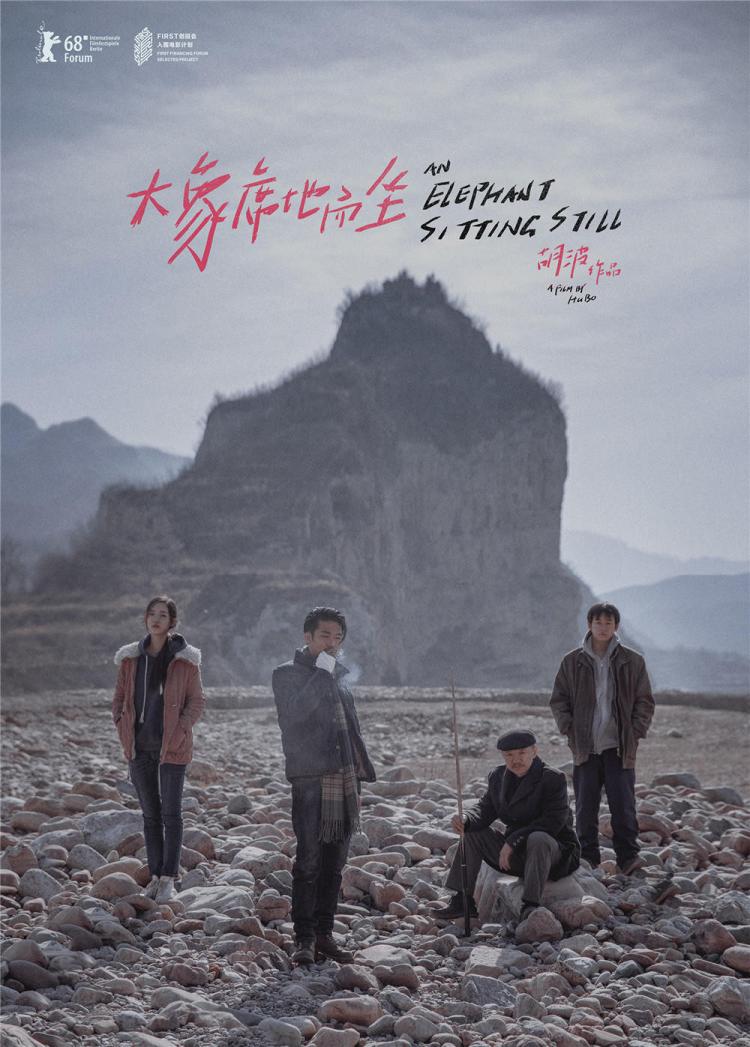
An elephant sitting still poster“It’s all about agony” a discredited adult figure intones midway into Hu Bo’s first (and sadly only) feature, An Elephant Sitting Still (大象席地而坐, Dàxiàng Xídì’érzuò). Latest in a long line of indie features to ask serious questions about the hypocrisies of the modern China, Elephant stops to wonder how one manages to live at all in world which has become so “disgusting” as to make life itself seem like a cosmic joke. In this “wasteland”, all that’s left of human connection appears to be a series of games of oneupmanship in which there must always be a loser and for which no one wants to take personal responsibility. Then again, they say there’s an elephant in a zoo in Manzhouli which has taken passive resistance to unnatural extremes but somehow survived all the world has thrown at it.

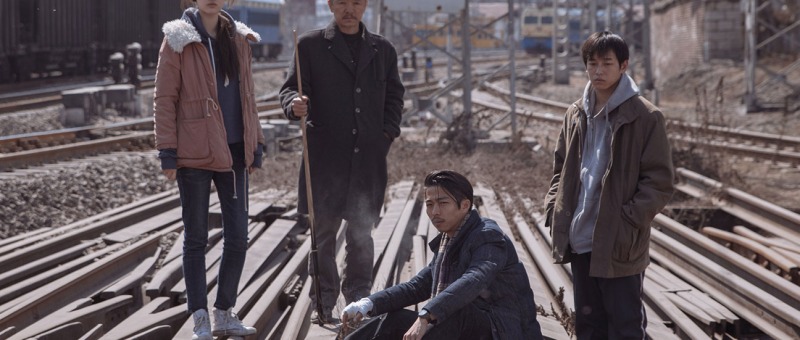
Four lives intertwine in the decaying industrial environment of a rundown town somewhere in Northern China. Petty gangster Yu Cheng’s (Zhang Yu) day gets off to a pretty bad start after he sleeps with his best friend’s wife only for him to return unexpectedly, spot Yu Cheng’s shoes in the hall, and then throw himself off the balcony in a fit of total despair. Meanwhile, teenager Wei Bu (Peng Yuchang) gets himself mixed up in his best friend’s altercation with school bully Yu Shuai (Yu Cheng’s little brother) over an (allegedly) stolen phone which ends in a scuffle and Yu Shuai tumbling down a set of stairs. Wei Bu decides to run and asks his female best friend Huang Ling (Wang Yuwen) to go with him, but she has troubles of her own in the form of a toxic relationship with her embittered mother and an ill-advised affair with the school’s married vice-principal. Lacking other options, Wei Bu turns to his genial next-door neighbour, Wang Jin (Liu Congxi), hoping to borrow some money but Wang is preoccupied with his declining family situation as his son and daughter-in-law attempt to force him out of his apartment and into a nursing home so they can move into the catchment area for a better school for Wang’s granddaughter.

Our four see themselves as walking dead, but are in some respects the last four standing. They wonder and they muse, asking why it is life has to be this way but unable to simply ignore the nagging threads of connection and human decency that those around them seem to have successfully eradicated. The older generation, having been betrayed by China’s rapid rise to economic prosperity, are cruel and embittered. They treat their children with contempt, smirking grimly in the knowledge that they will likely share the same fate. Yet they have managed to weather the storm, coming to an accommodation with the fact that life is disappointing and surviving even if in a form that makes survival just about as unpalatable as it’s possible to be.

For this survival, they have helped themselves to entitlement. This is a game of (occasionally literal) dog eat dog in which all that matters is winning no matter at what cost in order to avoid feeling like a nobody. Petty schoolboy thug Yu Shuai, learning a lesson from his disaffected brother, attempts to rule by fear and intimidation but finds his empire threatened by Wei Bu’s principled attempt to stand up for his friend. Wei Bu is a “loser” and his accidental “win” is a shock to the system that threatens to bring the whole thing crashing down but revolution was not in Wei Bu’s game plan and his resistance is short lived. Alone and friendless, he sees no alternative but flight.

Wei Bu’s friend, who turns out to have been unworthy of his loyalty, later achieves a rare moment of existential ecstasy in having frightened off two goons with a gun he pinched from his father. He is overawed to have inspired such fear and sure that most never feel anywhere near as alive as he feels at this moment. Wei Bu is unimpressed by his dark philosophy, but perhaps understands it as a grim encapsulation of the world in which he lives. Yu Cheng too tacitly accepts that his society values the strong, but it becomes apparent that his pretence of coldness is just that. He claims to hate everybody, and his brother most of all, but he walks back into a room on fire to save a man he doesn’t know and for all his attempts to abnegate the responsibility for his friend’s death is clearly affected both by his decision and his own role within it.

Responsibility is something nobody wants to take. Yu Cheng blames his friend’s death first on his own individual will, and then on his greedy wife for the unnecessary economic burden she placed on him, and finally on an unrequited love whose rejection he claims sent him into the arms of his best friend’s girl, but finally he cannot escape his own sense of guilt as embodied by the grieving mother his moral failings have produced. Huang Ling’s teacher expresses a similar life philosophy when she presses him as to why the school did not call the police over Yu Shuai’s accident. He tells her that if he’d called the police he’d be “involved” which not something that he wants to be. Unfortunately for him, his decision to pursue an “affair” with a vulnerable teenager is going to get him in “involved” in several sticky situations, most of which he blames Huang Ling for as the girl who has “ruined” him. Like the elephant of the title, Huang Ling’s lover sits and watches as the world spirals out of control, unwilling to stop it for fear of being dragged into its never-ending cycle of destruction and disappointment.

Intense individualism has fostered not only selfishness, but a refusal of accountability. Everything is always someone else’s fault just as someone else must always lose in each and very encounter in order to avoid the sensation of being a “loser” oneself. Alone among the older generation, Wang retains his youthful sense of human feeling, but eventually even his will is worn away and he considers giving in and entering the retirement home even after visiting it and realising it is little more than death’s waiting room. His advice to the young echoes that of Huang Ling’s lover, that there is no escape from sorrow and an attempt to evade it through starting again somewhere else will lead only to double failure. The best thing, he tells them, is to believe in a better place and then never go there so as not to have your illusions of a kinder world shattered. Yet there are flickers of possibility, Wei Bu wants to see the elephant anyway even if it changes nothing. Hu wants to ask us if it’s possible to go on living if you discover that there is nothing to live for and perhaps he found his own answer for that, but there is hope here, if faint and compromised, in the thought of distant elephants enduring all with stoic grace.


Currently on limited release in UK cinemas courtesy of New Wave Films.

International trailer (English subtitles)
A Cool Fish (无名之辈, Rao Xiaozhi, 2018)

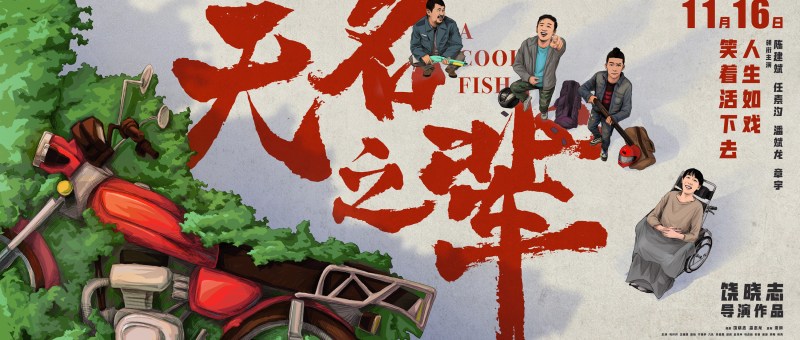
A Cool Fish posterThe genial loser is fast becoming a staple of contemporary Chinese cinema. Rao Xiaozhi’s second feature A Cool Fish (无名之辈, Wúmíng zhī Bèi) is the latest in a long line of comedies to make the “diaosi” world its home as a collection of disappointed and increasingly desperate failures become embroiled in a complex web of cosmological coincidence. China’s famously draconian censorship regulations ensure that the ending of this caper will be bittersweet at best, but even so a brief brush with violent crime does at least allow a bouncing back if only through hitting rock bottom and emerging with greater clarity.

Small town hicks “Bra” (Zhang Yu), short for “Cobra”, and Big Head (Pan Binlong) have talked themselves into a gangland future, planning a big city heist after getting their hands on a stolen gun and motorbike. Unfortunately, not everything goes to plan and they end up robbing a mobile phone shop next door to the bank rather than the bank itself because the security guard was too intimidating. Not only that, they manage to send their getaway bike into a tree while trying to escape by muddling the clutch with the accelerator meaning they have to escape on foot. Crawling in through an open window, they find themselves in the home of the spiky Jiaqi (Ren Suxi) who is paralysed from the neck down and completely unafraid to make use of her one remaining weapon – an extremely loud and imperious voice. Jiaqi is also the sister of widowed security guard Ma Xianyong (Chen Jianbin) who was once an auxiliary police officer and harbours a desire to get back on the force which he feels he could fulfil through investigating the robbery and retrieving the gun on his own initiative. Meanwhile, Xianyong’s boss, financially troubled property developer with a complicated family set up Gao Ming (Wang Yanhui), is on the run from gangsters to whom he has massive debts.

Like the cool fish of the title, Bra and Big Head are young men with impossible futures who find themselves cast out from mainstream society with no real way back in. No education, no connections, no job prospects or family – their futures look bleak. Bra sees himself as a gang boss in waiting even if Big Head is his only henchman, but the guys are no master criminals and despite their claims of working their way up in the crime world it’s clear they aren’t cut out for such cutthroat antics. Xianyong, by contrast, had opportunities but squandered them and then lost everything in a tragic turn of events for which he must bear some of the responsibility. Despised by his teenage daughter, humiliated by the gangsters chasing Gao Ming, and burdened by the guilt of having caused the accident that ruined his sister’s life, all Xianyong wants is to hit back and prove himself a someone, which means he’s coming for another pair of losers not so different from himself.

Rao Xiaozhi rolls the familial in with the political through rooting all of Xianyong’s various problems in his very male failures as a compromised father figure. Having lost his wife in a tragedy of his own making, Xianyong is resented by his daughter who has reverted to her mother’s maiden name out of shame while he engages in underhanded scams to bolster his fragile sense of self worth. Meanwhile, all Big Head dreams of is a small house in his hometown and to marry his childhood sweetheart, Xia (Ma Yinyin), who has come to the city in search of money. Big Head thinks she doesn’t want to marry him because he isn’t rich, but Xia’s reluctance turns out to be misplaced shame in having engaged in sex work and no longer seeing herself as good enough for the small town wholesomeness of a man like Big Head, never guessing he might go to such extreme lengths just to prove himself worthy of her.

Trapped by the crushing impossibility of life in a rapidly developing, relentlessly unfair, patriarchal, and conservative society each of our heroes takes desperate measures to enact their escape but quickly discovers that escape is a spiritual more than material matter and cannot be bought through transgression. This being China, crime cannot pay and so our guys cannot hope to emerge heroically from their less than heroic foray into gun toting criminality but even so you’d have to admit that their futures are brighter for having hit rock bottom and woken up with a better sense of self and a degree of forward motion. Rao’s ramshackle world of lovelorn little guys daring to dream of a (modestly) brighter future perfectly captures the bleak romanticism of the “diaosi” phenomenon and proves strangely difficult to resist save for its crushingly “necessary” finale.


Currently on limited release in UK Cinemas courtesy of China Lion.

International trailer (English subtitles)

Dead Souls (死靈魂, Wang Bing, 2018)

Dead Souls posterFor his eight hour exploration of China’s painful past, Wang Bing borrows a title from Gogol’s famous 19th century Russian novel which aimed to poke fun at the various flaws in contemporary cultural norms. “Dead Souls” (死靈魂, Sǐ Línghún), in Gogol’s case, referred to serfs which had passed on but were still included in a landlord’s register of property and therefore liable for taxation (the novel’s protagonist, a corrupt former civil servant, is keen to “buy” these “virtual” serfs as part of a mysterious money making scam). Wang Bing’s aims are about as far from comic as it’s possible to be, but he too is intent on unmasking national hypocrisy in ensuring the testimonies of the hundreds of men and women who survived Mao’s “Anti-Rightest Movement” of the late 1950s are finally heard. The alleged rightists became “dead souls” in more ways than one – having lost their party affiliation they no longer quite existed in the intensely conformist post-revolutionary world where they found themselves betrayed and abandoned by an increasingly oppressive regime that eventually robbed them of their humanity.

In 1956, the Communist Party had announced the Hundred Flowers campaign in which ordinary people were encouraged to voice their innermost thoughts about the state of the revolution. After a short lived period of liberalism, the Hundred Flowers campaign was exposed as a ruse to root out so called reactionary elements. The Anti-Rightist Movement which began in 1957 rounded up those who had offered up constructive criticism of the party as well as capitalists, intellectuals, and just about anyone with a vaguely questionable history, and packed them off for “re-education” at various labour camps throughout China.

Mostly offered through lengthy direct to camera monologues, Wang presents a first hand account of the Jiabiangou Labor Camp from those who managed to survive (around 500 of 3200 internees) after famine and disease took hold. Many of the alleged “rightists”, most “rehabilitated” after the Cultural Revolution and subsequent economic reforms, affirm that they have no idea what it is they did “wrong” but are convinced that it was petty jealousies and personal resentments that landed them in hot water rather than a political dispute. Many found themselves at the mercy of an official they’d already reported for incompetence or corruption, disappeared for reasons of expediency or convenience. Others were told that their re-education was for the public good and they’d be back in a matter of months in their old job with their old salary, or else their family could come live with them on the utopian farm that would arise from their efforts in the camp.

Of course, the reality was very different and the harrowing stories recounted by the now elderly men with a mix of retrospective black humour and deeply held resentment speak of death on a mass scale, starvation, walking corpses, and rampant disease. With famine intensified by the failure of the Great Leap Forward, food supplies grew increasingly short while numbers of “rightists” in need of re-education only increased thanks to a kind of quota system. Those most likely to survive were the ones who made themselves the most useful – the physically strong, the tenders of horses, and the kitchen staff who could survive by pinching food when no one was looking. One strangely gleeful old man calmly recounts how he finagled his way into the kitchen and then set about pilfering the best of the supplies for himself with the help of the other cooks (seemingly without remorse), while another man recounts spotting a similar practice and taking the greedy to task by reminding them that the food they were scoffing came out of someone else’s mouth. Those who survived did so either because their families were able to smuggle in food for them, or else they were lucky.

Breaking away from the rigorous, sometimes oppressive interviews, Wang wanders the grounds of the former camps now levelled in an attempt to erase their existence but still painfully visible in the arid, scarred landscape. Bones litter surface as if squeezed out of the earth while human skulls rest eerily in the middle of barren land. A group of survivors attempts to identify remains through stones placed atop the bodies of those who died when those left behind still had the strength to bury them, but fail to read the faded names while their attempt to erect a monument to those who lost their lives to a malicious failure of government ends with only more destruction. What they were not permitted to do Wang accomplishes if intangibly in creating an indelible monument to human suffering through the first hand testimony of a persecuted generation finally able to break the long decades of silence and give voice to a truth still so painfully hidden.


Short clip from the beginning of the film (English subtitles)