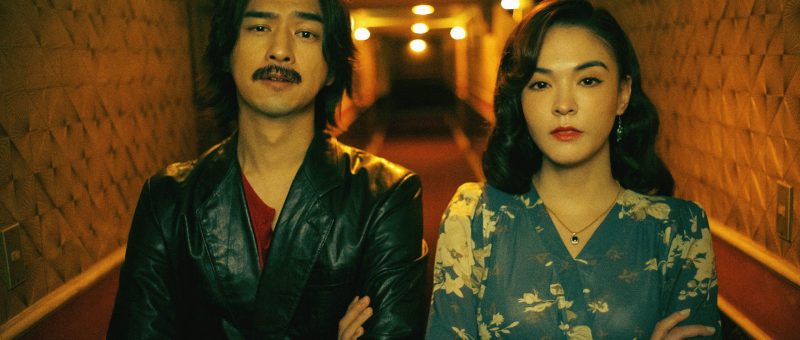

A Long Shot (老枪, Gao Peng, 2023)

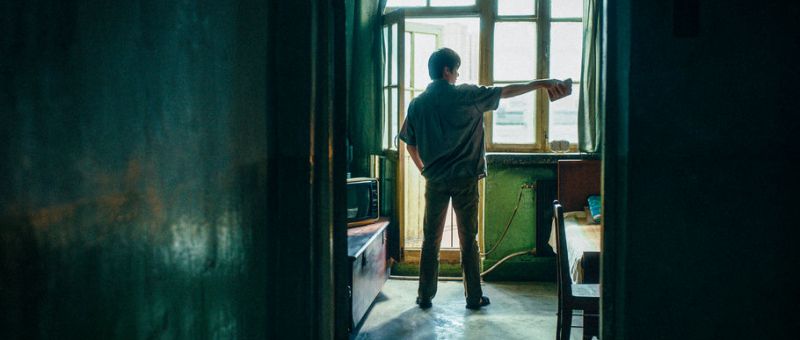
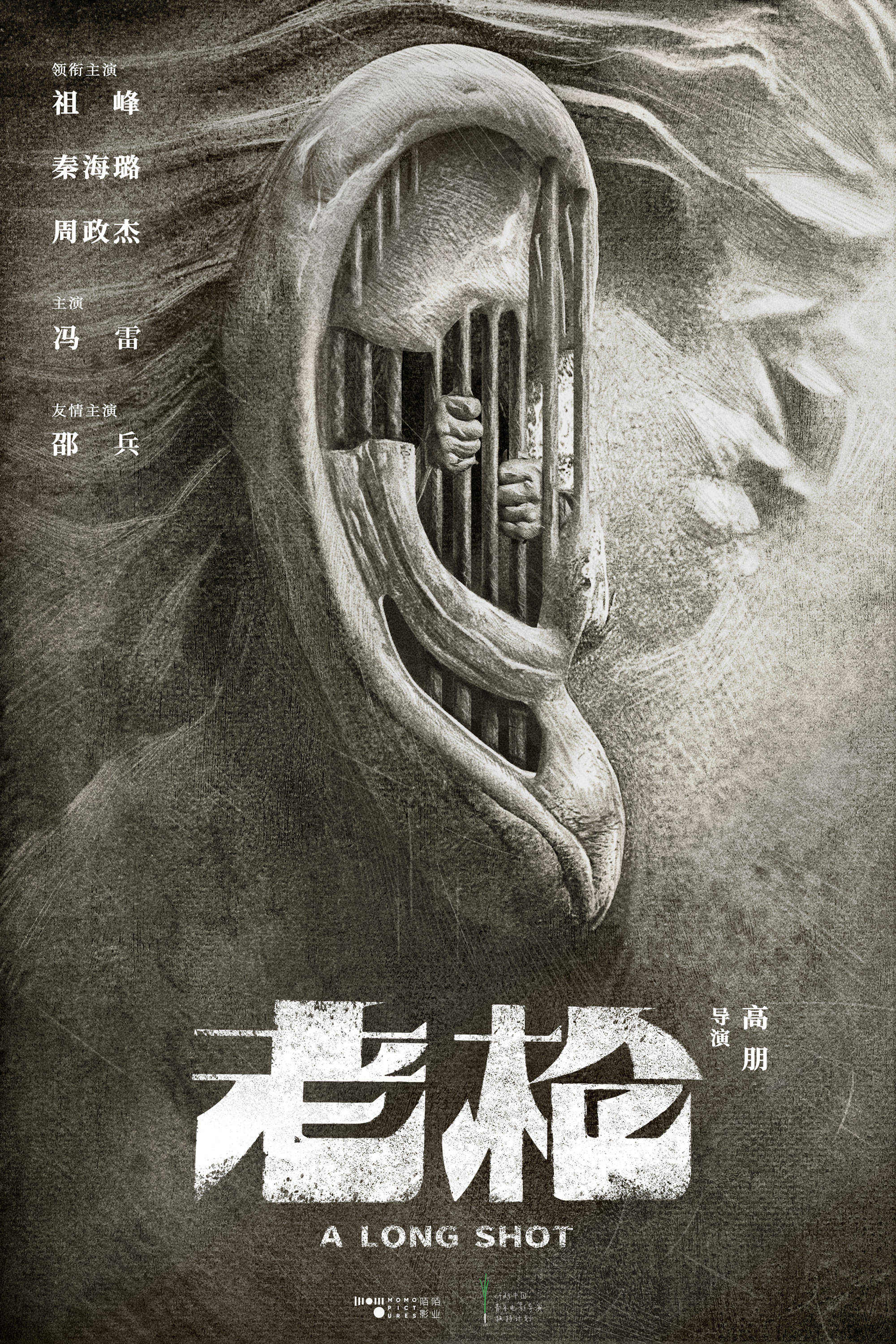
The hero of Gao Peng’s A Long Shot (老枪, lǎo qiāng) is forever reminding himself to “regain your focus”, yet in other ways it’s something that he’s making an active choice not to do and that others wish he wouldn’t. Set amid the chaos of China’s mid-90s economic reforms, the film suggests that Xue Bing has little other option than to tune himself out and avoid being a direct part of the corruption all around him as he has little power to stop it.

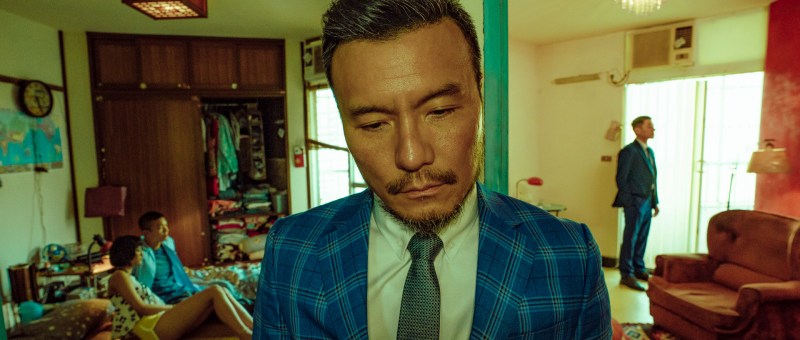
In a prologue set five years before the main action, Xue Bing (Zu Feng) had been a sharpshooter on the national team but is told that he has experienced hearing loss which may affect his balance and is subsequently let go. The hearing loss is perhaps symbolic of the fact that Xue Bing does not listen to the lies and double talk around him and maintains an integrity that is nothing but irritating to his morally compromised colleagues. On the other hand, he later tells Xiao Jun (Zhou Zhengjie), a teenage boy to whom he’s become a kind of father figure, that staring at a bull’s eye all your life isn’t good for your eyes hinting at his problematic hyper focus in which he’s just trying to keep his head down and do the best job he can under the circumstances.

But the circumstances are grim for everyone. Now with shaggy hair and a look of disappointment in his eye, Xue Bing works as a security guard at a moribund ferroalloy factory where the workers haven’t been paid in years as the nation goes through a number of complex economic reforms that are changing the face of the nation and giving rise to a new class of wealthy elites who’ve gained their riches through immoral and exploitative means. With people not being paid, thefts are a common occurrence but the security guards have turned to taking bribes, tacitly turning a blind to equipment going missing if the thieves are willing and able to pay a small fee. Xue Bing doesn’t like to go along with this and avoids joining in, but is powerless against the other guards including his boss Chief Tian (Shao Bing). 

The film frames the factory as a microcosm of the wider society which has become a vicious circle of corruption. But on the other hand, the workers guards, and even in the management see themselves as taking what was rightfully theirs but has been unfairly denied them. The workers steal from their employer because their wages weren’t paid, the guards aren’t getting paid either so they extort the workers and rip off the company, while the management know the factory’s effectively bust so they’re asset stripping while they still can. Chief Tian runs into one of the thieves who’s since started a “trading company” having taken some cues from a Russian working at an equally moribund shipyard where he’s no longer monitored by the authorities and has been selling off warships as scrap hinting at the disintegration of post-war communism and the resulting capitalist free for all that followed. 

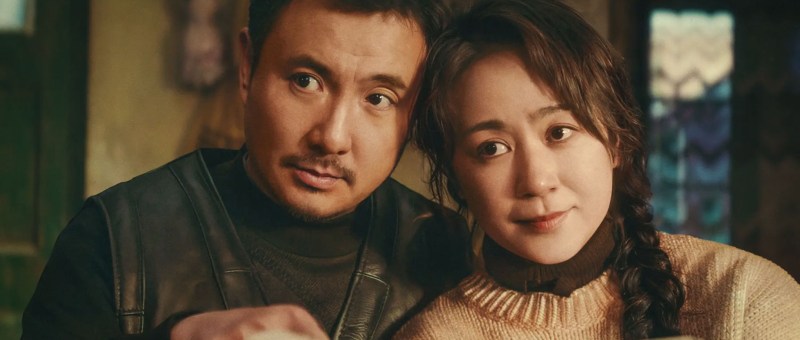
Xiao Jun, the son of a woman Xue Bing thinks he’s in a relationship with but the reality is somewhat ambiguous, is caught amid this crossfire as a young man coming of age in complicated times. He resents the corruption he sees around him and bonds with Xue Bing thinking he’s a straight shooter only to be disappointed by his defeated complicity which he also sees as a kind of unmanliness. Xiao Jun’s mother, Jin (Qin Hailu), had been trying to run her own business but later gets a job in a nightclub that seems to be sex work adjacent thanks to her relationship with another corrupt businessman, Mr Zhao. She remarks to Xue Bing that there are so many ways to earn a living these days she doesn’t understand why anyone would go back to the factory, laying bare the wholesale change in the society. Xiao Jun has taken up with a gang of seeming delinquents who frequently loot the factory complex, but even they are only taking what they think is theirs as one of the boy’s fathers was killed in a workplace accident and the family was only given a certificate of commendation rather than financial compensation for the father’s lost wages without which they are unable to support themselves. 

The guards have been told they’ll finally get paid after the company’s 40th anniversary celebrations, with corrupt manager Sun telling Tian he’ll need his help to keep the others in line when he presses him and is finally told they’ll only get two months’ worth of the back pay they’re owed. Xue Bing is told Sun was selling off the lathe machines in order to pay the workers, and it seems like he believes them naively falling for their greater good narrative while Xiao Jun seems on a collision with adult hypocrisy refusing to sign a false confession to get the managers off the hook. Gao lends Xue Bing’s world a greying hopelessness in which the only two choices are to close his eyes and ears or go down fighting, closing with a lengthy shootout in which firecrackers mingle with gunshots masking the sound of rebellion from a continually unheard underclass.


 A Long Shot screened as part of this year’s New York Asian Film Festival.

Fish Memories ((真)新的一天, Chen Hung-i, 2023)

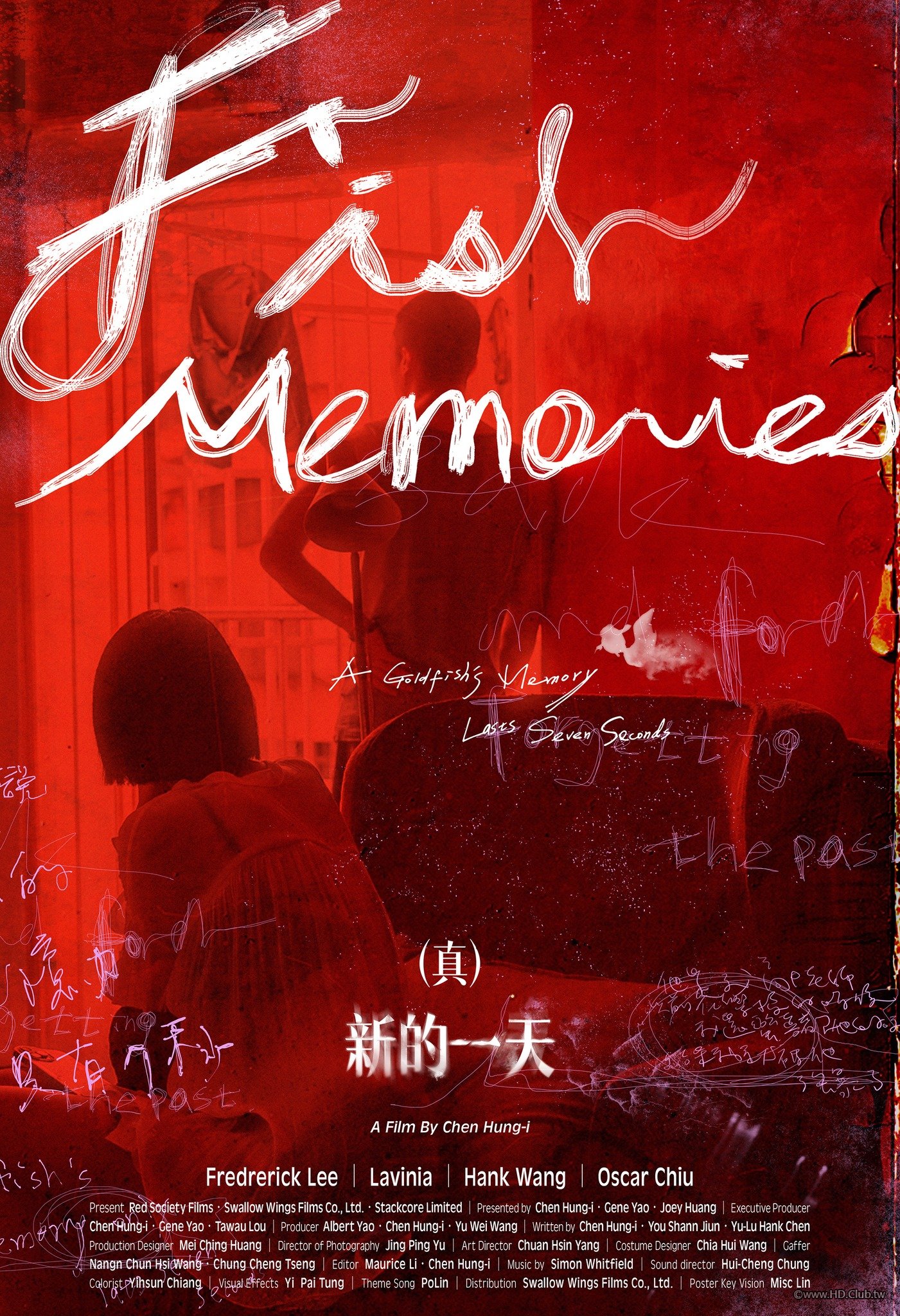
The sometime narrator at the heart of Fish Memories ((真)新的一天, (zhēn) Xīn de tiān) says that she wishes her memory were like that of a fish, no longer than seven seconds, and that she were able to be free of her traumatic past by forgetting it. But of course, she is unable to forget and like her boyfriend, Shang, and the middle-aged man with whom the pair eventually form a twisted relationship, a kind of orphan drifting in the wake of parental failure.

Businessman Zi Jie (Frederick Lee) also seems to drifting, seemingly dissatisfied with his financially comfortable but emotionally empty existence. He later says that his own parents only cared about about money and sent him away to Singapore when he was a teenager only for their business to then fail. He feels as if he’s done better than them, at least, but when asked how to avoid loneliness he answers only “earning money, spending money, earning money”. He has a girlfriend of around his own age, but bristles when she expresses a desire for greater intimacy and ends up pushing her away while beginning to bond with Shang (Hank Wang), a teenager he meets in a convenience store while picking up a parcel. He runs into the boy a few more times and ends up developing a friendship with him and also his same age girlfriend Zhen Zhen (Lavinia) who is still in high school and claims to have been sexually assaulted by one of her teachers who’s apparently done the same thing to several other girls with no apparent consequences.

Zi Jie’s relationship with the teens straddles an awkward divide, partly parental and partly friendly. He seems to partially regresses in their company, drinking incredibly expensive wine but also sitting around playing video games and agreeing to childish dares such as the one in which he ends up swapping places with Shang, waking up in his walkup apartment and dressing in his clothes. Shang’s living environment is not ideal, Zi Jie balks at the stairs while the place is cramped and filled with junk and Shang evidently rarely does no laundry but to Zi Jie it represents a kind of freedom. Of course, he can always return to his luxury apartment which still has power even during an outage which is an option not open to Shang who nevertheless seems to increase in confidence while wearing Zi Jie’s fancy tailored suit. Several times he approaches his rundown apartment block and looks to the sky as if echoing his sense of aspiration though that turns out not to be the reason he’s interested in Zi Jie. 

When he first gave him a car ride, Shang blunts told Zi Jie he wouldn’t sleep with him because he liked girls, remarking that Zi Jie looked “a bit gay”, but a sexual relationship does eventually evolve between the trio even as they also form an unconventional family unit. When they sit down to breakfast together with the doors onto the courtyard open and the sun drifting in with idyllic view behind, Zhen Zhen remarks that it’s the kind of moment she’s been waiting for all her life despite the awkwardness of this quasi-incestous and definitely inappropriate relationship given that the teens are underage and Zi Jie is a wealthy middle-aged man keeping them in his apartment.

But it’s perhaps when the streams start to cross that things begin to go wrong, Zi Jie making a huge miscalcutation while in the teens’ world that provokes a tragic event biding each of them together though only in the darkest of ways. The three of them are each in their way trapped in a tank, no more free than the fish they place inside it and in the end able to find freedom, of one kind or another, by remembering and acknowledging the truth. Repressing his sexuality and chasing only empty financial success has evidently left Zi Jie a hollow, broken man seeking to reconnect with his younger self through his relationship with Shang which in its way also prevents him from acknowledging the vast gulf that exists between them in their differing circumstances but also unites them in a shared feeling of irresolvable loneliness and the legacy of parental abandonment in a sometimes indifferent society defined by economic success.


Fish Memories screens 8th September in Melbourne as part of this year’s Taiwan Film Festival in Australia.

Original trailer (Traditional Chinese / English subtitles)

Successor (抓娃娃, Yan Fei & Peng Damo, 2024)

Embodying the contradictions of the modern China, Successor (抓娃娃, zhuā wáwa), the latest from the FunAge team sees a billionaire father recreate a utopian vision of crushing poverty amid the socialist values of China pre the 90s reforms but only so that his son can develop a desire to become a capitalist fat cat. For all that, however, it’s also a reaction against micromanaging parents, life under oppressive state control, and a high pressure, conformist society obsessed with very narrowly defined visions of success that are increasingly at odds with what a younger generation might want.

The surprising thing is how easily the young boy, Jiye, is able to straddle these two worlds while only gradually beginning to realise that it’s odd his neighbours keep asking him complex maths questions and he’s always running into foreigners who conveniently want to know the way to the local post office. Ostensibly, the Ma family live in an old-fashioned courtyard that according to the sign over the front entrance was constructed in 1958. As the film opens, Jiye’s teacher has brought a wealthy man to their home, in fact the father of one of Jiye’s classmates, who offers to sponsor his education while each of them look mystified around the flat which seems to exist in a kind of time warp. Jiye’s father, Chenggang (Shen Teng), sends them the packing explaining that they live exactly as they want to and don’t need anyone’s help. 

Yet Jiye is fascinated by his friend’s iPad and aware of the world outside works even as his parents try live like it’s the 1960s, sitting round reading good socialist literature which is also recommend to Jiye by the man who owns the bookshop downstairs and is actually one of Changgang’s many hidden “teachers”. But unbeknownst to him, there’s a lift behind his parents’ closet door that leads to a huge control centre where his every move is being monitored. Chenggang is actually a fantastically wealthy businessman who wants Jiye to develop good character so that he can take over his business after getting into a prestigious university.

In a very high tech and invasive way, it’s a reflection of the confused ideology being forced on Jiye by unseen external forces. Once he’s a little older and able to see that his world is definitely not normal, he begins to feel as if some mysterious force is indeed controlling his life but attributes it to vague notions of fate or cosmos rather than wider authoritarianism or parental manipulation. Chenggang is convinced this is the proper way to educate his son, to give him both old-fashioned socialist values and a heathy desire to overcome his poverty and live in a fancy mansion. He feels this way in part due to his dissatisfaction with a grown-up son from a previous relationship who failed his exams and was sent to America in disgrace. Somewhat uncomfortably, one of the reasons Chenggang is so disappointed in Dajun (Zhang Zidong) who continues to crave his approval is that he’s gay and in a committed relationship with an American man who probably should have given more thought to his Chinese name. 

In order to keep up the pretence, Chenggang never tells Jiye that he has a half-brother though he does allow him to see his maternal grandparents on occasion though they, evidently very wealthy themselves, do not approve of Chenngang’s parenting and resent being unable to spoil their grandson in the way they’d like. Chenngang may have a point here, though his chief objection being that the little Jiye was already quite chubby from being relentlessly pampered lands in the realms of fat shaming rather than a serious questioning of indulgent parenting in the wake of the One Child Policy.. He didn’t want him to grow up to be selfish and entitled or to have a distorted sense of the value of money but also seems to have a conviction that the boy will just laugh and say thank you when he finds out his entire life has been a lie and his parents made him suffer needlessly when they were in reality vastly wealthy. 

But what Jiye emerges with is, perhaps surprisingly, a more wholesome sense of rebellion, stepping out from the cosseted false reality his parents had given him and prepared to chart his own course. In an undercutting of the apparent homophobia which surrounds Dajun, the film also refreshingly, and perhaps subversively given the usual treatment of LGBTQ+ themes in mainstream Chinese cinema, suggests that he has done the same and was right to do so validating his relationship with Peter while a kind of solidarity emerges between the brothers in the shared defiance of the path their parents had set down for them. Often hilarious in its surreal humour and penetrating in its satire, the film echoes a sense of dissatisfaction amid contemporary youth no longer so hung up on outdated ideology and craving more individual freedom in a society in which lives can ultimately feel oppressively micromanaged by shady, unseen forces.


International trailer (Simplified Chinese / English subtitles)

Black Dog (狗阵, Guan Hu, 2024)

When a dusty sign pops up in Guan Hu’s Black Dog (狗阵, gǒu zhèn) advertising the upcoming 2008 Beijing Olympics, you’d be forgiven for thinking it’s a relic of a long forgotten past. On the edge of the Gobi desert, Chixa has a post-apocalyptic aesthetic, a kind of reverse frontier town for a society in retreat. It takes on an almost purgatorial quality for prodigal son Lang (Edward Peng Yu-Yan) who returns after spending nearly a decade in prison for an incident that seems like may not have been entirely his fault but for which he continues to face enmity and a petty vendetta from a local gangster/snake farmer Butcher Hu.

Lang himself is aligned with the stray dogs who have begun to reclaim the town which has long since been abandoned by industry. The moribund zoo where his father has taken to living is testament to the prosperity the area may once have had though now it’s a ghost town of China’s industrialising past strewn with the disused factories of Socialist era dealt a deathblow by the economic reforms of the ‘90s. Yet we’re also told that the reason the stray dogs must be expelled is so the town can be redeveloped and new factories take the place of the old which does not seem to hold the kind of promise for the townspeople one might expect. 

Constant references to the Olympics and its slogan “Live the Dream” only emphasise the irony. Geographically distant from Beijing, Chixa exists in an entirely different space from the Chinese capital and appears as if it were about to collapse in on itself. Half the town is plastered with demolition signs and in the end it’s the people who are displaced as much the dogs. Guan often rests on ominous visions of the strays standing on a small hilltop and then recalls the image in the film’s closing scenes as the dogs are replaced by townspeople watching a once in a generation total eclipse on the eve of the opening of the games.

With nothing much else to do, Lang, a former rockstar and motorcycle stuntman in the town’s more prosperous days which themselves even seem to echo the 1950s more than the late ‘90s, joins the campaign to beat the canines into retreat at the behest of local gangster Yao (played by director Jia Zhangke) but begins to identify and sympathise with them especially once it becomes obvious that the new regulations are exploiting dog owners by forcing them to pay to have their animals registered. Those who can’t or won’t have their pets confiscated, Lang silently rescuing one girl’s little’s pet pooch while her grandmother tries to argue with the dog catchers before they take them all to what is effectively a concentration camp for dogs. The film’s Chinese title is in fact “Dog Camp,” and it becomes clear that it’s Lang who’s stuck there, trapped by his past and the dismal realities of the socioeconomic conditions of late 2000s China.

Hoping to earn a little extra cash he decides to try catching a wanted fugitive, the Black Dog of the title who is mistakenly believed to have rabies only to end up bonding and identifying with it. At several points, Lang echoes the movements of the dog such as placing his head on the chest of his dying father as the crowd below his hospital room prepare to welcome the opening the Olympics via a large screen in the town square. His relationship with the dog begins to restore his sense of compassion and humanity while a tentative connection with a young woman equally trapped by her transient existence and toxic relationship with a fellow circus performer opens his eyes to new possibilities of a life of freedom on the open road no longer bound by the constraints of a society in flux. Elegantly lensed grainy photography and the occasional use of synth scores lend the film an elegiac, retro quality that recalls the cinema of the fifth generation while casting a subversive eye over the compromises of the modern China itself trapped by its past and trading on former glory from which stray dogs like Lang can find escape only by running from the pack. 


Black Dog is in UK cinemas from 30th August courtesy of CineAsia.

UK trailer (English subtitles)

Snow in Midsummer (五月雪, Chong Keat-Aun, 2023)

How should you deal with the traumatic past? In Chong Keat-Aun’s Snow in Midsummer (五月雪) it becomes clear that this past has not been dealt with and that its heroine has been living in a kind of limbo unable to move fully forward with her life in the constant search to discover what happened to her father and brother during the 513 Incident in 1969. The first act devotes itself to the slowly unfolding horror of the massacre which erupted shortly after a general election during which a number of smaller parties affiliated with the Chinese community had begun to gain ground from the Malay-dominated Alliance Party. 

Bullied by her classmates as a Chinese student in a Malay school, Ah Eng spends the night of the massacre hiding in the backstage area of a Cantonese opera troupe as if in a literal act of taking refuge in fantasy. The film’s title alludes to the famous Cantonese opera Snow in Midsummer, actually “Snow in June” here retitled as “Snow in May”. The play’s theme is injustice as its heroine is condemned to die for a crime she didn’t commit, someone remarking that the gods must be outraged to provoke such an aberration of the natural order as snow in the height of summer. The ageing leader of the opera troupe ventures out during the incident in search her friends and relatives who had gone to the local cinema. Unable to open the door, she climbs onto the roof and sings a lament decrying the bloodshed and her own cruel fate as she watches the city burn beneath her. 

A similar lament is sung 49 years later in a graveyard we’re told is set to be “redeveloped”. The opera troupe had performed here for the dead during the intervening years, but in an event echoing that of 1969 are challenged by authorities asking if they have permits. That was in the past, they’re told, this is now and their performance causes a disturbance to a mosque which has recently been built close to the site. In a touch of irony, the taxi driver who brings the middle-aged Ah Eng to the cemetery asks her if she’s going to the leprosy hospital remarking that the Chinese community usually refuse to go anywhere near it. Each of the headstones, many of which read simply “unknown Chinese”, is marked “courtesy of the Malaysian government”, but it’s clear that this site was chosen because of its remoteness for similar reasons to the leper colony because they did not really want to address what had happened in any meaningful way.

That Ah Eng returns 49 years later hints at spiritual echoes of cycles of rebirth, but Ah Eng has lives her whole life in limbo haunted by the impossibility of discovering the resting place of her father and brother. Her father had refused to take her to the cinema, leaving her and her mother to watch the opera alone in echoes of the patriarchal oppression she continues to face as a middle-aged woman whose husband reacts with violence and anger simply because he suspects she intends to return to Kuala Lumpur to mourn her loss. Her sister-in-law gives her a lift to the station, but insists on being called by her Chinese name revealing that’s divorced her Muslim husband and intends to move to Australia with her child. On her arrival in the city, Ah Eng passes by the former sit of the Majestic Theatre which is now a fancy hotel with the same name in a very changed city. Her former Malay school is now Chinese but has a stand outside it selling Islamic food where the Cantonese opera troupe discuss their visit to the cemetery. 

“The past is dream,” the old woman sings to the grave echoing the surreality that runs through Chong Keat-Aun’s vision of the past as a man rides his elephant through the streets and lives the tale of a king forced to drink the Sultan’s foot water as a symbol of his subjugation, while others at the theatre are sold of a tale of a king with a quite literal bloodlust sustaining himself on the suffering of his subjects. A melancholy contemplation on lingering trauma, loss, and memory Chong Keat-Aun ends with a poignant image of comfort and catharsis but one is which is forever haunted by an intangible past and the wandering, unseen ghosts of buried injustice. 


Snow in Midsummer screens as part of this year’s Taiwan Film Festival in Australia.

Trailer (Traditional Chinese / English subtitles)

Pierce (刺心切骨, Nelicia Low, 2023)

What are the limits of unconditional love and is it always a good thing? The hero of Nelica Low’s intense fraternal drama Pierce (刺心切骨, cì xīnqiè gǔ) is desperate to believe that his older brother is innocent of a crime he’s been imprisoned for for the last seven years, but in another sense it seems like the fact itself doesn’t matter to him. What he wants is the emotional intimacy of authenticity which is something he doesn’t seem to get from his steely mother intent on crafting a protective bubble of fantasy that may be as much for herself as her son.

In any case, Ai Ling (Ding Ning) is convinced that Zihan (Tsao Yu-ning) was born bad. She needs no convincing that when he stabbed his opponent with a broken blade during a fencing competition he did so knowingly and it was an act of murder rather than an accident as he claims. Zijie (Liu Hsui-fu), her sensitive younger son, is not so sure and feels that his mother’s total rejection of his brother is unfair. He needs to believe in part that Zihan is innocent because he once saved him from drowning though according to his mother if she had not arrived when she did Zihan would happily have watched him die. Ai Ling also says that she suspected Zihan had harmed Zijie during their childhood, but if this is true then Zijie appears not to remember it or perhaps willingly suppresses his memories of cruelty because it would be too difficult for him to accept that his own brother tried to kill him. 

But objectively speaking, there is something not quite right about Zihan who seems to be a charmer with manipulative tendencies. He was once a three time national fencing champion, and as he says fencing is all about figuring out your opponent’s intentions without letting them see your own. Of course, the way he behaves could equally be because of the way his mother behaves towards him. In some senses he too is a broken blade, apparently craving his mother’s approval and affection and perhaps becoming what she believed him to be out of frustration and resentment. He lies all too easily, crashing a dinner party with Ai Ling’s wealthy suitor Zhuang and his family and leaning into her cover story that he had been away studying medicine in the US while adding a touch of his own in a tearful story of wanting to specialise in radiology having watched his father painfully pass away of cancer. 

Of course, even if he is a raging sociopath, that doesn’t necessarily mean he committed an apparently motiveless murder or that he has no feelings at all for his brother who dotes on and idolises him with almost incestuous intensity. Zihan instantly picks up on the fact his brother is gay and that a boy in the fencing club has a crush on him, offering nothing other than support and reassurance of the kind he’d never get from Ai Ling. When Zhuang tries to set Zijie up with a girl and he declines, he broaches the idea he might not be straight but Ai Ling immediately changes the subject implying that probably she already knows but it’s another thing she’s papered over perhaps afraid that it might damage her relationship with Zhuang who appears to come from a wealthy family though they may not be as conservative as she fears them to be. 

In contract to the intimacy Zijie craves, beginning to confess himself, Ai Ling protects and distances herself from others through deliberate misrepresentation. Zhuang seems at least that he would be more upset about the deceit than that Ai Ling has a son who involved in a high profile, violent crime and also appears not to care that Zijie maybe gay while otherwise attempting to bond with him and be a sincere father figure. His love may in fact be unconditional in a way Ai Ling’s clearly is not whereas Zijie finds himself wavering, confronted by contradictory evidence that suggests his brother may not be so innocent after all. Deciding into a Grand Guignol fantasy in its final stretches, Low fills the screen with an ominous red, the billowing curtains creating an artificial dreamscape of ambiguous reality in which the brothers, each of them, discover at least their own truth and the answers they were seeking which may in its way be all they really needed.


Pierce screened as part of this year’s New York Asian Film Festival

Original trailer (English subtitles)

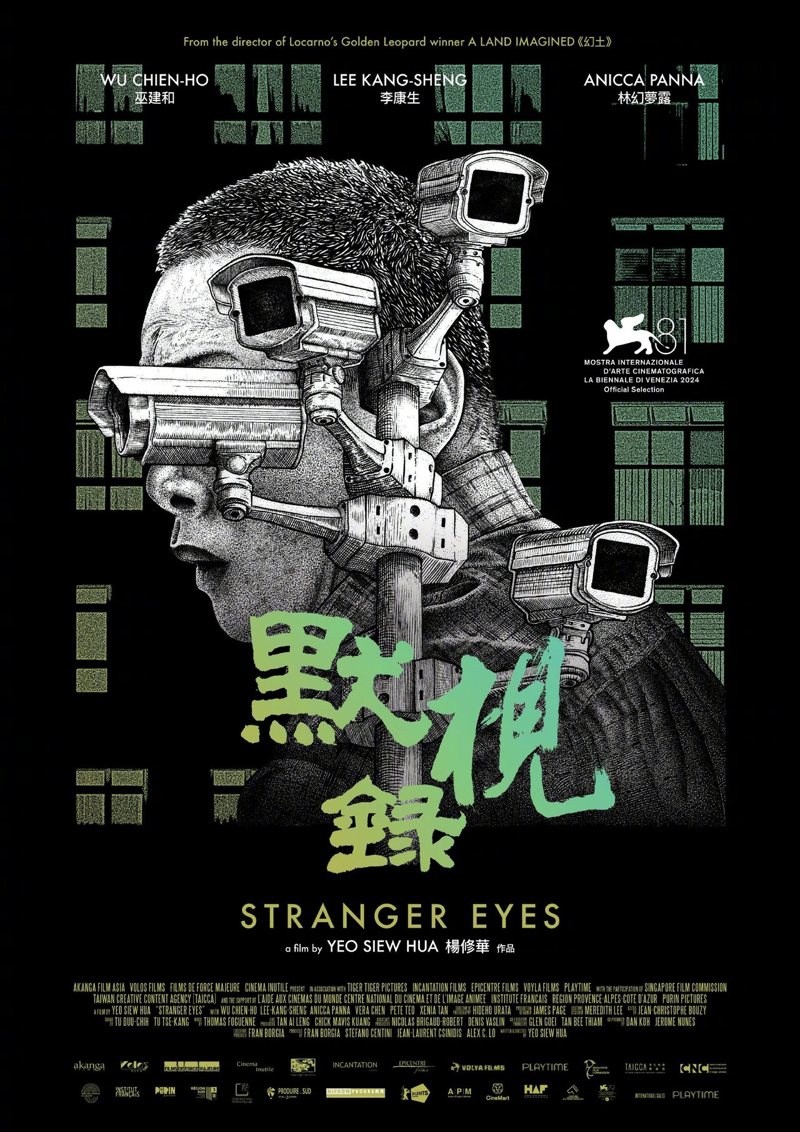
A Place Called Silence (默杀, Sam Quah Boon Lip, 2024)

Can the hammer of truth break the rock of silence? At the end of Sam Quah’s remake of his own 2022 film by the same name, A Place Called Silence (默杀, mò shā), you might ask if you really want to or if some secrets are best kept that way. Then again, Quah’s persistent focus on leaky roofs suggests the truth will out and that the slow drip of quietly collecting water will eventually erode even the strongest stone.

Though remade for the Mainland market, the film takes place in the fictional city of Doma which like many recent similarly themed films is ostensibly not located China but another area of South East Asia, the police uniforms and complex mix of languages and cultures strongly echoing those of the original Malaysian setting. This also extends to the increasingly Christianising imagery which leads back to a cult-like local charity that pedals a good book full of aphorisms landing somewhere between Confucius and Proverbs and are at best a superficial salve for the deeply rooted problems in what turns out to be a judgemental and classist society. 

At least, the reason no one challenges the increasingly extreme behaviour of school bully and queen bee Angie is because she’s the headmaster’s daughter. Angie has been relentlessly tormenting Tong largely because she has a disability and had until recently been taught in the special needs class. According to her mother, Han, Tong has been mute since birth and it’s in an attempt to get her a better education that she’s given up her job in accounting and taken a position as a cleaner at the school. Her mother’s profession is also another reason for Angie to bully Tong, though she also accuses Han of having seduced her father which does not appear to be true though his later admission to an “abuse of power” that gives Han leverage over him puts a different spin on the situation and does not cast him in a very good light. 

Neither does the state of disrepair at the school which has a persistently leaky roof that is at least according to handyman Zaifu structurally unsound and may cave in any minute. Some of the blame is placed on a recent tsunami which caused mass loss of life, and the school seems to be proud of itself for having taken in pupils from another institution that was swept away though they don’t appear to have been welcomed by everyone. When a pupil ends up dying because of Angie’s bullying, the headmaster delays calling for help in part it seems to evade a scandal while planning to simply bribe anyone who tries to look into the matter. 

In short, it’s not difficult to see why someone may feel they’d have to take the law into their hands to break the persistent silence that protects the wealthy and the powerful from the consequences of their actions. Though, truth be told, not everyone is very interested in the disappearance of the girls, Han is driven to distraction when she suspects that Tong has been abducted by a serial killer with a very particular motive who also seems to be aware of some secrets she herself had been keeping. Then again there are a lot of wilful silences, like that of Mrs Xu who later snaps that the whole building knew Han had suffered domestic violence yet apparently did nothing help her other than maintaining superficial politeness by avoiding bringing it up. 

Silence seems to be the only refuge for the bullied whether in school or the wider world for there’s little good in speaking up anyway. Tong tries to help a bullied friend, but her mother stops her, wary of their own need for silence and that Tong will simply become the next target which of course she does. Terrible things are done in the name of protection, but sometimes silence is necessary too and a means of atonement if not a weapon against life’s unfairness. An ambiguous mid-credits sequence somewhat muddies the waters in its implications though perhaps a concession to the censors demanding that crimes must be answered, but Quah otherwise depicts a hellish society of violence and powerlessness in which the only choices are silent complicity or murderous revenge.


A Place Called Silence is in UK cinemas now courtesy of CineAsia.

UK trailer (Simplified Chinese / English subtitles)

Breaking and Re-entering (還錢, Wang Ding-Lin, 2024)

You go to the trouble of planning a massive heist, and then it turns out you have to put it all back again. The gang of theives at the centre of Wang Ding-Lin’s hugely entertaining crime caper Breaking and Re-entering (還錢, huán qián) brand themselves modern day Robin Hoods, pausing for a laugh when they claim to help the poor, “yeah, us”. Yet there is something a little suggestive about this particular gig as they find themselves hired for an inside job by an obnoxious bank chief who claims the most important thing in life is yourself and those around you are merely passengers to be jettisoned at will..

Chen (Wu Kang-ren) is a rich kid who inherited the family bank and thinks he’s hot stuff after studying abroad, speaking Mandarin like foreigner and peppering his speech with English. His big idea is a cryptocurrency called BST and his tagline is “Peace, Love, and Money” while ironically enough he is also claiming to run a charity to help the poor. It’s obvious he’s running some kind of scam and not altogether surprising that he’d plot to rob his own back and then have the thieves bumped off to keep them quiet along with the two employees he’s decided to frame for the crime. Unfortunately for everyone, one of his scapegoats, Shen Shu-wen (Cecilia Choi), is the long lost flame of chief crook Po-chun (Chen Bo-lin) who, having realised Chen plans to bump her off, comes to the conclusion his only option is to mess up Chen’s plan by putting the money back in the vault.  

Of course, Chen is a kind of gang leader too complete with his own chief minion, Hu, though at one point he simply shoots one of his guys in the back of the head after he complains that Chen that doesn’t really value him. By contrast, Po-chun’s gang is a close-knit family, a brotherhood of thieves founded on mutual solidarity and infinite loyalty. Chen’s philosophy maybe that the individual is all, but these men live and die for each other. Nevertheless, Po-chun has a problematic hero complex that sees him, as others put it, aways trying to “take responsibility alone”, sacrificing himself for the group rather than allow his fellow gang members to shoulder some of the burden. That’s presumably one reason he (un)intentionally ghosted Shu-wen after getting arrested and going to prison, convincing himself he was doing the noble thing by avoiding getting Shu-wen mixed up with crime but perhaps also ashamed and insecure unwilling to let her know he met her as part of a heist and his cover personality wasn’t real while never giving much thought to her feelings. Shu-wen spent the last five years looking for him which was apparently a primary motivation for changing her career to work in the bank.

Po-chun’s quest is really one of maturity, to stop being the lone hero and fully integrate into the group by sharing responsibility with the others rather than jump straight to self-sacrifice. As he says through the medium of a montage sequence, their secret weapon is teamwork which is how they’re able to fight back against the well equipped Chen and his minions when the reason Chen flounders is his arrogance and the indifference of his men. That is not to say there isn’t tension in the team, such as the unrequited attraction bruiser Wen-hao has for Po-chun that is quite definitely antagonised by the resurfacing of Shu-wen who seems to have figured out the group dynamics pretty quickly in addition to seeing through Po-chun’s strong man act. 

It’s the warm-hearted, lived-in relationships between the team members that give the film it’s charm along with the quirkiness of the elaborately planned reverse heist and its mild dig at corporate tyranny along with class-based inequality. But most of all what it seems to advocate for is a collective spirit and the triumph of the intellect over the pampered authority of rich kid Chen as Po-chun strategises a way out of his grasp while ending his influence and getting the girl. Wholesome and charming, the film makes the most of its surreal humour along with some hilariously placed reality gags such the infuriating slowness of a “high end automatic door” that ironically prevents a wealthy crook from fleeing the scene.


Breaking and Re-entering screened as part of this year’s New York Asian Film Festival and is also screening as part of the Taiwan Film Festival in Australia

Original trailer (English subtitles)

Suffocating Love (愛的噩夢, Liao Ming-yi, 2024)

Everything seems to put pressure on M, the cavalier hero of Liao Ming-Yi’s quirky exploration of confused male desire Suffocating Love (愛的噩夢, ài de èmèng). At heart, the problem might be that he doesn’t know what he wants, or he’s just someone who chases the dream of romance and is unsatisfied by its reality. Then again, the Chinese title of the film means something like “nightmare of love”, and it maybe that M (Austin Lin) is simply ill-equipped to deal the pressure of grown-up romance.

Conversely, the pressure he feels might be understandable given the nature of his relationship with Chia-chi, a manic pixie dream girl he falls for after meeting her through a book exchange app. Chia-chi describes herself as having “quirks” though at first they don’t seem to extend much past her vegetarianism, issues connected to a longstanding health condition, and her religiosity. But after dating for a year, M moves into her apartment and is confronted by a series of “rules” he must follow which make it clear that Chia-chi is controlling and possessive in the extreme. M must agree to send her updates every two hours to prove where he is with photographic evidence and reply to her messages right away. To begin with, M thinks it’s a small price to pay in the name of love, but eventually begins to feel the “pressure” of Chia-chi’s ever watchful gaze especially once another woman arrives on the scene. 

If these gender roles were reversed, we would be certain M should leave this abusive relationship though he seems to view it with a kind of nonchalance and only mild but increasing irritation. Ai-hsuan, a high school crush serendipitously turning up at work, offers the fantasy of escape to a more liberating kind of romance that’s tinged with teenage innocence even if Ai-hsuan’s problem is that she has cold feet about an impending marriage to a man she feels she’s grown apart from during their seven year relationship. Of course, this affair doesn’t place much pressure on him because for the moment it’s casual, an illicit bubble of freedom from Chia-Chi’s control in which he can be himself again. 

But is that what he really wants? After being transported to a strange dream realm, a bunny man harking back to the Alice in Wonderland reference that brought M together with Chia-Chi puts a gun to his head and forces him to make a wish at which point he wakes up with an other woman entirely, Kurosawa Yumi, a half-Japanese photographer and social media influencer who was his celebrity crush. The pair don’t live together, but Yumi seems to pop round to change his sheets and cook his dinner which is perhaps more reflective of a male fantasy than M realises even as he describes as her at the woman every man wants, What he wants is a woman who takes care of him domestically, and sexually, but demands nothing from him so that he doesn’t feel “pressured” by emotionally interacting with her or having to accept that she’s a whole, real person (which this Yumi at least obviously is not). 

At this point, events take a rather strange turn with implications of black magic and manipulation beyond the weird dream realm and its Alice-esque butler forcing M to play Russian roulette with his romantic desires. With a gun to his head, can he really say what he wants or will he always be chasing romantic fantasy? In truth, M’s tunnel vision has its share of latent misogyny and a fear of being “controlled” by women if in a less literal way than he wilfully submits to in his relationship with Chia-chi, a generalised conviction that each of his potential matches is manipulating him while it’s clear that his view of them is blinkered by his selfish desires so he’s incapable of seeing them as whole people or really giving much thought to their thoughts and feelings. Is he suffocated by love, or does he himself suffocate it in his reluctance to engage with the reality? In any case, the jury seems to the out on whether or not M is awakening from his nightmare of love or perpetually trapped inside it by external pressures he is ill equipped to bear.


Suffocating Love screened as part of this year’s New York Asian Film Festival.

Original trailer (English subtitles)

The Escaping Man (绑架毛乎乎, Wang Yichun, 2023)

“Life isn’t much better on the outside,” according to Sia (Zeng Meihuizi), the heroine of Wang Yichun’s deliciously ironic dramedy, The Escaping Man (绑架毛乎乎). Escaping men is in part what she’s tried but otherwise failed to do while constrained by the socio-economic conditions and entrenched patriarchy of the modern China. All of the men in the film are, as many call them, “idiots”, but all things considered it might not necessarily be such a bad thing to be even if their guilelessness makes them vulnerable to the world around them albeit in much different ways to Sia.

At least its this boundless cheerfulness and inability to see the world’s darkness that caused Fluffy (Eric Zhang) to be rejected by his status-obsessed mother (Yan Ni) who seems to have got rich by becoming what in charitable terms might be called a motivational life coach though others might describe her as a cult leader. She’s determined to get Fluffy into an elite primary school so he can “win at the starting line,” a buzzword in the contemporary society which basically means engineering privilege for your child so they can elbow other kids out of the way before the race even starts. The irony is rammed home by the fact that Sia, who works as the family’s live-in nanny/housekeeper also has a daughter named “Fluffy” who is one of China’s left behind children living with her seemingly bedridden grandmother in the provinces while Sia is in the city earning money to support the family having apparently divorced her daughter’s father. 

20 years previously, Sia’s mother had accused her lover of rape and had him sent to prison where he’s remained ever since having apparently gone along with the legal process in the mistaken belief Sia would eventually clear up this misunderstanding. She later later says the police wouldn’t let her and that she was never actually interviewed, but also continues to insist that they live in a “law-based society,” and nothing can be done without evidence. On his release, Shengli (Jiang Wu) comes straight to find his former lover in order to confirm that he did not in fact rape her and their relationship was consensual which she agrees it was. This determination is symbolic of his romanticism in continuing to believe in his dream of love despite all he’s been through, convincing himself he can start again with Sia while she continues to manipulate him with the almost certainly false promise of a happy joint future.

But then you can’t really blame her. A little way into the film, Sia is dressed in a white outfit very similar to the one worn by her boss when she goes to see Fluffy in a school play in which, at his own request, he played a tree. Sia is every bit as a accomplished and she has a warm and loving relationship with Fluffy which seems to elude his haughty mother. Later in the film she reveals that she came third in the national university exams but was prevented from going because she was born in a small rural province rather than the big city like her employer Mrs Mao. The fates of the two women are easily interchangeable depending on the circumstances of their birth while Mrs Mao continues to wield her privilege to ensure Fluffy can win at the starting line despite her resentment towards him for his lack of academic acumen or the things that denote conventional success in the modern China. Though he is cheerful and kind, she sees these qualities as actively harmful to his future success rather than embracing the little ray of sunshine he actively is.

Then again, Fluffy’s guilelessness also leaves him vulnerable which is why he cheerfully walks off with Shengli when he agrees to Sia’s kidnap plot and even rejoices in the grave-like pit they’ve dug to keep him in rechristening it as his underground fortress. He’s so nice that he doesn’t even realise the other kids are bullying him for being “stupid” and thinks they’re his friends, just happy to be included in the game. In this way, he and Shengli are alike, a pair of hapless fools living in a world that’s nowhere near as good as they think it is. The irony is that though Shengli perhaps begins to wake up to the realities of his relationship with Sia, his last wish for Fluffy is that he get into the fancy primary school and win at the starting line so he won’t end up like him. Suddenly it seems ironic that Shengli was a breakdancer because in the end he cannot break free of the prison that is the modern China. Filled with a darkly comic humour, the film is a fierce critique of the inequalities of the contemporary society and gentle advocation for the right to just be nice in world in which kindness has become a character flaw.


The Escaping Man screens July 26 as part of this year’s New York Asian Film Festival.