Bayside Shakedown the Final: The New Hope (踊る大捜査線: THE FINAL 新たなる希望, Katsuyuki Motohiro, 2012)

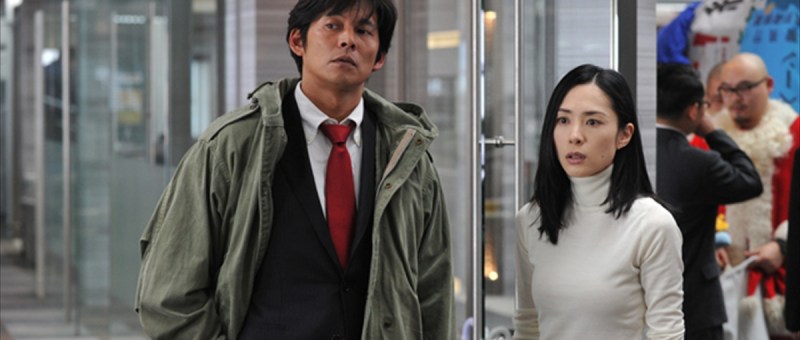
Is it really the end? Billed as the “final” instalment in the Bayside Shakedown series which began with a TV drama in 1997, Bayside Shakedown the Final: The New Hope (踊る大捜査線: THE FINAL 新たなる希望, Odoru Daisousasen the Final: Aratanaru Kibou) once again finds the gang contending with annoying red tape but also with a police force which is intrinsically corrupt and self-serving while questioning if they should remain in an occupation in which they are treated with such disdain. Continuing the familiar pattern from throughout the series, the gang find themselves coming up against a serial killer who may be a crazed vigilante only to discover that the whole thing may have been an extreme inside job designed with the intention of drawing attention to inadequacies in the justice system. 

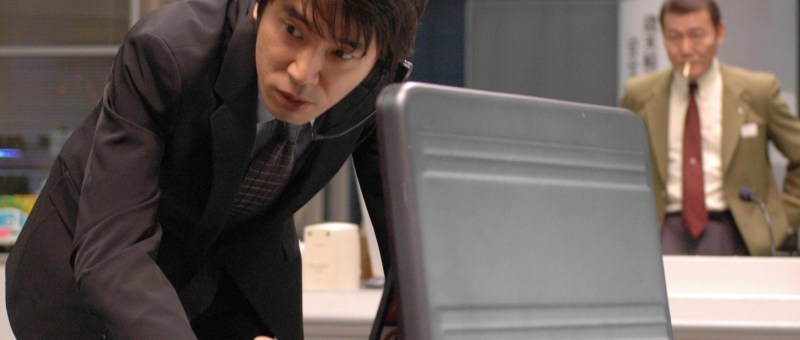
The problem is that the body they’ve found appears to have been shot with a gun which was removed from the police evidence locker and is linked to a kidnapping case six years previously which just happens to have been handled by Mashita (Yusuke Santamaria) when he was a hostage negotiator. Mashita had ordered an end to the negotiations because of pressure from above to play by the rules with the consequence that the child later died while the prime suspect in the case was recently acquitted of the crime at trial (a staggeringly rare occurrence in Japan). When Mashita’s young son is kidnapped, all eyes are on a rogue policeman, Kuze (Shingo Katori), but it is obvious he is not acting alone. 

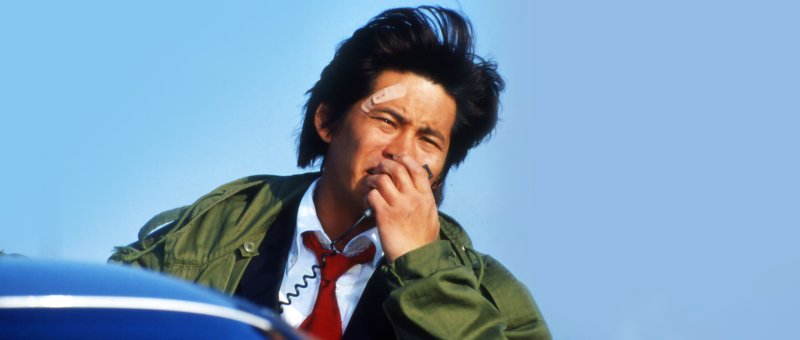
Toragai (Shun Oguri), the authoritarian detective from the previous film, has continued along a dark path which only intensifies when his paper on police reforms is rejected out of hand. He too thinks the police force needs structural reform but leans hard into the idea that too many people are getting away with crime rather than concentrating on removing the barriers which prevent police from doing their jobs as Muroi (Toshiro Yanagiba) and Aoshima (Yuji Oda) would probably suggest. Muroi’s lasting dream is of building a police force which trusts policemen to do the right thing and he frequently tells his subordinates that they should feel free to exercise their own judgment. 

Meanwhile, the local cops continue to suffer under the command of the elitist officers from HQ who not only look down on them but assign menial tasks, as does Mashita in finding himself short staffed while most are busy providing security for a local energy summit. While Aoshima had experienced a health crisis that turned out to be a false alarm in the previous film, so this time Sumire (Eri Fukatsu) finds herself struggling with ongoing effects from her shooting in Bayside Shakedown 2 eventually deciding that it might be better to leave the police force entirely while lamenting her unfinished business with Aoshima which remains unresolved even in this “final” instalment while he somewhat unsympathetically can only ask her not to leave rather than express his true feelings. 

Ironically enough, by the time of the final showdown neither of them are actually in possession of a police badge, Aoshima scapegoated by Toragai who still holds a grudge against him while inconvenienced by interference in his scheme to frame a local petty thief for the killings, presenting him with an invitation to resign following serious misconduct accusing him of beating up suspects and planting evidence. One again, the police chiefs sit around a large circular table issuing orders from afar but are mainly concerned how to bury the “scandal” of having a police officer steal a gun from evidence and then use it to commit a murder. In a bizarre twist of fate, it later turns out that the whole thing may be an elaborate, not to mention entirely amoral, plan to expose police shortcomings with a side dose of revenge against Mashita for contributing to the child’s death by insisting on following protocol while receiving heat from above. 

As such the apparently “final” instalment skews a little darker than the series norm while as the subtitle implies offering a new ray of hope in the reversal of Muroi’s fortunes allowing him to embark on the police reforms which have been his and Aoshima’s goal throughout the series. Meanwhile, the film pays tribute to its previous instalments with frequent words of wisdom from the late Waku read from his notebook by his nephew and the ironic return of the previous chiefs reinstated as volunteer mentors as part of a reinforcement programme while familiar faces such as the Captain Kirk cosplayer also make their customary appearances. What’s clear is that there will never really be a “final” outing for Aoshima who reaffirms himself as the last line of defence protecting the local population as he once again runs toward sunset and the next case waiting just behind. 


Trailer (no subtitles)
Negotiator (交渉人 真下正義, Katsuyuki Motohiro, 2005)

Beginning as a popular television drama, Bayside Shakedown developed into hugely successful franchise. Released two years after the second theatrical feature, 2005’s Negotiator (交渉人 真下正義, Koshonin: Mashita Masayoshi) is a self-contained spin-off revolving around Japan’s first specialist negotiator Mashita, whose name actually appears in the title. In Bayside Shakedown 2, he’d returned to the Wangan police department having left to pursue specialist training in the city. Though some of his former colleagues make cameo appearances and Motohiro maintains the lighthearted tone the series is known for, Negotiator essentially reverses the position of previous instalments, adopting the outsider’s perspective as Mashita finds himself implanted in the control room of the metropolitan mass transit system. 

For some reason in Japanese cinema, terrorist threats seem to arrive on Christmas Eve with alarming frequency, significantly upping the stakes for Mashita personally as he was planning to propose to fellow police officer Yukino (Miki Mizuno) after a romantic date the details of which he seems to be rather sketchy on. In any case, the crisis at hand is a rogue and unexpected train on the Tokyo subway. It quickly becomes apparent that someone has hijacked a remote-driven experimental “Spider” train designed to automatically switch gauges so that it can travel between differing lines on the complicated transit map. The hijacker will apparently only speak to Mashita, impressed or irritated by his accidental celebrity status following the Rainbow Bridge incident in Bayside Shakedown 2. One of the problems of that crisis had been the police discovering they do not actually have the power to unilaterally close a bridge because it requires the consent and co-operation of numerous other transportation officials (though actually in the end they just do it anyway). 

Something similar happens to Mashita when he fetches up in the control room to help. The official in charge, Kataoka (Jun Kunimura), directly tells him that they don’t require his assistance. He will just be in the way and should sit quietly in the corner while they get on with solving the crisis. In this scenario, Mashita is the outsider akin to the HQ guys descending on the Wangan police station and taking over, though as a trained negotiator he is more aware of the implications of his actions and temporarily agrees to take a back seat while his team set up shop in a meeting room only to be further embarrassed when it becomes apparent that the hijacker is intent on playing a game with him personally while thousands of ordinary passengers, not to mention railway and law enforcement officials, are placed in danger. 

Unlike previous instalments in the franchise, Negotiator is prepared to leave several questions unanswered such as the hijacker’s identity, purpose, and intentions focussing instead on the approach of the police and railways in response to the crisis. As in Bayside Shakedown 2, a solution is only possible once both sides have learned to trust each other letting go of any sense of division so that they can work together in total harmony. Meanwhile, there is also a minor criticism of institutional insularity as it becomes clear that part of Kataoka’s reluctance to cooperate is out of a sense of duty to the rail service in that he feels himself duty bound to withhold “secret” information that would help Mashita solve the case, that being the existence of tunnels and sidetracks not listed on the map because they are intended for use by the government and the military only in the event of an emergency fearing that revealing them would, ironically, present a security risk. Meanwhile, on the other side, Mashita and his team find their investigations hampered by the fact most of the data they need from HQ is stored on outdated media such as floppy disks, Jazz and Zip drives they do not immediately have the capability to open. 

Meanwhile, Mashita is engaged in a game of cat and mouse with a train obsessive who baits him with movie trivia and inevitably threatens his romance by targeting the oblivious Yukino who thinks she’s been stood up again and has no idea she’s actually in the middle of a terrorist incident. Like the previous films in the franchise, however, the central thesis is that in the end you just have to ignore all of the annoying bureaucracy and learn to work together for a common goal which is in essence what a negotiator is for, Mashita smoothing over conflict and differences of opinion with sympathetic politeness while unafraid to put on a show for the hijacker in order to get what he wants. A seasonal thriller, Negotiator is in an odd way about peace and harmony to all men and saving Christmas from the forces of disorder. 


Trailer (no subtitles)
Bayside Shakedown 2 (踊る大捜査線 THE MOVIE 2 レインボーブリッジを封鎖せよ!, Katsuyuki Motohiro, 2003)

A big screen outing for a popular TV drama, Bayside Shakedown proved a runaway box office hit on its release in 1998. Five years later the team at Wangan Police Station are back and much seems to have changed even as the sequel cleverly mirrors the first instalment, but where the earlier film had satirically taken aim at chronic underfunding and excessive bureaucracy, Bayside Shakedown 2 (踊る大捜査線 THE MOVIE 2 レインボーブリッジを封鎖せよ!, Odoru Daisosasen the movie 2: Rainbow Bridge wo Fuusa seyo!) ultimately ends a defence of authority in the face of criminal anarchy. 

Five years on, the team are faced with yet another difficult serial killer case in which top CEOs are being bumped off and artfully posed in public places next to a rotten apple, once again necessitating the arrival of the guys from HQ. This time, however, Muroi (Toshiro Yanagiba), a friend of earnest detective Aoshima (Yûji Oda), has been pushed to the sidelines in favour of the big wigs’ latest favourite, Okita (Miki Maya), who has a much more authoritarian view of policing than many at Wangan are comfortable with. Meanwhile, Sumire (Eri Fukatsu) and Aoshima are busy with their own cases, a pickpocketing family and a “vampire” who bites high school girls’ hair and then runs off respectively, but all the office is a twitter over a love letter penned by their boss and accidentally emailed to everyone in the station because of a computer virus. 

Former Wangan guy Mashita (Yusuke Santamaria), who had transferred to the city, returns having trained as a negotiator but for some reason mostly doing profiling and eventually figuring out that their killers are likely disenfranchised salarymen made redundant by their companies amid the backdrop of a stagnant economy. With no hope for the future, they’ve turned against society and started an anarchist revolution as a collective without leaders. “No bosses, no workers. No ordering, no obeying. No firing, no being fired,” they explain of their principle of equality, adding, “when there’s a leader the individual means nothing”. On one level the film sympathises with them in recognising the pressures they’re facing and unfairness of the economic reality, while simultaneously condemning the idea of a horizontal society. “If the leader is good then the group is strong,” Aoshima explains to them though of course they don’t agree. 

Then again, he says this immediately Muroi has resumed command in the knowledge that he is a “good” leader precisely because he trusts those under him and gives them the freedom to exercise their own judgement in contrast to Okita whose authoritarian micromanaging is soon exposed as a cover for under confidence. A police officer is seriously injured during an operation because she hesitates to make a decision, while both Sumire and Aoshima are forced to let their suspects escape when Okita orders them to stay at their post trying to protect a woman she has effectively decided to use as bait. “Organisations don’t need emotion,” she insists, later irritated by the officers’ reluctance to follow her command when she simply instructs them to “replace” the critically injured officer as if their life were completely disposable. 

Just in the first film, Sumire and Aoshima are forced to question the value of local policing in the face of Okita’s elitism as she tells them that their individual cases can wait because the murder takes priority, describing them as “just local stuff”. “Punch ups and pickpockets, what a waste of police time,” she adds leaving each of them feeling as if their work has no meaning and is not useful to or valued by the community. Aoshima only gets his mojo back after remembering an act of kindness done to him by someone he’d helped in the past, realising that even small things have a positive effect on the society and are always worth doing. That said, he’s not especially sympathetic towards the teenage “vampire” victim largely because he only bit her hair but later gets on the case after more girls turn up with bite marks on their necks. 

In the end it is indeed the local which is good, Okita’s failure allowing Muroi to make good on his promise and allow the local police to do their jobs rather than being relegated to boring legwork such as traffic stops and trawling surveillance footage. Despite having rejected the leaderless anarchy of the villain’s horizontal society, Muroi’s first instruction is to “forget rank, forget class” and have everyone work together encouraging the local cops to help them identify the kinds of places only a local would know which might not be on the map and may be a good hideout for the assassins. There might be something uncomfortable in Aoshima’s insistence on the necessity of a leader in the implicit defence of the hierarchal society, but then Muroi is a good leader who can indeed be trusted wield his power well largely because he trusts those below him, while a weak leader like Okita who holds tight to power because they don’t have the confidence to wield it freely is worse than no leader at all. Once again ending on a note of ironic police accountability, Bayside Shakedown 2 takes aim at the inequalities of the modern society but ultimately makes the case for the value of compassionate local policing in which all crimes at least are treated equally.  


Original trailer (no subtitles)

Linda Linda Linda (リンダ リンダ リンダ, Nobuhiro Yamashita, 2005)

“We’ve only got a little more time to be the real us,” according to a young woman making a promo video for the upcoming school festival, but who really is the “real us”? Now celebrating its 20th anniversary, Nobuhiro Yamashita’s wistful high school dramedy Linda, Linda, Linda (リンダ リンダ リンダ) is in many ways about the process of coming into being along with the anxieties of what comes next. “We won’t end here,” the girl later adds, “We won’t let our high school days become a memory,” yet they already are in a kind of contemporaneous nostalgia and elegy for idealised youth.

Or at least, there’s already a kind of reaching back taking place as the tracks the girls pick for a replacement act are by The Blue Hearts, a 1980s punk band that has become a kind of cultural touchstone echoing a sense of youthful alienation and rebellion. “Linda Linda” is the kind of song everyone knows, and even if for some reason they don’t or don’t even speak Japanese, can at least join in with the riotous chorus. It’s this sense of universality that eventually gives it its power as torrential rain brings the entire school inside just in time to see the girls’ belated act and find themselves captivated by its infectious energy and an identification with their own sense of insecure anxiety.

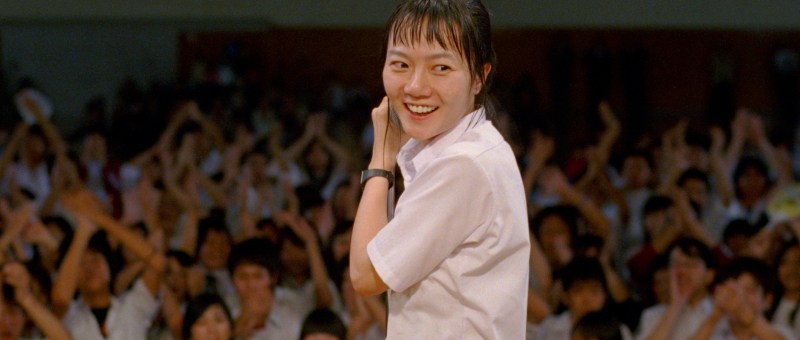
It’s also the serendipitous rain that allows lonely songstress Takako an opportunity to perform having previously declined to do because it’s no fun playing on your own and all her former bandmates graduated the previous year. Moe, the girl who broke her fingers playing basketball in PE leaving the original band members unable to take the to the stage, also gets an opportunity to sing having otherwise been denied a moment of closure in being prevented from taking part in her final school festival. While Moe feels intensely guilty about rendering all their time spent rehearsing somewhat pointless, it’s really the drama between founding members Kei and Rinko that leads to the band’s demise in Rinko’s conviction that it’s “meaningless” to continue while the others decide to go ahead anyway asking Korean exchange student Son (Bae Doona) to be their vocalist because she just happened to come down the stairs at the right moment and said yes because she didn’t really understand what they were saying.

Prior to her involvement with the band, Son had been a rather isolated figure trapped in the “Japan-Korea Culture Exchange Exhibit” which seems to have been more her teacher’s idea than her own and in any case gets no actual visitors. Her Japanese is a bit limited and most of her interactions are with a little girl who lends her manga to help her learn quickly, but becoming part of the band allows her to find her voice both literally and figuratively in taking the lead as the vocalist. A boy who claims to have fallen in love with her (Kenichi Matsuyama) goes to the trouble of learning a long speech in Korean to convey his feelings, yet a bemused Son replies to him in Japanese that she’s pretty indifferent to his existence before switching to Korean to explain that she’s leaving because she’d rather be hanging out with her friends with an expression that implies she’s only just realised that’s what they are. By contrast, she has a bilingual conversation with guitarist Kei (Yu Kashii) in which they seem to understand each other perfectly and each express how glad they are that they got to be in the band together. 

Similarly, it’s the concert itself that seems to heal rifts with a simple “Are you alright?” from Rinko (Takayo Mimura) to Kei whose friendship might, as someone says, essentially be too close for them to really get along. Drummer Kyoko (Aki Maeda) decides to declare her feelings for a longstanding crush before the concert. In the end she doesn’t manage it, but it doesn’t quite matter somehow because their performance is itself a kind of coming into being in which “the real us” comes into focus if also in a moment that itself becomes romanticised or idealised as an encapsulation of youth. Yamashita travels through the school festival as if it were a passage from one state of being to another, from the noodle stalls and crepe stands to haunted houses and the boy creating his own moment through encapsulating them on film, before ending with an unending song “so we can laugh tomorrow,” and the “real us” lives on.


Linda Linda Linda opens in US cinemas 5th September courtesy of GKIDS.

Trailer (English subtitles)

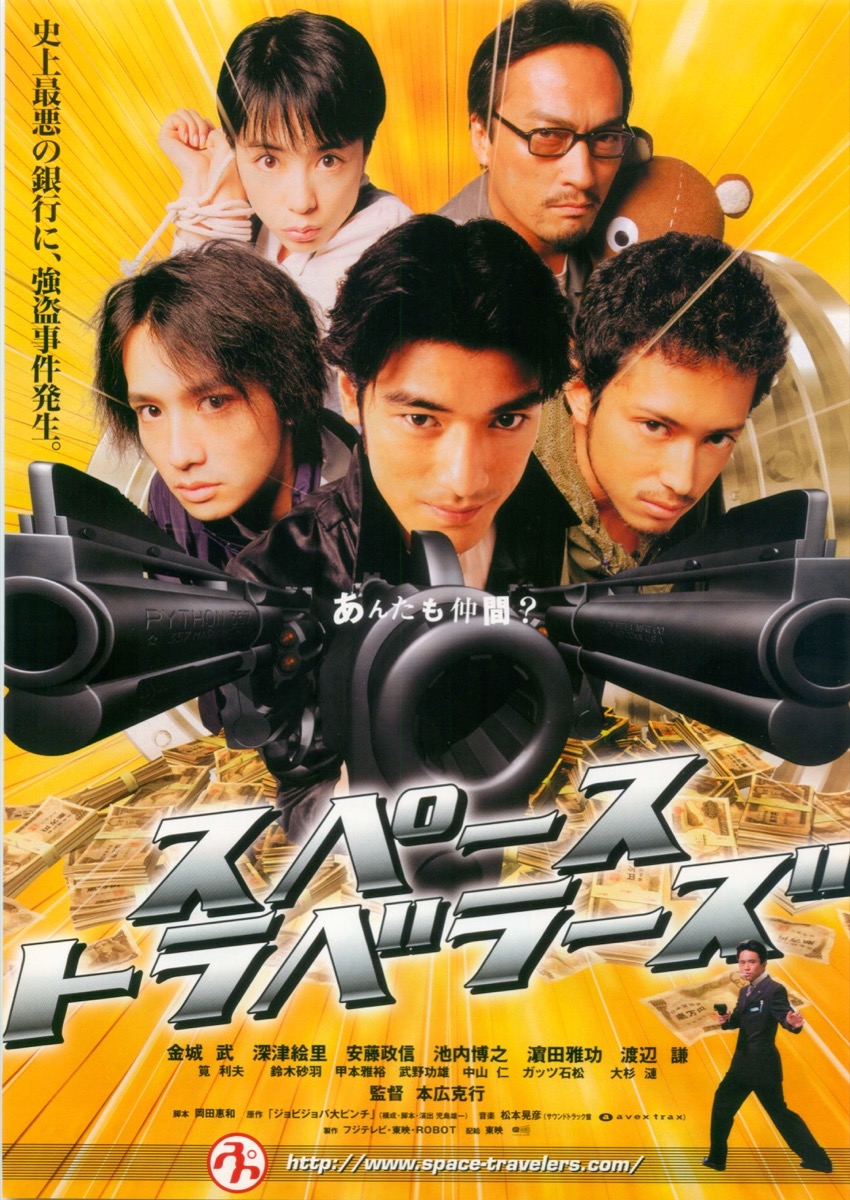
Space Travelers (スペーストラベラーズ, Katsuyuki Motohiro, 2000)

“What are you doing now?” asks a very zeitgeisty set of onscreen titles at the beginning of Katsuyuki Motohiro’s millennial heist comedy, Space Travelers (スペーストラベラーズ). Both hopeful and not, Motoyuki’s cosmic farce takes the sense of anxiety and despair which colour other similarly themed turn of the century movies and turns them into a source of possibility while simultaneously implying that for some paradise may always be out of reach or else relegated to a state of mind. After all, “reality is different from animation”.

The idea of a far off paradise is what drives a trio of orphans (Takeshi Kaneshiro, Masanobu Ando, and Hiroyuki Ikeuchi) to consider armed robbery, planning the slick kind of heist they’ve seen in the movies in which they run into off into the sunset with a bag full of cash after holding a bank to ransom. Of course, it doesn’t quite go to plan leaving the three essentially good-hearted guys with a problem because they weren’t really prepared to harm anyone (two of their three weapons are duds) and they don’t have a plan B. What happens then is somewhat unexpected as a degree of camaraderie begins to arise between the would-be-thieves and the small number of customers and employees trapped in the foyer who then become something of an artificial team trying to overcome the rapidly escalating situation as the police surround the building in the incorrect assumption that the robbery is connected to terrorist action. 

What soon becomes apparent is that for the trio the heist is part wish fulfilment fantasy and a last ditch attempt to catapult themselves out of a sense of impossible despair. As they are all orphans, they feel a deeper sense of disconnection from a society which has in itself abandoned them, partly as it turns out hoping to find their long-lost parents in a tropical island paradise known to them only from a faded postcard. For the customers and employees, the robbery is the most exciting thing to happen to them in their entire lives and the proximity to mortal danger soon forces them to wrestle with their personal dissatisfaction. Before the heist took place, bank clerk Midori (Eri Fukatsu) had been planning to attend a party to celebrate her engagement to another employee branded a sleazy creep by most of the other female members of staff with whom he had apparently tried it on on previous occasions. She had agreed to marry him despite her reservations because he had sworn to lay down his life for her if she were ever in danger only to spot him trying to escape on his own via the air conditioning ducts. Being caught up in this bizarre situation forces her to accept she had been leading a “conveyor belt life” out of fear, always picking the safe option rather than take a risk chasing personal happiness even picking a husband solely because he promised her protection. 

In the Japan of the 2000s, chasing personal happiness might have seemed like a fools errand trapped in a stagnant economy with no prospect of improvement and only increased risk if you fall from one particular rung on the ladder. Yet the conclusion Midori seems to come to is that the only way of rebelling against this sense of nihilistic frustration is to take the risk and look for the paradise that is waiting for her rather than settle for a disappointing status quo. She learns this partly through her connection with one of the bank robbers who casts each of the hostages as members of his favourite, now cancelled, anime “Space Travelers” created according to an onscreen interview to offer a sense of something tangible to an increasingly disconnected youth that would allow them to experience a full range of emotions (the animated sequences created for the film were later spun off into an OVA of their own). Through their accidental role playing, the hostages each discover the sides of themselves they’d been missing to claim their true identities, Midori learning that she can protect herself, nerdy clerk Shimizu (Masahiro Komoto) overcoming his crippling shyness, a middle-aged electrician flummoxed by modern technology proving that his skills aren’t obsolete, and a feuding couple on the brink of divorce reflecting that they actually do work well as a team. 

Even so, not everyone comes out of the situation with new hope for the future with the implication being that some gambles are simply too big or that for some paradise will always lie just out of reach even if Midori remains committed to seeking it out on her own whether she eventually finds it or not. Meanwhile, Motohiro takes potshots at the media reality of the day as a cynical boyband publicity stunt to announce their breakup tour to rake in more cash before announcing a comeback is derailed by the press tripping over themselves to get to the unfolding bank hostage crisis with the police also doing their bit to hog the media spotlight while mistakenly believing a suspicious-looking man who actually is a fugitive terrorist is responsible for the heist. With the world as messed up as it clearly is, the film seems to say, chasing paradise is the least risky thing of all. 


Trailers (no subtitles)

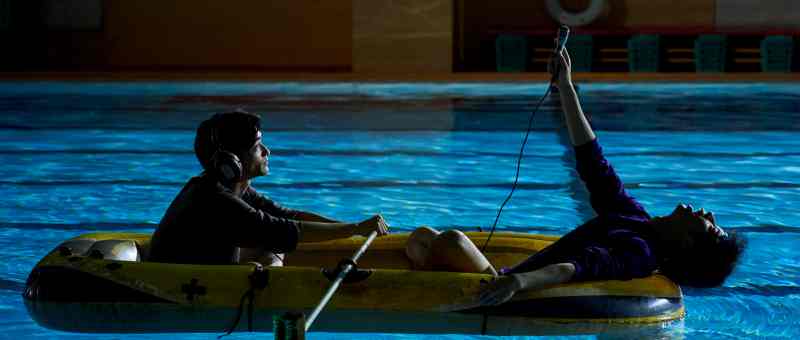
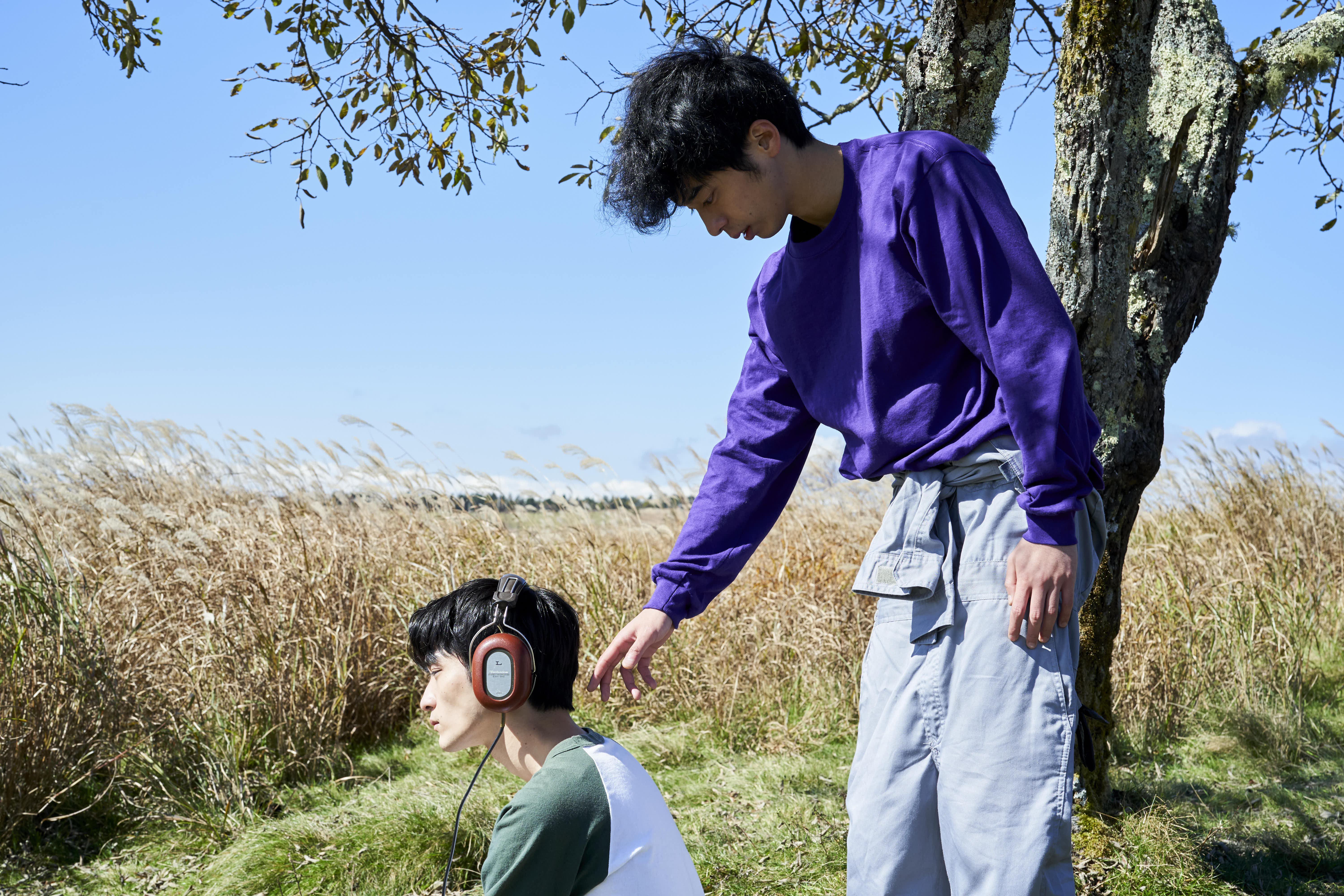
Let Me Hear It Barefoot (裸足で鳴らしてみせろ, Riho Kudo, 2021)

“I can touch it if I reach out” one of the heroes of Riho Kudo’s second feature Let Me Hear It Barefoot (裸足で鳴らしてみせろ, Hadashi de Narashite Misero) claims as he narrates a fantasy trip to Iguazu Falls, but his tragedy is that he can not reach out and neither can his friend or really anyone in this suffocating enclave of moribund small-town Japan. As in her debut Orphan’s Blues, Kudo finds her heroes trapped with a space of artificial nostalgia and yearning for escape while in constant dialogue with Wong Kar-Wai’s melancholy romance Happy Together as the two young men process their frustrated desires not only for each other but for an end to the loneliness that defines each of their lives. 

Naomi (Shion Sasaki) is lonely in part because he feels trapped. Having dropped out of university he’s working in his father’s (Masahiro Komoto) recycling depot while his best friend and high school sweetheart Sakuko is about to move to Canada. He first catches sight of the enigmatic Maki (Tamari Suwa) at the local pool after trying to learn to swim to effect change in his life and later bonds with him along with a mysterious old woman, Midori (Jun Fubuki), who has lost her sight and claims to have travelled the world in her youth. What the boys later discover is that Midori had not been entirely honest in that her travels had been vicarious, related to her by a third party long since departed whom she did not want to forget. Following a health scare she tries to give Maki her savings telling him to travel the world in her stead but he soon discovers that she was sadly mistaken about amount she’d put away. Lacking the heart to tell her, Maki decides to use an old tape recorder to fake trips to famous places ironically mirroring her final confession that her friend had never travelled either but made all the stories up for her benefit. 

The tape recorder conceit of course directly recalls Happy Together as does the final destination of the Iguazu Falls while hinting at the unattainable freedom each of the young men yearns for as mediated by their desire to travel the world. “We can go anytime” Maki tries to convince Naomi in his mounting desperation though each of them on some level knows they will never leave nor escape their sense of loneliness. Maki describes himself as feeling as if he is trapped within a magnetic field, surrounded by people but unable to touch them. A man permanently at odds with his environment, Naomi feels the same but their feelings for each other are complex and confusing. In a repeated motif one reaches out to touch the other but suddenly pulls back, their repressed desire expressed only through increasingly intense play fighting until one is finally unable to go on with the subterfuge and unsuccessfully attempts to address their unresolved romantic tension. 

Much of their courtship occurs in Naomi’s converted garage bedsit, a space filled with unwanted relics of the past from countless VHS and discarded books to TVs and radios. The garage is his literal safe space, Naomi explaining to Maki that he feels the urge to collect things out of a sense of security that they are safe here even if they disappear from the outside world. “Memories will stay” Maki reminds him, but that’s not good enough for Naomi who ironically can only trust the things that he can touch. Preoccupied with a sense of loss he is unable to move forward, cannot take hold of himself or his desires wishing to preserve the past at all costs while Maki has learnt to live in the moment able to let go but adrift in the present. 

“We may not even be alive tomorrow” Naomi wails in desperation, feeling as if he’s running out of time while boxed in by his equally lonely, disappointed father as a vision of his future self worn down by small-town life and a persistent sense of futility. The two men are forever divided, literal glass standing between them in the closing scenes in which they can no longer touch even if they wished it. Small-town life is it seems the place dreams go to die as symbolised in Sakuko’s eventual defeated return, Naomi left only with resignation to the life he had rejected in an acceptance of the failure of his unfulfilled desires. “I don’t want to forget” he claims echoing Midori’s explanation for her mysterious tattoo while left only with the ironic words of Maki’s cassette tape in their melancholy echo of the romantic impossibilities of Happy Together, “we need to start over”. 


Let Me Hear It Barefoot streamed as part of this year’s Nippon Connection.

Images: (c)PFF Partners

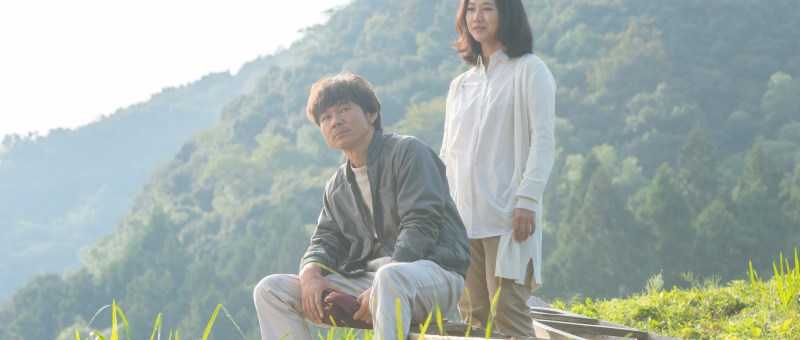
The Takatsu River (高津川, Yoshinari Nishikori, 2019)

What price modernity? Post-war migration saw a rapid turn towards urbanisation with the young forsaking their countryside hometowns to chase the salaryman dream in the cities. Though there has in recent years been a mild reversal to the prevailing trend as economic fluctuation and technological innovation have a generation of anxious youngsters looking for a simpler life, the effects of rural depopulation have only become starker in light of Japan’s ageing society leaving the elderly isolated in inaccessible communities with few family members or facilities to support them. This push and pull of the traditional and the modern is at the heart of Yoshinari Nishikori’s The Takatsu River (高津川, Takatsugawa), in many ways an elegy for a vanishing Japan but also an ode to the furusato spirit and to continuity in the face of change. 

Set in a small town on the Takatsu River in Japan’s Shimane prefecture on the South West coast of Honshu, the central drama revolves around the middle-aged Manabu (Masahiro Komoto), a widower with a teenage son and a daughter recently returned from university in Osaka. His problem is that his son Tatsuya (Ishikawa Raizo) has been skipping out on rehearsals for the Kagura dance society, something which is obviously close to his father’s heart. About to graduate high school Tatsuya is perhaps at a crossroads, like many of his age trying to decide if his future lies in his hometown staying to take over the family farm, or in the cities as a regular salaryman. 

“Everyone thinks of leaving once” Manabu philosophically laments to the lady at the post office though like most of the other parents he does not try to influence his son’s decision even if he’s additionally grumpy about his lack of commitment to Kagura dance. The dance troupe is not just a precious artefact of traditional culture or a means of entertainment but a social hub for the small community in which the generations mix freely and are equally represented. One older man affectionately known as “Pops” (Choei Takahashi) is over 80 years old but refuses to give up the art of Kagura dancing, not only because he loves to perform but because he enjoys being part of the society especially as he lost his eldest son to a flood in childhood and the other, Makoto (Hiromasa Taguchi), has become a lawyer in the city who rarely visits his hometown claiming that his wife has a dislike of “bugs”. 

Acting as a surrogate son to the old man, Manabu’s other quest is to convince Makoto to visit a little more often, touting the idea of a reunion for some of their old elementary school friends a few of whom are, like Manabu, still living in the village. Unfortunately, however, Makoto’s time in the city has fully converted him into a heartless ultra-capitalist who struggles to understand a more traditional way of thinking. Meeting up to celebrate the successful graduation of another friend’s apprentice as a sushi chef, the guys lament the case of their friend Yoko (Naho Toda) who never married, apparently calling off an engagement to look after her elderly mother who has dementia while acutely feeling the responsibility of taking on her family’s 300-year-old traditional sweet shop. Confused, Makoto wonders why you wouldn’t just stick the parents in a home and get married, much to the consternation of his friends. Similarly, when Manabu asks him for some legal advice about how to stop a resort being built up river he reveals himself to be fully on the side of corporate power. After all, he points out, a resort will bring jobs and foot traffic to the area encouraging modernisation and better transport links which will also draw young people back towards the village. If you want to save the community, perhaps it’s the best and only way. 

Yet as Manabu points out, the Takatsu is the last clean river in Japan. His daughter Nanami (Ito Ono) came back after uni because she missed the taste of sweet fish that you just can’t find anywhere else. If the river is polluted by construction, the fish will disappear and perhaps there’ll be nothing left to “save”. With the local school set to close now there are only a handful of pupils, Manabu and his friends are minded to pick their battles and protect what it is that’s most important, eventually reacquainting Makoto with his furusato spirit by confronting him with the traumatic past which had kept him away. Bar repeated references to the double-edged sword of the Takatsu in the potential for lethal flooding, Nishikori’s gentle drama perhaps provides an overly utopian view of country living which sidesteps the hardships that can often accompany it, but also celebrates community spirit and an atmosphere of mutual support, qualities which have convinced city-raised farmhand Kana (Yurie Midori) that the rural life is the one for her. A gentle elegy for a disappearing way of life, The Takatsu River is ultimately hopeful that something at least will survive as long as the clear stream flows on.


The Takatsu River streams in Poland 25th November to 6th December as part of the 14th Five Flavours Film Festival.

Original trailer (English subtitles)

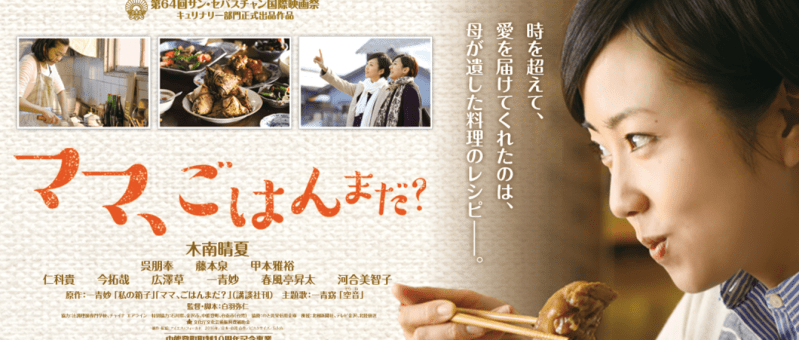
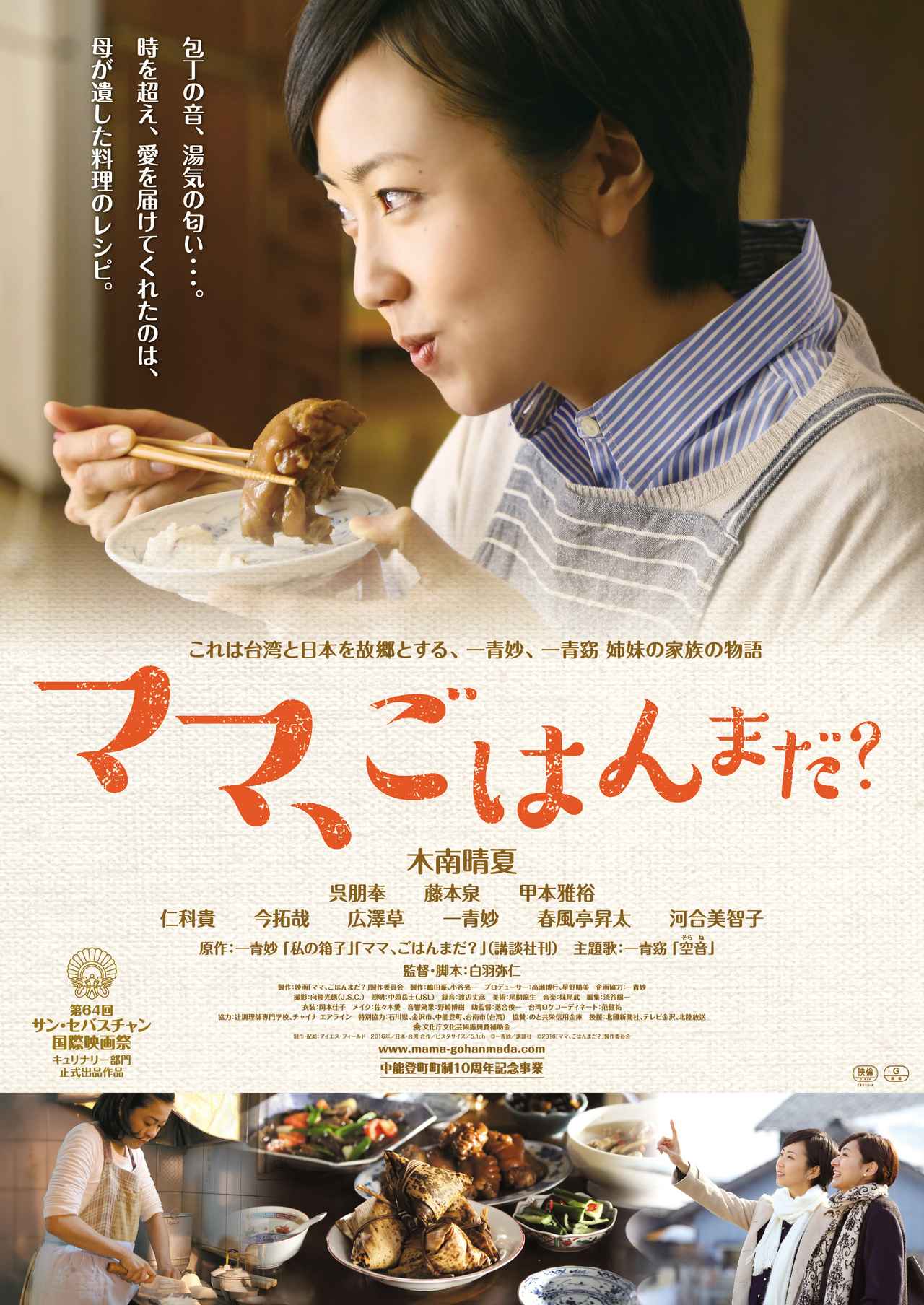
What’s For Dinner, Mom? (ママ、ごはんまだ?, Mitsuhito Shiraha, 2016)

What's for Dinner Mom posterJapanese cinema has a preoccupation with mothers and the nature of motherhood, but the mothers of the typical “hahamono” tend to be either saintly, self sacrificing figures whose selfless love often goes unrecognised, or problematic matriarchs whose fierce love and desire to protect their children has caused them to transgress and perhaps lose their children’s love. The mother at the centre of What’s For Dinner, Mom? (ママ、ごはんまだ?, Mama, Gohan Mada?) falls into a more realistic category – loving, self sacrificing, imperfect and perhaps sometimes misunderstood but always doing the best for her two daughters even in difficult circumstances. Where What’s For Dinner, Mom? differs from the accepted pattern is in its use of the domestic world to ask questions about culture and identity, and about all the various ways one never quite knows one’s family.

Tae (Haruka Kinami) and Yo (Izumi Fujimoto), sisters and now middle-aged women, are preparing to clear their family home 20 years after the death of their mother (Michiko Kawai). What’s taken them so long to make the decision is never revealed but both are as happy as possible about the idea and it seems Tae and her husband plan to knock the house down and build their own on the same plot – not quite so radical a thing as it might sound, Japan has no real housing market and “modern” houses are often knocked down and rebuilt every 20 to 30 years. Whilst packing things away, Tae finds a small box full of her mother’s keepsakes – chiefly letters and photographs along with a handwritten recipe book she began keeping in 1972.

Though Tae has lived in Japan for all her adult life, she was born in Taiwan and is half Taiwanese. Tae’s father passed away from lung cancer when she was small, but was a depressed, sometimes difficult man with ambivalent feelings towards his home nation. His own family had come from the mainland, but he’d lived in Taiwan under Japanese rule and attended university in Japan. He felt himself to be Japanese and was constantly upset and angry about the turbulent political situation of the post-war nation, facing its own series of identity crises and a protracted period of oppressive martial law.

Nevertheless, after their unpredictable whirlwind romance, Tae’s mother Kazue moved to Taiwan to live with her husband’s family and became determined to adapt to the local culture – chiefly through food. After her husband died in Japan, Kazue kept Taiwan alive for her daughters through continuing to cook the dishes she’d learned from her friends and family in Taiwan (even though her intensely “Japanese” husband only ever wanted to eat yudofu). Though Tae at one point urged to her mother to stop cooking Taiwanese and give her stereotypically cute high school bento, she quickly realised her mistake and Kazue’s unusual Taiwanese cooking became a local hit (even boosting the availability of the previously unobtainable pig’s trotters).

Despite her love of the food, Tae has all but forgotten her Taiwanese roots since her mother’s death and doesn’t know how to cook any of the dishes herself. Tae’s mild identity crisis comes to the fore in the second half of the film, though it’s an oddly under developed plot strand given the centrality of the cuisine. When she eventually makes the decision to visit her father’s remaining family, Tae seems to understand Taiwanese Mandarin but usually replies in Japanese (her uncle, accompanying her, is fluent). Like Kazue’s diary, Tae’s reminiscences are accompanied by on screen intertitles written in Chinese characters drawn childishly (even the characters which are identical to those used in Japanese are somewhat awkwardly rendered), which points to a kind of duality but is never really resolved even if Tae is able to explain a strange childhood memory and bring a piece of her past home with her.

Through her food odyssey and return to source, Tae is able to appreciate her mother’s love and sacrifice from an adult perspective, no longer left with teenage resentment and unfair anger over her early death but reclaiming her happy memories and appreciating the hardship her mother must have faced as a single mother in pre-bubble Japan. Despite its warm and fuzzy tone, What’s For Dinner, Mom? occasionally seems as if it wants to do something bigger by briefly introducing larger themes – Tae’s father’s depression, illness, the difficult political situation of post-war Taiwan, and the complex interplay between the two nations, but is content to settle back into a comforting “hahamono” tale of selfless motherhood finally appreciated only when it’s too late. Nevertheless it does what it set out to do in telling the story of a warm and loving family anchored by a kind yet determined woman and tables full of wholesome home cooking offered with an open, internationalist, heart.


Original trailer (English subtitles)

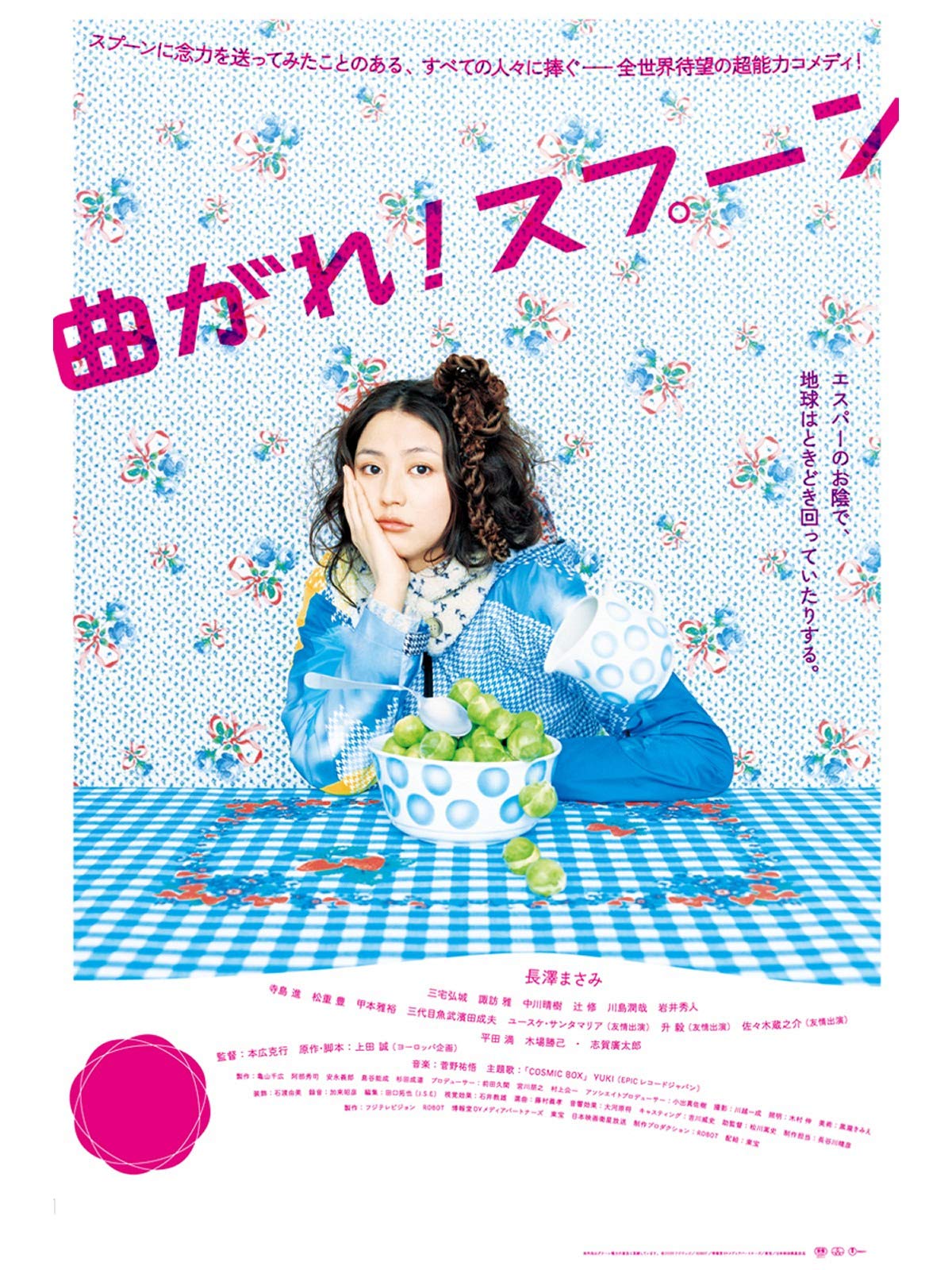
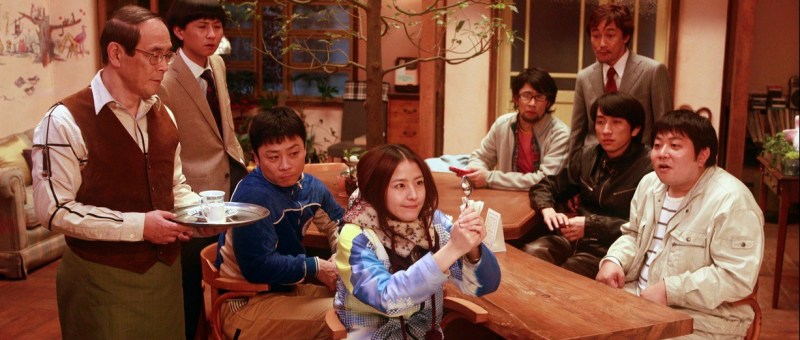
Go Find a Psychic! (曲がれ!スプーン, Katsuyuki Motohiro, 2009)

go find a psychic posterHow old is too old to still believe in Santa? Yone Sakurai (Masami Nagasawa), the heroine of Katsuyuki Motohiro’s Go Find a Psychic! (曲がれ!スプーン, Magare! Spoon) longs to believe the truth is out there even if everyone else thinks she must be a bit touched in the head. If there really are people with psychic powers, however, they might not feel very comfortable coming forward. After all, who wants to be the go to sofa moving guy when everyone finds out you have telekinesis? That’s not even factoring in the fear of being abducted by the government and experimented on!

In any case, Yone has her work cut out for her when the TV variety show she works for which has a special focus on paranormal abilities sends her out out in search of “true” psychics after a series of on air disasters has their viewer credibility ratings plummeting. Ideally speaking, Yone needs to find some quality superhero action in time for the big Christmas Eve special, but her lengthy quest up and down Japan brings her only the disappointment of fake yetis and charlatan monks. That is until she unwittingly ends up at Cafe Kinesis which holds its very own psychics anonymous meeting every Christmas Eve so the paranormal community can come together in solidarity without fearing the consequences of revealing their abilities.

Based on a comic stage play, Go Find a Psychic! roots its humour in the everyday. The psychics of Cafe Kinesis are a bunch of ordinary middle-aged men of the kind you might find in any small town watering hole anywhere in Japan. The only difference is, they have a collection of almost useless superhuman abilities including the manipulation of electronic waves (useful for getting an extra item out of a vending machine), telekinesis (“useful” for throwing your annoying boss halfway across the room), X-ray vision (which has a number of obvious applications), and mind reading (or more like image transmission). The bar owner is not a psychic himself but was once helped by one which is why he set up the bar, hoping to meet and thank the person who frightened off an angry dog that was trying to bite him. Seeing as all the guests are psychic, no one is afraid to show off their talents but when a newcomer, Mr. Kanda (Hideto Iwai), suddenly shows up it creates a problem when the gang realise his “ability” of being “thin” is just the normal kind of skinniness. Seeing as he’s not a proper psychic, can they really let him leave and risk exposing the secrets of Cafe Kinesis?

Meanwhile, Yone’s quest continues – bringing her into contact with a strange man who claims he can withstand the bite of a poisonous African spider. Needless to say, the spider will be back later when the psychics become convinced Yone’s brought it with her presenting them with a conflict. They don’t want her to find out about their psychic powers and risk getting put on TV, but they can’t very well let her walk off with a poisonous spider trapped about her person. Despite small qualms about letting Kanda leave in one piece, the psychics aren’t bad guys and it is Christmas after all. Realising Yone just really loves all sort of psychic stuff and is becoming depressed after getting her illusions repeatedly shattered, the gang decide to put on a real Christmas show to rekindle her faith in the supernatural.

Just because you invite a UFO to your party and it doesn’t turn up it doesn’t mean it doesn’t exist. Some things can’t be explained by science. Maybe those old guys from the bar really can make miracles if only someone points them in the right direction. Like a good magic trick, perhaps it’s better to keep a few secrets and not ask too many questions about how things really work. For Yone the world is better with a little magic in it, even if you have to admit that people who want to go on TV aren’t usually going to be very “genuine”. That doesn’t mean that “genuine” isn’t out there, but if you find it you might be better to keep it to yourself or risk losing it entirely.


Original trailer (no subtitles)

Ramen Samurai (ラーメン侍, Naoki Segi, 2011)

Ramen Samurai posterSet in the ‘90s, Ramen Samurai (ラーメン侍) is in many ways a post-Showa story or a tale of one man’s reaction to bubble era disillusionment. It’s also in the fine tradition of legacy movies in which a troubled child reflects on a complicated relationship with a late parent and struggles to accept their role as an inheritor of skills and knowledge they’d spent much of their youth attempting to reject. Yet the hero of Ramen Samurai, though he maybe reluctant, is more willing than most to pick up his father’s burden, walking back through family history with his long-suffering mother and rediscovering the heroism which lay behind his sometimes difficult father’s tough guy exterior. Hikaru (Dai Watanabe) does not see himself as a man like his father – he’s no “hero” and bears no natural inclination towards rebellion, but only through addressing his father’s life can he learn to define his own. This is all, of course, a roundabout way to discovering the soul of ramen lies in the confidence of the chef.

In 1990 Hikaru, a graphic designer, gets a call at work from his mum to let him know his father has had a stroke. Hikaru left town in a hurry some years earlier, rejecting the idea of taking over the ramen restaurant for a life in bubble era Tokyo. On his father’s death he assumes his natural responsibility and comes home but customers say his ramen’s not as good as his dad’s, and he has trouble keeping his staff in line because they simply don’t accept him. Try as he might, Hikaru just can’t seem to find a way to replicate his father’s recipe, in the store or in life.

Yet there’s a nostalgia in him that sees him want to try. Kurume, a small town in Kyushu, is defined by its ramen – a local delicacy that once brought tourists and general prosperity to the area, but during bubble era “modernisation”, the “backward” yatai ramen stands with their colourful tarpaulins were deemed too reminiscent of post-war privation to survive. The carts were shunted away from the new sophisticated city centre while the police started restricting licenses to run them, eventually prohibiting their sale and limiting their inheritance to direct family members. Hikaru is at least his father’s son and so has a natural right to take over the business even if he has hitherto rejected it.

Rather than a cooking tale, Ramen Samurai steps back to tell the story of its vicarious protagonist – the problematic figure of Hikaru’s dad who is, in many ways, the idealised figure of the Showa era “hero”. That’s not to say he was perfect – he drank to the point of financial ruin and frequently caused problems for his family, but his heart was always in the right place and so he was mostly forgiven. A salt of the Earth type and cool with it, Hikaru’s dad was the big man around town and the defacto leader of the yatai owner community. He brooked no injustice, stood up to the yakuza (who only had the profoundest respect for him), and sought to protect those who were unable to protect themselves. Seeing a sleazy yakuza molesting a young girl, Hikaru’s dad kicked him out and later offered the girl, who is mute, a job and a place to stay, almost adopting her into his family until another act of random kindness accidentally reunites her with her own long-lost father.

Faced with such an intense legacy, it’s no wonder Hikaru struggled. A sensitive, artistic soul he tried his luck in bubble era Tokyo working in an advertising agency where he found the coolness of his colleagues puzzling and difficult to bear. Hikaru’s boss loudly discusses pub lunches and evenings spent in hostess bars, often throwing away the lovingly made bento provided by his wife. Returning home with an empty lunchbox is, he says, his way of showing love though his refusal to eat it perhaps a reaction against a salaryman’s lack of freedom. Nevertheless, even if they clashed in terms of personal morality, Hikaru’s boss compliments him on his commitment to hard work and growth as an artist even whilst admitting that the work itself is often frivolous and ultimately thankless.

Hikaru eventually learns to channel his artistic inclinations into his ramen, seeing himself as a “ramen artist” incorporating his father’s legacy into a dish which is entirely his own. In a sense, Hikaru retreats into the safety of the Showa era past, or that is the cosy 1970s in which he lived a comfortable, if eventful, childhood under a yatai’s awning while dad made trouble but only for the best of reasons. A samurai’s duty is, after all, to protect and Hikaru has decided to do exactly that in “restoring” his hometown to its former glory, dragging retro yatai culture into the rapidly disintegrating post-bubble world and bringing warmth and community back with it.


Original trailer (no subtitles)