Every Trick In The Book (鳩の撃退法, Hideta Takahata, 2021)

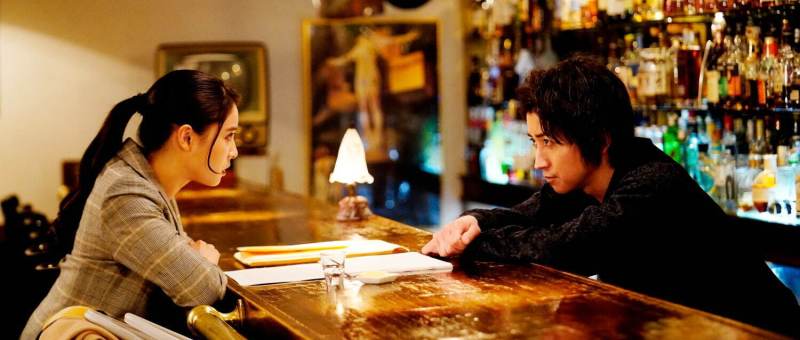
A down on his luck writer finds himself at the centre of a mystery only how much is truth and how much “fiction”? Based on the novel by Shogo Sato, Hideta Takahata’s Every Trick in the Book (鳩の撃退法, Hato no gekitai-ho) ponders the possibilities of literature as the hero seems to create a fictional world around him in which it is largely unclear whether he is solving a real world mystery or simply imagining one based on his impressions of the strange characters he encounters through the course of his everyday life.

That everyday life is however eventful just in itself. Tsuda (Tatsuya Fujiwara) once won a prestigious literary prize and was destined to become a popular author but hasn’t written anything of note for some time and in fact now largely works as a driver ferrying sex workers around on behalf of his shady boss. The mystery begins when he approaches a man, a rare solo reader in an overnight cafe, and promises to lend him a copy of Peter and Wendy by JM Barrie only to later discover that the man went missing along with his wife and the daughter he had explained was fathered by another man. 

Like many of his subsequent encounters it isn’t entirely clear if this meeting really took place or at least as Tsuda said it did or is only part of the novel he is beginning to write. The man, Hideyoshi (Shunsuke Kazama), asks him if it’s a novelist’s habit to begin imagining backstories for everyone he sets eyes on and there may well be some of that even as Tsuda is fond of claiming that amazing things happen around us every day to which we are mostly oblivious. Still, Tsuda probably didn’t expect to be pulled into the orbit of local gangster Kurata (Etsushi Toyokawa) after accidentally passing on counterfeit currency he found by chance. It’s true that most of what’s happening to him is the result of a series of bizarre coincidences or cosmic confluence which has accidentally united this collection of people in an unintended mystery which Tsuda intends to solve in either literal or literary terms. 

“It’s all a novelist can do” he later claims in trying to write a better ending for “characters” he has come to like than the one he assumes they “actually” met. But then his editor Nahomi (Tao Tsuchiya) chief worry is that, like his previous novel, Tsuda’s story will contain too much of the “literal” truth which could cause his publishers some legal problems. Part of the reason Tsuda left the industry is apparently because his last book was inspired by a real life affair which was then considered somewhat hurtful and defamatory. For that reason it comes as quite a blow to Nahomi as she begins to investigate and discovers that much of Tsuda’s story lines up with “real” places and events, but then again as he says if you can draw connections between known facts then you begin to see a “hidden” truth which may in its own way be merely his invention. 

The film’s Japanese title translates more literally as something like “how to fend off a dove” which does indeed have its share of irony especially considering the meaning the dove symbolism turns out to have in the film but perhaps also hints at the essential absurdity of trying to fight back against something that is otherwise harmless and in fact represents peace. Tsuda may be onto something and nothing, embracing the bizarre serendipity of a writer’s life while trying to recover his creative mojo but embellishing it with more danger and strangeness than it actually has to offer. Then again as his editor discovers, there really is an incinerator it seems anyone can just walk up and use to burn whatever they want including dead bodies, while people in general are full of duplicities all of which keeps the “fake” money circulating as people use it to try to buy things that can’t really be bought. Hideyoshi calls them “miracles”, embracing the strange serendipity of his life as an orphan longing for a family to call his own and unexpectedly finding one which is “real” in someways and “fiction” and in others. Then again, if you believe in something does it really matter if it’s “real” or not? Hideyoshi and Tsuda might say it doesn’t, the publishing company’s lawyers might feel differently, but it seems there really are amazing things going on around us every day if only you stop to look. 


Original trailer (English subtitles)
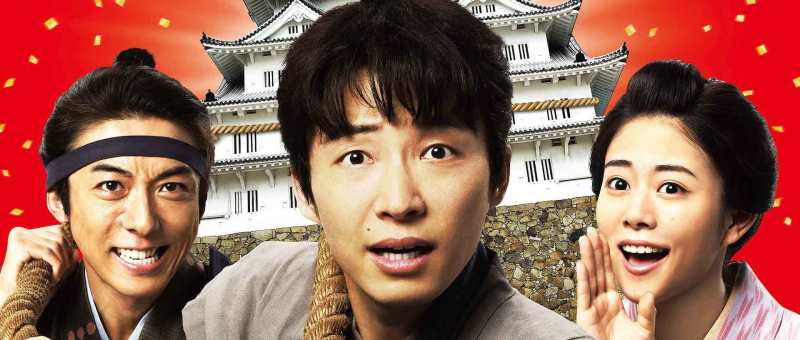
Samurai Shifters (引っ越し大名!, Isshin Inudo, 2019)

Samurai Shifters poster 1Forced transfers have been in the news of late. Japanese companies, keen to attract and keep younger workers in the midst of a growing labour shortage, have been offering more modern working rights such as paid parental leave but also using them as increased leverage to force employees to take jobs in far flung places after returning to work – after all, you aren’t going to up and quit with a new baby to support.

As Isshin Inudo’s Samurai Shifters (引っ越し大名!, Hikkoshi Daimyo!) proves, contemporary corporate culture is not so different from the samurai ways of old. Back in the 17th century, the Shogun kept a tight grip on his power by shifting his lords round every so often in order to keep them on their toes. Seeing as they had to pay all the expenses and handle logistics themselves, relocating left a clan weakened and dangerously exposed which of course means they were unlikely to challenge the Shogun’s power and would be keen to keep his favour in order to avoid being asked to make regular moves to unprofitable places.

When the Echizen Matsudaira clan is ordered to move a considerable distance, crossing the sea to a new residence in Kyushu which isn’t even really a “castle”, they have a big problem because their previous relocation officer has passed away since their last move. Predictably, no one wants this totally thankless job which warrants seppuku if you mess it up so it falls to introverted librarian Harunosuke (Gen Hoshino) who is too shy refuse (even if he had much of a choice, which he doesn’t). Unfortunately for some, however, Harunosuke is both smart and kind which means he’s good at figuring out solutions to complicated problems and reluctant to exercise his samurai privilege to do so.

In fact Harunosuke is something of an odd samurai. As others later put it, he doesn’t care about status or seniority and has a natural tendency to treat everybody equally. When the head of accounts advises him to take loans from merchants with no intention to pay them back, he objects not only to the dishonesty but to the unfairness of stealing hard-earned money from ordinary people solely under the rationale that they are entitled to do so because they are samurai and therefore superior. Likewise, when he finds out that his predecessor was of a lower rank and that all his achievements were credited to his superiors he makes a point of going to his grave to apologise which earns him some brownie points with the man’s pretty daughter, Oran (Mitsuki Takahata), who was not previously minded to help him because of the way her father had been treated.

Harunosuke’s natural goodness begins to endear him to the jaded samurai now in his care. Though they might be suspicious of some of his methods including his “decluttering” program, they quickly come on board when they realise he is not intending to exclude himself from his ordinances and even consents to burn his own books in order to make it plain that everyone is in the same boat. He hesitates in his growing attraction to Oran (who in turn is also taken with him because of his atypical tendency to compassion) not only because of his natural diffidence but because he feels it might be selfish to pursue a romance while urging everyone else towards austerity.

Meanwhile, “romance” is why all this started in the first place. The lord, Naonori Matsudaira (Mitsuhiro Oikawa), is in a relationship with his steward (something which seems to be known to most and not particularly an issue). While he was in Edo, he rudely rebuffed the attentions of another lord, Yoshiyasu Yanagisawa (Osamu Mukai), who seems to have taken rejection badly and has it in for the clan as a whole. In an interesting role reversal, his advisor laments that perhaps it would have been better for everyone if he’d just submitted himself, but nevertheless a few thousand people are now affected by the petty romantic squabbles of elite samurai in far off Edo.

Bookish and reticent as he is, Harunosuke sees his chance to “go to war against the unjust Shogunate” by engineering a plan which allows them to reduce the burden of moving, reluctantly having to demote some samurai and leave them behind as ordinary farmers with the promise that they will be reinstated as soon as the clan resumes its former status. Asking the samurai to drop their superiority and carry their own bags for a change has profound implications for their society, but Harunosuke’s practical goodness eventually wins out as the clan comes together as one rather than obsessing over their petty internal divisions. A cheerful tale of homecoming, friendship, and warmhearted egalitarianism, Samurai Shifters is an oddly topical period comedy which satirises the vagaries of modern corporate culture through the prism of samurai-era mores but does so with a wry smile as Harunosuke finds a way to live within the system without compromising his principles and eventually wins all with little more than a compassionate heart and a finely tuned mind.


Samurai Shifters screens in New York on July 21 as part of Japan Cuts 2019.

Teaser trailer (English subtitles)

Initiation Love (イニシエーション・ラブ, Yukihiko Tsutsumi, 2015)

initiation loveMost romantic comedies don’t come with warnings about twist endings and a plea not to give them way, but Initiation Love (イニシエーション・ラブ) is not your average romantic comedy. Set in the early bubble era, Yukihiko Tsutsumi’s double sided feature is itself a wry look at the problematic nature of nostalgia. Harking back to a perhaps more innocent era in which lack of political and economic turmoil left plenty of time for romantic confusion coupled with the corruption of the consumerist dream, Initiation Love pits innocent romance against cynical success but subtly suggests that grown up love is a kind of compromise in itself.

Side A: In the summer of 1987, Yuki Suzuki (Kanro Morita) – a geeky, overweight young man who is shy but has a kind heart, is unexpectedly invited to a college drinking party where he earns some major white knight points for interrupting the increasingly inappropriate grilling of new invitee Mayuko (Atsuko Maeda). Mayuko is pretty, sweet, and cute if in a slightly affected way. She is way out of Suzuki’s league, but later confesses that she’s looking for someone a bit different, like Suzuki, an awkward-type who won’t lie to her or play around. Bonding over a shared love of reading, the pair grow closer, Mayuko rechristens Suzuki “Takkun”, and he vows to spruce himself up to become “worthy” of her.

Side B: Takkun (Shota Matsuda), now slim and handsome, is given a surprise promotion to Tokyo. Rather than suggest marriage or that Mayuko come with him, he settles on long distance and promises to come back to Shizuoka at weekends while waiting to be approved for a transfer back home. In Tokyo, however, Takkun’s personality begins to shift. Seduced by city sophistication and the promises of an elite salaryman lifestyle, Takkun draws closer to upper-class career woman Miyako (Fumino Kimura) whose jaded straightforward confidence he regards as “grown up” in contrast to the innocent charms of Mayuko waiting patiently at home.

The overarching narrative is provided to us via a melancholy voice over and accompanied, in the manner of a classic mix-tape, by a song from the era which is deliberately on the nose in terms of its aptness – a song about giving up on summer just as the couple are stuck in a traffic jam on the way to the beach and about to have a gigantic row, or a song about lucky chances coming up on TV just as our hero is plucking up the courage to allow himself to be bamboozled into going on a date with the girl of his dreams. The carefully placed positioning of the songs reminds us that we are inside someone’s carefully curated memories. Just as Takkun’s vision of Mayu-chan is one surrounded by flowers and light, the early days of romance are a condensed and romanticised version of real events seen entirely from one perspective and coloured with the gradual fading of time. Nostalgia is an unreliable narrator, recasting real life as Hollywood fiction.

The warm and fuzzy glow of Side A is undercut by the subtly questionable actions of Mayuko and our own prejudices about why she might be with a guy like Takkun. Self-consciously cute, Mayuko makes needling suggestions – dress better, get contacts, learn to drive, which, objectively speaking, might all help Takkun to gain some much needed confidence if only he were not doing all of them solely because he fears losing a woman like Mayuko. If Mayuko wanted a guy she could remake and boss around, she might have come to the right place but she does, at least, also try to insist that she likes Takkun anyway and so any changes he makes to himself will make no difference to her.

Side B, by contrast, turns the dynamic on its head as Takkun’s Tokyo persona becomes increasingly violent, resentful, and cruel while Mayuko seems genuine, innocent, and hurt by the increasing distance between herself and the man she loves. Seduced by city sophistications, Takkun leans ever closer to dumping the innocent country bumpkin, a love he has now outgrown, for a leg up into the middle-classes by marrying the elegant daughter of a wealthy Tokyo businessman. He is, however, torn – between the nostalgic glow of first love’s innocence, and the realities of adult life, the certain past and the uncertain future.

This is the philosophy ascribed by Miyako (apparently given to her by her own first love) that the first failed romance is a crucial part of growing up, an “Initiation Love” that breaks your heart by revealing the idea of true love as a romantic fallacy, allowing you move into the adult world with a degree of emotional clarity. A sound idea, but also sad and cruel in its own way. The final twist, offered as a cynical punchline, can’t help but feel cheap, carrying mildly misogynistic undertones dressed up as a kind of joke aimed at cowardly men who are incapable making clear choices and refuse to see their romantic partners as real people rather than the self created images of them they maintain. Takkun remains torn, between past and future, town and country, old love and new but nostalgia is always a trap – a false impression of a true emotion that impedes forward motion with a promise of a return to something which can never be delivered.


Screened as part of the Japan Foundation Touring Film Programme 2018.

Screening again:

  • QUAD – 10 February 2018
  • Brewery Arts Centre – 2 March 2018
  • Filmhouse – 9 March 2018

Playlist: Side A

Yureru Manazashi (Kei Ogura)

Kimi wa 1000% (1986 Omega Tribe)

https://www.youtube.com/watch?v=MeEEOrOFYuw

Yes-No (Of Course)

Lucky Chance wo Mo Ichido (C-C-B)

https://www.youtube.com/watch?v=zUzkzxGR9sw

Ai no Memory (Shigeru Matsuzaki)

https://www.youtube.com/watch?v=OHX1d6sObf4

Kimi Dake ni (Shonentai)

https://www.youtube.com/watch?v=KlLcKJL6jeE

Side B:

Momen no Handkerchief (Hiromi Ota)

https://www.youtube.com/watch?v=ylF3dNFrAio

Dance (Shogo Hamada)

https://www.youtube.com/watch?v=LX6Kx-NWy0o

Natsu wo Akiramete (Naoko Ken)

Kokoro no Iro (Masatoshi Nakamura)

https://www.youtube.com/watch?v=JXqwzYXMDLc

Ruby no Yubiwa (Akira Teruo)

https://www.youtube.com/watch?v=HgLaQKp8EaA

Show Me (Yukari Morikawa)

https://www.youtube.com/watch?v=7DzpcRHsIWg


April Fools (エイプリルフールズ, Junichi Ishikawa, 2015)

april-foolsIn this brand new, post truth world where spin rules all, it’s important to look on the bright side and recognise the enormous positive power of the lie. 2015’s April Fools (エイプリルフールズ) is suddenly seeming just as prophetic as the machinations of the weird old woman buried at its centre seeing as its central message is “who cares about the truth so long as everyone (pretends) to be happy in the end?”. A dangerous message to be sure though perhaps there is something to be said about forgiving those who’ve misled you after understanding their reasoning. Or, then again, maybe not.

Juggling seven stories April Fools is never as successful at weaving them into a coherent whole as other similarly structured efforts but begins with an intriguing Star Wars style scroll regarding alien sleeper agents who can apparently go home now because they’ve accomplished everything they came for. Changing track, pregnant snack addict Ayumi (Erika Toda) decides to ring the still unknowing father of her child after witnessing an improbable reunion on TV only he’s in bed with someone else and assumes her call is a weird practical joke. Overhearing that he’s just arrived at a restaurant for a lunch date, Ayumi takes matters into her own hands and marches over there, eventually taking the entire place hostage. Meanwhile an older couple are having a harmless holiday pretending to be royalty and a grizzled gangster has “kidnapped” a teenage girl only to give her a nice day out at the fun fair. Oh, and the hikkikomori from the beginning who’s fallen for the whole alien thing has made a total fool of himself at school by taking out his bully, kissing his crush goodbye and racing up to the roof to try and hitch a lift from the mothership.

Importing this weird European tradition to Japan, the creative team have only incorporated parts of it in that they don’t call time on jokes at noon and it’s less about practical shenanigans and elaborate set ups than it is about wholesale lying which is frustrated by this famous non-holiday apparently created in celebration of it. All of the protagonists are lying about something quite fundamental and usually to themselves more than anyone else but at least their April Fools adventures will help them to realise these basic inner truths.

Then again some of these revelations backfire, such as in the slightly misjudged minor segment concerning two college friends who are repeatedly kicked out of restaurants before they can get anything to eat. One decides to “prank” his friend with an April Fools confession of love, only to find that his friend really is gay and is in love with him. Awkward is not the word, but then an April Fools declaration of love is about the worst kind of cruel there is and is never funny anyway, nor is the casual homophobia involved in this entire skit but that’s another story.

In fact, most of the other people are aware they’re being lied to, but are going along with it for various reasons, some hoping that the liars will spontaneously reform and apologise or explain their actions. Ayumi, who is shy and isolated by nature, always knew her handsome doctor suitor was probably not all he seemed to be but is still disappointed to be proved right, only be perhaps be proved wrong again in the end. Convinced to take a chance on an unwise romance by an older colleague who explains to her that many miracles begin with lies, Ayumi is angry with herself as much as with her lying Casanova of a baby daddy, and also feels guilty about an incredibly sight deception of her own. As in many of the other stories, now that everyone has figured out the real, important, truths about themselves and about the situation, they can excuse all of the lying. Sensible or not? The choice is yours.

Despite coming from the team who created some very funny TV dramas including Legal High, the comedy of April Fools never quite hits its stride. Weak jokes backed up with slapstick humour giving way to sentimentality as the “good reasons” for the avoidance of truth are revealed don’t exactly whip up the farcical frenzy which the premiss implies. The point may very well be that we’re the April Fools going along with this, but even so its difficult to admire a film which pushes the “lying is good” mantra right to the end rather than neatly undercutting it. Still, there is enough zany humour to make April Fools not a complete waste of time, even if it doesn’t make as much of its original inspiration as might be hoped.


Original trailer (English subtitles)
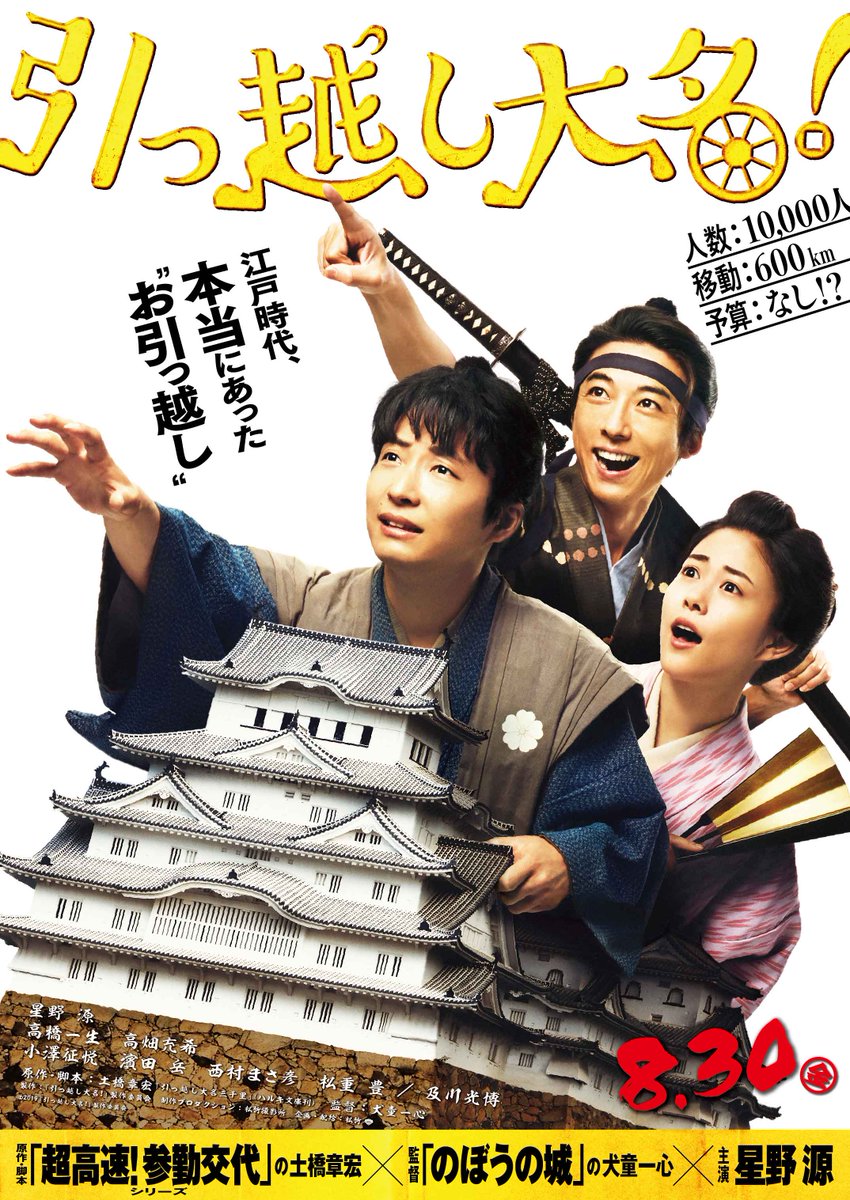
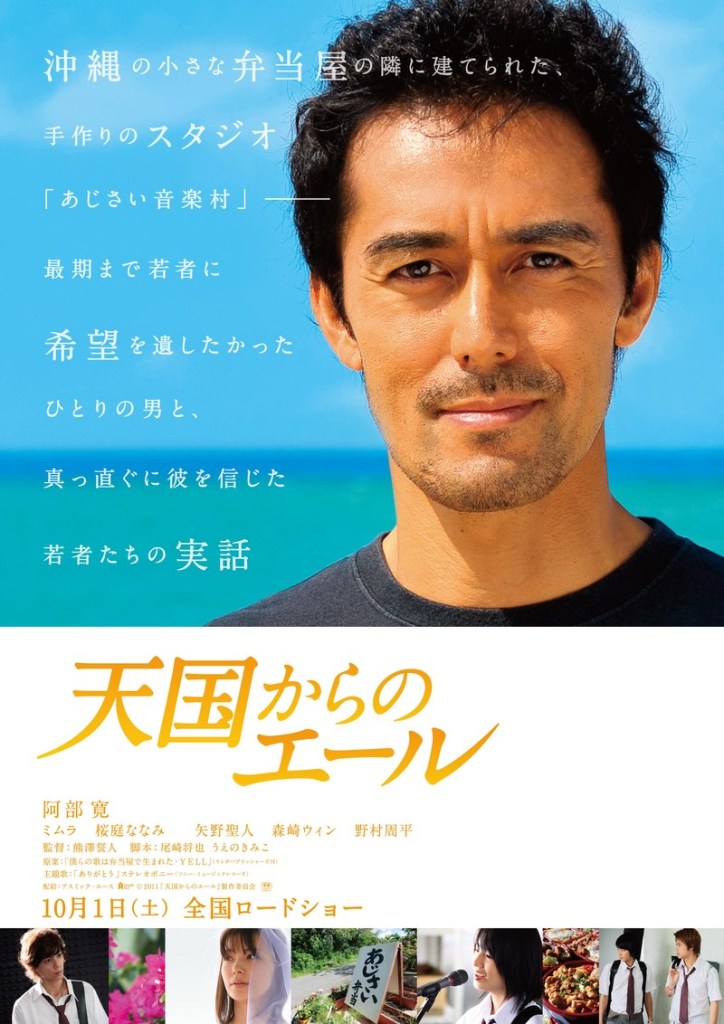
Cheers from Heaven (天国からのエール, Chikato Kumazawa, 2011)

tengoku_teaser_“üeolOkinawa might be a popular tourist destination but behind the beachside bars and fun loving nightlife there’s a thriving community of local people making their everyday lives here. Just like everywhere else, life can be tough when you’re young and the town’s teenagers lament that there’s just not much for them to do. A small group of high schoolers have formed a rock band but they’re quickly kicked out of their practice spot at school after a series of noise complaints from neighbours.

The school kids all buy their lunches from the bento shop down the street run by Hikaru “Nini” Oshiro, his wife and his mother. Whilst there, Aya – the rock band’s female singer, starts eying up a covered courtyard area and remarks that it’s a shame they can’t practice there. Nini overhears and gives them the space but once again the neighbours complain ,so the kids reluctantly decide to give up on the band for now because there aren’t any studio spaces on the island and they wouldn’t have the money to hire somewhere anyway. At this point, Nini makes a surprising decision – digging deep into his family resources, he buys the materials and commits to building a studio space on a patch of disused land next to the bento shop with his own hands.

Based on a true life story, Cheers From Heaven (天国からのエール, Tengoku kara no Yell) is a tribute to Hikaru Nakasone who really did build a studio space for the local kids that turned into something more like a youth centre offering support to all kinds of youngsters so long as they obey the rules. In the film, Nini is a fairly gruff but big hearted man who’s big on discipline and doing the right thing. His rules include being courteous to the other kids, sticking to your allotted time and crucially that your grades don’t suddenly start dropping because you’re hanging out in the studio all the time.

Nini’s wife is, perhaps unsurprisingly, originally horrified by the idea of the studio especially as it will require an additional financial burden for the family, not to mention that Nini failed to run the idea by her before launching headlong into it. However, eventually the entire family comes around and they even start catering for the kids too. When his wife asks him why he’s doing this Nini remarks that in his day people were poor, yes, but they helped and supported each other. Older people taught younger ones how to do things and how to behave but that doesn’t seem to happen now and he doesn’t want his daughter to grow up in a world like that.

The building of the studio becomes a real community project as half the kids from the local area suddenly turn up to help. The project that Nini assumed he’d be finishing with his two hands alone becomes a symbol of pride for the various teenagers who commit their time and hard work into making it happen. They’ve built something together that’s now their collective responsibility and a place where they can go to practice their music or just express themselves creatively.

Nini doesn’t stop there, he wants to help the kids in the band make it big. Convincing a fourth member to join them, taking demos around radio stations, organising live gigs – he’s their unofficial manager. The band’s young struggles hit a chord with Nini because he also had a friend with dreams of becoming a musician that were tragically cut short just as he was finally getting somewhere. It also transpires that Nini came home to Okinawa with his family following an illness which has now returned and this headstrong determination to make a difference is, in part, because he feels as if he’s running out of time.

Despite his failing health, Nini continues to do everything possible to look after the kids from the band even going so far as to discharge himself from hospital to go check on the leaking roof of the studio during a storm only to discover the kids already have it covered. A warm tribute to its real life inspiration, Cheers from Heaven proves far less sentimental than its rather melodramatic title suggests preferring to emphasise its themes of togetherness and legacy which bear out the way in which one committed soul can leave an indelible mark on its community.


Reviewed at the Japan Foundation Touring Film Programme 2016 at the ICA London on 6th February 2016.

http://www.youtube.com/watch?v=LSYWW2W4U24