The Dumpling Queen (水饺皇后, Andrew Lau, 2025)

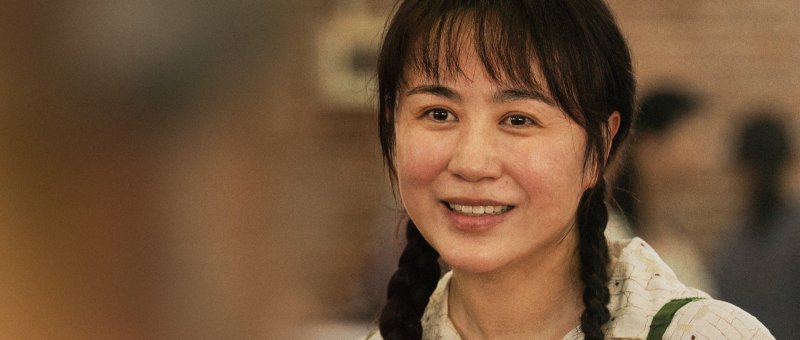
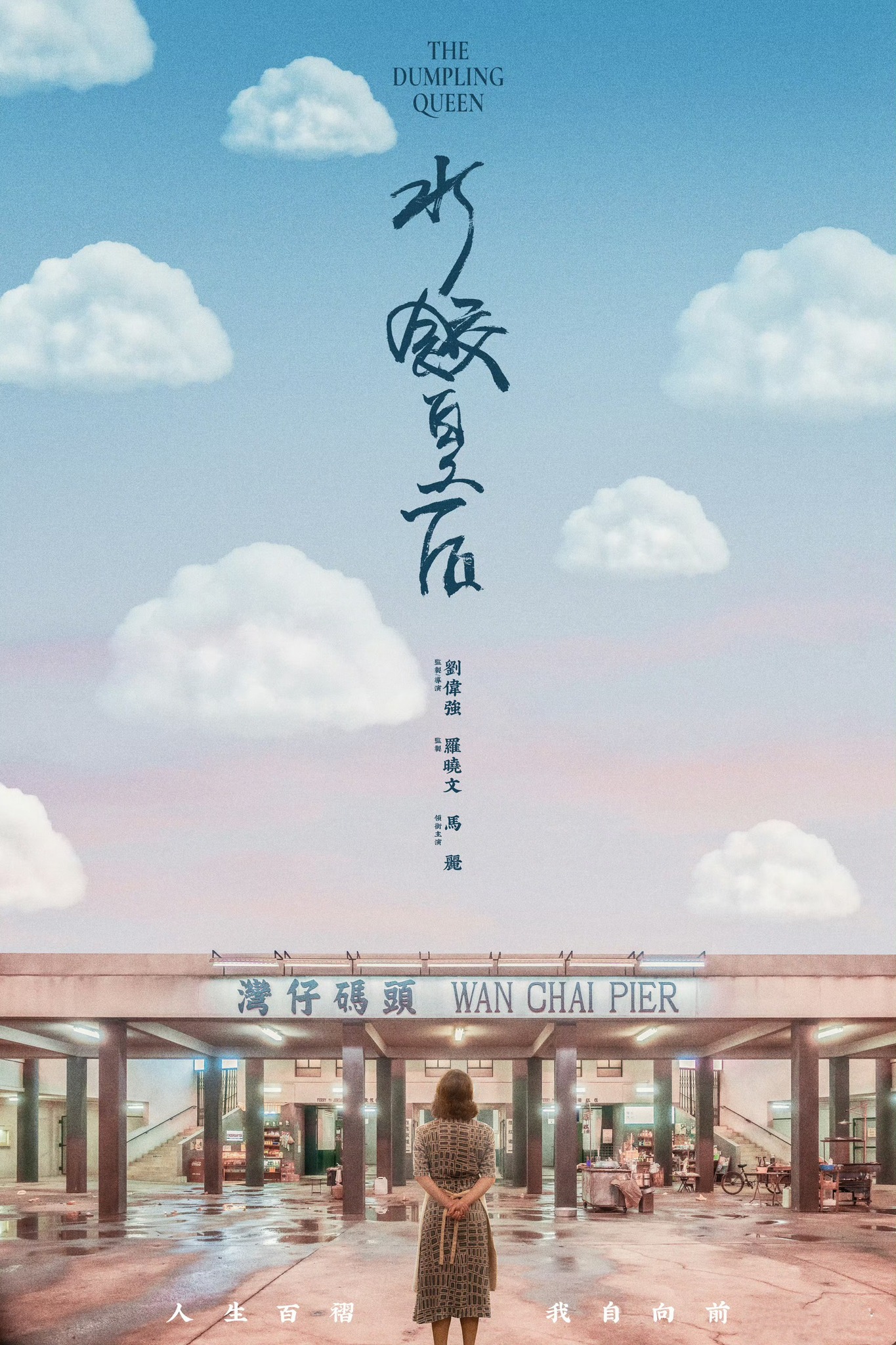
There are a lot of ironies and contradictions at the heart of Andrew Lau’s Dumpling Queen (水饺皇后, shuǐjiǎo huánghòu) inspired by the life of Zang Jianhe who founded the international dumpling empire Wanchai Ferry, but there’s no getting away from the celebratory joy it finds in the heroine’s hard-won transition from jilted spouse to successful entrepreneur. Then again, there might be something uncomfortable in the film’s framing and the repeated claim that Jianhe’s dumplings are about the warmth of familial bonds and reunion. Zong’s desire to kick back at American imperialism as manifested in the ubiquity of hamburgers and US-style delivery pizza by making Chinese dumplings accessible across the world is also an advocation for the One China philosophy in which the greater Chinese diaspora is connected as a family through “the taste of home.”

Beginning in 1977, the film is noticeably quiet about why anyone would be risking their lives to escape from Mainland China to Hong Kong, though this is what Jianhe is doing in her quest to be reunited with her husband, Hanzhou, who has been away for four years. Unfortunately, when she reaches the station at the border, Hanzhou’s mother (Nina Paw Hee-ching) rudely explains that she had him marry another woman in Thailand who has since borne him a son. Branding Jianhe a failure for giving birth to only daughters, she tells her that she can come with them but that she will be the second wife subservient to the mother of the family heir. She repeatedly claims this does not make Hanzhou a bigamist because Thai law supposedly gives him the right to marry more than one woman, though it seems the mother-in-law may not be aware that the pair were legally married in Mainland China as Jianhe’s traditional wedding photos would otherwise suggest. 

The fact that Jianhe is discarded for giving birth to daughters contributes to the film’s feminist undertones and sense of female solidarity as Jianhe strives to pass on the dumpling recipe she learnt from her own mother to the next generation of women and beyond. Jianhe must now find a way to fend for herself, which she eventually does through a combination of hard work, excellent business sense, and the supportive community around her. Though Jianhe and her children face some instances of prejudice against Mainlanders when they first arrive, they are helped by various people including enigmatic landlady Hong Jie (Kara Wai Ying-hung) who makes her a part of her boarding house community and tries not to pressure her about the rent out of consideration for the children,

But times are sometimes hard and Jianhe is directly contrasted with the woman across the way whose husband has a gambling problem and beats her. Having been injured in a workplace accident that leaves her unable to work as she had been before, Jianhe begins to feel hopeless and considers taking her own life only to be saved by her children and a neighbour who sells dessert soups, but the other woman is not as lucky and eventually makes a fateful decision, blaming herself for the man her husband has become. Jianhe is also given another shot at romance with a sympathetic policeman (Zhu Yawen) who comes from the same area of Mainland China and is taken by her dumplings, but he also wants to move abroad and Jianhe has already followed one husband to another country and it didn’t work out so well. It’s not so much that she sacrifices love for career success, the policeman could after all simply chose not to go, but that she no longer needs to compromise herself for marriage because she’s fulfilling herself through her business enterprise.

Just as the film doesn’t mention why Mainlanders came to Hong Kong, it doesn’t really go into why some Hong Kongers choose to leave save for a brief onscreen text mention about the beginning of the negotiations for the Handover though Jianhe is repeatedly keen to emphasise the universal Chineseness of her dumplings. She makes a deal with a Japanese department store, but threatens to walk when they try to make her change her packaging to bring it into line with their house style and thereby erase its cultural identity. She also refuses to allow them a monopoly after they demonstrate their lack of trust in her as a businesswoman, quickly realising she’s better off making deals with every supermarket on the island as well international flour companies. Jianhe is pretty quick to cotton to new technologies such as household refrigerators and the possibilities for frozen foods. But at the end of the day, she’s earnest and hardworking, sharing her success with her many friends who helped her along the way and always repaying kindness when she can. It’s an oddly utopian vision at times in which everyone seems to recognise Jianhe’s greatness and get out of her way, including a triad boss who helps her because she reminded him of his mother when she threatened one of his men with a meat cleaver,) but it also reinforces a sense of the One China family with the dumplings, now refined to suit local tastes, as the glue binding it together in the face of an onslaught of hamburgers and pizzas as harbingers of a cultural apocalypse.


International trailer (Simplified Chinese / English subtitles)
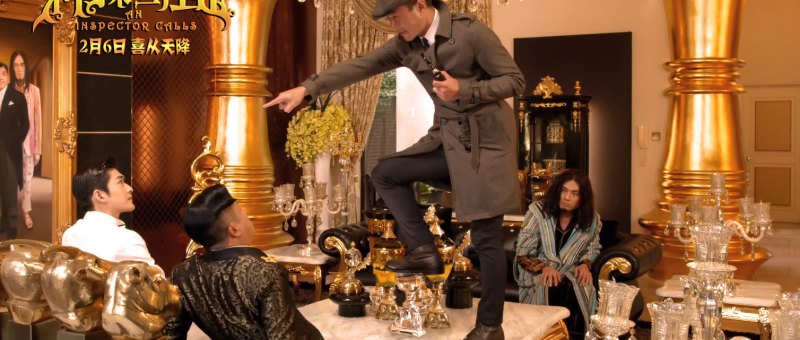
An Inspector Calls (浮華宴, Raymond Wong & Herman Yau, 2015)

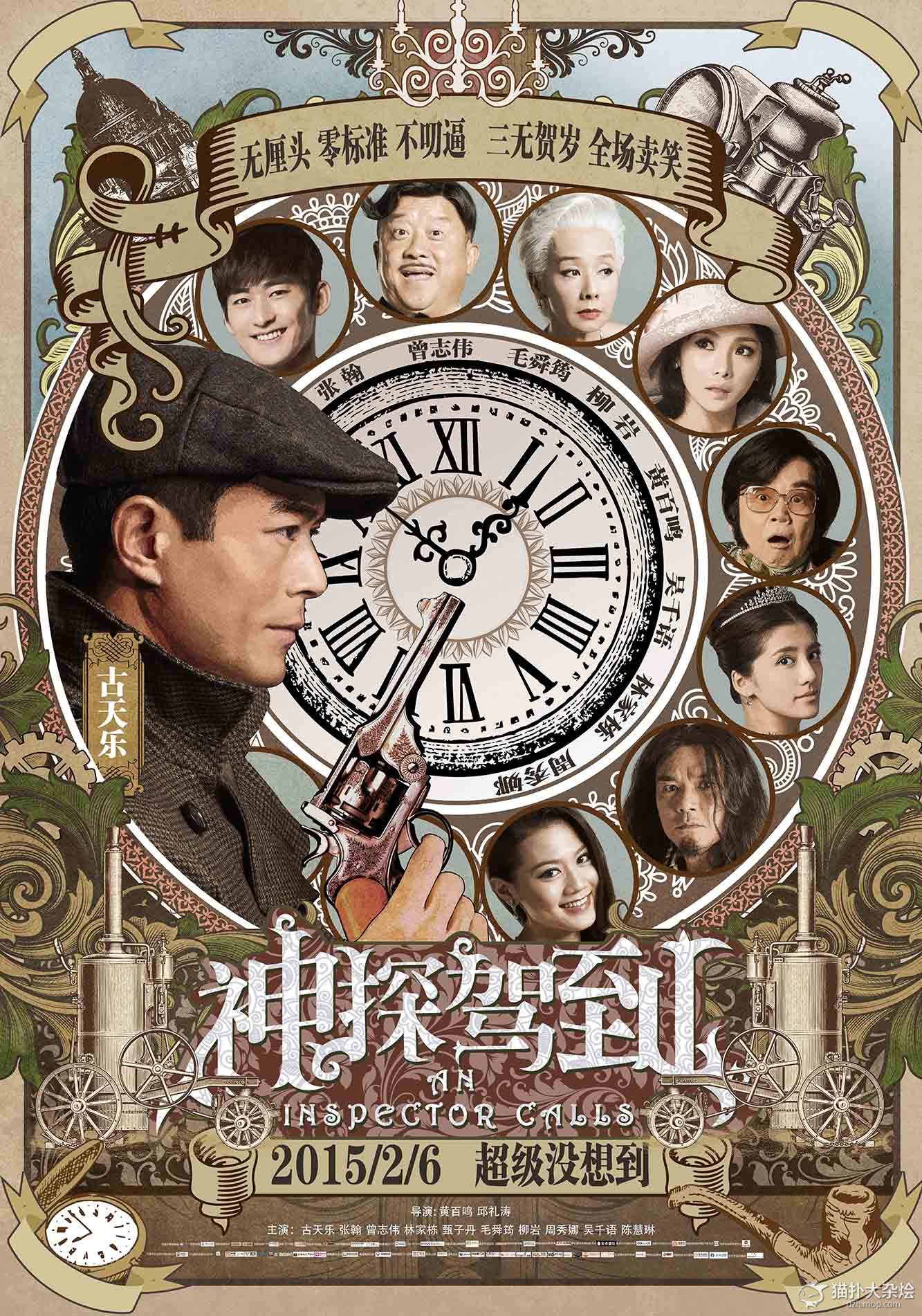
Inspector Calls poster 1J.B. Priestley’s An Inspector Calls found itself out of favour until a phenomenally successful stage production brought it back into the national consciousness in the early ‘90s, but even if some decry its inherent melodrama as a relic of another era the play’s comments on the entrenched classism of British society sadly still ring true. An Inspector Calls is many things, but one thing it defiantly is not is funny – a series of concentric tales of betrayals and oppressions, Priestley’s drama lays bare the callousness with which the privileged bolster their position through the story of one faceless factory girl standing in for an entire social class whose lives are often at the mercy of those “above” them.

In adapting Priestley’s play as a Chinese New Year movie (a strange concept in itself), Herman Yau and Raymond Wong relocate to contemporary Hong Kong, re-conceiving it as a broad comedy of the kind one might expect for the festive period. The setup is however still the same. The Kau family will be receiving a visitation – this time from Inspector Karl (Louis Koo Tin-lok) who has some difficult news for each of them. Three hours previously, a young woman committed suicide in her apartment by drinking bleach, taking the child she was carrying with her. Inspector Karl views this as a double murder and, based on the diary they found at the crime scene, has brought the reckoning over to the Kaus’.

The Kaus, at the present time, are preparing an engagement party for daughter Sherry (Karena Ng) who will be marrying the handsome younger brother of a factory owner, Johnnie (Hans Zhang Han). What no one can know is that the family business is going under, the Kaus are broke, mum and dad don’t get on, and all of this finery is merely rented affectation. The only member of the family who still seems to have something like a social conscience – Tim (Gordon Lam Ka-tung), the 27-year-old younger son, is viewed by all as a feckless and naive hippy, hiding out in his childhood bedroom, still all fluffy cushions and toy soldiers.

As the Inspector explains, he holds Mr Kau (Eric Tsang Chi-wai) responsible because the woman once worked in his factory and he fired her for participating in a strike for better pay and conditions. Sherry got her fired too when she worked in an upscale fashion store. Johnnie knew her during an unfortunate period as a bar hostess, and Tim as a masseuse. Mrs Kau (Teresa Mo Shun-kwan), who heads up a woman’s charity and publicly espouses tolerance while privately judgmental, once turned her down for familial support seeing as the father of her child was still living. She advises holding him to account and if he won’t pay, forcing his family to take responsibility on his behalf. The irony being that the father is likely her own son and that if this poor woman had rocked up at the Kaus’ with a sad story and an infant in her arms, she would have been met with nothing more than contempt save perhaps some hush money to send her on her way.

The Kaus are merely a series of examples of the various ways the wealthy mistreat the poor, wielding their sense of entitlement like a weapon. Yau and Wong adopt an oddly Brechtian approach in their expressionist production design with the faceless masses identified only through titles – the word “labour” on the workers’ caps, “manager” in the fashion store, “secretary” at the foundation. None of these people are really worthy of names because they will always be “less” while the Kaus are “more” in more ways than one. Actions, however, have consequences. The family console themselves that this is all far too coincidental, that they couldn’t all have known the “same” woman in different guises, but that in many ways is the point – she isn’t one woman but all women, used, abused, and discarded not only by heartless men but by jealous and judgemental members of her own sex too. Better than her than me, they might say, but that’s no way to run a healthy society as the sensitive, slightly damaged Tim seems to see.

Like the Birlings, the Kaus attempt to brush the Inspector’s warning off, thinking it’s all been some elaborate prank that can they laugh about and then forget, but there will be a reckoning even if they attempt to gloss over the various revelations regarding their moral failings. Wong and Yau’s vague gesturing towards the outlandish greed of the hypocritical super wealthy is undercut by the ridiculous New Year slapstick of it all despite the Metropolis-like production design and expressionist trappings, giving in to an excess of its own in an extremely unexpected musical cameo from a martial arts star and the decision to end on a social realist photo of an innocent, pigtailed proletarian woman dressed in red. Nevertheless, strange as it all is the bizarre adaptation of Priestley’s play has its own peculiar charm even if it’s outrageousness rather than moral outrage which takes centre stage.


Currently available to stream online via Netflix in the UK and possibly other territories.

Original trailer (English / Traditional Chinese subtitles)

Three (三人行, Johnnie To, 2016)

Johnnie To is best known as a purveyor of intricately plotted gangster thrillers in which tough guys outsmart and then later outshoot each other. However, To is a veritable Jack of all trades when it comes to genre and has tackled just about everything from action packed crime stories to frothy romantic comedies and even a musical. This time he’s back in world of the medical drama as an improbable farce develops driven by the three central cogs who precede to drive this particular crazy train all the way to its final destination.

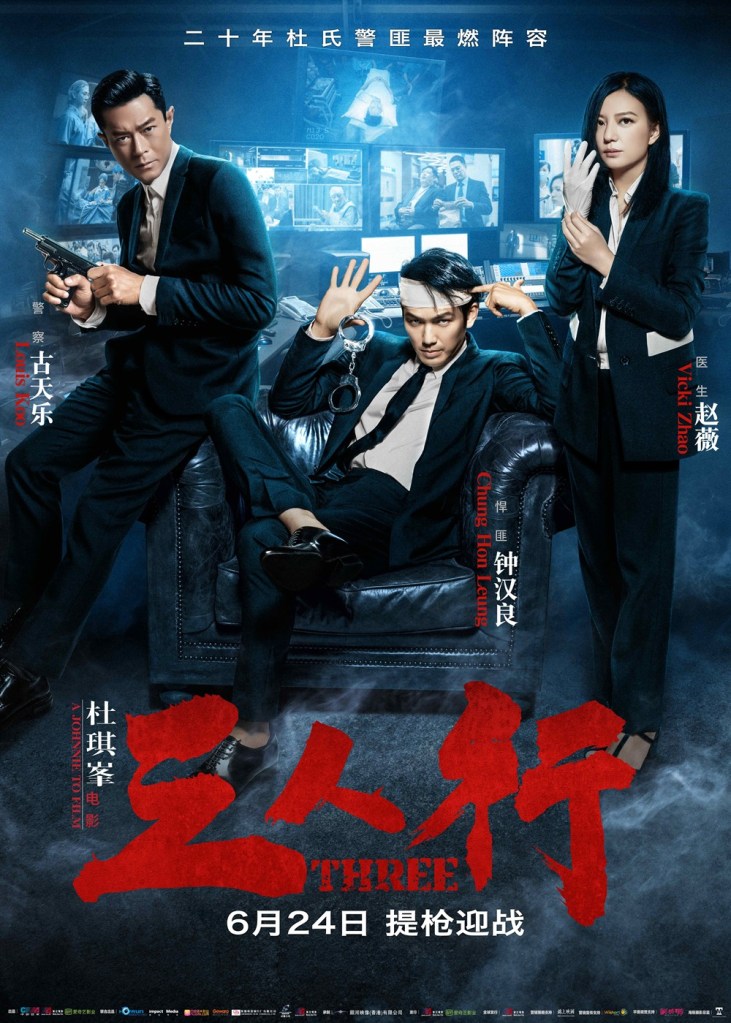
Dr. Tong (Zhao Wei), is a tough as nails neurosurgeon. Having arrived in Hong Kong from the mainland at 17, she learned Cantonese, got into medical school and has built a fine career for herself but this same drive means she’s unwilling to delegate and constant overwork is beginning to eat into her statistics. She thinks her day can’t get much worse after an angry patient rants and calls her a quack because there has been a complication with his surgery and he’s currently unable to walk but her next patient, a man with a gunshot wound to the head brought in by the police, is about to add to her already long list of workplace stressors.

Shun (Wallace Chung) is actually almost OK except for having a bullet lodged in his brain. Against all the advice, Shun refuses the offer to have it removed surgically because he’s playing a long game with the police and it’s his one bargaining chip. The police’s story is that Shun grabbed a gun and tried to escape whereupon an officer shot him. However, this turns out to be not quite true and Inspector Chen (Louis Koo) has twin worries – finding Shun’s accomplices and covering up the extreme misconduct committed by his team members.

The original Chinese title of the film, 三人行 which means three people walking, is inspired by the traditional saying that among three people you will always find someone you can learn something from. However, the tragedy of these three is that they’re incapable of learning anything from anyone else and are actually quite disinterested in other people. Tong is always thinking of her targets and can’t bear the thought of losing again if Shun dies of his injuries, but rather than learning to step back and recharge, she continues to push herself to near breaking point. Chen is series of walking contradictions – a lawbreaking policeman, so certain of his own ability to counteract crime that he’s lost all accountability. Shun’s big personality flaw is taking far too much pleasure in his playful scams. He wants to make a phone call so he refuses surgery until he can (quoting Bertrand Russell and throwing the Hippocratic oath back at Tong, already nearing the boil), never quite realising that the delay could very well signal the end of everything.

Tong, Chen, and Shun are three pillars of society – the respectability of the medical profession, the authority of law enforcement, and the inevitability of crime. Tong, the most sympathetic, propels herself into overwork but her selfish need to prove herself to herself puts patients’ lives at risk. The police force which is supposed to represent protection under the law, is shown to be corrupt and little more than criminal in itself. Chen says he can break the law to enforce the law, but what he’s really trying to do is save his own skin after going too far. Shun is simply a sociopathic genius intent on showing off his cerebral prowess to anyone who will give him the slightest bit of attention but like all criminals he’s a goal orientated, short term thinker. Each of the three is, in a sense, moving in their own universe and driven only by their own certainty of primacy.

As much as Three is a crime thriller, psychological character piece, and medical drama, what lies at the heart of it is farce. In keeping with much of his work, To’s world is an absurd one filled with eccentric fringe characters who may be more important than they otherwise appear and, as usual, the final god is luck – a paralysed man attempts suicide by throwing himself down the stairs only to suddenly find he can stand up by himself at the bottom, and Chen’s gun jams several times preventing him from taking decisive action. At one very strange juncture, Shun even tries to escape the hospital by making use of the classic boys own adventure tactic of tying a number of sheets together and using them to climb out of the window. To’s true centrepiece takes the form of a tense, exciting shootout which looks like slow motion but was apparently filmed in real time with the actors moving slowly in perfectly choreographed formation. The improbable scene of carnage, prefaced by bombs going off right, left and centre, is conducted to a the strains of a genial pop song extolling Confucianist wisdom. Beautifully balletic, the bullets hit in real time but the actors react as if stunned, allowing us to fully experience all of their fear and confusion at the centre of such a shocking event.

The man who may have the most to teach us the genial old man with a key stealing habit who erupts into a bawdy song as he’s being discharged. He may have the right idea when he suggests that everyone follow his example and learn to laugh loudly to live a happy life. To reinforces his absurd intentions with intense realism, embracing the ritualistic, “theatrical” nature of the operating room with all of its various performances set atop the heated bloody scenes of bodily gore and coldly metallic nature of the surrounding equipment. To’s gleefully graceful aesthetic is back in force for this tale of lonely wandering planets pushed out of orbit by the imposing centrifugal forces of their rivals. Strange and tinged with absurd humour, Three is To is in a playful mood but nevertheless deadly serious.


Reviewed at Raindance 2016.

Original trailer (English/Traditional Chinese subtitles)

https://www.youtube.com/watch?v=U67UDtFMPAc