
Neomanila (Mikhail Red, 2017)

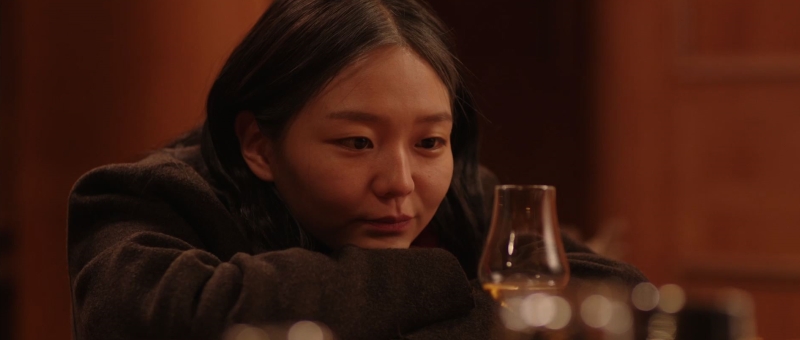
Neomanila posterWhat kind of future can there be on the streets of Duterte’s Philippines? For one orphaned son of Manila’s slums, the only answer he can see is none at all. “I’m going to die no matter what I do”, he tells a surrogate maternal figure whose conflicted maternity will eventually bring about ruin for them both. Mikhail Red’s Neomanila is the latest in a string of films to examine the social costs of Duterte’s “Extra Judicial Killings” of “Drug Dealers” often conducted by vigilante bounty hunters working with the tacit complicity of legitimate law enforcement. Inheriting a world of corruption where life is cheap and sensitivity breeds despair, boys like Toto (Timothy Castillo) find themselves caught in the crossfire of an increasingly heartless regime.

When we first meet Toto, he’s trying to visit his older brother, Kiko (Ross Pesigan), who has been rounded up by the police in a drug dealer trawl. Kiko is small fry – a petty gangster only peripherally connected with the drug trade, but the police are holding him in the hope of tracking down another suspect, Ringgo (Edwin Nombre). The problem is, unbeknownst to Kiko or to Toto, Ringgo is already dead – he was the dealer we just saw gunned down in the street by a hired assassin. Trying to figure out how to get the bail money together for his brother, Toto pays a visit to a local gang boss and then hangs out with his girlfriend Gina (Angeline Andoy) in between running petty errands for the gang. One particular job brings him into the orbit of Irma (Eula Valdez) – a woman running a “pest control” business who used to know his mother before she was killed in a fire in the slums some years ago. Irma offers him a job in her store, but Toto quickly becomes aware that Irma runs a lucrative sideline as a hitwoman for hire. Together with her partner (both romantic and crime) Raul (Rocky Salumbides), Irma works for mysterious police handler Sarge who gives the pair frequent assignments to take care of “suspects” and bring home the drugs as well as other kinds of “valuable” “evidence” including phones and weaponry.

Orphaned at a young age, Toto is left entirely alone on the streets of Manila. He’s not a really part of the gang and cannot rely them for familial support and with his brother out of the picture he has no one to stand for him. The quasi-maternal connection he builds with Irma is he closest thing to family he has experienced in quite some time. Irma too, apparently mother to an absent son, quickly takes on the role of Toto’s protector – she gives him her own son’s clothes, feeds him, and later takes him out on trips to the karaoke bar or shopping to buy trainers all while “training” him to become a part of her outfit even whilst believing that Toto is somehow “better” and not “like the other” kids from the slums who get mixed up in drugs and crime through having no other options to survive. Wanting to “contribute” as part of the family, Toto goes along with Irma’s morally dubious education but he is also still a child with a deeply felt sense of humanity and justice and is therefore increasingly conflicted about the duo’s heartlessness and refusal to question their various assignments.

Trapped by the world he has inherited, Toto has few options other than to conform to the harshness of its rules or risk becoming a victim of them. The vision Red paints of modern Manila is one lit by gloomy neon half-light in which gangsters go to mass and priests preach about the seventh commandment while the state itself sanctions bloody murder in the streets conducted by those with vested interests in perpetuating a world of inescapable poverty in which death has become an industry. Drenched in despair and unbelievably bleak, Neomanila is a story of a city eating itself alive in which there is no future, no possibility of salvation, and innocence is just another weakness to be burned on an altar to (im)moral austerities so that the world might feel “safer” to those who live in fear of its self-created evils.


Neomanila was screened as part of the New York Asian Film Festival 2018.

Original trailer (English subtitles)

The Big Call (巨额来电, Oxide Pang, 2017)

The Big Call posterOnce upon a time people sneered at telephone scams, unable to believe anyone would fall for something so obviously dubious, yet technological innovation has turned them into an underground industry as our data is bought and sold across a spectrum of nefarious forces whose use for it runs from relentless spamming to the intention to defraud. Oxide Pang’s The Big Call (巨额来电, Jùé Láidiàn) pits an earnest Mainland cop against an entrepreneurial kingpin running a multinational operation which he half-brands as a Robin Hood exercise intended to rob the super rich of their excess wealth, but then he never quite intends to redistribute it, only to put it straight back to work so that it might reproduce.

Our hero, straight as an arrow rookie policeman Ding (Cheney Chen), fails to save his old high school teacher from committing suicide after being defrauded of a vast amount of money through a telephone scam. Fraud isn’t really his division – he’s just a regular street cop, but he’s determined to protect the people in his precinct and seeing as he’s already found numerous similar cases is convinced he has a shot at unmasking the criminal. Ding’s investigation, however, unwittingly throws a spanner into an Anti-Telecommunication Fraud Centre operation. Despite their irritation, the guys in the fraud squad decide to let Ding in on the action whereupon he quickly realises that his old academy girlfriend is in fact undercover in the Thai sweatshop where his prime suspect, Lin Ahai (Joseph Chang), and his partner/girlfriend Liu Lifang (Gwei Lun-mei) run a call centre staffed by trafficked women. Teaming up with Taiwanese gangsters, Ahai and Lifang make use of extremely detailed personal information to create convincing telephone scams so that their marks will never suspect they aren’t who they say they are until it’s too late.

Ahai is perhaps a symptom of modern Chinese inequality. A poor young man who sought to better himself, Ahai is ignored by the business world and revels in getting his own back by making millions defrauding millionaires. Yet it’s not only “evil” millionaires that the pair target but ordinary men and women who don’t have the kind of money they can afford to lose. Ahai’s own sister (Peng Xinchen) left the village and refused to take his ill-gotten gains but later falls victim to a cruel scam herself – she’s just a college student with hardly any money but the scammers use exactly that against her, pretending to be from the education authorities so they can persuade her to part with her tuition money or else threaten her with problems in her enrolment. Meanwhile, he and and Lifang dream of the life that was far out of their reach – a swanky flat on Hong Kong’s fashionable Hennessy Road where they could live together with all the comforts of the elite and raise a family free of economic anxiety.

Some might think telephone fraud is a victimless crime, that the banks will cover the loss for their investors and so the only casualty is capitalism. This is however not true. Not only will many people be deprived of their life savings – money they needed in the short term for medical bills, tuition, mortgages etc, but will suffer intense humiliation at having been so cruelly caught out. The scammers attention to detail is intense. Having acquired vast amounts of confidential information, they have enough to convince most rational people that they are who they say they are but aren’t afraid to take things to the next level if they need to. Unable to get over the shame of having been taken in, suicide is a very real possibility for those who feel they’ve lost everything including their good name and future possibilities. Ahai, of course, refuses responsibility for the secondary effects of his crimes, thinking only about money while Lifang silently pines for him and the life he promised her while dutifully doing his dirty work in the hope that they can finally be together. 

Pang stages the cat and mouse game between the earnest Ding and the amoral Ahai as an ironic battle of wits though the odd bursts of absurd humour often feel out of place alongside the sometimes grim story of underworld life. Yet it’s the spiky psychological drama between undercover cop Xiaotu (Jiang Mengjie) and gangster’s moll Lifang which really sets things alight as Lifang at once suspects Xiaotu is not all she seems but can’t help respecting her tough as nails survivor attitude. Meanwhile, Ding is given two additional reasons to chase Ahai besides his shining love of justice – the first being that Ahai loves pretending to be a law enforcement official and thereby tarnishing the reputation of the police, and the other being that Xiaotu is an old flame. Slick if superficial, The Big Call is a return to the HK cop dramas of old only robbed of its edgy street punk energy by the upscale and emotionless world of faceless cybercrime.


The Big Call was screened as part of the New York Asian Film Festival 2018.

HK trailer (English subtitles)

Dude’s Manual (脫單告急, Kevin Ko, 2018)

Dude's Manual posterPersonas – university can be all about figuring them out but more often than not the key comes from an unexpected direction. An unexpected direction is where Dude’s Manual (脫單告急, Tdān Gào) eventually takes us after kicking off with a scary crime thriller opening in which our hero gets himself temporally mixed up with a serial killer investigation only to earn himself the embarrassing nickname “Air Pump” when his “victim” is revealed to be a blow up doll. An unlikely meet cute brings him into the orbit of the most popular girl at school and subsequently into her plan to win back her reputation after getting it tarnished with his naffness at the expense of another shy and lonely student, but then again, isn’t everyone going to get what they wanted? Perhaps yes, perhaps, no.

He Xiaoyang (Dong Zijian) is in the last year of uni and is still single, never having had a girlfriend. An embarrassing incident with a blowup doll has earned him the nickname “Air Pump” around campus, while his roommates – “sexpert” Boshi (Yuan Fufu), and rich kid Ren Yi (Jin Jin), are doing a little better when it comes to the ladies, but neither of them is much help to the nerdy Xiaoyang whose main passion is the homemade flying machine he’s crafting in preparation for a competition. At an exclusive party Ren Yi gets the boys into, Xiaoyang’s life takes a dramatic shift when popular pretty girl Guan Xin (Elaine Zhong) throws up on his T-shirt and then becomes trapped with him in a bathroom from which they fail to escape before a budding paparazzo snaps them together in a compromising position. Guan Xin, mortified that anyone might think she hooked up with “Air Pump”, hatches a plan to get Xiaoyang a “real” girlfriend to clear her name and retrieve her top girl status.

As rom-com plots go it’s a fairly old fashioned one. Guan Xin decides to set Xiaoyang up with a shy concert pianist, Li Shushu (Jessie Li), who hardly ever comes to parties because of her intense social anxiety. She is therefore, Guan Xin rationalises, perhaps grateful for the interest and Guan Xin is really “helping” two people by manipulating them both into a possible relationship which might just have legs. Of course, while she’s doing that she and Xiaoyang can’t help but grow closer even if Guan Xin can’t quite bring herself to admit it.

The spanner in the works is that Xiaoyang, despite himself, is a pretty nice guy. He plays along with Guan Xin’s scheme but quickly goes off book, demonstrating genuine understanding and connection with the shy Shushu as he gently helps to bring her out of her shell. He is, however, also falling for Guan Xin but doubting that she will ever set aside her haughty attitude and accept her growing feelings for him.

The central irony is that Guan Xin can’t see all the ways in which she and Xiaoyang have already progressed through the standard rom-com gateways to love. Meanwhile, Xiaoyang’s friends are also enjoying a lesson in romance with both of their respective girlfriends as sex obsessed Boshi has to learn to be less superficial, and Ren Yi that money really doesn’t buy everything. It is hard to get past the unethical using of poor Shushu who becomes a sacrificial pawn in Guan Xin’s grand plan, but then again perhaps she learns a thing or two herself even if it’s just how to subvert someone else’s nefarious plan in order to engineer a happier out come for all.

Ko has a few laughs at the expense of the young men and women of modern China. Lives lived online have contributed to an already shame hungry culture and given birth to a fair few unscrupulous paparazzo gossip hounds who might be better sticking their cameras in more useful places, while also reinforcing traditional ideas about social hierarchy. Guan Xin, in many ways taking on the masculine Svengali role as she “fixes” the feminised ugly duckling of Xiaoyang, has some pretty cynical ideas about modern dating – using jealously as a weapon, trying to turn the “nice” Xiaoyang into a hot bad boy player that all the women will go crazy for, but then her plans do seem to work and Xiaoyang sees himself rising through the loser ranks to become an eligible campus catch. Like all good rom-coms, however, he doesn’t let himself be changed on the inside so much as rediscover what it is that makes him him, flying off into the sky on the wings of a romantic dream crafted with his own hands.


Dude’s Manual screens as part of New York Asian Film Festival on 14th July at 2.45pm.

Original trailer (English subtitles)

Dukun (Dain Iskandar Said, 2018)

Dukun posterInspired by a notorious real life crime, Dain Iskandar Said’s Dukun proved too controversial Malaysia’s censors and is only now reaching cinema screens after languishing on a studio shelf for the last twelve years. It arrives, however, alongside a number of similarly themed East Asian horror films which pit ancient “superstitions” against “respectable” religions and, unlike many, broadly comes down on the side of Islam which perhaps makes the fact that it was banned a little surprising. Then again, as a lawyer points out midway through the unconventional femme fatale’s murder trial, there are many who believe in “black magic” and perhaps faith is not enough to hold off the overwhelming supernatural dread of incomprehensible otherworldly forces.

Said opens with the conclusion as Diana (Umie Aida), the “gifted” shamaness and glamorous nightclub singer, dolls up in a beautiful ballgown to be sure of making an impression at her own hanging. Dialling back a little, the dismembered body of a businessman is discovered with evidence that suggests a ritualised killing. Meanwhile, veteran lawyer Karim (Faizal Hussein) is desperately searching for his 17-year-old daughter Nadia (Elyana) who ran away from home after an argument. Fearing Nadia has gotten herself mixed up with drugs, Karim hopes to get an old police contact to help him keep tabs on new arrests but in return he finds himself agreeing to defend a difficult client who has already rejected all 23 public defenders put in front of her. Diana argues that the businessman died as a result of a ritual intended to make him invincible because he didn’t listen to her instructions and the spells didn’t work – his death, therefore, is not her “fault” but the unfortunate consequence of improper respect for shamanistic practices.

Dukun’s banning is apparently not so much down to a direct confrontation of Islam and shamanism, but the sensitivity surrounding the real life case which inspired it. In 1993, former pop-singer Mona Fandey, who had rebranded herself as a top shaman catering to the rich and famous, was arrested for the murder of a politician whose dismembered body was eventually discovered in her storehouse. As the investigation progressed, more bodies were discovered as was a lengthly paper trail detailing a shopping spree which even included a face lift. Unsurprisingly given all the grizzly details and celebrity connections, the trial was a media sensation which Fandey milked for all it was worth.

Though the narrative and facts of the case have obviously been fictionalised, the comparisons are obvious – the accused shamanesss is even called “Diana” which was the title of one of Fandey’s unsuccessful albums. Actress Umie Aida perfectly mimics Fandey’s deluded fame hungry creepiness but also adds the oddly alluring quality of a film noir femme fatale as she shifts between elegant nightclub singer and all powerful practitioner of black magic. Diana plays to the gallery, attempts to charm the court, and acts as if her trial is just another show conducted in front of her adoring fans while preparing herself for the grand “finale” which, unbeknownst to the legal system, may all be a part of her greatest work of ritual magic.

Meanwhile, Karim attempts to defend her with a keen application of the law, pitting “irrational” ritual against state sponsored logic which itself is perhaps largely under the sway of conventionally religious thinking. Karim’s wife disappeared ten years previously, leaving him to raise his daughter alone only to have her disappear too. Diana seems oddly familiar with Karim’s difficult family circumstances and offers to “help” him in return for delivering makeup and a mysterious object from her apartment. Karim is desperate enough to accept, but in accepting may have already betrayed himself even if he’s careful to also consult his local Imam as to the best course of action.

As in the all best supernatural noir, darkness is coming for Karim. Engulfed in an inescapable spiral of dread and despair, Karim finds himself sinking ever deeper in his quest to rescue his daughter little knowing that they are all involved in an ancient conspiracy over which they have little or no control. You can’t play around with the supernatural, Diana counsels, but the supernatural may very well play around with you.


Dukun screens as part of the New York Asian Film Festival 2018 on 13th July 6.15pm

Official trailer (English subtitles for dialogue, contains disturbing imagery)

I Can Speak (아이 캔 스피크, Kim Hyun-seok, 2017)

I Can Speak posterGenre in Korean cinema has always been a more fluid affair than it might be elsewhere, but careering from zany generational comedy to affecting historical drama is perhaps a bold choice. I Can Speak (아이 캔 스피크) is, in many ways, the story of an old woman’s personal revolution as she finds herself repurposing her “Goblin Granny” credentials to pursue justice for a great evil she spent a lifetime hiding from, but it’s also an unabashedly political attack on a legacy of unresolved national trauma. Nevertheless, despite its slightly awkward straddling of cheeky comedy and heartrending melodrama, I Can Speak does at least manage to lay bare a series of entrenched social problems affecting all areas of modern Korean society while also making a fairly uncontroversial (at home at least) political point.

Park Min-jae (Lee Je-hoon) has just transferred to the local council offices in a rundown area of Seoul. Seeing as he’s new and very by the book, he doesn’t know that everyone in the office is terrified of “Goblin Granny” (Na Moon-hee)  – an old woman who turns up every single day with a list of complaints and things around the neighbourhood that could do with being fixed. Min-jae, unaware of Goblin Granny’s fortitude, attempts to deal with her complaints in a bureaucratic manner. He is no match for Ok-boon’s bloodymindedness, but his straightforward approach eventually earns her respect.

Ok-boon is the sort of old woman familiar to many municipal offices in that she is essentially lonely and comes in to complain about things just to make her presence felt. She does have a few friends, however – one being the lady who runs the local convenience store, and the other a woman of around her own age who can speak fluent English. Ok-boon decides she ought to learn English too and enrols in an expensive cram school but is abruptly kicked out of the class which is almost entirely filled with youngsters because of her old lady ways. On the way out, however, she runs into Min-jae who was there to check that his extremely high TOEIC scores were still valid. Ok-boon manages to talk Min-jae into giving her English lessons in return for decreasing the burden on the municipal offices by making fewer complaints.

I Can Speak begins firmly in the realms of bureaucratic comedy as the council workers find themselves cowering in front of Goblin Granny while simultaneously enjoying their cushy jobs for life which require almost no effort in their daily activities. Some in the community assume Ok-boon is a horrible old busybody who likes making trouble and pulling other people up on their various social failings but her community patrols come from a good place. The woman who runs a small stall in the market assumes Ok-boon reported her to the police for selling alcohol to a minor but that’s not the sort of thing that Ok-boon would think worth reporting, which is why she doesn’t think much of breaking city regulations to enjoy a drink outside her friend’s shop. Everything she reports is because she genuinely worries someone may get hurt and her main area of concern is with the strange goings on around the market which is earmarked for “regeneration”. Her concerns are not unfounded as she discovers when she overhears some of the council workers talking about taking backhanders to push the redevelopment through while making use of “external labour” in the form of shady gangsters tasked with clearing the area so the ordinary people who live in the old fashioned neighbourhood will consent to quietly move away. Perhaps because no one ever stood up for her, or because she’s sick of being pushed around, Ok-boon is not going to go quietly nor is she going to allow any of her friends to be taken away without a fight.

Ok-boon is perhaps attempting to fight something else, something she has been afraid to revisit for most of her life. The fact is that Ok-boon was one of many Korean women forcibly abducted by the Japanese army at the end of the Second World War and subjected to heinous, inhuman treatment as sex slave in one of the many “comfort woman stations” which existed throughout Japanese occupied territory. After the war, she was disowned by her family who saw only shame in her suffering and insisted she tell no one what had happened in fear of damaging her family’s reputation. One of the reasons Ok-boon wants to learn English is to be able to talk to her little brother again who she has not seen since they were children and has apparently forgotten how to speak Korean after spending a lifetime in the US.

English does however give her back something that she’d lost in the form of a familial relationship with the otherwise closed off Min-jae who is also raising a teenage brother (Sung Yoo-bin) following the death of their parents. It is true enough that it is sometimes easier to talk about painful things in a second language – something Min-jae demonstrates when he shifts into English to talk about his mother’s death. Abandoning Korean allows Ok-boon to begin dismantling the internalised shaming which has kept her a prisoner all these years, too afraid to talk about what happened in the war in case she be rejected all over again. Her worst fears seem to have come true when her old friends learn about her past, but what they feel for her is empathy rather than shame, hurt that Ok-boon was never able to confide in them and unsure what it is they should say to her now.

Ok-boon learns that she “can speak” – not only English but that she has the right to talk about all the things that happened to her and the long-lasting effect they have had on her life, that she has nothing to be ashamed of and has a responsibility to ensure nothing like this ever happens again. English becomes a bridge not only between her past and future, but across cultures and eras as she finds herself bonding with a Dutch woman giving a testimony much similar to her own and receiving the same kind of ignorant, offensive questions from the American law makers as well as cruel taunts from a very undiplomatic Japanese delegation. Undoubtedly, the final sequence is a very pointed, almost propagandistic attack on persistent Japanese intransigence but then its central tenet is hard to argue with. Tonally uneven, and perhaps guilty of exploiting such a sensitive issue for what is otherwise a standard old lady regains her mojo comedy, I Can Speak is an affecting, if strange affair, which nevertheless makes a virtue of learning to find the strength to stand up for others even if it causes personal pain.


I Can Speak screens at the New York Asian Film Festival on 12th July, 6.30pm.

Original trailer (English subtitles/captions)

Liverleaf (ミスミソウ, Eisuke Naito, 2018)

(C)押切蓮介/双葉社 (C)2017「ミスミソウ」製作委員会

Liverleaf poster“How have things turned out this way?” Asks the heroine of Eisuke Naito’s Liverleaf (ミスミソウ, Misumisou) after receiving a poignant (non)explanation for the cause of all her sufferings. Adolescence is cruel at the best of times, but when you’re stuck in a tiny no horse town with nothing to do, violence can become an easy pastime. The kids of Liverleaf take the art of bullying to all new heights, stopping not at humiliation, ostracisation, or conspiratorial acts of emotional ruin but allowing their petty games to run all the way to arson and murder.

Haruka (Anna Yamada), unlike most of her classmates, is a relatively new resident of a small rural town where she and her family have moved for her father’s job. Her only friend at school, and the only one to stand up for her against the gang of popular kids making her life a misery, is another transfer student, Aiba (Hiroya Shimizu), living alone with his grandmother for mysterious reasons. The usual high school girl tricks of making another girl feel unwelcome – stolen shoes, name calling, silent stalking etc eventually progress into direct violence at which point her father (Masahiro Toda) tries to go to the school to complain. Unfortunately, Haruka’s teacher (Aki Morita) is an almost absent, hollow source of authority who cannot control the kids and nor does she try. She tells Haruka’s dad that as the school will be closing down at the end of the academic year it’s hardly the time to make waves and she sees no need to get involved in such trivial matters. Matters come to a head when the kids, egging each other on, set fire to Haruka’s house with her mother (Reiko Kataoka), father, and little sister Shoko (Sena Tamayori) trapped inside.

It’s true enough to say Haruka reacted to her bullying in the way that society expects – she kept her head down and tried to put up with it without making a fuss. Some may read Liverleaf as a tale of vengeance, but it isn’t. As passive as she’s always been, Haruka’s acts of violence are a matter of extreme self defence. She doesn’t go looking for the ones who’ve done her wrong, but they come looking for her and thereafter pay a heavy price for their continued campaign of subjugation.

Haruka became an easy subject for bullying because she was a literal outsider – Aiba escaped this particular fate through being male, conventionally attractive, and with a confidence and maturity which set him apart from the bratty kids trying to prove their status by belittling others. Once Haruka decides to sit out the rest of the school term rather than put up with constant torment, she activates an extreme chain of events when the next likely target, a strange girl with a stammer (Rena Ohtsuka), decides to do whatever it takes to become one of the bullies rather than their latest victim. Morality goes out the window when fear takes over and some will to whatever it takes to make sure it’s someone else in the firing line rather than themselves.

Yet for all the fear and violence, there’s another, perhaps more interesting, story buried under all the senseless bloodletting. It’s not so much that teenage emotions are running wild, but that they barely have them at all and those they do have find no available outlet. Romantic jealousy spirals out of control, turning in on itself as love denied masquerades as hate. Unable to freely voice their innermost anxieties, the kids take their resentments out on each other, getting their kicks through cruel games which bind them with complicity in the absence of real feeling.

Naito attempts to lend an air of realism to the increasingly bizarre middle school warfare but cannot escape the manga origins of his source material. The violence itself is cartoonish and absurd, but there’s also an unpleasant layer of fetishisation which takes over as the blood starts flowing, almost revelling in acts of extreme cruelty as a young man exults in beating the face of a young girl to a bloody pulp. Unremittingly bleak, Liverleaf makes a bid for pathos in its closing coda as it takes us back to a case of ruined friendships and broken dreams but it can’t overcome the uneasy stylisation of all that’s gone before in swapping emptiness for wistful melancholy.


Liverleaf screens as part of New York Asian Film Festival 2018 on 8th July, 7pm with director Eisuke Naito in attendance for a Q&A.

Original trailer (English subtitles/captions)

Microhabitat (소공녀, Jeon Go-woon, 2017)

Microhabitat posterIs there a “right” or, by implication, “wrong” way to live your life? The heroine of Jeon Go-woon’s debut feature Microhabitat (소공녀, Sogongnyeo) is determined to live by her own rules, but her unconventional approach to life in competitive Korean society is not treated with the same kind of universal acceptance with which she treats each and every person she meets on her meandering path towards fulfilment. Life is conspiring to take away even the smallest pleasures which make existence bearable, but small pleasures are sometimes all life is about and perhaps the only thing really worth fighting for.

At 31 years old, Miso (Esom) lives what might outwardly be thought of as a miserable existence. Working as a cleaner she exists hand to mouth and is able to afford only a tiny, unheated, one room apartment in a run down part of the city. Her life is tightly budgeted and whatever else anyone might say about the way she lives, Miso is not irresponsible and refuses to get into debt. It is therefore a huge problem when a New Year price hike threatens to push her beloved cigarettes out of her reach. If that weren’t worrying enough, her landlord is also jacking up the rent. Staring intently at her accounts book, Miso contemplates a life without cigarettes and whiskey and then takes a look around her before deciding to strike through the line marked “rent”. Packing her most essential belongings into a couple of suitcases, she decides to make herself temporarily homeless and reliant on the kindness of former friends now virtual strangers whom she hopes will be minded to repay past kindnesses by putting her up for a while.

Miso’s plight is symptomatic of many in her generation who feel they’ve lost out in Korea’s relentlessly competitive, conformist, and conservative society, but her fate also bears out something of a persistent social stigma directed at those without means or family. Unlike the friends she decides to track down, Miso never graduated university – she lost her parents young and then ran out of money, but then she isn’t particularly bitter about something she was powerless to control. Miso’s small pleasures are also ones generally marked off limits to “nice” young women who generally do not smoke or drink and the old fashioned austerity mentality sees nothing good in a “self indulgent” need to enjoy life by “wasting” money on “frivolous” things if you claim not to be able to find the money to pay your rent. Some would say Miso has her priorities all wrong and has messed up her life by getting trapped in the world of casual labour and still being single at such an advanced age, conveniently ignoring the fact that much of the social order functions solely to keep women like her in their place so the higher ups can prosper.

Miso, however, would probably listen patiently to their concerns before calmly brushing them off. She is happy – to an extent, at least, with her minimalist life. She doesn’t need a fancy apartment or a swanky car, she only wants her cigarettes, her whisky, and her boyfriend Hansol (Ahn Jae-Hong) – an aspiring manhwa artist who feels broadly the same but is starting to get frustrated with his own precarious economic circumstances and present inability to offer the degree of economic support which would mean the pair could move in together. The first friend she tracks down, Mun-young (Kang Jin-a), has become a workaholic salary woman who self administers saline drips at work to increase her productivity and declines to put Miso up on the grounds having someone around when she’s not there makes her uncomfortable. Each of her old bandmates has opted for the conventional life but it has not served them well – keyboardist Hyun-jung (Kim Gook-hee) is unhappily married and trapped in a home of oppressive silence, Dae-yong (Lee Sung-wook) is a brokenhearted wreck whose wife has left him after less than eight months of marriage, vocalist Roki (Choi Deok-moon) has a strange relationship with his parents, and former guitarist Jung-mi (Kim Jae-hwa) has thrown herself headlong into stepford wife territory going quietly mad through boredom and insecurity in the palatial apartment that belongs to her husband’s family.

For various reasons, Miso understands that she can’t stay with her friends very long though she tries to help each of them as best she can while she’s around. She cleans their apartments, cooks them nutritious meals, keeps them company and listens to their problems though few of them take the trouble to really ask her why it is she is in the position she is in or how they might be able to help beyond providing temporary shelter. Surprised by one of her wealthy clients who is unexpectedly at home during cleaning time and seems to be distressed, Miso does her best to comfort her, making it clear that she does not disapprove of her client’s lifestyle and thinks she has nothing in particular to be ashamed of. The client, vowing to leave her present occupation behind, feels quietly terrible that her decision inevitably means Miso will lose her job but Miso genuinely means it when she says she’s happy for her client and hopes she will be able to attain her dreams.

Forced to leave the memory of each of her friends behind, Miso’s world seems to shrink until even her beloved whisky now seems like it will be out of her reach. Jeon Go-woon is unafraid to lay bare Miso’s bleak prospects, though she depicts them in an often humorous light as Miso goes apartment hunting in the darkest and dingiest part of Seoul, striding up endless flights of stairs to rooms with increasingly tiny windows before landing at the only realistic possibility in a filthy attic space with no electricity. Still, Miso remains undaunted. She is free, beholden to no one, and retains her kind heart even as she becomes a cypher to us, lost under the grey skies of an indifferent city until she alone becomes the tiny light on its ever expanding horizons.


Microhabitat screens as part of New York Asian Film Festival 2018 on 10th July, 6.30pm.

Original trailer (no subtitles)

Premika (เปรมิกาป่าราบ, Siwakorn Jarupongpa, 2017)

Premika posterHorror and comedy are often more compatible than it might seem, but despite the outward ridiculousness of Thai ghost story Premika (เปรมิกาป่าราบ, Premika-Parab) the issues at its heart are deadly serious. A selection of guests assembled as part of a PR launch for an isolated hotel resort soon find themselves plagued by the vengeful spirit of a murdered karaoke girl and forced to sing for their lives while across town a noble policeman tries to convince his less dedicated colleague that they still have a duty to find the person responsible for a gruesome murder even if the victim was likely “just another worker kid”. Xenophobia, homophobia, sexism, police corruption, people and organ trafficking, exploitation and a host of other social ills become fine fodder for a vengeful ghost but, perhaps, not so much for comedy.

A dismembered body is discovered in the forest. Honest policeman Lt. Poom (Todsapol Maisuk) is determined to investigate the crime-scene despite his sergeant’s attempt to order the rest of the men back to the station as soon as the commanding officer has left the area. Sgt. Ped (Kittipos Mangkang) writes the unfortunate girl’s name down as “Premika” – taken from the label on the cosplay sailor suit she is wearing and abandons the case.

Meanwhile, a number of guests including several celebrities, a film crew, and a couple of competition winners on a delayed honeymoon, assemble at a remote hotel as part of a soft launch PR exercise. The trouble starts when two vacuous Instagrammers power up an old karaoke box sitting in the reception area for decorative purposes. Unbeknownst to them, the box is a definite health hazard because it contains the rotting heart of a murdered girl jumped started into a vengeful fury as her ghost finds ample scope for revenge in these variously troubled souls.

To leave the ghost to one side, the guests begin to argue amongst themselves as they’re forced to spend time together in the otherwise isolated hotel, hardly noticing the strangeness of the goings on which include blood pouring from the taps and sudden blackouts. Once the karaoke loving ghost arrives she challenges each of them to sing for their lives – if they get the words wrong, go off key, or fail to get over 80 points on a song picked at random they will fall victim to her bloody axe of vengeance.

There is however a method to her madness – the ghost is looking for her own killer who happened to be completely tone deaf, leaving her with a deep seated hatred of those who hog the mic but can’t sing. Finally she gets the chance to sing her own sad song of vengeance in which she reveals the tragedy of her past – a poor farm girl sold into the big city red light district and then unable to escape because of the money she “owes” to her captors. Molested, beaten, raped, she finds herself exploited by men with no sign of escape and, as the news paper reports at the climactic moment record, she is far from alone. The police are themselves complicit in a vast ring of female exploitation and people trafficking. It’s no wonder Sgt. Ped wanted to forget the whole thing – after all “it’s just another worker kid, who cares”. Lt. Poom at least cares, reminding his sergeant that the victim had a mother too and deserves their respect in death even if they failed to protect her in life.

Prioritising the silly comedy over the serious issues, Premika fails to make the contrast hit home, allowing the humour to undermine the inherent critique of a misogynistic society while also indulging in some of the very ideas which support it to get a few cheap laughs. While there is a quiet lament for unrequited, unspoken same sex love, the androgynous photographer’s ambiguous gender is a constant source of comedy (even if the homophobic/anti-trans slurs directed in their direction eventually send a microphone right through the abusers chest) lending a slightly sour note to the proceedings as “Premika’s” axe continues to fall on the enablers of misogyny. 


Premika screens as part of the New York Asian Film Festival 2018 on 13th July at 8.15pm.

Original trailer (English subtitles)

Midnight Bus (ミッドナイト・バス, Masao Takeshita, 2018)

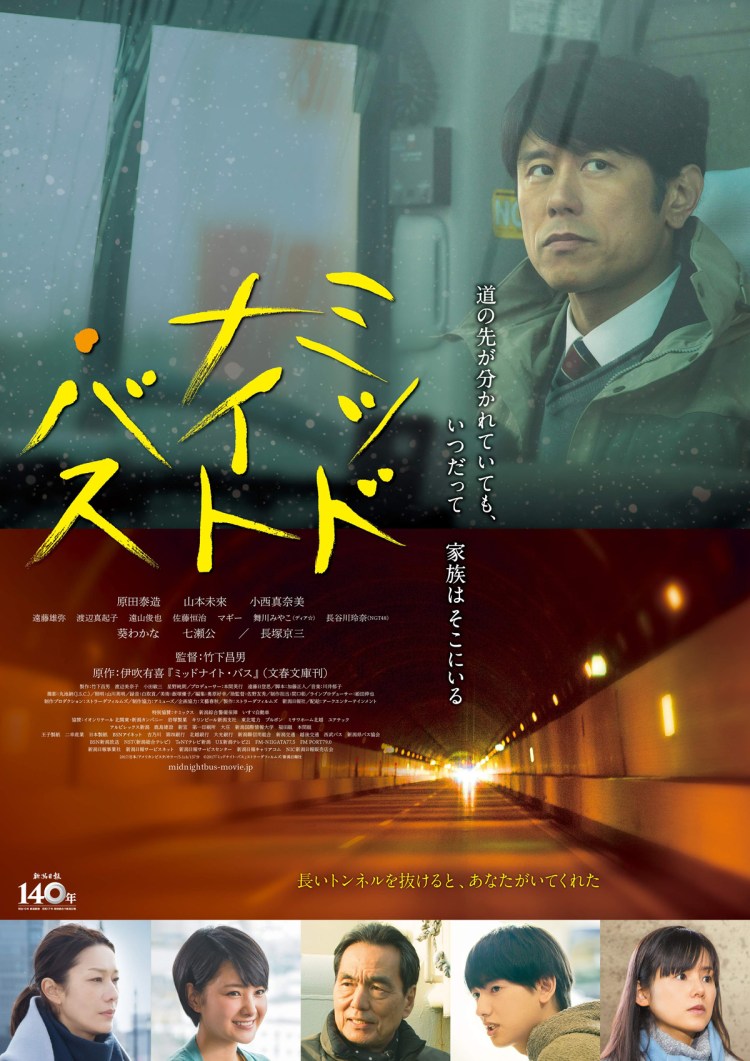
midnight bus posterYou know how it is, you coast along empty inside for what seems like a millennia until you finally decide to change your life and life says no, not like that. The hero of Masao Takeshita’s adaptation of the Naoki Prize nominated novel by Yuki Ibuki Midnight Bus (ミッドナイト・バス) must be well acquainted with phenomenon as his attempts to move a new relationship to the next level are scuppered by the unexpected arrival of not only boomerang children, but an estranged ex-wife and in-laws to boot. Caught between two places, two families, and a number of possible futures it might be time to head off road but the courage to leave the familiar route behind is a hard thing to find when you’ve been used to the security of travelling in tunnels.

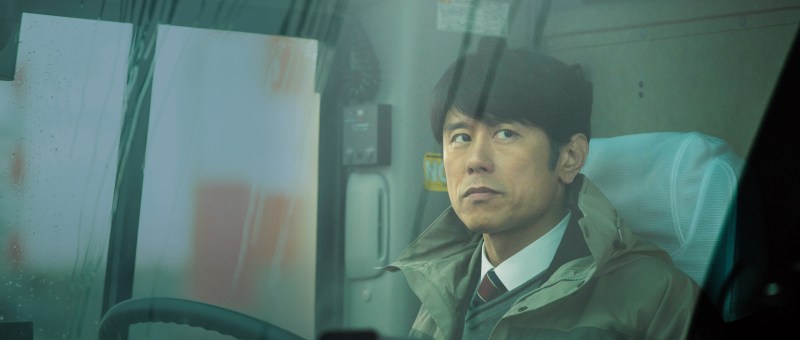
Riichi Takamiya (Taizo Harada) drives the overnight bus from Niigata to Tokyo. In the capital, he has a tentative relationship with a younger woman, Shiho (Manami Konishi), who runs a small cafe/bar but his attempts to introduce her to his home life back in the country run aground when grown-up son, Reiiji (Ko Nanase), picks exactly the wrong moment to come home after having abruptly given up his lucrative IT job and moved out of his Tokyo flat. Meanwhile, Riichi’s daughter, Ayana (Wakana Aoi), has embarked on a wacky cosplay career and is thinking about marrying her longterm boyfriend. At this extremely sensitive time, Riichi spots a familiar face on the bus one day – his estranged former wife, Miyuki (Mirai Yamamoto), who has returned to Niigata to visit her ailing father and take care of “family” business.

All three Takamiyas are in a sense adrift, never having properly dealt with the abrupt exit of Miyuki who left when both the children were small. As a young scrappy couple in post-bubble Tokyo, Riichi and Miyuki had been happy but when Riichi decided to move the family back to Niigata for a “less stressful” existence everything began to go wrong, largely because of Riichi’s unforgiving mother who made her daughter-in-law’s life a misery. Now Reiji is facing a similar dilemma in finding city life too demanding, but unlike his father he can afford the time to take a break and figure things out seeing as he is single and unburdened by the need to support a family. Ayana, meanwhile, is about to find herself in a similar position to her mother as she discovers when she plans to introduce her intended to her father only to have him bring his snooty parents along unannounced and change the venue to an upscale restaurant more in keeping with their tastes. Poking into family details, looking down on Riichi’s job, and finally making a pointed comment about Reiji’s stress-related skin condition and a “concern” regarding her son’s children being “contaminated”, it’s obvious Ayana and her boyfriend’s mother will never get on.

Riichi is a kind and patient man, though sometimes a little insensitive in his far seeing plan to ensure everybody’s happiness. He bears no ill will towards Miyuki and hopes that she will be able to rebuild a relationship with her children, engineering a plan to bring them together while he helps her cope with the events that have brought her back to Niigata. Meanwhile, he also tries to keep things going with Shiho who has been hurt before and understands the reasons for Riichi’s hot and cold attitudes but is increasingly frustrated by the abrupt changes in his feelings and intensions. Riichi will have to make a choice between past and future, but if he chooses to put his family back together again it must be short lived as he prepares to push his children back out into the world with a little more direction and confidence after having addressed their deep seated familial traumas.

The bus journey becomes a point of transition in more ways than one – between city and country but also between two personas and two ways of being. In Niigata Riichi is “dad”, the family lynchpin, while Tokyo affords him the opportunity to be a “man” in relative freedom, free to pursue a second chance at romance with all his baggage safely stored at home. Like his children he will need to find a way to integrate his past self with his future one if he wants to forge a way forward, but in order to do that he’ll have to accept the risks a putative future entails and make peace with his old life in order to start all over again. A sometimes poignant family drama, Midnight Bus is a restrained affair but one filled with empathy and a generosity of spirit as its various protagonists learn to free themselves from familial legacy in order to pursue their individual destinies with kind eyes and clear hearts. 


Midnight Bus screens as part of New York Asian Film Festival 2018 on 11th July at 6pm.

Original trailer (no subtitles)

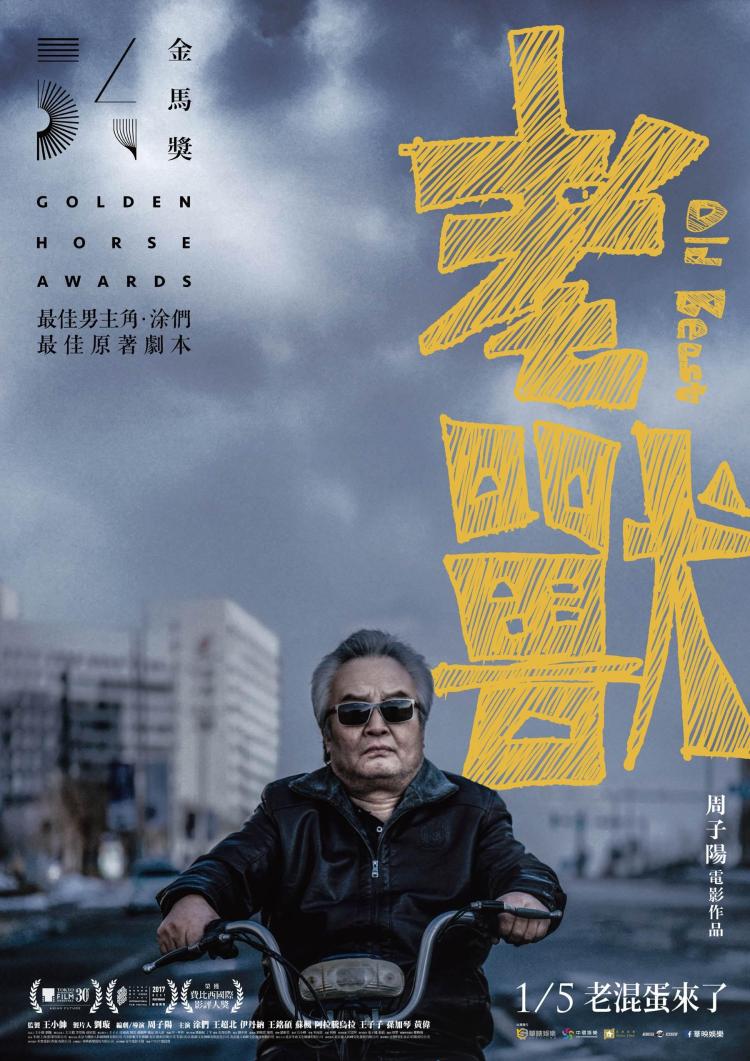
Old Beast (老獸, Zhou Ziyang, 2017)

Old Beast posterFilial piety is a favourite theme in Chinese cinema, but with an ageing population, increasing distance between parents and children, turbulent economic circumstances, and a rapidly modernising world, questions are being asked about the responsibility owed to one’s family when that responsibility is not always reciprocal. The small-scale tragedy at the centre of Old Beast (老獸, Lǎo Shòu) is that of a man who felt that his various statuses allowed him to ride roughshod over the social order, neglecting other people’s feelings in order to prove his own superiority but only ever reminding himself that he is trapped and empty.

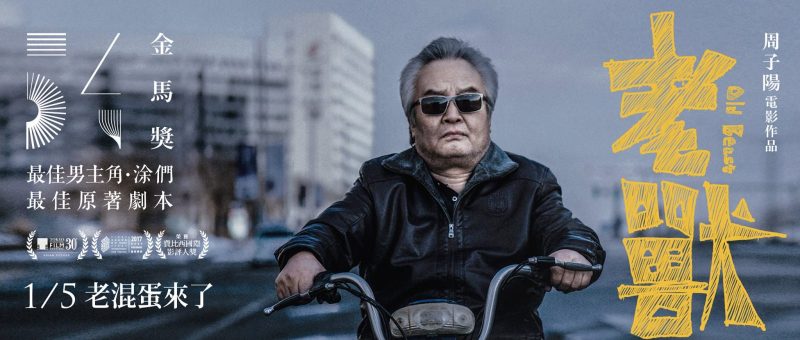
In the arid cities of Inner Mongolia, “Old Beast” Lao Yang (Tu Men) likes to play the big man around town. His business went bust years ago, and now he’s chiefly known as the holder of many debts stolen from men at gaming tables who will likely never be able to make good on their ambitious wagers. With his ill-gotten gains, Yang turns off his mobile to avoid “annoying” calls from his bedridden wife to take a friend out on the town to cheer him up after he explains he’s having a lot of trouble trying to swap his camel for a cow. Yang and his friend spend the night in a “spa”, during which time his wife collapses and ends up in hospital while his grown up children rally round trying to make up for Yang’s constant failings. Still not ready to answer his phone, Yang heads to his mistress’ before he ever thinks of going “home” to make sure his wife is OK.

Yang’s rather depressing life is however about to implode, not least because of his constant neglect of his wife. Yang’s long suffering children have just about had enough – not only are they on the hock for their mother’s medical bills which ought to be their father’s responsibility, but they’re all also suffering because of his bad reputation. Yang’s son-in-law is promised a promotion at work, but warned that Yang’s various disgraces won’t go in his favour while his son’s marriage faces extreme pressure thanks to the increased strain on his daughter-in-law as she attempts to look after her own home and that of her in-laws. Yang thinks that as he raised them, lent them money when times were good, and has been supportive in other ways, he is “owed” all the respect that filial piety demands even though it is clear that any help he gives to anyone else is largely for his own benefit. He thinks only of himself, even stooping so low as to steal the money the children have raised between them to pay for their mother’s operation only to use it to buy a cow to pay back his friend whose camel he sold to a dodgy butcher and then passed off as “beef”.

The children, taking matters into their own hands, eventually stage an intervention, forcing Yang to sign a contract that he will finally change his ways. Affronted, Yang reports his own kids to the police and then takes them all the way to a court hearing which he eventually storms out of when forced to confront his own lack of moral character. The world holds no love for old men like Yang who care little for conventional morality or the feelings of others, seeking only to be “respected” in an attempt to paper over their own feelings of insecurity and self loathing. Yang’s youngest daughter, married and living in the city, has the most filial piety owing to not having been so directly confronted with her father’s misdeeds and so she feels she ought to help him, against the advice of her husband, only to find herself betrayed when a conversation with her sister reveals Yang’s gentle long con. The question remains, considering Yang’s treatment of them, do Yang’s family really owe him anything as a “father” or are they entitled to walk away and leave him to wreak his self-destructive magic on himself alone?

It is difficult to sympathise with Yang whose overwhelming self obsession knows no bounds, but then he is perhaps a product of his times. A chancer and a grifter, one who’s always trying to make deals and come out on top, he’s lost big in the fluctuating economy of the modern Chinese state. Yang feels trapped, dreaming of horses, plains, and escapes as he casts off the “burden” of his family for the easy pleasures of a younger mistress, spas, and gaming tables but he cannot escape himself. The half-built city all around him is a reflection of his own ruined hopes, suspended in a kind of melancholy defiance as a reminder of the hubris of a more hopeful era. Yang cries silently as he watches his family collectively decide he’s not worth it anymore, unable to repair the connections he has failed to forge in a misguided faith that he is owed something for nothing. The world, however, has changed. Even the old will have to pull their emotional weight, or the whole system will come crashing down.


Old Beast screens at New York Asian Film Festival 2018 on 3rd July, 9pm.

Original trailer (English subtitles)