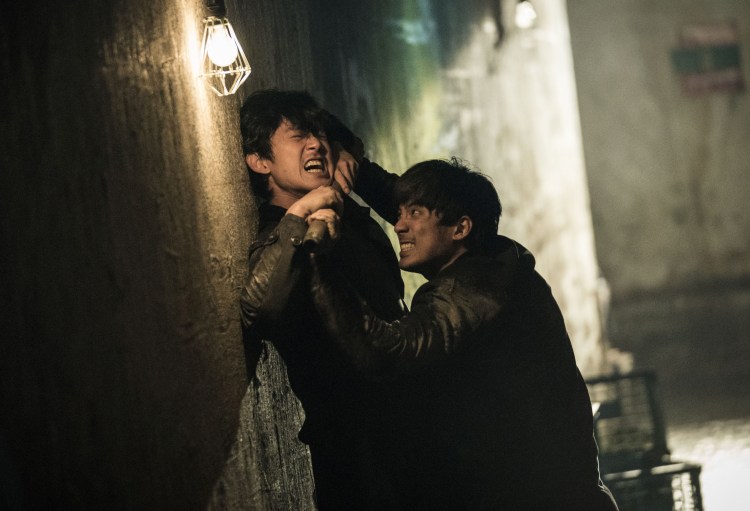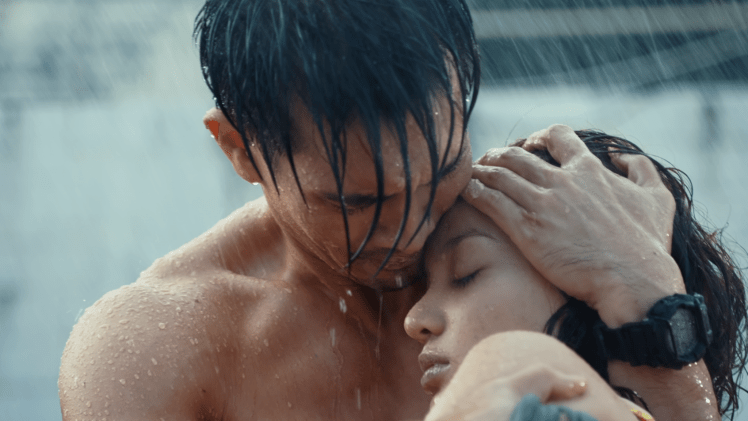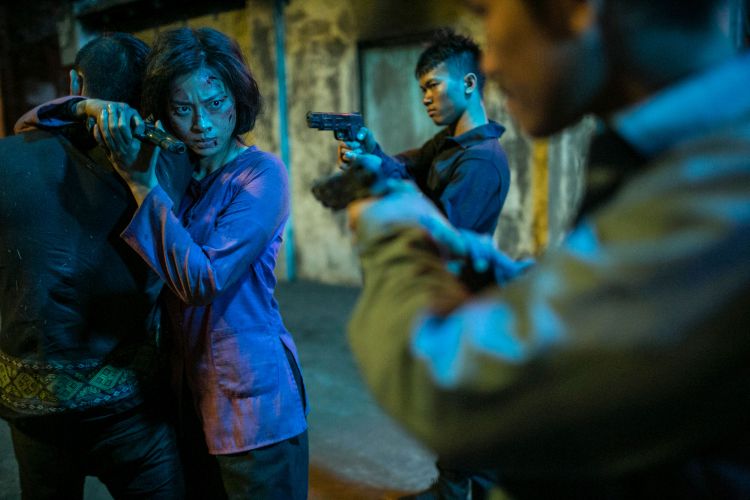

It’s a Mad, Mad, Mad, Mad Show (瘋狂電視台瘋電影, Hsieh Nien Tsu, 2019)

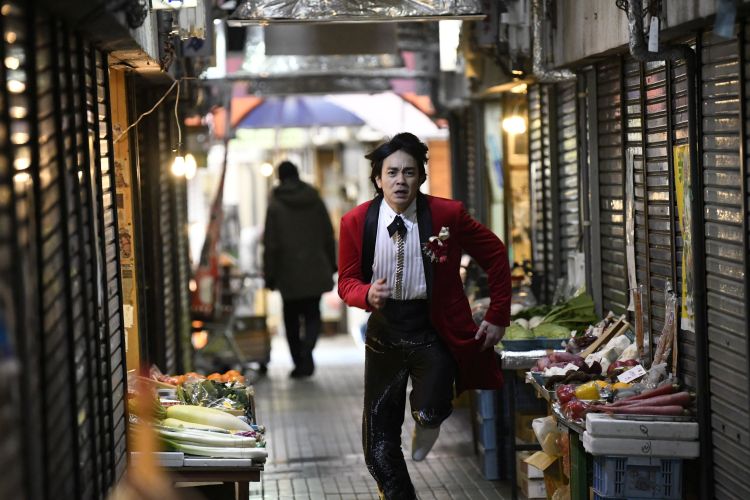
It's a Mad, Mad, Mad, Mad Show poster 1New Year comedies are usually about food and community, but for those lonely souls with no one to go home to, perhaps TV can fill the void. That’s certainly been the way for kindhearted TV variety show producer Yeh (Ou Han-Sheng). As a young boy he was often all alone at home and turned to TV for comfort, but with the industry as soulless as it is, is it still possible to lose yourself in the glow of the television screen?

In truth, Yeh’s programming has never been very successful which is perhaps why he finds himself unexpectedly promoted to director by his shady boss Lo (Lin Yu-Chih) who abruptly fires almost everybody else while suddenly insisting on round the clock programming. Unbeknownst to the crew, Lo has fallen foul of eccentric gangster David (Yen Cheng-kuo) who has showbiz ambitions and is determined to buy Crazy TV at a rock bottom price. Lo promoted Yeh in the hope that he’d fail so the ratings would crash and the station would go bust. Yeh’s programming, however, while not exactly a smash begins to find its audience largely through the zany schemes he comes up with to make the most of his budget like substituting repetitive ads for a “signal problem” warning, running cutesy phone-in kids TV, and a deliberately boring overnight program narrated by a guy in a sheep costume and featuring complicated maths problems and military history designed to send you straight to sleep.

Meanwhile, the backstage drama kicks off as Yeh begins to get closer to aspiring Malayasian actress Diva (Lin Min-Chen) while still nursing a broken heart over a failed relationship with a rising star who dumped him for her career. The main issue is, however, his obsession with television as a lifelong friend. As lonely child, TV was there for him, and it was still there for him as an ambitious adult, but somehow it’s lost its way and Yeh isn’t sure how to guide it home. Eventually he has to consider selling his house and earning his living as a noodle vendor while he waits for TV to rediscover its sense of self.

Filled with references to retro Taiwanese television and Western movies, It’s a Mad, Mad, Mad, Mad Show (瘋狂電視台瘋電影, Fēngkuáng Diànshì Tái Fēng Diànyǐngwears its love of the medium on its sleeve but is clearly unafraid to stick the knife in as Crazy TV lives up to its name with a series of bizarre skits created to make up for the fact they have no actual reporters so cannot actually report the news. The only way back in for Yeh, his aspiring actor friend Abi (Liu Kuan-Ting), and Diva is to enter a competition where they have to go head to head with Mr. David reenacting The Godfather, a singer, a guy reading a book, and a pair of gamers. They choose the surreal with a high risk strategy inspired by the movie Money Monster which eventually goes in an unexpected direction. 

A chance meeting with an old friend currently shooting an indie movie brings home to Yeh what exactly has been missing in his TV life – “value”, as in everyone has something valuable in their hearts that ought to be expressed but often isn’t in the increasingly commercialised TV industry. The veteran director deposed during Lo’s mass purge eventually says something similar, that the audience for their programming is mostly the elderly and children and that therefore they should accept a little more responsibility for the programmes that they air and do their best to send positive messages rather than focus on sensationalist stunts designed to win short-term ratings.

Yeh’s epiphany comes a little late, but eventually leads him to realise that if TV was a friend to him it can be a friend of everyone else and then they can all be mutual friends bonding in shared enjoyment even if they’re apart. In true New Year spirit, it really was all about community after all. Adapted from the stage play by variety TV legend Hsieh Nien Tsu, It’s a Mad, Mad, Mad, Mad Show is a warmhearted tribute to the healing power of silly TV, bringing tired people together through shared bemusement as they eagerly tune in to the next crazy onscreen antics as an antidote the increasingly surreal offscreen reality.


It’s a Mad, Mad, Mad, Mad Show screens on 4th July as part of the 2019 New York Asian Film Festival. It will also be screened in Australia on 26th July as part of the Taiwan Film Festival in Sydney.

Original trailer (English/Traditional Chinese subtitles)
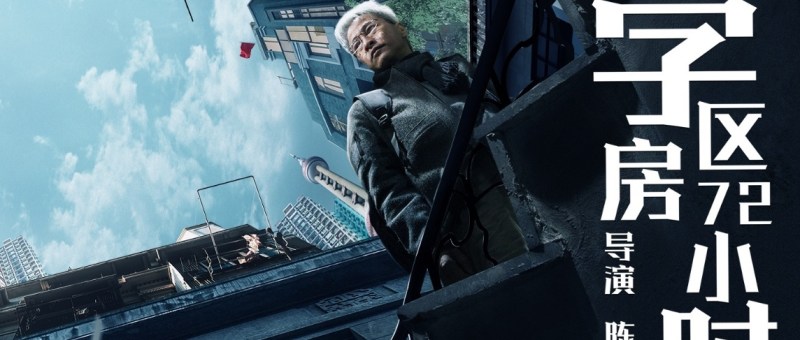
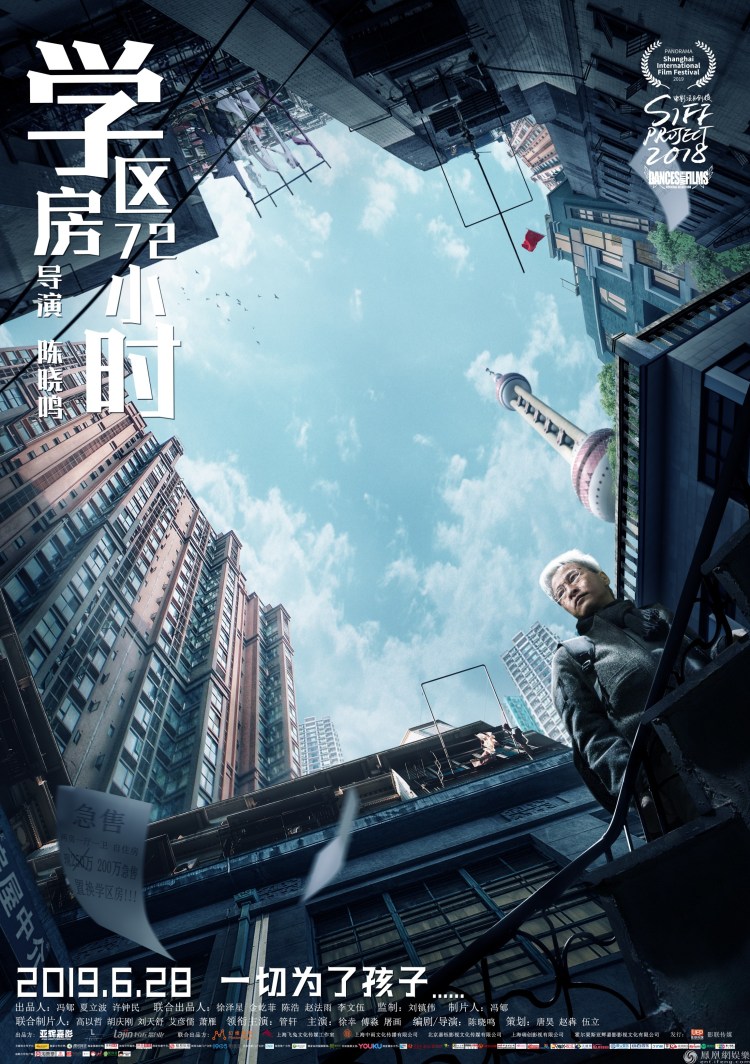
If You Are Happy (学区房72小时, Chen Xiaoming, 2019)

If you are happy poster 2“Win at the starting line” has become something of buzzword among parents eager to get their children the best start in the modern China where equality is no longer regarded as a social good. Even in the UK it’s not unusual for parents to go to great lengths to game the system so their children can get into the “better” state schools, but in China where educational background really can make or break a child’s future the stakes are obviously much higher. For the father at the centre of Chen Xiaoming’s biting debut, the ironically titled “If You Are Happy” (学区房72小时, X Fáng Xiǎoshí), the stakes are very high indeed as he bets pretty much everything – his family home, his career, and finally his integrity, on buying a grotty little flat in the rundown part of town where he grew up solely because it’s directly opposite the best primary school in the area.

University professor Fu (Guan Xuan) is a doting father to little daughter Cheng, but as keen as he is to keep up the facade of success his private life is falling apart. His wife, Jiayuan (Fu Miao), is suffering from long term depression and though Cheng seems cheerful, the atmosphere at home is frosty at best with husband and wife barely speaking. Meanwhile, Fu has also been carrying on an illicit affair with one of his students, Hang (Tu Hua) – a wealthy young woman whose mother (Rong Rong) is keen to send her abroad for graduate school to improve her prospects. Hang doesn’t want to go, she says because she’s become attached to Fu, but there are also rumours all over school about teachers accepting bribes to change students’ grades and the jury’s out on whether Hang has ulterior motives.

The main source of stress in Fu’s life is however his ongoing quest to buy a flat in the catchment area of a prestigious primary school. After two years of dashed hopes, an old friend working as an estate agent has a promising lead on a place that’s actually right by where they both grew up. Though the flat is in a bad state and really too small for a family (assuming they actually meant to live there), Fu is loathed to give up the opportunity even though he doesn’t have the ready cash together to seal the deal. Despite his outrage at the teachers who take bribes, he tries to force his friend to pull some strings before coming to the conclusion he’ll have to sell his flat. Fu goes ahead and lists it with another estate agent before even talking to his wife who is understandably not keen to move, insisting that the school around the corner is fine, only for Fu to snobbishly tell her that it’s fine for kids like Tao – a naughty little boy at kindergarten who accidentally slashed Jiayuan’s hand when he somehow got hold of a kitchen knife. 

Fu’s snobbishness is perhaps his defining characteristic. Forced to sell his family home, he bristles when the maid mentions that her son is looking for a flat, coming up with all sorts of excuses as to why he shouldn’t be able to afford it before accepting that money’s money no matter who it comes from. Auntie Niu’s (Xu Xing) son Bao (Liu Xiaodi) has troubles of his own, as they discover when paying him a visit and finding him near suicidal because his fiancée is thinking of breaking things off as her family have refused their blessing for the marriage until Bao can get hold of a flat in a very specific area. Bao’s case is frustrated because he’s not originally from Shanghai and a new law prevents non-locals from owning property. Luckily his fiancée is a Shanghai native but he doesn’t have the money to buy in the escalating Shanghai property market and only has this shot with Fu because he is a “motivated seller” and needs the deposit as soon as possible to put down on the property near the school.

Along with a superiority complex, Fu is also something of a prig and makes a point of being upstanding and respectable, even trying to return a box of expensive tea gifted by Hang’s wealthy businesswoman mother in the hope of currying favour. When someone gazumps him on the flat, he has a minor meltdown insisting on legal action and lamenting the decline of morality in the modern society, but then he turns around and does exactly the same to Auntie Niu despite knowing exactly what the flat means for Bao and having given his solemn word when signing the papers. Such duplicity is too much for Jiayuan who finally finds herself gaining the strength to defy her domineering husband to side with Auntie Niu who really has gone and got a lawyer when betrayed by Fu.

How much getting Cheng into a good school is about Cheng and how much about Fu’s status anxiety is up for debate, but nominally at least all of this is supposed to be for his little girl even though the stress of Fu’s ongoing quest is quietly destroying the family home, has sent his wife into a debilitating depression, and finally robbed him of his personal integrity as he continues to debase himself all in the hope of getting his hands on a really horrible flat in an otherwise undesirable area. Chen closes with a series of (seemingly) real interviews with parents who’ve considered bankrupting themselves just to move into the catchment area of a good school. Most of them concede it isn’t worth it, but are tempted all the same even if they intensely resent the way their society is going. After all, shouldn’t all children be starting in the same place? Why should one school be better than another, and why should the children have to pay for being born to parents with fewer resources to help them? There may not be real answers for any of these questions, but they’re ones the modern China continues to grapple with as the egalitarian past gives way to the moral dubiousness of a consumerist future.


If You Are Happy screens on 3rd July as part of the 2019 New York Asian Film Festival.

Original trailer (English/Simplified Chinese subtitles)

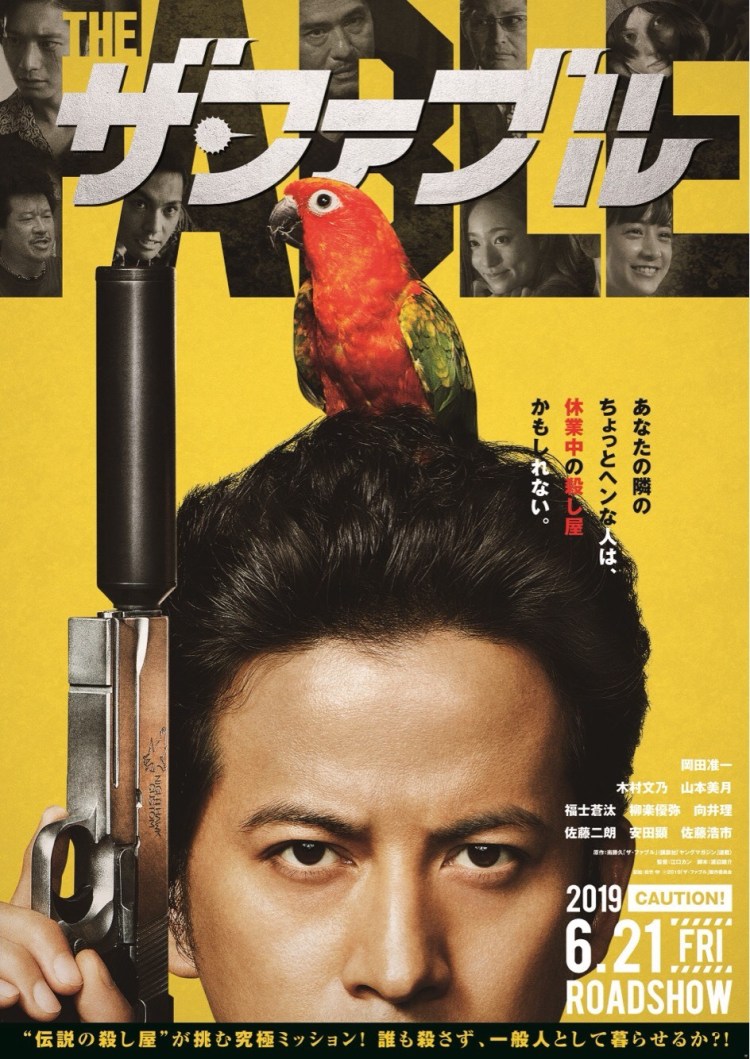
The Fable (ザ・ファブル, Kan Eguchi, 2019)

The Fable poster 2It’s easy to become a victim of your own success when you’re a top assassin. Being the best only makes you target, and over exposure can prove fatal. If you’ve lived by taking the lives of others, can you ever really go back to being just like everyone else? The hero of Kan Eguchi’s The Fable (ザ・ファブル) tries to do just that, but then “back” might not quite be the best way to think about it in his case. Silly slapstick humour meets fast and furious gun fu but always with a soulful heart as our heroes try to figure out how to live “normally” while inhabiting a very abnormal world.

“The Fable” (Junichi Okada) is Tokyo’s top assassin, as he proves effortlessly taking out a room full of yakuza at a wedding reception. He is not, however, heartless, letting the gangster’s pregnant wife alone unlike the next bunch of goons to turn up. In any case, Fable has been far too successful, which is why his handler (Koichi Sato) hands him an unusual new mission – to live as a “normal” person in Osaka for a whole year without killing anyone at all. Along with his assistant posing as his sister under the cover ID “Yuko” (Fumino Kimura), and a pet parrot, Fable becomes “Akira Sato” and begins his new life as a “normal” man nominally under the aegis of the local mob.

The problem is “Sato” never had much of a “normal” life. As a child, he was abandoned in the mountains with only a pocket knife to toughen him up for a life of killing. He didn’t go to school, has never had a job, and struggles with social situations. He is however extremely dedicated and committed to fulfilling his mission which means he is very keen to figure out what “normal” people do so he can do that too, quickly noting that “normal” people don’t usually eat the skin on edamame beans or the rind on watermelon so doing either of those things in public will instantly arouse suspicion. Meanwhile, he takes a minimum wage job at small printshop working alongside the lovely Misaki (Mizuki Yamamoto) who was nice enough to offer him some tissues when he let himself get beaten up by thugs to prove how “professional” he could be in maintaining his cover.

That’s something that might be easier said than done given the rapidly unfolding yakuza drama all around him. Recently released thug Kojima (Yuya Yagira) is stirring up trouble everywhere he goes, exacerbating a growing division between the big boss (Ken Mitsuishi) and ambitious underling Sunagawa (Osamu Mukai) who is already fed up with Kojima’s antics while two crazed admirers are also hot on Sato’s trail hoping to knock him off the top spot.

Meticulous and efficient, Sato is still in many ways a child trying to learn to live in the “normal” world. Somewhat arrested in having missed out on a normal childhood, his “childish” drawings of zoo animals become an unexpected hit with the print shop crew, while his justice loving heart also has him subtly undermining the office pervert who has a habit of installing illicit spy cams targeting female employees. Despite his icy profession, Sato is a goodnatured guy and deep down just wants to help and protect people. Thus he is very invested in his mission and actively tries to become “normal” while bonding with Misaki and taking care of his pet parrot (a Le Samouraï reference and ironic mentor in mimicry) as he navigates the difficult waters of interpersonal interaction.

Frustrated male relationships are indeed key from Sato’s with his boss who orders him not to die but then says he’ll kill him if he fails his mission, to the homoerotic tension between Sato’s contact Ebihara (Ken Yasuda) and the relentlessly psychotic Kojima. Sato’s boss and Ebihara acknowledge they will have to accept responsibility for their respective charges and if necessary take preventative measures in order to ensure they don’t cause trouble, but they do so with heavy hearts in service of their codes. Silly slapstick humour quickly gives way to slick action set pieces as Sato steps back into his element, ably assisted by his sake-loving “sister” who has committed to her cover ID almost as deeply as Sato. Sweet and affecting, Kan Eguchi’s adaptation of the much loved manga is a charmingly surreal one in which his fish out of water hero figures out how to live in a new pond thanks to unexpected kindnesses and honourable yakuza ethics.


The Fable screens on 2nd July as part of the 2019 New York Asian Film Festival.

Original trailer (no subtitles)

The Gun (銃, Masaharu Take, 2018)

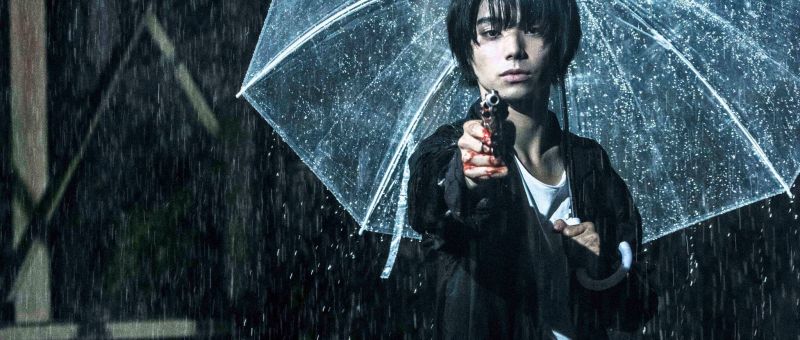
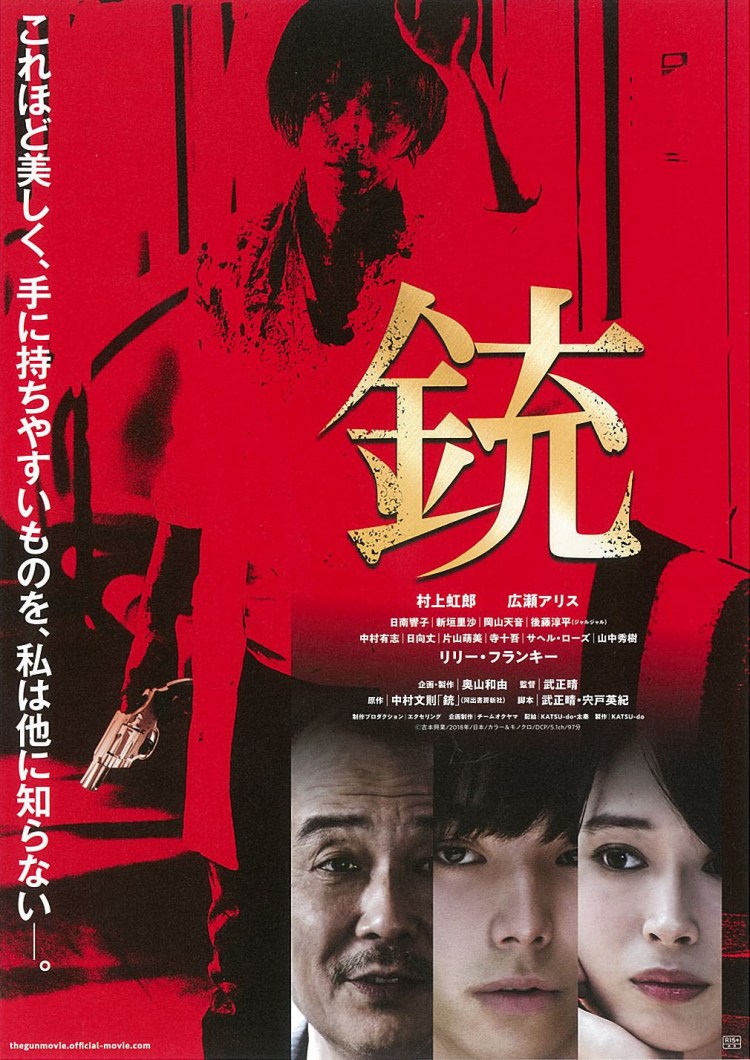
The Gun poster 1Much as Haruhiko Oyabu had in the post-war era, Fuminori Nakamura is fast becoming the go to voice for nihilistic noir in Japanese cinema. Several of his famously dark novels have already been adapted for the screen, most recently the grisly mystery Last Winter We Parted, but it’s only now that his lowkey debut The Gun (銃, Ju) is getting a suitably detached adaptation from 100 Yen Love’s Masaharu Take.

Like many of Nakamura’s “heroes”, Toru Nishikawa (Nijiro Murakami) is a disaffected youngster who thinks “it’s completely worthless to live”. His life changes one day when he comes across the body of a middle-aged man with a pistol lying next to it. For reasons he doesn’t quite understand, Toru picks the gun up and takes it home with him. Gradually its presence begins to obsess him as if he were literally being seduced by it. Believing he can communicate with the gun through touch, he lovingly caresses it, buys it trinkets, and lingers over thoughts of all they could do together.

Even when he takes a casual hookup (Kyoko Hinami) to bed, all Toru can think about is the gun. In the morning he tries to make her hate him by coming on strong, but it backfires because it appears to be what she likes, at least she suggests they hook up again, possibly on a regular but casual basis because she already has a boyfriend. Meanwhile, another prospect walks onto the scene – Yuko (Alice Hirose), a young woman Toru may or may not have forgotten meeting in the past. With Yuko Toru decides to do everything “properly” in a quest to win her heart rather than just her bodily submission.

Detached and very possibly a sociopath, Toru does indeed begin to show something of a more sensitive side in dealing with the similarly depressed Yuko. His gentlemanly act may be just that (and as one might expect, it largely works) but does at least display an acute emotional intelligence even if it’s being wilfully misused. Similarly, his first reaction to hearing alarming sounds suggesting the woman next door is mistreating her child is to turn his stereo up and ignore them, but he later finds himself trying to talk to the little boy in the street and eventually even calling the police only to have his mistrust of authority confirmed when they admit they’re aware of the situation and will send someone but probably not until the next day.

The woman next door, a bar hostess who rolls in late and kicks her kid out of bed to sleep on the porch so she can entertain her gentlemen callers, drags up unwelcome memories of the woman who abandoned him to an orphanage. To be fair, Toru does not seem any more misogynistic than his sleazy friends but has a fairly utilitarian idea of “romance”, viewing it as a game of conquest either fast and loose like with the casual hookup or slow and deep as in his careful pursuit of Yuko. Gradually his separate pursuits of the two women become confused, leading Yuko to confront him over whatever it is that’s so obviously “wrong” with him. Upset as she is, Yuko sees the darkness in Toru but must also see the light, affirming that she has her darkness too but is willing to help him with his if only he gives her a little time and waits for her forgiveness.

Toru, meanwhile, is still fixated on his beloved gun which he has begun to carry about with him in a little bag for added frisson. Living largely without feeling, the thrill of carrying such an illicit object becomes a peculiar kind of drug, as does the intoxicating thought of the act of actually firing it and finally of taking a life. A wily police detective (Lily Franky) cuts straight through Toru’s smug facade to the gaping void beneath, trying to prevent him from jumping straight into the abyss but confident he will fail. As the detective predicted, Toru’s sense of reason continues to fragment leaving him unsure of what is real and what isn’t while he obsesses over the gun and what he might do with it but in a purely intellectual sense without considering the real world consequences of his actions. An exercise in style, The Gun is a noirish tale of existential ennui and dark obsession filled with nihilistic dread as its soulless hero commits to living his “worthless” life only to wilfully rob himself of the possibility of salvation.


The Gun screens as part of the 2019 New York Asian Film Festival on June 30.

Original trailer (no subtitles)

Han Dan (寒單, Huang Chao-liang, 2019)

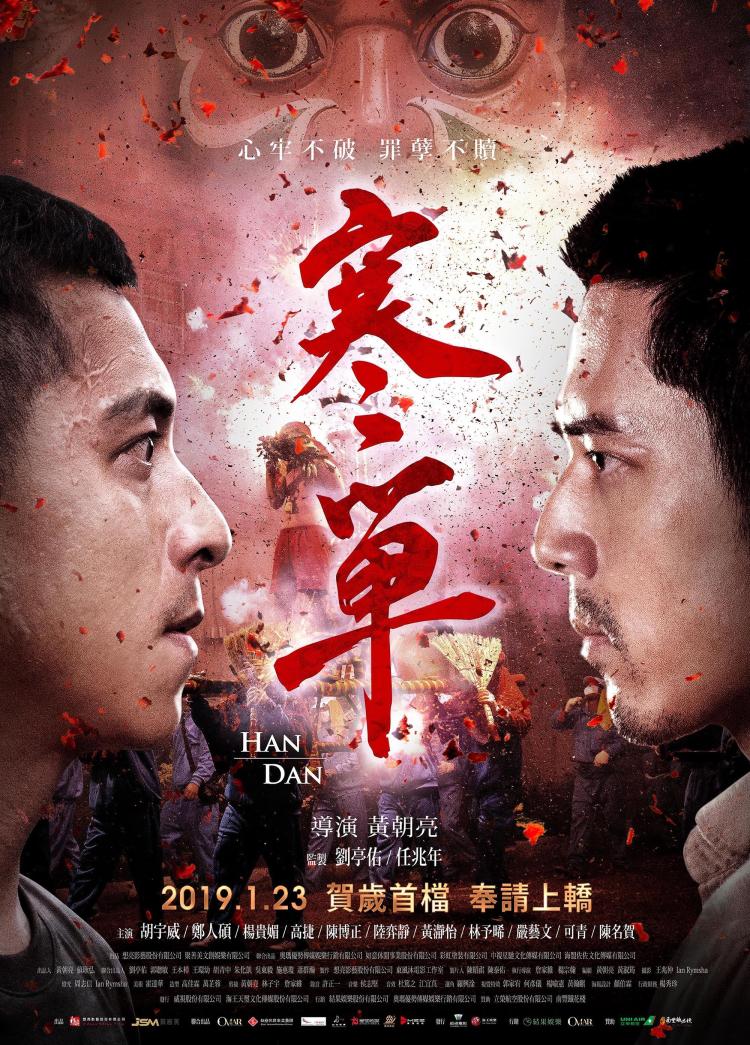
Han Dan poster 1Military deity of wealth “Han Dan” is said to be afraid of the cold, so those who worship at his altar try to keep him warm with firecrackers during a ritual still practiced in the Eastern cities of Taiwan in which young men embody the god and brave the fiery assault in a daring show of their masculinity. Some volunteer to play the god for money, others for pride, and a few for atonement but there are some crimes you can’t simply burn away either with fire or by hate. The heroes of Huang Chao-liang’s Han Dan (寒單) bond through tragedy and try push past their pain through brotherhood but only one of them is aware their present relationship is founded on twisted hate fuelled revenge even as a genuine connection forms underneath.

Nerdy, earnest school-teacher-to-be Zheng-kun (George Hu Yuwei) has been fostering a lifelong crush on the girl next door, Xuan (Allison Lin), who went away to Taipei and only rarely returns home. Too shy to declare himself, he is enraged and hurt to discover that she has been secretly dating a guy they went to high school with – popular kid Ming-yi (Cheng Jen-shuo) who used to bully him for being only a trash collector’s son. Ming-yi is set to play Han Dan at this year’s Lantern Festival and his show of manly bravado is almost more than Zheng-kun can bear. In a moment of madness, he throws his lighter into a pile of firecrackers hoping to injure his rival, but Xuan runs to warn him and is caught in the crossfire. She dies from her injuries, leaving both men feeling guilty and bereft though no one else knows that it was Zheng-kun who started the fire. 

While Zheng-kun gives up on his teaching career and retreats into gloomy introspection, Ming-yi, who lost his hearing and the use of his hand in the accident, has become a drug addict and petty criminal. Riddled with guilt, Zheng-kun commits to “saving” his former enemy – locking him up while he goes cold turkey and then bringing him into the recycling business he’s started on his father’s land, but still harbours hate in his heart both for himself and for the man Ming-yi used to be.

“If only we were real friends” Zheng-kun mutters under his breath during an otherwise idyllic moment at the river. Learning more about his “blood brother”, Zheng-kun discovers that a toxic family situation is what made him such a terrible person in high school which might ordinarily have fostered compassionate forgiveness but only makes things worse for Zheng-kun who continues to hate Ming-yi to avoid having to think about how much he hates himself for what he did to Xuan. In an effort to atone, he forces himself through the Han Dan ritual year after year, scorching his body with firecrackers but finding little in the way of cathartic release.

“Feeling the pain means I’m alive” he tells a melancholy woman who seems to have had a thing for him ever since he was a shy student with a part-time job in the sleazy snack bar where she works. Now violent and angry, he’s not such a sensitive soul anymore but she loves him all the same and resents the intrusion of the late Xuan into their awkward relationship. Like the lovelorn hostess and the song they find themselves listening to, Zheng-kun too has a secret in his schoolbag that’s becoming impossible to keep but speaking it threatens to upset the carefully balanced semblance of a life that he’s forged with an oblivious, wounded Ming-yi.

Both men struggle to move on from the past, unable to forgive themselves not only for what happened to Xuan but for the choices they did or didn’t make in their youths that leave them afraid to move forward and locked into an awkward brotherhood bonded by love and hate in equal measure. A final cathartic explosion may provide a path towards a new life but only through shattering the fragile bond born of shared tragedy and irretrievable loss. A beautifully lensed morality tale, Han Dan is an acutely observed portrait of the corrosive effects of guilt and trauma but also a tragedy of misplaced male friendship as two lost souls find each other only in losing themselves as they battle the inescapable shadows of the past.


Han Dan screens as part of the 2019 New York Asian Film Festival on June 30.

Original trailer (English subtitles)

A Resistance (항거:유관순 이야기, Joe Min-ho, 2019)

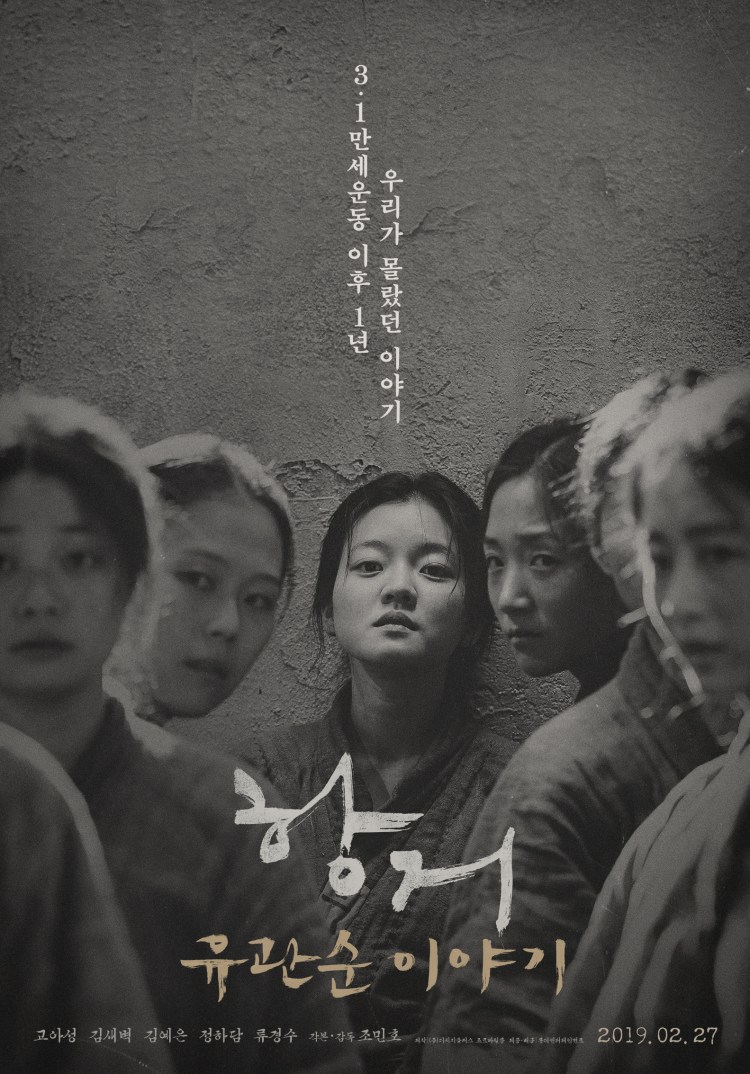
A Resistance poster 1March 1, 2019 marked the centenary of the Korean Independence Movement which began with a peaceful protest on 1st March, 1919 that was brutally put down by Japanese forces who fired on innocent protestors killing thousands and imprisoning many more. One of the key leaders of the protest was a teenage girl, Yu Gwan-sun, who died in prison a little over a year later aged just 17. Joe Min-ho’s A Resistance (항거:유관순 이야기, Hanggeo: Yu Gwan-sun Iyagi) is the story of her struggle in which she remains defiant in the face of unfair and inhuman treatment at the hands of her Japanese captors.

The film opens with Gwan-sun (Go Ah-sung) being roughly pulled off a cart, unable to see thanks to the straw hat placed over her face. When the mask is removed for her prison registration card photo, we can see that (just as in the real photo which still exists and is on display in the Seodaemun Prison History Museum) her left eye and cheek are swollen from a previous beating. Taken inside, she is led to women’s cell 8 and shocked to see 24 other women already standing inside it when the door opens. There isn’t even enough room to sit down, and so the women have to take turns to rest, walking endlessly in circles to try and prevent their legs cramping up from standing too long in the same place.

On her first meeting with the prison warden who is surprised she has received such a comparatively long sentence (5 years, reduced to 3 on appeal), she is reminded that her best chance for survival is to keep her head down and do as she’s told. Gwan-sun intends to do just that but finds herself constantly infuriated by the injustice of the prison guards and the inhumane conditions in which the political prisoners are kept. Most of the women in the cell with Gwan-sun are there solely for having been at the protests and supposedly shouting “Manse”, they have committed no other crime save refusing to accept the primacy of Japanese authority.

The trouble starts when the women burst into a chorus of Arirang – a patriotic Korean folk song, which proves intolerable to the guards and gets Gwan-sun inducted for her first bout of extreme torture at the hands of her block warden and a Korean recruit working for the Japanese, Nishida (Ryu Kyung-soo). From a poor background, Nishida has thrown his lot in with the Japanese hoping for advancement but is unable to see that to them he will always be just another Korean minion to be discarded when no longer useful. Though he seems conflicted when directly ordered to participate in the torture of Gwan-sun, who is after all a defenceless 16-year-old girl, which involves acts of sexual humiliation and insidious violence, he fails to resist and dutifully obeys the orders of his Japanese commander.

Though her primary goal is Korean Independence, Gwan-sun is also working to end the kind of class oppression which has pushed Nishida into the arms of the Japanese. This much she reminds one of her cellmates (Jeong Ha-dam) who worries it would be inappropriate for them to be friends because she is just an uneducated woman working in a coffeeshop. Another of her cellmates is a “famous” gisaeng who finds herself looked down on by some of the other women because of her participation in sex work. Inspired by a real life character, Kim Hwang-hwa (Kim Sae-byuk) was another key figure in the Independence Movement who began mobilising gisaeng to participate in the protests, motivated by the often cruel treatment they received from Japanese customers. The coffee shop girl laments that if she were a man she’d go to Manchuria or fly around the world. Kim Hwang-hwa reminds her there’s nothing stopping a woman from doing that anyway and eventually ends up in Manchuria herself looking for the Independence Movement in exile in Shanghai. 

Despite emphasising the solidarity of the women in prison, Joe’s retelling of Yu Gwan-sun’s last days perhaps misses an opportunity to explore the important role that women played in the Independence Movement or the various ways it intersected with early feminism and progressive socialist politics. Nevertheless it does its best to pay tribute to a brave woman who suffered terribly in the belief that a better world was possible, refusing to give in even at the very end.


A Resistance screens as part of the 2019 New York Asian Film Festival on June 30.

International trailer (English subtitles)

https://www.youtube.com/watch?v=Cnc5xvdbNWk

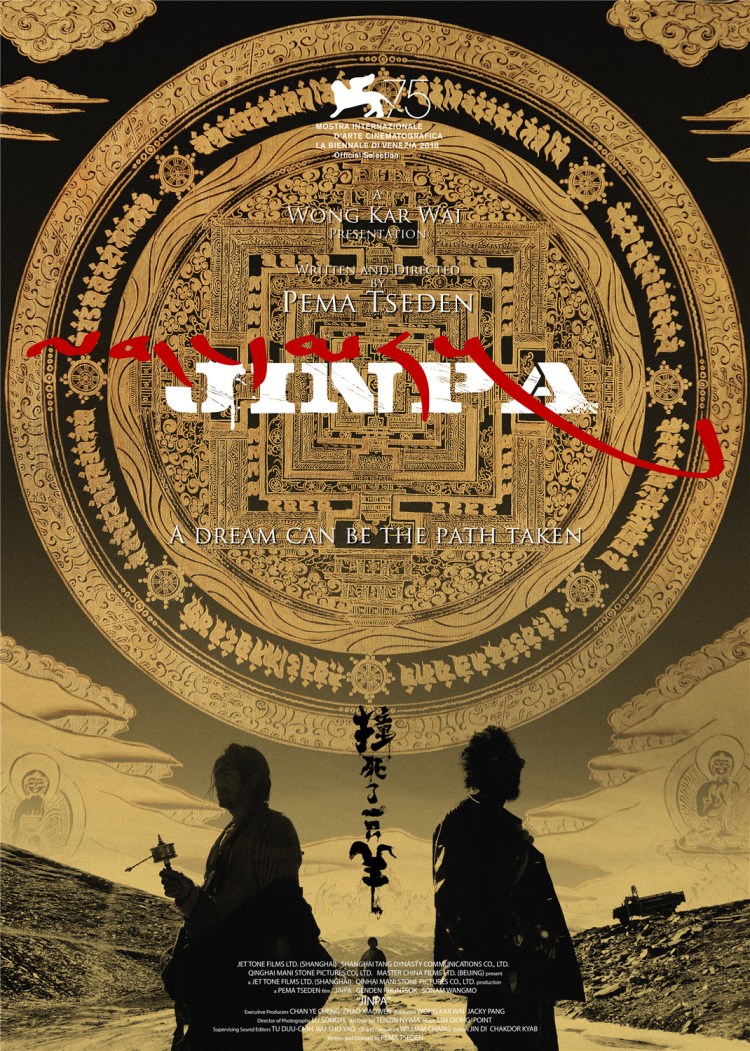
Jinpa (撞死了一只羊, Pema Tseden, 2018)

Jinpa poster 1Dreams, reality, and memory intertwine in Pema Tseden’s surrealist Tibetan western Jinpa (撞死了一只羊, Zhuàng le Yī ZYáng). Cycles of revenge and regret, killings accidental and deliberate, lost love, and inescapable karma bind two men or two parts of one whole as two travellers meet each other on the road, part, and then are perhaps reunited if in a more spiritual sense than literal. Moving away from the realism of Tharlo into mystical abstraction, Pema Tseden’s sixth feature is as obtuse as it is beguiling.

The titular Jinpa is an ultra cool truck driver in black leather and sunshades whose main jam is, incongruously enough, a Tibetan cover of O Sole Mio. Out on the road one day and distracted by the swooping flight a nearby bird, he accidentally hits and kills a sheep. Remorseful, Jinpa bundles the poor creature’s body into his cab, only to have to shift it into the back when he gets another passenger – a young wanderer (Genden Phuntsok) who later abandons his silence to explain that his name is also “Jinpa” and he’s on a quest for revenge against the man who killed his father 20 years ago. A decade long search has led him to Sanak where he hopes to find the man he’s looking for.

The men part company at the next turning, but the older Jinpa can’t seem to forget about his strange encounter. He takes the sheep for a proper funeral (before stocking up on lamb from a street stall), and pays a visit to lover where he unable to perform to anyone’s satisfaction. Jinpa hits the road again to look for his hitcher, either eager to prevent a crime which may add to his own karma, or simply to discover the end to the mystery.

Jinpa’s accidental slaughter of a sheep and the younger man’s quite deliberate quest for blood become somehow linked. Tracking the other Jinpa he finds himself at a tavern with a flirtatious barmaid (Sonam Wangmo) who gives him a few more clues, most particularly a possible identification of the man the other Jinpa might have been looking for but her tale is a strange one. The tavern goers’ background conversation is identical to the present moment, implying this is either one very boring spotlight hogger or that events are somehow occupying the same temporal space.

Shifting into hazy black and white for his flashbacks, Pema Tseden hints at the malleability of memory – as if one figure could easy be swapped out for another, past and present uncomfortably overlapping with memory as the unstable glue at their centre. The younger Jinpa’s prospective target, we discover, also has a son. Would he grow up to seek revenge against the man who killed his father? One circle closes, but another envelopes it just as quickly. A man kills a sheep, by accident, but perhaps there’s more that he’s atoning for than simply inattentive driving.

“If I involve you, it becomes your dream too” the opening text tells us citing a Tibetan proverb. Could the older Jinpa simply be dreaming a version of himself, or are the two men somehow inhabiting the same dreamscape? Events repeat, the two men walk the same path at different times, diverging and reuniting as they make their way towards whichever realisation is lying in wait for them.

Played by real life poet and actor himself called “Jinpa”, the eponymous hero oozes cool in his edgy rockstar getup and ever present sunshades, embodying the stranger in town a little too consciously as he wanders in search of his younger self. Produced by Wong Kar-wai and adapting Tsering Norbu’s novel The Slayer, as well as the director’s I Ran Over a Sheep, Jinpa is an unabashed exercise in style and mood, swapping the washed out iciness of the road for the colourful warmth of taverns, stores, and temples while memory remains a blur of radiating black and white frustratingly difficult to see in its entirety. Jinpa’s circular travels mimic his life, caught between cycles of violence and regret but hoping for forgiveness and eventual release. Abstract and inscrutable, Jinpa’s mythic fable nevertheless retains its strange power as its hero(es) attempt to free themselves from an inescapable spiral of existential despair.


Jinpa screens as part of the 2019 New York Asian Film Festival on June 29.

Original trailer (no subtitles)

https://www.youtube.com/watch?v=vB4DjlyQPZ8

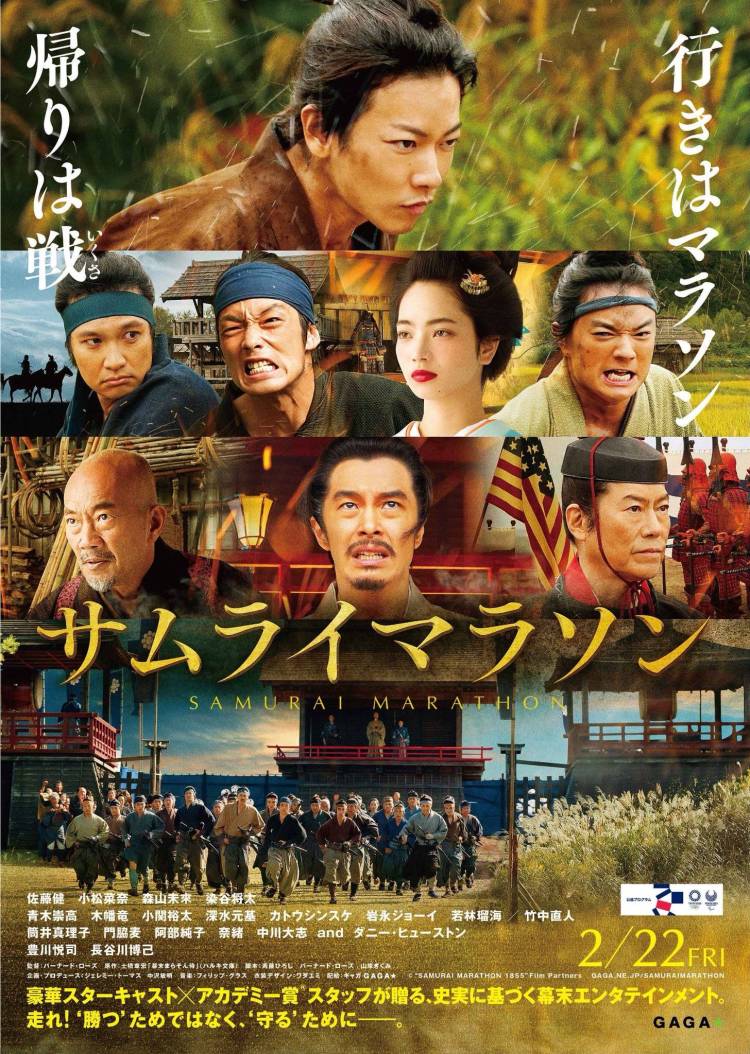
Samurai Marathon (サムライマラソン, Bernard Rose, 2019)

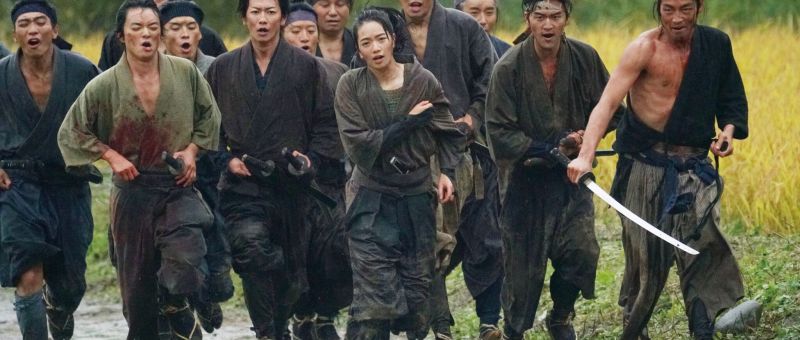
Samurai Marathon posterAfter two and a half centuries of peaceful slumber, Japan was jolted out of its isolation by the arrival of Commodore Perry’s Black Ships. The sudden intrusion proved alarming to most and eventually provoked a new polarisation in feudal society between those who remained loyal to the Shogun and the old ways, and those who thought Japan’s best hope was to modernise as quickly as possible to fend off a foreign invasion if it did eventually arise as many feared it would. Lord Itakura (Hiroki Hasegawa) has a foot in both camps. He has no desire to move against the Shogun, but fears that centuries of peace have made his men soft and complacent. His solution is to institute a “Samurai Marathon”, forcing his retainers to run 36 miles to prepare for a coming battle.

If you’ve spent your life sitting around and occasionally waving a sword at something just to keep your hand in, suddenly trying to run 36 miles might not be the best idea, as many samurai keen to win favour through racing glory discover. There is, however, an additional problem in that, unbeknownst to anyone, samurai accountant Jinnai (Takeru Satoh) is a secret ninja spy for the shogun. Confused by the preparations for the race, he reported that a possible rebellion was in the offing only to bitterly regret his decision on realising Itakura’s anxieties are only related to external, not internal, strife. All of which means, the Shogun’s men are on their way and Itakura’s retainers are sitting ducks.

Helmed by British director Bernard Rose, Samurai Marathon (サムライマラソン) plays out much more like a conventional European historical drama than your average jidaigeki. Where samurai movies with an unusual focus tend to be comedic, Rose opts for a strangely arch tone which is somewhere between po-faced Shakespeareanism and post-modern irony. Rather than the stoical elegance which defines samurai warfare, the violence is real and bloody, if somewhat over the top in the manner of a gory Renaissance painting complete with gasping severed heads and gruesome sprays of dark red blood.

A chronicle of bakumatsu anxiety, the film also takes a much more pro-American perspective than might perhaps be expected, taking the view that the arrival of the Americans heralded in a new era of freedom and the origins of democracy rather than the more ambivalent attitude found in most jidaigeki which tend to focus much more strongly on the divisions within samurai society between those who wanted to modernise and those who just wanted to kick all the foreigners back out again so everything would go back to “normal”. Itakura, like many, is suspicious of foreign influence and the gun-toting, yankee doodle humming Shogunate bodyguard is indeed a villain though it’s Itakura himself who will end up firing a gun as if conceding that the future has arrived and the era of the sword has passed. 

Ramming the point home, Itakura is also forced to concede to the desires of his wilful daughter, Princess Yuki (Nana Komatsu), who wanted to travel and see the world while her society (and conventionally minded though doting father) insisted all there was for her was marriage and a life stuck inside castle walls. Managing to escape and disguising herself by cutting her hair and putting on peasant clothes, Yuki is able to evade detection longer than expected precisely because few people have ever seen her face. She also gets to make use of some of the samurai training she’s received by holding her own out on the road, though it seems improbable that her father would let her ride out alone even if he finally allows her free rein to go where she chooses.

Meanwhile, other ambitious retainers try to use the race to their own advantage though there’s poignant melancholy in one lowly foot soldier’s (Shota Sometani) dreams of being made a samurai considering that in just a few short years the samurai will be no more. The final sepia shift into the present day and a modern marathon may be a stretch, as might the unnecessary final piece of onscreen text informing us that we’ve just watched the origin story for the Japanese marathon, but the main thrust of the narrative seems to be that the samurai were running full pelt into an uncertain future, preparing to surrender their swords at the finish line. An unusual take on the jidaigeki, Samurai Marathon perhaps takes an anachronising view of Bakumatsu chaos in which the samurai themselves recognise the end of their era but finds its feet on the road as its self-interested heroes find common purpose in running home.


Samurai Marathon screens as the opening night gala of the 2019 New York Asian Film Festival on June 28 where actress Nana Komatsu will be in attendance to collect her Screen International Rising Star Asia Award.

Original trailer (no subtitles)

New York Asian Film Festival Confirms 2019 Lineup!

NYAFF poster higher resThe New York Asian Film Festival returns for its 18th edition with a packed programme of recent hits from East Asia. This year’s festival will open with Bernard Rose’s unconventional jidaigeki Samurai Marathon starring Nana Komatsu who will receive the Screen International Rising Star Asia Award alongside Ryu Jun-yeol who will receive his award at the screening of Park Noo-ri’s Money on July 6. Meanwhile, the Star Asia Lifetime Achievement Award will go to Yuen Woo-Ping whose latest film Master Z: Ip Man Legacy will screen alongside classics Iron Monkey and The Miracle Fighters, and Furie’s Veronica Ngo will be receiving the Daniel A. Craft Award for Excellence in Action Cinema.

The programme in full (bolded titles eligible for official competition):

China

The Crossing Banner

  • The Crossing (Bai Xue, 2018) – a young woman finds herself crossing borders of more than one sort when she embarks on a life of phone smuggling. Review.
  • A First Farewell (Wang Lina, 2018) – touching story about a young Uighur boy who finds himself having to learn to say several goodbyes at once.
  • If You Are Happy (Chen Xiaoming, 2019) – a devoted father goes to great lengths to acquire a flat in the catchment area of a prestigious school. Actress Fu Miao in attendance (Introduction and Q&A)
  • Jinpa (Pema Tseden, 2018) – philosophical Tibetan western in which a truck driver picks up a vengeful drifter.
  • Push and Shove (Wu Nan, 2019) – neighbours go to war when one of their dogs attacks the other. Q&A with director Wu Nan.
  • The Rib (Wei Zhang, 2018) – a transgender woman struggles to gain the acceptance of her religious father. Review.
  • Savage (Cui Siwei, 2018) – a policeman waiting for a transfer comes up against a gang of thieves on top of snowy Mount Baekdu in the directorial debut from The Island screenwriter Cui Siwei.
  • Uncle and House (Luo Hanxing, 2019) – comedy following a 100 Yuan note around a small town. Director Luo Hanxing and actors Gao Zhen, He Kaidi, Zhang Ximing, Yang Yanhui, Yang Xiao in attendance (Introduction and Q&A).
  • Winter After Winter (Xing Jian, 2019) – an ageing father desperately attempts to preserve his family line during the Japanese occupation of Manchuria.
  • White Snake (Amp Wong, Ji Zhao, 2019) – an amnesiac woman develops feelings for the snake catcher who helps her in this animated prequel to the classic legend.
  • Wushu Orphan (Huang Huang, 2018) – a teacher takes a job at a remote martial arts academy where only one of his students is interested in academics and it just happens to be the one rubbish at fighting. Q&A with Huang Huang and actor Liu Zhihan

Hong Kong Panorama

Still human 1

  • The Attorney (Wong Kwok Fai, 2019) – a hotshot lawyer (Alex Fong) takes a legal aid case to defend a young man accused of murdering the daughter of a prominent tycoon.
  • The Fatal Raid (Jacky Lee, 2019) – 20 years after a bloody confrontation, a surviving policewoman Madam Fong leads a new squad across borders to Macao to take on a gang of anarchists.
  • G Affairs (Lee Cheuk Pan, 2018) – gritty social drama in which a severed head exposes the unexpected connections between a disparate group of people. Q&A with Lee Cheuk Pan and actress Hanna Chan.
  • Iron Monkey (Yuen Woo-ping, 1993) – 1993 classic starring Donnie Yen as Wong Kei-ying. Tribute to Yuen Woo-ping
  • Master Z: Ip Man Legacy (Yuen Woo-ping, 2018) – sequel to the Ip Man series in which Cheung Tin Chi (Max Zhang) tries to make a martial arts free life for himself and his son in ’60s HK. Master Yuen Woo-ping will receive the Star Asia Lifetime Achievement Award and will participate in an Introduction and Q&A
  • The Miracle Fighters (Yuen Woo-ping, 1982) – zany 1982 classic martial arts. Tribute to Yuen Woo-ping who will also be present for an introduction.
  • Missbehavior (Pang Ho-cheung, 2019) – warmhhearted New Year comedy from Pang Ho-Cheung in which bickering friends unite in a quest for emergency breast milk. Review.
  • See You Tomorrow (Zhang Jiajia, 2016) – romantic comedy in which a bartender helps people overcome their emotional woes.
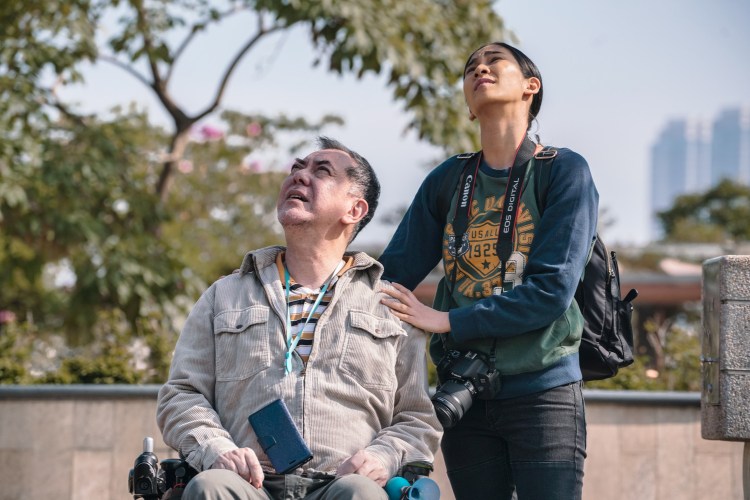
  • Still Human (Oliver Siu Kuen Chan, 2018) – Anthony Wong stars as a wheelchair user who eventually bonds with his Filipina helper. Review. Actress Crisel Consunji in attendance (Introduction and Q&A).
  • …and the secret screening!

Indonesia

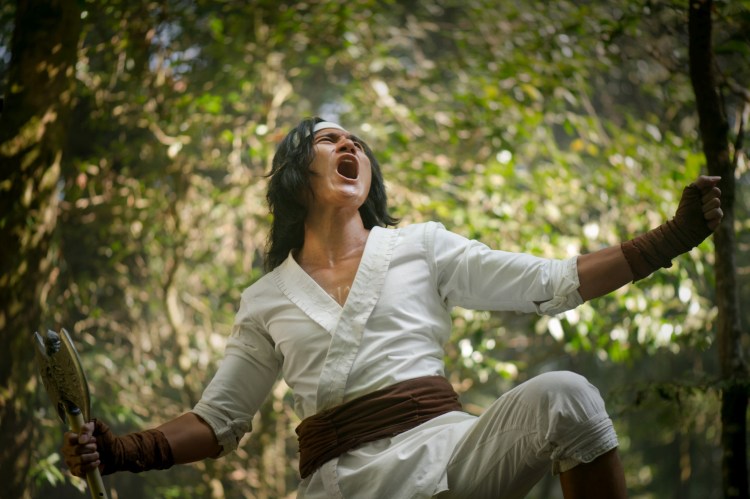
212 warrior

  • 212 Warrior (Angga Dwimas Sasongko, 2018) – comedic martial arts adventure movie.

Japan

Jam still 1

  • 5 Million Dollar Life (Moon Sungho, 2019) – a young man saved from serious illness by community donations struggles under the pressure of living up to their kindness. Director Moon Sung-ho in attendance (Intro and Q&A)
  • Complicity (Kei Chikaura, 2018) – an undocumented man from China embraces his cover identity and takes a job in a soba restaurant but struggles to maintain his sense of self in Chikaura’s sensitive drama. Review.
  • Dare to Stop Us (Kazuya Shiraishi, 2018) – drama set in the heyday of Wakamatsu Production. Review.
  • The Fable (Kan Eguchi, 2019) – comedy starring Junichi Okada as an assassin ordered to lay low living an “ordinary” life. Director Eguchi Kan in attendance (Introduction & Q&A).
  • Fly Me to the Saitama (Hideki Takeuchi, 2019) – absurdist comedy in which the residents of Saitama have become an oppressed minority. Review.
  • The Gun (Masaharu Take, 2018) – Masaharu Take adapts Fuminori Nakamura’s nihilistic novel in which a young man’s life changes when he picks up the gun of a fallen yakuza.
  • Hard-Core (Nobuhiro Yamashita, 2018) – slacker sci-fi drama in which a frustrated idealist befriends a rusty robot. Review.
  • Jam (SABU, 2018) – Sabu returns to his roots with an anarchic tale of three men on the run. Review. Q&A with SABU
  • Lying to Mom (Katsumi Nojiri, 2018) – when the hikikomori son of the Suzuki family takes his own life, his mother falls into a coma. No one has the heart to tell her what happened when she wakes up so they pretend he is alive and well and living in Argentina. Review. Q&A with Katsumi Nojiri
  • Mr. Long (SABU, 2017) – a Taiwanese hitman is adopted by a Tokyo community who fall in love with his noodles. Review. Q&A with SABU
  • Samurai Marathon (Bernard Rose, 2019) – British director Bernard Rose tackles the jidaigeki as a lord forces his retainers to compete in a marathon to prepare for bakumatsu chaos. Q&A with Bernard Rose and Nana Komatsu; Nana Komatsu will receive the Screen International Rising Star Asia Award

Malaysia

OLYMPUS DIGITAL CAMERA

  • Walk with Me (Ryon Lee, 2019) – a bullied woman asks a weird doll for help and is then concerned when people start dying.

Philippines

signal rock

  • Ma (Kenneth Lim Dagatan, 2018) – horror film in which a son enters a strange cave to ask for his mother’s resurrection. Director Kenneth Lim Dagatan in attendance (Introduction and Q&A)
  • Signal Rock (Chito S. Roño, 2018) – drama in which an island boy tries to help his sister escape an abusive overseas marriage.

Singapore

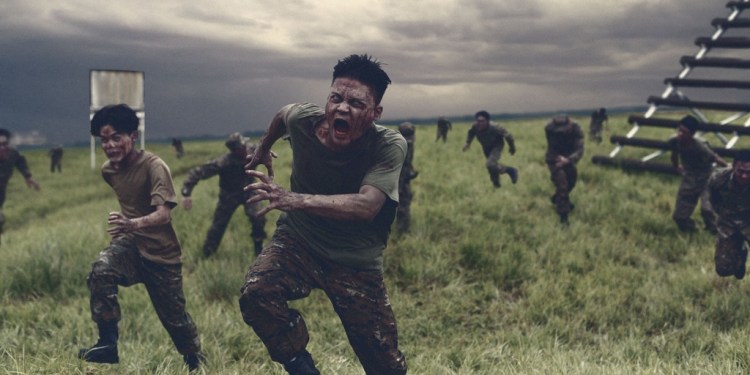
zombiepura still 1

  • Zombiepura (Jacen Tan, 2018) – a lazy reservist and his uptight CO are the last line of defence during the zombie apocalypse. Director Jacen Tan in attendance (Introduction and Q&A).

South Korea

Odd family still 1

  • Another Child (Kim Yoon-seok, 2019) – two teenage girls who didn’t like each other very much bond when they decide to put a stop to an affair their parents are having in the directorial debut from actor Kim Yoon-seok. Q&A with Kim Yoon-seok
  • Dark Figure of Crime (Kim Tae-gyoon, 2018) – a sociopathic assassin toys with a world weary detective in Kim Tae-gyoon’s twisty thriller. Review.
  • Kokdu: A Story of Guardian Angels (Kim Tae-yong, 2018) – immersive co-production blending film and live performance. Composer Bang Jun-seok in attendance (Introduction and Q&A).
  • Maggie (Yi Ok-seop, 2018) – a nurse intends to resign after coming to the conclusion she and her boyfriend have been captured in a compromising position in an x-ray but discovers everyone has called in sick. Meanwhile, her boyfriend is busy trying to fill in the mysterious sink holes appearing all over the country. Director Yi Ok-seop and actor Koo Kyo-hwan in attendance (Introduction and Q&A)
  • Money (Park Noo-ri, 2018) – Ryu Jun-yeol stars as a rookie stockbroker frustrated by Yoo Ji-tae’s sociopathic rival. Director Park Noo-ri and actor Ryu Jun-yeol in attendance (Introduction and Q&A) Actor Ryu Jun-yeol will receive the Screen International Rising Star Asia Award
  • Move the Grave (Jeong Seung-o, 2018) – a dysfunctional family is forced to work together when their father’s grave has to be moved due to construction work.
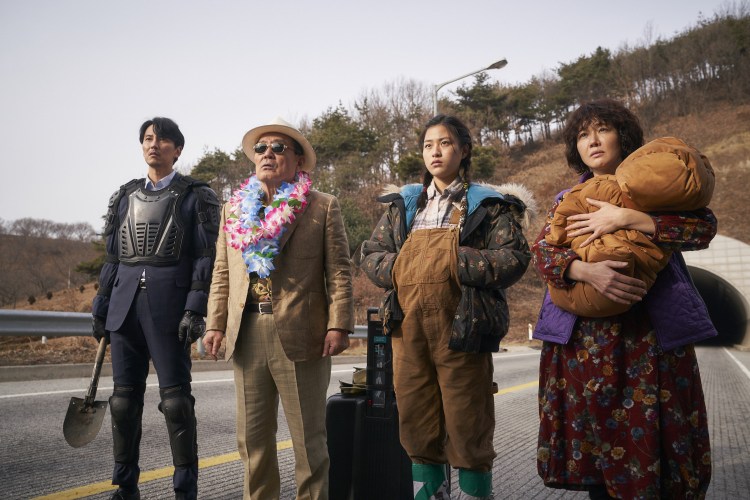
  • The Odd Family: Zombie on Sale (Lee Min-jae, 2019) – a weird family find a zombie and then exploit him when it turns out his bite has healing properties in Lee Min-jae’s delightfully zany comedy. Review.
  • A Resistance (Joe Min-ho, 2019) – Ko Ah-sung stars as the hero of the 1919 March 1 Independence Movement who maintains her stoical determination even while imprisoned and facing inhuman treatment.
  • Sub-Zero Wind (Kim Yu-ri, 2018) – debut from Kim Yu-ri in which two young girls support each other while dealing with disappointing parents.

Taiwan

Scoundrels still 1

  • Han Dan (Huang Chao-liang, 2019) – a young man tries to atone for a reckless act through submitting himself to firecracker attacks representing the deity Han Dan. Director Huang Chao-liang in attendance (Introduction and Q&A)
  • It’s A Mad, Mad, Mad, Mad Show (Hsieh Nien Tsu, 2019) – farce in which an unscrupulous TV station owner sets out to lower ratings so he can sell to a gangster only to see the subpar team he’s put together become an accidental hit.
  • The Scoundrels (Tzu-Hsuan Hung, 2018) – JC Lin stars as a disgraced former basketball player living a life of petty crime who finds himself framed as the notorious Raincoat Robber (Chris Wu). Review.
  • Someone in the Clouds (Mitch Lin and Gary Tseng, 2018) – whimsical rom-com about a fortune teller and a cocky student. Directors Mitch Lin and Gary Tseng in attendance (Introduction and Q&A)

Thailand

The Pool still 1

  • The Pool (Ping Lumpraploeng, 2018) – darkly humorous thriller in which a young couple become trapped in a swimming pool

Vietnam

Furie still 1

  • Furie (Le Van Kiet, 2019) – a former street tough will stop at nothing when her daughter is abducted by human traffickers. Actress Veronica Ngo in attendance; Veronica Ngo will receive the Daniel A. Craft Award for Excellence in Action Cinema
  • Song Lang (Leon Le, 2018) – ’80s set musical drama in which a gangster tries to collect a debt from a Cai-luong opera company. Director Leon Le in attendance (Introduction and Q&A)

The 18th New York Asian Film Festival runs from 28th June to 14th July. Full details for all the films are available via the official website where you can also find screening times and ticketing information. You can also keep up with all the latest festival news via the official Facebook Page and Twitter account.