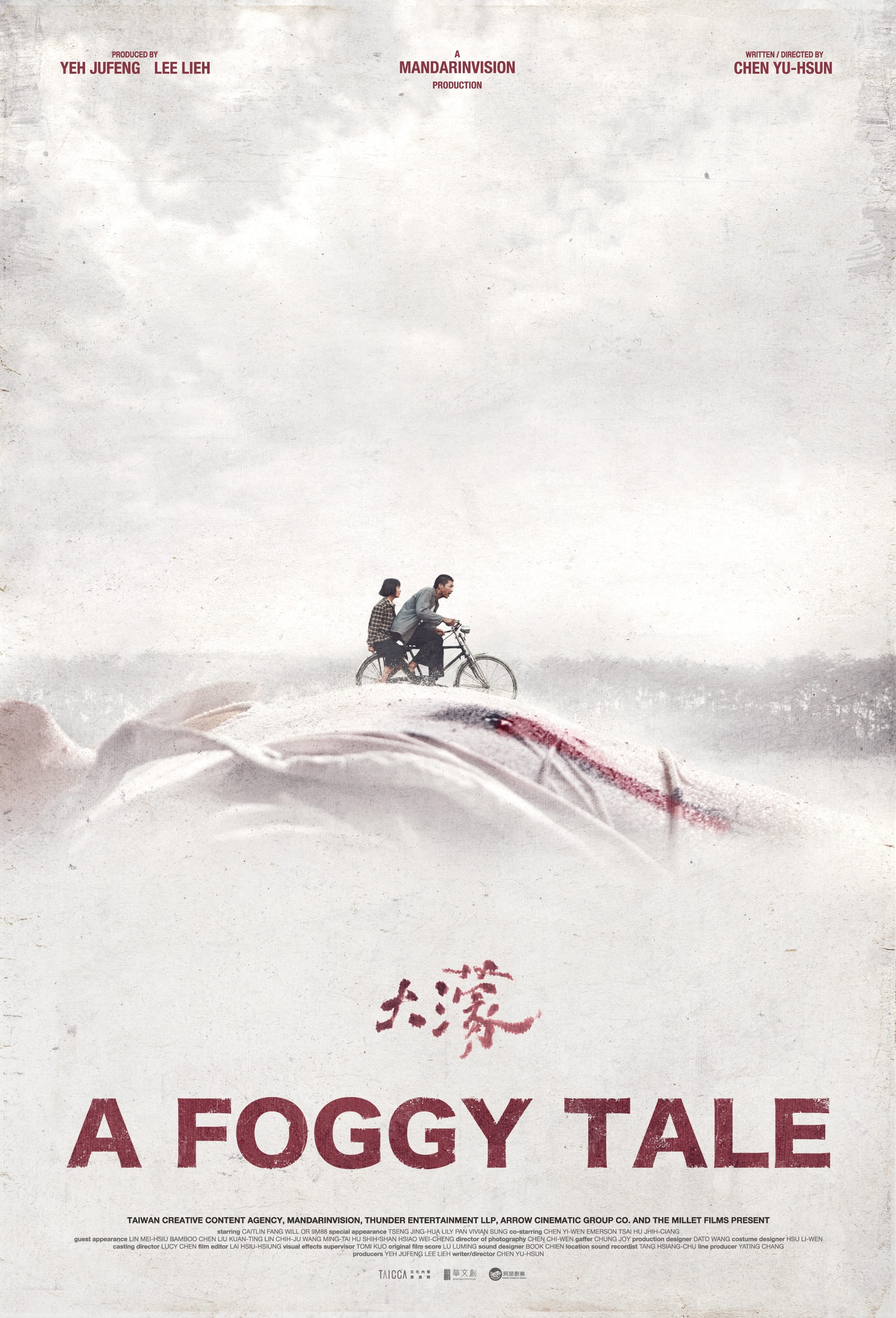
A Foggy Tale (大濛, Chen Yu-hsun, 2025)

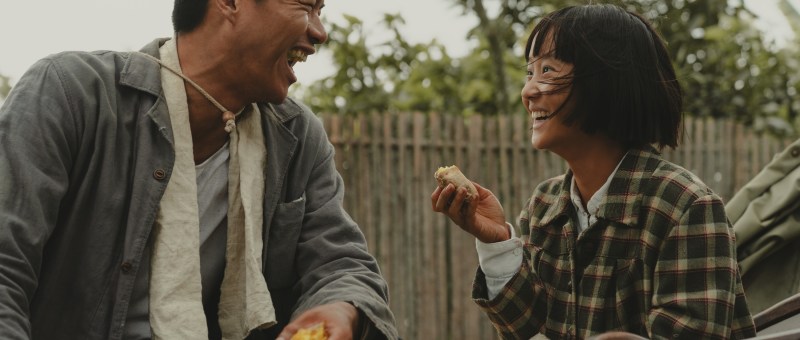
A young girl witnesses the horrors of the White Terror when she travels from her rural hometown to retrieve the body of her brother who has been executed by military police in Chen Yu-hsun’s otherwise light-hearted odyssey through 1950s Taipei, A Foggy Tale (大濛, dà méng). The title refers to a story the heroine’s brother Yun (Tseng Jing-hua), whose name means “cloud”, tells twice. First, it’s a metaphor for a resistance movement as two drops of water join many others to form a cloud that then descends on a patch of land that makes it farmable. Secondly, the second water droplet never makes it to the cloud, but instead becomes trapped half way and dissolves into the mist.

It is, however, into a foggy town that Yue (Caitlin Fang) arrives after leaving alone when her uncle, who has taken over her parents’ house following both of their deaths, explains that he can’t pay to retrieve Yun’s body. Their aunt is already resentful of the money they spent trying to save, and in truth does not want the extra mouths to feed of her niece and nephew. She would much rather have the house, which she regards as her husband’s rightful inheritance anyway, to herself for her sons to be the masters of. While he was in hiding, Yun had approved of Yue’s desire to become a teacher though she’s been taken out of school and, as he says, women in the country generally have little other choice than to become wives and mothers working the land. 

To add to the sense of displacement, Yue has an older sister in Taipei whom she’s never met because she was fostered out as a future daughter-in-law before Yue was born. Hsia (9m88) has since left the family who brought her up after refusing to marry the man she was betrothed to because they had been raised like siblings, though he remains somewhat resentful and badgers her to return. She had been acquainted with Yun while he was a student in the city, but has no idea that he has been killed after being arrested as a possible “communist” for protesting against the regime. 

Though she may not have felt it in the country, the forces of oppression are all around Yue in the city in the very presence of the military police. After being caught sleeping in the street, she’s taken in and beaten up by a policeman for talking back, while they also push her to “explain” where she got her money as a prelude to confiscating it for themselves. A kind yet flawed rickshaw driver (Will Or Wai-lam) who saves her from being kidnapped and sold into sex work, explains to her that the funeral home even charges for the bullets that were used to shoot her brother and she likely needs two or three times as much as she thought or they’ll throw him in a mass grave with the other victims of the regime.

Years later, an older Yue who has fulfilled most of her dreams though she no longer speaks Taiwanese with her adult daughter but Mandarin, sees a news report about the discovery of a mass grave and checks the names of those identified looking for someone she lost. This unearthing of the buried is past of symbolic of the desire to expiate this history, though Yue does not find the answers she’s looking for and the question is left hanging. When times where unbearable, Yun had told her to wind his watch forward and think of the Taiwan years to come that would be better where people could be free from oppression and exploitation. It took longer than expected, but some of that world has come to be, the film seems to say, if not completely and still with this mist hanging in the air that is the victims of the White Terror. Still, Yue’s story has its share of whimsy as she chases through the backstreets of a labyrinthine city. She encounters both kindness from the justice-loving rickshaw driver who tries to help but also scams her out of her brother’s watch only to return it years later as a means of assuaging his guilt, and cruelty from the men who tried to sell her, the secret policeman who apparently went into business, and unforgiving detectives. But in other ways, what she finds is a kind of peace and her place as a part of this nation and society as time continues its eternal march forward.


A Foggy Tale screens in Chicago 10th April as part of the 20th edition of Asian Pop-Up Cinema.

Trailer (English subtitles)

It’s a Mad, Mad, Mad, Mad Show (瘋狂電視台瘋電影, Hsieh Nien Tsu, 2019)

It's a Mad, Mad, Mad, Mad Show poster 1New Year comedies are usually about food and community, but for those lonely souls with no one to go home to, perhaps TV can fill the void. That’s certainly been the way for kindhearted TV variety show producer Yeh (Ou Han-Sheng). As a young boy he was often all alone at home and turned to TV for comfort, but with the industry as soulless as it is, is it still possible to lose yourself in the glow of the television screen?

In truth, Yeh’s programming has never been very successful which is perhaps why he finds himself unexpectedly promoted to director by his shady boss Lo (Lin Yu-Chih) who abruptly fires almost everybody else while suddenly insisting on round the clock programming. Unbeknownst to the crew, Lo has fallen foul of eccentric gangster David (Yen Cheng-kuo) who has showbiz ambitions and is determined to buy Crazy TV at a rock bottom price. Lo promoted Yeh in the hope that he’d fail so the ratings would crash and the station would go bust. Yeh’s programming, however, while not exactly a smash begins to find its audience largely through the zany schemes he comes up with to make the most of his budget like substituting repetitive ads for a “signal problem” warning, running cutesy phone-in kids TV, and a deliberately boring overnight program narrated by a guy in a sheep costume and featuring complicated maths problems and military history designed to send you straight to sleep.

Meanwhile, the backstage drama kicks off as Yeh begins to get closer to aspiring Malayasian actress Diva (Lin Min-Chen) while still nursing a broken heart over a failed relationship with a rising star who dumped him for her career. The main issue is, however, his obsession with television as a lifelong friend. As lonely child, TV was there for him, and it was still there for him as an ambitious adult, but somehow it’s lost its way and Yeh isn’t sure how to guide it home. Eventually he has to consider selling his house and earning his living as a noodle vendor while he waits for TV to rediscover its sense of self.

Filled with references to retro Taiwanese television and Western movies, It’s a Mad, Mad, Mad, Mad Show (瘋狂電視台瘋電影, Fēngkuáng Diànshì Tái Fēng Diànyǐngwears its love of the medium on its sleeve but is clearly unafraid to stick the knife in as Crazy TV lives up to its name with a series of bizarre skits created to make up for the fact they have no actual reporters so cannot actually report the news. The only way back in for Yeh, his aspiring actor friend Abi (Liu Kuan-Ting), and Diva is to enter a competition where they have to go head to head with Mr. David reenacting The Godfather, a singer, a guy reading a book, and a pair of gamers. They choose the surreal with a high risk strategy inspired by the movie Money Monster which eventually goes in an unexpected direction. 

A chance meeting with an old friend currently shooting an indie movie brings home to Yeh what exactly has been missing in his TV life – “value”, as in everyone has something valuable in their hearts that ought to be expressed but often isn’t in the increasingly commercialised TV industry. The veteran director deposed during Lo’s mass purge eventually says something similar, that the audience for their programming is mostly the elderly and children and that therefore they should accept a little more responsibility for the programmes that they air and do their best to send positive messages rather than focus on sensationalist stunts designed to win short-term ratings.

Yeh’s epiphany comes a little late, but eventually leads him to realise that if TV was a friend to him it can be a friend of everyone else and then they can all be mutual friends bonding in shared enjoyment even if they’re apart. In true New Year spirit, it really was all about community after all. Adapted from the stage play by variety TV legend Hsieh Nien Tsu, It’s a Mad, Mad, Mad, Mad Show is a warmhearted tribute to the healing power of silly TV, bringing tired people together through shared bemusement as they eagerly tune in to the next crazy onscreen antics as an antidote the increasingly surreal offscreen reality.


It’s a Mad, Mad, Mad, Mad Show screens on 4th July as part of the 2019 New York Asian Film Festival. It will also be screened in Australia on 26th July as part of the Taiwan Film Festival in Sydney.

Original trailer (English/Traditional Chinese subtitles)