We’re Millennials. Got a Problem? International (ゆとりですがなにか インターナショナル, Nobuo Mizuta, 2023)

Seven years on from the hit TV series, the guys find themselves dealing with the problems of early middle age along with increasing internationalisation as members of the so-called Yutori generation in Nobuo Mizuta’s We’re Millennials Got a Problem? (ゆとりですがなにか インターナショナル, Yutori desu ga, naninka Internationa). Now they’re in a different place and increasingly confused by the youth of the day while reconsidering their own life choices and facing a series of impromptu crises.

Among them would be that both the yakiniku restaurant where the guys worked in the TV series and the company that used to distribute the sake produced by Masakazu’s (Masaki Okada) family brewery have been taken over by Korean conglomerates. To make matters worse, the company tells Masakazu at an online meeting he’s embarrassingly turned up to in person because no one thought to tell him it was remote that they’re shifting production entirely to makgeolli because no one drinks sake anymore and his takings are about to fall off a cliff. The only way he can keep the contract is by agreeing to introduce a new product, either makgeolli or alcohol free sake. 

Meanwhile, his friend Maribu (Yuya Yagira) has returned after seven years in China with a Chinese wife and three children but apparently no job prospects. Masakazu offers him a job at the brewery, forgetting that it’s a bit awkward because he used to date his sister, Yutori (Haruka Shimazaki), who has quit her corporate job to start a business selling nordic knickknacks. It’s Maribu’s live streaming of the moribund brewery that unwittingly exposes the cracks in Masakazu’s marriage when Chinese netizens starts sending aphrodisiacs through the post to help him overcome the problems of his sexless life with wife Akane (Sakura Ando) who is herself struggling with the demands of looking after two small children and taking care of all the domestic chores with no help.

Later Akane tells mutual friend Yamaji (Tori Matsuzaka) that she’s worried she has post-natal depression and is fed up with her home life. We see can how stressful it is in the opening sequence in which Masakazu (ironically) tries to become a YouTube sake star but is repeatedly heckled by offscreen calls from Akane asking him to bathe the children and otherwise help out before she finally has no choice but to bring the kids to him. When they go to city hall to apply for a place in childcare they’re immediately dismissed, Akane somehow told that she doesn’t have as many “points” as her husband even though they’re both self-employed and there are many more needy candidates before the (probably well-meaning) civil servant not so subtly checks their daughter’s arm for signs of abuse or neglect. It’s not that surprising therefore that when the aphrodisiacs start piling up at home she wonders if Masakzau’s having an affair placing further strain on the relationship. 

Shin-hye (Haruka Kinami), the Korean-Japanese-American CEO of the company that bought out their old distributor (for whom Akane was once a regional manager) also a expresses a similar anxiety about the place of women in the workplace on the one hand coming from Korean corporate culture and finding that Japan might not as be “as bad” at least in its every increasing list of harassment which at least admit there’s problem with workplace bullying, sexist culture, and unwanted sexual advances from men in positions of power. Yamaji, meanwhile, finds his well-meaning attempts to foster diversity in the classroom floundering when the kids declare themselves unable to understand the intricacies of LGTBQ issues explaining that at their age “dating” just means hanging out though they’re unexpectedly accepting of the Thai transfer student with an inexplicable crush on the incredibly obnoxious American boy who transferred in the same time as him. 

In other ways, however, Yamaji is the same as ever. On his first appearance he’s on an awkward date with a woman from a dating app which he largely spends talking to his mentor on an iPad and making sexist remarks. They are all struggling with the demands of a more concrete adulthood in which much is already decided while their settled lives are undermined by unexpected crisis from the fallout from the conravirus pandemic and ongoing economic malaise to marital discord, the demands of caring for small children, and a friend a they had no idea was a top star live-streaming star in China. A recurring gag sees people undertake zoom meetings dressed in a suit jacked with sweatpants underneath. Yutori eventually exclaims that there’s no point even having dream while her family have a lot of sensible questions about her new business like where all the stock is whether it was worth the risk leaving her stable job that was presumably subject to all the harassment and otherwise oppressive corporate culture of contemporary Japan. Nevertheless, the millennials eventually come to a kind to acceptance and understanding of where they are in their lives along with a re-appreciation of everything they already have.


We’re Millennials. Got a Problem? International screened as part of this year’s Nippon Connection

Original trailer (English subtitles)
Sing My Life (あやしい彼女, Nobuo Mizuta, 2016)

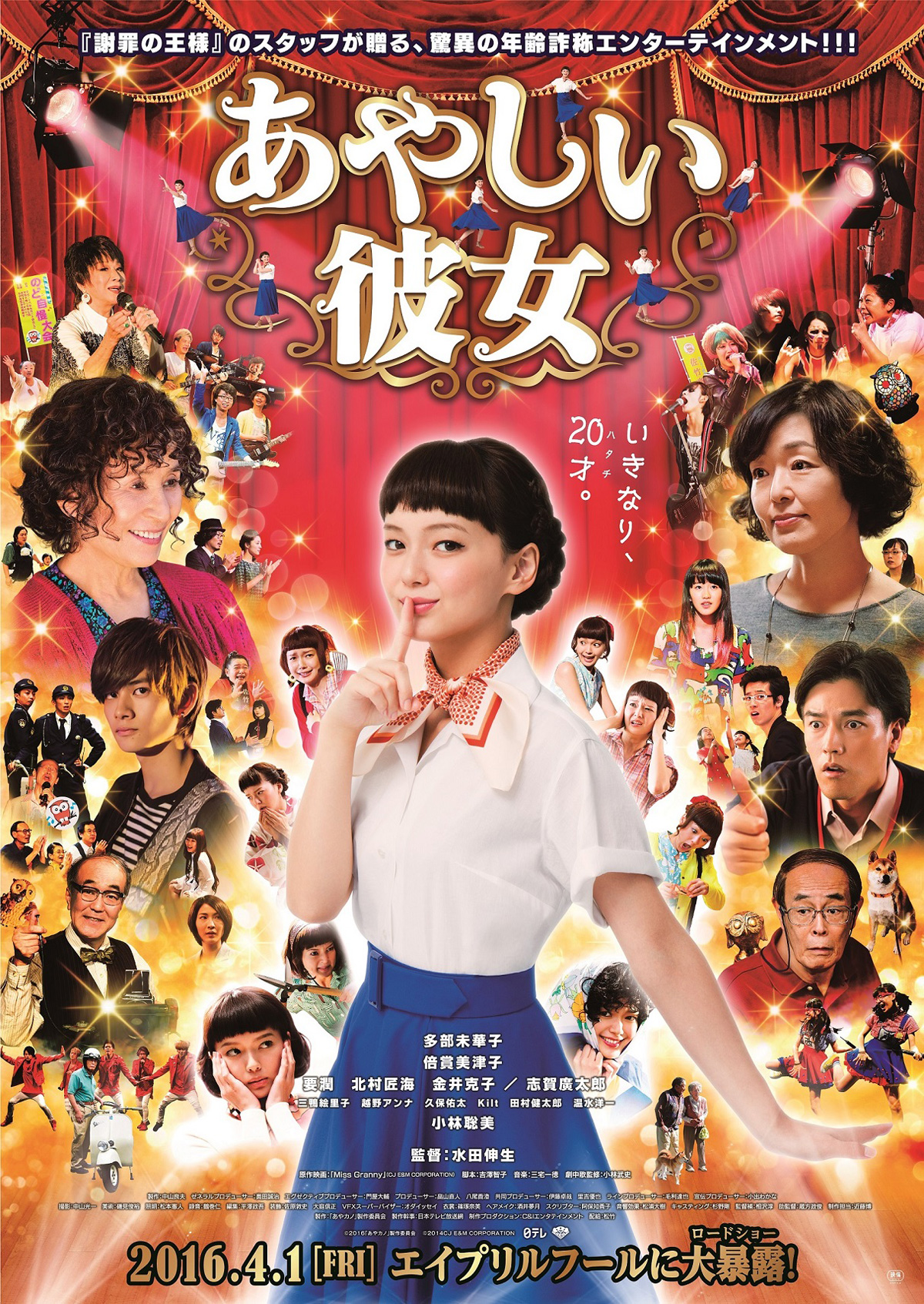
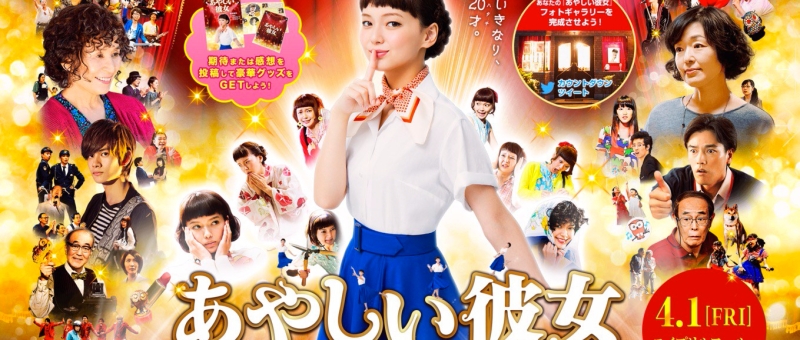
Sing my life posterWhen Miss Granny was released in Korea back in 2014, it became an instant smash hit with remake rights quickly bought by a host of Asian countries and Chinese (20 Once Again), and Vietnamese (Sweet 20) versions already proving popular in their respective nations. Sing My Life (あやしい彼女, Ayashii Kanojo) shifts away from the Korean film’s pervasive misery for a more typically Japanese determination to grin and bear one’s troubles. Structured like a classic musical, Sing My Life may only hint at the hardships of life in post-war Japan, but co-opts the classic “hahamono” for a musical tribute to motherhood in all of its complexities and complications.

Katsu Seyama (Mitsuko Baisho) is a 73-year-old woman who likes to sing and dance her way through life while making a point of haggling over her purchases and boasting loudly about how proud she is of her daughter who is the editor-in-chief of a famous fashion magazine. Her daughter Yukie (Satomi Kobayashi) has, however, unbeknownst to her been demoted in favour of a flashy, younger candidate. After getting caught by an ore ore scam and blaming Yukie for preventing her from doing all the things she wanted to do in life, Katsu runs away from home and finds herself at a strange photo studio from which she emerges as her 20-year-old self (Mikako Tabe). Suddenly given the chance to experience the youth she never knew, Katsu ends up joining her grandson’s punk band as the lead vocalist singing a number of her favourite retro hits in new, modern versions.

Unlike the Korean version, Katsu’s story is less one of resentment at a fall in social status than an ongoing struggle born of constant hardships. A war orphan with childhood friend Jiro (Kotaro Shiga) her only “familial” connection, Katsu has had to fight all her life just to survive. A shotgun wedding was followed immediately by widowhood and a serious illness for her child who she was told would not survive past infancy. Yet unlike the granny of Miss Granny, Katsu is not actively mean as much as she is irritating and occasionally petulant. Loving to boast of the successful career woman daughter she managed to raise alone, Katsu is not above playing the martyr in reminding those around her of everything she sacrificed to make it happen.

A single mother in the ‘60s, Katsu had to work day and night to support herself and her daughter leaving her with a lifelong love of thriftiness and a kind of no-nonsense bluntness that is occasionally (if accidentally) hurtful. In the original Korean version, a widowed mother pours all of her ambition and desires into her son who she hopes will become a successful member of society able to return the favour by supporting her in her old age. Katsu’s child is a girl but has also become a successful career woman and later a single mother herself following a brief marriage followed by divorce. There may be tension in the relationship between the two women, but Katsu’s returned youth provides the opportunity for greater intimacy and a return to the less complicated mother-child relationship of early childhood brokered by greater mutual understanding.

Though Katsu had not revealed any great dream of being a singer, her beautiful voice soon gets her noticed by the music biz and producer Takuto Kobayashi (Jun Kaname) who is sick to the back teeth of soulless teenage idols who lack the life experience to truly connect with the material they’ve been given. Encompassing a host of Showa era hits from the Kyu Sakamoto tune Miagete Goran Yoru no Hoshi wo, to Hibari Misora’s Makkana Taiyo, and the central performance of the depression themed Kanashikute Yarikirenai originated by Folk Crusaders, Sing My Life takes a (slightly) more cheerful run through ‘60s Japan emphasising the fortitude and determination of struggle rather than the misery and hardship of difficult times. Fun and touching, Nobuo Mizuta’s adaptation improves on the Korean version in adding a subtle commentary on the ironic invisibility of the elderly in ageing Japan whilst also refocusing the tale onto a deliberately female perspective, examining how two women from different generations have dealt with a similar problem, and allowing them the opportunity to repair their fractured relationship through a process of mutual understanding.


 Screened as part of the Japan Foundation Touring Film Programme 2018.

Screening again:

  • ICA – 8 February 2018
  • QUAD – 11 February 2018
  • Showroom Cinema – 20 February 2018
  • Firstsite – 25 February 2018
  • Depot – 27 February 2018
  • Phoenix Leicester – 10 March 2018
  • Midlands Arts Centre – 13 March 2018
  • Broadway – 18 March 2018

Original trailer (no subtitles)

Kyu Sakamoto’s Miagete Goran Yoru no Hoshi wo

https://www.youtube.com/watch?v=UDjeVvYXqkY

Hibari Misora & The Blue Comets – Makkana Taiyo

Folk Crusaders – Kanashikute Yarikirenai

The Apology King (謝罪の王様, Nobuo Mizuta, 2013)

The Apology King.jpgThere are few things in life which cannot at least be improved by a full and frank apology. Sometimes that apology will need to go beyond a simple, if heart felt, “I’m Sorry” to truly make amends but as long as there’s a genuine desire to make things right, it can be done. Some people do, however, need help in navigating this complex series of culturally defined rituals which is where the enterprising hero of Nobuo Mizuta’s The Apology King (謝罪の王様, Shazai no Ousama), Ryoro Kurojima (Sadao Abe), comes in. As head of the Tokyo Apology Centre, Kurojima is on hand to save the needy who find themselves requiring extrication from all kinds of sticky situations such as accidentally getting sold into prostitution by the yakuza or causing small diplomatic incidents with a tiny yet very angry foreign country.

Kurojima promises to know an even more powerful form of apology than the classic Japanese “dogeza” (falling to your knees and placing your head on the ground with hands either side, or OTL in internet lingo), but if you do everything he tells you to, you shouldn’t need it. His first case brings him into contact with Noriko (Mao Inoue) whose awful driving has brought her into contact with the yakuza. Not really paying attention, Noriko has signed an arcane contract in which she’s pledged herself to pay off the extreme debts they’ve placed on her by entering their “employment” at a facility in Osaka. Luckily, she’s turned to Kurojima to help her sort out this mess, which he does by an elaborate process of sucking up to the top brass guys until they forget all about Noriko and the money she owes them in damages. Impressed, Noriko ends up becoming Kurojima’s assistant in all of his subsequent cases, helping people like her settle their disputes amicably rather allowing the situation to spiral out of control.

Mizuta begins with a neat meta segment in which Kurojima appears in a cinema ad outlining various situations in which you might need to apologise including allowing your phone to go off during the movie, or attempting to illegally film inside the auditorium etc ending with a catchy jingle and dance routine pointing towards the contact details for his apology school. Kurojima’s instructions are also offered throughout the film in a series of video essays in which he outlines the basic procedures for de-escalating a conflict and eventually getting the outcome you’re looking for.

Of course, all of this might sound a little manipulative, which it is to a degree, but the important thing to Kurojima lies in mutual understanding more than “winning” or “losing” the argument. The second case which comes to him concerns a young man who has some very outdated ideas and has, therefore, been accused of sexual harassment. Unfortunately, Numata (Masaki Okada) is a classic sexist who only makes the situation worse for himself and completely fails to understand why he was at fault in the first place. Even following Kurojima’s expertly crafted instructions, Numata further insults his female boss whilst attempting to apologise meaning Kurojima has to come up with an even more elaborate plan to smooth the situation which involves pretending to be the ghost of a man who threw himself under a train after being accused of harassing a young woman at work who did not return his affections. This seems to do the trick and the relationship between Numata and his boss appears to have improved even if Numata still has a long way to go in the person stakes, though it does perhaps make light of a serious workplace problem.

Numata follows all of Kurojima’s instructions but still gets everything wrong because he refuses to understand all of the various social rules he’s broken and therefore why and how the apology process is intended to make amends for them. Understanding and sincerity are the keys to Kurojima’s ideology but Numata, after a quick fix, fails to appreciate either of these central tenets and so is unable to work things out for himself. Similarly, in another case the parents of an actor are required to make a public apology when their son is captured on CCTV getting into a street fight. Only, being actors, they find genuine sincerity hard to pull off on the public stage either resorting to chewing the scenery or overdoing the dignified act, not to mention plugging their latest appearances at the end of the speech. The public apology is an important part of the Japanese entertainment industry though it might seem odd that the famous parents of a “disgraced” celebrity would be expected to apologise to the nation as a whole, but as it turns out all that was needed to settle the matter was a quick chat between the people involved, fully explaining the situation and reaching a degree of mutual understanding.

The innovative structure of Apology King neatly weaves each of the cases together as they occur in slightly overlapping timeframes but each contribute to the final set piece in which Kurojima becomes an advisor during a diplomatic incident caused when a film director unwittingly offends the small nation of Mutan by accidentally turning their crown prince into an extra in his film. Mutan is a nation with many arcane rules including a prohibition on filming royalty as well as on drinking and eating skewered meat, all of which the crown prince is seen doing in the movie. Matters only get worse when the film crew travel to Mutan to apologise but make even more faux pas, especially when it turns out that Japanese dogeza is actually incredibly rude in Mutanese culture. Revisiting elements from each of the previous cases, Kurojima is only able to engineer a peaceful solution by convincing the Japanese authorities to utter a set phrase in Mutanese which means something quite different and very embarrassing in their own language. Apologies are, of course, always a little humiliating, but then that is a part of the process in itself – placing oneself on a lower level to those who’ve been wronged, as symbolised in the dogeza.

Full of zany, madcap humour and culminating in a gloriously unexpected pop video complete with dancing idols of both genders exhorting the benefits of a perfectly constructed (and sincere) apology, The Apology King is a warm and innocent tribute to the importance of mutual understanding and its power to ease even the deepest of wounds and most difficult of situations. Hilarious but also heartfelt, The Apology King is a timely reminder that unresolved conflicts only snowball when left to their own devices, the only path to forgiveness lies in recognising your own faults and learning to see things from another perspective. Kurojima’s powers could be misused by the unscrupulous, but the most important ingredient is sincerity – empty words win no respect.


Original trailer (no subtitles)