Omniscient Reader: The Prophecy (전지적 독자 시점, Kim Byung-woo, 2025)

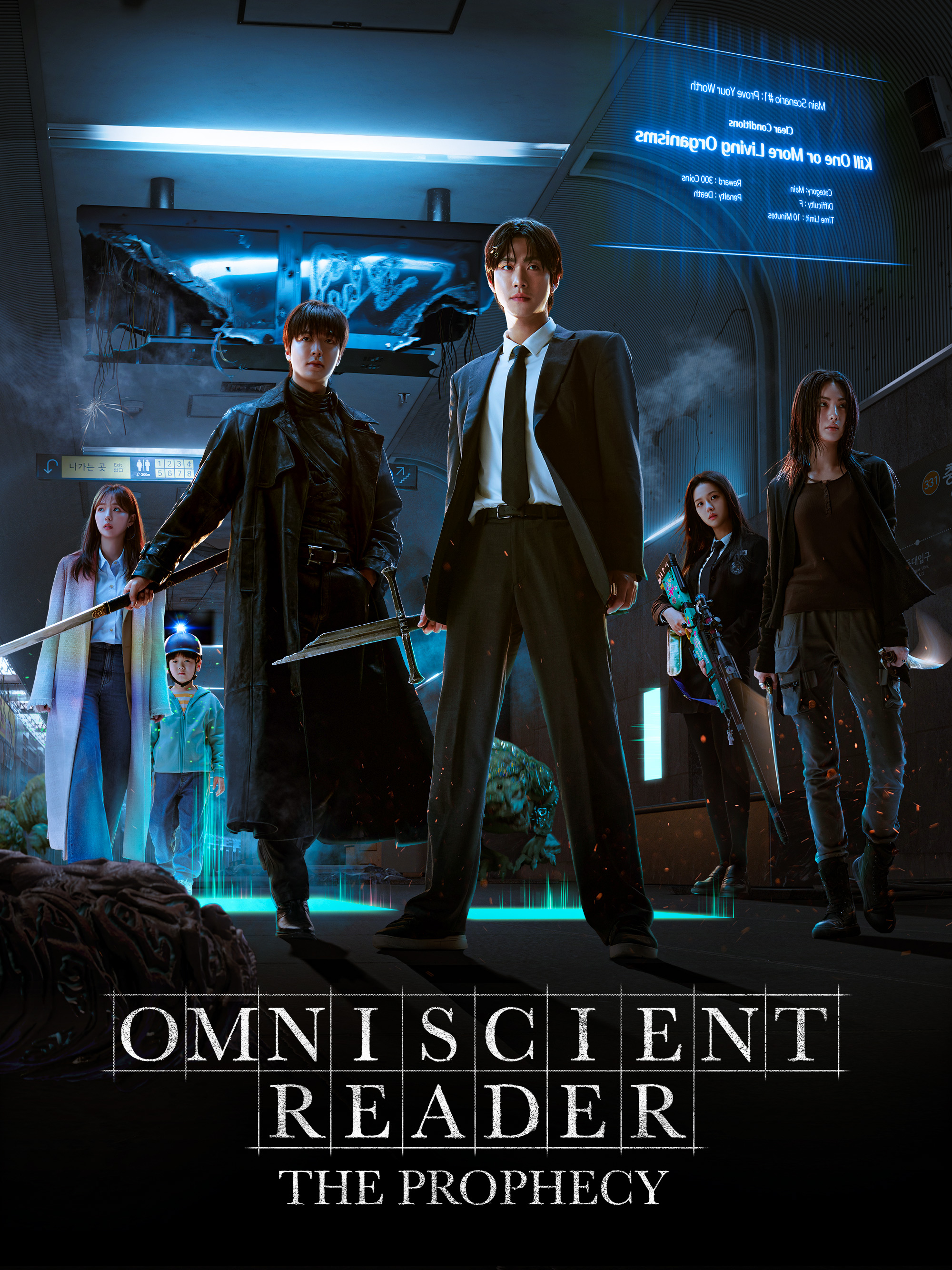
Fed up with the ending of a web novel he’s been reading since his teens, Dokja (Ahn Hyo-seop) sends the author a message. By this stage, he’s the only reader left, a kind of “lone survivor”, if you will. But he tells the author that the ending has disappointed him and that he can’t accept that the main theme was that it’s alright to sacrifice the lives of others so that you alone can live. Adapted from the popular webtoon, Kim Byung-woo’s Omniscient Reader: The Prophecy (전지적 독자 시점, Jeonjijeok Dokja Sijeom) is in part about the conflict between nihilistic pragmatism and selfishness, and a pure-hearted altruism that insists it’s possible for us all to survive and that surviving alone would be pointless anyway.

It only obliquely, however, touches on these themes in how they relate to the contemporary society in hinting at the destructive effects of capitalism. Dokja is the hero of this story, but he’s also a face in the crowd as a member of a constant stream of office workers on their way to work, not really so different from little ants squeezed between the fingers of powerful elites. Dokja at least feels himself to have lost out in this lottery, a contract worker let go by a conglomerate, while his sleazy boss Mr Han (Choi Young-joon) slobbers all over his female colleague, Sangha (Chae Soo-bin), who unlike him is no longer wedded to the corporate philosophy and is considering striking out on her own to do something that interests her personally. Perhaps the novel ending on the same day as his contract felt a little bit to much like the end of a world, which is what pushed him to write a message that in other ways seems uncharacteristically mean. 

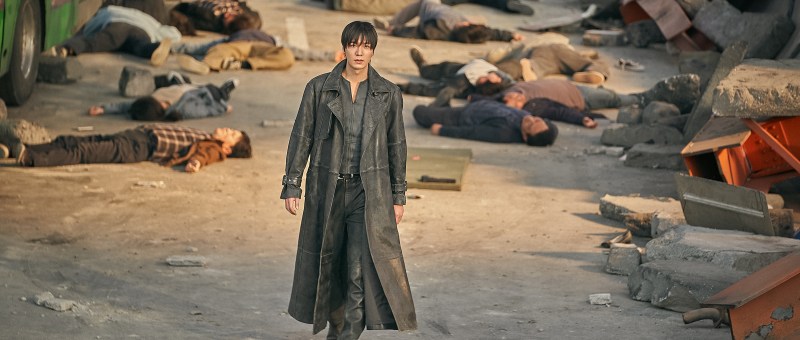
But then the author tells him that if he doesn’t like this ending he can write his own, perhaps obliquely reminding him that he is free to change his future if he wants. Nevertheless, Dokja is soon thrown into the world of the novel where he is faced with a series of scenarios where he must choose whether to sacrifice the lives of others in order to save his own for the entertainment of celestial beings who watch the whole thing via live streams and occasionally sponsor interesting players. Dokja has an advantage in that he already knows what’s going to happen, but is also aware that things don’t always go the way they should and his own actions change the course of the narrative. He’s convinced that he has to save the “hero”, Jung-hyeok (Lee Min-ho), or the fantasy world will end, killing everyone inside it, but never really considers that he too can be the protagonist of his own story. 

He remains committed, however, that the only way to survive is through mutual solidarity even if he scoffs at the quasi-communist mentality at the Geumho subway station correctly guessing that it’s all a scam being run by a corrupt politician which muddies the water somewhat when it comes to the film’s politics. In any case, Dokja seems to believe that he must save Jung-hyeok not just physically but spiritually in proving to him that his nihilistic viewpoint is mistaken and the only way for them to survive is to support each other by pooling their skills and resources. In dealing with his own trauma and guilt over having once sacrificed someone else to ensure his own survival, Dokja is able to write a new ending for himself surrounded by his companions rather than as a lone survivor roaming a ruined land with nothing to look forward to except death.

On the other hand, perhaps it’s true that he thinks he needs a hero to save him rather than realising that he is also the hero of this story, while the fantasy world too is driven by capitalistic mentality in which Dokja must amass coins to be able to level up or literally buy his survival. Occasionally he wavers, wondering if the others have a point when they tell him he’s being foolish and should learn to just save himself no matter what happens to anyone else, but otherwise remains committed to rejecting the premise of the original novel’s nihilistic ending in insisting that there’s a way for us all to survive if only we can learn to be less selfish, trust each other, and work for the good of all.


Omniscient Reader: The Prophecy is available in the UK on digital download from 15th December.

UK Trailer (English subtitles)
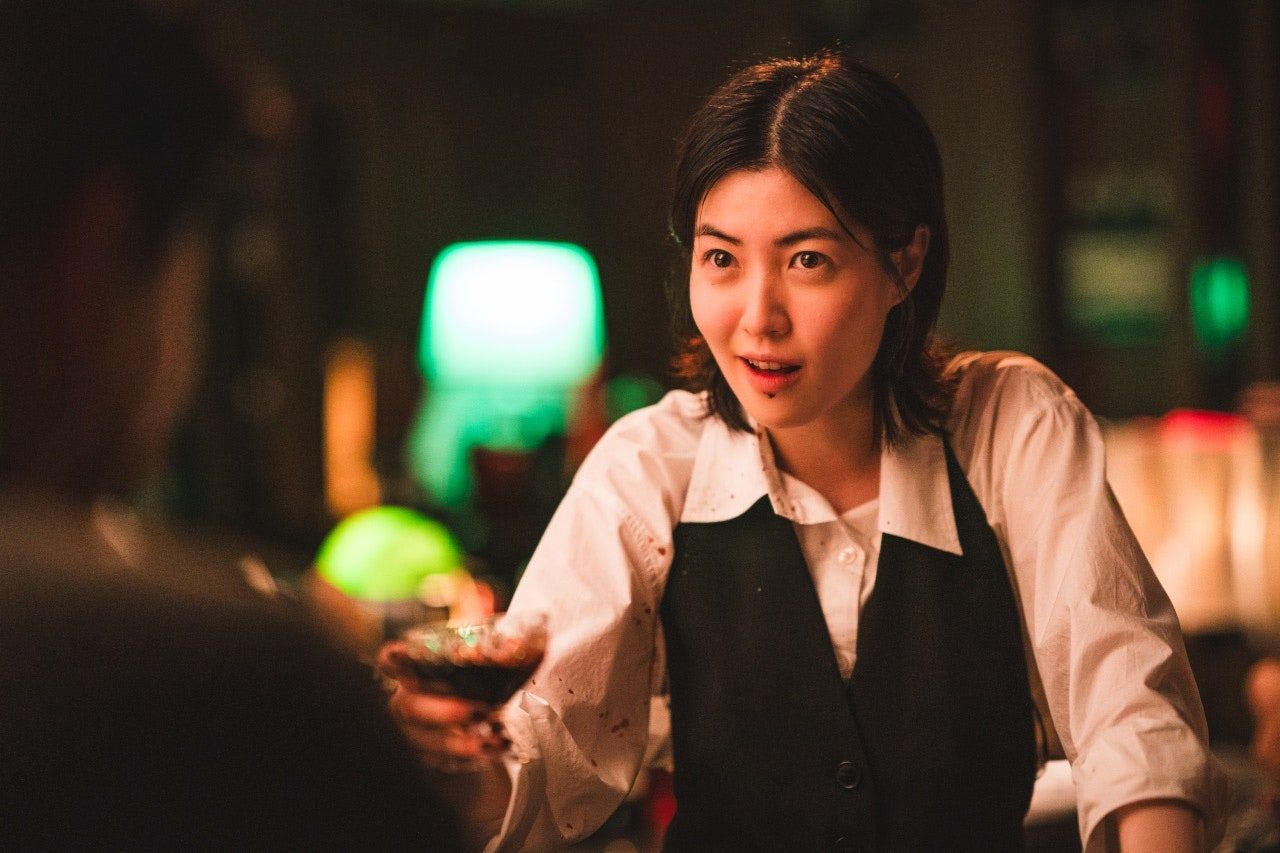
The Killers (더 킬러스, Kim Jong-kwan & Roh Deok & Chang Hang-jun & Lee Myung-se, 2024)

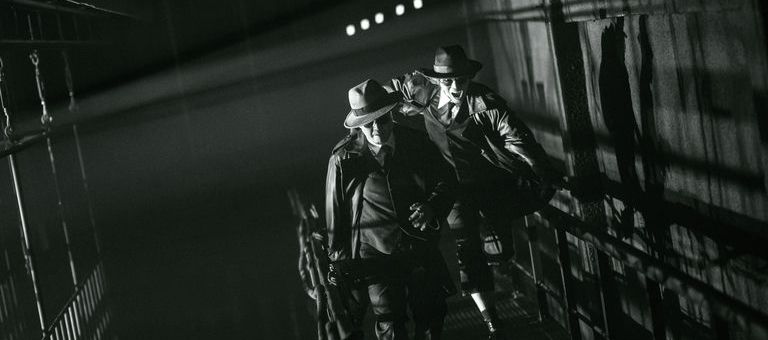
Led by Lee Myung-se, The Killers (더 킬러스) was originally billed as a six-part anthology film featuring different takes on the short story by Ernest Hemingway, but somewhere along the way took a kind of detour and now arrives as a four partner with a looser theme revolving around noir and crime cinema. Frequently referencing the Edward Hopper painting Nighthawks, the film hints at urban loneliness and a haunting sense of futility along with the mythic quality of noir as a tale that tells itself.

At least that’s in part how it is for unreliable the narrator of the first episode, a petty gangster who wakes up in a mysterious bar after being cornered by rival thugs. While in there he meets a similarly lost, middle-aged film director in the middle of a strange date with a fawning young woman who’ve definitely wandered into the wrong place. A sense absurdity is echoed in the fact that the man continues to sit in the bar oblivious to the knife in his back until the bar lady pulls it out for him and exposes the real reason why she lures lonely souls to this strange place out of time. Even so, thanks to her dark initiation the gangster is able to become himself and stand up against the rival thugs who were bullying him with his newfound “feistiness” having overcome something of the futility of black and white, classic noir opening sequence.

That’s something that never really happens for the heroes of part two who are a trio of youngsters trapped in Hell Joseon unable to escape their lives as cut price contract killers working below minimum wage for a chaotic company in which everything has been sub-contracted into oblivion. Ironically, one had dreams of becoming a policeman and another a nun while the third has recently had plastic surgery in the hope of landing an acting gig and claims he’s not in this for the money but to make the world a better place. Seeing their work as a public service, they tell each other that it’s wrong to grumble over their unfair pay because other people get less and are otherwise incapable of standing up for themselves until they take a leaf out of the boss’ book and try a subcontracting of their own which doesn’t quite go to plan.

While the first two episodes had been set in the present day the second two are set during the long years of dictatorship, the first sometime in the 1960s under the rule of President Park as an undercover detective and two men who appear to be unsubtle KCIA agents descend on a noirish, rundown bar with a picture of Nighthawks on the wall waiting for a mysterious fugitive to arrive. They don’t appear to know anything about why their target needs to be caught or who he is save for a daffodil tattoo on his arm and are merely they shady figures of authoritarian power we can infer are hot on the tracks of someone hostile to the regime. In any case, they are they are about to have the tables turned on them in a demonstration of their inefficacy in their power.

It’s the fourth and final piece unmistakably directed by Lee himself, however, that brings the themes to the four as it opens with an allusion to the assassination of President Park as the narrator tells us that it is 1979 and someone sent a bullet into the heart of darkness but the darkness did not die. The two goons who later show up are KCIA thugs working for the new king Chun Doo-hwan come to threaten the denizens of the cafe which include a man called “Smile” because he can’t and a woman called “Voice” because she has none while trapped inside an authoritarian regime. Inhabitants of Diaspora City, a home to the exiled, they have only a small hole to another world which affords them the ability to dream. Relentlessly surreal the segment is marked by Lee’s characteristic visual flair and sense of noirish melancholy that extends all the way out to a world more recognisably our own though no less lonely or oppressive.


The Killers screened as part of this year’s New York Asian Film Festival.

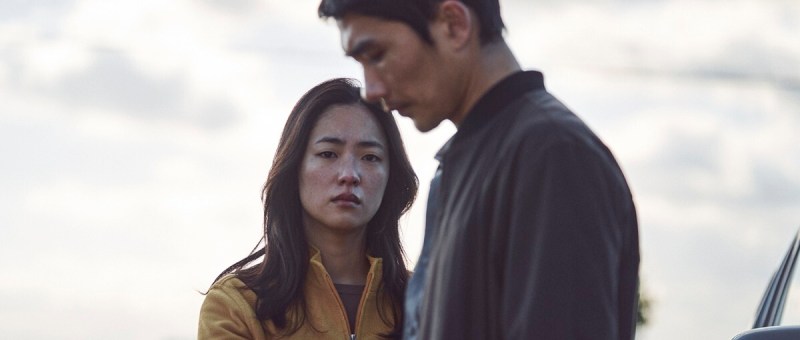
Night in Paradise (낙원의 밤, Park Hoon-jung, 2020)

Sometimes being too good at your job can be a definite liability. So it is for the hero of Park Hoon-jung’s melancholy gangster noir, Night in Paradise (낙원의 밤, Nagwonui bam). Park’s worldview is often nihilistic and sometimes downright unpleasant, though it’s a sense of fatalistic sadness that dominates this otherwise over familiar tale of a noble gangster cruelly misused by those who choose not to obey their shared code and thereafter finding himself on a dark path towards if not exactly redemption then at least an inevitable ending. 

Rising foot soldier Tae-gu (Uhm Tae-goo) has found himself in the middle of an old-fashioned gang war, serving an ambitious boss, Yang (Park Ho-san), who has unwisely decided to press into territory operated by the well established Bukseong gang. Getting some of his guys back after being kidnapped by Bukseong and held in an apartment block where the community is currently protesting the take over and demolition by gangster redevelopers, Tae-gu is told by his opposing number that Yang is a crazy upstart who would be a nobody without him and that he made a mistake turning down a job offer from Bukseong boss Doh. Tae-gu is however an old school mobster loyal to his gang which is why he doesn’t stop to think things through when someone close to him is killed in a car accident in which he assumes he was the intended target, believing Doh is striking a low blow. Encouraged by Yang, he meets with Doh in person and daringly knocks him off at a swimming pool sauna escaping through a window in the nude. Yang arranges to send him to Jeju Island to lay low before moving on possibly to Russia, but Yang has also been engaging in a failed pincer movement which left them all in hot water after failing to take out Doh’s no. 2, Ma. 

As the title might hint, even the island “paradise” of Jeju is not free of death and crime as Tae-gu discovers after bonding with their contact, Kuto (Lee Ki-young), a fixer smuggling guns from Russian mobsters hidden inside consignments of fish. Like Tae-gu’s sister, Kuto’s niece Jae-yeon (Jeon Yeo-been) is suffering from an undisclosed terminal illness that seems to have few obvious symptoms but has left her with suicidal tendencies. Kuto’s decision to take Tae-gu in is motivated by his desire for money to take Jae-yeon to America for treatment though she and Tae-gu are also much the same both having lost people close to them because of their proximity to the gangster world while he and Kuto search for ways to make up for the harm their lives of violence has caused. 

Jae-yeon is quick to remind Tae-gu that she will soon be dead and that therefore nothing really matters and her life has no meaning while he perhaps as a gangster feels something similar that his life ended the day he first picked up a gun yet there are also ways in which he must act in satisfaction of his code. His tragedy is that he’s operating under a misapprehension, blindly trusting in the wrong people when the truth is painfully obvious to all but him.

Park inserts a series of ironic pillow shots of the idyllic Jeju night scene with comforting lights swinging from tropical trees and gentle waves rolling on the horizon, before closing with a series of eerie daytime shots of familiar locations now devoid of people as if this were a hell our heroes had recently been haunting, ghosts of a violent landscape. His fight scenes are visceral yet also occasionally cartoonish, several taking place in the confined space of a car expertly framed by Park as the heroes fight desperately for life while constrained by their environment. A high octane chase through an airport with its ubiquitous escalators soon gives way to an impressive motorway-bound set piece with an unexpected resolution, the gangsters later scattering on hearing far off police sirens though as we also realise police collusion is an inescapable factor in the fragile equilibrium of the underworld even if it might not stretch all the way to idyllic Jeju. “Don’t waste your tears” Tae-gu unironically offers in weary resignation to his fate, a noble gangster to the last too good to survive in a world of nihilistic futility. 


International trailer (English subtitles)

The Call (콜, Lee Chung-hyun, 2020)

The call is coming from inside the house. It’s a final revelation intended to chill, the idea that the source of threat is located in the very place where you ought to feel safe, protected, invulnerable. Of course, there are many reasons someone might not feel completely safe at home, those who perhaps live with hidden threat every day, a hidden darkness that lies at the centre of twisty Korean thriller The Call (콜). Another in a small series of time travelling communication, The Call makes connection through outdated technology, an almost literal ghosting in a voice from the past that, like an inverted Strangers on a Train, offers the tantalising promise of mutual salvation only to prove extremely unreliable. 

28-year-old Seo-yeon (Park Shin-hye) has just returned to her rundown country home because her mother, whom she intensely resents blaming her for the death of her father in a fire, is suffering with a brain tumour. Though her strawberry farmer uncle Sung-ho (Oh Jung-se) describes the place as the most desirable property in town, the home in which Seo-yeon finds herself is cold and austere, a creepy old mansion decorated in an outdated style and filled with gothic furniture. To make matters worse, Seo-yeon has left her phone on the train but unexpectedly assures Sung-ho that she’ll be fine with the landline, later calling herself and getting through to a woman who claims to have found it but asks for a reward and then hangs up presumably to assess her options. Then, the landline starts ringing with calls from a young woman trying to reach a friend and claiming that her mother is planning to set fire to her. Though obviously disturbing, Seo-yeon assumes the calls are a simple wrong number until she discovers a hidden room with what looks to be some sort of tiled experimentation area along with a box of memorabilia which lead her to think the phone is somehow connecting her to the girl who lived in her room at the turn of the millennium. 

Also 28 only born 20 years earlier, Young-sook (Jeon Jong-seo) claims to be at the mercy of a wicked shamaness step-mother convinced that she has a dark destiny. The two women engage in a strange act of intergenerational bonding between two people who are the same age, Seo-yeon mystified by the meaning of the word “Walkman” while Seo-yeon struggles with the concept of the multifunctional smartphone. The force which unites them is parental dissatisfaction as Seo-yeon claims a hatred for her mother she does not perhaps really feel and cannot in any case compare with that of Young-sook for the religiously abusive stepmother who fully believes she is possessed by the devil. In in this the time difference proves useful, Seo-yeon realising that Young-sook has the power to prevent her father’s death, but only latterly that she also even from the future has the ability to change her new friend’s fate. 

Essentilally a Strangers on a Train scenario, the two women agree to save each other, Young-sook dutifully restoring Seo-yeon’s imagined fairytale future, the creepy mansion transformed into an elegant modern dwelling, her mother and father now both healthy and happy. Seo-yeon, however, begins to neglect her promise, too busy enjoying her repaired family life to remember that Young-sook is imprisoned in the house suffering horrifying abuse. Young-sook is, in a sense, the embodiment of Seo-yeon’s familial trauma, the violent resurfacing of a long buried memory that threatens to tear to her life apart but also has the ability to repair it in revealing the truth that allows her to reconnect with her mother who, we learn, has repeatedly sacrificed herself for her daughter’s sake. Nevertheless, you begin to wonder if the shamaness had a point and the lid was best left on Young-sook as her hurt and resentment in being neglected by her new friend eventually take a turn for the dark. 

In essence, Seo-yeon’s decision to interfere with the past engineers a chain of disastrous events robbing her of her illusionary happiness while eventually landing her right back where she started if perhaps with a little more insight and having healed her relationship with her mother. Part tale of millennial anxiety, part gothic nightmare, The Call may not always be internally consistent but charts a dark tale of trauma and response as a haunted young woman finds herself stalked by the psychopathic embodiment of her buried guilt only to discover that a call from the past is always hard to ignore. 


Original trailer (English subtitles)

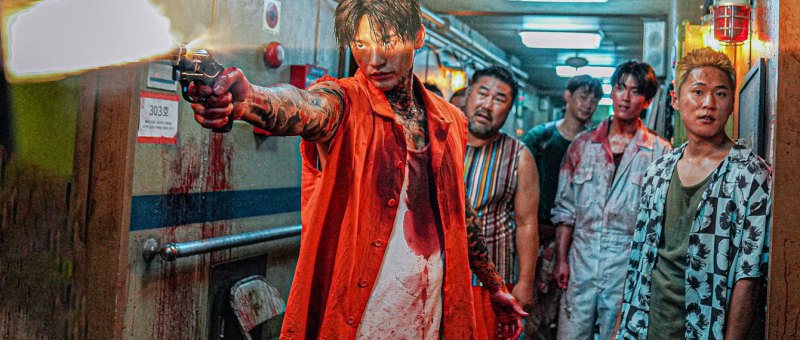
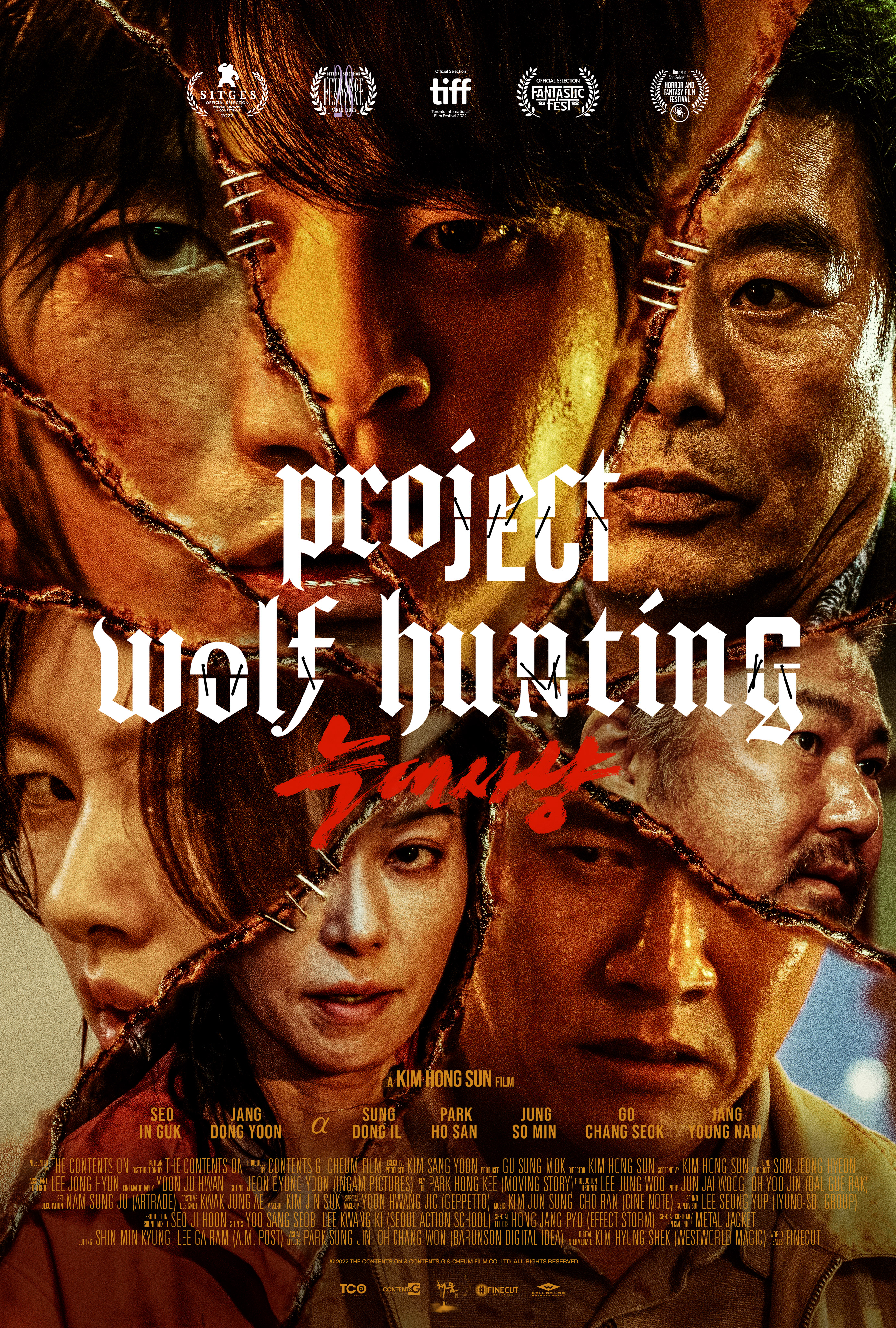
Project Wolf Hunting (늑대사냥, Kim Hong-sun, 2022)

“Remember, there’s nowhere to run” an arrogant police officer explains to collection of rapists and murderers locked aboard a cargo ship ready to be delivered to “justice” in Korea having attempted to flee to the Philippines. It is in someways ironic that these men and women, depraved as many of them may be, have been loaded onto a commercial vessel to be shipped home less like cattle than faceless and inanimate objects. Kim Hong-sun’s eerie gore fest Project Wolf Hunting (늑대사냥, Neukdaesanyang) is in many ways about the horrors of the past but also suggests that the present is little better in a world in which there is little difference between cop and thug and we are all at the mercy of looming violence. 

As one older prisoner puts it, “if this isn’t hell, I don’t know what is”. Thanks to an international extradition arrangement some of the worst Korean criminals are about to be repatriated from the Philippines only the historic event is disrupted by a suicide bombing carried out by a disgruntled victim whose smashed glasses and severed limbs are an eerie harbinger of what’s to come. After a rethink, the government decides to hire a cargo boat instead so the public won’t have access to the criminals, which is somewhat ironic, while accompanied by a crack team of veteran cops each with over 10 years of experience on the force. Already it isn’t seeming like a very well thought through plan, but as Captain Lee (Park Ho-San), who openly beats a prisoner with whom he has prior history on the dock, points out, there aren’t any cameras so he has full authority to enforce the law with no concern for the rights of inmates nor basic human morality. To cut it short, he’s little different than they are even if he isn’t, as far as we know, a multiple murderer or rapist. 

In any case, keeping a bunch of violent criminals handcuffed with only one bathroom break a day and no stimulation seems like a recipe for disaster even if it weren’t just plain inhumane. But inevitably the operation is compromised by an attempt to spring a gang boss which lets the criminals take control of the ship albeit temporarily seeing as there’s something else lurking in the bowels of this floating hellscape that is pure nightmare fuel and a not quite living embodiment of man’s inhumanity to man. Predictably, this all stems back to the abuses of the colonial era and the machinations of the equivalent of Unit 731 operating in the Philippines but has since seemingly been co-opted by a shady Korean organisation apparently also attracted to the research’s capitalistic potential in the booming anti-ageing market hoping to usher in the next stage of human evolution. 

What ensues is a parade of senseless violence in which cop and killer alike are stalked by a mysterious “monster” with wolf-like senses and preternatural strength, and that’s on top of the bloody destruction wrought by the vengeful criminals in their unsuccessful attempt to escape. As Lee had said, there really is nowhere to run though as it turns out that cuts both ways. The gang boss proves unexpectedly heroic, genuinely trying to save the moll who’d been arrested alongside him, while law enforcement reveals itself hopelessly out of depth even as Lee and his female subordinate Da-yeon (Jung So-min) pivot towards protecting the prisoners they were previously intent on oppressing as they form a temporary alliance to defend themselves against the mysterious threat, ironically a product of the “kemono” (beast) project and a reminder of what happens when you decide that some people aren’t really “human” after all. 

Even so, the rampage is indiscriminate. The “monster” doesn’t care if you’re a cop or a killer, all it knows is violence smashing in the heads of the toughest gangsters and ripping hearts out of well-built bodies without a second thought. It’s got no eyes but knows how to use a gun and it still might not be the scariest thing on the boat, at least not in the end as we wonder what exactly all this is for and what might be meant by the next evolution of our species. This is indeed hell and there’s no where to run either from the unresolved past or the malignant future. 


Project Wolf Hunting is released in the US on Digital, Blu-ray, and DVD on Feb. 14 courtesy of Well Go USA.

International trailer (English subtitles)

Warriors of the Dawn (대립군, Jeong Yoon-chul, 2017)

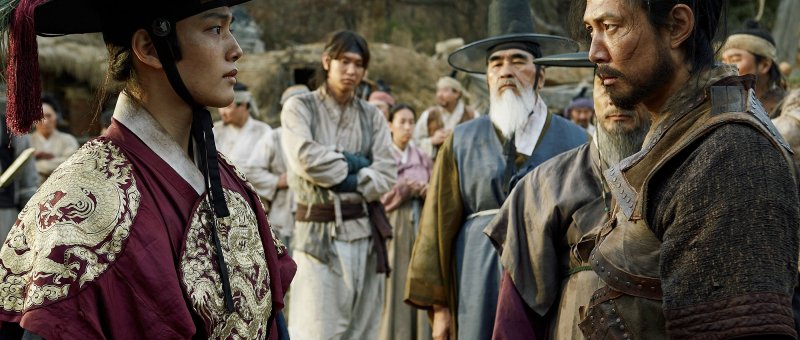
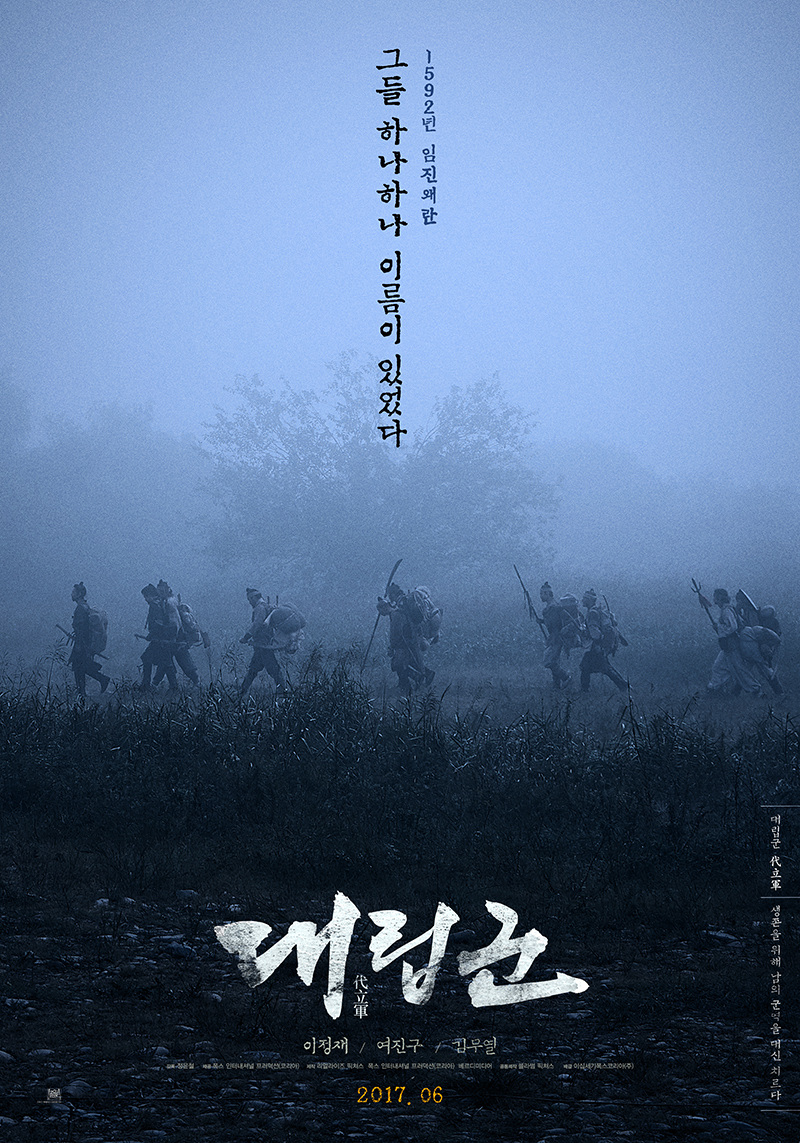
Warriors of the Dawn posterSome might say a king is the slave of his people, but then again he is a very well kept slave even if he is no more free than a serf at the mercy of a feudal lord. Warriors of the Dawn (대립군, Daeribgoon), set in 1592 during the short-lived Japanese invasion, takes this idea to its heart in playing up the inherent similarities between the oppressed poor who are forced to impersonate the sons of wealthy men too grand for the battlefield, and the Crown Prince unwillingly forced to impersonate the King who has abandoned his people and run away to China to save his own skin. Though the Prince is young and afraid, with the help of his resentful mercenary brethren he begins to find the majesty buried inside himself all along but crucially never forgets what is like to feel oppressed so that he might rule nobly and fairly, unlike his more selfish father.

The tale begins with Tow (Lee Jung-Jae) – a “Proxy Soldier”, one of many from the Northern borderlands where the living is hard. Sons of feudal lords need not risk their lives on the battlefields while there is money to spend and so they buy the service of young men from poor families to stand in for them. The men take the name of the man they’re supposed to be but if they die, their family must send a replacement to serve out the remaining time or pay back the money that was given to them. At this point Tow’s main problem is the Jurchen rebels who’ve decided to live life their own way outside of the system of class hierarchy currently in place in feudal Korea.

The Japanese, however, are pressing on and making gains towards the capital. The King decides to flee, hoping to reach China where the Ming Emperor may be minded to help them. He cannot, however, simply abandon ship and decides to divide the court with the left behind contingent headed by his son, Crown Prince Gwang-hae (Yeo Jin-goo). Gwang-hae is young and inexperienced. Not having had a good relationship with his father, he’s mystified as to why he’s suddenly been given this “honour” but together with a selection of advisors he’s sent on a journey to found a second court at Gonggye, picking up scattered forces along the way. This brings him into contact with Tow and his contingent who become his main defenders.

Having lived a life inside the palace walls, Gwang-hae knows nothing of war or fighting and has brought a selection of books with him hoping to learn on the job. His ineptitude is likened to that of a young recruit to the band of Proxy Soldiers who has been forced to join on the death of his father but has no training and is too squeamish to kill, requiring Tow to come to his rescue as he later does for Gwang-hae. Tow is a born soldier yet reluctant, fully aware that he no longer exists and should he die another man with no name will step into his place with nary a pause. He continues to fight because he has no choice but he also feels an intense bond of brotherhood to his fellow men, something which later extends to Gwang-hae once his latent nobility begins to emerge.

Gwang-hae’s central conflict is between his advisors who council him towards austerity, and his deeper feelings which encourage him to sympathise with the ordinary people he meets along the way whose lives are being ruined thanks to the government’s failure to protect them. As it turns out, Gwang-hae is also low-born, in a sense, and therefore has inherited something of the common touch which separates him from the aloofness of his father. Though he is constantly told to make the “rational” choice he refuses – ordering troops to stop when they attempt to extort food from starving peasants, insisting on evacuating a village to safer ground, and then finally becoming a warrior himself in order to defend his people when no one else would.

Gwang-hae is, perhaps, a warrior for a new dawn and a flag that men like Tow can follow in the quest for a better world in which each man can keep his own name and fight for his own cause rather than that laid down for them by men with money or power. Despite the potential for a more urgent argument, Jeong mostly falls back on standard period aesthetics with overly familiar narrative beats heavily signposted by a subpar script. Warriors of the Dawn cannot decide whether it’s a film about catching the conscience of a king or the noble sacrifice of would be revolutionaries, failing to lend the essential weight to its duel arcs of rebirth and coming of age all of which makes for a long, hard march towards an inevitable conclusion.


Screened at the London Korean Film Festival 2017.

International trilogy (English subtitles)