Hijack 1971 (하이재킹, Kim Sung-han, 2024)

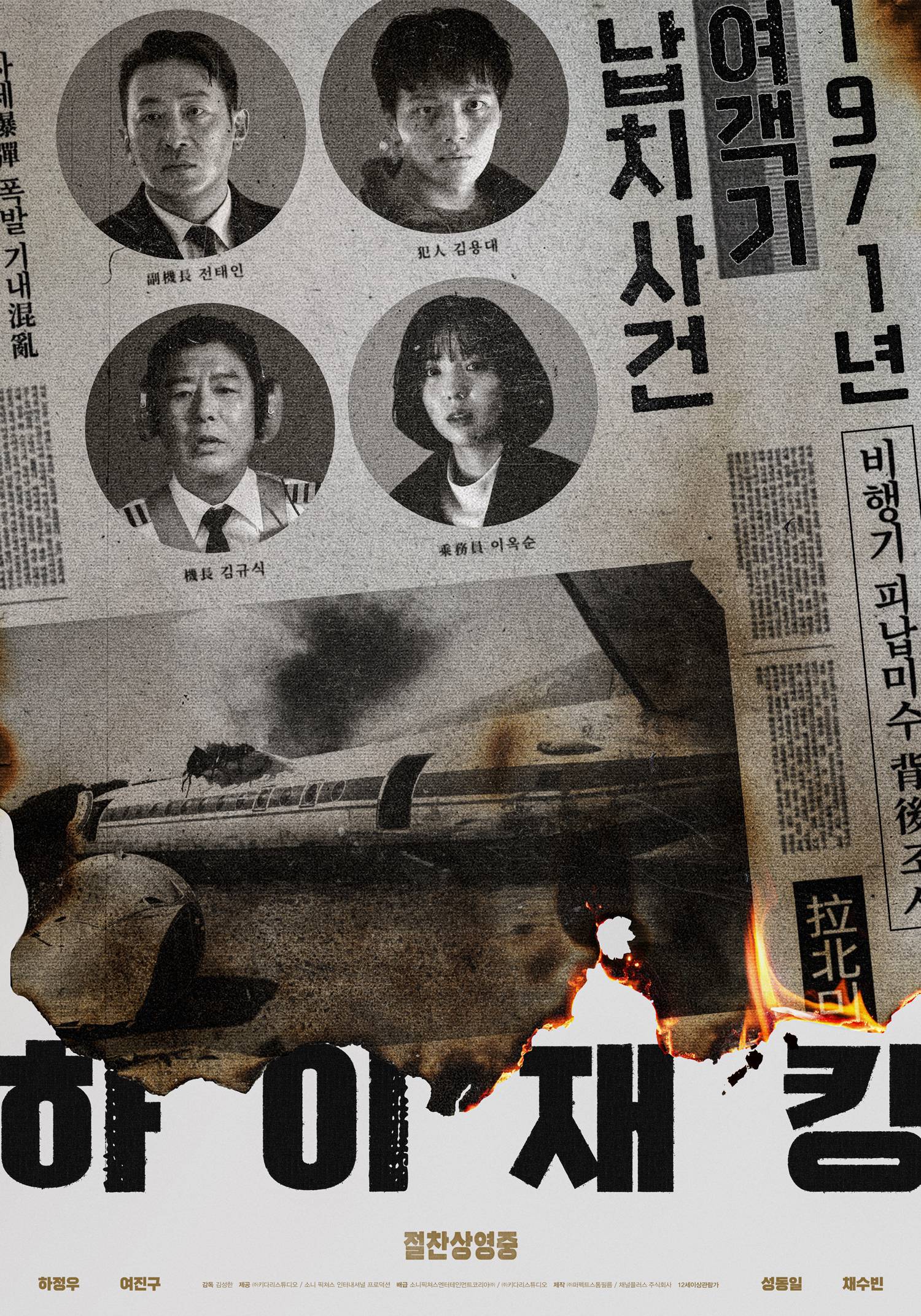
Newspaper-style Korean-language poster featuring a stock photo of a burning place and circular photos of the cast members in black and white.

When a passenger plane is hijacked and forced to fly to North Korea in 1969, the Korean Air Force pilot ordered to fire on it refuses. He recognises the pilot and realises there is something wrong. If there is a hijacker on board, he fears that that he may kill the pilot and crash the plane, killing everyone on board, and while his commanders remind him that the plane should be able to land on just one engine, he knows that if he hits the fuselage instead, the plane could blow up. Even if they land in North Korea, isn’t it better everyone survives?

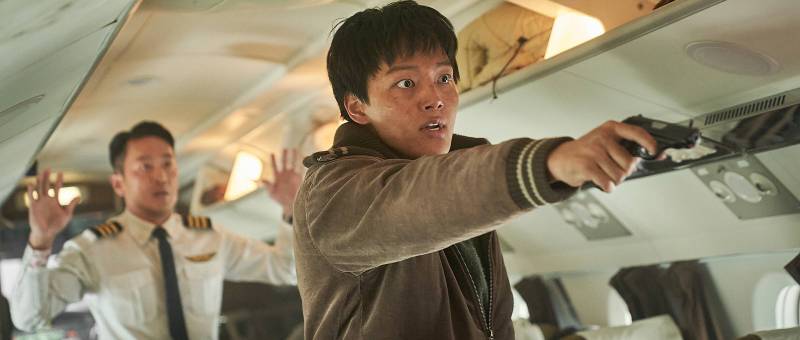
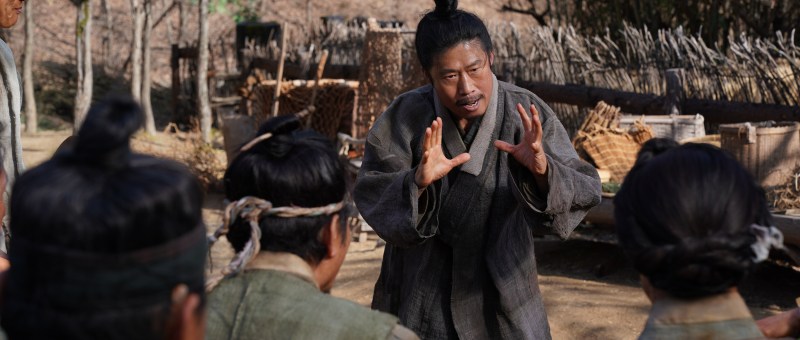
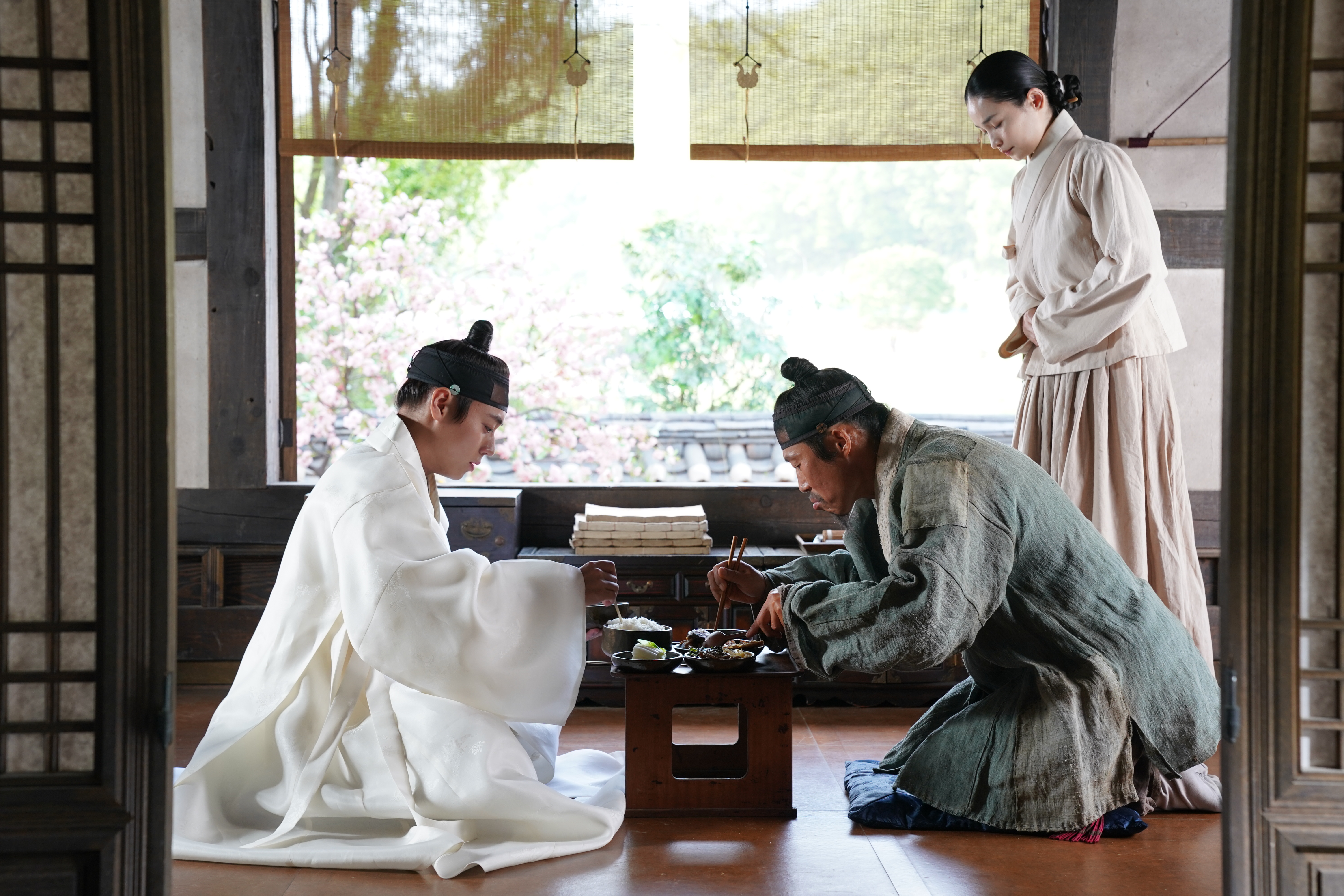
Not according to some in Kim Sung-han’s Hijack, 1971 (하이재킹, Hijacking), inspired by a real life incident. Tae-in (Ha Jung-woo) is summarily dismissed from the air force for his insubordination while otherwise ostracised as the man who allowed the plane to reach North Korea. As he predicted, most of the passengers are returned home shortly afterwards, but 11 never see the South again including his friend the pilot, Min-su (Choi Kwang-il). Meanwhile, Min-su’s wife (Kim Sun-young) continues to face harassment for supposedly being a communist sympathiser. Now working for a commercial airliner, Tae-in also faces discrimination from his new colleagues who, ironically, don’t trust him to properly protect passengers. All their assumptions are tested, however, when a young man sneaks a bomb on board and threatens them to fly to the North apparently inspired by the previous case in which the hijacker was given a hero’s welcome for successfully kidnapping so many useful people.

What’s immediately obvious is how easy it still was to get a bomb on a plane. Yong-dae (Yeo Jin-goo) simply packs them into some tin cans and wraps them up like a picnic. When boarding opens, the passengers literally sprint past each other to get the best seats because they weren’t yet reserved, and when we see a passenger start smoking, we assume the stewardess will tell him not to yet she simply points out the ash tray in the arm of the seat and asks him not to drop ash on the floor or woman sitting next to him. One woman also delays the flight because she’s brought a live chicken with her to make a soup for her daughter whom she’s travelling to see because she’s ill. Tae-in scores an early win and the goodwill of (most of) the passengers by defusing the chicken situation and allowing the woman to keep it on the condition she has it on her lap for the duration of the flight. 

Letting the old lady keep the chicken signals Tae-in’s consideration for his passengers’ welfare and happiness, while the air marshal becomes so preoccupied with this minor breach of the rules that he fails to notice the suspicious behaviour of the hijacker. The presence of the air marshal, a precaution taken after the previous incident, also proves counterproductive when he’s injured when the first bomb goes off, allowing Yong-dae to steal his gun. Granted, this is a fairly minor flight from a provincial airport to Seoul so maybe no one really thought there was much need for advanced security, but they really are woefully underprepared for this kind of incident, especially after the pilot is seriously injured and can’t see well enough to fly alone, meaning Tae-in also cannot do very much to respond to the hijacker’s threats. 

But what we come to realise is that it’s really society that’s been hijacked by the extreme prejudice directed towards “communists” and the North. The passengers from the first plane were returned, but spent time in interrogation to make sure they hadn’t been turned. A newlywed passenger also remarks that a fisherman friend of his was abducted and the police haven’t stopped hassling him about being a spy ever since he got back. Yeong-do’s motive is that he faced constant and unwarranted harassment, including being scalded with boiling water as a child, because his older brother defected to North Korea. His mother later died when he was carted off to prison for being a supposed sympathiser, while other passengers on the plane are similarly worried that their families will starve if they end up in North Korea or are detained when they return. 

A minor subplot, meanwhile, explores the prejudice faced by an older woman travelling to Seoul with her son, who has become a prosecutor. She is deaf and unable to speak, but her son tells her to stop signing because it’s embarrassing him after noticing disapproving looks from another woman in hanbok across the aisle. The old lady had also taken her shoes off after getting on the plane as if she were entering someone else’s home signalling both her politeness and lack of familiarity with modern customs. Her son had repeated the stewardess’ instructions to put them back on, but addresses her like stranger when telling her not to sign. In a way, this casual prejudice is the same and directed at someone simply for being different. Even so, there’s something quite tragic about her son being ordered to tear up the prosecutor ID card she was so proud of. Eventually she swallows it herself to make sure no trace of it remains, telling her son not to worry she will always protect him even in North Korea though he has not done very much to protect her here.

Tae-in later does something similar when he encourages Yong-dae that they should all go on living to ensure no one else endures the mistreatment he has and we don’t end up with any more incidents like this. Though his behaviour is increasingly deranged, it becomes easy to sympathise with Yong-dae for enduring so much suffering for something that was really nothing to do with him while we’re constantly reminded that if the plane lands in North Korea everyone on the plane and all their relatives will also suffer the same fate. At least facing this disaster together eventually forces the passengers to set aside their petty prejudices and pitch in to save the plane so they can get home to their families even if it’ll take them a bit longer to get to Seoul. Though the outcome is already known to the home audience, Kim Sung-han keeps the tension high and defines heroism largely as compassion and selflessness in Tae-in’s continued efforts to ensure the safety of his passengers rather than playing politics or allowing himself to be swayed by those who think landing in North Korea is a fate worse than death.


International trailer (English subtitles)

Handsome Guys (핸섬가이즈, Nam Dong-hyub, 2024)

The malicious inequalities of the contemporary society are manifested in an angry goat demon who wants to burn the world in Nam Dong-Hyub’s zany horror comedy, Handsome Guys (핸섬가이즈). Adapted from the American film Tucker & Dale vs. Evil, the film plays with prejudice and superficiality along with the pernicious snobbishness of a society founded on status in which, as a would-be-exorcist later says, some have lost the ability to distinguish good from evil.

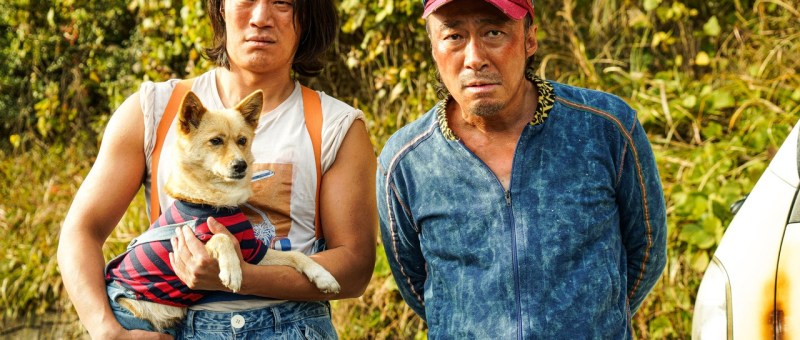
Step-brothers Sanggu (Lee Hee-joon) and Jaepil (Lee Sung-min) often suffer precisely because of this inability. They are actually nice, sweet guys who are always trying to do the right thing but somehow their behaviour always comes off as creepy giving rise to a series of misunderstandings. That might be why they’ve decided to buy a cottage in the woods in order to live a rustic life, only the house they’ve purchased is a little more rundown than the estate agent implied and was previously home to a Catholic priest which doesn’t altogether explain the goat-themed pentagram in the basement. 

Like the brothers, Mina (Gong Seung-yeon) is also a nice person as we can tell because she’s the only one of her friends who wanted to give the goat they hit with their car a proper burial while the others decide to just leave it in the road and drive off. She too thought the brothers were creepy, but is also awakening to the fact that Sungbin (Jang Dong-joo), a rising star of the golf world, is a bit of a twit who wields his privilege like a weapon and has essentially invited her on this country weekend as entertainment. He also bullies his friend/minion Byung-jo (Kang Ki-doong) whom they regard as a loser and is evidently willing to bear humiliation merely to be in the same orbit as a man like Sungbin who with his good looks, refined manners and modern manliness projects an idealised image of contemporary masculinity that is the exact opposite of the brothers. 

In many ways, he is the demonic presence of privileged youth damaging the hopes and prospects of ordinary youngsters like Mina. Believing that she has been kidnapped by the brothers, the three guys set out to “rescue” her but Sungbin doesn’t care about Mina at all and in fact only wants to retrieve his phone which contains evidence of his sordid lifestyle which would destroy his prospects of becoming a celebrity through achieving success in his golfing career. Nevertheless, they decide to attack the brothers with mostly disastrous results believing them to be nothing other than idiotic hillbillies if also depraved backwoods serial killers living an animalistic, uncivilised existence that is far too close to the land for city slickers like Sungbin. 

Once again, the brothers are plagued by a series of bizarre misunderstandings based on the perception of their “ugliness” which aligns them with “evil” and demands they be exiled from a society that equates physical “beauty” with moral goodness. To that extent, having been rescued from falling in a pond, Mina becomes a kind of Snow White ensconced in the home of the brothers and coming to understand that they are actually nice, if a bit strange, and merely have difficulty expressing themselves while their down-to-earth homeliness only seems suspicious to those who are a little less honest with emotions.

Their niceness, however, seems to be perfectly primed to face off against the Goat Demon as they become determined to protect their homestead from the likes of Sungbin who has only contempt for them and thinks they’re merely fodder for his heroic fantasy of retrieving his phone and proving his manliness at the same time. In essence, it’s Sungbin who embodies the ugliness of the contemporary society with its hypocrisy and superficiality, its casual misogyny and petty prejudice, while the brothers later vindicated as angelic presences of altruistic goodness. Slapstick humour mingles with a sense of malevolence and an inescapable cosmic irony that plagues the brother’s with misunderstandings and has kept them isolated, “handsome guys” too beautiful for a profane world and attempting to find refuge in their remote homestead and homoerotic relationship but eventually discovering unexpected solidarity with the equally exiled Mina as she delivers a silver bullet to privilege and patriarchy, sending ancient evil back to whence it came.


Handsome Guys screened as part of this year’s London Korean Film Festival.

International trailer (English subtitles)

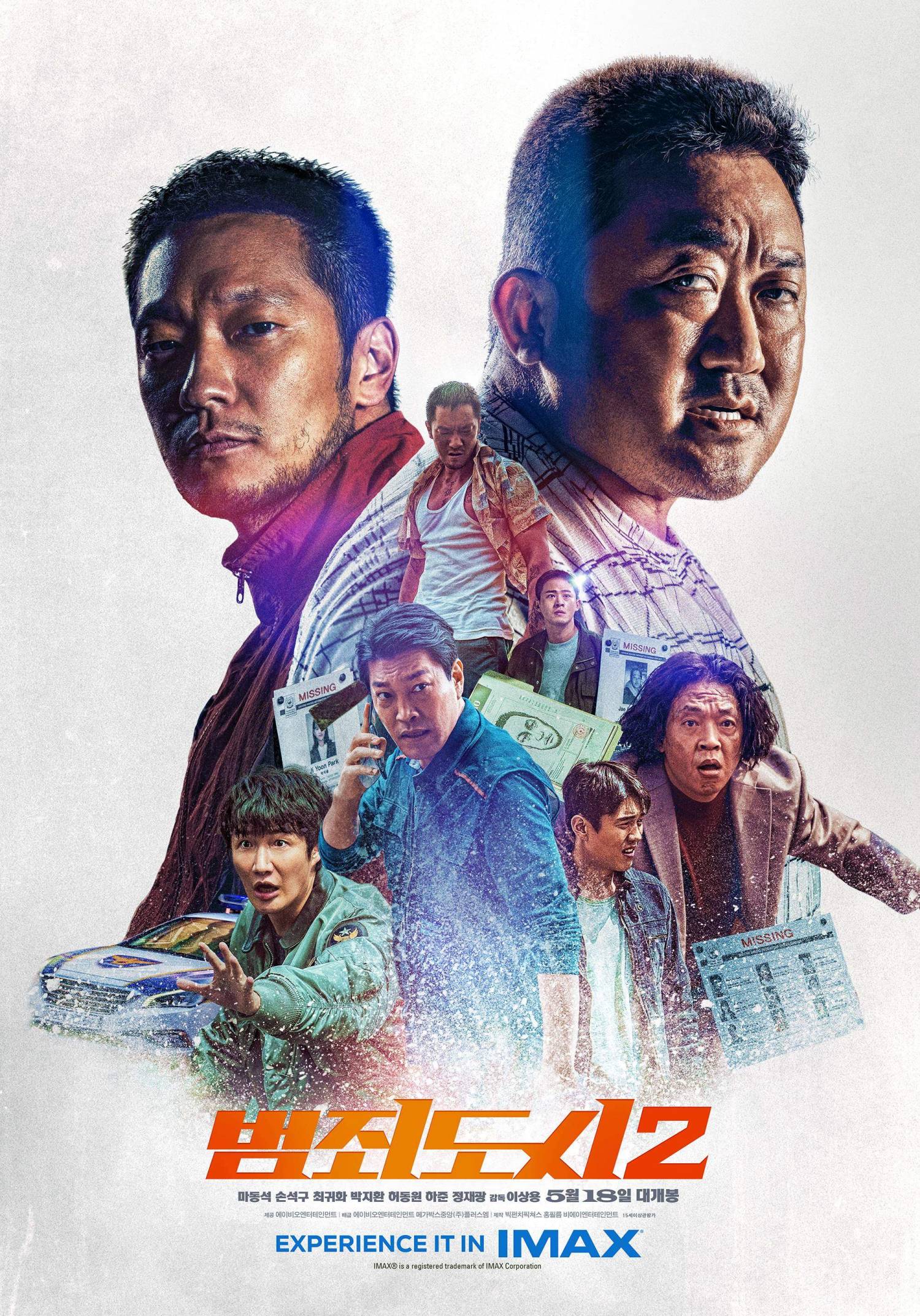
The Roundup: Punishment (범죄도시 4, Heo Myeong-haeng, 2024)

There’s a moment in the fourth instalment of the Roundup series when monster cop Seok-do’s boss asks him what good his fists are in the age of cyber crime. More so than in previous episodes, Punishment (범죄도시 4, Beomjoedosi 4) seems to lean hard into the idea that Seok-do iMa Dong-seok) is a dinosaur stuck in the 1970s and unable to understand the modern world. He’s a bruiser cop in an era of supposedly compassionate policing, a thug sent to catch a thug. Yet he’s also presented, as is actually said by his superior officer, as everything a good cop should be in his determination to nail the bad guys to keep a promise to a murder victim’s devastated mother.

But as in the previous films, the victim largely gets forgotten until the very end when Seok-do and his colleagues pay a visit to his grave. Set in 2018, the film is apparently inspired by a real life case and in an echo of the kinds of explanatory title cards seen at the end of Chinese films, ends with a reminder that the government began cracking down on cybercrime in that year. Reminiscent of anti-gambling drama No More Bets, the victim here is also a computer programmer effectively enslaved after being lured to the Philippines on a promising job offer only to be forced to work on casino websites by organised crime. Seok-do is mostly concerned with catching the bad guys rather than exposing this nefarious practice or its effects on those who fall victim to its addictive gambling scam. 

In any case, a running joke sees Seok-do once again cast as a dinosaur apparently unable to grasp simple concepts of modern technology. “Right, we’ll go get it before it closes, then,” he replies when informed the villains used “open source software”. He thinks syncing to the cloud means a crowd of people will come help you set up your phone and he never replaces his because it’s a bother to put in all those numbers into your contacts again. The team end up having to recruit a new team member from cybercrime, the only woman in the room which comes in handy when they need her to pose as the girlfriend of familiar comic foil Jang Yi-soo (Park Ji-hwan) who is tricked into thinking he’s been deputised with a shiny badge that looks like it fell out of a serial packet and has the telltale letters FDA at the top which Seok-do convinces him stands for Police Dark Army.

Despite all the thuggery, there’s something essentially childlike about Seok-do’s roguishness that sees him delight in playing a trick on Jang Yi-soo. After wrecking the first class cabin of a soon to depart plane, he walks off sheepishly like naughty little boy ignoring his boss’ frantic calls to come back and explain himself. In this instalment, we get less of the overt references to police brutality with one brief scene of Seok-do putting a motorbike helmet on a suspect and beating him over the head while his colleague keeps watch outside as we peek in through the widow. To remind us he’s still the good neighbourhood cop, we see several scenes of him visiting a restaurant run by the widow of a colleague killed in the line of duty and secretly slip his teenage daughter wads of cash to buy something nice for herself. 

What it all amounts to is a slightly awkward advocation for the police who are directly stated to be always there to protect the citizens and catch criminals who harm them even if they do It abroad. To this extent, Seok-do is a good cop literally smacking some sense into bad guys because it turns out his giant fists can fight “digital” crime after all and there’s no denying that it does feel good to see Ma Dong-seok smack bad guys. The action scenes this time around are visceral and surprisingly bloody not to mention loud with the sound of Ma’s thunderous fists flailing around. The film’s distinctly retro sensibility is echoed in the ‘70s score which seems to hark back to an era of maverick cop movies about men like Seok-do who keep order on the streets while Seok-do himself seems increasingly like a man out of time, a throwback to a bygone era perhaps uncomfortably romanticised in the quasi-authoritarian sensibility which seems to underpin it.


Festival trailer (English subtitles)
The Roundup: No Way Out (범죄도시 3, Lee Sang-yong, 2023)

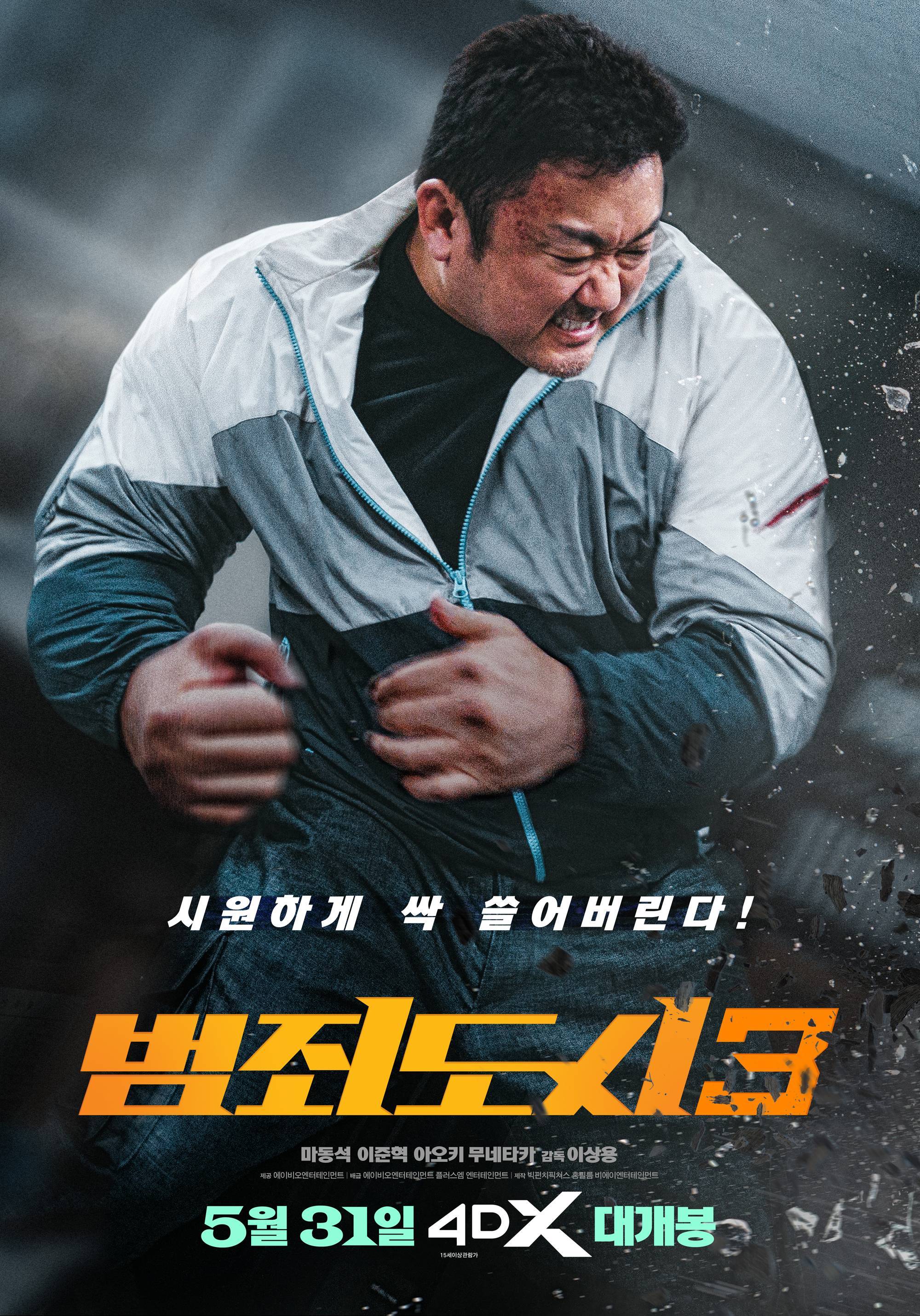
Ma Dong-seok has been cultivating an image of himself as an action star for quite some time. The kind of marquee name who generally plays the hero, Ma looks back to the genre’s heyday presenting an uncomplicated vision of righteous masculinity, a bruiser with a heart of gold. The Roundup: No Way Out (범죄도시 3, Beomjoedosi 3) is the third in a series of films that began with The Outlaws and is projected to total at least eight instalments each starring Ma as the maverick detective his superiors hate to love. 

It’s true enough that you can’t get away from the more problematic elements of his unreconstructed good bad cop persona. We often see Seok-do (Ma Dong-seok) beat information out of suspects which the film treats as a cheeky joke in an otherwise tacit endorsement of police brutality that suggests red tape is the reason the guilty often evade justice. Meanwhile, in a step back from other Ma vehicles there are almost no women in the film and none in the police force. The heart of the case is the death of a 28-year-old woman who “fell” from a hotel room window and is later discovered to have died of a heart attack after being drugged in a club and dragged off by a random man who then literally threw her away to distance himself from the crime. The murder which Seok-do is supposed to be investigating is totally forgotten in his all encompassing drive to find out where the drugs are coming from which eventually descends into a battle of wits with a corrupt police officer who’s teamed up with a Korean-Japanese yakuza to skim his boss’ supply of new designer drug Hiper. 

There is a distinctly uncomfortable thread of xenophobia that runs through the series even if in this case the villainy is discovered closer to home in the form of police corruption. This time around, the threat is once again Japan which is apparently where Hiper originated though petty yakuza Tomo (An Se-ho) now manufactures it in Korea where he’s cut a freelance deal with dodgy cop Joo (Lee Joon-hyuk) to distribute it in the local night life scene without the knowledge of his boss back in Japan, Ichijo (Jun Kunimura). Joo has also cut a deal to sell the drugs to a Chinese gang, so it’s quite bad news for him when Ichijo gets wind of the situation and Tomo takes off with a suitcase full of pills for his own protection. Unluckily for him, Ichijo has already sent his most intimidating assassin, Riki (Munetaka Aoki), to find out what’s been going on behind his back. 

Problematic as it may be, Ma’s retro take on the action star is undeniably entertaining with his frequent hero moments and penchant for one liners. The first time he appears, we see him break up a street fight but mostly interested in finding out if the guy on the ground started it the implication being that perhaps if he did it’s none of his business but otherwise he’s going to have to intervene. Then again as he tells his exasperated boss, his personal motto is “punish and serve” and he’s here to get the job done even if that means wading in all fists blazing without much thought for regulations or procedure. At one point Seok-do and his guys stumble on a crime scene and walk around it touching everything in sight without bothering to even put on so much as gloves. 

In any case, Lee makes every punch land and quite literally as the screen seems to vibrate on contact almost as if the camera itself were taking a blow. Ma’s thunderous fists clash with the sound of justice as he all too easily disables hardened gangsters with one well placed slap. At times, his invincibility borders on the ridiculous but he does eventually allow himself be “defeated” if only temporarily as in his miraculous recovery from being run over by a gangster’s car. In many ways, Joo is Seok-do’s mirror, a bad bad cop with crazy eyes who kills without a second thought and behaves with narcissistic recklessness, overconfident in his abilities to sort his problems through his status as a law enforcement officer. Bruiser he may be, but Seok-do likes arresting people and never uses lethal force even when the opportunity is presented to him, symbolically snapping Riki’s katana and then proceeding to slap him seven ways to Sunday leaving the ice cool assassin collapsed amid a display of Japanese parasols. An end credits scene set three years later in 2018 sets up a fourth instalment and the return of a familiar face besides that of Seok-do himself who continues to charm as the world weary bruiser slapping down crime wherever it rears its ugly head. 


The Roundup: No Way Out is in UK cinemas now.

International trailer (English subtitles)
The Roundup (범죄도시 2, Lee Sang-yong, 2022)

Force of justice Ma Seok-do returns five years after The Outlaws to right more wrongs in jet-setting action comedy, The Roundup (범죄도시 2, Beomjoidosi 2). By this stage in his career, actor Ma Dong-seok has succeeded in creating a persona for himself as a loveable bruiser whose violence is just a way of being and always in service of a greater good. These are qualities very much in play as Seok-do (Ma Dong-seok) finds himself defending the interests of Korean citizens abroad against crooks the cops failed to catch at home.

Seok-do is however in the dog house for being accused of using excessive force in the papers after neutralising a hostage incident in a convenience store. To keep him off the front pages, the higher ups decide to send him on a mini mission abroad bringing home a Korean fugitive who has apparently turned himself in to the Vietnamese authorities. Given that this is quite an odd thing to do and the criminal’s explanation that he was suddenly overcome with guilt and wanted to repay his debt to society doesn’t ring true, Seok-do smells a rat. As he discovers, it all points back to the kidnapping and murder of a rich man’s son by vicious gangster Hae-sang (Son Seok-koo) who preys on unsuspecting tourists. Rather than get the police involved, the boy’s father has decided to hire a bunch of mercenaries to take revenge further destabilising the local underworld in Ho Chi Min City. 

It has to be said that there is something a little uncomfortable in the quasi-nationalist posturing of the film’s central premise. Korea has effectively been exporting crime by allowing dangerous criminals to flee abroad where the law can’t touch them. Korean crooks then make trouble for Korean tourists even if not quite to the extent of Hae-sang, all of which ignores the effects on the local Vietnamese population in concentrating on Korean on Korean crime. At the end of the film it’s even suggested that Korean police officers might be dispatched to other areas of Asia to look after Korean tourists which shows a certain lack of respect for national sovereignties while more or less letting the same police officers off the hook for failing to catch criminals in Korea or address the issues which led to them entering lives of crime. A maverick cop, Seok-do does rather throw his weight around in a foreign country, caring little for protocol and threatening to spark a diplomatic incident every few seconds. 

Then again he is just particularly keen on shutting down Hae-sang and exposing him for his heinous acts, cleaning up a mess that has ended up spilling over abroad. Ironically enough, the bereaved father, Choi (Nam Moon-cheol), maybe a powerful CEO but he made his money loansharking and is pretty much a petty gangster himself so of course he wants personal vengeance once again uncomfortably hiring mercenaries from China. Meanwhile, Seok-do ends up enlisting the help of a formerly undocumented migrant when Choi ends up getting kidnapped himself by a cornered Hae-sang.

In any case, Seok-do more than holds his own against the bloodthirsty villains in a series of well choreographed action sequences culminating in a one-on-one showdown on a bus. Much of Ma’s appeal lies in his effortless ability to take down bad guys which he does a plenty, even dispatching one via escalator to his waiting teammates below. Even so, he knows not to take himself too seriously and is keen to cede screen time to the ensemble allowing a gentle camaraderie to appear among his squad members despite their separation while Seok-do and the Captain are in Vietnam trying to have a covert holiday and the rest of the team are left behind to do regular admin work in the office. Though it may present some rather uncomfortable ideas in a kind of Korean exceptionalism that implies a degree of superiority over and disregard towards other Asian nations, the film is nevertheless a charming retro action comedy and perfect showcase for the charismatic star as his no-nonsense policeman makes a point of slapping down bad guys and fighting international crime while generally living his best life hanging out with similarly justice-orientated buddies. 


The Roundup screens in Amsterdam on 27th October & 4th November as part of this year’s Imagine Fantastic Film Festival.

International trailer (English subtitles)
Hansan: Rising Dragon (한산: 용의 출현, Kim Han-min, 2022)

“A battle of the righteous against the unrighteous” is how Admiral Yi (Park Hae-il) frames his resistance against the Japanese invasion, not a war between nations but an attempt to push back against the authoritarian ruthlessness of Toyotomi Hideyoshi’s desire to conquer most of Asia in a bid to cement his historical legacy as his health continued to fail. Hansan: Rising Dragon (한산: 용의 출현, Hansan: Yongui Chulhyeon) is a kind of prequel to 2014’s The Admiral: Roaring Currents set five years earlier during Hideyoshi’s first campaign and pits the the wise and steadfast Admiral Yi against ambitious yet overconfident Japanese general Wakizaka* (Byun Yo-han). 

Wakizaka’s ruthless cruelty is not in dispute even as the film opens with him dispatching a report stating that he intends to destroy the Korean naval detachment harboured on the southern coast which it seems is all that stands between him and conquest of the peninsula in its capacity to disrupt his supply line. When some of his men return in defeat talking about a “Bokkaisen” with a dragon’s head spouting fire, Wakizaka orders them killed to stop them spreading rumours of supernatural threat among the troops. Retrieving what looks to be a dragon’s tooth from the ruined vessel he begins to realise there might be something their story but still doesn’t take the threat of Admiral Yi’s fleet very seriously. 


Admiral Yi meanwhile, who was wounded in the same battle pitching his bow and arrow against a Japanese rifleman, is plagued by dreams and anxiety while trying to sort out a strategy for dealing with the Japanese invasion. Some of his fellow officers think offence is the best defence and they should try to strike before Wakizaka is able to amass his forces, while others think they should play it safe and continue to defend the coast. He and his chief engineer are working on improvements to their turtle boat which had so spooked the Japanese soldiers at the previous battle but at the same time had its limitations. They don’t call it a turtle boat for nothing, on ramming into the Japanese vessel its dragonhead became lodged in the side locking the two boats in a deathly embrace. Yi suggests removing it, but as it turns out the ability to latch on to the enemy like a snapping turtle can also be an advantage if you know how to use it while figuring out how to get the best out of limited resources, along with managing interpersonal relations, turns out to be Wakizaka’s weakness. 

Ever ambitious, Wakizaka is distracted by petty rivalry with his co-general who disagrees with his strategies and eventually betrays him. A Korean-speaking Japanese retainer sent as a spy later decides to defect precisely because of this ruthless disregard for the lives of one’s fellow soldiers, struck by Yi’s personal presence on the battlefield and willingness to put himself in harm’s way to protect his men. Though he is originally viewed with suspicion by some, Junsa (Kim Sung-kyu) is embraced as a fellow soldier after joining the defence forces at an inland fortress and told that all that is necessary is that he have a “shared righteous spirit” fighting together against the “unrighteous” Japanese invasion. 

In any case, neither Wakizaka or the Japanese care very much about Korea all they’re doing is clearing a path to China. Meanwhile, the nervous king continues to travel North leaving his generals fearful he will defect to the Ming and they will end up losing their sovereignty to China if not to Japan. Wakizaka’s strategy is somewhat hubristic, leaving himself vulnerable in the rear as he pushes forward while using land tactics to fight a war at sea and thereby allowing Yi to set a trap for him perfectly tailored to his vain complacency. Wakizaka may have the numbers, but Yi has superior technology and the respect of his men. Quite fittingly the real Wakizaka was marooned on an island after the battle and had to survive on seaweed while waiting for his chance to escape. With plenty of spy action, double crossings and betrayals, Kim Han-min saves the big guns for the final naval battle which begins in ominous fog before exploding in all out war but still makes clear that the battle is on the side of righteousness and that Yi owes his victory to human solidarity and compassion (leaving aside his torture of suspected spies) and Wakizaka his defeat to hubris and cruelty. 


Hansan: Rising Dragon screened as part of this year’s New York Asian Film Festival and is in US cinemas now courtesy of Well Go USA.

*these subtitles use Wakizaka but his name is sometimes also romanised as Wakisaka.

International trailer (English subtitles)
Images: Courtesy of Well Go USA Entertainment

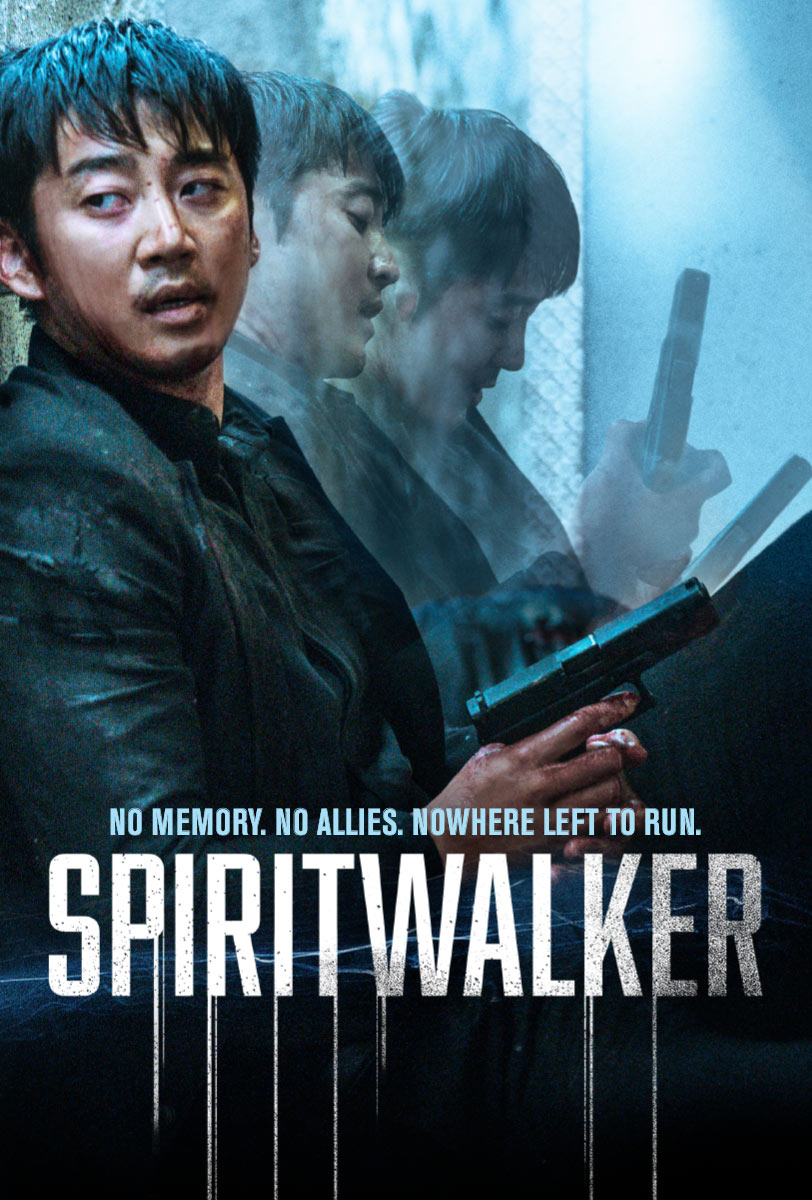
Spiritwalker (유체이탈자, Yoon Jae-geun, 2021)

“Who do you think I am?” the amnesiac hero of Yoon Jae-geun’s existential thriller Spiritwalker (유체이탈자, Yucheitalja) eventually asks having gained the key to his identity but continuing to look for it in the eyes of others. Yet as he’s told by an unlikely spirit guide, maybe knowing who you are isn’t as important as knowing where you’ve come from and where it is you’re going advising him to retrace his steps in order to piece his fragmented sense of self back together. 

A man (Yoon Kye-sang) comes round after a car accident with no memory of who he is or how he got there. He arrives at the hospital after a homeless man (Park Ji-hwan) calls an ambulance for him, but quickly realises he might be in some kind of trouble especially as the police are keen to find out who shot him and why. With that in mind, he decides to make a break for it but finds his sense of reality distorted once again as the world around him changes eventually realising that he’s shifted into the body of another man somehow connected to his “disappearance”. In fact this happens to him every 12 hours which is in many ways inconvenient as his impermanence hampers his ability to keep hold of the evidence he’s gathered while preventing him from making allies save for the homeless man who is the only one to believe his body-hopping story. 

As the homeless man points out, no-one in his camp really knows who they are anymore and to a certain extent it doesn’t really matter (in fact, he never gives his own name) because they have already become lost to their society as displaced as the hero if in a slightly different way forever denied an identity. What the homeless man teaches him, however, is that the essence of his soul has remained figuring out that at the very least he’s a guy who prefers hotdogs to croquettes even if he can’t remember why which is as good a place to found a self on as anywhere else. Even so, through his body-hopping journey he begins to notice that all of his hosts are in someway linked, inhabiting the same world and each possessing clues to the nature of his true identity. 

The central mystery, meanwhile, revolves around a high tech street drug originating in Thailand which causes hallucinations and a separation of body and soul apparently trafficked to Korea via a flamboyant Japanese gangster with the assistance of the Russian mafia in league with corrupt law enforcement members of which have begun getting dangerously high on their own supply with terrible if predictable results. This sense of uncertainty, that everyone is operating under a cover identity and those we assumed to be “good” might actually be “bad” and vice versa leans in to Yoon’s key themes in which nothing is really as it seems. Body and soul no longer align, the hero constantly surprised on catching sight of “himself” in mirrors, not knowing his own face but realising that this isn’t it while desperate for someone to “recognise” him as distinct from the corporeal form he currently inhabits. Though they may not be able to identify him, some are able to detect that he isn’t “himself”, behaving differently than expected, speaking in a different register, or moving in a way that is uniquely his own even while affected by other physical limitations such as one host’s persistent limp. 

Inevitably, the hero’s path back to reclaiming his identity lies in unlocking the conspiracy of which he finds himself at the centre, figuring out which side he’s on and what his highest priorities are or should be in gaining a clear picture of his true self as distinct from the self that others see. High impact hand-to-hand combat sequences give way to firefights and car chases while the hero finds himself constantly on the run in an ever shifting reality, Yoon employing some nifty effects as an apartment suddenly morphs into a coffee shop as the hero shifts from one life to another existentially discombobulated by the lives of others but always on the search for himself and a path back to before finding it only in the returned gaze of true recognition. 


Spiritwalker is released on blu-ray in the US April 12 courtesy of Well Go USA.

Interntational trailer (English subtitles)
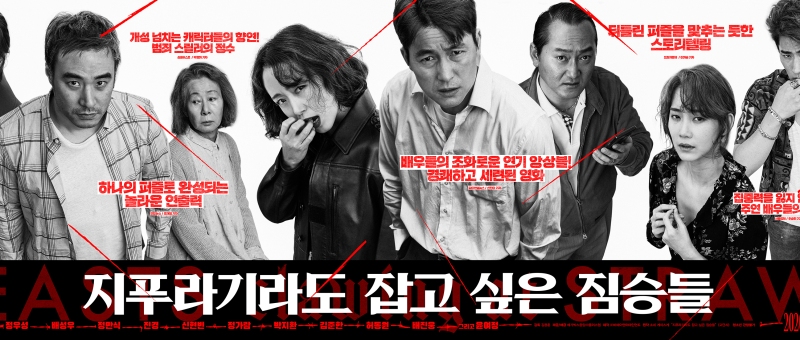
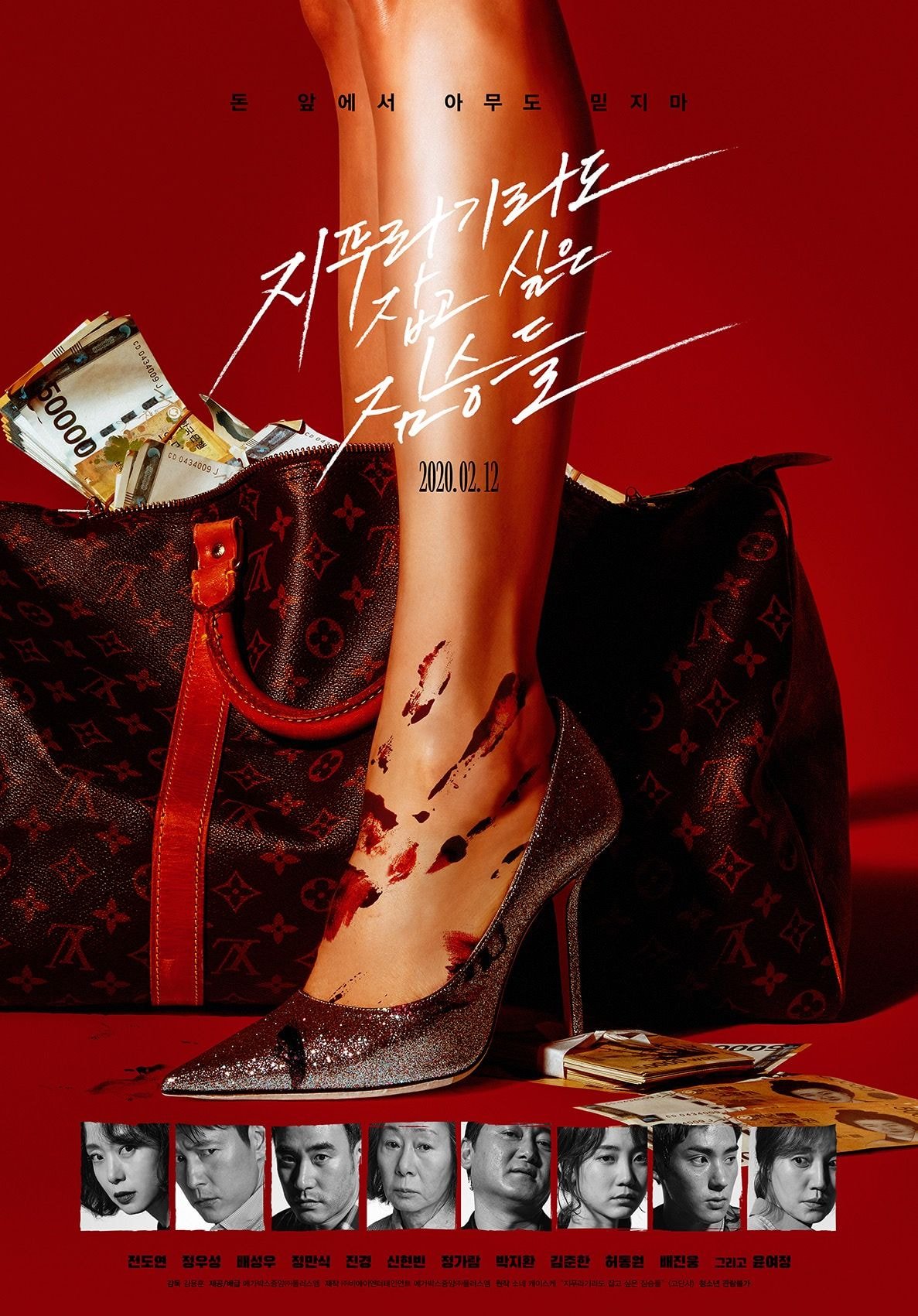
Beasts Clawing at Straws (지푸라기라도 잡고 싶은 짐승들, Kim Yong-hoon, 2020)

If you found a big bag full of money and then waited a while but no one came to claim it, what would you do? Many people would do as Jung-man (Bae Seong-woo) did, but sometimes gifts from the gods are sent to tempt you and are decidedly more trouble than they’re worth. Beasts Clawing at Straws (지푸라기라도 잡고 싶은 짐승들, Jipuragirado Jabgo Sipeun Jibseungdeul) is an apt way to describe our small group of interconnected protagonists, each desperately trying to get their hands on the money not necessarily for itself but for the power and possibility it represents or simply to free themselves from a debt-laden existence. 

Jung-man finds the Louis Vuitton bag stuffed inside a locker at his part-time job in a bathhouse. It seems that he is feeling particularly powerless because he’s somehow lost the family business and either never told his extremely domineering mother (Youn Yuh-jung) or she’s simply forgotten, often going off on crazed rants about how her daughter-in-law is secretly plotting to kill them all. Meanwhile, across town, immigration officer Tae-young (Jung Woo-sung) is desperately trying to find his missing girlfriend, Yeon-hee (Jeon Do-yeon), who has, apparently, run off with all his money leaving him in a difficult position with vicious loan shark Park (Jung Man-sik), and melancholy hostess Mi-ran (Shin Hyun-bin) is miserably trapped in an abusive marriage and plotting escape with the help of Jin-tae (Jung Ga-ram), an undocumented migrant from China she met in the club. 

As expected the streams will eventually cross, it is all connected, though it’ll be a while before we start to figure out how in Kim Yong-hoon’s tightly controlled non-linear narrative, adapted from the novel by Japanese author Keisuke Sone. Other than the money the force which connects them is powerlessness. Some of them, maybe all, are “greedy” but it’s not necessarily riches that they want so much as a way out of their disappointing lives. Jung-man feels particularly oppressed because he’s made to feel as if he’s failed his father by losing the family business, something he’s constantly reminded of by his ultra paranoid, domineering mother who eventually pushes his wife down the stairs provoking a crisis point in the foundation of the family. If working part-time in a bathhouse in his 40s hadn’t left him feeling enough of a failure, he is further emasculated by being unable to pay his daughter’s university tuition after she fails to win a scholarship and informs them she’s planning to take a term or two off to earn the money by herself. 

Tae-young is in much the same position, humiliatingly trapped by having foolishly co-signed his girlfriend’s loan only for her to disappear off the face of the Earth, leaving him wondering if he’s just a complete idiot or something untoward has happened to her. He thinks he can regain control of the situation by slipping further into the net of criminality, helping an old uni friend who’s committed large-scale fraud escape to China in exchange for a cut of the loot (and secretly plotting to nab the lot with the help of his shady friend Carp (Park Ji-hwan) who works at the club). 

A crisis of masculinity is also behind Mi-ran’s life of misery as her husband takes out his resentment towards his reduced circumstances on his wife, beating her mercilessly while forcing her to work at a hostess bar to pay off their debts from unwise stock market investments. For her, the money is both revenge and a pathway to a better life. She wants to be free of her husband, and profit in the process. Unable to do it alone, she manipulates male power in the lovestruck Jin-tae all too eager to play white knight to a damaged woman. But Jin-tae is male failure too. When all’s said and done he’s still an innocent boy, not quite prepared for the ugliness of causing a man’s death even if he is a wife beating tyrant the world may be better off without. As an undocumented migrant, he’s pretty marginalised too. Taking advice on how to solve the Jin-tae problem, a more experienced player reminds Mi-ran that no one’s coming looking for an illegal alien and it’s not as if she actually likes him so he is infinitely expendable. 

In an odd way, getting the money is about not being an expendable person anymore. They want the money because they think it will give them back a degree of control over their lives, a kind freedom to move forward with a sense of possibility they do not currently have because of all their debts both financial and emotional. Yet they find themselves farcically scrabbling in chaos, beasts clawing at straws, as they try to outsmart each other and the universe to get their hands on the bag. The universe looks on and laughs, rejoicing in its darkly humorous punchline as the bag finds itself another owner, tempted by its dubious charms with only the promise of more chaos to ensue.


Beasts Clawing at Straws streams in the US via the Smart Cinema app Aug. 29 to Sept. 12 as part of this year’s New York Asian Film festival. Now available in the UK on digital download courtesy of Blue Finch Films!

International trailer (English subtitles)

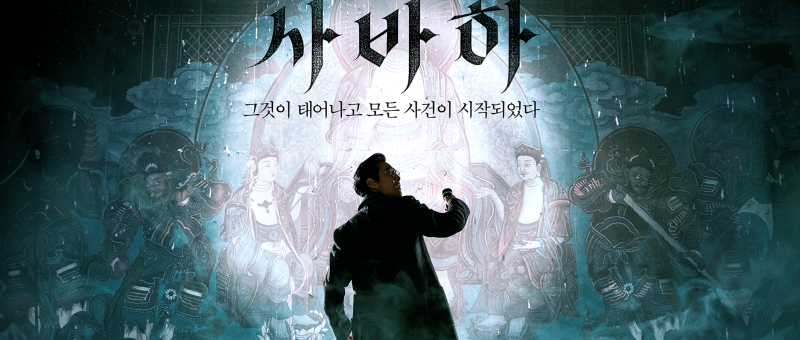
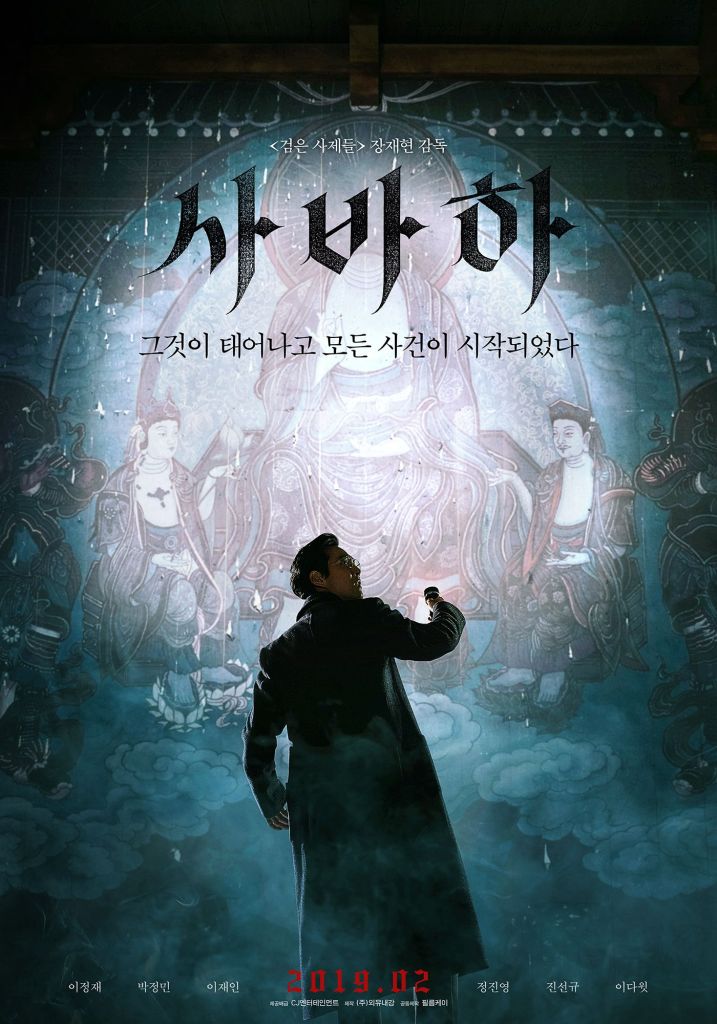
Svaha: The Sixth Finger (사바하, Jang Jae-hyun, 2019)

The thing about prophesies and the prophets who proclaim them, is that they only have power if people choose to believe in them. “Faith” can become a convenient cover for those who’d rather not explain themselves, a mechanism for manipulating sometimes vulnerable people looking for a greater truth or a purpose in their lives. Svaha: The Sixth Finger’s (사바하) dogged pastor is intent on investigating religious crimes and exploiting spiritual charlatans but he of course has his own agenda, that mostly being that he’s keen to get money off his clients who are in turn hoping to bolster their authority by rooting out “heresies”.

Leader of the Far Eastern Religious Research Institute, a kind of religious detective agency employing only himself, an undercover assistant, and a “deaconess” secretary, Pastor Park (Lee Jung-jae) makes his money flagging up dodgy and/or exploitative practices connected with organised religion. According to him, freedom of religion is “overly” protected, and he is alone on the frontlines of a spiritual war against unscrupulous cultists. Though some kind of protestant, he often works for/against the Catholic Church and is good friends with a Buddhist monk who gives him a tip off about a weird sect he can’t get a handle on, Deer Hill. 

Meanwhile, a young girl, Geum-hwa (Lee Jae-in), explains to us that she was born with an “evil” twin clamped to her leg. The twin wasn’t expected to survive, but is still living with Geum-hwa and her family who keep her locked up in a shed like a beast. Rightly or wrongly, Geum-hwa connects her sister with the deaths of her parents which occurred fairly soon after the children were born. Her grandfather, with whom Geum-hwa now lives, never even registered the birth of a second child out of fear and shame, never expecting her to survive this long. When a truck hits a bridge and exposes the hidden body of a murdered teenager, the police start investigating too, eventually leading them to two young men loosely connected with the shady Buddhist cult. 

“This world is one big muddy mess”, according to the cultists at Deer Hill. It’s not difficult to see why people might be looking for spiritual reassurance in such a chaotic world, but it’s exactly that need that places like Deer Hill may be seeking to exploit. Nevertheless, the only thing that Park’s undercover agent turns up is that there doesn’t appear to be anything untoward. Deer Hill doesn’t accept offerings from its members and even gives money away to the needy. Tellingly, the real nitty gritty to Park’s clients is in doctrinal deviation, they only really want to know what kind of Buddhism it is that they do and if it’s in line with broader teachings of the faith. 

A further tip off leads them to the mysterious Je-seok (Jung Dong-hwan), a legendary Buddhist priest who studied in Japan but apparently devoted himself to the Independence movement and is said to have achieved enlightenment. Je-seok’s teachings are dark in the extreme, “Pain is the fruit of faith” goes his mantra, “pain purifies your blood”. He believes that he is the “light” that will conquer the “darkness” by snuffing out “snakes”. One of his disciples, brainwashed as a vulnerable young man and encouraged to do terrible things in the name of good, begins to doubt his teachings when confronted with a possible hole in his logic and the very real human cost of his strategy. 

Not quite as cynical as he seems, Park retains his faith. It’s ironic that all this is taking place at Christmas and centres on the prophesied birth of a child that threatens someone’s sense of personal power. Unlike most, Park has always regarded Christmas as a “sad” holiday, unable to forget that Jesus’ birth was accompanied by the mass murder of innocent baby boys. He wonders where God is now and why he permits these things to happen. Park has faith that God sent Jesus into the world for the greater good, but Je-seok has convinced his followers that the same is true of him, that he has come to banish the darkness and that all their pain and suffering is fuel in a holy war. Their faith has been redirected and misused for the benefit of a false prophet, while his opposite number has been made to live a life of bestial misery solely because of superstitious prejudice. The police is a fairly irrelevant presence in this series of spiritual transgressions, but there is much less clarity to be had in “truth” than one might hope with “faith” the only solution in an increasingly uncertain world.


Svaha: The Sixth Finger is currently available to stream on Netflix in the UK (and possibly other territories).

International trailer (English subtitles)

The Drug King (麻藥王 / 마약왕, Woo Min-ho, 2018)

Drug King posterKorean cinema has been in a reflective mood of late, keen to re-examine the turbulent post-war era in the wake of a second wave of democratic protest and political turmoil. Even so, dealing with the difficult Park Chung-hee era has remained sensitive with the legacy of life under a repressive regime apparently very much still felt. Woo Min-ho’s Drug King (麻藥王 / 마약왕, Mayakwang) is first and foremost a crime doesn’t pay story, but it’s also a subtle condemnation of authoritarianism and the corruption and cronyism that goes along with it. Painting its hero’s rise as a consequence of the society in which he lives, it perhaps implies the new wind of egalitarian democracy made such amoral venality a thing of the past but then again is at pains to show that nothing really changes when it comes to greed and resentment.

Our hero, Lee Doo-sam (Song Kang-ho), starts out as a jeweller dabbling in smuggling in Busan in 1972. Just as the smuggling business starts to take off, Doo-sam’s boss falls out with his friends in high places and decides to throw him to the wolves while he escapes abroad to safety. Doo-sam, not one to be beaten, starts coming up with ideas. Mobilising his wife (Kim So-jin) to get him out of jail through a combination of bribery and blackmail, he teams up with the area’s smuggling king to act on a tip-off he got from a Korean-Japanese yakuza and begins producing popular drug Crank for export to Japan.

As the opening voice over explains, Crank is a dangerous stimulant developed by the Japanese during the war and given to factory workers and kamikaze pilots because of its ability to eliminate both fear and fatigue. It is also highly addictive and provides an extreme high which have made it a popular recreational drug but, crucially, the real value is economic. The rising Japan is keen to make use of foreign labour, and Korea is keen to up its export capability. This, coupled with poor regulation of the workforce, has led to extreme exploitation in which factory workers are encouraged to hop themselves up on stimulants to keep working overtime for the sake of economic expansion. Thus, the influx of Crank is, in many ways, simply another facet of ongoing Japanese imperialism.

Not that Lee Doo-Sam cares very much about that. An honest prosecutor later puts it to him that he’s contributing to the exploitation of ordinary workers who might earn a few pennies extra for working a few more hours but at the cost of their health and wellbeing, while he gets filthy rich off the back of their misery. Doo-sam is, however, unrepentant. In the beginning he just wanted to provide for his wife, children, and unmarried sisters, but perhaps he also wanted to kick back against his reduced circumstances and he certainly did enjoy playing the big man. In any case, it has paid off. Doo-sam too has friends in high places and they won’t want to let him sit in a police cell for long in case he starts feeling chatty.

Times change, however, and whatever standing and influence Doo-sam thought he’d accrued his life is built on sand. When Park is assassinated by a member of his own security team, all those contacts are pretty much useless because the cronies are now out in the cold. There are protests in the streets and the wind of a new era is already blowing through even if it is still a fair few years away. That bold new era will, it hopes, do away with men like Doo-sam and their way of thinking, eradicating corruption and backhanders in favour of honest meritocracy. Naive, perhaps, and idealistic but it is true enough that Doo-sam is a man whose era has passed him by while he, arrogantly, burned all his bridges and gleefully sacrificed love and friendship on the altar of greed and empty ambition.

Hubris is Doo-sam’s fatal flaw, but he remains a weasel to the end only too keen to sell out his associates in order to save his own skin. He may claim he was only trying to live a “decent” life, but his definition of “decent” may differ wildly from the norm. Nevertheless, perhaps he was just like many scrappy young men of post-war years, desperate, hungry, and left with few honest options to feed his family if one who later found himself corrupted by backstreet “success” and the dubious morals of the world in which he lived which encouraged him to disregard conventional morality in favour of personal gain. Much more about life in Korea in the authoritarian ‘70s than it is about crime, The Drug King is nevertheless an ironic tragedy in which its drug peddling hero eventually enables the birth of a dedicated narcotics squad and helps to dismantle system which allowed him to prosper all while grinning wildly and, presumably, planning his next move.


Currently available to stream online via Netflix in the UK and possibly other territories.

International trailer (English subtitles)

Key tracks from the (fantastic) soundtrack:

Jung Hoon-Hee – Flower Road

Kim Jung Mi – Wind