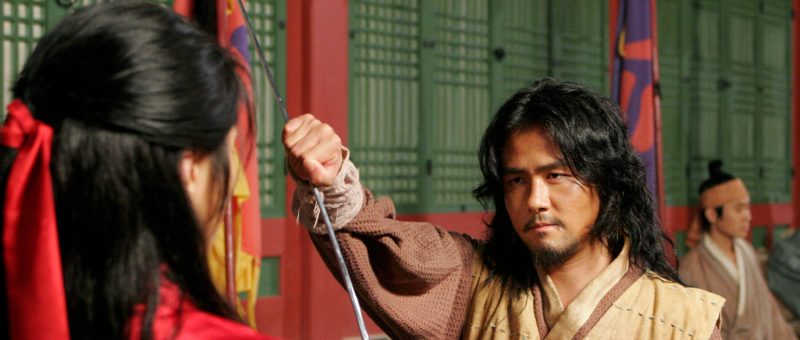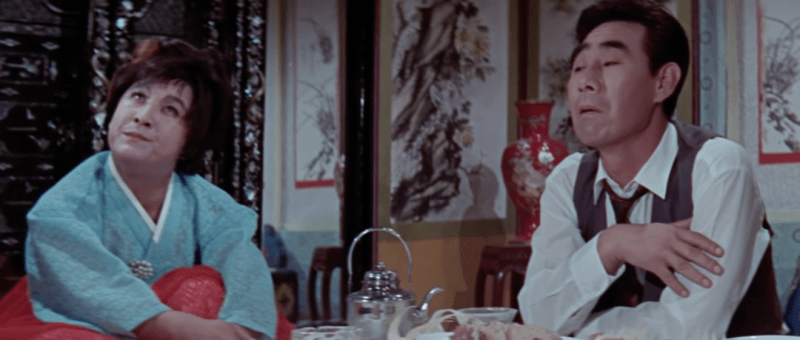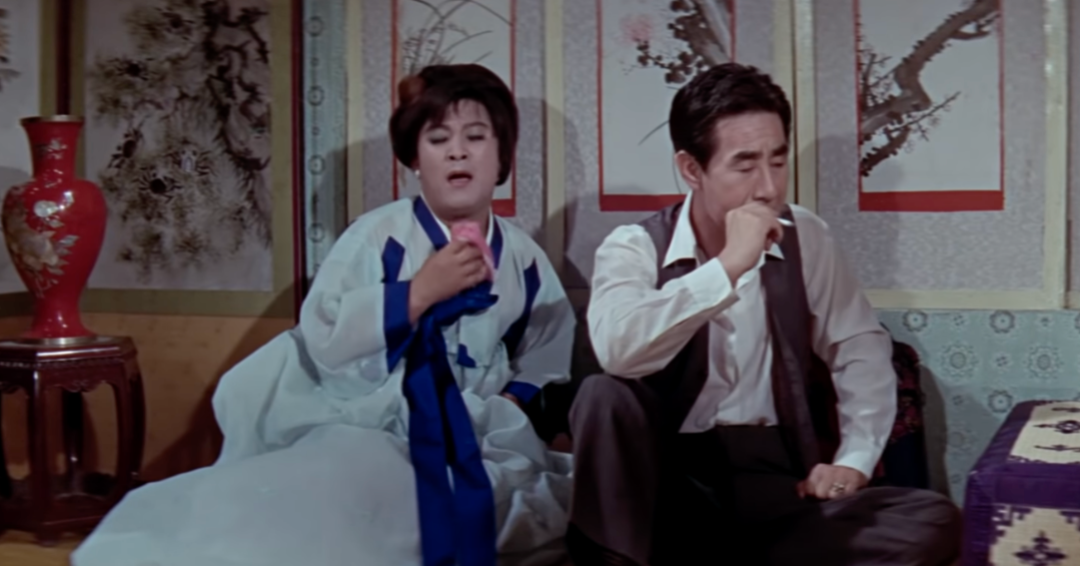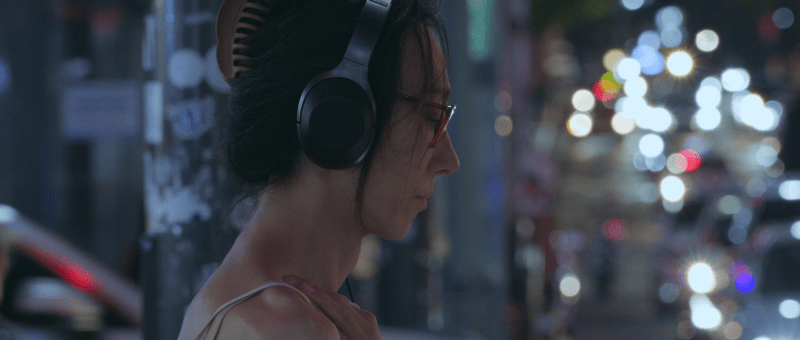
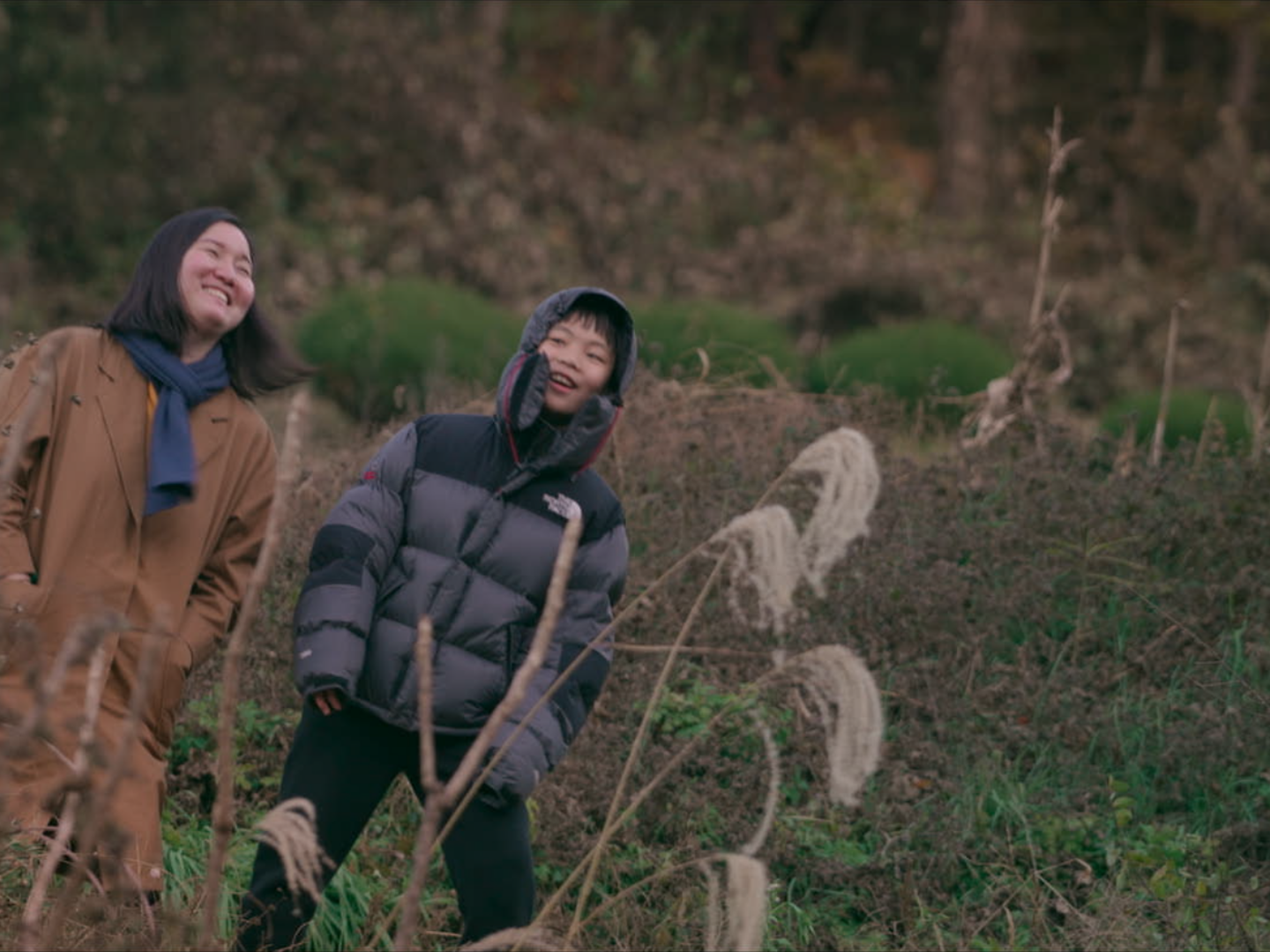
Edhi Alice (에디 앨리스: 리버스, Kim Il-ran, 2024)

“I’m Alice, who is living in the present,” one of the two protagonists of Kim Il-ran’s documentary Edhi Alice tells the camera when asked to introduce herself. A transwoman in her 40s, Alice got her name from film director Lee Joon-ik while working on Dong-ju: The Portrait of a Poet, a film inspired by the life of a poet who died as a political prisoner yearning for freedom and authenticity in a Japanese jail during the colonial era. 

Freedom and authenticity are both things that Alice has found in her transition and is continuing to seek. As a child, she had a consciousness of herself as female until her sister remarked in a phone call that she was becoming a man after noticing that her voice was breaking. Surrounded by an intensely patriarchal society, Alice convinced herself to conform to common notions of masculinity, even getting married in an attempt to live as a man and prove herself as one by having a child. Only after the marriage ended did she begin to embrace her authentic self by undergoing surgery which, she points out, is somewhat unusual in that she chose to remove her genitals right away because she couldn’t bear to live with the reminder of her masculinity. However, she has avoided other kinds of medical interventions such as plastic surgery stating that she doesn’t see the point now that she is already in her 40s and has no plans to date. 

She does, however, live in a more liminal space in which her transness is not immediately apparent while working in a stereotypically masculine industry as a lighting director for film and TV in which, as she points out, her height and strength are definite advantages. Though she says she has not experienced much prejudice and discrimination while working on films, she reveals that she was dismissed from a TV project because the producers were “ultra-conservative” and did not want to work with her. Meanwhile, there’s a genuine poignancy in the crew’s visit to a public bath as Alice reflects that she probably won’t ever have the opportunity to visit one again, suggesting that she most likely won’t be admitted to the women’s bath given her gender presentation and fears may make people uncomfortable if she were. 

Edhi doesn’t have the same trouble, but has not yet completed her transition having visited a fortune teller and been advised to wait until a more auspicious time. Working as a councillor for LGBTQ+ youth, she assumed she must have been gay because she liked men but only later came to realise after joining an LGBTQ+ choir that the gay men around her did not experience the same kind of discomfort in their bodies and that she must be trans. But like Alice, she originally tried to conform to what it means to be a man in Korean society. When she tried to explain her identity to her mother, she had dismissed it by saying that it was only because she didn’t want to serve in the military. Trans people are not welcomed in the armed forces and Edhi reflects on the death of Byun Hui-su who fought for her right to serve by beginning her transition while on leave from military service. Her desire to continue being a member of the armed forces was denied and she was dismissed. She later took her own life.

While affected by the deaths of so many people around her who could not find a way to survive amid the intensely conformist pressures of Korean society, Edhi does her best to live her life while taking care of her parents and nephews. Though her father might use male pronouns and continue to refer to her as his son and her mother, though supportive, worries that she might regret her choices later, Edhi was surprised by the ease with which her nephews simply accepted her explanation of her transness and agreed that “Edhi is just Edhi,” agreeing to call her by her name rather than uncle or aunt. She fears being forgotten and regrets having thrown away photos of her other life but continues to pursue her dream of living in a house with her mother and opening a cafe. While never shying away from the physical pain involved in transitioning, the film reinforces the sense of liberation it can bring if tempered by the realities of life in contemporary Korea.


Edhi Alice screens at the ICA 18th May as part of this year’s Queer East.
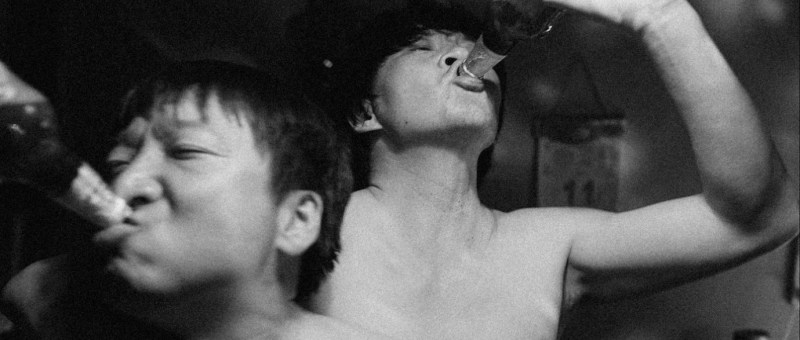
Bel Ami (漂亮朋友, Geng Jun, 2024)

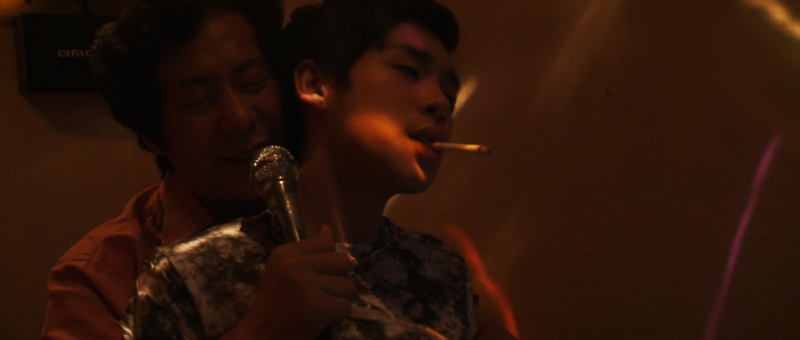
In the opening scenes of Geng Jun’s Bel Ami, a middle-aged man poses for a series of nude photos. The pictures and the poses echo a long history of queer iconography, but at first the man stands with his back to us. We can’t see his face, and he is hiding from us who he really is even as his nakedness suggests a desire for authenticity and a demand that we recognise his identity. “It’s repressive,” another man sighs, complaining that like everyone else he is forced to keep a part of himself hidden and is painfully lonely because of it. 

Like Geng’s other films set in Heilongjiang, Mainland China, the film’s queer themes would not play well with the censor’s board who are notoriously squeamish of any reference to the LGBTQ+ community and has found success only by screening in Taiwan where it won several categories at the Golden Horse Awards. There is a minor irony in play as a certain character makes clear in his rendition of the Internationale that the queer community in China has long referred to each other as “tongzhi” or “comrade” but do so to express solidarity against the oppressive authoritarian government which isolates and others them, preventing them from living authentically as full and free members of society. 

When Zhiyong spots a man he assumes to be gay in a cafe, he addresses him as “tongzhi”, but the man first denies his identity and responds to Zhiyong’s question about why he’s dressed in what he sees as a stereotypically gay manner if he’s not actually gay by saying that his son is really into rock music so he’s trying to look “cool”. He later confirms that he is actually gay and is annoyed his outfit is giving him away while similarly worried that Zhiyong will expose him. By contrast, a pair of lesbians sit in the next booth over and are overt and open in their relationship. They remark that the men behind them appear to be hiding something, while one insists that men have no morals or integrity. 

Xuanyu is, however, the most authoritarian of all as she keeps gay barber Quan, the prospective father of their child, under total surveillance. She insists on micromanaging his life, stalking him and installing a camera hidden in a clock in his barber shop. Her partner tells her love is freedom and asks if that’s what they give each other when they receive little of it from elsewhere, though it’s a question with no answer. Xuanyu is happy with the way that things are. She’d rather adopt than involve a man in their desire for a child and suggests just eloping while her partner says her parents would never accept it. Shooting in a crisp black and white that adds to the film’s breezy, deadpan humour, Geng switches to colour only once as Jing poses in a wedding dress only to be joined by a reluctant Quan suggesting a possible marriage of convenience that will satisfy both of their families and their filial obligations in the birth of their child. Quan leaves the frame as soon as possible, taking his flowers with him, for Xuanyu to enter now dressed in a black suit and occupying the space the groom.

Quan had been the lover of the man in the nude photos, Gang, but abruptly broke up with him. A baker who likes to strike back against an unforgiving society by hiding stands of his hair in his bread, Gang is also isolated and lonely, fearing he won’t be able to find another partner. He ends up meeting Zhiyong at an exclusive and very weird gay membership club run by “K” for King who gives Zhiyong the “codename” “Apollo” and immediately embarks on a sadomasochistic game pressuring Zhiyong for sexual favours as a means of joining the community expressing the way in which the oppressed oppress each other. While semi-stalked by an incredibly lonely and socially awkward restaurant owner, Zhiyong first runs from his queer identity but eventually finds a kind of hope and freedom in his relationship with Gang. They are each searching for connection and the freedom to love and be loved which is also in its way a means of resistance against entrenched authoritarianism. Don’t lose hope, they encourage each other while basking in the isolated patch of sunshine of the freedom they have found. 


Bel Ami screened as part of this year’s Queer East.

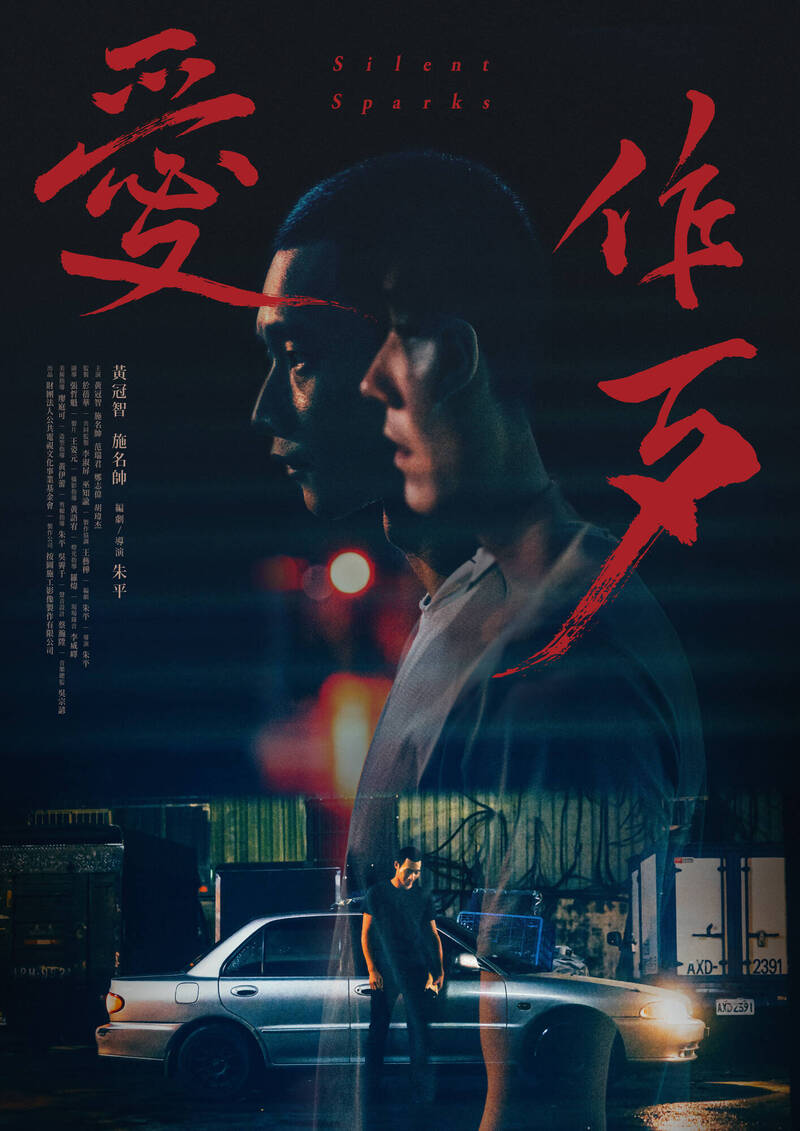
Silent Sparks (愛作歹, Chu Ping, 2024)

Recently released from prison, a young man discovers that it might be easier to be free behind bars than amid the incredibly homosocial world of urban gangsterdom in Chu Ping’s poignant LGBTQ+ drama, Silent Sparks (愛作歹, ài zuò dǎi). Pua (Akira Huang Guang-Zhi) is a kind of silent spark himself. As the gang boss describes him, he’s too rowdy and can’t keep his cool, which makes him a liability, but he’s also reticent and lonely, not to mention hurt by the seeming rejection when the man he fell in love with in prison ignores him on his release.

There is indeed a latent violence in Pua that hints at his frustration and inability to express himself. When we see him enter prison, he appears as a small boy lost in his own thoughts and silently crying, though he was sent there for breaking a man’s leg in a fight. Though he’s served his time, Pua is still paying off the monetary compensation he owes to the man whose leg he broke and otherwise struggles to get by, which leaves him almost dependent on the gang boss who agrees to take him under his wing as a favour to his mother. It seems that he once knew Pua’s long-absent father, presumably also a gangster, and plays a quasi-paternal role but only half-heartedly in seeing Pua more as a resource to be employed or otherwise an irritating burden he can’t quite seem to shake.

It was the gang boss who asked Mi-ji (Shih Ming-Shuai), his right-hand man, to “look after” Pua in prison. The boss sneers a little, and claims responsibility for saving him, adding that things could have ended up “real nasty” for him inside, by which he means “getting it up your ass”. The irony is that Mi-ji was Pua’s prison lover and Pua is excited about the idea of his release fully expecting to pick up where they left off. But the reunion between them is awkward. Mi-ji is not happy to see him. He speaks tersely and makes it clear he’s not exactly keen for a catch up while keeping one eye on the room in case anyone is getting the right idea. Though Pua continues to pursue him, Mi-ji is avoidant. Perhaps for him, it really was a prison thing that he’s embarrassed about on the outside, whereas Pua is more secure in his sexuality and less afraid of its exposure, only longing to resume the intimacy they once shared.

Mi-ji’s ambivalence hints at the toxic masculinity and entrenched homophobia of the world around them in which homosexuality is not really accepted and “getting it up your ass” is synonymous with defeat and humiliation. The irony is that Pua and Mi-ji were freer in prison where they could embrace their love without shame. Pua is imprisoned within the outside side world by virtue of being unable to be his authentic self, but is also trapped by his socio-economic prospects, which leave him dependent on the underworld and the dubious paternity of the gang boss. Expressing his frustration through violence damns him further in leaving him with mounting debts he can only hope to satisfy through acts of criminality. It is really on this side of the bars that the “real” prison lies, and it’s from this world that Pua longs to be released to return to the prison utopia of his love with Mi-ji.

Still, he cannot really escape his destiny, as his mother keeps reminding having read his tragic gangster fortune and trying to get him to eat rice noodles for 100 days to change his fate only to get her heart broken realising salvation for her son might mean something quite different than she had imagined and also take him away from her. Gritty in its gangland setting and hinting at the connections between political corruption and organised crime Chu’s slow-burn drama makes a hell of the contemporary society in which men like Pua find themselves trapped by toxic masculinities and hierarchal violence under an intensely patriarchal social order that permits them little sense of possibility or the ability to be their authentic selves and true freedom is to be found only within the homosocial world of a more literal “prison”.


Silent Sparks screens at Rio Cinema 5th May as part of this year’s Queer East.
Trailer (Traditional Chinese / English subtitles)

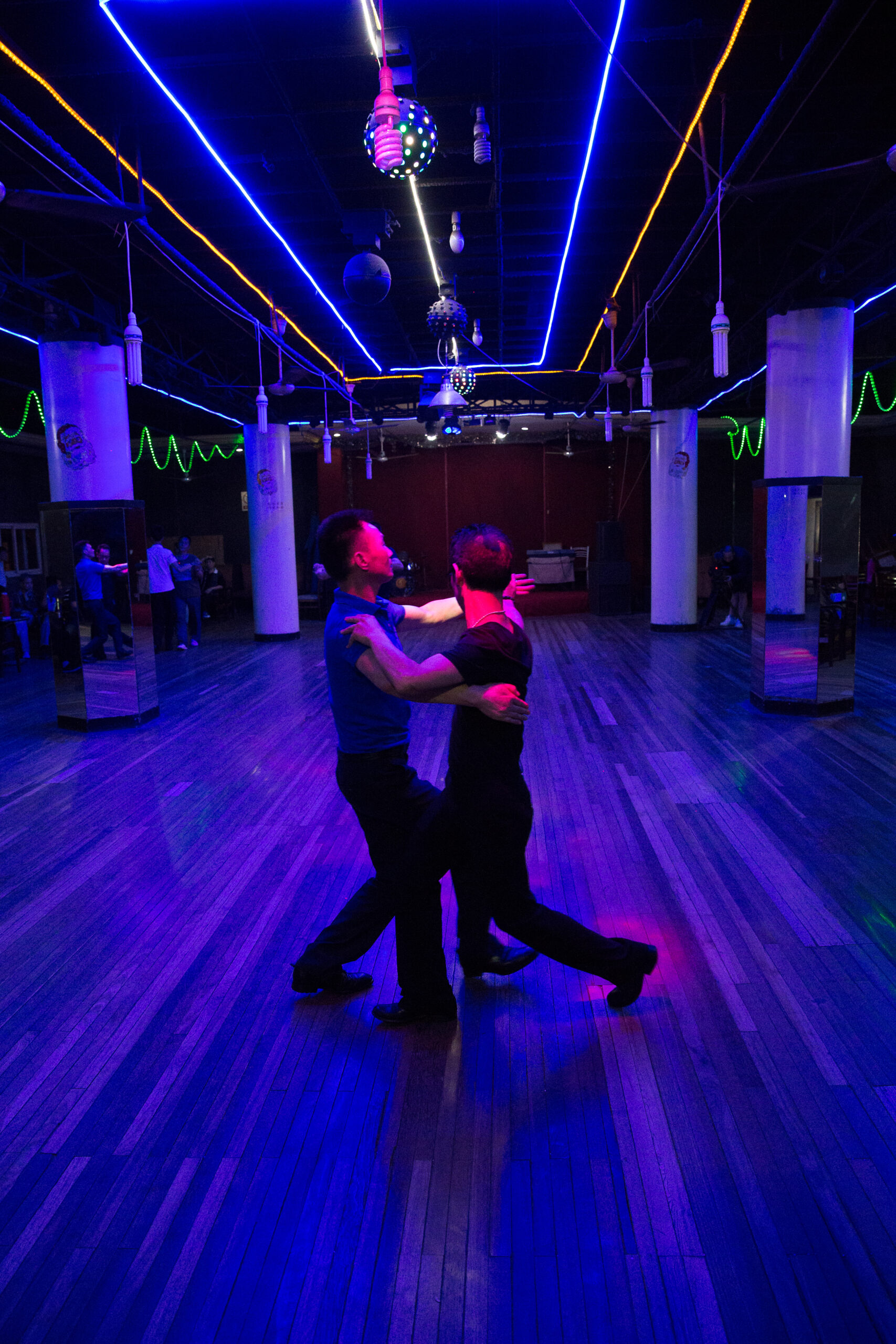
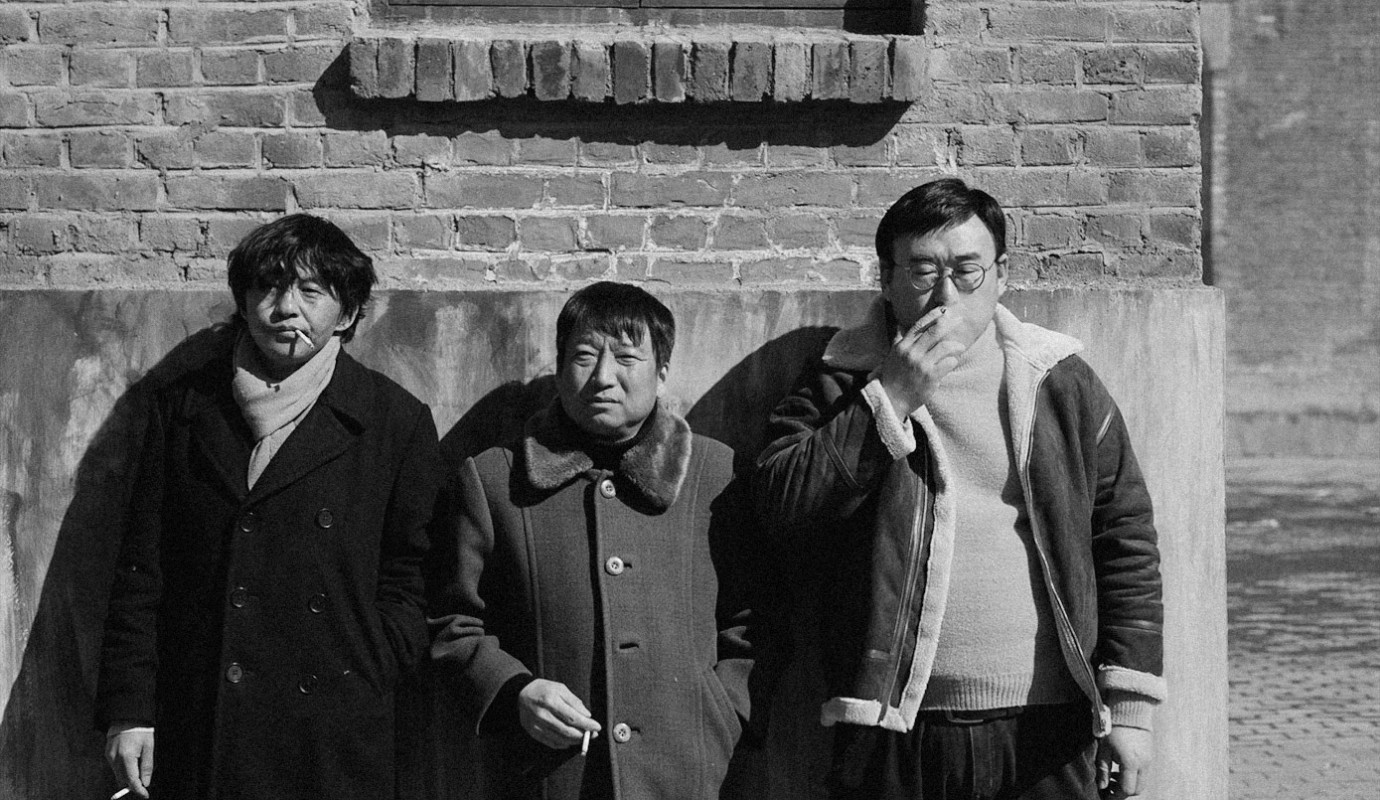
Come Dance With Me (来来, Liu Yunyi & Wei Bozhi, 2019)

“You need to fight for your place in society,” according to Jiaojiao, one of several regulars at the Lai Lai Ballroom interviewed as part of Liu Yunyi & Wei Bozhi’s documentary, Come Dance With Me (来来, lái lái). As several of them mention, the ballroom had been a refuge for the LGBTQ+ community, though times have now changed. These days, younger people prefer clubs and bars, while many of those who used to come are now elderly and don’t get out as much meaning that the ballrooms are mainly meeting places for the now middle-aged men who first frequented them 20 years earlier.

That they exist at all and this documentary could be made might be surprising given prevalent anti-LGBTQ+ attitudes from the censors’ board and wider community. It’s true enough that Lai Lai became a community hub and its partial closure for the 2016 G20 conference leaves them with no place to go. The various people that Liu & Wei interview come from various walks of life as they demonstrate in the opening sequence in which an old man visits a temple, a younger one visits a park, and Lai Lai’s manager Min walks through the neighbourhood and gets something to eat at a small cafe. 

The old man from the temple best expresses the inherent contradictions both of his religion and the wider society in which he relates that Buddhist monks are supposed to overcome their desires. Young monks are forbidden from taking wives and also from touching women, but technically speaking, the same prohibitions do not exist between men and homosexual acts are not unusual in the temple. Conversely, the young man who went to the park reveals that he has been living with HIV for the last seven years and that he lost his job because of it. In despair, he tried to take his own life only for his godmother to explain to him that people with high blood pressure also need to take medication for the rest of their life so it’s no different from that.

Still, he’s convinced himself of the impossibility of having a relationship sure that no one would stay with him after finding out. He says that he once told a close friend that he had AIDS and the friend quickly distanced himself from him and effectively disappeared from his life. The film later follows him on another day out with a young man, Li Yapeng, but an ill-fated decision to take a five-hour bus trip to go see him backfires when Yapeng not only fails to come and meet him but seems less than enthusiastic about his impromptu visit before abruptly breaking up with him. Another older man relates that he once had a lover who was diagnosed with HIV but told that he could not receive treatment in Shanghai and should return to his hometown. A Shanghai native, the older man resolved that, as he was already old and it would take several years for symptoms to emerge at which point he may be dead anyway, he would deliberately contract HIV and get medicine to give to him. What he didn’t realise is that the treatment isn’t the same for anyone and the medication he was prescribed was no good for his boyfriend, who then went back to his hometown and got treated there. Unfortunately, the treatment didn’t agree with him and he elected to stop taking it, passing away not long after.

Jiaojiao, meanwhile, has been with their partner Fei Er for 26 years, though Fei Er is now having health issues. Fei Er describes their relationship as rock solid and the same as that of any heterosexual couple in that now they’ve been together so long, 26 years is effectively forever and neither of them is ever going to abandon the other no matter what may come. Nevertheless, Jiaojiao also describes an additional layer of stigmatisation in that they have breasts, a fact which it seems they still hide from extended relatives having made the original decision to get them without telling anyone first. Done in a private clinic, the procedure also left them with ongoing medical issues caused by the failure to drain the wound properly. In a later conversation, they suggest that the primary motivation for getting breast surgery was financial. They now work as a dominatrix, but do not like doing it describing some of the men as “disgusting”. Their marginalised status prevents them from gaining more mainstream employment in a still conservative society. They have all found a place for themselves at Lai Lai, but as the press notes reveal, it abruptly closed its doors in 2018 with no one sure when or if it will reopen. Nevertheless, its legacy lives on as a space of warmth and acceptance that gave each of them a place to belong and be joyful no matter the difficulties of the world outside.


Come Dance With Me screens at Centre 151 3rd May as part of this year’s Queer East.
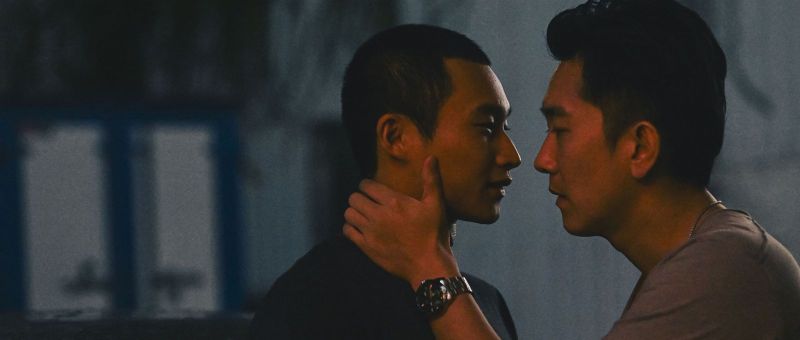
A Song Sung Blue (小白船, Geng Zihan, 2023)

Late into Geng Zihan ’s coming-of-age drama A Song Sung Blue (小白船, xiǎo bái chuán), the heroine’s father (Liang Long) who perhaps knows a little more about her than we might have assumed, tells her that love and resentment are often the same thing. At least, they are both unforgettable. Resentments are something Xian (Zhou Meijun) has in spades, though she has little way of expressing them outside of her sullenness and silence while perhaps learning some unhelpful lessons in her seemingly unreturned attraction to the daughter of her father’s receptionist. 

Firstly, Xian is resentful towards her mother who has abandoned her to go on a humanitarian mission to Africa for an entire year explaining that the hospital have promised her a long awaited promotion after which she won’t have to do the nightshifts and so can spend more with her daughter, the irony being that by that time Xian will be in her late teens and perhaps less keen to spend time with her mum. Secondly, Xian is resentful towards her estranged father whom she only sees at family gatherings and has little connection with. She also seems resentful towards the other children in the choir and has no real friends. When the choir runs out of female uniforms she’s told to wear one of the boys and stand at the back hoping no one will notice. Meanwhile, she’s a little surprised after venturing backstage and catching sight of her choir mistress embracing another woman. 

Yet in other ways Mingmei (Huang Ziqi), the daughter of her father’s receptionist with whom he is also in a relationship, is simply her inverse. Flighty and confident, Mingmei appears much older than her years and is training to be an air stewardess but inwardly seems hurt and vulnerable. She lives a fairly chaotic life in which she’s learned at an early age how to weaponise her sexuality and largely relies on sugar daddies for her financial upkeep while hating herself for doing so. It’s after learning that the man in question maybe about to leave his wife and marry Mingmei that Xian abruptly kisses her but is immediately rebuffed, Mingmei running a thumb across Xian’s lips as if more concerned about what she may have passed to Xian than outraged or offended.

Then again, Mingmei seems to have been aware of Xian’s attraction while no doubt tipped off by the fact that she was playing around with a stethoscope and presumably noticed her heart beating unusually fast. At times she seems insensitive, wilfully so or otherwise, or perhaps simply doesn’t know how not to manipulate the attraction that she inspires in others cruelly taking Xian along on one of her sugar daddy dates or asking her to help her dress. But then Xian also learns some problematic lessons, adopting some of Mingmei’s behaviour patterns in attempting to manipulate the attraction shown for her by a boy in the choir she is otherwise uninterested in by virtually forcing herself on him and then asking for a loan to get the money for Mingmei to open a store so she won’t have to rely on potentially violent sugar daddies and would therefore be more available to Xian who has also developed a white night desire to save her from her self-destructive instincts.

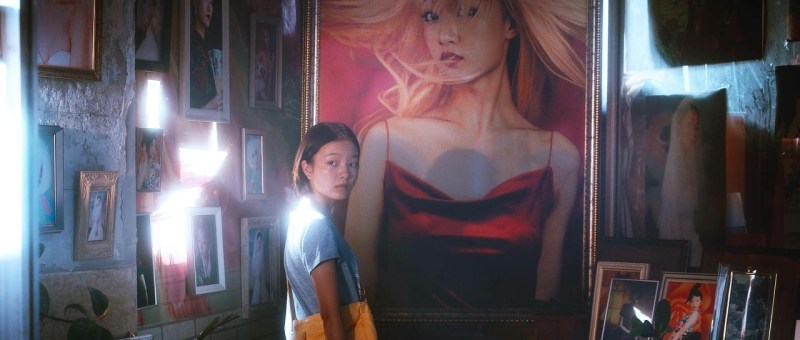
The only bright spot in Xian’s melancholy existence which is generally coloured in blue, her desire for Mingmei is palpable even gazing at the many photos of her taken by her father including one in striking red. Yet there’s an another sense of distance in her longing given that Mingmei is a member of the Chinese-Korean community. Xian is at once struck by this additional layer of exocitity and bewildered by her inability to understand it knowing no Korean nor much of Mingmei’s culture. The film takes its Chinese title from the song Xian sings at the choir recital, the traditional folksong Little White Boat which actually originated in Korea. Xian is disappointed not to spot Mingmei in the audience little knowing that she had been there but left early. Later in the film, Mingmei sings the song herself but in Korean perhaps a way of letting Xian know she came after all, or else simply intended in the way song is often sung as one of parting. In any case, Xian is indeed like the little boat dotting the horizon drifting along barely noticed and with no means of controlling her direction. Geng frames her with a quiet empathy and a gentle sense of recognition for those whose gaze is rarely returned.


A Song Sung Blue screened as part of this year’s Queer East.
Trailer (English subtitles)

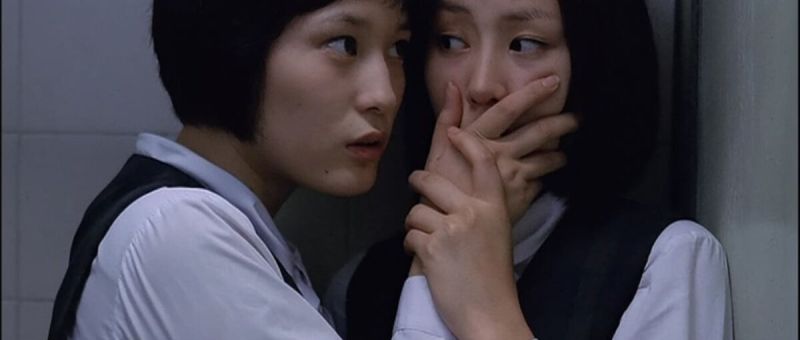
Memento Mori (여고괴담 두번째 이야기, Kim Tae-yong & Min Kyu-dong, 1999)

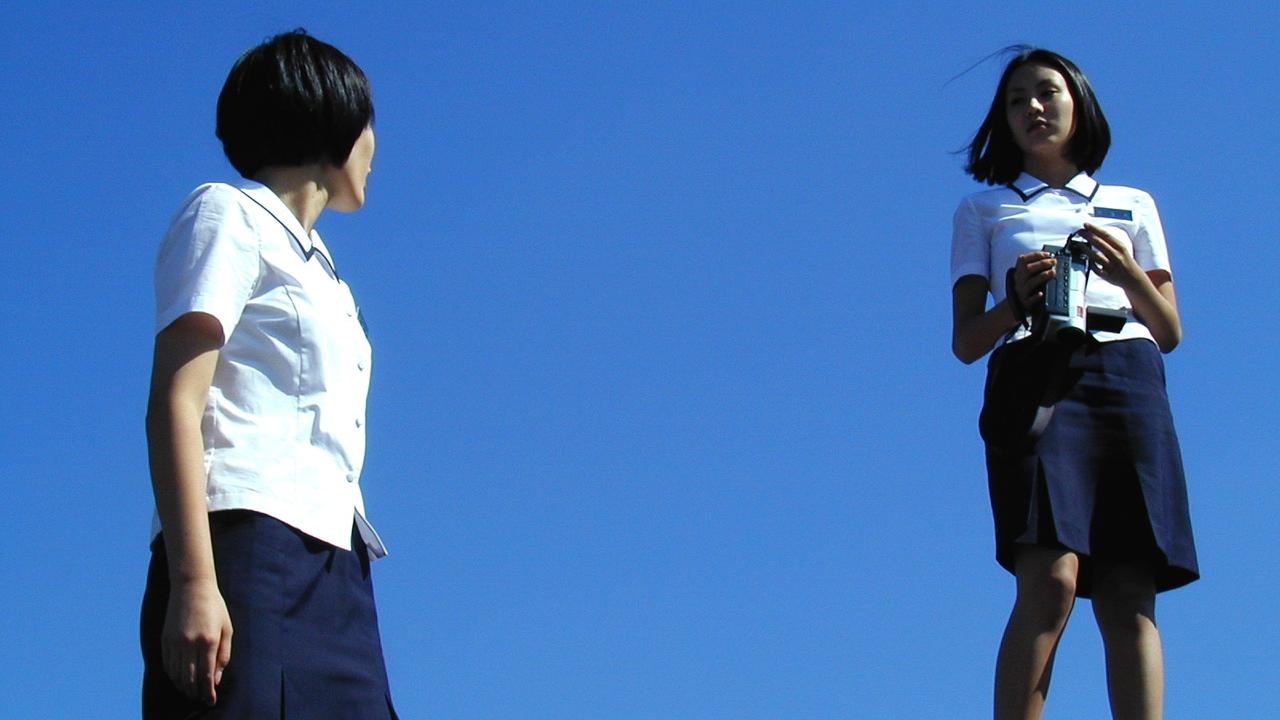
Internalised shame leads to tragic, unforeseen consequences in landmark South Korean horror Memento Mori (여고괴담 두번째 이야기, Yeogogoedam Dubeonchae Iyagi). The second in a thematic series of high school ghost stories, the film was radical for its time in its presentation of same sex romance in demonising not the love but the world that would not accept it while otherwise painting a fairly bleak picture of the educational landscape in which teachers are only ever symbols of a corrupt authority intent on enforcing oppressive patriarchal social codes.

The film’s heroine is in many ways an audience member, or at least a fairly passive observer of the ongoing drama who only later inserts herself into the narrative. Min-ah (Kim Min-sun) discovers a mysterious “diary” near the sports ground and is quickly hooked on its cryptic contents even before realising that it details a lesbian relationship between two of her classmates who were at one point “close” but have since “drifted apart”. The author, Hyo-shin (Park Ye-jin), is already considered “weird” by her classmates and does seem to have an otherworldly quality, most particularly in her tendency to speak in an uncanny manner. She is also accused of being a “lesbian” by an obnoxious fellow student laying bare the way these teens already enforce a social prejudice which oppresses them all. 

Min-ah’s friend Yeon-an (Kim Jae-in) has been fasting for the last few weeks to try and get her weight down before the school’s physical health check up, while Ji-won (Gong Hyo-jin) is similarly concerned with her chest measurement. This is an all girls school, and there is a clear preoccupation with the ability to conform to notions of conventional femininity while all of the teachers that we see aside from the school nurse are male and enforce discipline with quite shocking levels of violence. Yeon-an and Ji-won land up in trouble for playing around with a video camera they’d brought in to record choir practice when it’s discovered by a teacher who reacts as if he thinks the girls are on some kind of whistleblowing mission. He clearly feels that his authority has been questioned, which also implies that he knows his behaviour is “wrong”, and punishes the girls for their “rebellion” against him. 

After Hyo-shin dies in an apparent suicide, it is rumoured that she may have been pregnant which would certainly explain her desire to get out of the health check. In a flashback, she suggests that she may have drifted into an inappropriate sexual relationship with a dejected teacher, Mr. Goh (Baek Jong-hak), who claims that he doesn’t get on with his “materialistic” colleagues while fed up with the vacuous teenage girls he’s supposed to be teaching. Yet Mr. Goh appears to have suffered little after Hyo-shin’s death despite being the apparent father of her unborn child, leaving only Hyo-shin’s vengeful spirit to enact some kind of justice. 

It’s Mr. Goh who did in some way disrupt the relationship between Hyo-shin and Shi-eun (Lee Young-jin) who seems to feel on some level betrayed while deepening her inner conflict as regards her sexuality. Unlike the other girls, Shi-eun presents in a slightly more masculine fashion, not least because of her athleticism, and is filled with an internalised shame about her relationship with Hyo-shin which she otherwise does not share. In the dreamlike scene which opens the film, Hyo-shin and Shi-eun are plunged into water tied at the ankle by the red string of fate which in popular mythology signifies a true romantic connection. But as they fall together, Shi-eun begins to panic and unties herself. She violently pushes Hyo-shin away who then continues to sink into the murky depths below. This act of physical rejection is repeated several times, most notably when Hyo-shin kisses Shi-eun in front of their classmates shortly after she has been struck in the face by their teacher. Shi-eun pushes her away, and thereafter ignores her before directly stating that she is “ashamed” and does not care what Hyo-shin decides to do with her life. 

It’s this rejection that the film posits as the cause of Hyo-shin’s suicide, though the romance itself is constantly overshadowed by death. Obsessed with the diary, Min-ah eats a “magic” sweet stuck inside which is described as some kind of love poison for which Hyo-shin has an antidote, only in the climax of the film it seems to be the reverse and a kind of prelude to a double suicide. In the dreamworld created by Hyo-shin’s spirit, the schoolgirls assemble for something that looks a lot like a wedding though ostensibly a birthday party in which the couple is accepted by the world around them only in reality it can never happen in part because Shi-eun herself does not permit it to. 

Directors Kim and Min hint at the feverish atmosphere with blown out whites and strange angles even before entering the menacing dreamscape of Hyo-shin’s revenge, lending a note of unsteadiness to Min-ah’s obsessive investigation of the diary that perhaps reveals something of herself even as it draws her towards a dark spiritual destiny. In any case, what it leaves behind is a deep sense of melancholy for the tragedy of the teenage lovers who in the end maybe the ones haunted by the world around them.


Memento Mori screened as part of this year’s Queer East .

Trailer (English subtitles)

Stateless Things (줄탁동시, Kim Kyung-Mook, 2011)

“We looked everywhere for a place for us to stay, but we could not find it anywhere” one of the twin heroes of Kim Kyung-mook’s indie drama Stateless Things (줄탁동시, Jooltak Dongshi) confesses. As the title suggests, Kim’s eventually surrealist drama follows those who no longer have a home and are instead condemned to wander the margins of an unforgiving city. Finding only loneliness and exploitation they long for an escape and perhaps find one if only in a moment of eclipse. 

Shooting in a more naturalistic, documentary style, Kim first focusses on the figure of Jun (Paul Lee), a young North Korean refugee who lost his mother in the crossing and his father to another woman in Busan. He works in a petrol station but is treated with disdain by his boss who has his eye on his female colleague, Soon-hee (Kim Sae-Byuk), who is a member of the Korean minority in China where most of her family reside. Though originally hostile towards each other, each wary of their mutual isolation and concurrent vulnerability, the pair later bond in a shared resentment of their boss who exploits Jun physically for his labour and seeks to exploit Soon-hee sexually. After each saving the other from the nefarious boss, the pair have no choice but to go on the run taking in a series of tourist spots while looking for another place to settle. 

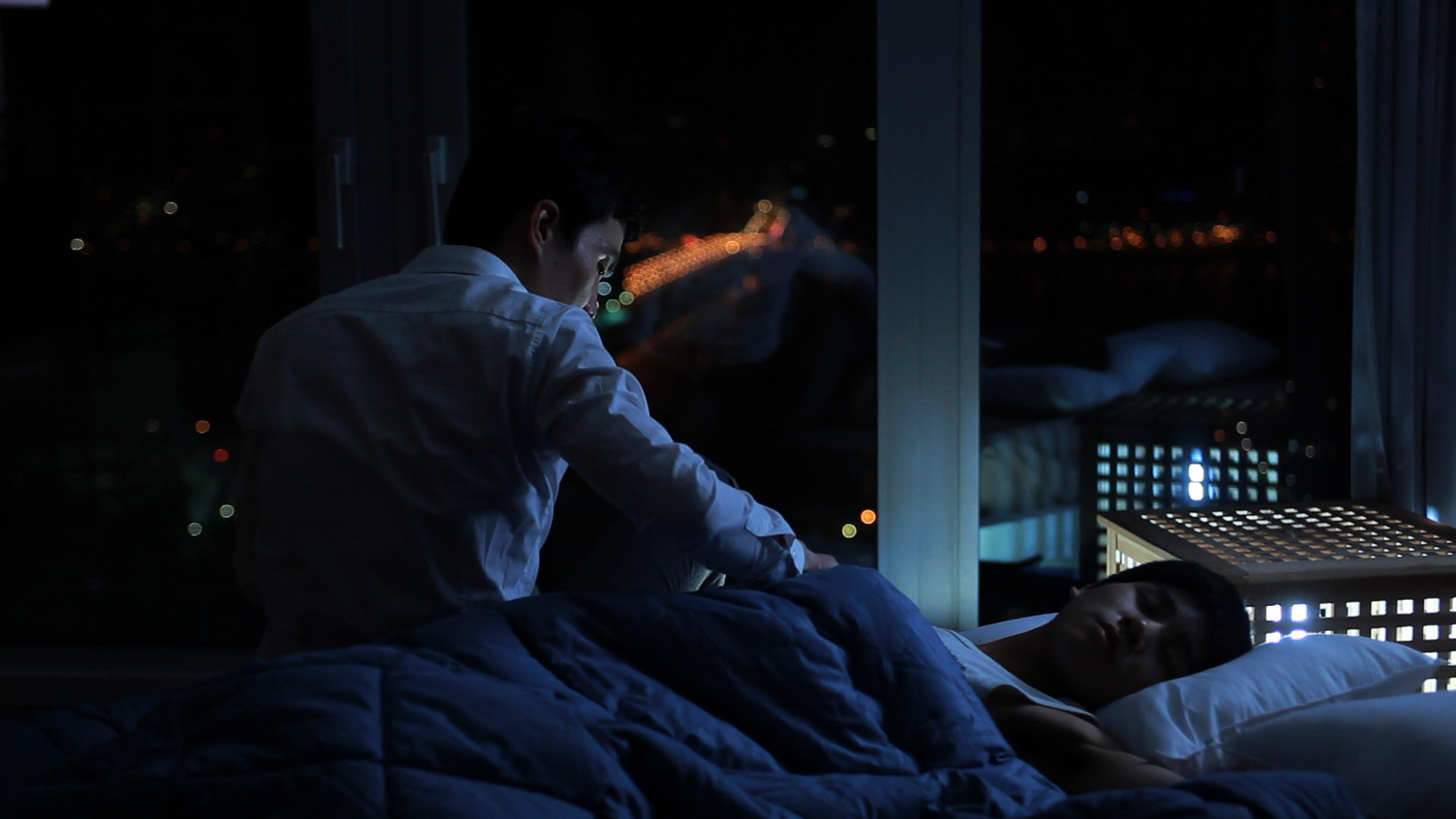
Meanwhile, across town, a young gay man, Hyun (Yeom Hyun-Joon), is a virtual prisoner in the home of his wealthy, married and closeted lover. He looks out across the midnight city and dances sadly alone in a luxury apartment in the sky while occasionally venturing out to meet other men, mostly older, who similarly only intend to exploit his body. “You have nowhere to go.” the exasperated Sung-woo/Sung-hoon (Lim Hyung-Guk) insists, thrown into jealous anxiety on visiting the flat and finding Hyun absent, yet he cannot really offer him a “home” and is all too aware of the transactional nature of their relationship. Though Hyun is also in a sense “stateless”, he has a power over Sung-woo and is able to wield his youth and beauty like a weapon if one he may not fully be able to control. In any case, he too is excluded from the mainstream society by virtue of his sexuality and socio-economic background. 

When Soon-hee and Jun visit a temple, he remarks on the incongruity of seeing a painting that features both a sun and a moon. She explains a folktale to him in which sun and moon are embodiments of siblings who climbed a rope into the sky to escape a hungry tiger. In his diary, Hyun also envisages a pair of twins one opening a door with his right hand as the other closes it with his left. In the surrealist sequence which closes the film, after a title card that appears 90 minutes in, the two men blur into one another as if they shared the same soul in an almost literal eclipse of the self. Kim nevertheless characterises them as sun and moon who cannot ordinarily share the same space. Jun occupies a world of street level sunniness until the light finally begins to dim leaving him alone in a dusky, rain-soaked city. Hyun meanwhile lives by night in his high rise apartment, a prisoner of luxury who flirts with danger for a sense of escape. 

Then again we might ask if Jun and Hyun are two sides of one whole, a sun and moon protecting the king who finds himself an exile. Kim shifts to scenes of emptiness, rooms without presence and streets without life as if the two men were ghosts of themselves hovering above a rootless Seoul, the sense of eeriness only deepened by Kim’s lengthy takes as he follows Jun walking a lonely path towards nowhere in particular because in the end he too has nowhere to go. Departing from the realism with which the film opened, the final sequence gives way to a kind of rebirth if only one of wandering that leaves its heroes at the mercy of a society continually unwilling to recognise their personhood. 


Stateless Things screened as part of this year’s Queer East .

Trailer (English subtitles)

Rebels of the Neon God (青少年哪吒, Tsai Ming-Liang, 1992)

Towards the end of Tsai Ming-liangs’s Rebels of the Neon God (青少年哪吒, Qīngshàonián Nézhā), a young man exasperatingly stuffs a series of rags into the busted drain in his kitchen which has been relentlessly leaking water all over the apartment. In many ways it’s a kind of metaphor for his life as he attempts to staunch the flow of “bad luck” he’s been experiencing over the last few days, but like so many things for him it does not quite go to plan. 

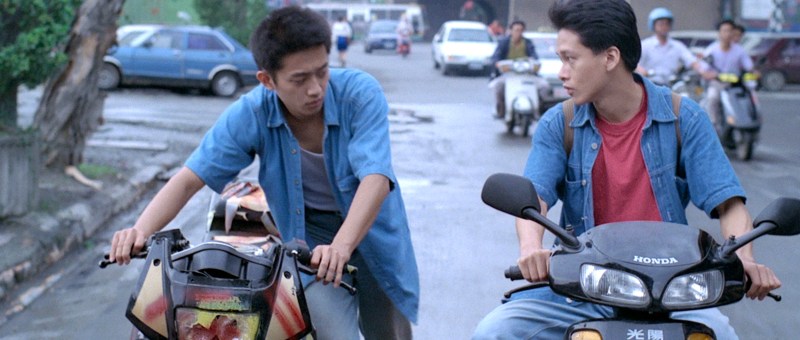
As to why, it’s not exactly clear except that A-tze (Chen Chao-jung) is a kind of outcast beneath the neon skies of a changing Taipei. He and his friend A-ping (Jen Chang-bin) earn their money breaking into telephone boxes and vending machines for loose change before at one point stealing the motherboards from arcade consoles and unsuccessfully trying to sell them back to the person they stole them from. All they get for their pain is a literal battering while A-tze’s frustrated romance with sometime girlfriend Mei-kuei (Wang Yu-wen) similarly flounders in the wake of his ennui. 

The karmic debt he bears is however mainly down to a random act of pointless violence in knocking the wing mirror off a taxi driver’s car for no real reason save momentary impulse. Even so, the taxi driver’s son Xiao-Kang (Lee Kang-sheng) had already been watching him and soon discovers a fascination with the rebellious young man that is ambiguous in quality. What becomes obvious is that Hsiao-kang is at odds with the world in which he lives. His mother (Lu Yi-ching) reveals that a fortune teller told her he is the reincarnation of “Neon God” Nezha, a chaotic child who later killed the authoritarian father with whom he could not get along. Hsiao-kang’s mother tells this to her husband (Miao Tien) as a kind of warning, advising that his authoritarian parenting style is doing his son no good, but Mr. Lee isn’t minded to listen. Finding out that Hsiao-kang has dropped out of cram school and kept the refunded tuition money for himself, Mr. Lee throws him out which of course leaves him free to follow A-tze all around Taipei day and night before childishly damaging his motorcycle. 

In disabling the bike, Hsiao-kang perhaps hoped to ruin A-tze’s freedom, symbolically taking from him independence and a sense of possibility. Then again, perhaps in another way he hoped to engineer a friendship. Riding around on his own scooter, he draws up behind A-tze pushing his to a garage and offers help but A-tze tells him to buzz off. In fact, A-tze never acknowledges Hsiao-kang. He never recognises him or realises that he’s being followed though he does later remember Mr. Lee and is struck by guilty futility not really knowing why he decided to arbitrarily ruin someone’s day while reflecting that all his days are ruined. The water in his apartment continues to rise all around him as if emphasising his mounting sense of despair. Mei-kuei tries to break up with A-tze before asking him to go away with her. They ask each other where they would go, but neither has any answer. 

A remorseful Mr. Lee later comes home and makes the point of leaving the front door ajar, symbolically open to his son’s return while Hsiao-kang remains lost. He visits a telephone dating service having heard Mei-kuei moonlight by answering one while working at the ice rink, but in the end cannot even pick up the phone. Staring at a picture of James Dean, he longs for the sense of rebellion he is drawn to in A-tze but is still the chaotic boy, dancing wildly like a wheelless Nezha and seemingly with no further sense of direction. In the end, it’s the city of Taipei which is the “neon god” of the title, arbitrarily ruling over each of the boy’s lives even as it ironically emerges from the authoritarian past into hypermodern urbanity. Hsiao-kang is little better off than the cockroach he ironically skewers on the point of his compass, and A-tze little than that which circles his overflowing drain carried inexorably on the current on a circular journey towards nowhere in particular. Many of Tsai’s key themes are already here, urban alienation, loneliness, futility, and the crushing sense of emptiness of life in the contemporary era even as he turns his gaze to the overcast skies of a city lit only by despair.


Rebels of the Neon God screened as part of this year’s Queer East .

Trailer (Traditional Chinese / English subtitles)

King and the Clown (왕의 남자, Lee Joon-ik, 2005)

The feudal order conspires against everyone from minstrel to king in Lee Joon-ik’s Shakespearean historical epic, King and the Clown (왕의 남자, Wang-ui Namja). The Korean title might translate to the equally ambiguous “The King’s Man”, but in any case invites the question of who it is that is the “king” and who the “clown” though in practice it might not matter because their roles are to a degree interchangeable. Nevertheless, a minstrel’s attempt to transgress class boundaries eventually leads to tragedy but also perhaps defiance in his seizing of the little freedom that is given to him. 

The oppressiveness of the system is emphasised in the opening text which explains the historical background and reveals that the king of this story was considered a tyrant, though also thought to be sensitive and intelligent, while permanently damaged by the early death of his mother who was forced to take her own life because of machinations in the court. The King (Jung Jin-young) himself rails at the system complaining that he has no real power and is largely unable to overrule the advice of his courtiers who remain loyal to his late father and simultaneously force him to obey the rule of a man who is already dead. In this internecine feudal society, not even the king is free. 

This might in a sense explain his tyranny, borne both of an anxiety over the precarity of his rule (the text also reveals that he was deposed by his courtiers shortly after the film concludes) and is otherwise engaged in a kind of frustrated boundary pushing. At heart, he is a wounded and petulant child. His eventual decision to participate in the clown show put on by Jang-saeng (Kam Woo-sung) and his troupe of jesters hints at his mental instability and growing inability to discern reality from fantasy, or to a point perhaps there is no true “reality” for a king and so the distinction no longer matters as there is no real difference for him between a man “dying” in a play and dying for real. 

For Jang-saeng, however, there is a difference. He and his brother-in-arms Gong-gil (Lee Joon-gi) are technically on the run after Gong-gil ended up killing their manager to defend Jang-saeng who had tried to protect him from exploitation in being pimped out as a male sex worker to earn extra money for the company. It’s Jang-saeng who hits on the lucrative opportunities of satire after teaming up with three other minstrels in the capital and hearing tales of the King’s scandalous sex life. This obviously gets him into hot water with the authorities, though Jang-saeng talks himself out of trouble by convincing conflicted courtier Cheo-seon (Jang Hang-seon) to allow them to perform before the King who actively enjoys being mocked and brings the clowns into the palace to entertain him at his pleasure causing a further rift with his conservative courtiers who do not enjoy having their dirty dealings exposed through bawdy street theatre. 

The repeated visual motif of the tightrope emphasises the fine line Jang-saeng is walking as a commoner in the court. Cheo-seon had hoped their performance would show the King the extent of the corruption among his courtiers, but the results leave Jang-seong conflicted as he sees men die as a result of his comedy while failing in his primary goal of protecting Gong-gil from exploitation as he quickly becomes a favourite of the King again endangering their position as they become a target for the King’s mistress (Kang Sung-yeon), a former sex worker who had like them used her natural gifts to transgress the boundaries of class. Cheo-seon complains that it’s the King’s “lust for a boy” which has corrupted the court, while Jang-seong’s resentment may otherwise be unwarranted as Gong-gil appears to like and pity the King and may have come to his own decision about advancing his fortunes despite Jang-seong’s assertion that there are some things that should not be sold.  

But as Jang-seong comes to realise, all around the tightrope is an abyss. “Never knew a fool who knew his place” Jang-seong wrote in one of his plays and that is in someways his tragedy, that he dared to challenge the social order but in the end could not overcome it and neither could the King. Even so he may find a kind of freedom in seeking escape from a cruel and oppressive society in the only way that is available to him. “The world’s but a stage. Kingly is he who struts for a while, then exits in style” Jang-seong exclaims, a “sightless fool” who finally knows where he stands.


King and the Clown screened as part of this year’s Queer East .

Trailer (English subtitles)

A Man and a Gisaeng (남자와 기생, Shim Wu-seob, 1969)

Under the authoritarian regime of Park Chung-hee, Korean Cinema was subject to increasingly stringent censorship and film was seen as an important means of moral instruction. The central message behind Shim Wu-seob’s raucous comedy A Man and a Gisaeng (남자와 기생, Namjawa Gisaeng) is that a man should be faithful to his family and avoid the double betrayal represented by drinking in the company of women which fritters away financial security and endangers his relationship with his wife. Yet the film is also subversive despite the underlying conservative message in making a mockery of so-called “traditional” gender roles.

Indeed, the film’s very thesis is that men are weak and women are strong. The men visit who gisaeng appear to have done so to reaffirm their dominant masculinity through their financial power in essentially paying women to be subservient towards them. Yet the gisaeng themselves are fully in control of the game they are playing as one makes clear when she tells a drunken businessman off after he gets handsy with her. She reminds him that a gisaeng is a person too, not a doll to be played with, and when he doesn’t listen she gets up and leaves proving who it is that has the upper hand in this situation. All the businessman can do is splutter and threaten the otherwise mild-mannered male manager. 

The hero’s boss, Heo (Heo Jang-gang), is a henpecked husband who visits gisaeng as a means of escape from his domineering wife (Do Kum-bong) who punishes him like a child. He asks Tae-ho (Gu Bong-Seo) to resign after catching him sitting at his desk darning socks to earn extra money and though it might be perfectly reasonable to fire an employee for brazenly doing another job on company time, Heo mainly lets him go because of his unmanliness. Tae-ho is a fully domesticated man who does work traditionally regarded as “feminine” in taking in sewing and looking after all of the domestic tasks such as cooking and cleaning as a “maternal” figure to his younger sister Tae-suk (Kim Chung-ja) who is then depicted as “manly” in her mastery of martial arts. 

It quickly becomes clear that the “effeminate” man Tae-ho is the film’s strongest character and the only one largely in control of his circumstances. He agrees to become a gisaeng partly because he needs to earn money after being fired, but also he claims as a “joke” before committing himself to punishing men who neglect their duty to their families by shaming them into changing their behaviour as he largely does with Heo who, bizarrely, develops a fascination with Tae-ho’s gisaeng persona San-wol as she apparently reminds him of the first love he was prevented from marrying because of her family’s disapproval. 

The gender subversion is in essence the joke, but there are also constant hints that it might not be and Tae-ho’s female persona is also authentic, not least among them the music cues which are extremely ironic. For example, the melody of “Don’t Fence Me In” plays over Tae-ho at the house of gisaeng, as do the strains of “Nature Boy” which also hint at a validation of Tae-ho’s expression of femininity. Before being fired, Tae-ho tells Heo that he’s repressing himself and it isn’t good for him, and there is a (joking) suggestion in the final scenes that Heo’s attraction to San-wol is partly born of her seeming masculinity. He did indeed unwittingly appreciate a drag performance from Tae-ho’s queer-coded musician friend, after all.

It’s also possible to read Heo’s reunion with his wife as a new appreciation for her own “masculine” qualities in her capacity to dominate him even if the film simultaneously suggests that the role of a “good wife” is to offer “affection” to her husband and if the husband visits gisaeng it’s the wife’s fault for not giving it to him. Even so, what the film’s conclusion implies is closer to a rebalancing than might be expected in allowing Jeong-mi, the gisaeng with whom Tae-ho falls in love to counter any suggestion of queerness, to open her own shop as an independent woman pursuing a relationship with Tae-ho who is then a travelling salesmen selling cosmetics. Jeong-mi asks Tae-ho to give up “knitting” before they get married which would signal a remasculinisation, but Tae-suk, though dressing in a more feminine fashion to meet her in-laws, is not directly asked to give up Taekwondo and it seems that her fiancé appreciates her feistiness rather than seeking to soften it. Even Heo’s wife if seeming more cheerful has not given up control in their marriage despite her own drag experience in the gisaeng house yet their relationship is now considered “repaired”. “Traditional” gender roles have ostensibly been reaffirmed, Heo’s marriage is saved and both Tae-ho and his sister are about to marry, but they’ve also been subverted and redefined in unexpected ways. Some of this may only be possible because A Man and a Gisaeng is an absurd comedy of the kind Shim was known for, but it nevertheless hints at an underlying plea for greater social freedom in an authoritarian era. 


A Man and a Gisaeng screened as part of this year’s Queer East .