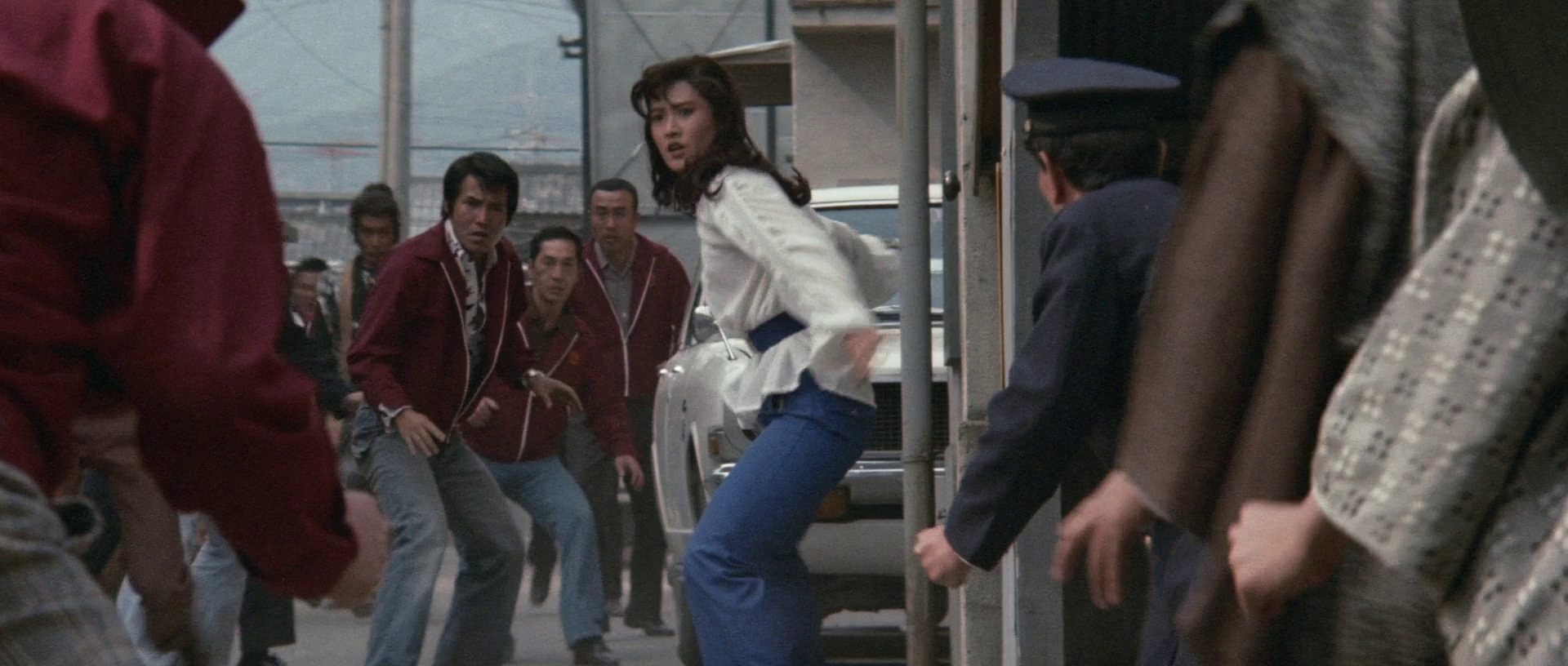
Sister Street Fighter: Fifth Level Fist (女必殺五段拳, Shigehiro Ozawa, 1976)

Though it’s tacked on to the Sister Street Fighter series, Level Five Fist (女必殺五段拳, Onna hissatsu godan ken) actually has nothing to do with it save borrowing a part of the title which is intended to signal the presence of its star. Thus, this is not really a martial arts movie but a much more conventional Toei action film in which the leading role is technically split between Etsuko Shihomi’s posh girl karate champ and Tsunehiko Watase’s sexist cop. It does however continue the smuggling theme with the drugs this time first being packed inside fish and then encased in Buddha statues to be exported to America.

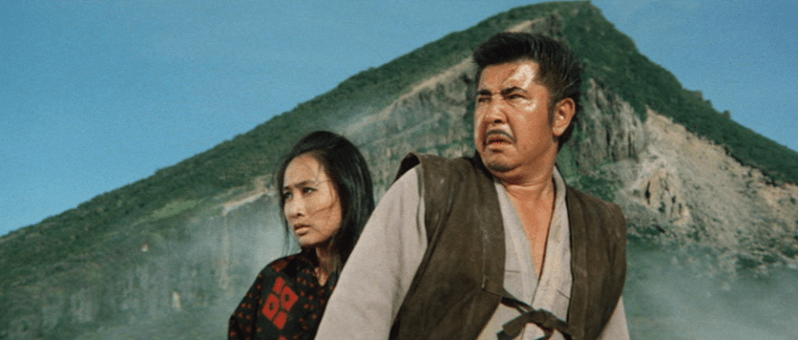
Like many Toei films of the time, there is an underlying theme of anti-Americanism as the “Far East” big boss, posing as a Hollywood movie exec, is supposedly from there but has a strong accent suggesting otherwise. Meanwhile, the brother and sister at the film’s centre are a pair of children who were fathered by American servicemen at the bases in Okinawa who presumably took no responsibility for their upbringing. The brother’s father was black, while the sister’s was white, and though they have both suffered prejudice and discrimination because of their mixed ethnicity, it’s clear that Jim (Ken Wallace) has had it worse. Michi (Mitchi Love) makes good use of her native-level English abilities and martial arts skills to work as a bodyguard / interpreter for visiting dignitaries, but Jim seems to struggle to find employment and subsequently ends up working for a Korean gang run out of a local nightclub. 

The pair have a dream of saving up enough money to return to Okinawa, which was returned to Japan in 1971 after an extended period of US occupation, and opening a restaurant which the film positions as a desire to escape from the racism they experience on the mainland. When Jim says that Kiku (Etsuko Shihomi) is their only friend, he half implies that the discrimination they face is down to being Okinawan rather than their mixed ethnicity which would continue to be an issue even on the islands as it was in their childhood even if there may be more understanding given the continuing presence of the American military and larger numbers of mixed-ethnicity people. In any case, it’s true enough that even those from Okinawa do also experience discrimination on the mainland and are not always accepted as “Japanese” while their Okinawan identity is not respected either. 

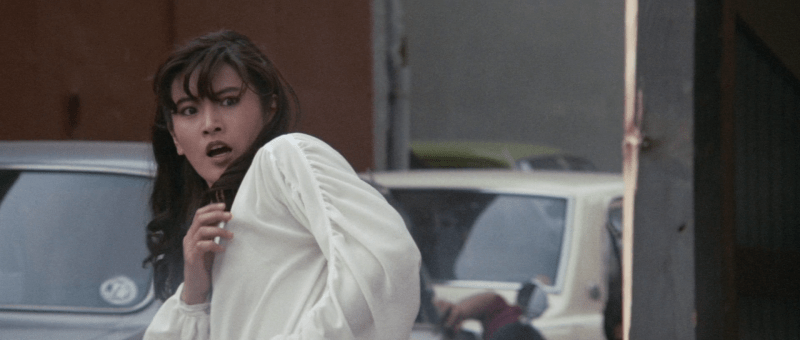
Kiku is trying to protect her friends, but finds herself hamstrung by rigid cop Takagi (Tsunehiko Watase) who also happens to be the son of a friend of her father’s. Kiku’s father is apparently a self-made man and successful kimono merchant married to a more conservative woman with higher social ambitions. As the film opens, Kiku is dressed in a kimono and being subject to a formal omiai meeting for an arranged marriage with an admittedly promising candidate who graduated from an elite university and works for a prominent bank. But Kiku looks bored throughout and defiantly flouts social convention by suddenly claiming to have an appointment and walking out, much to her mother’s embarrassment. Her father lets her go and is apparently less bothered about this sort of propriety though later trying to put his foot down when she leaves the house dressed like a hippy rather than in a fine kimono which is not, after all, a very good advert for the family business. 

Her father also tries to set Kiku up with Takagi, but like her mother, Takagi also tells her to keep her nose out of the case and “try trusting a man for once”. He criticises her for saying that she doesn’t want to lose to a man and explains that men are attracted to women because of their “gentleness.” He adds that cooking and raising children are what make women happy, with the clear implication that Kiku is in the wrong for flouting conventional gender roles and should quickly conform by getting married and becoming a wife. Kiku appears to give him the benefit of the doubt and this confusion over gender roles is compounded when she poses as a boy and takes a job as a extra on the jidaigeki film set at the studio which turns out to be a front for drug runners. A queer-coded actor who is later told off for “stalking people again” tries to hit on her in a clear allusion to her masculinity. But unlike in the Sister Street Fighter films, she is ultimately defeated and tied to a log with a buzz saw coming at her only to be saved by the intervention of Takagi while the final scenes see her supporting him after he is (possibly fatally) injured defeating the bad guys.

All in all, it’s some rather confusing messaging but seems to come out on the side of male authority as represented by the police rather than Kiku’s father who is depicted as a weakened figure of masculinity owing to being henpecked by his wife and hoodwinked by his feisty daughter. Even the grinning sap from the gym who tried to put Chanel No. 5 on Kiku’s karate outfit, much to her annoyance, is later revealed to be an undercover cop. Which is all to say, that Kiku’s martial arts ability is almost a kind of joke and something that places her outside of conventional gender norms which should otherwise be “corrected” rather than praised, as it was in the Sister Streetfighter series which placed more emphasis on martial arts philosophy. Then again, the original trilogy ended on a similarly sour note in reaffirming Koyu’s maternity. It seems it’s less sisters doing it for themselves, than sisters doing as they’re told, which aside from anything else is a disappointing conclusion to one of the few female–led action franchises of the 1970s.


Original trailer (English subtitles)
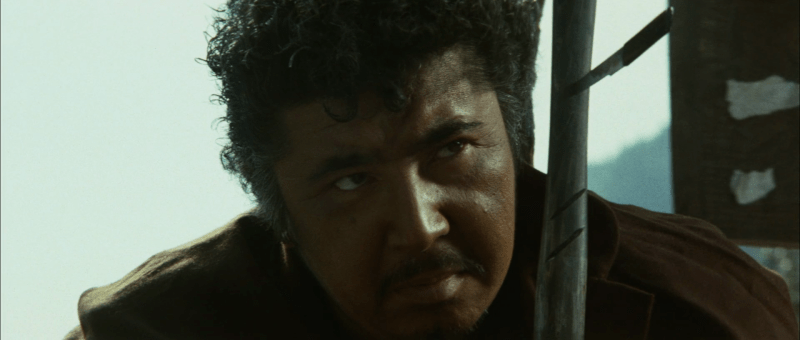
Eight Men to Kill (賞金首 一瞬八人斬り, Shigehiro Ozawa, 1972)

In the first instalment of the Bounty Hunter series, Shikoro Ichibei (Tomisaburo Wakayama) had been a shogunate spy intent on putting down rebellion to their oppression, but by the third, it seems he’s thoroughly fed up with the ills of feudalism and apparently no admirer of the Tokugawa who he feels to have failed in their responsibility to the people along with their personal greed and desire to hold on to their power.

Ichibei’s chief objection is their lack of healthcare provision, seeing as he is a doctor who mainly cares for the poor. That’s one reason he agrees to the job, asking for a large percentage of the gold he’s been asked to retrieve by a worried retainer who explains that the Edo government is relying on it to bridge a gap on their finances. If the gold’s not returned, the entire economy may crash. The government’s heartlessness is further borne out by the retainer’s words that it’s not the time to be concerned about one boy whose importance pales in contrast to that of the Tokugawa Shogunate when a rogue ronin kidnaps the son of the man responsible for the theft of the gold from a local mine. 

In a repeated motif, men attempt to swallow the gold as a means either of stealing or hiding it but it gets stuck in their digestive system and causes them a great deal of pain that could lead to death. The cruel mine owner Kanoke Tatsu (Minoru Oki) forces Ichibei to cut open the man’s stomach to get the gold out, while he insists on sewing him back up again because as a doctor it would be wrong not to. What he’s really performed maybe a kind of gold-ectomy, removing the toxic substance from the men’s stomachs even if he may not be able to save their lives or improve their circumstances.

Ichibei tells the bandit, Yasha the Wolf (Kenji Imai), who is held responsible for the theft of the gold, that he is as bad as him and is only looking for a fast way to make money, yet he wants it to use to build better hospitals for the poor, ironically using the government’s cash to make up for their failing. Meanwhile, he finds himself coming up against a man much like himself only inverted in the form of wandering assassin Yajuro (Shigeru Amachi), a former secret policeman in the rebellious Bishu domain who doubt crosses everyone he comes across in an attempt to get his hands on the gold. Ichibei asks the man who hired him why they don’t want to use government spies but he tells him that it’s because they’d run out. The ones they sent to investigate have all been killed, presumably by the treacherous Yajuro.

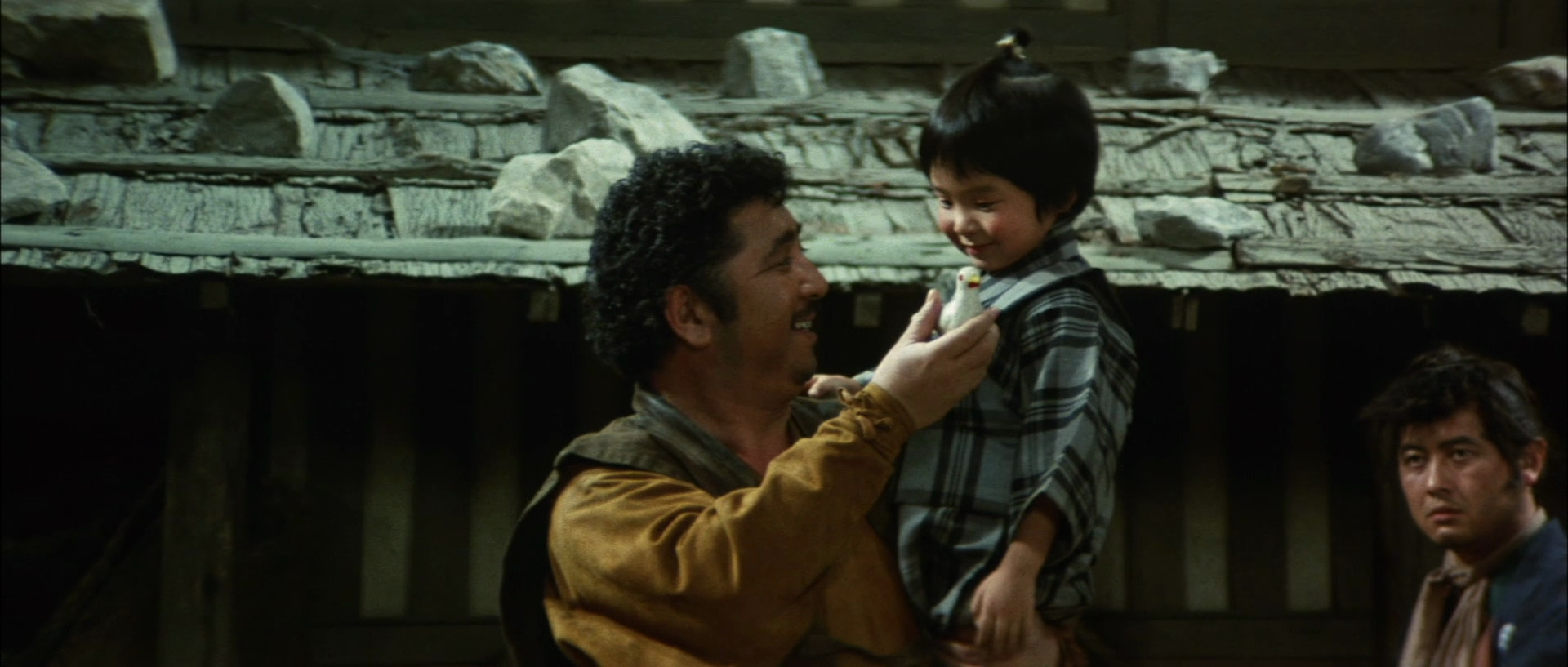
All around him, Ichibei discovers only omnipresent greed. A geisha he comes across is working with the mine owner to steal the cash, but simultaneously seducing Ichibei and the apparently won over by his bedroom prowess though it’s difficult to know which is an act, her fondness for Ichibei or pledges to sell him out to Kanoke. Meanwhile, Kanoke vacillates when presented with a binary choice by Yajuro, his adorable three-year-old son, or the gold. As always, it’s the innocent who suffer while personal greed and governmental indifference leave ordinary people little room to manoeuvre. 

This time around, the righteous Ichibei cuts a solitary figure. He no longer has a posse and is supported only by an older gentleman who is mute. As a result of his mission, he even ends up on a wanted poster himself with the shogunate, presumably unwilling recognise him, yet eventually congratulating him on a job well done, much to his shame and embarrassment having witnessed shogunate soldiers committing an atrocity. Very much in the western vein, Ozawa lends the dusty old mining town a sense of dread and decay as it rots from the inside out thanks to the corrupt authority of a weakened shogunate seeking only ways to cement its own power. The red-tinted final taking place during a solar eclipse seems to emphasise the hellishness of the situation even as Ichibei announces that they can all go to hell but he’s sending the money to heaven where it can be put to better use. 


Killer’s Mission (賞金稼ぎ, Shigehiro Ozawa, 1969)

According to the title card at the beginning of Shigehiro Ozawa’s Killer’s Mission (賞金稼ぎ, Shokin Kasegi), none of the events it depicts have been recorded in history because the shogunate decided to erase them all in fear of the effect they may have on the nation’s geopolitical stability. Nevertheless, it gives some very concrete dates for its historical action, even if they may not make complete sense while foreshadowing the political turbulence of the following century. 

What it essentially attempts to do is tell a James Bond-style tale of political intrigue in a feudal Japan in which perpetual peace has begun to create its own problems. Here played in a cameo appearance from Koji Tsuruta, the Shogun Ieshige was weak in part because he was in poor health and had a speech impediment which led him to be rejected by his retainers. The problem here, however, is with Satsuma which has been on bad terms with the Tokugawa shogunate since the Battle of Sekigahara after which they took power. Satsuma will in fact be at the centre of the conspiracy to overthrow the government in the following century, but for the purposes of the film have fallen foul of a rumour that the plan to do an arms deal with some Dutch sailors who sailed South to Kyushu after being rebuffed in Edo. 

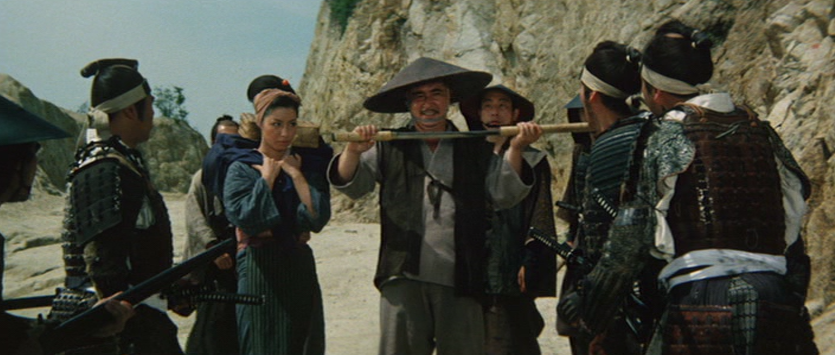
A civil war is feared and in the interests of maintaining peace, Ieshige sends his trusted spy Ichibei (Tomisaburo Wakayama) to protect Satsuma official Ijuin Ukiyo (Chiezo Kataoka) in the hope that he will be able to talk his young and naive lord out of doing the deal. Ostensibly a doctor by trade, Ichibei has a series of spy gadgets such as hidden blades and collapsible guns stored in a secret room at his surgery which he then carries in a black leather utility belt. He keeps the nature of his mission close to his chest, but often double bluffs by simply telling people he is a shogunate spy or otherwise adopting a disguise as he does in a moment of meta comedy impersonating the signature role of his brother Shintaro Katsu by posing as a Zatoichi-style blind masseur. 

As if to signal the cruelty of the feudal world, Ichibei comes across the corpses of suspected spies abandoned outside Satsuma territory while his enemies meditate on their ancient slight and consider taking the deal in the hope of avenging their defeat and overthrowing the Tokugawa. They are warned that creating unrest and sowing division may be exactly what foreign powers like the Dutch crave, but aren’t particularly bothered, preferring to take their chances with them rather than curry favour with the Shogun and possibly destabilising the entire society along with it. 

Of course, much of this is anachronistic with the Dutch sailors appearing in a distinctly 19th century fashion carrying weapons which are also too advanced for the era as are Ichibei’s folding pistols. Through his travels, he runs into a female Iga spy who too can do some nifty ninja tricks and has a gadget of her own in a comb which can shoot poison darts, though luckily it’s one of the poisons Ichibei has already developed an immunity to. Ichibei is fond of crying that you kill him he’ll simply come back to life, barrelling through the air with feats of improbable human agility and generally behaving like some kind of supernatural entity with a secondary talent for violent seduction. 

Though ironic and often darkly comic, there is an unavoidable poignancy in the inner conflict of Ijuin who knows his clan is about to do something very foolish but is torn between his duty to obey them and that to act in their best interests, eventually backed into a corner and left with no real way out of his predicament. As Ichibei points out, it’s difficult to keep the peace, especially when restless young samurai spot opportunities to cause chaos and the outside world knocks on the door of a closed community. Even so, Ozawa ends on a romantic image of a beach at sunset somehow undercutting the violence and tragedy with the restoration of an order that might itself be imperfect in its peacefulness.