Warrior of the Wind (風の武士, Tai Kato, 1964)

Mysterious forces swirl around a hidden village deep in the mountains said to contain copious amounts of gold in Tai Kato’s adaptation of the Ryotaro Shiba novel, Warrior of the Wind (風の武士, Kaze no Bushi). Though billed as a ninja movie (the film’s poster prominently features jidaigeki star Hashizo Okawa in ninja wraps with a shuriken in his hand), the film is really more of a historical romance in which a feckless young man finds new purpose through a love that is destined to remain unfulfilled.

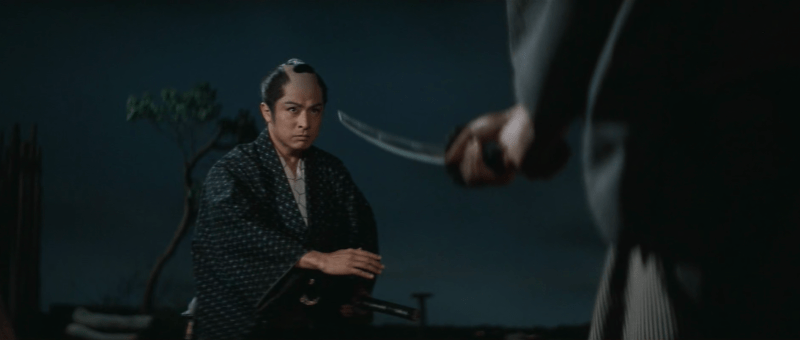
Shinzo’s (Hashizo Okawa) main problem is that he is a second son and at the tail end of the Edo era, which means he has no real prospects in life. As the film opens, he is still in bed in the afternoon when he has to be woken by his indulgent older sister who nevertheless needles him about his complicated love life. A bit of a Don Juan, Shinzo has been romancing a young woman from a local inn, Osei (Naoko Kubo), but has also fallen for the daughter of a dojo master, Ochino (Hiroko Sakuramachi). In order to woo her, he’s got a part-time job as an instructor and faces rivalry both personal and professional with his colleague, Koriki (Minoru Oki), who is also interested in Ochino though she appears not to like him. 

Later, Osei describes their relationship as being more of a friends with benefits situation, though it’s clear that she is really in love with Shinzo but doubts that he takes it as seriously as she does. The implication is that she feels this romance to be impossible because of the class difference between them. Shinzo’s romantic interest in her may be precisely because he is only a second son, but even so he likely will not marry her because she is not noblewoman. Conversely, Ochino doubts Shinzo’s sincerity when he makes overtures to her knowing that he is technically still in a relationship with Osei and is unsure whether or not she can trust him despite her obvious attraction. This element of romantic confusion adds to the pervasive sense of mistrust that colours the late-Edo society in which it is impossible to tell whose side anyone is really on when even individuals struggle to define their own authentic identity. Rounding out the chaos, Shinzo is also pursued by a woman working with mysterious shogunate agent The Cat, who says she no longer knows who she is anymore and asks Shinzo to make love to her in the aim of finding out.

Shinzo too is given a mission on behalf of the shogun. As his brother says, this ought to be what finally gives his life purpose. The way to serve a lord is to carry one’s orders, as Shinzo is old after asking too many questions. But conversely, it seems to be that he finds purpose more in saving Ochino and the eventual mutual recognition of their feelings than he does in fulfilling his purpose as a samurai lord. It turns out that both the shogunate and the Kishu clan want to take over the village because it was said to have amassed vast amounts of gold, which, aside from the desire to possess it themselves, makes them a threat to the shogunate in the event they are gathering funds for a rebellion. The village is only thought to have 200 residents, though they are believed to be remnants of the once-powerful Heike clan who fled into the mountains.

Ochino’s “true identity” is then that of a Heike princess, but she again sets her authentic identity through love in making the decision to give herself bodily to Shinzo and take no other husband despite knowing she must return alone to the hidden Brigadoon-style village and thereby identifying herself as “Shinzo’s wife”. Koriki had attempted to make her his wife in nature through rape, which she seems to have escaped, despite Koriki’s taunting Shinzo with claims that he has already “made her a woman”. In her resistance, Ochino has asserted her own right to autonomy while otherwise assuming her position as leader of the clan, which has also now defeated the threat of invasion and conquest.

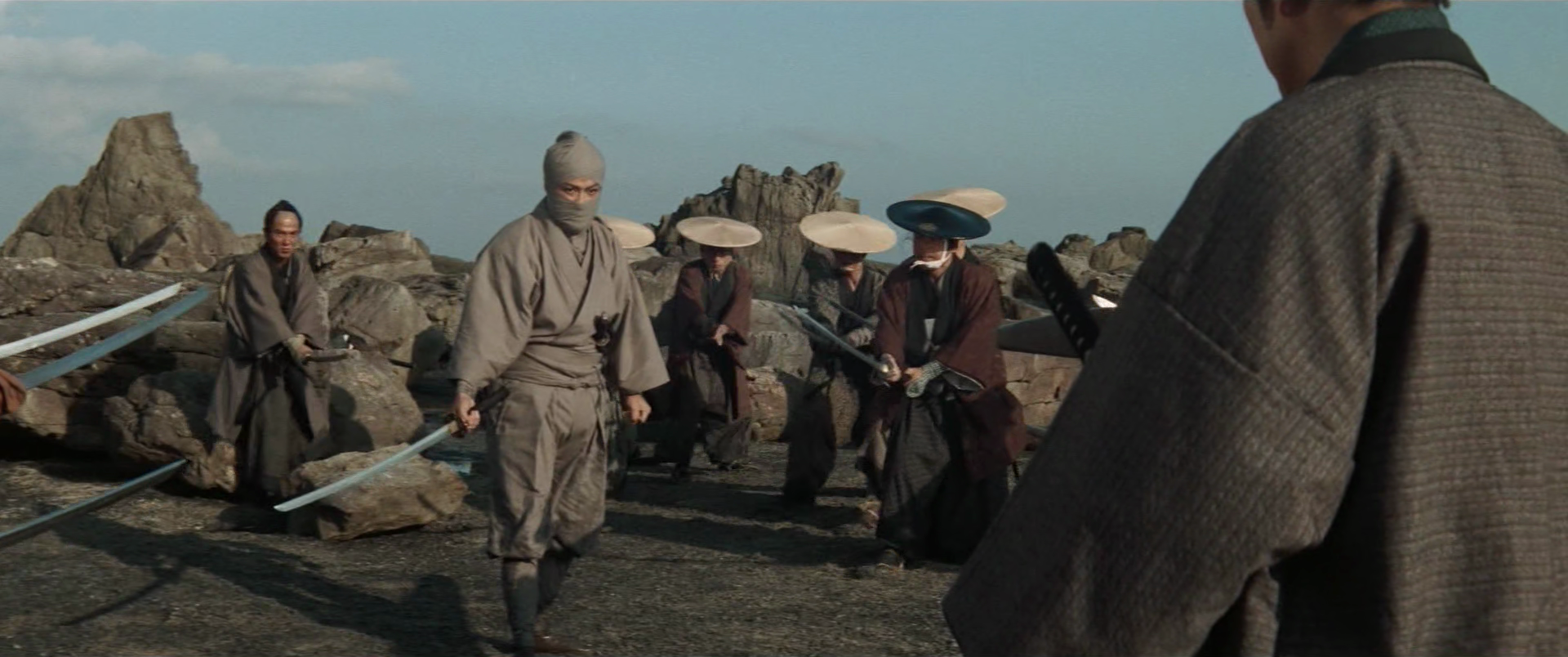
Bloodier and more visceral than some of Kato’s other jidaigeki adventures, the film is surprisingly gory in places with bloodspurts hitting the camera and blood trailing from flying shuriken. The violence of the action scenes is conveyed through frenetic editing and the use of POV-style closeups from the perception of the aggressor that often see the victim reeling from a blow seemingly delivered by the camera itself or else staring in horror. Visions of oddly positioned corpses add the sense of absurdity in this internecine world of intrigue and mystery where, it seems, love is the only truth but even so must itself then be denied in order to preserve the precarious order of the bakumatsu society.


Trailer (English subtitles)
Eight Men to Kill (賞金首 一瞬八人斬り, Shigehiro Ozawa, 1972)

In the first instalment of the Bounty Hunter series, Shikoro Ichibei (Tomisaburo Wakayama) had been a shogunate spy intent on putting down rebellion to their oppression, but by the third, it seems he’s thoroughly fed up with the ills of feudalism and apparently no admirer of the Tokugawa who he feels to have failed in their responsibility to the people along with their personal greed and desire to hold on to their power.

Ichibei’s chief objection is their lack of healthcare provision, seeing as he is a doctor who mainly cares for the poor. That’s one reason he agrees to the job, asking for a large percentage of the gold he’s been asked to retrieve by a worried retainer who explains that the Edo government is relying on it to bridge a gap on their finances. If the gold’s not returned, the entire economy may crash. The government’s heartlessness is further borne out by the retainer’s words that it’s not the time to be concerned about one boy whose importance pales in contrast to that of the Tokugawa Shogunate when a rogue ronin kidnaps the son of the man responsible for the theft of the gold from a local mine. 

In a repeated motif, men attempt to swallow the gold as a means either of stealing or hiding it but it gets stuck in their digestive system and causes them a great deal of pain that could lead to death. The cruel mine owner Kanoke Tatsu (Minoru Oki) forces Ichibei to cut open the man’s stomach to get the gold out, while he insists on sewing him back up again because as a doctor it would be wrong not to. What he’s really performed maybe a kind of gold-ectomy, removing the toxic substance from the men’s stomachs even if he may not be able to save their lives or improve their circumstances.

Ichibei tells the bandit, Yasha the Wolf (Kenji Imai), who is held responsible for the theft of the gold, that he is as bad as him and is only looking for a fast way to make money, yet he wants it to use to build better hospitals for the poor, ironically using the government’s cash to make up for their failing. Meanwhile, he finds himself coming up against a man much like himself only inverted in the form of wandering assassin Yajuro (Shigeru Amachi), a former secret policeman in the rebellious Bishu domain who doubt crosses everyone he comes across in an attempt to get his hands on the gold. Ichibei asks the man who hired him why they don’t want to use government spies but he tells him that it’s because they’d run out. The ones they sent to investigate have all been killed, presumably by the treacherous Yajuro.

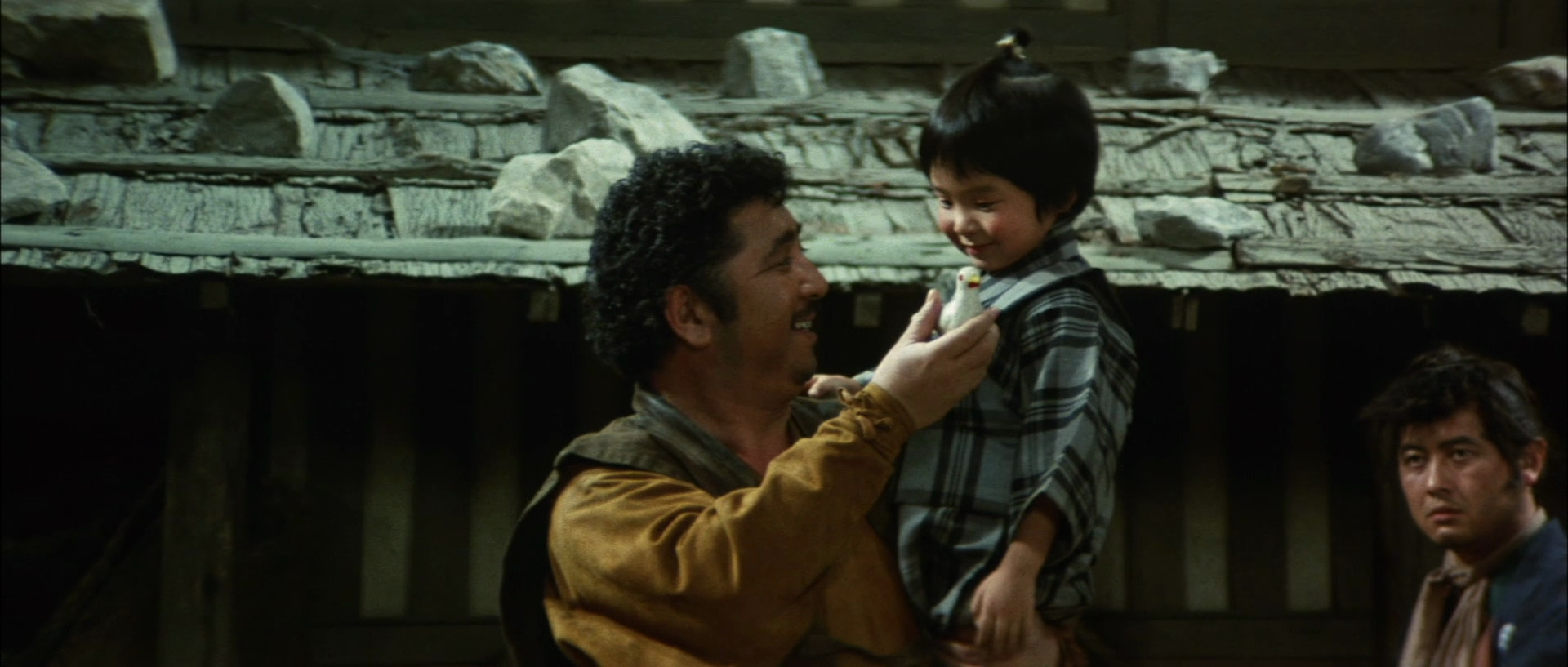
All around him, Ichibei discovers only omnipresent greed. A geisha he comes across is working with the mine owner to steal the cash, but simultaneously seducing Ichibei and the apparently won over by his bedroom prowess though it’s difficult to know which is an act, her fondness for Ichibei or pledges to sell him out to Kanoke. Meanwhile, Kanoke vacillates when presented with a binary choice by Yajuro, his adorable three-year-old son, or the gold. As always, it’s the innocent who suffer while personal greed and governmental indifference leave ordinary people little room to manoeuvre. 

This time around, the righteous Ichibei cuts a solitary figure. He no longer has a posse and is supported only by an older gentleman who is mute. As a result of his mission, he even ends up on a wanted poster himself with the shogunate, presumably unwilling recognise him, yet eventually congratulating him on a job well done, much to his shame and embarrassment having witnessed shogunate soldiers committing an atrocity. Very much in the western vein, Ozawa lends the dusty old mining town a sense of dread and decay as it rots from the inside out thanks to the corrupt authority of a weakened shogunate seeking only ways to cement its own power. The red-tinted final taking place during a solar eclipse seems to emphasise the hellishness of the situation even as Ichibei announces that they can all go to hell but he’s sending the money to heaven where it can be put to better use. 


The Yakuza Papers Vol. 1: Battles Without Honour and Humanity (仁義なき戦い, Kinji Fukasaku, 1973)

Snapshot-2015-12-07 at 11_06_36 PM-930280086When it comes to the history of the yakuza movie, there are few titles as important or as influential both in Japan and the wider world than Kinji Fukasaku’s Battles Without Honour and Humanity (仁義なき戦い, Jingi Naki Tatakai). The first in what would become a series of similarly themed movies later known as The Yakuza Papers, Battles without Honour is a radical rebooting of the Japanese gangster movie. The English title is, infact, a literal translation of the Japanese which accounts for the slightly unnatural “and” rather than “or” where the “honour and humanity” are collected in a single Japanese word, “jingi”. Jingi is the ancient moral code by which old-style yakuza had abided and up to now the big studio gangster pictures had all depicted their yakuza as being honourable criminals. However, in Fukasaku’s reimagining of the gangster world this adherence to any kind of conventional morality was yet another casualty of Japan’s wartime defeat.

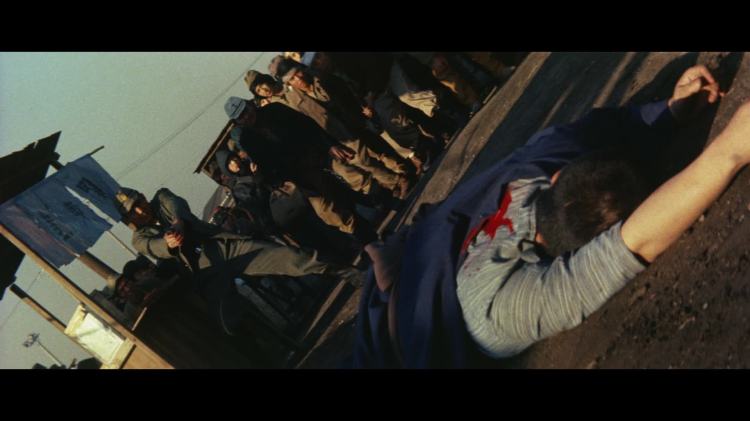
The story begins with a black and white image of a mushroom cloud with the film’s bright red title card and now famous theme playing over the top. This is Hiroshima in 1946. Things are pretty desperate, the black market is rife and there are US troops everywhere. Shozo Hirono (Bunta Sugawara) has just returned from the war (in fact he’s still in his uniform). He gets himself into trouble when he intervenes as an American soldier attempts to rape a Japanese woman in broad daylight in the middle of a crowded marketplace. He manages to cause enough of a commotion for the woman to escape but the Japanese cops just tell him not to mess with the GIs. Things don’t get much better as one of Hirono’s friends is assaulted by a yakuza. They get some rival yakuza to help them get revenge and in the commotion Hirono accidentally kills someone and is sent to prison for 12 years. In prison he meets another yakuza who wants to escape by pretending to commit harakiri and promises to get his yakuza buddies to bail Hirono out if he helps. From this point on Hirono has become embroiled in the new and dangerous world of the Hiroshima criminal underground.

Battles Without Honour and Humanity has a famously complicated plot entered around the various power shifts and machinations between different groups of yakuza immediately after the end of World War II. The film begins in 1946 and ends in 1956 though many of its cast of tough guys don’t last anywhere near as long. The picture Fukasaku paints of Japan immediately after the war is a bleak one. Even if some of these guys are happy to have survived and finally reached home, they’ve seen and done terrible things. Not only that, they’ve been defeated and now they’re surrounded by foreign troops everywhere who can pretty much do what they want when they want. They just don’t have a lot of options – if they don’t have connections to help them find work when there’s not enough to go around then it isn’t surprising if they eventually fall into to crime. Also, having spent time in the military, the yakuza brotherhood provides a similar kind of camaraderie and surrogate family that you might also find in an army corps.

It all gets ugly quite fast. Largely the yakuza are making their money profiting from the political instability, resenting the US occupation yet reaching deals with them to support their efforts in the Korean war and then selling new and untested drugs at home (with less than brilliant results). Betrayals, executions, assassinations in previously safe places like a bath house or the barbers – these are a long way from the supposedly honourable gangsters of old. One minute Hirono is offering to cut off his finger as a traditional sign of atonement (though no one knows exactly what you’re supposed to do in this situation and it all ends up seeming a little silly) and taking the rap for everyone else’s mistakes, but his friend faked harakiri to get out of jail and everyone is double crossing everyone else whichever way you look.

The whole thing is filmed in an almost documentary style with captions identifying the various characters and giving the exact time of their demise (if necessary) as well as a voice over giving background information about the historical period. The film is inspired by real life yakuza memoirs and there are parts which feel quite like a bunch of old guys sitting in a drinking establishment and recounting some of their exploits.

This new postwar world of heartless gangsters is a tough one and almost devoid of the old honour-bound nobility, however somehow Fukasaku has managed to make it all look very cool at the same time as being totally unappealing. You wouldn’t want to live this way and you definitely don’t want to get involved with any of these guys but somehow their self determined way of life becomes something to be admired. That said, there’s a sadness too – that even in the criminal underworld there used to be something noble that’s been obliterated by the intense trauma of the war. You can rebuild, you can move on from the destruction left by the war’s wake but there’s no going back to those days of “honour and humanity” – if they ever existed, they’re gone forever now.


Battles without Honour and Humanity is available in blu-ray in the UK as part of Arrow Video’s Battles Without Honour and Humanity: The Complete Collection box set.