Zero (零戦燃ゆ, Toshio Masuda, 1984)

The Zero Fighter has taken on a kind of mythic existence in a romanticised vision of warfare, yet as Toshio Masuda’s Zero (零戦燃ゆ零戦燃ゆ, Zerosen moyu) implies its time in the spotlight was in fact comparatively short. Soon eclipsed by sleeker planes flown by foreign pilots, the Zero’s glory faded until these once unbeatable fighters were relegated to suicide missions. On one level, the film uses the Zero as a metaphor for national hubris, a plane that ironically flew too close to the sun, but on another can never overcome the simple fact that this marvel of engineering was also a tool of war and destruction. 

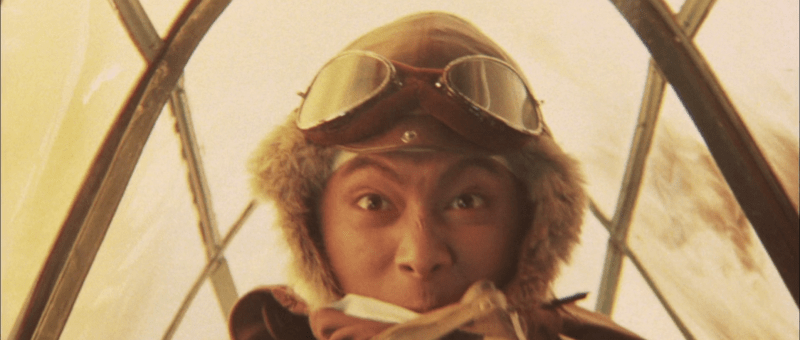
The film is loosely framed around two members of Japan’s Imperial Navy, Hamada (Daijiro Tsutsumi) and Mizushima (Kunio Mizushima), who as cadets consider deserting to escape the brutality of Navy discipline. Having left the base they’re accosted by an inspirational captain who talks them out of leaving by showing them a prototype model of the Zero and convincing them they only need to stick it out for a few more years in order to get the opportunity to fly one. Mizushima, the film’s narrator, doesn’t qualify as a pilot and is related to the ground crew while Hamada does indeed get to pilot a Zero fighter and becomes one of the top pilots in the service. 

The viewpoint is is then split between the view from the ground and that from the clouds. Mizushima makes occasionally surprising statements such as candidly telling love interest Shizuko (Yû Hayami) that they are unlikely to win the war, while becoming ever more concerned for Hamada at one point telling him there’s a problem with his plane in the hope that he won’t take off that day. Hamada meanwhile is completely taken over by the spirit of the Zero and even when given a chance to escape the war after being badly injured, chooses to return because he does not know what else to do. When he visits home after leaving hospital, no one is there. His mother eventually arrives and explains that the family has become scattered with his siblings seconded to the war effort in various places throughout the country. 

Hamada’s dedication and personal sacrifice are in some senses held up as the embodiment of the Zero. The reason for its success is revealed to lie in the decision to remove the armouring for the cockpit leaving the pilot’s life unprotected, something which the American engineers describe as unthinkable. In an early meeting, a superior officer complains that they’re losing too many pilots and need to reinstall some of the armouring, but finds little support. Not only this is a cold and inhuman decision, but it’s poor economic sense given that skilled pilots are incredibly valuable and in short supply. After all, you can’t just make more. If you start from scratch you’ll need to wait 20 years and then teach them fly, but it’s a lesson the Navy never learns that is only exacerbated with the expansion of the kamikaze squads which squander both men and pilots for comparatively little gain. 

These “philosophical differences” are embodied in the nature of the Zero which is configured to be nimble and outmanoeuvre the enemy but is quickly eclipsed not least when foreign powers figure out the way to beat it lies in numbers in which they have the advantage. There is something of a post-Meiji spirit in the feeling that Japan is lagging behind Western powers and desperately needs to develop its own military tech in order to defend itself. On hearing rumours of the Zero fighter, MacArthur scoffs and says that Japan can’t even build cars so he doesn’t believe they could design a plane that could fly such large distances while others suggest that they will still need the element of surprise if they ever go to war with America because its technology is still superior. 

Walking a fine line, the film tries to avoid glorifying “war”, but it cannot always help indulging in nationalist fantasy such as in its statement that thanks to the Zero “the Japanese flag covered a vast area of the Pacific” in the wake of Pearl Harbour. These may be fantastically well designed machines that were incredibly good at what they were created to do, only what they were created to do was kill and destroy. The plane’s fortunes and Japan’s are intrinsically linked, the sense of superiority in the air lasts only a short time before Western technological advances over take it and the war continues to go badly. The film dramatises the tragedy of war through the friendship between the two men which eventually causes Mizushima to sacrifice his love for Shizuko by convincing her marry Hamada hoping that his priorities would change and he’d decide to take a position as an instructor rather than heading back to the front. 

For her part, it seems that Shizuko was also in love with Mizushima, but also caught in a moment of confusion between love and patriotism that encourages her to think she should do as Mizushima says and embrace this man who has dedicated his life to his country. In the end, it buys them each loss and misery, but also a moment of transcendent hope even if it was based on a falsehood in the pleasant memory that Mizushima gives Hamada of the life he is giving up by rejecting it to return to the front. For Mizushima, Hamada and the Zero may become one and the same. At the end of the war he can’t bear to see the remaining Zero’s sold for scrap and asked to be “gifted” one as the Captain who’d first shown one to him said he would be, so that he can give it a proper a “funeral”, or perhaps send it to Hamada in the afterlife after he is killed mere days before the surrender. Masuda cannot help romanticising the wartime conflict with his dashing pilots and their thrilling dogfights, often depicting it more as a kind of game than an ugly struggle of death and destruction, but does lend a note of poignancy to his tale of lives thwarted by the folly of war.


Trailer (no subtitles)
To Trap a Kidnapper (誘拐報道, Shunya Ito, 1982)

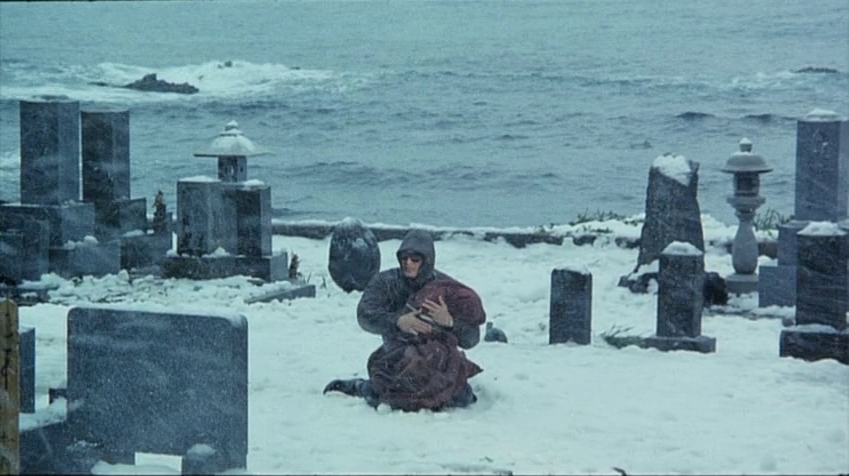
One of a number of films released in the early ’80s critical of the police force, To Trap a Kidnapper (誘拐報道, Yukai Hodo) draws inspiration from a real life case of child abduction but suggests that the police largely just get in the way and are only interested in apprehending the culprit rather than ensuring the boy’s safety. In any case, unlike the similarly themed High and Low, the film devotes most of its focus to the kidnapper’s desperation as a man apparently left behind by the rapidly rising tides of prosperity. 

Yet somewhat perversely the film opens with a scene of children playing and seven-year-old Hideyuki (Motoyoshi Wada) getting into trouble for flicking toy discs at his friend and deskmate Kaori (Kaori Takahashi). Hideyuki is then made to stand on his own in the playground as a punishment, though quickly makes things up to Kaori by gifting her the plastic discs he was playing with. Neither of them know it, but the children share a grim connection for it’s Kaori’s father Kazuo (Kenichi Hagiwara) who is responsible for kidnapping Hideyuki on his way home from school in the next town over.

Both Hideyuki and Kaori attend a prestigious private institution but are being raised in very different circumstances. Kazuo was once a successful cafe owner but was swindled out of his business and is now in massive debt to a shady loanshark named Moriyasu who’s sold his promissory note on to a third party debt collector. Hideyuki’s father, Noboru Mitamura (Fujita Okamoto), is a doctor though there’s nothing that suggests the family is anything more than financially comfortable and they aren’t immediately able to get the money together for the ransom. Noboru has to ring round all his friends, family, and random acquaintances begging for emergency loans but without really being able to explain why he needs the money. Just having seen it noted on a school register that Hideyuki’s dad was medical professional Kazuo assumed they’d be a good target for a kidnapping and is in any case resentful of their nice middle class life. 

His wife, Yoshie (Rumiko Koyanagi), is in turn resentful of Kazuo for their reduced circumstances later lamenting that they moved house, swapped their big car for a smaller one and are even going to rehome their dog but if Kazuo is really so deeply in debt, something he had kept from her, then nothing they do really matters because their lives will never improve. What she can’t understand is why Kazuo was so keen on keeping Kaori in a private school that he’d get himself into financial hell rather than make a more pragmatic decision to let her go somewhere else. The obsession perhaps hints at his class anxiety, wanting his daughter to stay in a more resolutely middle class environment otherwise in strong contrast to the hometown he later visits where his elderly mother operates a loom in a moribund fishing village which the youngsters are slowly leaving for jobs in factories in neighbouring towns. 

Perhaps in over his head, it at one point looks like Kazuo is about to dump Hideyuki’s body in the sea only to realise police divers are already searching the area. Despite himself, he begins to care for the boy though doesn’t really know what to do with him. He feeds him bread from convenience stores and keeps him tied up in the boot of his car wrapped in several blankets without really considering the possibility that he may die of cold or hypothermia left outside in the freezing winter. Realising the distraught parents have called in the police despite his warnings not to, he is too afraid to accept the ransom and is therefore at something of an impasse given he can’t very well give up the boy without getting the money.

Meanwhile, as the Japanese title implies the tale is alternately told from the perspective of the reporters at Yomiuri Shinbun who are originally quite annoyed by the police’s request for a news blackout to avoid panicking the kidnapper, suggesting it’s an infringement on their free speech if coming around in the acceptance that a child’s life is at stake. A rookie reporter, Kotaro (Shin Takuma) is involved in a dispute with his fiancée Tomo (Miwako Fujitani) who is having second thoughts because he’s always working while her parents are pressuring her to consider an arranged marriage. Kotaro refuses to write one of the dummy articles they’re putting together in the event that Hideyuki is killed describing it as morbid and irresponsible, but is very involved with the ongoing press investigation which simultaneously seems more rigorous than that of the police and accidentally gets in its way. A “suspicious car” that’s noticed outside a drop sport turns out to belong not to the kidnapper but a reporter on a stakeout wasting the police’s time.

Even they are eventually conflicted, the officer in charge on the ground later letting the Mitamuras leave on their own for the final drop empathising with them as a fellow parent and acknowledging the reason everything keeps going wrong is because the police got involved. Yet his boss orders him to follow them anyway, reminding him that the only job of the police is to catch the culprit seemingly indifferent to whether or not they rescue the hostage unharmed. Their tactics are quite naive, not considering that Kazuo will obviously realise that the Mitamuras are surrounded by undercover officers because they keep using the same ones and it’s odd to keep seeing that couple from the coffee shop everywhere they go. The big break in the case happens by accident just because a couple of traffic cops decide to ask a random car a few questions.

In any case, it’s Kaori who ends up suffering. She and her mother are also victims, unfairly hounded by the press and left with nowhere to go and no-one to turn to having had their lives turned upside down by her father’s desperate decision. He didn’t even know the kids were friends or the effect his actions would have on his daughter. Kazuo hadn’t really thought any of this through but acted only in jealousy and resentment, wanting payback against the Mitamuras for their nice middle class life and his own slice of the pie that he felt had been denied to him. In the end, the only winners are the press who can rejoice in selling their newspapers even if a remorseful Kotaro resents himself for taking a paparazzo photo of Yoshie and Kaori trying to leave town quietly. On seeing his article pasted on pillars at the station, even Tomo starts to change her mind reflecting that if he’s working on a story like this then perhaps working too much isn’t such a dealbreaker after all even if everyone seems to have forgotten about little Hideyuki in the headlong rush to dominate the newsstands by trying to lure a kidnapper into their trap.


Original trailer (no subtitles)

Survival Family (サバイバルファミリー, Shinobu Yaguchi, 2017)

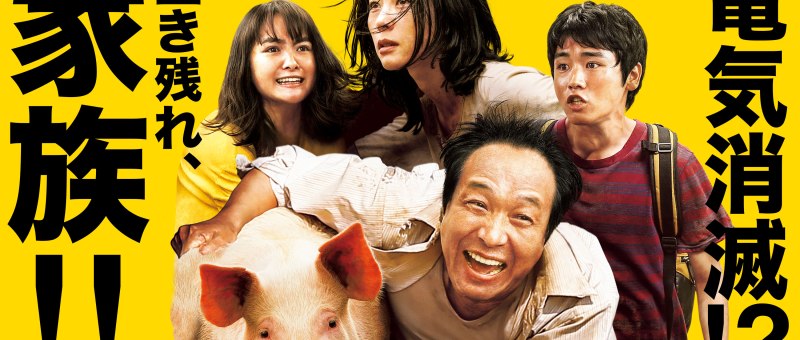
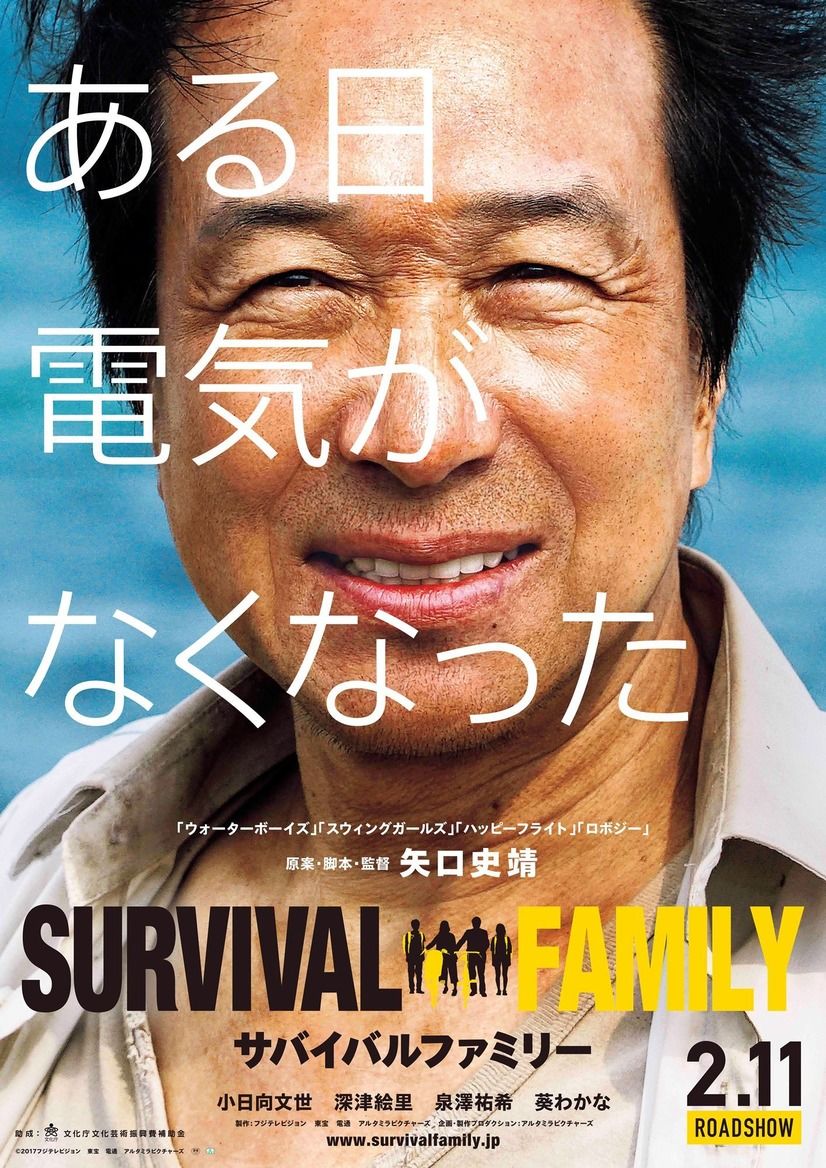
survival family posterModern life is full of conveniences, but perhaps they come at a price. Shinobu Yaguchi has made something of a career out of showing the various ways nice people can come together to overcome their problems, but as the problem in Survival Family (サバイバルファミリー) is post-apocalyptic dystopia, being nice might not be the best way to solve it. Nevertheless, the Suzukis can’t help trying as they deal with the cracks already present in their relationships whilst trying to figure out a way to survive in the new, post-electric world.

Receiving a package from grandpa fills the Suzukis with horror more than gratitude. Mum Mitsue (Eri Fukatsu) can’t bring herself to cut the head off a fish and the sight of the giant bug that crawls out of the lettuce is just too much to bear. Her teenage daughter, Yui (Wakana Aoi), is not very excited either, tapping her smartphone with her fake nails, while her son Kenji (Yuki Izumisawa) spends all his time alone in his room with headphones permanently attached. Mr. Suzuki, Yoshiyuki (Fumiyo Kohinata) – the family patriarch, is a typical salaryman, obsessed with work and often in bed early.

All that changes one day when Yoshiyuki’s alarm clock does not go off. There’s been a power outage – nothing works, not the TV, not the phone, not even the tower block’s elevator. Being the salaryman champ he is, Yoshiyuki tries to make it into to work in other ways but the power’s out across the city and there’s nothing to be done. Everyone is sure the power will come back on soon, but days pass with the consequences only increasing as supermarket shelves become bare and water frighteningly scarce. After his boss decides to take his chances in the mountains and a neighbour dies as a direct result of the ongoing power shortage, Yoshihyuki decides to take the family on the road to find Mitsue’s country bumpkin father in the hope that he will have a better idea of how to survive this brave new world.

Yaguchi is quick to remind us all of the ways electricity defines our lives, even if we’ve begun to forget them. Not only is it a question of mobile phones being out and lifts being out of order, but gas appliances are also electric ignition as are the pumps which drive the water system. So used to the constant stream of electricity, no one quite realises what its absence means hence Yoshiyuki’s big idea is to get a plane from Haneda airport. Ridiculous as it may seem, he’s not the only one to have underestimated the part electricity plays in flight and the aviation industry as the airport is swamped by people trying to escape the rapidly disintegrating city. Credit cards no longer work leading to long checkout lines as the old ladies with their abacuses make a startling return to checkouts while bemused shoppers attempt to use the ATM machine to get more cash.

Cash itself still has worth, at least for a time. Eventually the barter system takes over as food and water become top price commodities. A very flash looking man tries to trade genuine Rolex gold watch and later the keys to his Maserati for food but is roundly informed that none of his hard won prizes is worth anything in this new back to basics era. Thanks to Mitsue’s housewife skills of frugality and haggling, the family are able to get themselves a small stockplie of resources but find themselves tested when the less fortunate ask them for help.

The crisis brings out both the best and the worst in humanity. As the family make their escape from the city on a series of bicycles, they pass a succession of salesmen all upping the price of bottled water by 100% each time. Profiteering is rife as the unscrupulous procure ordinary foodstuffs to be sold for vast amounts of money. Yet the Suzukis rarely find themselves on the wrong side of trickery and even encounter a few kindly souls willing to help them on their journey such as a gang of cycle wear clad survival experts and a very forgiving farmer who takes the family in when they help themselves to one of his escaped pigs (a sequence which allows Yaguchi to go on another Swing Girls-style pig chase only without the slo-mo and classical music).

Forced to reconnect, the family become closer, gradually coming to know and accept each other whilst finding new and unknown talents. Living simply and harmoniously has its charms, ones that don’t necessarily need to disappear if the power ever comes back on. The only certainty is that you can’t survive alone, and who can you count on if you can’t count on family?


Screened as the opening night movie of the Udine Far East Film Festival 2017.

Original trailer (English subtitles)