
 “I’m scared of wanting to die” the heroine of Ryuichi Hiroki’s It’s Only Talk (やわらかい生活, Yawarakai Seikatsu) confesses during an awkward car ride with a childhood friend, perhaps one of the only absolute truths she offers in her infinite quest to escape existential loneliness through the false connection of mass tragedy. Yuko (Shinobu Terajima) tells people that her parents died in the Kobe Earthquake, but they actually died in a house fire a few years later. She tells people that her best friend died in 9/11 (she died in New York in the early 2000s but in a car accident), and that her former lover died during the sarin gas attacks on the Tokyo Subway (this one might even be true, but who really can say). She lies, not about facts only details, in the belief that her private pain is somehow not relatable enough and if she ties herself into a wider sense of national or global tragedies then others can share in her grief and she won’t be so alone in her sadness.
Following the deaths of her parents when she was 29, Yuko was diagnosed with bipolar and has been in and out of hospitals for the past six years. Now 35, single, and unemployed, Yuko has found herself cast out from mainstream society and fulfils her (minimal) needs for human connection through meeting “perverts” on specialist message-boards. Through one of these illicit connections she meets K. (Tomorowo Taguchi) – a 50-year-old husband and father who drives her all the way out to provincial suburb Kamata to ensure the liaison (which extends only to watching a porn film together in a public cinema and a cup of tea afterwards) remains secret. Taken with the suburb’s retro charm and unassuming air of faded grandeur, she decides to move and starts life over again in the somewhat nostalgic past which brings her into contact with two men from her youth and another still battling his own.
A portrait of inescapable loneliness, Yuko’s life is both as frozen as the photographs she takes of local landmarks to post on her fledgling blog and permanently in flux as she tries to navigate the constantly shifting tides of her condition. After moving to Kamata she unexpectedly reencounters an old university friend who recalls their spirited discussions of world politics from the fall of the Berlin Wall to Tiananmen Square when they were both bright and engaged students. Like Yuko, Honma (Shunsuke Matsuoka) has wound up in Kamata as a kind of retreat from the harshness of life in Tokyo. Unwilling to embrace life in the public eye, he’s decided to concentrate on a career in local politics instead hoping to work his way into the ministry of education as a civil servant. He is also unmarried – partly as a result of debts accrued during unsuccessful electoral campaigns, and, as we later find out, erectile dysfunction. Honma reintroduces Yuko to another old friend, “Bach” (Nao Omori) who has gone the opposite way and become a venture capitalist but apparently still holds a torch for the young Yuko all these years later. Meanwhile, she’s been meeting up with a lonely yakuza, Noboru (Satoshi Tsumabuki), who also has bipolar and longs for the world of childhood safety and innocence he associates with the strange Godzilla tyre park Yuko photographed and put on her blog.
The most significant relationship in her short-lived period of connection is in fact with her childhood friend and cousin, Shoichi (Etsushi Toyokawa), who abruptly turns up at her flat unannounced. Shoichi, also depressed but perhaps in a less extreme way and hiding it much better, left his marriage because he felt pushed out when the baby was born and then ran after a younger woman who went to Tokyo but ultimately did not want him. The two share a strange sort of intimacy born of their long history which is almost fraternal but laced with minor awkwardness and ancient resentments. Though his wife berated him for his refusal to help out at home, Shoichi tenderly cares for Yuko just as she is at her most vulnerable having entered an extreme depressive episode – washing her hair, doing her laundry, and picking up her medication while trying to remain patient even when Yuko rejects his gestures of help. The giving and receiving of care provides each with a new sense of purpose and connection but their paths are perhaps set on different courses in the immediacy of the need to deal with the unresolved past.
Waking up from her depression, Yuko discovers life has delivered her yet another cruel blow, witnessing others moving on in one way or another and leaving her once again all alone marooned on the sidelines. Yet she lives on, “scared of wanting to die” but daring to remove the towel which hides an ugly scar from a previous suicide attempt to revisit a public bath which holds a memory perhaps both happy and sad. Melancholy in the extreme, It’s Only Talk is not a tragedy but an aching portrait of spiritual loneliness in a society only too happy to exclude.
Original trailer (no subtitles)
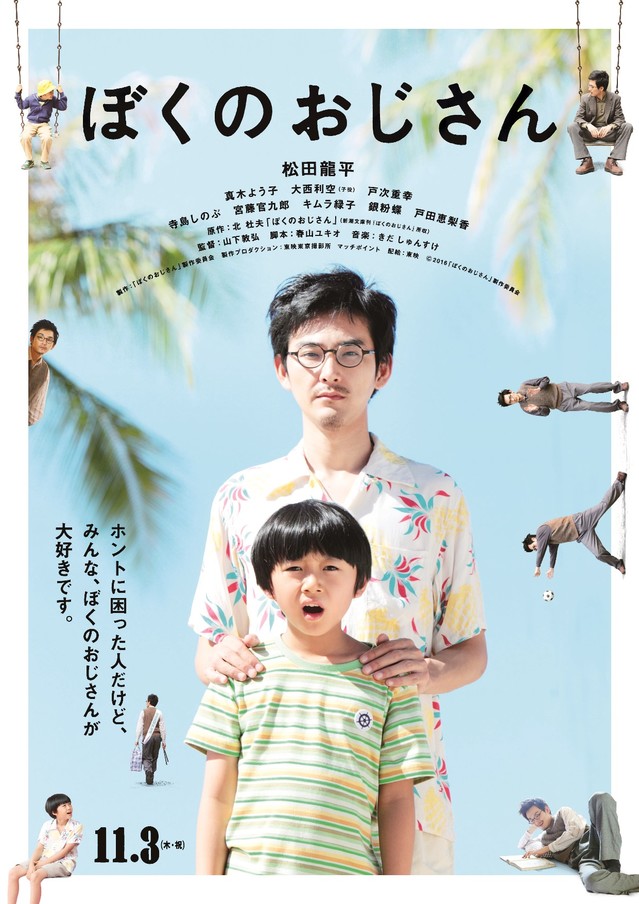 Crazy uncles – the gift that keeps on giving. Following the darker edged Over the Fence as the second of two films released in 2016, Nobuhiro Yamashita’s My Uncle (ぼくのおじさん, Boku no Ojisan) pushes his subtle humour in a much more overt direction with a comic tale of a self obsessed (not quite) professor as seen seen through the eyes of his exasperated nephew. “Travels with my uncle” of a kind, Yamashita’s latest is a pleasantly old fashioned comedy spiced with oddly poignant moments as a wiser than his years nephew attempts to help his continually befuddled uncle navigate the difficulties of unexpected romance.
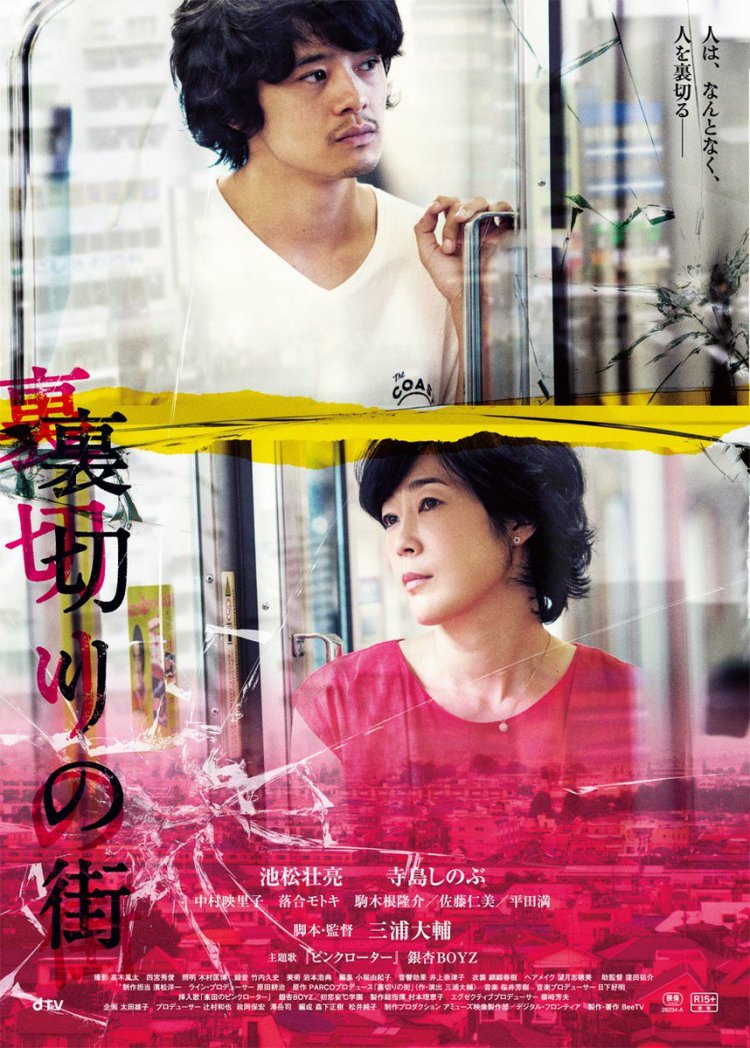 What is it that makes one person betray another? Following
 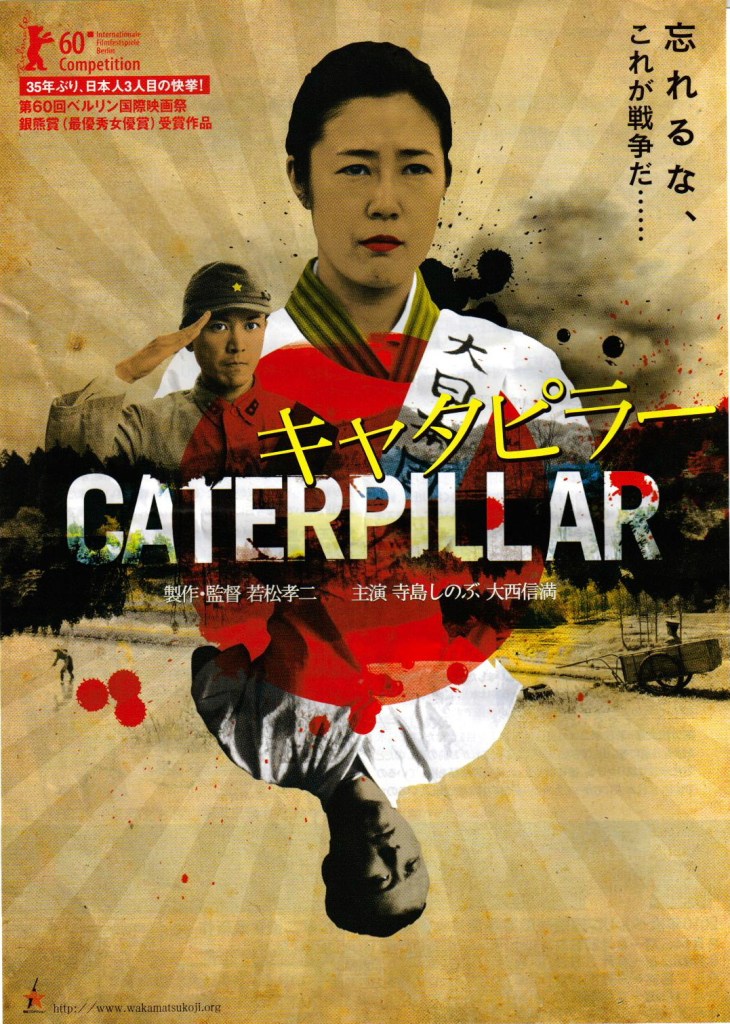 Koji Wakamatsu made his name in the pink genre where artistic flair and political messages mingled with softcore pornography and the rigorous formula of the genre. Wakamatsu rarely abandoned this aspect of his work but in adapting a well known story by Japan’s master of the grotesque Edogawa Rampo, Wakamatsu redefines his key concern as sex becomes currency, a kind of trade and power game between husband and wife. Caterpillar (キャタピラー), aside from its psychological questioning of marital relations, is a clear anti-war rallying call as a small Japanese village finds itself brainwashed into sacrificing its sons for the Emperor, never suspecting all their sacrifices will have been in vain when the war is lost and wounded men only a painful reminder of wartime folly.
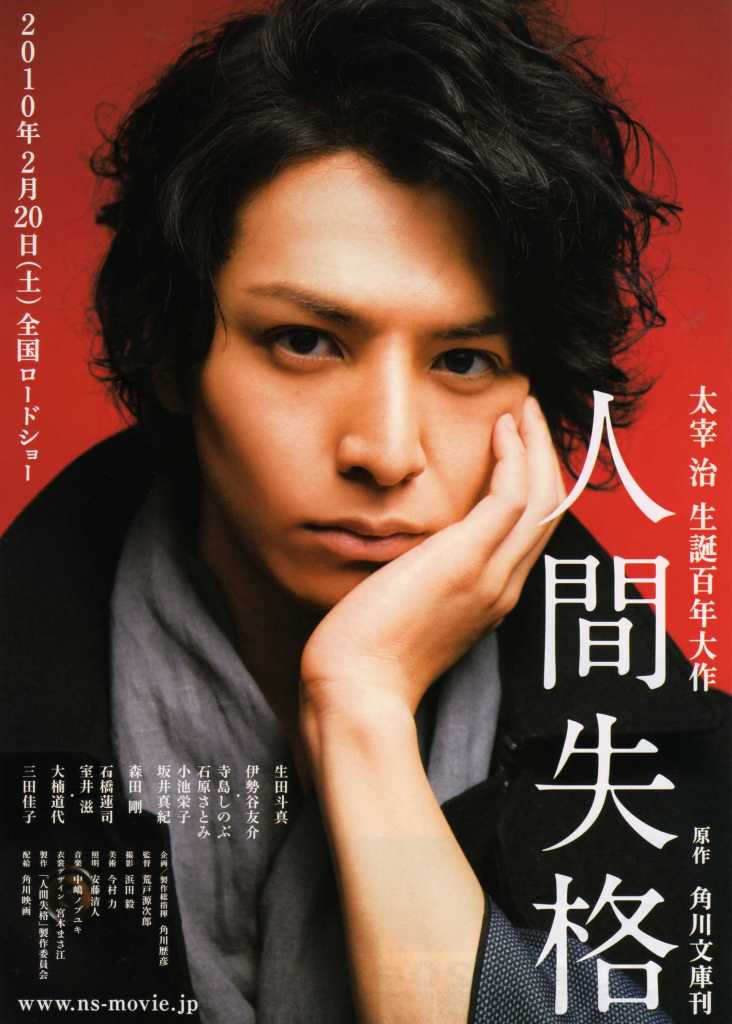 The Fallen Angel (人間失格, Ningen Shikkaku), based on one of the best known works of Japanese literary giant Osamu Dazai – No Longer Human, was the last in a series of commemorative film projects marking the 100th anniversary of the author’s birth in 2009. Like much of Dazai’s work, No Longer Human is semi-autobiographical, fixated on the idea of suicide, and charts the course of its protagonist as he becomes hopelessly lost in a life of dissipation, alcohol, drugs, and overwhelming depression.
 Windows on Worlds