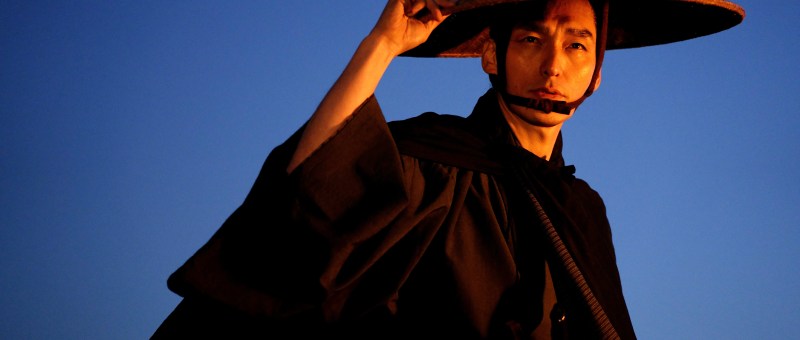
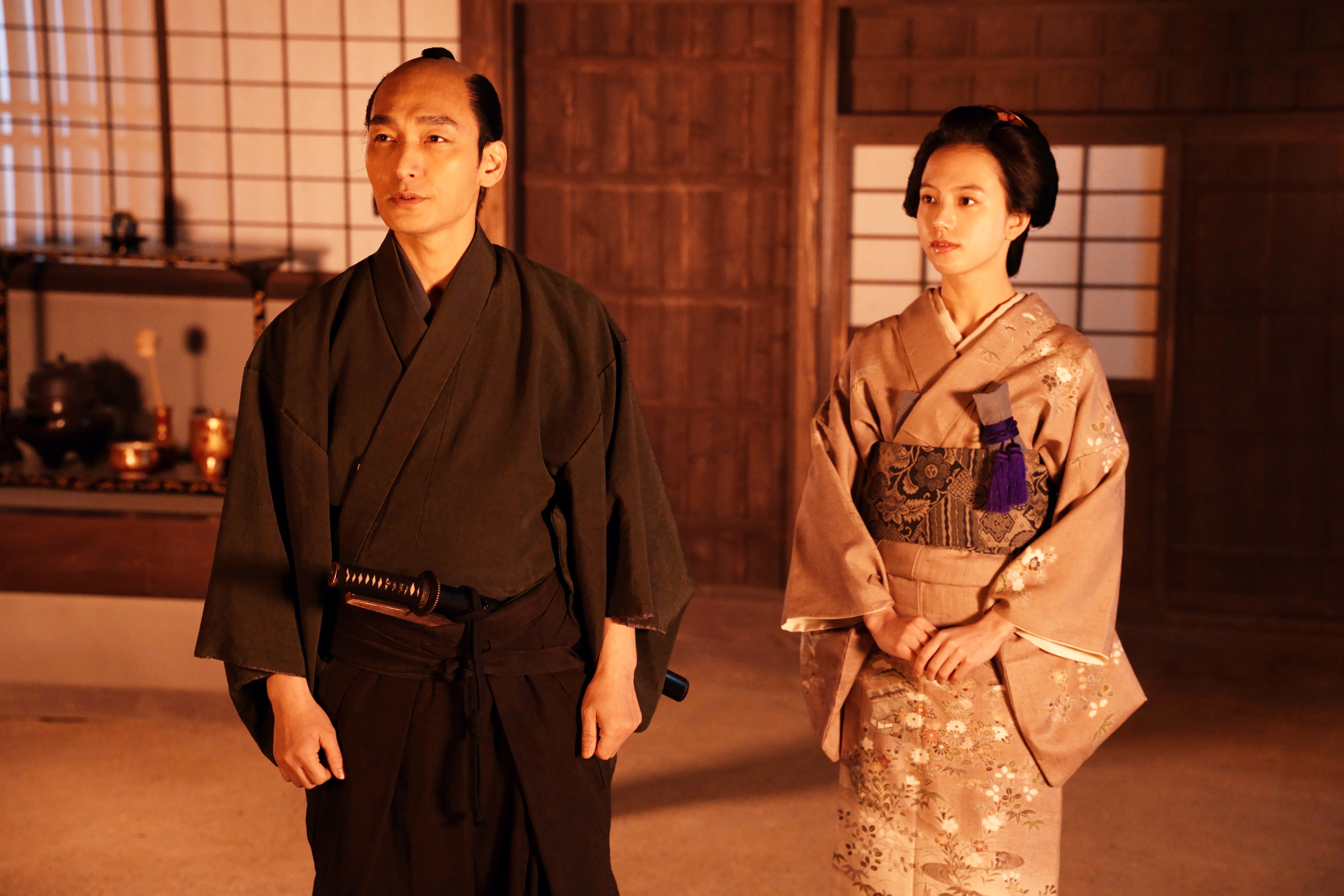
Bushido (碁盤斬り, Kazuya Shiraishi, 2024)

The hypocrisies of samurai society have led a dejected ronin into prideful penury but there is perhaps a fine line between properness and priggery that he struggles to accommodate. Like his earlier film Blood of Wolves, Kazuya Shiraishi’s Bushido (碁盤斬り, Gobankiri) is a loving homage to a classic genre, in this case jidaigeki, albeit one with a modern twist in which it’s the murkiness of the society and contradictions of its code that make it impossible to live in rather than the innate corruptions of the samurai class. 

Even so, it’s samurai society which has betrayed Kakunoshin Yanagida (Tsuyoshi Kusanagi), now a seal-carving ronin living in a tenement house and months behind on his rent. Largely silent, Yanagida projects an air of calm but also a dangerous tension that hints at a deeply buried rage often echoed in the hellish glow of the candlelight that bathes his face in red. Not a natural gambler, he is nevertheless a Go enthusiast and talented player who gives the impression that he is always several steps ahead of any game in play. 

But that turns out not quite to be the case when he’s blindsided by a series of unexpected events that quickly destabilise his calmly ordered existence. Cast out of his clan after being accused of thievery, he is accused once again of taking 50 ryo from a pawn broker who had become a friend, Genbei (Jun Kunimura). Behind on his rent as he may be, Yanagida would not steal for stealing is beneath the dignity of a samurai and this stain on his honour is more than he can bear. But for all his righteousness we learn that he is also an ironic victim of his own priggishness and responsible for several other men meeting similar fates, cast out of the clan for something Yanagida turned them in for. In his reduced state, he seems to feel guilty and wavers momentarily on hearing the man who framed him for stealing a scroll from his former lord say he did so to gain money to support disenfranchised samurai but is caught between the spirit of samurai integrity and its letter. As his quarry told him, fish cannot live in water that is too clean and his oppressive enforcement of these arbitrary rules did no one any good. 

Yet his seeming righteousness does seem to improve the world around him, proving an epiphany in pawnbroker Genbei who develops a new determination for doing business fair and square after witnessing Yanagida’s conduct at the Go table. The irony is perhaps that everything on the Go board is black and white whereas Edo society is decidedly grey. Even the madam from the Yoshiwara Yanagida and his daughter are on good terms with (Kyoko Koizumi) can switch from wise mother to heartless gang boss in an instant. One moment, she’s giving maternal advice to Yanagida’s daughter Okinu (Kaya Kiyohara) and the next berating a runaway geisha who’s obviously been beaten while her lover has been killed for his transgression. The theft of 10 ryo will also it seems get you killed in this world of heartless rigidity and universal suspicion. 

Yanagida may not be much better in some respects. He is prideful and reckless, endangering himself and his daughter, whom he allows to pawn herself in the Yoshiwara knowing it’s very unlikely they will be able to repay the debt before the New Year deadline seeing nothing other than his obsession with vengeance against the man who wronged him in so many ways, Shibata (Takumi Saito). Shibata is his opposite number, cynical and amoral he subverted the samurai code for his own gain yet in its way perhaps it’s just a rebellion against the kind of austerity a man like Yanagida represented. In the end he can only escape his self-imposed prison by abandoning his rigour and accepting compromise, slashing the Go board with its black and white mentality in two though it leaves him further exiled. He cannot return to the world of samurai, but neither can he live among these ordinary people and like so many jidaigeki heroes seems to be condemned to wandering in this imperfect world. To that extent, the resolution seems much more cheerful than we might have been expecting. Everything works out, no harm done, but there’s a lingering tension even amidst apparent good fortune in a world of constant watchfulness. 


Bushido screened as part of this year’s New York Asian Film Festival.

Original trailer (no subtitles)

Cha-Cha (チャチャ, Mai Sakai, 2024)

Love can make you do funny things. It can also blind you to the world’s realities and colour the way you interpret the actions of others. At least, that’s how it is for the protagonists of Mai Sakai’s Cha-cha (チャチャ) who are all suffering with unrequited love and unbeknownst to them quite mistaken in their assumptions about the loves of others while otherwise solipsistically trapped in a bubble of frustrated romance.

Sometime narrator Rin (Sawako Fujima) is resentful of colleague Cha-Cha (Marika Ito) who is, ironically, the the total opposite of herself in that she’s free spirited and eccentric each qualities she assumes attract the opposite sex which Rin fears she herself does not. Chiefly she resents her because she has an unrequited crush on the boss, Kato, who is married with children though the interoffice gossip incorrectly suggests Cha-cha only got her job because she’s sleeping with him. According to Cha-cha, she is quite popular with men though describes herself as not being conventionally attractive and thinks men’s interest in her is usually more to do with conquest than romance. She develops a small crush on a handsome chef, Raku (Taishi Nakagawa), who smokes on their rooftop but though she ends up moving into his ramshackle home he does not appear to be interested in her and may in fact be suffering unrequited love for someone else. 

Because of all of these emotions can be awkward or embarrassing, no one really talks about them openly which obviously gives rise to a series of misunderstandings about the feelings and actions of others. Jealous of Cha-Cha, Rin ends up stalking her to find out if she really is sleeping with the boss though as she herself is not willing to be an adulteress it seems like something of a moot point. Cha-Cha likes the chef precisely because they have nothing in common and are in fact total opposites, much as she’s also the total opposite of Rin. She likes the idea that they could lead complementary existences because while she hates melon but likes cucumber, he likes cucumber and hates melon. 

She is also possibly drawn to him because they share a certain kind of darkness, admitting that she has a desire to lick the blood of the person she’s dating while he has a secret stash of lenses saved from the animal heads they sometimes get at the restaurant. Ironically, this shared quality may signal doom for their romance or ultimately force them together in a mutual act of settling for second best when their ideal romantic plans are disrupted by an unexpectedly extreme series of events. The most ironic thing is that the only genuine romance where feelings seem to be mutually returned, if imperfectly and with hints of exploitation, is doubted by others and motivates its own series of misapprehensions and petty jealousies. 

The strange events are at times narrated by a utility pole and telephone box who alone stand sturdy amid the changing and emotionally confusing environment of the present society. They are amused by the bizarre goings on among humans who seem incapable of being clear or honest in their romantic desires and often entirely misread the body language and behaviour of those around them to suit their own narrative. Rin thinks Cha-Cha probably is sleeping with the boss because they ignore each other, while a co-worker who admires her thinks she dislikes the boss because she avoids looking at him and assumes she likes another colleague, Aoki, ironically because she looks at him without bashfulness. 

It’s all par for the course in cha cha cha of love, and despite the dark turn the narrative may eventually take Sakai maintains an air of absurdist normality aided by quirky production design and a sense of wonder for a world that remains remains strange and difficult to understand, the protagonists individually blinkered views not withstanding. In any case, Rin’s eventual acceptance of Cha-Cha leads her to a desire to live “a more impulsive life” that will probably never be fulfilled but in some ways perhaps love is better as an unrequited fantasy than compromised reality if only it did not become an all encompassing obsession. As an imperfect man cheerfully in love tells her, perhaps Cha-Cha should focus on how to make herself happy rather than chasing an illusionary dream of love though in the end perhaps it’s all the same anyway. 


Cha-Cha screened as part of this year’s JAPAN CUTS.

Trailer (English subtitles)

Black Night Parade (ブラックナイトパレード, Yuichi Fukuda, 2022)

According to the opening voiceover of Yuichi Fukuda’s seasonal comedy Black Night Parade (ブラックナイトパレード), we’ve all got Christmas wrong. It’s not completely true that Santa only gives presents to the nice kids for there are in fact two Santas, the other one, the anti-Santa, making sure that bad children have a very unhappy Christmas receiving gifts ranging from the traditional lump of coal to offal. The Santa dressed in black is described as being a little more egalitarian, but does indeed pedal in disappointment and the opposite of the holiday spirit though in another way perhaps he’s just an embodiment of a sense of resentment towards to the unfairness of the contemporary society. 

Miharu (Ryo Yoshizawa) is very definitely grown up and a good example of someone who regards themselves as earnest but is becoming fed up with seeing those he regards as acting inconsiderately prosper. Still working part-time at a convenience store having repeatedly failed to get into university or find a full-time job, he’s irritated by his loudmouth slacker colleague Kaiser (Taishi Nakagawa) who just seems to constantly fall up in life while Miharu ends up being the responsible one doing most of his work for him. When Kaiser asks him to cover his shift Christmas Eve so he can go on a date with his pretty girlfriend seconds after telling him he’s actually had a full-time job offer, it obviously stings more than a little. But when Miharu takes a leaf out of his book and tries to take home one of the expired Christmas cakes, he’s immediately caught and threatened by his boss not to mention being deemed a bad boy by the Santa in black. 

Though in his case, it results in an ironic job officer to become one of Santa’s helpers at a gloomy Santa centre where they run a virtual surveillance state to figure out whether the kids that send in letters to Santa have really been as good as they claim to have been. Surveillance queen Shino (Kanna Hashimoto) decides one little lad hasn’t on catching him cheating on a test despite having emphasised how hard he’d been studying in his letter. Cheating on a test is obviously not “good”, but perhaps it’s not innards in your stocking bad either and Miharu’s moral compass is going haywire trying to understand the strange world he finds himself in while participating in a contest to join the elite Reindeer division of Christmas shock troops. Meanwhile, he’s also confronted by a conspiracy in which the red Santa has already been murdered by rats controlled by a mysterious group who hate Christmas and are trying to eradicate it. If they don’t find a new red Santa soon, the magic will be broken forever.

Despite the zaniness of the concept, the humour is a little less grating than the broad variety style generally employed by Fukuda in his other films even if several of the performances are on the larger side. Rather than rediscovering the true meaning of Christmas or coming to an accommodation with the unfairness of the contemporary society, Miharu is guided towards dealing with his own unresolved childhood trauma which repurposes the empty consumerism of a contrived holiday tradition as a means of signalling of a lack of something or the roots of unhappiness. Even if most most kids are asking for the latest toys it may be because they want others to play with with them, while some just want company because their parents have to work long hours and they’re lonely at home. 

Despite making the astute observation that the best way to disappoint a naughty child is to get them what they asked for but not quite right, Miharu eventually discovers a calling in making sure no child is left empty-handed on Christmas Day spreading the spirit of the season wherever he goes even while being chased by packs of evil rats out to destroy the joy of Christmas forever. Then again, there is some mildly satirical humour in the likening of Santa Claus House to a “black company” ruthlessly exploiting its employees while engaging in some very dubious corporate shenanigans in its use of customer data and clear invasion of privacy in its all-seeing surveillance network. In any case, it does appear that Christmas is safe from the rat race for the moment and children good or bad will wake up to a surprise equally so on Christmas morning for years to come.


Original trailer (no subtitles)
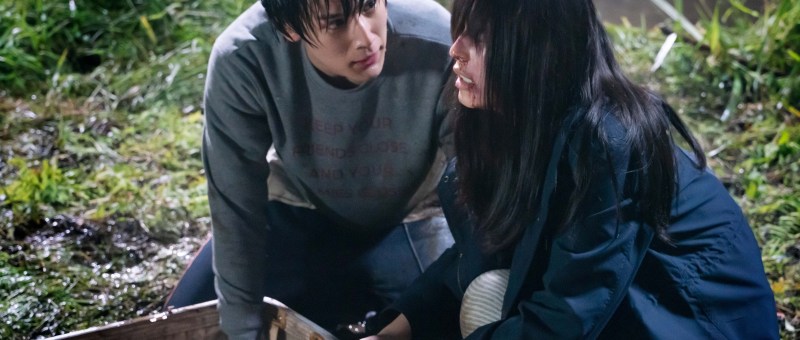
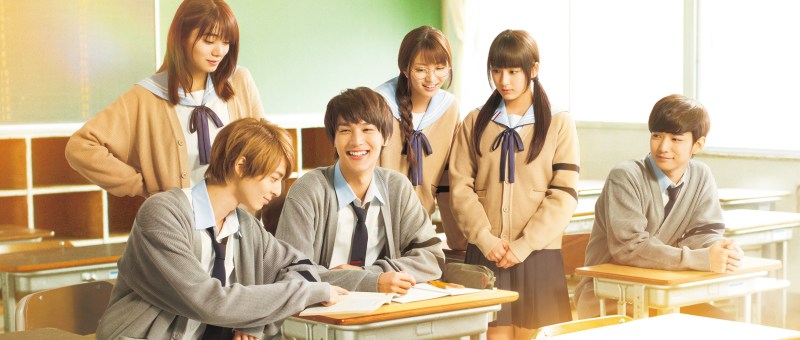
ReLIFE (ReLIFE リライフ, Takeshi Furusawa, 2017)

Is there such a thing as toxic conventionality? The hero of Takeshi Furusawa’s manga adaptation ReLife (ReLIFE リライフ) has driven himself into despair in his failure to achieve conventional success in contemporary Japan, fearing that in having fallen from one of the earliest rungs of the ladder he’ll never be able to climb back up and therefore has no real future. Even so, his dissatisfaction is turned entirely inward rather than channelled into a desire to change society for the better, his eventual epiphany amounting to the determination to help others persevere amid constant disappointment rather than encouraging them to reject the mainstream and search for bespoke happiness. 

At 27, Arata (Taishi Nakagawa) isn’t sure why his life turned out this way. He thought he’d follow the conventional path, graduate uni, get a steady salaryman job, marry around 25 and settle down into a comfortable middle class life, but now he’s trapped in a perpetual cycle of job seeking and part-time work with his savings running out and final demands pouring in. Invited to a gathering with old friends one of whom is getting married, he shaves and puts on a suit playing the role of the conventional salaryman they all assume him to be too ashamed to let them know he’s struggling. So when he’s accosted in the street by a strangely elfin young man, Yoake (Yudai Chiba), who tries to recruit him into an experimental programme in which they’ll pay his living expenses while he spends a year as a high school senior he finds himself agreeing. 

This is no time travel story, however, the magic pills merely turn Arata back into a 17 year old to enrol in a contemporary high school with kids 10 years younger than himself. He can’t literally change his past but is supposed to use the time to grow as a person, rediscovering a sense of possibility that comes with youth and dwindles with age. His initial intention is just to ride it out seeing as he’ll have no immediate worries for food or shelter and has been guaranteed help with the job hunt when the year is up and he returns to being 28, but inevitably finds himself drawn into teenage intrigue helping each of his new friends reach their own epiphanies in gaining the courage to declare their feelings or overcome their shyness in trying to decide the further course of their lives. 

Part of his own epiphany lies in his renewed desire to be part of a community, no longer isolated in his personal shame but actively participating while embracing his innate kindness and desire to help others. As we later learn, he quit his company job on uncovering workplace sexism and petty harassment, unable tolerate it that a talented colleague (Mikako Ichikawa) found her career sabotaged by men who didn’t like it that she was good at her job and therefore presented a threat to their success. Arata naively brought the matter to the attention of his boss but his boss sided with the guys and had her transferred out. Given this information, it makes little sense that Akira quit his job in protest but then continued to apply for new ones with other companies presumably assuming they would be different rather than accepting workplace bullying is a systemic issue. 

This is the fundamental problem with his experiences in ReLife in that the path he eventually discovers lies in helping other people endure this already corrupt system which isn’t working for anyone, let alone himself. His emphasis on the spirit of never giving up and being there for those in need is noble, but ultimately only enables the system which caused so many to fall into despair in insisting that it is they who need to live up to these culturally defined ideals of conventional success rather than challenging the deeply ingrained social codes which prevent them from pursuing personal happiness. Part high school nostalgia drama complete with a potentially inappropriate romance, ReLIFE is replete with typical genre motifs such as the cultural festival and summer fireworks display along with the continual sense of something coming to an end as Arata finally convinces himself to “treasure the moment” rather than remain trapped between past regret and fear of an uncertain future, but perhaps sends the uncomfortable message that adult life is something you just have bear rather than actively enjoy. 


ReLIFE streams until 27th February in several territories as part of Japanese Film Festival Online 2022.

Original trailer (English subtitles)

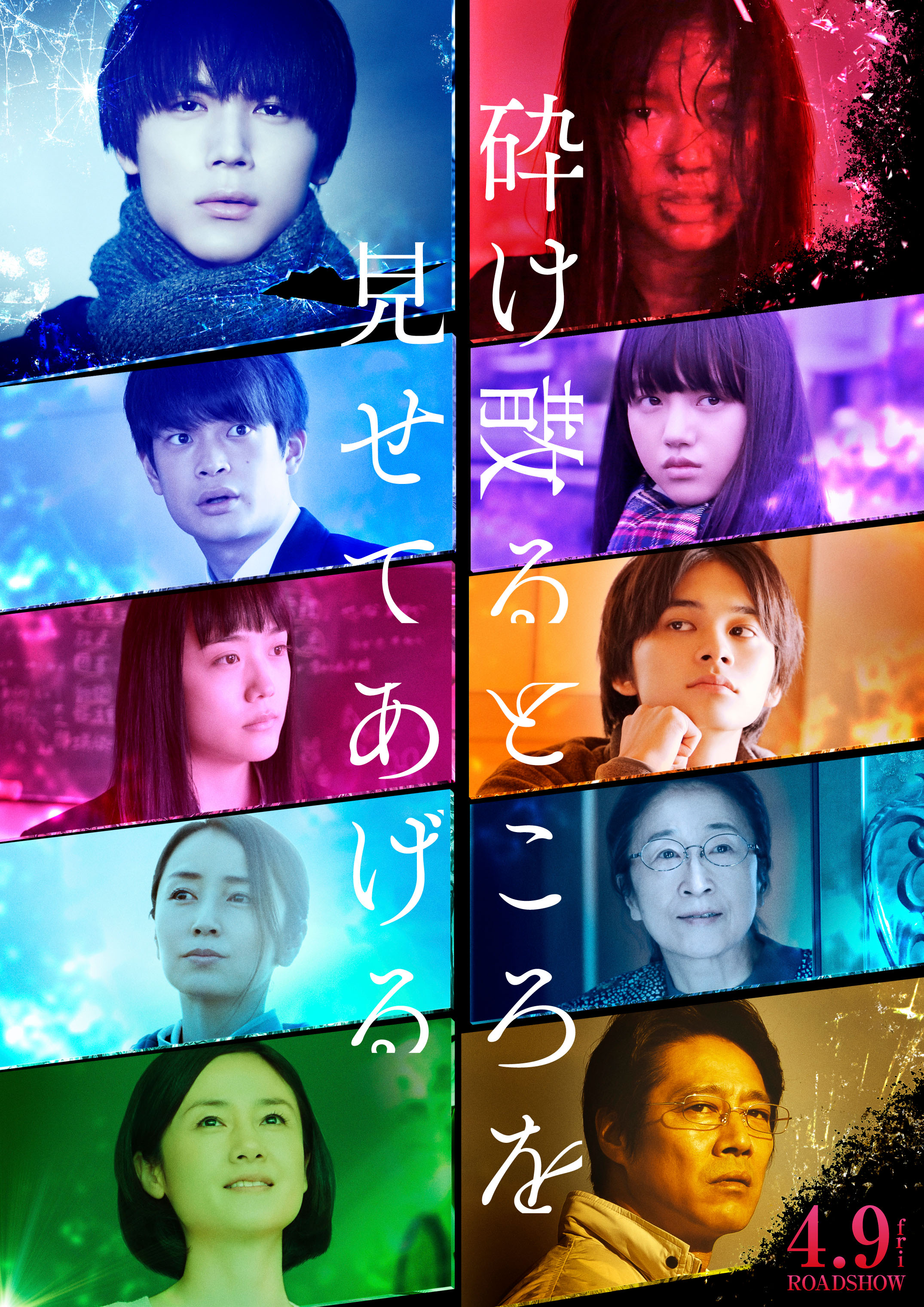
My Blood & Bones in a Flowing Galaxy (砕け散るところを見せてあげる, SABU, 2020)

“Do heroes need a reason to be heroes?” asks the hero of SABU’s adaptation of the light novel by Yuyuko Takemiya My Blood & Bones in a Flowing Galaxy (砕け散るところを見せてあげる, Kudakechiru Tokoro wo Misete Ageru). A little lighter than the Japanese title which translates as “I will show you a broken place”, SABU’s latest collaboration with EXILE TRIBE is a sometimes surreal tale of the great confluence of love, undercutting and repurposing a traditional idea of masculinity as the young man at its centre tries and fails to overcome himself to be the hero he longs to be while finally discovering that true heroism lies in the capacity to lend courage to others in a world often haunted by violence and despair. 

SABU opens, however, with a brief framing sequence in which another young man (Takumi Kitamura) meditates on the legacy of his father who died a hero trying to save a little girl from a submerged car. A flashback to sometime in the ‘90s introduces us to Kiyosumi (Taishi Nakagawa) running full pelt late for school and surreptitiously joining the back of the assembly hall behind a class of younger students hoping to avoid detection. Once there, however, he witnesses a young woman being relentlessly bullied by her classmates and intervenes. After the assembly concludes he tries to make sure the girl is OK, but when he touches her in comfort she begins screaming uncontrollably and leaves the room. Kiyosumi, however, is undeterred and continues trying to protect her, eventually earning her trust after rescuing her when she’s doused in water and locked up in a bathroom storage cupboard. The pair soon become friends, Kiyosumi apparently falling for the melancholy young woman but naively failing to realise that her problems may be bigger than he realises and that there are some monsters you can’t fight alone. 

During one of their early conversations, Hari (Anna Ishii), the young woman, outlines her UFO theory of universe in which she visualises each of the forces which oppress her as alien spaceships floating ominously in the sky above. Standing in for unresolved trauma, the ever present threat of violence, and the pain of loneliness, the presence of the UFOs both brings the pair together and overshadows their growing romance, Kiyosumi’s voiceover hinting at an unhappy ending in which he will not fulfil his dream of being forever by her side. He continues to doubt himself, unsure if he can really be the hero that Hari believes him to be while she draws confidence from his kindness to become one herself. 

There is, it has to be said, an air of chauvinism and a mild saviour complex in Kiyosumi’s otherwise altruistic desire to stand up to injustice. He doesn’t stop to ask himself if Hari wants saving or if his intervention may end up making things worse for her as it eventually does if in an unexpected way. Childishly naive, he fails to look beyond the immediate problem of high school bullying, recalling his own days as a lonely first year rejected by the cool crowd only later finding a friend, while certain that he can protect Hari solely with the force of his presence. To begin with, he may be right, his initial intervention allowing other like-minded souls to stand up against the school’s bullying culture and earning Hari another friend in the equally defiant Ozaki (Kaya Kiyohara). But only too late does he begin to realise that the bruises on her wrists may not be caused in class and that her victimisation does not end at the school gates. 

Rescued from the storecupboard, Hari tried to defend her aggressors citing the fact that they used clean tap water the last bucket of which was even warm as a sign of “kindness”. So brutalised is she that she expects nothing more. The irony is Kiyosumi cannot in the end protect her, but does perhaps lend her the strength to protect herself as she in fact saves him. Yet as Kiyosumi points out, the “UFOs” do not simply disappear in the midst of red rain but may strike again at any moment, his attempts to rescue a drowning girl a kind of metaphor for his desire to drag Hari free of the source of her trauma and show her “the glowing beauty of this world”, a desire he can only realise by becoming one with a galaxy of eternal love. True heroism, he eventually realises, is just being there if only in spirit as a source of constant support and reassurance in a world of dizzying anxiety. At times infinitely bleak but coloured with teenage sunniness and youthful naivety, SABU’s empathic drama both recognises and forgives its hero’s chauvinistic self-obsession while allowing the heroine to save herself each bolstered by a sense of mutual solitary born of a deep compassion with love perhaps the best weapon against the circling UFOs of a sometimes cruel existence. 


My Blood & Bones in a Flowing Galaxy streamed as part of this year’s Nippon Connection.

Original trailer (English subtitles)

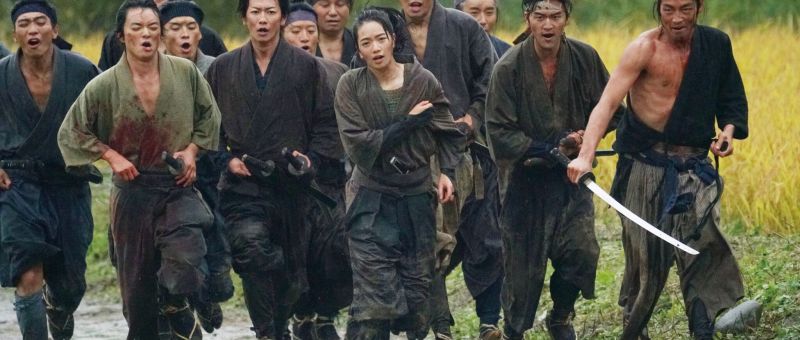
Samurai Marathon (サムライマラソン, Bernard Rose, 2019)

Samurai Marathon posterAfter two and a half centuries of peaceful slumber, Japan was jolted out of its isolation by the arrival of Commodore Perry’s Black Ships. The sudden intrusion proved alarming to most and eventually provoked a new polarisation in feudal society between those who remained loyal to the Shogun and the old ways, and those who thought Japan’s best hope was to modernise as quickly as possible to fend off a foreign invasion if it did eventually arise as many feared it would. Lord Itakura (Hiroki Hasegawa) has a foot in both camps. He has no desire to move against the Shogun, but fears that centuries of peace have made his men soft and complacent. His solution is to institute a “Samurai Marathon”, forcing his retainers to run 36 miles to prepare for a coming battle.

If you’ve spent your life sitting around and occasionally waving a sword at something just to keep your hand in, suddenly trying to run 36 miles might not be the best idea, as many samurai keen to win favour through racing glory discover. There is, however, an additional problem in that, unbeknownst to anyone, samurai accountant Jinnai (Takeru Satoh) is a secret ninja spy for the shogun. Confused by the preparations for the race, he reported that a possible rebellion was in the offing only to bitterly regret his decision on realising Itakura’s anxieties are only related to external, not internal, strife. All of which means, the Shogun’s men are on their way and Itakura’s retainers are sitting ducks.

Helmed by British director Bernard Rose, Samurai Marathon (サムライマラソン) plays out much more like a conventional European historical drama than your average jidaigeki. Where samurai movies with an unusual focus tend to be comedic, Rose opts for a strangely arch tone which is somewhere between po-faced Shakespeareanism and post-modern irony. Rather than the stoical elegance which defines samurai warfare, the violence is real and bloody, if somewhat over the top in the manner of a gory Renaissance painting complete with gasping severed heads and gruesome sprays of dark red blood.

A chronicle of bakumatsu anxiety, the film also takes a much more pro-American perspective than might perhaps be expected, taking the view that the arrival of the Americans heralded in a new era of freedom and the origins of democracy rather than the more ambivalent attitude found in most jidaigeki which tend to focus much more strongly on the divisions within samurai society between those who wanted to modernise and those who just wanted to kick all the foreigners back out again so everything would go back to “normal”. Itakura, like many, is suspicious of foreign influence and the gun-toting, yankee doodle humming Shogunate bodyguard is indeed a villain though it’s Itakura himself who will end up firing a gun as if conceding that the future has arrived and the era of the sword has passed. 

Ramming the point home, Itakura is also forced to concede to the desires of his wilful daughter, Princess Yuki (Nana Komatsu), who wanted to travel and see the world while her society (and conventionally minded though doting father) insisted all there was for her was marriage and a life stuck inside castle walls. Managing to escape and disguising herself by cutting her hair and putting on peasant clothes, Yuki is able to evade detection longer than expected precisely because few people have ever seen her face. She also gets to make use of some of the samurai training she’s received by holding her own out on the road, though it seems improbable that her father would let her ride out alone even if he finally allows her free rein to go where she chooses.

Meanwhile, other ambitious retainers try to use the race to their own advantage though there’s poignant melancholy in one lowly foot soldier’s (Shota Sometani) dreams of being made a samurai considering that in just a few short years the samurai will be no more. The final sepia shift into the present day and a modern marathon may be a stretch, as might the unnecessary final piece of onscreen text informing us that we’ve just watched the origin story for the Japanese marathon, but the main thrust of the narrative seems to be that the samurai were running full pelt into an uncertain future, preparing to surrender their swords at the finish line. An unusual take on the jidaigeki, Samurai Marathon perhaps takes an anachronising view of Bakumatsu chaos in which the samurai themselves recognise the end of their era but finds its feet on the road as its self-interested heroes find common purpose in running home.


Samurai Marathon screens as the opening night gala of the 2019 New York Asian Film Festival on June 28 where actress Nana Komatsu will be in attendance to collect her Screen International Rising Star Asia Award.

Original trailer (no subtitles)