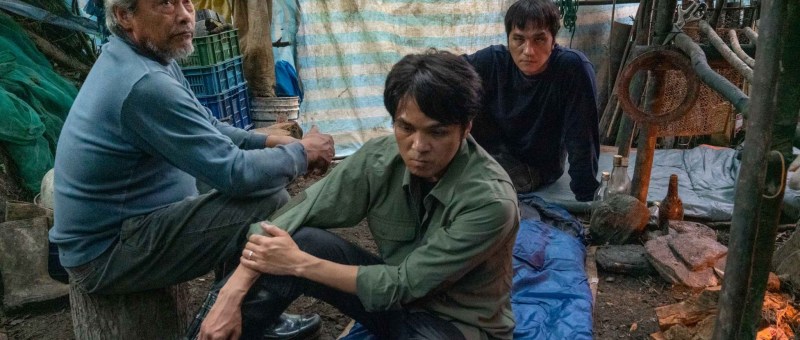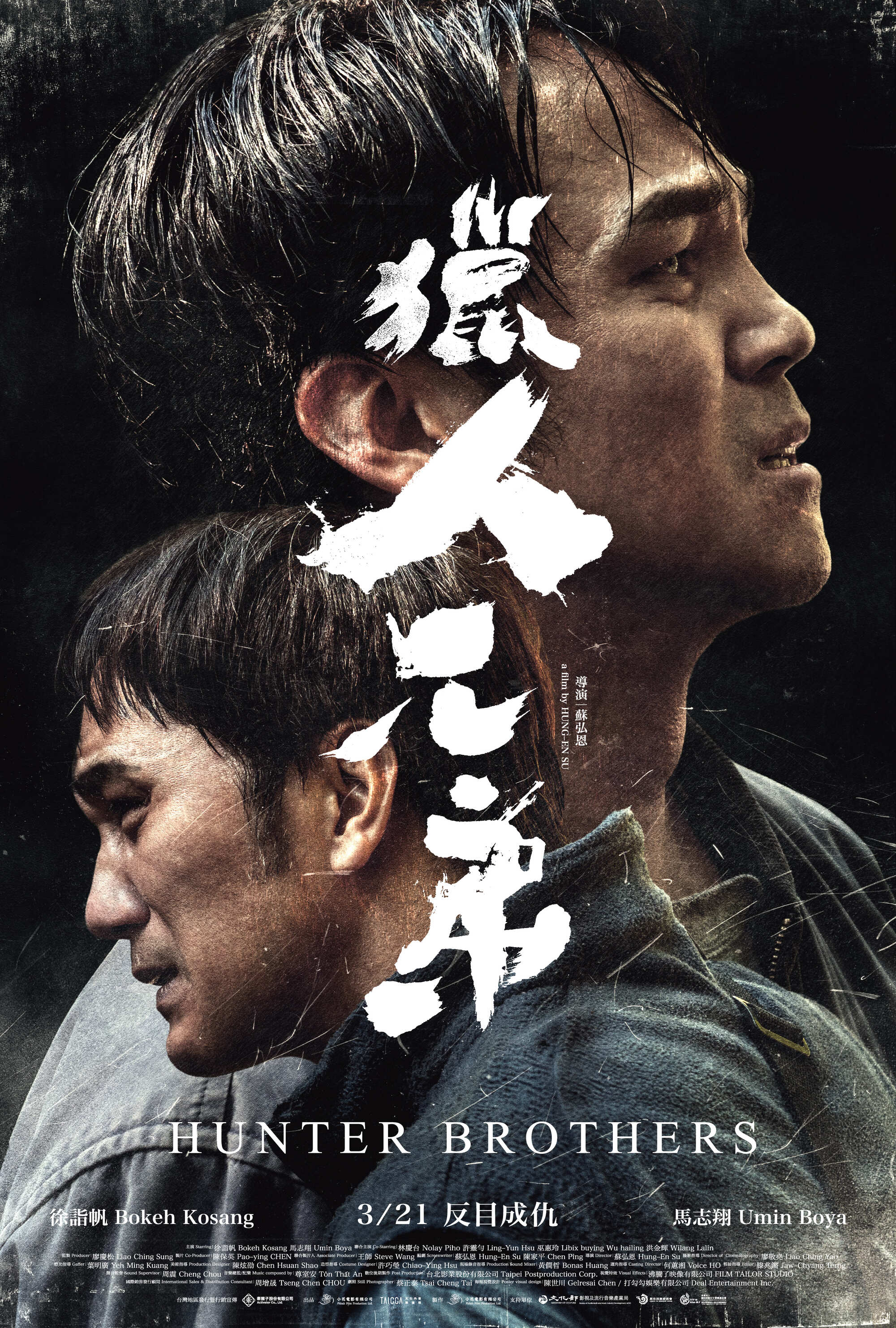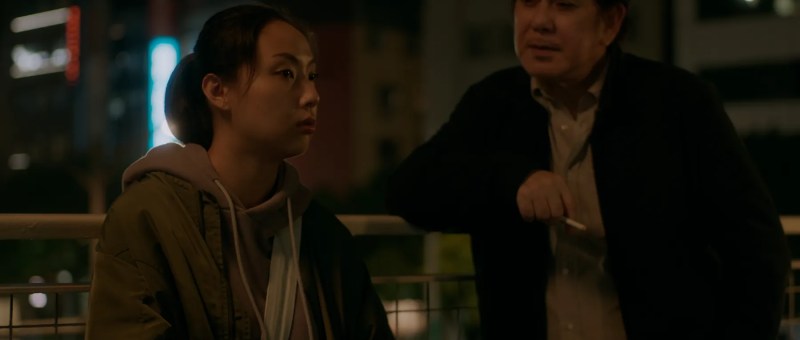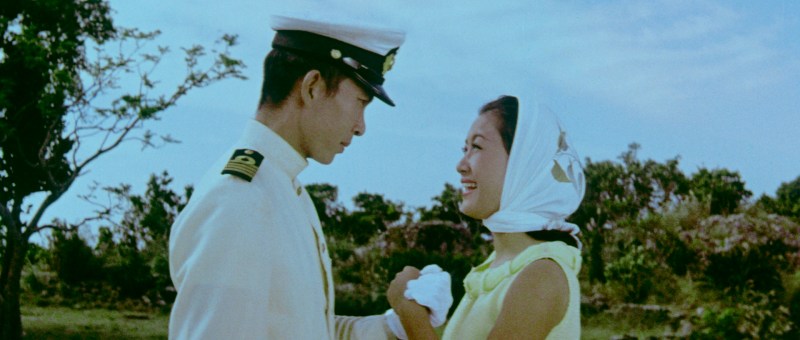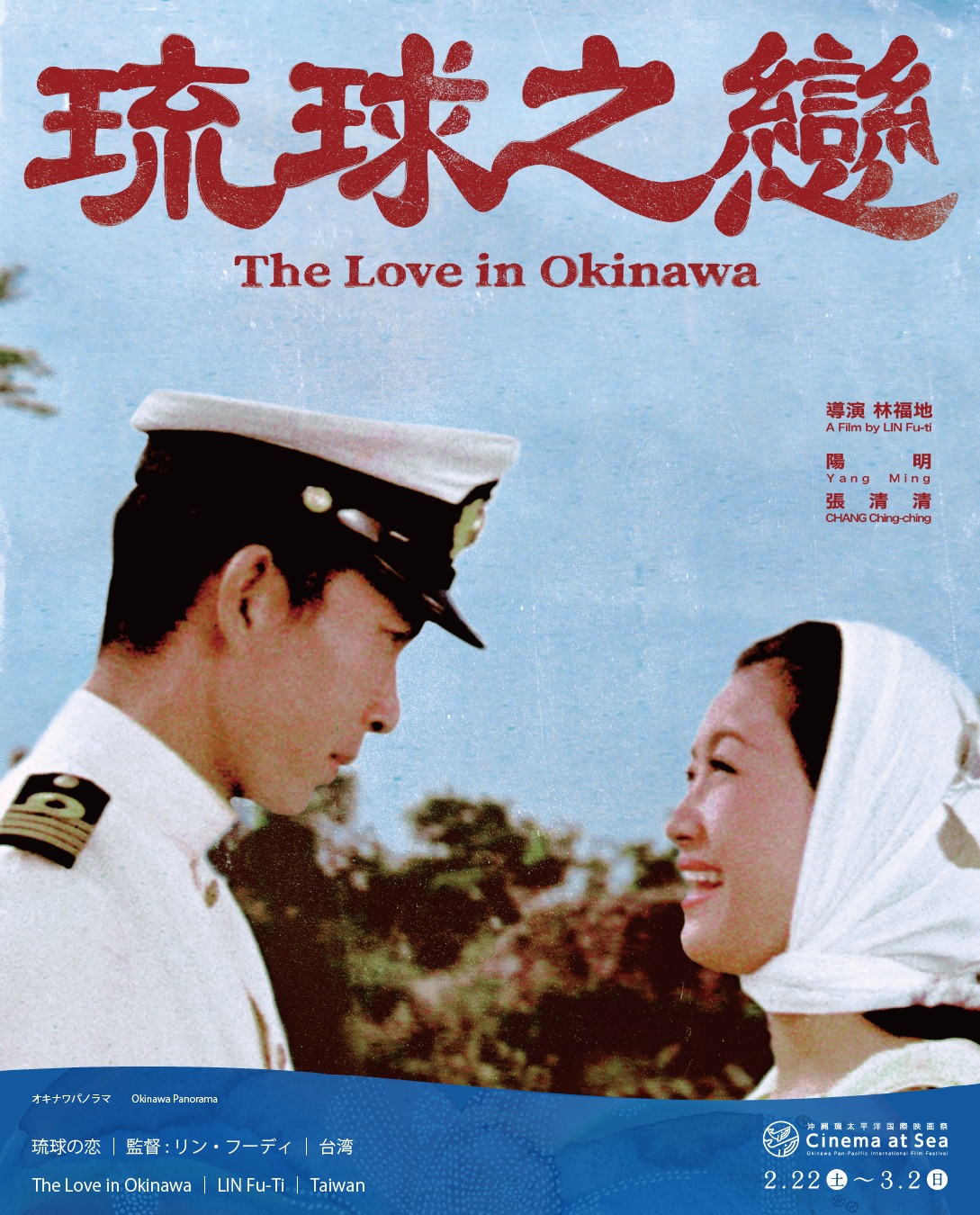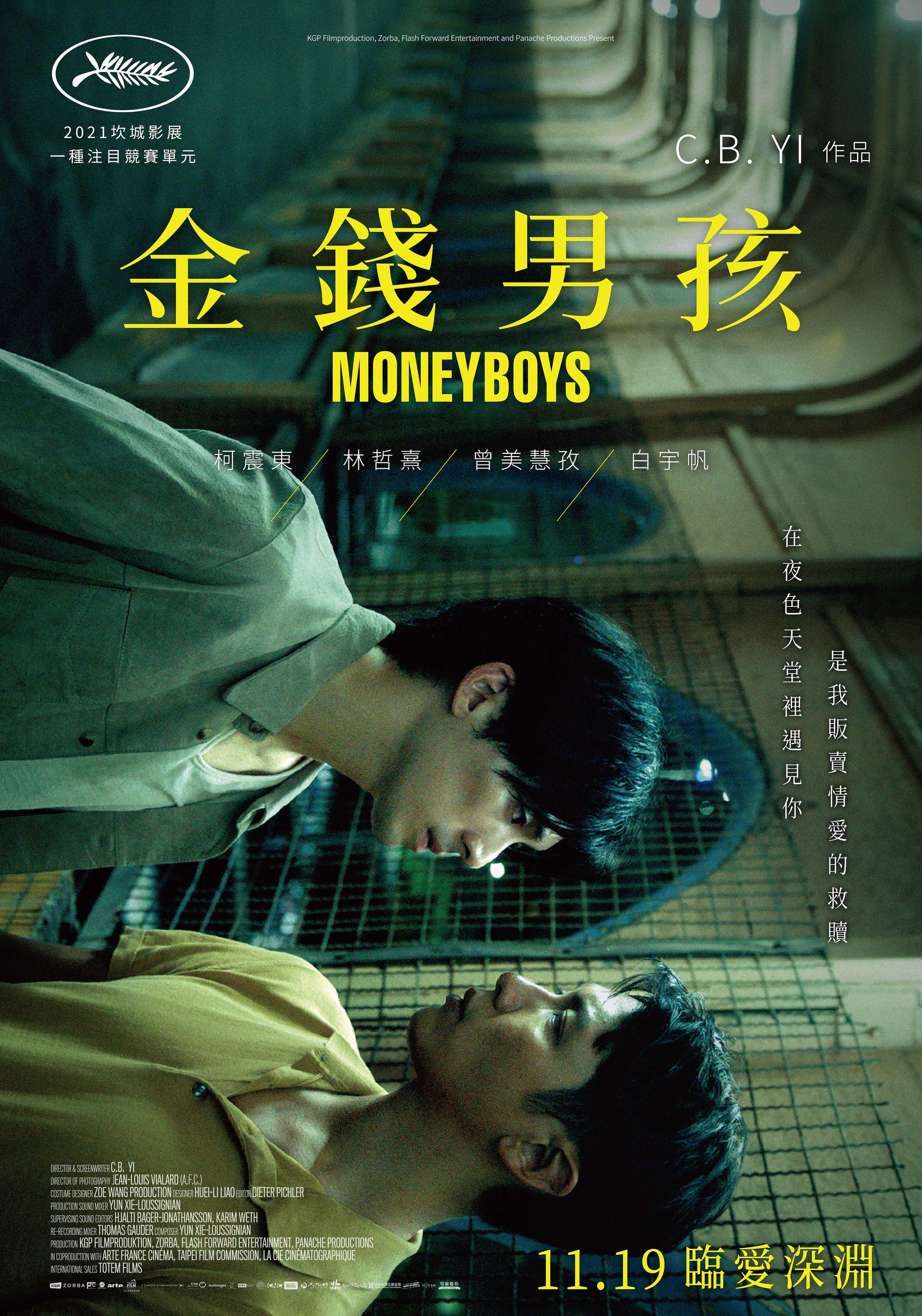
Moneyboys (金錢男孩, C.B. Yi, 2021)

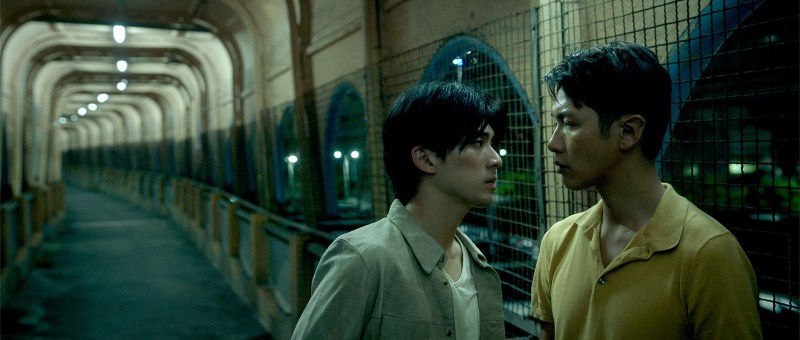
“Who doesn’t sell themselves to make money?” a young man asks in C.B. Yi’s melancholy mainland-set drama Moneyboys (金錢男孩, Jīnqián Nánhái) relating the story of a relative who worked as a tanner all his life, became ill from the effects of the chemicals, and died alone far from home. He may suggest that the exploitative nature of contemporary capitalism will eventually consume you, but it’s an older set of social codes that do for Fei (Kai Ko) who consumes himself in a pathological desire for self-sacrifice as if constantly trying to prove himself worthy of acceptance.

As we first meet Fei he introduces himself as “Jackson”, a naive country boy in the city seeking a means to support his struggling rural family which he finds in sex work. Through his job, he encounters the swaggering Xiaolai (JC Lin) who introduces himself as “Max” and takes him under his wing. Soon they fall head over heels in love, but Xiaolai fears Fei’s desperation and lack of judgment in his choice of client, an anxiety which is later borne out when Fei is badly beaten by a local gangster. Filled with rage, Xiaolai attacks him with a metal bar but ends up badly beaten himself and thereafter sought by the police. Not wanting any trouble, Fei skips town and five years later has started a new, apparently much more successful life, in another city. 

“You’re always living for others” he’s later told by a childhood friend, Long (Bai Yufan), whose long-term crush on him Fei seems to be wilfully ignoring, “the way you sacrifice yourself, you constantly hurt yourself and sometimes others too”. Fei’s self-sacrificing nature does indeed seem to have a masochist component as he wilfully puts himself in dangerous situations to get money to provide for his family. His family, however, reject him precisely because of the nature of the sacrifices he is making. Returning to his home town after being unjustly hassled by local police who attempt to entrap him by getting an undercover officer to pose as a client and searching his home for drugs, Fei is physically attacked by a belligerent uncle who can’t stop ranting about Fei’s marital status beginning by berating him that his family is embarrassed because he has no wife before revealing that they all know about “what you did in the city” and are shamed by it. His father barely looks at him, though his sister appears to know and encourages him to find the right person and hold on to them because life is long and she doesn’t want him to be lonely. 

Later, another woman reassures him that he is “someone who deserves love” though he struggles to accept it. He feels indebted to Xiaolai because he lost a leg for him, unable to move past the transactional nature of love to accept it from someone who wants only the same in return. Consumed by internalised shame he struggles to let go of outdated traditional social codes and unlike Long is unwilling to abandon them in order to live the life he wants. One of his sex worker friends in his new city eventually enters into a sham marriage with a woman who is fully aware of the realities and later pledges to move back to the country and raise a child as a conventional husband and father while tearfully explaining that six years with the gay community have been the best of his life. He too has made a sacrifice of himself for his family but is already torn apart with disappointment and resentment. 

Fei’s tragedy is that he tries to please everyone but himself, revelling in his self-sacrificing suffering and barely noticing when others are caught in the crossfire. Unable to let himself go, he is left only with the memory of the one time he was happy, which wasn’t the one he originally thought it was, and the simultaneous knowledge that he has lost It forever through his own thoughtlessness. Trapped in the past both by the traditional social codes and his thwarted romance with Xiaolai he envisions an ironically progressive compromise but is unable to see the selfishness in his desires perhaps for once putting himself first in failing to consider the feelings of those around him. A neon-lit vista of loneliness, C.B Yi’s melancholy tale of self-imprisonment and the commodification of love discovers only unhappiness in the midst of a repressive social culture defined by the twin poles of rampant consumerism and the filial imperative. 


Trailer (English subtitles)

Dead Talents Society (鬼才之道, John Hsu, 2024)

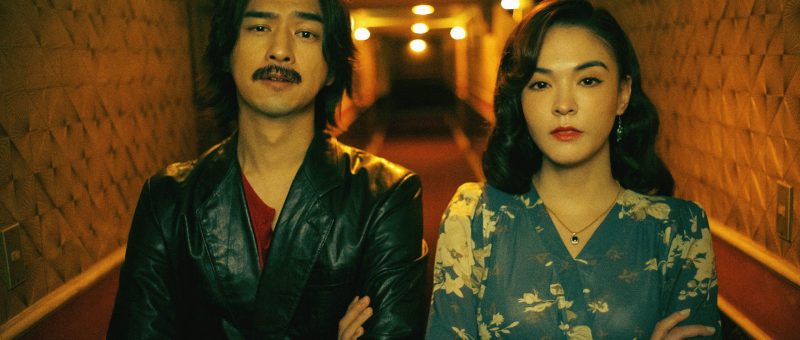
“Why is it more tiring to be dead than alive?” A fed up ghost asks themselves and with good reason. If you thought you’d be able to rest easy in the afterlife, you’ve got another thing coming because it’s just as much of a capitalist hellscape on the other side as it is here. The central conceit of John Hsu’s Dead Talents Society (鬼才之道, guǐcái zhī dào) is that a ghost must must earn their keep by haunting the living in order to provoke large-scale appeasement rituals and the burning of vast amounts of ghost money or risk disintegration and finally disappearing from this world.

In a certain way, this is the paradox of the ghost. They fear being forgotten and only want to be seen mostly by the living but also by the dead in order to feel the validation that they exist and are appreciated. For Rookie (Gingle Wang) , a teenage girl who it later turns out was almost literally crushed by the weight of parental expectation, this was something she was never able to feel in life partly because of her father’s well-meaning attempts to boost her confidence by telling her she was “special”.  He even went so far as to mock up a fake certificate for her while leaving her to feel inadequate that her sister’s trophy shelves were full while hers were empty. It’s this certificate that’s gone missing during her family’s literal attempt to move on from her death and start again leaving her behind. With no place to return to, Rookie will disintegrate in 30 days if she can’t win a haunting licence which is a problem given her mousey personality and the lack of talent that left her feeling so inadequate in life.

Yet many of the pro ghosts are in the same position. Cathy (Sandrine Pinna) used to be the reigning queen, but her thunder was stolen by a former prodigy, Jessica (Eleven Yao), a very modern ghost who’s figured out how to haunt the internet and go viral for scaring influencers to death. In some ways, the living too are ghosts online haunting an alternate plane of reality while it’s through these online personas that we make ourselves seen. After all, in the modern world, there’s no better way to be “remembered” than by achieving internet fame. By contrast, all Cathy has is her decades old trick of backflipping on guests staying in the hotel room where she died in a lover’s suicide over a man who cared little for her. In a hilarious twist, the gang set up the trick on a harried businessman but he’s so busy he doesn’t even really notice any of their ghost stuff and remains entirely focussed on his work. 

Taken in by the gang, the realisation that rookie begins to come to is that she never really needed to be “special” but only herself and for someone to see her as she really was. Her anxieties are those of contemporary youth burdened by the weight of parental expectation and fearing they can’t live up to it. Manager Makoto (Chen Bolin) experienced something similar in life, struck by anxiety while struggling to make it as a early ‘90s popstar while unable to make his mark in the ghost world by virtue of being unable to scare anyone because he’s too good looking. As he tells it, the best thing about being dead is that you no longer need to worry about what other people think and Rookie is therefore free to become herself or else disappear forever. 

Even so, the irony is that the finale sees the central gangs take on unified appearances as if becoming one with one side doing better than the other in their genuine sense of mutual solidarity as a ghost world family. They watch J-horror-esque movies for tips and muse of the contradictions of fame that perhaps we accord those talented that are merely the most visible while these ghosts struggle to be seen in an increasingly haunted world of hollow influencers and illusionary online avatars. Rookie still doesn’t know what being seen means but has perhaps learned to see and accept herself thanks to her experiences in the afterlife. Charming and somehow warm in its lived-in universe of celebrity ghosts and professional hauntings, Hsu’s zany horror comedy may suggest there’s no escape from the living hell of capitalism but that dead or alive you might as well enjoy the ride as best you can before it all suddenly blinks out.


Dead Talents Society screens Nov. 9/10 as part of this year’s San Diego Asian Film Festival.

Original trailer (English subtitles)
Hotel Iris (艾莉絲旅館, Hiroshi Okuhara, 2021)

You can check out any time you like, but you can never really leave the titular Hotel Iris (艾莉絲旅館) at the centre of centre of Hiroshi Okuhara’s Taiwan-set erotic mystery drama adapted from the novel by Yoko Ogawa. At least, so it seems to be for heroine Mari (Lucia), a youngish woman stultified by a dull existence and controlling, possessive mother while haunted by the memory of her late father murdered when she was still a child. The goddess Iris, so we’re told, could fly to any place she wanted on her rainbow wings as perhaps does Mari, in a sense, in her circular, sado-masochistic, and largely epistolary romance with a middle-aged Japanese translator of Russian literature (Masatoshi Nagase). 

On an otherwise dull if stormy night, Mari is alerted by the sound of a woman screaming while manning the front desk. On investigation she finds an older gentleman violently beating a sex worker who manages to escape down the stairs while he calmly walks his way out. Despite this violent, dangerous episode Mari is intrigued rather than frightened, handed a crumpled note and drawn to the malevolent presence. Spotting him in the town she follows him to the beach where he explains he lives on a near by island across a makeshift bridge cut off at high tide which he likens to that of Iris’ rainbow connecting the worlds of the living and the dead. 

Mari may in a sense be chasing death in the figure of the middle-aged man who also obviously recalls the image of her absent father, she taking him on a kind of date to ice cream (which he does not appear to enjoy) by the sea as her father had done when she was a child. Yet the relationship that develops between them is erotic rather than romantic, Mari discovering a sense of empowerment in submission to the older man’s sexualised violence as he strips and binds her, tearing her clothes while watching himself in the mirror.

The presence of mirrors is central to their relationship, or perhaps to Mari’s fantasy as she reflects on the multiplicities of self it offers her along with a sense of endlessness as if she and the middle-aged man had begun to inhabit a world of two behind the glass. When she questions his true identity he replies only “I am You” which she later returns to him, “You are me”, signalling the selflessness which now exists between them if also leading us to question how much of this is happening merely in Mari’s mind bored behind the counter of the Iris and longing for escape. She borrows the name of an absent childhood friend, “Mary”, for her correspondence with the middle-aged man in order to keep her relationship with him secret from her mother while the main character in his book is also co-incidentally named “Mari” giving her at least three mirrored personas in this already complicated relationship one of which actively controlled by the middle-aged man and another by her mother. 

Meanwhile Mari begins to doubt him, witnessing a display of irrational violence and later hearing that the body of another sex worker has been discovered in the town. He told her he had no family since his wife passed away but turns out to have a mute nephew who later claims to be his stepson said to have lost his tongue to cancer though we later wonder if that is really case. In seducing the nephew/stepson she takes on a more dominant, masculinised role while he is later feminised by the middle-aged man if also becoming an embodiment of the triangular griefs that bind them, the boy for his mother, Mari for her father, and the middle-aged man for the wife is rumoured to have killed. 

Okuhara is not so much interested in solving the literal mystery of the middle-aged man’s potential as a covert serial killer as exposing Mari’s inner psychodrama as she attempts to process the unanswered questions of her father’s death, literally haunted by the image of him wondering whether or not she as loved as a child while straining to break free of her mother’s controlling impulses but otherwise trapped within the oppressive atmosphere of the Hotel Iris. Caught between Taiwan and Japan, Mari occupies a liminal state of constant inertia while spreading her rainbow wings in search of danger and excitement. Shot with a moody ethereality, Okuhara’s poetic psychodrama captures an almost gothic sense of intensity as the heroine investigates the mystery of herself through transgressive relationships with the living and the dead on permanently shifting sands. 


Original trailer (no subtitles)

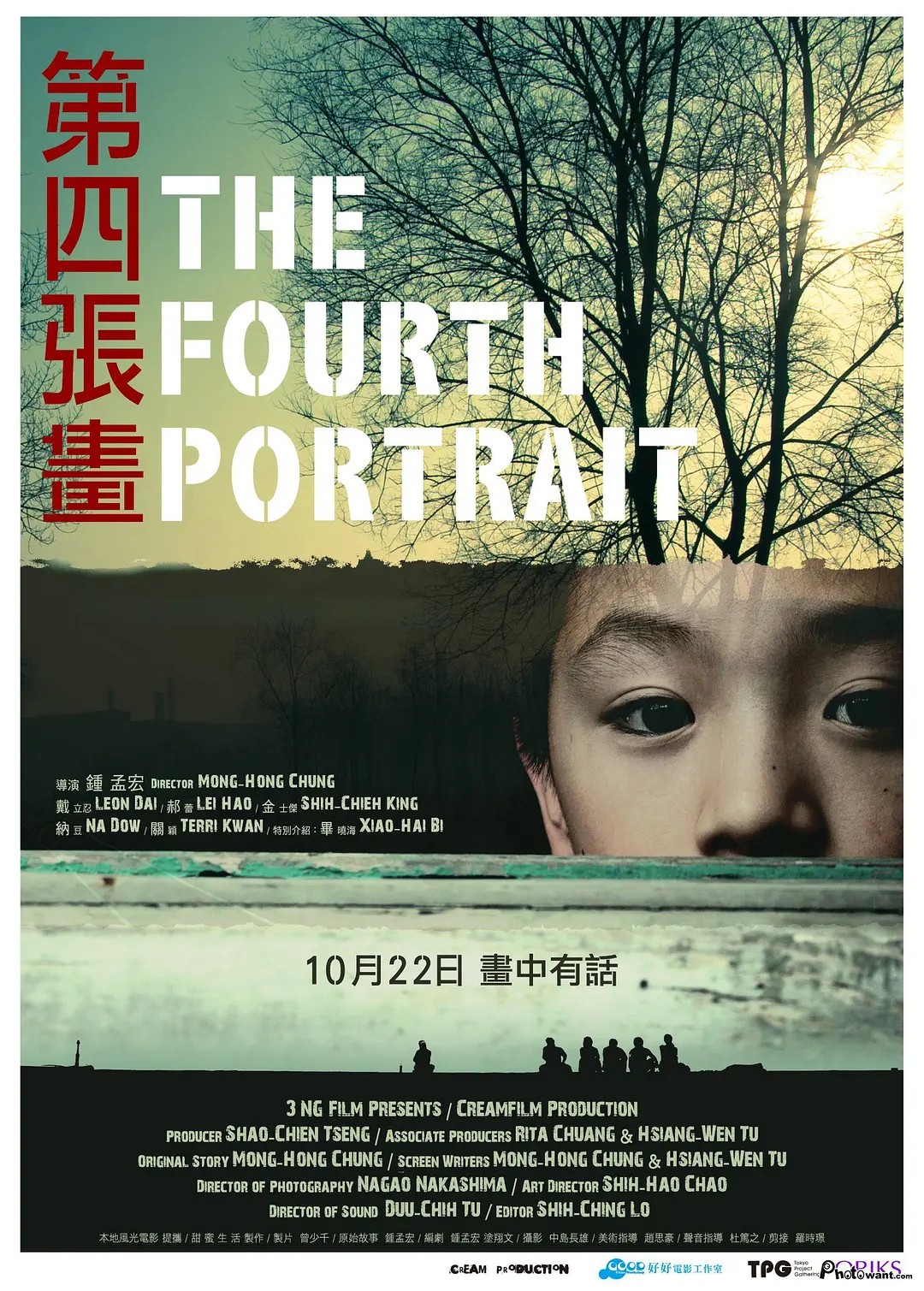
The Fourth Portrait (第四張畫, Chung Mong-Hong, 2010)

A young boy struggles to forge his own identity while lost amid the legacy of perpetual displacement in Chung Mong-Hong’s whimsical coming-of-age drama The Fourth Portrait (第四張畫). As the title implies, Chung structures his tale around four images as the boy looks for guidance through each of his relationships but perhaps finally discovers only that he is on his own and has only himself for protection yet must find the courage to try and escape even if it causes him pain. 

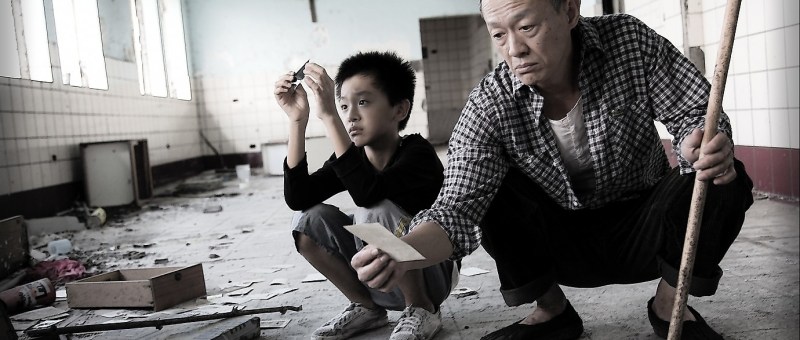
At 10 years old, young Xiang (Bi Xiao-Hai) is impossibly burdened in the way no child should be as a doctor coldly tells him that his father will soon pass, a nurse instructing him to stay put and let them know when his father is gone. Xiang impassively places a napkin over his father’s face, the undertakers bickering amongst themselves while deciding to do the funeral for free seeing as this child is now all alone and seemingly has no other family. Yet no one comes to take care of Xiang, he has to go home on his own and begins living independently eventually resorting to stealing lunch boxes at school only to be caught and scolded by a grumpy janitor who both tenderly offers him food but then roughly slaps him when he notices the boy is crying. 

As Xiang is about to become, the old man, Zhang (Chin Shih-Chieh), is also a displaced person having travelled from the Mainland 50 years previously. He takes him to scavenge abandoned buildings meditating on what it is that gets left behind, why it has value to some and apparently not to others. Xiang himself was abandoned by his mother who took his older brother with her but chose to leave him with his father, wondering perhaps if he is valuable or not. Technically if not literally orphaned, Xiang is later reunited with his mother, Chun-lang (Hao Lei), but is then displaced himself, forced to move to the city and into the house she shares with her second husband and infant child. Like Zhang his mother came from the Mainland in search of a better life she did not find and is living with a sense of disappointed futility trapped in her marriage to a dejected and violent man (Leon Dai) while forced to support the family through sex work at a nearby hostess club frequented largely by Mainland gangsters. 

Unanchored and insecure in his new environment, Xiang begins having strange dreams of his apparently absent brother Yi but his attempts to discover the truth about the past only further destabilise the foundations of his new home. His mother cannot fully embrace him because of her guilt over leaving him behind while unable to fully process the reality of what may have happened to Yi too frightened of the truth to risk poking around. His stepfather meanwhile is a haunted man, unable to work and seemingly the primary carer to their small child though neither them are ever really seen paying much attention to the baby. When Chun-lang tells Xiang that he is a stranger in their house, that she is no longer the mother she once was because she has married another man and has another child with him, she does so perhaps partly to encourage him to leave advising him to steer clear of his stepfather in a bid to keep him safe yet blaming herself for all the tragedy which has befallen her accepting it would not have happened if she had not “messed up” her life. 

Perhaps this is why Xiang finds himself bonding with a decidedly strange middle-aged man he meets by accident in a public toilet. “Big Gun” paints himself as something of a big brother figure, suggesting that they can drift together travelling around on his moped. His conduct towards the boy is extremely inappropriate in more ways than one involving him in his life of petty crime, yet Xiang finds in him a sense of acceptance that he doesn’t get from the other adults along with a new sense of independence. Yet Xiang’s illusions are eventually shattered twice over, the first revelation paving the way for a greater loss of innocence in discovering the truth about his brother while the second perhaps leads him to feel that he really is alone, continually displaced, and entirely unanchored in a world with offers little prospect of warmth, affection, or a place to belong. 

Like Zhang and his mother, Xiang is fails to settle in contemporary Taiwan lost amid a stream of constant dislocations and bound only for endless wandering. Yet staring into a mirror preparing for his fourth portrait he perhaps begins to forge an image of himself informed by those he’s drawn before and giving him the sense of confidence to survive the emptiness of the world around him. Beautifully shot with a lingering ethereality, Chung’s enigmatic storytelling coupled with the whimsical score lend a note cheerfulness to what in many ways is a fairly bleak situation but perhaps reflects the surreality of the boy’s life in his constant quest for belonging. 


International trailer (English subtitles)
Fish Memories ((真)新的一天, Chen Hung-i, 2023)

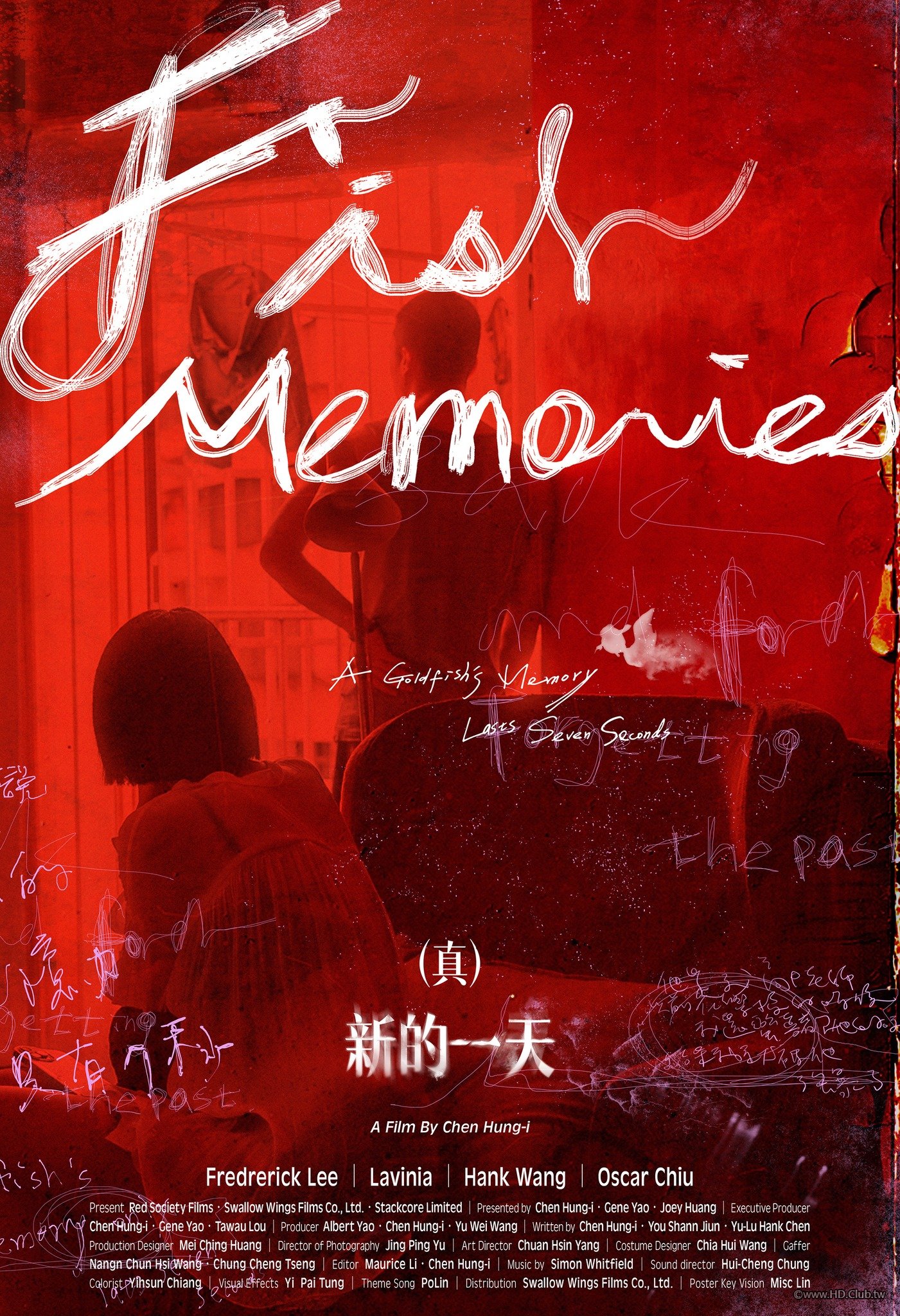
The sometime narrator at the heart of Fish Memories ((真)新的一天, (zhēn) Xīn de tiān) says that she wishes her memory were like that of a fish, no longer than seven seconds, and that she were able to be free of her traumatic past by forgetting it. But of course, she is unable to forget and like her boyfriend, Shang, and the middle-aged man with whom the pair eventually form a twisted relationship, a kind of orphan drifting in the wake of parental failure.

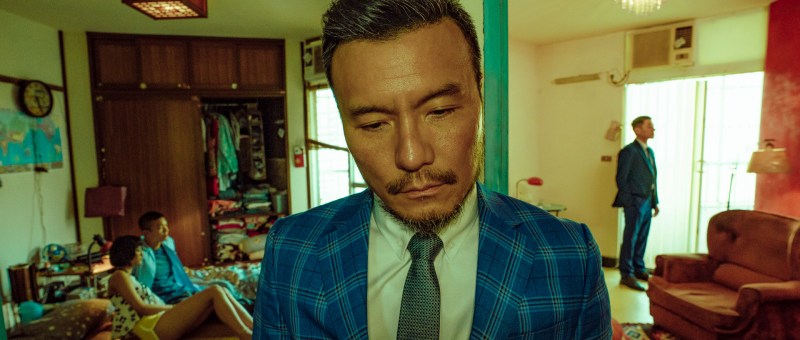
Businessman Zi Jie (Frederick Lee) also seems to drifting, seemingly dissatisfied with his financially comfortable but emotionally empty existence. He later says that his own parents only cared about about money and sent him away to Singapore when he was a teenager only for their business to then fail. He feels as if he’s done better than them, at least, but when asked how to avoid loneliness he answers only “earning money, spending money, earning money”. He has a girlfriend of around his own age, but bristles when she expresses a desire for greater intimacy and ends up pushing her away while beginning to bond with Shang (Hank Wang), a teenager he meets in a convenience store while picking up a parcel. He runs into the boy a few more times and ends up developing a friendship with him and also his same age girlfriend Zhen Zhen (Lavinia) who is still in high school and claims to have been sexually assaulted by one of her teachers who’s apparently done the same thing to several other girls with no apparent consequences.

Zi Jie’s relationship with the teens straddles an awkward divide, partly parental and partly friendly. He seems to partially regresses in their company, drinking incredibly expensive wine but also sitting around playing video games and agreeing to childish dares such as the one in which he ends up swapping places with Shang, waking up in his walkup apartment and dressing in his clothes. Shang’s living environment is not ideal, Zi Jie balks at the stairs while the place is cramped and filled with junk and Shang evidently rarely does no laundry but to Zi Jie it represents a kind of freedom. Of course, he can always return to his luxury apartment which still has power even during an outage which is an option not open to Shang who nevertheless seems to increase in confidence while wearing Zi Jie’s fancy tailored suit. Several times he approaches his rundown apartment block and looks to the sky as if echoing his sense of aspiration though that turns out not to be the reason he’s interested in Zi Jie. 

When he first gave him a car ride, Shang blunts told Zi Jie he wouldn’t sleep with him because he liked girls, remarking that Zi Jie looked “a bit gay”, but a sexual relationship does eventually evolve between the trio even as they also form an unconventional family unit. When they sit down to breakfast together with the doors onto the courtyard open and the sun drifting in with idyllic view behind, Zhen Zhen remarks that it’s the kind of moment she’s been waiting for all her life despite the awkwardness of this quasi-incestous and definitely inappropriate relationship given that the teens are underage and Zi Jie is a wealthy middle-aged man keeping them in his apartment.

But it’s perhaps when the streams start to cross that things begin to go wrong, Zi Jie making a huge miscalcutation while in the teens’ world that provokes a tragic event biding each of them together though only in the darkest of ways. The three of them are each in their way trapped in a tank, no more free than the fish they place inside it and in the end able to find freedom, of one kind or another, by remembering and acknowledging the truth. Repressing his sexuality and chasing only empty financial success has evidently left Zi Jie a hollow, broken man seeking to reconnect with his younger self through his relationship with Shang which in its way also prevents him from acknowledging the vast gulf that exists between them in their differing circumstances but also unites them in a shared feeling of irresolvable loneliness and the legacy of parental abandonment in a sometimes indifferent society defined by economic success.


Fish Memories screens 8th September in Melbourne as part of this year’s Taiwan Film Festival in Australia.

Original trailer (Traditional Chinese / English subtitles)

Snow in Midsummer (五月雪, Chong Keat-Aun, 2023)

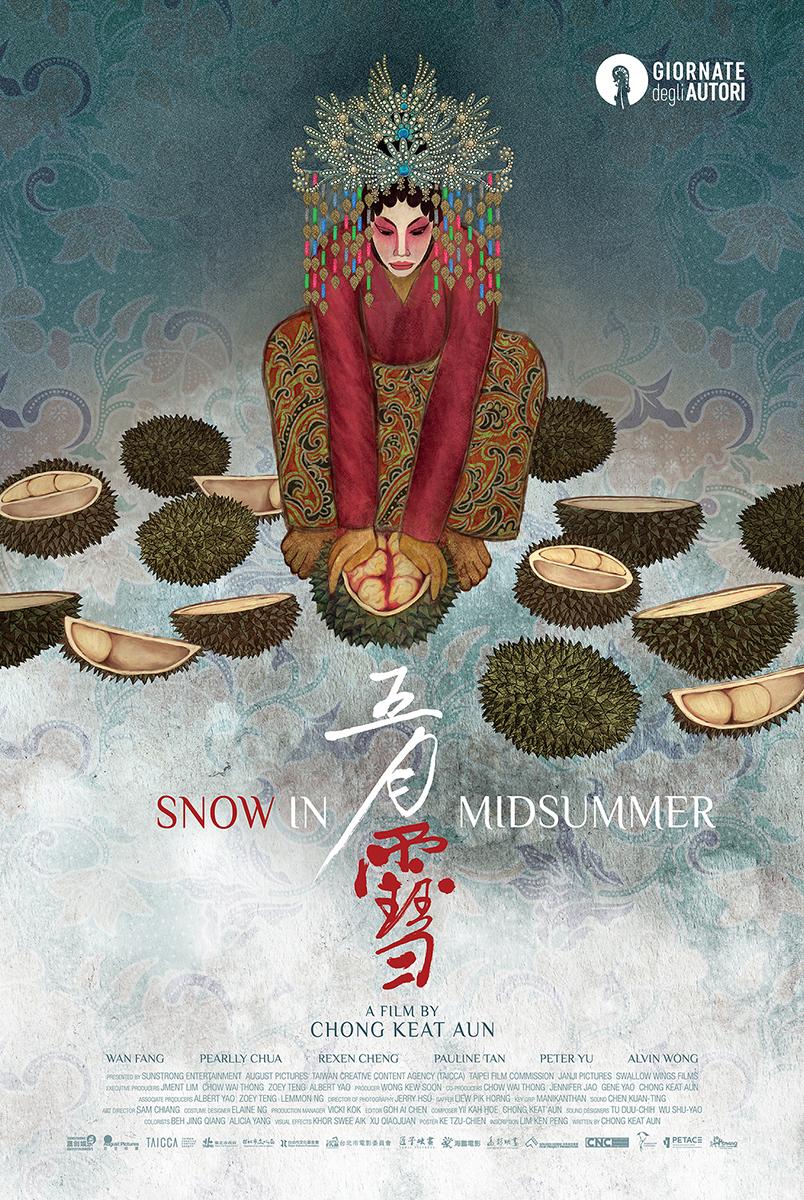
How should you deal with the traumatic past? In Chong Keat-Aun’s Snow in Midsummer (五月雪) it becomes clear that this past has not been dealt with and that its heroine has been living in a kind of limbo unable to move fully forward with her life in the constant search to discover what happened to her father and brother during the 513 Incident in 1969. The first act devotes itself to the slowly unfolding horror of the massacre which erupted shortly after a general election during which a number of smaller parties affiliated with the Chinese community had begun to gain ground from the Malay-dominated Alliance Party. 

Bullied by her classmates as a Chinese student in a Malay school, Ah Eng spends the night of the massacre hiding in the backstage area of a Cantonese opera troupe as if in a literal act of taking refuge in fantasy. The film’s title alludes to the famous Cantonese opera Snow in Midsummer, actually “Snow in June” here retitled as “Snow in May”. The play’s theme is injustice as its heroine is condemned to die for a crime she didn’t commit, someone remarking that the gods must be outraged to provoke such an aberration of the natural order as snow in the height of summer. The ageing leader of the opera troupe ventures out during the incident in search her friends and relatives who had gone to the local cinema. Unable to open the door, she climbs onto the roof and sings a lament decrying the bloodshed and her own cruel fate as she watches the city burn beneath her. 

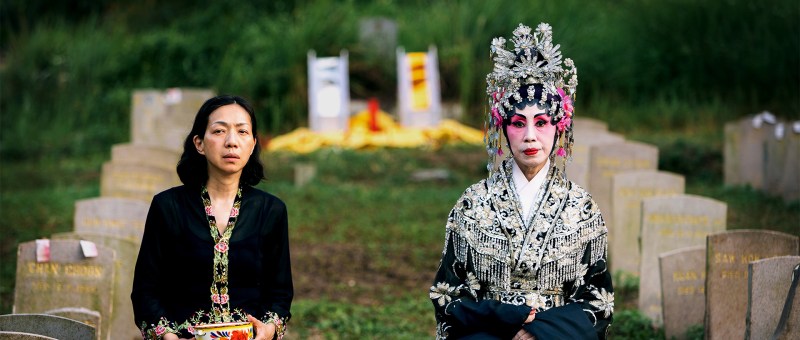
A similar lament is sung 49 years later in a graveyard we’re told is set to be “redeveloped”. The opera troupe had performed here for the dead during the intervening years, but in an event echoing that of 1969 are challenged by authorities asking if they have permits. That was in the past, they’re told, this is now and their performance causes a disturbance to a mosque which has recently been built close to the site. In a touch of irony, the taxi driver who brings the middle-aged Ah Eng to the cemetery asks her if she’s going to the leprosy hospital remarking that the Chinese community usually refuse to go anywhere near it. Each of the headstones, many of which read simply “unknown Chinese”, is marked “courtesy of the Malaysian government”, but it’s clear that this site was chosen because of its remoteness for similar reasons to the leper colony because they did not really want to address what had happened in any meaningful way.

That Ah Eng returns 49 years later hints at spiritual echoes of cycles of rebirth, but Ah Eng has lives her whole life in limbo haunted by the impossibility of discovering the resting place of her father and brother. Her father had refused to take her to the cinema, leaving her and her mother to watch the opera alone in echoes of the patriarchal oppression she continues to face as a middle-aged woman whose husband reacts with violence and anger simply because he suspects she intends to return to Kuala Lumpur to mourn her loss. Her sister-in-law gives her a lift to the station, but insists on being called by her Chinese name revealing that’s divorced her Muslim husband and intends to move to Australia with her child. On her arrival in the city, Ah Eng passes by the former sit of the Majestic Theatre which is now a fancy hotel with the same name in a very changed city. Her former Malay school is now Chinese but has a stand outside it selling Islamic food where the Cantonese opera troupe discuss their visit to the cemetery. 

“The past is dream,” the old woman sings to the grave echoing the surreality that runs through Chong Keat-Aun’s vision of the past as a man rides his elephant through the streets and lives the tale of a king forced to drink the Sultan’s foot water as a symbol of his subjugation, while others at the theatre are sold of a tale of a king with a quite literal bloodlust sustaining himself on the suffering of his subjects. A melancholy contemplation on lingering trauma, loss, and memory Chong Keat-Aun ends with a poignant image of comfort and catharsis but one is which is forever haunted by an intangible past and the wandering, unseen ghosts of buried injustice. 


Snow in Midsummer screens as part of this year’s Taiwan Film Festival in Australia.

Trailer (Traditional Chinese / English subtitles)

Pierce (刺心切骨, Nelicia Low, 2023)

What are the limits of unconditional love and is it always a good thing? The hero of Nelica Low’s intense fraternal drama Pierce (刺心切骨, cì xīnqiè gǔ) is desperate to believe that his older brother is innocent of a crime he’s been imprisoned for for the last seven years, but in another sense it seems like the fact itself doesn’t matter to him. What he wants is the emotional intimacy of authenticity which is something he doesn’t seem to get from his steely mother intent on crafting a protective bubble of fantasy that may be as much for herself as her son.

In any case, Ai Ling (Ding Ning) is convinced that Zihan (Tsao Yu-ning) was born bad. She needs no convincing that when he stabbed his opponent with a broken blade during a fencing competition he did so knowingly and it was an act of murder rather than an accident as he claims. Zijie (Liu Hsui-fu), her sensitive younger son, is not so sure and feels that his mother’s total rejection of his brother is unfair. He needs to believe in part that Zihan is innocent because he once saved him from drowning though according to his mother if she had not arrived when she did Zihan would happily have watched him die. Ai Ling also says that she suspected Zihan had harmed Zijie during their childhood, but if this is true then Zijie appears not to remember it or perhaps willingly suppresses his memories of cruelty because it would be too difficult for him to accept that his own brother tried to kill him. 

But objectively speaking, there is something not quite right about Zihan who seems to be a charmer with manipulative tendencies. He was once a three time national fencing champion, and as he says fencing is all about figuring out your opponent’s intentions without letting them see your own. Of course, the way he behaves could equally be because of the way his mother behaves towards him. In some senses he too is a broken blade, apparently craving his mother’s approval and affection and perhaps becoming what she believed him to be out of frustration and resentment. He lies all too easily, crashing a dinner party with Ai Ling’s wealthy suitor Zhuang and his family and leaning into her cover story that he had been away studying medicine in the US while adding a touch of his own in a tearful story of wanting to specialise in radiology having watched his father painfully pass away of cancer. 

Of course, even if he is a raging sociopath, that doesn’t necessarily mean he committed an apparently motiveless murder or that he has no feelings at all for his brother who dotes on and idolises him with almost incestuous intensity. Zihan instantly picks up on the fact his brother is gay and that a boy in the fencing club has a crush on him, offering nothing other than support and reassurance of the kind he’d never get from Ai Ling. When Zhuang tries to set Zijie up with a girl and he declines, he broaches the idea he might not be straight but Ai Ling immediately changes the subject implying that probably she already knows but it’s another thing she’s papered over perhaps afraid that it might damage her relationship with Zhuang who appears to come from a wealthy family though they may not be as conservative as she fears them to be. 

In contract to the intimacy Zijie craves, beginning to confess himself, Ai Ling protects and distances herself from others through deliberate misrepresentation. Zhuang seems at least that he would be more upset about the deceit than that Ai Ling has a son who involved in a high profile, violent crime and also appears not to care that Zijie maybe gay while otherwise attempting to bond with him and be a sincere father figure. His love may in fact be unconditional in a way Ai Ling’s clearly is not whereas Zijie finds himself wavering, confronted by contradictory evidence that suggests his brother may not be so innocent after all. Deciding into a Grand Guignol fantasy in its final stretches, Low fills the screen with an ominous red, the billowing curtains creating an artificial dreamscape of ambiguous reality in which the brothers, each of them, discover at least their own truth and the answers they were seeking which may in its way be all they really needed.


Pierce screened as part of this year’s New York Asian Film Festival

Original trailer (English subtitles)
Breaking and Re-entering (還錢, Wang Ding-Lin, 2024)

You go to the trouble of planning a massive heist, and then it turns out you have to put it all back again. The gang of theives at the centre of Wang Ding-Lin’s hugely entertaining crime caper Breaking and Re-entering (還錢, huán qián) brand themselves modern day Robin Hoods, pausing for a laugh when they claim to help the poor, “yeah, us”. Yet there is something a little suggestive about this particular gig as they find themselves hired for an inside job by an obnoxious bank chief who claims the most important thing in life is yourself and those around you are merely passengers to be jettisoned at will..

Chen (Wu Kang-ren) is a rich kid who inherited the family bank and thinks he’s hot stuff after studying abroad, speaking Mandarin like foreigner and peppering his speech with English. His big idea is a cryptocurrency called BST and his tagline is “Peace, Love, and Money” while ironically enough he is also claiming to run a charity to help the poor. It’s obvious he’s running some kind of scam and not altogether surprising that he’d plot to rob his own back and then have the thieves bumped off to keep them quiet along with the two employees he’s decided to frame for the crime. Unfortunately for everyone, one of his scapegoats, Shen Shu-wen (Cecilia Choi), is the long lost flame of chief crook Po-chun (Chen Bo-lin) who, having realised Chen plans to bump her off, comes to the conclusion his only option is to mess up Chen’s plan by putting the money back in the vault.  

Of course, Chen is a kind of gang leader too complete with his own chief minion, Hu, though at one point he simply shoots one of his guys in the back of the head after he complains that Chen that doesn’t really value him. By contrast, Po-chun’s gang is a close-knit family, a brotherhood of thieves founded on mutual solidarity and infinite loyalty. Chen’s philosophy maybe that the individual is all, but these men live and die for each other. Nevertheless, Po-chun has a problematic hero complex that sees him, as others put it, aways trying to “take responsibility alone”, sacrificing himself for the group rather than allow his fellow gang members to shoulder some of the burden. That’s presumably one reason he (un)intentionally ghosted Shu-wen after getting arrested and going to prison, convincing himself he was doing the noble thing by avoiding getting Shu-wen mixed up with crime but perhaps also ashamed and insecure unwilling to let her know he met her as part of a heist and his cover personality wasn’t real while never giving much thought to her feelings. Shu-wen spent the last five years looking for him which was apparently a primary motivation for changing her career to work in the bank.

Po-chun’s quest is really one of maturity, to stop being the lone hero and fully integrate into the group by sharing responsibility with the others rather than jump straight to self-sacrifice. As he says through the medium of a montage sequence, their secret weapon is teamwork which is how they’re able to fight back against the well equipped Chen and his minions when the reason Chen flounders is his arrogance and the indifference of his men. That is not to say there isn’t tension in the team, such as the unrequited attraction bruiser Wen-hao has for Po-chun that is quite definitely antagonised by the resurfacing of Shu-wen who seems to have figured out the group dynamics pretty quickly in addition to seeing through Po-chun’s strong man act. 

It’s the warm-hearted, lived-in relationships between the team members that give the film it’s charm along with the quirkiness of the elaborately planned reverse heist and its mild dig at corporate tyranny along with class-based inequality. But most of all what it seems to advocate for is a collective spirit and the triumph of the intellect over the pampered authority of rich kid Chen as Po-chun strategises a way out of his grasp while ending his influence and getting the girl. Wholesome and charming, the film makes the most of its surreal humour along with some hilariously placed reality gags such the infuriating slowness of a “high end automatic door” that ironically prevents a wealthy crook from fleeing the scene.


Breaking and Re-entering screened as part of this year’s New York Asian Film Festival and is also screening as part of the Taiwan Film Festival in Australia

Original trailer (English subtitles)
Suffocating Love (愛的噩夢, Liao Ming-yi, 2024)

Everything seems to put pressure on M, the cavalier hero of Liao Ming-Yi’s quirky exploration of confused male desire Suffocating Love (愛的噩夢, ài de èmèng). At heart, the problem might be that he doesn’t know what he wants, or he’s just someone who chases the dream of romance and is unsatisfied by its reality. Then again, the Chinese title of the film means something like “nightmare of love”, and it maybe that M (Austin Lin) is simply ill-equipped to deal the pressure of grown-up romance.

Conversely, the pressure he feels might be understandable given the nature of his relationship with Chia-chi, a manic pixie dream girl he falls for after meeting her through a book exchange app. Chia-chi describes herself as having “quirks” though at first they don’t seem to extend much past her vegetarianism, issues connected to a longstanding health condition, and her religiosity. But after dating for a year, M moves into her apartment and is confronted by a series of “rules” he must follow which make it clear that Chia-chi is controlling and possessive in the extreme. M must agree to send her updates every two hours to prove where he is with photographic evidence and reply to her messages right away. To begin with, M thinks it’s a small price to pay in the name of love, but eventually begins to feel the “pressure” of Chia-chi’s ever watchful gaze especially once another woman arrives on the scene. 

If these gender roles were reversed, we would be certain M should leave this abusive relationship though he seems to view it with a kind of nonchalance and only mild but increasing irritation. Ai-hsuan, a high school crush serendipitously turning up at work, offers the fantasy of escape to a more liberating kind of romance that’s tinged with teenage innocence even if Ai-hsuan’s problem is that she has cold feet about an impending marriage to a man she feels she’s grown apart from during their seven year relationship. Of course, this affair doesn’t place much pressure on him because for the moment it’s casual, an illicit bubble of freedom from Chia-Chi’s control in which he can be himself again. 

But is that what he really wants? After being transported to a strange dream realm, a bunny man harking back to the Alice in Wonderland reference that brought M together with Chia-Chi puts a gun to his head and forces him to make a wish at which point he wakes up with an other woman entirely, Kurosawa Yumi, a half-Japanese photographer and social media influencer who was his celebrity crush. The pair don’t live together, but Yumi seems to pop round to change his sheets and cook his dinner which is perhaps more reflective of a male fantasy than M realises even as he describes as her at the woman every man wants, What he wants is a woman who takes care of him domestically, and sexually, but demands nothing from him so that he doesn’t feel “pressured” by emotionally interacting with her or having to accept that she’s a whole, real person (which this Yumi at least obviously is not). 

At this point, events take a rather strange turn with implications of black magic and manipulation beyond the weird dream realm and its Alice-esque butler forcing M to play Russian roulette with his romantic desires. With a gun to his head, can he really say what he wants or will he always be chasing romantic fantasy? In truth, M’s tunnel vision has its share of latent misogyny and a fear of being “controlled” by women if in a less literal way than he wilfully submits to in his relationship with Chia-chi, a generalised conviction that each of his potential matches is manipulating him while it’s clear that his view of them is blinkered by his selfish desires so he’s incapable of seeing them as whole people or really giving much thought to their thoughts and feelings. Is he suffocated by love, or does he himself suffocate it in his reluctance to engage with the reality? In any case, the jury seems to the out on whether or not M is awakening from his nightmare of love or perpetually trapped inside it by external pressures he is ill equipped to bear.


Suffocating Love screened as part of this year’s New York Asian Film Festival.

Original trailer (English subtitles)
A Balloon’s Landing (我在這裡等你, Angel Teng I-Han, 2024)

A dejected Hong Kong writer longs to find the path back to paradise if in the most ironic of ways, but finds something quite different after accidentally being befriended by a young street tough in Teng I-Han’s lowkey queer romance A Balloon’s Landing (我在這裡等你, wǒ zài zhèlǐ děng nǐ). Seemingly inspired by the boy’s love genre, the film is chaste in the extreme and overly subtle in its central love story which seems to borrow heavily from other similarly themed East Asian romances such as Il Mare and Comrades, Almost a Love Story.

Director Peter Chan is in fact name checked several times, while Taipei street tough A-Xiang (Fandy Fan) has a poster of Patrick Tam’s Nomad on his wall which of course features the face of Leslie Cheung who occupies a similar space to that of Teresa Teng in Comrades in connecting the would-be lovers. Cheung tragically took his own life in 2003, the same year writer Tian Yu’s (Terrance Lau) parents were killed, while Tian Yu himself seems to have suicidal thoughts and intends to end his life at a place called The Bay of Vanishing Whales he thought he’d made up for his novel but is informed is real in a letter from a little boy in Taiwan he continues writing to as a kind of pen pal older brother. 

In a way, A-Xiang represents his desire for life, fond saying that there’s “always a solution” and begging him not to die just like one of the letters he received urging him to carry on living because the sender would be waiting for him at the Bay of Vanishing Whales. A-Xiang is also his literal saviour in that they meet when he rescues him from a group of conmen after he got very drunk bar but though their first meeting is sexually charged with both men wandering round in their pants their romance is slow-burn to the point of non-existence. While on road trip to find the mythical bay, the pair grow closer with Tian Yu slowly giving up on the idea of finding it along with the death it represents only for fate to intervene.

At this point the film changes direction in allowing Tian Yu to rewrite his present, no longer in search of death but of love and a way to save A-Xiang in the same way A-Xiang has saved him. At least, A-Xiang becomes a kind of symbolic other self as hinted at in his stories of men as lonely islands casting messages in bottles out into the sea in longing for connection. This sense of isolation may stem from a feeling of otherness born of his sexuality, though the film never clearly defines it, along with the more literal orphanhood and existential loneliness he shares with A-Xiang. 

As expected there is a fated connection between the two men which is more than a little contrived if perfectly in keeping with the genre of romantic melodrama as Tian Yu begins to chase a future rather than the past even while actively rewriting it to engineer a better outcome. It might be tempting to read something more into the connections between these two men each orphaned, floating islands seeking new futures together though the central theme seems to be less romance than desire for life in which Tian Yu is able to overcome his depression and desire for death through his connection with A-Xiang who gives him a new reason for living. 

A-Xiang’s symbolic value as Tian Yu’s desire for life might explain why the relationship between them never sufficiently ignites in what is at least billed as a queer romance though could easily be taken for simple friendship or platonic brotherhood with the only expression of desire longing looks and tentative motions from A-Xiang. In any case, Teng lends the beautiful Taiwanese landscape a note of wistful melancholy, a place of infinite nostalgia in Tian Yu’s mind and an evocation of the paradise he’s seeking that’s simultaneously past and future waiting for parallel lines to cross. The lyricism cannot however overcome the coyness of the central romance that for its potential poeticism remains somewhat obscure, an unrealised desire awaiting its season but also a shift in the times born of a new desire for life rather than the melancholy loneliness of past emptiness.


A Balloon’s Landing screened as part of this year’s New York Asian Film Festival.

Original trailer (Traditional Chinese / English subtitles)