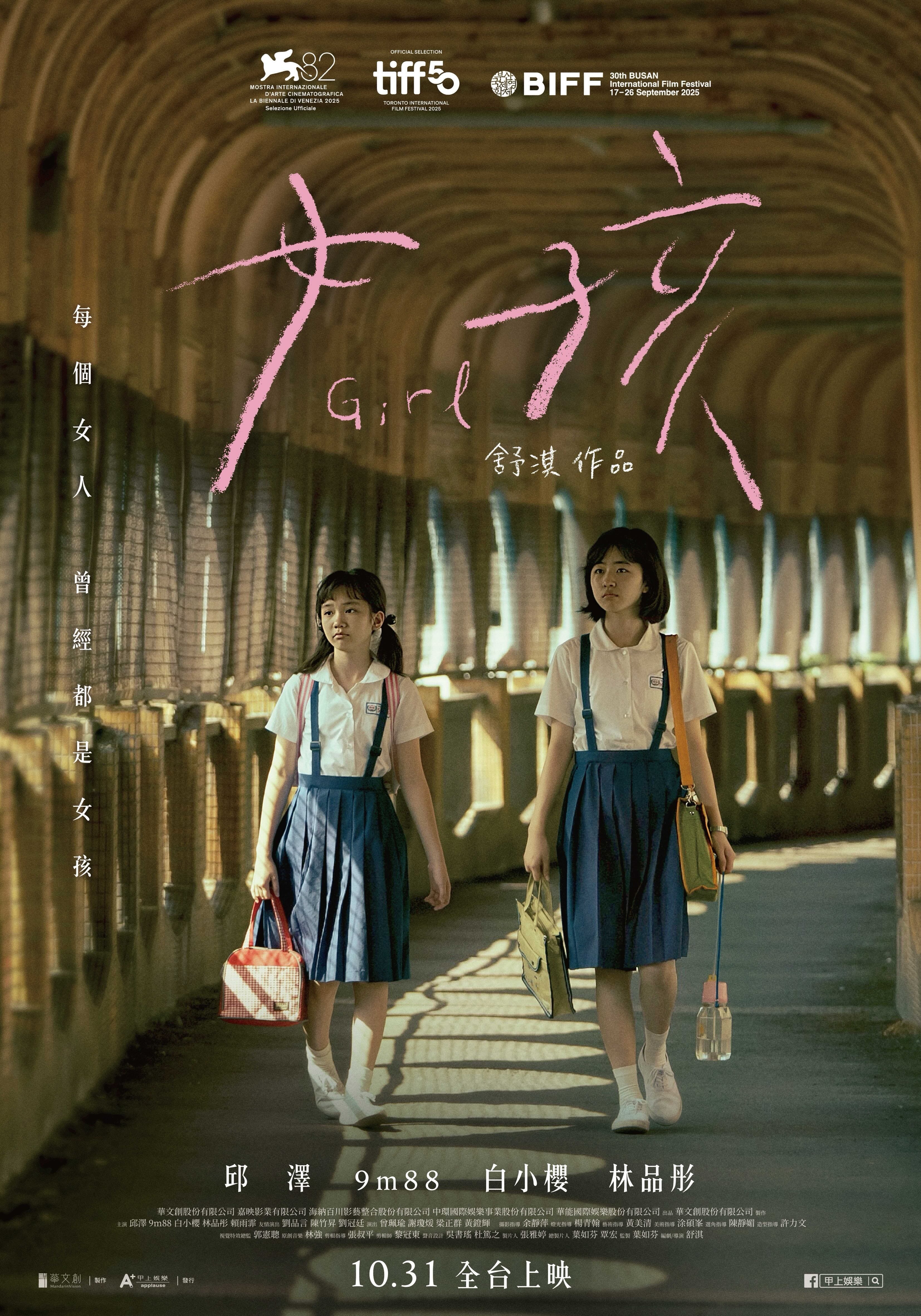
Girl (女孩, Shu Qi, 2025)

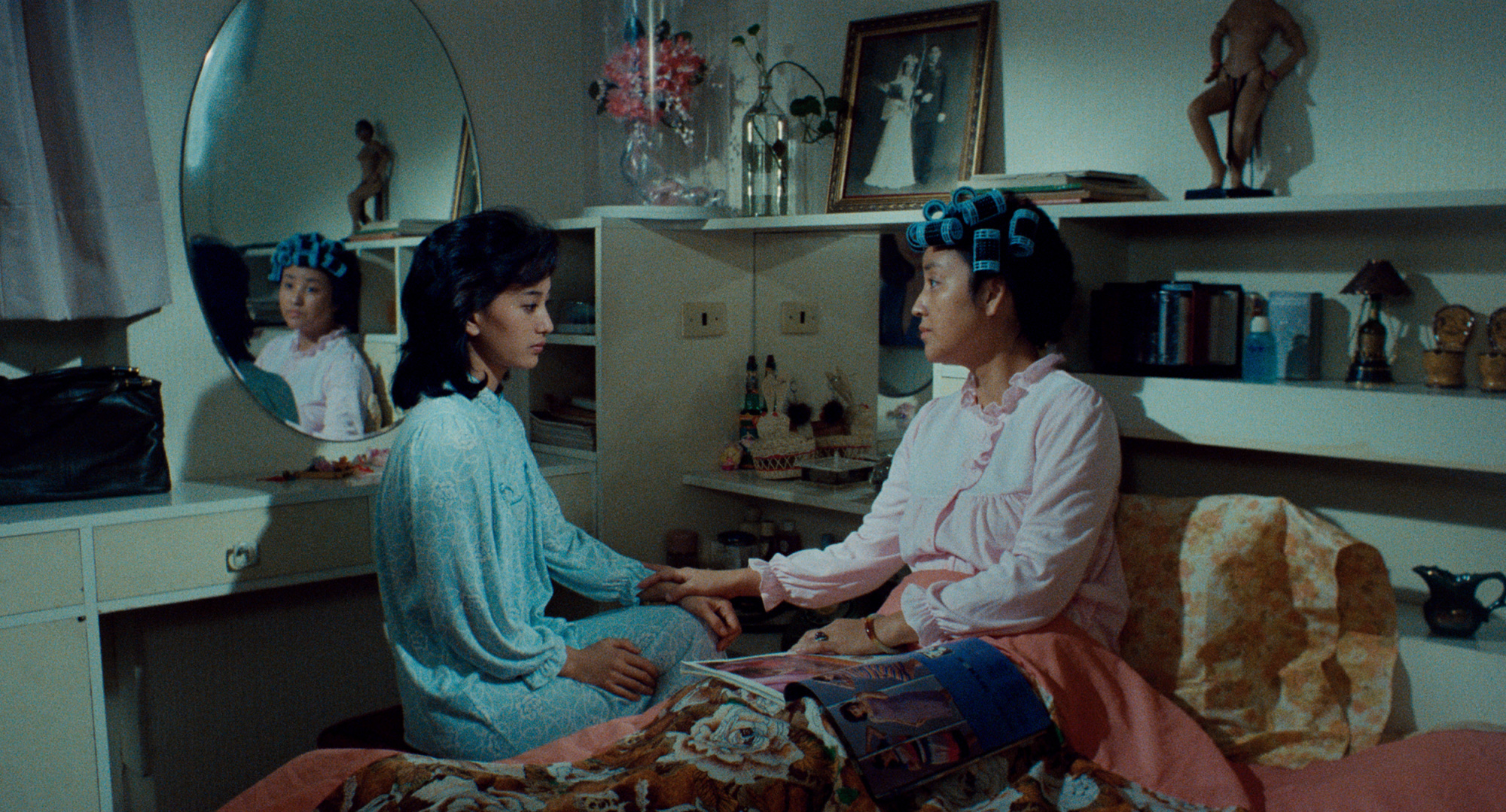
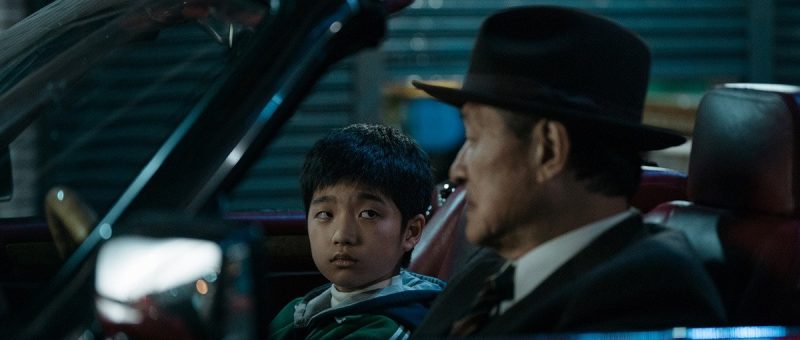
Taiwan may be emerging from martial law, but the cycles of patriarchal violence and oppression prove much harder to escape in Shu Qi’s touching directorial debut and portrait of a disrupted childhood, Girl (女孩, Nǚhái). Inspired by her own memories and set in the late ’80s, the film is unflinching in its depiction of mundane, domestic horror, but equally even-handed in extending understanding even to the most flawed of its protagonists who are themselves locked into a cycle of violence and self-loathing.

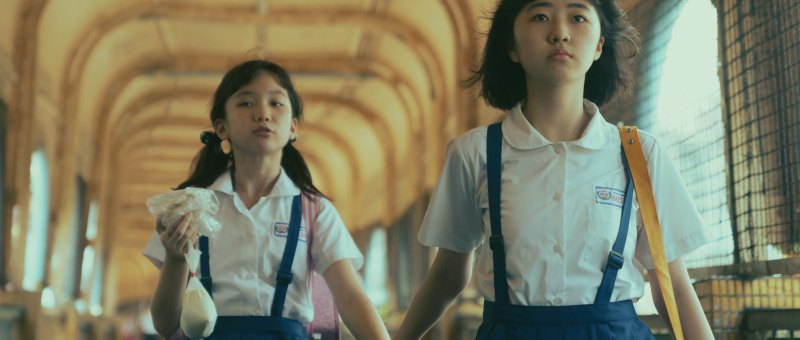
Hsiao-lee (Bai Xiao-Ying) doesn’t quite understand how her sister can be so cheerful even the other children at school make fun of her. Hsiao-lee is often criticised for looking “sullen,” and even her new friend Li-li (Lin Pin-Tung) jokes that on the rare occasion she smiles, she still looks “bitter”. But Hsiao-lee has plenty of reasons to be sorrowful and has perhaps already internalised the idea that there is no escape from her dismal circumstances. Finding a hole in the wall behind the school quite literally shows her another world, one that she later passes into in the company of Li-li who convinces her to ditch her classes and hang out with her at a sleazy video booth that is not really an age-appropriate environment for the two young girls. 

Li-li is Taiwanese-American and has recently moved to the island following her parents’ divorce. The fact that Li-li’s parents’ marriage has ended, even if she wistfully wonders if her father will suddenly jet in to repair the family, shows Hsiao-lee that the prison that is her family home has a door that could be unlocked. It’s clear that Hsaio-lee is terrified of her father (Roy Chiu) who is a violent drunk and may also be sexually abusing her. She zips herself up in a tent at night and cowers in terror as his hand presses down on the canvas, though he doesn’t like closed doors and flies into rages when he encounters them, which explains the large dent next to the handle to the door of her room. Hsiao-lee’s mother, Chuan (9m88), seems to take most of her frustrations out on her even if she tries to intervene and distract her father from further harming her.

Hsiao-lee doesn’t understand why her mother seems to resent her while doting on her sister, though we soon come to wonder if she blames her for condemning her to this kind of life. Shots of Chuan’s adolescence in rural Taiwan hint at a still more patriarchal world in which her father told her there was no need to study and if she had free time to hang out with friends she should spend it helping her grandmother instead. It’s implied that Chuan may have been assaulted while finally embracing the simple freedom of spending time with other people her age, while her father disowned her on her pregnancy declaring himself ashamed and telling her to leave and never return. Even now, she earns a meagre living as a hairdresser’s assistant and is groped by the male customers which the salon otherwise has little option other than to court. Her boss fusses over the air conditioning whenever they come in, and though Chuan may have taken a liking to Mr Chen, he is already married and only ever a symbol of the life that has eluded her. 

Chuan’s boss also tells her of a woman in Taipei who left an abusive husband and is now living happily with someone who treats her better, but Chuan continues to stick with Chiang possibly as an act of self-harm in her deep-seated self-loathing. Chiang doesn’t always seem to have been that way, but he’s otherwise someone who can’t fit into the contemporary society and is only employed thanks to a very understanding friend of his late father. Having gone too far and realised that Chuan may leave him if he continues to beat and rape her, he tries to reform, but it doesn’t last long and he’s soon back to drunkenly riding his scooter through town in the middle of the night. He too may feel hard done by, but it can’t excuse his behaviour nor the authoritarian terror of his home in which he takes out the frustrations of his fractured manhood on Chuan and Hsiao-lee. 

Chuan is imprisoned within the house and can find no escape from it, even when Hsiao-lee directly asks her to divorce him. Hsaio-lee might, however, be able to get out but only be accepting exile from her family and leaving her mother and sister behind at her father’s mercy. Given the omnipresence of male failure, there’s something quite heartening about the female solidarity that arises between Hsiao-lee and Li-li even if their circumstances are quite different from each other. Li-li is mired in the collapse of her family and longs for its repair with her father’s return while resentful of the unfairness of being exiled to an unfamiliar country where she’s looked after by her grandmother whom she can’t understand, presumably because she speaks Taiwanese rather than the Mandarin her mother made her keep up in America, while Hsiao-lee is trapped and looking for a way to free herself from her father. On a trip to the local shop, she ominously eyes up the rat poison while Li-li buys some sweets.

But even as Taiwan emerges from the authoritarian superstructure of the martial law era, patriarchal violence refuses to die and it’s only through an act of maternal sacrifice, framed as rejection and a continuation of that same cycle of violence now enacted by her mother, that Hsaio-lee finds a more literal kind of escape. Only once her father is gone does light return to the house and the possibility of healing the disrupted relationship with her mother become a reality. Beautifully written and elegantly directed, the film has a very genuine sense of place with its busy alleyways and bustling streets. The kids at school might cheerfully sing that there’s no place like home, but for Hsiao-lee home might be the scariest place of all and the one it’s the most difficult to escape.


Girl screened as part of this year’s LEAFF.

Strawman (稻草人, Wang Tung, 1987)

The literal “strawman” at the centre of Wang Tung’s colonial era satire is a scarecrow who occasionally narrates the events of this small village where, he laments, almost all the young men have been sent off to die in small corners of South East Asia in the name of the Japanese emperor. All of this sounds quite absurd to A Fa (Chang Po-Chou) and Big Mouth (Cho Sheng-Li), two brothers who’ve evaded the draft because their mother cleverly smears cow dung in their eyes while they sleep so they won’t get taken by the Japanese like everything else in the village.

The brothers are caught in a clash of imperial powers and changing times yet are busy just trying to live their ordinary lives. They each have several children, so many the scarecrow quips that they can’t remember all their names, which might be why the most recognisable two are nicknamed “doo-doo” and “stinky head,” and struggle to support themselves by farming sweet potatoes on the land that turns out to be owned by their pro-Japanese brother-in-law. Not really wanting to admit that the war is all but lost, the brother-in-law is planning to sell the farm and move his family to Japan, meaning the brothers will be displaced from their land and lose their livelihood with few other prospects for making a living. 

Though things carry on as normal in the village, it’s clear that the Japanese are essentially looting and exploiting them. Not only do they take the young to die for the emperor, but later come for the brothers’ cows too, insisting that they need them for “taxes” because men are starving at the front. This clash of cultures is obvious in the opening scenes as a Japanese soldier returns the ashes of men who fell in battle to their families while reading out a formal speech in his own language that the villagers do not really understand. While their brass band plays the ironically Westernised sounds of militarism, the villagers drown them out with their traditional instruments as they start their own set of death rituals. These two communities are essentially incompatible and effectively living separately. The soldiers turn around and walk in one direction, while the villagers walk in the other releasing the tension born of this oppositional meeting.

Indeed, the villagers all speak Taiwanese (though Wang was ironically, and anachronistically forced to use Mandarin at the time of release) and exist in a slightly different world to the Japanese-speaking soldiers. A Fa is annoyed with Doo-doo for asking if he should take a Japanese name but subsequently asks if he can have one too on learning that he’ll get better sugar rations. The brother-in-law mixes Japanese and Taiwanese in the same sentence while his wife mainly answers in Taiwanese when her children exclusively speak Japanese. The sight of the children’s traditional Japanese geta wooden sandals scandalises and confuses the brothers’ children, while the cousins mock them in Japanese knowing they won’t understand. Only the slightly bumbling local Japanese official straddles the two worlds by conversing mostly in Taiwanese with the villagers and Japanese with his bosses.

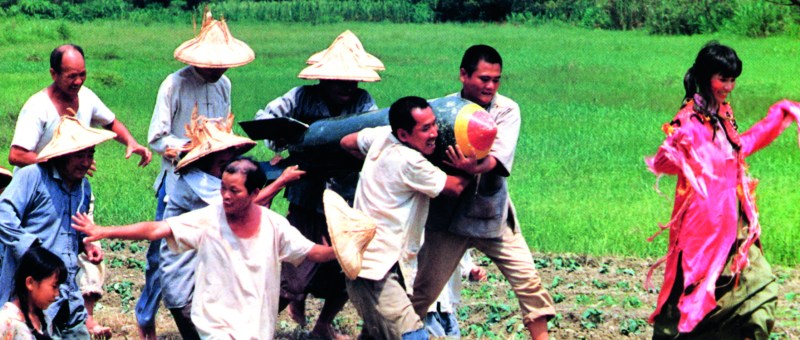
As good citizens of the empire, the children are asked to participate in metals collection and are given rewards for their finds. Doo-doo gets extra again when he picks up shrapnel from an American bomb which sets up a more complex relationship with American imperialism that will arrive after the war when the island is essentially recolonised by the arrival of the KMT and a large influx of mainlanders fleeing the communist take over. When a bomb lands on the brothers’ land but doesn’t go off, they think it’s manna from heaven and determine to take it to the main police station in the town in the hope of a large reward, while the official is convinced he’s going to get a big promotion for this tremendous find. 

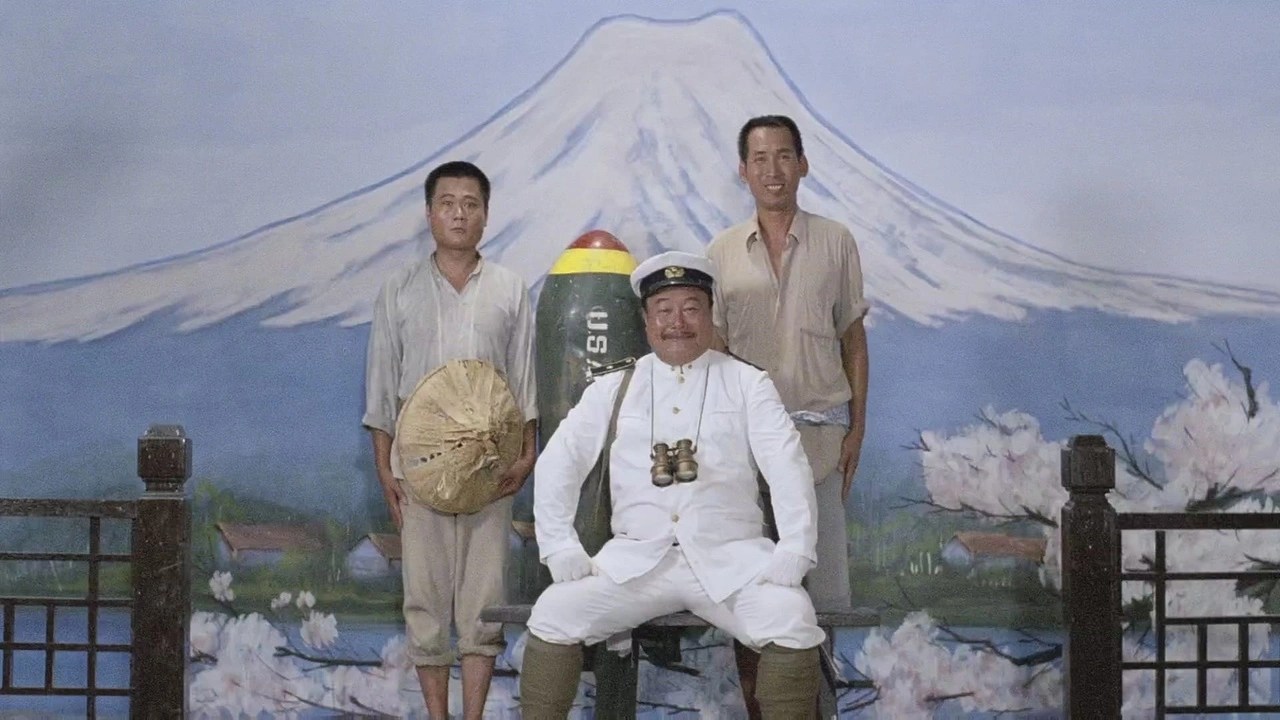
Everyone is so fixated on the economic potential that they’ve forgotten this is a bomb and even if it seems like a dud, there’s still a chance it could go off any second and this could all quite literally blow up in their faces. In this, the film seems to be satirising an over dependence on America who were the main backers of the KMT regime. The film was released shortly after the end of martial law during which there had been an attempt to rewrite the history of the island, preventing open discussion of the fact that Taiwanese men had died fighting for Japan and that the island had been bombed by the Americans. So impressed with themselves are they that the brothers and the official have their photo taken with bomb in-between and Mount Fuji backdrop behind as if signalling this complex network of relationships.

Still, even after the prize turns out not to be great riches after all but a hefty supply of fish, the Doo-doo and his grandmother cheer on the bombings hoping for more of the same in the future. The kids even put buckets out in the field waiting for the next raid hoping they can catch some of the shrapnel while forgetting that bombings are actually dangerous, rather than just lucrative, until being caught in one. Small moments of terror and sadness such as the brothers’ finding a frightened deserter hiding in their shed who doesn’t want to go to war because his wife’s pregnant and his family’s economically dependent on him, interrupt what is otherwise a warm and humorous depiction of rural life. A Fa and Big Mouth might be strawmen too, living their lives knowing little of the geopolitical situation but just trying to keep the crows off the grass long enough to get a little to eat before that too is taken away from them.


Strawman screened as part of the BFI’s Myriad Voices: Reframing Taiwan New Cinema.

Trailer (Traditional Chinese / English subtitles)

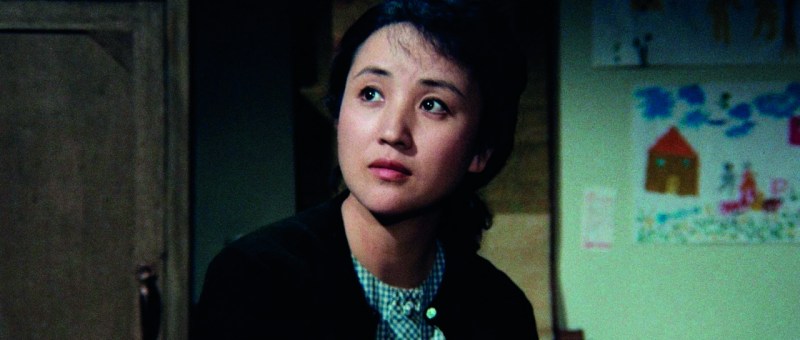
Ah Fei (油麻菜籽, Wan Jen, 1983)

A few minutes into Wan Jen’s familial melodrama Ah Fei (油麻菜籽, yóu má càizǐ), a mother takes her children by the hand and walks to the end of a long jetty. We get the sense that she means jump and take her children with her, that she’s at the end of her tether and sees no other way out for herself, but still she thinks better of it and goes back anyway. Indeed, there isn’t really any way out for Hsin-chin, but there might be for her daughter, Ah Fei, if only Hsin-chin (Chen Chiu-yen) can bring herself to set her free.

Hsin-chin’s own mother died while she was a child and her otherwise sympathetic father later arranged her marriage to a man he thought was “honest” but turned out to be anything but. Shih-chen (Ko I-chen) is violent and irresponsible. He barely works and spends all the money Hsin-chin makes seamstressing on drink, gambling, and other women. Hsin-chin appeals to her father, but he ends up sending her back and siding with Shih-chen. He gives his son-in-law a not altogether stern talking to while encouraging him that there should at least be “civility” between husband and wife. 

We can see that this patriarchal sociality trumps all. Shih-chen originally takes no interest in Ah Fei but only in his son, Ah Shong whom he takes out with him drinking and introduces to his mistress. She buys him a toy sword which both buys the boy’s affection and creates further discord in the marital home as Shih-chen conspiratorially warns him not to tell his mother how he got it. On arriving home, Shin-chen had called for Ah Shong and he had come running in without even taking his shoes off, treading mud all over the floors Ah Fei had just been washing. 

Years later, Hsin-chin asks Shih-chen if he really thinks his son is as useless as he is. Shih-chen doesn’t answer, but it’s obvious that the answer is yes. These patriarchal patterns are quite obviously learned, passed down from fathers to sons in the ingrained codes of manliness. When his mother had tried to punish him when he was caught stealing bananas from a local farmer, Ah Shong turned round and said he’d tell his father her to beat her again if she didn’t stop. There is something sad and ironic in this circulation of violence as she beats her son to discipline him in much the same way her husband inflicts his violence on her and the teachers at Ah Fei’s school whack the pupils’ hands with a ruler when their grades dip below those of the previous paper. Ah Fei is studious and respectful, while Ah Shong is lazy and entitled. When his mother suffers a nasty miscarriage and calls for his help, Ah Shong doesn’t even wake up leaving Ah Fei to run alone through the night to the neighbour’s house so she can get the doctor. 

While the lived in the country, Hsin-chin had cherished her daughter and remarked that there was no point raising sons while Ah Fei is the only one contributing to the family by helping her with the housework. But on their return to Taipei after Shih-chen is caught sleeping with another man’s wife and forced to pay a humiliating fine in compensation, the situation is reversed. Shih-chen appears to mellow. He now stays home painting rather than going out to philander, but is still a figure of male failure who cannot find a job to support his family and leaves the heavy lifting to an increasingly embittered Hsin-chen. Hsin-chen meanwhile concentrates all her efforts on Ah Shong and resents Ah Fei. Though the family pay 200 dollars for Ah Shong’s private school, they begrudge the 30 for Ah Fei’s extra tuition so she can get into high school. Ah Fei doesn’t even want her to finish primary education. A neighbour has heard about an opening at a local factory and Hsin-chin wants her to start right away. It’s only Shih-chen who supports her education and switches his allegiance to Ah Fei rather than Ah Song who has disappointed him. He has come realise that Ah Shong is just like him after all, and seems to have a new degree of awareness about the family’s dynamics. He doesn’t want this life for Ah Fei, while Hsin-chin actively tries to trap her within the domestic space just as she was trapped.

In a repeated motif, Hsin-chin picks up a pair of scissors but can use them only in passive aggressive bouts of counter-productive revenge such as shredding Shih-chen’s suits, chopping the heads off roses to express her frustration, and cutting Ah Fee’s hair so she can’t go back to school after finding out that she had a boyfriend. Even once Ah Fei is a grown woman with a good job in advertising that is actively supporting the family, she struggles to separate herself from her mother who continues to frustrate her love and discourage her from marrying. Some of this is her own bitterness, and some honest advice that Ah Fei’s choice of husband is the most important decision she’ll ever make. Marry a good man and she’ll have a good life. Marry badly and she’ll end up like Hsin-chin knowing nothing but suffering. 

Of course, the crucial element is that Ah Fei has a choice that Hsin-chin never did. But at the same time she struggles to take it or to reject the internalised misogyny that ruled her mother’s life along with the patriarchal social codes that left her unable to leave a bad husband. She is well educated and financially independent so cannot be trapped in the same way her mother was even if her “escape” is ironically bound up with the patriarchal institution of marriage. Only on seeing her in a wedding dress does Hsin-chin finally accept her, reverting to the kind mother she had been in the countryside rather than the embittered old woman she had become in Taipei who is too afraid of her impending loneliness and the spectre of poverty to set her daughter free. Ah Fei’s liberation may speak of that of her generation, travelling from the countryside to a Taipei slum and finally a well-appointed flat in the centre of a rapidly developing city in the twilight of an authoritarian regime, but equally of the interconnected cycles of toxic masculinity, patriarchal entitlement, male failure, and internalised misogyny all seemingly dissolved in a single moment of forgiveness and acceptance.


Ah Fei screened as part of the BFI’s Myriad Voices: Reframing Taiwan New Cinema.

Trailer (Traditional Chinese / English subtitles)

The Fourth Portrait (第四張畫, Chung Mong-Hong, 2010)

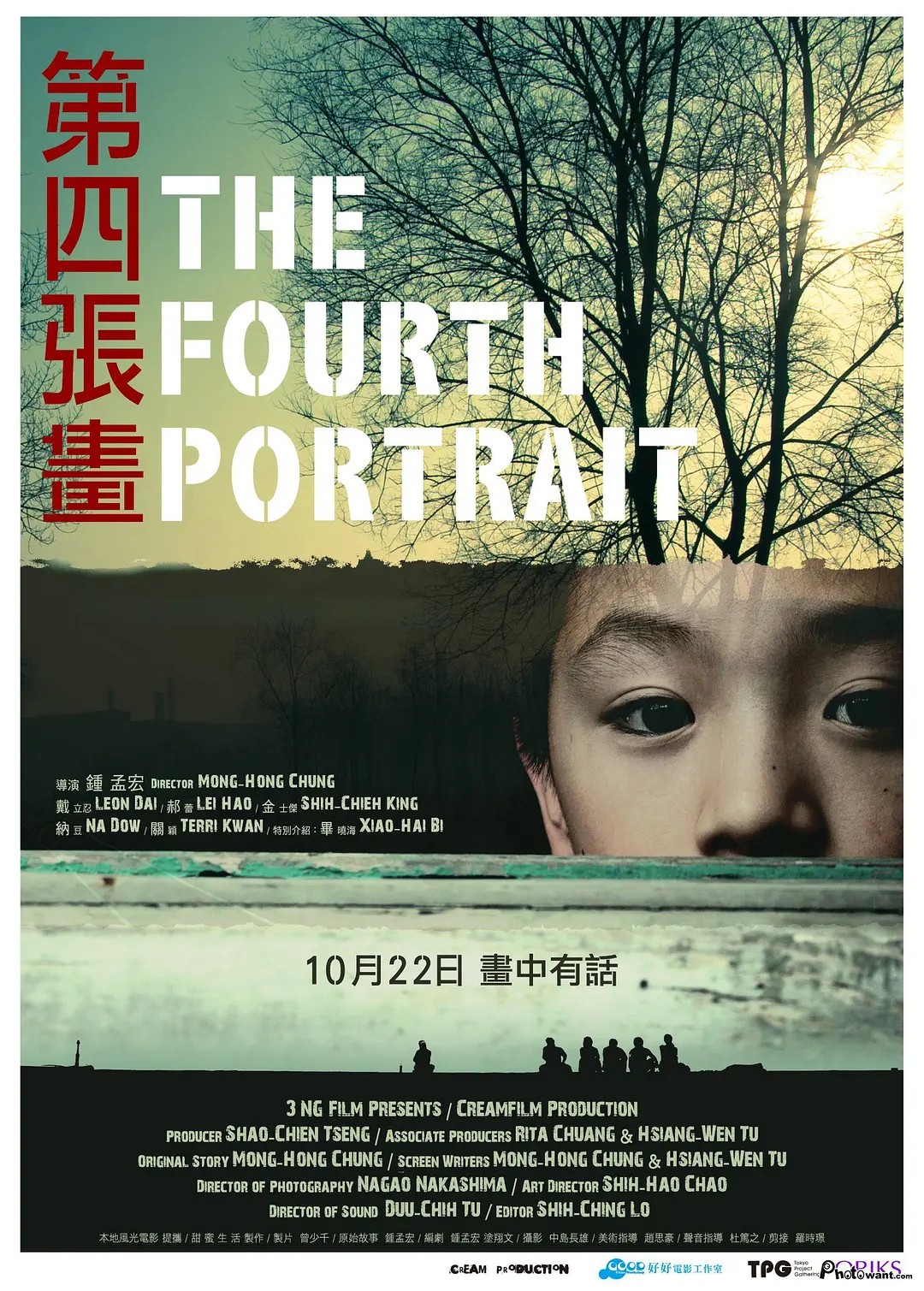
A young boy struggles to forge his own identity while lost amid the legacy of perpetual displacement in Chung Mong-Hong’s whimsical coming-of-age drama The Fourth Portrait (第四張畫). As the title implies, Chung structures his tale around four images as the boy looks for guidance through each of his relationships but perhaps finally discovers only that he is on his own and has only himself for protection yet must find the courage to try and escape even if it causes him pain. 

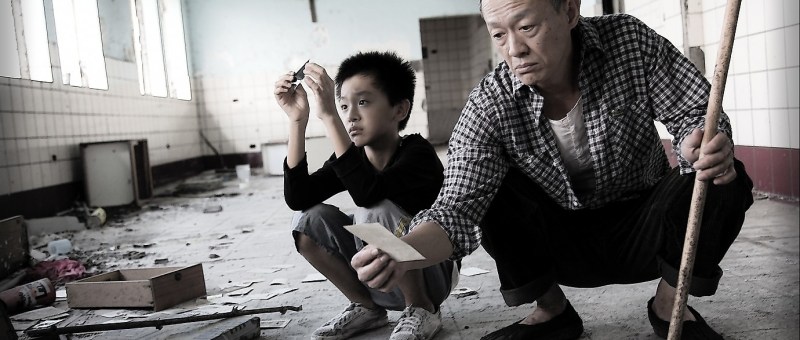
At 10 years old, young Xiang (Bi Xiao-Hai) is impossibly burdened in the way no child should be as a doctor coldly tells him that his father will soon pass, a nurse instructing him to stay put and let them know when his father is gone. Xiang impassively places a napkin over his father’s face, the undertakers bickering amongst themselves while deciding to do the funeral for free seeing as this child is now all alone and seemingly has no other family. Yet no one comes to take care of Xiang, he has to go home on his own and begins living independently eventually resorting to stealing lunch boxes at school only to be caught and scolded by a grumpy janitor who both tenderly offers him food but then roughly slaps him when he notices the boy is crying. 

As Xiang is about to become, the old man, Zhang (Chin Shih-Chieh), is also a displaced person having travelled from the Mainland 50 years previously. He takes him to scavenge abandoned buildings meditating on what it is that gets left behind, why it has value to some and apparently not to others. Xiang himself was abandoned by his mother who took his older brother with her but chose to leave him with his father, wondering perhaps if he is valuable or not. Technically if not literally orphaned, Xiang is later reunited with his mother, Chun-lang (Hao Lei), but is then displaced himself, forced to move to the city and into the house she shares with her second husband and infant child. Like Zhang his mother came from the Mainland in search of a better life she did not find and is living with a sense of disappointed futility trapped in her marriage to a dejected and violent man (Leon Dai) while forced to support the family through sex work at a nearby hostess club frequented largely by Mainland gangsters. 

Unanchored and insecure in his new environment, Xiang begins having strange dreams of his apparently absent brother Yi but his attempts to discover the truth about the past only further destabilise the foundations of his new home. His mother cannot fully embrace him because of her guilt over leaving him behind while unable to fully process the reality of what may have happened to Yi too frightened of the truth to risk poking around. His stepfather meanwhile is a haunted man, unable to work and seemingly the primary carer to their small child though neither them are ever really seen paying much attention to the baby. When Chun-lang tells Xiang that he is a stranger in their house, that she is no longer the mother she once was because she has married another man and has another child with him, she does so perhaps partly to encourage him to leave advising him to steer clear of his stepfather in a bid to keep him safe yet blaming herself for all the tragedy which has befallen her accepting it would not have happened if she had not “messed up” her life. 

Perhaps this is why Xiang finds himself bonding with a decidedly strange middle-aged man he meets by accident in a public toilet. “Big Gun” paints himself as something of a big brother figure, suggesting that they can drift together travelling around on his moped. His conduct towards the boy is extremely inappropriate in more ways than one involving him in his life of petty crime, yet Xiang finds in him a sense of acceptance that he doesn’t get from the other adults along with a new sense of independence. Yet Xiang’s illusions are eventually shattered twice over, the first revelation paving the way for a greater loss of innocence in discovering the truth about his brother while the second perhaps leads him to feel that he really is alone, continually displaced, and entirely unanchored in a world with offers little prospect of warmth, affection, or a place to belong. 

Like Zhang and his mother, Xiang is fails to settle in contemporary Taiwan lost amid a stream of constant dislocations and bound only for endless wandering. Yet staring into a mirror preparing for his fourth portrait he perhaps begins to forge an image of himself informed by those he’s drawn before and giving him the sense of confidence to survive the emptiness of the world around him. Beautifully shot with a lingering ethereality, Chung’s enigmatic storytelling coupled with the whimsical score lend a note cheerfulness to what in many ways is a fairly bleak situation but perhaps reflects the surreality of the boy’s life in his constant quest for belonging. 


International trailer (English subtitles)

A Balloon’s Landing (我在這裡等你, Angel Teng I-Han, 2024)

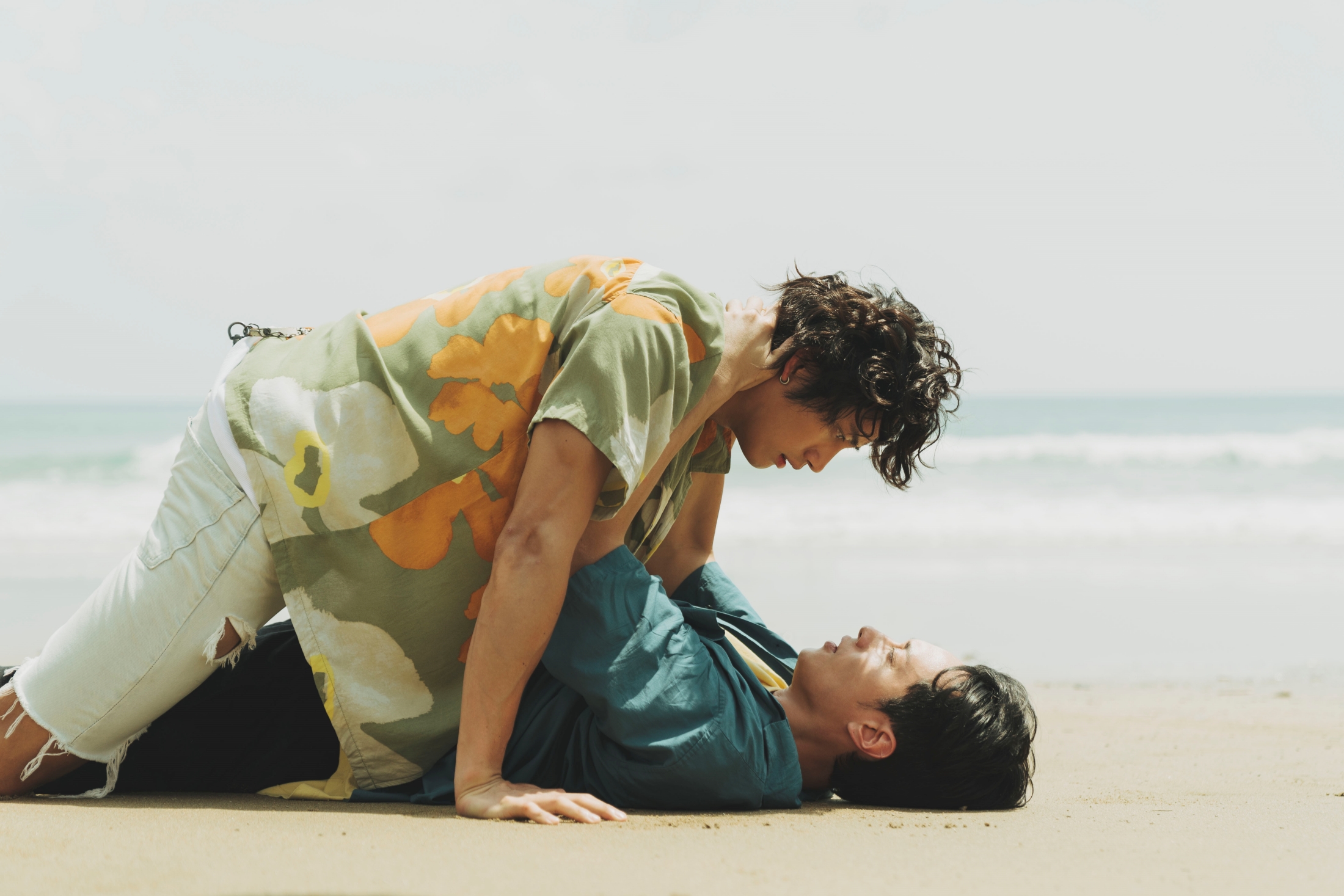
A dejected Hong Kong writer longs to find the path back to paradise if in the most ironic of ways, but finds something quite different after accidentally being befriended by a young street tough in Teng I-Han’s lowkey queer romance A Balloon’s Landing (我在這裡等你, wǒ zài zhèlǐ děng nǐ). Seemingly inspired by the boy’s love genre, the film is chaste in the extreme and overly subtle in its central love story which seems to borrow heavily from other similarly themed East Asian romances such as Il Mare and Comrades, Almost a Love Story.

Director Peter Chan is in fact name checked several times, while Taipei street tough A-Xiang (Fandy Fan) has a poster of Patrick Tam’s Nomad on his wall which of course features the face of Leslie Cheung who occupies a similar space to that of Teresa Teng in Comrades in connecting the would-be lovers. Cheung tragically took his own life in 2003, the same year writer Tian Yu’s (Terrance Lau) parents were killed, while Tian Yu himself seems to have suicidal thoughts and intends to end his life at a place called The Bay of Vanishing Whales he thought he’d made up for his novel but is informed is real in a letter from a little boy in Taiwan he continues writing to as a kind of pen pal older brother. 

In a way, A-Xiang represents his desire for life, fond saying that there’s “always a solution” and begging him not to die just like one of the letters he received urging him to carry on living because the sender would be waiting for him at the Bay of Vanishing Whales. A-Xiang is also his literal saviour in that they meet when he rescues him from a group of conmen after he got very drunk bar but though their first meeting is sexually charged with both men wandering round in their pants their romance is slow-burn to the point of non-existence. While on road trip to find the mythical bay, the pair grow closer with Tian Yu slowly giving up on the idea of finding it along with the death it represents only for fate to intervene.

At this point the film changes direction in allowing Tian Yu to rewrite his present, no longer in search of death but of love and a way to save A-Xiang in the same way A-Xiang has saved him. At least, A-Xiang becomes a kind of symbolic other self as hinted at in his stories of men as lonely islands casting messages in bottles out into the sea in longing for connection. This sense of isolation may stem from a feeling of otherness born of his sexuality, though the film never clearly defines it, along with the more literal orphanhood and existential loneliness he shares with A-Xiang. 

As expected there is a fated connection between the two men which is more than a little contrived if perfectly in keeping with the genre of romantic melodrama as Tian Yu begins to chase a future rather than the past even while actively rewriting it to engineer a better outcome. It might be tempting to read something more into the connections between these two men each orphaned, floating islands seeking new futures together though the central theme seems to be less romance than desire for life in which Tian Yu is able to overcome his depression and desire for death through his connection with A-Xiang who gives him a new reason for living. 

A-Xiang’s symbolic value as Tian Yu’s desire for life might explain why the relationship between them never sufficiently ignites in what is at least billed as a queer romance though could easily be taken for simple friendship or platonic brotherhood with the only expression of desire longing looks and tentative motions from A-Xiang. In any case, Teng lends the beautiful Taiwanese landscape a note of wistful melancholy, a place of infinite nostalgia in Tian Yu’s mind and an evocation of the paradise he’s seeking that’s simultaneously past and future waiting for parallel lines to cross. The lyricism cannot however overcome the coyness of the central romance that for its potential poeticism remains somewhat obscure, an unrealised desire awaiting its season but also a shift in the times born of a new desire for life rather than the melancholy loneliness of past emptiness.


A Balloon’s Landing screened as part of this year’s New York Asian Film Festival.

Original trailer (Traditional Chinese / English subtitles)

Old Fox (老狐狸 , Hsiao Ya-chuan, 2023)

It’s all about “inequality”, according to the titular Old Fox (老狐狸, lǎohúli). Or at least knowing how to leverage it. Inequality is something that’s coming to bother the young hero of Hsiao Ya-chuan’s coming-of-age drama in which a small boy finds himself torn between two father figures, one a wily old slumlandlord with a heart of stone and the other his melancholy and disappointed but kindhearted father who simply endures the many blows that life has dealt him. 

Set in Taipei in 1989 shortly before an apocalyptic stock market crash in the post-martial law economy crushes the hopes of millions of ordinary people convinced to invest their savings, the film wastes no time in showing us the various inequalities in play in small alleyway of traditional stores all owned by Boss Xie (Akio Chen) whom many seem to regard as a kind of saviour even if he cares not at all about them. Jie’s (Bai Run-yin) father Tai-lai (Liu Kuan-ting) works in a local restaurant and rents a room above a beef noodle cafe for which he pays in cash every week to Miss Lin (Eugenie Liu), a pretty young woman working for Boss Xie and enjoying an unusual amount of power for someone of her age and gender for a society still somewhat conservative. 

Tai-lai has been patiently saving money so that he can afford to buy a house and open a hair salon which was the dream of his late wife, but obvlious to the world around him he hasn’t noticed that prices are continuing to rise placing his dream of homeownership further out of his reach. Meanwhile, Jie is bullied at school and called a “snitch” without understanding why or even what the word means. This sense powerlessness and inferiority maybe be why he’s drawn to Boss Xie, a man who does after all exude power if also a sense of menace and melancholy. Xie in turn sees in Jie a potential protégé, both a mirror of his younger self and an echo of the son he lost who rebelled against everything he represents.

Nicknamed Old Fox, Xie stands for everything that’s wrong with the contemporary society which is about to implode in the financial crash. Wounded by his childhood poverty in which he, like Jie, also pleaded with a local landlord to sell his mother a property, Xie has adopted a ruthlessly selfish disregard for the lives of others teaching Jie his mantra of “none of my damn business” while the boy develops a worrying admiration for the aura a man like Xie projects and actively enjoys the sensation that others fear him. While hanging out with Xie he comes to look down on men like his father whom Xie calls “losers” who care only for others and disregard themselves. Xie teaches him to leverage the inequalities of power and turn his enemies’ weakness back against them to increase his own strength placing him further at odds with Tai-lai’s innate goodness and down-to-earth humanity. 

Yet we can also see that Tai-lai has had a life of disappointment. A woman who comes into the restaurant (Mugi Kadowaki) now married to a thuggish local big wig is a former childhood sweetheart from whom he was separated by time and circumstance while it also seems that Miss Lin has taken a liking to him though he appears not to have noticed. At home he plays the saxophone and takes in tailoring while resigned to saving a little longer before he’ll finally be able to buy a house and achieve his dreams. Tai-lai is one of the few who does not play the stock market and is therefore free of the danger it represents while Jie soon becomes sick of his his father’s frugality in their regular practice of turning the boiler off after having a bath and keeping their taps on a slow drip so they don’t trip the water metre and longs to become a man like Boss Xie unafraid to exploit any advantage in complete disregard for the lives of others. 

A brief coda set in the present in the day suggests that the older Jie may have found a happy medium, at least disguising a genuine concern for the safety and happiness of others as being solely about profit, while Xie’s sadness and doubts about the path his life has taken are never far from the surface as the society teeters on the brink of financial disaster. Capturing a palpable sense of late ’80s Taipei the film has a nostalgic atmosphere but also an equally prescient quality in the things that are only half-visible to the younger Jie in the melancholy disappointments of the adults who surround him still struggling to reroot themselves in a new society while overburdened by the failures of the old.


Old Fox screens April 22nd as part of this year’s San Diego Asian Film Festival Spring Showcase.

Original trailer (English subtitles)

Coo-Coo 043 (一家子兒咕咕叫, Chan Ching-lin, 2022)

Why would a pigeon, or a child, return to you if you failed to make them a home? The enigmatic title of Chan Ching-lin’s gritty familial drama Coo-Coo 043 (一家子兒咕咕叫, yījiāzi ér gū jiào) refers to a homing pigeon that unexpectedly arrives seven years late but bringing with it less joy than an unwelcome confrontation with the unresolved past. A tale largely of male, patriarchal failure the film revolves around the taciturn figure of a middle-aged man obsessed with pigeon racing who attempts to build a coop an in abandoned field for the birds he no longer has means to care for even as his own home crumbles.

Old Ching (Yu An-shun) appears to be a broken man who’s never quite recovered from the massive success of having won a lot of money on a pigeon race several years previously though most of his birds since have never returned at all. Gambling is technically illegal in Taiwan, and the sport of pigeon racing is itself a little taboo though popular enough at least in the small town where Ching lives. It appears the family is mostly supported financially by his second wife Ming’s (Yang Li-yin) banana farm, while ironically enough his daughter Lulu (Rimong Ihwar) dreams only of flying the coop for a less depressing life somewhere else. Part of the reason for the difficult atmosphere in the family home is the sense of absence left by Shih, Ching’s son from his first marriage who disappeared on his way to school aged 12 more than a decade earlier.

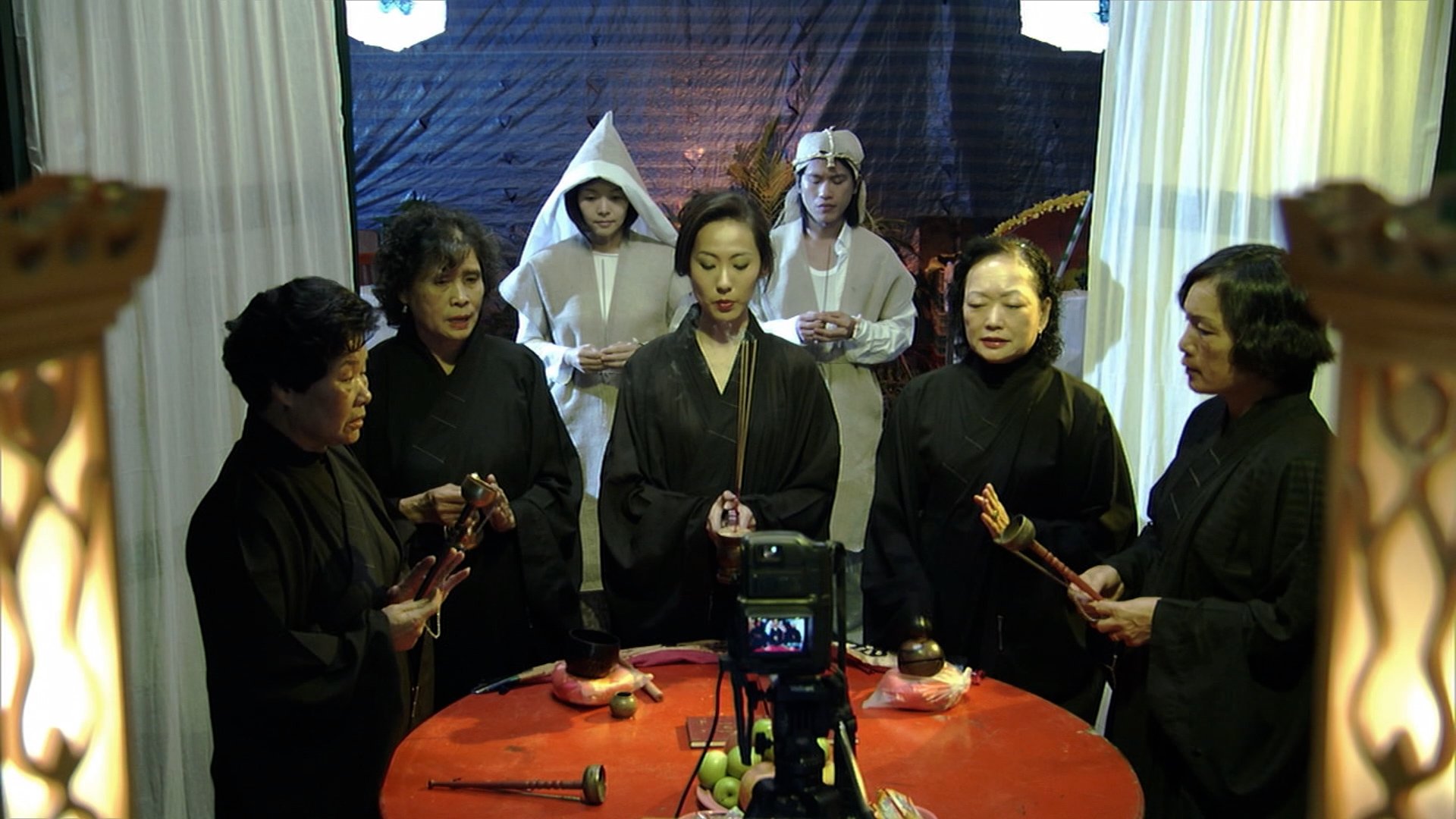
Ching continually blames Ming for Shih’s disappearance because on that day she did not drive him to school as usual, ignoring the fact that she stayed to clean up the house after he trashed it in a violent fit after losing at gambling and told the boy to walk. Ching’s irony is that he is always waiting for something to come back to him, but never gives any reason why it should. Though he is often seen tenderly caring for his pigeons, he treats his family members with coldness and contempt and is on occasion violent towards Ming who has a sideline working as part of a troupe conducting death rituals and is considering leaving him. She takes pigeon 043’s miraculous return after seven years as a sign that they should look into having Shih declared legally dead to help them accept he won’t come back but Ching refuses to do so and continues to wallow in his own violent and angry grief unable to see that it may be him that drove his son, and later his daughter, away.

His limp also hints at a violent past as do his ties to a group of local gangsters who seem to be well into the pigeon racing scene, while gang young toughs make a living kidnapping birds and ransoming them back to their owners or else killing them for fun if they don’t pay. Ching finds a surrogate son in the orphaned Tig (Hu Jhih-ciang), Lulu’s sometime pigeon-catcher boyfriend, but fails to see him as such until it’s too late. Unlike Lulu, Tig is a man looking for a coop. He slides into the vacant space in the family longing to be accepted, but finds only coldness and abandonment left behind while everyone else flies away in search of a better life. 

Often captured behind bars, the two men are just as caged as the pigeons though the kind that don’t fly away when the doors are opened. Some of those who leave do so for the after life, no longer seeing any point in continuing this miserable existence which shows no sign of improvement and unable to envisage any other kind of escape. Even Lulu’s flight to the city to become a nightclub dancer seems as if it may just be another kind of cage from which she cannot fly. Ching’s pigeon coop is eventually ruined by a more literal kind of storm, but mainly because he failed to protect it unable to look past his personal despair and indifferent to the vulnerabilities of his home. Bleak in the extreme, Chan paints a grim picture of life on the margins in rural Taiwan in which the wings of all have long been clipped and those who return do so only because they have nowhere else to go.


Coo-Coo 043 screened as part of this year’s London East Asia Film Festival.

Original trailer (English subtitles)

Seven Days in Heaven (父後七日, Essay Liu & Wang Yu-Lin, 2010)

A young woman embarks on what she describes as the most ridiculous journey of her life after her father passes away and she must return to her hometown for a series of incredibly involved traditional funeral rites in Essay Liu and Wang Yu-Lin ’s lighthearted drama Seven Days in Heaven (父後七日, fù hòu qī rì). Perhaps the intent is more to keep the mourners occupied in a slow burn dissolve of their grief than it is to console a parting soul but in any case Mei finds herself meditating on the past and her already fading memories of her late father. 

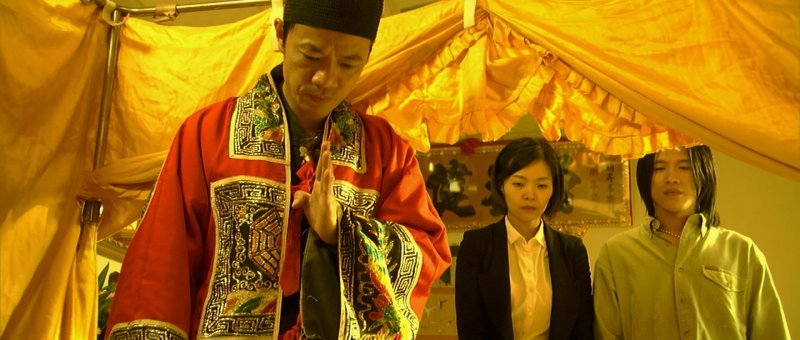
The strangeness begins at the hospital where Mei (Wang Li-Wen) and her brother Da-zhi (Chen Cha-Shiang) are repeatedly asked to explain to their father, who has just died, that they are taking him home. In the transport ambulance they ask if the family is Buddhist or Christian, and then simplify the question to whether they use incense sticks when a confused Mei is uncertain how to answer though as it turns out the rites they will be performing are largely Taoist. Anyway, the driver accidentally puts in the wrong tape and they get a blast of the Hallelujah chorus before he switches over to a series of sutras instead. A similar confusion sets in once they arrive back at the house where the funeral is being managed by a distant relative who works as a Taoist priest performing rituals largely concerned with death. 

A running gag sees these familial relationships so tangled that they need lengthy explanations, Yi (Wu Peng-Fong) the priest explaining to Mei’s cousin Zhuang (Chen Tai-hua) that he should have been calling him “brother” and not “uncle” while as it turns out Yi still carries a torch for Zhuang’s mother, Feng (Angie Wang), who left him to work in another town and married a wealthy man. Currently in Paris, she does not return for her father’s funeral and sends her son instead who is equally mystified by these strange rituals and decides to film them as part of a university project. 

Yi consults some religious calendars and schedules the days of the funeral accordingly from when they close the coffin to when they conduct the final rites with Mei and Da-zhi merely expected to keep up. A detached Mei explains that as the daughter she’s explicitly instructed when to cry and when not to, forced to run in and wail by the coffin on cue. Yi’s partner, Chin (Chang Shih-Ying), herself works as a professional mourner wailing on the behalf of others merely altering the identity of the deceased but in this case the siblings are alternately bored and run ragged, possibly too exhausted by the process of mourning to fully process their grief. 

Zhuang’s film exposes the labour involved as he closes in Da-zhi explaining that he has to sweep up the ashes from the burning of ghost money. He asks him how he feels about his father’s death which might in itself be a little insensitive especially while pointing a camera in his face and he snaps back that he doesn’t know. Mei meanwhile is repeatedly drawn back to memories of her father, picking out a picture of him singing karaoke for the altar only to be told off by the older relatives. Zhuang eventually photoshops it to replace the mic with flowers and the background with a more appropriate scene of mountains and rivers. She doesn’t tell her friends her father passed away until months later and still finds herself forgetting, brought to tears on accidentally reminding herself to pick up some “longevity” cigarettes for him on a trip back from abroad only to realise there’s no need anymore. “Please stow your emotions” she imagines hearing the captain say in her father’s voice as she strives to accommodate her grief. 

Filled with a series of humorous digressions from Yi’s love life and their late father’s ability to charm his nurses even at death’s door, the film paints a warm and nostalgic portrait of small-town life and the various rituals that go along with it, including a small tangent on political corruption as a host of politicians are obliged to attend the funeral, because of the aforementioned ill-defined familial relationships, and send elaborate gifts including a large tower of beer cans that later collapses and requires even more tiding up. Finally the siblings must burn their mourning clothes as if symbolically moving on from their seven says in “heaven” and returning to their everyday lives but discover perhaps that grief is an ongoing process the rituals of which may continue long after the funeral is finished.


Seven Days in Heaven is available to stream in the US Sept. 25 to Oct.1 as part of the 17th season of Asian Pop-Up Cinema.

Trailer (English subtitles)
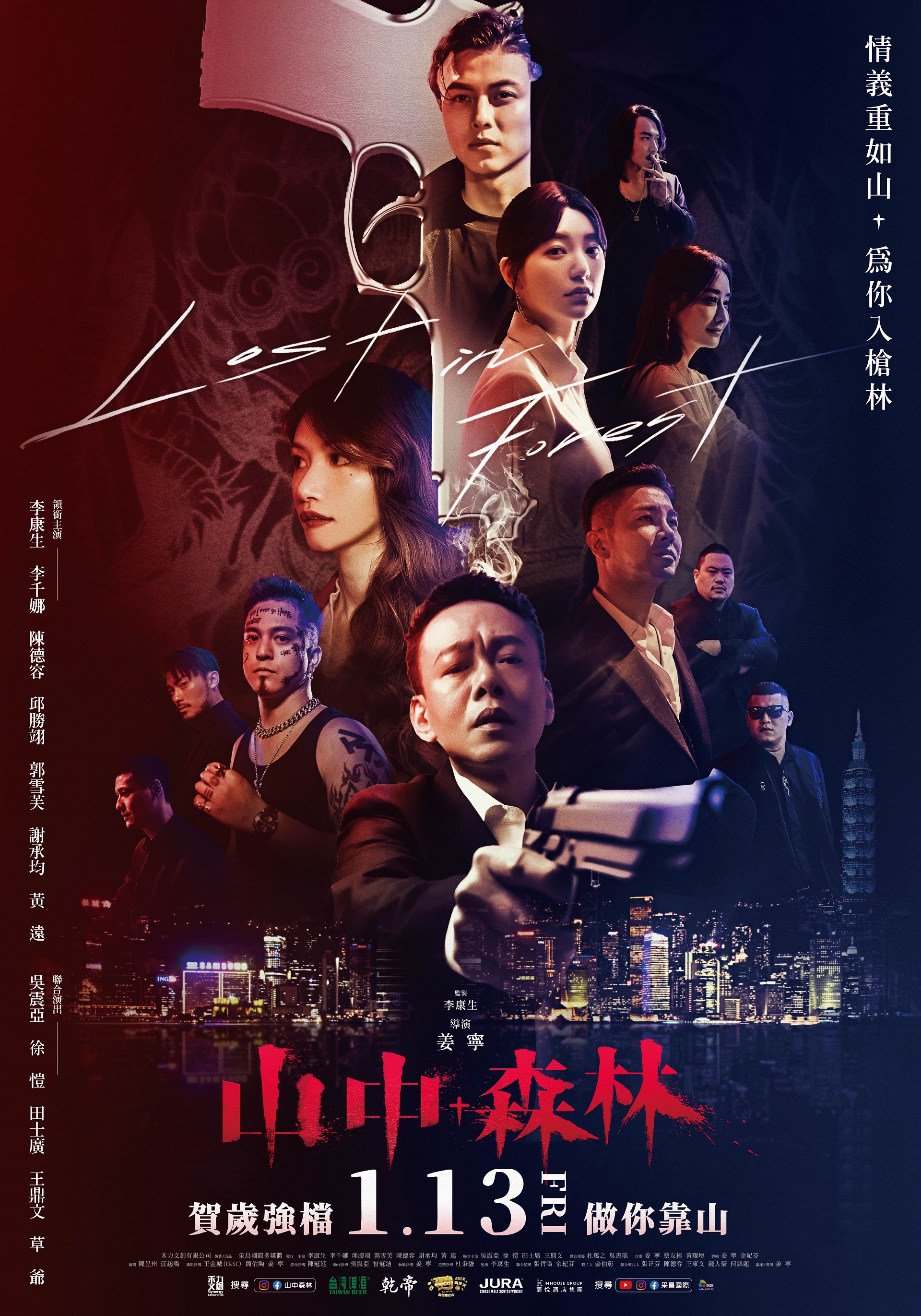
Lost in Forest (山中森林, Johnny Chiang, 2022)

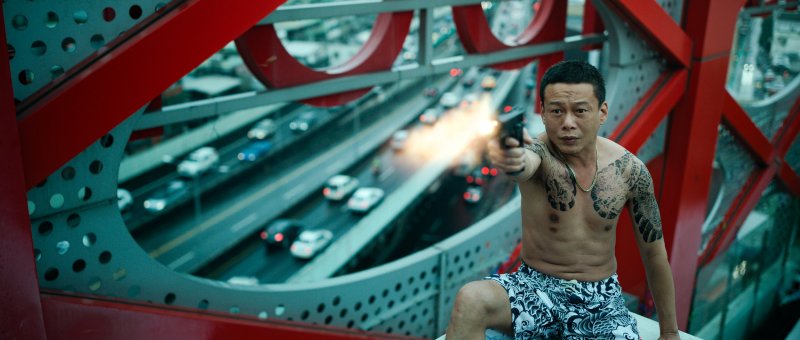
History repeats itself for a former gangster recently released from prison in Johnny Chiang’s melancholy neo-noir, Lost in Forest (山中森林, Shān Zhōng Senlín). Set in a neon-lit Taipei, Chiang’s moody crime drama finds its hero displaced in the modern society unable to look either forward or back while meditating on all he’s lost and another less corrupt vision of his home city as symbolised by his late father’s missing sausage bike and the changing back streets where it was once parked.

This Taipei is however a less wholesome place as suggested by Chiang’s frequent cuts to Christian churches and the giant neon crosses that sit above them as if looming in judgement on the chaos below. 12 years previously, Sheng (Lee Kang-sheng) opened fire on rival gang members who’d kidnapped his best friend and comrade Seagull (Angus Hsieh) who has now taken over the outfit while he’s been inside. Customarily, Seagull should have had someone come to meet him on his release, but Sheng exits the prison alone and is given a lift back into the city by the entourage collecting his prison buddy Ji despite the fact they are headed to an entirely different part of the country. Without a phone and not knowing where the gang even is anymore, all Sheng can do is hole up in a hotel until he finds out what’s going on. All of which suggests that despite his sacrifice, Seagull may not be particularly glad to reunite with him.

The conflict exists on three levels. Sheng must necessarily doubt his old friend Seagull, especially on realising that his new business model involves exploiting vulnerable women by pressing them into debt via high interest loans and then forcing them into sex work, while simultaneously worried about his guys who claim they have not been well treated while Sheng was away. But then it also becomes clear that much like many contemporary Taiwanese crime dramas, the real villain is institutional corruption as Seagull’s alliances with corrupt politicians and shady businessmen continue to destabilise the underground society thanks to the machinations of anarchic street punk Monkey (Sean Huang) who engineers a gang war by giving the businessman’s son a kicking as leverage in a dodgy land deal. 

On the one hand, Sheng watches history repeat itself as a handsome foot soldier, Chenghao (Prince Chiu), vacillates over leaving the gang for his respectable girlfriend Alice (Puff Kuo), while on the other Sheng becomes attached to sex worker Jing (Lee Chien-na), one of Seagull’s exploited women working for him to pay for her father’s medical bills. Sheng’s former lover tells him that if he really cared about her, he shouldn’t have sacrificed himself for Seagull just as Chenghao shouldn’t put himself in harm’s way out of a pointless sense of loyalty for a gang that has no real loyalty to him. Before his release, the prison warden had advised Sheng not to let his sense of loyalty get the best of him, but as he says Sheng no longer has much of anything else. His parents died while he was inside, the woman he loved married someone else, and Seagull can’t even remember what he did with Sheng’s dad’s sausage bike which is his only path back to a more wholesome existence. 

In a certain sense he’s powerless, unable to escape the inexorable pull of gangland karma until finally forced to reckon with the destabilising force that is Monkey to restore some kind of order and undermine the system of corruption that has arisen between underworld thuggery, local politics, and big business. The warden had also pointed at the fish in his tank and asked Sheng if it was happier in there or back in the sea but Sheng had merely said that it’s up to the fish to decide, hinting that in a certain sense it’s all the same and it’s just that one prison is bigger than another. At least the fish gets fed and is kept safe from predators even in its lonely isolation, which might be more than can be said for Sheng who can never truly escape his past even as he tries to free Chenghao and Jing from a similar fate. A melancholy mood piece, Chiang shoots night-time Taipei as a land of neon emptiness set against a classic jazz score that echoes Sheng’s deadpan ennui in a modern world of electronic smoke and rueful nihilism in which there is no escape from karmic retribution. 


Lost in Forest screens in Chicago April 16 as part of the 16th season of Asian Pop-Up Cinema.

Original trailer (Traditional Chinese / English subtitles)

Day Off (本日公休, Fu Tien-Yu, 2023)

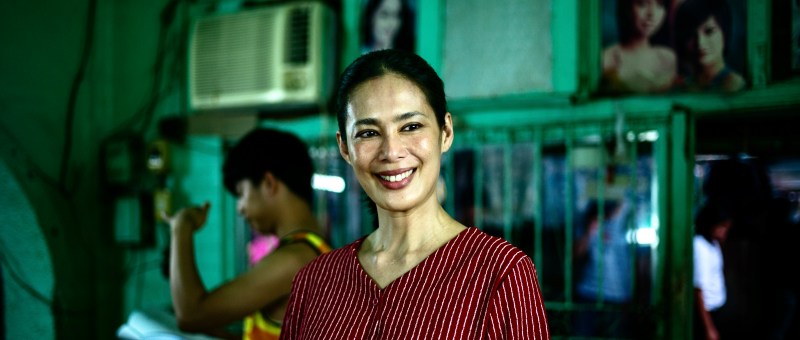
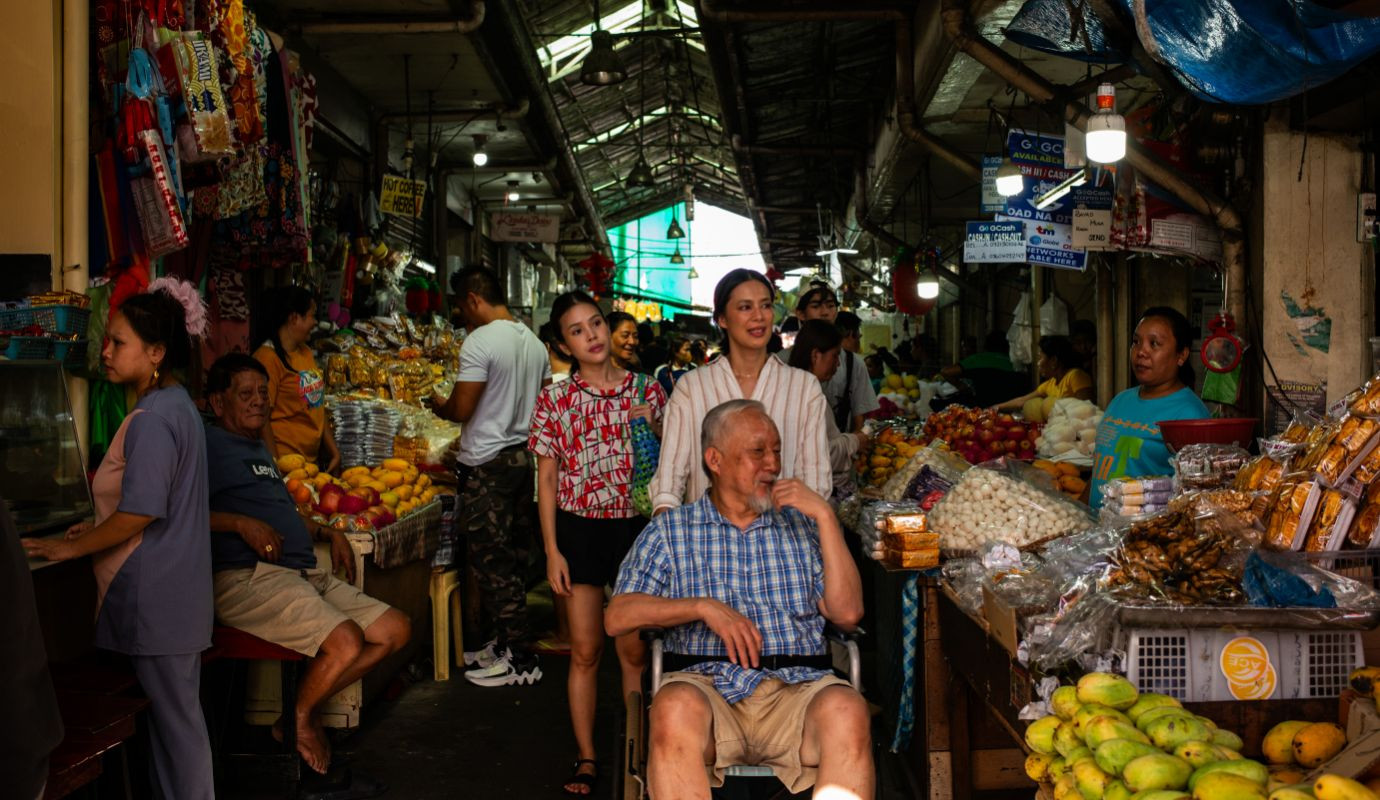
The wholesome small-town values of an ageing hairdresser place her increasingly at odds with her cynical consumerist kids in Fu Tien-Yu’s poignant tale of changing times, yet as she’s fond saying children have their own lives and all that really matters is that you’re satisfied with what you have. Day Off (本日公休, běnrì gōngxiū) is partly a lament for the things we’ve thrown away in the name of convenience but also a celebration of human connection brokered by something as simple and routine as a haircut.

A Rui (Lu Hsiao-fen) has toiled away in her family-run barbershop for most of her adult life and the business has changed little in the time she’s been running it. Old men and their sons have been coming to get a haircut and a shave for the last few decades because as someone else later puts it, men are largely creatures of habit and a hairdresser like a wife is hard to switch. A Rui’s daughter Ling is also a hairdresser but works in a much more modern salon and is planning to open a supercuts-style express service aiming to get people in and out in a short amount of time for a small amount of money. Ling’s philosophy is contrary to everything A Rui was taught, advised by her mentor to take her time and work with precision. He told her that if she provided a good service she’d always have custom and does that does seem to have been the case. 

Then again perhaps times aren’t so different as they seem. Ling is unpopular at her salon because she has poor customer service skills and doesn’t seem to be particularly well suited to the social nature of the job. Her boss always gets all the best clients and that’s largely because he treats them just like A Rui treats hers even if his care and attention is a little more cynical than heartfelt. Ling has also divorced her husband, Chuan, essentially for being too nice after he lent money they were saving for a new flat to a friend in need. A Rui can’t understand why she’d split up with a perfectly good man when they have a small child together, but Ling is an ambitious ultramodernist who values change above all else and looks down on small-town values of community and reciprocity seeing her former husband and mother as merely foolish and living in the past. She can’t understand why her mother bothers to ring up her elderly regulars to remind them they’re due a haircut when she could just set up an automated system to take care of it for her, nor can she get her head round it when A Rui says she’s going to travel to a faraway town to cut the hair of an elderly gentlemen who can’t make it to the shop without even asking for expenses. 

But to A Rui it’s just the right thing to do and an appropriate act of reciprocity for decades of custom. Chuan feels much the same, always willing to put his life on hold to offer roadside assistance and understanding if a client can’t pay him right away knowing that they can’t get the money if they can’t work so it’s better to just fix the car. A Rui worries about her other daughter living with a boyfriend and a dog in a rented flat in Taipei, and about her son who seems to have several failed entrepreneurial projects behind him, but encounters on the road another man who gave up a job as a scientist to become a farmer and seems to be happy with his choice. In the end it might not be that one is better than the other, the only thing that matters being whether or not you’re satisfied with what you have.

There’s a certain poignancy in the disappearing quality of A Rui’s way of life, the hair on one of her customer’s heads slowly turning from black to grey as if she were literally shaving the years off him. “Time flies” she often remarks, realising that she’s known some of her customers all their lives and has become a kind of community hub that they can always return to even if they move away. The knees she once practiced her shaving on are now old and worn from years of standing, but as her customers remind her she can’t retire because no one knows their heads like she does and then where will they get their hair cut? Bittersweet and elegiac, Day Off ends on a note of moving on as A Rui gives the baby of a second generation client their first haircut and prepares to say goodbye to a much a loved friend seeking a more satisfying future while resolving to carry on doing what she does best in providing the best possible service to her regulars and to the world around her.


Day Off screens in Chicago April 15 as part of the 16th season of Asian Pop-Up Cinema.

Original trailer (Traditional Chinese / English subtitles)