Motion Picture: Choke (映画(窒息), Gen Nagao, 2023)

Humans place themselves above animals precisely because of their ability to communicate and work together to create complex plans that allow them to overcome their circumstances. Robbed of our speech, would we still say the same? Gen Nagao’s dialogue-free drama Choke (映画(窒息), Eiga Chissoku) takes place in a world in which language appears to have disappeared. Humans communicate only through gesture and are therefore prevented from explaining themselves fully, able to rely only on the vagueness of feeling to convey their thoughts and intentions. 

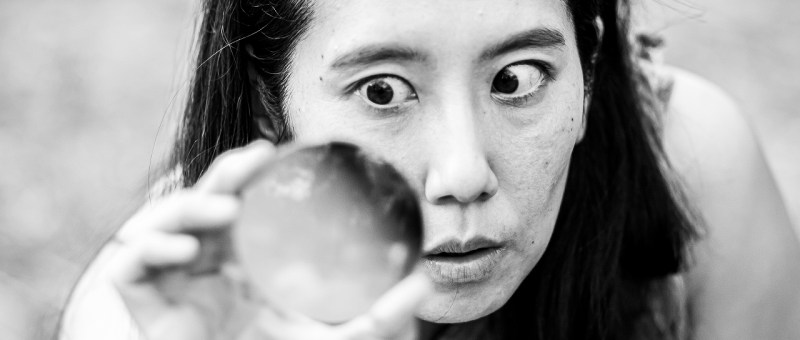
Yet we might not quite grasp this at first, because the heroine (Misa Wada) lives a solitary life in which she rarely needs to talk to anyone anyway. Shot in a crisp black and white, this appears to be some kind of near future, post-apocalyptic world in which even ancient technologies have largely been forgotten. The woman lives in a concrete structure, presumably a disused factory which is dotted with broken machinery that the woman largely ignores as she lives her simple and repetitive life of waking, fetching water, hunting, cooking and eating. We have no reason to think that she is unhappy for besides the occasional sigh, she simply gets on with her daily tasks and then goes to sleep seemingly unafraid of external threats.

But it is indeed male violence that punctures her world when she’s set upon by three men, seemingly an older man and his grown-up sons one of whom holds her still while the middle-aged man rapes her after breaking the magnifying glass she’d bought off a cheerful pedlar enraptured by the wonder of instant fire (well, while the sun shines at least). Her world becomes darker and she finds herself haunted by a shadowy figure that hovers over her as she sleeps. But then, her trap catches a young man (Daiki Hiba) whom she at first seems as if she’s going to kill and eat but later reconsiders and lets him go presumably calculating he poses no threat to her. The young man has a goofy grin and cheerful disposition, returning to bring the woman gifts and follow her around doing odd jobs before the pair develop a relationship and start living as a couple. The young man even devises a system of bamboo pipes to bring water from the brook so the woman won’t need to carry buckets back and forth anymore in a seeming rediscovery of technology born of his desire to make her life easier.

This more nurturing, protective kind of masculinity brings a new a dimension to her life but their harmonious days do not last long before male violence intrudes once again and proves a corrupting influence for the young man who seemingly becomes cruel and vengeful, though not toward the woman even as she begins to reconsider her relationship with him and if this kind of inhumanity is something she can tolerate in the idyll she’d crafted for herself before he arrived. Then again, in trying to deal with it is there something that becomes cruel or violent in herself in that wasn’t that way before even if doing so also makes her sad and leaves her lonely?

Until then she’d found only wonder in the natural world, repurposing the disused, man-made structures of the factory to make music in the rain and more problematically filled with childish glee when something wanders into her trap. But nature holds its dangers too even if there don’t appear to be any predators here besides man in the form of poisonous mushrooms easily mistaken for the edible kind. Even so, it’s violence that finally poisons her world. A senseless kind of violence that doesn’t seem to be about competition for resources, but only an animal lust and craving for dominance. If only they could communicate in a more concrete way perhaps it could be avoided, but then that doesn’t seem to have worked out that way for us who face such threats every day with words often ignored. 

In any case, Nagao finally heads into a more abstract space as the woman seems to react to the abrupt halt of the film’s soundtrack followed by the removal not only of speech but sound from her world as is if she had lost her hearing. Her reality fractures and we can’t be sure she hasn’t just imagined anything that went before or that she has been targeted by some unseen supernatural or spiritual force for her transgressions leading to her exile from a disintegrating paradise. Obscure and haunting, the film nevertheless has a kind of cheerfulness in its innate absurdity captured in the lunking physicality of the actors who move with a cartoonish strangeness and exaggerate their facial expressions in a strenuous attempt to communicate in the absence of words. The message seems to be that in the end we ruin things for ourselves, either through violence or simply doing what we think is right but in the end may really be no different nor any better.


Motion Picture: Choke screened as part of this year’s JAPAN CUTS.

Original trailer (dialogue free)

Kubi (首, Takeshi Kitano, 2023)

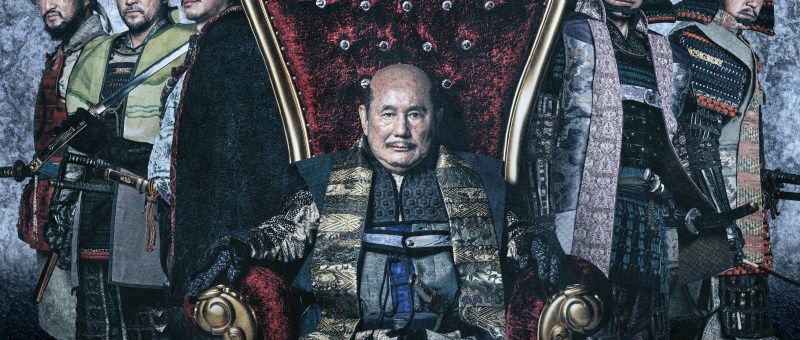
Apparently in gestation for a couple of decades, it’s unsurprising that Takeshi Kitano gave himself the role of Hideyoshi in a long-awaited historical drama adapted from his own novel, Kubi (首). Played as an irascible but wily old man, Hideyoshi is the second of Japan’s great unifiers and, unlike his predecessor, died as a result of an illness rather than intrigue. He was also a peasant who rose through the ranks and is perhaps witness to the tumultuous class conflict and social divisions of a hierarchal society.

Even so, in this version of events, Oda Nobunaga (Ryo Kase) too speaks in a thick rural dialect that sets him apart from his retainers and seems to hint at his uncouthness. This Nobugana is an unhinged despot who threatens and humiliates his subordinates, not to mention sexually assaulting them. In short, there’s no real mystery why his men have begun to turn against him and there is intrigue in the court. The film opens with Murashige’s (Kenichi Endo) quickly quelled rebellion which floundered when his reinforcements failed to arrive. Murashige is on the run and Nobunaga has heavily suggested whoever brings in his head will be first in line for the succession, but Murashige is also in a relationship with Mitsuhide (Hidetoshi Nishijima) another courtier vying for favour in more ways than one from the capricious Nobunaga. 

The striking thing about the staging is how like a yakuza drama this intrigue really is with each of the main factions manoeuvring for control, forming temporary or duplicitous alliances forged in the mutual desire of ousting a ruler whose increasing instability presents only the likelihood of a return to chaos. Nobunaga’s flamboyant speech and threatening manner are reminiscent of a yakuza boss on his way out, as is his obvious tactic of setting his rivals against each other while secretly planning to hand the reins to his son anyway. The film takes place in a largely homosocial world, the only women on screen are sex workers and peasants about to be murdered, only this time defined by romantic intrigue in which the various relationships between the men are inescapably linked with power and duplicity.

Mitsuhide’s relationship with Murashige is originally framed as a giri/ninjo conflict, Mitsuhide torn between the exercise of his duty as a samurai and his love for Murashige, only to later be set wondering if Murashige isn’t also playing him in urging him too towards rebellion, while Murashige accuses him of harbouring desires for Nobunaga which would also necessarily be desire for advancement. Advancement is something sought by all and in particular Mosuke (Shido Nakamura), a peasant who is taken on as a foot soldier after looting a battlefield for amour and killing his friend to get his hands on the prize only to realise just at the critical moment how pointless the constant desire for heads really is. The absurdity is rammed home in the closing scene in which Hideyoshi declares himself uninterested in the severed head he asked for, rendering the quest entirely pointless.

This absurdity extends to introducing the character of a comedian who is later killed for talking too much, while Kitano wise cracks his way along as the affable Hideyoshi. Kitano is in his way in dialogue with other samurai epics, using Akira Kurosawa’s horizontal wipes and introducing a pair of bumbling comic relief peasants only to suddenly kill one of them off because at the end of the day this world isn’t very funny. It’s cruel, and mean, and meaningless, so you might as well laugh like Hideyoshi. Residents of a ninja village conduct a festival in which they pray for death and to be released from this earthly torment as soon as possible, while farmers still dream of becoming samurai little knowing the reality of samurai life.

It’s this cycle of futility that is echoed in the opening image of a severed neck into which crabs in a river are crawling. Kitano stages lavish battle scenes, but ones that are often horrifying and absurd, a visceral struggle in mud and blood fought for no real reason. These samurai live their lives on the point of a sword, but they move and behave like yakuza fighting pointless turf wars and games of petty intrigue until someone finally comes for their heads. In the end, the victor is the one who doesn’t play the game at all, but sits and laughs at the absurd cruelty all around them in which the only stable force is ambition accompanied by a nihilistic lust for blood in an already bloody world.


Kubi  screens in New York July 16 as part of this year’s JAPAN CUTS.

Trailer (English subtitles)

Baby Assassins (ベイビーわるきゅーれ, Yugo Sakamoto, 2021)

“Drugs and pimping are outdated. We’re in the age of “moe”” according to a surprisingly progressive gang boss who takes his son to task for his sexism and insists that even the yakuza has a duty to create a comfortable working environment for women. Yugo Sakamoto’s anarchic deadpan action comedy Baby Assassins (ベイビーわるきゅーれ, Baby Valkyrie) is at heart a slice of life slacker drama about two young women reluctantly trying to make their way towards adulthood only the two young women are also elite assassins recently graduated from high school having been raised as coldblooded killers. 

For whatever reason it’s decided that the shy and socially awkward Mahiro (Saori Izawa) and the manic extrovert Chisato (Akari Takaishi) should become roommates occupying a furnished apartment paid for by their handler while they cover their other expenses through part-time jobs that will help them figure out how to live as “members of society”. The problems they face are perhaps those faced by many in the contemporary era just trying to make it through an unfulfilling side gig without killing anyone only for them the stakes are higher as Chisato discovers on braining a customer and strangling a moody coworker without realising she’s not just fantasising. Mahiro meanwhile finds herself entering a daydream in which she offs the combini manger interviewing her after his boring rant about kids today who think they can earn a living playing video games only to realise the store is staffed by yakuza-esque minions determined to avenge their boss. 

Already very efficient in their killing game, the girls never need to worry about cleaning up after themselves even if Chisato does get a lengthy lecture from the long suffering Mr. Tasaka who as it turns out has a lot of unsolicited advice about how she’s doing her job wrong or at least in ways which are inconvenient to him. Nevertheless while trying to live their normal lives they wind up sucked into gangland intrigue having accidentally offed a major supplier and thereafter engaged in a vendetta with equally crazed yakuza daughter Himari (Mone Akitani) who in a recurring motif proves much more in tune with contemporary gangsterdom than her “sexist” bother Kazuaki (Satoshi Uekiya). 

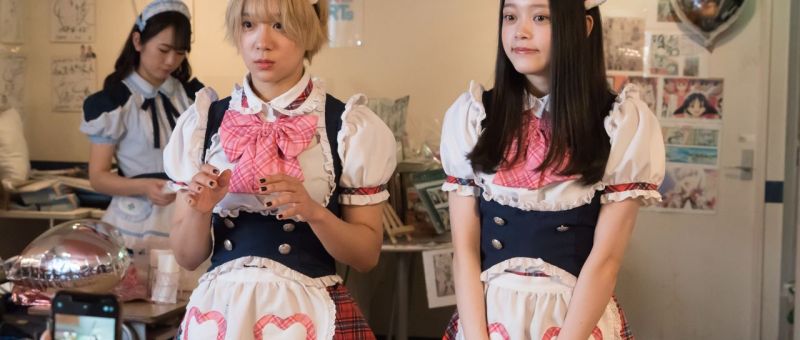
Gangsterdom has indeed changed, the boss declaring that they need to find a more “female-centric” business which is what brings them to a maid cafe as they declare themselves mystified by “moe”, rapidly becoming extremely irritated by the sickly sweet aesthetic of the cafe which requires them to order food through a series of annoyingly cutesy codewords while young women in ridiculous outfits call them “master” and satisfy their every whim. In some ways the Baby Assassins are a subversion of the kawaii ideal while also to some extent embodying its essential traits in their mix of infinite competence and adorable cluelessness, Chisato forever forgetting what’s she’s done with her weapons while Mahiro constantly mutters to herself under her breath. 

For them, killing is just another job which they mostly enjoy but can also be annoying, just like each other’s company. A mismatched pair, their dynamic strangely recalls Saint Young Men only they’re highly trained assassins trying to perfect a cover identity rather than peaced-out deities engaged in an ethnological study of life on Earth. They have a brief falling out over the same thing most roommates fight about, one feeling the other is not pulling their weight, Chisato irritated by Mahiro’s inability to find a job and Mahiro frustrated that Chisato devotes too much time to her side gig and not enough to their main job as killers for hire. Meanwhile, they’re suddenly plunged into a very adult world of bills and taxes and insurance, their handler promising to handle some of that for them because ironically enough they’re much more afraid of the taxman than they’ve ever been of the police. 

Surreal and filled with deadpan humour not to mention expertly choreographed fight sequences by Hydra’s Kensuke Sonomura, Baby Assassins is a perfectly pitched coming-of-age tale in which two young women attempt to find a place for themselves while contending with a still patriarchal society, eventually discovering a complementary sense of solidarity in their opposing natures as they come together to clean up their own mess while defiantly striking out for their futures as “members of society” whatever that may mean. 


Baby Assassins screened as part of this year’s Glasgow Film Festival.

Original trailer (English subtitles)

The Pinkie (さまよう小指, Lisa Takeba, 2014)

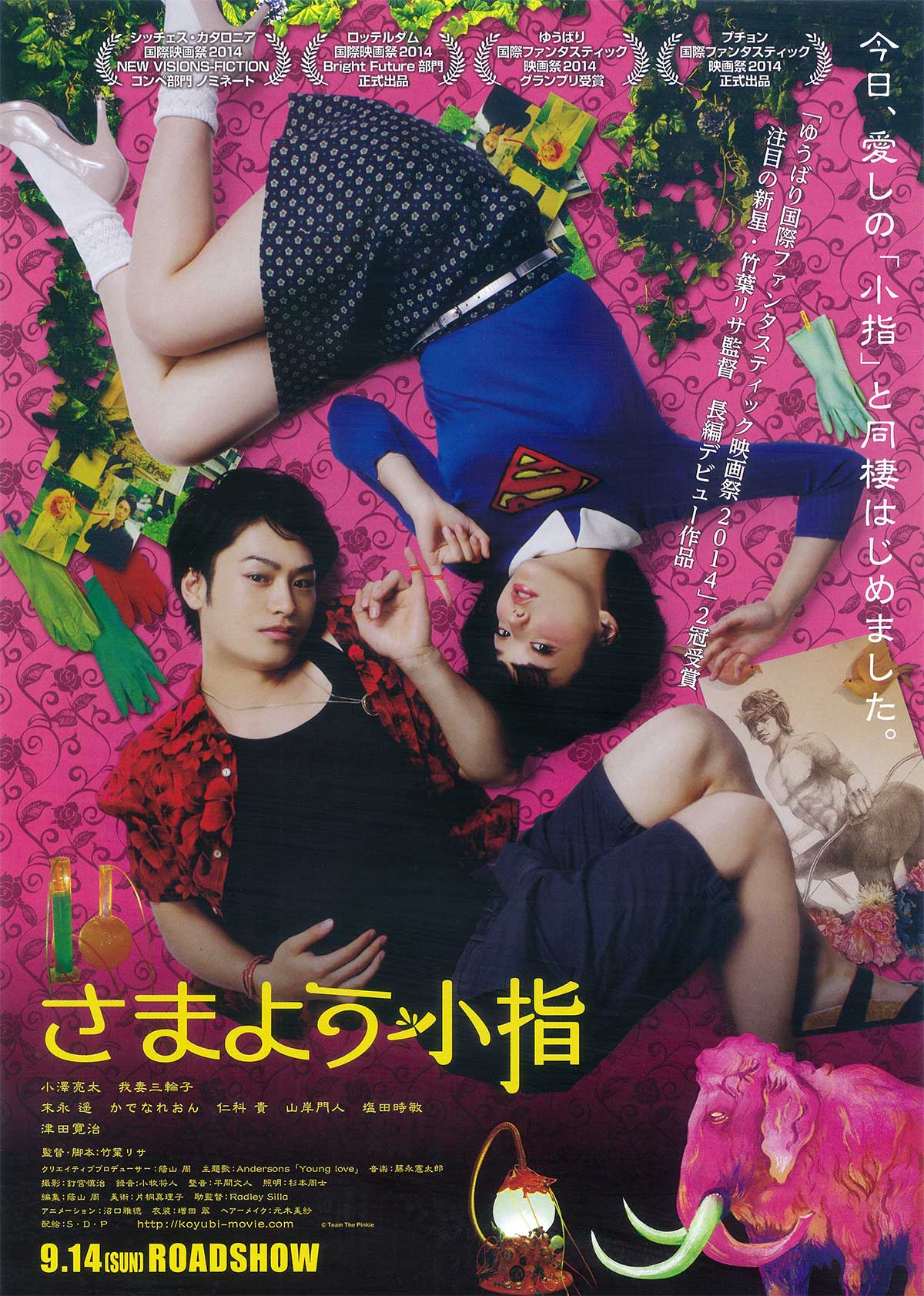
the pinkie posterWhat if someone cloned you and then they liked the other you better? The “hero” of Lisa Takeba’s debut feature The Pinkie (さまよう小指, Samayou Koyubi) is about to find out when his rather depressing life takes a turn for the surreal. Winner of the Grand Prize at the Yubari International Fantastic Film Festival, The Pinkie is an exercise in madcap fun which packs a considerable amount into its barely feature length runtime of 65 minutes. Ever cineliterate, Takeba leaps from sci-fi to romance to yakuza movie and revenge flick but then her ambitions are more grounded in the real as she explores the fallacy of infatuation, the nature of true, selfless love and the necessity of waking up from a romantic dream.

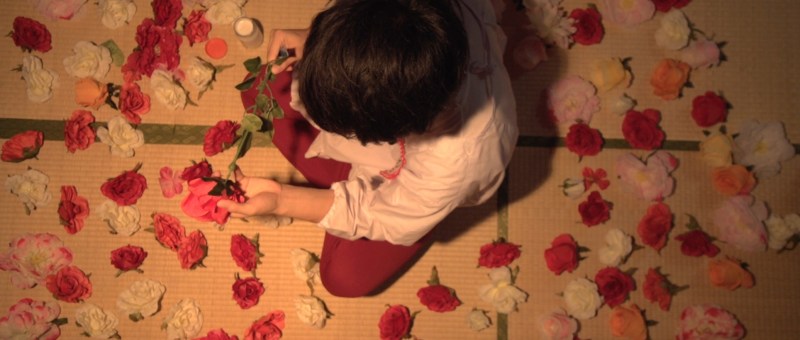
Ryosuke (Ryota Ozawa) has a lifelong problem. Ever since they were five, a girl has been stalking him. Momoko (Miwako Wagatsuma), in Ryosuke’s words, is the ugliest woman in the village. So infatuated is she, that Momoko has even undergone cosmetic surgery to adjust her face to Ryosuke’s tastes but that’s only made him dislike her more. Truth be told, Ryosuke is no great catch. He has no job and exists on the fringes of the underworld. He has, however, found love, of a kind, but unfortunately the lady in question is the paramour of a local gangster kingpin. Discovered in his illicit romance, Ryosuke is tormented by the gangsters until they eventually exact some of their trademark justice by cutting off his pinkie finger which then flies halfway across town and into the path of Momoko who uses it to create her very own Ryosuke clone.

Shifting focus somewhat, Takeba then tells the story of Momoko and the clone whom she christens “Pinkie Red String” in reference both to his origins and to the red strings which bind true lovers together. Momoko begins taking care of Pinkie, buying him clothes and teaching him to survive in the modern world, and before long the two have become a couple.

Ryosuke doesn’t quite like having a doppleganger – especially one who’s almost his polar opposite in terms of outlook and general personality. Under the gentle guidance of Momoko, Pinkie is good person who works hard, is kind to those around him, and is almost entirely selfless. Stolen away by Ryosuke, Pinkie becomes something between maid and prisoner as he takes on a purely domestic role, cooking and cleaning for his new master who later sends him out to work dressed as a woman wearing a long black wig and red dress, just to ram the point home.

Takeba’s aim is madcap fun but she also offers up a commentary on emotional repression as both Momoko and Ryosuke pursue their respective romances. Momoko has only ever wanted to express her love but her methods backfire, eventually getting her sent to a reform school which leads to the breakup of her family. Ryosuke, by contrast seems to be a fairly romantic, if sometimes cynical soul, originally asking if anyone would really sacrifice themselves for love only to attempt to do exactly that later on (though far too late). Neither Ryosuke nor Momoko is able to show their love in a straightforward way, opting for grand gestures over simple words. “Love needs a victim”, as someone later puts it, but there’s no need to run so eagerly to the gallows.

The world of The Pinkie is one of intense genre fusion as Takeba mixes references from classic cinema with the anarchic pace of anime and manga. Mad scientist sci-fi shifts to classic kung fu before cycling back to jitsuroku yakuza movie complete with on screen captions and brief sting of the iconic Battles Without Honour theme, but even if Takeba can’t always control her rate of progression her leaps are always inventive and unexpected, humorous and melancholy in equal measure. Pinkie, fulfilling his stranger in town role, begins to change his progenitor’s cynical psyche. Ryosuke is no longer the selfish loser but has learned to befriend the wounded Momoko who has also realised she can do better, abandoning her youthful fantasies for something more “real”. Then again, perhaps there is a second chance for lost love even if it is, in a sense, a synthetic solution for a very human problem.


Currently available to stream via FilmDoo in most of the world!

Original trailer (English subtitles)