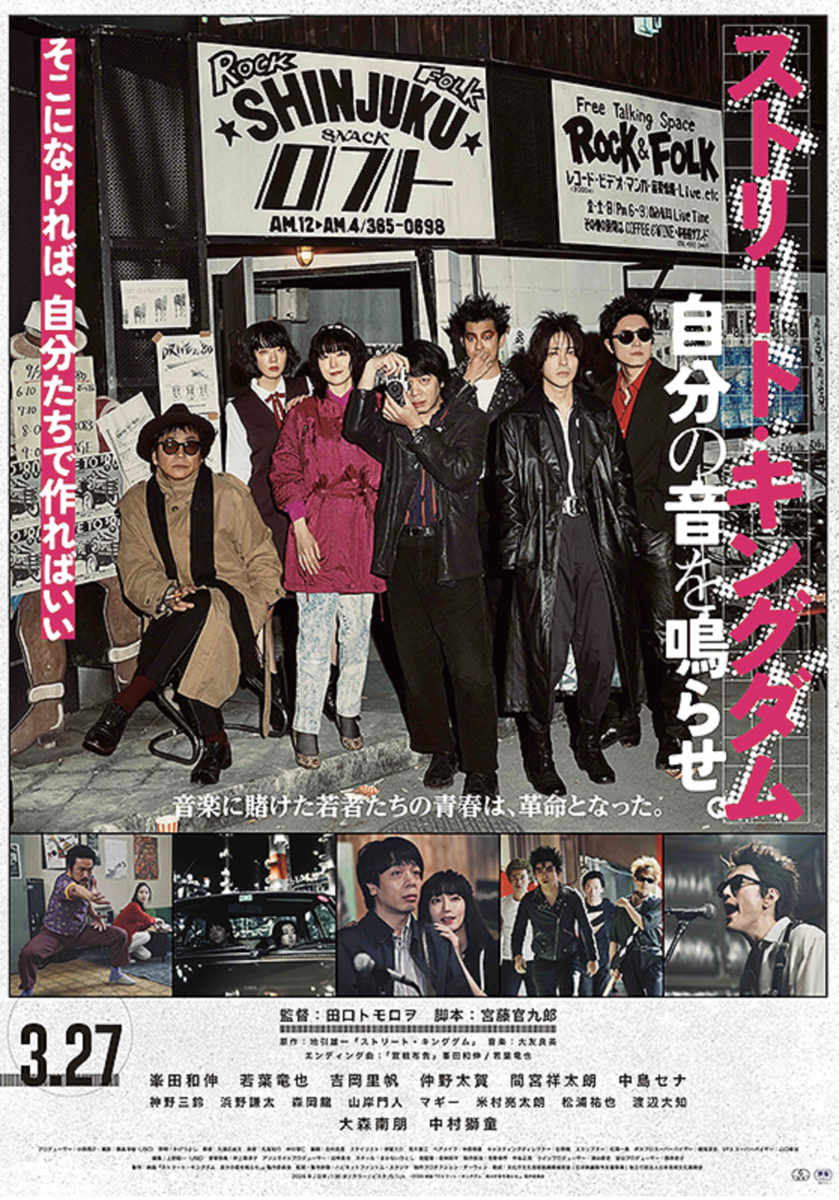
Street Kingdom (ストリート・キングダム 自分の音を鳴らせ, Tomorowo Taguchi, 2026)

Tomorowo Taguchi is probably best known to international audiences for his starring role in Tetsuo the Iron Man, but he started his career as an illustrator and theatre actor while also active in Japan’s underground punk music scene as a member of the band Bachikaburi. For the last few decades, he’s been a fairly ubiquitous presence in mainstream Japanese films as a jobbing actor turning up in small supporting roles in all sorts of unexpected places, but Street Kingdom (ストリート・キングダム 自分の音を鳴らせ, Street Kingdom: Jibun no Oto wo Narase) is a look back to the early years of the punk movement and the creation of Telegraph Records.

Scripted by Kankuro Kudo, most of the names in the film have been slightly altered to reflect the fictionalisation of the narrative and so we follow Yuichi Hibiki (based on Yuichi Jibiki and played by Kazunobu Mineta), a struggling photographer who feels lost in an increasingly consumerist Japan. Like many of his generation, he spent his formative years in the student movement and is looking for a way to fill that void following the movement’s collapse in the wake of the Asama-sanso Incident. Japan’s economy had improved quite markedly by then and many former student protesters simply moved on into more mainstream lives as regular salaryman men and women, much as Yuichi’s friend has done by joining a record label and becoming obsessed with Pink Lady, the epitome of the disposable contemporary pop music topping the charts and making them money. Inspired by Yuichi, the friend later also jacks in his corporate career and becomes a punk rocker because he too discovers he wants more than the emptiness of a salaryman existence.

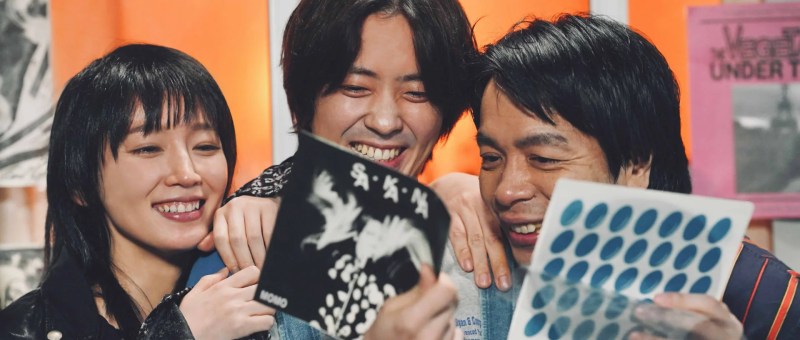
After a trip back to his family pig farm, Yuichi’s epiphany comes after hearing the Sex Pistols on the radio, though he is dismayed to find out that they have already broken up. Nevertheless, he determines to go Tokyo and find the real Japanese punk as opposed to that imported from New York or London. It’s inside this world that finds freedom outside of the Japanese mainstream as an independent artist, vowing to create a Street Kingdom with Momo (Ryuya Wakaba), the lead singer of influential band Tokage, and zine publisher Sachi (Riho Yoshioka). An out-of-touch journalist at one point tries to offer them expensive champagne and shames the band members for still living at home with their parents, and there is something a little bit incongruous about Momo’s lovely mother asking him what he wants for his tea before he goes off to play one of his anarchic gigs. But in another way, this is exactly the essence of punk in the sense of domesticity, friendships and solidarity that existed between the members of this community.

It all only begins to go wrong when the music labels start getting involved and commercial decisions conflict with artistic ones. Yuichi becomes a de facto manger because he’s a “decent” sort, which is to say he’s a bit of a square existing to one side of the movement which is a designation he resents at times, but also allows him a more privileged position of guiding it. He’s the one who advises they quit on a high after their “Tokyo Rockers” multi-band tour threatens to get too big and provoke rivalries and discord in what had been a fairly non-competitive, collegiate scene. He also helps Momo overcome some of his artistic conflicts by starting a parallel indie label so they can release songs the label rejects, such a nonsense tune about fish and pollution that the suits deem “too political”. What he can’t fully help with, however, is Momo’s descent into depression and drug abuse when the label pushes the band into debt, refuses to help financially after their band members are involved in a crash while on tour, and finally suggests they were only really interested in Momo as a potential solo artist doing more mainstream pop. Nevertheless, it’s Yuich’s friendly intervention encouraging Momo to get his act together that finally convinces him that something has to change.

To that extent, the film may be a fairly sanitised and nostalgic exploration of the director’s youth, but it’s also an advocation for dancing to one’s own tune which, it argues, has not necessarily become any easier in an age when anyone has access to the tools to become an artist. The punk spirit lives on in those who are prepared to be fully themselves in a culture that can be oppressively conformist and as the film would have it, the greatest legacy of the punk rock era was the sense of community between young people who wanted to build their own utopia which is something that in itself will never die.


Street Kingdom screens as part of this year’s New York Asian Film Festival.

Trailer (English subtitles)
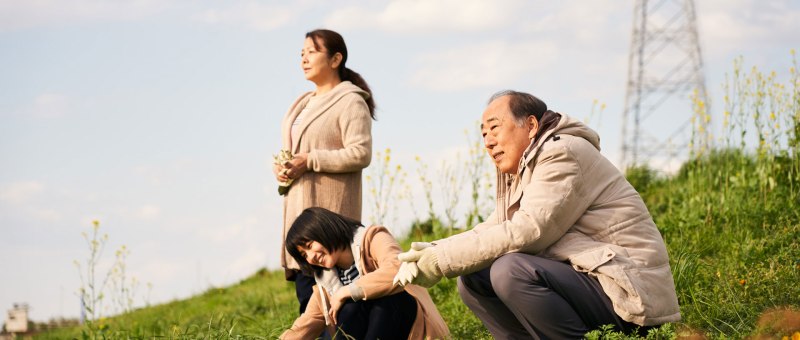
Lying to Mom (鈴木家の嘘, Katsumi Nojiri, 2018)

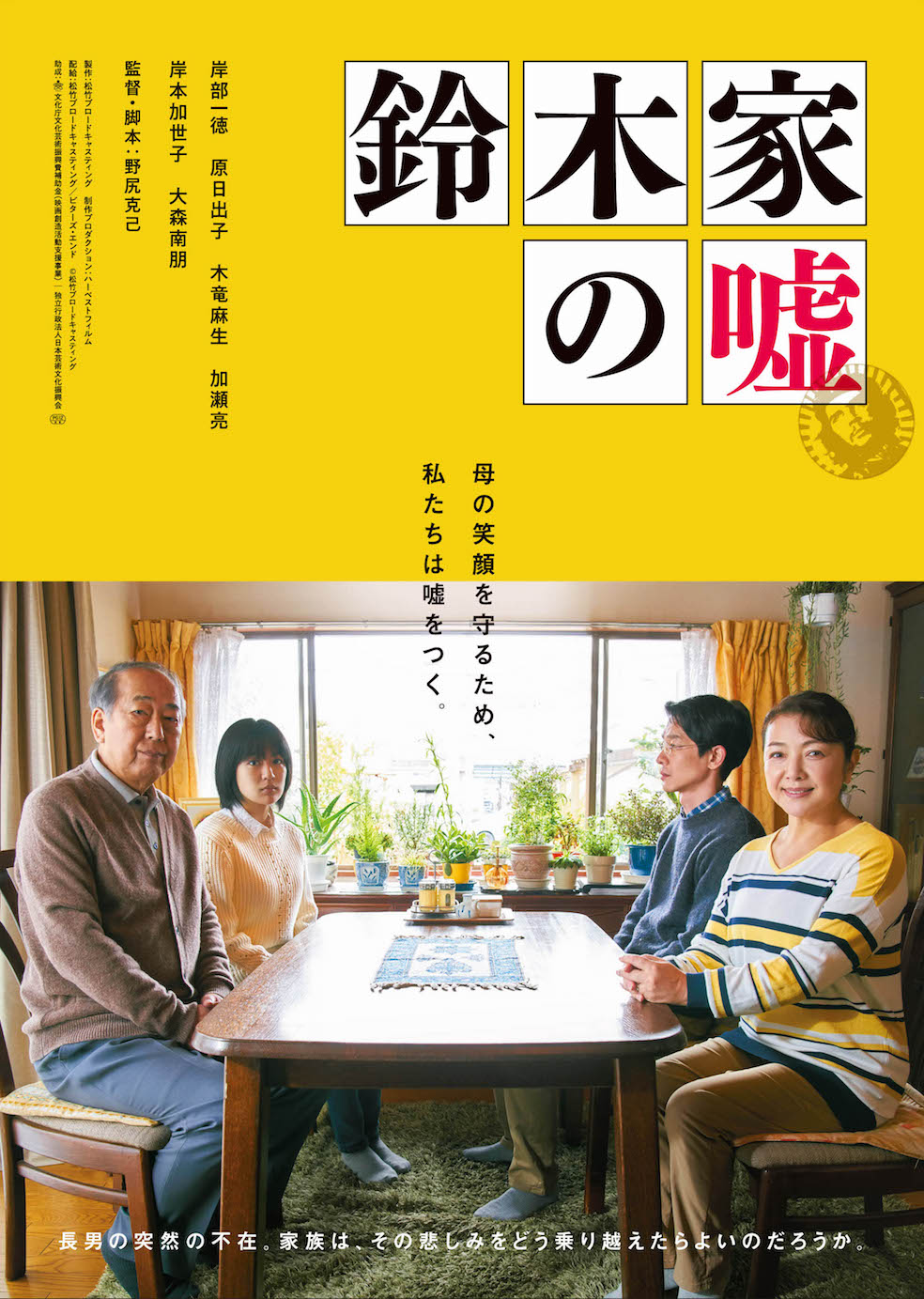
Lying to Mom posterLearning to live with loss is difficult for any family, but when the loss was caused by suicide the pain is even more acute as those left behind try to understand why it is their loved one had to die and if there was anything else they could have done to prevent it. The family at the centre of Lying to Mom (鈴木家の嘘, Suzukike no Uso) choose, initially at least, to avoid dealing with it at all. Each taking their individual paths through grief, they keep the past painfully alive by pretending that oldest son Koichi (Ryo Kase) is only temporarily absent and will eventually return.

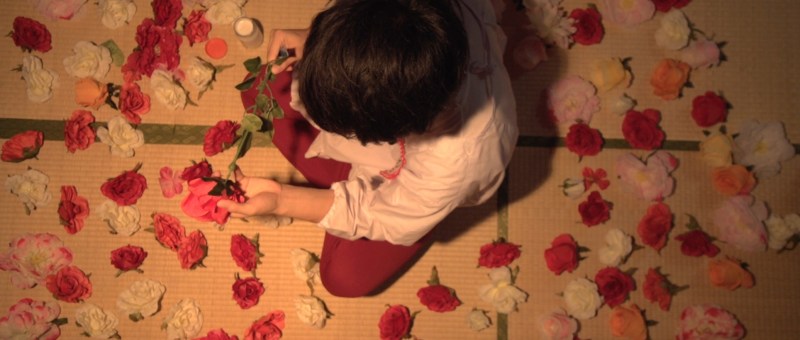
Koichi, who has been a hikikomori for many years, takes one last look at the peaceful suburban scene outside his window and hangs himself from a storage closet in his room. His mother Yuko (Hideko Hara), out at the time, only discovers the body when trying to get him to come down to lunch. Panicked, she injures herself and ends up in a coma in hospital while nothing could be done for Koichi. When she wakes up some time later, she’s lost all her memories of the incident and the family don’t have the heart to tell her that her son is gone so they pretend he went to work for his uncle in Argentina.

This is of course very comforting to Yuko who now believes that as a result of her illness Koichi has finally been able to leave his room for a more productive life, but it places a strain on the other family members – father Yukio (Ittoku Kishibe) and daughter Fumi (Mai Kiryu), who remain conflicted about keeping up the pretence while dealing with their own grief in secret. Fumi, whose idea it was to lie in the first place, types out beautiful letters supposedly from Koichi to be handwritten in his handwriting by an associate in Argentina which detail his new life full of freedom and promise overseas.

Meanwhile, Yukio ponders on his relationship with his son with whom he admits he never quite bonded. He sets about trying to find a mysterious woman named on Koichi’s life insurance policy less for practical reasons than to ascertain some sort of evidence that his son lived, even if he lived the last years of his life alone in a room. The reasons for Koichi’s isolation are never exactly explained with Yuko blaming high school bullying and the stagnant economy, but it is clear that he never managed to find himself in Japan and perhaps if he really had gone to Argentina things might have been different.

Wracked with guilt, Fumi finds herself trying out a support group for relatives of those who died by suicide but struggles to put her own thoughts in order. Though people try their best, insensitivity reigns when they try to offer words of condolence. Only love can save people, Fumi’s colleague smugly tells her with a random story about coaxing a shy high school student out their room, little realising he’s tacitly accusing her of not trying hard enough to save her brother. People can’t be saved, Fumi retorts, and she might well have a point. Even the leader of the support group shows himself up when he considers banning a grief-stricken woman with a loud personality because her problems are “smaller” seeing as she’s wealthy. As another attendee tells him, people grieve in different ways and having money or not is unlikely to affect the degree of your emotional pain even if it might in some sense reduce the burden. Besides, his assumptions about her are mostly wrong because he’s not been paying attention to the things that really matter only to his own surface level prejudices.

Despite the prevalence of suicide, the Suzukis still find themselves embarrassed by Koichi’s passing. They tell people it was an illness or avoid mentioning it all. Meanwhile they keep the secret from Yuko and avoid talking about it amongst themselves until finally forced to deal with all of their anger, guilt, pain and confusion. A comforting lie may serve its purpose, but only an emotional reckoning can clear the air. There may be no real answer to why Koichi did what he did, but the Suzukis will have to make their peace with it, finding fresh hope in the process as they begin to repair their emotional wounds together as a family.


Lying to Mom was screened as part of the 2019 Udine Far East Film Festival. It will also be screened at the 2019 Nippon Connection Film Festival on 30th May at 7.30pm.

International trailer (English subtitles)

The Pinkie (さまよう小指, Lisa Takeba, 2014)

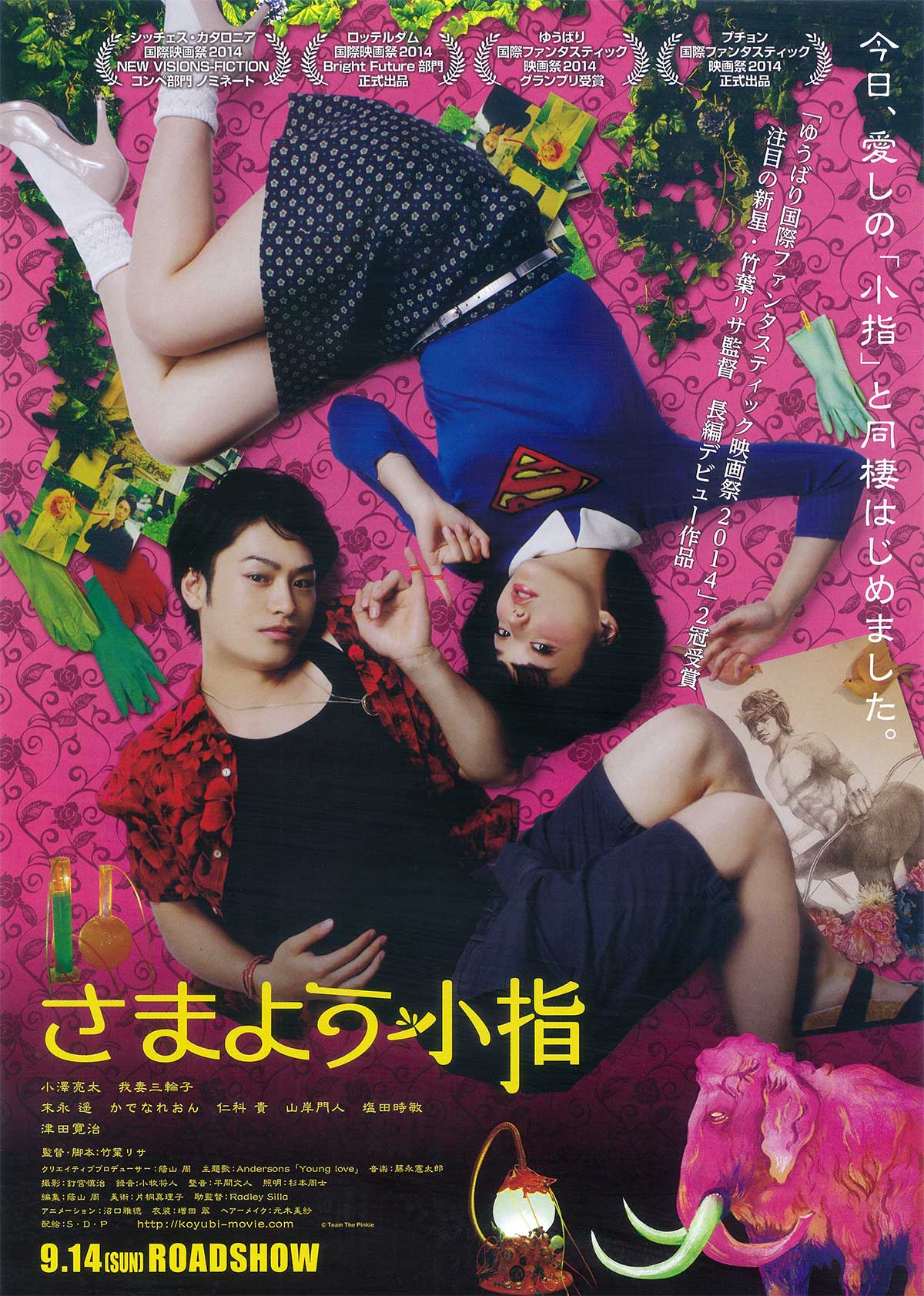
the pinkie posterWhat if someone cloned you and then they liked the other you better? The “hero” of Lisa Takeba’s debut feature The Pinkie (さまよう小指, Samayou Koyubi) is about to find out when his rather depressing life takes a turn for the surreal. Winner of the Grand Prize at the Yubari International Fantastic Film Festival, The Pinkie is an exercise in madcap fun which packs a considerable amount into its barely feature length runtime of 65 minutes. Ever cineliterate, Takeba leaps from sci-fi to romance to yakuza movie and revenge flick but then her ambitions are more grounded in the real as she explores the fallacy of infatuation, the nature of true, selfless love and the necessity of waking up from a romantic dream.

Ryosuke (Ryota Ozawa) has a lifelong problem. Ever since they were five, a girl has been stalking him. Momoko (Miwako Wagatsuma), in Ryosuke’s words, is the ugliest woman in the village. So infatuated is she, that Momoko has even undergone cosmetic surgery to adjust her face to Ryosuke’s tastes but that’s only made him dislike her more. Truth be told, Ryosuke is no great catch. He has no job and exists on the fringes of the underworld. He has, however, found love, of a kind, but unfortunately the lady in question is the paramour of a local gangster kingpin. Discovered in his illicit romance, Ryosuke is tormented by the gangsters until they eventually exact some of their trademark justice by cutting off his pinkie finger which then flies halfway across town and into the path of Momoko who uses it to create her very own Ryosuke clone.

Shifting focus somewhat, Takeba then tells the story of Momoko and the clone whom she christens “Pinkie Red String” in reference both to his origins and to the red strings which bind true lovers together. Momoko begins taking care of Pinkie, buying him clothes and teaching him to survive in the modern world, and before long the two have become a couple.

Ryosuke doesn’t quite like having a doppleganger – especially one who’s almost his polar opposite in terms of outlook and general personality. Under the gentle guidance of Momoko, Pinkie is good person who works hard, is kind to those around him, and is almost entirely selfless. Stolen away by Ryosuke, Pinkie becomes something between maid and prisoner as he takes on a purely domestic role, cooking and cleaning for his new master who later sends him out to work dressed as a woman wearing a long black wig and red dress, just to ram the point home.

Takeba’s aim is madcap fun but she also offers up a commentary on emotional repression as both Momoko and Ryosuke pursue their respective romances. Momoko has only ever wanted to express her love but her methods backfire, eventually getting her sent to a reform school which leads to the breakup of her family. Ryosuke, by contrast seems to be a fairly romantic, if sometimes cynical soul, originally asking if anyone would really sacrifice themselves for love only to attempt to do exactly that later on (though far too late). Neither Ryosuke nor Momoko is able to show their love in a straightforward way, opting for grand gestures over simple words. “Love needs a victim”, as someone later puts it, but there’s no need to run so eagerly to the gallows.

The world of The Pinkie is one of intense genre fusion as Takeba mixes references from classic cinema with the anarchic pace of anime and manga. Mad scientist sci-fi shifts to classic kung fu before cycling back to jitsuroku yakuza movie complete with on screen captions and brief sting of the iconic Battles Without Honour theme, but even if Takeba can’t always control her rate of progression her leaps are always inventive and unexpected, humorous and melancholy in equal measure. Pinkie, fulfilling his stranger in town role, begins to change his progenitor’s cynical psyche. Ryosuke is no longer the selfish loser but has learned to befriend the wounded Momoko who has also realised she can do better, abandoning her youthful fantasies for something more “real”. Then again, perhaps there is a second chance for lost love even if it is, in a sense, a synthetic solution for a very human problem.


Currently available to stream via FilmDoo in most of the world!

Original trailer (English subtitles)