 Most of us like to feel as if we’re connected to something. Not merely floating islands, but anchored to the world by strong connections to others – only when we feel as if the world is not holding on as tightly as we’d like do we begin to feel as if perhaps there are as many worlds as people and many of them barred to those who have no right to enter. Natsuka Kusano’s second feature, Domains (王国(あるいはその家について), Okoku (Arui wa Sono Ie ni Tsuite)), tackles this conflict head on in a tragic tale of rage, madness, and jealousy driven by a series of mutual resentments as a collection of middle-aged men and women struggle to accept the “intrusion” of an unwanted third party into the kingdom of their intimate relationships.
Kusano opens boldly with the film’s most straightforward, though infinitely shocking, scene as a woman in her late 20s, Aki (Asami Shibuya), sits impassively while a police officer (Ryu Kenta) politely tries to explain to her that she is being held on suspicion of murder. Not quite present, Aki accepts all the charges against her and admits her crime though is puzzled by the policeman’s assertion that she has been “brought to justice”, explaining that she already feels herself to have been “brought to justice” by “something like time”. In any case, she has already said everything she wishes to say in a letter to the mother of her victim. In a brief moment of madness, Aki pushed the three year old daughter of her childhood best friend into a swelling river in the midst of a typhoon.
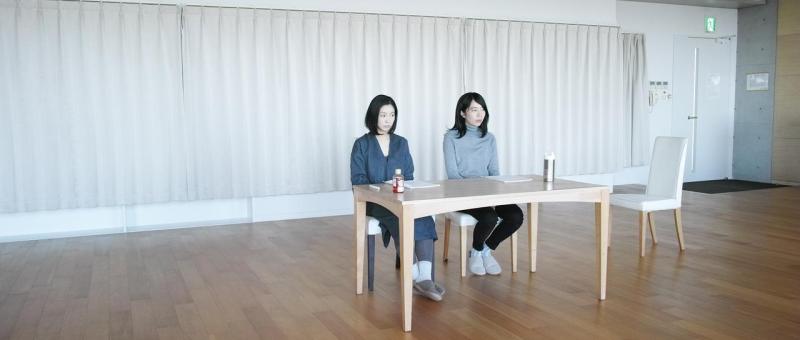
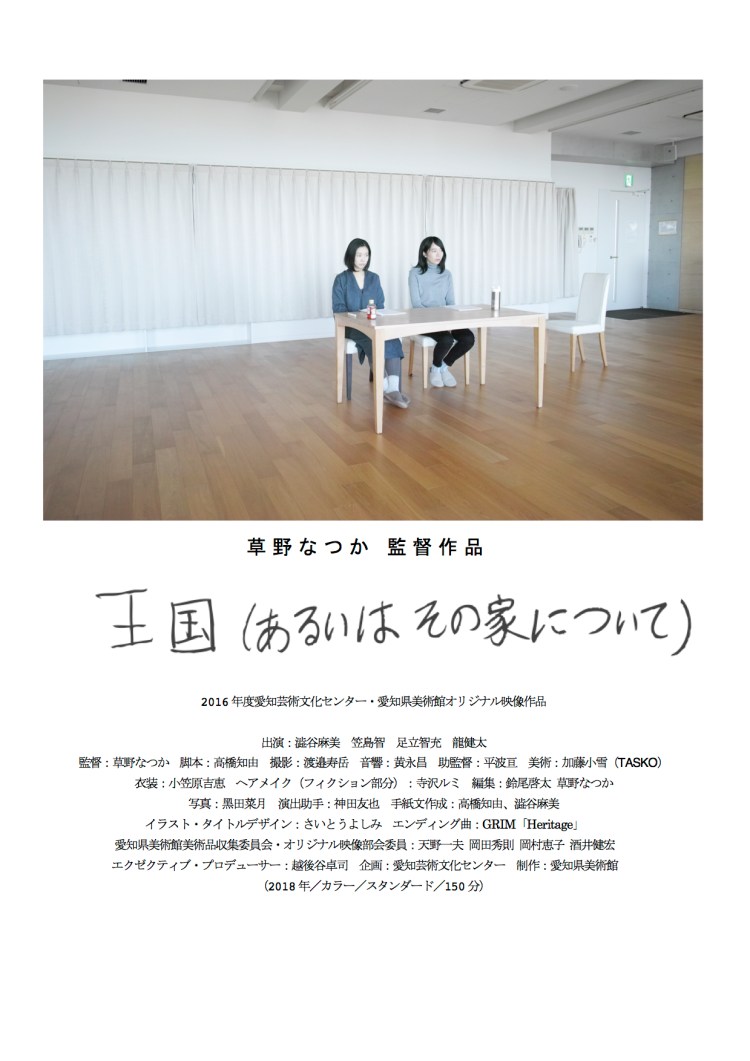
Leaving us with this disturbing moment, Kusano then shifts back to what looks like a rehearsal room where the woman we have just seen is now dressed in more casual clothing and seated at a table next to another woman who will read in the lines of Aki’s childhood best friend and later mother of the murdered little girl, Honoka, Nodoka (Tomo Kasajima). Travelling back a few months before the incident, the two women read over the undramatic events which led up to it as if engaged in an act of emotional excavation.
The strange fact that had fascinated the policeman in Aki’s written testimony was her seemingly random allusion to a castle made out sheets and chairs the mention of which sends her into a refrain of the gloomy Japanese folksong Moon over Ruined Castle. As we later ascertain, the the make-believe castle, constructed in her childhood home with soon-to-be best friend Nodoka, became something like a safe place, the eye of typhoon raging in her mind. Aki saw the castle as her rightful “kingdom”, a sacred space into which only she and Nodoka were permitted to enter and which was permanently available to each wherever they happened to be.
Nodoka, however, has moved on – formed a new kingdom with a husband and a child into which Aki has no right to step. After having something like a breakdown and returning to her hometown, Aki reconnected with Nodoka whom she had not seen since her wedding to her husband Naota (Tomomitsu Adachi) – a mutual friend from university, four years previously. Naota, now a school teacher, like Aki is intensely jealous of his own kingdom which he has given physical form in the solid existence of his house. Aki noticed this fact immediately in the pitch perfect attention to temperature and humidity of Nodoka’s new home, but she couldn’t help seeing that her friend now looked tired, harried, and that the marriage was perhaps only a superficial act of performance rather than a real emotional connection.
Ironically enough, it’s Naota himself who accidentally brings this up when explaining that a family can collapse without warning and revert to being merely a collection of individuals living under the same roof. Nodoka accuses him of using a schoolteacher’s logic to rule his home, and there is certainly some of that in there as his rigid authoritarianism seems primed to hold on so tight that it squeezes the life out of the very thing he’s trying to protect, but there’s an ugly kind of conservatism in it too as he angrily tries to expel the unwelcome intrusion of Aki into their lives, blaming her for the cracks in his marriage which her presence has perhaps exposed.
Naota wants Aki gone because he thinks she’s a bad influence, a shirker or a mad woman who will eventually infect his house with whatever it is she has like some kind of ill will virus. In an odd and terrifying way he may be “right”, but his resentment runs deeper in that he, like Aki, cannot accept that Nodoka once belonged in someone else’s kingdom to which he has no access. He resents that the two women are so close as to have largely abandoned language and share a much longer history than he and his wife, while Aki perhaps resents the presence of Honoka who represents a bond between Naota and Nodoka that she could never match even if her concern over the coldness of her friend’s new life and her seemingly hidden misery is nothing but altruistic.
Aki surveyed the kingdom of her friend and discovered it was flawed and vulnerable, that the kingdom she and her husband were building would eventually destroy them. Yet the overwhelming force which compelled her towards her unforgivable transgression was not so much resentment, or loneliness, or jealousy, or even a desire for freedom, as embarrassment. She felt as if she had betrayed her kingdom’s existence to someone who was not supposed to see it and acted without thinking in order to cover up an emotional crime, little realising the pain and destruction her act would cause.
Words encircle Aki like a typhoon, leaving her permanently in its eye trying to make sense of what has happened. Kusano stages a rehearsal after the fact, reading over the same lines with added nuance, occasionally digging deeper to expose a new clue either so trivial as not to be worth remembering or so delicate as not to be remembered out loud. To Aki, the spoken has no weight – her kingdom is made is feelings, but for Naota the reverse is true. Nodoka remains caught in the middle, perhaps secretly and uncomfortably yearning for freedom and a kingdom of her own while the storm clouds gather all around her and all that remains is the inescapable impossibility of an unselfish yet whole connection.
Domains made its world premiere at the 2019 International Film Festival Rotterdam and is available to stream online via Festival Scope until 24th February.
Rotterdam trailer (English subtitles)
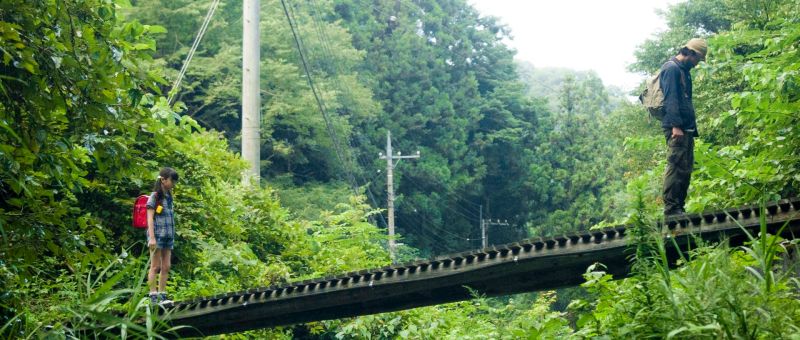
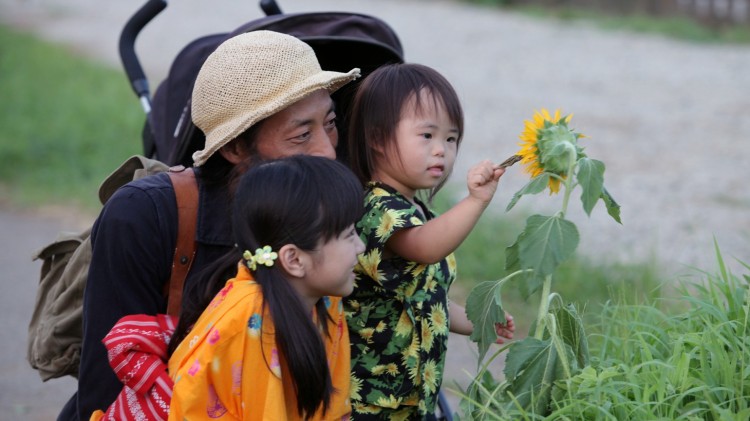 When tragedy strikes the one thing you ought to be able to rely on is your family, but when the tragedy occurs within that sacred space which exits between you what is to be done? Yosuke Takeuchi’s The Sower (種をまく人, Tane wo Maku Hito) attempts to provide an answer whilst putting one very ordinary, loving and forgiving family through a series of tests and tragedies. Lies, regret, and despair conspire to ruin the lives of four once happy people but even in the midst of such a shocking, unexpected event there is still time to turn towards the sun rather than continuing in the darkness.
