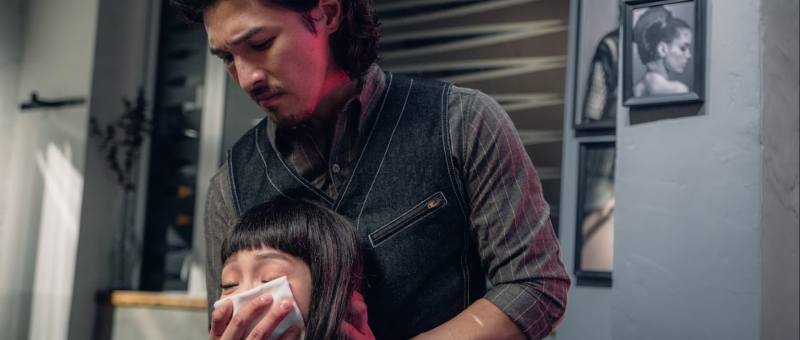
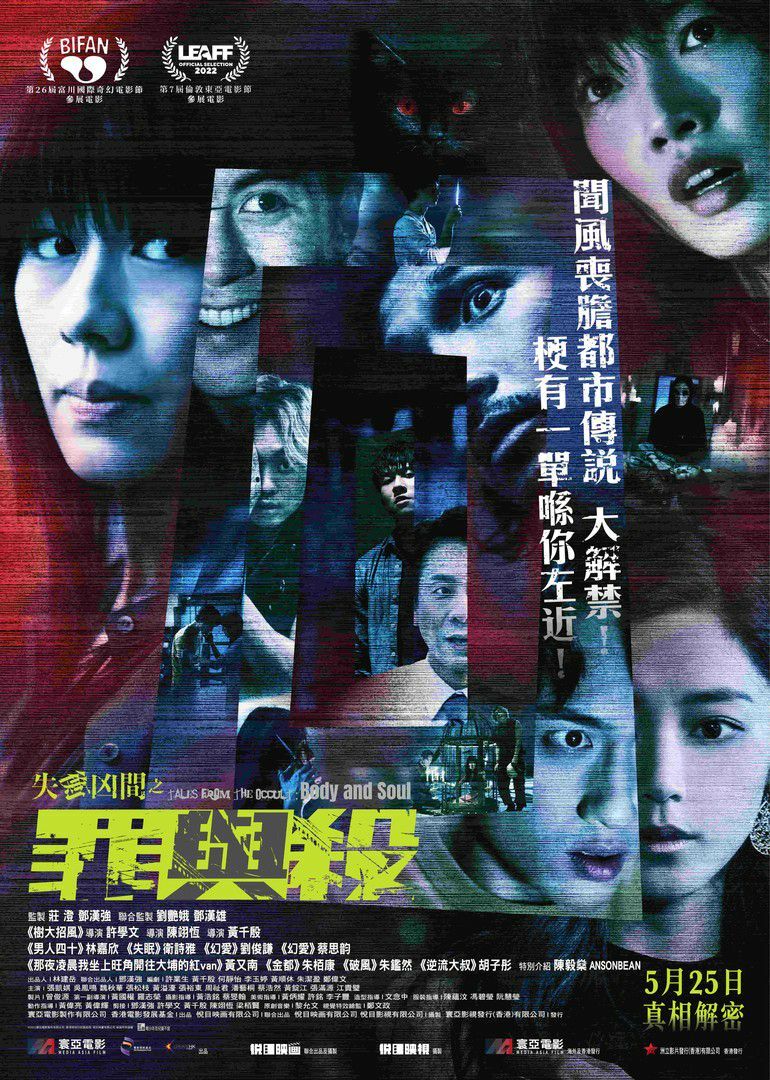
Tales from the Occult: Body and Soul (失衡凶間之罪與殺, Frank Hui, Daniel Chan Yee-Heng, Doris Wong Chin Yan, 2022)

The second in a series of horror-themed anthologies, Tales From the Occult: Body and Soul (失衡凶間之罪與殺) takes fairytales as its theme but truth be told none of the episodes has very much in common with the most well known version of their respective stories. What they do have in common is a rather grisly view of the nighttime city perhaps inspired by classic Cat III shockers though mediated through a strong sense of irony. “I like it a bit dark” one of the heroes exclaims and it’s certainly a sentiment shared by each of the three directors. 

The first instalment, Frank Hui’s Rapunzel finds former idol star Maggie (Michelle Wai) trying to prop up her flagging career while constantly written off as a has been best known for a cheesy pose in a dated shampoo commercial. Her manager sends her to an obnoxious rich kid’s birthday party where the women are so young they weren’t even born when she was a star and relentlessly mock the weird “aunty” and her “retro” movies. One of the guys sets fire to her hair which is even more of a problem for her because she’s supposed to have an important meeting with a producer in the morning and he’s not going to hire her with a less than perfect appearance. Maggie’s desperation eventually draws her into the orbit of a hair fetishist serial killer from whom she must try to escape while attempting to rescue her hair and save her career. A secondary strain of social community places the killer’s creepy all night salon in a building that’s about to be torn down for urban renewal leading him to be bullied by gangsters to move out but not wanting to for obvious reasons. Maggie meanwhile eventually makes a surprising decision in order to fix herself which is in its own way cannibalistic at least of the female image when it comes to the idea of perfect hair. 

You couldn’t say that Daniel Chan’s Cheshire Cat really has that much to do with the classic Alice in Wonderland character either, though Chan does throw in something like a Mad Hatter’s tea party and leave his heroine trapped in a cage suspended above the air. Nora (Cecilia Choi Si-Wan) works in a cat rescue centre and is particularly upset by the idea of people hurting her feline friends, especially as her own cat Bobo was recently murdered. After agreeing to rescue a kitten trapped under a van she unwittingly passes into a grim haunted house adventure with a death metal vibe. In a series of atmospheric shots, Chan frames Hong Kong in an angry red tint capturing the increasing resentment of Nora as she continues to take out her rage on those who would harm poor defenceless creatures. 

Doris Wong’s The Tooth Fairy perhaps ironically subverts its title while toying with the interplay of sadomasochistic fetishes. Dental nurse Sammi (Karena Lam Ka-Yan) is being relentlessly harassed at work by sleazy dentist Steve (Tommy Chu Pak-Hong) who won’t take no for an answer. On her way to the bank, she comes across a fight between two young men in which one bites off the other’s ear, and invites the biter to her clinic to get his swollen cheek looked at. Steve, however, does not take kindly to this after seeing he and Sammi flirt with each other, extracting a healthy tooth without anaesthetic as if teaching him a lesson, but clearly deriving sexual pleasure from his pain just like the sadistic killer on the news. In any case events soon escalate following some cake-related triggering and not just for its capacity to ruin your teeth. The killer may claim they’re setting people free from their earthly suffering but is clearly in part at least killing for the thrill. 

In any case, danger seems to lurk behind every corner with potential serial killers apparently all around us as the heroes find out during their various quests. Their stories may not have much in common with their inspiration but each have a strangely ironic quality curiously mimicking B-movie cinema in terms of colour palette and production design, Frank Hui eventually opting for a neon-coloured nightmare lair while Nora and the gang chase through a haunted Hong Kong and Sammi does her best to extricate herself from the unwanted attentions of her sleazy boss who is perhaps the real monster in the shadows. 


Trailer (English subtitles)

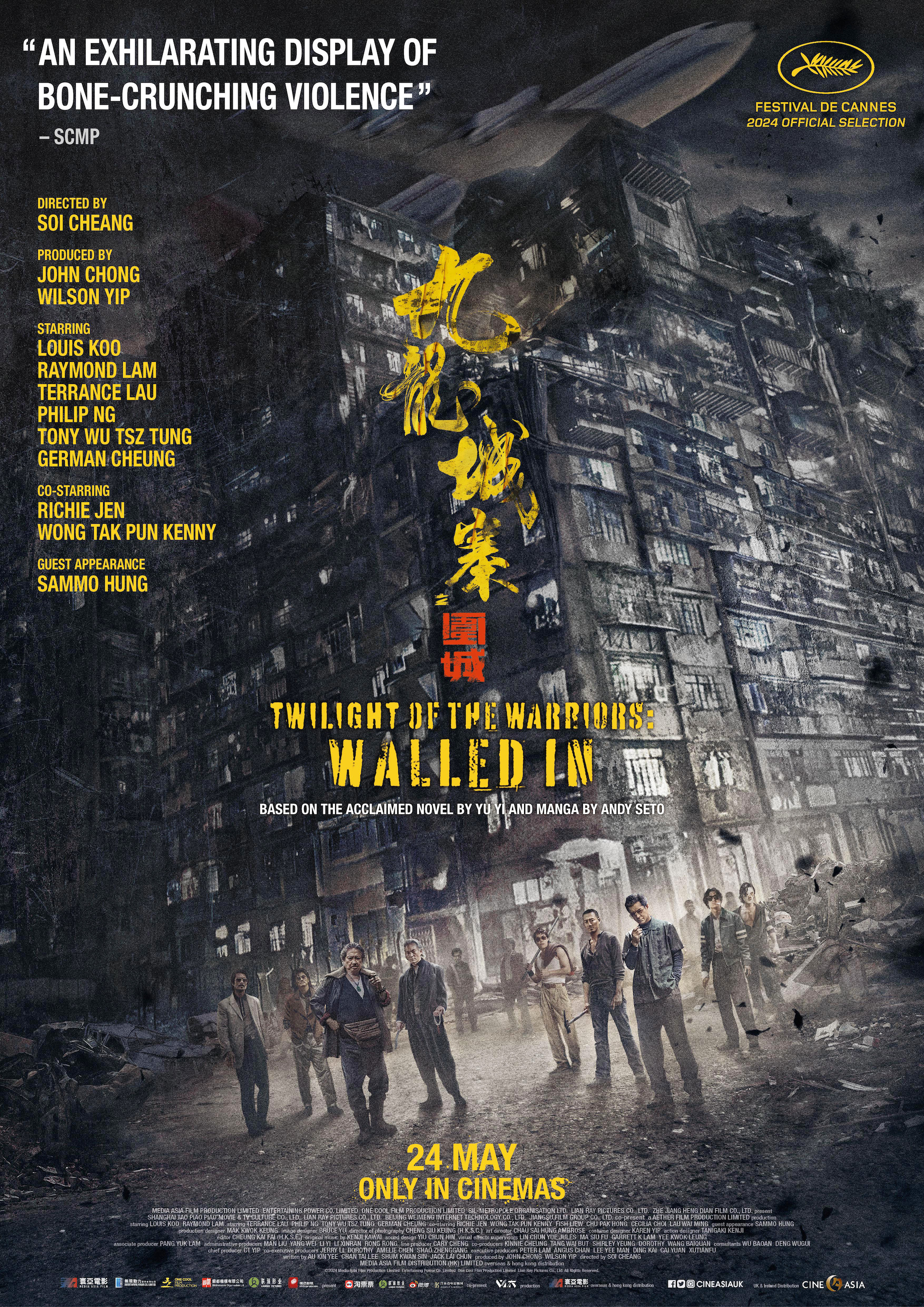
Twilight of the Warriors: Walled In (九龍城寨.圍城, Soi Cheang, 2024)

In Kowloon Walled City, you give help, you get help. Sometimes described as a colony within a colony, by the late 1980s the settlement was largely ungovernable and literal law unto itself save for the triads who maintained what little order there was. Yet in Soi Cheang’s Twilight of the Warriors: Walled In (九龍城寨.圍城) it’s a place of comfort and security, a well functioning community that as its leader Cyclone (Louis Koo Tin-lok) points out may be unpalatable for “normal” people but provides a point of refuge for the exiled and hopeless.

It’s difficult not to read it and Cyclone himself as embodiments of Hong Kong that is slowly disappearing. Dying of lung cancer, Cyclone is aligned with the fate of the walled city as someone whose time is running out, tired and world weary but still hanging on. In the opening sequence set 20 or so years before, we see Cyclone stand up to an apparent dictatorship and institute what seems to be a more egalitarian form of government though one obviously defined by violence. Nevertheless, when refugee Lok (Raymond Lam Wui Man) lands up there originally suspicious of Cyclone having been duped by local gangster Mr Big (Sammo Hung Kam-bo), he discovers him to be a stand up guy looking after those in his community and generally keeping the peace. Nevertheless, Lok’s arrival is the fatalistic catalyst for the opening of old wounds amid the free for all of the mid-80s society in which the Walled City, sure to be bulldozed, has just become a lucrative property investment.

Mr Big and his crazed henchman King represent this new order, amoral capitalistic consumerists who care little for the conventional rules of gangsterdom. Their bid to seize the Walled City has its obvious overtones as they seek to replace the (generally) peaceful egalitarian rule of Cyclone with something that appears much more authoritarian and ruthless. Believing himself to be a stateless orphan, Lok tries to keep his head down saving everything he can to buy a fake Hong Kong ID card which is also in its way a quest for identity not to mention a homeland and a sense of belonging. He finds all of these things, along with a surrogate father figure, in the Walled City only to have the new home he’s discovered for himself ripped out from under him because of a twist of fate. When he teams up with a trio of other young men who all owe their lives to Cyclone and the Walled City to attempt to take it back, it’s also an attempt to reclaim an older, more autonomous Hong Kong that exists outside of any kind of colonial control as evidenced by his final statement that no matter what happens some things don’t change.

This sensibility extends to the casting of the film which includes a series of Hong Kong legends including a notable appearance from the legendary Sammo Hung not to mention Louis Koo alongside a generation of younger stars such as Tony Wu and Terrance Lau Chun-him. Adapted from the manhua City of Darkness by Andy Seto, the film opens with a flashback to the original war for control of the Walled City that hints at deeper, extended backstories otherwise unexplored though equally mythologised by those who impart them to them Lok, a prodigal son and eventual inheritor of the City’s legacy. Even so, the comic book elements sometime distract from Soi Cheang’s otherwise evocative if hyperreal recreation of the Walled City slum or the political subtext that can be inferred in the presence of supernatural abilities such as those which seem to grant King near invincibility.

In any case, Soi Cheang looks back equally towards the history of heroic bloodshed in particular in his tale of brotherhood and loyalty in which the secondary antagonist is literally imprisoned by his own futile desire for a pointless vengeance on the descendent of a man who had wronged him but was already long dead himself. As he’d said, the future of the Walled City is in the hands of the younger generation who choose to end the cycle by setting him free rather than imprison themselves along with him while defending their home as well as they can. With some incredibly well designed action sequences including one that make its way onto a double-decker bus, Soi Cheang’s beautifully staged action thriller as its name suggests has a rather elegiac quality but also the spirit of resistance in its gentle advocation for the importance of supportive communities.


Twilight of the Warriors: Walled In is in UK cinemas from 24th May courtesy of CineAsia.

UK trailer (Traditional Chinese & English subtitles)

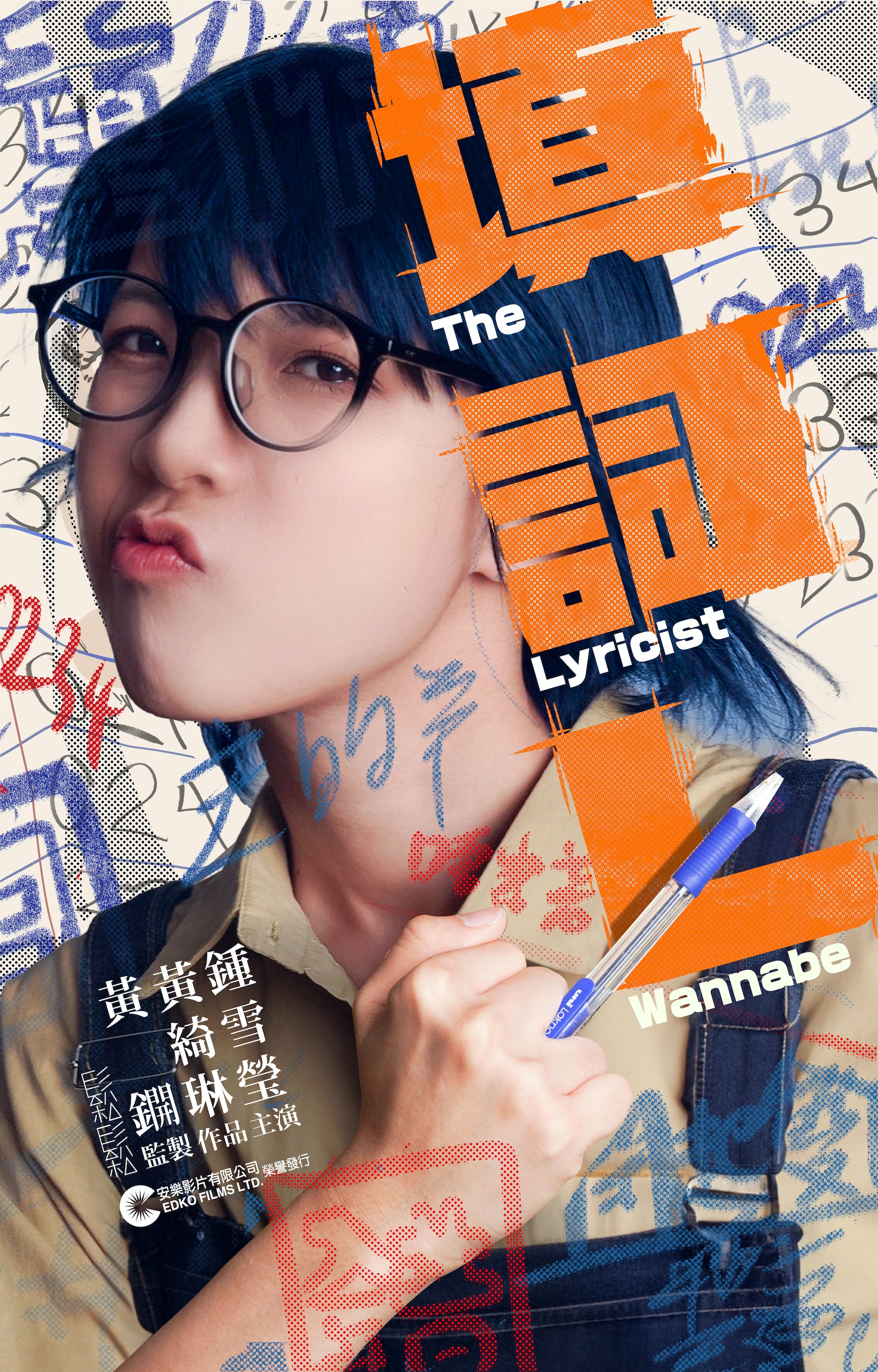
The Lyricist Wannabe (填詞L, Norris Wong, 2023)

Sometimes a dream might have come true only we never really noticed. In Norris Wong’s autobiographically inspired drama The Wannabe Lyricist (填詞L), a young woman battles her way towards becoming a Cantopop songwriter yet perhaps she already is one by virtue of her constant act of lyric writing. What she craves is the validation of having a song published, yet experiences setbacks at every step of the way that encourage her to doubt her talent or the right to continue chasing her dreams.

At a particularly low point after being taken on by a music producer to work with a spoilt influencer who’s getting studio time as some kind of favour, Sze (Chung Suet Ying) is told that her lyrics are no good and that after struggling so hard for six years perhaps she ought to take the hint and accept she isn’t suited to this line of work. It’s an act of intense cruelty, though one in part motivated by a well-meaning faux pas. In her excitement, she told the influencer she’d write lyrics for her album for free just to be published, but the palpable sense of desperation seems to have put the influencer off unable to have confidence in the work that Sze herself has devalued.

She encounters something similar during a partnership with an aspiring pop star who says he likes her lyrics but then drops the bombshell that he plans to sing in Mandarin because it’s a bigger audience. Ironically, on a trip to Taipei to sell his album she’s told that his accent is no good for the local market and while they like the song she worked on she later realises that they hired another lyricist for “real” release without even telling her. What’s more, tones don’t matter while singing in Mandarin whereas lyric writing in Cantonese is a painstaking process of trying to ensure that the tone of the word fits the melody. Aside from its political implications, not only does the pop star’s arbitrary decision to just sing it Mandarin ruin the lyrical flow she spent so long perfecting but entirely disrespects her work.

After deciding to take a break from trying to make it in music, Sze gets a job working at a ridesharing app startup where she’s roped in to create a jingle but once again her hopes are dashed when the business strays into a legal grey area and several of the drivers are arrested. While the app’s creator silently cries in his office, his female colleague ponders going somewhere else, “anywhere that doesn’t punish dreamers” which seems like a nod not only towards an oppressive capitalism that values only marketability but equally the increasingly oppressive atmosphere of the nation’s political realities. In a way this is what Sze ends up doing too, putting geographical distance between herself and the failure of her dreams by returning to the land which as the farmer says never lies to you, you reap what sow.

Yet for all her drive and perseverance there are others who view Sze’s obsession with her dreams as selfish and self-involved complaining that she rarely considers the feelings of others and neither notices nor cares if she may have hurt or inconvenienced them. She’s told that her lyrics are hollow because she lacks life experience but also is incapable of empathising and cannot see anything outside of her quest to become a lyricist. She watches other people move on, her brother getting married, friends enjoying career success etc while she’s still stuck looking for her big break only for something to go wrong just as everything was about to go right.

Wong signals the playful qualities of her fantasies though use of onscreen illustrations and even a karaoke-style video along with the nostalgic quality of the early 2000s setting of Sze’s schooldays with its MSN messenger and ICQ. Sze may be “dragged along by the melody” in more ways than one as she tries to make peace with her dreams and her future and find some way of living in harmony with the rhythms of the world around her but eventually comes to realise that she was a lyricist all along no matter what anyone else might have tried to convince her she was.


The Lyricist Wannabe screened as part of this year’s Osaka Asian Film Festival and opens in UK cinemas 15th March courtesy of Cine Asia.

Original trailer (Traditional Chinese / English subtitles)

Table for Six 2 (飯戲攻心2, Sunny Chan Wing-Sun, 2024)

“It’s okay to be screwed, we’ll unscrew you later,” youngest brother Lung (Peter Chan Charm Man) comforts his dejected brother in an accidental advocation of what means to be a family in Sunny Chan’s followup to the phenomenally successful comedy  Table for Six. Like the previous film and in true Lunar New Year fashion, Table For Six 2 (飯戲攻心2) explores the concept of family in a wider sense along with contemporary attitudes to marriage and traditional gender roles.

Even so, it has to be said this table is now uneven as oldest brother Steve has literally run away from his romantic dilemmas taking off for Africa leaving new girlfriend Miaow (Lin Min-Chen) behind claiming she’s too far out of his league and it’s not fair of him to waste her youth. Ironically enough, Bernard (Louis Cheung) has now started a wedding business helping people pull off extravagant public proposals such as the sort of fake one he prepares for Monica (Stephy Tang Lai-yan) as a publicity stunt featuring him dancing in a 90s-style music video. As part of the campaign, they’ve set up Lung and Miaow as a fake couple hoping to build a following for their romance online much to unexpected chagrin of Josephine (Ivana Wong) who has begun to embrace her dreams by becoming a well-known quirky chef who makes food disguised as other food. Though they had agreed to separate so the could both follow three dreams at the end of the previous film, Josephine suddenly proposes leading Bernard to put on an extravagant wedding as promotion for his business. 

In a way, Bernard’s company symbolises the performative qualities of marriage as couples put themselves through a stressful and expensive ritual more out of obligation than real desire. When Lung is prevented from reaching the ceremony on time, Bernard ends up impersonating him in a full body costume making plain that the spectacle is more for show than sentiment and it could really be anyone up there simply fulfilling a role. In fact, no one even checks the certificates were properly signed. Then again, just as in Josephine’s cooking sometimes the “fake” and can actually contain the “real” just in a different way than expected. She may say that once a relationship has cooled the spark can’t be regained, but that doesn’t necessarily mean a new, different, spark couldn’t be found. 

Perhaps that’s what happened for Bernard and Monica who’ve now overcome the awkwardness of Monica having been in a longterm relationship with oldest brother Steve. Ironically enough, they’d more or less decided not to get married only to be blindsided by their reactions to the “fake” proposal but as it turns out more because of the emotional baggage from their parents’ failed relationships that have left them too afraid to get married. Monica is still traumatised by her father’s extra marital affair which resulted in a half-brother she’s never met but has since become a Cantopop star, while Bernard still has bad memories of being treated as a “red-headed” child and like Steve is preoccupied with a desire to keep the family together while worried that he isn’t really up to it. 

The lesson Bernard learns is that family is a burden that’s carried together so he didn’t need to save it on his own and that it’s alright to mess things up because his family will be there to take care of him. Miaow meanwhile is left in the same place as Steve had been in the first film, wondering how long she should wait for love or if Steve is ever coming back, trying to decide whether to accept a promising job offer in Japan or stay in Hong Kong. Part of her reluctance to move on is that she’s become wedded to the family and fears losing her place within it but as Monica says her status wasn’t dependent on blood or relationships and that she’s already been accepted into the family just for being herself. 

Then again, families can also be annoying as Bernard remembers after inviting his gangsterish uncles to one of the weddings only for them to muscle in as a major sponsor for another own insisting on designs the dress themselves complete with a par of shark fin wings to promote their business none of which meshes well with Monica’s passion for conservation. In any case, as Monica reflects family means you can embarrass yourselves together so maybe wearing a stupid dress for a few minutes isn’t such a big deal. Heartfelt and zany, Chan’s farcical drama shifts past the performative aspects of marriage and family to what lies beneath which, like Josephine’s cooking, may not always be what it first appears.


Table for Six 2 is in UK cinemas from 9th February courtesy of CineAsia.

UK trailer (English subtitles)

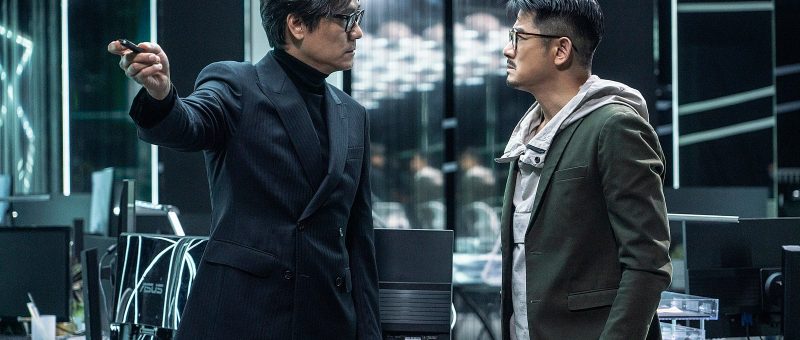
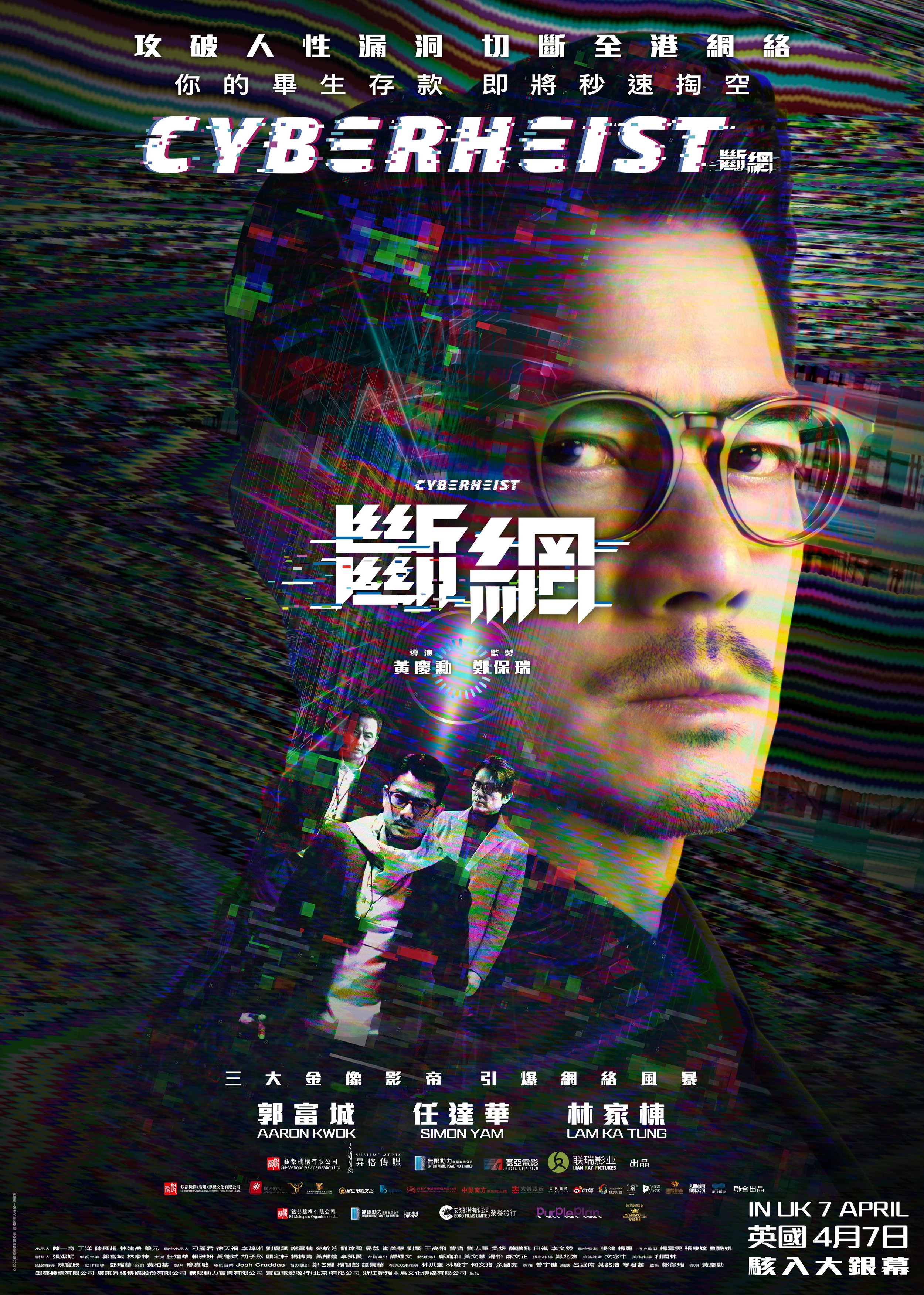
Cyber Heist (斷網, Wong Hing-fan, 2023)

A cyber security expert is forced on the run after being framed for money laundering while trying to engineer a brighter future for his seriously ill little girl in Wong Hing-fan’s high octane techno thriller, Cyber Heist (斷網). In true B-movie fashion, the film’s visualisation of the digital world has a distinctly retro aesthetic while the plot may sometimes lack internal consistency, but what the film does have is a series of tense action sequences many featuring the hero desperately running around carrying the super secret information in a tiny robot doll. 

Chun (Aaron Kwok Fu-shing) is cyber security expert working for a top Hong Kong firm which provides technical services for local banks. The problem is that they keep getting hacked as criminal gangs take down banking services to run a complex money laundering operation. As it turns out, Chun was once a cyber criminal who spent time in prison for selling viruses on the dark web but has since reformed after becoming a father. His little girl, Bowie, is suffering from a serious heart condition and is currently on the transplant list but dreams of one day becoming an astronaut. 

It’s Bowie who provides the moral centre of the film in her constant refrain of “What are you doing, Daddy?” which Chun seems to hear every time he’s thinking of doing something nefarious. Clearly possessed of immense power in his technical knowhow Chun battles with himself as to how to use it responsibily. When Bowie is turned down for a place at an elite school, he considers simply hacking into their database and changing her records but thinks better of it before getting her a place the old fashioned way, by agreeing to make a sizeable “donation”. It doesn’t really seem like that’s a lot better in the grand scheme of things but does perhaps hint at the low level of corruption that has already seeped into everyday life. In any case, it’s Chun’s desperation for the money after being turned down for a loan by his boss, Chan (Gordon Lam Ka-tung ), that makes him vulnerable to intrigue when previous patsy Frankie (Kenny Wong Tak-bun) is killed in a mysterious “accident” after laundering more money than he was supposed to and then depositing the excess in his regular bank account.

Chun agrees to help the authorities in the form of cyber crimes inspector Suen Ban (Simon Yam Tat-wah) but soon finds himself on the run when ultra corrupt boss Chan kidnaps his daughter. Chan is also trying to protect his younger brother who was left with brain damage after being beaten by thugs working for shady gangster Mr Pong (Andy Kwong Ting-Wo) and is clearly not above reprehensible behaviour. It has to be said that the film’s conception of the way online infrastructure works has a distinctly B-movie quality. At one point, Chun’s experimental AI virus ends up accidentally destroying the entirety of the internet yet nothing really happens except for people becoming very confused by their now useless phones, and then Chun is somehow able to make everything OK again by simply rebooting it. 

Likewise, the film’s visualisation of the cyber world is heavily influenced by mid-90s William Gibson as a kind of virtual reality metaverse where hackers walk around in cyberspace while wearing creepy clear plastic masks. The space occupied by the money launderers is verdant and green, a beautiful cyber forest, while that of the dark web is pure grunge, a space of urban decay filled with dank and half finished buildings and peopled by edgy guys in hoodies wearing hacker chic. Even so, there’s a kind of charm in the retro aesthetics of ‘90s futurism along with the concurrent suggestion that the offline world is inescapably duplicitous and true techno guys are the only ones to be trusted. 

In any case, the money laundering scam is a kind of MacGuffin as Chun becomes increasingly irate while squaring off against his opposite number, Chan, and trying to prove himself as a responsible husband and father by saving his little girl and catching the bad guy not to mention clearing his name by helping the police. An old-fashioned man on the run thriller, Wong’s breathless camerawork follows Chun all over Hong Kong as he fights for his life and family against those who value nothing more than money while desperately trying to live up to his daughter’s expectations of what a good man should be in a world that online or off is already far from fair. 


Cyber Heist was released in UK cinemas courtesy of Magnum Films.

Original trailer (Traditional Chinese / English subtitles)

Elisa’s Day (遺愛, Alan Fung Chi-hang, 2021)

The legacy of abandonment visits itself on a trio of displaced Hong Kongers in Alan Fung Chi-hang’s melancholy crime drama, Elisa’s Day (遺愛). Set over 20 years from the Handover to the contemporary era, Fung draws inspiration from a real life crime while casting his ambivalent policeman, himself an orphan, as an ironic hero whose single act of compassion ends in a tragedy for which he feels he may not even have the right to atone. 

Fung begins, however, in the present day as Inspector Fai (Ronald Cheng Chung-Kei) prepares to collect his daughter who is shortly to be released from prison. Flashing back, we’re introduced to Daisy (Carol To Hei-Ling), a pale and distant young woman picked up for suspected drug trafficking while momentarily captivated by a familiar song and carrying a bunch of roses. From there we head further back, all the way to 1996 when 15-year-old Elisa (Hanna Chan Hon-Na) discovers she is pregnant by her bad boy boyfriend Man-Wai (Tony Wu Tsz-Tung). Each abandoned by their parents, the pair decide to run away together and find solace in a family of three, but as expected economic impossibility disrupts their search for happiness. Man-Wai joins the triads and eventually agrees to become a hitman, temporarily separated from Elisa and their daughter while lying low in Thailand. A then Sergeant Fai remains hot on his trail, keeping tabs on Elisa who unwittingly brings her young baby to the cinema where his adoptive mother Auntie Bo (Anna Ng Yuen-Yee) runs the box office, the pair of them becoming surrogate parents to the lonely little girl while Elisa is forced to turn to sex work when Man-Wai’s triad bosses fail to uphold their end of the bargain. 

“Everyone’s gone leaving only me behind” Elisa laments, learning that her estranged mother plans to move to the UK with her second family abandoning her once again in another, more complete sense. Trapped behind in a rundown area of the city, she finds herself caught between conflicting realities. Man-Wai pledges to stay with her forever but is soon gone eventually returning with promises of taking her to Thailand their dream of a better life symbolised by the red roses he brings with him that he claims reminded him of her. Man-Wai meanwhile is constantly told by his triad bosses that the future lies in Mainland China, a place he is originally so reluctant to travel that that he thinks killing is a better option only to later submit himself once again leaving Elisa alone in Hong Kong with no money and only a dwindling hope of ever achieving the familial bliss she longed for when she decided to run away with Man-Wai. 

For his part, Fai is also an orphan though his fate his was different in that he was found by Auntie Bo who gave him a loving home. Even so he has his share of guilt, feeling responsible for Auntie Bo’s spinsterhood fearing that she never married or had children of her own because taking him in made it impossible in the more conservative Hong Kong of 70s and 80s. Ironically enough they become a surrogate family for the infant Daisy, but it’s Fai’s sense of empathy that eventually provokes tragedy in his decision not to arrest Man-Wai on his return seeing how much he loves his family and wanting to give him a chance to put things right rather than take a little girl’s father away from her. Unable to forgive himself, he abandons his responsibilities only to be reminded of them later finally ending the cycle by being willing to accept the responsibility which has been left for him. 

Transitioning through the Hong Kong Handover, Fung evokes a sense of continual displacement, Elisa’s life destroyed firstly through abandonment and then through conflicted desires torn between a potential Thailand paradise and Mainland reality while longing only for a stable home(land). Daisy is offered something similar, her drug trafficker boyfriend to promising to take her to Thailand on their next run, the drugs ironically concealed in a bouquet of red roses just like those her father once brought for her mother. Her only salvation lies in the arms of Fai, a literal authority figure, reassuming his paternal responsibility and thereby restoring a sense of familial and political stability. Told in fragmentary, non-linear fashion, Fung’s melancholy tale of the legacies of abandonment and an innocent love eroded by economic and social realities eventually finds hope in familial repair and the remaking of a home in self-defined family.


Original trailer (English / Traditional Chinese subtitles)

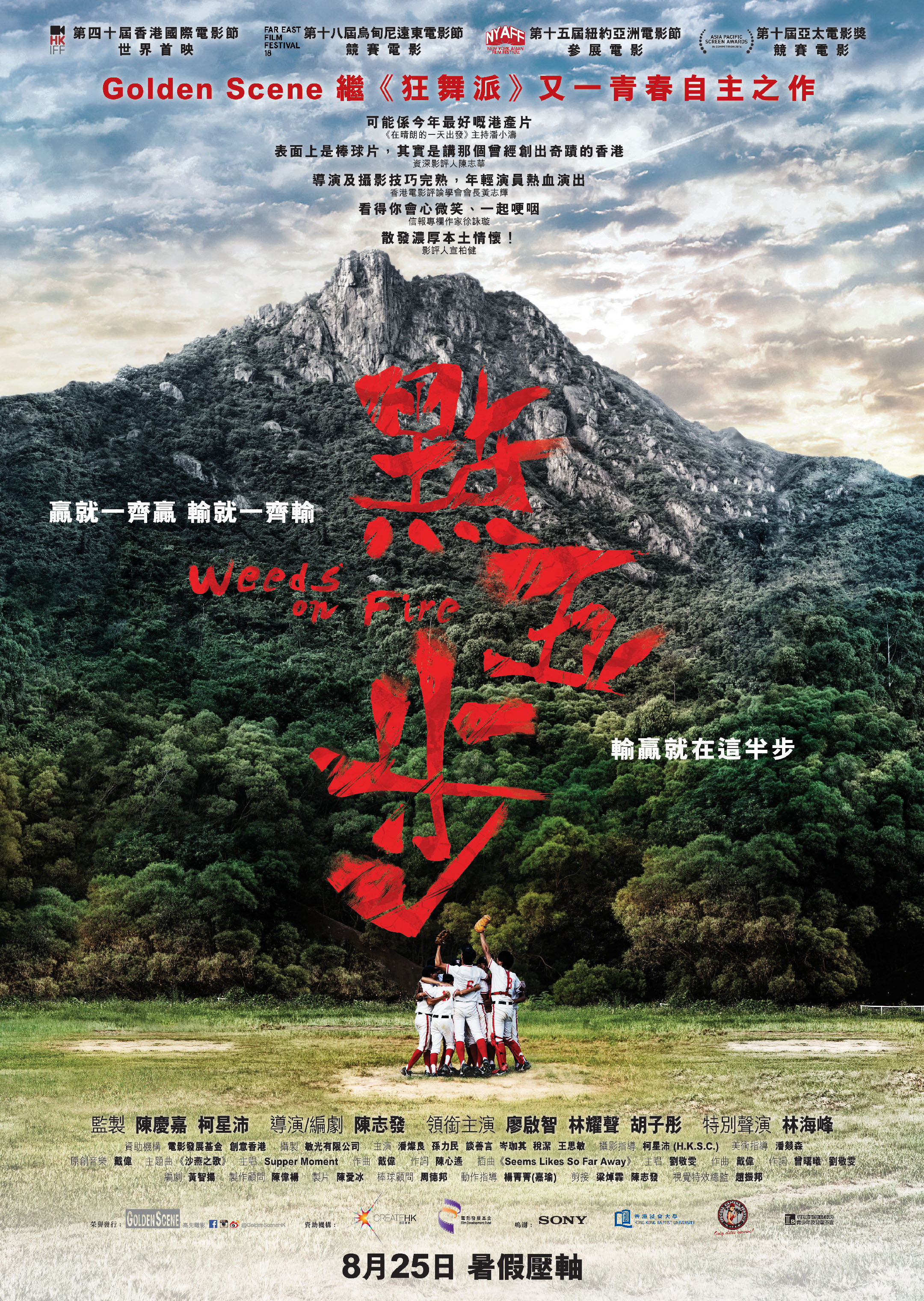
Weeds on Fire (點五步, Steve Chan Chi-Fat, 2016)

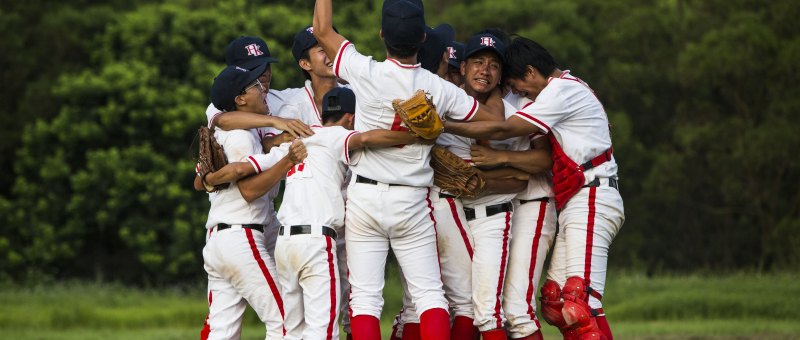
“Even though disappointed, do not lose hope” reads a piece of graffiti in the closing moments of Steve Chan Chi-fat’s nostalgic coming-of-age drama Weeds on Fire (點五步). Though touted as a baseball movie, as incongruous as that may sound given that the sport is a niche interest in contemporary Hong Kong, Chan’s strangely hopeful if quietly melancholy tale of ‘80s Sha Tin is bookended by scenes of the present day city in the midst of the Umbrella Movement protests the story the hero wants to offer seemingly intended for an audience of dejected youngsters as confused and disappointed as he once was in order to encourage them that what’s important isn’t winning or losing but staying the course and gaining the confidence to take the first step. 

Now in his mid-40s, Lung (Lam Yiu-sing) casts his mind back to the Hong Kong of 1984 when he lived on a rundown council estate in Sha Tin and attended a high school with a less than stellar academic record. A shy and nerdy boy, he was often bullied but always had childhood friend Wai (Tony Wu Tsz-tung), physically imposing and with a confident swagger, at his back. When the city comes up with additional funding for schools to use in the promotion of sport their enterprising headmaster Lu Kwong-fai (Liu Kai-chi) hatches on the idea of starting the region’s very first local high school baseball team, recruiting both Wai and Lung in the hope of teaching them teamwork and discipline. Nevertheless, being teammates begins to place a strain on their friendship and it becomes clear that the boys are destined for different paths. Wai quits the team in a huff and leaves school, mooching round in pool bars and hanging out with triads while Lung steps up to the plate but is troubled by the loss of his friendship and the fracturing relationship between his unhappily married parents. 

Chan somewhat unsubtly ties Lung’s personal development to that of Hong Kong as he finds himself coming of age in era of anxiety. The world is literally changing around him, 1984 being as says the year that the redevelopment of Sha Tin began in earnest while it also marked the signing of the Sino-British Declaration paving the way for the transfer of power in the 1997 Handover. A young man, Lung wants to “change” himself in that he longs for the confidence to ask out a young woman he’s developed a crush on but is too shy and disappointed in himself for doing nothing when witnessing her being harassed by a drunken creep in the lift of the apartment block where they both live. Yet in other ways change frightens him and really he wants everything to stay the same believing that saying nothing will maintain the status quo only to realise that there are situations over which he has no real control. 

His headmaster and coach of the baseball team Lu admits that he set Wai and Lung against each other in order to encourage him to come out from his friend’s shadow embracing his own identity and discovering a sense of self-confidence. Yet Lung continues to struggle, a little lost unable to find clear direction in his life while everything changes around him occasionally consumed by a sense of despair as perhaps are the young protestors in believing their movement has failed. In baseball what he realises that it isn’t about winning or losing but having the confidence to step up to the plate, subtly telling the protestors to hang in there because there’s still time to turn this around. “I never said we had to win”, inspirational coach Lu reminds the boys, “but I did say never give up!”.

Loosely based on the real life story of the Shatin Martins though as the closing credit reel reveals the original team were primary school children rather than high schoolers, Chan shifts away from sporting drama towards the more familiar youth movie metaphor of two former friends heading in different directions, the good boy knuckling down while the “bad” becomes a victim of his own hotheaded arrogance even if managing to repair his fractured friendship with Lung before tragedy strikes. Filled with memories of Handover anxiety and a healthy dose of ‘80s nostalgia, the film’s incongruous jauntiness is perhaps at odds with the gravity of the tale though that is perhaps itself part of the message the older Lung has for the young. “This is the city where I grew up. It’s become increasingly unfamiliar” he laments striding through streets filled with tents occupied by student protestors, sympathising with their cause while offering them a note of melancholy hope in his own, sometimes painful, tale of finding his feet in a changing Hong Kong. 


Weeds on Fire streams in Poland until Nov. 29 as part of the 15th Five Flavours Film Festival.

Original trailer (English subtitles)
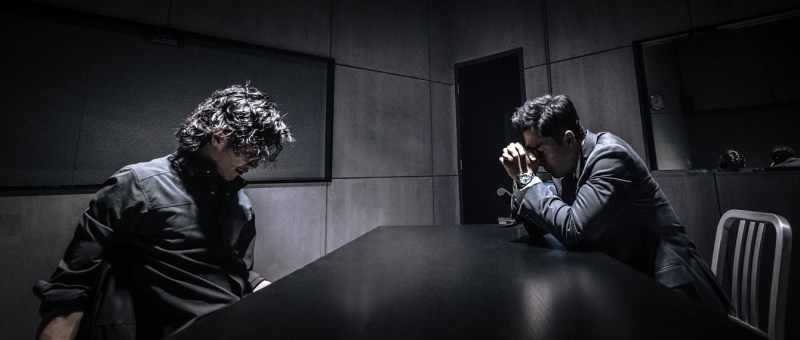
Zero to Hero (媽媽的神奇小子 , Jimmy Wan Chi-Man, 2021)

“No one treats you like an ordinary person, so become an extraordinary one” the heroic mother at the centre of Wan Chi-Man’s Zero to Hero (媽媽的神奇小子) tells her young son as he struggles to find a place for himself as a disabled person in an unaccommodating society. Inspired by the real life story of multi-medal winning Paralympian So Wa Wai (Leung Chung-hang), Wan’s inspirational tale is as much about maternal determination as it is about overcoming preconceived limits but also makes a series of subtle points about how the contemporary society treats disability. 

Wan opens in Guangzhou in 1981 as Wai’s mother Mrs. So (Sandra Ng) frantically rushes him to hospital only to be told that he has jaundice which has resulted in cerebral palsy meaning that he will likely never be able to walk or feed himself. The doctor double checks if the family would like to proceed with treatment given this information to which they emphatically reply they would. A few years later, the family has migrated to Hong Kong and Mrs. So is forced to take Wai with her to her job in a laundry, eventually finding herself at her wits end after his hearing aid goes missing placing her son on the shoot and shouting at him to walk only to shut the belt down just before he reaches the edge. At this point, Wai manages to pull himself onto his feet, proving the doctors wrong and teaching himself to walk unassisted. Witnessing an older Wai run away from neighbourhood bullies gives Mrs. So an idea and she soon tries to enrol him in a club for athletes with physical disabilities only to be turned away because of his age but his decision to join in anyway gets him noticed by former Paralympian relay runner Coach Fong (Louis Cheung Kai-chung) who decides to take him on and train him up. 

In contrast to other sporting biopics, Wai’s path to Olympic success is more or less drama free even as he strives to improve his athletic abilities and overcome the mild resentment among some of his teammates in needing to change their style and position in order to accommodate him. Wan does however hint at the difficulties of living as a disabled person in late 20th century Hong Kong, Fong explaining to Mrs So that the Paralympics aren’t aired on Hong Kong TV and disabled athletes earn only 10% of that earned by the able-bodied. Wai does receive a small subsidy, but the Sos are otherwise forced to scrimp and save so that Wai can continue running, a situation that becomes impossible after his father is injured in an accident and left unable to work. 

It’s also clear that Mrs. So’s all encompassing love for her son causes occasional tension in the family in leaving her younger, able-bodied son understandably feeling neglected while everyone fixates on Wai’s sporting success. Wai’s brother is perfectly aware that he was born in part as a safety net for Wai so that someone would be around to look after him once the Sos have passed away and cannot at times help resenting him. Yet the family unit remains generally united until the older Wai’s prideful resentment of what he sees as his mother’s micro-managing begins to undermine their relationship. “I just want to run” Wai explains, fed up with the series of commercial opportunities his mother has agreed to on his behalf in an attempt to keep him financially secure in the future. When a director for an advert tells him he’s speaking “too well” and asks him to sound more disabled Wai has had enough, leading to a confrontation that ends both in romantic heartbreak and a falling out between mother and son. 

“Catching up is the story of my life” Wai reminds Fong, emphasising the film’s inspirational message that sometimes people have further to go but get there in the end while also signalling the various ways lack of accommodation for his disabilities has continued to hold him back outside of his sporting success. A heartwarming tale of an incredible mother-son bond, Zero to Hero insists that the mutual determination to succeed turned them both into heroes allowing Wai to achieve his full potential as a Paralympian bringing gold and glory back home in defiance of those who told him he’d never be anything. 


Zero to Hero screens Aug. 21 as part of this year’s New York Asian Film Festival.

Original trailer (Traditional Chinese / English subtitles)

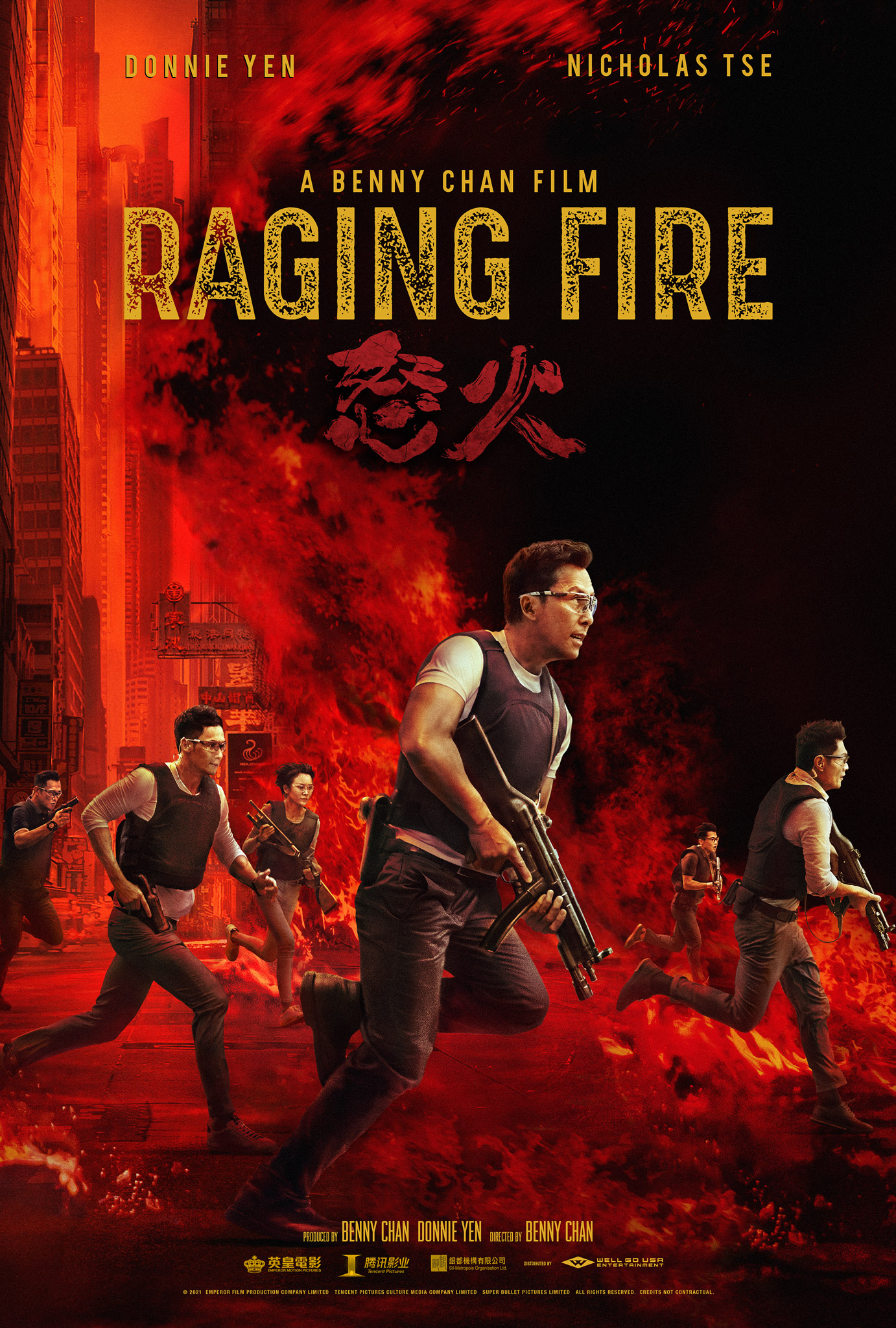
Raging Fire (怒火, Benny Chan, 2021)

“If you had chased Coke that day, would our destinies have been reversed?” a cop turned villain asks of his righteous colleague, but his friend has no answer for him. The final film from director Benny Chan who sadly passed away last year after being diagnosed with cancer while filming, Raging Fire (怒火) pits a disgruntled police officer wronged by the system against an incorruptible detective but suggests that the real villain is an increasingly corrupt society in which the rich and powerful have a direct line to justice. 

As the film opens, noble officer Cheung (Donnie Yen) is racing towards some kind of altercation in a shipyard but later wakes up next to his much younger and very pregnant wife (Qin Lan). After a years long operation, his team is about to take out a petty criminal involved with a previous investigation which resulted in fellow officers getting sent to prison for excessive use of force. After refusing to to help a wealthy businessman make his son’s drunken car accident go away, Cheung is taken off the case while the raid turns out to have been a trap leaving eight of his friends dead and many more injured. Through his investigations, Cheung begins to realise that his former colleague Ngo (Nicholas Tse), recently released from prison, may be responsible for the deaths of his friends in pursuing a vigilante revenge against the police force he feels betrayed him. 

“This society doesn’t reward good men” Ngo later insists, though his total and relatively sudden transformation from earnest cop to bloodthirsty psychopathic killer seems something of a stretch. Cheung aside, the Hong Kong police force is depicted as infinitely corrupt and working at the behest of the rich and powerful to further agendas not always in the interests of justice. The case which caused so much trouble related to the kidnapping of a prominent financier and the secretary he was canoodling with at the time, the financier’s wife having obeyed the kidnappers’ instructions not to call the police by ringing a government contact instead which is why the operation is covert. Ngo and his team were told to do whatever it took to extract information from a suspect who later wound up dead but were hung out to dry by the superior officer who ordered it. Not unreasonably they see themselves as victims of a corrupt system but care little who might get in the way of their vicious bid for revenge. 

For his part, Chueng is also a thorn in the side of his colleagues because of his refusal to play along with the base level corruption all around him. Dragged to the meeting with the businessman by nervous colleague Beau (Patrick Tam), Cheung sips tea rather than the wine everyone else is drinking and eventually storms out making a point of paying for his exorbitantly priced beverage while refusing to be complicit with systemic corruption. So upright is he that he asks a passing driver if he has insurance before borrowing his car to chase down Ngo and when he himself is accused of breaking protocol the entire squad shows up to petition the disciplinary panel on his behalf. Ngo asks him if the situation would have been reversed had it been Cheung who had questioned the suspect that night, but of course it wouldn’t because Cheung would never have beaten a suspect to death in the first place. 

Chan places this debate front and centre by setting the final showdown in a church currently undergoing renovation, Ngo seemingly judged for his moral transgressions while Cheung meditates on the man he used to be in a bromance montage that laments the tragedy of Ngo’s fall from grace. The battle of wits between the two men, Ngo of course uniquely positioned to game the system he rails against, ends only in futility while the system which created him remains unchanged. Chan shoots with characteristic visual flare sending his compromised cops through a golden hellscape of the contemporary city veering between beautifully choreographed, high octane action sequences including a lengthy car chase through a highly populated area, and procedural thrills tinged with ambivalent social commentary in which justice itself has become commodified while police officers exceed their authority and bow to the rich and powerful. A throwback to classic Hong Kong action, Chan’s final film is a fitting finale for the career of a director taken far too soon. 


Raging Fire screened as part of this year’s New York Asian Film Festival and will be released in US cinemas on Aug, 13 courtesy of Well Go USA.

International trailer (English subtitles)
I Still Remember (二次人生, Lik Ho, 2021)

“I didn’t want to be left alone” admits the hero of Lik Ho’s sporting drama I Still Remember (二次人生) as he watches others his age pull relentlessly ahead of him while he languishes behind drained of all energy and sense of forward motion. Yet reuniting with an equally disillusioned father figure and a young woman battling a different sort of malaise, he eventually comes to realise that he’s never really been “alone” at all but has perhaps suffered a kind of self abandonment, standing on the sidelines cheering for everyone else but failing to cheer for himself or realise that others are in fact attempting to cheer for him only he couldn’t hear them. 

Now around 30, Lee Chi-hang (Tony Wu Tsz-Tung) has an unsatisfying job in real estate working for his childhood best friend (Johnny Hui) which is just as well because he’s regarded by many as the office dead weight and most of his colleagues are running bets on when he’ll eventually be fired. Raised by a single mother (Michelle Lo Mik-Suet), his father having passed away before he was born, Chi-hang was brought up to believe an “ordinary life” was good enough but also feels guilty that he hasn’t made good on his mother’s hopes for him and despite having attended university has no real sense of ambition in life. “How can you be so useless?” his exasperated girlfriend (Sofiee Ng Hoi Yan) eventually asks him, abruptly exiting his life as she leaves to pursue her own personal growth and fulfilment tired of waiting for Chi-hang to step up. 

Attending a reunion for his primary school class brings him back into contact with Mr. Wong (Patrick Tam Yiu-Man), his former PE teacher who had also been something of a surrogate father as he and his wife often looked after him while his mother worked. Mr. Wong it seems has troubles of his own in that his wife Wai-Ying (Isabel Chan Yat-Ning) is suffering with a longterm illness which is why he’s given up teaching and opened a sporting goods store which is itself floundering. Bamboozled into taking part in Mr. Wong’s camping trip, Chi-hang finds himself enlisted to help mentor a young woman, Tin-sum (Toby Choi Yu-Tung), who wants to lose weight and triumph in a 5k race in the hope of winning a trip to Japan to meet her idol, a handsome Japanese pop star (Alston Li Ka-Ho). 

Unlike Chi-hang, Tin-sum is not “alone” in that she appears to have a pair of extremely loving and supportive parents who let her know that whatever happens in the race they’re proud of her all the same. Yet she also finds herself on the receiving end of social prejudice, rejected by the mean girls in her idol fan club who arbitrarily introduce a weight limit for race entrants in order to “preserve the image of Hong Kong” while the competition also provokes a falling out with her best friend (Jocelyn Choi Zung Sze) who ends up siding with the bullies. Chi-hang meanwhile admits that he doesn’t really take his mentoring duties very seriously, too busy “running away” from his own problems to be much use in tackling anyone else’s.  

Yet through picking up the pace, each of the beleaguered runners begins to find direction in the finish line. Rediscovering the sense of joy and possibility he had as a small boy in primary school, Chi-hang realises that he’s never been as alone as he thought he was, all of the people in his life have been running at his side all along rooting for his success. While Tin-sum gains a new sense of self-confidence in finishing out her 5k without being pressured to lose weight or give up her appetite for life, Mr. Wong finds a sense of relief in being able to pass on the baton to a surrogate son in the now more self-assured Chi-hang finally figuring himself out and taking control over his future. Atmospheric shots of the nighttime city filled with a sense of melancholy alienation give way to poignant flashbacks of cherry blossom in bloom outside the primary school where Mr & Mrs Wong first met and bonded with little Chi-hang, while he realises that he does indeed “still remember” the sense of security, positivity, and energy he had as a child as he steps up the pace building the “ordinary life” his mother had envisaged for him. 


I Still Remember streams in the UK 31st March to 6th April as part of Focus Hong Kong. Readers in Chicago will also have the opportunity to catch it at Lincoln Yards Drive-In on April 17 as part of Asian Pop-Up Cinema’s Season 12.

Clip (English subtitles)