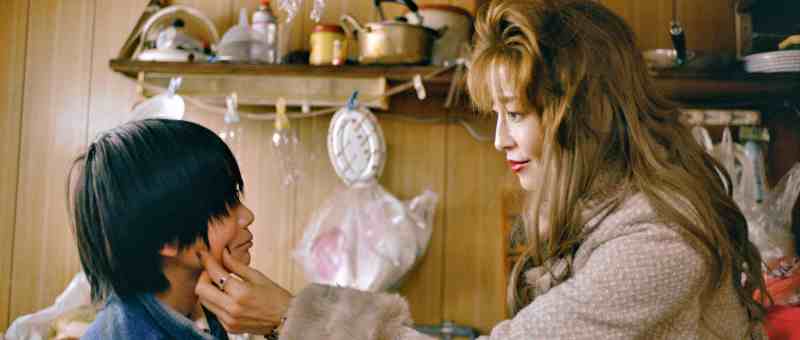
At 11-years old, Daichi (Anji Kato / Tsukasa Enomoto / Takumi Kitamura as a child, teen, and adult respectively) is mostly living alone as his bar hostess mother is absent for days at a time leaving him with only a small amount of money to feed himself until the next time she returns. Rendered mute by the childhood trauma of his father’s domestic violence, he lives an almost entirely isolated experience, shying away from contact with adults and no longer attending school. Given his circumstances, he has become used to shoplifting and pilfering from neighbours, but even this is perhaps partly born of his desire to avoid potentially dangerous interactions.
Unlike similar Japanese dramas, Takuya Uchiyama’s semi-autobiographical film Numb (しびれ, Shibire) is less interested in the ways that a boy like Daichi has been failed by society than his subjective experience. It is, however, notable how easy it seems to have been for him to fall through the cracks. No one ever seems to get in contact to ask why he hasn’t been in school nor does anyone appear to investigate his living standards. The landlord of his building takes advantage of the situation to extract sexual favours from his mother, Aki (Rie Miyazawa), who grants them in order to ensure they can stay in their home, a prefab shed on the roof where the water is often cut off because she hasn’t paid the bill. Though just a child, Daichi drags a canister that would normally hold kerosene down to the river, fills it, then has to carry it home and up the stairs to the roof all alone. He washes his mother’s clothes and dries them in the stairwell. Despite having no money, he spends his last coins on beer and cigarettes from a vending machine for her.
Yet at the same time, his mother’s circumstances are also caused by her trauma of suffering domestic abuse at the hands of his father (Masatoshi Nagase) who seems to have at point abandoned them. Working as a bar hostess necessarily means she is often absent at night, though her increasing dependency on drugs and alcohol along with their precarious living situation forces her into acts of casual sex work. To that extent, the course of her life is directly contrasted with that of her older sister with whom the pair later move in. Tomoko has become a Jehovah’s Witness and religious obsessive who does not exactly treat the pair with kindness or compassion. A line of red tape divides the apartment with Aki and Daichi occupying the living area but forbidden from crossing the threshold into Tomoko’s religious sanctuary. She appears judgemental of her sister and is at least party to her signing a Do Not Resuscitate order, though she insists that has nothing to do with her religious beliefs and was entirely Aki’s decision. Nevertheless, she coldly tells Daichi to get out of town once his mother dies and implies she finds his existence an embarrassment.
Denied any kind of emotional connection with parental figures, Daichi’s only source of positive input comes from a Russian labourer who discourages him from hanging around near the construction site which he says is dangerous due to the high levels of Russian drug users. Ivan gives him fatherly advice and comfort despite their apparently only meeting twice, but at the same time it’s clear that by virtue of his presence in Japan he has at least physically been absent from the life of his son back in Russia. Nevertheless, he presents an image of positive paternity to counter that from each of the men Aki becomes involved with who are violent towards her and tell Daichi that they’ve always hated his eyes, presumably because they are filled with contempt and remind them of what utter failures they have become.
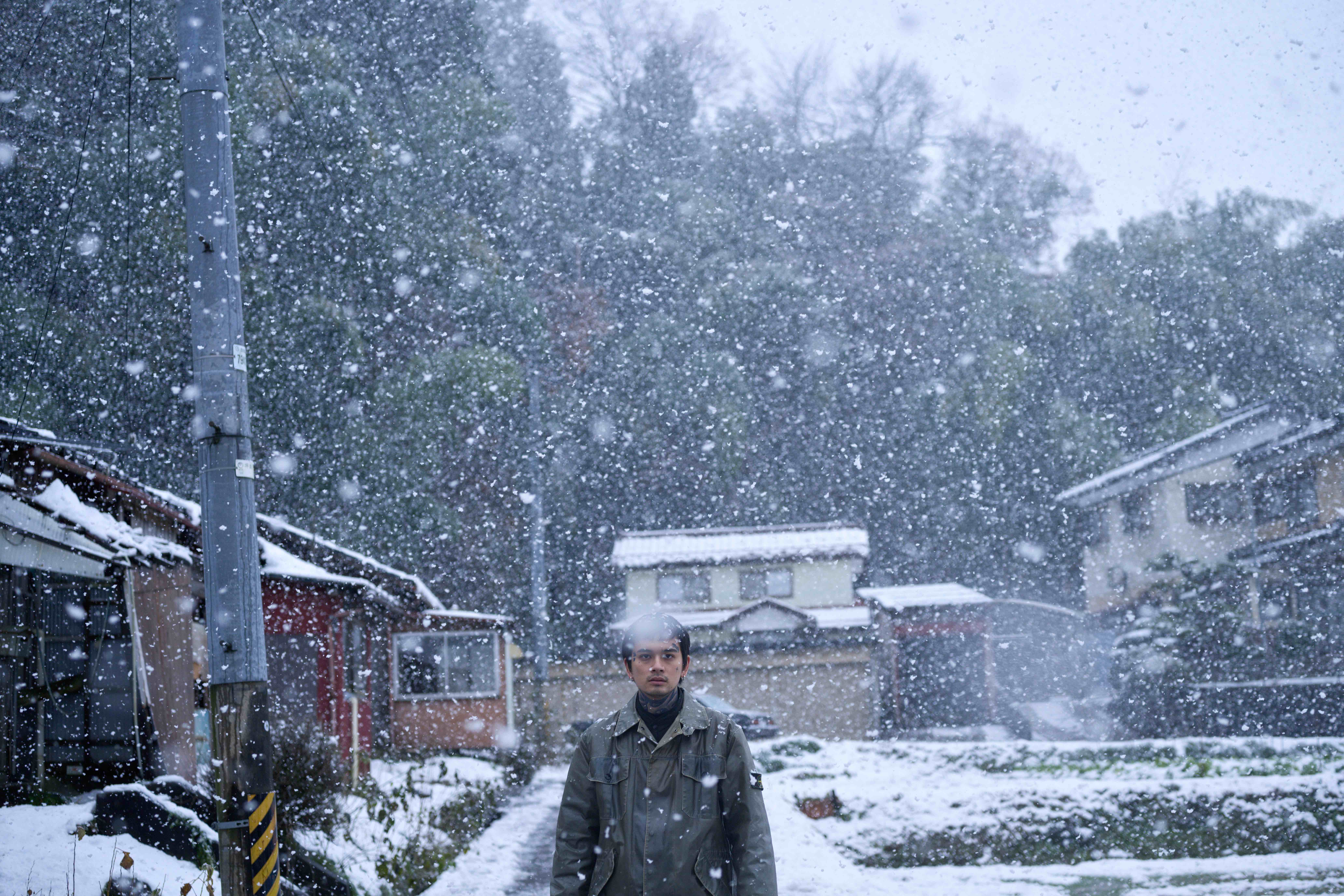
Forced into an early adulthood, the older Daichi makes ends meet covertly dealing drugs as a barman and appears to be trapped in a state of inertia by unresolved childhood trauma. A violent confrontation with his father solves nothing, though a kind of release arrives in finally letting go of his mother and taking her advice to move on. Shot on 16mm, the film captures the bleakness and isolation of Daichi’s life in snowy Niigata where it always seems to be Christmas for everyone but him as he slowly embarks upon a path towards recovering his voice.
Numb screens as part of this year’s JAPAN CUTS.
 Windows on Worlds