 Every keen dramatist knows the most exciting things which happen at a party are always those which occur away from the main action. Lonely cigarette breaks and kitchen conversations give rise to the most unexpected of events as those desperately trying to escape the party atmosphere accidentally let their guard down in their sudden relief. Adapting his own stage play titled Trois Grotesque, Kenji Yamauchi takes this idea to its natural conclusion in At the Terrace (テラスにて, Terrace Nite) setting the entirety of the action on the rear terraced area of an elegant European-style villa shortly after the majority of guests have departed following a business themed dinner party. This farcical comedy of manners neatly sends up the various layers of propriety and the difficulty of maintaining strict social codes amongst a group of intimate strangers, lending a Japanese twist to a well honed European tradition.
Haruko (Kami Hiraiwa), a youngish middle-aged woman has stepped out onto the terrace to check her phone with a degree of privacy but she is shortly joined by a late arrival to the party, Tanoura (Hiroaki Morooka), who lets out a long sad sigh right alongside her. The party’s hostess, Kazumi (Kei Ishibashi), hears his small howl of exasperation and decides to make something of it. Embarking on a strange line of questioning, she gets Tanoura to admit not only to a fondness for the woman who was just on the terrace, but particularly for her shapely white arms. Tanoura fusses and backpedals but is pushed into a corner of defeat with relative ease by his more experienced host. Unfortunately he did not know that Haruko is the wife of a fellow guest – in fact, the guest of honour who has just delivered a speech at the dinner party (which he missed because he was late). Kicking off a late night challenge, Kazumi’s brazen questioning and subsequent decision to announce the results to the group at large proves the catalyst for visible crumbling of the bourgeoisie which is about to take place.
Even though everybody ought to be getting home, the guests linger and the atmosphere becomes increasingly tense and awkward. Insecure hostess Kazumi quickly begins a war with her attractive rival, Haruko, using the bizarre obsession everyone seems to have with her arms as the first round of fire. Haruko counters that she disagrees and thinks Kazumi is the more attractive because of her low cut dress designed to show off her ample bosom. This line of conversation makes the men feel very awkward, especially when asked for their opinion but someone then attempts to move to a higher level by discussing similar themes in the works of Kawabata and Tanizaki, though this flies over the heads of some of the guests prompting a return to the slightly unpleasant atmosphere of the earlier part of the evening.
If Kazumi is attempting to remain the dominant female at her own party, the men have various other concerns mostly bound up with their working relationships. Business and pleasure rarely mix, at least not at parties, and so there’s an immense amount of politeness and de-escalation involved in the way in which they talk to each other. Mr. Soejima (Kenji Iwaya) – Kazumi’s husband, the host, and the owner of this fine villa has organised the party as a networking event at which Haruko’s husband, Taro (Ryuta Furuta), delivered the keynote speech. Another company guest, Masato (Takashi Okabe), is known and not known as he’s recently lost an awful lot of weight thanks to gastric surgery which means no one quite recognises him and despite having been quite a drinker in the past he is now supposed to be avoiding alcohol altogether. While Masato spends most of the evening sitting quietly to the side, Tanoura seems to get dragged into arguments despite his attempts to remain neutral and polite, eventually bursting into tears as he thinks about the horrors of Syria – not a side of him this hard-nosed, business focused gathering is likely to find endearing.
Alcohol flows, secrets are revealed and flirting is embarked upon as pretty much everyone is after Haruko who is dismayed to find her husband either hardly notices or is actively allowing other men to flirt with her to increase his networking potential. The arrival of the Soejima’s son, Teruo, throws another kind of energy into the room as he reveals juicy details about his parents’ marriage and becomes the subject of a few barbed comments from his father. Teruo is young and handsome, becoming something of a mirror for the ways that Haruko has dominated the conversation despite his mother’s best efforts to remain in charge, even matching her in the beauty of his arms. As the evening finally draws to a close sex and death mingle across the crowded terrace filled with onlookers not sure in which direction to cast their gaze.
Yamauchi sticks to his one set conceit but shoots it from various angles to best capture the drama erupting amongst this group of not quite friends. The two women face off against each other while their husbands do the same only with tales of their masculine exploits. No one quite knows how to behave now that they’ve moved away from the business table, who they’re supposed to be and what their proper place is, leading to a dangerous destabilising of the established social order. Haruko, at least, is striking out to prove she’s more than her husband’s wife even if she was made to come to this party against her will and has wanted to go home for ages.
Opting for an appropriately surreal, retro edge, Yamauchi closes with a series of “you have been watching” portraits and the sight of an adorable small furry squirrel captured in the garden to remind you that not everything here is ugly and attempting to misrepresent itself to get the best out of a difficult social situation. Hilarious, if excruciating, At the Terrace neatly sends up the hypocrisy of the bourgeoisie as they lie, deflect, and sometimes spar in order to conform to their expected social roles only to inadvertently destroy them through improper application.
At the Terrace was screened at the Udine Far East Film Festival 2017.
Original trailer (no subtitles)

 Nobuhiro Yamashita may be best known for his laid-back slacker comedies, but he’s no stranger to the darker sides of humanity as evidenced in the oddly hopeful Drudgery Train or the heartbreaking exploration of misplaced trust and disillusionment of My Back Page. One of three films inspired by Hakodate native novelist Yasushi Sato (the other two being Kazuyoshi Kumakiri’s Sketches of Kaitan City and Mipo O’s The Light Shines Only There), Over the Fence (オーバー・フェンス) may be among the less pessimistic adaptations of the author’s work though its cast of lonely lost souls is certainly worthy both of Yamashita’s more melancholy aspects and Sato’s deeply felt despair.
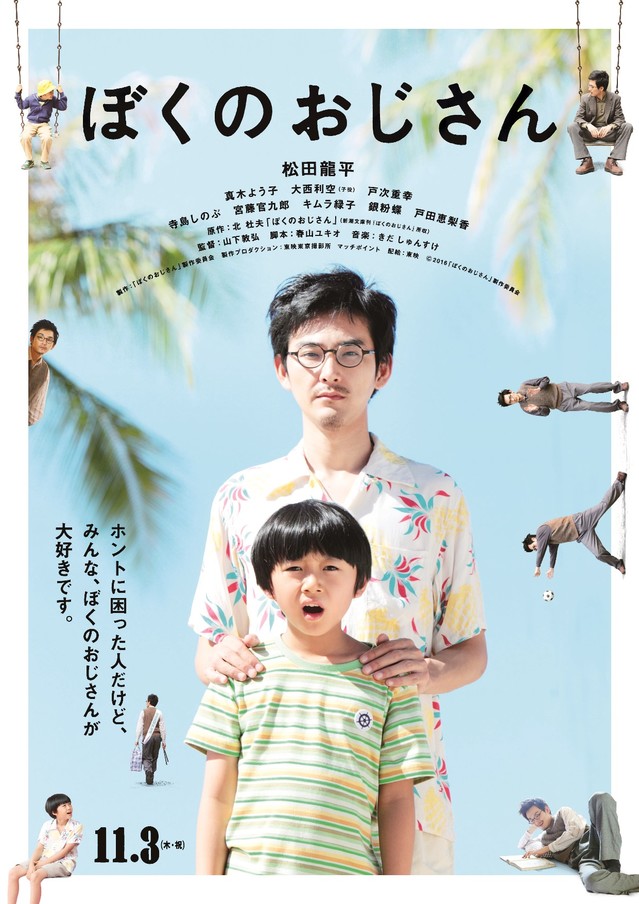 Crazy uncles – the gift that keeps on giving. Following the darker edged Over the Fence as the second of two films released in 2016, Nobuhiro Yamashita’s My Uncle (ぼくのおじさん, Boku no Ojisan) pushes his subtle humour in a much more overt direction with a comic tale of a self obsessed (not quite) professor as seen seen through the eyes of his exasperated nephew. “Travels with my uncle” of a kind, Yamashita’s latest is a pleasantly old fashioned comedy spiced with oddly poignant moments as a wiser than his years nephew attempts to help his continually befuddled uncle navigate the difficulties of unexpected romance.
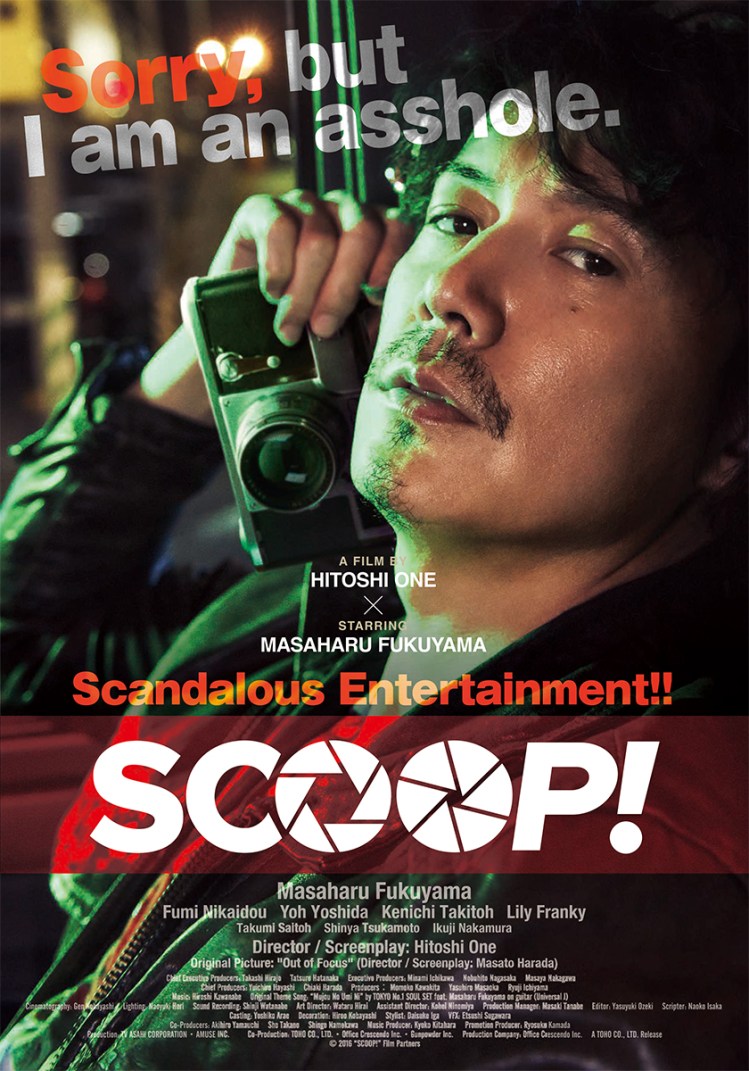 Hitoshi One has a history of trying to find the humour in an old fashioned sleazy guy but the hero of his latest film, Scoop!, is an appropriately ‘80s throwback complete with loud shirt, leather jacket, and a mop of curly hair. Inspired by a 1985 TV movie written and directed by Masato Harada, Scoop! is equal parts satire, exposé and tragic character study as it attempts to capture the image of a photographer desperately trying to pretend he cares about nothing whilst caring too much about everything.
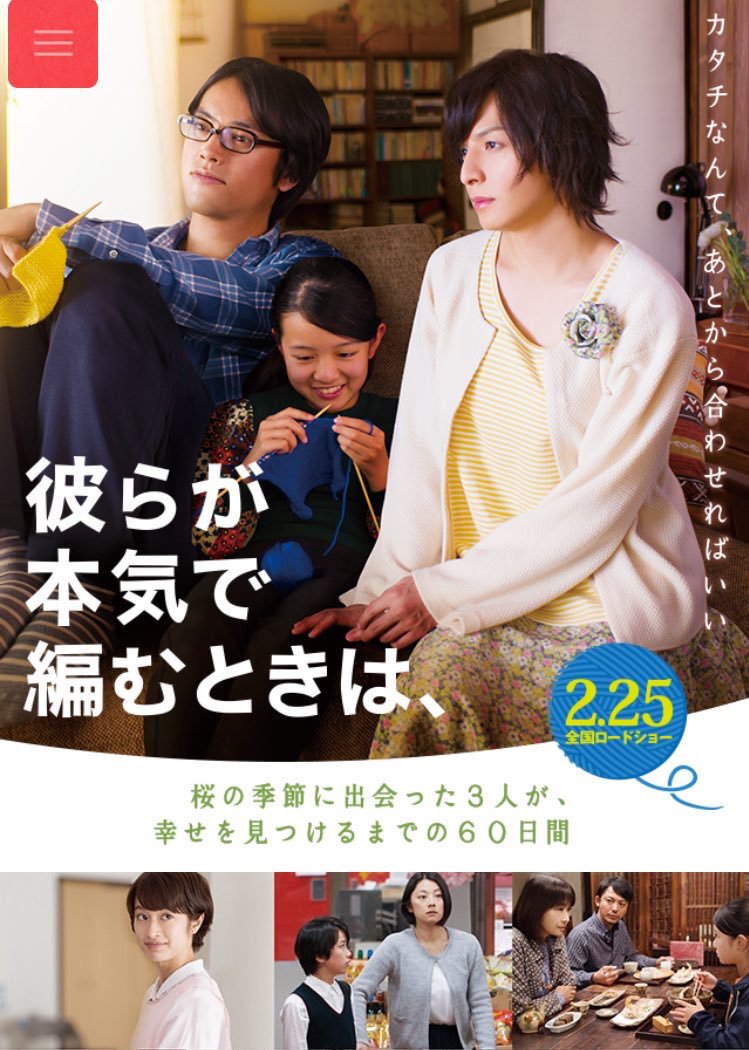 While studying in the US, director Naoko Ogigami encountered people from all walks of life but on her return to Japan was immediately struck by the invisibility of the LGBT community and particularly that of transgender people. Close-Knit (彼らが本気で編むときは, Karera ga Honki de Amu Toki wa) is her response to a still prevalent social conservatism which sometimes gives rise to fear, discrimination and prejudice. Moving away from the quirkier sides of her previous work, Ogigami nevertheless opts for a gentle, warm approach to this potentially heavy subject matter, preferring to focus on positivity rather than dwell on suffering.
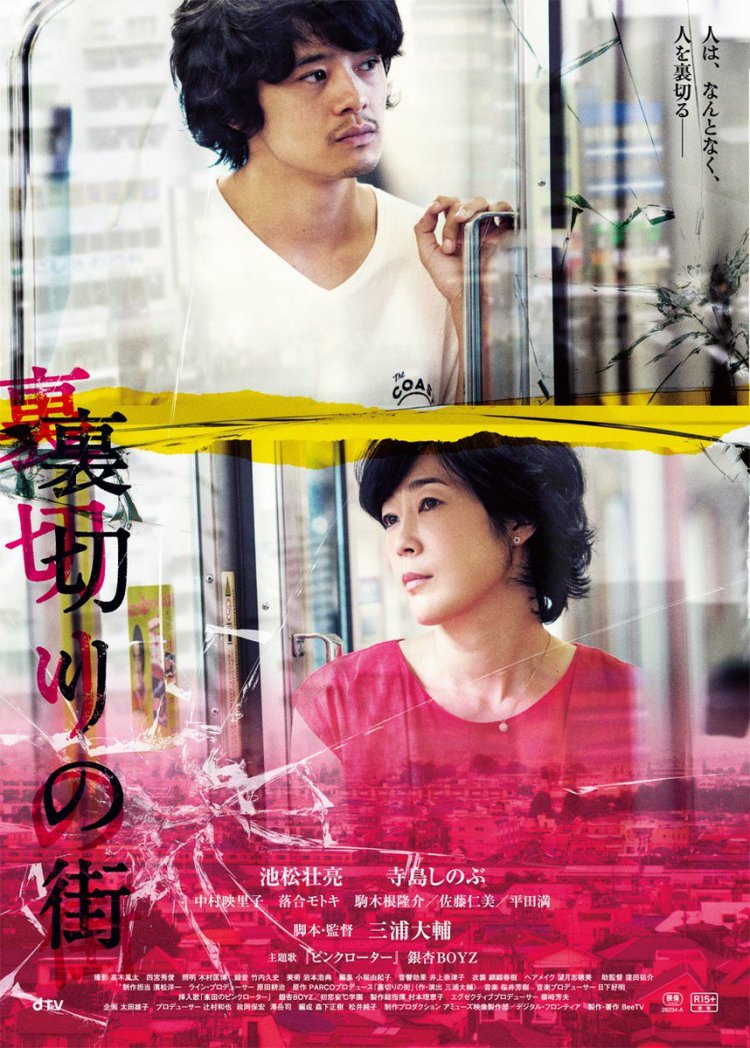 What is it that makes one person betray another? Following
  The premier European showcase for East Asian cinema,
 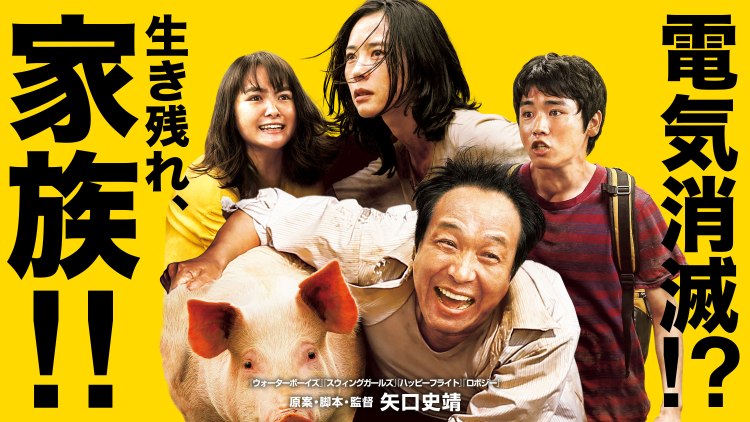 The festival will open with the latest film from Shinobu Yaguchi (
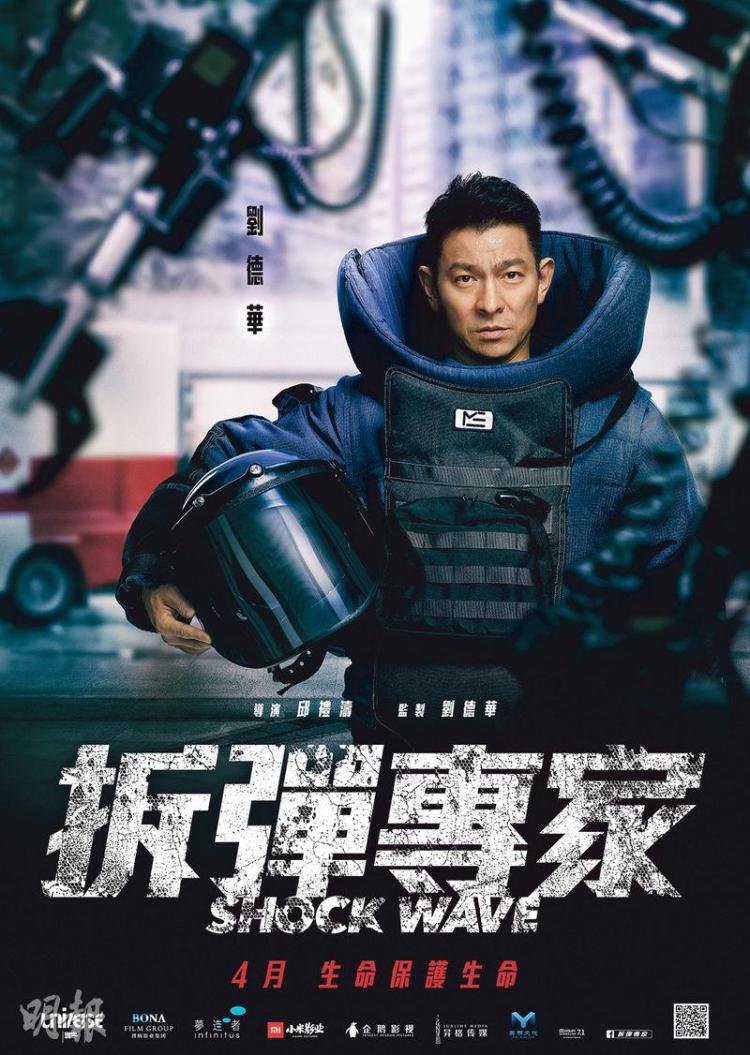 Take a look at Andy in action in the official trailer (English subtitles)
 Starring Fang Bingbing, this story of a small town woman taking on the Chinese legal system after her husband falsely accuses her of having an affair has been picking up awards all along the international festival trail.
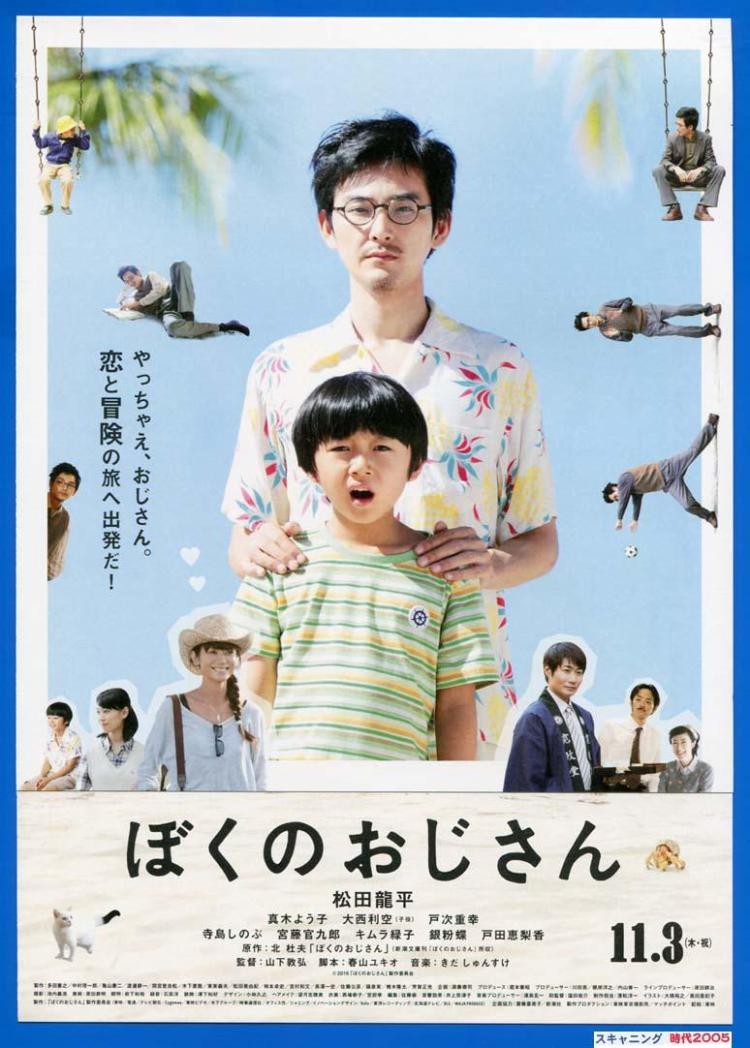 My Uncle (ぼくのおじさん, Boku no Ojisan) stars Ryuhei Matsuda as an eccentric philosophy lecturer who leeches off his nephew’s family until he unexpectedly meets a woman, falls in love, and follows her to Hawaii!
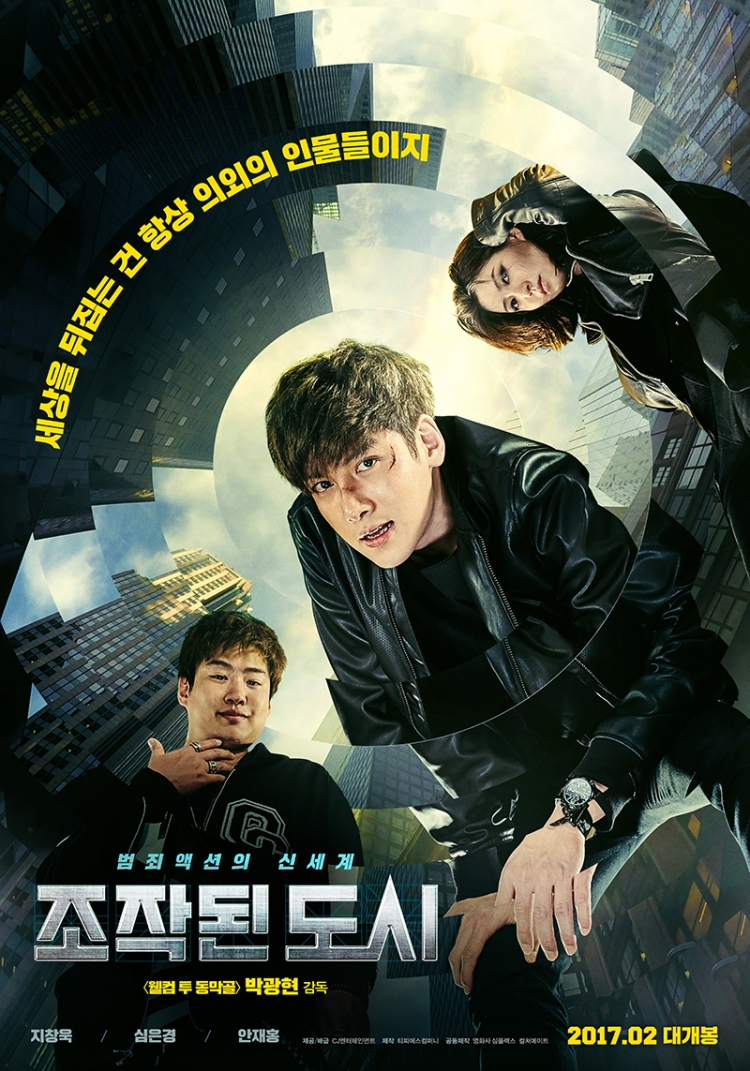 Ji Chang-wook plays a top gamer who suddenly finds himself trapped in a real world conspiracy when he is framed for a shocking crime.
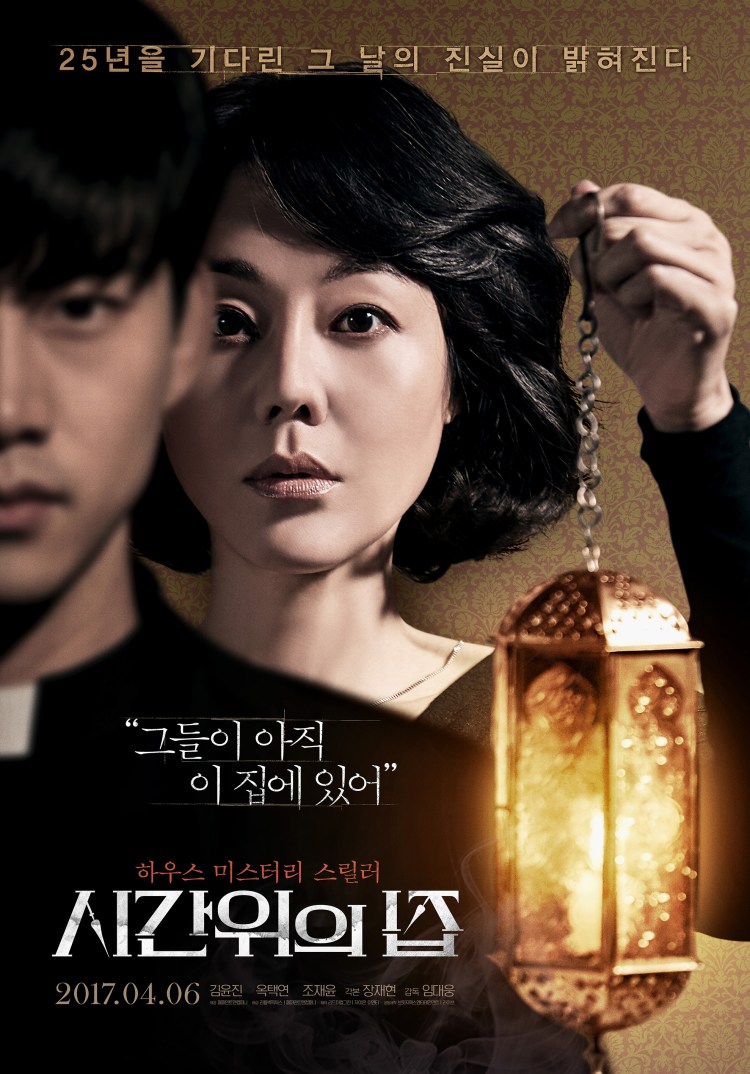 This mystery/thriller stars Kim Yunjin as a former housewife released from prison 25 years after her husband and son disappeared leaving her accused of a crime.
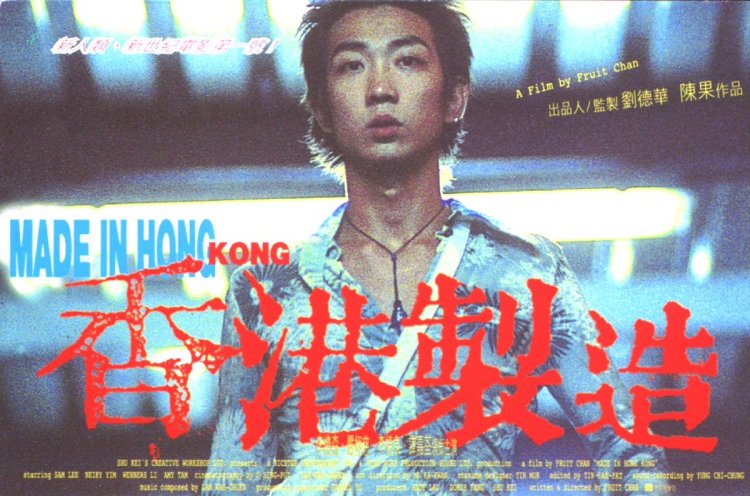 There will also be a small strand of recent Chinese indie including Knife in the Clear Water (清水里的刀子) which we
  Windows on Worlds