Only the Cat Knows (初恋 お父さん、チビがいなくなりました, Shotaro Kobayashi, 2019)

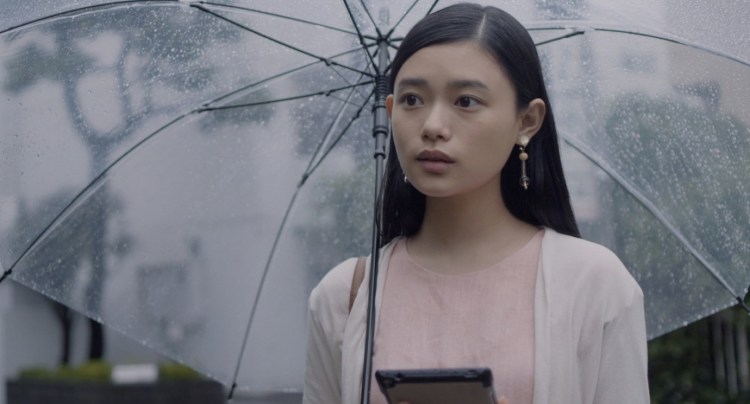
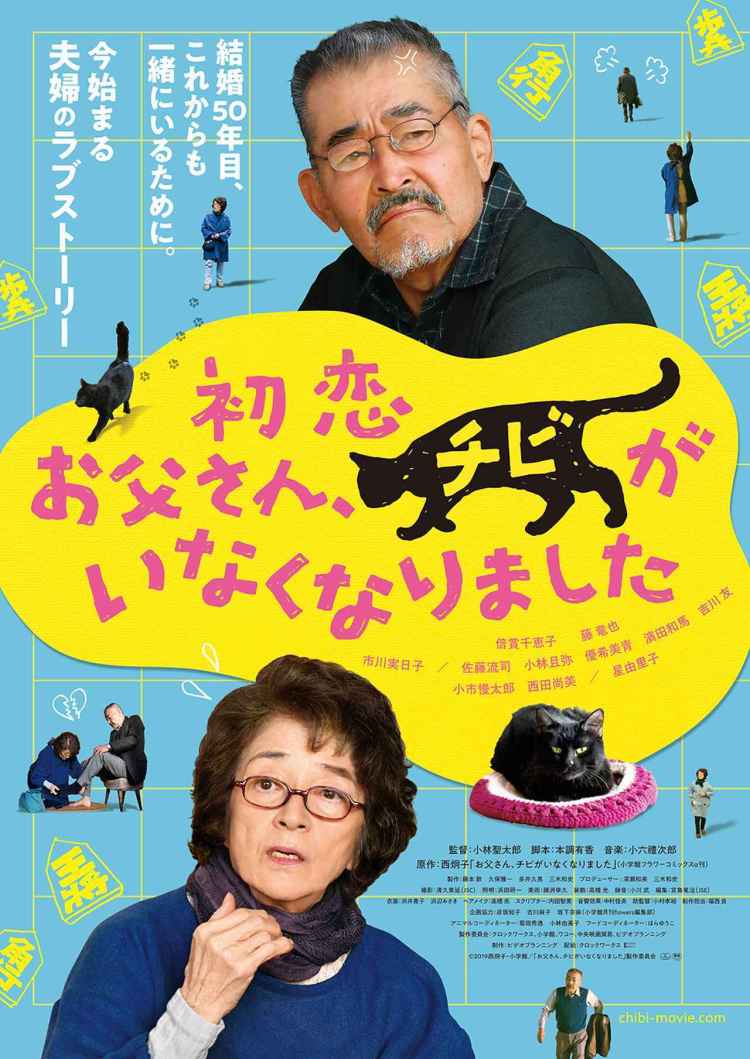
Only the cat knows poaterThe disappearance of a beloved cat has sparked many a crisis in Japanese cinema. In Shotaro Kobayashi’s* Only the Cat Knows (初恋 お父さん、チビがいなくなりました, Hatsukoi: Otosan, Chibi ga Inaku Narimashita), the disappearance is as metaphorical as it is literal in that this particular cat has come to symbolise the faded love of a couple married for fifty years whose relationship has begun to disintegrate if in a very ordinary way.

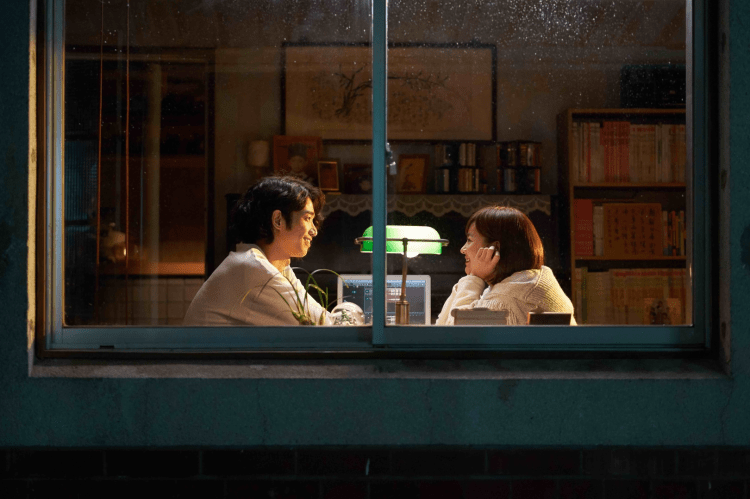
Chibi had been a constant companion to Yukiko (Chieko Baisho) who often feels neglected by her salaryman husband of 50 years, Masaru (Tatsuya Fuji). Now that he’s (semi-)retired, she hoped they might be able reconnect, perhaps even travel, but he is just as disinterested in domestic life as ever and mostly spends his days popping back into the office or playing shogi in a nearby club. An awkward, conservative man, Masaru aggressively ignores his wife, even irritatedly blanking her when she spots him out and about, while she dutifully waits for him at home to take his socks off for him in the hall and pick up the jacket he so casually throws to the floor for her to deal with. Chibi’s disappearance is then another blow to her already lonely world and Masaru’s extremely unsympathetic reaction to her fears eventually provokes her into wondering if she should leave him.

Masaru, it has to be said, is not an easy man and it’s easy to imagine that much of Yukiko’s married life may have been difficult or even unhappy. This is perhaps why though youngest daughter Naoko (Mikako Ichikawa) is originally panicked by her mother’s mention of divorce, all three of the couple’s grown-up children are eventually on her side and claim they can completely understand why she might feel that way. As if trying to fill a very real void in her life, Yukiko has taken to watching romantic Korean dramas dubbed into Japanese while reminiscing on her own romantic past which led her to marry Masaru all those years ago.

Nevertheless, despite her own dissatisfaction, she remains perturbed by Naoko’s disinclination to marry even at the comparatively late age of 37. Avowing that she doesn’t think a woman needs a career, Yukiko tries to push her daughter towards the socially conservative choices of home and family. Yukiko may worry that Naoko will end up all alone in her old age, but then as Naoko points out, Yukiko did everything “right” and feels alone anyway. Tellingly, Naoko was once engaged to man who jilted her right before the wedding because he was insecure about her career success which had exceeded his own and apparently needed to be master in his own home. Unfortunately, the world has not quite moved on enough and it seems many men still only want women who will take their socks off for them at the end of a busy day.

Naoko doesn’t want to get married just for the sake of it which, ironically, seems to be the same way Yukiko felt when she was young though as it turned out her courtship with Masaru was an awkward mix of arranged and not. Having fallen for him at her job on the milk counter at the station, she was slightly stunned to spot his picture in an omiai book and agreed to the meeting only for Masaru to tersely tell her he’d decided to take the first offer and didn’t even open the envelope to peek inside. In true Masaru fashion, this may turn out to be a lie of awkwardness but it’s left a note of anxiety running right through their decades long marriage which only is now bubbling the surface. Yukiko worries she “stole” Masaru from her friend on the counter who liked him first and whom she spots him secretly meeting all these years later. A lack of emotional honesty has created a widening gulf between husband and wife with Yukiko left wondering if her husband ever really loved her at all.

The search for the missing cat becomes a quest to rediscover the smouldering love of a longterm couple that a lack of communication has all but smothered. Yukiko tries everything she can to find Chibi, even hiring a pet detective, while Masaru irritatedly tells her to give up – that Chibi has most likely gone off to die and wanted to spare Yukiko the pain of watching him suffer. Masaru may be somewhat casting himself as the wandering cat, the strong and silent type who thinks he’s protecting his wife by making her miserable, but deep down he too wants to save their love even if it means he will finally have to find the wherewithal to talk about his feelings without embarrassment. A charming late life love story, Only the Cat Knows is careful not to sugarcoat the the destructive social codes of a bygone era but allows its pair of former lovers to rediscover what it was they once had while allowing them to move forward into a happier future.


Only the Cat Knows was screened as part of the 2019 Udine Far East Film Festival.

*Director Shotaro Kobayashi’s name is also romanised as Syoutarou Kobayasi

Original trailer (no subtitles)

The Odd Family: Zombie On Sale (기묘한 가족, Lee Min-jae, 2019)

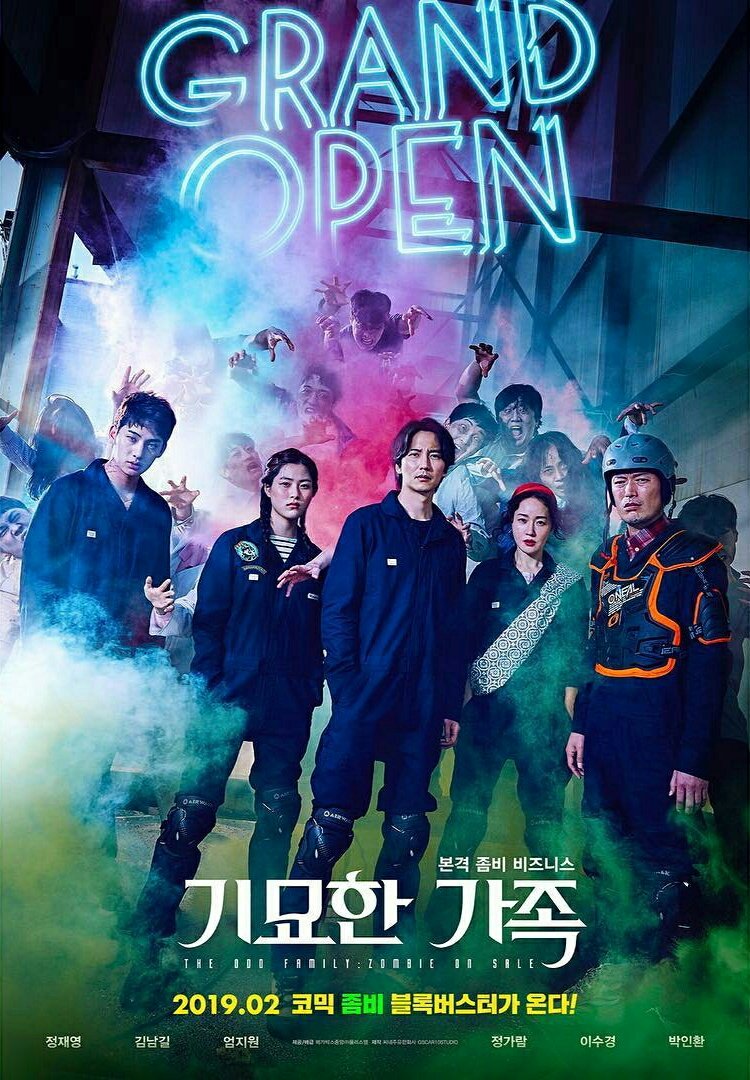
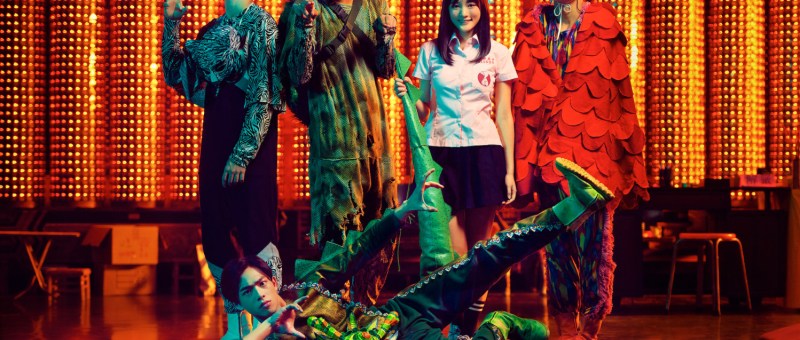
The odd family poster 2It takes a special sort of mind to see a zombie and think “business opportunity”, but that’s exactly the kind of out of the box thinking you’ll find with the the Parks – a very strange family living way out in the countryside. Korean cinema is having a bit of a zombie moment, but they’ve rarely been as amusing as this. The debut feature from Lee Min-jae, The Odd Family: Zombie On Sale (기묘한 가족, Gimyohan Gajok) is a surreal satire of changing family values, the stereotypical strangeness of farm country, and the growing suspicion of underhanded practices in the pharmaceuticals trade.

As an opening voiceover informs us, there have long been rumours of diabetes drug manufacturer Human Bio kidnapping innocent members of the public to test their NoInsulin wonder drug. One day, a young man (Jung Ga-ram) manages to crawl out of a hole in the ground and shuffles zombie-like into the nearest village where he encounters the patriarch of the Park family (Park In-hwan), eventually biting him on the head. The Parks once owned the local petrol station, but with things as they are the business is all dried up and so now they mainly make their living by engineering road traffic “accidents” they can later charge exorbitant fees to fix seeing as they are literally the only place in town. When Mr. Park realises that after getting bitten on the head he’s regained his youthful virility, the family become less afraid of the fairly docile lad and decide to take him in partly with the idea of pimping him out to the other sad old men in town who long for nothing more than to regain their glory days.

Only middle son and recently returned failed salaryman Min-gul (Kim Nam-gil) wonders if there’s something not quite right about the new member of their family, showing the others a brief clip from Train to Busan to get his point across, but even he is temporarily won over by the money making opportunity. Tellingly, no one really stops to wonder if it’s OK to lock a young man up in the shed and make him do your bidding for no remuneration, but then where really is the harm if biting people on the arm makes them feel better about themselves? The harm is he’s a zombie which will eventually become quite a big problem.

Meanwhile, the strange Park family continues to fray at the seams. Youngest daughter Hae-gul (Lee Soo-kyung), an ethereal girl in dungarees with a fondness for pet rabbits she can’t seem to keep alive much longer than a month, takes to the zombie instantly. Naming him “Jong-bi” in a pun on his being a zombie and in keeping with the naming system for her rabbits, she installs him on a mattress right next to the hutch and proceeds to feed him cabbages for which he develops an intense fondness (along with ketchup which is Hae-gul’s personal favourite). Meanwhile oldest son Joon-gul (Jung Jae-young) does his best to keep out of the way while his heavily pregnant wife Nam-joo (Uhm Ji-won) keeps an iron grip on the family finances and the house in general. When everyone starts to wonder if dad is going to turn zombie, filial piety goes out the window but all Mr. Park wants is to jet off to Hawaii and leave the family to deal with the mess on their own.

With the patriarch out of the picture and a new little brother to play with (plus quite a lot of money to buy a new start), the Parks begin to repair themselves and make the “family” anew but the cracks are still there as Min-gul turns out to be more like his dad than he seemed in always looking for the best angle and opportunity to make some money no matter the risks or ethical concerns. Nevertheless, the zombie apocalypse does its best to remind them what’s really important as they find themselves having to work together to come up with a plan for survival. Riffing strongly off wholesome ‘50s Americana and kitschy pop-culture cues, The Odd Family is a charmingly surreal ode to family values in which one family’s money grubbing entrepreneurship almost leads to the end of the world only to paradoxically become its salvation as they prove that there’s nothing so potent as togetherness in combatting existential threat.


The Odd Family: Zombie On Sale was screened as part of the 2019 Udine Far East Film Festival.

International trailer (English subtitles)

Dying to Survive (我不是药神, Wen Muye, 2018)

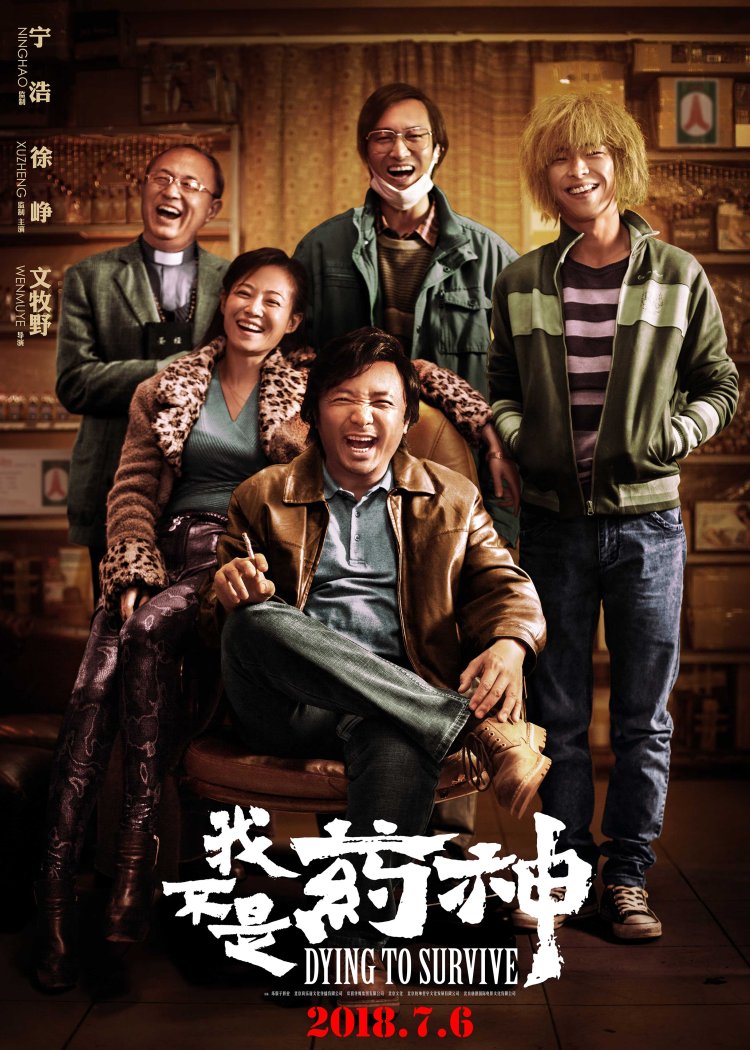
dying to survive poster 1Big box office Chinese comedy continues to run rings round the censors in Wen Muye’s Dying to Survive (我不是药神, Wǒ Bú Shì Yào Shén). Not only does the film display on screen protest movements and tacitly imply that sometimes it’s OK to break the law when you think the law is wrong, but it also dares to criticise the state both for its slowness to introduce socialised healthcare provisions and for its failure to moderate increasing wealth inequality in the rapidly expanding modern economy.

In Shanghai in 2003, our hero Cheng Yong (Xu Zheng) is the proprietor of a shop selling “Indian God Oil”. A divorced father, he is involved in a volatile custody dispute with his ex-wife who has remarried and wants to take their son abroad. Meanwhile, he’s behind on his rent and the god oil business is not exactly booming. That is, until he receives an unusual business proposition. Lv (Wang Chuanjun), a young man suffering from chronic myelogenous leukemia, asks him to begin importing a knock off Indian cancer drug which is a clone copy of the big brand variety at a fraction of the cost. The Indian drug is banned in China, but, Lv argues, not because it’s unsafe – only because Big Pharma is determined to protect its profits at the cost of people’s lives. Yong is not convinced. He knows there are heavy penalties for trafficking “fake” medications, but he needs money for his father’s medical care and to fight for custody of his son and so he decides to give it a go, if for mercenary rather than humanitarian reasons.

Yong’s transformation from schlubby snake oil peddler to (medical) drug dealer extraordinaire is a swift one and perhaps a satirical example of amoral capitalistic excess in his series of moral justifications which allow him to think he’s better than Big Pharma because the price he’s charging is lower even while knowing there are many people who still can’t afford it. Nevertheless, he quickly discovers he has competition. The even more dubious Professor Zhang (Wang Yanhui) claims to have a wonder drug that does the same thing, only it’s really paracetamol cut with flour. Zhang’s duplicity annoys Yong, not just from a competitive angle, but from a humanitarian one as he finds himself sympathising with the poor men and women who are unable to afford the extortionate fees imposed by the mainstream drug companies.

Afraid of the consequences, Yong gives up the drug trade and goes legit, becoming a successful textile merchant rich beyond his wildest dreams. Conveniently, it’s at this point his humanitarianism begins to reawaken as he’s brought back into contact with a sickly Lv who tells him that the smuggling ring has since dissolved. Zhang, irritated by Yong’s moralising, tells him that no real good will come of the “fake” drug trade because the “disease of poverty” can never be cured. Zhang does indeed have a point. These people are dying because they’re poor and have been deemed expendable. Yong’s change of heart may be all for the good, but it’s also fuelled largely by the fact he can now afford not to care very much about money which means he is free to care about other people’s welfare.

Then again, the police chief remonstrates with a conflicted underling that the law trumps sympathy. By this point, they have realised that the drug smuggling ring is close to a public service and people will die if they arrest the ringleaders, but their hands are also tied by the need to preserve order through enforcing the law. The law, however, is also corrupt as we see by the direct presence of Big Pharma sitting right in the incident room and asking the police to act on its behalf. Big Pharma would argue that it invested heavily in the research which led to the medical breakthrough and is entitled to reclaim its costs while those selling knockoffs are nothing more than pirates guilty of intellectual property theft, but the police has a duty to protect its people and a significant conflict when the “victim” is wilfully misusing its economic and political power to coerce it to do their dirty work.

This being a Mainland film, crime cannot pay but Yong manages to emerge from his straitened circumstances in heroic style as he stands both remorseful for having broken the law and angry that he even had to. A series of closing intertitles is quick to remind us that following the real life events which inspired Dying to Survive, the Chinese state began to reconsider its health polices, relaxed the law on “fake” drug trafficking, and took measures to make care more affordable to all. A subversive treat, Dying to Survive is the rare Chinese film which seems to suggest that civil disobedience is an effective weapon against an unfair society, making a hero of its lawbreaking humanitarian as he, ironically, learns to put the collective interest before the individual.


Dying to Survive was screened as part of the 2019 Udine Far East Film Festival.

International trailer (English subtitles)

Every Day a Good Day (日日是好日, Tatsushi Omori, 2018)

Everyday a good day posterTatsushi Omori burst onto the scene in 2005 with the extremely hard-hitting and infinitely controversial The Whispering of the Gods before going on to build a career on chronicling the unpalatable facets of human nature. He does have his lighter sides as the delightfully whimsical Seto and Utsumi proves, but even so he might be thought an odd fit for directing an adaptation of a series of autobiographical essays detailing one woman’s personal growth over a 20 year period spent perfecting the art of the Japanese tea ceremony. Every Day a Good Day (日日是好日, Nichinichi Kore Kojitsu) is, however, like much of his previous work, a story of youthful ennui and existential despair only one in which it turns out that the world is basically good once you agree to embrace it for what it is.

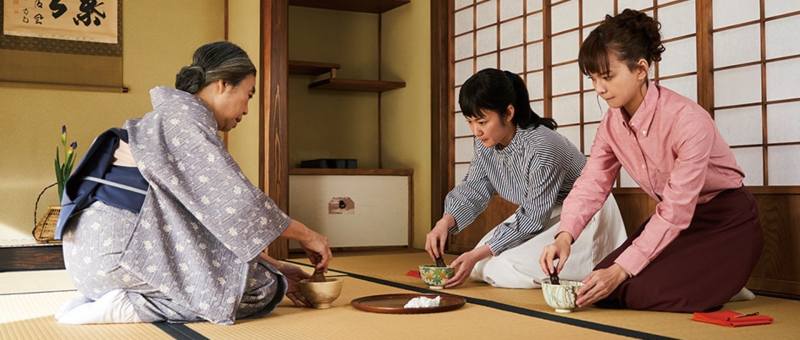
The film opens in 1993 with the heroine, Noriko (Haru Kuroki), a confused college student unsure of the forward direction of her life. Often ridiculed by her family for being clumsy and neurotic, Noriko compares herself unfavourably with her glamorous cousin Michiko (Mikako Tabe) who has come to the city from the country to study and appears to have her whole life already mapped out with a confidence Noriko could only dream of. A turning point arrives when she’s talked into accompanying Michiko to learn tea ceremony from a kindly old lady, Mrs. Takeda (Kirin Kiki), who lives nearby. Despite regarding tea ceremony as something fussy and old fashioned that only conservative housewives aspire to learn, Noriko begins to develop a fondness for its formalist rigour and continues dutifully attending classes for the next 24 years.

“Carry light things as if they were heavy, and heavy things as if they were light” Noriko is told as she clumsily tries to carry an urn from one room to another, though like much of Takeda-sensei’s advice it serves as a general lesson on life itself. Mystified by the entire process, Noriko and Michiko make the mistake of trying to ask practical questions about why something must be done in a particular way only for Takeda-sensei to admit she doesn’t know, it simply is and must be so. To look for that kind of literal meaning would be a waste of time.

Of course, she doesn’t quite put it that way. As Noriko later realises, some things are easy to understand and need only be done once. Other things take longer and can only be understood through a weight of experience. Just as she was bored out her mind by La Strada at 10 but moved to tears at 20, the discrete pleasures of the tea ceremony are something only fully comprehended when the right moment arrives. What was once empty formalism becomes a framework for appreciating the world in all its complexity, embracing each of the seasons as they pass and learning to live exactly in the moment in the knowledge that a moment is both eternal and transient.

Noriko continues to feel herself out of place as she witnesses those around her progress in their careers, get married, or go abroad while she remains stuck, unable to find a direction in which to move. Even tea ceremony occasionally betrays her as new pupils arrive, depart, and sometimes wound her newfound sense of confidence by quickly eclipsing her. Nevertheless, the calm and serenity of ritualised motion become a place of refuge from the confusing outside world while also offering a warmth and friendship perhaps unexpected in such an otherwise ordered existence.

Over almost a quarter of a century, Noriko’s life goes through a series of changes from career worries to romantic heartbreak, learning to love again, and bereavement, while tea ceremony remains her only constant. She may not yet have discovered the path to happiness, but perhaps has begun to reach an understanding of it and believe that it might exist in some future moment – as Takeda-sensei says, there are flowers which bloom only in winter. In any case, what she’s learned is that sometimes it’s better not to overthink things and simply experience them to the best of your ability while you’re both still around. Every day really is a good day when you learn to slow down and truly appreciate it, living in the moment while the moment lasts in acknowledgement that it will never come again.


Every Day a Good Day was screened as part of the 2019 Udine Far East Film Festival.

Original trailer (English subtitles)

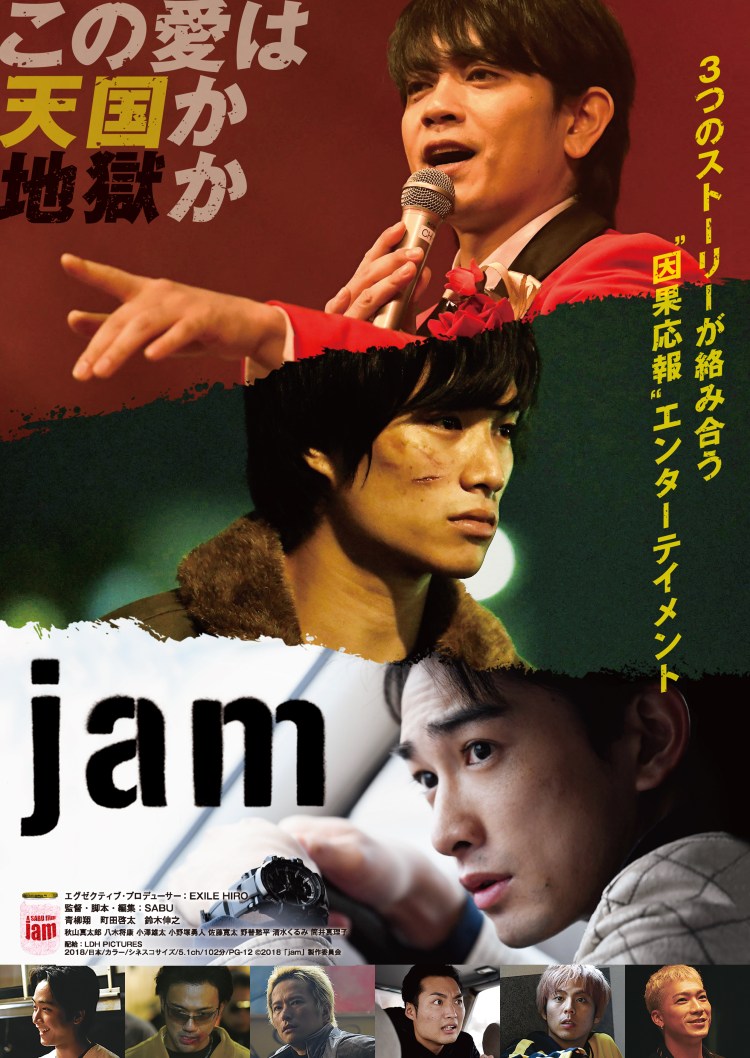
Jam (SABU, 2018)

PrintSABU began his directorial career with a reputation for shooting on the run. Time may have caught up with him, in that relaxed contemplation has begun to replace frenetic action in the more recent stages of his career, but it’s to his first feature, Dangan Runner, that he (after a fashion) returns in the similarly structured Jam. Random circumstance conspires once again to send three fugitive guys on a zany collision course, but this time the crash offers each of them something a little more positive (to a point, at least) than a grudging acceptance of life’s impossibilities.

The first of our three heroes, Hiroshi (Sho Aoyagi), is a cheesy enka singer with an army of middle-aged female fans whom he is perfectly aware of exploiting. Despite his “star status” with the ladies who crowd out his meet and greets, Hiroshi’s big concert is at the Civic Centre in Kitakyushu which is not exactly the Budokan, but it’ll do for the minute. Trouble brews when the wealthiest of his fans, Mrs. Sakata, suggests a change to the setlist only for a backbencher to leap to Hiroshi’s defence with slightly embarrassing fervour. Masako’s (Mariko Tsutsui) crazed fan aesthetic is later brought to its zenith when she gets Hiroshi to chug down some home made soup which is laced with some kind of knock out drug.

Meanwhile, all round good guy Takeru (Keita Machida) is driving around in a not quite classic car and looking for people to help because a Buddha appeared to him and told him if he did three good deeds a day his girlfriend would wake up from her coma, and ex-con Tetsuo (Nobuyuki Suzuki) is patiently pushing his grandma round town in a wheelchair and taking revenge on the gangsters who have betrayed him every time her back is turned.

“Pay back is scary as hell” one of the gangsters affirms as he laments potentially mixing up a thoroughly good guy like Takeru in their nasty yakuza business. As the other had earlier outlined, this is a world very much defined by karma – you do good and good comes back to you, but do something bad and you’re in for more of the same. The logic is sound, and yet it doesn’t quite work the way you’d expect it to. Takeru is nothing but good, too good as it turns out, but constantly suffers precisely because of his goodness. Not only is his girlfriend gunned down in front of him during an act of random street violence, but he eventually finds himself tricked into helping the exact same thugs commit further crime only to attempt heroics and see that massively backfire too. Even so, he keeps on trying to be good and perhaps it really will pay off in the end.

Meanwhile, Hiroshi seems to be leading something of a charmed life though perhaps through a prism of self-loathing. He knows he is a cheesy lounge singer and one step up from gigalo in the way he accommodates himself to these older ladies in whom his only interest is their money. This is perhaps why he finds himself desperately playing along when kidnapped by Masako in the hope he will write a song just for her (that’ll show the snooty Mrs. Sakata), but finally betraying her in the final moment as if attempting to reassert his artistic autonomy. Masako eventually makes a sacrifice of her own which sends Hiroshi running for the hills only to finally acknowledge a sense of responsibility for his willing misuse of her loneliness and disappointment in selling her an impossible dream of connection.

As for Tetsuo, pushing granny round the city by night, the yakuza lurk round every corner proving the past really is impossible to escape. As expected, the paths of the three men eventually intersect in strange and various ways though each is bound for a different destination and an individual epiphany. Another boy band odyssey from SABU, this time in collaboration with studio LDH and the members of EXILE, Jam takes a fairly ironic view of the idol business if thinly disguised in Hiroshi’s depressing business plan of self-debasement and fansploitation while simultaneously asking if you really do reap what you sow when it comes to cosmic karma in an increasingly surreal existence.


Jam was screened as part of the 2019 Udine Far East Film Festival.

International trailer (English subtitles)

Birthday (생일, Lee Jong-un, 2019)

Birthday posterOn 16th April 2014, a ferry carrying mostly teenagers on a school trip sank taking 304 passengers and crew down with it. The Sewol Ferry tragedy was to have profound ramifications, asking a series of questions as to corporate and political corruption in the society which had permitted such an accident to happen and then failed to mount an effective rescue. In the five years since, many films have probed the causes and implications of the tragedy, but Lee Jong-un’s Birthday (생일, Saengil) is not so much interested in the incident itself as in the nature of grief and all the more so when it takes place across a national canvas.

Lee picks up three years after the sinking as husband and father Jung-il (Sol Kyung-gu) returns to Korea after five years of working away in Vietnam. So disconnected is he from his family, that he was only vaguely aware that they had moved and has trouble finding the new apartment. When he gets there, his wife Soon-nam (Jeon Do-yeon) pretends to be out, sending Jung-il back to stay with his understanding sister who tries to fill him in on the various reasons he might not be welcome at his own door.

The loss of the couple’s oldest child, Su-ho (Yoon Chan-young), in the ferry tragedy is only gradually revealed though it’s clear that there is an absence in the family home. Soon-nam has kept Su-ho’s room exactly as he left it – school uniform hanging on the wardrobe door, unfinished school work on the desk, post-its seemingly everywhere. Meanwhile, youngest daughter Ye-sol (Kim Bo-min) is often left to her own devices while Soon-nam buries herself in work and shuts out everything that reminds her that her son is never coming home.

While some of the other parents have formed a tightly bonded community forged by shared grief and anger, Soon-nam wants no part of it. Invited to a gathering after bumping into other parents at the memorial site, she lasts barely a few minutes before accusing them of turning their suffering into an excuse for frivolity. It’s not as if she could ever forget what happened to her son, but when the ferry tragedy is on every street corner, on the radio, on the news, it becomes impossible to ignore. Soon-nam wants her grief to herself. Her son and her loss. She isn’t interested in sharing him with anyone else, be that an increasingly angry society or her little girl who is now terrified of water and worried about her mum.

Jung-il, burdened with guilt for having abandoned his family, tries to address his grief in a more positive sense by re-embracing his role as a father to Ye-sol who was so small when he left that she doesn’t really remember him. Though Lee is not particularly interested in the political ramifications of the tragedy, she does subtly point the finger at the effects of economic pressure on the ordinary family which have seen Jung-il exile himself abroad and Soon-nam working so hard just to keep her head above water that Ye-sol is caught in the middle. Jung-il wasn’t there when his family needed him, and there’s precious little he can do for them now other than try to be around.

The other members of the support group have been holding birthday parties for some of the kids who passed away, turning the solemnity of a memorial service into a celebration of life. Soon-nam is against the idea – she would rather save the day for herself in private commemoration, but Jung-il is broadly in favour. Probed, he has to admit he barely knew the young man his son was becoming and that this party might be the only way to reconnect with the boy he lost. A passport that will never be stamped, colleges that will never be applied to, weddings that will never take place – the finality of the loss is crippling, but in holding the birthday parties those left behind are able to find a kind of acceptance in shared remembrance and a confirmation that their loved ones were loved and will continue to be loved even in their absence. A sensitive yet uncompromising exploration of the sometimes forgotten personal dimension to a national tragedy, Birthday is a beautifully complex evocation of learning to live with loss and a strangely uplifting, cathartic experience.


Birthday was screened as the opening night gala of the 2019 Udine Far East Film Festival.

Original trailer (English subtitles)

Udine Far East Film Festival Confirms Lineup for 21st Edition

47541986391_dbe90761ea_oThe Udine Far East Film Festival returns for its 21st edition on April 26! As usual, the festival has brought together some of the most highly anticipated East Asian cinema releases with 77 films included in this year’s programme including a retrospective strand dedicated to classic Korean cinema and sidebar on Korean indie comedy. This year’s guests of honour are veteran Hong Kong star Anthony Wong who will be receiving the festival’s Golden Mulberry Award, and Chinese superstar Yao Chen.

China

A Cool Fish Banner

  • A Cool Fish – comedy crime caper in which two losers, a woman in a wheelchair, and a dejected security guard get mixed up in a strange series of coincidences. Review.
  • Crossing the Border – heartwarming drama in which a grandpa goes on a tractor roadtrip with his 6-year-old grandson.
  • The Crossing – a teenage girl becomes a mobile phone mule in Bai’s sensitive coming of age drama. Review.
  • Dying to Survive – dark comedy drama in which an aphrodisiac seller becomes rich smuggling generic cancer medication.
  • Lost, Found – remake of the Korean film Missing in which a lawyer in the middle of a custody dispute discovers her nanny has disappeared with her daughter.
  • Pegasus – New Year comedy drama in which a disgraced middle-aged racing driver tries to make a comeback. Review.
  • The Rib – a trans woman tries to get the approval of her devoutly religious father.
  • When Love Blossoms – a Beijing delivery boy is inspired to pursue his secret crush on a real estate agent who is also his roommate.

Hong Kong

Project Gutenburg still 1

  • Bodies at Rest – a pathologist and his assistant are suddenly accosted by crooks wanting access to a body in Renny Harlin’s action drama.
  • A Home with a View – Mr. Lo sinks all his savings and his father’s pension into buying a flat which has a view of the ocean that calms the rowdy family down, but one day their lovely view is suddenly blocked by an illegal billboard in a dark family comedy from Herman Yau.
  • Hotel Soul Good – comedy in which a hardbitten exec starts seeing ghosts and then forces them to open a hotel with her.
  • Master Z: The Ip Man Legacy – spin-off / sequel to Ip Man 3 starring Max Zhang and directed by Yuen Woo-ping.
  • Missbehavior – New Year rom-com from Pang Ho-cheung in which a secretary tries to replace a bottle of breast milk belonging to her boss after accidentally using it to make coffee for a client.
  • Project Gutenberg – twisty action drama from Felix Chong starring Aaron Kwok and Chow Yun Fat. Review.
  • Still Human – Intouchables-esque drama starring Anthony Wong as a man in a wheelchair who doesn’t immediately take to his Filipina carer.
  • Three Husbands – Fruit Chan satirises modern Hong Kong through the story of a sex worker with a high libido who lives on a boat with her three husbands.

Indonesia

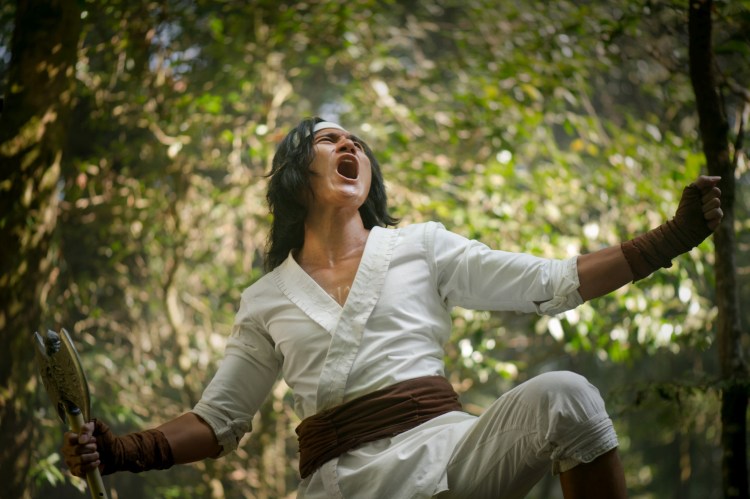
212 warrior

  • 212 Warrior – historical martial arts action comedy.

Japan

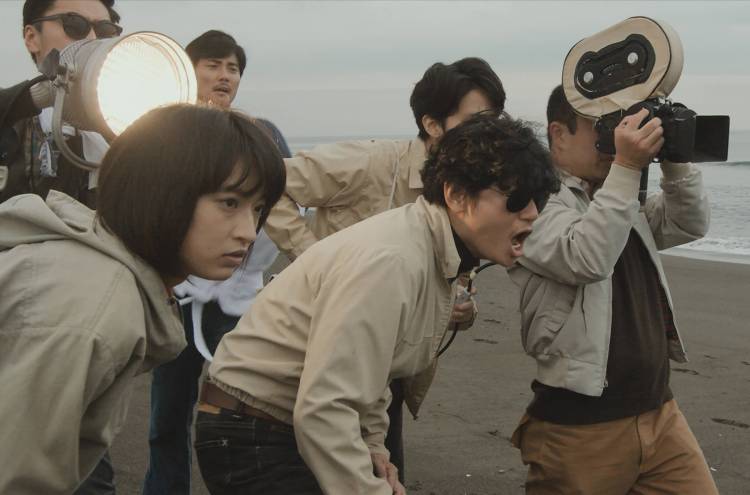
dare to stop us still 1

  • Dare to Stop Us – drama directed by Kazuya Shiraishi set at Wakamatsu Productions in the early 1970s.
  • Every Day a Good Day – tea ceremony drama featuring one of the last screen performances by the late Kirin Kiki.
  • Fly Me to the Saitama – local humour comedy in which residents of Saitama have been relegated to second class citizens. Review.
  • HARD-CORE – robot comedy from Nobuhiro Yamashita.
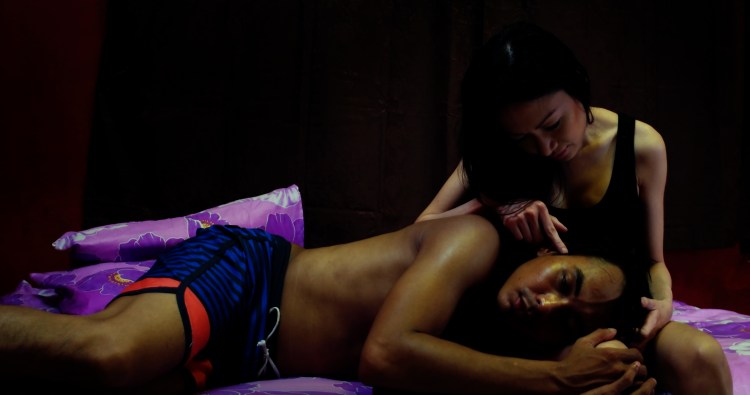
  • Jam – absurdist comedy from SABU in which a singer is kidnapped by a crazed fan.
  • JK Rock – comedy in which a washed up rocker mentors a girl group.
  • Lying to Mom – black comedy in which a family keep up the pretence that their oldest son who committed suicide is alive and well in Argentina.
  • Melancholic – a dejected university graduate takes a job in a bathhouse but discovers it is used as a location for killing after hours.
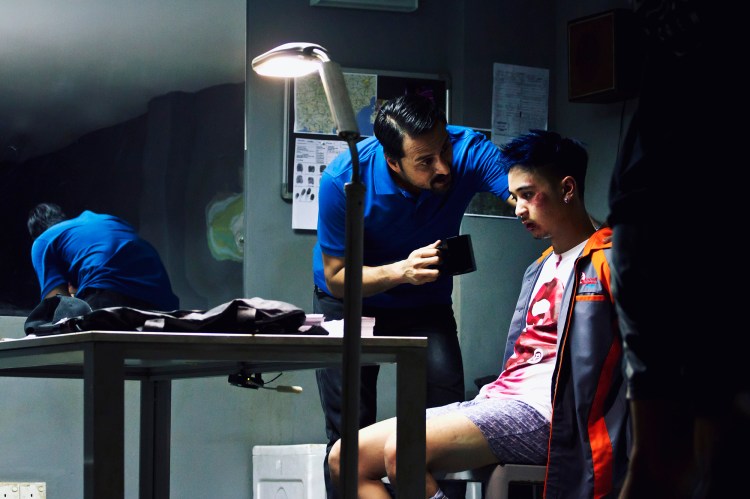
  • Only the Cat Knows – a disappeared cat places a wedge between husband and wife.

Malaysia

fly by night still 1

  • Fly by Night – taxi drivers running an extortion scam become embroiled in crime conspiracy
  • Motif – a policewoman investigating the disappearance of a teenage girl in a small town finds herself digging deep into family secrets.
  • Two Sisters – horror in which a woman is released from a psychiatric hospital and returns to live with her sister only to encounter dark family secrets.

The Philippines

47542035261_7d0d676976_o

  • Eerie – a clairvoyant guidance counsellor investigates the deaths of a series of girls at a convent school in Mikhail Red’s supernatural drama.
  • Heaven’s Waiting – two old souls trapped in purgatory find each other in Dan Villegas’ supernatural romance.
  • Miss Granny – Filipino remake of the classic Korean musical comedy in which an old woman becomes young and gets to relive her youth.
  • Signal Rock – indie drama set in an island community where a brother determines to help bring his sister and her daughter home to the Philippines on learning that she is in an abusive relationship abroad.

South Korea

Believer still 1

  • Believer – Korean remake of Johnnie To’s Drug war. Review.
  • Birthday – melancholy family drama exploring the aftermath of the Sewol ferry tragedy.
  • Door Lock – remake of Spanish film Sleep Tight in which a woman living alone suspects a stranger has been breaking in to her home.
  • Default – drama exploring the 1997 Asian Financial Crisis.
  • Extreme Job – bumbling police officers go undercover running a chicken restaurant to catch drug dealers but the restaurant ends up taking off.
  • The Great Battle – historical drama centring on the siege of Ansi Fortress.
  • Innocent Witness – Jung Woo-Sung stars as a lawyer defending a housekeeper accused of murdering her boss who discovers the only witness to the crime is an autistic teenage girl.
  • Intimate Strangers – Korean remake of the Italian film Perfect Strangers in which dinner party guests unwisely agree to share all their incoming mobile messages.
  • The Odd Family: Zombie on Sale – comedy in which a family’s life is disrupted when dad gets bitten by a zombie.
  • Rampant – historical zombie action starring Hyun Bin.
  • Romang – romantic melodrama in which an elderly couple fall in love all over again while suffering with dementia.
  • Unstoppable – Ma Dong-seok stars as a former gangster hot on the trail of human traffickers who’ve made the mistake of kidnapping his wife.

Singapore

konpaku

  • Konpaku – A young man upset after his girlfriend leaves him ends up in a relationship with the sensuous Midori but is disturbed when strange things start happening to those close to him.

Taiwan

More than blue still 1

  • The Devil Fish – spin-off/sequel to the Tagalong franchise this time revolving around an urban legend about a fish with a human face.
  • More than Blue – remake of the Korean romantic melodrama in which two young people try too hard to please each other. Review.
  • The Scoundrels – action drama in which a former basketball player gets mixed up in crime.

Thailand 

47489432632_1103a63727_o

  • Krasue: Inhuman Kiss – an innocent village girl discovers she is a victim of a strange curse in which her head detaches from her body to hunt for blood!
  • Reside – haunted house horror starring Ananda Everingham.

Vietnam

47585242932_0a092b7ec6_o

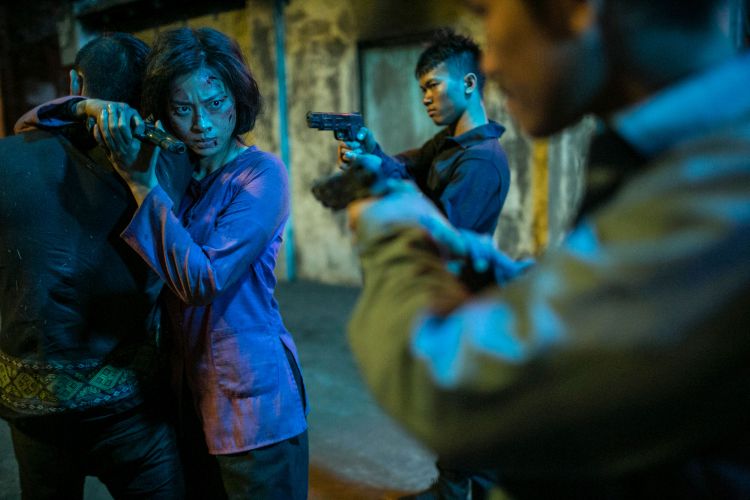
  • Furie – some thugs make a very bad decision when they kidnap a former gangster’s daughter.

Documentaries

47536019831_4ecb80fed6_o

  • BNK48: Girls Don’t Cry – Thamrongrattanarit Nawapol interviews members of the Thai idol group.
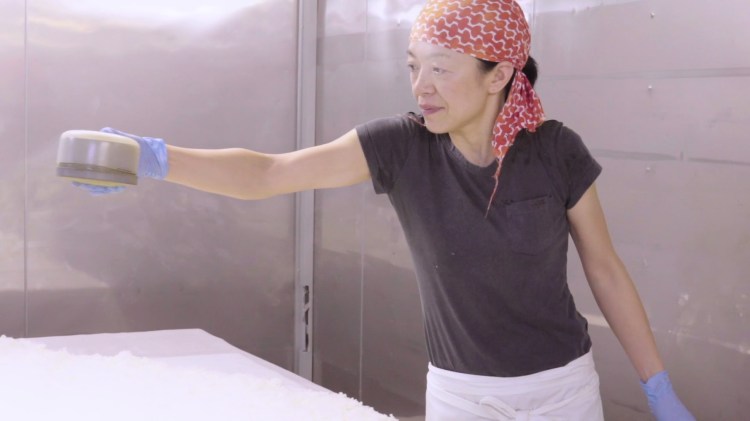
  • Kampai! Sake Sisters – documentary following three women in the historically male sake world.
  • People’s Republic of Desire – documentary exploring the growing Chinese online streaming industry. Review.
  • YI DAI YI LU – One Belt One Road – Italian documentary exploring the One Belt One Road initiative.

The Odd Couples

47489613742_b62f29b9e1_o

  • The World of Suzie Wong – classic 1960 British/American HK drama in which an American artist falls for a sex worker.
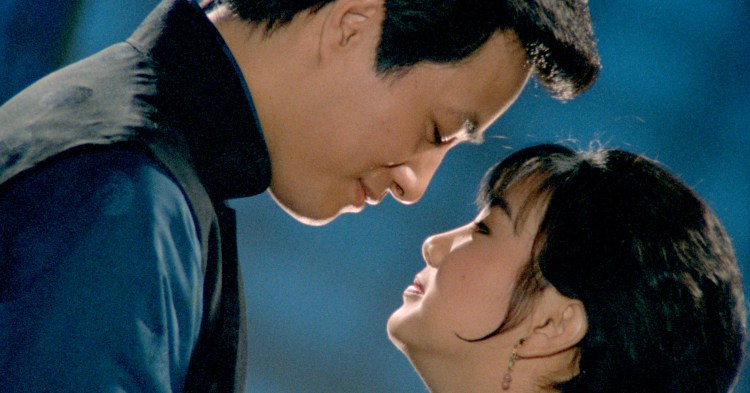
  • My Name Ain’t Suzie – 1985 HK drama following a 1950s bar girl.
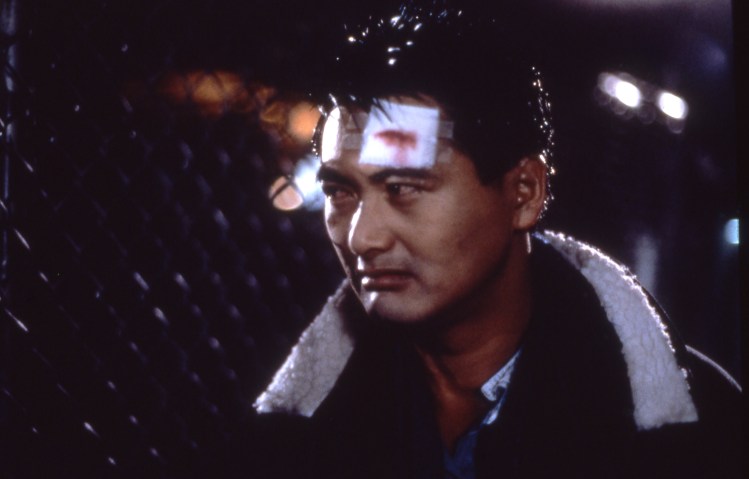
  • City on Fire – 1987 Ringo Lam classic starring Chow Yun-fat and Danny Lee in which an undercover cop infiltrates a gang of thieves only for the operation to go very wrong.
  • Reservoir Dogs – Tarantino’s 1992 crime drama.

100 Years of Korean Cinema:
I Choose Evil – Lawbreakers Under the Military Dictatorship 

black hair still 1

  • Black Hair – Lee Man-hee classic from 1964 in which a betrayed gangster’s moll mulls going straight thanks to the attentions of a cheerful cabbie. Review.
  • The Body Confession – Jo Keung-ha’s 1964 melodrama in which a woman turns to sex work to raise her three children.
  • A Day Off – Lee Man-hee’s bleak 1968 melodrama following an impoverished couple as they face an impossible situation. Review.
  • Promise of the Flesh – 1975 melodrama from Kim Ki-young in which a young woman on temporary release from prison meets man and promises to meet him two years later.
  • Jagko – Im Kwon-taek pioneers the division film in exploring the parallel fates of a partisan and the man who failed to catch him in the very different world of 1980. Review.
  • The Last Witness  – a detective’s investigation of a brewery owner’s murder takes him right into the dark heart of the recent past in Lee Doo-yong’s powerful drama. Review.
  • Ticket – 1985 Im Kwon-taek drama exploring the lives of five “coffee girls”.
  • Lovers in Woomukbaemi – Jang Sun-woo’s 1990 romantic melodrama stars Park Joong-hoon as a henpecked husband who begins an affair with a battered wife. Review.

Info Screenings 

10 Years Japan still 1

  • A First Farewell – A muslim boy in Xinjiang prepares to say goodbye to his deaf/mute mother when his father decides to put her into a nursing home.
  • Ten Years Japan – omnibus film featuring five visions of near future Japan. Review.
  • Ten Years Taiwan – omnibus film featuring five visions of near future Taiwan.
  • Ten Years Thailand – omnibus film featuring five visions of near future Thailand.

Korean Independent Comedies

Coffee Noir

  • Coffee Noir: Black Brown – prohibition-themed comedy as a barista turns her coffee shop into a speakeasy following the outlawing of the beverage.
  • Passing Summer – A couple running a Jeju hotel are stunned when a pair of faces from the past turn up as guests.
  • Saem – a man goes to Seoul to look for his first love but has a rare condition in which he is unable to recognise faces.

Restored Classics 

wheel of Life

  • A Speck in the Water – 1976 Philippine fishing village drama from Ishmael Bernal
  • The Wheel of Life – Omnibus film featuring three tales directed by King Hu, Li Hsing, and Pai Ching-jui in which the same two actors play lovers across different ages.

The 21st Udine Far East Film Festival runs from 26th April to 4th May 2019. Full details for each of the films will be available shortly via the official website where you will also be able to find the daily screening schedule. Screenings take place both at the Teatro Nuovo and Cinema Centrale. You can keep up with all the latest festival news via the festival’s Facebook PageInstagram and YouTube channels, Twitter account, and Tumblr.

All Because of Love (痴情男子漢, Lien Yi-Chi, 2017)

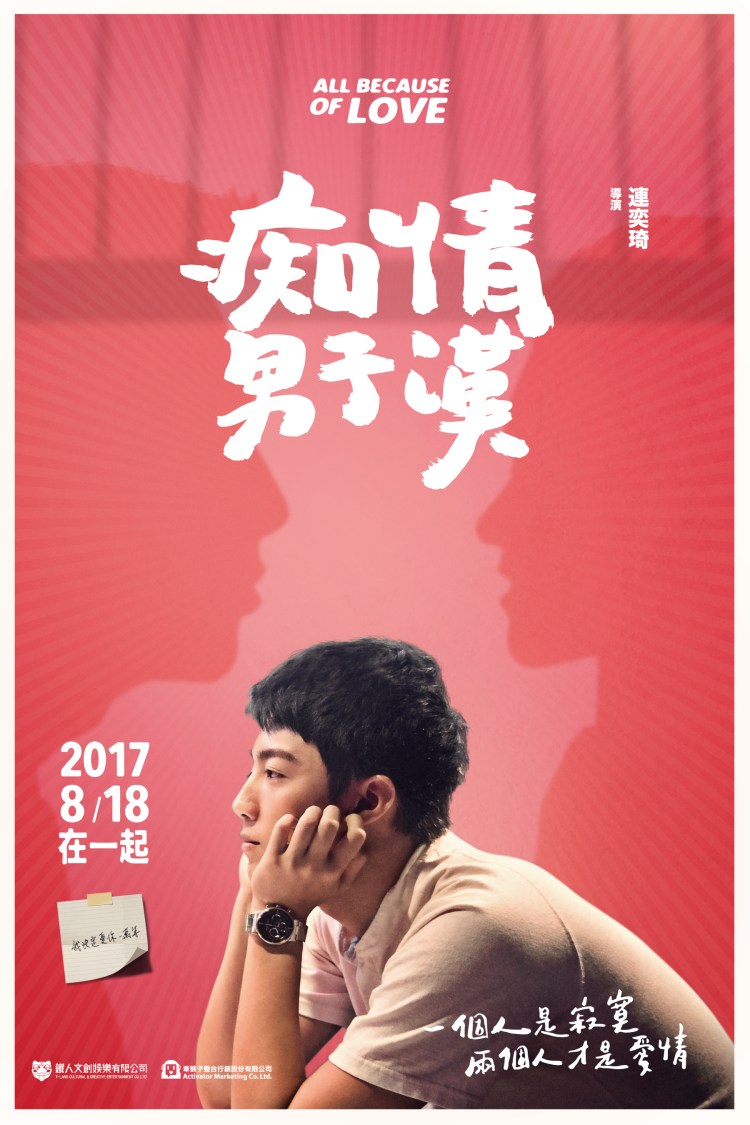
All Because of Love PosterGrowing up is hard is to do – that is, unless you’re the hero of a teen movie, in which case growing up is merely “difficult” and everything is sure to be alright once the bullies have been vanquished and the last dance danced. Designed to appeal to its target audience, the world of the teen movie is usually black and white, free from the chaos and confusion which most experience during adolescence. All Because of Love (痴情男子漢, Cqíng Nánhàn) is, however, refreshingly honest in its fierce love of a messy situation, forcing its hero into a series of “difficult” circumstances while he plays the noble fool holding fast to an obviously unrequited love in the hope that his niceness will somehow capture his true love’s heart.

When we first meet Erkan (Kent Tsai), he’s a nerd and the member of an oppressed minority at his school, constantly targeted by the tough guys. He is hopelessly in love with popular girl Mandy (Gingle Wang), who is actually dating one of the bullies and doesn’t even really know who Erkan is. Despite his declaration to love her for a thousand years, Erkan’s attempts to woo Mandy end in spectacular and humiliating failure but still he does not give up. Shortly after graduating high school, Mandy abruptly rings him for “a date”. Erkan, still smitten, is excited but Mandy has an ulterior motive – she is pregnant with her jock boyfriend’s child and, abandoned by her own one true love, reckons Erkan might like to try out life as a baby daddy. She is correct in her assumption and Erkan would be buying a ring if he had any money but as it is they’ll have to make do with the gentle guidance of Erkan’s elopement expert grandad (Hsu Hsiao-shun) who takes them back to his seaside home town where they can hide out from Mandy’s overbearing (and very wealthy) family.

As the title implies, the rest of the film becomes a treatise on love – requited or not, familial and romantic, permitted or illicit. Erkan is thrilled, on one level, to have got it together with Mandy but on the other hand Mandy won’t let him near her and it’s clear she is only using him and taking advantage of his noble character to get her out of a fix. Meanwhile, staying at inn, Erkan gets to know another girl, Sing (Dara Hanfman), who is in a permanently gloomy mood thanks to her devastating ability to read minds, and hasn’t left her room in years. Sing, thanks to her ability, has fallen half in love with Erkan’s goofy goodheartedness but also knows he’s still hung up on Mandy, and that Mandy is still hung up on her ex-boyfriend. She is then in a difficult position but manages to strike up enough of a friendship with the lovelorn young man to spur her on to exploring the outside world once again.

Meanwhile, Erkan is also confronted by the eerie similarities between his present predicament and the circumstances of his birth. Having always lived with his granddad, Erkan assumed his parents had passed on but discovers there may be more to the story only he’ll have to go to Japan to find out. Erkan’s granddad kicked off the cycle by eloping with Erkan’s grandmother, leaving their hometown far behind to live a life of love far away, though his son and grandson do not seem to have had so much luck when it comes to romance and Erkan’s romantic answers perhaps lie in exploring his family history rather than re-examining his high school days and refusing to let go of his idealised teenage crush.

A heart to heart with Sing provokes a more grown up meditation of unrequited love even if Erkan is entirely oblivious to Sing’s delicately concealed feelings. Purehearted, Erkan insists that love does not need to be requited, merely loving without being loved is good enough for him (so he says, or perhaps he just doesn’t expect anything more). Sing tells him he’s wrong, that it takes two to love and that a one sided affection is nothing more than intense loneliness. Erkan agrees, missing Sing’s hidden meaning, but maturely admitting that it would be wrong to hold someone’s hand just because you’re lonely when your heart is elsewhere.

Erkan’s idealised love for Mandy is gradually revealed as an adolescent affectation while she is left battling various kinds of familial expectation and manipulation before discovering her former boyfriend is not perhaps the heel that everyone had assumed him to be. Meanwhile, Sing is doing something similar in trying to lay to rest the ghost of a friend who left long ago and Erkan is left trying to reclaim his identity though figuring out who he really is before learning to look at what’s right in front of him rather than indulging in a romantic fantasy. Lien Yi-chi sends Erkan on some very bizarre adventures, swapping genres at a moment’s notice from westerns to classic melodrama and musicals and then settling on something in the middle which feels oddly authentic and lived in despite its strangeness. Often absurd if not quite surreal, Lien’s warmhearted silliness is almost impossible to resist as is the cheerful innocence of the effortlessly romantic conclusion.


Screened at the 20th Udine Far East Film Festival.

Original trailer (English subtitles)

The Chase (반드시 잡는다, Kim Hong-sun, 2017)

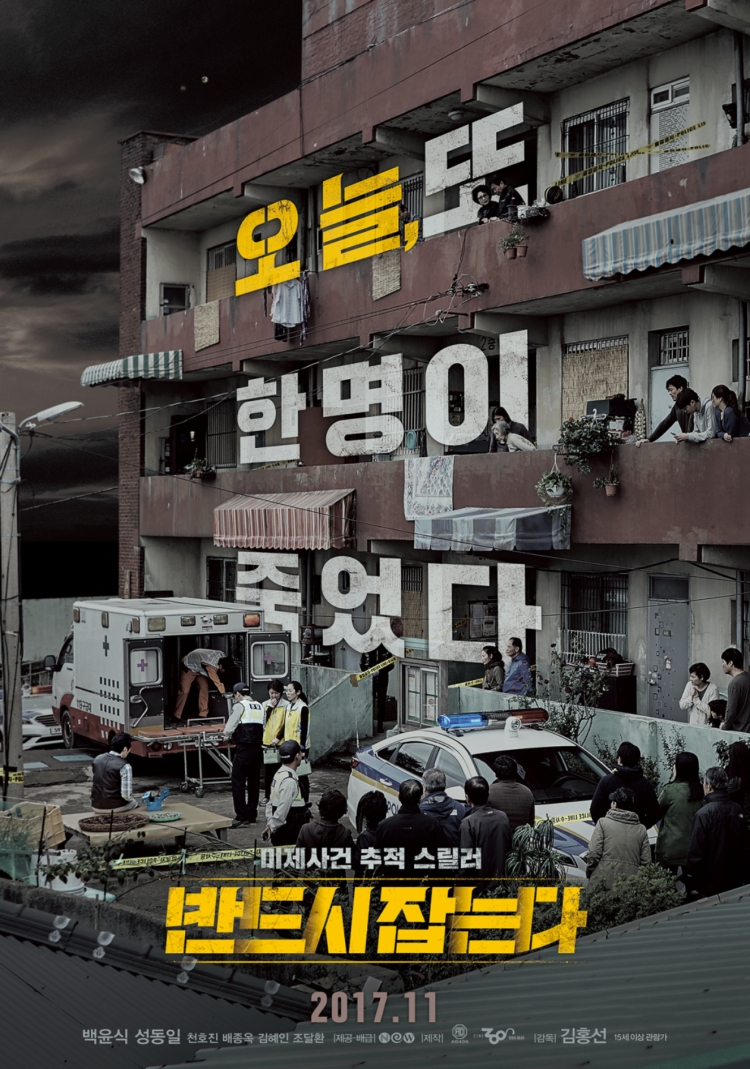
The Chase posterKorea may not quite be facing such an ageing population crisis as neighbouring nations, but old age has become a persistent cinematic preoccupation. We’ve seen old women still engaging in acts of prostitution to support themselves in the absence of family (and indeed the state), serial killers becoming dangerously confused, and ageing grandmother’s attempt to see the beauty in a world that seems to be descending into chaos. What The Chase (반드시 잡는다 Bandeusi Jabneunda) shows us is that the elderly do at least have time on their hands that could well be used for fighting crime and protecting the vulnerable.

If you were appointing elderly street guardians, you probably wouldn’t pick Deok-soo (Baek Yoon-sik). A curmudgeonly landlord with a conviction that everyone is out to diddle him on their rent, Deok-soo complains loudly when a body is found in a nearby area because it’s going to damage property prices. People who are supposed to die should just die, he exclaims, that’s patriotism! You can bet your bottom dollar Deok-soo voted for Park Geun-hye, but despite his grumpy exterior he has a soft heart as one of his young charges reveals when she reminds him that he’s never thrown anyone out just because they didn’t pay up. Deok-soo has taken quite a (paternal) liking to Ji-eun (Kim Hye-in), a young woman living alone away from family in one of his horrible little apartments. Aside from her rent arrears and tendency to let her mixed up friend stay over so often that she virtually lives there, Ji-eun is one of Deok-soo’s favourite tenants.

Which is perhaps why he gets himself so involved when she suddenly goes missing after a shock discovery is made in her flat. Other than the first body which got Deok-soo so worked up, a few other elderly people have been passing away in lonely deaths which, sadly, isn’t particularly suspicious save that the pattern matches that from an unsolved serial murder case from 30 years ago which began with the killing of old people and then progressed to sexually aggravated murder of young women with long dark hair – just like Ji-eun.

Aside from the ongoing serial killer plot, director Kim Hong-sun makes space for depicting the various problems faced by the elderly in contemporary Korea. The first problems are loneliness and dislocation caused by separation from family members – many of the older people Deok-soo is familiar with have children overseas whom they have all but lost touch with. The second problem is economic – Deok-soo’s flats are dirt cheap for a reason and mostly inhabited by the very young and the very old, i.e. people without a lot of “disposable” income. Being elderly, they often can’t find jobs and don’t have access to a proper pension leading many to take to the streets protesting for rights for the aged including that to work or to be given state support. Deok-soo is lucky with income from renting the apartments, but he also works as a locksmith which brings in a few extra pennies. Being Deok-soo he isn’t particularly worried about other people less lucky than himself, so he rolls his eyes at the protests but is worried enough by the lonely deaths to ask one of his tenants to look in on him every now and then to avoid becoming one.

Meanwhile, Deok-soo has become “friends” with a retired police detective who’s convinced the serial killer he failed to catch 30 years ago is back. Worried that Ji-eun may end up among his victims, Deok-soo begins investigating, unwittingly getting himself mixed up in a dark and confusing world of old school hardboiled only Pyeong-dal (Sung Dong-il) is not quite as worthy a guide as he seemed. Walking around like a maverick cop from a violent ‘70s action movie, Pyeong-dal is convinced he knows who the killer is but he is old and unsteady and his mind is not perhaps reliable.

Then again a persistent subplot seems to argue that the young have no respect for age, are selfish and corrupt, thinking only of short term pleasures and forgetting that they too will one day be old with no one around to look after them. No one takes Deok-soo and Pyeong-dal seriously, they are after all just grumpy old men that everyone wants to get rid of as quickly as possible. They do, however, (paradoxically) have time to indulge in “silly” ideas that the young do not have and are, therefore, perfectly positioned to take down a serial killer who preys on the weak and vulnerable including old men like them and pretty young girls like Ji-eun. Old guys have still got it, at least according to The Chase, though they might have got there faster if only they’d cut the young whippersnappers some slack.


Screened at the 20th Udine Far East Film Festival.

Also available to stream on Netflix.

International trailer (English subtitles)

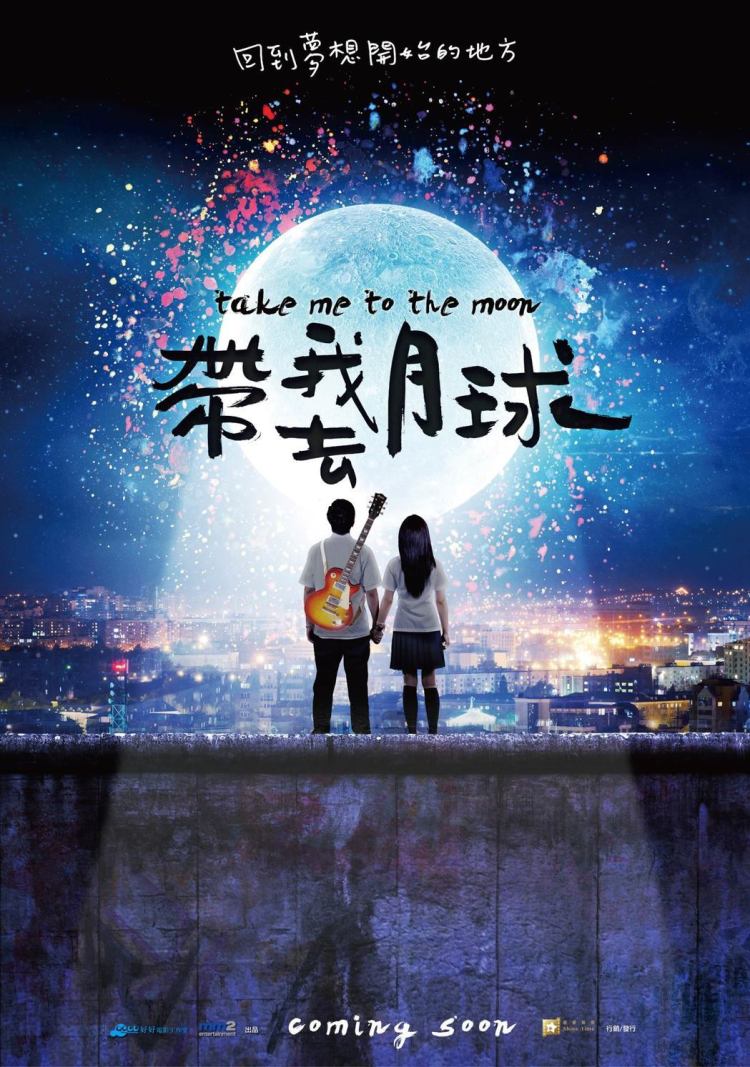
Take Me to the Moon (帶我去月球, Hsieh Chun-Yi, 2017)

take me to the moon posterShould you continue pursuing your dreams even after you know they won’t come true or just give in and live a dull but comfortable life of conformity? These are questions most young people face at one time or another, but for the hero of Hsieh Chun-Yi’s Take me to the Moon (帶我去月球, Dài Wǒ Qù Yuèqiú), they take on an extra dimension when he is suddenly thrown back into the past with an opportunity to “save” the life of a friend if only he can convince her to abandon her dreams of stardom and stay home instead. A melancholy nostalgia fest for late ‘90s Taiwan (and the late ‘90s in general), Take me to the Moon is an ode to lost opportunities, words unsaid, and the immutability of the past which nevertheless makes room for the odd miracle or two as its hero realises perhaps he’s not grown up as much as he thought.

Three years prior to the main action, 30-something Wang (Jasper Liu) takes a business trip to Tokyo where he reconnects with high school friend Emma (Vivian Sung) who won a prestigious competition to go to Japan and train with a big idol producer. Sadly, Emma’s dreams have not panned out and she’s embarrassed to let her old friend see just how badly things have been going for her. Fast-forward three years to the present and Emma has unfortunately passed away at only 38 after years of hard drinking in hostess bars, poor nutrition, and overwork finally caught up with her. The once tight group of high school bandmates, two of whom have become a married couple, argue over their collective failure to save their friend at which point Wang walks out, meets a weird old woman who gives him some strange flowers, and is knocked over by a car only to wake up back in 1997. Desperate to save Emma, Wang thinks his best bet lies in ruining her chance to go to Japan so that she will never experience the failure of her hopes and dreams and will stay home to live a simpler, safer life.

Filled with a youthful nostalgia and feeling of authenticity, Take me to the Moon makes the most of its ‘90s setting, recreating the late 20th century city through impressive CGI. Wang reacquaints himself with his teenage self, retrieving his well hidden box of tame pornography and enjoying another few bowls of his mother’s delicious fish soup, but his main goal is essentially to ruin the dreams of his friend – an act of betrayal which might be in her interest, but then again it isn’t Wang’s choice to make and perhaps Emma would rather follow her heart even if it means it’s going to get broken.

What Wang eventually realises, as one of the Tom Chang tracks which pepper the narrative points out, is that what he should have been treasuring was the extra time spent with friends rather than worrying about the future. Back in his teenage years Wang was too shy to confess his lifelong crush on Emma and then went on to be plagued by classic bad timing in adulthood until finally it was too late. His attempts to “save” Emma by ruining her life are in part selfish but also cowardly in taking the place of simply saying the things he needed to say at the right time. Finally figuring this out, Wang realises that he can’t “save” Emma like the hero of a time travel movie by manipulating the past, but he has been given a second chance to let her know how he felt. This, in the end, is what may finally, really “save” his friend – simply letting her know that he is there supporting her, that she’s fine as she is and doesn’t need to be “perfect” to be loved as her overbearing parents have led her to believe.

Though Wang awakens to a more positive change than he might have expected, the general idea is that you can’t rehash the past and should make sure that you’re happy with your present to avoid the desire to try. Having given up on his youthful dreams for a lonely corporate existence, middle-aged Wang regains a little of his essential self and decides to fight for a more authentic way of life even if it doesn’t really go anywhere. Warm and fuzzy yet also strangely melancholy, Take me to the Moon is another in a long line of Taiwanese high school nostalgia movies but proves a fitting tribute both to its era and the singer songwriter featured throughout who himself died young in a tragic car accident in 1997 aged just 31.


Screened at the 20th Udine Far East Film Festival.

Original trailer (English subtitles)

Original 1997 music video for Tom Chang’s Take Me to the Moon