Coming Home (UK Anime Network Review)

coming-home-film-decembre-2014-sortieZhang Yimou’s latest reviewed at UK Anime Network


Dealing with the recent past in mainstream Chinese film can be a difficult business. While you may be able to get away with making a comment on the present through looking at the pre-communist past, raising the spectres of some of the darker episodes in the post Mao Zedong China is, at best, taboo. That Zhang Yimou, more recently moving into the mainstream as one of China’s most bankable directors both abroad and domestically, has been able to make a film about the suffering endured by countless citizens during The Cultural Revolution is therefore a little surprising. However, Coming Home is far from an examination of the period’s horrors but rather a metaphor for modern China reframed as a melodrama of deep love and marital happiness frustrated by historical circumstance.

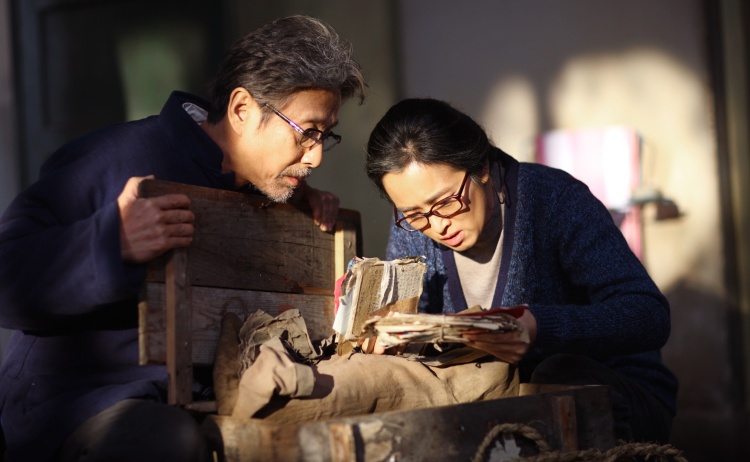
Based on The Criminal Lu Yanshi a book by Yan Geling, the central story focuses on the trio of Lu – a professor sent for “re-education” at the beginning of The Cultural Revolution, his wife Feng and their daughter Dandan. The first part of the film sees Dandan attending a ballet school and hoping to gain the lead in the upcoming propaganda ballet Red Detachment of Women. However, despite being the most talented dancer she learns she will not be chosen for a leading role because of her father’s disgrace – a situation further complicated because it transpires her father has escaped from the camp and may be trying to return home. Despite the warnings and the obvious danger, Feng is desperate to see her husband again though Dandan, who was just an infant when her father was taken away, is angry and resentful. Lu’s attempt to return ends in recapture and it’s not until the end of The Cultural Revoltion years later that he’s finally able to come home. However, Feng now suffers from mild dementia and refuses to recognise this much older version of the man she’s been waiting for all this time. Every fifth day of the month she goes to the station to wait for her husband completely unaware that he has already returned.

It’s the second half of the story that occupies the bulk of the running time as Lu’s original escape attempt becomes more or less a prologue to the main story. Having returned home, Lu tries to reawaken his wife’s dormant memories by reminding her of their shared past. Feng can take care of herself day to day though she forgets things and muddles up timescales, but is unable to acknowledge Lu as her husband. Along with the remorseful Dandan who only now understands exactly what her parents have been through, he tries to remind her of happier times by reading her letters or playing the piano as he used to do. In someways the political circumstances take a back seat here as Feng’s dementia could easily be solely of natural causes (though the film strongly suggests a blow to the head during Lu’s escape attempt and subsequent traumas maybe a partial cause of her memory loss) and Lu the loving husband trying to keep their past alive. However, the situation is further complicated as the couple have now been separated for over twenty years with no contact at all. There was immense suffering on both sides with Lu desperate to see his wife and daughter again but never knowing if he would, and his wife making great sacrifices to try and protect him in the hope that he would survive and one day return home.

The film never really goes into what Lu did, other than his having been a professor which might have been enough on its own, or probe into very much detail about his life being re-educated. Bar a final reveal and a general feeling of melancholy, it doesn’t much delve into Feng’s life other than her devotion in waiting for Lu. In fact, it sort of leaves The Cultural Revolution to one side as much as it can. However, its ambiguity is almost an analogy for the way modern China wishes to think about its past – both remembering and not at the same time. Lu endures all, suffers all only to return to a world where he doesn’t quite exist. Patiently, he tries to undo this painful knot of memory that has paralysed his wife’s brain so that he might regain something of what he’s lost but the more he tries to show her the less she seems to see. She can only recognise him as the man he is now, a kindly neighbour, and not as the man that was taken from her all those years ago and for whom she still waits. There are those like Lu who are desperately trying to reconcile the past with the present so they can move forward but there are also those like Feng who are unable to come to terms with everything they’ve suffered and accept the now for what is. The result being a kind of numb limbo which leaves everybody waiting at the station for a train which will never arrive.

Coming Home probably goes as far it’s allowed to go, but that still isn’t terribly far. As a film about China’s turbulent recent history, it’s a start but doesn’t begin to approach some of those darker themes with any kind of depth. That said, it’s really much more of an old fashioned melodrama about a faithful husband who comes home to his devoted wife after many years of enforced separation only to find that, far from having “forgotten” him, she can’t forget the him that was taken away long enough to recognise that he’s come home. Fans of romantic drama will find a lot more to like than those hoping for a hard hitting examination of horrors The Cultural Revolution but Coming Home does do what it promises in a typically polished style. A little bit stuffy and noticeably restrained, Coming Home is not exactly a late career masterpiece from the director of Raise the Red Lantern, but it does at least open a few doors.
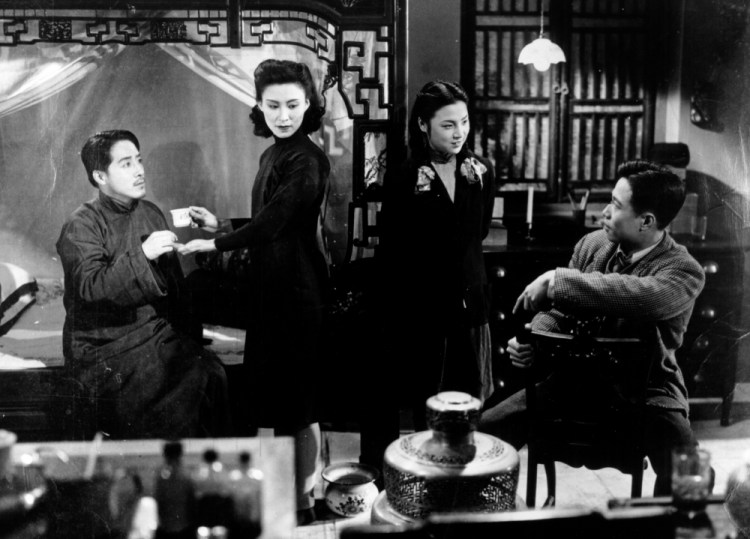
Spring in a Small Town (小城之春, Fei Mu, 1948)

spring-in-a-small-town-1948-001-two-couples-in-the-householdReview of this Chinese lost classic up at UK Anime Network


Fei Mu’s Spring in a Small Town is often regarded as one of the great lost masterpieces of Chinese cinema. Completed in 1948, it stands on the borderline of China’s transformation into a communist state and ultimately paid the price for its “questionable” politics (or, indeed, lack of them). Fei like many at the time relocated to Hong Kong where he set up a production company but sadly died not long after at just 44 years of age and Spring in a Small Town became his final film. Based on a short story by Li Tianji, the film is a complex portrait of frustrated hopes and failed marriages against the backdrop of a society in rapid change.

Yuwen is a married woman who lives for her daily errands which take her out of the decaying house she shares with her invalid husband and his school aged younger sister. Her one pleasure in life is the solitary walk she’s accustomed to take along the ruined wall which leads into town. Her husband, Liyan, believes himself to be suffering from tuberculosis and confines himself to what remains of their estate and its once fine garden. The house is little more than rubble in places and bears the heavy scars of the war years on its un-repaired exteriors. One day, an old friend of Liyan’s, Zhang – a doctor, comes to visit. Unbeknownst to anyone, Zhang and Yuwen grew up in the same village and were, in fact, childhood sweethearts until time and circumstance forced them apart.

Shot through with Chekhovian melancholy resignation (but perhaps without his trademark sense of humour), Spring in a Small Town is a tightly wound character drama which uses the plight of its characters to deliver a much wider message. Yuwen narrates her inner life for us (a stylish device which anticipates the technique coming into its prime nearly twenty years later in the French New Wave), giving voice to thoughts that could never be expressed directly. Her unhappiness is the first thing that strikes the viewer along with the decayed grandeur of her surroundings. Having become more nurse than wife to a husband that she never loved, Yuwen has resigned herself to a life of morning walks and embroidery devoid of all stimulation. Zhang’s unexpected re-entry into her life spells both doom and salvation. Liyan suspects nothing and even sees Zhang as a potential match for his sixteen year old sister, Xiang! Zhang’s arrival threatens to throw a hand grenade into this delicately balanced yet unhappy household with long buried emotions slowly working their way to the surface.

Fei keeps the tension up by keeping a tight lid on the repressed emotions of the time. What could so easily have become an overwrought melodrama retains its emotional power precisely because of its naturalistic restraint. Spring in a Small Town has been described as “the Chinese Brief Encounter” and it certainly shares something of that film’s powerful emotional manoeuvring pushed through with a level of reserve many would consider typically British. Both films also resolutely reinforce the prevailing social order of the day where duty conquers all and properness comes before personal happiness. However, where Brief Encounter ends on a note of melancholic restoration, Spring in a Small Town dares to be a little more upbeat (if still just as melancholic) with a sense that spring may really have returned to these four people after a long and hard winter. The frost has finally thawed and new life can begin again.

It’s not completely clear what exactly the new regime found problematic about Spring in a Small Town though it’s certainly a long way from socialist realist cinema. The world it depicts is an upper class one with not a little sorrow over the decline of this once noble house and fretting about its legacy neither of which gel very well with communist party guidelines. Otherwise the film is fairly apolitical which would render it a little frivolous from their point of view but far from trivial in ours. Enormously influential since its rediscovery by the Fifth Generation filmmakers in 1980s, Spring in a Small Town is a gloriously melancholic character study that deserves to finally take its rightful place alongside finest romantic dramas the golden age of cinema has to offer.


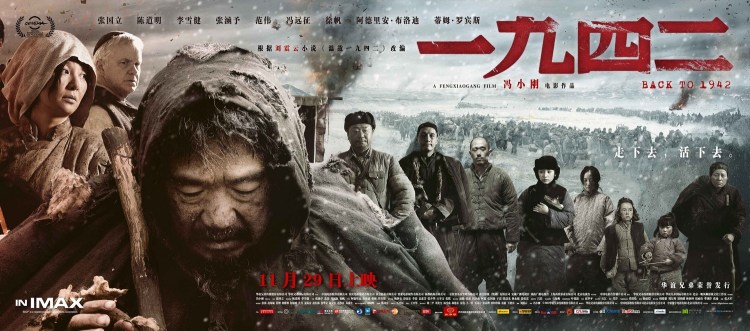
Back to 1942 (一九四二, Feng Xiaogang, 2012)

back-to-1942-poster08Review of this (slightly stodgy) war time starvation drama up at UK Anime Network.


Feng Xiaogang might not exactly be a household name in the West but at home he’s one of China’s most bankable directors. Dubbed the Chinese Spielberg (perhaps a little reductively) he made his name with a series of crowd pleasing comedy films that had audiences queuing ‘round the block in expectation. In recent years, he’s moved away from the comedy genre in favour of big budget, Hollywood style dramas centred around historical events like the 1976 Tangshan Earthquake in Aftershock or the Civil War themed Assembly. Back to 1942 sees him step back even further in time to one of China’s great hidden tragedies, the great Henan famine of 1942.

In 1942 China was in a precarious political position as it faced the ongoing Japanese incursion and came under increasing pressure to align itself with Japan’s enemies as part of the wider global conflict. A serious drought could not have come at a worse time as ever dwindling resources were pulled in several directions at once. The story here concerns the landlord, Fan, who had originally a sizeable grain store set aside to feed his family and retainers. However, after his village is raided by bandits he too is forced to travel westwards in hope of finding better supplies. Along with his wife, pregnant daughter-in-law, daughter and servant as well as another family from the village he faces increasing hardship as he tries to find food to survive. Meanwhile an American journalist employed by TIME magazine has got wind of the story and is trying to get something done about it but to no avail. The government has the war effort as its top priority – what does it matter if a few peasants die as long as the army remains well fed.

Politically speaking, you can get away with talking about ‘unpleasant’ historical events assuming that they happened before the communist revolution. The finger here is pointed quite squarely at Chang Kai-shek and his nationalist government who are portrayed not only as unfeeling and self interested but also as ineffectual when it comes to the business of conducting war with the Japanese. Indeed, at once point Chang suggests simply ceding Henan to the Japanese rather go to the expense of defending this barren stretch of land. Though it is clear he is aware of the extent of the famine, he does little about it until eventually sending “emergency supplies” to “the disaster area” to try and alleviate the damage to his reputation and diplomatic relations with other powers when news of the famine finally reaches them after the conflict. Though the local governor appears genuinely concerned and does his best to get help for the starving people (even if it’s only to alleviate the ridiculous burdens placed on them to supply grain for the army even though there is none) he is hamstrung by the top heavy hierarchical system.

No help is going to come from the government for Fan and his family. They might have been bigwigs once but now they’re in the same boat as everyone else – forced on a virtual death march through the arid land desperately trying to find anywhere that will yield to them the resources to survive. Bodies litter the landscape as the weaker succumb to starvation, donkeys and pack horses are eaten and finally wives and children are bought and sold in the hope of surviving a few hours more. Make no bones about it, Back to 1942 is almost two and a half hours of pure misery as one tragic yet inevitable event follows on the next. Unfortunately, Feng has laid the gloom on a little thick in this understandably bleak tale. The tone never wavers and somehow the constant nature of its sorrows fail to engage as they take on a sadly predictable air. Despite the obvious potential of the story, there’s precious little actual drama and the performances fail to capture the audience’s sympathies as Fan & Co. forced into increasingly degrading acts trying to ensure their own survival.

However, Back to 1942 was an expensive production and you can see all of that money on screen as the battle and action sequences rival those of any Hollywood blockbuster. Whatever reservations there may be with the plotting, it always looks good and you could never accuse it of skimping out on its production design. The only minor criticism may be that the performances of non-Chinese actors feel significantly under rehearsed with Tim Robbins’ priest being the obvious example as he struggles with a strange accent and unclear position in the narrative. Adrien Brody fares better as the idealistic reporter but still fails to convince. The film doesn’t quite seem to know where to put itself when it comes both to the role of religion and of other powers active in China at this time and though neither of those ideas are at the forefront of this film, they muddy the waters in ways other than intended by the filmmaker.
An often beautifully photographed film Back to 1942 is also a cold one and given its depressing subject matter something of a chore. The famine that struck the Henan region in 1942 and subsequent (non) reaction to it from the powers at be is indeed something that should be addressed and brought to light in the modern world but perhaps it doesn’t need to be in such a blunt fashion. The film is long, and wearing but ultimately fails to connect with the viewer in a non cynical way making its drawn out proceedings a little on the tedious side for most viewers. Those with a taste for sentimental melodramas with high production values may find a lot to enjoy with Back to 1942 but those who prefer a more nuanced drama will likely leave disappointed.


Exit (迴光奏鳴曲, Chienn Hsiang, 2014)

exit 1Review of this existential character drama from Taiwan up at UK Anime Network. This one was screened at BFI London Film Festival but now it’s at Glasgow too and will be getting a further UK release courtesy of relatively new distributor Facet Films in April!


Sometimes it’s the little things that wear you out; stretching over years, becoming almost invisible until a surge of troubles washes over you and leaves you gasping for air in stormy seas. So it is for Ling, an ordinary, middle aged Taiwanese woman who finds herself alone with her husband working in Shanghai (constantly incommunicado even via telephone) and a teenage daughter, Mei Mei, who’s not very interested in spending quality time with her mother when she’s suddenly made redundant from her job as a seamstress at a factory and also discovers she’s heading into the menopause. Ling has also become the de facto carer for her mother-in-law who’s in hospital (not that her mother-in-law seems to appreciate it very much) where she becomes increasingly fascinated by a badly injured man in the bed opposite who has no family to visit him or take care of his daily needs. In a gesture of kindness, Ling begins by trying to ease some of his discomfort by mopping his brow and dripping water on his parched lips but soon transitions to bed baths. This purely physical relationship with a blinded stranger begins to reawaken something in Ling but will it be enough to save her from life’s disappointments?

Exit is the feature debut from director Chienn Hsiang, an award winning Taiwanese cinematographer (Blue Gate Crossing) and stars frequent Tsai Ming-liang collaborator Chen Shiang-Chyi in the leading role. Unfolding slowly with minimal, naturalistic dialogue the shadow of Tsai looms large (not that that’s ever a bad thing) but Chienn handles this extended moment of existential crisis with a steady hand and interesting compositional choices. Occasionally, his metaphors feel a little overplayed – the sticking lock on Ling’s front door for example and her general trouble with blocked exits are nice ideas but call attention to themselves a little too readily. That said, Chen’s central performance keeps the film well anchored in its everyday mundanity and ordinary despair whilst also ensuring Ling maintains the audience’s sympathies.

At heart, Exit is an intense character study of one woman’s struggles in modern Taiwan as she finds herself caught between several different transitionary moments. Everybody in Taiwan, it seems, is on their way to China. Ling has already lost her husband who never takes her calls any more, she’s just lost her job because the factory owner’s sons are all obsessed with the idea of the mainland – all everyone ever seems to talk about is leaving, there’s no more work here. She lives alone in a pretty run down apartment where the wallpaper is peeling off the walls (she reseals it with sellotape) and she’s plagued by amorous noisy neighbours next door. Her only ray of sunshine is the dance club run by a former work colleague which, aside from also providing a bit of income in the form of costuming and repairs, is the only thing that seems to catch Ling’s attention.

That and the mysterious stranger in the hospital with his strange and terrible injuries. Ling’s encounters with the blind man take on an oddly intimate, sensual quality but as soon as his eye bandages come off she becomes shy or possibly ashamed. Likewise, having made herself a nice new dress and wearing the new shoes suggested by her dance club owning friend Ling goes for a rare night out only to catch sight of her daughter. Once again conflicted, Ling removes her make-up in haste ready to confront Mei Mei (who also rejects her telephone calls) only to discover the girl and her boyfriend have already left leaving only a vague air of shame and discontent behind them.

Exit is a nuanced and engaging snapshot of a moment of crisis in an ordinary woman’s life. It may be true that we all lead lives of quiet desperation but Ling’s troubles are, sadly, of the relatable kind. Trapped in a rapidly changing city and isolated by its social circumstances and cultural constraints it isn’t surprising that Ling’s frustrations finally come to a head but like everyone else Ling has to find a way to go on living and watching her getting back to herself becomes an intensely moving experience.


Uzumasa Limelight (太秦ライムライト, Ken Ochiai, 2014)

tumblr_nfxugkn3kO1seecgzo1_1280Another one from The Glasgow Film Festival (which starts today!), Uzumasa Limelight reviewed at UK Anime Network.


Once upon a time, Japanese network television was dominated by Jidaigeki or samurai dramas filled with tales of glorious battles and petty vendettas. Of course, they had their stars – the guys on the posters looking mean with their swords held high, but they couldn’t have run without the “kirareyaku” or the guys whose sole job it is to get killed by the star of the show over and over again. However, times have changed and samurai dramas aren’t as popular as they used to be. Consequently, there’s not so much work to go around and it’s hard to make a living getting by on ordinary “extra” work in modern day dramas when you’re used to the comparatively more active chanbara world. The days of the once famous Uzumasa studios as the capital of period drama in Japan are coming to a close, yet perhaps it’s just time for the older generation to step out of the limelight so that the young ones can enjoy its glow.

Inspired by Charlie Chaplin’s Limelight – the story of a once famous washed up clown who finds a new lease on life after saving a young dancer from suicide, Uzumasa Limelight is a poignant tale of the transient nature of art as it evolves from one generation to the next. In a bit of smart casting, the leading role of the veteran kirareyaku, Kamiyama, is played by a real life master – Seizo Fukumoto who has been dying on screen for over fifty years and takes on a leading role here for the first time! After falling over in the street he encounters a young, hopeful actress just leaving an audition. Satsuki (played by world champion martial artist Chihiro Yamamoto in her first dramatic role), it turns out is fascinated by the kirareyuki craft and becomes intent on training under Kamiyama despite being warned there are generally very few of these sorts of roles available for women. Nevertheless, Kamiyama begins to pass on some of his skill and before long Satsuki herself has begins to step into the limelight.

Things have certainly changed a lot since Kamiyama began working back in the glory days of the TV chanbara serial. A new producer has come in and a series which had run for over forty years has been cancelled to make way for a new show – still a period drama but more modern and up to the minute. It’s going to star a handsome idol from a top dance group – one who refuses to wear the bald cap so they have to put him in a ridiculous helmet with a giant fur train. He also can’t use a real sword so all the fights will be done with cut off green sticks and replaced with CGI blades. The new producer doesn’t care about skill or experience, he just wants handsome faces to pull in the youth viewers – old guys like Kamiyama are totally out of luck! Who wants to see some random old guy when you could just pull in a few idols to wave a little stick around and fall over on queue? It’s a shame, but it’s the way of the world. Old soldiers fall but new faces rise in their place. There may be scant respect for craft, but the art form carries on – it changes and evolves from one generation to the next but the spirit remains.

In this way, Uzamasa Limelight feels very Japanese in that it sets up the conflict between a perceived decline in values in modern movie making – what was once an art is now a (fairly ridiculous) business, whilst simultaneously accepting the transient nature of all things. Kamiyama accepts his time has passed, he barely fights it and when he decides it’s time to go he does so with dignity. He passes his skills onto his young protege and watches her use them to become a star in the new artistic world whilst retiring to the sidelines, content to have played his part to the best of his ability. Uzumasa Limelight is a beautiful, poignant tribute to the bit players of countless movies whose performances are little appreciated but without whom an entire industry would not have been able to function. Imbued with a gentle melancholy, Uzumasa Limelight also offers not a little hope for the younger generation who will pick up where their forebears left off and create something, if not necessarily better, then at least different.


On a side note, this is a really well made trailer!

Pale Moon (紙の月, Daihachi Yoshida, 2014)

Pale-Moon_MainDaihachi Yoshida’s last venture into human dynamics, The Kirishima Thing, took the high school environment as a microcosm for society as a whole. In some senses painting on a large canvas by illuminating the inner lives of these teenagers acting as both individuals and as members of a group, The Kirishima Thing was equal parts ensemble character drama and probing social commentary. Pale Moon (紙の月, Kami no Tsuki) is no different in this regard although it focuses more tightly on one individual and shifts age groups from turbulent adolescence to middle aged desperation. Set in 1994 just after the bubble burst, this gleefully cheeky (im)morality tale takes another sideways glance at the social norms of contemporary Japan.

Rika (Rie Miyazawa) is a demure woman in her early forties. A childless former housewife, she’s recently moved from a part time position at a bank to a full time job where she works as a kind of personal banking assistant visiting wealthy clients at home to discuss their financial needs and physically depositing their money in the bank for them. Efficient, reserved, reliable – Rika is the perfect employee, that is until one day she spends some of a client’s money because there isn’t quite enough in her purse. She takes the money straight out of an ATM and replaces it right away, of course, but a line has been crossed. It’s a quick step from a gentle misappropriation of funds to a series of interestingly decorated hotel rooms with a boy half your age, embezzlement on a grand scale, blackmail, bank fraud – the list goes on. How did it ever come to this? Yet, it’s the strangest thing – Rika has never felt more alive.

Money – it’s the life blood of capitalism. It makes the world go round and drives people crazy as they try to amass even more little bits of paper with numbers written on them. It’s fake, an illusion that we’ve all bought into – no more real than a paper moon (to go by the film’s original Japanese title), though we continue to set all of our hopes afloat on its surface. When Rika finally convinces her financially challenged young lover to accept her (stolen) money, she tries to convince him that nothing will change but, of course, it does. The dynamics fluctuate and money gets in the way, the toxicity of debt starts to eat away at any genuine connection that may have existed. The irony is, Rika is one of those people who steals in order to give away. It sounds selfless, even altruistic, but is in fact the most intensely selfish action that can be taken. “It’s better to give than to receive” goes the mantra of the nuns of the Catholic school where young Rika was educated, but they also council that charity should never have anything to do with your own gratification. This is the lesson that Rika finds so hard to learn, it feels so good to give – how can it be wrong to take?

It’s easy to say that the world has changed a lot in the intervening twenty years between now and the time the bulk of the action takes place, but maybe it hasn’t. The first thing that strikes you is how extraordinarily sexist Rika’s world is. It’s not long before she’s being asked questions about her marital status whilst being made to feel uncomfortable, alone in the home of her elderly male client. Then at the office her boss praises her efforts whilst sadly lamenting that women have more “tools” at their disposal than men do, which is both insultingly crude and a put down of her skills and hard work. Rika only gets her permanent position because another woman, an employee of nineteen years standing, has been forced out through a campaign of constructive dismissal because the big wigs don’t like paying higher salaries to older female workers but they won’t promote them past a certain level either. Her younger colleagues make fun of their “spinster” supervisor, Sumi (Satomi Kobayashi), who, only a generation older, had to make a clear cut choice between work and family and having chosen a career now sees the rug being pulled out from under her with the standard “transfer to head office” game plan in place to force her into retirement.

Rika’s home life offers a similar level of hope for the future. Her husband is probably well meaning, but totally insensitive and the marriage is at best unfulfilling. He pooh-poohs his wife’s thriftiness and her new “hobby” at the bank, totally failing to understand her motivation. At one point he announces he’s being transferred abroad so she’ll have to give her notice – it never occurs to him she may not wish to go, let alone that she’d refuse over something so trivial as her own job. It’s little surprise then that she’d so quickly fall for a handsome and attentive stranger. An “amour fou”, an old story but no less potent than it ever was.

Rika knows none of it’s real – that her temporary crime fuelled reprieve can’t go on forever, but that only makes her feel more free. In one telling episode, Rika is talking to a granny she’s in the process of swindling and remarks on her beautiful new necklace. What a shame it’s fake, Rika says, but the old lady replies that she knows it’s only imitation but she doesn’t care – it’s pretty, she likes it and she’s happy. That perhaps is the answer. Rika saw her chance and she took it. That takes some courage and whatever the moral outrage one might feel, there’s something undeniably admirable, even exciting, about Rika’s dramatic escape from the constraints of conventional social behaviour.


Pale Moon is receiving its UK Premier at the Glasgow Film Festival on 19th February so if you’re in the Glasgow area be sure to check it out!

Wood Job! (Wood Job(ウッジョブ)神去なあなあ日常, Shinobu Yaguchi, 2014)

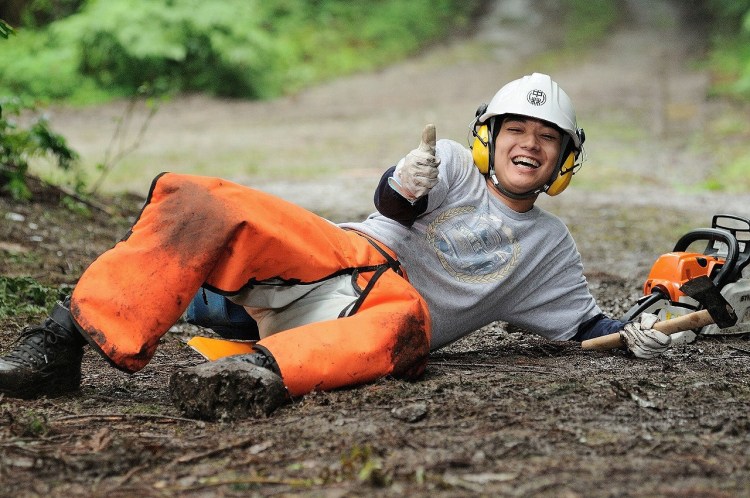
ff20140516a1aHe’s a lumberjack and he’s OK! Well, after a while anyway – climbing trees all day is not quite as much fun as it sounds in Shinobu Yaguchi’s latest comedy which sees a streetwise city kid randomly decide on a career on forestry. Not so much fish out of water as duck in a tree, Wood Job! is a heartwarming comedy drama which more than lives up to the puntastic comedy of its title.

Yuki Hirano is your typical slacker teenager. Like many guys his age, he’s run into something of a life crisis as he didn’t get into university and he hasn’t really thought about what to do. At first he thinks it’s no big deal, he’ll just take the tests again next year but after being abandoned by his girlfriend and seeing all his friends set off without him Yuki feels a little lost. That is until he notices a shiny magazine advertising a new life in the open air – “come and work with me!” it says next to a picture of a pretty girl. Yuki’s packed his bags and caught the next train before you can even say “Where’s the nearest combini”? but his new found occupation is a little more intensive than he was expecting and Yuki’s not sure he’s cut out for this no frills life. Then however he meets the girl from the advert herself – can Yuki really stick around long enough to convince her he’s not some city boy layabout but a real mountain man?

Wood Job! is that rare film that manages to mix a fair amount of slapstick comedy with the kind of naturalistic, everyday humour that can’t help but give it an endearingly warm quality. Taking the classic fish out of water approach as its basis, the film highlights the absurdity of country life (at least to eyes more accustomed to the city) but crucially never mocks it and seems to have a profound respect for the rural way of life and all that entails. Neither does it shy away from the fact forestry is hard work which is often dangerous and requires an extremely specific skill set – you can’t just rock up one day because you’ve seen a picture of a pretty girl on a poster and instantly become a man of the mountains over night. The villagers are all too used to people who turn up in the country with romantic ideas about getting back to the land or living a more simple life but go home after a week or so because they can’t adapt to this very different environment. Already pre-conditioned to expect disappointment, their approval is hard to win but worth all the more because of its rarity.

Yuki Hirano is something of a departure for Sometani who ranks as one of Japan’s most promising young actors. Having hitherto made a name for himself playing “intense” characters, Wood Job!’s laid back slacker couldn’t be more different than the tortured soul of Himizu though Sometani carries off this seeming 180 degree turn with aplomb further proving his versatility as an actor. He’s also surrounded by an equally talented cast including Hideaki Ito (most recently seen as the sociopathic teacher in Lesson of Evil, also alongside Sometani in a small role) as his hard tasking forestry mentor as well as Ken Mitsuishi and Akira Emoto in smaller roles and Masami Nagasaki as Yuki’s longed for poster girl for the world of forestry. Filled with realistically drawn characters near perfectly pitched by its well put together cast, Wood Job! manages to achieve just the right comedy-drama balance which makes some its more outlandish moments seem perfectly plausible.

It may be a very conventional film in many ways, but Wood Job! succeeds in doing what it set out to do incredibly well. Filled with warmth and good humour, director Shinobu Yaguchi manages to breath new life into this old idea to create a charming and engaging tale of the virtues of country life. Any film which manages to pack not one, but two distinct puns into its title alone has to be worth a look but Wood Job! more than lives up to the comedic promise of its name.


This is playing as part of the Japan Foundation Touring Film Programme so it’ll be a bunch of places between now and the end of March including:

  • MAC Birmingham (24th February)
  • Dundee Contemporary Arts (25 February)
  • Tyneside Cinema Newcastle (15th march)
  • Nottingham Broadway (25th March)
  • Brewery Arts Centre Cumbria (25th March).

So if you’re near any of these be sure to check it out! Also because people always say this – if the festival isn’t coming near you it’s most likely not Japan Foundation deliberately snubbing you, get in touch with your local indie cinema and try and convince them to book some of these films. If you don’t have a local indie cinema you’re probably out of luck though as the big chains often won’t take these kinds of special screenings :(. In short, support your local indie (or a not so local one if it’s your only option).

http://www.youtube.com/watch?v=ypQi69XGs6U

Review of the forestry themed comedy Wood Job! up at UK Anime Network. I love how many puns they managed to pack into the title of this film, it wins just for that.

Shanghai 13 (上海滩十三太保, Shàng Hǎi Tān Shí Sān Tài Bǎo, 1984)

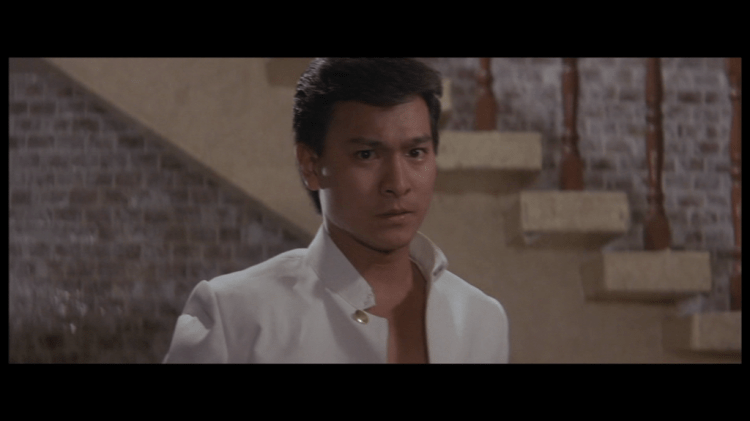
vlcsnap-2015-02-04-17h43m36s189Look at baby Andy Lau!!!

Review of Chang Cheh’s 1984 kung fu extravaganza Shanghai 13 up on UK Anime Network. Out now on UK DVD courtesy of Terracotta Distribution and their new Classic Kung Fu collection!


Shanghai 13 is the second in Terracotta Distribution’s new strand featuring Kung-fu classics. Directed by one of the masters of the genre, Chang Cheh himself who directed such well loved pictures as One Armed Swordsman and The Five Deadly Venoms, Shanghai 13 certainly falls into this category though its charms may be enhanced through the glow of nostalgia. Thin on plot but high on action, Shanghai 13 is not a film to give your brain much of a work out but it will get those fists flying!

Set during the Sino-Japanese war, a government official – mister Ko, has discovered he existence of a secret plot to collaborate with the Japanese. With the help of the famous safecracker Mr Blackhat, Ko obtains the incriminating documents and becomes a prime target for those behind the conspiracy. Mr Ko needs to get to Hong Kong where he can expose the conspiracy to sympathetic forces and enlists the aid of the famous “Shanghai 13” group of outlaws and heroes for protection. However, not all of the 13, it seems, are on his side!

Let’s be honest, not that many people really care about the plot of an action movie which is just as well because the plot of Shanghai 13 is about as thin as they come. Structurally, it’s akin to a video game where Mr Ko and his current protector must face a series of bosses with increasingly impressive fighting prowess in order to “level up” until they finally get Mr Ko to safety. The whistleblowers are the good guys and the people who are trying to stop them are the bad guys. It’s fairly black and white in that everyone on the “right” side is fighting for China and everyone else is either a traitor, Japanese sympathiser or just a soulless mercenary willing to sell out their country for a few coins. If you were looking for the kind of action movie with a nuanced plot, a bit of romance or emotional connection you’d best move along, there’s nothing to see here.

However, if killer action scenes are your bag you’ve come to the right place. Chang Cheh is not a legend for no reason even if Shanghai 13 is not his strongest effort. The film is sort of bookmarked by each of the titular 13 heroes who each have their own outlaw titles and particular fighting style. As usual, Chang has amassed some of his regulars which include some of the most famous names in kung-fu history such as Jimmy Wang Yu, Chiang Sheng and Lu Feng but he’s also made room for a few newcomers like an extremely young Andy Lau! The action scenes maybe fairly episodic but each are well designed and varied thanks to being entered around each of the fighter’s particular skills.  Again, they may not be reinventing anything, but each action sequence is impressively choreographed and exciting in its own right.

Shanghai 13 might not be the best example of its genre but it is certainly a typical one. Very much of its time, its appeal maybe be greater to those who view it through a heavy film of nostalgia but that’s not to say it isn’t often hugely entertaining to first time viewers too. The presentation is fairly pleasing and the disc includes both the original Cantonese language track plus an English dub for those who prefer it. The English subtitles are sometimes a little strange and riddled with obvious grammatical errors but not so much as to make them unintelligible though they may detract from some viewers enjoyment of the film. Shanghai 13 is undoubtedly a lesser offering from the great Chang Cheh, but fans of classic kung-fu are sure to plenty to admire nonetheless.


Kumiko the Treasure Hunter (UK Anime Network Review)

Screen-Shot-2014-12-29-at-10.49.38I wrote this getting on for a year ago when the film was screened at Sundance London (which is apparently dead now) but seeing as it’s getting a proper release by Soda Pictures from 20th February here it is again! Hit the jump to read my review over at UK Anime Network.


Famously, the Coen Brothers’ 1996 film Fargo begins with a black screen and a caption telling us that everything we’re about to see is based on real events that took place in Minnesota in 1987. What is perhaps less well known is that this is an out and out lie – a manifestation of the Coens’ strange sense of humour that’s just really there as a sort of in joke to mess with the viewer’s head. When a Japanese woman was found wandering around a wintery Minnesota, underdressed for the cold weather and pointing to a hand drawn map of tree next to a road, it wasn’t long before someone connected her actions to the famous movie. When she was found dead in the woods some days later, an urban myth was born about a crazy Japanese lady who froze to death looking for Steve Buscemi’s buried suitcase. As it so often does, the truth turned out to be much sadder and more ordinary than the legend suggests and that this poor woman became the butt of a global joke seems cruel and unfair. Now the original myth has spawned another story of its own – of Kumiko, who sees herself like a Spanish Conquistador who alone has learned of vast riches hidden deep in the new world.

Kumiko is a 29 year old office lady from Tokyo who lives alone in a tiny apartment aside from her pet rabbit Bunzo. As she goes about her everyday life she looks worn out, like someone who’s been carrying a heavy burden for a long time. She barley speaks to anyone and resents her boss so much she almost spits in his tea before thinking better of it. As it turns out one of the reasons she looks so tired is that she spends every night sat in front of her ancient TV scouring an old VHS of the movie Fargo (which she found in a cave buried under a pile of rocks at the end of a previous treasure hunt) for clues as to where Steve Buscemi buried his money. When her boss calls her in one day to ask why it is she always looks so miserable and points out, in a nice avuncular way, that 29 is really far too old for an office lady things have come to a crisis point. Using his company card she’s booked herself on a flight to Minneapolis armed only with her hand embroidered map and unshaken faith that her treasure exists and is hers alone to find.

Of course, her delusion is ridiculous for a multitude of reasons: to begin with, it’s obviously a constructed film – not a documentary so even if the events were real how would you know they recreated the exact burial spot in their movie version. Secondly, why would they have done that and then left the actual money where it was. Thirdly, the money was supposedly buried in 1987 – surely someone else would have come up with a similar idea in the intervening fifteen years and found the money already, wouldn’t they? Fourthly, he only buried it in the snow. Snow melts. How could anyone believe this? The film opens with Kumiko following another of her intricately made hand embroidered maps that results in her finding the fateful tape as if she alone had been handed some kind of divine revelation. Accordingly she pours all of her energy into divining its holy secrets. Hers is a literal leap of faith – she simply believes in it even though we ‘know’ it’s absurd.

What would make someone cling on to this kind of bizarre idea as their only true hope of salvation? We’re never given very much backstory, but it seems that somewhere along the way Kumiko’s life diverged from the one she wanted to live and ever since then she’s been treading water. Her mother rings her periodically to try and convince her to move back home ‘until she gets married’ whilst asking all sorts of questions about her love life and career that Kumiko would rather not answer. At work she’s the odd one out in the office as generally young women either decide to leave and get married or pursue a more demanding career long before Kumiko’s almost ancient 29. She keeps herself apart from her colleagues and barely speaks to them which is fine because they think of her as a creepy old lady anyway. She does eventually agree to meet an old school friend for coffee but bolts once left alone in a cafe with her friend’s five year old daughter. It’s almost as if Kumiko herself feels she’s failed and is too ashamed to interact with other people. Faced with her friend’s successful home life with a healthy young daughter compared to Kumiko’s own dreary, lonely existence it’s not difficult to see how loneliness and frustrated desperation could lead to a state of psychosis. If she can just prove it, show everyone she has a destiny – something she alone is supposed to do then they’d all see.

Once she reaches America things begin to take a darker turn. Dressed only in her usual blue dress and little red hoodie, she’s like Red Riding Hood stepping off alone into the woods. She hasn’t brought winter clothes, cash or even made a proper plan of how to actually get to Fargo. She meets some nice people along the way – a lonely old lady who means well has almost kidnapped the poor girl and keeps trying to thrust James Clavell’s Shogun at her, and a truly decent policeman who can see there’s something wrong but is prevented from helping by the impenetrable language barrier. Every time it seems as if there might be a better way out of this the door is cruelly slammed in Kumiko’s face and left entirely alone in a strange land there really is nothing else for her to do than trudge on in hope of finding her treasure. Kumiko could so easily have been a series of crazy lady tics and quirks but thanks to Kikuchi’s extremely nuanced performance the infinite sadness of her story is completely laid bare. All this happened, more or less – mostly less in this case, but there is truth in this story. The world is full of lonely people whose minds have turned in on themselves through having nowhere left to run. Kumiko the Treasure Hunter is an existential tragedy that nevertheless is shot through with enough charm and whimsy to make its often unpalatable message easy to digest. A strange fairytale for adults, Kumiko’s story is heartbreakingly bleak but it’s also immensely beautiful.


Tetsuya Nakashima Interview (Via UK Anime Network)

WorldOfKanako-PYou might remember I was lucky enough to interview Tetsuya Nakashima during the London Film Festival when he was over here promoting his (really quite remarkable) The World of Kanako and the whole interview is now available for your perusal on UK Anime Network. You can read my review of the film over here too should you be so inclined – Third Window Films will releasing The World of Kanako in the UK this coming June! Check out the trailer for the film below.

http://www.youtube.com/watch?v=hVpLNCx2y7E