Maru (まる, Naoko Ogigami, 2024)

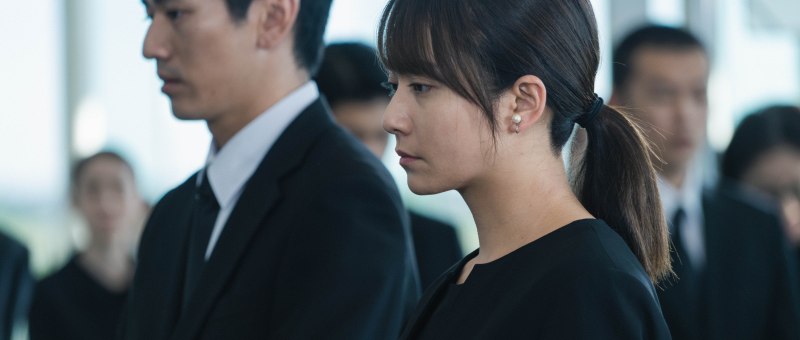
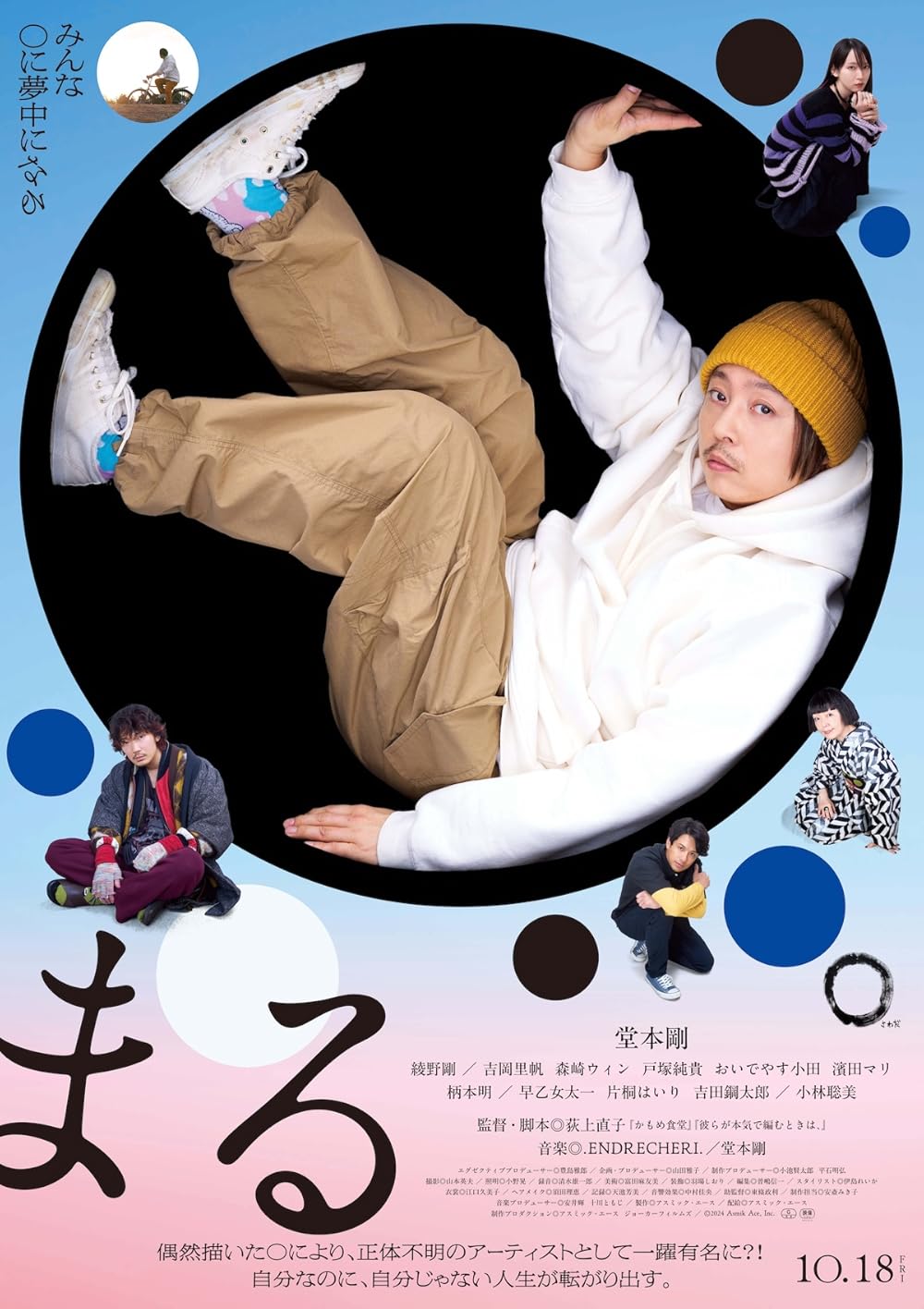
Taken to task by a coworker (Riho Yoshioka) for allowing himself to be exploited as an assistant to an internationally famous artist who views them as little more than tools and takes all the credit for their work, Sawada (Tsuyoshi Domoto) asks if she knows who built Horyu Temple. He has to supply the answer himself, Prince Shotoku. But of course, he didn’t. It wasn’t  as If he drew up the plans or cut the wood with his own hands. 1300 carpenters built it, but no one thinks about them. Only about Prince Shotoku, because he commissioned the work and paid for it. Sawada doesn’t think what he’s doing is all that different, and that times haven’t really changed all that much. Not many people get to make a living doing what they love, so perhaps that’s enough for him. 

But his colleague asks if he sees himself more as a worker than an artist, as if she were unintentionally making a value judgement on the nature of art. The line between artist and artisan maybe so thin as to not exist, but why is it that we think of art which is perceived to have a practical application differently from that which we assume is intended only as a means of self-expression? “What about your own art?” she asks Sawada, but he doesn’t really have a notion of it because he’s been so focussed on earning a living as part of a wider capitalist superstructure in which art too is a commodity. Akimoto (Kotaro Yoshida) is basically running an art sweatshop mass-producing pieces for an international market and operating it like a brand in which everything is released under his own name. When Sawada falls off his bike and breaks his dominant arm, Akimoto simply fires him.

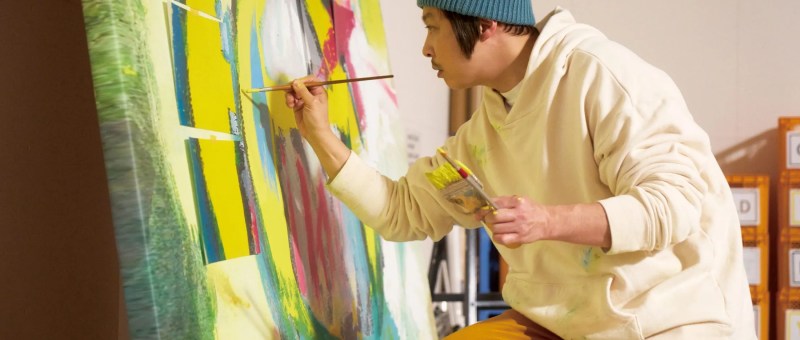
But then, things begin to get strange. Sawada draws some circles with his left hand and includes them with a few things he plans to sell to a second-hand shop where they’re picked up by a strange man who describes himself as a “magician who can’t do magic” and offers him fantastic amounts of money for his work even though all he did was draw a circle. Sawada discovers what he drew is called an “enso” and represents “serene emptiness”, but at the same time others seem to project whatever they want to see in the hole inside while Sawada himself is uncertain what should be there. The magician tells him that his follow-up work is no good because his enso are full of desire in his newfound lust for fame and riches, but at the same time he and his art have also become a commodity and like Akimoto he’s locked into producing more of what people want rather than expressing himself or finding artistic fulfilment. 

His colleague returns to attack him again. Now she criticises him for exploiting art to make money. “Art that’s expensive and just for a few wealthy people isn’t real art,” she says. She sticks to her message that the labour of those like her is being exploited and the world is set up for a few wealthy elites. Their chant of “we want sushi too” might seem flippant, but it represents the world that they’re locked out of. Sawada’s incredibly intense, struggling mangaka neighbour is obsessed with getting sushi too, though there’s plenty of it on the buffet at Sawada’s show which Sawada eyes hungrily. Eventually he’s reduced to grabbing some to eat on his own in a stairwell, signalling his liminal presence within this space. He’s the artist and it’s his show, but he isn’t really part of this world and no one’s really interested in him except when he’s giving mystical quotes as part of his marketing brand. 

The conclusion that he comes to that his art at least should exist for art’s sake. That all he ever wanted to do was paint as a means of being true to himself, only that simple desire has got lost amid the complications of modern life. It’s very hard to draw circles of serenity when you’re living in a rundown apartment block with a worrying subsidence problem and your neighbour screams all night in despair before punching a hole in your wall which you’ll probably have to pay to have fixed. Nevertheless, through Ogigami’s elliptical tale, Sawada does perhaps begin to find a path back to his own art or at least what art means to him which is after all what’s in the middle circle even if all anyone looks at is the edges. 


Maru screened as part of this year’s Camera Japan.

Trailer (no subtitles)
Ya Boy Kongming! The Movie (パリピ孔明 THE MOVIE, Shuhei Shibue, 2025) [Fantasia 2025]

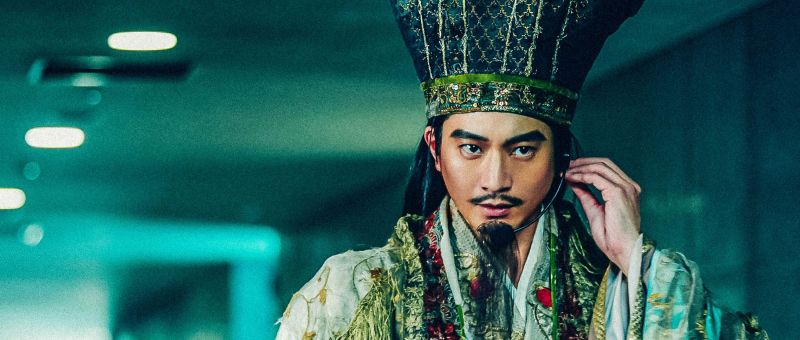
Why in this world does war never cease? Reincarnated in modern-day Shibuya, third-century military strategist Zhuge Liang, known by his courtesy name Kongming, finds himself fighting a different battle in becoming the manager of an aspiring singer whose music he feels could unite the world in peace. Adapted from the manga by Yuto Yotsuba and illustrated by Ryo Ogawa, Ya Boy Kongming! (パリピ孔明 THE MOVIE, Paripi Koumei the Movie) is both a surreal advocation for the power of music and satirical take on the cutthroat entertainment industry.

Having decided to become Eiko’s (Moka Kamishiraishi) strategist, Kongming (Osamu Mukai) has already advanced her career with an appearance at a major festival. He’s also turned himself into a mini celebrity appearing on TV to offer his strategic opinions and starring in a number of adverts. Now he wants Eiko to enter a joint competition between the three leading music labels which ironically echoes his own Three Kingdoms era and requires him to make use of his classic strategies. But he’s also facing his greatest challenge yet in the form of Shin, a street singer whose music calls out to him in a similar way to Eiko’s yet not, he fears, in a good way. He’s plagued by strange visions of his past life and his old lord Liu Bei before being told that his dreams are of something called the “Yumi door” that leads to the afterlife and that he will want to step through it the next time he hears Eiko’s music. 

As some point out to him, perhaps he just shouldn’t listen, then, but to Kongming that would be the same as death and if it helps realise his dream of bringing about universal peace through Eiko’s music then he’ll gladly give up this strange second life he’s been given. Of course, this produces a conflict in Eiko who, on realising that Kongming is actually serious, isn’t sure if she should just not sing ever again to avoid accidentally killing him even though he tells her that her music has the power to save people. Meanwhile, she loses confidence in herself, thinking that he’s gone off her and is about to jump ship to Shin who is currently being managed by a descendent of Kongming’s old enemy Sima Yi, Sima Jun. 

Jun’s mission is then one both of familial revenge and a quest to make his sister a star. But whereas Kongming’s strategies are clever, Jun’s are underhanded and it’s clear he’s gone to the dark side in trying to advance Shin’s career. At the end of the day, Shin might not want to “cheat” either, but even so the teased battle of wits comes to pass as the two men attempt to outflank each other and win the coveted championship which is Kongming’s way of ensuring Eiko will be able to continue after he’s gone. Though her songs are all becoming independent and able to go on alone after someone important is no longer around, Eiko still values Kongming’s support and friendship and obviously doesn’t want him to go anywhere.

Yet what Jun ends up rediscovering is the joy of music and that it really can change people’s lives, a realisation that all the label bosses came to some time ago. Despite the cutthroat nature of their business, they do it because they believe in music too, whether it’s a girl with a guitar in the street or a Chinese boy band making a surprise appearance during their world tour. Jun and Kongming want the same thing, and Shin and Eiko aren’t really rivals but allies fighting for universal peace through music. Boasting excellent production values, the film lends a sense of melancholy nostalgia to the Three Kingdoms era and Kongming’s vaguely homoerotic relationship with the famed Liu Bei whose voice he once thought could unite the world in peace before he lost his life on the Wuzhang Plains and woke up in Shibuya clubland on Halloween thousands of years later. Endlessly surreal, there’s a childlike quality to the warring strategies of Kongming and Jun as they attempt to outflank each other with elaborate schemes, but also a genuine sense of warmth and joy in the love of music, which just might, after all, bring peace throughout the land.


Ya Boy Kongming! The Movie screened as part of this year’s Fantasia International Film Festival.

Original trailer (no subtitles)

Love Life (Koji Fukada, 2022)

Emotional distance and the contradictions of the modern family conspire against a grief-stricken newlywed couple in Koji Fukada’s moving social drama inspired by the 1991 Akiko Yano hit, Love Life. Interrogating love in all its forms along with its limitations, Fukada seems to asks if love is ever enough to overcome a sense of loneliness or if the space between people can really be bridged by communication alone while the couple find themselves pulled back towards the unfulfilled potential of failed romance in contemplating the possibilities of different if not necessary better futures. 

The fracture points in the recent marriage of Jiro (Kento Nagayama) and Taeko (Fumino Kimura) are thrown into relief during a double celebration as the couple host what is superficially a party for Taeko’s six-year-old son Keita (Tetsuta Shimada) winning an Othello competition but in reality a surprise do for father-in-law Makoto’s (Tomorowo Taguchi) 64th birthday. The elephant in the room is that Makoto does not approve of the marriage, making a rather unkind remark about second hand goods in irritation that his son has chosen to marry a woman who already had a son. Though Jiro’s mother Akie (Misuzu Kanno) is in general kind and keen to defend her new daughter-in-law even she tactlessly adds that she hopes the couple provide them with their “own” grandchild as soon as they can. The remark appears to cut to the quick of the already wounded Taeko, a look of dumbfounded confusion on her face in this sudden moment of accidental rejection. 

During the party, Keita is killed in a tragic domestic accident of the kind for which no one is to blame and could easily strike any family. Police questioning further emphasises the couple’s disconnection as a policewoman probes why Jiro had not legally adopted Keita as his son when they married only to discover that he did not want to do so until he’d received his father’s permission to add him to their family register. Though only married for a little under a year, Jiro had felt himself to be Keita’s father and loved him as a son yet is awkward in his grief, wanting to cry alongside his wife but feeling as if he had no right to do so. The feeling is compounded when Keita’s estranged father, Park Shinji (Atom Sunada), suddenly arrives at the funeral, soaking wet and in inappropriate clothes, to first breakdown over the coffin and then roundly strike his former wife across the face before being escorted away by security. 

In a mirrored scene, Taeko had asked her husband shortly before the party about another woman, Yamazaki (Hirona Yamazaki), sensing that there may have been something between them and feeling an anxiety in the precarity of their married life. Jiro is then left anxious by the resurfacing of Shinji yet trying to act against it, later advising Taeko that she should feel free to help him seeing as it seems he has fallen on hard times and has no one else to turn to as he is deaf and communicates in Korean sign language which few around him know. Taeko had previously used sign language to slip into a different world with her son when Jiro had asked why he never wants to play Othello with him only for Keita to reply in silence that it’s only because he’s not very good at it. There is a palpable pain on his face observing the closeness that exists between Taeko and Shinji as they communicate in a private language while, as Yamazaki later describes it, he is a man never quite able to look anyone in the eye. 

While he is drawn back to his unfinished business with Yamazaki, Taeko finds herself filling the void in her life by trying to rescue Shinji. Treating him almost as a child, she comes to believe that he cannot survive without her yet later realises that the intimacy she felt between them was only an illusion, Shinji had never really been emotionally honest with her and there are in fact plenty of other people with whom he can communicate if only he chose to do so. Just as she had been isolated at the party, marooned in the kitchen on her own, she is abandoned once again yet perhaps coming to a final acceptance of her son’s death along with a clearer understanding of her love and life even if it all it means is walking in parallel with no clear direction. A melancholy mediation on grief, Love Life suggests you don’t so much move on from the past as take it with you even as the pair of conflicted lovers determine to look to the future rather than the past as a path to salvation.


Love Life screens 8th/9th/14th October as part of this year’s BFI London Film Festival.

Original trailer (Japan subtitles only)

My Father’s Tracks (僕と彼女とラリーと, Renpei Tsukamoto, 2021)

A struggling Tokyo actor begins to re-appreciate small-town wholesomeness after returning home for the first time in many years on learning of his semi-estranged father’s death in Renpei Tsukamoto’s heartwarming drama My Father’s Tracks (僕と彼女とラリーと, Boku to Kanojo to Rally to). As much a celebration of the idyllic countryside villages around the city of Toyota in Aichi, obviously closely associated with the automobile industry, Tsukamoto’s gentle coming-of-age tale sees its hero find his purpose in returning to his roots while gaining a new perspective on his parents’ relationship and the father he’d always resented who became a local hero but was never around when his family needed him. 

At 29 Taiga (Win Morisaki) is still trying to make his mark as an actor in Tokyo, his dejected manager complaining his trouble is that though he’s quick and clever he’s essentially soulless which is why he’s failing to captivate the audition panel. He repeatedly ignores calls from his semi-estranged father Toshio (Masahiko Nishimura) and then answers one on the urging of a friend only to utter some very unkind words before unceremoniously hanging up. The next time he answers his phone, however, the call is from an old friend and neighbour, Miho (Mai Fukagawa), letting him know that his father has passed away suddenly of a heart attack. Though they had not been on good terms, Taiga cannot help feeling guilty that his final words to his father were so harsh especially as he’d called to invite him to visit the following November. 

Though everyone in the town seems to have held Toshio in high regard, he was a frequent fixture on the local TV channel for which Miho works, both Taiga and his older brother Hiroyuki (Ryuta Sato) who has become a cynical and heartless businessman feel only contempt for him for having selfishly neglected his family while travelling all around the world as a mechanic with a champion rally team not even making it home in time to see their mother before she passed away of a longterm illness. Taiga can’t forgive him for leaving his mother lonely, but later comes to reflect that perhaps he wasn’t best placed to fully understand the relationship between his parents and may have misinterpreted something which as he later puts it only a husband and wife can know. Meanwhile, it seems his father had also been a supportive force in the community having given jobs to those who might not ordinarily find them in a mechanic with a criminal record, an old man past retirement age, and a young woman so shy she is largely unable to speak. Taiga can see how important his father was to these people and worries what will happen to them now whereas his coldhearted brother is deaf to their pleas planning to close the business and have it and the family home bulldozed as soon as possible to settle the estate without undue delay. 

Hurt even more deeply that Taiga, Hiroyuki has become cruel and cynical often running his brother down rolling his eyes that no one makes a living from a “hobby” while insisting this isn’t one of his “namby-pamby” plays. He claims that he needs the money to protect his family, something that he feels his father failed to do in spending all his time on a “hobby” of his own even shutting down his own small son’s curiosity and desire to join in with the other kids’ fun. Even so after repeatedly telling him to “man up” and get a real job, Hiroyuki is less than impressed by Taiga’s desire to take over the family business which he admittedly knows nothing about having acquired a driving license solely for a role, only relenting when threatened by a flamboyant human rights lawyer with the name of a legendary samurai (Riki Takeuchi).  

Nevertheless, marshalling the skills he picked up in Tokyo and working alongside the locals Taiga begins to rediscover the sense of purpose he’d been missing while gaining a new understanding of his father and greater sense of future possibility. Despite complaining that there is “nothing here” in comparison to Tokyo only for Miho to remind him of all the things Tokyo doesn’t have or that are freely given in Toyota but need to be paid for in the city, he quickly settles back in to small town rhythms and begins to accept his father’s legacy finally finding his sense of direction and taking his place in the driving seat of his own life. A heartwarming tale of familial reconnection and the power of community, not to mention a celebration of rural small-town Toyota, My Father’s Tracks insists life is a rally, all about the going there and coming back, walking on blazing a trail and never giving up no matter the sharp corners and unexpected turns a life may take. 


My Father’s Tracks streams in the US until March 27 as part of the 14th season of Asian Pop-up Cinema

Original trailer (English subtitles)

Jigoku-no-Hanazono: Office Royale (地獄の花園, Kazuaki Seki, 2021) [Fantasia 2021]

The OL, or “office lady” occupies a peculiar place in Japanese pop culture if not the society itself. The evolution of the typing pool, the OL exists to one side of office life, treated as domestic staff in the corporate environment and in many ways expected to be invisible. As such, an OL performs stereotypically feminine tasks in the office such as keeping the place clean and their male bosses looked after in addition to handling often dull and pointless admin work. It goes without saying that in general being an OL is a young woman’s job with the expectation that most will either find a way to transition onto a more viable career track or simply leave the world of work behind to marry and become a regular housewife. 

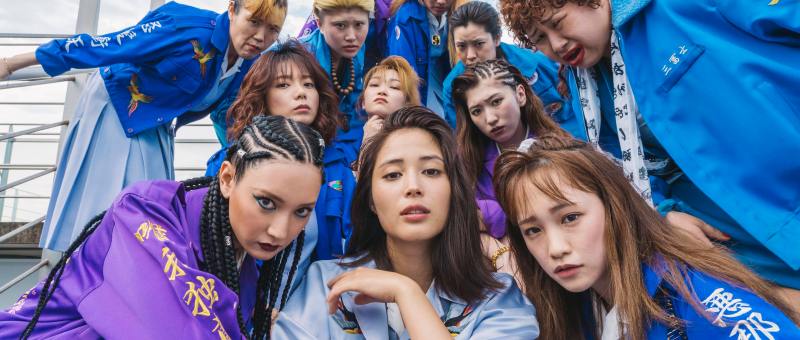
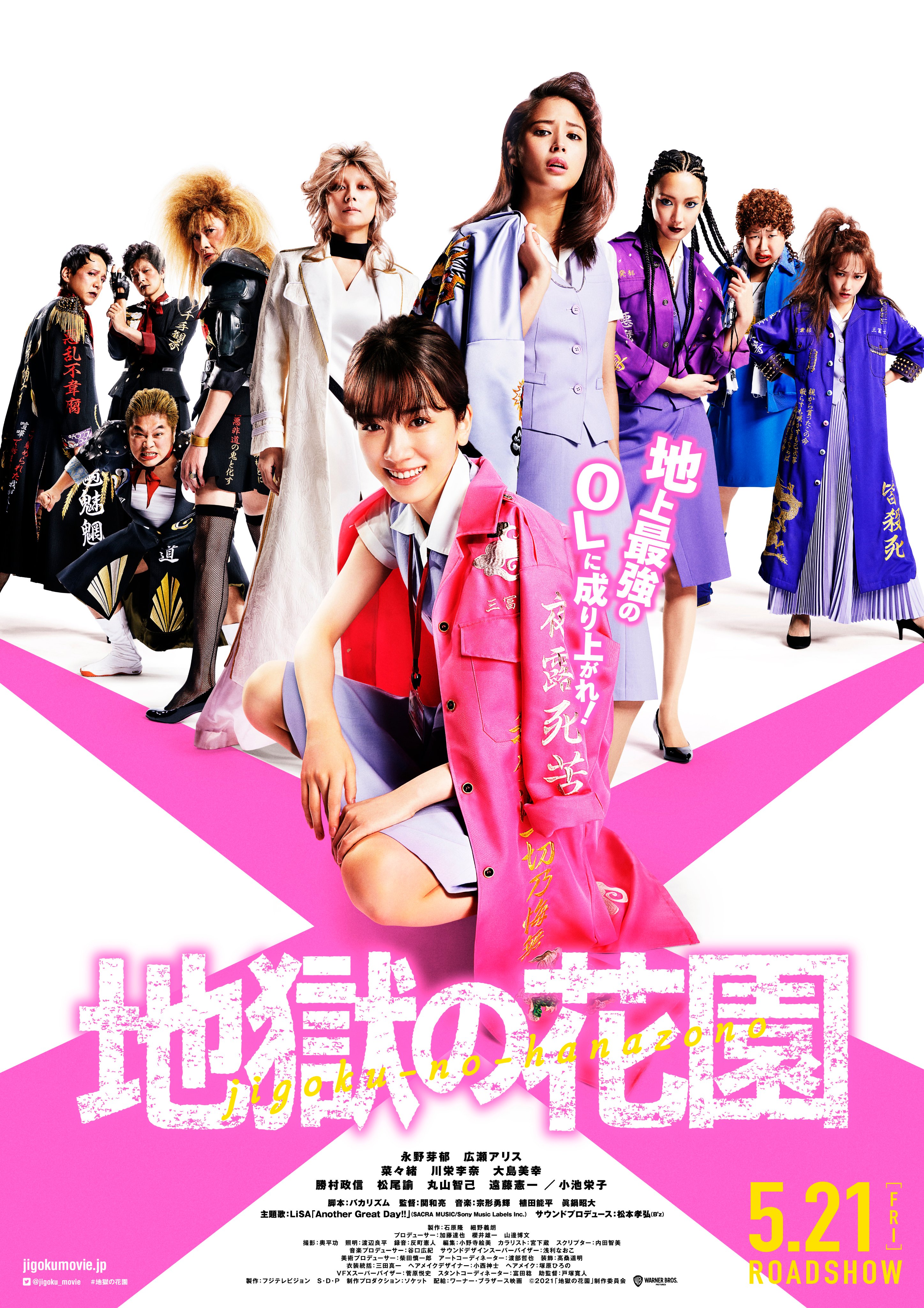
It’s this image of the OL as the embodiment of bland geniality that is at the centre of Kazuaki Seki’s zany comedy Jigoku-no-Hanazono: Office Royale (地獄の花園, Jigoku no Hanazono), a repurposing of “yankee” high school delinquent manga for the world of the office lady scripted by comedian Bakarhythm. A devotee of yankee manga, 26-year-old OL Naoko (Mei Nagano) explains that even office ladies have their warring factions outlining the tripartite fault lines at play in even her small company where the head OLs from Sales, R&D, and Manufacturing constantly vie for hegemony through physical dominance. She however merely observes from the sidelines defiantly living her “ordinary” office lady life. That is until new hire Ran Hojo (Alice Hirose) arrives to upset the precarious workplace power balance. 

Naoko first catches sight of Ran after she challenges some of the OLs from her company as they harass a timid male employee in the street though they don’t become best friends until after Ran spots a salaryman trying to upskirt her at a bus stop and decides to teach him a lesson. Despite being a yankee, it seems that Ran is also trying to live a normal OL life, bonding with Naoko over their shared love of a TV drama, but is not exactly good at the job and regards fighting as her one and only skill. Perhaps speaking to an inner insecurity born of being a woman in a conformist and patriarchal society, each of the women struggle to see themselves as protagonists in their own lives rather than mere supporting players unwittingly both playing the role of the ditzy best friend to the competent hero. 

In one of her many meta quips commenting on the action and how it would play out if she were a character in a yankee manga, Naoko laments her status as the “comic book hero’s boring friend” which is extremely ironic seeing as she is certainly the heroine of this movie given that it’s her voiceover we’re hearing and her POV we generally adopt. Yet Seki sometimes undercuts her by shifting to a rival voiceover offered by Ran herself doubtful of her proper place in the narrative and eventually descending into an existential crisis after an unexpected setback shatters her sense of self. 

Nevertheless, even if as the de facto leader of her company’s OLs Ran advocates for equality insisting there are no bosses and no underlings only women standing together, Office Royale generally embraces rather than attacks societal sexism particularly in its somewhat unexpected conclusion which ends in ironic romance rather than female solidarity. Even so, it’s interesting that the OLs lose interest in delinquency once the hierarchy of fists has been fairly decided, acknowledging the superior skills of a better fighter and thereafter living peacefully rather than continuing the internecine determination to sit at the top of the pyramid which is the hallmark of the high school yankee manga. 

While the final arc strays into some potentially problematic territory with the uncomfortable humour of four male actors playing the top fighters of a rival gang of OLs from another company, Office Royale offers a series of surprisingly well choreographed fight scenes even if eventually descending into manga-esque cartoonish violence while much of the humour stems from Naoko’s adorably nerdy voiceover musing on what would happen next if this were a yankee manga. In the end, however, it’s less a tale of office lady infighting than of a pair of young women coming to a better understanding of themselves even if they do so through the potentially destructive medium of pugilism. 


Jigoku-no-Hanazono: Office Royale streamed as part of this year’s Fantasia International Film Festival

Original trailer (English subtitles)

The Real Thing (本気のしるし, Koji Fukada, 2020)

“It’s hard to see weakness, especially your own” the oblivious hero of Koji Fukada’s perhaps uncharacteristically optimistic romantic melodrama The Real Thing (本気のしるし, Honki no Shirushi) is told, though it’ll be a while before he realises how annoyingly right his rival has read him. Adapted from the manga by Mochiru Hoshisato and first aired as a 10-part TV drama, Fukada’s tale of mutual salvations finds its dissatisfied heroes struggling to define themselves in a conformist culture but finding perhaps the “signpost” towards the real through a process of romantic misadventure in realising that the emotional crash of a failed connection can perhaps bounce you into a moment of self-realisation and the courage to carry it through. 

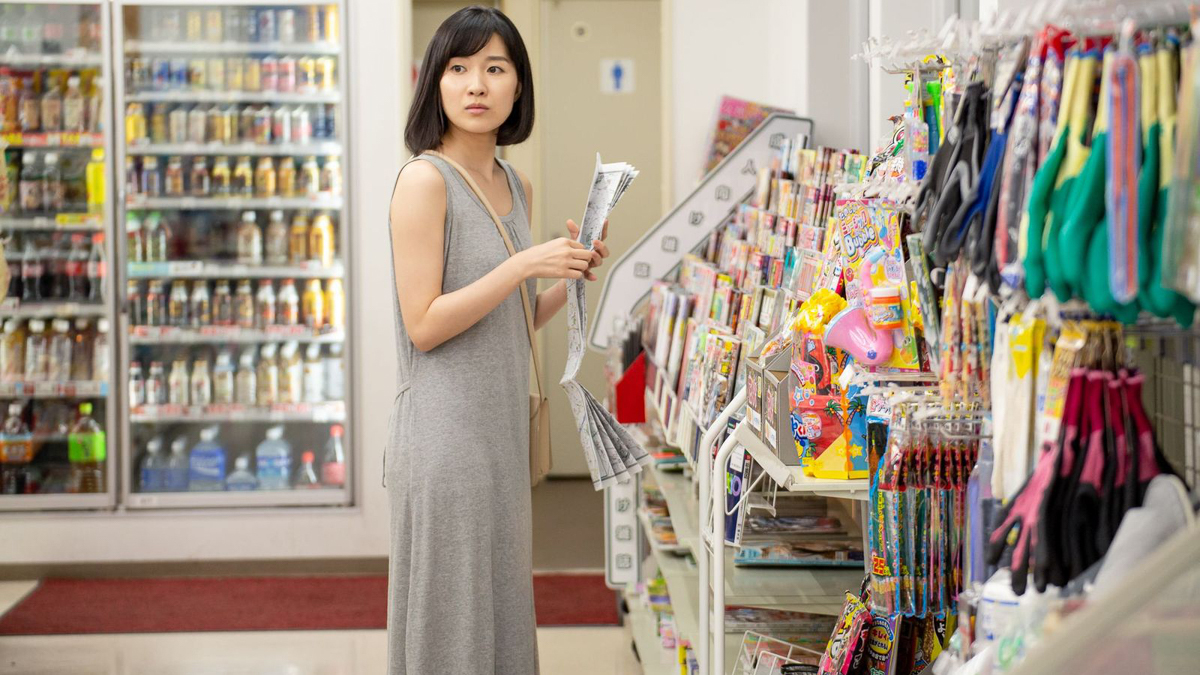
Last to experience such a moment, the hero 30-year old Tsuji (Win Morisaki) is a thoroughly bored salaryman working at a company which sells fireworks along with cheap plastic toys for children. Entirely passive, he is in two contradictory romances with a pair of diametrically opposed office ladies at his company (which has a strict rule against inter-office dating) but is emotionally invested in neither of them. His life changes one day while he’s idly buying a bottle of water at a convenience store and notices a confused woman has picked up a damaged children’s toy he was trying to get taken off the shelf by the disinterested cashier but she hardly pays attention to him changing it over for her because she’s intensely confused by a map of the local area. After his attempt to help her fails, Tsuji leaves the store but later comes across the woman again when she somehow stalls in the middle of a level crossing and is about to be hit by a train, heroically leaning through an open window to put the car in neutral and push it out of the way with mere seconds to spare. He stays with the woman, Ukiyo (Kaho Tsuchimura), until the police arrive but she panics and tries to make out he was driving before thinking better of it and coming clean. 

It’s a pattern than will often be repeated in the earlier parts of their relationship. Having tried to do something good, he finds himself incurring only infinite trouble. Bugged by the rental company who find his business card in the abandoned car, Tsuji is bamboozled into Ukiyo’s very complicated world of lies and broken promises but nevertheless feels oddly compelled to help her. “You’re too kind to everyone”, the first of his office romances Ms. Hosokawa (Kei Ishibashi) tells him with mild contempt, though he offers her a wry smile that suggests he doesn’t quite think of it as kindness implying his capacity for altruism may be masking a deep-seated sense of emptiness and inadequacy. When his affair with Hosokawa is exposed, he expresses consternation that she shouldn’t have to be the one to transfer simply because she’s a woman, describing himself as an average employee going through the motions while she is clearly keeping the place together, though she again accuses him of selling himself short unable to see how many people in the office look up to and depend on him precisely because of his rather dull efficiency and air of confident reliability born of having no real personality. 

In fact he seems to be in flight from the “real”, consciously or otherwise afraid of facing his authentic self and wilfully masking it by putting on the suit of the conventional salaryman. Ms. Hosokawa is much the same, having initiated the relationship on a no strings basis but secretly wanting more. Approaching middle age she finds herself suffocating under her various demands, playing the part of the dependable senior office lady but dreaming of escape through romantic salvation. Only once her relationship with Tsuji begins to implode does she rediscover a new sense of self. The other girlfriend, meanwhile, Minako (Akari Fukunaga) plays the contrasting role of the office cutie irritatingly sweet and simpleminded but after being cruelly dumped suddenly dyes her hair pink and becomes feisty and uncompromising no longer unable to stand up for herself while refusing to conform to idealised visions of youthful femininity. 

Tsuji meanwhile fixates on the idea of “saving” Ukiyo while she battles an internalised victim complex which encourages her to think that all the bad things happening to her are entirely her own fault because she is a bad person, constantly apologising for her own existence. Yet the situation is later reversed, Ukiyo repeating word for word the speech Tsuji had given to Hosokawa as she explains there’s another man she must save because he is incapable of saving himself. Investing their entire worth in the act of saving someone else, the pair attempt to paper over their lack of selfhood, but in essence find their positions reversing in pattern which seems to suggest you have to save yourself before you can find the path towards your romantic destiny. As Tsuji turns fugitive, imploding in a perceived defeat in having failed to take control over the forces of change in his life, Ukiyo finally develops the strength to take care of herself bolstered by the certainty of her love for him. 

Painted alternately as a damsel in distress and a femme fatale who ruins men and drags them to hell, Ukiyo is of course neither just, as an old friend explains, an unlucky woman subject to a series of societal prejudices. There is however something in the pair’s mutual claims that there was someone trapped who couldn’t climb out without their help even if that help is slightly less literal than they’d assumed. Even when relationships fail, or crash and burn as another puts it, they invite the possibility for growth and become perhaps signposts on the way to the “real thing”. Shot with a whimsical realism and filled with a series of twists and reversals, Fukada’s elliptical tale is less one of romantic fulfilment than a search for the true self but finally allows its heroes to find mutual salvation in staking all on love. 


The 10-episode TV drama edit of The Real Thing streams in the US until May 2 as part of San Diego Asian Film Festival’s Spring Showcase.

Feature edit trailer (no subtitles)

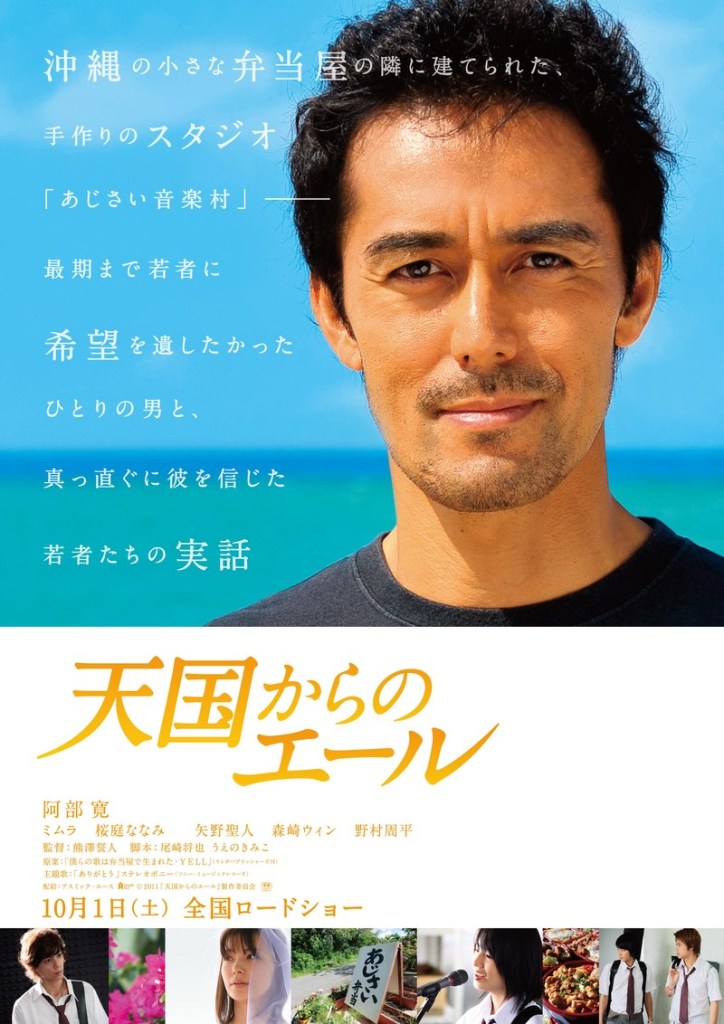
Cheers from Heaven (天国からのエール, Chikato Kumazawa, 2011)

tengoku_teaser_“üeolOkinawa might be a popular tourist destination but behind the beachside bars and fun loving nightlife there’s a thriving community of local people making their everyday lives here. Just like everywhere else, life can be tough when you’re young and the town’s teenagers lament that there’s just not much for them to do. A small group of high schoolers have formed a rock band but they’re quickly kicked out of their practice spot at school after a series of noise complaints from neighbours.

The school kids all buy their lunches from the bento shop down the street run by Hikaru “Nini” Oshiro, his wife and his mother. Whilst there, Aya – the rock band’s female singer, starts eying up a covered courtyard area and remarks that it’s a shame they can’t practice there. Nini overhears and gives them the space but once again the neighbours complain ,so the kids reluctantly decide to give up on the band for now because there aren’t any studio spaces on the island and they wouldn’t have the money to hire somewhere anyway. At this point, Nini makes a surprising decision – digging deep into his family resources, he buys the materials and commits to building a studio space on a patch of disused land next to the bento shop with his own hands.

Based on a true life story, Cheers From Heaven (天国からのエール, Tengoku kara no Yell) is a tribute to Hikaru Nakasone who really did build a studio space for the local kids that turned into something more like a youth centre offering support to all kinds of youngsters so long as they obey the rules. In the film, Nini is a fairly gruff but big hearted man who’s big on discipline and doing the right thing. His rules include being courteous to the other kids, sticking to your allotted time and crucially that your grades don’t suddenly start dropping because you’re hanging out in the studio all the time.

Nini’s wife is, perhaps unsurprisingly, originally horrified by the idea of the studio especially as it will require an additional financial burden for the family, not to mention that Nini failed to run the idea by her before launching headlong into it. However, eventually the entire family comes around and they even start catering for the kids too. When his wife asks him why he’s doing this Nini remarks that in his day people were poor, yes, but they helped and supported each other. Older people taught younger ones how to do things and how to behave but that doesn’t seem to happen now and he doesn’t want his daughter to grow up in a world like that.

The building of the studio becomes a real community project as half the kids from the local area suddenly turn up to help. The project that Nini assumed he’d be finishing with his two hands alone becomes a symbol of pride for the various teenagers who commit their time and hard work into making it happen. They’ve built something together that’s now their collective responsibility and a place where they can go to practice their music or just express themselves creatively.

Nini doesn’t stop there, he wants to help the kids in the band make it big. Convincing a fourth member to join them, taking demos around radio stations, organising live gigs – he’s their unofficial manager. The band’s young struggles hit a chord with Nini because he also had a friend with dreams of becoming a musician that were tragically cut short just as he was finally getting somewhere. It also transpires that Nini came home to Okinawa with his family following an illness which has now returned and this headstrong determination to make a difference is, in part, because he feels as if he’s running out of time.

Despite his failing health, Nini continues to do everything possible to look after the kids from the band even going so far as to discharge himself from hospital to go check on the leaking roof of the studio during a storm only to discover the kids already have it covered. A warm tribute to its real life inspiration, Cheers from Heaven proves far less sentimental than its rather melodramatic title suggests preferring to emphasise its themes of togetherness and legacy which bear out the way in which one committed soul can leave an indelible mark on its community.


Reviewed at the Japan Foundation Touring Film Programme 2016 at the ICA London on 6th February 2016.

http://www.youtube.com/watch?v=LSYWW2W4U24