96 Minutes (96分鐘, Hung Tzu-Hsuan, 2025)

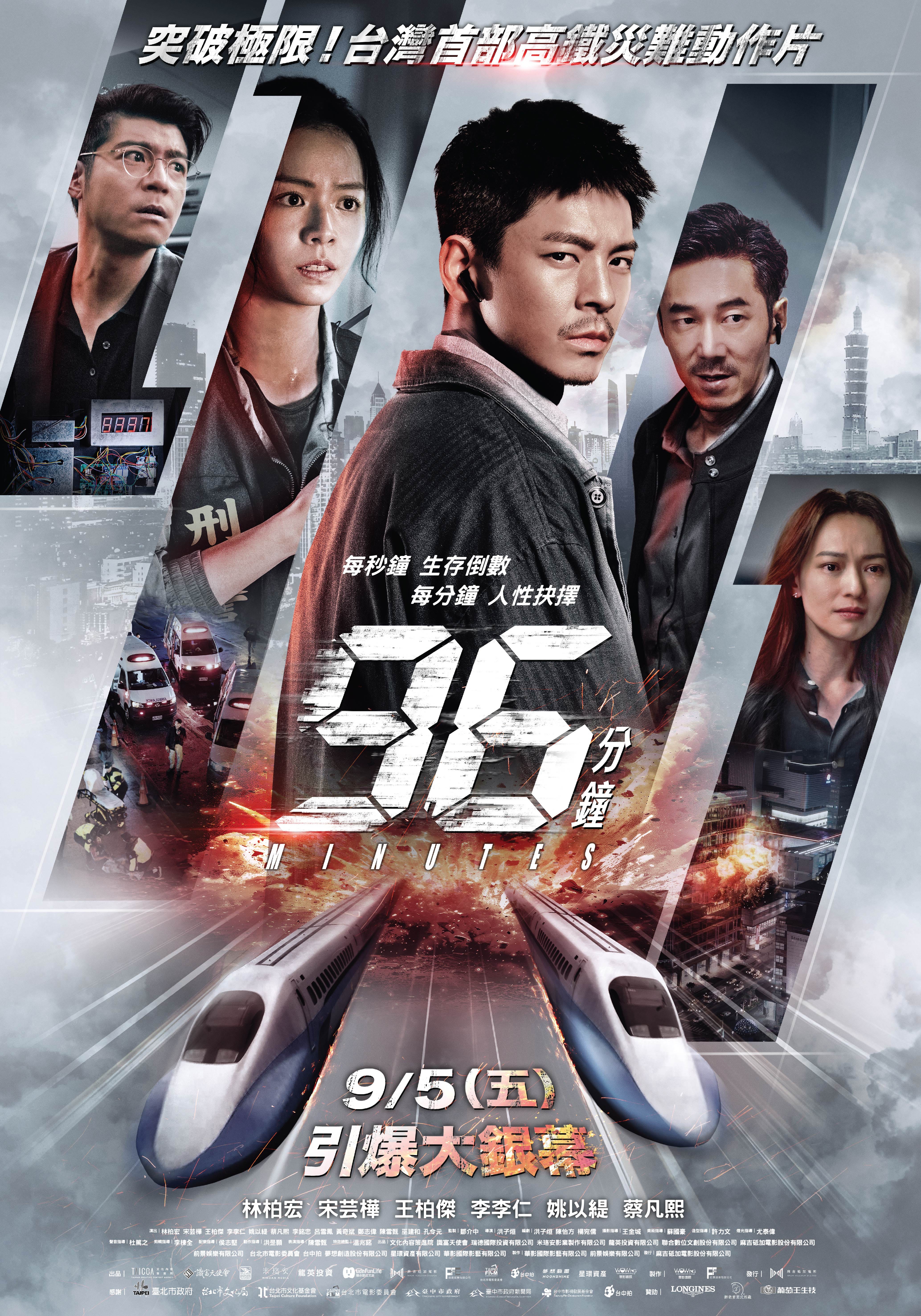
The needs of the many outweigh the needs of the few, as the famous goes. Prioritising saving lives where you can rather than risk spreading yourself too thin and not helping anyone as a result may be a sensible decision. But what if you or a loved are among those who’ve been deprioritised? Like many things, now it’s not just theory but here right in front of you and victims are real people not just anonymous numbers, it looks quite different.

At least, that’s how it is for A-Ren (Austin Lin), a brash bomb disposal expert. Though he disarmed a bomb in a cinema, another one went off across the road in a department store. The bomber had warned them that might happen, but A-Ren’s commanding officer Liu (Wang Bo-Chieh) convinced him they were probably bluffing. They were told there were two more bombs, one located in their command centre, and the other in the department store, and given a choice. Save the people in the department store by heroically blowing themselves up, or choose to save themselves even though this time they’re in the minority. 

Three years later, A-Ren has never forgiven himself, or Liu, for the bomb going off. He’s quit the police and though he’s married fellow officer Huang Xin (Vivian Sung), they never had a wedding and still haven’t been on honeymoon. His guilt is compounded by the fact that he’s been feted as a hero even though he knows he’s directly responsible for everyone who died in the department store. He gets a shot at redemption when the train he’s travelling on returning home after a memorial service for victims of the bombing receives a bomb threat, but at the same time he fears the eventual exposure of what really happened three years ago and is too ashamed to get his mind fully on the job.

On the other hand, it’s true that, ironically, no one on the train has been able to move on from the incident. All of them are mired in their grief and confusion, while looking for someone to blame. Needing to solve the case quickly, the police named a random victim with a criminal past as the bomber rather than admit they didn’t know who did it, making the police themselves a legitimate target for the resentment of the victims’ families given their cavalier attitude to life and death. Liu reminded A-Ren that the policemen in the command centre had families too, as if the people in the department store didn’t or that having a family made their lives weigh more, while Huang Xin was there too further influencing their decision and feeding into A-Ren’s guilt wondering if he was just selfish and made a choice to save her at the expense of the lives of a large number of people he didn’t know.

The bomber essentially gives him the same choice again, putting two bombs on two trains and leaving A-Ren with a binary choice of choosing to sacrifice one or the other to see if he will make the same hypocritical decision again in opting to save the minority because he is among them. Of course, they try a number of other high-risk strategies to disarm both bombs and/or evacuate passengers, but the bomber leaves them with little choice other than to accept the fact that one of the bombs has to go off. A-Ren and Liu can either blow themselves up figuratively by admitting that they chose to sacrifice the lives of the department store victims, or they can save themselves by blowing up the other train.

During a train derailment incident, Liu had cited his greater good philosophy in prioritising passengers who remained outside the tunnel rather than those trapped in the carriages inside, but he perhaps he was wrong to do so and should either have made more of an effort to help everyone or refrained from announcing his decision to let some of the victims die live on television. But then again, the victims’ families are also torn now they are directly involved with some leaning towards saving themselves rather the passengers on the other train whom they don’t after all even know. A-Ren, meanwhile, is in a race against time to restore his sense of integrity by disarming the bombs inside his mind to cure the lingering trauma of the department store bombing as the train rockets forward with only him between it and certain destruction.


96 Minutes screened as part of this year’s LEAFF.

Trailer (Traditional Chinese / English subtitles)
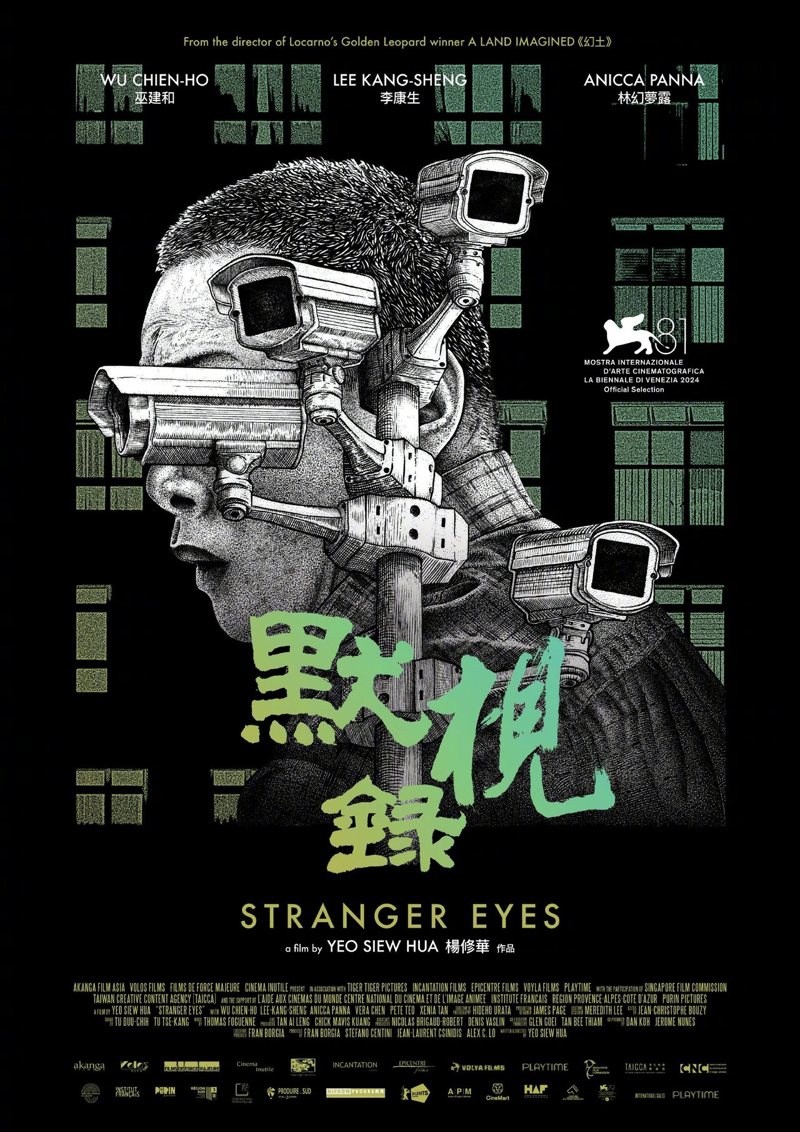
Stranger Eyes (默視錄, Yeo Siew Hua, 2024)

In some ways consciously and others not, we behave differently if we have an expectation of being observed than if we are confident we are alone. But the line between actions we think of as private and others public is often thinner than we assume and sometimes broken in moments of heightened emotion. A man sits and cries on a park bench, but he does so because he does not think anyone’s looking and feels himself alone though actually someone is watching. They often are, silently and at a distance that can itself be painful.

But then Yeo Siew Hua’s elliptical drama eventually suggests we are watched most by no stranger eyes than our own. Its “stalker”, Wu (Lee Kang-sheng), remarks that sometimes he feels as if he only watches himself an idea reinforced by the film’s continual doubling that suggests that we are in some ways caught between a series of overlapping timezones or entering a space of interactive memory. With echoes of Rear Window, the police accompany Shuping (Vera Chen), grandmother of a missing child, as she runs a pair of binoculars over the windows of her apartment block as seen from the balcony opposite while putting herself in the shoes of her observer. She stops on a young girl staring sadly from her window before beginning a strange dance that makes us wonder if Shuping is actually observing her younger self or if her own interiority simply colours what she is seeing. 

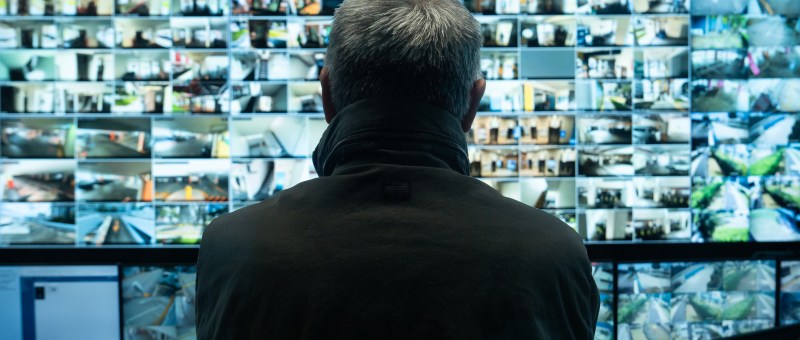
Shuping, along with her son Juyang (Wu Chien-ho) and his wife Peiying (Anicca Panna), is scanning the horizon for traces of their missing child, Little Bo, while closely examining old videos looking for signs of anything untoward. The ubiquitous presence of these cameras reminds us that we are often being observed if accidentally and the use of these images could put us at risk. Shuping wants to put a video of the family at the park online but Peiying objects, insisting Bo should have the right to decide when she’s older though the implication is that someone could have seen Bo there and been minded to take her. In any case, the irony is there’s nothing useful either in the videos or, the family initially thinks, in the vast networks of CCTV cameras that exchange our privacy for supposed safety. 

Wu relies firstly on his naked eyes, but then starts sending the family DVDs of videos he’s taken of them for unclear reasons but confronting Juyang and Peiying with the cracks in the foundations of their marriage along with the implication they are unfit parents. Juyang at one point simply walks off and leaves Bo sitting in a supermarket trolley while she cries her head off as if he were half hoping to be free of her. He in turn stalks another woman with a baby in a pushchair who turns to the side for a moment to help a man whose baby is crying, taking her eyes off her daughter long enough for Juyang to pick her up without her noticing. He could have easily have walked off with her, though you could hardly criticise this woman for simply having a chat with her daughter sitting just off to the side technically but perhaps not emotionally out of sight. Peiying meanwhile frets that Bo has been taken from her by some cosmic force because she didn’t love her enough and had considered an abortion before she was born again hinting at the fragility of the relationship between the parents who rarely occupy the same space and seem to live very parallel lives. 

Ironically Peiying feels as if it is only Wu who has truly seen her for everything she is rather than solely as a mother or the persona she adopts as a live-streaming DJ. She says she feels as if Juyang only sees her as air, as if he looks right through her while he looks at other women and seems to feel trapped by domesticity or perhaps by Shuping whose obsessive love for Bo and occasionally overbearing grandmothering seems to annoy both parents in overstepping their boundaries. We observe them just as Wu does, making our judgements in our silence though in this case confident they do not see us and that we are not ourselves currently being observed. But this confidence may also be painful to an observer such as Wu who wants to penetrate the screen while also interacting with his own sense of regret and is unable to make himself visible or express what he feels outside outside of the ghostly act of observation. The watchful soul observes itself as reflected in others who exist only in a world lost to them.


Stranger Eyes screened as part of this year’s BFI London Film Festival

Original trailer (English subtitles)

Fly Me to the Moon (但願人長久, Sasha Chuk Tsz-yin, 2023)

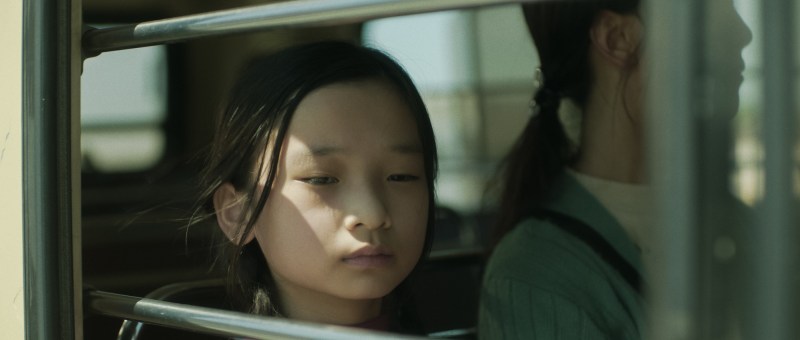
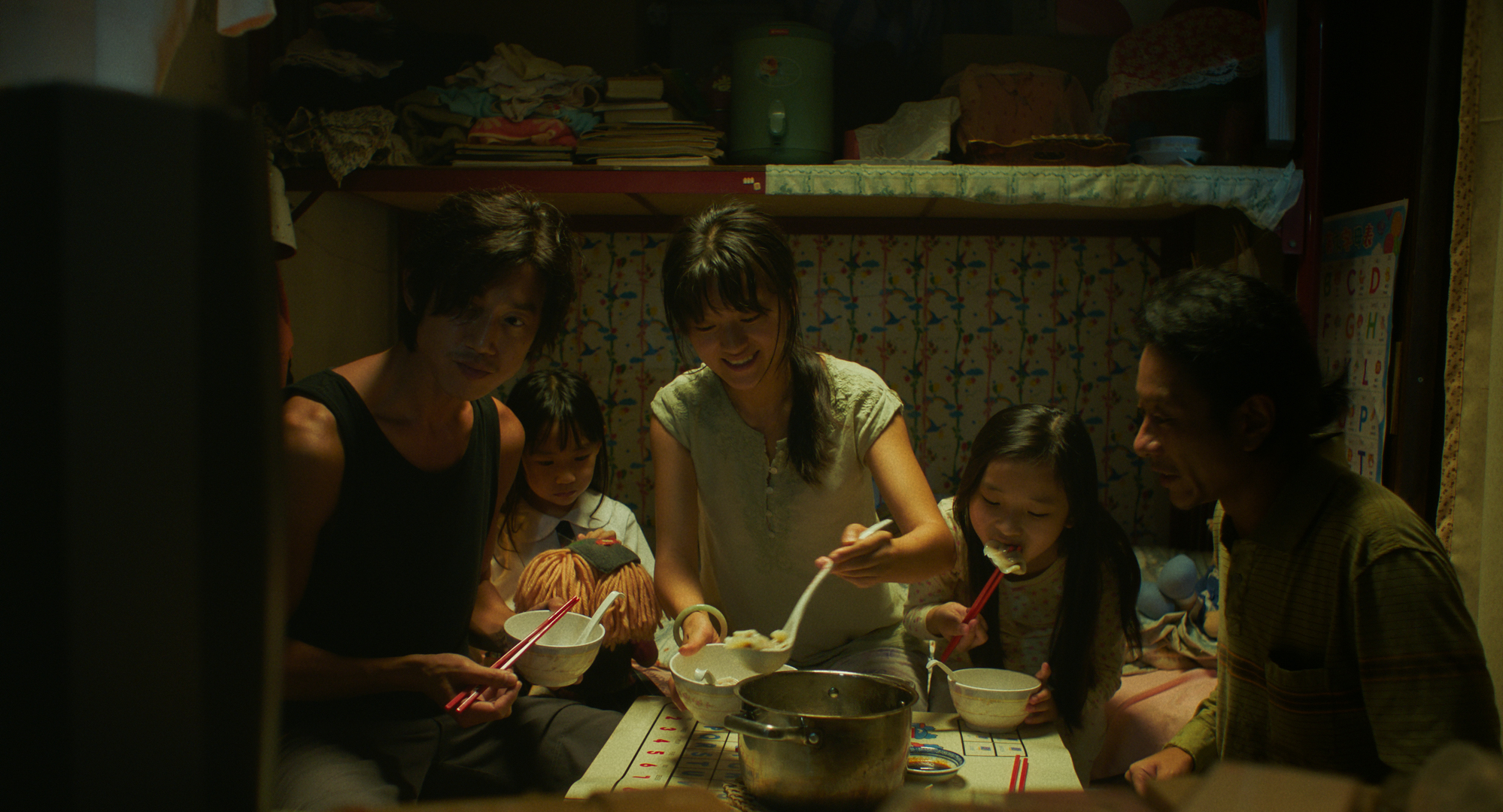
A pair of sisters find themselves exiles in their own home in Sasha Chuk Tsz-yin’s poignant familial drama, Fly Me to the Moon (但願人長久). Burdened by a sense of rootlessness, they have only each other to cling to while their family otherwise disintegrates amid the pressures of making a life in an unfamiliar place and an unavoidable paternal failure that has a lasting legacy on the lives of each of the girls as they struggle to emerge from the shadow their father cast over their lives.

It’s telling that the film opens in 1997, though Yuen’s father Kok-man (Wu Kang-ren) has apparently smuggled himself into Hong Kong from Hunan, later sending for his wife and older daughter, Yuen, while leaving the younger behind. The first image we see is of Yuen being taken to see her father in prison by her mother, a meeting in which no words are exchanged that seems to leave the young Yuen conflicted and confused. Not long after arriving in Hong Kong, she discovers him using drugs and learns of the addiction that has ruined his life, turning him into a petty thief in and out of prison for the children’s entire lives.

Yet in his later years, Kok-man told his relatives that his best and only achievement was raising two wonderful daughters though of course he didn’t actually raise them at all. Nevertheless, he had a profound effect on their lives, Yuen also tempted to steal on witnessing her father’s bad example even while remaining contemptuous and resentful of him. Though he eventually becomes violent, so desperate for money he threatens his teenage daughters, Kok-man appears to have wanted to take of his family but was not able to do so while their mother is forced to work long hours supporting the family and living the life of a single mother even while her husband is home. 

This leaves the girls with no one else to rely on while otherwise removed from mainstream society which is often is hostile towards those who’ve arrived from the Mainland and most particularly at this strained political moment. Their otherness is signalled by their home dialect of Hunnanese which later mingles comfortably with their Cantonese, much as Yuen’s Mandarin later does, which is as good as anyone else’s though some might not them as real Hongkongers. Kuet’s schoolfriends, little knowing she also was not born in Hong Kong, shun another girl after spotting that the number on her ID card begins with an “R” which means she came to Hong Kong from somewhere else. Kuet eventually decides to befriend the girl herself, though it remains unclear whether or not she discloses that she was also born outside of Hong Kong. Years later after becoming a tour guide, a customer remarks that Yuen’s Cantonese and Mandarin are both so good he wonders where she’s from which is quite an ironic comment. 

Yet in other ways, the girls can’t escape their roots. Despite her enmity towards him, Yuen’s first boyfriend is a carbon copy of her father. A brusque boy with blond hair who shoplifts to impress her, but then runs off and leaves her behind when he almost gets caught. Her romantic relationships seem fraught and difficult and the men largely no good, while her sister similarly has troubles with the law leading her mother to lament that there was little point in going to university if she was just going to end up like her father. When Yuen eventually returns to Hunan, she’s that girl from Hong Kong, even while in Hong Kong she’s that girl from the Mainland. For the girls, Hunan has a kind of mythical quality bound up with their memos of happier times for their family, but Yuen is quickly disillusioned. The lily fields her father mentioned are long since gone, destroyed in a fire, and her family home is empty as a result of her grandmother’s illness. All that remains are photographs that present a kind of evidence of the relationship Yuen once had with the father she struggled to accept in adulthood, reuniting her with her childhood self and perhaps restoring the roots she’s been looking for even she herself remains a floating presence guiding tourists around foreign countries while otherwise marooned in the family flat now shared only with the sister who equally is heading in another direction. 


Fly Me to the Moon screens July 21 as part of this year’s New York Asian Film Festival.

Original trailer (Traditional Chinese /.English subtitles)

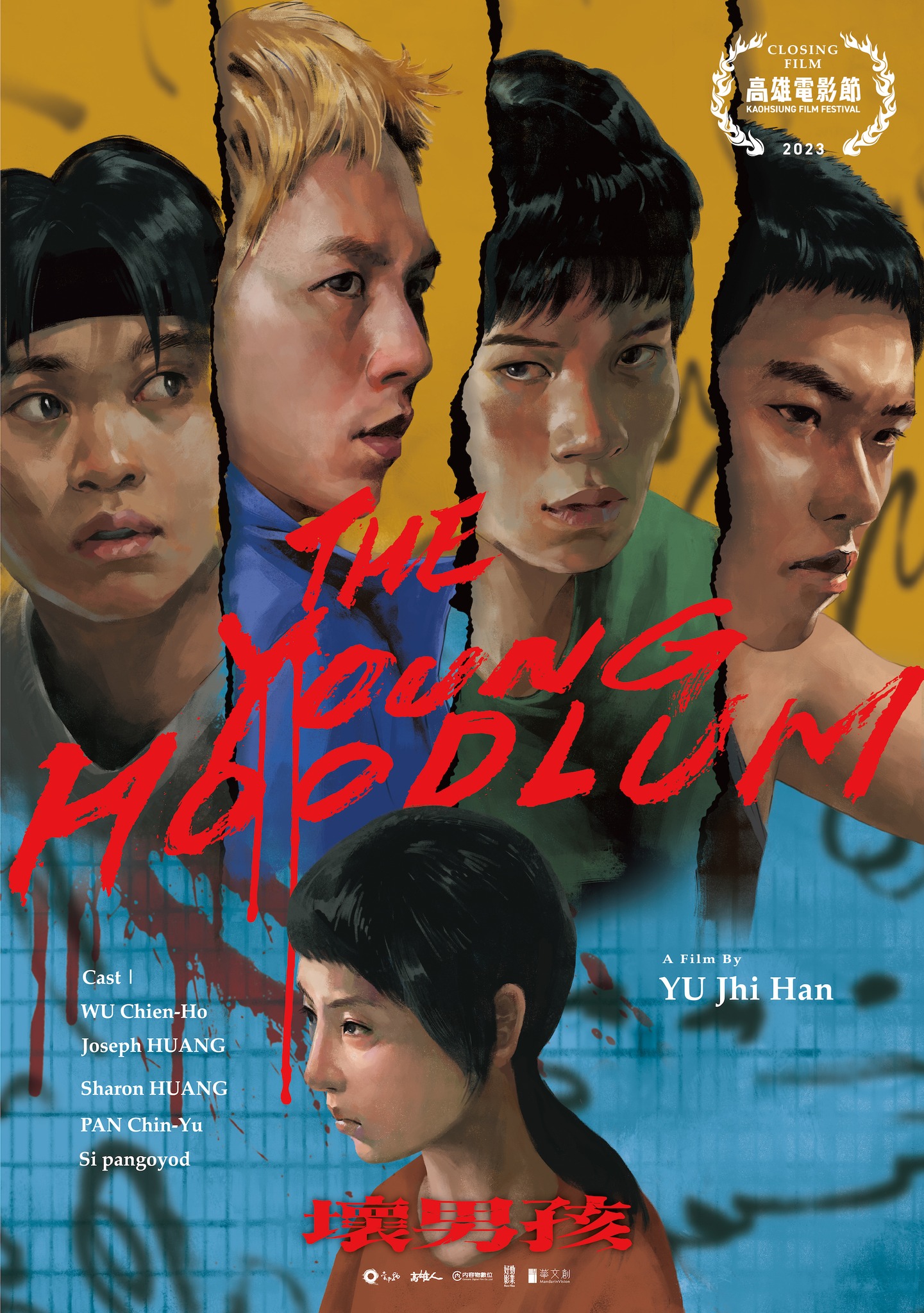
The Young Hoodlum (壞男孩, Yu Jhi-Han, 2023)

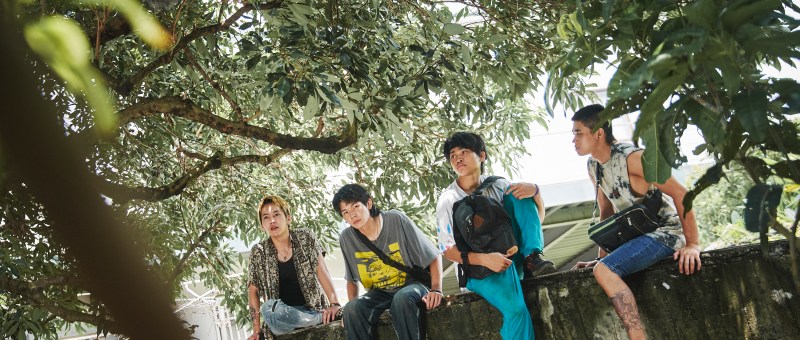
Seemingly abandoned by their society, the four young men at the centre of Yu Jhi-han’s The Young Hoodlum (壞男孩, huài nánhái) survive on petty crime and brotherhood yet their bond is soon disrupted by the presence of a privileged young woman. Contrasting the circumstances of these boys who find themselves without parental support and the girl who resents her parents for micromanaging her life the film makes a point of criticising the inequalities of the contemporary society if succumbing to a potentially unintended misogyny.

With no family to rely on, the boys are largely dependent on a local gangster, Xiao-hei, for whom they’ve become runners withdrawing cash with stolen cards then putting it in a locker for another of his men to pick up. Having left home after his father, who has issues with alcohol, almost set the house on fire, Cheng-han is also caring for his younger sister who comes to view each of the other boys as additional brothers with the five of them forming a close, quasi-familial unit. 

But that unit is disrupted by the arrival of Pin-Ran, an aspiring influencer from a background of extreme wealth who appears to be living in a luxury hotel while hiding out from her parents who, she says, arranged everything in her life so far including a place at a foreign college. Cheng-han is captivated by her and struck the kindness she showed his sister but also uncomfortable in her upperclass world while she, by contrast, is just really a tourist in his having fun experiencing poverty and the transgressive acts the boys must perform just to survive. She gets a thrill out of conning a young woman out a small amount of money at a bus station and convinces the guys to help her exploit one of her fans in a badger scam but she could of course walk away at any point and return to her privileged life which is not an option open to any of the boys. 

Even so, when her parents finally cut her off she decides on drastic action to get back at them and help the boys out of a jam after a questionable decision that puts them on Xiao-hei’s hit list. From the first, she creates discord within the group with it’s old leader, Shi, resentful both of the way she seems to have taken charge and of the way Pin-ran chose to distribute the loot taking the bulk herself and then splitting their cut between the four of them. Shi feels he’s not getting his proper due either from Xiao-hei or Pin-ran and is quickly getting fed up with the futility of his situation. He feels he needs the money to support the other guys and Cheng-han’s sister, while another of the boys has an additional motive in needing to pay for medical treatment for his grandmother all of which makes them desperate and reckless. 

The opening voiceover reveals that one of Cheng-han’s friends was killed in the summer with Yu drip feeding information trying to explain how the brotherhood of the boys imploded to the extent that one of them died, but ultimately returns to the themes of rich and poor as we can see Pin-ran getting advice from a fancy lawyer while each of the boys some of whom are still below the age of majority are questioned alone with no legal representative present. Shi had asked Cheng-han if he was more afraid of being dead or being poor, explaining his desperation in his intense fear of poverty insisting that he would rather not live at all than continue to suffer. The irony is that the boys find themselves in this position because of parental neglect or abandonment while Pin-ran has rejected her parents for being overly attentive and railroading her into a life she may not want. Her position within the gang necessarily disrupts its dynamic with Cheng-han trying to keep the peace while Shi in particular is pushed to extremes by increasing desperation. Yu’s bleak friendship drama in the end suggests that the innocent will end up paying for the poor decisions of those around them and that ultimately the borders of class and gender cannot be overcome for rich girls like Pin-ran can always count on parental support while boys like Cheng-han will have to fend for themselves.


 The Young Hoodlum screened as part of the 18th Season of Asian Pop-Up Cinema.

Original trailer (English subtitles)

Grit (鱷魚, Chen Ta-Pu, 2021)

A former gangster just released from prison finds his loyalties conflicted while working for a corrupt local official in Chen Ta-pu’s quirky romantic crime drama, Grit (鱷魚, èyú). According to a not particularly interested policeman, no one really cares about things like loyalty or morality anymore but like the best of noble gangster heroes, Yu Da-Wei (Kai Ko Chen-tung), otherwise known as Croc because of an incomplete tattoo of a dragon on his back, really does yet his nobility only makes him vulnerable to the machinations of those around him even as he does his best to stand up to thuggish intimidation masquerading as local government. 

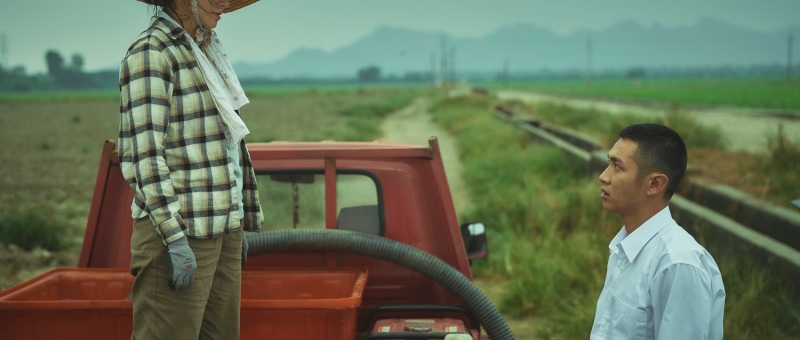
At 17 years old, Yu was convicted of a gangland murder though it was rumoured at the time that petty gang boss Liu (Lee Kang-sheng) may have orchestrated the hit and set the young man up as a scapegoat promising him riches on release and that the grandfather who raised him would be looked after. Now a local councillor, Liu at least keeps his promise handing over twice the agreed amount of money along with a folder detailing where his grandfather’s ashes have been interred, but is otherwise unsupportive while later reluctantly agreeing to give Yu a job in his office during which he runs in to stubborn farmer Chen (Angelica Lee Sinje) whose father has recently passed away after a drunken accident. Chen has being trying to ring the council for weeks because someone’s cut off the water supply to her rice paddy but no one is willing to help her get it turned back on. Over earnest in his new occupation, Yu throws himself into action but is largely unaware of the vagaries of local politics and the likely reasons behind Miss Chen’s sudden inability to earn her living. 

Chen is quick to denigrate local government, complaining that they always turn up for weddings and funerals but when you really need them they’re nowhere to be found. That’s one reason she’s so surprised by Yu’s genuine attempts to help but conversely disappointed when nothing is really done. For his part, Yu is disappointed too because he really thought they were there to serve the people so he rolls up his sleeves and unblocks the irrigation channel himself but thereafter finds himself on the receiving end of the harassment Chen has been facing for months because she refuses to sell her land to developers. Liu is only motivated to help on discovering that the thugs at Chen’s farm may have been sent by a political rival but thereafter resorts to typical gangster tactics. Rather than try to help Chen, he blackmails his way onto the deal and then tells Yu to do whatever it takes to get her off her land so they can all profit as part of a dodgy real estate scam.  

An old school gangster, Yu is torn between loyalty to his old boss for whom he’s already been to prison and doing the right thing especially as he begins to bond with Chen as she continues to care for him after he is badly injured by thugs. He naively gives Liu opportunities to change, tries to convince Chen her land’s not worth dying for, and searches for another solution but eventually finds himself hamstrung by the contradictions of the world in which he lives where former gangsters are now in legitimate power and the state continues to behave like a low level street gang. It might be tempting to read a wider political message into Chen’s determination to hang on to her land which as her father was fond of saying is the only thing you can’t import as she alone refuses to give in to intimidation asking why it is they’re telling her to leave when there seems to be no good reason while Yu is eventually pushed towards resistance if only in her defence because of the mutual kindness that has arisen between them, two people otherwise alone in the world. 

“We all have our own worth” Liu snarls, but Yu is perhaps beginning to realise his, no longer the naive kid but turning the boss’ weapons back on him willing to sacrifice himself in order to save Chen even if he retains an unrealistic belief that Liu will honour his promises. Quirky in tone and somehow earnest, Chen Ta-pu’s charming crime drama is at once an innocent romance in which a lonely woman and a morally compromised man find love while battling institutional corruption, and a tale of personal redemption as the hero discovers “something more important” than loyalty to an oppressive social system and exploitative mentor.  


Grit screens in Chicago April 10 as part of the 14th season of Asian Pop-Up Cinema.

Original trailer (Traditional Chinese / English subtitles)