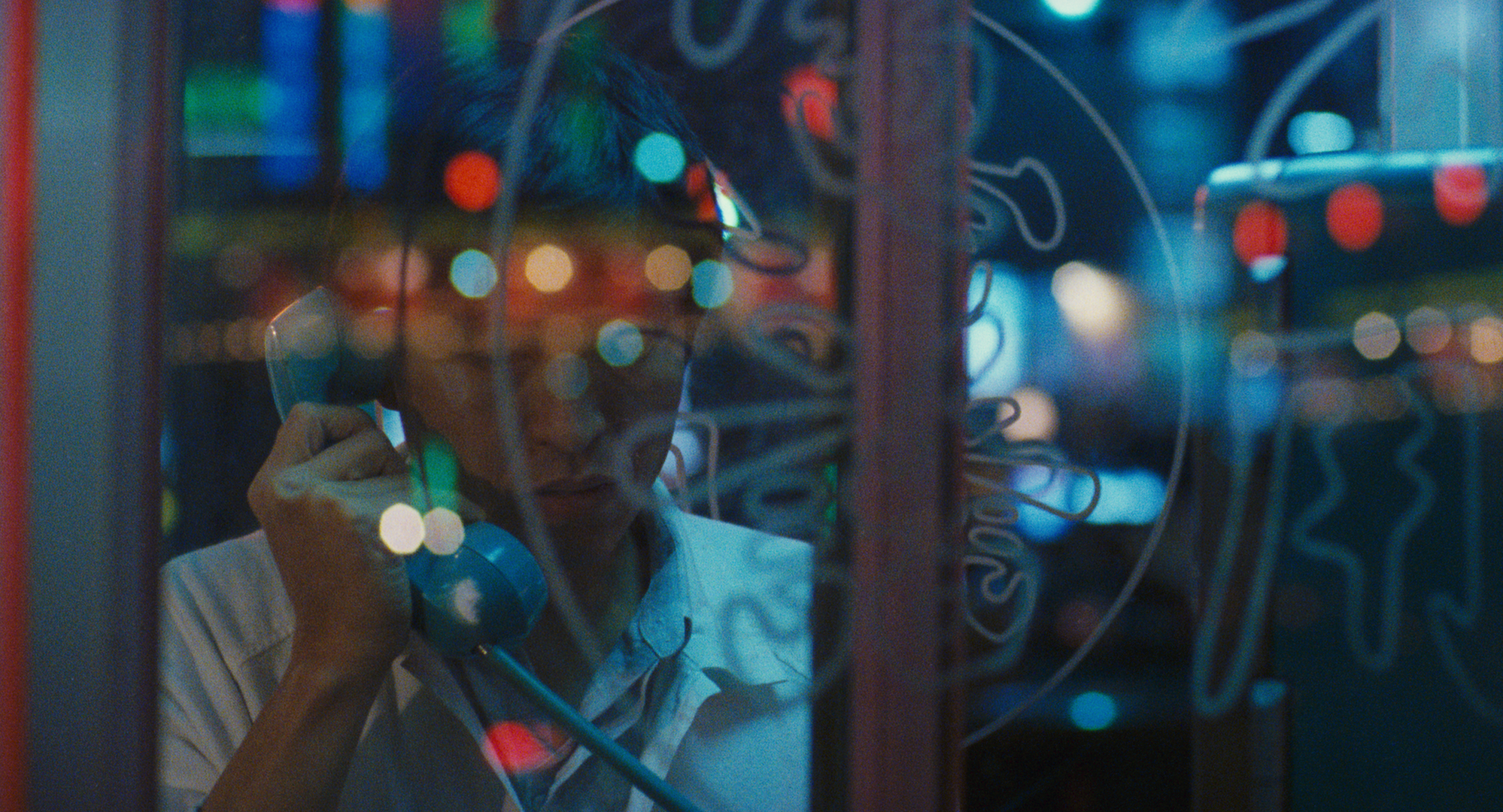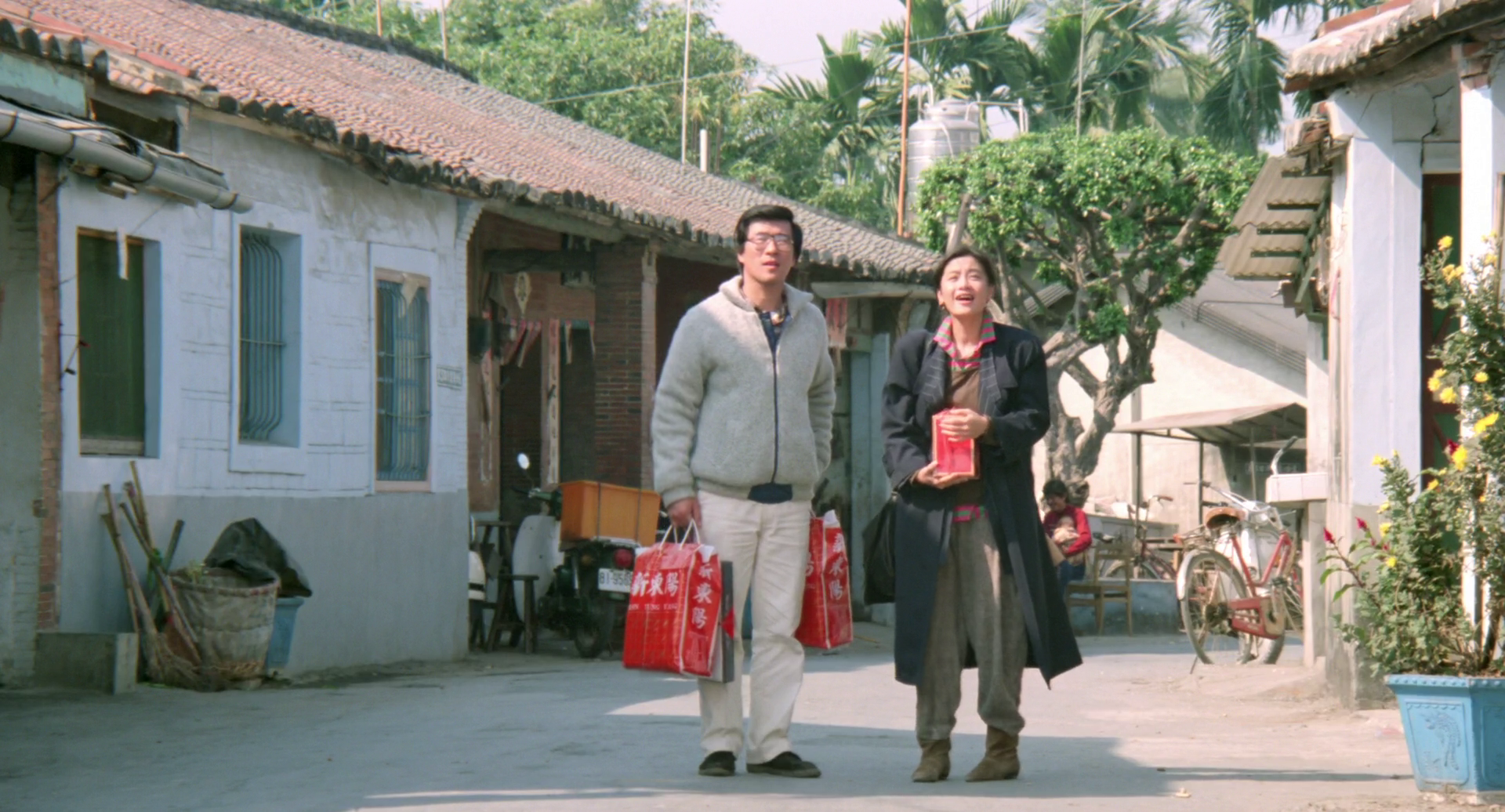
My Favorite Season (最想念的季節, Chen Kun-Hou, 1985)

After becoming pregnant by her married lover, an otherwise independent young woman decides she must find a husband so that her baby will be legitimised but plans to divorce him a year later in Chen Kun-Hou’s charming Taipei-set rom-com, My Favourite Season (最想念的季節, zuì xiǎngniàn de jìjié). These contradictions perhaps express those at the centre of a changing society as the heroine temporarily shackles herself to a weak-willed man but finds herself both bonding with him and resentful of his attempts to control her, while the relationship itself continually straddles an awkward line.

Pao-liang (Jonathan Lee Chung-shan) is a somewhat nerdy guy who runs a print shop and has become a guardian to his niece because his sister and her husband are struggling artists. Incredibly superstitious, he insists he won’t get married before the age of 30 because it would be bad luck, but is roped into Hsiang-mei’s (Sylvia Chang Ai-chia) scheme by a friend who turned her down. Pao-liang tries to turn her down too, but is also struck by her beauty, his own improbable luck, and a possibly genuine emotional connection the pair may share even though they are in other ways opposites. 

Hsiang-mei works as a journalist for a fashion magazine and has more sophisticated tastes as well as a looser connection to money than the penny-pinching Pao-liang who, as the saying goes, knows the cost of everything but the value of nothing. He doesn’t like it when Hsiang-mei spends her own money on things she wants and insists on keeping a running tally of mutual expenses. When his sister asks him for a loan to tide her over, he immediately refuses despite having a large amount in his bank account, partly because he’s mean with money and partly because he’s essentially selfish. Hsiang-mei gives it to her instead, which annoys Pao-liang on several levels because he realises it’s made him look bad while he is now further indebted to Hsiang-mei. 

She, meanwhile, is from a small town and came to Taipei for a better life. The only girl in her family, Hsiao-mei strives for independence and ironically wanted a husband to secure it so she could have her baby and raise it on her own. As her brother says, “she does what she wants,” but seemingly hadn’t really thought through her plan assuming it would all go smoothly and she and Pao-liang could essentially hang out for a year and then bring the arrangement to an end. She picks Pao-liang partly because they do seem to get on, and possibly because she thought he’d be easy to manage, but is lucky in her choice of man that he presents little danger to her.

He is, however, petty and patriarchal in his mindset. He’s both attracted to Hsiang-mei and resentful of her strong will and independence while also small-minded and incapable of direct communication. It’s obvious that he wants this arrangement to continue, but often acts in ways that endanger it and lashes out at Hsiang-mei rather than explaining how he feels. When Hsiang-mei returns upset having met up with her married lover, Pao-liang shouts at her and accuses her of embarrassing him by sleeping with another man. He does something similar when she encounters unexpected tragedy, blaming and berating her in place of offering comfort even if his cruelty is motivated by frustrated affection. 

But Hsiang-mei is in some ways the same. She doesn’t really say what she wants either or acknowledge that she has grown fond of Pao-liang and his niece. She’s fiercely independent, but felt she still needed to have a husband to have a baby after having an affair with a man who was already married so was to her the ideal boyfriend because he wouldn’t tie her down. She buys a lamp for Pao-liang’s place because lamps make a place a home, but Pao-liang doesn’t want it or approve of the expense while simultaneously insisting on paying for half of it because it’s for a “communal” area. He’s still intent on keeping score and isn’t ready to accept that he and Hsiang-mei live in the house together so everything belongs to them “communally” as a couple. On a baseline level, he won’t cede his space to her nor acknowledge that she still has the upper-hand in this relationship even as the pair inevitably draw closer. Chen’s vision of 80s Taipei is warm and sophisticated as Pao-liang spends his time dancing with the old ladies in the park and loses his keys at opportune moments or drives his car into a ditch but even despite his pettiness and ineffectuality, can still find love and the courage to chase it if somewhat passive aggressively.


My Favorite Season screened as part of the BFI’s Myriad Voices: Reframing Taiwan New Cinema.

Trailer (Traditional Chinese / English subtitles)
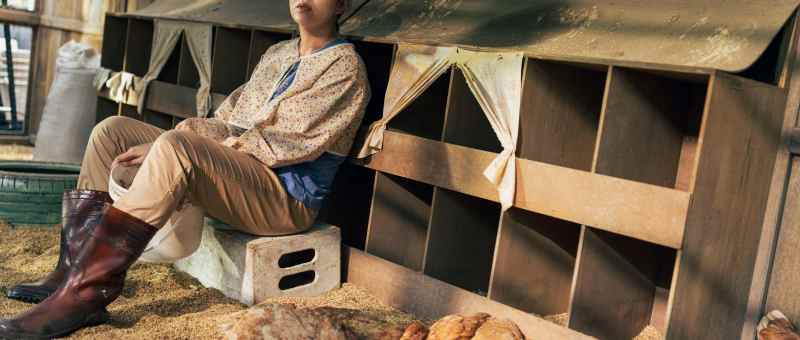
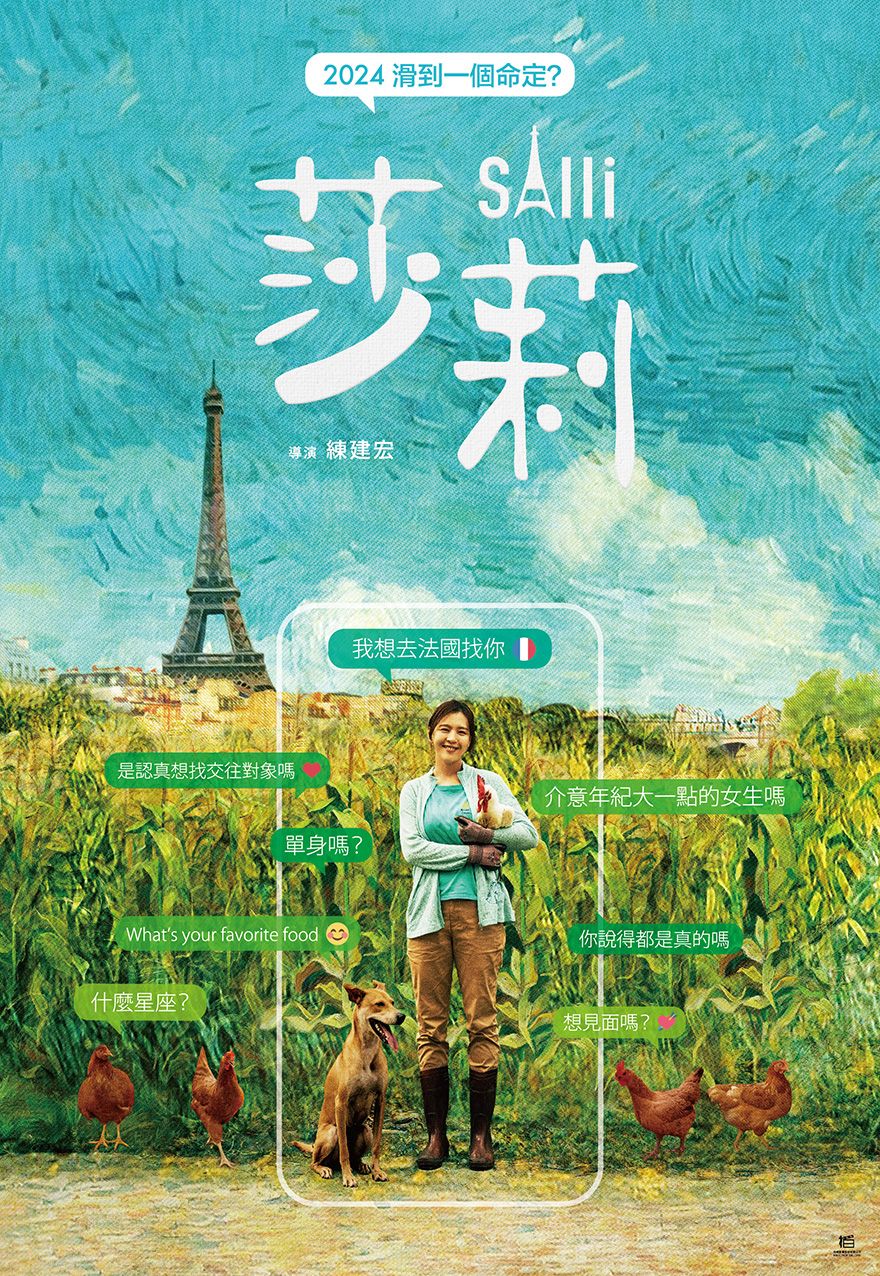
Salli (莎莉,  Lien Chien-Hung, 2023)

Romance and tradition collide when a middle-aged chicken farmer is unwittingly duped by an online dating scam in Lien Chien-Hung’s gentle dramedy Salli (莎莉). Though everyone tells her the man she thinks she’s talking to on the internet probably isn’t real, Hui-jun (Esther Liu) continues to believe in the possibility of love and a more sophisticated world than that she knows from her rural small-town where everyone knows everyone’s business and she’s looked on as something of a pariah for being unmarried at 38.

Her busybody aunt (Yang Li-yin) in particular is keen that she get married as soon as possible and keeps bringing photos of eligible bachelors most of whom are more than 20 years older than her or just a bit strange. The aunt has also somewhat taken over in the upcoming wedding of Hui-jun’s younger brother Wei-hong (Austin Lin) to the daughter of a local pineapple farmer. She’s had a fengshui master come round and declare that Hui-jun’s bedroom is the best one for the new couple to sleep in so she’s been turfed out, while another fortune teller suggests that as she is unmarried herself Hui-jun shouldn’t even attend the ceremony otherwise the couple will end up arguing for the rest of their lives. Though Wei-hong tells her he doesn’t care about any of that and it’s important to him she attend his wedding, Hui-jun can’t help feeling a little guilty and in the way.

What the aunt doesn’t seem to consider is that after their parents died in an accident, Hui-jun in effect became everyone’s mother which made it impossible for her to have the kind of experiences one needs to get married. She even ended up caring for the daughter of her older brother who abandoned the family after the end of his marriage, though he later took her back to Shanghai where he lives with a much younger Mainland fiancée. Xin-ru has returned home in search of maternal comfort, but Hui-jun knows she will soon have to leave again and she’ll be on her own. It’s Xin-ru who sets her up on an internet dating app explaining that she uses them for “fun” though once Hui-jun starts chatting to “Martin”, a Parisian gallery owner, she can’t help but succumb to romantic fantasy. 

There are those who pity Hui-jin or mock her for being taken in by such an obvious scam, even considering giving Martin her life savings for the downpayment on a flat where they could live together in Paris when he proposes to her after a short period of text-based communication facilitated by AI translation. But Hui-jun is lonely and is just wants to feel loved and valued in a way she obviously doesn’t by her family members who are obsessed with her marital status. In any case, it’s through her imaginary romance with Martin that she begins to come into herself, to think about what it is she wants out of life including whether to not she actually wants to get married, and embrace a new sense of confidence as a person in her own right.

A disaster at home sends her to Paris, alone, hoping to clarify her situation which she eventually does though not in the way anyone might have expected. An elderly woman gives her a piece of life advice that after a divorce and several years of unsatisfying dating experiences, she realised that she just do things on her own and that was okay. What the opportunity affords her is the chance to rediscover herself as distinct from her roles as a sister, aunt, and surrogate mother and wonder if she might be happy enough with her chickens and the dog for company. Filled with a gentle humour and an affection for small-town, rural life in Taiwan if also a yearning for a little sophistication, the film has boundless sympathy for its put upon middle-aged heroine as trapped as some of the chickens in her coop by outdated patriarchal thinking and longing to strut free like the white cockerel she seems to treat almost as a friend. Taichung may not have the Eiffel Tower, but it has its charms and as Hui-jun is discovering the freedom to decide on her own future.


Salli screened as part of this year’s Osaka Asian Film Festival.

Original trailer (Traditional Chinese / English subtitles)
Coo-Coo 043 (一家子兒咕咕叫, Chan Ching-lin, 2022)

Why would a pigeon, or a child, return to you if you failed to make them a home? The enigmatic title of Chan Ching-lin’s gritty familial drama Coo-Coo 043 (一家子兒咕咕叫, yījiāzi ér gū jiào) refers to a homing pigeon that unexpectedly arrives seven years late but bringing with it less joy than an unwelcome confrontation with the unresolved past. A tale largely of male, patriarchal failure the film revolves around the taciturn figure of a middle-aged man obsessed with pigeon racing who attempts to build a coop an in abandoned field for the birds he no longer has means to care for even as his own home crumbles.

Old Ching (Yu An-shun) appears to be a broken man who’s never quite recovered from the massive success of having won a lot of money on a pigeon race several years previously though most of his birds since have never returned at all. Gambling is technically illegal in Taiwan, and the sport of pigeon racing is itself a little taboo though popular enough at least in the small town where Ching lives. It appears the family is mostly supported financially by his second wife Ming’s (Yang Li-yin) banana farm, while ironically enough his daughter Lulu (Rimong Ihwar) dreams only of flying the coop for a less depressing life somewhere else. Part of the reason for the difficult atmosphere in the family home is the sense of absence left by Shih, Ching’s son from his first marriage who disappeared on his way to school aged 12 more than a decade earlier.

Ching continually blames Ming for Shih’s disappearance because on that day she did not drive him to school as usual, ignoring the fact that she stayed to clean up the house after he trashed it in a violent fit after losing at gambling and told the boy to walk. Ching’s irony is that he is always waiting for something to come back to him, but never gives any reason why it should. Though he is often seen tenderly caring for his pigeons, he treats his family members with coldness and contempt and is on occasion violent towards Ming who has a sideline working as part of a troupe conducting death rituals and is considering leaving him. She takes pigeon 043’s miraculous return after seven years as a sign that they should look into having Shih declared legally dead to help them accept he won’t come back but Ching refuses to do so and continues to wallow in his own violent and angry grief unable to see that it may be him that drove his son, and later his daughter, away.

His limp also hints at a violent past as do his ties to a group of local gangsters who seem to be well into the pigeon racing scene, while gang young toughs make a living kidnapping birds and ransoming them back to their owners or else killing them for fun if they don’t pay. Ching finds a surrogate son in the orphaned Tig (Hu Jhih-ciang), Lulu’s sometime pigeon-catcher boyfriend, but fails to see him as such until it’s too late. Unlike Lulu, Tig is a man looking for a coop. He slides into the vacant space in the family longing to be accepted, but finds only coldness and abandonment left behind while everyone else flies away in search of a better life. 

Often captured behind bars, the two men are just as caged as the pigeons though the kind that don’t fly away when the doors are opened. Some of those who leave do so for the after life, no longer seeing any point in continuing this miserable existence which shows no sign of improvement and unable to envisage any other kind of escape. Even Lulu’s flight to the city to become a nightclub dancer seems as if it may just be another kind of cage from which she cannot fly. Ching’s pigeon coop is eventually ruined by a more literal kind of storm, but mainly because he failed to protect it unable to look past his personal despair and indifferent to the vulnerabilities of his home. Bleak in the extreme, Chan paints a grim picture of life on the margins in rural Taiwan in which the wings of all have long been clipped and those who return do so only because they have nowhere else to go.


Coo-Coo 043 screened as part of this year’s London East Asia Film Festival.

Original trailer (English subtitles)

Taipei Story (青梅竹馬, Edward Yang, 1985)

“Just a fleeting hope. The illusion that you can start over” the hero of Edward Yang’s melancholy drama of the costs of modernity, Taipei Story (青梅竹馬, Qīngméizhúmǎ), eventually laments. Yang apparently chose the English title himself in a deliberate echo of Yasujiro Ozu’s equally pessimistic drama, yet the original title literally translated as “childhood sweethearts” also has its poignancy in hinting at the loss of innocence and hopeless impossibility of the fracturing love between its twin protagonists. 

Yang begins and ends in an empty room, for an empty room is always a possibility. As the film opens, high-flying career woman Chin (Tsai Chin) is buying her own apartment, already envisioning her life there in pointing out to her boyfriend Lung (Hou Hsiao-hsien) where they’ll put the TV and VCR so they can watch movies in bed hinting at a new level of consumerist success. More practically minded, he points out that the place needs a little work but Chin is confident she can manage it, saving up and paying in instalments having no immediate anxiety about her income. 

Yet Yang seems to suggest that this burgeoning economic powerhouse is built on shaky ground. The construction firm at which Chin works has recently been hit with a potential lawsuit about a lethal building error, while Chin’s mentor has already moved on and the firm has been bought up by another company presumably intent on some shady business of its own. This Chin discovers to her cost on hearing the not entirely unexpected news that the new bosses don’t understand her job title and want to demote her to the role of secretary which, she suspects, is just a way of pushing her to resign (which she then does). 

Shoddy business practices are also it seems responsible for her father’s present moment of financial insecurity though he only further alienates his daughter by talking entirely with Lung when the pair come to visit stopping only to ask awkward questions about marriage and children. Later we realise that part of Chin’s resentment towards her father is due to a long history of domestic abuse, her mother later crying silently prompting Chin to withdraw some of her savings something she would not have done had her father asked it. Yet Lung, old-fashioned in many ways and not least in his filiality, feels duty bound to help his not-quite father-in-law provoking a row between the pair when he gives him money he’d saved in the forlorn hope of going into business with his brother-in-law in America. 

Once childhood friends and now seeking a new start, the couple begin to dream of a new life though as Lung later says, America, like marriage, is not a panacea. Chin is in a sense torn between past and future neither of which have much possibility, in a committed relationship with Lung yet jealous over his past with a mutual childhood friend, and also carrying on an affair with an unhappily married man at work. A high-flying executive and independent career woman, she is determined to keep moving forward while Lung is stuck in the past hung up on baseball glory and morally righteous to a fault, helping out Chin’s feckless father while knowing it will do no good while his attempt to help a friend sort out his complicated family life leads only to tragedy. It’s obvious that he does not fit in with Chin’s yuppie friends, one particularly obnoxious male colleague describing him as having the face of a yam farmer and needling him to the point that it eventually leads to an altercation in a karaoke bar. Chin doesn’t seem particularly upset about the fight, comforting Lung as he confesses that he ends up in fights in order to stick up for himself or else because of his love of justice, but continues hanging out with her unpleasant friend for otherwise unclear reasons. 

But it’s less a love of justice than frustrated masculinity that eventually seals Lung’s fate, unwisely picking a fight with a young tough not so much in order to protect Chin as to preserve his own sense of wounded male pride. Realising the futility of his situation, he is unable to move forward into the new society, whereas Chin eventually finds herself substituting his role as her former mentor shows her around a potential new office space just as she had him her apartment envisioning how they will exist within it, where their offices will be along with the state of the art computer room. “It’s actually nice here,” she assures her, “now we have a big American company right in our hometown. Why go abroad?”. Yet Chin perhaps remembers her dejected colleague lamenting that all the new buildings look the same and he can’t even remember which ones he worked on so anonymous has the landscape become. In this Taipei story, the city is devoid of life or character a highly corporatised arena of increasingly dehumanising capitalism where everyone dreams of escape abroad to America or Japan, yet all Chin can do lowering her sunshades is to gaze from the window of her new office onto the lonely streets below and ask herself where it is she thinks she’s going. 


Taipei Story streamed as part of this year’s Taiwan Film Festival Edinburgh.

Trailer (English subtitles)

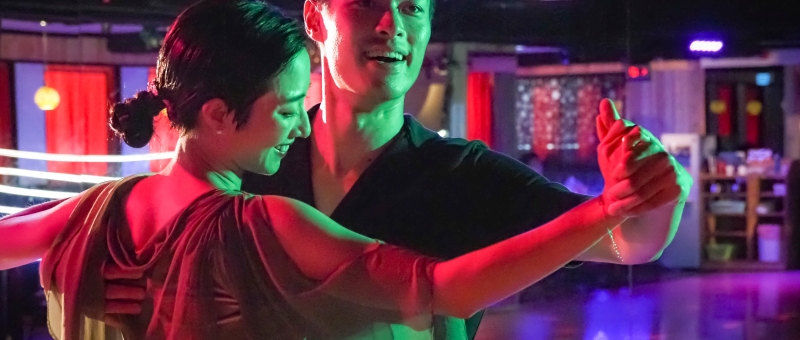
A Leg (腿, Chang Yao-sheng, 2020)

“Life is long. We all have some regrets.” a grieving widow is told by a disingenuous doctor in full damage limitation mode. He’s not necessarily wrong, nor is his advice that the widow’s pointless quest to retrieve her late husband’s amputated limb has little practical value though of course it means something to her and as he’d pointed out seconds earlier a physician’s duty is to alleviate suffering of all kinds. Apparently inspired by the true story of director Chang Yao-sheng’s mother, A Leg (腿, Tuǐ) is in many ways a story of letting go as the deceased man himself makes a presumably unheard ghostly confession while his wife attempts to do the only thing she can in order to lay him to rest. 

Husband Zi-han (Tony Yang) is in hospital to deal with a painful, seemingly necrotic foot which eventually has to be amputated in a last ditch attempt to cure his septicaemia. “Keep the leg and lose your life, or keep your life and lose the leg” the otherwise unsympathetic doctor advices wife Yu-ying (Gwei Lun-mei) in a remark which will come to seem ironic as, unfortunately, Zi-han’s case turns out to be more serious than first thought and he doesn’t make it through the night. Grief-stricken, Yu-ying leaves in an ambulance with the body but later turns back, determined to retrieve the amputated foot in order that her husband be buried “complete” only it turns out that it’s not as simple as she assumed it would be. 

The loss of Zi-han’s foot is all the more ironic as the couple had been a pair of ballroom dancers. As Yu-ying makes a nuisance of herself at the hospital, Zi-han begins to narrate the story of their romance which began when he fell in love with a photo of her dancing in the window of his friend’s photography studio. Explaining that, having died, he’s reached the realisation that everything beautiful is in the past only he was too foolish to appreciate it, Zi-han looks back over his tragic love story acknowledging that he was at best an imperfect husband who caused his wife nothing but pain and disappointment until the marriage finally broke down. He offers no real explanation for his self-destructive behaviour save the unrealistic justification that he only wanted Yu-ying to live comfortably and perhaps implies that his death is partly a means of freeing her from the series of catastrophes he brought into her life. 

Given Zi-han’s beyond the grave testimony, the accusation levelled at Yu-ying by his doctor that the couple could not have been on good terms because Zi-han must have been ill for a long time with no one to look after him seems unfair though perhaps hints at the guilt Yu-ying feels in not having been there for her husband when he needed her. As we later discover, however, this is also partly Zi-han’s fault in that he over invested in a single piece of medical advice and resisted getting checked out by a hospital until he managed to sort out an insurance scam using his photographer friend, wrongly as it turned out believing he had a few months slack before the situation became critical and paying a high price for his tendency to do everything on the cheap. Nevertheless, Yu-ying’s quest to reattach his leg is her way of making amends, doing this one last thing for the husband whom she loved deeply even though he appears to have caused her nothing but misery since the day they met. 

In order to placate her, the slimy hospital chief offers to have a buddhist sculptor carve a wooden replica of Zi-han’s leg made from wood destined for a statue of Guan-yin goddess of mercy but Yu-ying eventually turns it down, struck by the beauty of the object but convinced that turning it to ash along with her husband’s body would be wrong while believing that wood ash and bone ash are fundamentally different. She regrets having ticked the box on the consent form stating she didn’t want to keep the “specimen”, never for one moment assuming that her husband would not recover. Despite their dancing dreams, she thought the leg was worth sacrificing against the long years they would have spent together after, though this too seems a little unlikely considering the state of their relationship prior to her discovery of Zi-han’s precarious health. Zi-han meanwhile is filled with regret for his continually awful behaviour and the obvious pain he caused his wife. Getting his leg back allows him to begin “moving on” while doing something much the same for Yu-ying though his afterlife pledge about the endurance of love seems a little trite given how he behaved while alive. A little more maudlin than your average quirky rom-com, A Leg nevertheless takes a few potshots at a sometimes cold, cynical, and inefficient medical system, inserting a plea for a little more empathy from a pair of unexpectedly sympathetic police officers, while insisting that it’s important to dance through life with feeling for as long as you’re allowed. 


A Leg screens Aug. 14  & streams in the US Aug. 15 – 20 as part of this year’s New York Asian Film Festival.

Original trailer (English/Traditional Chinese subtitles)

Take Me to the Moon (帶我去月球, Hsieh Chun-Yi, 2017)

take me to the moon posterShould you continue pursuing your dreams even after you know they won’t come true or just give in and live a dull but comfortable life of conformity? These are questions most young people face at one time or another, but for the hero of Hsieh Chun-Yi’s Take me to the Moon (帶我去月球, Dài Wǒ Qù Yuèqiú), they take on an extra dimension when he is suddenly thrown back into the past with an opportunity to “save” the life of a friend if only he can convince her to abandon her dreams of stardom and stay home instead. A melancholy nostalgia fest for late ‘90s Taiwan (and the late ‘90s in general), Take me to the Moon is an ode to lost opportunities, words unsaid, and the immutability of the past which nevertheless makes room for the odd miracle or two as its hero realises perhaps he’s not grown up as much as he thought.

Three years prior to the main action, 30-something Wang (Jasper Liu) takes a business trip to Tokyo where he reconnects with high school friend Emma (Vivian Sung) who won a prestigious competition to go to Japan and train with a big idol producer. Sadly, Emma’s dreams have not panned out and she’s embarrassed to let her old friend see just how badly things have been going for her. Fast-forward three years to the present and Emma has unfortunately passed away at only 38 after years of hard drinking in hostess bars, poor nutrition, and overwork finally caught up with her. The once tight group of high school bandmates, two of whom have become a married couple, argue over their collective failure to save their friend at which point Wang walks out, meets a weird old woman who gives him some strange flowers, and is knocked over by a car only to wake up back in 1997. Desperate to save Emma, Wang thinks his best bet lies in ruining her chance to go to Japan so that she will never experience the failure of her hopes and dreams and will stay home to live a simpler, safer life.

Filled with a youthful nostalgia and feeling of authenticity, Take me to the Moon makes the most of its ‘90s setting, recreating the late 20th century city through impressive CGI. Wang reacquaints himself with his teenage self, retrieving his well hidden box of tame pornography and enjoying another few bowls of his mother’s delicious fish soup, but his main goal is essentially to ruin the dreams of his friend – an act of betrayal which might be in her interest, but then again it isn’t Wang’s choice to make and perhaps Emma would rather follow her heart even if it means it’s going to get broken.

What Wang eventually realises, as one of the Tom Chang tracks which pepper the narrative points out, is that what he should have been treasuring was the extra time spent with friends rather than worrying about the future. Back in his teenage years Wang was too shy to confess his lifelong crush on Emma and then went on to be plagued by classic bad timing in adulthood until finally it was too late. His attempts to “save” Emma by ruining her life are in part selfish but also cowardly in taking the place of simply saying the things he needed to say at the right time. Finally figuring this out, Wang realises that he can’t “save” Emma like the hero of a time travel movie by manipulating the past, but he has been given a second chance to let her know how he felt. This, in the end, is what may finally, really “save” his friend – simply letting her know that he is there supporting her, that she’s fine as she is and doesn’t need to be “perfect” to be loved as her overbearing parents have led her to believe.

Though Wang awakens to a more positive change than he might have expected, the general idea is that you can’t rehash the past and should make sure that you’re happy with your present to avoid the desire to try. Having given up on his youthful dreams for a lonely corporate existence, middle-aged Wang regains a little of his essential self and decides to fight for a more authentic way of life even if it doesn’t really go anywhere. Warm and fuzzy yet also strangely melancholy, Take me to the Moon is another in a long line of Taiwanese high school nostalgia movies but proves a fitting tribute both to its era and the singer songwriter featured throughout who himself died young in a tragic car accident in 1997 aged just 31.


Screened at the 20th Udine Far East Film Festival.

Original trailer (English subtitles)

Original 1997 music video for Tom Chang’s Take Me to the Moon