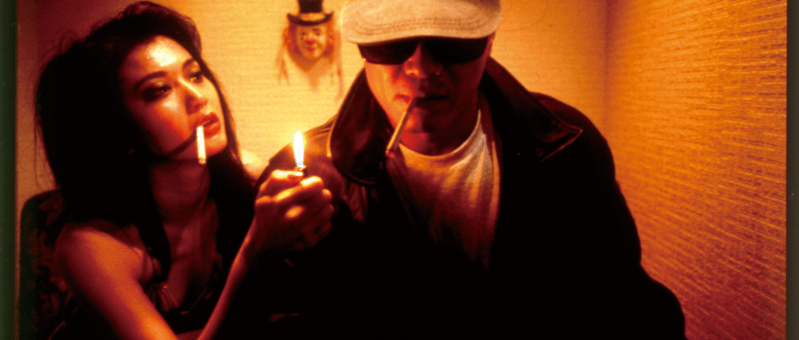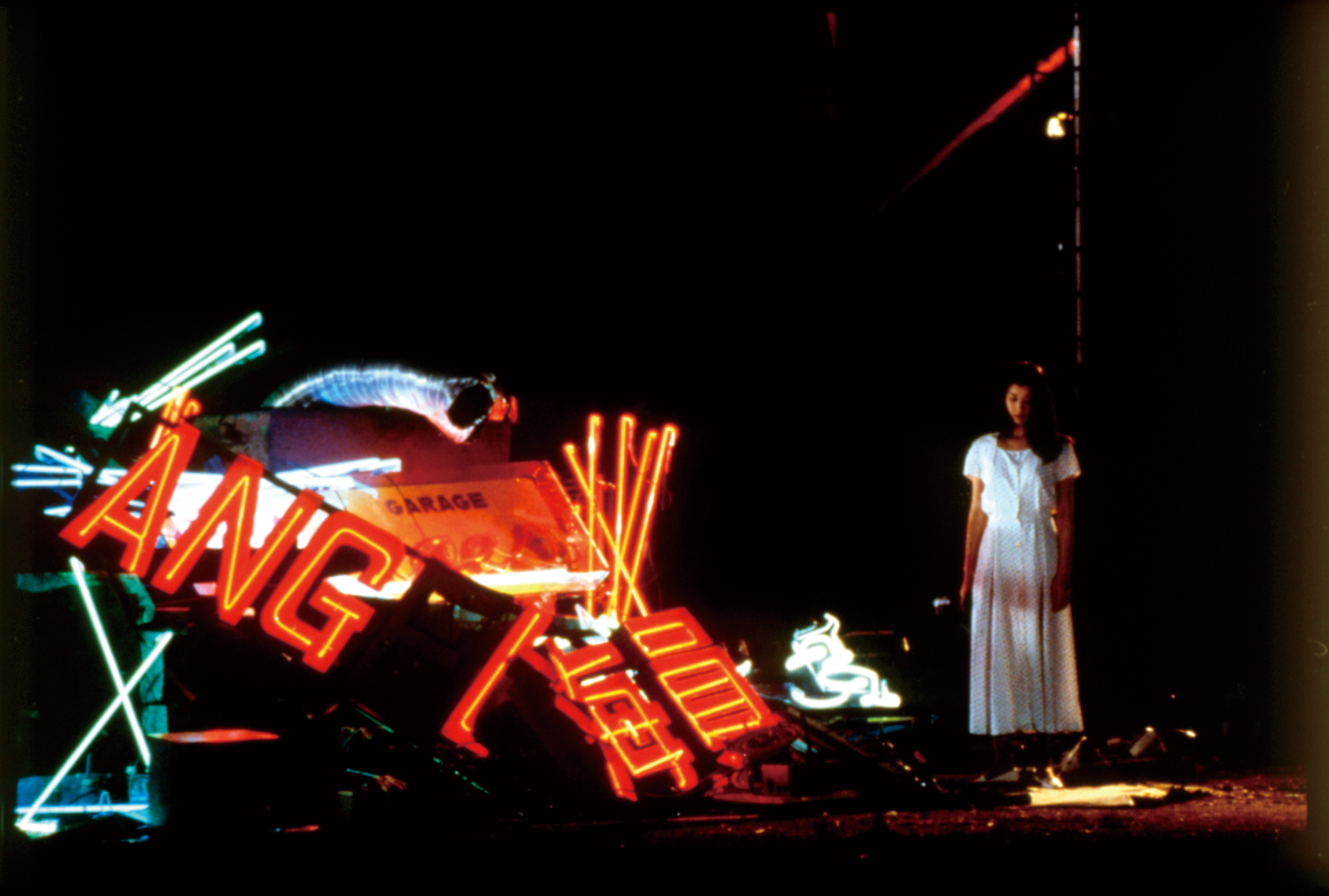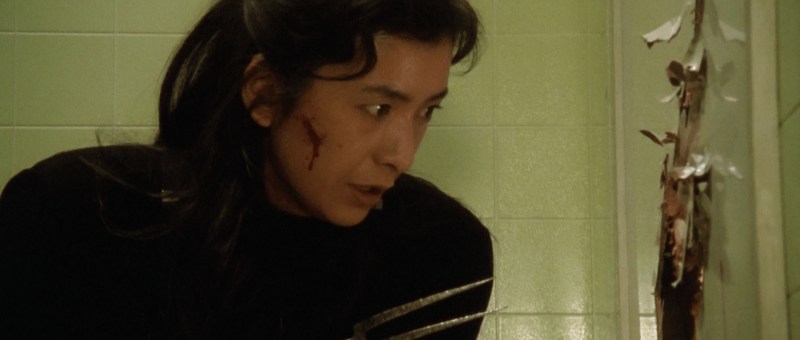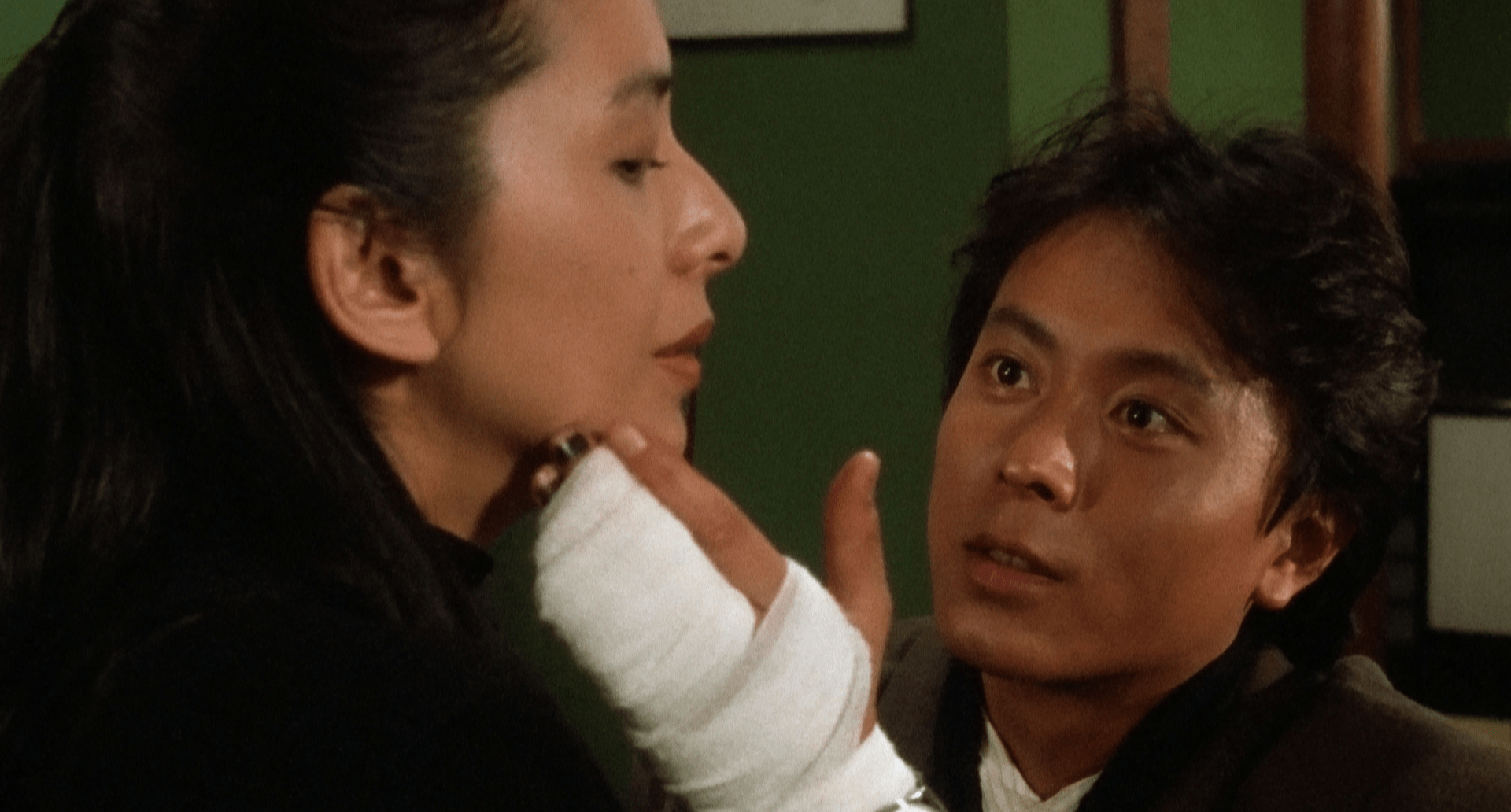
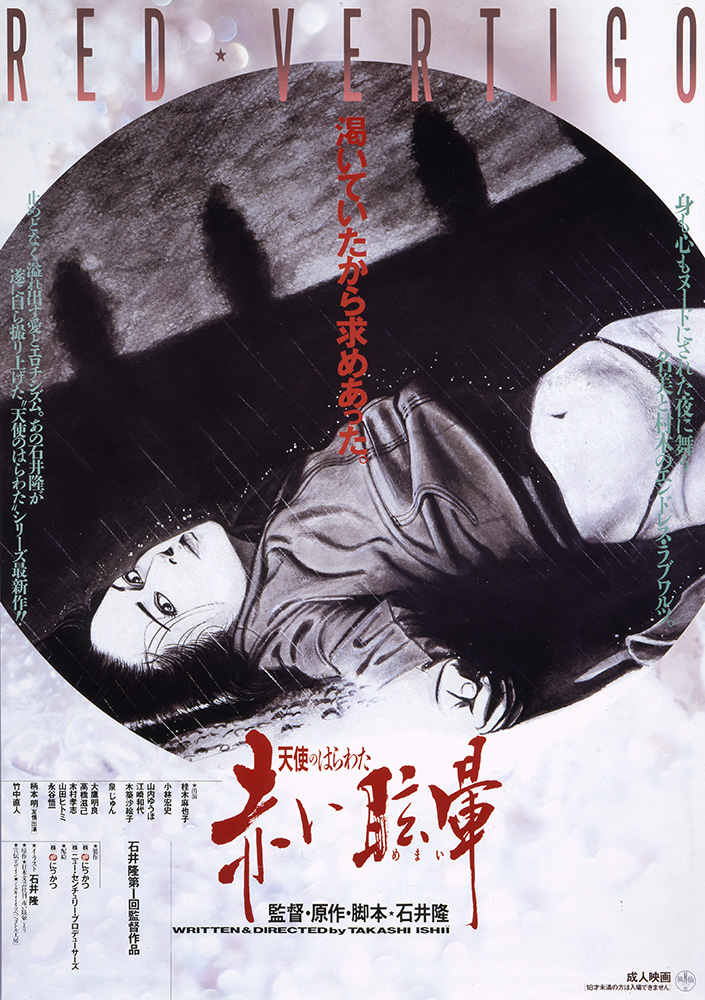
Alone in the Night (夜がまた来る, Takashi Ishii, 1994)

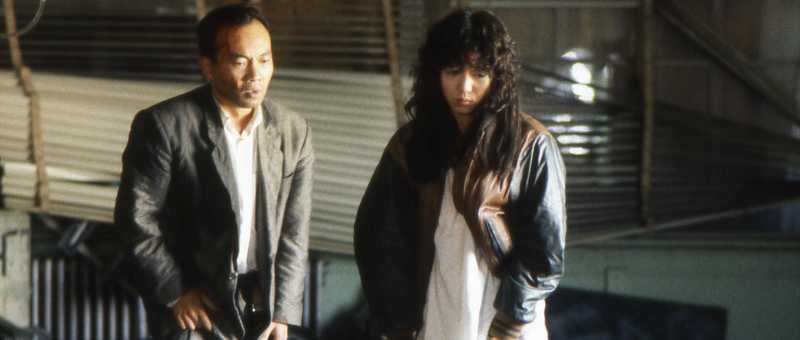
A woman enters the homosocial world of the yakuza in search of revenge for her murdered husband, but discovers only more degradation and hopelessness in Takashi Ishii’s rain-soaked noir, Alone in the Night (夜がまた来る, Yoru ga mata Kuru). Then again, perhaps it’s not really revenge Nami (Yui Natsukawa) is after so much as death itself, her relentless fall one of self-harm born of her sense of futility in world ruled by irony in which there is no such thing as truth or justice.

Indeed, one of the things that propels Nami on her mission is the injustice that her husband Mitsuru (Toshiyuki Nagashima), killed while working undercover investigating a gang dealing drugs, is then accused of taking the drugs he seized and selling them on himself. After her husband dies, she’s hounded by the press who paint him as a corrupt cop while she’s also denied his police pension because he died in disgrace. What she wants is to clear his name and thereby drag her husband back from the netherworld in an affirmation of their love for each other. 

But she too becomes corrupted by the darkness of the criminal underworld. Soon after the funeral, yakuza thugs break into her home and rape her while looking for the drugs they assume Mitsuru stashed somewhere. Amid the chaos, she attempts to take her own life by slashing her wrist with one of Mitsuru’s bones but is unexpectedly saved by a mysterious man. Reborn after her brush with death, she reinvents herself as bar hostess “Mitsuru” as a means of getting close to the gang boss, Ikejima (Minori Terada), she believes to be responsible for her husband’s death. Her attempts to kill him, however, prove unsuccessful. She’s once again raped, this time by Ikejima, and thereafter becomes his mistress until another opportunity arises which she then botches by stabbing him in a non-lethal way which only gets her beaten and tortured by his underling Shibata (Kippei Shiina) and eventually sold to a brothel in Chiba where they get her hooked on drugs to make her easy to control. 

In fact, she’s only spared death once again thanks to the intervention of the mysterious man, Muraki (Jinpachi Nezu), a middle-aged yakuza seemingly weary of life and perhaps drawn to Nami as to death. He seems uncomfortable and out of place in this world of brutal masculinity while his modernity is singled by his association with the gun to counter Shibata’s with the sword. He has other reasons for his duality, but is charged with rooting out moles in the yakuza of which there seem to be an inordinately large number. Despite warning her off, he does what he can to help Nami, in part of out of guilt and a need for atonement, but also a kind of escape from his own entrapment within the purgatorial space of the yakuza underworld. 

Permanently raining and shot in an eerie blue, the world around Nami and Muraki takes on an etherial, dream-like quality as if taking place somewhere between sleeping and waking. After rescuing her from an attempt to drown herself, Muraki remarks that Nami slept like the dead or perhaps as if someone was calling to her from the other side. Death seems to be beckoning each of them, even as Muraki desperately tries to keep Nami alive by tenderly nursing her back to health and helping her beat drugs so she can finally free them both by achieving their mutual revenge.

But the film’s irony is that Nami cannot achieve her vengeance on her own. She’s constantly rescued by Muraki who achieves some if for her while each of her attempts only plunge her further down the cycle of degradation and in danger of losing herself entirely. She is and remains an ordinary woman venturing into hell in search of justice, but discovering only cruel ironies and futility. Muraki too is unable to transcend himself and meets a personal apocalypse in embracing his authentic identity. Nami has been chasing a ghost all along, though in some ways it may be her own as she tries to make her way back into the world of the living by reclaiming a vision of the world she had before in which her husband was a good and honest man and there was justice in the world even she declared herself largely disinterested in world outside of their romance and their private paradise just for two.


Alone in the Night is available as part of Third Window Films’ Takashi Ishii: 4 Tales of Nami boxset.

Door (Banmei Takahashi, 1988)

You like to think you’re safe behind closed doors, that nothing that happens behind them is anybody’s business and you’re free to be yourself. But a door is as much about keeping things in as it is about keeping them out and perhaps you’re not as in control of it as you thought. Arriving at the tail end of the Bubble era, Banmei Takahashi’s giallo-esque home invasion thriller is at heart about insecurity, a feeling of anxiety and ever impending doom under the watchful eyes of a judgemental society. 

At least, Yasuko (Keiko Takahashi) feels the eyes of her neighbours keenly on her, nervously attempting to live up to the role that’s been assigned to her as a moderately affluent housewife in a nice middle-class area that is nevertheless full of hazards even if many of them are social and psychological rather than directly physical. We can feel her discomfort when an anonymous neighbour passive aggressively returns her rubbish to her front door when she attempts to throw it out on the incorrect day, her husband’s (Shiro Shimomoto) advice simply to make sure she follows the bin day timetable correctly in the future. Another neighbour whose face is also not seen later stares at her when she drops a tissue that has been placed in her letterbox by a salesman (Daijiro Tsutsumi) who is harassing her, forcing Yasuko to pick it back up and take to her own apartment to dispose of lest she be judged for failing to obey this simple rule of urban living despite realising that the tissue likely contains unpleasant bodily fluids. 

The great mystery is why Yasuko, who clearly finds the salesman’s attentions threatening, does not immediately hang up when he calls her but continues to listen to his ominous conversation which heavily implies he is close by and watching her. Previously he’d daubed an obscene message on her front door branding her as “sexually frustrated” which as it turns out may not be far off the mark. Her husband is largely absent and often works away. When he returns she tries to wake him up after putting their son to bed, but he’s dead to the world and leaves the next morning having explained that he’ll be away the next three nights due to a colleague falling ill. Among the junk mail delivered to their flat were a series of business cards for cabaret bars that he jokingly suggested keeping, though as it turns out he really is at work and not spinning a yarn for a three-day jaunt with a mistress even if you could make a case that he’s in an extra-marital affair with his career. Yasuko almost says as much when she calls and tells him she’s scared but he refuses to come home, crying out that he obviously has no regard for his wife and child. 

It’s clear that the economic demands of the late Bubble era have endangered the traditional family even as they’ve provided a level of financial comfort that enables Yasuko to live in this “nice” apartment even if it’s perhaps only ordinarily nice for a middling middle-class couple living a stereotypically middle-class suburban life. Yasuko’s sense of anxiety partly stems from being constantly observed by those around her in an alienating urban environment but also suggests an insecurity in her social status which is after all dependent on a financial security which may be about to disappear as the Bubble bursts. The home is also a burden, and the space behind the door one of isolation rather than safety that leaves her feeling vulnerable and alone in the continual absence of her husband. 

Tellingly all of the voices she hears other than his (and their son’s) are filtered as if they were speaking to her via telephone. She has two handsets in her home, one belonging to the phone itself, black with an answering machine, and the other to the intercom, white and wall-mounted, which is intended to give her control over her door but which in the end offers little comfort just like the near pointless chain-lock intended to keep strangers at arm’s length but in reality easily breakable. In this society of ultra-politeness simply not answering an urgent knocking may not be an option, but behind the door Yasuko is also lonely so perhaps those nuisance cold calls telling her she’s won a cruise, encouraging her to take up English conversation classes, or maybe join a cult, are not really so much of a nuisance at all simultaneously interrupting her loneliness while also penetrating the protective sanctuary of the private space of the home much as the salesman will eventually do in physically breaking a protective barrier. 

When Yasuko fights back, she does so with a housewife’s weapons such as carving forks and chopping boards even picking up her son’s rollerblades to enlist him in the resistance. Takahashi films the final confrontation from above in a complex aerial shot that suggests a literal cat and mouse game as if Yasuko were intent on ejecting a stubborn rodent from her home, the rounded, doorless entranceways between rooms almost like oversized mouse holes in a scene from a cartoon. The question is whether Yasuko can in fact protect this space, a space which represents her family, in overcoming her own anxieties and the latent dark desire which draws her towards her stalker in her loneliness and lack of fulfilment. Yet the answer doesn’t quite lie in perfecting the persona of the perfect housewife even if it could on one level be argued that she’s saved by another kind of male protector but in taking care of business and reasserting her control over the space by means of resetting its boundaries very much on her own terms.


Door is released in the UK on blu-ray 30th October courtesy of Third Window Films.

Restoration trailer (English subtitles)

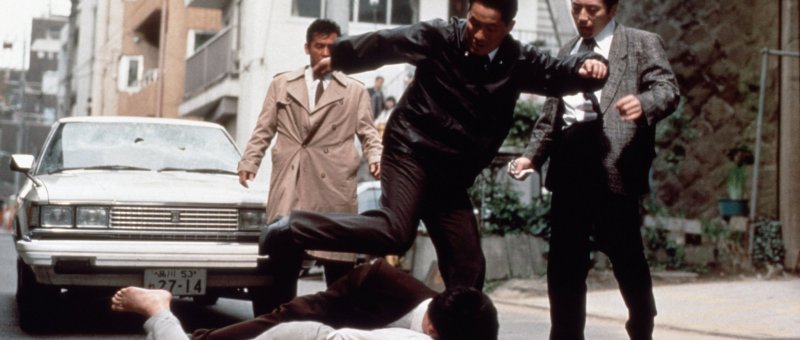
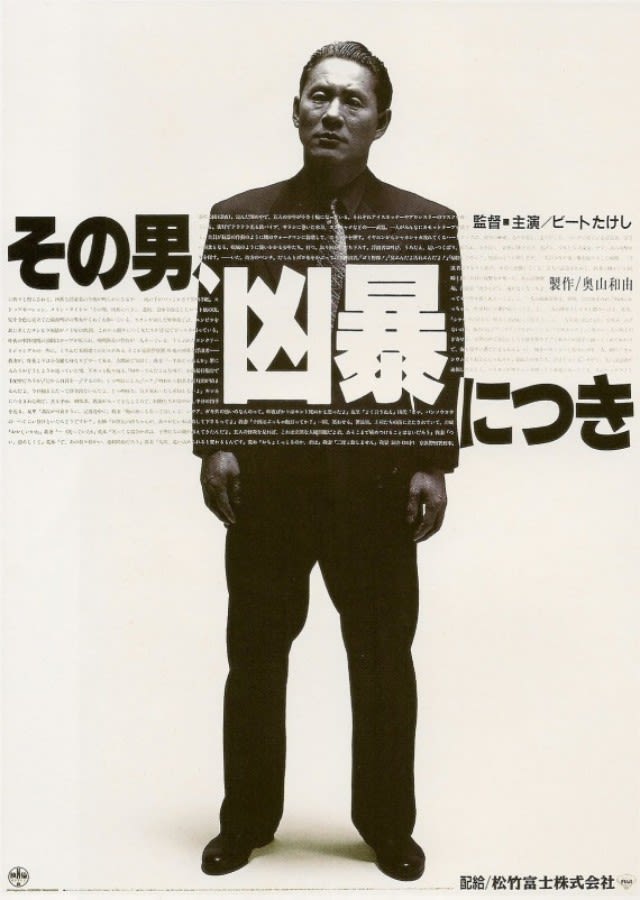
Violent Cop (その男、凶暴につき, Takeshi Kitano, 1989)

By and large, policemen in Japanese cinema are at least nominally a force for good. They may be bumbling and inefficient, occasionally idiotic and easily outclassed by a master detective, but are not generally depicted as actively corrupt or malicious. A notable exception would be within the films of Kinji Fukasaku whose jitsuroku gangster movies were never afraid to suggest that the line between thug and cop can be surprisingly thin. Fukasaku was originally slated to direct Violent Cop (その男、凶暴につき, Sono Otoko, Kyobo ni tsuki), casting top TV variety star “Beat” Takeshi in the title role in an adaptation of a hardboiled parody by Hisashi Nozawa. The project later fell apart due to Kitano’s heavy work schedule which eventually led to him directing the film himself, heavily rewriting the script in order to boil it down to its nihilistic essence while rejecting the broad comedy his TV fans would doubtless have been expecting. 

Kitano’s trademark deadpan is, however, very much in evidence even in this his debut feature in which he struggled to convince a veteran crew to accept his idiosyncratic directorial vision. He opens not with the “hero”, but with a toothless old man, a hobo beset by petty delinquents so bored by the ease of their comfortable upperclass lives that they terrorise the less fortunate for fun. Azuma (Takeshi Kitano), the violent cop, does not approve but neither does he intervene, later explaining to his boss that it would have been foolish to do so without backup. Having observed from the shadows, he tails one of the boys to his well-appointed home, barges past his mother, and asks to have a word, immediately punching the kid in the face as soon as he opens the door. Rather than simply arrest him, he strongly encourages that he and his friends turn themselves in at the police station the next day or, he implies, expect more of the same. The kid complies. 

Azuma embodies a certain kind of justice acting in direct opposition to the corruptions of the Bubble era which are indirectly responsible for the creation of these infinitely bored teens who live only for sadistic thrills. He arrives too late, however, to have any effect on the next generation, cheerfully smiling at a bunch of primary school children running off to play after throwing cans at an old man on a boat. Children always seem to be standing by, witnessing and absorbing violence from the world around them as when a fellow officer is badly assaulted by a suspect following Azuma’s botched attempt to arrest him in serial rather than parallel with his equally thuggish colleagues. But for all that Azuma’s violence is inappropriate for a man of the law, it is never condemned by his fellow officers who regard him only as slightly eccentric and a potential liability. Even his new boss on hearing of his reputation tells him that he doesn’t necessarily disapprove but would appreciate it if Azuma could avoid making the kind of trouble that would cause him inconvenience. 

That’s obviously not going to happen. What we gradually realise is that Azuma may be in some ways the most sane of men or at least the most in tune with the world in which he lives, only losing his cool when a suspect spits back that he’s just as crazy as his sister who has recently been discharged from a psychiatric institution. Azuma has accepted that his world is defined by violence and no longer expects to be spared a violent end. He smirks ironically as he slaps his suspects, connecting with them on more than one level in indulging in the cosmic joke of existential battery. To Kitano, violence is cartoonish, unreal, and absurd. The only time the violence is shocking and seems as if it actually hurts is when it is visited directly on Azuma, the camera suddenly shifting into a quasi-PV shot as a foot strikes just below the frame. The targets are otherwise misdirected, a young woman caught by a stray bullet while waiting outside a cinema or a cop shot in the tussle over a gun, and again the children who only witness but are raised in the normalisation of violence. 

Meanwhile, organised crime has attempted to subvert its violent image by adopting the trappings of the age, swapping post-war scrappiness for Bubble-era sophistication. Nito (Ittoku Kishibe), the big bad, has an entire floor as an office containing just his oversize desk and that of his secretary. These days, even gangsters have admin staff. Minimalist in the extreme with its plain white walls and spacious sense of emptiness, the office ought to be a peaceful space but the effect of its deliberately unstimulating decor is quite the reverse, intimidating and filled with anxiety. Behind Nito the ordinary office blinds look almost like prison bars. Meanwhile, the police locker room in much the same colours has a similarly claustrophobic quality, almost embodying a sense of violence as if the walls themselves are intensifying the pressure on all within them. 

Azuma is indeed constrained, even while also the most “free” in having decided to live by his own codes in rejection of those offered by his increasingly corrupt society. He walks a dark and nihilistic path fuelled by the futility of violence, ending in a Hamlet-esque tableaux with only a dubious Fortinbras on hand to offer the ironic commentary that “they’re all mad”, before stepping neatly into another vacated space in willing collaboration with the systemic madness of the world in which he lives. With its incongruously whimsical score and deadpan humour Violent Cop never shies away from life’s absurdity, but has only a lyrical sadness for those seeking to numb the pain in a world of constant anxiety. 


Violent Cop is the first of three films included in the BFI’s Takeshi Kitano Collection blu-ray box set and is accompanied by an audio commentary by Chris D recorded in 2008, plus a featurette recorded in 2016. The first pressing includes a 44-page booklet featuring an essay on Violent Cop by Tom Mes, as well as an introduction to Kitano’s career & writing on Sonatine by Jasper Sharp, a piece on Boiling Point from Mark Schilling, an archival review by Geoff Andrew, and an appreciation of Beat Takeshi by James-Masaki Ryan.

The Takeshi Kitano Collection is released 29th June while Violent Cop, Boiling Point, and Sonatine will also be available to stream via BFI Player from 27th July as part of BFI Japan.

Original trailer (English subtitles)