No Other Choice (어쩔수가없다, Park Chan-wook, 2025)

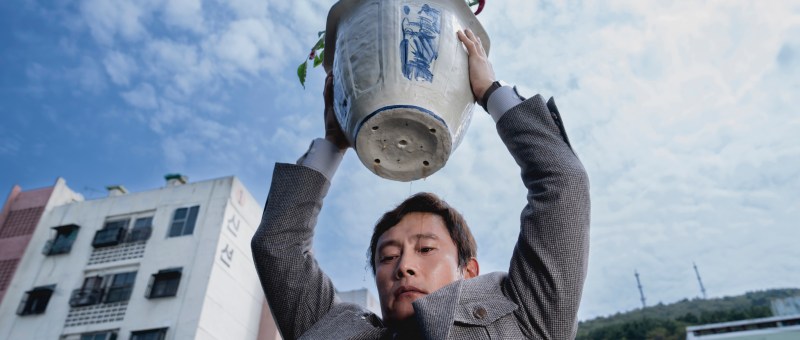
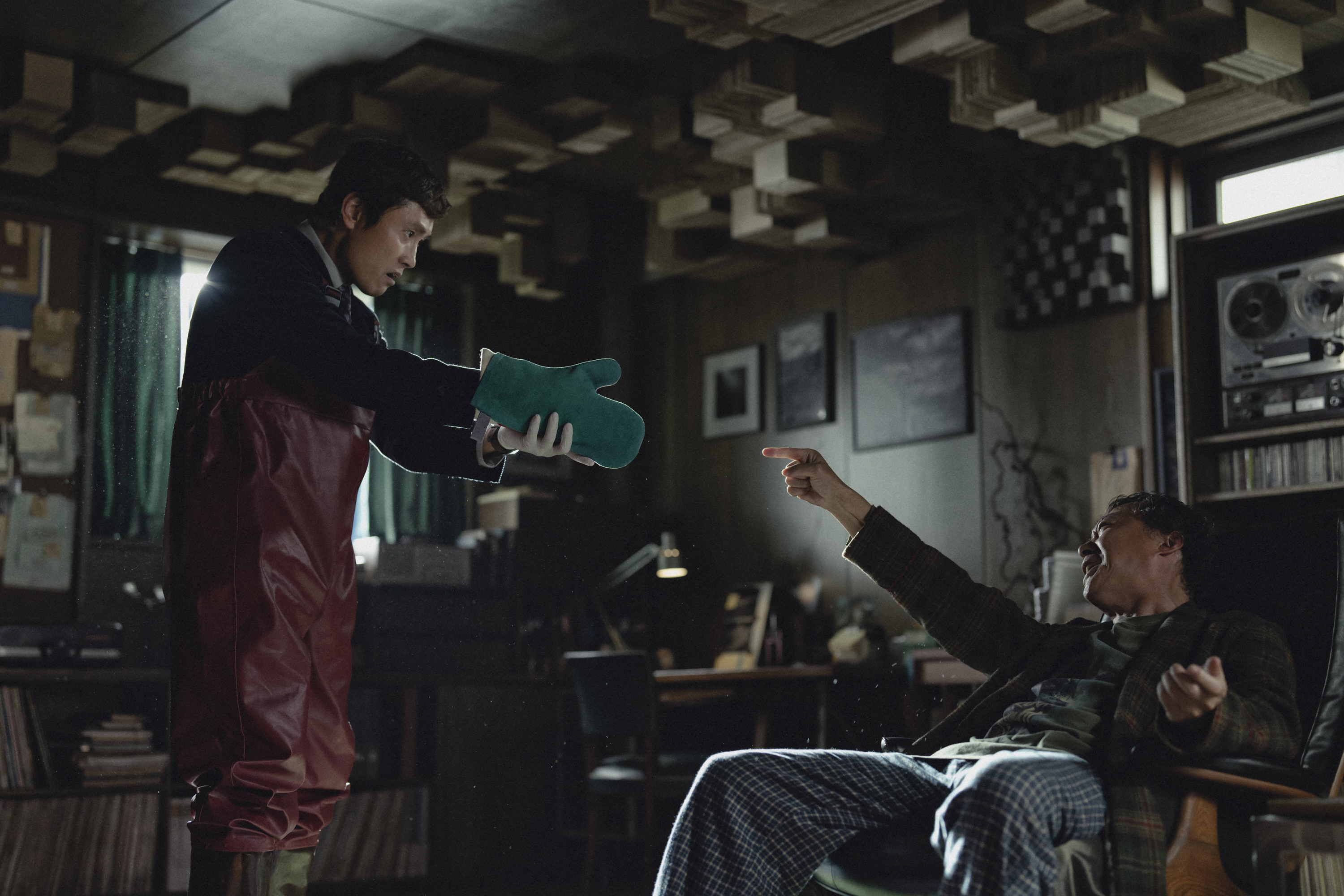
Most of the time, when someone says they had no choice, they’re paradoxically admitting that they had one, but they expect to understand the choice they’ve made because we would have done the same or can’t reasonably expect them to accept the consequences of the alternative. “No other choice,” on the other hand, is self-contradictory, clearly stating that a choice does indeed exist. Perhaps that’s why it seems so irritatingly disingenuous every time it’s said to Man-su (Lee Byung-hun), even if he eventually succumbs to its self-absolving qualities.

In any case, it’s this sense of powerlessness that’s at the centre of Park Chan-wook’s satirical drama as a middle-aged man finds himself suddenly exiled from the upper-middle-class lifestyle he’s worked so hard to build for himself when his company’s taken over by an American firm who have “no other choice” than to shed some staff. Man-su is blindsided by this corporate betrayal, attending self-help sessions that remind him there’s no such thing as jobs for life any more. Losing his job wasn’t his choice, but in some ways perhaps that makes it worse. 

What connects him with the other men in his position is that he’s obsessed with getting another job in the paper industry rather than exploring other options. All of these men are fixated on getting back what they feel has been taken from them. Not only is Man-su dead set on getting another job in paper, but on holding on to the family home from which he was displaced as a child and has only just managed to reclaim. To that extent, what he wants is a return to a past that doesn’t quite exist any more or exists only in his memory and is therefore unattainable.

Losing his job also leaves him displaced within his family as his sudden inability to keep them in the manner to which they’ve become accustomed eats away at his sense of masculinity. They’ve already had to exile the dogs, leaving his young daughter distraught, while his wife, Miri (Son Ye-jin), has started working again, further emphasising his failure as a provider. Witnessing one of the other men’s wives cheating on him with a much younger lover, Man-su too begins to fear that his wife no longer sees him as a man and will cheat on him too with someone who better fulfils the codes of masculinity. Yet it’s his stubborn male pride that undermines his positions much more than the unfortunate fact of having lost his job, which wasn’t after all something he had much control over. The wives are all much more pragmatic and come up with realistic solutions such as ruthless belt tightening and ceding a little ground by voluntarily giving up anything inessentials while encouraging their husbands to be a little more pragmatic and consider new directions rather stubbornly fixating on reclaiming the life they had before. 

That might be Miri decides to just sort of go with it even after beginning to suspect that Man-su has something to do with the disappearance of his rivals. At least he’s being proactive, even if it’s not really the best way to go about it, and by burying a few bodies there, he’s basically made it impossible to sell the house which is one goal achieved. It’s not losing your job that’s the problem, it’s how you deal with it, one of the other men’s wives insists as even Man-su ironically berates him for not listening to any of his wife’s “sensible” suggestions. Then again, the fact Man-su is eventually offered a job training AI replace him invites the suggestion that he’s basically killing all the other workers in the hope of clinging on to the wheel as soon as possible. The managers state they had “no other choice” about that too, and are grinning with the blinkered vision that prevents them from realising there’ll be no need for managers when there’s no one manage. 

In any case, the fact that Man-su walks around for with toothache for a significant amount of time echoes the hero of Aimless Bullet and suggests that perhaps things aren’t all that much different in the Korea of today caught between deepening wealth inequality, exploitative working conditions, and employment precarity presented by the rise of AI and increasingly globalisation. There is something quite sad about the devaluing of these skills in that what Man-su and the other men share is reverence for paper, the beauty and texture of it, along with the craftsmanship and pride in their work that now seems to belong to a bygone era. It seems that the dog-eat-dog world of capitalism leaves Man-su with “no other choice” than to do what he did and leave others with no other choice but him, but all he’s really done is seal his own fate in a futile attempt to hold on to a past that is rapidly slipping away.


No Other Choice screens as part of this year’s BFI London Film Festival.

Trailer (English subtitles)
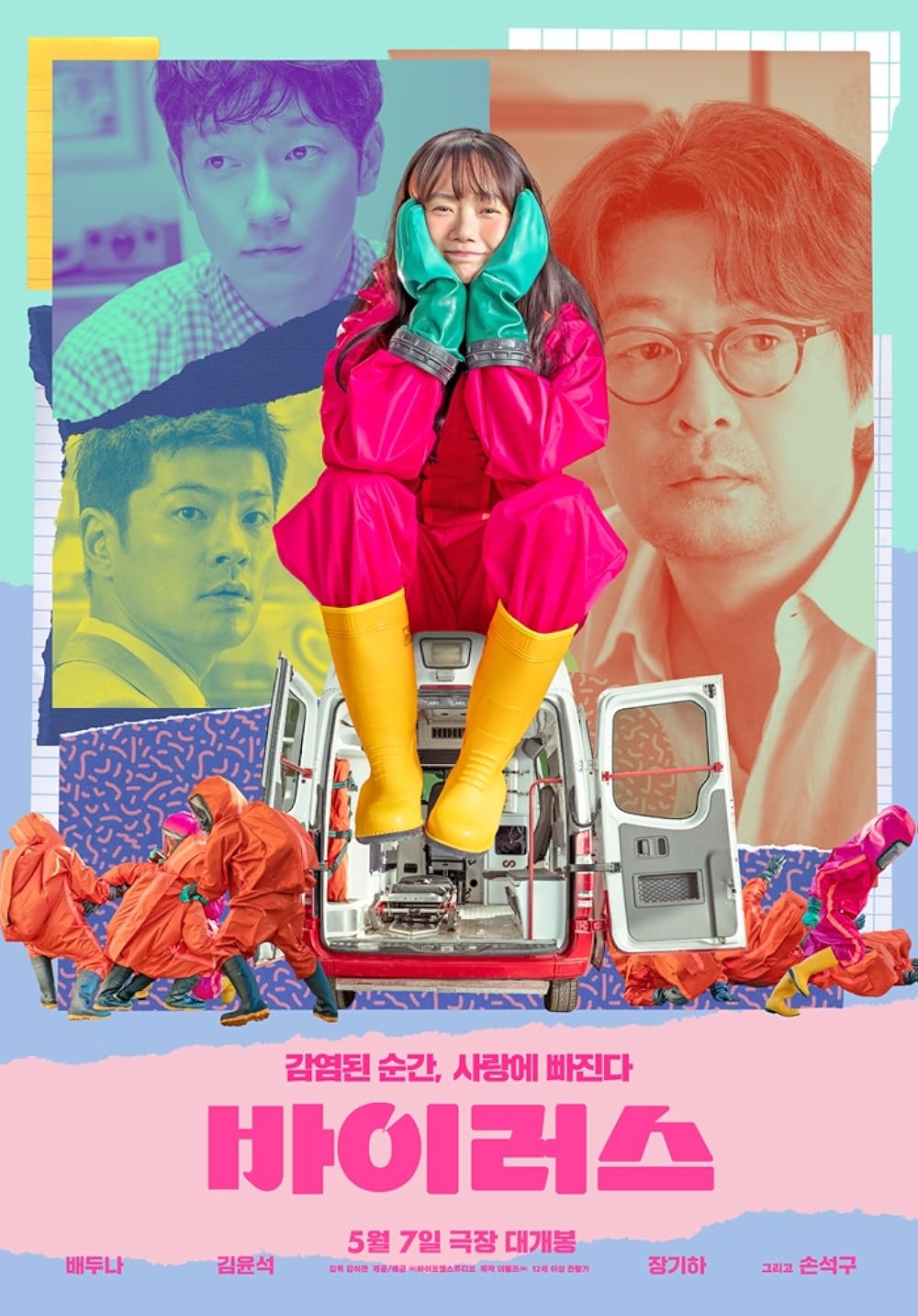
Virus (바이러스, Kang Yi-kwan, 2025)

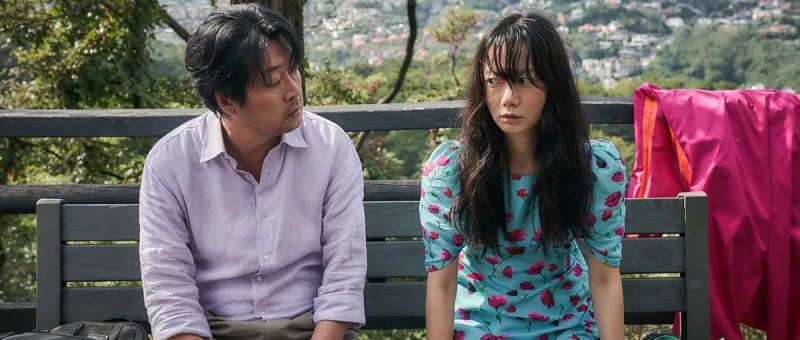
Falling in love is like catching a virus, according to lonely scientist Gyun (Kim Yoon-seok), but how can you know if your feelings are “real” or just part of a crazy fever dream you won’t even remember as soon as the infection leaves your system? “There are no fake feelings,” lovelorn translator Taek-seon (Bae Doona) counters, which is true, but sometimes people do things they don’t recognise or later understand because they weren’t in their right mind, whether because of the sickness called love or a more literal kind of contagion. 

Anyway, this particular virus makes people incredibly happy for the short period time before they die and was developed as part of a project to create an anti-depressant with no side effects. Taek-Seon gets infected after a disastrous date her sister forces her to go on with socially awkward scientist Su-pil (Son Suk-ku). Su-pil is overly attached to the mice in his lab and is still mourning the death of Masako who appeared to him in a dream and told him to make sure her death wasn’t in vain. In retrospect, perhaps these are symptoms of the infection bubbling away in his body as much as they are of his loneliness, but it’s understandable that Taek-seon wasn’t really considering seeing him again only she’s forced into it when her mother and sister invite Taek-seon over to her apartment as a kind of enforced date. The mother and sister’s insistence on Taek-seon meeting someone and getting married is itself a reflection of a patriarchal society in which being unattached is taboo, while Taek-seon’s sister snaps back that translators won’t be needed soon because of AI implying she should find a husband to support her financially.

But then again, though she might claim to be, it does seem that Taek-Seon isn’t all that happy with her life and later confesses to being “always depressed”. She rarely leaves her apartment and lives a dull and unstimulating existence. Infected with the virus, she suddenly becomes sunnier, more confident, and independent, while chasing romance by approaching a childhood crush she seemingly never had the courage to pursue before. Yeon-u (Chang Kiha) is now a car salesman, and Taek-seon now suddenly has the urge to buy a Mini though she’s never actually driven outside the test centre despite having a license. In one sense, yes, it’s Yeon-u she’s after but the car also represents her latent desires for freedom and a more active life. 

Nevertheless, the corrupting aspects of the virus are all too present as Taek-seon begins to act in ways she may be embarrassed by if she could remember them once she’s better. Her memories seem to have remade themselves more to her liking. She’s forgotten that Yeon-u wasn’t quite the hero she thought he was in her overly idealised vision of the innocent childhood sweetheart that she never had the courage to pursue. On the run from “evil” scientists from the lab where Su-pil worked, she starts to fall for Gyun, the expert that’s helping her, but who’s to say whether her feelings are just a product of the virus, an attachment born of their relationship as doctor and patient, or something deeper. 

For his part, Gyun starts to fall in love with her seemingly before he himself is infected while knowing that she likely won’t remember any of this once she’s been cured. He too is still dealing with the romantic fallout of an improperly ended relationship in which he apparently stepped back because one of his friends liked his girlfriend more. The now-divorced girlfriend seems resentful that he didn’t put up more of a fight for her, and perhaps it’s true that he’s just a romantic coward and it’s a combination of the virus, a sense of responsibility, and the fact that Taek-seon’s natural immunity could hold the key to unlocking his own research that pushes him to try so hard to find a cure for her.

But his research goals are at least altruistic in his desire to find a depression cure without side effects to help people like his brother who took his own life. Dr Seong’s (Moon Sung-keun) lab, however, is entirely focussed on profit and protecting its own reputation. They’re mostly interested in Taek-seon because of her usefulness to them and are prepared to endanger her life if necessary. Even Gyun admits he acted unethically in agreeing to bypass animal testing but otherwise draws the line at anything that puts lives additionally at risk. Taek-seon, meanwhile, later signs over her antibodies so they can be used for free worldwide for the good of all. Even after the fever has cooled, the virus does seem to have made her a happier, more outgoing person who has the courage to pursue her dreams rather than living in lonely defeat. Whether her feelings were ”real” or merely part of her “sickness” and if the distinction really matters either way is up for debate, but that’s not to say she might not catch the love bug again from a less compromised position and actively in the driving seat of her own life.


Trailer (Korean subtitles only)

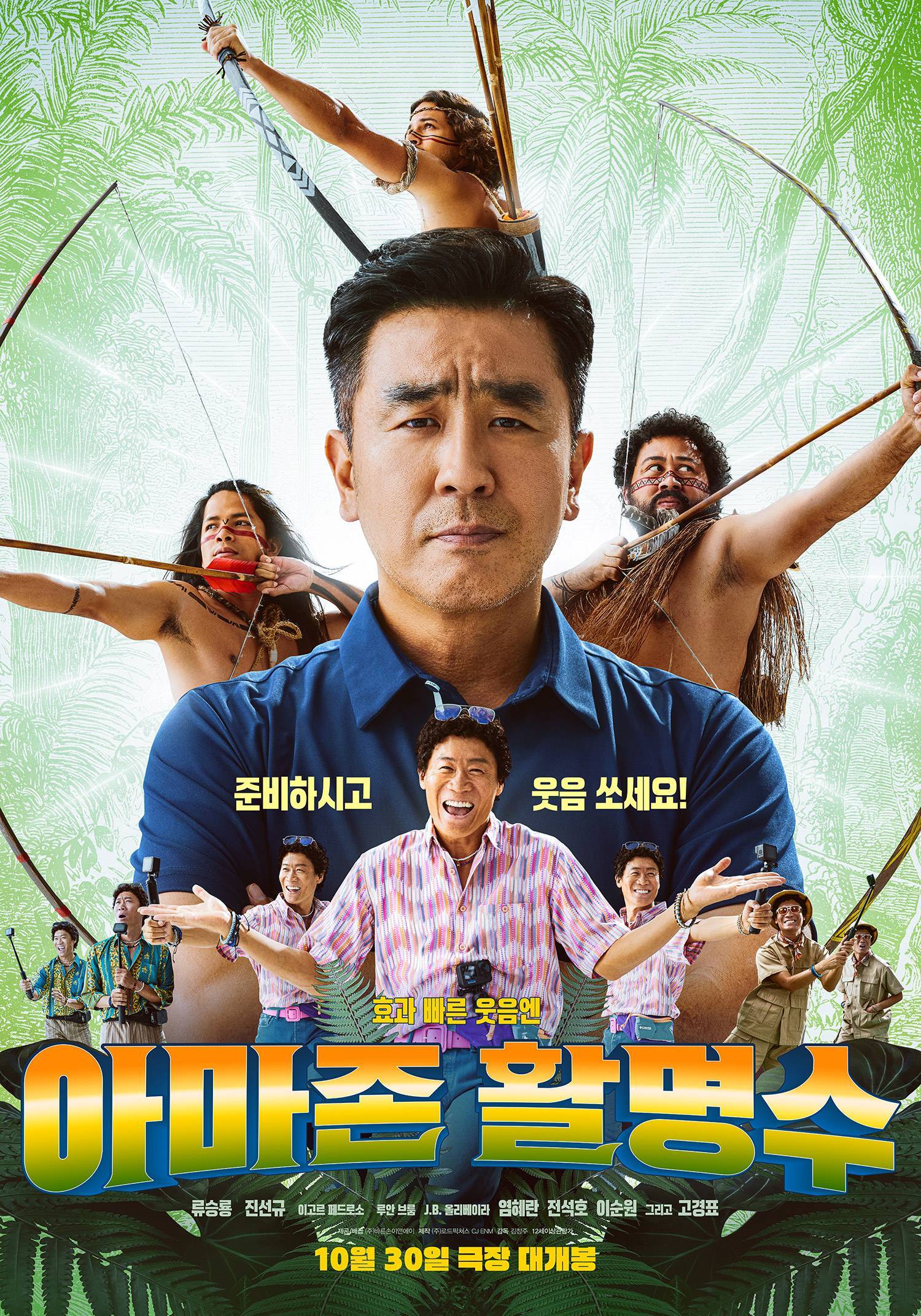
Amazon Bullseye (아마존 활명수, Kim Chang-ju, 2024)

A harried Korean executive finds common ground with a trio of men from an Amazonian indigenous community while training them to win a medal in an international archery competition in Kim Chang-ju’s genial comedy, Amazon Bullseye (아마존 활명수, Amazon Hwalmyeongsu). Though mostly avoiding the obvious pitfalls of its subject matter and taking extreme care to be respectful to the indigenous people of the Amazon, it has to be said that the film otherwise has some rather outdated humour. Nevertheless, it does have some secondary points to make about exploitative businesses practices in Korea and abroad along with the destruction of natural world that goes hand in hand with capitalist expansion.

Jin-bong (Ryu Seung-ryong) once won a gold medal for archery, but is now a middle-aged office worker whose career is on the skids. After chewing him out for failing to make any significant deals, his boss, Park (Jeon Seok-ho), has a new proposition for him. He wants Jin-bong to go to the Amazonian nation of Boledor and close a deal to allow them to open a gold mine or else face compulsory redundancy. He’s supposed to do this by coaching their national archery team to win a medal in the upcoming championships. Unfortunately, the helicopter he’s travelling on is struck by lightning and he’s marooned in the jungle only to be rescued by an indigenous community who then conclude he’s an emissary from the Boledor authorities and has come to destroy the village in which case he must die. 

But Jin-bong finds unexpected connection with Walbu (J.B. Oliveira) who is also a father of three children and is later welcomed after saving his daughter from a wolf attack. As the young men communicate with the animal and try to convince it to return to the forest, it becomes obvious that they have a respect for the land that an urban man like Jin-bong does not. Unbeknownst to him, they have already refused permission to open the goldmine and are fiercely opposed to any encroachment on their land or traditional way of life. After seeing just how bad the national team is, Jin-bong has the idea of asking the men from the indigenous community to compete instead but is only able to persuade them by convincing the president to legally sign the land over so it can’t ever be redeveloped and they’ll never be moved on. 

Of course, that wasn’t quite what his boss had in mind so even though Jin-bong is protective of the Tagauri, it’s clear his company always meant to exploit them and doesn’t care about the environment or the preservation of traditional culture. Jin-bong too is oppressed by this system and only participates in the first place because he fears losing his job not least because it’s so unlikely he’d be able to find another at his age. Jin-bong has three children and a feisty wife (Yeom Hye-ran ) who complains that she’s already had to sell some of their possessions because they can’t afford all the bills on their poky flat. He may then envy the apparent simplicity of life in the forest. On returning home the three men remark on how silly everyone is in Korea suffering all month long for something called “money” they use to buy tasteless “dead meat” rather than going into the forest and getting some like a normal person. But they also point out that they aren’t really all that different seeing as people still love their children and fathers work hard to support and protect them. 

Nevertheless, there are perhaps a few too many jokes about Jin-bong’s “scary” nagging wife and his position as a henpecked husband. It may also go too far in exploring cultural difference as the trio is arrested for doing things like carrying their bows and arrows around and using them to shoot fish in the river that runs through the middle of Seoul. They also start a campfire in Jin-bong’s apartment to make a traditional smoked chicken dish and are confused by Jin-bong’s reaction to this well-meaning attempt to share their culture with him. While they’re in Korea, they start to become a little more Korean with chieftain’s son Eba (Luan Brum) even developing an appreciation for super spicy kimchi. But they also observe the high rise buildings and constant construction as echoes of the fate that may soon befall the village if the Bolderan government and Jin-bong’s company get their way. Through their sporting pursuit, the men discover a way to take back control, tell the world about the Tagauri, and mobilise public opinion against the faceless corporation to ensure that they can protect their land and way of life from the ravages of chaebol culture.


Trailer (Korean subtitles only)

The Boys (소년들, Chung Ji-young, 2022)

A “mad dog” policeman uncovers a miscarriage of justice but finds that his faith in his institution may have been misplaced in Chung Ji-young’s pressing judicial drama, The Boys (소년들, Sonyeondeul). Like much of Chung’s previous work critiquing the power imbalances of the contemporary society, the film is one of several recent dramas taking aim at the justice system and the utter contempt of those in power for those without most notably for the titular boys exploited by a failure of the system.

In 1999, a trio of teenagers is picked up and arrested for the robbery of a convenience store in which an old woman died. Newly transferred to the district, “mad dog” policeman Joon-cheol (Sol Kyung-gu) receives a tip off that actually someone else did it. The informant says he’d previously told the investigating officer, Choi (Yoo Jun-sang), but was ignored. Joon-cheol might assume that’s because he didn’t think there was anything in it and didn’t find the informant credible, but something nags at him and he begins to look at the case only to realise too much of it doesn’t make sense. He soon discovers that Choi and his underlings beat the suspects, who were terrified and naive due to their youth, into a false confession in order to get a promotion by solving a prominent case.

Chung switches back and fore between 1999 and 2016 when the boys’ retrial finally takes place and discovers Joon-cheol a somewhat broken, defeated man who has served out the past few years on a peaceful rural island never receiving any further promotions. With his retirement looming, he’s been offered a return to the mainland, but apparently only thanks to Choi which leaves a sour taste in Joon-cheol’s mouth. Like pretty much everyone else, he is haunted by a sense of guilt that in the end despite his promises he was powerless to help these innocent young men escape their false imprisonment. 

Then again, Joon-cheol is also a product of the system. The “mad dog” beat suspects too, and there’s something chilling in his justification that he only beat the “guilty” and never the “innocent”. He got his promotion after being stabbed on the job, a strange sacrifice that seems the inversion of Choi’s greedy venality. Choi really thought nothing of these boys, one whom had learning difficulties and was illiterate so could not have written his statement on his own, because they were poor and defenceless and is unrepentant even when confronted with the truth. He himself could have caught the real culprits but simply chose not to because it was easier and more convenient to him to destroy the lives of three innocent boys instead. 

Choi’s reach seems to be eerily extensive though the police force’s reluctance to correct a miscarriage of justice because it would make them look bad is obviously an institutional flaw along with the use of violence to elicit confessions. The older version of Choi with slick backed hair and an arrogant manner behaves as if he’s untouchable, giving an answer for everything and leaving no room to be challenged while others are only too keen to support his version of events with equally smug manipulations of the law. 

The boys find themselves powerless. They cannot challenge Choi and though they’ve served their sentences and paid a debt to society that was never theirs to begin with cannot move on with their lives because they are still branded murderers meaning no one will hire them. Meanwhile, at least one of the real killers has had to opportunity to start again and is reluctant to help because they do not want their new family to find out about their past. Everyone is harbouring some kind of guilt or desire to bury the truth for a quiet life, Joon-cheol too not wanting to get involved and cautioning the boys against applying for a retrial because it will only cause them further pain. 

Though the truth is eventually revealed and the boys’ names cleared, the overwhelming implication is that you cannot really win against men like Choi. The sentiment is rammed home by a final title card explaining that nothing happened to any of the policemen involved in framing the boys while Joon-cheol only has the satisfaction of having helped to free them neither vindicated as a police officer or successful in undercutting the corruption inherent in the police force and embedded in the society itself. Nevertheless, Joon-cheol’s righteousness and the the unexpected support he receives from those around him for doing the right thing add an inspirational quality that simultaneously suggests justice is a distant dream but also that it can be achieved if enough people can be persuaded to chase it even while against their own interests.


The Boys screened as part of this year’s London East Asia Film Festival.

Original trailer (no subtitles)

Bear Man (웅남이, Park Sung-kwang, 2023)

According to an ancient legend, bears who eat garlic and mugwort can become human though it’s not exactly clear why they’d want to. The debut film from Park Sung-kwang, Bear Man (웅남이, Woongnami) as its name suggests follows a pair of bear cubs who decide to give things a go in the human world but with wildly differing results as one is adopted by the researcher who allowed them to escape and the other by a vicious gangster who exploits him for his violent capabilities and shows him little love. 

Love is something Woongnam (Park Sung-woong) got a lot of thanks to his devoted mother and though not exactly the sharpest knife in the drawer had forged a promising career as a local policeman before he was let go after falling into a kind of funk on overhearing his father on the phone suggesting that the life expectancy for a regular bear is only 25 so he might not have much time left. Thanks to his nature as a bear man, Woongnam ages much faster than everyone else and already appears to be middle-aged though he is also blessed with immense strength and agility. After agreeing to bend the law by helping his feckless friend Malbong (Lee Yi-kyung) win in at illegal gambling Woognam comes to the attention of a group of police detectives investigating a shady gangster who notice a man looking just like Woongnam taking out a host of bad guys at the harbour. 

There is something quite poignant in the puppy-like existence of Woongbok (also Park Sung-woong) who keeps looking up to his boss as a father figure with a mixture of fear and longing. He gazes enviously at a family crossing the road in front of him and later visits Woognam’s home where Woongnam’s mother thinks that he’s Woognam and tries to feed him his favourite foods while he just looks on silently without expression. Where Woongnam is basically good, not too bright but heart in the right place, Woongbok has been raised as creature of violence by his intimidating father figure and carries a threatening aura with his slick haircut and tailored suit. 

The police want Woongnam to pose as Woongbok so they can take down the gangsters who have not only been trafficking drugs but also dabble in scientific research into viruses and their cures apparently about to unleash an epidemic in China to profit off the drug sales. It’s not all that clear what the scientists who released the bears were actually researching though there is a kind of parallel in the fact the other pair seemingly settled down, adjusted to their new environment and had a few cubs while Woongnam and Woongbok ended up becoming humans with bear-like abilities. Woongnam has to be prevented from entering hibernation and sleeps flat out like a bear but otherwise keeps his true nature secret even while covertly helping the townspeople out getting rid of beehives and freeing trucks stuck in the mud. 

That would be about the extent of “policing” in this kind of small-town where there’s nothing much to do but catch fish in the river and chat to wild boar. Park builds on the surreality of everyday rural life with mounting absurdities such as the parade of teenagers who troop through the convenience store where Woongnam’s live-streaming friend Malbong works each of whom he is largely able to unmask thanks to his keen sense of smell, and the polytunnel that doubles as a gambling den for down on their luck farmers. Woongnam’s biggest regret is losing his position as a police officer and it’s his desire to get it back to make things up to the people who raised him that encourages him to go along with the detectives’ crazy plan even if means he has to undergo weird martial arts training inspired by Drunken Master and take lessons from a strange movement coach in how to walk like a gangster. Yet in the end it’s Woongbok’s innocent desire for familial love that becomes a source of salvation, turning against his gangster brethren to protect the warmth of Woongnam’s family home. Quirky in the extreme and defiantly absurd, the film nevertheless has genuine heart in otherwise strange tale of wandering sons and bears of men.


Bear Man screened as part of this year’s New York Asian Film Festival

Images: © 2023 KIMCHI PICTURES PRODUCTION. ALL Rights Reserved.

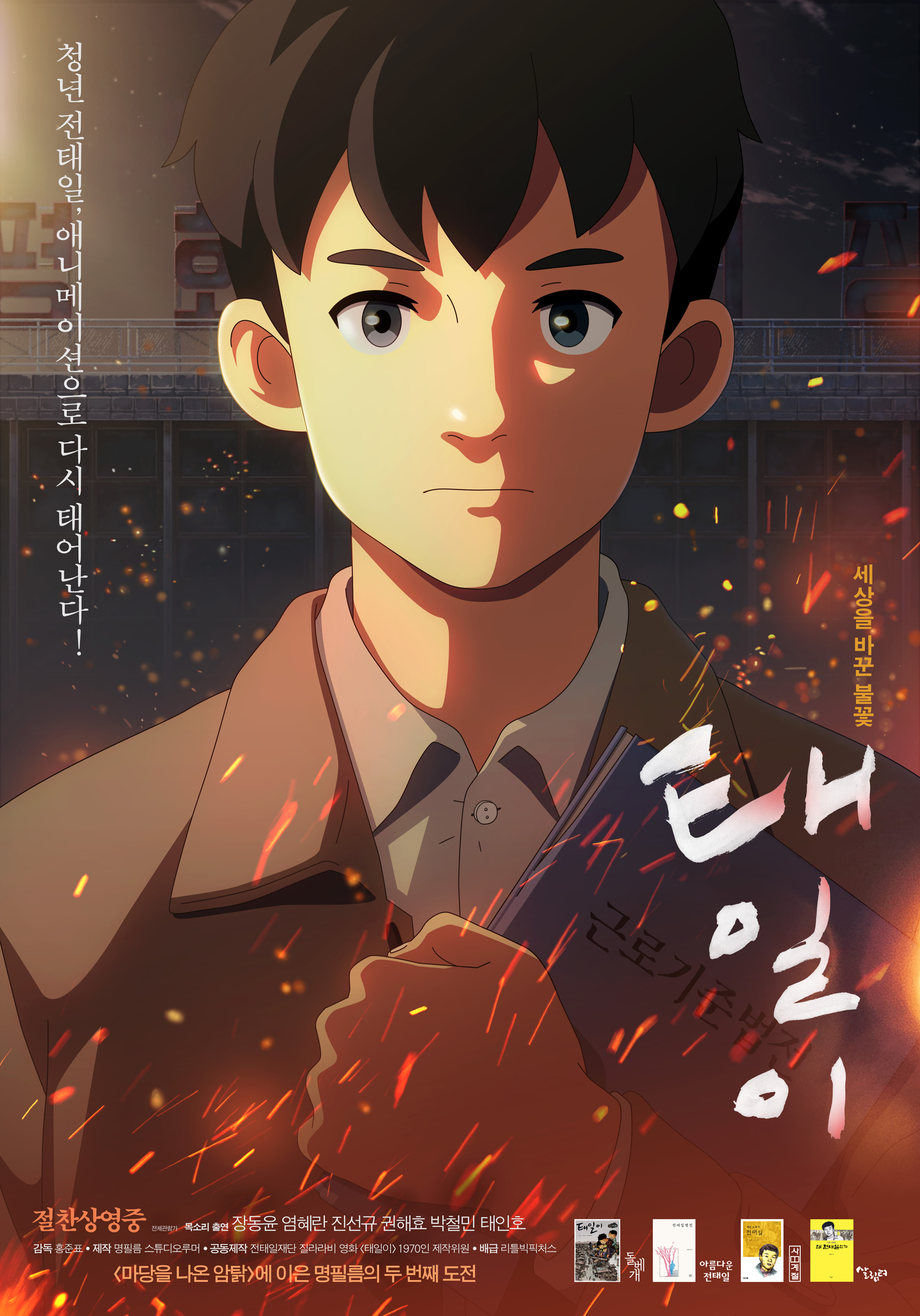
Chun Tae-il: A Flame That Lives On (태일이, Hong Jun-pyo, 2021) [Fantasia 2022]

“We are not machines” became the rallying cry of a nascent workers movement in late 1960s Korea which gained momentum following the suicide by self-immolation of 22-year-old labour activist Chun Tae-il. 25 years on from his death, Park Kwang-su’s A Single Spark examined Chun’s legacy at the intersection of the labour and democracy movements, while Hong Jun-pyo’s animated treatment Chun Tae-il: A Flame That Lives On (태일이, Taeil-i) sees him as an ordinary man radicalised by his own compassion in his desperation to liberate those around him from the hell of poverty and exploitation. 

As such the film opens with a happy family scene of Tae-il (Jang Dong-yoon) playing with his siblings near the river and then joining his mother as they walk home only for the atmosphere to darken when bailiffs arrive to confiscate their sewing machine, the only means they had of supporting themselves. Tae-il’s mother is forced to leave the family to find work in the city, while his father becomes an embittered drunkard who is little help to his children. Forced to give up on education, Tae-il too later travels to the city where he reconnects with his mother and begins seamstressing, eventually agreeing to a small pay cut in order to train as a tailor in the hope of earning more money for his family further down the line. 

A kind and earnest young man, Tae-il first barely notices his exploitation while working hard trying to get a foothold on the employment ladder. He comes in early to sweep the floors and is caught out after curfew having spent his bus fare buying cakes for the children who help out on the shop floor. It’s only when a seamstress, Young-mi, collapses and is found to be suffering from TB caused by the poor conditions at the shop that he begins to question the wisdom of being loyal to his employer especially when he fires Young-mi for being ill and then refuses to pay her medical bills. When a floor manager quits after being accused of embezzlement, Tae-il is technically promoted but actually charged with doing two jobs for only a little more money which he doesn’t actually get because his boss uses the embezzlement as an excuse to cut everyone’s pay packet. 

Tae-il starts to think there should be a law against this sort of thing and is shocked to discover, from his father no less, that there is but its existence has been deliberately kept from him. Whenever he raises the idea of standing up to his exploitation his father urges him not to, to remain complicit and hang on to the job no matter what, but eventually changes his mind and instructs his wife not to stop Tae-il from what he’s trying to do in challenging the existing social order. Even once Tae-il has managed to get through the statute on labour law which is written in difficult legal language and in Chinese characters he would not have learned to read as someone with only a primary school education, Tae-il tries to go to the authorities with evidence that the law is not being followed but they don’t care. They even accuse him of being selfish and unpatriotic in standing in the way of the nation’s drive for economic prosperity while meeting any attempt at worker solidarity with a charge of communism. 

Earlier in the film, Young-mi had placed a plaster over a scratch on her sewing machine treating her means of production with a care and tenderness absent in her relationship with her employer who ironically sees her only as an expendable tool. What Tae-il and his friends are asking for isn’t anything radical, they just want the existing law to be respected along with basic improvements in their working conditions such as better ventilation and lighting to prevent workers falling ill. It’s small wonder that he starts to despair when his goals are so small and yet so impossible. 

In truth Hong’s pains to present Tae-il as an ordinary man sometimes undercut the film’s premise, presenting his working situation as so normalised as to not seem that bad save for when a colleague ominously drops off caffeine pills and energy drinks ahead of a big order, while Tae-il’s mission also appears quite sexist in his frequent assertions of protecting the “poor sisters” who work on the shop floor as if they were incapable of participating in the movement themselves. The association he starts which is admittedly for local tailors is entirely staffed by men with Young-mi invited only to come and watch. Only later does he pass it on to his mother (Yeom Hye-ran) as the guardian of the flame which he has ignited in the hope of a better world. Perhaps in keeping with the film’s family friendly intentions, Tae-il’s martyrdom is presented in quasi-religious terms as he walks in flames carrying a new testament which on another level deprives the action of its essential violence and weakens the message Tae-il was trying to send in the horror of his death. Nevertheless, Hong’s gentle designs lend a degree of pathos in the pure-hearted intensity of Tae-il’s otherwise kindly eyes.  


Chun Tae-il: A Flame That Lives On screened as part of this year’s Fantasia International Film Festival. Readers in Chicago will also have the opportunity to see the film as part of the 15th Season of Asian Pop-Up Cinema on Oct. 2.

Original trailer (English subtitles)
Special Delivery (특송, Park Dae-min, 2022)

“Why is it so hard to live?” a little boy asks after finding himself on the run with a strange woman who seems to be the only person interested in helping him. Situating itself in an upside-down world of backstreet crime, Park Dae-min’s high octane thriller Special Delivery (특송, Teuksong) is in part about how hard it is to live amid constant moral compromise as the heroine finds herself torn between her better judgement and human feelings in trying to rescue her human cargo not only from the bad guys chasing him but from a duplicitous society. 

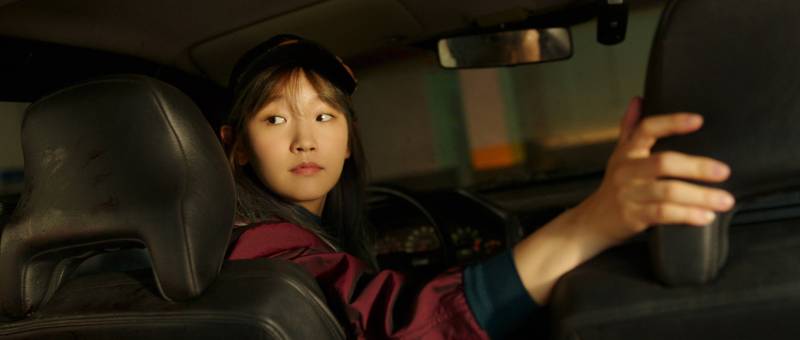
Technically speaking, Eun-ha (Park So-dam) is a delivery driver yet the services her firm provides are highly specialised promising to deliver anything anywhere by whatever means possible. In practice this often seems to mean transporting gangsters on the run from their hideouts to the nearest port before rival gangs can catch up with them as we see Eun-ha do with spectacular skill in the opening sequence. Other than the practice of frequently switching out license plates, what she’s doing in itself isn’t really illegal but is definitely crime adjacent and potentially dangerous. She is however well paid, arguing with her boss/mentor/father figure for a pay rate increase to an unprecedented 50/50 split in proceeds, though she lives a fairly modest life in a cosy apartment with her beloved cat Chubby whom she watches via security cam while waiting around for a fare. When her boss agrees to do a rush job for a Chinese gangster she tells him it’s a bad idea but ends up going along with it only to get drawn into the big news story of the day when a former pro-baseball player turned match fixing underworld figure blows the whistle and runs off with all the gang’s money. Eun-ha was supposed to drive him and his son Seo-won (Jung Hyeon-jun) to a port to leave the country but the bad guys who turn out to be corrupt police officers get there first and Eun-ha ends up with the kid and a bag full of money but no plan B. 

Drawing inspiration from John Cassavetes’ Gloria, the film develops into something of a buddy comedy as Eun-ha finds herself on the run with Seo-won having gone back for him after her boss suggested handing him off to an associate “who deals with children”. As we discover the child reminds her of her younger self being all alone with no other relatives or friends who could take care of him. Even when he reveals he might have a mother after all, it turns out to be a dead end because no one wants to get involved in this dangerously escalating underworld crisis. Yet the found family of the marginalised at the Busan junkyard where Eun-ha is based have more moral integrity than the world around them even if her boss’ solution for what to do about Seo-won isn’t ideal either. “Life is going alone” the corrupt police officer later sneers having repeatedly stated the necessity of staking one’s life to win such a big payout, but what Eun-ha is discovering is that it’s about going together trying to save the boy not only from the dangerously out of control corrupt police officers but from the moral bankruptcy of the contemporary society in which money is the only thing that matters. 

Overcoming both persistent sexism and societal discrimination Eun-ha proves herself a top operator in her field, Park choreographing a series of genuinely impressive car chases and visceral fight scenes as Eun-ha has to think her way through to take out the tougher, stronger bad guys while trying to protect Seo-won from danger on all sides. Her crime-adjacent existence tells her he’s not her responsibility but still she wants to complete her mission and deliver him somewhere safe much as she was rescued as a child by someone who might have felt much the same but chose to take her in anyway. With its neon lighting and retro score, Special Delivery harks back to an age of classic car chase thrillers with a stand-out performance from Parasite’s Park So-dam as a tough as nails getaway driver with nerves of steel fighting for humanity in an increasingly inhumane world. 


Special Delivery screened as part of this year’s Udine Far East Film Festival.

International trailer (English subtitles)

Recalled (내일의 기억, Seo Yu-min, 2021)

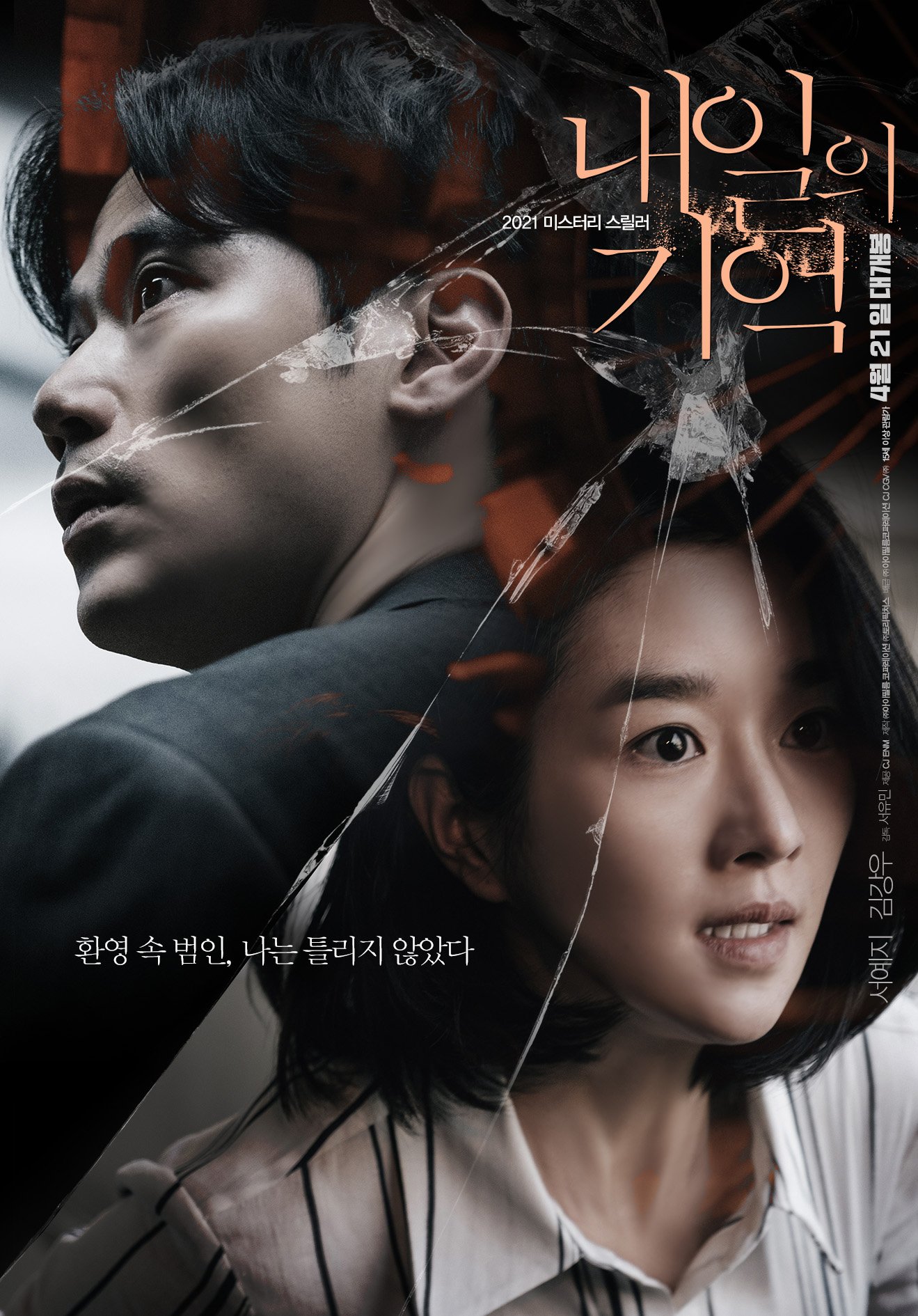
A traumatised woman finds herself trapped in an uncertain reality in Seo Yu-min’s puzzle box neo noir, Recalled (내일의 기억, Naeileui Gieok). Situating itself in a world of future ruins, Seo’s tragic tragic tale of existential mistrust is as its sci-fi-inflected Korean title “Memories of Tomorrow” might imply also a paradoxical exploration of the importance of dreams and the belief that other lives are possible while the heroine struggles to piece together the shards of her fractured identity only to realise there are some truths it may be better never to learn. 

30-something Soo-Jin (Seo Yea-ji) wakes up in hospital after an accident she has no memory of to realise that she has no idea who the extremely upset man at her bedside could be, or who she herself is for that matter. The nurses ask her if she recognises her husband, Ji-hoon (Kim Kang-woo), which she doesn’t but evidently does feel some degree of closeness to him as he continues to care for her with the utmost devotion. On leaving the hospital, he takes her home to a well-appointed flat in an affluent area and though she tries to restart her life from zero she can’t escape her sense of anxiety and begins having what she regards as premonitions of impending disaster centring on two other apartments one with two small children and the other a teenage girl and an intense middle-age man. Her doctor tells her that she is most likely hallucinating because of her brain injury, while even Ji-Hoon snaps at her that she’s obviously unwell and ought to take things easy. Nevertheless, Soo-Jin can’t simply ignore the increasing uncanniness of the world around her especially when she begins to discover discrepancies in the backstory she’s been fed by Ji-Hoon and the evidence presenting itself about her former life. 

Perceptive policeman Ki-sang (Park Sang-wook) himself hints that there might be something not quite right with Soo-jin’s life in remarking that her apartment looks like a model home seconds after walking in and then noticing a few other details that set off alarm bells in his admittedly suspicious mind. Meanwhile, he’s investigating the theft of materials from a nearby abandoned building site for a never completed block of luxury condos suggestively titled “Dream Town”, a project cancelled when the architecture firm Ji-hoon worked for went bust. The foreman who reported the theft remarks that the apartments pre-sold like hotcakes, but even in the building where Soo-jin lives a banner outside advertises a “big sale on unsold units” hinting at a kind of economic hubris or perhaps suggesting that the “dream” they’re offering of luxury living is either unrealisable for most or simply undesirable. According to Ji-hoon, Soo-jin wanted to emigrate to Canada for a quiet life surrounded by nature hoping to escape the unsatisfying present for an ironic return to the pastoral past. 

Soo-jin meanwhile struggles to orient herself having only Ji-hoon as an arbiter of truth but unable to trust him, doubting not just his identity but her own, while burdened by prophetic visions which may be less missives from the future than intrusions from the traumatic past. As she later puts it, her Canadian dream became a memory which sustained, both beacon of hope and escapist fantasy in its promise of idyllic peace and happiness. There is however a cruel irony in the suggestion that good and bad all this is happening to her because of love and its competing desires for salvation and destruction, while she only blames herself consumed with misplaced guilt and confused by an imperfect grip on objective reality. “Our memories await us there” she’s ironically advised of her Canadian dream, urged to abandon this failing reality for a new one exchanging her traumatic memories for those not yet made which in a sense already exist and have only to be attained. The final revelations may therefore be somewhat cruel as Soo-jin gathers the shards of her broken past to come to a long delayed understanding of herself, but Seo’s finely crafted puzzle box mystery does at least afford her the opportunity of reclaiming her identity while resolving the multi-layered trauma of her life in a patriarchal society ruled by personal greed. 


Original trailer (no subtitles)

Black Light (빛과 철, Bae Jong-dae, 2020)

“Everyone here is at fault” according to the heroine of Bae Jong-dae’s spiralling mystery drama, Black Light (빛과 철, Bich-gwa Cheol). Two women on opposite sides of an accident that may have been something darker find not so much common ground as mutual resistance as they each alternately long for and reject answers as to how and why their husbands eventually collided in a deadly car crash which has had very different consequences for each of their families, discovering a sense of conspiracy and corruption which leads straight to the dark heart of modern capitalism. 

Distressed and anxious, 30-something Hee-ju (Kim Si-eun) has returned to her hometown and is about to start back at the factory where she worked five years’ previously prior to her marriage. As we later realise, Hee-ju’s husband passed away in a car accident which was ruled to have been his own fault after he veered across the central reservation and collided with another vehicle the driver of which has been in a coma ever since. What Hee-ju doesn’t know is that Young-nam (Yeom Hye-ran), the other man’s wife, also works at the same factory while looking after her teenage daughter and caring for her husband, who is not thought likely to wake up, at the local hospital. 

Filled with a sense of guilt, Hee-ju avoids Young-nam like the plague, dropping her shopping in the street and running in the other direction after catching sight of her on the other side of a pedestrian crossing even though Young-nam makes an attempt to be kind to her and obviously bears no ill will. That sense of guilt, however, soon turns to resentment after she accidentally befriend’s Young-nam’s daughter Eun-young (Park Ji-hoo) who in the depths of her own grief and internalised guilt gives her cause to believe that what she’s been told of the accident may not in fact be the whole truth. 

Everyone is indeed acting out of a sense of guilt in that they feel their own actions in some way contributed to the fatal collision, certain that if they had acted differently Hee-ju’s husband may still be alive. Spitting fire and vengeance, Hee-ju determines to discover “the truth”, now convinced that her late husband has been unfairly maligned and is in fact the victim rather than the guilty party, but the more questions she asks the more frustrated she feels. According to her, the police investigation may have been flawed with crucial evidence uncollected, later discovering that her own brother who dealt with the aftermath of the accident in her absence may have been involved in an effort to cover something up not quite realising that he may have attempting to protect her from an uncomfortable truth she may be better off never knowing. 

Meanwhile, she also realises that the causes of the collision may stem back to a workplace accident caused by improper labour practices at the factory and that her own position, and perhaps that of Young-nam, is directly related to the factory’s desire to assuage their guilt while preventing any possible blowback from the two women should they draw a direct line between the oppressive working environment and the eventual collision. Hee-ju is desperate to apportion blame so that she can let herself off the hook. A nervous wreck of a woman she is plagued by a debilitating ringing in her ears and at least appears to be somewhat unbalanced. Young-nam, meanwhile, appears to be genuinely kind and forgiving if urging herself towards a kind of stoicism resentful of her husband and fearful that her daughter’s guilt-ridden conclusions about why he went out that day may in fact be correct.  

Nevertheless, Young-nam as a middle-aged woman with a teenage daughter is in a much different position from the still young and childless Hee-ju having lost her source of economic support with few savings to fall back on. She needs to make sure she keeps the insurance payout because she needs to pay her husband’s medical fees even while the doctors caution her it may be time to consider longterm hospice care, implying there’s little more that can be done for him medically and he will likely never regain consciousness. With heartbreaking simplicity she explains to Hee-ju that in someways it may be better to die, implying perhaps that if her husband were “guilty” then he, or more to the point she, is already paying for it. She just wants to move on and resents Hee-ju’s attempts to dig up the past while also sorry for her, realising she knows almost nothing and that what she doesn’t know is only going to end up causing her more pain. Forced to confront their mutual sense of guilt and responsibility, the two women eventually find an uneasy solidarity in their desire for answers, only to wonder if the accident was just that after all if informed by a confluence of ugly circumstances from rampant capitalism to relationship breakdown and emotional crisis. The light at the end of the tunnel is pitch black. It really doesn’t matter whose fault the accident was, the waves of guilt and recrimination spiral all the same. 


Black Light screens at Chicago’s Lincoln Yards Drive-in on April 22 as part of the 12th season of Asian Pop-Up Cinema.

Original trailer (English subtitles)

Miss & Mrs. Cops (걸캅스, Jung Da-won, 2019)

When the Burning Sun scandal exploded in early 2019 it promised but perhaps did not deliver a reckoning with the generalised misogyny at the heart of a fiercely patriarchal society. Almost a year previously, 12,000 women had assembled at Hyehwa Station to protest the prevalence of “molka” or spy cam pornography in which footage captured of ordinary women through the use of hidden cameras in ladies’ bathrooms, changing areas, and fitting rooms had been uploaded to the internet without their knowledge or consent. Despite all of this, there has been relatively little progress. Miss & Mrs. Cops (걸캅스, Girl Cops), a lighthearted comedy dealing with the weighty issues of molka, date rape, and the indifference with which they are treated by an overwhelmingly male police force obsessed with targets and performance, was filmed before the Burning Sun story broke but drops neatly into the post-scandal society as two women discover that they’re on their own when it comes to taking down a vicious drug gang. 

Mi-young (Ra Mi-ran) was once an ace detective well known for her ice cool arrests, but after marrying a feckless man who repeatedly failed to pass the bar exam she was forced to leave active policing and take an admin job in the complaints department for higher pay. Her sister-in-law, Ji-hye (Lee Sung-kyung), has since joined the force as a rookie officer but has little support amongst her colleagues and is often in trouble for her worryingly aggressive policing which eventually gets her “demoted” to complaints where she ends up working with Mi-young. While they’re busy bickering, a young woman arrives looking lost and confused but is frightened off by a rowdy group of men before she can say anything. As she’s left her phone behind, Mi-young chases after her, but the woman immediately steps out into traffic and is hit by a car. Obviously extremely concerned, Mi-young and Ji-hye get their tech expert colleague to Jang-mi (Choi Soo-young) to help them crack the phone and discover a compromising photo of the young woman posted on an illicit web channel promising to release the full video when it reaches 30,000 likes. 

Talking to her friend, Mi-young and Ji-hye realise that the young woman has tried to take her own life out of shame because of what these men did to her. Yet their attempts to report the matter to the legitimate authorities fall on deaf ears. Ji-hye’s colleagues joke and complain about having to investigate “perverts” instead of doing “real” policing, as if it’s all just meaningless silliness. Back when Mi-young was on the force she was placed into a special woman’s squad dedicated to dealing with crimes against women. Ji-hye quite rightly points out that times have moved on and the woman’s squads were in their own way essentially sexist in that they were created because the male police force did not regard crimes against women as “serious”, nor did they regard female officers as “real” police, so they killed two birds with one stone to allow them to get on with more “important” matters. 

The women realise that they’ll have to deal with this on their own, but even once they do discover that the male officers are only too keen to take the credit for exposing a drug ring while leaving the “peeping toms” to the ladies as not worth their time. Ji-hye’s boss even lets his mask slip in irritatedly suggesting she’s being over emotional because she is a woman and should let the boys get on with their jobs, but it’s only when she has a moment of impassioned rage explaining to them that they’re consistently failing in their duty to protect the women of Korea that they are finally shamed into realising the consequences of their lack of concern. 

Meanwhile, each of the women has been in some way been deliberately obstructed in their career solely for being a woman. Mi-young was forced off the force and is now in danger of losing her complaints job because of budget cuts. An older woman doesn’t tick any boxes on the employment quotas and so they have no reason to keep her. Ji-hye, meanwhile, is ignored by most of her team and left without support, and even Jang-mi, we discover, had NIS training but quit in resentment after they put her on a pointless Twitter monitoring programme. Their much maligned boss was also a part of the woman’s squad and wanted to continue in the police after having children, but they put her in charge of complaints instead. 

Yet Mi-young says she isn’t on the case because of female solidarity but because it makes her so angry that most of the women this happens to, like the woman who stepped in front of a moving car, blame themselves. The woman’s friend blames herself too for getting her friend into a dangerous situation because she convinced her to come to a private party with guys in a club thinking “they seemed OK”. In that sense it’s a shame that the villain concerned turns out to be a drug-addled sociopath who apparently only does the date rape stuff “for fun” because the real reason for all those clicks is data collection, rather than a perfectly ordinary guy who is probably someone’s son, brother, or even husband, not to mention chaebol kid or Kpop star. Still even if a little flippant in presentation (including some extremely unfortunate racist “humour”), Miss & Mrs Cops maybe no Midnight Runners but has its moments as its determined heroines strike back against patriarchal indifference by refusing to give up on justice.


International trailer (English subtitles)