Frosted Window (흐린 창문 너머의 누군가, Kim Jong-kwan, 2025)

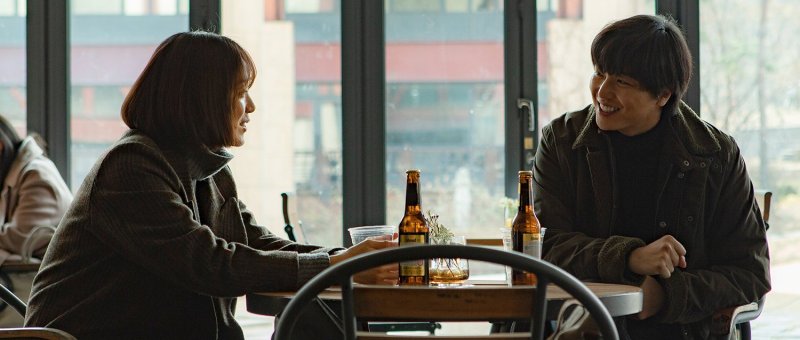
The title Frosted Window (흐린 창문 너머의 누군가, heulin changmun neomeoui nugunga) refers to the film’s final segment, a meta meditation on grief and loss, but, on the other hand, it’s true enough that we sometimes look at the world through a blurred lens and meet each other through an imperfect abstraction. A three-part portmanteau film, each of the segments takes place in a different season, with the opening titles perhaps standing in for an otherwise unseen spring, and reflect the director’s flights of fancy in imagining the lives of those living in the quiet backstreets of Seochon in Seoul, which is known for its literary associations and historical architecture.

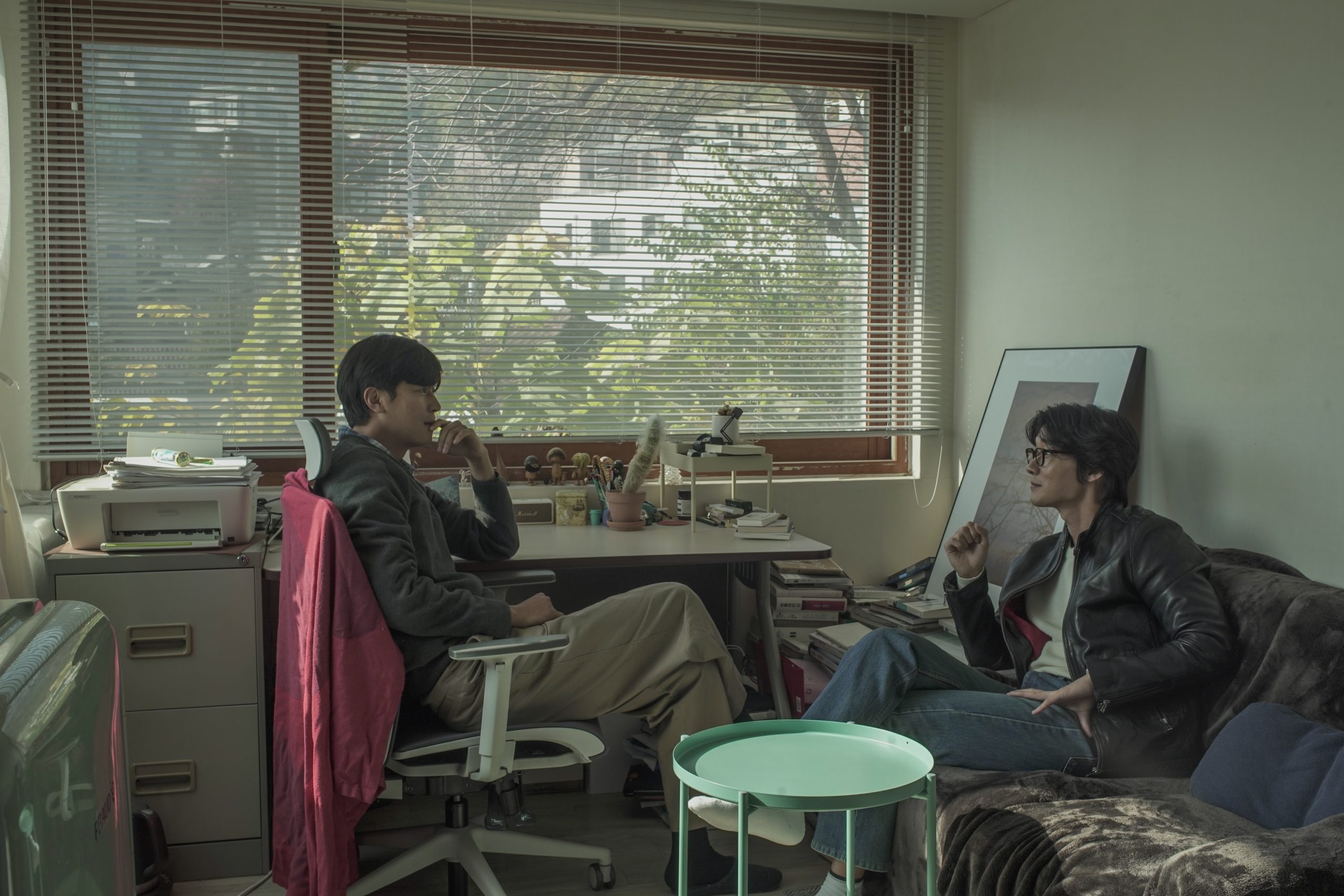
It may be its maze-like quality that gives rise to so many differing tales, but in the first segment, at least, it stands in as another place as a lovelorn artist tries to pick up various women by bothering them while they are minding their own business in public places. The first is in a German coffee shop, where he speaks to a woman in English assuming her to be a foreigner because she has international vibes and is reading a book in German, but she is actually Korean, if having lived abroad for many years, which is awkward. Nevertheless, he carries on trying to chat her up while she tolerates him. Eventually he gets the message and leaves, trying to pick up another foreign woman in the street before backing off when she’s joined by a foreign man. The artist seems to a romantic who finds inspiration in these quests for love and advises his friend, a blocked writer, to go for a walk in search of romance in order to reawaken his creativity.

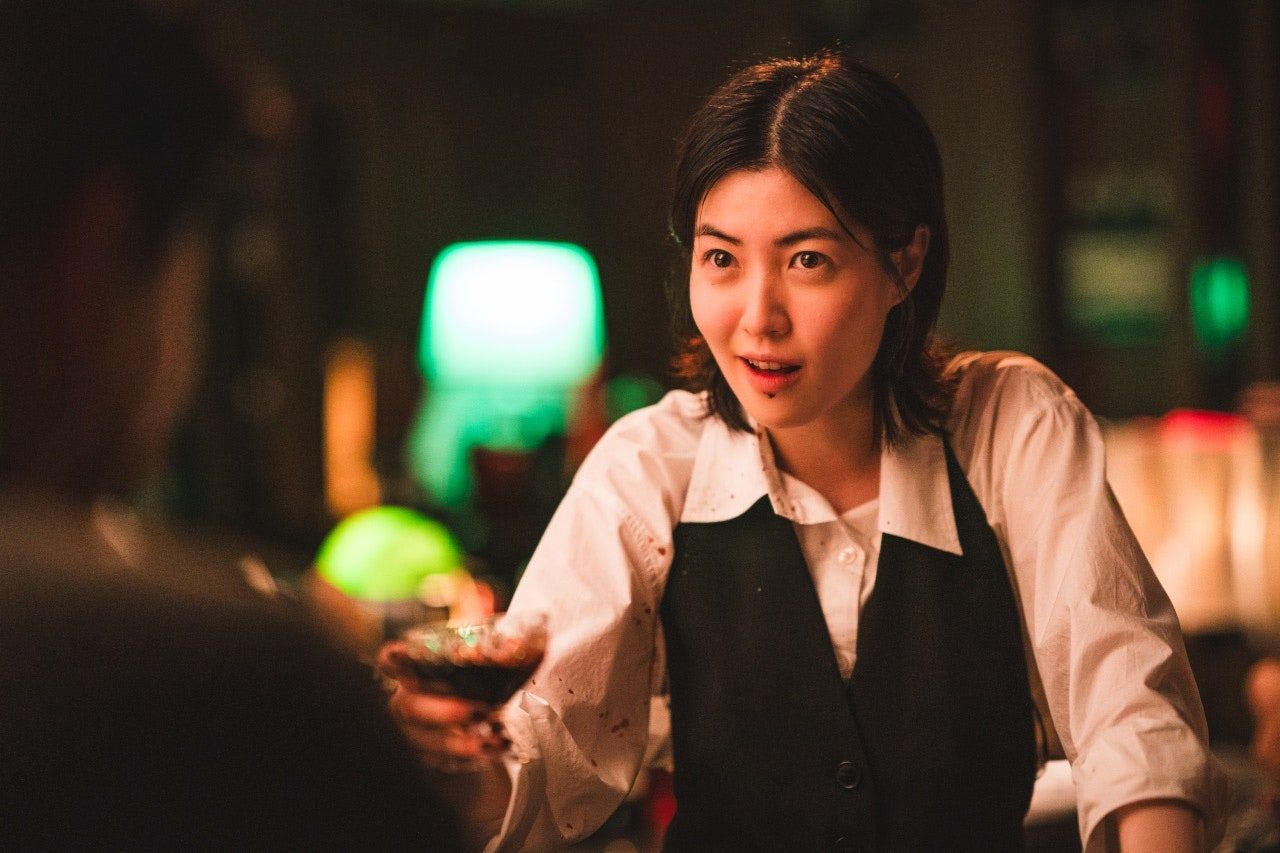
But a man who is also a blocked writer played by the same actor turns up in the second part where he is both an observer and an object. A woman calls a man to an upscale bar and drinks expensive whisky with him. The man is clearly interested in her, though he has a girlfriend he’s become tired of but won’t break up with, but she seems uninterested in him even as she continues to behave flirtatiously. There’s obviously something else going on, but it’s not originally clear if she wanted to toy with him a while, is making fun of him by exploiting his attraction to her to get him to make a fool of himself (to which he gladly obliges), or has something against his unseen girlfriend, on whom this is all very unfair no matter which way you look at it. It is, however, a performance for the barman, who watches silently until the woman comes back later to ask him what he thought.

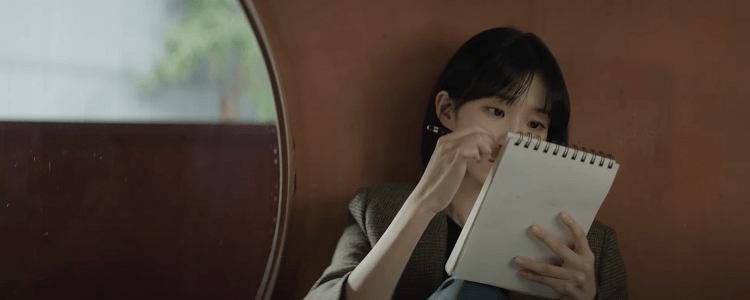
The woman, a local beautician, along with another from the florist’s who reunites with the artist in the October-set first tale, reappear in the last one echoing the sense of a fictional world that begins to take over as one story gives way to another. This time we have two artists, an actress who has been taking some time out, and a female film director she has worked with previously, who meet by chance in a cafe of which this area seems to have a lot considering its size. As the director outlines the story, we see the actress playing her role blurring the lines between the layers of “reality” present in this segment and the film as a whole. We have been, in some ways, like the barman passive observers with each of these tales performed for our benefit, but this last meta segment allows the actress to begin processing the weight of a loss which may be her own.

She is saved, in a way, by the friendly atmosphere of Seochon and the kindness of strangers that restore her sense of self-worth, both as an actress and person. The actress tells the director that though she had taken only a small break, people had already forgotten her and so her return to acting has been more difficult than anticipated with no offers of major roles, only smallish, walk-on parts. The encounter with a fan shows her that she had been missed and there are those who are waiting to see her again on screen, so her life and career had not been pointless and there is a path forward for her in the wake of her loss. This is perhaps testament to the frosty window of Seochon, home to a thousand stories, and a gentle warmth that seems to emanate even in the depths of winter. 


Frosted Window screened as part of this year’s London Korean Film Festival.

Trailer (English subtitles)
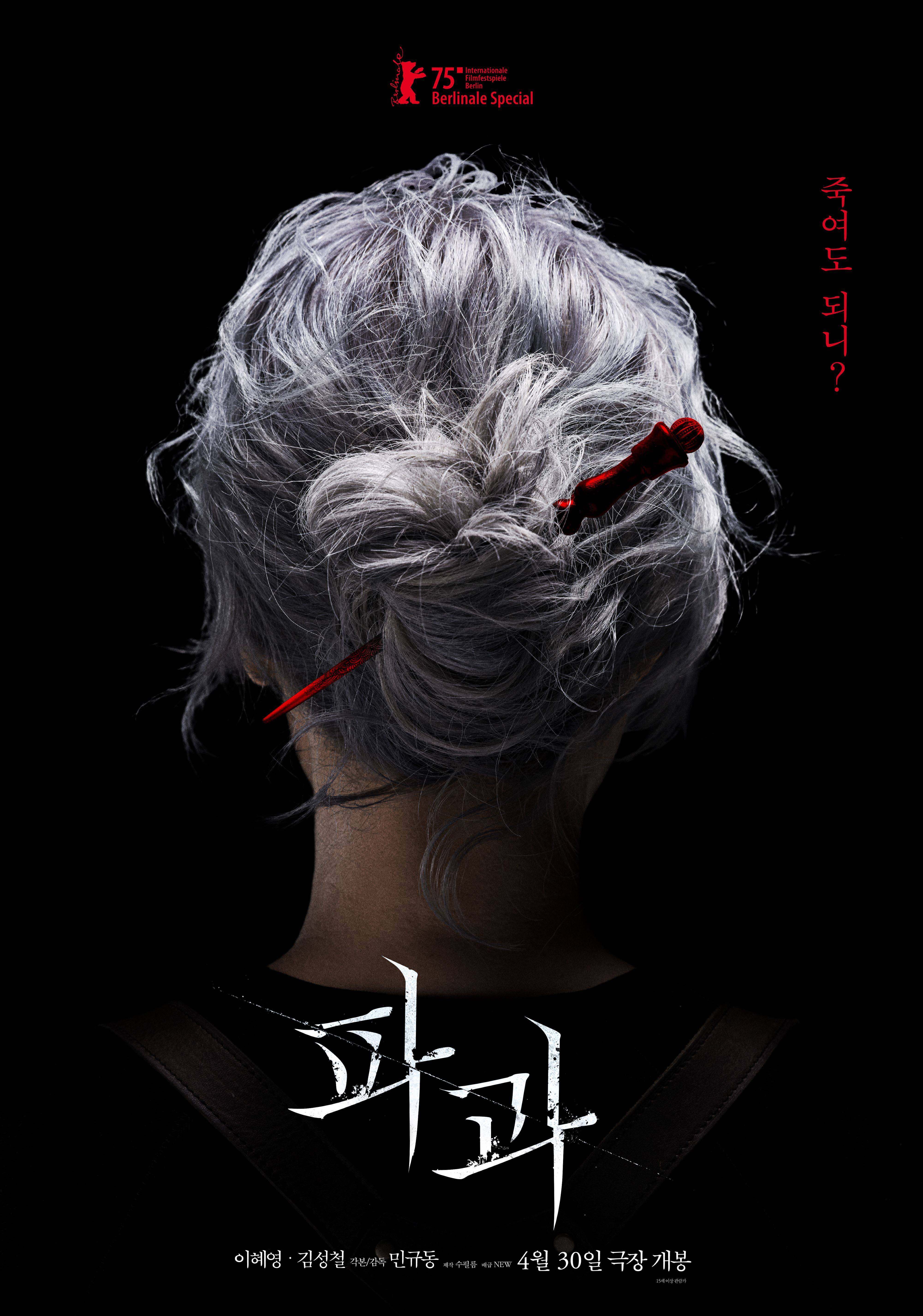
The Old Woman with the Knife (파과, Min Kyu-dong, 2025)

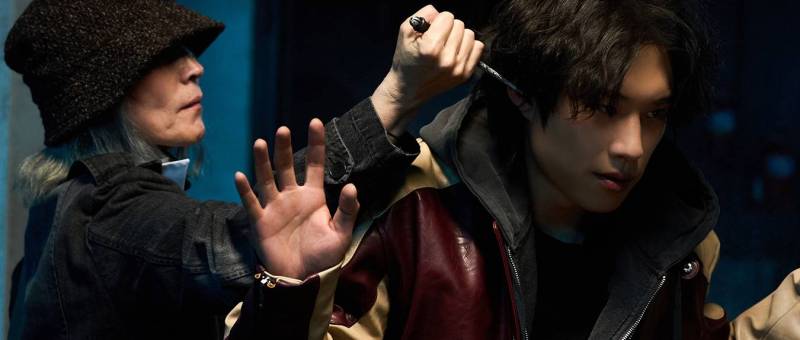
There’s an acute vulnerability that comes with ageing. It’s not vanity or mortality so much as your body betraying you as even once simple tasks become increasingly more difficult. When you’re an assassin, a loss of speed or dexterity is cause for concern and Hornclaw (Lee Hye-young) is beginning to feel her age. Her hands have begun to shake uncontrollably and as she admits to a stray dog she finds herself taking in, you forget things when you’re old. There are those in the office who have begun to notice that Hornclaw is not quite as she was and view her as a thorn in their side, a relic of an earlier era preventing them from moving on into a hyper-capitalistic future.

The original Korean title of Min Kyu-dong’s The Old Woman with the Knife (파과 Pagwa) is “bruised fruit”. An old woman working at a greengrocers throws in an extra peach for free because it’s damaged and people won’t buy them, which is silly, in her view, because they’re the best ones and always taste the sweetest. On that level, the film is about ageism and the ways older people are often written off as past their prime, but on another also about Hornclaw’s bruised but not quite buried heart and the hidden empathy that defines her life even as a contract killer. It may also in its way refer to her opposite number, Bullfight (Kim Sung-cheol), a hotshot young assassin recruited by her less ethically minded boss Sohn (Kim Kang-woo) who despite his sadistic cruelty is really just a hurt little boy looking for a maternal figure in the legend that surrounds Hornclaw. 

She was a stray dog herself until someone took her in and gave her a home, much as Bullfight is now looking for a place to belong. Hornclaw comes to identify with the dog she rescues, Braveheart, because as the vet says it’s awful to be abandoned when you’re old and sick, but perhaps also when you’re young and lonely. As her mentor taught her, having something to protect also makes you vulnerable while as you age the people you’ve lost return. Like her underling Gadget who sees visions of his late daughter, Hornclaw too is drawn back towards the past in seeing echoes of Ryu (Kim Mu-yeol), the man who saved her, in altruistic vet Dr Kang (Yeon Woo-jin).

There may be something disingenuous in the insistence that each of us must save the world coming from a band of supposedly ethical hitmen who only knock off “bugs” that are actively harmful for society. After all, who is making those decisions as to what constitutes “harmfulness”? Everyone Hornclaw takes out is indeed morally indefensible, but as she cautions Bullfight, when you start seeing people as insects you become an insect yourself. Sohn wants to reform the agency to take on more lucrative contract killing jobs such as taking out a wealthy man whose only crime appears to be being a cheating louse, while Hornclaw insists on sticking to their principles and only carrying out missions of justice which are the cases Sohn keeps turning down like that of a religious leader who has been abusing his followers. 

The vision of Hornclaw as a resentful avenger echoes that of Meiko Kaji in the Female Prisoner Scorpion series. Often caught in silhouette, she too wears a wide-brimmed hat that hides her eyes and aids anonymity, while she at one point gives her real name as “Seol-hwa” which means “snow flower” and hints at Lady Snowblood but also to her own moment of rebirth after being discovered half-dead in the snow and rescued by Ryu who gave her a purpose and sense of self-worth, not to mention a home. The irony is that Hornclaw ends up creating a monster because of her own repressed emotionality and is then unable to understand why this figure from the past has returned to her because her way of seeing the world only allows her to interpret it in terms of vengeance.

But what her new mission tells her is that having something to protect is in many ways the point and the very thing that gives her an edge over those who have nothing left to lose. Wresting back control over the agency, she vows to continue their mission as it’s always been rather than allow Sohn’s amoral capitalism to win out over justice and righteousness. Truth be told, the superhuman quality of Hornclaw’s movements is slightly at odds with the otherwise realistic tone of the rest of the film in which, as the secretary puts it, the weight of all the years is beginning to take its toll. But ironically it’s in closing her escape route that she finds true liberation in putting her ideas into practice in a more direct way while opening herself up to the world around her. There’s still life in the woman with the knife yet, and there are still plenty of bad guys out there along with a stack of files in need of attention, which is all to say retirement is going to have to wait.


International trailer (English subtitles)

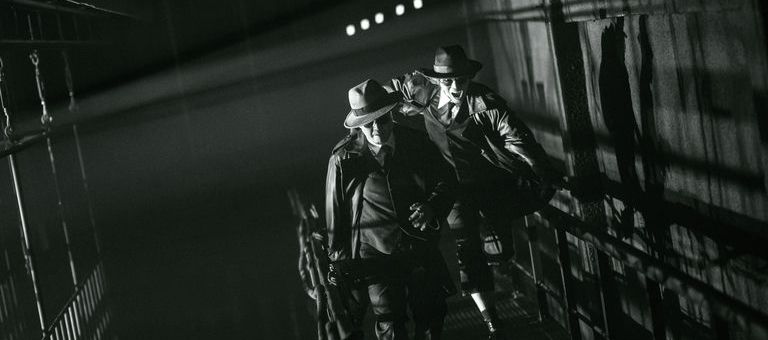
The Killers (더 킬러스, Kim Jong-kwan & Roh Deok & Chang Hang-jun & Lee Myung-se, 2024)

Led by Lee Myung-se, The Killers (더 킬러스) was originally billed as a six-part anthology film featuring different takes on the short story by Ernest Hemingway, but somewhere along the way took a kind of detour and now arrives as a four partner with a looser theme revolving around noir and crime cinema. Frequently referencing the Edward Hopper painting Nighthawks, the film hints at urban loneliness and a haunting sense of futility along with the mythic quality of noir as a tale that tells itself.

At least that’s in part how it is for unreliable the narrator of the first episode, a petty gangster who wakes up in a mysterious bar after being cornered by rival thugs. While in there he meets a similarly lost, middle-aged film director in the middle of a strange date with a fawning young woman who’ve definitely wandered into the wrong place. A sense absurdity is echoed in the fact that the man continues to sit in the bar oblivious to the knife in his back until the bar lady pulls it out for him and exposes the real reason why she lures lonely souls to this strange place out of time. Even so, thanks to her dark initiation the gangster is able to become himself and stand up against the rival thugs who were bullying him with his newfound “feistiness” having overcome something of the futility of black and white, classic noir opening sequence.

That’s something that never really happens for the heroes of part two who are a trio of youngsters trapped in Hell Joseon unable to escape their lives as cut price contract killers working below minimum wage for a chaotic company in which everything has been sub-contracted into oblivion. Ironically, one had dreams of becoming a policeman and another a nun while the third has recently had plastic surgery in the hope of landing an acting gig and claims he’s not in this for the money but to make the world a better place. Seeing their work as a public service, they tell each other that it’s wrong to grumble over their unfair pay because other people get less and are otherwise incapable of standing up for themselves until they take a leaf out of the boss’ book and try a subcontracting of their own which doesn’t quite go to plan.

While the first two episodes had been set in the present day the second two are set during the long years of dictatorship, the first sometime in the 1960s under the rule of President Park as an undercover detective and two men who appear to be unsubtle KCIA agents descend on a noirish, rundown bar with a picture of Nighthawks on the wall waiting for a mysterious fugitive to arrive. They don’t appear to know anything about why their target needs to be caught or who he is save for a daffodil tattoo on his arm and are merely they shady figures of authoritarian power we can infer are hot on the tracks of someone hostile to the regime. In any case, they are they are about to have the tables turned on them in a demonstration of their inefficacy in their power.

It’s the fourth and final piece unmistakably directed by Lee himself, however, that brings the themes to the four as it opens with an allusion to the assassination of President Park as the narrator tells us that it is 1979 and someone sent a bullet into the heart of darkness but the darkness did not die. The two goons who later show up are KCIA thugs working for the new king Chun Doo-hwan come to threaten the denizens of the cafe which include a man called “Smile” because he can’t and a woman called “Voice” because she has none while trapped inside an authoritarian regime. Inhabitants of Diaspora City, a home to the exiled, they have only a small hole to another world which affords them the ability to dream. Relentlessly surreal the segment is marked by Lee’s characteristic visual flair and sense of noirish melancholy that extends all the way out to a world more recognisably our own though no less lonely or oppressive.


The Killers screened as part of this year’s New York Asian Film Festival.

Special Delivery (특송, Park Dae-min, 2022)

“Why is it so hard to live?” a little boy asks after finding himself on the run with a strange woman who seems to be the only person interested in helping him. Situating itself in an upside-down world of backstreet crime, Park Dae-min’s high octane thriller Special Delivery (특송, Teuksong) is in part about how hard it is to live amid constant moral compromise as the heroine finds herself torn between her better judgement and human feelings in trying to rescue her human cargo not only from the bad guys chasing him but from a duplicitous society. 

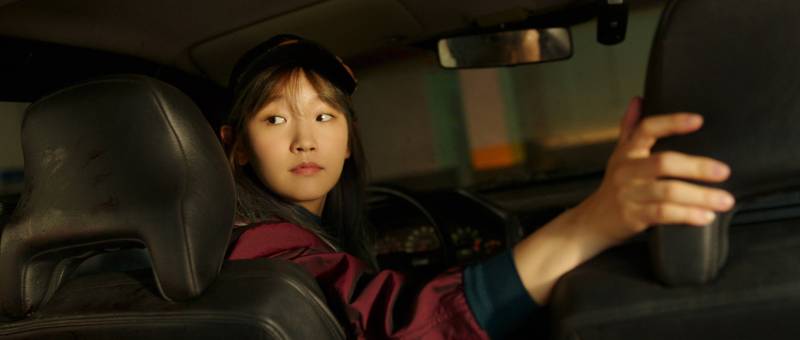
Technically speaking, Eun-ha (Park So-dam) is a delivery driver yet the services her firm provides are highly specialised promising to deliver anything anywhere by whatever means possible. In practice this often seems to mean transporting gangsters on the run from their hideouts to the nearest port before rival gangs can catch up with them as we see Eun-ha do with spectacular skill in the opening sequence. Other than the practice of frequently switching out license plates, what she’s doing in itself isn’t really illegal but is definitely crime adjacent and potentially dangerous. She is however well paid, arguing with her boss/mentor/father figure for a pay rate increase to an unprecedented 50/50 split in proceeds, though she lives a fairly modest life in a cosy apartment with her beloved cat Chubby whom she watches via security cam while waiting around for a fare. When her boss agrees to do a rush job for a Chinese gangster she tells him it’s a bad idea but ends up going along with it only to get drawn into the big news story of the day when a former pro-baseball player turned match fixing underworld figure blows the whistle and runs off with all the gang’s money. Eun-ha was supposed to drive him and his son Seo-won (Jung Hyeon-jun) to a port to leave the country but the bad guys who turn out to be corrupt police officers get there first and Eun-ha ends up with the kid and a bag full of money but no plan B. 

Drawing inspiration from John Cassavetes’ Gloria, the film develops into something of a buddy comedy as Eun-ha finds herself on the run with Seo-won having gone back for him after her boss suggested handing him off to an associate “who deals with children”. As we discover the child reminds her of her younger self being all alone with no other relatives or friends who could take care of him. Even when he reveals he might have a mother after all, it turns out to be a dead end because no one wants to get involved in this dangerously escalating underworld crisis. Yet the found family of the marginalised at the Busan junkyard where Eun-ha is based have more moral integrity than the world around them even if her boss’ solution for what to do about Seo-won isn’t ideal either. “Life is going alone” the corrupt police officer later sneers having repeatedly stated the necessity of staking one’s life to win such a big payout, but what Eun-ha is discovering is that it’s about going together trying to save the boy not only from the dangerously out of control corrupt police officers but from the moral bankruptcy of the contemporary society in which money is the only thing that matters. 

Overcoming both persistent sexism and societal discrimination Eun-ha proves herself a top operator in her field, Park choreographing a series of genuinely impressive car chases and visceral fight scenes as Eun-ha has to think her way through to take out the tougher, stronger bad guys while trying to protect Seo-won from danger on all sides. Her crime-adjacent existence tells her he’s not her responsibility but still she wants to complete her mission and deliver him somewhere safe much as she was rescued as a child by someone who might have felt much the same but chose to take her in anyway. With its neon lighting and retro score, Special Delivery harks back to an age of classic car chase thrillers with a stand-out performance from Parasite’s Park So-dam as a tough as nails getaway driver with nerves of steel fighting for humanity in an increasingly inhumane world. 


Special Delivery screened as part of this year’s Udine Far East Film Festival.

International trailer (English subtitles)

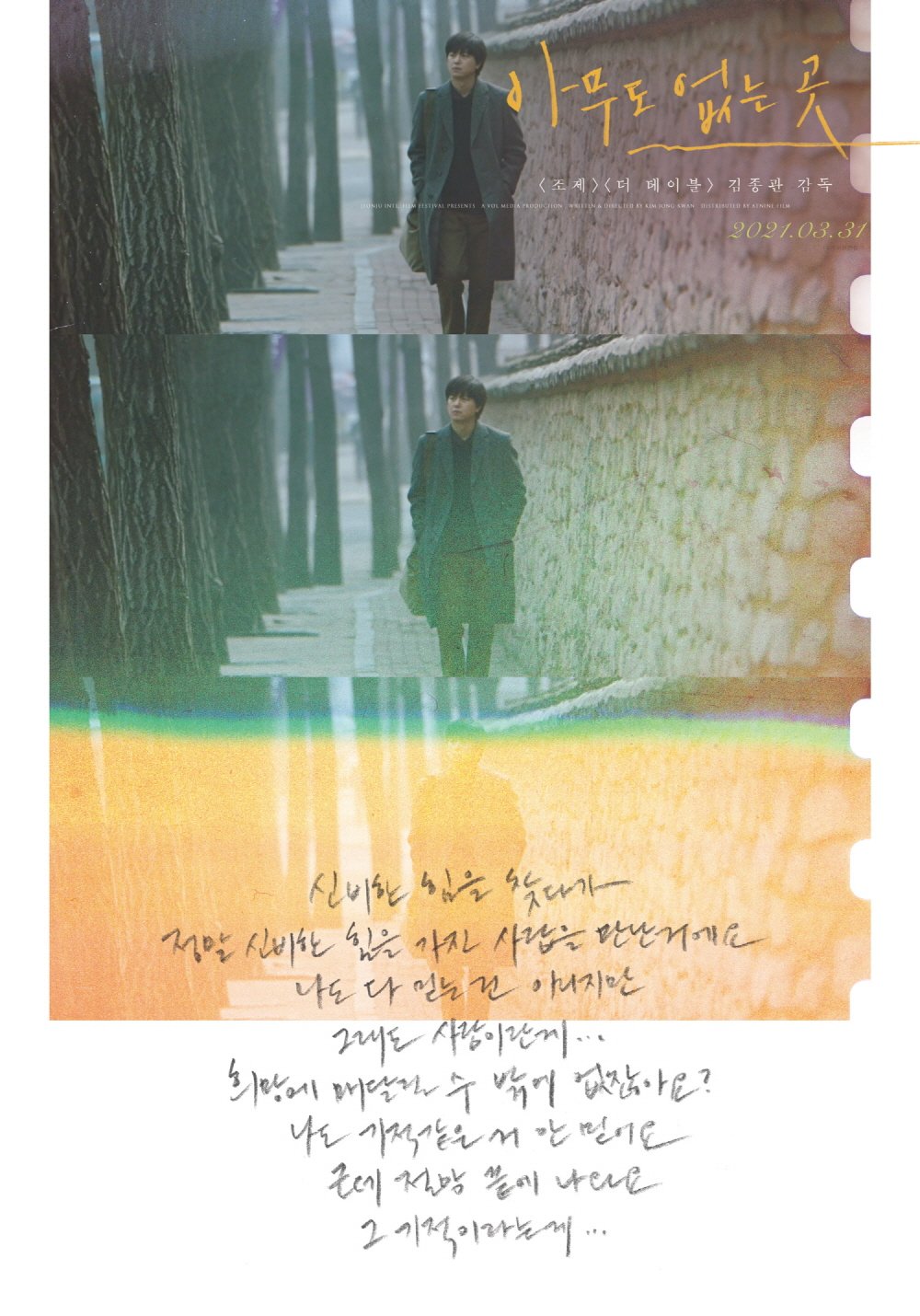
Shades of the Heart (아무도 없는 곳, Kim Jong-kwan, 2021)

“I see hope! Let’s change direction” a distressed woman shouts in a park, “We should follow the wind, let’s hold hands that way you won’t get lost.” Her interjection is perhaps unexpected, in its own way sad, but also a sign offered to the melancholy protagonist of Kim Jong-kwan’s Shades of the Heart (아무도 없는 곳, Amoodo Eobneun Got), a man who has become without quite realising it “someone who waits” yet through encounters serendipitous and otherwise begins to see new paths in front of him, turning a corner into another story.

Novelist Chang-seok (Yeon Woo-Jin) has just returned to Seoul after seven years abroad following the breakdown of his marriage in the UK. He has begun to have strange dreams, seeing an older version of himself and presumably his wife walk away from him and eventually disappear. Yet each of the people he meets is also in someway burdened by a sense of loss or despair, his first meeting with his mother who appears to have some kind of dementia and does not initially recognise him thinking once again she’s on her first date with his father. Her sadness is the loss of past and present but also of future, telling her son on finally recognising him not to smoke so much so he won’t die young like his dad. 

Chang-seok had apparently given up smoking, but is motivated to start again perhaps seeing little point in extending his life, accepting some unusual Indonesian cigarettes from a former colleague now his editor who eventually tells him of her failed love affair with a young exchange student which apparently ended partly because he could not acclimatise himself to the harsh winters of Seoul. The other reason perhaps echoes something in Chang-seok’s own life though also tinged with a different sense of sadness. A serendipitous meeting with a former acquaintance meanwhile takes a turn for the strange, photographer Sung-ha (Kim Sang-Ho) somewhat manic in his ecstasy in having run into Chang-seok explaining that his wife is terminally ill yet a Buddhist monk had told him he’d run into someone he knew who would bring him luck. On the other hand, Sung-ha also shows him a vial of cyanide he’s managed to procure apparently planning to use it to take his own life after his wife dies but now filled with an almost certainly false hope in the strange power of religious mysticism. “I don’t believe in all that, but people.. they need to hang their hope on something” he explains.

Chang-seok may not have much of a sense of hope, but what little he has he’s hung on people or on art. He is forever “waiting” for someone who may or may not arrive or even exist, making notes in his notebook or wandering around the surprisingly lonely streets of Seoul after dark pausing by the now obsolete phone booths filled with the detritus of city life unsure whether or not to make a call. His final conversation is with a woman who tells him that she has no memories of her own, having been robbed of her past, and more, in an accident and now “buys” them off her customers swapping free drinks for personal stories while writing poems about their lives. “No one is coming, but he became someone who waits” she writes of Chang-seok, their meeting oddly mirroring his first in its mixture of fiction and reality along with relationships forged through the exchange of stories true or otherwise. As he’d said, sometimes a made up story can be the more truthful. 

“But they come in the depth of despair, miracles” Sung-ha had added hopefully seconds after saying he didn’t believe in them, each of Chang-seok’s encounters a tiny miracle in itself. Imbued with a deep sense of melancholy and loneliness, Kim’s delicately scripted ethereal drama is an exercise in grief and despair Chang-seok’s sense of fiction and reality beginning to blur even as he begins to find the urge to write again and with it perhaps to live again too. “I see hope!” the woman shouts once more, restored something as she takes her place in a new story, Chang-seok turning the corner and beginning once again to dream. 


Shades of the Heart screens 14th November as part of this year’s London Korean Film Festival.

Original trailer (English subtitles)

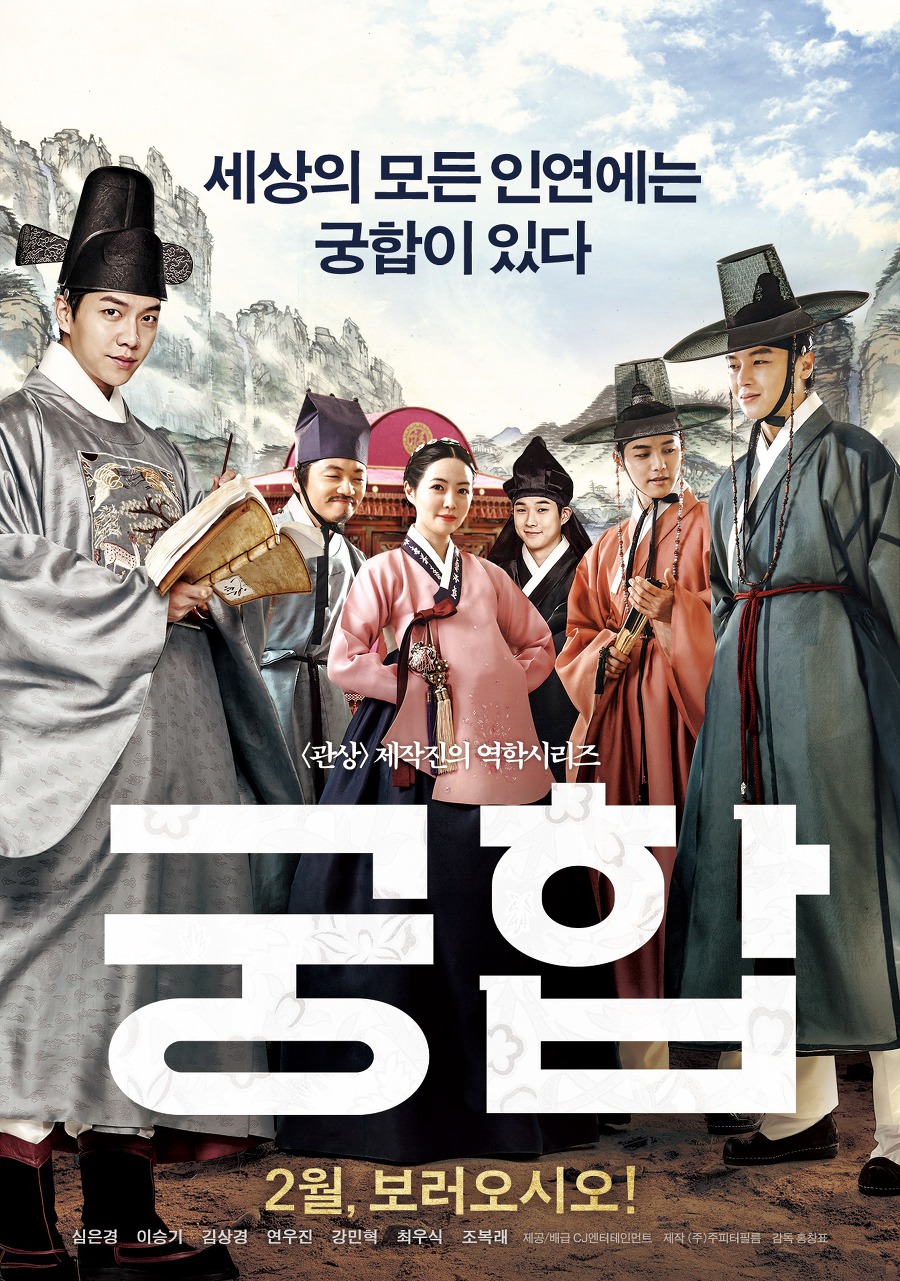
The Princess and the Matchmaker (궁합, Hong Chang-pyo, 2018)

Princess and the Matchmaker posterLove – is it an act of fate or of free will? For the women of 18th century Korea, romance is a girlish affectation which must be outgrown in order to fulfil one’s proper obligations to a new family and the old by becoming the ideal wife to a man not of one’s own choosing. Love, in this world, would be more than an inconvenience. It would be a threat to the social order. In Hong Chang-pyo’s The Princess and the Matchmaker (궁합, Gunghab), each and every decision is dictated by birth, but as our soothsayer reminds us, serendipitous meetings can change all that’s gone before.

A severe drought is plaguing the subjects of Joseon, and their eyes are on their king to sort it out. For complicated reasons, many assume the pause in the rains is down to the gods’ wrath over the aborted wedding of problematic princess Songhwa (Shim Eun-kyung) some three years previously. Even before her failed marriage made her a flawed woman, Songhwa had always been tainted with an aura of ill fortune seeing as her mother died in childbirth. A reading of her astrological charts implied her presence was bad for the king (Kim Sang-kyung) and so she was sent away only to be called back when another reading revealed her presence may be essential to the king’s recovery from illness. She’s been at the court ever since but the taboo of her supposed bad luck has never left her. The king determines he’ll have to marry Songhwa off to improve the public mood but with her reputation who will they be able to find for a husband? With names thin on the ground, the king decides on a series of open auditions with the royal astrologer announcing the “winner” after a thorough examination of their birth charts.

It goes without saying that no one is especially interested in Songhwa’s opinion. Still naive and innocent, Songhwa is quite looking forward to finally getting married though a frank conversation with a recently hitched friend perhaps helps to lower her expectations. Still, she’d at least like to see the face of the man she’ll be spending the rest of her life with and so she sneaks out of the palace and goes investigating. Her first ventures outside of the walls which have protected her all her life are marked by a sense of magical freedom, though what she sees there later shocks her. Her subjects starve, and blame her for their starving. Lamenting the poor nobleman who will be taking one for the team in marrying the notoriously ugly and difficult Princess Songhwa, they pray for her wedding day and the rain they fully expect to fall.

Given all of this ill feeling towards the princess, it doesn’t take much to guess what sort of men are prepared to toss their hats into the ring. The suitors may look attractive on the surface, as Songhwa discovers, but each has faults not visible in his stars. One is a child, another a womanising playboy. It comes to something when the worst possible match isn’t the murderous psycho posing a philanthropist but the ambitious social climber who will stop at nothing to advance his cause.

Some might say the sacred art of divination is a bulwark against court intrigue, but this like anything else is open to manipulation. The king’s old astronomer has been taking bribes for years – something brought to light by ace investigator with a talent for divination Seo Do-yoon (Lee Seung-gi) with help from shady street corner soothsayer Gae-shi (Jo Bok-rae). Appointed to the position himself, Seo unwittingly holds the keys to Songhwa’s future though that isn’t something he’d given particular consideration to. His job was just to read the charts before everything started getting needlessly complicated. When his list of candidates goes missing he has no choice but to start visiting the ones he can remember in person which is how he ends up repeatedly running into Songhwa in disguise and, despite himself, beginning to fall in love with her.

Songhwa, trapped in a golden cage, longs to live a life of her own free from the patriarchal demands of a hierarchical society. She bucks palace authority by sneaking out on her own, but never seriously attempts to avoid her miserable fate or resist the tyranny of an arranged marriage, only to be allowed foreknowledge of the kind of life for which she has been destined. Nevertheless, determining her own future later becomes something within her grasp once the corruption has been uncovered and the art of prophecy exposed for what it is. Destiny is more malleable than it first seems and as Seo advises the king, when compassion reigns the heavens will open. True harmony is not born of a rigid adherence to facts and figures assigned by the arbitrary conditions of birth, but by a careful consideration of the feelings of others. A life without love is as starved as one without rain and the truly harmonious kingdom is the one in which all are free to feel it fall where it may.


The Princess and the Matchmaker was screened as part of the 2018 London Korean Film Festival.

International teaser trailer (English subtitles)

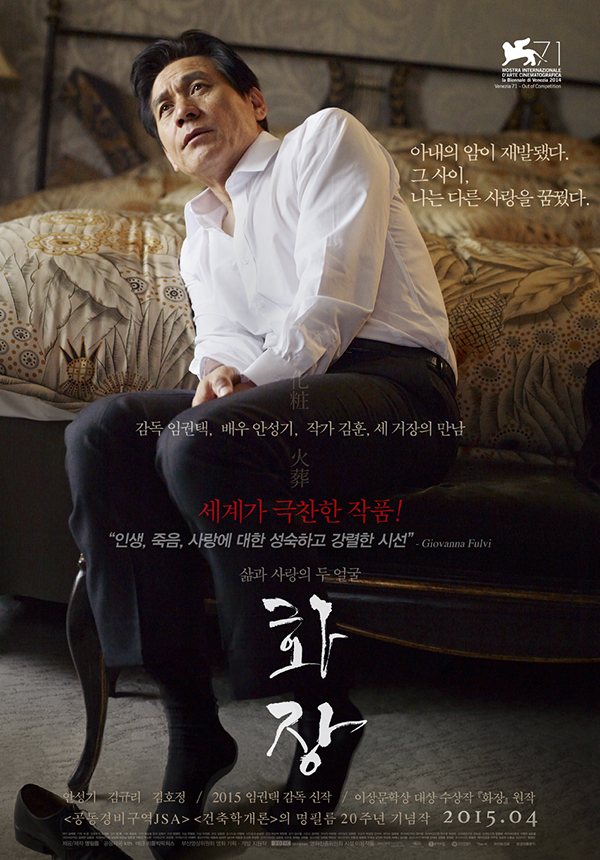
Revivre (화장, Im Kwon-taek, 2015)

revivreThe 102nd film from veteran Korean film director Im Kwon-taek may appear close to the bone in its depictions death, suffering, and the long look back on a life filled with the quiet kind of love but Revivre (화장, Hwajang) is anything but afraid to ask the questions most would not want to hear as the light dwindles. The inner journey is just too hazy, as one man puts it, unknowingly commenting on the human condition, yet Im does manage bring us nicely into focus, if only for a moment.

Oh (Ahn Sung-ki), a successful salaryman working in marketing for a cosmetics company, finds himself slightly adrift as the brain tumour his wife, Jin-kyung (Kim Ho-Jung), had previously suffered from resurfaces. The treatment this time is apparently not as successful leading to prolonged hospitals stays as Jin-kyung’s condition deteriorates and she begins to require a greater level of medical care. While all of this is going on, Oh is still very much dedicated to his work but has also begun to indulge in an old man’s folly, fantasising about the pretty new girl at the office.

Much of Revivre is concerned with Oh’s inner life, the things he does not say (which are many because Oh is a quiet sort of man). Ahn Sung-ki captures this quality well in playing Oh with a kind of blankness that could be the numbing sensation of grief or an extension of his ordinarily reserved nature. This makes his impromptu verbal attack on the figure of his fixation, Choo Eun-joo (Kim Gyu-ri), all the more unexpected though his remorse over having acted in such an out of character way may actually help to generate a kind of relationship between the pair albeit more of a paternal than romantic one.

Oh’s continuing fixation on Eun-joo, the woman who becomes the accidental focus of his world even though his wife lying dies in a hospital, is intended to be a fantasy and nothing more. An early dream sequence sees Oh participating in an elaborate traditional funeral taking place in a desert in which all of the mourners are dressed in black, except, of course, for Eun-joo – the only fixed point of reference, clothed in vibrant purple and smiling back at him in contrast to the solemn faces of the other guests, each staring at the floor. In the real world time slows down for him as Eun-joo dances youthfully in a nightclub and as he leaves the party early, her’s is the lone still face, haunting him as he looks back at the other revellers still enjoying themselves heartily even outside the club.

Indeed, “looking back” with all of its various advantages and disadvantages becomes another central theme as Oh becomes a kind of Orpheus descending into his own personal hell in the hope of dragging back his departed Eurydice – an idea neatly recreated in one of the film’s few outright fantasy sequences in which Oh dreams himself into an avant-garde dance show. Like Orpheus, Oh cannot help but look back though he risks losing all in the process. What Eun-joo represents for him is perhaps not the woman herself but an image of his own youth and a desire to live again as he once lived before. The present and the past begin to overlap for him, Eun-joo becomes the future he cannot touch as well as the returning spectre of a past he cannot return to.

Oh’s daughter asks him at one point if he ever really loved her mother. His reaction to losing his wife is, it has to be said, restrained, practical. Yet this question is answered with an immediate cut to Oh helping his wife to the bathroom, performing the most intimate of tasks with unwavering devotion. As his wife fades, Oh’s fantasies become a shield against the growing fears of his own mortality as his body also begins to fail him. The melancholy sense of loss and loneliness coupled with the inevitability of the passage of time pervade as each of Oh’s points of reference slips away from him at exactly the same time.

Im opts for a non-linear approach beginning with Jin-kyung’s passing and thereafter moving freely, reflecting Oh’s fleeting memories and interior confusion as he deals with such a traumatic, life altering event. Neatly framing Oh’s dilemma within his work in which he faces a choice of sticking with the current marketing strategy or striking out in a bold new direction, Im plays with the eternal theme of transient beauty in a society which prizes bodily perfection above all else. The film’s Korean title plays on a pun involving a homonym which means both “cremation” and “makeup” perhaps harking back to the central theme that you dig a grave for yourself if you attach the wrong sort of importance to the impermanent, but is in a sense ironic as one represents a final acceptance and the other an attempt to hold off the inevitable. Poetic and intensely moving, Revivre is another characteristically multilayered effort from Im, still at his full strength even in this late career effort.


International trailer (English subtitles/captions)