Cloud (Cloud クラウド, Kiyoshi Kurosawa, 2024)

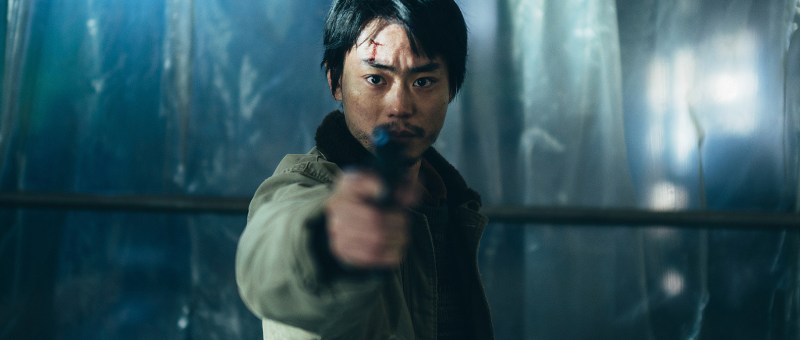
“We wanted to make easy money,” a down-on-his luck reseller admits, “is life easy now?” Factory worker Ryosuke (Masaki Suda) rebels against capitalism by subverting it through buying low and selling high while repeatedly refusing promotions at his job in a textiles factory. Though it might seem that reselling is just a way to earn an income that seems almost passive but is actually fairly labour-intensive, it’s clear that Ryosuke is a young man dissatisfied with capitalistic realities and lacking direction in his life. 

Reselling has become a kind of game to him and like a gambler who plays to lose he’s hooked on the thrill of making a killing exploiting other people’s misery. He’s at once filled with pride and smugness over his apparent triumph over his society and consumed by self-loathing. His friend and fellow reseller Muraoka (Masataka Kubota) tells him that another acquaintance has been arrested for scalping concert tickets with both of them lamenting his foolishness in getting involved with something so risky. The implication is that their friend, Goto, must have been in real desperation to lower himself to such levels and they each fear they may someday end up in the same position. Muraoka laments that that kind of selling is a young man’s game and neither of them have the time or energy to spend all day queuing to buy stuff just to sell it on cheap. They are each, it seems, beginning to feel the increasing desperation of their age that they are running out of time and have little to show for their efforts nor any prospects for the future. 

But on the other hand, neither of them want to be locked into the grind or join the oppressive but secure world of the salaryman. In many ways, Ryosuke’s factory boss Takimoto (Yoshiyoshi Arakawa) represents the “correct” path of hard and honest work, though his own paternalistic conviction in meritocracy seems outdated in a man of his age whose formative years occurred during an era of economic stagnation. He talks to Ryosuke as if he’s a young man who wants to get on but lacks confidence, telling him that he has leadership potential and is wasted on the shop floor, but his language also has an edge of the uncanny as if he were trying to recruit Ryosuke into his own worker drone revolution. In any case, even if it might be true that Ryosuke lacks confidence and ambition, that isn’t the reason he refuses promotions, which seems to be another way of rebelling against capitalism. When he eventually quits, he suggests it’s because he’s sick of being told what to do and wants more autonomy over his life and finances.

He tells his girlfriend Akiko (Kotone Furukawa) that she should quit her job too, which she’s only too happy to do because, unlike him, she actively doesn’t want to work and only wants to spend money. When she said she was thinking of giving up her apartment, Ryosuke naturally asked her to officially move in but she refused because his place is too small and she has too much stuff. Akiko has already been corrupted by the same consumerist bug that’s driving Ryosuke’s reselling business, but neither of them can really afford this lifestyle in the city. Ryosuke’s bright idea is to move to the remote countryside where he’s able to rent a huge, though ominous-looking, property for a fraction of the price with the idea of also economically supporting Akiko who will revert to traditional gender roles as a housewife in charge of the domestic space and most especially the kitchen.

But freedom cannot be found simply by retreating from urbanity and the couple soon find themselves plagued by a pervasive sense of resentment. The locals are not particularly accepting of people from Tokyo and are also needled by their success which is something they feel they’ve been unfairly denied. When Ryosuke tries to report a smashed window, even the policeman hassles him and says he’s received a tip-off that Ryosuke is breaking trading standards regulations by selling counterfeit goods as the real thing. Reselling in itself is not illegal, if definitely dubious morally and incredibly cynical. Ryosuke doesn’t seem to like to think about that and tells his new assistant, Sano (Daiken Okudaira), that he tries to sell all the items as quickly as possible so he doesn’t have to worry too much about their authenticity. If they’re wanted they’ll sell, Ryosuke justifies but he might as well be talking about himself.

“Being real or fake doesn’t matter?” Sano asks him, just as Ryosuke’s online and offline personas start to blur. He’s unaware that there are people actively hunting him for selling them substandard goods and is later pursued by real life vigilantes acting like online trolls and planning to torture him to death during a livestream. Like many of Kurosawa’s heroes, Ryosuke is completely convinced that he’s the benchmark for normal and it’s everything around him that’s strange or unfair. As the internet once again invades the “real” world, or perhaps it’s more that Ryosuke’s living his online life offline, the increasing unreality of the situation makes us wonder if any of this is “really” happening or product of Ryosuke’s fractured identity as it finally collapses under the twin corruptions of capitalism and social media. “Please keep focusing only on making money,” his new guardian angel Sano tells him, “everything will be obtainable. Whatever you want. Even things that can end the world.” Flying through ironically heavenly clouds, Ryosuke reflects that the path to hell really is paved with gold and his Mephistophelian pact with hyper-capitalism may have damned him beyond all repair.  


Cloud is in cinemas from 25th April courtesy of Blue Finch Film Releasing 

UK trailer (English subtitles)
Kubi (首, Takeshi Kitano, 2023)

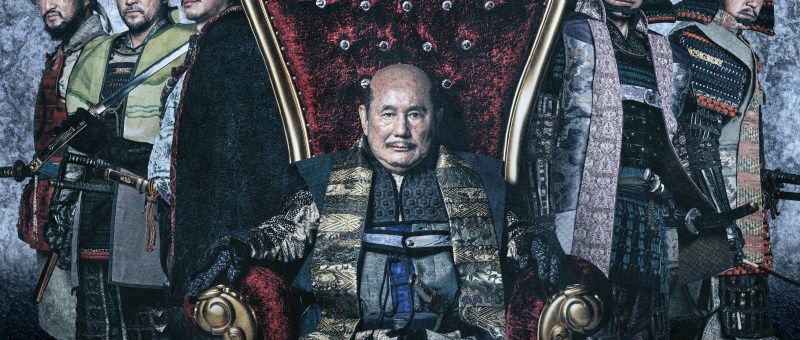
Apparently in gestation for a couple of decades, it’s unsurprising that Takeshi Kitano gave himself the role of Hideyoshi in a long-awaited historical drama adapted from his own novel, Kubi (首). Played as an irascible but wily old man, Hideyoshi is the second of Japan’s great unifiers and, unlike his predecessor, died as a result of an illness rather than intrigue. He was also a peasant who rose through the ranks and is perhaps witness to the tumultuous class conflict and social divisions of a hierarchal society.

Even so, in this version of events, Oda Nobunaga (Ryo Kase) too speaks in a thick rural dialect that sets him apart from his retainers and seems to hint at his uncouthness. This Nobugana is an unhinged despot who threatens and humiliates his subordinates, not to mention sexually assaulting them. In short, there’s no real mystery why his men have begun to turn against him and there is intrigue in the court. The film opens with Murashige’s (Kenichi Endo) quickly quelled rebellion which floundered when his reinforcements failed to arrive. Murashige is on the run and Nobunaga has heavily suggested whoever brings in his head will be first in line for the succession, but Murashige is also in a relationship with Mitsuhide (Hidetoshi Nishijima) another courtier vying for favour in more ways than one from the capricious Nobunaga. 

The striking thing about the staging is how like a yakuza drama this intrigue really is with each of the main factions manoeuvring for control, forming temporary or duplicitous alliances forged in the mutual desire of ousting a ruler whose increasing instability presents only the likelihood of a return to chaos. Nobunaga’s flamboyant speech and threatening manner are reminiscent of a yakuza boss on his way out, as is his obvious tactic of setting his rivals against each other while secretly planning to hand the reins to his son anyway. The film takes place in a largely homosocial world, the only women on screen are sex workers and peasants about to be murdered, only this time defined by romantic intrigue in which the various relationships between the men are inescapably linked with power and duplicity.

Mitsuhide’s relationship with Murashige is originally framed as a giri/ninjo conflict, Mitsuhide torn between the exercise of his duty as a samurai and his love for Murashige, only to later be set wondering if Murashige isn’t also playing him in urging him too towards rebellion, while Murashige accuses him of harbouring desires for Nobunaga which would also necessarily be desire for advancement. Advancement is something sought by all and in particular Mosuke (Shido Nakamura), a peasant who is taken on as a foot soldier after looting a battlefield for amour and killing his friend to get his hands on the prize only to realise just at the critical moment how pointless the constant desire for heads really is. The absurdity is rammed home in the closing scene in which Hideyoshi declares himself uninterested in the severed head he asked for, rendering the quest entirely pointless.

This absurdity extends to introducing the character of a comedian who is later killed for talking too much, while Kitano wise cracks his way along as the affable Hideyoshi. Kitano is in his way in dialogue with other samurai epics, using Akira Kurosawa’s horizontal wipes and introducing a pair of bumbling comic relief peasants only to suddenly kill one of them off because at the end of the day this world isn’t very funny. It’s cruel, and mean, and meaningless, so you might as well laugh like Hideyoshi. Residents of a ninja village conduct a festival in which they pray for death and to be released from this earthly torment as soon as possible, while farmers still dream of becoming samurai little knowing the reality of samurai life.

It’s this cycle of futility that is echoed in the opening image of a severed neck into which crabs in a river are crawling. Kitano stages lavish battle scenes, but ones that are often horrifying and absurd, a visceral struggle in mud and blood fought for no real reason. These samurai live their lives on the point of a sword, but they move and behave like yakuza fighting pointless turf wars and games of petty intrigue until someone finally comes for their heads. In the end, the victor is the one who doesn’t play the game at all, but sits and laughs at the absurd cruelty all around them in which the only stable force is ambition accompanied by a nihilistic lust for blood in an already bloody world.


Kubi  screens in New York July 16 as part of this year’s JAPAN CUTS.

Trailer (English subtitles)

Hard-Core (ハード・コア, Nobuhiro Yamashita, 2018)

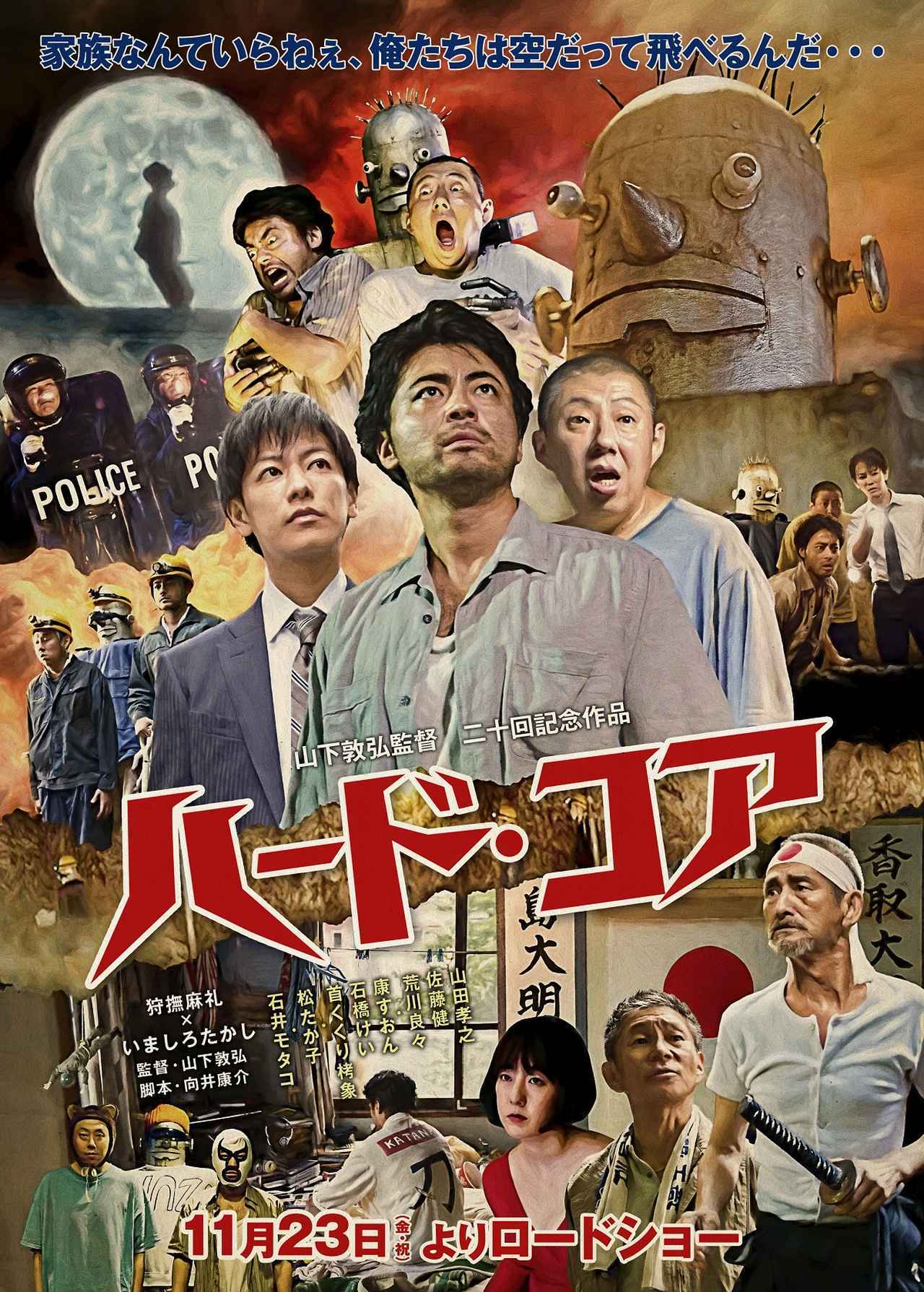
Hard-Core retro poster“The world will always be corrupt”, the cynical brother of the angry young man at the centre of Nobuhiro Yamashita’s Hard-Core (ハード・コア) advises him, “you just have to work around it”. Unfortunately, Ukon (Takayuki Yamada) just wants to do “the right thing”, but it is constantly unsure of the best way to do it while remaining resentful and conflicted in his conviction that the world has already rejected him. Yamashita has made a career out of chronicling the struggles of disenfranchised young men but Ukon and his pals are less genial slackers than potentially dangerous idealists looking for a way back to a simpler time in which the world was not quite so rotten.

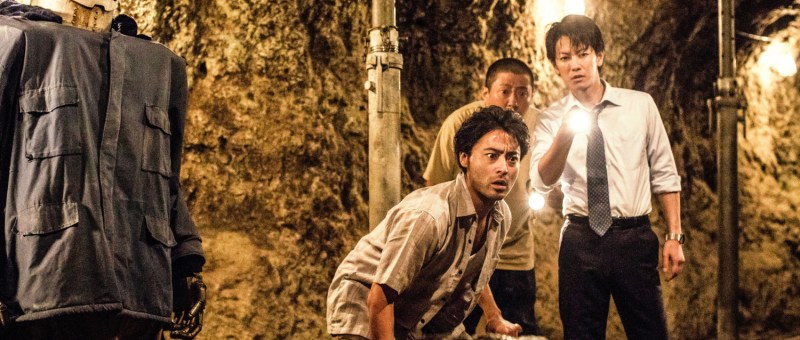
An opening bar scene in which Ukon gets slowly drunk and then lays into a rowdy bunch of guys bothering a middle-aged woman (Takako Matsu) just trying to enjoy a drink showcases his propensity to abruptly lose his temper and fall into a self destructive cycle while also subtly pointing out his entitlement issues in his taking the guy to task by praising himself for leaving the lady alone while he presumably had exactly the same desire not to. In any case, after getting banned from the bar, he ends up joining an ultranationalist political cell, the Crimson Hearts, which aims to teach the youth of Japan to re-embrace its traditional culture. In order to facilitate his goals, the elderly and eccentric leader, Kaneshiro (Kubikukuri Takuzo), has enlisted Ukon, along with a friend, Ushiyama (Yoshiyoshi Arakawa) who is almost entirely mute, to dig out a mysterious cavern where he is convinced there is buried Edo-era treasure.

It’s easy to see why Ukon might fall for the rather insane ramblings of Kaneshiro. They reinforce his sense of moral decline while giving him a banner to follow and a place to belong. His loyalty to Kaneshiro is as absolute as a retainer’s to his lord, though he is perhaps conflicted in his commitment to the core ideology even as he sees obvious merit in wanting to reclaim something of the old Japan. Meanwhile, his relationship with his family appears strained. His younger brother Sakon (Takeru Satoh) has become a cynical salaryman out for nothing other than greed and self interest, staring into his own empty eyes in the reflection of the full glass panelling of his high rise office as he has meaningless sex with anonymous office ladies. Ukon just wants to do the right thing, but Sakon wants to make the smart choice and doesn’t particularly care about the wider implications of his choices.

Meanwhile, Ukon is fiercely loyal to his friends and fellow outsiders in solidarity with all those who feel the world will never be willing to accept them. Ushiyama, a man laid low by familial expectation and societal pressure, lives in an abandoned factory where he has made “friends” with a broken robot that Ukon manages to repair and names “Robo-o”. Believing that Robo-o is just like them in that he would be ostracised if people discovered his true nature, Ukon and Ushiyama set about disguising him and even get him in on their gold hunting gig (where he gets paid!) at which he proves adept considering his considerable technical superiority. Ukon’s first instinct is to protect his friend, while Sakon’s is how best to exploit him.

Nevertheless, events at the Crimson Hearts begin to escalate as unpleasant underling Mizunuma (Suon Kan) considers taking the battle to the next stage to “overthrow the corrupt totalitarianism masquerading as democracy” through actions others will regard as terrorist. Meanwhile, Ukon has also begun to fall for Mizunuma’s damaged daughter Taeko (Kei Ishibashi) whom he met by chance after being inappropriately charged with spying on Mizunuma’s new girlfriend to make sure she wasn’t sleeping around (as women do, according to Mizunuma). Ukon, as the first scene implied, is not in favour of all this obvious misogyny but can only find the strength for passive resistance. What he chooses, in the end, is his friends and his precious group of outsiders, albeit with his hopes pinned on his cynical brother and the illusionary lustre of historical treasure. The power of friendship eventually enables even Robo-o to break his programming, though it’s Sakon’s cynicism that, in one sense at least, seems to triumph. Yamashita takes his troubled young heroes on a rocky, noirish path through the “rotten” world which they are increasingly convinced holds no place for them but finally finds hope in human compassion even if that compassion may be the long buried treasure of an archaic civilisation.


Hard-Core was screened as part of the 2019 Udine Far East Film Festival. It will also be screened at the 2019 Nippon Connection Film Festival on 31st May at 22.30pm and 1st June, 22.45pm.

Original trailer (English subtitles)