The Colors Within (きみの色, Naoko Yamada, 2024)

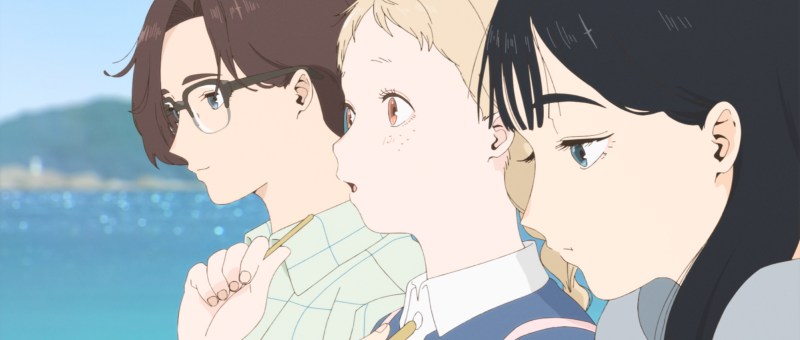
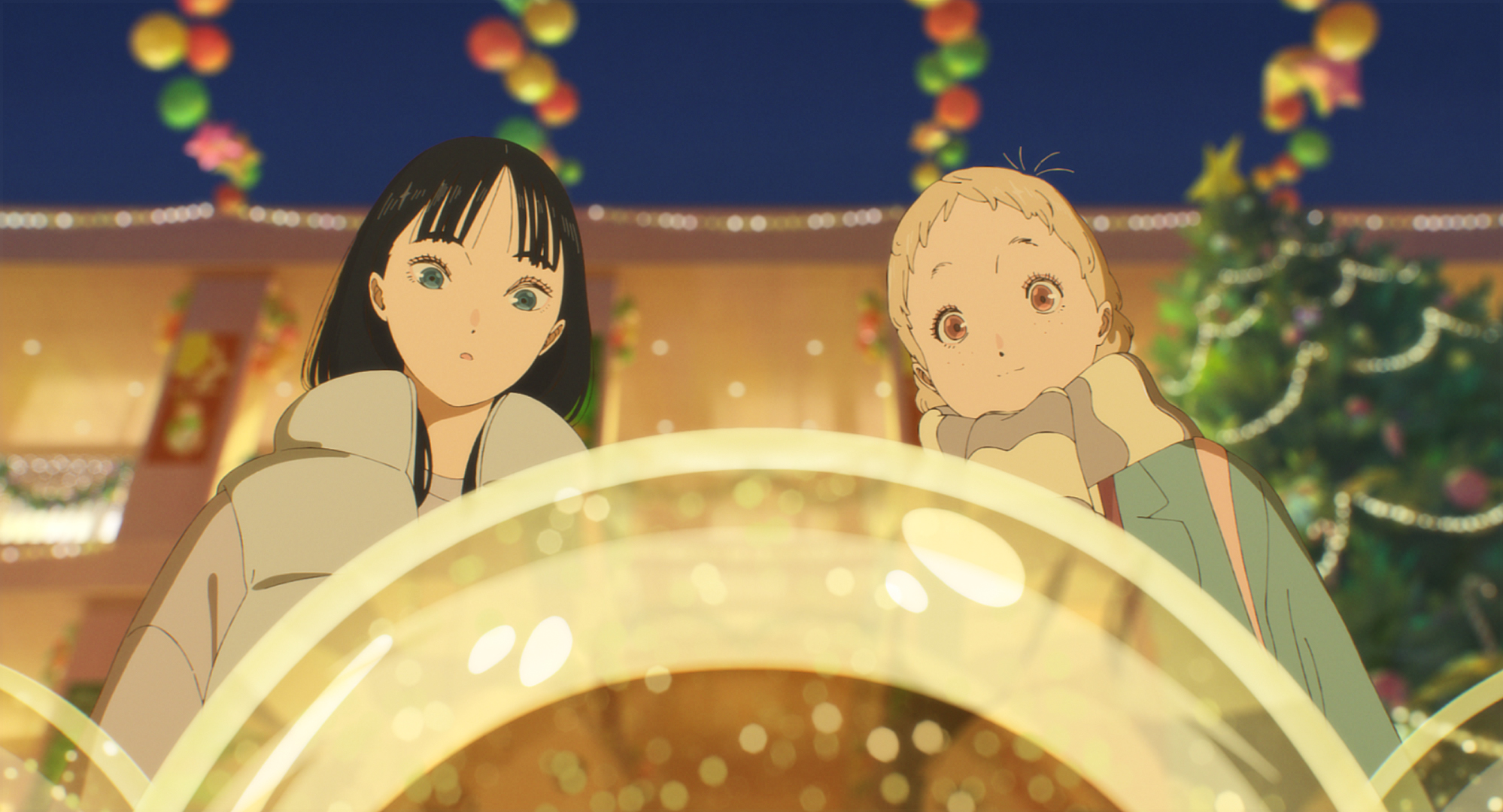
“If I could see my own colour, what kind of colour would it be?” the heroine of Naoko Yamada’s The Colors Within (きみの色, Kimi no Iro) asks herself. Yet there’s a curious pun in the film’s Japanese title in that the word “kimi” simply means “you” but it’s also the name of another girl by whom Totsuko (Sayu Suzukawa) is captivated though she doesn’t quite have the ability to articulate her feelings beyond the fact she feels “all sparkly inside”. 

In any case, Totsuko has the ability to see people as colours but largely keeps it to herself in fear that people will think she’s “weird”. Totsuko does indeed appear to be slightly otherworldly, though no one really seems to reject her for her ethereality save perhaps one classmate who describes her as that girl who sits in the chapel on her own all the time. What she’s mostly doing in there is reciting the serenity prayer to find “peace of mind,” and talking to the cool nun at her Catholic boarding school, Sister Hiyoko (Yui Aragaki), who tries probe gently into whatever it is that’s bothering Totsuko but equally avoiding pressuring her reveal anything before she’s ready. Then again, Totsuko may not quite know what it is that’s making her feel uneasy even if she remains upbeat and cheerful with a childlike sense of fun and innocence.

This quality of joyfulness is directly contrasted with the intense melancholy of Kimi (Akari Takaishi) with whom Totsuko becomes fascinated after catching sight of her “beautiful” and “clear” colours. When Kimi disappears from the school it’s rumoured she talked back to a teacher or that they found out she had a boyfriend, but it seems a Catholic education just isn’t a good fit for Kimi so she decided to drop out. Like Totsuko, Kimi has a secret but hers is that she can’t bring herself to tell her grandmother, who attended the same school and is over the moon about her going there, that it isn’t working out for her. What with it being a Catholic school, there’s also the implication that Kimi and also Totsuko may be struggling to define themselves within a repressive environment and reconcile their differences in the intense fear of not only being rejected by their community but damned to hell. 

After Totsuko checks every bookshop in town because someone said they saw Kimi working in one, she accidentally starts a band with her and a boy who just happened to wander in, Rui (Taisei Kido). Rui also has a secret which is his love of music which he fears conflicts with his responsibility of taking over the family medical practice. He isn’t exactly sure he wants this future that’s been forced on him and prevents him from following his dreams. In fact, none of the teens really wants the kind of life their parents wanted for them but they aren’t yet certain of the kinds of lives they do want or really who they are which is why Totsuko is still unable to see her own colour despite clearly discerning everyone else’s.

Through making music together, they discover new ways of expressing themselves and with it growing self-acceptance that allows them to be honest with themselves and others about who they are and what they want. Music in itself becomes an act of holy communion with the universe, a pure communication of one soul to another much like Totsuko’s synaesthetic ability to see people as colours. Even Sister Hiyoko insists that any song that is about goodness, beauty, truth or indeed suffering is itself a hymn and in the end Totsuko’s song is about all those things. Her joy, Kimi’s sadness, and Rui’s confusion coming together in a harmonised symphony as a consequence of “sharing secrets and feelings of love”. This sense of delicacy extends to the animation itself which has a watery, ethereal quality. Produced by Science Saru, this is the first of Yamada’s films not based on existing material and is underpinned by a tremendous empathy for its anxious adolescents as well as their uncertain adults along with a true sense of wonder for a world of colour and light hidden from most but visible to the ever cheerful Totsuko content to dance through life for the pure joy of it even if as she says she wasn’t very good.


The Colors Within screened as part of this year’s BFI London Film Festival and is released in UK cinemas on 31st January courtesy of All the Anime.

Trailer (Japanese with English subtitles)

Images: © 2024 “THE COLORS WITHIN” FILM PARTNERS
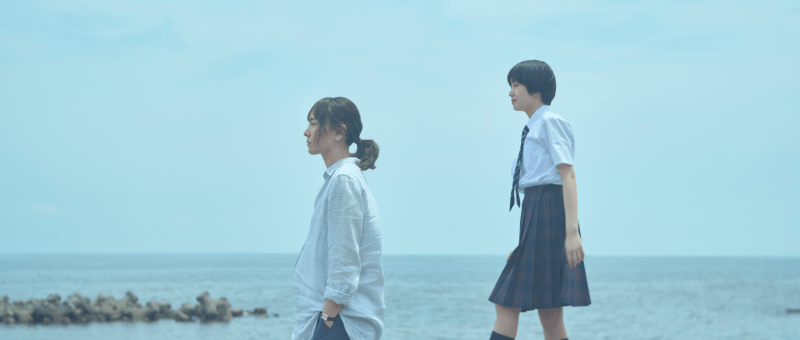
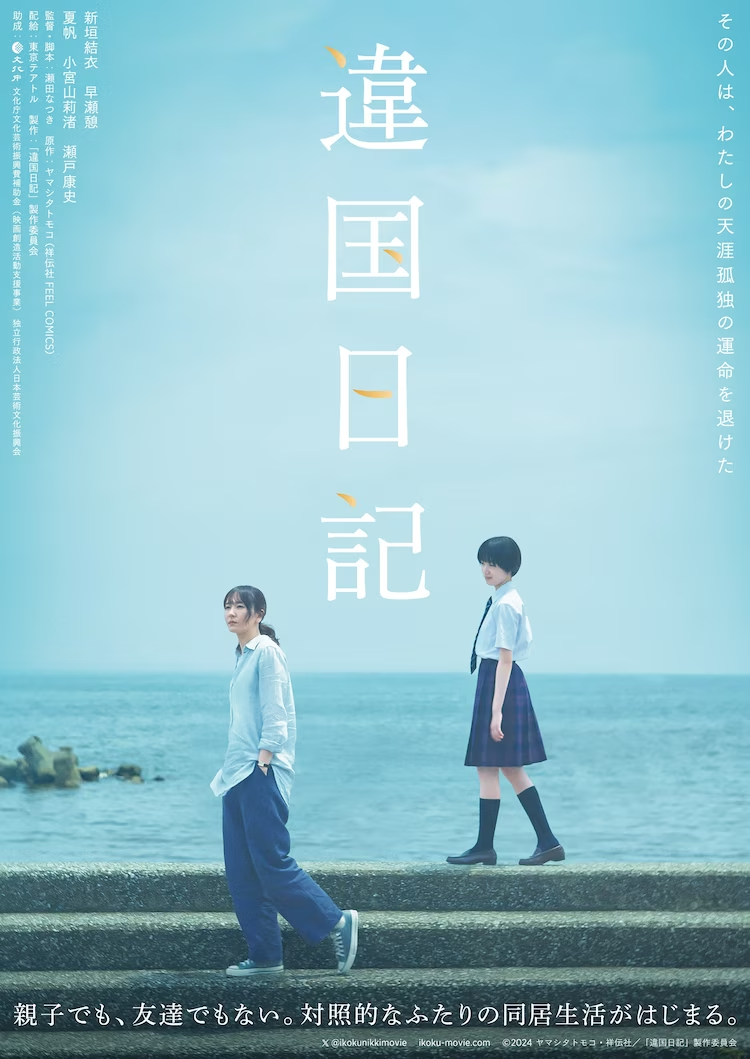
Worlds Apart (違国日記, Natsuki Seta, 2024)

Adapted from the manga by Tomoko Yamashita, Natsuki Seta’s quietly empathetic drama Worlds Apart (違国日記, Ikoku Nikki) eventually reveals the private lonelinesses and hidden sorrows that everyone has which isolate them from others. The film’s Japanese title plays on a homonym for the word for “foreign country” instead using the character for “different” which in itself suggests each person is an entire world often unable to make contact or be fully understood by those who cannot after all ever travel there. 

Perhaps that’s something most people feel every once in a while but becomes acutely obvious to 15-year-old Asa (Ikoi Hayase) when her parents are killed in a surreal traffic accident in the film’s opening scenes. She sits struck dumb and vacant at the funeral, having no idea what’s going to happen to her now while other relatives crassly describe her as having been cast adrift like an “unwanted barrel”. It’s this insensitive phrase that seems to drive her aunt Makio (Yui Aragaki), a novelist, into an impromptu decision to offer to take her in though they had only met briefly long in the past and had no real relationship with each other. Makio had been estranged from her sister for many years and never makes any attempt to disguise her utter loathing and resentment towards her for having been so cruel and judgemental when they were children. 

It’s refreshing, in a way, that the film doesn’t encourage her to change her feelings after her sister’s death. She doesn’t discover another side to her through bonding with Asa nor are her feelings invalidated much as Asa originally tries to make her like her mother as a means of reclaiming her. In fact, what Makio does is normalise whatever way Asa is feeling telling her at the hospital when forced to identify her parents bodies that it’s alright not to know how she feels. The two sisters were it seems very different, though the grandmother eventually offers an explanation that Makio’s sister had once been seriously ill and therefore unable to live a “normal life” which might explain why she was so enraged by Makio’s decision to chart her own course and wilfully spurn conventionality. 

These are also hints to the hidden world contained with the diaries Asa’s mother left behind to opened when she graduated high school. Makio wrestles with whether or not to pass the notebooks on and when, unsure if Asa is ready to receive the knowledge that might be inside them. Though she settles in to Makio’s home quite comfortably, Asa keeps her grief and occasional bouts of resentment to herself. Seta often frames her as standing alone in vast empty spaces or total darkness, isolated and lonely, now displaced by her liminal status no longer anybody’s daughter but not quite independent. 

Yet this isolation also blinds her to that of others. She doesn’t quite pick up on it when she clumsily attempts to talk about boys with her best friend Emily (Rina Komiyama) who directly tells her she has no interest in them and deflects the question when she asks if she likes girls instead. Emily is also lonely and isolated in feeling anxious to reveal her sexuality to Asa who in any case reacts clumsily when she eventually does. A similar thing happens with a girl in their class who studied hard to apply for a special programme only to be told the organisers are looking for a male student because it requires “physical strength,” while Asa also seems to develop a fascination with a bass player in the school music club who declines an offer to collaborate because she doesn’t want to get her hopes up only to be disappointed in the end. 

Makio hadn’t previously wanted to share her life, separating from an old boyfriend she still seems attached to out of an apparent fear of intimacy but nevertheless opens herself to Asa in deciding to respect her as an adult giving her agency over her own choices along with good, empathetic advice while simultaneously being clear that she doesn’t know if she can come to love her given the depth of hatred and resentment she bore towards her sister. But what the pair of them realise is that good or bad they can each share their memories rather than being forced into a frosty silence even if as Makio points out Asa will never understand her hurt and she will never understand Asa’s loneliness. Gentle and wholesome, the film ironically lays bare how opening up to others can in fact expand the world inside you instead filling the space rather than leaving you isolated inside it and returning light to a world that might otherwise have seemed dark and lonely.


Worlds Apart screened as part of this year’s Camera Japan.

Original trailer (no subtitles)

(Ab)normal Desire (正欲, Yoshiyuki Kishi, 2023)

There’s a pun embedded in the Japanese title of Yoshiyuki Kishi’s heartfelt drama (Ab)normal Desire in that first character in the word for “sexual desire” (seiyoku, 性欲) has been replaced by one that can be read the same but has the meaning of “correct”, or “proper”. But “normal” is also relative construct that implies conformance with the majority even if that may not actually be the case. As one of the protagonists later remarks “everyone is pervy” though they themselves feel such a degree of shame and otherness that it’s largely prevented them from living any kind of life at all.

In that sense it may be hard to understand why a fetish for water would invite such severe self-loathing in that it causes no harm to others if admittedly resulting in ridicule if exposed. Then again, society can be a fierce watchdog. Department store shop assistant Natsuki (Yui Aragaki) is taken to task by her pregnant colleague who refuses to take her seriously when she says she’s not really interested in getting a boyfriend before giving her a lecture about her biological clock. Though Natsuki appears uninterested in her vacant prattling, the woman later becomes upset and harshly tells her that she was only trying to be “nice” because she felt “sorry” for her and that making people be nice to you in this way is actually a form of harassment which, whichever way you look at it, is some particularly twisted logic.

Her alienation seems to stem from the fact that she feels “abnormal” and that her fetish for water is a part of herself she must be careful to hide. Her parents watch a news report on Tokyo Rainbow Pride and marvel at the idea that there are now choices other than marriage and children but even among the young there remains confusion and shame amid an inability to reconcile the seemingly opposing concepts of “normality” and “diversity” as they struggle to define themselves. A plan to have a male dancer who usually dances in a masculine style dance in a more feminine way backfires when he points out that asking someone to dance in a way they don’t want to doesn’t really do much to advance “diversity”.

But diversity isn’t considered an ideal by all and parents of young children find themselves confused and conflicted when their kids begin to reject conventionality at an early age by asking to withdraw themselves from school and instead focus on other kinds of education that align with their interests. Challenged by his wife about why he never listens to their son’s concerns, prosecutor Hiroki (Goro Inagaki) replies that he should “just be normal” and later describes people who are “unable to live normal lives” as bugs in the system which must eradicated. A symbol of lingering authoritarianism, Hiroki is an intensely conservative man obsessed with properness who thinks it’s his job to decide which crimes everyone is guilty of rather than make any attempt to understand the world around him outside of binary terms like right and wrong or normal and abnormal. When his assistant passes him information on fetishes as a potential explanation for the case of a man who repeatedly steals taps, he simply rolls his eyes and dismisses it.

Yet he perhaps has his own fears and internalised shame as evidenced by his outrage on discovering that another man has been coming to the house to help his wife with tech setup for their son’s new outlet in livestreaming and not only that, he was able to blow up the balloons that Hiroki himself failed to inflate. It’s his rigid authoritarianism that eventually alienates his wife and son who come to see him only as an oppressive bully unable to accept anything that differs from his own definition of “normal”. Finally, he’s the one who is isolated, imprisoned by his own repression and lack of understanding or unwillingness to accept those around him.

Even so, despite its positive messages that no one should feel themselves alone or that society has no place for them the film muddies the waters by introducing fetishes that are necessarily problematic in that they cause harm to others who do not or cannot consent and could not and should not be accepted by mainstream society though oddly those that have them seem to feel less shame only fearing being caught because acting on their desires is against both moral and judicial laws. In any case, in discovering togetherness, that they are not alone, those who feel their desires to be “abnormal” can begin to ease their loneliness and find a place for themselves in an often judgemental world.


(Ab)normal Desire screened as part of this year’s Toronto Japanese Film Festival.

Original trailer (English subtitles)

Code Blue: The Movie (劇場版コード・ブルー –ドクターヘリ緊急救命–, Masaki Nishiura, 2018)

Code Blue posterThe common complaint plaguing popular Japanese cinema is that it’s increasingly dependent on existing source material, not in only the prevalence of manga adaptations, but the continuing influence of TV drama. Ever since the massive success of the Bayside Shakedown franchise, big screen outings for popular series have been a mainstay of the Japanese film industry, the problem of course being, from a certain point of view, that their nature as an extension of an already existing narrative universe makes them not only impossible for export but also a potential audience turn off to those not already invested.

Code Blue is itself comparatively unusual in being one of the few Japanese TV dramas to head into multiple series. That being so, a movie was something of an inevitability, but like many medical shows which generally adopt a case of the week formula, Code Blue thrives on finely crafted characterisation. Rather than jump this obvious hurdle, director Masaki Nishiura opts for the time-honoured solution of a brief flashback highlighting the key events of the previous three seasons and otherwise tries to avoid too many references to past events. It remains true however that viewers already acquainted with the Doctor Heli team will be best placed to navigate the complex interpersonal relationships informing the rest of the action.

Those would be, chiefly, the unexpected return of aloof doctor Aizawa (Tomohisa Yamashita) who is about to take up a research position in Toronto, while Dr. Hiyama (Erika Toda) is also preparing to follow her dream by moving on to head up the perinatal department at a nearby hospital. As is stressed in the opening sequence for those who might not be aware, the Doctor Heli program does not airlift passengers by helicopter but drops doctors into emergency situations where they are most urgently needed. Aizawa’s arrival coincides with the forced return of a flight originally heading to Vietnam which experienced heavy turbulence with multiple casualties needing evacuation from the plane or treatment on the ground. One such patient turns out to be an especially difficult case seeing as she has not only sustained serious injuries, but is also suffering from stage 4 stomach cancer and was trying to take a last vacation in her final days.

The Doctor Heli team are deeply touched by Tomizawa’s (Kasumi Yamaya) plight, knowing that though her injuries would otherwise not be regarded as serious, she may well end up spending her remaining time in their ICU rather than doing the things she wanted while she could. A talk with her parents reveals a painful breakup and canceled wedding, neatly echoing a conflicted nurse desperately trying to get out of the, in her view unnecessary, wedding ceremony her fiancé has organised. Tomizawa’s former boyfriend (Mackenyu) eventually returns and apologises, hoping to make up for lost time, but she isn’t sure she should let him, not only because he let her down by running away, but because she fears that if she does she might prevent him moving on with his life after the inevitable occurs.

Despite being skilled at fixing the human body, the doctors confess they are often at a loss when it comes to the human heart. They struggle to communicate their true feelings to each other, keeping their minds on the job with well practiced practicality, but are all too aware of the precariousness of being alive. What they all advise is that it’s best to let the people you love know your true feelings because you never really know if there will be another opportunity. Dependable leader Shiraishi (Yui Aragaki) can’t quite find the words to express her feelings for her soon to be departed best friend Hiyama, while she struggles with her essential “awkwardness” yet has a knack for the good kind of “direct”, always knowing the right words to help people feel better.

Aizawa, who had no family of his own, is stoical and patient with those of others, comforting a young man who’s gotten into a car accident with the abusive father he’d tried to reconnect with, letting him know that there was nothing wrong in his rage or resentment but also nothing wrong in his desire to tell him that he has become a fine man on his own and that his father’s violence has not destroyed him. Likewise, a young nurse, Futaba (Fumika Baba), gets an unexpected shock when her older sister brings their alcoholic mother (Rino Katase), from whom she’d become wilfully estranged, into the hospital after she fell and got a kitchen knife stuck in her head. Aizawa tells her that she did what she needed to do and shouldn’t feel guilty about “abandoning” her mother, but also gives her the space to reconnect with her as she begins to understand a little of her mother’s suffering.

You can’t deny that Code Blue: The Movie (劇場版コード・ブルー –ドクターヘリ緊急救命–, Gekijoban Code Blue Doctor Heli Kinkyu Kyumei) is basically a two hour TV special, shot exactly like the TV series with seemingly no increase in budget or production values, but it topped the Japanese box office and obviously provided fans with exactly what they were looking for. A little less melodramatic than might be feared, the series’ big screen finale (?) is unabashedly emotional but celebrates as much the close bonds between the Doctor Heli team as those with their patients as they face the unthinkable time and again but get through it together.


Teaser trailer (no subtitles)

https://www.youtube.com/watch?v=nhbuZpcdHTo

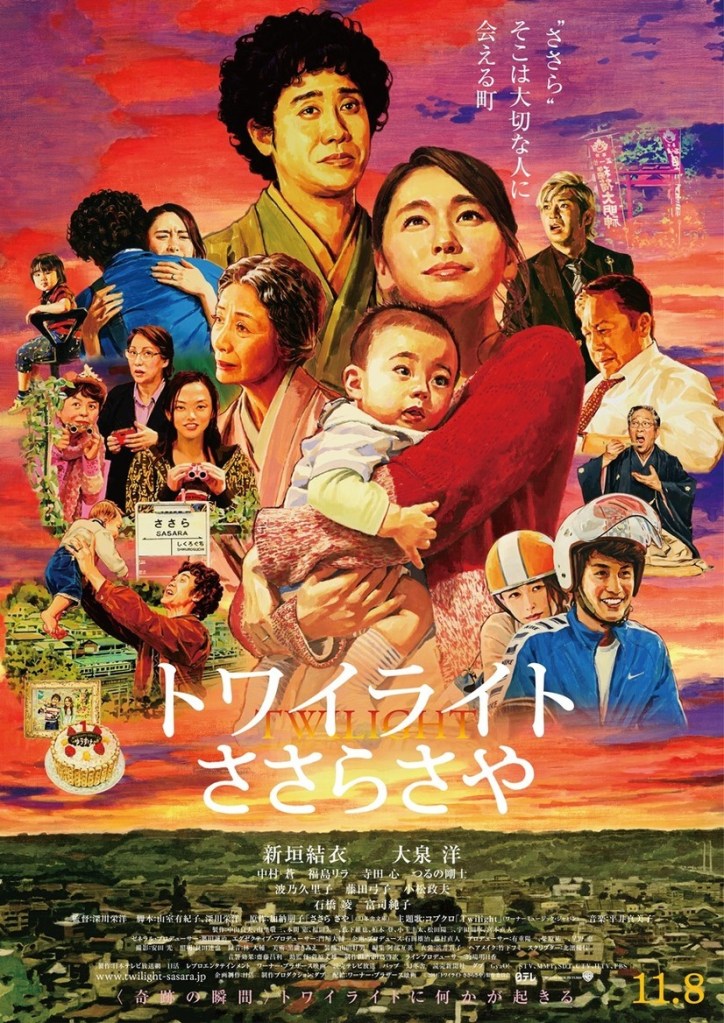
Twilight: Saya in Sasara (トワイライト ささらさや, Yoshihiro Fukagawa, 2014)

Japanese cinema has its fare share of ghosts. From Ugetsu to Ringu, scorned women have emerged from wells and creepy, fog hidden mansions bearing grudges since time immemorial but departed spirits have generally had very little positive to offer in their post-mortal lives. Twilight: Saga in Sasara (トワイライト ささらさや,  Twilight Sasara Saya) is an oddity in more ways than one – firstly in its recently deceased narrator’s comic approach to his sad life story, and secondly in its partial rejection of the tearjerking melodrama usually common to its genre.
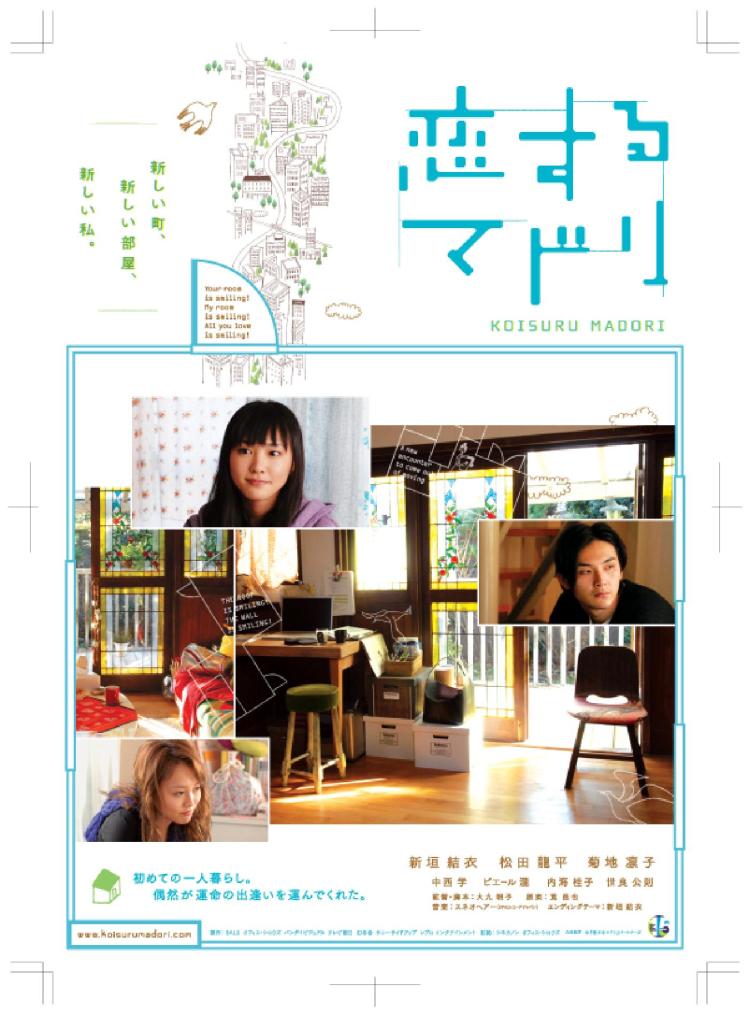
Unsuccessful Rakugo performer Yutaro (Yo Oizumi) met the love of his life during one of his sparsely attended recitations. Saya (Yui Aragaki) was the only one laughing but even she didn’t think he was very funny, she just liked him because he was trying so hard. Eventually, he married her and they had a lovely baby boy but before little Yusuke was even a year old, Yutaro got himself killed in a random traffic accident. Such is life. Still, knowing that Saya had no family of her own and having grown up without a father himself Yutaro feels even worse about leaving his wife and son all alone in such a stupid way. Therefore he decides to delay going to heaven so that he can stick around to help Saya in whatever way he can.

A crisis occurs when Yutaro’s estranged father (Ryo Ishibashi) suddenly turns up at the funeral laying claim to little Yusuke with no thought to the additional emotional ramifications of trying to snatch a baby from a grieving mother right over the coffin of her husband. Possessing the body of another guest, Yutaro manages to convince Saya to run leading her to retreat to her late aunt’s house in the peaceful rural village of Sasara.

Though the premise is a familiar one, Fukagawa neatly sidesteps the more maudlin aspects for a broadly comic approach in which Yutaro recounts the story of his death as if it were a rakugo tale. Possessing various people along the way, Yutaro does indeed help Saya adjust to her new life but eventually discovers that perhaps the reason he hasn’t passed over was one of the past rather than one of the future.

Saya’s arrival in Sasara gets off to a bad start – essentially forced out of the city to escape Yutaro’s father Saya causes unexpected trouble when it emerges that the corrupt local estate agent has been letting out her aunt’s house without telling her. If that weren’t enough, some of her valuables are almost stolen by a local delivery boy but, this being an ageing village, children are a rarity and so little Yusuke quickly captures the hearts of the neighbourhood grannies who eventually become Saya’s friends and staunch supporters. Familial problems are the name of the day from childlessness to children (hopefully) writing down possible signs of dementia or just leaving town and not coming back. Yutaro also helps Saya improve the life of another young woman with a son who doesn’t speak by allowing him to finally voice what he really feels, adding to the circle of female help and support which becomes the family Saya had always longed for.

Orphaned at a young age, raised by her grandmother until she died and having lost her only living relative in her aunt a few years previously, Saya had always wondered what it felt like to have a real family of her own. Yutaro had also lost his mother at a young age through illness and was estranged from his father who refused to visit her even on her deathbed. Yutaro’s untimely death adds to Saya’s ongoing sorrows but also ends the beginnings of the happy family they’d begun to build with each other. As it turns out, Yotaro’s limbo is less about his son and more about his father as he gets a last opportunity to bond with his outwardly harsh and cruel dad and come to a kind of understanding about fatherhood in hearing his side of the story. Life is too short for grudges, and even spirits sometimes need to give up the ghost so that the air can rest a little lighter.

Though there are the expected moments of sadness as Yotaro realises the number of people he can possess is dwindling and his time with Saya will be limited, Fukagawa keeps things light and whimsical with a kind of small town quirkiness aided by Oizumi’s spirited delivery. Adding in frequent rakugo references complete with painted backdrops and sound effects as well as a repeated motif which sees the little town remade as a diorama model, Twilight: Saya in Sarasa has a pleasantly old fashioned feeling which only adds to its wholesome emphasis on an extended family of community coupled with the continuing presence of Yutaro watching from somewhere on high. Warm and funny if a little lacking in impact, Twilight: Saya in Sasara is a rare instance of a ghost bringing people together in love and harmony through helping them get closer to their true emotions but one that is also keen to emphasise that we’re all only here for an unspecified time – better not to waste it with silly things like grudges.


Original trailer (no subtitles)

Tokyo Serendipity (恋するマドリ, Akiko Ohku, 2007)

tokyo-serendipityCities are often serendipitous places, prone to improbable coincidences no matter how large or densely populated they may be. Tokyo Serendipity (恋するマドリ, Koisuru Madori) takes this quality of its stereotypically “quirky” city to the limit as a young art student finds herself caught up in other people’s unfulfilled romance only to fall straight into the same trap herself. Its tale may be an unlikely one, but director Akiko Ohku neatly subverts genre norms whilst resolutely sticking to a mid-2000s indie movie blueprint.

Yui Aoki (Yui Aragaki) is in search of a new apartment. She had been living in an unusual old fashioned building with beautiful stained-glass windows, but her sister’s in line for a shotgun marriage and if that weren’t trouble enough the apartment is set for demolition. Living on her own for the very first time, Yui moves into a smallish modern apartment in a building filled with various eccentric residents.

One in particular catches Yui’s attention – her mysterious upstairs neighbour, Takashi (Ryuhei Matsuda). By coincidence, Yui ends up working with Takashi at his lab where she learns he’s still broken up about a girlfriend that left him flat without even a word of goodbye. Remembering she left something behind at her old place she ends up meeting the new tenant, Atsuko (Rinko Kikuchi), and striking up a friendship with her over a shared interest in homemade furnishings. The coincidences continue as Yui discovers she and Atsuko have accidentally swapped apartments! Through this odd chain of events Yui also figures out that Atsuko is Takashi’s long lost love, but is hopelessly trapped in the middle, unsure of whether she should reveal this information to either party. Of course, her developing feelings for both Atsuko and Takashi place her in a series of difficult positions.

Tokyo Serendipity was sponsored by an interior design company and so it’s no surprise that the film makes quite a lot out of its production design. The fashion choices are very much of the time and favour quirky, individual aesthetics rather than an Ikea-esque off the peg minimalism. The original apartment which is soon to by bulldozed is an artist’s dream with its hidden fireplace, old fashioned furniture, stained glass windows and well lit interior. Broadly inspirational in this regard, it’s a thrifty kind of homestyle which prizes recycled materials and repurposed furnishings as opposed to the trendy high price surroundings of other parts of the city.

Like many other films of its kind from this era, Tokyo Serendipity adopts a natural, if occasionally surreal, approach filmed with a deadpan camera. The film’s one repeated large scale gag – a group of lucha libre wrestlers who work as removal men during the day, is a good example of this as their not improbable existence somehow seems oddly funny. They drop things but only in the ring – so they say, each of them well built men treating Yui’s precious goods as daintily as children using real china at a tea party. The humour could best be described as subtle, yet does succeed in raising a smile here and there.

Smiling turns out to be the film’s main message. In fact Ohku even states that her intention in making the film was solely to leave people with a smile of their faces – something which she broadly achieves. Atsuko, a slightly lost middle aged woman, claims she became an architect as she wanted to build a house with everybody smiling – something Yui echoes as she comes to a few conclusions of her own nearing the end of the film. However, Atsuko’s desire for harmony in all things is one she’s never been able to fulfil as childhood abandonment has left her with lingering commitment issues. Simply put, she always leaves first. Interestingly enough, Yui’s burgeoning romance takes a backseat to her growing friendship with Atsuko and a half-formed acknowledgment of middle-aged regrets she’s still to young to fully understand.

Despite amassing almost all of the conventional romantic comedy/drama motifs from a last minute dash to the airport and misdirected letters to an embarrassing scene where a relative is mistaken for a lover, Ohku rejects the romantic model as her central character wisely recognises exactly where she stands in this awkward situation and makes a sensible decision motivated by the best interests of both of her friends. Straightforwardly indie in style, Ohku keeps the quirk on a low simmer but manages to make her heightened reality seem perfectly natural. An unusual coming of age film trapped inside an indie romance, Tokyo Serendipity is like one of the tiny hidden spaces the film seems to like so much, though upon opening the door some will be more impressed with what they find than others.


Original trailer (no subtitles)

https://www.youtube.com/watch?v=9ymV8oQhpJs