Village of Eight Gravestones (八つ墓村, Yoshitaro Nomura, 1977)

Can a curse end up being “real” just because people believe in it? Unlike many of his other crime films which were adapted from the novels of Seicho Matsumoto, Yoshitaro Nomura’s The Village of the Eight Gravestones (八つ墓村, Yatsuhaka-mura) edges towards the idea that the curse at its centre is real in a more literal sense with grimly grinning samurai standing on their hilltop and rejoicing in the fulfilment of the 400-year campaign of vengeance, but also hints at a toxic legacy of enmity and warfare along with a karmic sensibility found in many of Seishi Yokomizo’s other mysteries in which a noble family must account for the way it gained its riches. 

In this case, the Tajimi family which now owns most of the village became prosperous after betraying a band of eight displaced samurai during the Sengoku era. Fleeing the battlefield in defeat, the samurai had originally frightened the villagers when they came down off the mountain but were in actuality non-threatening, simply settling down to a life of farming and peaceful co-existence. But some members of the community became greedy and accepted the promises of riches from a rival clan for the service of eliminating the eight samurai. Cruelly inviting them to the local festival in what seemed like a moment of acceptance as members of the village, they betrayed them killing some by poison and others by the sword. 

Now, hundreds of years later, the Tajimi family is on the verge of extinction with the eldest daughter unable to bear children and the oldest son bedridden and soon to die which explains why they’re keen to track down long lost grandson Tatsuya Terada (Kenichi Hagiwara) who was presumably adopted by his stepfather and bears his name after his now deceased mother Teruko left the family to escape her abusive relationship with half-mad husband Yozo (Tsutomu Yamazaki). Surprisingly, it’s his maternal grandfather Ushimatsu Igawa (Yoshi Kato), who comes looking for him only to drop dead as soon as they meet of apparently strychnine poisoning in the first of several murders that all echo the ancestral curse placed upon the Tajimi family by samurai leader Yoshitaka Amako (Isao Natsuyagi) as he died. 

Like many of Nomura’s films this too features a journey only this one is in a sense into the past as Tatsuya ventures to the rural heart of Japan hoping to see his mother’s birthplace and satiate his curiosity about his birth father. What he discovers there is obviously a lot of what seems like unfounded local superstition along with a degree of unpleasant stigmatisation as he’s immediately accosted by a shamaness who calls him a murderer to his face for his connections with the Tajimis to whom he feels himself a stranger, and then is later blamed for all the weird goings on which only began after he arrived. The film uproots itself from the original 1948 setting to the present day which perhaps lessens the impact of its central theme about the legacy of violence and betrayal that is stoked by war and enmity along with the destructive capacity of human greed that encourages some to betray others for their own advancement only to discover that success founded on human sacrifice will never get you very far. 

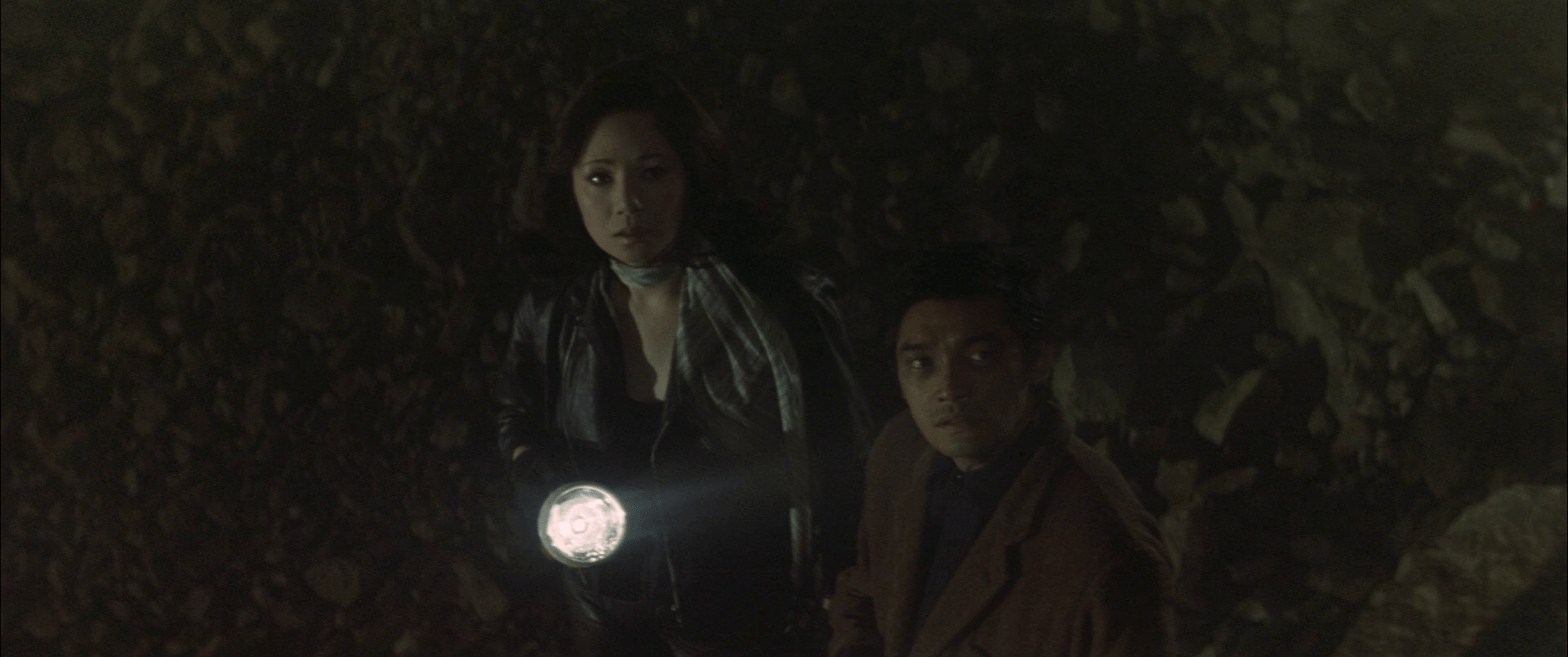
Ironically in a more real world sense, it turns out to be greed that motivates these present crimes with the villain hoping to usurp the Tajimi family fortune and utilising the curse as a means to do so. Much of the action takes place in a network of underground caves filled with glowing green lakes where the villain eventually takes on demonic proportions, face ghostly white with yellowish eyes and a crazed expression that echoes those of the samurai as they died. Nomura hints at the sense of ancient dread in this very old place while also surprisingly bloody in his flashbacks which feature scenes of shocking violence including severed heads one of which seems to lick its lips and stare intently even while on display. This being a Kindaichi (Kiyoshi Atsumi) mystery, the famous detective does indeed appear though remains a background presence quietly solving the crime behind the scenes while Tatsuya searches for the key to his own history and an escape from this legacy of violence and destruction in reclaiming his own identity.


Original trailer (no subtitles)
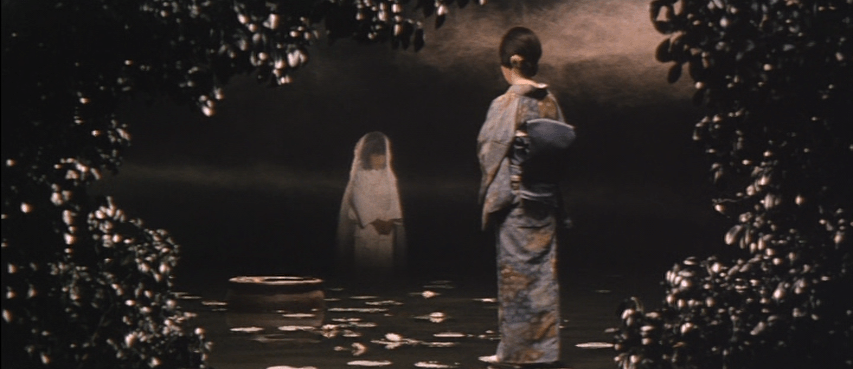
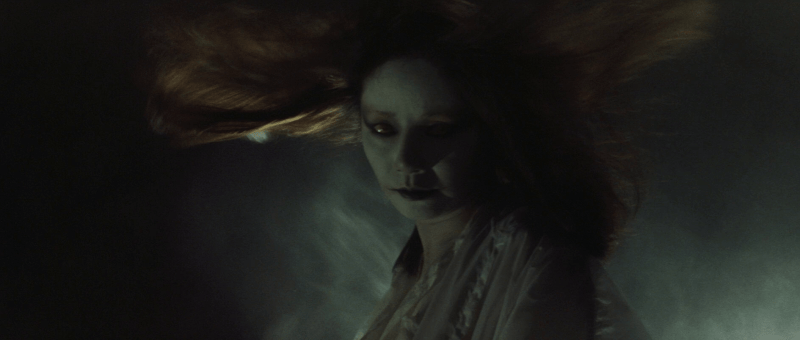
The Possessed (妖婆, Tadashi Imai, 1976)

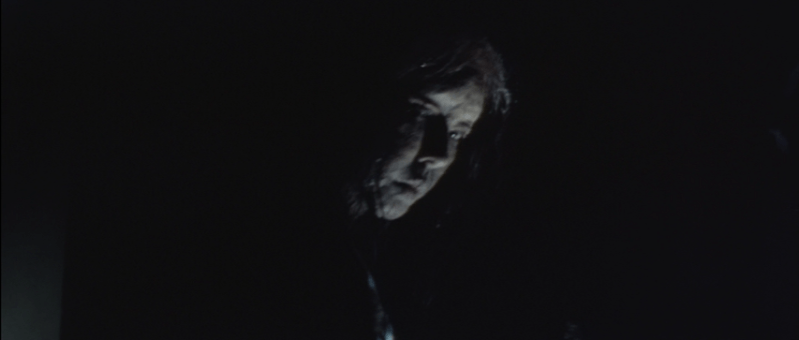
Shinto priests, black magic, and demonic possession. As the opening voiceover of Tadashi Imai’s The Possessed (妖婆, Yoba) remarks, you can hardly believe that such things could happen in the modern world alongside cars, trains, and telephones yet the tale we’re about to be told begins in 1919. Based on a story by Akutagawa, the film is however less a contemplation of ancient superstition amid rising modernity than the destructive patterns of class and patriarchy which conspire against the lives of two women who had once been good friends. 

In 1919, Shima (Machiko Kyo) marries Shinzo (Shinjiro Ehara) who has taken her name and become the presumptive heir of her family. Everyone at the wedding remarks on what a good catch he is, adding almost as an after thought that Shima seems happy about it too. The problem is that Shinzo is repeatedly unable to consummate the marriage. Part of this seems to be down to his wounded masculinity in having married into the family. He resents being under the thumb of his father-in-law along with the rumours that he only married Shima for her money even though this appears to be exactly what he has done. Perhaps further humiliated by his inability to perform, Shinzo tells Shima that it’s her fault because there is something wrong with her body that prevents him from becoming sufficiently aroused. Being a sheltered woman of the Taisho era, Shima wonders if her husband has a point and visits a doctor to find out but as expected he tells her there’s nothing at all wrong with her and it’s most likely Shinzo’s performance anxiety that is to blame. 

However, when her cousin Sawa’s (Kazuko Ineno) comb is found inside Shinzo’s kimono sleeve, the family begin to realise that the problem is he prefers her. He later admits as much and reveals that he’s planning to move closer to the family’s goldmine in Hokkaido and install Sawa in a house there as his common law wife with Shima left behind as a spouse of symbolic value. Shima has already felt herself haunted, but it’s at this point that the family brings in a Shinto priest who explains that Shinzo is possessed by an evil spirit though also giving the more rational advice that she should probably divorce him. Shima is forced to endure a strange ritual including purification by waterfall, but is also sexually assaulted by the randy priest though it it’s not completely clear that she fully realises what has happened to her. 

The implication is that the family treated Sawa as a kind of poor relation they trotted out to keep Shima company because she was an only child. Having grown resentful of Shima’s class privilege, Sawa’s jealousy manifested as covetousness that made her intent on taking whatever Shima had. She too later resorts to shamanistic black magic, fearful that Shima bears her a grudge for ruining her life and hoping to neuter any dark energy that she might be emanating in order to protect her teenage daughter Toshi (Miki Jinbo) who, ironically, has been betrothed to the son of a kimono shop named Shinzo (Taro Shigaki). 

Sawa never married and bore her child out of wedlock. She implies that she depended on men for financial support but never elaborates further. Shima, meanwhile, has been able to build an independent life for herself as a well-respected tailor. “It’s not normal for someone to suffer this much” a shamanically-inclined midwife later tells her when she too becomes pregnant out of wedlock but loses both the child and the man. The boot is perhaps on the other foot, Shima envies the life Sawa has with the one thing that will always be denied her, a child of her own. The midwife had once again told her that she was possessed, this time by the vengeful spirit of her lover’s daughter with his legal wife she fears may have been drowned deliberately by her mother out of jealousy. 

Shima is given a talisman of beads from the goddess of mercy, Kanon, and told that she can have what she wants if she prays hard enough, but Sawa is told the same thing and ends up going too far with the help of a shamaness praying to Basara Okami who later affirms that Sawa’s request comes with a price for the god wants Shima as a human sacrifice which is not really what Sawa had in mind. There is perhaps something symbolic in Shima’s gradual wasting away, becoming old before her time in her loneliness and sorrow (she is only supposed to be 33 at the film’s conclusion, actress Machiko Kyo was 52 at the time) even if she were not having the life force sucked out of her by a supernatural entity, though both women eventually pay a heavy price for their jealousy set against each other by a fiercely patriarchal and classist society which forces them to compete for husbands and standing. 

Imai’s photography is noticeably eerie if occasionally surreal as in the frequent and increasing sight of frogs, usually sign of good fortune or fertility but here ominous harbingers of supernatural dread in league with dark shamanistic forces. As the voiceover admits, it’s difficult to believe that these primitive ideas can exist side by side with the motor car but then again jealousy is as old as time itself and unlikely to disappear from the human psyche anytime soon even if in this case it could have been avoided if only the world were a little more equal. The film’s conclusion suggests it may now be, in a way, with a love match in the younger generation bringing the cycle of envy and resentment to a close even if the vengeful ghost of Shima may still be lurking somewhere in the shadows. 


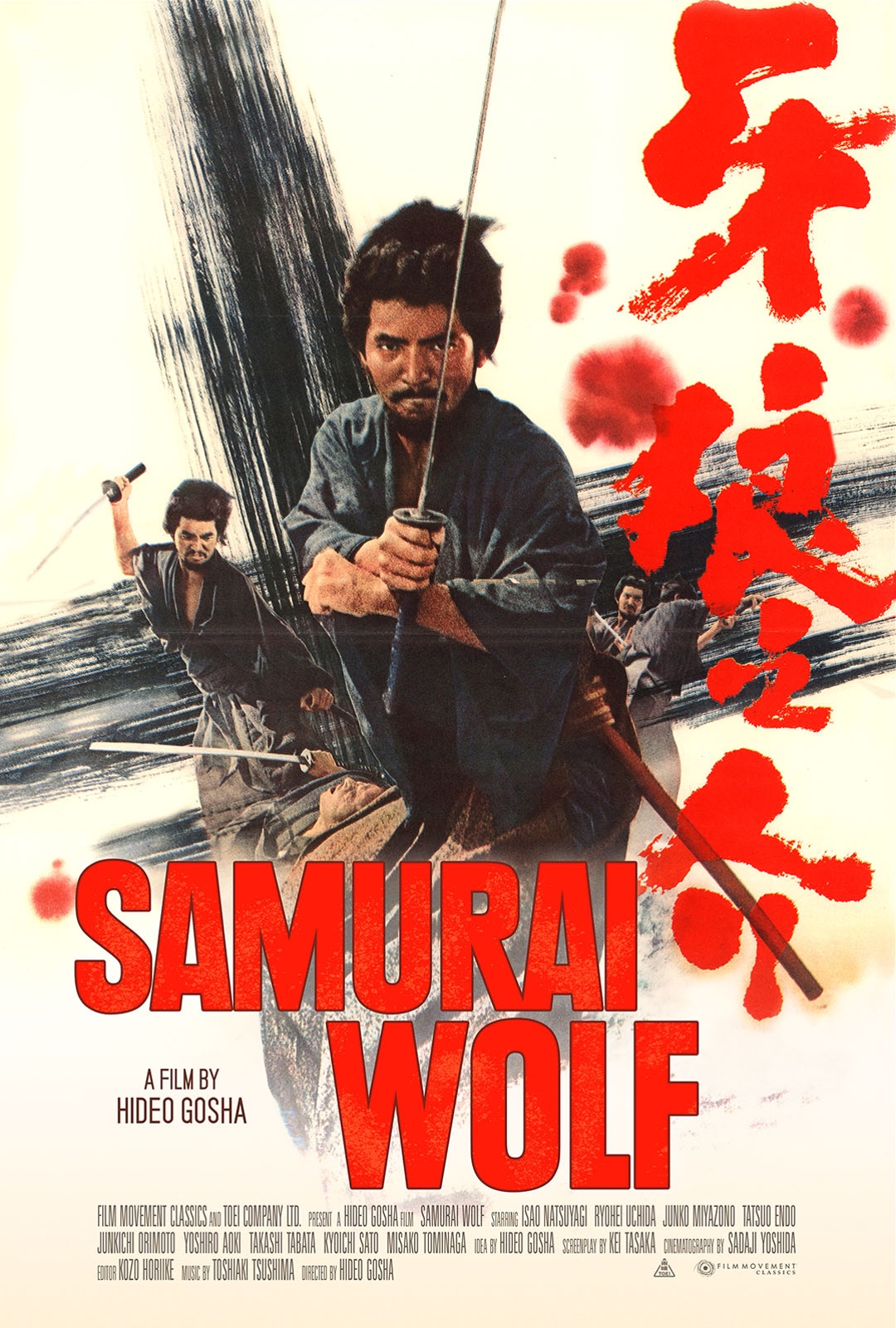
Samurai Wolf (牙狼之介, Hideo Gosha, 1966)

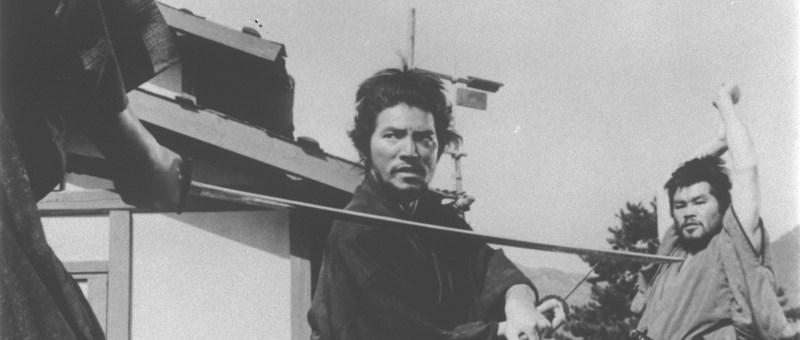
A cheerful ronin with strong moral fibre finds himself squaring off against a nihilistic assassin and a corrupt retainer/postmaster in Hideo Gosha’s new wave chambara Samurai Wolf (牙狼之介, Kiba Okaminosuke). Where many jidaigeki of the age would follow the antagonist Sanai (Ryohei Uchida), Gosha’s focusses on the figure of a man with wolfish appetites who is otherwise unaffected by the infinite corruption of the world around him and in that at least unwilling to submit himself to the dog-eat-dog mentality of late Edo-era society. 

Wandering samurai Kiba Okaminosuke (Isao Natsuyagi) explains that he got his name because often he bares his fangs and is known as the Furious Wolf, yet as much as the ferocity of the opening titles might bear that image out he is not cruel or avaricious but measured and honest. After wolfing down an exorbitant amount of food prepared by an old woman at a way station, he announces that he can’t pay. The old woman panics and we wonder if he might become violent or even kill her, but Kiba simply offers to pay in kind fixing the old lady’s leaky roof and chopping a supply of wood much to her surprise and gratitude. It seems, the wolf always pays his way. While there, he witnesses a trio of bandits attack a postal cart and kill the men who were pulling it. He retrieves the bodies along with a runaway horse and takes them back to the outpost they came from but the guard there is disinterested claiming that, as they died on the road and not in the town, it’s not his business. As Kiba soon discovers, the guard is in league with a corrupt lord, Nizaemon (Tatsuo Endo), who is an official messenger for the shogun but wants to take over the public postal service which is why he’s terrorising the postmistress, Chise (Hiroko Sakuramachi), with the intention of getting his hands on the relay outpost. 

There is something a little ironic in the fact that Ochise is blind while Nizaemon’s chief assassin is deaf and mute, both of them excluded from mainstream society and looking for support but finding it in opposing directions. Formerly a samurai woman, Ochise wants to hang on to the outpost because it has become her place to belong while resenting the incursion by corrupt lord Nizaemon who only wants it for the potential to control the cargo route along with raising the rates to use it to exorbitant heights. Shortly after Kiba tries to take out the assassins, a bunch of government inspectors turn up to complain about the missing merchandise while backing Chise into a corner by forcing her to accept the liability for transporting a large sum of gold coins. Kiba originally says he won’t help because he doesn’t want to risk his life for people he doesn’t even know, but of course later agrees in part on the promise of a significant return but also because he likes Chise and resents the kind of corruption men like Nizaemon represent.

On the other hand, his humanity is mirrored in his antagonist, hired gun Sanai who fetches up to help Nizaemon stop Kiba and take over the outpost. Sanai cynically tells him, that in five years’ time Kiba will be no better than he is, if he doesn’t kill him first. Kiba rejects the claim but it’s easy enough to see how someone could be corrupted by the realities of Edo-era society. Sanai later reveals that he fell in love with a samurai woman and eloped with her, a fierce taboo given the class difference between them, and later fell into his present state of nihilistic despair when she was taken from him quite literally betrayed by the social order. But Kiba seems different. He is not naive and has no expectations of human goodness yet remains cheerful and in his own way honest. When a young woman comes to him with her life savings and tells him that Sanai is the man whom she’s been waiting for to gain her revenge, he tells her to keep her money because he’s going to end up fighting him anyway. Likewise, when he realises someone he trusted has betrayed him, he tells them that he understands why they did it and bears them no ill will it’s simply the way things are only he suspects they will regret that others have died because of it. Even in his final confrontation with Sanai, he notices that his opponent is injured and ties one of his own hands to his belt to ensure it will be a fair fight. 

In any case, it seems that Sanai’s morally compromised existence is about to catch up to him with several other players intent on taking his life aside from the sex worker who longed to avenge the deaths of her family murdered during a massacre of peasants killed for standing up to a cruel landowner. A female gang leader also wants revenge for the death for her boss, while the cynical madam at the local brothel offers to team up with him to steal the gold from under Nizaemon’s nose. It seems that Sanai is a man already dead, having long abandoned the lovelorn boy he was for the nihilistic existence of a wandering assassin only to be confronted with the ghosts of the unattainable past. This world is indeed rotten, but Kiba has somehow managed to rise above it embracing his wolfish appetites in more positive ways while opposing injustice wherever he finds it. Much more avant-garde than much of his later work would be, Gosha makes great use of slow motion and silence broken only by the reverberating sound of clashing swords and hints at the meaninglessness of a life of violence in an agonisingly haunting death scene in which a bloodstained man turns and falls as if the air were suddenly leaving his body. In the end all Kiba can do is turn and walk away, on to the next crisis on the highways of a lawless society.


Samurai Wolf opens at New York’s Metrograph on Dec. 26 as part of Hideo Gosha x 3

Original trailer (English subtitles)

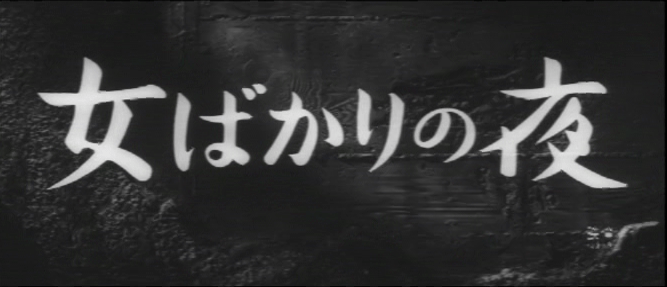
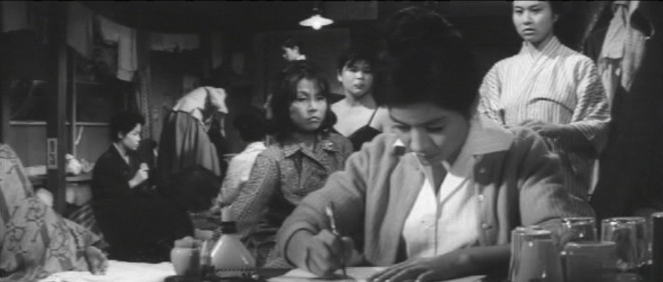
Girls of the Night (女ばかりの夜, Kinuyo Tanaka, 1961)

vlcsnap-2019-03-15-00h18m28s351

Working from a Keisuke Kinoshita script, Kinuyo Tanaka’s first film as a director, Love Letter, made a point of exploring the often hypocritical and contradictory attitudes towards women who had engaged in sex work or become the mistresses of American servicemen in the immediate aftermath of the defeat. For her fifth film, Tanaka returns to the same subject but this time adapting a novel by Masako Yana scripted by Sumie Tanaka (no relation) with whom she’d previously collaborated on The Eternal Breasts. Somewhat suggestively retitled Girls of the Night (女ばかりの夜, Onna Bakari no Yoru), Tanaka’s adaptation tones down the novel’s sensuality but dares to ask a series of subversive questions regarding female agency and sexuality in the rapidly changing post-war society.

Set in the contemporary era, the film opens with reportage-style voiceover and newspaper clippings highlighting the enforcement of the anti-prostitution laws of 1958. According to the voiceover, the red light districts of Japan may have all but disappeared but streetwalking and other forms of casual sex work are still very much a part of the post-war economy. In an attempt to bridge the gap between the old ways and new, those arrested by the police are divided into two camps – those deemed beyond “redemption” sent to prison, and the rest to reform centres such as the Shiragiku Protective Facility for Women which is where we find our heroines.

The reform centre itself is a fairly progressive place and much more forward looking that seen in the earlier Women of the Night though perhaps sometimes patronising even as it makes a strenuous attempt not look down on the women who enter its care. Our first entry into the facility is in the company of a similarly well meaning women’s association whose misplaced pity only reinforces their innately privileged position. They are as far from many of these women as it is possible to be and struggle to understand how it is possible that they found themselves engaging in a practice they find both shameful and degrading. Having got to know many of the women through trying to help them, the school’s headmistress Nogami (Chikage Awashima) and her assistant are better placed to understand even if they also apologise that many of the women in their care are of “low IQ” and fail to convey the kinds of pressures that many have been subject to from desperate poverty to bad family situations and abusive relationships.

Abuse and the trauma of abuse remains one of the barriers to the women moving on, as in the reason many of them found themselves in sex work was because of their relationship with an exploitative partner who either forced them to sell their bodies or left them with no other choice in order to support themselves through being unable or unwilling to work. Nogami, a compassionate and understanding woman, is at pains to insist that the reason many of these women see nothing wrong in sex work is that they have an insufficient level of self respect and value their bodily autonomy too cheaply in allowing others to buy and sell access to it without full consideration of everything that implies.

Then again, asked by one of her most promising cases, Kuniko (Hisako Hara), what is actually so “bad” about sex work, Nogami is forced to admit that she doesn’t know – only that it is now illegal and her job is to help these women live “honest” lives within law. It is difficult to evade the hypocrisy that Nogami is telling these women that they should exercise full agency over their bodies while simultaneously telling them what they shouldn’t be doing with them, but then for all the centre’s talk about “purity” Nogami herself is refreshingly frank and practical in her approach to helping these women towards reintegration into mainstream society in the assumption that that is something they would want rather than out of any quasi-religious ideas of moral goodness.

Shame and social stigma, however, become another barrier as Kuniko finds to her cost in her attempts to move on from the centre. At her first placement as a live-in assistant at a grocer’s, she is quickly outed by a nosy deliveryman already acquainted with the true nature of the Shiragiku centre. The exposure of Kuniko’s past provokes not only mild disgust and suspicion among “respectable” people but also unwanted male attention from those who assume her former life as a sex worker means that they are already entitled to her sexuality with or without her consent.

Thinking the direct approach might be better, Kuniko decides to share her past with the ladies in the dorm at her next job in a factory but they are not quite as supportive as she might have hoped. Despite the fact that many of these young women are sexually active and in fact involved in what might be thought of as acts of casual sex work, they collectively look down on Kuniko while also seeking to exploit her both for the practical knowledge they assume she must have and by attempting to pimp her out to other men they know. When the attempt fails (Kuniko humiliates the three men who try to pressure her into sex by frightening them off with nothing more than confidence and self-possession), the women turn on her and enact an extremely violent and sadistic revenge.

Despite what she observed at the centre, Kuniko learns to her cost that she cannot necessarily rely on female solidarity as a bulwark against male exploitation. Nevertheless, it is to female communities and friendships that she ultimately returns. The leader of the women’s group from the beginning turns out to be less of a dilettante than she first seems and eventually takes Kuniko in with a promising job in a rose a garden which seems to suit her perfectly. Roses, however, have thorns – this one’s being her tentative relationship with gardener Hayakawa (Yosuke Natsuki) who is aware of her past but falls in love with her anyway only for her romance to hit the barrier of entrenched social mores when she discovers that Hayakawa is in fact a member of a noble family. In another instance of women not helping women, Hayakawa’s mother puts the kibosh on her daughter-in-law being a former sex worker which both reinforces Kuniko’s sense of being irreparably damaged and makes her feel as if she has become a problem for a man with whom she has fallen in love. Vowing to live up to Hayakawa’s vision of her as a “pure” woman, Kuniko retreats once again to a supportive community of women – this time of pearl divers in what seems to be an act of spiritual cleansing.

In Kuniko’s final identification of the “disgracefulness” of her past and declaration that she does not hate the world but only herself, Girls of the Night shifts into a more conventional register than the broadly empathetic, subversively positive attitude it had hitherto adopted towards the idea of sex work and the women who engage in it, opting to blame the woman rather than engage with the various forces of social oppression which attempt to micromanage female sexuality. Nevertheless, Tanaka’s deft touch remains as sympathetic as it’s possible to be in affirming that there is a path forward for those who might feel trapped by past transgression even if it simultaneously insists that its heroine save herself only by rejecting her happy ending in atonement for her past “sins”.


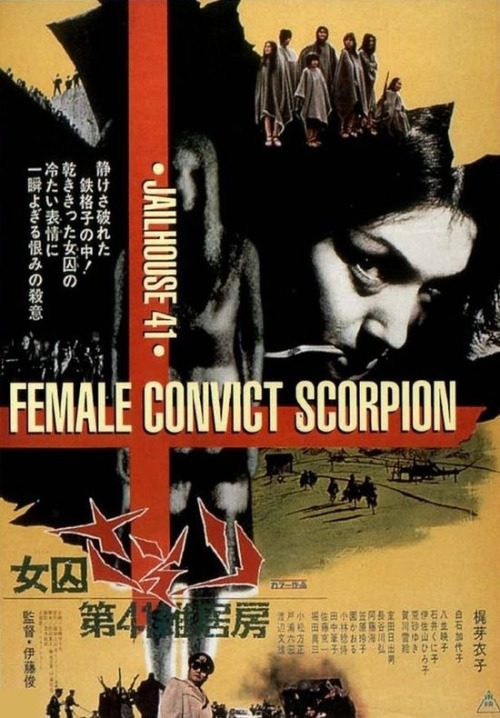
Female Prisoner Scorpion: Jailhouse 41 (女囚さそり第41雑居房, Shunya Ito, 1972)

scorpion-2Female Prisoner Scorpion: Jailhouse 41 (女囚さそり第41雑居房, Joshu Sasori – Dai 41 Zakkyobo) picks up around a year after the end of Female Prisoner #701: Scorpion and finds Matsu (Meiko Kaji) tied up in a dingy prison basement, apparently left bound and in solitary confinement for the entire interval. Once again directed by Shunya Ito, the second instalment in the Female Prisoner Scorpion series is another foray into the women in prison field but Ito resolutely refuses to give in to the exploitative genre norms, overlaying his tale of individualistic rebellion with an arthouse sensibility that has a much wider scope than its ordinary vengeance driven narrative may suggest.

Matsu may have been lying bound and gagged in a dingy underground hole for the best part of a year but today is a special day and sadistic prison warden Goda (Fumio Watanabe) is going to let her out to be shown off in front of a visiting inspector who’s paying a final visit before Goda is promoted to a top job in Tokyo. When Matsu makes a lunge for Goda, the inspector is so afraid that he wets himself, sending the other woman into a frenzy and resulting in a riot. Once again the entirety of the prison is punished, but this time Matsu is singled out for a public punishment gang rape by Goda’s goons. This kind of humiliation is too much for her fellow prisoners who instantly turn on her, but their violence provides an opportunity for escape and before long Matsu is on the run, again.

At the end of the first film, Matsu had accomplished her first round of vengeance – against the man who orchestrated her downfall and the men who secured it, but ultimately she wound up a female prisoner once again. Though Goda may have had her hidden away because of her habitual escapism, Matsu had not given up as we see from her attempts to scrape the floor away with her spoon held tight in her mouth. Barely speaking, Matsu is an unstoppable column of pure rage but an elegant one, supported by her self contained restraint.

Her anger this time is directed towards Goda himself, especially after his despicable organised punishment rape that was designed both to break her own spirit once and for all and also to damage her in the eyes of her fellow inmates who are intended to see her defeated and destroyed. The guards are a stand in for society at large, using sexual dominance and social position to keep their women in line. The visiting prison inspector makes a point of telling Matsu that “they” don’t hate her personally – they’re there for her, to help her “recover” and become a functioning member of society. Which is ironic because Goda does hate her personally as he holds her responsible for the damage to his eye sustained in the previous film. His last act before moving on is one against Mastu – an attempt by the forces of authority to crush her individual rebellion and use their victory as a coercive tool to force others to conform.

In this way, Matsu’s position as a member of a subjugated class is less important than her status as an agitator but these are women who have each suffered at the hands of men. As an extremely theatrical sequence sung in the traditional form informs us, the women who escaped with Matsu committed their crimes out of love or jealousy. Poisoned rivals, dead lovers, even children murdered to get back at their philandering father in some Medea level psychotic rage which ruins the perpetrator even more than the intended victim.

Later while the women are enjoying their brief taste of freedom, one of them is brutally raped and murdered by a troupe of feral men who boast about the wartime atrocities they committed before descending on a lone woman like a pack of rabid dogs. The others take their revenge for their friend, but also for all the women who have met a similar fate inflicted by a male dominated society which sees them as something to be controlled and then made use of, little more that cattle hemmed in and milked until dry.

As in the first film Ito makes use of expressionist techniques and strange angles to give his film a more elevated feeling that might be expected but this time he adds in a surrealist, spiritual dimension as with the old woman who sings the stories of our heroines and then dies only to bury herself in leaves and disappear into the ether, like some forgotten deity of misused women. Likewise, when one of the prisoners is raped and murdered, the men throw her body into a nearby river like an empty beer can but the waterfall behind her suddenly runs with blood as an expression of the violence which pollutes the natural world. A bus suddenly splits in two, separating our subjugated women from the violent men who mentally sentence them, given free reign simply because of their sex. Ironically enough, our last glimpse of of Matsu takes place in the reflection of Goda’s glasses and then in his false eye when she is suddenly rejoined by her compatriots for a triumphant dance of freedom on a city rooftop.

Even stronger than in the original Female Prisoner #701 Scorpion, Jailhouse 41 further advances its ideology of free individuals battling the conformist authority of the state all filtered through the prism of the patriarchy. Matsu’s vengeance is personal, she keeps her distance from the other women who do not seem inclined to band together to oppose the forces which oppress them so much as seek a wary, temporary alliance of necessity, but seeing them all reassembled in spirit at the end brings a larger dimension to Matsu’s victory which now seems much less like solving a practical problem than a deliberate strike at a wall which was solely designed to keep a certain group of people in their place. The jail is broken, all that remains is to choose to escape its restraints.


Original trailer (English subtitles, NSFW/gore)