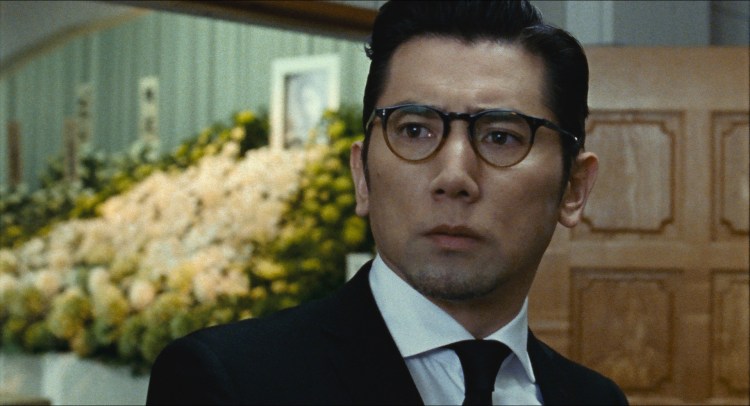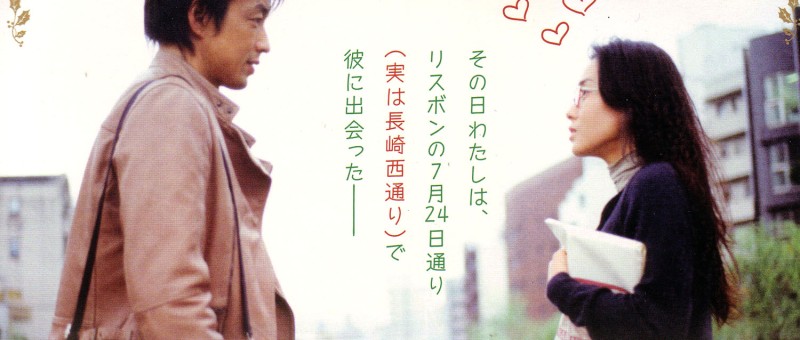
Christmas on July 24th Avenue (7月24日通りのクリスマス, Shosuke Murakami, 2006)

Christmas July 24th AvenueThey do Christmas a little differently in Japan. Rather than a celebration of family and commercial excess, Christmas is an occasion for romance much like the Western Valentine’s Day. Strangely, Japanese cinema has been slow to warm to the idea of the Christmas date movie though Christmas on July 24th Avenue (7月24日通りのクリスマス, 7 gatsu 24 ka dori no Kurisumasu) tries its best to plug the gap. Starring the ever reliable Miki Nakatani, Christmas on July 24 Avenue is a grown-up romance filtered through the innocence of the shojo manga its heroine has come to love.

Sayuri Honda (Miki Nakatani) is a 24 year old office lady who dreams of romance but has come to believe that she just isn’t destined for a great love of her own. Obsessed with a manga she’s loved since childhood which is set in Lisbon, Sayuri has begun to notice the various similarities between her hometown of Nagasaki and the Portuguese capital, living part-time in a kind of sunbaked European fantasyland. When her long lost high school crush, Satoshi (Takao Osawa), resurfaces as a famous architect with a bestselling book out, Sayuri’s dreams of romantic fulfilment are suddenly reawakened.

Constructed with obvious projected wish fulfilment, Sayuri’s arc is the rom-com classic of shy girl gets handsome boy after a series of coincidences and misunderstandings. Bespectacled and reserved, Sayuri’s major selling point is her propensity to suddenly fall over and make a spectacle of herself which she does in spectacular fashion during one of the amateur dramatic plays she helps out with. Embracing an unwelcome genre norm, Sayuri’s journey towards true love begins with prettying herself up – swapping her glasses for contacts, getting a more sophisticated haircut, and dressing in more typically elegant girlish outfits over her practical, dowdy tastes.

Rather than allow Sayuri to realise she’s fine as she is and doesn’t need to change herself for a man, the arc is Sayuri abandoning her anxieties to become the kind of person she thinks Satoshi would like. While all of this is going on there’s another potential suitor hanging around in the form of Yoshio (Ryuta Sato) – a geeky guy who works in a bookstore and has been nursing a crush on the oblivious Sayuri for years. Several times Yoshio confesses his love, and several times Sayuri fails to understand him. His being a pure love, Yoshio decides to help Sayuri find happiness no matter who with.

Sayuri sees her own situation mirrored in that of her brother. Where Sayuri sees herself as plain and undesirable, her brother is handsome and popular with the ladies – the kind of “prince” she herself dreams of. Despite having a long history of dating remarkable girls, Koji’s new girlfriend (Juri Ueno) is a virtual clone of Sayuri – mousy with glasses and a talent for mumbling. Oddly, Sayuri is not worried by this development in the way that might be expected, but only outraged at her brother’s breaking of romantic protocol in taking up with someone who is nowhere near his league. Resenting that a girl just like her has improbably managed to bag a prince, Sayuri treats her potential new sister-in-law with scorn and contempt whilst continuing to blame her own failure to do the same on her plainness and reserve.

Truth be told, Satoshi is a predictably dull love interest – a cardboard cutout prince of the kind familiar to shojo romance. Additional spice is added in an extra-marital affair between Satoshi and an old flame with whom he apparently has some unfinished business but even this hint of impropriety does not seem to put Sayuri off. Her final revelations tend towards realising that there’s nothing wrong with plain dowdy girls hooking handsome guys, even though she is no longer a plain and dowdy girl herself and her prince is also responsible for a crisis in the marriage of a friend. She has this revelation through a lengthy speech at someone else’s wedding which she has nearly derailed by provoking a crisis of confidence in the bride.

Based on a short story by Shuichi Yoshida – best known for socially conscious crime thrillers such as Villain, Rage, and Parade, Christmas on July 24th Avenue is a consciously cute affair filled with quirky details which attempt to recreate the world of shojo manga but cannot make up for the soulless quality of its romance. A lack of chemistry between Nakatani and Ozawa prevents the love story from taking off while the second lead is kept hovering the background but more sweet joke than credible option. Reaching an improbably neat conclusion in which everything is forgiven and everyone lives happily ever after, Christmas on July 24th Avenue fulfils its promise of magical romance filled with cheerful Christmas carols and twinkling lights but proves disappointing after all the fancy wrapping.


30 second trailer (no subtitles)

Ghost Soup (Shunji Iwai, 1992)

Christmas is a little different in Japan. Fried chicken takes the place of turkey with all the trimmings and even if Santa still makes his rounds for excited children, it’s couples who invest the most in the big day. That doesn’t mean however that you can’t still take time out for a spooky tale or two in the best European tradition though Ghost Soup turns out to have a more melancholy if ultimately heartwarming intention than your average round of Christmas ghost stories. Shunji Iwai, later a giant of ‘90s Japanese cinema, got an early start with this seasonal tale which runs just under an hour and was made for television as part of a series of food themed dramas but even if the production values are minimal and the camera work unremarkable, Ghost Soup exists firmly within Iwai’s wider cinematic universe.

The tale begins on Christmas Eve. Families are eagerly walking home with treats and Christmas trees, but poor old Ichiro (Hiroyuki Watari) is in the process of trying to move apartments. He was supposed to be moving in mid-January, but he’s been bumped from his current accommodation after the person who was supposed to be taking over his lease was forced out of their current apartment because the person they were renting from has come back from abroad and needs his house back. Luckily, the apartment Ichiro is moving into is already empty so he’s moving in early, but there’s a hitch. It’s not just that it’s very inconvenient to move house on Christmas Eve, Ichiro’s new apartment has already been earmarked for an annual Christmas party hosted by a bunch of ghosts and they don’t take kindly to having their venue so rudely invaded.

The first half of the film revolves around the comical actions of the ghosts as they try to keep Ichiro out of their party though it also provides the opportunity to introduce other vaguely ghoulish elements of the business of moving including a visit from the NHK man and a tenacious newspaper salesman not to mention a Jehovah’s Witness. Despite the fact that Ichiro has apparently landed himself in this situation by being “too nice” he manages to get rid of most of his unwelcome visitors by forcing himself to close the door on them even if he seems to feel bad about doing it. The ghosts are a slightly different matter.

Nana (Ranran Suzuki), a feisty teenage girl, and Mel (Dave Spector) – an American with excellent Japanese and a very strange speaking voice who seems to be dressed like world war two bomber crew, are having a Christmas Party for the area’s local ghosts of which there seem to be a few including Private Sakata (Ken Mitsuishi) who has been patiently standing guard ever since he passed away during the war. Nana’s “Ghost Soup” has become a Christmas fixture and is filled with warmth and happiness designed to help vengeful spirits move past their various grudges so that they can finally “move on”.

When the ghosts dress up like Santa and put Ichiro in their sack to dump him in an unfamiliar part of town in the hope he won’t make it back before their party, he ends up wandering through sections of his memory, remembering paths and houses from some forgotten time and noticing other “ghostly” presences he might not normally pay much attention to. As it turns out, Ichiro has tasted Ghost Soup before, long ago in childhood when he himself had a conversation with one recently deceased on a melancholy Christmas Eve.

Little Ichiro seemed very puzzled that so many people were lining up for just a cup of soup when they don’t even get any toys, but was somehow moved by the curious warmth of the small gathering. Despite his protestations of being “too nice” in agreeing to move early, Ichiro has not been a very good neighbour so far – despatching each of his visitors and trying to evict the ghostly presence intent on colonising his new flat, but eventually gets into the Christmas Spirit and agrees to help the ghosts make sure the soup gets those who need it. Tokyo it seems is a city of lonely souls, both living and dead, in which a bowl of hot soup might be the only highlight in a cold and unforgiving (after)life.

Made for television on a low budget and with a poor quality video camera, Ghost Soup is of its time but also bears out Iwai’s cheerfully surreal world view in which the city is peopled with the melancholy but protected by friendly guardians fostering a community spirit which might help to exorcise some of that existential loneliness. Ghost Soup is in many ways the perfect Christmas confection – a little bit sad, but sweet if strange and ultimately heartwarming in its embracing of the true Christmas spirit of compassion togetherness.


Closing scene (no subtitles)

It All Began When I Met You (すべては君に逢えたから, Katsuhide Motoki, 2013)

It All Began When I Met You posterChristmas, in Japan, is an occasion for romance. Strangely, the Christmas date movie has never quite taken off though there are a fair few examples of this oft maligned genre even if they don’t generally help to ameliorate the contempt in which it is held. Truth be told, It All Began When I Met You (すべては君に逢えたから, Subete wa Kimi ni Aeta kara) won’t help to do that either but then it isn’t really intended to so much as provide a little warmth combat the to Christmas cold whilst celebrating the centenary of Tokyo Station (a destination surely as romantic as meeting under the clock at Waterloo).

Spinning out from Tokyo Station, the film splits into six interconnected stories of love ranging from dealing with long distance romance to an orphaned little girl who has projected her need to believe in the existence of her parents onto a faith in Santa Claus. Counting down to Christmas Day, the protagonists each progress towards some kind of crisis point which will allow them to deal with their various problems whilst getting into the holiday spirit.

Couple one are a pair of youngsters, one a fashion designer, Setsuna (Fumino Kimura), and the other an engineer, Takumi (Masahiro Higashide), who are separated because of differing work commitments. She’s in Tokyo, he’s up North, but they chat on the phone all the time and seem close despite the distance between them. The truth is revealed when Takumi comes to Tokyo and is supposed to meet up with Setsuna but stays out all night drinking with a (female) colleague instead.

Meanwhile, a college student (Tsubasa Honda) is invited to a karaoke party but isn’t sure whether to go because her crush is going and she can’t pluck up the courage to confess to him. Her boss at the pastry shop (Chieko Baisho) where she works tells her to go get him rather than allow her true love to slip away as, we later find out, happened to her when her boyfriend failed to appear at Tokyo Station 49 years earlier when they had arranged to elope. One of their regular customers, a Shinkansen driver (Saburo Tokito), has just retired early and, it turns out, may not have long to live but wants to make the most of his last Christmas with his son (Ryutaro Yamasaki) who is preoccupied about a “half-coming of age” ceremony they’re having at school.

Across down, the train driver’s brother-in-law, an arrogant CEO (Hiroshi Tamaki), runs into an aspiring actress (Rin Takanashi) who is currently in rehearsals for a play she puts on every year at a local orphanage. This year might be her last, however, because she’s begun to accept that her acting career will never take off and it’s time to go home. One of the little girls at the orphanage, Akane (Emiri Kai), is particularly looking forward to the festivities because she’s invested in the unseen figure of Santa as a substitute for believing in the unseen figures of the parents she never knew.

Each of the stories is intended to capture something of the complicated business of modern city living – a long distance relationship is, perhaps, something that many will be familiar with, relating to the pain and confusion of being not quite sure where each party currently is in terms of commitment. The pace of contemporary life frustrates romance, but the station is there to connect people and bring them back together. The conclusion is perhaps a little optimistic in its sudden cementing of a romantic bond but broadly in keeping with the Christmas theme.

The CEO and the actress, by contrast, are a much more conventional rom-com couple. Serendipitously meeting each other at various upscale joints, the CEO immediately tags the actress as a gold digger after she (accidentally) catches him flashing his premium credit card. Offended she spins him a yarn about a dead boyfriend as payback but finds it backfiring when he is unexpectedly moved and tries to make it up to her. Warmer in tone, this strand sets the station up as a symbol of the interconnectedness of city life where such mini miracles are indeed possible even if the perfectly rational reason for all the coincidental meetings is later explained to us.

However, where there’s joy there’s also heartbreak. The train driver’s tale seems out of place here, but plays into other themes of coming to terms with reality and committing to enjoying the now rather than worrying about the past or future. Similarly, the little girl begins to work out her faith in Santa maybe misplaced because the letter he’s written her is in Japanese, which is weird because isn’t Santa Swedish? Learning to accept that not having parents is not due to a lack of faith and that she has good people looking after her helps Akane move past her loneliness while the baker gets a surprise visitor who helps fill in a few details about her failed romance which in turn helps her offer advice to her young assistant faced with her own typically adolescent love worries.

Miracles really do take place at Tokyo Station, which, it has to be said, is quite picturesque. Saccharin and superficial, It All Began When I Met You is nevertheless a heartwarming tribute to the strange serendipity of city life, throwing in a good amount of Christmas cheer with hope for the future and presumably a happy new year.


Original trailer (no subtitles)

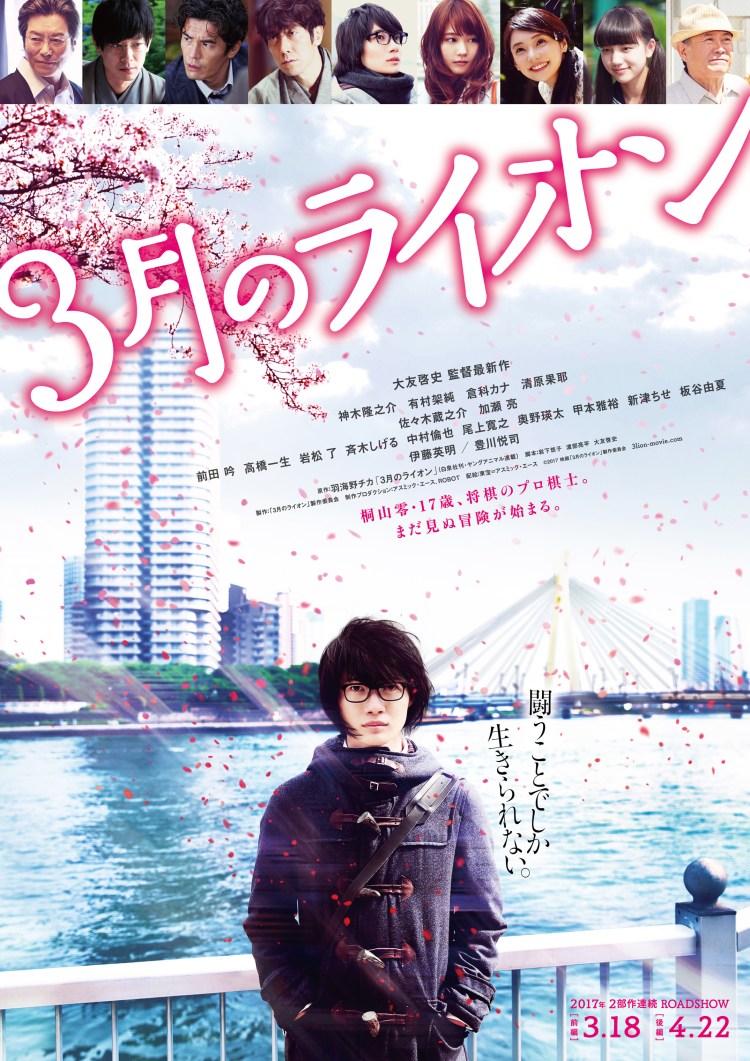
March Comes in Like a Lion (3月のライオン, Keishi Ohtomo, 2017)

march comes in like a lion posterShogi seems to have entered the spotlight of late. Not only is there a new teenage challenger hitting the headlines in Japan, but 2017 has even seen two tentpole Japanese pictures dedicated to the cerebral sport. Following the real life biopic Satoshi: A Move for Tomorrow, March Comes in Like a Lion (3月のライオン, Sangatsu no Lion) adapts the popular manga by Chica Umino in which an orphaned boy attempts to block out his emotional pain through the taxing strategising becoming a top player entails. Shogi, however, turns out to be a dangerous addiction, ruining lives and hearts left, right and centre but, then again, it’s not so much “shogi” which causes problems but the emotional volatility its intense rigidity is often masking.

Rei Kiriyama (Ryunosuke Kamiki) lost his family at a young age when both parents and his little sister were tragically killed in a car accident. Taken in by a family friend, Rei takes up shogi (a game also apparently beloved by his late father) in the hope of being accepted in his new home. A few year’s later, Rei’s plan has worked too well. Better than either of his foster-siblings, Kyoko (Kasumi Arimura) and Ayumu, Rei has become his foster-father’s favourite child causing resentment and disconnection in the family home. Believing himself to be a disruptive influence among those he loves (even if he suspects they still do not love him), Rei removes himself by deciding to live independently, shunning all personal relationships and dedicating his life to the art of shogi.

Everything changes when Rei is taken for a night out by some senior colleagues and is encouraged to drink alcohol for the first time despite being underage. A kindly young woman who lives nearby finds Rei collapsed in the street and takes him home to sleep things off. The oldest of three sisters, Akari (Kana Kurashina) has a habit of picking up strays and determines to welcome the lonely high schooler into her happy home. Suddenly experiencing a positive familial environment, Rei’s views on interpersonal connection begin to shift but people are not like shogi and you can’t you can’t expect them to just fall into place like a well played tile. 

Like Satoshi, the real life subject of which is also echoed in March through the performance of an unrecognisable Shota Sometani who piles on the pounds to play the sickly yet intense shogi enthusiast and Rei supporter Harunobu Nikaido, March dares to suggest that shogi is not an altogether healthy obsession. Koda (Etsushi Toyokawa), Rei’s foster-father, is a shogi master who trained both his children to follow in his footsteps only to pull the rug from under them by ordering the pair to give up the game because they’ll never be as good as Rei. Thinking only of shogi, he thinks nothing of the effect this complete rejection will have on his family, seeming surprised when neither of his children want much more to do with him and have been unable to move forward with their own lives because of the crushing blow to their self confidence and emotional well being that he has dealt them.

Kyoko, Rei’s big sister figure, remains resentful and hurt, embarking on an unwise affair with a married shogi master (Hideaki Ito) who is also emotionally closed off to her because he too is using shogi as a kind of drug to numb the pain of having a wife in a longterm coma. Believing himself to be a disruptive influence who brings ruin to everything he touches, Rei has decided that shogi is his safe place in which he can do no harm to others whilst protecting himself through intense forethought. He is, however, very affected by the results of his victories and failures, feeling guilty about the negative effects of defeat on losing challengers whilst knowing that loss is a part of the game.

Drawing closer to the three Kawamoto sisters, Rei rediscovers the joy of connection but he’s slow to follow that thread to its natural conclusion. His shogi game struggles to progress precisely because of his rigid tunnel vision. Time and again he either fails to see or misreads his opponents, only belatedly coming to realise that strategy and psychology are inextricably linked. Yet in his quest to become more open, he eventually overplays his hand in failing to realise that his viewpoint is essentially self-centred – he learned shogi to fit in with the Kodas, now he’s learning warmth to be a Kawamoto but applying the rules of shogi to interpersonal relationships provokes only more hurt and shame sending Rei right back into the self imposed black hole he’d created for himself immersed in the superficial safety of the shogi world.

As Koda explains to Kyoko (somewhat insensitively) it’s not shogi which ruins lives, but the lack of confidence in oneself that it often exposes. Rei’s problem is less one of intellectual self belief than a continuing refusal to deal with the emotional trauma of losing his birth family followed by the lingering suspicion that he is a toxic presence to everyone he loves. Only in his final battle does the realisation that his relationships with his new found friends are a strength and not a weakness finally allow him to move forward, both personally and in terms of his game. Rei may have come in like a lion, all superficial roar and bluster, but he’s going out like a lamb – softer and happier but also stronger and more secure. Only now is he ready to face his greatest rival, with his various families waiting in his corner silently cheering him on as finally learns to accept that even in shogi one is never truly alone.


Released in two parts – 3月のライオン 前編 (Sangatsu no Lion Zenpen, March Comes in Like a Lion) / 3月のライオン 後編 (Sangatsu no Lion Kouhen, March Goes Out Like a Lamb).

Original trailer (no subtitles)

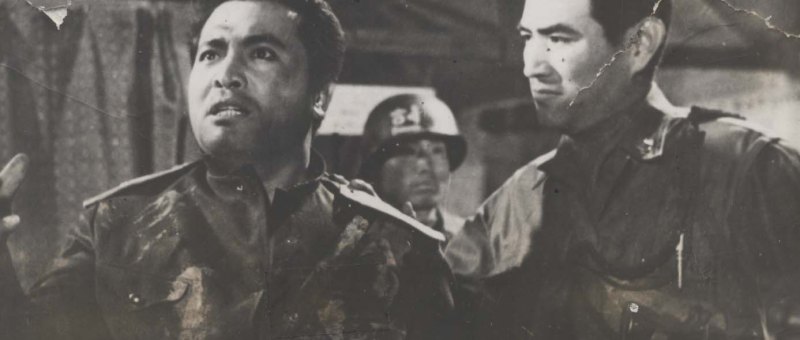
Horse-Year Bride (말띠新婦 / 말띠신부, Kim Ki-duk, 1966)

In the relatively conservative Korean society of 1966 it’s surprising that film like the Horse-Year Bride (말띠新婦 / 말띠신부, Maltti Sinbu) could have been made at all. On the one hand it embraces and subverts common notions of gender by positioning its “horse year women” as somehow deviant from the norm, difficult to deal with and undesirable, but also places them centerstage as individuals making independent choices in their own lives rather than simply trailing along behind their men. Technically the second in a trilogy of films, the first and last being directed by Lee Hyung-pyo, Kim Ki-duk’s Horse Year Bride is a raucous sex comedy, tame by modern standards but transgressive by those of the time. Adopting a mild, if ironic, issue movie stance, Kim also satirises social attitudes to “horse year women” and councils against a trend of aborting babies set to be born in the year of the horse lest they be female and turn into vicious harridans.

The film opens with a wedding in which middle-aged (presumably 35 or 36 year old) Bok-soon (Hwang Jung-seun) marries the extremely miserable looking professor Seok-du (Park Am). The wedding photographer who later turns out to be a horse woman herself and a private eye is surprised to notice that Bok-soon has horse’s hoofs rather than fancy shoes under her wedding dress. A fortune teller (Kim Hee-kap) then introduces us to his matchmaking service and claims the wedding we have just witnessed is a result of his best ever match before introducing us to two more couples – Soo-in (Nam Mi-ri) whose husband Sang-won (Yoon Il-bong) has gone full on domestic to look after her while she’s pregnant, while Mi-hae (Um Aing-ran), also pregnant, fends off the sexual advances of her frustrated husband Keun-ho (Shin Seong-il). The two as yet unmarried horses include the aforementioned private detective, Young-hee (Bang Seong-ja), and a dancer, Suk-ja (Choi Ji-hee), who is engaged but not above making use of her sex appeal for material gain.

Bok-soon, one horse cycle ahead of Soo-in and Mi-hae, laments her long period of matronly virginity and is keen to make up for lost time. Seok-du, however, is not exactly a love machine and is completely worn out by his wife’s appetites, even going so far as to return to the fortune teller and complain that his excellent matchmaking has turned him into an exhausted sex slave. The matchmaker suddenly grabs a picture of Napoleon and has a novel explanation for where the famous general’s hand might be. Anyway, his advice is to practice yoga to increase stamina and keep Bok-soon happy.

Meanwhile, Soo-in and Mi-hae have both lied to their husbands about being pregnant in order to avoid sex so that they don’t conceive a daughter that, like them, will be born in the year of the horse. This particular “White Horse” year is thought to be especially inauspicious and daughters born as White Horses will apparently be total nightmares and have terrible lives. The two relationships send up various culturally accepted norms of martial gender roles as the women both manipulate their husbands to get their own way. Soo-in’s Sang-won is so solicitous about the pregnancy that he’s put Soo-in on virtual bed rest and blossomed into a mother hen clucking around doing the housework but making a total mess of it (because, after all he’s a man, and men aren’t “built” for this sort of thing). Mi-hae’s problem is the opposite in that Keun-ho’s sexual needs are a constant source of frustration to him in which he resorts to pounding a giant mortar in an unsubtle attempt to relieve his pent-up energy. Bok-soon too is subtly manipulating Seok-du by feeding him an “aphrodisiac” and secretly practicing yoga herself to get the most out of her married life.

Unmarried Suk-ja attempts to manipulate men by promising more than she means to give but finds herself in hot water with a grumpy salaryman (Joo Sun-tae) who seems determined to take what he thinks he’s owed. Suk-ja later pays heavily for her rejection but the other women rally to her side to take revenge on the lecherous businessman whom they regard as “human scum” and intend to “re-educate” to treat women better. The vengeful band of women taking revenge on the male sex with each of its various double standards and chauvinistic assumptions derives part of its humour from the relative lack of power available to them but does manage to make a sensible point about the sexist world they inhabit.

Eventually, when the women have given up their power and allowed themselves to become pregnant by their men, even the doctor at the hospital assumes they will want abortions to avoid the threat of White Horse daughters. By this point the women have also resolved that there’s nothing wrong being Horse Women or even White Horse Women, with women excising power (even if in necessarily feminine ways), or with enjoying full relationships with their husbands, but they’re still bound by otherwise typical ideas of female gender roles in the importance of maternity and dream their daughters will be Miss Koreas rather than great scholars or forces for good in the world. The doctor raises an interesting point when he suggests the fear of White Horse Women is an unwelcome foreign import from Japan which both paints it as another symptom of colonial corruption and ignores the fact that the reasons for the ongoing stigma are part of the essential social fabric of Korea. He does, however, find some darkly comic reasons against abortion in citing the economic effects of empty schools and lonely classrooms while also suggesting the women’s daughters may have an easier ride thanks to the lack of competition.

In contrast to his previous films, Kim adopts a youthful, pop-culture infused approach which makes frequent use of domestic and foreign pop music with a lengthy animated title sequence plus extended scenes of music and dance often unconnected to the main drama. Extremely frank in its treatment of modern sexual relations, Horse-Year Bride is an unlikely ‘60s Korean sex comedy filled with silly gags and slapstick humour but proves an extremely effective satire of the complicated social mores of ‘60s Korea.


Available on DVD as part of the Korean Film Archive’s Kim Ki-duk box set. Also available to stream online for free via the Korean Film Archive’s YouTube Channel.

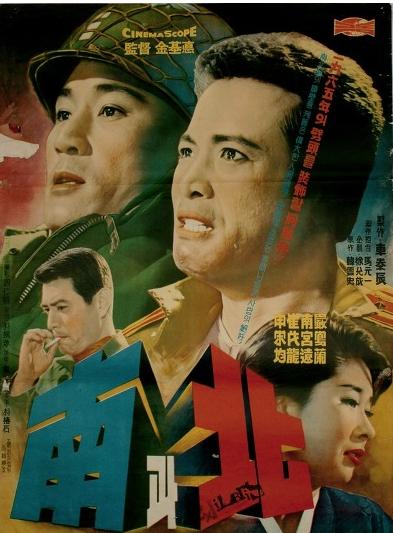
North and South (南과北/남과북, Kim Ki-duk, 1965)

north and south poster

Melodrama has often been an unfairly maligned genre, dismissed as pandering to the sentimental or engaging in frivolous emotion but to do so misses the undercurrent of social questioning that such films often entail. Korea has made the melodrama its own – indeed, though genre is often a more fluid matter in Korea than it is elsewhere it’s difficult to find films of any kind which are completely devoid of melodramatic themes. It’s less of a surprise therefore to find that Korean cinema turns to melodrama to examine one the nation’s most pressing concerns – the relationship between North and South. Kim Ki-duk’s North and South (南과北/남과북, Namgwa Buk) is the story of a woman caught between two men, two nations, and two eras but it’s mediated through the story of a noble North Korean who has battled all in the name of love, left his family, his home, his country only to find that he is too late and the world has already left him behind.

The film begins with capture of a North Korean soldier in November 1952, the middle of the Korean War. Following normal procedure, the soldier, Major Jang Il-gu (Shin Young-kyun) is taken in for questioning but the major matter on his mind is the lady in the photograph he keeps brandishing to everyone he meets. Rather than political disaffection, Il-gu has defected to the South in the name of love – he’s looking for a woman he regarded as his wife, the mother of the son he has never seen. The South Korean officers are less than sympathetic, they’ve been noticing increased activities on the frontiers and they want to know some concrete military details before they even agree to admit Major Jang, but Il-gu won’t talk until they promise to help him look for Eun-ga (Um Aing-ran) – the woman for whom he has betrayed his comrades.

Captain Lee Hae-ro (Choi Moo-ryong), otherwise sympathetic to Il-gu’s plight, runs into a problem when elements of Il-gu’s story start sounding all too familiar. In a coincidence too staggering to believe, Eun-ga is Hae-ro’s wife. Originally reluctant to marry him, Eun-ga had explained that she had a son already and was waiting for the child’s father (to whom she was not “legally” married) from whom she had been separated by the 38th parallel. Lee was patient and persistent, he told Eun-ga that she was free to leave him should her long lost love return (never believing it was possible) and that he was content to look after her until that day came or, should he be so fortunate, for the rest of his life. Now Il-gu has arrived as if to punish him for disrupting this fairytale of doomed romantic love.

Unlike many films of the time, Kim is not interested in demonising the North so much as emphasising the tragedy of Korea’s division. Eun-ga and Il-gu are divided by more than just politics. Eun-ga was the middle-class daughter of a wealthy doctor, Il-gu was the son of one of their servants. Their love was not possible even before the war, but still it blossomed. Growing up together, Il-gu and Eun-ga experienced the quintessentially innocent taste of first love, vowing to stay together even in the face of fierce parental opposition and social convention, but it is the war which eventually seals their fate. Il-gu, not wanting to be conscripted into the Japanese army hides out in a shack where Eun-ga, the only person to know his whereabouts, spends a fateful night with him during which time their child is conceived.

Dreaming only of being re-united with his “wife” and child, Il-gu has been carrying around a picture of Eun-ga and looking for an opportunity to defect ever since the erection of the 38th parallel. Abandoning everything in the name of love, he has left his mother alone in the North and risked his life in hope of seeing Eun-ga once more. Hae-ro, a romantic man himself, is intimidated by Il-gu’s passion. The great, fated love he’d imagined for himself in marrying the nurse who had saved him at his lowest ebb suddenly pales in comparison to Il-gu’s willingness to sacrifice his life in pursuit of a true love dream. Understating Il-gu’s feelings, Hae-ro finds himself in a terrible position, worried that his love will leave him, feeling guilty for pestering her into a marriage she may not have really wanted, and unsure whether he should even tell Il-gu and Eun-ga that he holds the key to their long delayed reunion. Il-gu remains resolute, demanding love or death, but Hae-ro vacillates, drinks himself into solipsistic misery, and indulges his own weaknesses which are only made worse by Il-gu’s continued heroism.

Immediately before the final sequence in which the trio are forced to confront their emotionally difficult situation, Il-gu is threatened with a gun but refuses to give up any information without proof he can meet Eun-ga. Believing all hope to be lost, he asks only to be allowed to go up a mountain to die but is moved by the compassion of intelligence officer Kwon (Namkoong Won) who alone is committed to delivering Eun-ga and eventually gives up his information even though it pains him to betray his own comrades. In an impassioned debate with Kwon, Il-gu gives voice to the film’s overarching message in reminding him “Are we not all brothers”. Kwon, counters that the reason they fight is in service of Il-gu’s quest – it’s precisely so that he can come here, speak freely, and pursue his love unhindered. The “South” is winning, in a sense, but the message of brotherhood and understanding between men is the one which is delivered with the most clarity.

Understanding between men is indeed the theme of Hae-ro and Il-gu’s eventual meeting. Eun-ga’s torment is relegated to background detail as she sobs her heart out in the corner in the unfairness of her impossible situation. Her heart has always belonged to Il-gu and she feels herself to have betrayed him, betrayed love, in marrying an admittedly good and kind man out of reasons of practicality rather than passion. Coming to understand the situation, Il-gu responds with compassion and understanding even in the middle of his own heartbreak. He bitterly regrets his journey and wishes Hae-ro had told him Eun-ga was now his wife rather than allow him to hurt her by suddenly reappearing and breaking her heart all over again. Witnessing Il-gu’s magnanimity, Hae-ro is also moved, offering to step back and allow Il-gu to return to the family he may have lost. Both men recognise the goodness of the other, want nothing more than the best outcome of the situation for Eun-ga and her son, and are committed to moving forward with sensitivity in trying to minimise the emotional pain inflicted on the innocent Eun-ga who continues to suffer through no fault of her own.

The “fault” falls on the 38th parallel which, as Il-gu explains during a painful first meeting with his unknowing son, is “the worst thing ever made by stupid men”. The situation is indeed impossible, there is no easy answer for Eun-ga who will have to choose between past love and a present commitment (or, uncomfortably, have that decision made for her by her respective lovers). Kim dramatises their anguish perfectly through the extraordinary performances of his cast during the drawn out, painful encounter in which they attempt to forge a way forward, but Eun-ga, who stands in for her nation, stands to lose all when this same fierce love and understanding between men may cost her everything in tragic gestures of love and sacrifice.


Available on DVD as part of the Korean Film Archive’s Kim Ki-duk box set. Not currently available to stream online.

(Un)true Colours: Secrets and Lies in Japanese Cinema – The Japan Foundation Touring Film Programme 2018

the long excuse still 2The Japan Foundation Touring Film Programme returns for 2018 with another diverse selection of recent and not so recent Japanese cinema. This year’s theme is secrets and lies and each of the films on offer attempts to shine a light on the various delusions at the heart of everyday life.

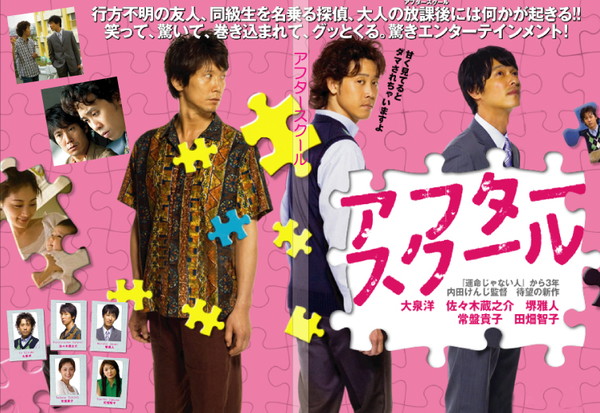
After School

after school landscapeYo Oizumi stars as a high school teacher investigating the disappearance of a friend in another darkly comic, twist filled farce from Kenji Uchida (Weekend Blues, A Stranger of Mine).
Birds Without Names

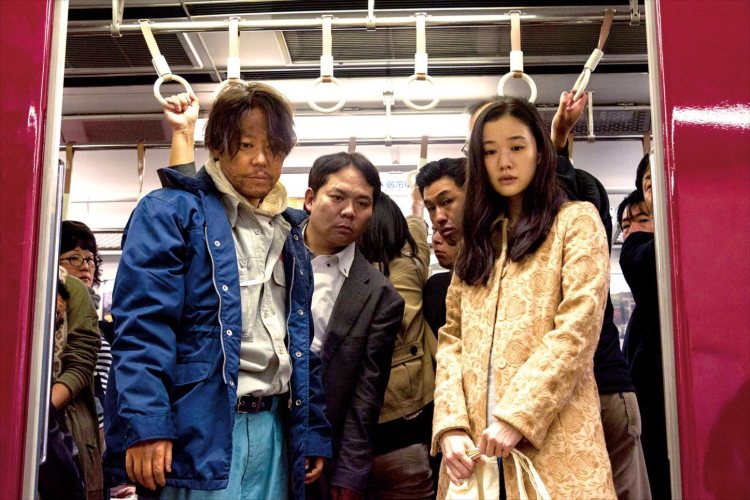
birds without names still 1Kazuya Shiraishi (Dawn of the Felines) adapts the popular novel by Mahokaru Numata in which a young woman (Yu Aoi) lives with an older man (Sadao Abe) but continues to pine for an old boyfriend who has apparently been missing for the last five years…

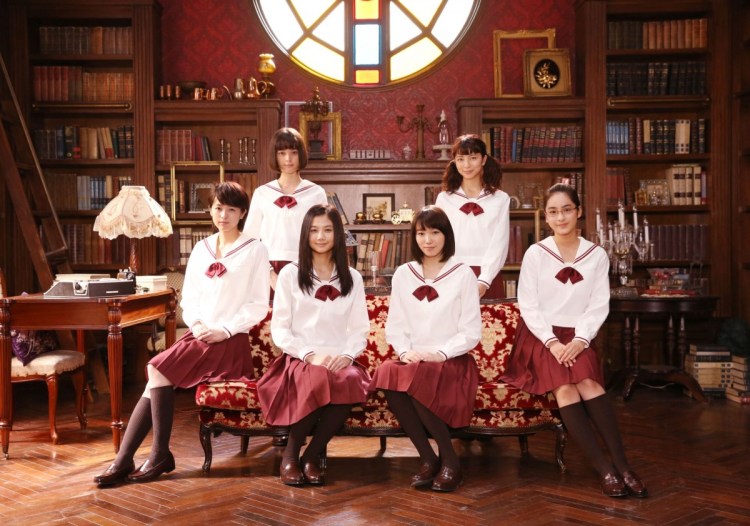
The Dark Maidens

Dark MaidensWhen a schoolgirl falls off a roof foul play is suspected. Who better to investigate than her fellow members of the literature club at an elite academy catering to the daughters of the rich and famous?
Gukoroku – Traces of Sin

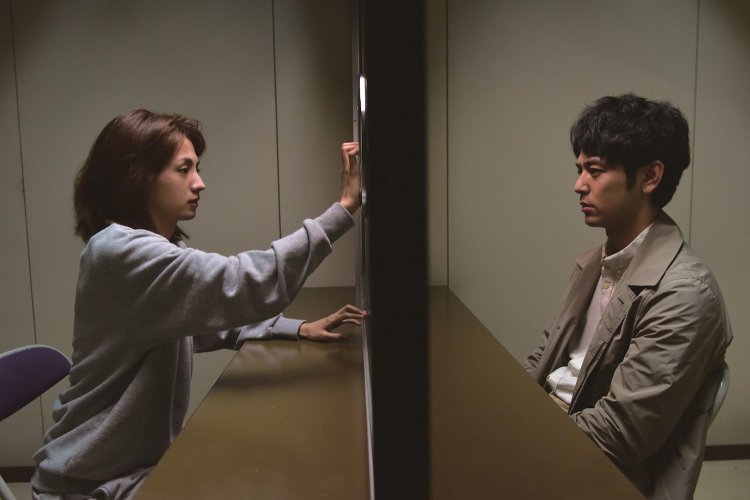
gukouroku stillA young reporter (Satoshi Tsumabuki) investigates the brutal murder of a model family whilst trying to support his younger sister (Hikari Mitsushima) who is currently in prison for child neglect while his nephew remains in critical condition in hospital. Interviewing friends and acquaintances of the deceased, disturbing truths emerge concerning the systemic evils of social inequality. Review.
Screenwriter Kosuke Mukai will be present for a Q&A following screenings at the ICA, Watershed Bristol, and MacRobert Arts Centre, Stirling. 

Initiation Love

initiation love still 1Based on a best selling romantic novel which captured the hearts of readers across Japan, Initiation Love sets out to expose the dark and disturbing underbelly of real life romance by completely reversing everything you’ve just seen in a gigantic twist five minutes before the film ends…

Japanese Girls Never Die

Japanese Girls Never DieA young woman goes missing and unwittingly becomes the face of a social movement in Daigo Matsui’s anarchic examination of a misogynistic society.
Joy of Man’s Desiring

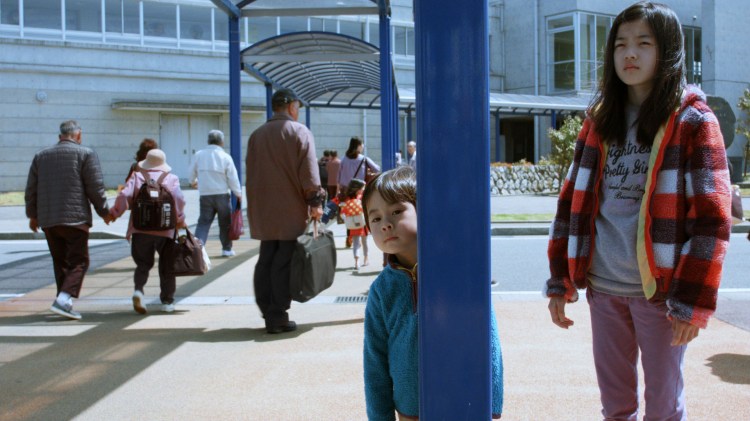
joy of man's desiringA brother and sister are orphaned after a natural disaster and taken in by relatives but struggle to come to terms with the aftermath of such great loss.
The Long Excuse

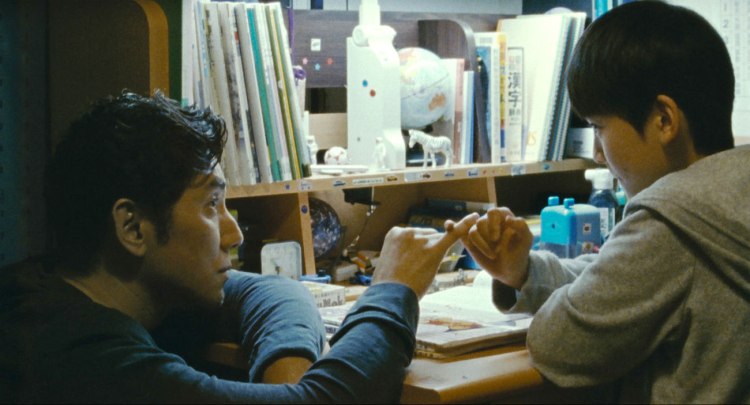
the long excuse stillMiwa Nishikawa adapts her own novel in which a self-centred novelist is forced to face his own delusions when his wife is killed in a freak bus accident. Review.
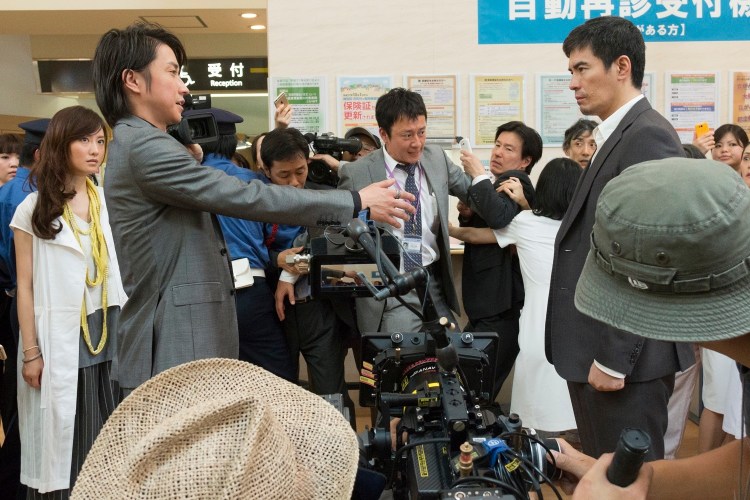
Actor Masahiro Motoki will be present for a Q&A following the screening at London’s ICA.

Memoirs of a Murderer

Memoirs of a Murderer still 1When the statute of limitations passes on a series of unsolved murders, a mysterious man (Tatsuya Fujiwara) suddenly comes forward and confesses while the detective (Hideaki Ito) who is still haunted by his inability to catch the killer has his doubts in Yu Irie’s adaptation of Jung Byoung-Gil’s Korean crime thriller Confession of Murder.
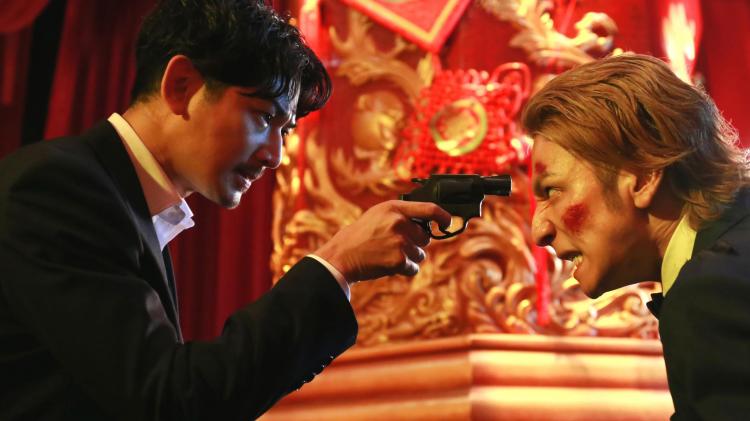
Director Yu Irie will be present for a Q&A following screenings at Showroom Sheffield, Broadway Nottingham, and Queen’s Film Theatre Belfast. He will also be visiting London for a special event on March 24 (full details TBC).

The Mole Song: Undercover Agent Reiji

mole song stillToma Ikuta stars as maverick cop Reiji in Takashi Miike’s madcap manga adaptation. Reiji has been kicked off the force for trying to arrest a councillor who was molesting a teenage girl but gets secretly rehired to go undercover in Japan’s best known yakuza conglomerate.
MUMON: The Land of Stealth

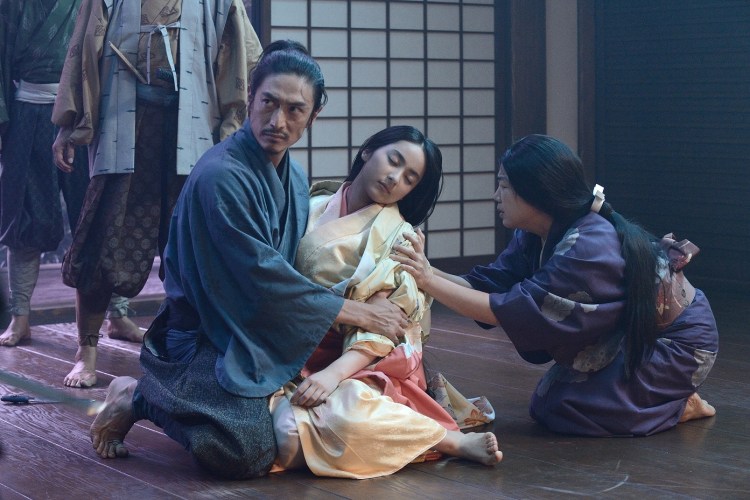
mumon stillYoshihiro Nakamura (Snow White Murder Case, Golden Slumber) journeys back to the feudal era as a lazy ninja faces the twin pressures of Oda Nobunaga and his newly wedded wife’s material concerns.

Room for Let

room for let dvd coverYuzo Kawashima would have turned 100 in 2018. A comic tale of life on the Osakan margins, Room For Let is a perfect example of the director’s well known talent for satire and stars popular comedian Frankie Sakai as an eccentric writer/translator-cum-konnyaku-maker whose life is turned upside down when a pretty young potter moves into the building.
Oh Lucy!

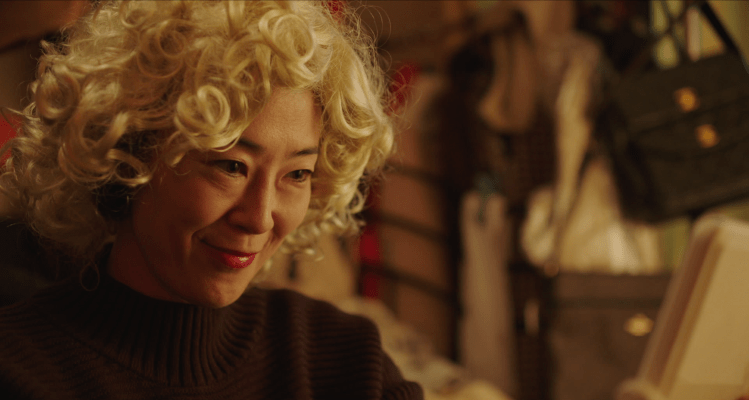
oh lucy still 2Embittered 55 year old OL Setsuko gets a new lease on life when introduced to an unusual English conversation teacher, John, who gives her a blonde wig and rechristens her Lucy. “Lucy” falls head over heels for the American stranger and decides to follow him all the way to the states… Review.

Sing My Life

sing-my-life-horizontal.jpgA remake of Korean hit Miss Granny, Sing My Life stars Mitsuko Baisho as an evil granny who gets a second chance to experience the happiness of which she was cruelly robbed in her youth when she’s magically transformed into her 20 year old self (Mikako Tabe) and ends up becoming the lead singer in her grandson’s rock band!

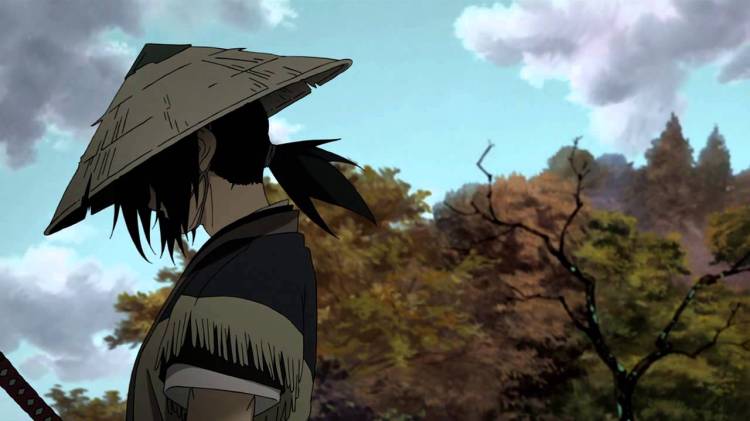
Sword of the Stranger

sword of the stranger still 1A small boy recruits the mysterious samurai “No Name” as a bodyguard after his dog is injured in an ambush in the landmark animation from 2007.
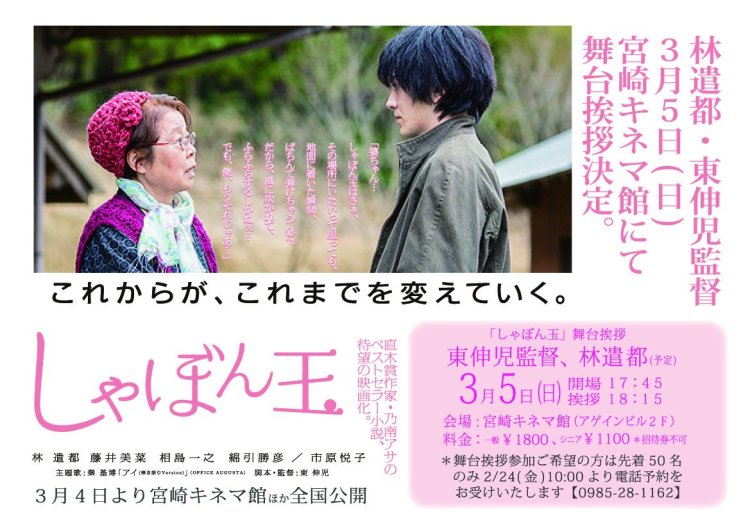
Where I Belong

Where I belong landscape posterA no good lowlife makes his way by stealing from elderly women but experiences a change of heart when he’s taken in by a kindly old lady deep in the mountains.


The Japan Foundation Touring Film Programme runs at London’s ICA from 2nd – 11th February, 2018 before touring to:

You can keep up with all the latest news via the Japan Foundation’s official website, Twitter Account, and Facebook Page.

Five Marines (五人의 海兵 / 5인의 해병, Kim Ki-duk, 1961)

Five Marines posterKorean War films have a very particular tone and flavour often absent from those from elsewhere. As sad and despairing as they can be across the world, war films are generally the realm of macho heroism, men bravely holding back tears and charging forth with unrestrained rage in a quest to avenge their fallen comrades. Korean War films, however, like the majority of the nation’s cinematic output, are tinged with melodrama. These men wail, talk about their mothers, and worry for the future while forging intense bonds of homosocial brotherhood and becoming a battlefield family. The debut feature from Kim Ki-duk, Five Marines (五人의 海兵 / 5인의 해병, O in-ui haebyeong) is a prime example of this approach, eschewing combat scenes for behind the lines ensemble drama as ordinary men attempt to come to terms with the extraordinary situation of war.

Stock footage of the battlefield eventually gives way to a small squadron of marines digging trenches and at constant risk of ambush by Chinese forces. The main drama revolves around lieutenant Deok-su (Shin Young-kyun) who is the son of the company commander but there has long been bad feeling between the two men as Deok-su has always felt that his father favoured his brother, Deok-han (Choe Bong), and never really loved him. Meanwhile we’re introduced to another four marines – intellectual Jeong-guk (Choi Moo-ryong), Ju-han (Flyboy / Gwak Gyu-seok) – a father of five from Seoul, farm boy Yeong-seon (Park Nou-sik), and mother’s boy with anger issues Hun-gu (Hwang Hae). Following the death of two comrades, the squad of five is sent on a daring missing into enemy territory to blow up an arms depot through which they aim to make the sacrifice their friends have made in some way meaningful.

Made just eight years after the end of the Korean War and apparently commissioned by the Marine Corps in the wake of the May 16 military coup which initiated the dictatorship of Park Chung-hee, Five Marines takes a very different approach to that seen in other contemporary war films such as Lee Man-hee’s The Marines Who Never Returned. Though in no way particularly jingoistic or warmongering, it would be difficult to describe Five Marines as an “anti-war” movie, not least because it avoids depicting scenes of combat until the final mission in which, as expected, some or all of the heroes will fall valiantly defending their fellow Koreans as well as their friends.

Jeong-guk, the college educated enlisted man, originally considers himself to be taking part in the pantomime of war, going along with the ridiculous sham of soldiering, but when a fellow soldier – a young boy who spends his time rewriting a poetic confession of love he doesn’t quite have the nerve to send to the girl he left behind, falls in front of him, Jeong-guk suddenly wants to join the fight for real. The idea of militaristic patriotism is then subtly reinforced if not quite sold with patriotic fervour. The necessity of the sacrifice is never questioned and the idea of doing one’s duty remains paramount even if it is also clear that the war has taken these men out of their familial environments leaving their women at home alone and, perhaps, defenceless.

Kim explores the peacetime lives of each of the men through flashback with the consequence that we get to know and care for them as people rather than as combatants. We rejoice with Jeong-guk when he hears he’s going to be a father, share Ju-han’s amused frustration when his wife includes all their bills in his mail, and worry with Hun-gu when his usual letters have not arrived. During their down time, the men discuss women but with more tenderness than expected – save for Yeong-seon’s rather lewd (and apparently fabricated) story of his wedding night for which he is rightly taken to task by his stern company Sergeant. Rather than focussing on the negatives of military service, Kim emphases the warmth and friendship among the men who forge deeper and stronger connections precisely because of the ever present threat of death.

When the final mission rolls around, Kim allows the action to take centre stage as the five man squad plots and executes a daring raid which does not quite go to plan and eventually erupts into a more conventional fire fight. Marrying the demands for macho battle scenes with the emotional quality of melodrama, Kim allows the men to sort out their emotional difficulties, shedding both blood and tears in equal measure. More emotional drama than action packed celebration of the glory of war, Five Marines may not quite be what the Marine Corps had in mind but perhaps serves their purpose anyway in reinforcing the positive ideas of camaraderie and patriotism whilst telling the stories of ordinary men and extraordinary heroism.


Available on DVD as part of the Korean Film Archive’s Kim Ki-duk box set. Also available to stream online for free via the Korean Film Archive’s YouTube Channel.

Youth (芳华, Feng Xiaogang, 2017)

youth posterOn the surface of things, one might be forgiven for thinking that Feng Xiaogang, “China’s Spielberg” – the director of such fluffy hits as If You Are the One and the prestige picture The Banquet, might not be the one to look to for nuanced takes on the state of his nation but, as he proved with the irony filled I am Not Madame Bovary, there has always been a persistent resistance in his superficially crowd-pleasing filmography. The exact nature and extent of that resistance is however harder to assess. Youth (芳华, Fāng huá), Feng’s latest historically probing epic, made headlines when its mainland release was blocked at short notice immediately before its international premiere at the Toronto International Film Festival and in some respects it’s easy to see why it may have raised an eyebrow or two at the censor’s board. A literal story of “youth” and the various ways that the concept becomes romanticised even when one’s own coming of age took place in otherwise difficult times, Feng’s film is also the story of modern China, baptised in the fire of the Cultural Revolution only to finally succumb to the consumerist one 15 years later.

Narrated by bystander Suizi (Zhong Chuxi), later a successful author apparently looking back on her own “youth” with a writerly eye, the tale begins in the early 1970s with two pillars of the arts division of the People’s Liberation Army. Suizi informs us the the protagonists of this story are Lui Feng (Huang Xuan) – a model soldier, and Xiaoping (Miao Miao) – a poor girl mercilessly tormented by everyone throughout her entire life. Xiaoping’s birth father has long been languishing in a re-education camp but as she’s taken her step-father’s name, Liu Feng assures her that he’s kept her bad class background off her record and will make sure no one else knows about it.

Performing propaganda ballets, the arts division is at its zenith at the height of the Cultural Revolution. The troop as a whole enjoys extreme privilege – they are well fed and cared for, evade the dangerous front line work many other members of the armed forces are subject to, and receive the respect due to them as the embodiment of a revolutionary ideal. They are, however, still guilty of the various hypocrisies coded into the system. Though many of the dancers have family members with “bad class backgrounds”, undergoing re-education or otherwise better not mentioned, the top guys and girls are the ones with parents high up in the party who use their untouchable status to paper over cracks in their own development with inherited superiority.

Lui Feng is perhaps an aberration. Nicknamed “Lei Feng” – a mythical figure created for propaganda purposes to embody the “ideal” revolutionary soldier in his selfless dedication to his comrades and communist virtues, Lui Feng is indeed a model party member whose goodness and kindness know no bounds. Unlike Lei Feng, however, he is a real man of flesh and blood not some far off and untouchable god. Having sanctified him in this way, the collective has effectively raised Lui Feng up to an unfair and unattainable ideal and is then “betrayed” on realising that Lui Feng is a man with a man’s hopes and desires. Lui Feng’s transgression is inappropriate to be sure but also somehow innocent in its naivety and his counter betrayal by the system to which he has dedicated his life all the more difficult to bear because of the unfair deification his better qualities have earned him.

Xiaoping meanwhile, who expected only betrayal, betrays the system through passive resistance in resentment of the way it has treated her friend. “Abandoned” by the collective which is the arts troop, Xiaoping exiles herself from a society she thinks has little need of her yet she then continues to serve it fully as a frontline nurse. The “youthful” idealism of Lui Feng and Xiaoping is tested as they find themselves caught up in a far off war while their former comrades dance around with wooden swords on a painted stage. Wounded in body and mind, the pair continue onwards even as their nation conspires to leave them behind.

Shifting into the ‘90s and then the 21st century, Feng’s messages become muddier and harder to grasp. In one sense what is celebrated is “youth” itself which, in this case, happened to take place against the backdrop of terrible events (albeit it ones from which many of the protagonists save Lui Feng and Xiaoping were largely shielded) enabling the growth of a generational family destroyed by a change in the political wind. It is however hard not to infer that everything was better during the turbulent ‘70s in which the delusion of innocence, if not its actual existence, was easier to bear than the soulless march into the future of Coca-Cola signs, Transformers toys and fathers who never come home because they’re too busy making money. Feng’s heroes are the ones who exiled themselves from the reality of China as a modern economic superpower, holding fast to their innate senses of honour and justice, yet in this Feng does to them exactly what he criticises his society for doing – he makes them martyrs, mythologises them as embodiments of revolutionary ideals, a pair of real life Lei Fengs all over again. In telling a story of how the revolution betrays and is betrayed, Feng makes the heroes emerge damaged but unbroken, chaste children trapped by the “innocence” of the pre-capitalist age, but whether their survival is victory or defeat remains unclear. 


Youth is currently screening at selected cinemas across the UK courtesy of CineAsia.

UK release trailer (English subtitles)

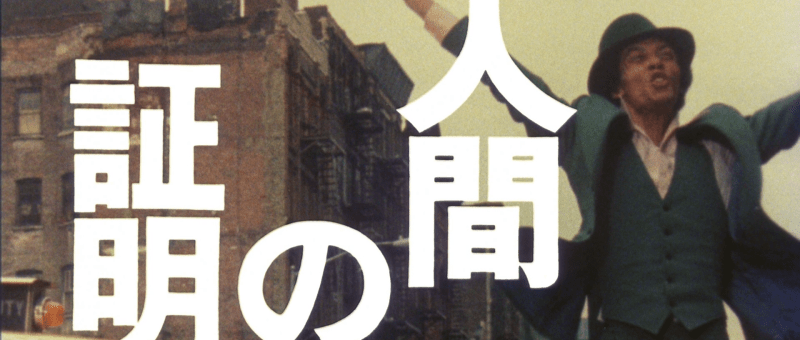
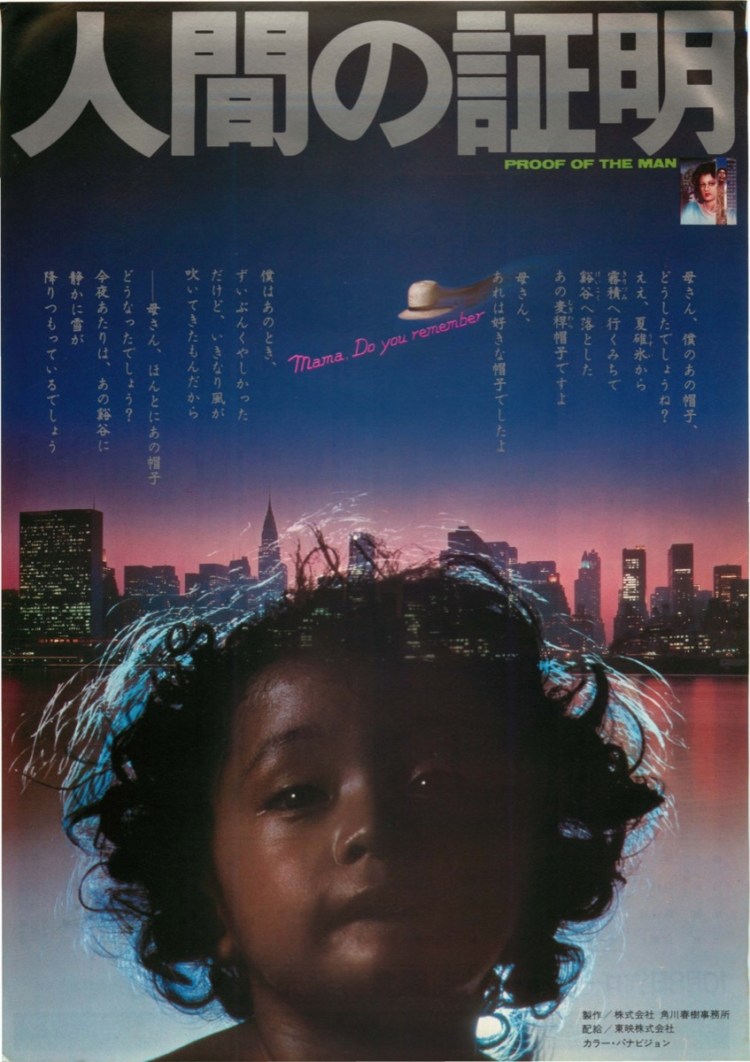
Proof of the Man (人間の証明, Junya Sato, 1977)

proof of the man posterOne could argue that Japanese cinema had been an intensely Japanese affair throughout the golden age even as the old school student system experienced its slow decline. During the ‘70s, something appears to shift – the canvases widen and mainstream blockbusters looking for a little something extra quite frequently ventured abroad to find it. Pioneering producer Haruki Kadokawa was particularly forward looking in this regard and made several attempts to crack the American market in the late ‘70s and early ‘80s before settling on creating his own mini industry to place a stranglehold around Japanese pop culture. Sadly, his efforts mostly failed and faced the same sorry fate of being entirely recut and dubbed into English with new Amero-centric scenes inserted into the narrative. Proof of the Man (人間の証明, Ningen no Shomei) is one of Kadokawa’s earliest attempts at a Japanese/American co-production and, under the steady hands of Junya Sato, is a mostly successful one even if it did not succeed in terms of overseas impact.

Based on the hugely popular novel by Seiichi Morimura, Proof of the Man stars the then up and coming Yusaku Matsuda as an ace detective, Munesue, investigating the death by stabbing of a young American man in Japan. The body was discovered in a hotel lift on the same night as a high profile fashion event took place with top designer Kyoko Yasugi (Mariko Okada) in attendance. After the show, an adulterous couple give evidence to the police about finding the body, but the woman, Naomi (Bunjaku Han), insists on getting out of the taxi that’s taking them home a little early in case they’re seen together. On a night pouring with rain, she’s knocked down and killed by a young boy racer and his girlfriend who decide to dispose of the body to cover up the crime rather than face the consequences. Kyohei (Koichi Iwaki), the driver of the car, is none other than the son of the fashion designer at whose show the central murder has taken place.

Like many Japanese mysteries of the time, Proof of the Man touches on hot-button issues of the immediate post-war period from the mixed race children fathered by American GIs and their precarious position in Japanese society, to the brutality of occupation forces, and the desperation and cruelty which dominated lives in an era of chaos and confusion. The only clues the police have are that the victim, Johnny Hayward (Joe Yamanaka), said something which sounded like “straw hat” just before he died, and that he was carrying a book of poetry by Yaso Saiji published in 1947. Discovering that Hayward was a working-class man of African-American heritage from Harlem whose father took a significant risk in getting the money together for his son to go to Japan (hardly a headline holiday destination in 1977), the police are even more baffled and enlist the assistance of some regular New York cops to help them figure out just why he might have made such an unlikely journey.

The New York cops have their own wartime histories to battle and are not completely sympathetic towards the idea of helping the Japanese police. Munesue, of a younger generation, is also harbouring a degree of prejudice and resentment against Americans which stems back to a traumatic incident in a market square in which he witnessed the attempted gang rape of a young woman by a rabid group of GIs. Munesue’s father tried to intervene (the only person to do so) but was brutally beaten himself, passing away a short time later leaving Munesue an orphaned street kid. In an effort to appeal to US audiences, Proof of the Man was eventually recut with additional action scenes and greater emphasis placed on the stateside story. Doubtless, the ongoing scenes of brutality instigated by the American troops would not be particularly palatable to American audiences but they are central to the essential revelations which ultimately call for a kind of healing between the two nations as they each consider the ugliness of the immediate post-war era the burying of which is the true reason behind the original murder and a secondary cause of the events which led to the death of Naomi.

Naomi’s death speaks more towards a kind of growing ugliness in Japan’s ongoing economic recovery and rising international profile. Kyohei is the son not only of high profile fashion designer Kyoko, but can also count a high profile politician (Toshiro Mifune) as his father. Spoiled and useless, Kyohei is the very worst in entitled, privileged youth driving around in flashy cars and going to parties, living frivolously on inherited wealth whilst condemning the source of his funds as morally corrupt citing his mother’s acquiescence to his father’s frequent affairs. Yet aside from anything else, Kyohei is completely ill-equipped for independent living and is essentially still a child who cannot get by without the physical and moral support of his adoring mother. 

Johnny Hayward, by contrast, retains a kind of innocent purity and is apparently in Japan in the hope of restoring a long severed connection as echoed in Saiji’s poem about a straw hat lost by a small boy on a beautiful summer’s day. The words of the poem are later repeated in the title song by musician Joe Yamanaka who plays Johnny in the film and is of mixed race himself. As in most Japanese mystery stories, the root of all evil is a secret – in this case those of the immediate post-war period and things people did to survive it which they now regret and fear the “shame” of should they ever be revealed. Some of these secrets are not surmountable and cannot be forgiven or overcome, some atonements (poetic or otherwise) are necessary but the tone which Sato seems to strike encourages a kind of peacemaking, a laying to rest of the past which is only born of acceptance and openness. Despite the bleakness of its premiss on both sides of the ocean, Proof of the Man does manage to find a degree of hopefulness for the future in assuming this task of mutual forgiveness and understanding can be accomplished without further bloodshed.


Original trailer (no subtitles) – includes major plot spoilers!