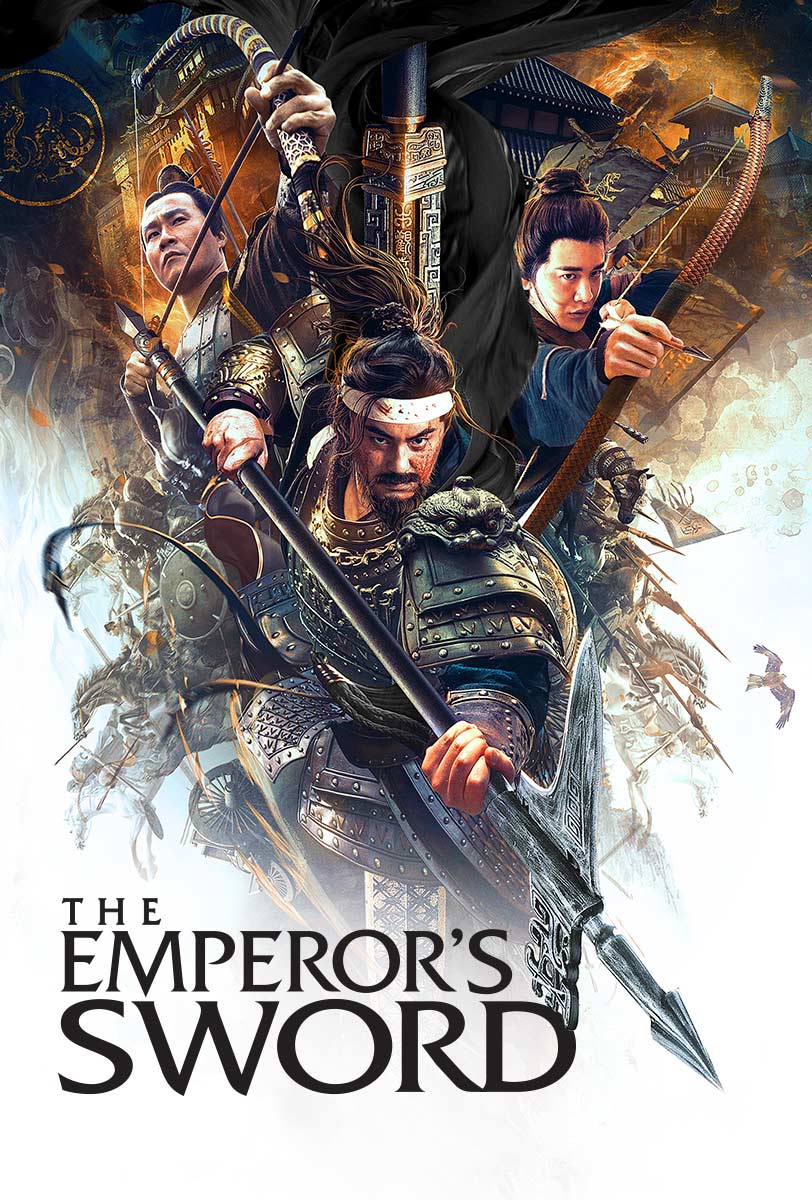
The Emperor’s Sword (乱世之定秦剑, Chen Hao-nan & Zhang Ying-li, 2020)

Can you ever truly preserve peace peacefully or will human greed and envy always triumph over a simple desire for comfort and safety? Chen Hao-nan and Zhang Ying-li’s wuxia drama The Emperor’s Sword (乱世之定秦剑, Luànshì zhī Dìng Qín Jiàn) situates itself at a moment of historical chaos in which the Qin Emperor, having ended the Warring States period through universal unity ten years previously, has died. In order to ensure peace throughout the land, his sword was melted down and recast as two with one residing in a palace and the other with trusty general Meng. Ambitious courtier Zhao Gao, however, has his mind set on usurpation having wiped out most of the previous regime hellbent on retrieving both of the swords in order to secure his grip on power. 

Unfortunately for him, Meng managed to send his daughter Xue away from the falling castle with the sword in hand instructing her to take it to the Tomb Keepers of Qin. Luckily for her, she runs into Jilian, one of the famed “Seven Gentlemen” who were once students of her father’s most of whom retreated to the Red Valley once the wars ended hoping to live lives of peace. Xue’s father brought her up to be kind and considerate, always thinking of others first, but she wonders if there’ll ever be a day with no more war when everyone is free to live happily together. The remainders of the Seven Gentlemen find themselves conflicted, some wanting to help Xue while others are reluctant to involve themselves in worldly conflict having had enough of war, but their belief that they could isolate themselves from external chaos turns out to be an illusion even if it were not also a contravention of their moral code not to stand for justice when the kingdom is threatened. 

A secondary dilemma is that the man hunting them down is in fact one of their former brethren who entered the service of usurping lord Zhao. Conflicted himself, Tian meets with Jilian each essentially asking the other to back off, not get involved in this particular fight, but that’s not something either of them can do leading to a series of emotional showdowns filled with tragic romance, betrayed brotherhood, and divided loyalties. In an echo of Xue’s advocation for a kinder world if one informed by the values of jianghu, Jilian claims he serves the Meng because they really care about the people, unlike Zhao it’s implied with his authoritarian lust for power. Yet in essence the two men have the same mission, not wanting anyone else’s life to be ruined by the chaos of war, only Tian has chosen the iron fist as a means of preserving peace while Jilian has opted for a less oppressive vision of a settled future. 

Still our heroes find themselves in a precarious position as they attempt to stop Zhao Gao completing his evil mission by getting his hands on both the swords. Making the most of their meagre budget, Chen and Zhang choreograph some impressive action sequences as Jilian becomes a veritable one man army taking on hordes of Zhao’s minions while making his way towards the man himself. Xue meanwhile does perhaps become something of a damsel in distress, largely unable to defend herself and reliant on the assistance of Seven Gentlemen foster son Han Jue, appointed to protect in a compromise measure though the expected romance never quite materialises even as she begins to push him towards a more mature contemplation of a better world of peace and justice. She is however pursued by a dogged female assassin with brotherhood issues of her own who remains hot on her trail despite the fecklessness of her evil middle manager boss Lord Wei who is every inch the cowardly wuxia villain. In true jianghu fashion, the good guys don’t always win and are heavily punished for the contraventions of their codes but eventually permit good to triumph over evil in successfully conveying the sword to a more just custodian. 


The Emperor’s Sword is released in the US on Nov. 9 on digital, blu-ray, and DVD courtesy of Well Go USA.

US release Trailer (English subtitles)

All About My Sisters (家庭錄像, Wang Qiong, 2021)

Following a series of demographic fluctuations including decreased infant mortality and increased life expectancy, the Chinese state began to impose population controls in the early 1970s finally introducing the infamous One Child Policy in 1980. Though the name is perhaps a misnomer given that numerous exceptions existed permitting certain families such as those in rural areas to have two children, the effects of the policy’s often violent and inhuman enforcement continue to linger despite its vast relaxation with most now permitted to have up to three children in an effort to combat the ironic side effect of China’s rapidly ageing society. Wang Qiong’s All About My Sisters (家庭錄像, Jiātíng Lùxiàng) is, quite literally, about her sisters but also all of the women of China past and present whose lives continue to be defined by cruel and thoughtless authoritarian government along with outdated patriarchal social codes. 

The sadness in her own family, however, locates itself in the liminal figure of her younger sister Jin, the family’s third child born at the height of the One Child Policy and therefore in some senses illegal. As Qiong’s mother Xiaoqing later recounts, she became pregnant seven times and each time a girl. She had four abortions, but was still determined to conceive a son in order to perform what she saw as her filial duty. Despite undergoing partial sterilisation in 1992, a country doctor helped her to maintain one functioning ovary expressly because she had not yet had a male child, Xiaoqing eventually had a son, Sifan, in 2002, but prior to that had already made the difficult decision to opt for a late term abortion when pregnant with Jin in the conviction the baby would be another girl. Ambivalent in her decision she also took herbs which she believes were responsible for counteracting the effects of the injections she was given to induce abortion allowing Jin to survive, but because of their poverty and the stringency of the One Child Policy Xiaoqing and her husband Jianhua decided to abandon the baby hoping someone who had a son already would take her in. Having left her outside an orangery, the couple were distraught to learn that Jin had only been moved to a better location outside a school where she apparently lay for several days. Eventually the decision was taken to retrieve her, Jianhua’s mother persuading his sister Jinlian and her husband Zhenggen to raise the child alongside their son Jun. 

This awkward situation has continued to present a fault line in the organisation of both families, Jin a member of both and neither at the same time. Having been lovingly raised by Jinlian and Zhenggen as their own until her early teenage years, it was impossible for Jin to avoid the reality of her abandonment and the knowledge that it would not have happened if she had been male. Though she lived in a different village, most seemed to be aware of the circumstances of her birth with local children mocking her for having been “picked out of the trash can”, a cruelty even more chilling on hearing the accounts of Qiong’s parents who recall being told by a doctor that if they did not want the baby who had been born healthy they should throw her in the bin then and there. Qiong herself recalls seeing the corpses of other late term abortions in a gutter on her way to school almost all of them female. The One Child Policy may not be so draconian as it once was, but the patriarchal mindset is still very much in place. Qiong’s older sister Li is currently pregnant with her third child and shocks her sister by revealing that she plans to have an abortion should the baby be another girl in order to avoid displeasing her husband. 

Li already had a son from a previous marriage who is, perhaps tellingly, not seen here and does not seem to be living with her presumably having remained with the father’s family in order to carry on their name. Asking her mother why everyone continues to value male children over female, Xiaoqing reflects that daughters become a part of someone else’s family when they marry and thereafter are responsible for looking after their in-laws. Only by having sons and gaining daughter-in-laws can you expect someone to be around to care for you in your old age.

It’s this rigid definition of family units which has caused so many problems for Jin who continues to refer to the uncle aunt who raised her as her parents while careful to refer to Xiaoqing and Jinhua as “your mother and father” when talking to Qiong, yet also encouraged to participate in filial rituals presenting gifts to her birth parents. The same problem occurs at her wedding when deciding which set of uncles should sit at the top table given her peculiar situation of having two sets of parents, worrying if her young son Chengxi will later be confused and wonder why it is he has three grandmas and grandads. For her part, she often loses her temper with him telling him that he’s a “useless baby” and “anyone is better than you”, a particularly heartbreaking moment occurring some years later while she berates him for having apparently bitten another child at school as he sadly removes a little paper heart from his forehead as if agreeing with her that he doesn’t really deserve it. Having married young trying to forge her own family while unable to repair the rifts with her parents and siblings, she contemplates leaving her husband who struggles with employment and has a gambling problem but ultimately decides not to because she doesn’t want her son to “live in a broken family” as she has done while simultaneously making him a “left behind child” as they head to the city in search of work and a little space from Jin’s overly complicated family situation. 

Even as she describes her father as “abusive”, and depicts her mother as a difficult person, Qiong is also careful to frame their actions within the confines of their times, the ultimate villain the cruel inhumanity of the One Child Policy. Xiaoqing’s brother was a local official in charge of the policy’s enforcement and tearfully declares himself haunted by the memory of exposing two of his own children in a forest behind the hospital in which they were born, preferring to regard it as water under the bridge and simply a consequence of the political reality he would have been unable to resist even had he chosen to. Meanwhile, Qiong’s elder sister remains somewhat complicit equally unwilling to confront a reality she sees as unchangeable while irritated by Jin’s attitude describing her as “childish” seeing as she is already a mother herself and should therefore “understand” the circumstances of her birth. We see countless signs in doctors’ offices reminding patients that “sex selective testing and abortion are prohibited”, but they only serve to remind that this is obviously something many people still consider when faced with the nation’s ever increasing wealth inequality and persistent patriarchal social codes which value sons over daughters. A complex examination of the ramifications of the One Child Policy through the prism of one particular family, Wang’s raw, personal documentary is an unflinching condemnation of repressive authoritarianism but also of continuing female subjugation in an unequal society. 


All About My Sisters screens in San Diego on Nov. 3 as part of this year’s San Diego Asian Film Festival

Trailer (English subtitles)

Asian Pop-Up Cinema Announces Xie Fei Streaming Retrospective & Cloudy Mountain Drive-In

Asian Pop-Up Cinema returns this November with another free streaming series hosted by Smart Cinema USA in the US & Canada Nov. 12 – 21 offering a rare chance to see a mini retrospective from legendary 4th Generation filmmaker Xie Fei, as well as a free screening of the latest big budget action movie from Mainland China Cloudy Mountain at Chicago’s ChiTown Movies Drive-in on Nov. 13.

Xie Fei: A Retrospective

Our Farmland  (我們的田野, 1983) 

Xie Fei’s 1983 autobiographical drama follows the lives of five students sent to the countryside for “reeducation” during the Cultural Revolution as they continue to search for meaning in the years afterwards.

A Girl from Hunan (湘女萧萧, 1986) 

Co-directed with U Lan, A Girl From Hunan follows the fortunes of Xiao Xiao as she is married off at 12 years old to a boy who is only an infant and finds herself more mother than wife only to later fall for a handsome farm hand.

Black Snow (本命年, 1990)

Melancholy post-Tiananmen noir starring Jiang Wen as a man deprived of an education by the Cultural Revolution whose every attempt to move forward with his life after leaving a labour camp is continually thwarted.

Woman from the Lake of Scented Souls (香魂女, 1993) 

Also known as Woman Sesame Oil Maker, Xie’s adaptation of the novel by Zhou Daxin follows a middle-aged woman who has achieved success selling sesame oil after being married off as a child bride to a man with a lame leg and decides to use some of her money to find a bride for her son who has learning difficulties and suffers frequent epileptic fits.

A Mongolian Tale (黑骏马, 1995) 

(Available November 21 only)

Adapted from Zhang Chengzhi’s novel Black Steed, this 1995 Mongolian drama follows two childhood sweethearts whose romance is disrupted when the boy must leave for the city and the girl is married to someone else.

Song of Tibet (益西卓瑪, 2000) 

Historical epic set against the backdrop of Tibet’s turbulent 20th century history following the three loves of one woman.


At the Drive-In

Nov. 13, 5pm: Cloudy Mountain (峰爆) 

Big budget action drama from Li Jun in which estranged father and son scientists must work together to save the town when unexpected geological fluctuations destabilise a soon-to-be completed tunnel leading to a chain reaction of possible disasters.

The Xie Fei retrospective streams for free in the US and Canada via streaming app Smart Cinema USA Nov. 12 – 21. Tickets for Cloudy Mountain at the drive-in on Nov. 13 are also free but must be reserved in advance. Further details can be found on the official website and you can also keep up with all the latest news by following Asian Pop-up Cinema on  FacebookTwitter,  Instagram, and Vimeo.

Pistol (手枪, Lv Huizhou, 2020)

The contradictions of the modern China drive one young man clear out of his mind in Lv Huizhou’s elliptical street punk noir, Pistol (手枪, Shǒuqiāng). Shot in a washed out monochrome and seemingly set some time after the Beijing Olympics, Lv’s anarchic drama sees its hero develop unexpected superpowers as if to combat his sense of impotence and impossibility while constantly uncertain whether his newfound abilities are “real” or merely a figment of his declining mental state as he chases lost love through the rundown backstreets of a Beijing slum.  

Construction worker Mengzi (Zhang Yu) claims he likes Beijing, after all it’s an “international city” always busy with crowds. Many people long to come here, as perhaps he once did, though you can’t say the city has served him particularly well. He lives in a tiny room with a bunk bed and no functioning bathroom which is why he pees in a bottle into which he’s already discarded his cigarette and digs a hole in the woods every time he needs to do a number two. The only thing keeping him going is his doomed relationship with sex worker Yaoyao (Wang Zhener) who just wants to make as much money as she can while she’s young. Mengzi may have stolen the “international city” line from her, he often seems to repeat things said to him when he speaks at all, but Yaoyao also claims to like Beijing because of the opportunities it offers her, citing the story of a woman she knew who quit sex work after only three years with enough money to buy house in her home town, now walking around dripping with jewellery like the queen of all the land. When Yaoyao goes missing, Mengzi fetches up at the salon where she worked that’s really a front for a brothel run by a local gangster and raises hell, picking a fight with the gangster’s wife and in the first of many flashes of spontaneous violence smashing her mirror. 

The ill-advised rescue mission gets him nowhere, the gangster turning up at the restaurant where he’s once again adding to his tab to tell him she’s been sold on to a club before teaching him a lesson. This is where we came in, or it might as well be, with Mengzi chased through the narrow city alleyways until finally cornered and beaten. Mengzi is in many ways a man on the run from himself. His room is papered with posters for macho crime dramas such as Dirty Harry, The Man With No Name Trilogy, and A Better Tomorrow 2, Taxi Driver pinned incongruously between boy band Super Junior and a girl group in air hostess outfits. He is God’s lonely man, obsessing over misplacing his high school graduation certificate while failing to convince his boss to give him a better job. At his lowest point, he digs a hole and crouches down pointing his fingers at gaggle of chickens and pretending to shoot only to hear a gunshot and on closer inspection discover a very dead hen. 

In the days since losing Yaoyao, Mengzi hadn’t done much of anything save mope around, having a tourist day with streetwise kid Laizi (Hou Xiang) visiting Tiananmen Square and the Olympic stadium, both places Yaoyao lied to her mother about visiting trying to make her think her Beijing life was better than it was. His strange visions and violent meditations are often intercut with comforting memories of his time with Yaoyao alone in her bohemian flat, a poster of Chicken Run ironically hanging on her wall. Flashing into colour, the billboards around the stadium are filled with pretty pink flowers and play the Olympic song about being one big family, red solarised footage of the opening ceremony later filling Mengzi’s mind. Family seems to be something Mengzi doesn’t really have, a perpetual orphan wandering around unanchored and resentful of the society that won’t let him prosper. Losing Yaoyao he vows revenge with his new weapon, which for some reason only works with his rear end partially exposed, literally taking aim at social inequality in the midst of a trendy club from which he concludes he may never be able to retrieve his lost love. 

Shot in a washed out black and white reflecting Mengzi’s sense of despair, Lv’s frantic handheld photography mimics his paranoid psychology with its noirish canted angles and extreme sense of claustrophobia while introducing a note of psychedelic uncertainty as even Mengzi himself cannot be sure if his fingers really shoot bullets or he’s in the midst of a psychotic break possibility connected to the traumatic event that opened the film reflected in his own eventual solarisation. An elliptical, ethereal journey through the backstreets of Beijing as they exist in the mind of a crazed young man denied a future and the home he’s so desperate find, Pistol has few kind words for the modern China but perhaps sympathy for its frustrated hero. 


Pistol screened as part of this year’s London East Asia Film Festival.

Ripples of Life (永安镇故事集, Wei Shujun, 2021)

“I had to let it happen, I had to change” the rather incongruous voice of Madonna insists, finding a note of defiance on reaching the climactic “so I chose freedom” as the movie version of Don’t Cry for Me Argentina erupts over the closing minutes of Wei Shujun’s Ripples of Life (永安镇故事集, Yǒng’ān Zhèn Gùshi Jí). Like much of the film, the use of the song is ironic but still somehow poignant its repurposing perfectly expressing the interior lives of each our “characters” who are all in some way or another looking for escape or at least a way out of personal dissatisfaction while trying to film a movie about the inertia of life in a small town in rural China where nothing ever happens. 

Divided into three segments, Wei’s film is as much about the positioning of rural China as it is about “cinema”. A Beijing film crew descend on this provincial small town with their own preconceived notions of rural life, determined not to “romanticise” country living but nevertheless bending it to their will looking only for signifiers that align with their mental image of the hinterlands of their nation. Only latterly do they realise that for true authenticity the film should be in Hunanese, but none of them speak it which is a significant stumbling block in their efforts to overcome ongoing creative differences over the script. 

Wei is, in part, satirising the recent trend in Chinese indie cinema for gritty stories of rural poverty usually filmed with depressing naturalism determined to stress the harshness of life outside of the cities amid the nation’s ever increasing wealth divide. The first chapter in part does this too, later shifting away from early Jia Zhangke towards the neon yearning of Wong Kar-wai but always undercut with a sense of meta irony not least in its choice of heroine. The infinitely cornered Gu (Huang Miyi) longs for “a different life”, trapped in an unsatisfying marriage to a gruff man she accuses of working night shifts to get away from their toddler daughter whom she is forced to take to work with her while he constantly undermines all her parenting decisions based on articles sent by his mother. A woman at the market coos over the baby and asks when the next one’s due, Gu crestfallen realising she’s trapped in this small-town existence where nothing ever happens. But then the film crew begin to notice her, telling her she has a “real cinema face” and likening her to Kim Min-hee of whom she has never heard. Their admiration is again ironic, considering they were looking for the authentic face of rural China but taken with this cinematic vision, yet it’s also callous and cruel. They give her false hope, allowing her to dream as she puts on makeup and models costumes only to be forgotten once again when the “real” actress arrives, cast back into a life of quiet desperation. 

Perhaps this too is another unfair stereotype assuming that everyone from a small town longs for escape, but Gu’s story does indeed mimic the earlier parts of the screenplay for the film within the film which the director sees as a tale of a small-town woman’s awakening to independence and agency while the screenwriter Chunlei (Kang Chunlei) opts for an old-fashioned take on consumerist corruption. Shifting away from Gu towards formerly successful actress Chen Chen (Yang Zishan), the second arc pulls towards Chunlei as Chen Chen searches for escape from a rut in her career apparently having left her commercial agent to do more earnest work but doing not much of anything for the previous year. In another meta touch, she is from this rural backwater and like her character in the film chose to leave but now admits that sometimes she misses life in the country. As someone else puts it, city folk all want a return to simple rural life but can’t accept the reality of it which is why the plan to rejuvenate the area largely relies on tourism including the building of a waxwork museum of which Chen Chen is expected to be a notable inclusion as a local girl made good. 

Chen Chen’s image has once again been commodified, stripping her of power or agency over her name and face but on returning to Yong’an she is forced to realise that she is no longer of there, this place where nothing ever happens has already changed while she exists on a slightly different plane. Realising the maid covering her room is a childhood friend she cheerfully tries to reconnect but the woman is awkward and evasive, embarrassed perhaps to acknowledge that she is a mere hotel employee while Chen Chen has achieved her dreams of stardom. Attempts to reconnect with two other male friends similarly backfire, the first a typical provincial bureaucrat who uses her for official business without her consent while a meal with the other’s family proves even less joyful as she endures countless barbed comments from his snippy wife who eventually tries something similar in asking her to find a job for her son on the film. As she’s leaving he asks her the same question the screenwriter obsessed over, suggesting that she left for mercenary reasons only for her to answer that she didn’t want to live like his wife, or indeed like Gu, but wanted “a different life”. 

This battle between image and authenticity lies at the heart of the conflict between the director, a hipsterish festival darling with a sideline in hip hop, and the schlubby screenwriter himself perhaps trapped in the previous generation of Chinese filmmaking but also in his way more idealistic believing in cinema as an art form which can move the world rather than mere entertainment created for commercial gain. He accuses the director of hypocrisy, exploiting the arthouse aesthetic for critical credibility and with it a vision of rural China, while the director criticises him for his old-fashioned mentality in seeking melodrama over message. Shot in cooling blues their heated arguments are noticeably dispassionate, Wei even descending into some ironic iconography which sees the pair talking through their issues with a wise man film critic on a boat on a misty river. The ironic conclusion brings the whole affair full circle as the words of Madonna as Eva Peron come to speak for each of the protagonists, Gu now angrier, impatient as she shifts dishes while her husband idles nearby, and Chen Chen forced to pose next to a wax figure of herself during a launch ceremony for this film in which the script has yet to be “finalised”. “But nothing impressed me at all” the song continues, “I never expected it to” hinting at the contradictions of the modern China in the internalised defeatism of small-town dreams and the cynical filmmakers who exploit them. 


Ripples of Life screens on Oct 11 & 12 as part of this year’s BFI London Film Festival

Wuhan Wuhan (武汉武汉, Chang Yung, 2021)

“Safety isn’t the issue right now. We have to keep moving forward” a harried doctor replies to a cabman’s question, like most it seems just getting on with it until it’s over. Like Wu Hao, Chen Weixi & Anonymous’ 76 Days, Chang Yung’s Wuhan Wuhan (武汉武汉, Wǔhàn Wǔhàn) documents the final stretches of the city’s intense lockdown beginning in February 2020 yet where 76 Days was largely a exploration of grief, panic, and confusion Chang’s documentary assembled remotely from 300 hours of footage shot on the ground by local camera crews perhaps reflects a new accommodation with the nature of the pandemic in its empathetic depiction of ordinary people going about their lives as normally possible. 

The first trail Chang picks up is that of factory worker Yin who has begun working as a volunteer driver ferrying medical staff between the hotel where they are being housed during the lockdown and the healthcare facilities where they are working. Yin explains he took the job more or less for something to do rather than be bored at home, but it also places a strain on his relationship with heavily pregnant wife Xu who is intensely anxious about catching the disease or that there may be other complications with the birth but no hospital space available to treat her. Through his various fares, Yin gets to see the other side of the pandemic as the medical staff honestly describe the situation on the ground which is often in contrast with the impression given by official channels. 

As for the medical staff themselves, ER Chief Zheng is quick to point out that much of the PPE they’ve received is not fit for purpose while his staff is already traumatised and close to burnout. Later a team of psychiatrists is sent in to provide support both to the frontline health workers and to the patients, most of whom are extremely grateful to the doctors and nurses if sometimes frightened and angry though one they’ve nicknamed grumpy grandpa continually refuses treatment and otherwise makes a point of pigheadedly insulting his nurse. Psychiatrist Zhang is also however under strain, learning via telephone that her father in her hometown has been diagnosed with a serious illness. Like many she is away from her family with no idea when she’ll be able to return to them. Nurse Susu, in the same position, receives a raw and difficult phone call from her small daughter who breaks down crying, unable to understand why her mother’s not coming home while all she can do is listen in heartbreak unable to explain or make a promise she knows she can keep as to when she’ll back. Zheng likewise makes calls to his wife and daughter, but also reveals that he’s asked an old friend to watch over them should the worst happen. 

Nevertheless, people try to find the small moments of joy where they can. At a temporary hospital for those whose cases are mild to moderate, a mass dance routine breaks out while patients otherwise try to keep active through group tai chi supporting each other while Zhang runs group therapy sessions on the other side of the wall. Worried part of the problem is that the patients can’t bond with them because the PPE erases their identity, some of the doctors print out photos to display on their chests while others are always quick to help, a collection of local hairdressers offering free haircuts to medical personnel to help prevent contamination and make PPE more comfortable. 

The overall impression is of a community managing, working together to get through the crisis while quietly getting on with the job. Chang apparently made his documentary partly with the rise in anti-Asian hate crime in mind, hoping to “humanise” the citizens of Wuhan by showing them as ordinary people living in extraordinary circumstances though others of course may read it slightly differently in its deliberate avoidance of the horrors of the virus save a few scenes of grieving relatives or terrified patients, the only indication of anxiety caused by the system seen in those at the temporary hospital hearing it’s about to close down and fearful of what might happen to them next. Nevertheless Chang’s empathetic documentary is at its best capturing the everyday reality, be it a husband running all over town trying to find somewhere selling a crib or a woman cooking yams in her room because she can cope with the virus but another one of those box meals might push her over the edge. 


Wuhan Wuhan streams in the US Oct. 6 – 12 as part of the 13th Season of Asian Pop-Up Cinema. It will also screen at Chicago’s Chinese American Museum on Oct. 9.

Original trailer (English subtitles)
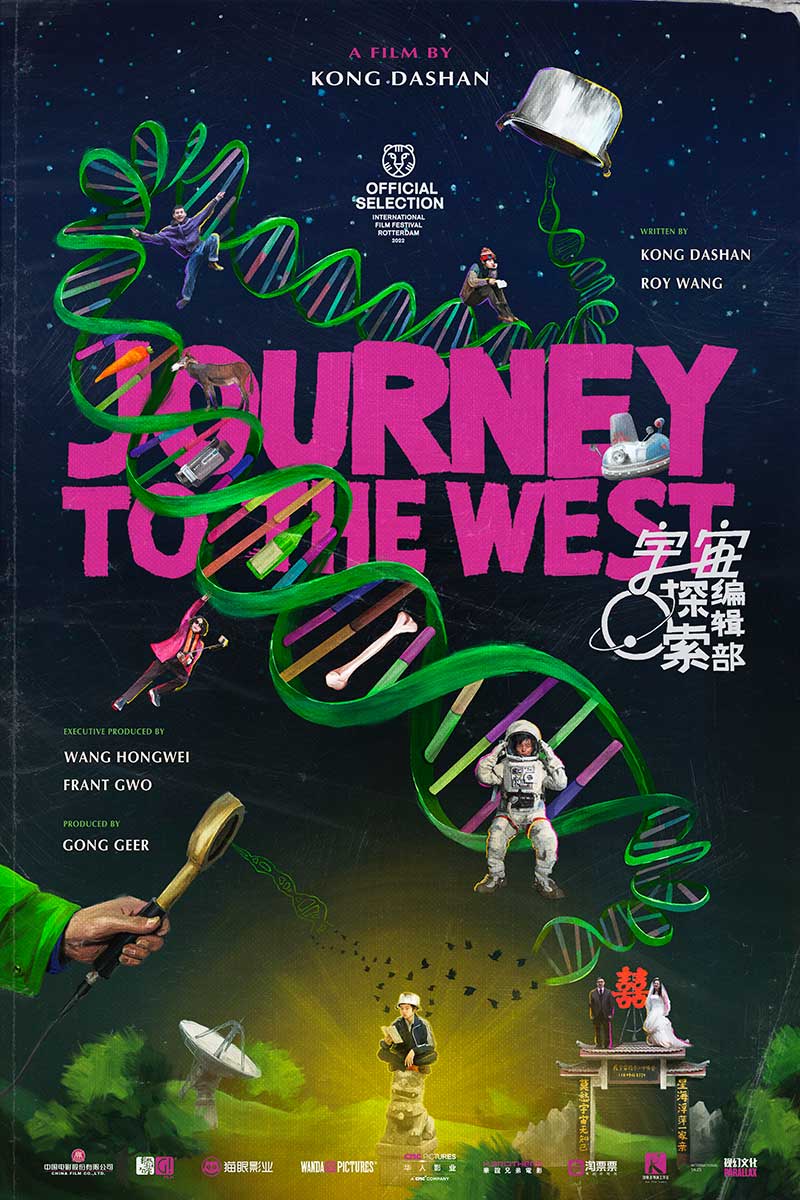
My Dear Friend (好友, Yang Pingdao, 2018)

“What’s right or wrong doesn’t matter anymore. Being at peace is what matters.” an old man insists, attempting to help his troubled companion regain a sense of himself at the end of his life. A magical realist fable, Yang Pingdao’s My Dear Friend (好友, Hǎoyǒu) quite literally sends its elderly heroes back into the past as if they had become unstuck in time but also bears witness to the inexorability of fate as events seem only to repeat themselves from one generation to the next. 

The film begins, however, with a literal intrusion of the present into the past as city girl Jingjing (Gabby So) drives her red saloon car, more suited to a morning commute than a trek through the mountains, into a rural village, rudely barging into the home of elderly couple A-Fang (Jiang Hong) and Shuimu (Luk Suk-Yuen AKA Robert Loh) in search of their grandson Yiming. Jingjing claims that she is pregnant and Yiming is the father, but now he’s ghosted her so she’s come to make him assume his responsibilities. Unfortunately Yiming isn’t there, but rather than scandalised or ashamed as one might have assumed them to be, A-Fang in particular and her husband seem to be both relieved and excited to the extent they don’t really want Jingjing to leave which might explain why her car won’t start the next morning. 

While staying with the elderly couple, Jingjing hears that absent fathers run in the family. Shuiming’s father disappeared suddenly without warning or explanation leaving his mother to raise him alone, while his son also abandoned Yiming to run off with an impoverished bar hostess who had four children of her own. Yiming’s mother remarried, leaving the boy with his grandparents. Jingjing asks why Shuimu didn’t leave and he doesn’t answer her, but following him around she may have stumbled on the answer in his 60-year, apparently secret friendship with a man of the same age who appears to be mute and intelligible to Shuimu alone. Zhongsheng (Lu Haoquan), as the man is called, is a man without a past apparently having no memory before the age of ten. Once her car is fixed, Shuimu asks Jingjing to drive them to another village 300km away where Zhongshen thinks he may be from, obsessed with a rumour about a child who survived a massacre by “four psychos” after falling into the river. 

Things that drift loom large. Shuimu muses on a giant fish head apparently washed down by the voiding of the dam the head then linking back to a strange pipeline that reminds them of a giant whale only without its mouth as if something had been uncapped or opened to the elements. Travelling through mist and fog, the trio stop their car in what seems to be the meeting of a wedding and a funeral as a procession passes by them made of men and women from another time, wearing donkey jackets and silently carrying umbrellas, seemingly filled with solemnity. Shuimu and Zhongsheng encounter younger versions of themselves, a version of their story replaying itself as the boys become men who might equally be Yiming and his friend in this strange place where past and present co-exist. 

Yet Shuimu is perhaps looking for the truth of himself as much as his friend, Zhongsheng’s name apparently originally his only his mother changed it on the advice of a fengshui master worried he lacked water (水 shui) and wood (木 mu) though Shuimu liked the other name better. He also gives Zhongsheng his own birthday, making of him another self, in a sense a secret shadow self unable to speak though Shuimu is always able to interpret his thoughts perfectly. He sees a similarity in Jingjing and A-Fang, one which she also sees, a little jealous of the younger woman’s freedom lamenting the simplicity of her wedding and harshness of her life since. Both sharp tongued they’ve become prickly in the unreliability of men, each searching A-Fang like Zhongsheng’s mother calling out at night for her wandering husband only hers always comes back. Don’t become like me, she tells Jingjing, pledging to drag Yiming back and give her the proper wedding she never had. 

Zhongsheng complains A-Fang haunts him like a phantom, yet everyone here is already a ghost literally haunted by historical trauma and parental failure. Shuimu and Zhongsheng search for truth and identity, but find themselves in a place they no longer recognise which in turns claims not to know them. Perhaps truth isn’t so important, Shuimu claims, as peace, deciding the entire earth is a grave, make your offerings where you will. Aided by the rolling mists, Long Miaoyuan’s ethereal photography adds to the sense of mythic grandeur in this long sad story of enduring male friendship and perpetual orphanhood carried away in the grand ever flowing river of life and death.


My Dear Friend screens at Curzon Hoxton on 18th September as part of this year’s Queer East.

Original trailer (Simplified Chinese / English subtitles)

Never Stop (超越, Han Bowen, 2021)

“And what comes after the finish line?” an anxious novice asks of his mentor who has little answer for him, his singleminded pelt towards the end of the road later convincing him “running never leads anywhere” even as he continues to run away from his sense of shame and inadequacy. One of a number of sporting dramas emerging in the run up to the Tokyo Olympics, Han Bowen’s Never Stop (超越, Chāoyuè) ultimately suggests that in life there is no finish line while “winning” is perhaps more a state of mind than a medal and a podium. 

This is however a lesson former champion Hao Chaoyue (Zheng Kai) struggles to learn after his sprinting career comes to an abrupt halt. In 2009, he won gold in the Asian Games and publicly proposed to his reporter girlfriend in the middle of a packed stadium. 10 years on, however, he’s a washed up middle-aged man whose business is failing and marriage falling apart. His protege, Tianyi (Li Yunrui), is still flying high but approaching his late ‘20s is now also experiencing similar problems as Chaoyue had previously compounded by the fact he suffers from ADHD and is prevented from taking his medication because of anti-doping regulations which has left him mentally drained through overstimulation. 

Later, Chaoyue describes the athletes’ existence as like that of a lab rat forced to run around for little more reward than food and water. Nevertheless the source of all his problems is in his stubborn male pride, unable to accept the reality which is that he lost to nothing other than time in the perfectly natural decline of his ageing body which coupled with the extent of his injuries left him unable to maintain the peak physical performance of his earlier career. Petulantly quitting his original team, he tries an international super coach who refuses to sugarcoat the reality that Chaoyue has simply aged out of international athletics while throwing in a few racist micro-aggressions for good measure. Unable to move on, he attempts to trade on past glory but ironically continues to run away from his problems in refusing to accept he has no head for business while discouraging his young son from pursuing athletics despite his apparent love and aptitude for sports. 

Tianyi’s plight meanwhile highlights the external pressures placed on sporting idols in the internet age, his career suddenly on the rocks when he’s spotted taking pills and and damages his reputation losing his endorsement deals. Having idolised Chaoyue and essentially followed in his footsteps he now finds himself directionless and wondering what to do with the rest of his life. The appeal in running for him at least may have been in, as Chaoyue had described it, the intense focus and single-mindedness of the short distance sprinter in which everything except the runner and the finish line disappears, but without his medication Tianyi finds it increasingly difficult to concentrate often slow off the blocks in his initial confusion. 

The problem the runners face is ultimately one of self-confidence, motivated to give up on believing that they cannot fulfil the internalised ideal they have of a champion. Chaoyue remains unwilling to “lose”, running his business further into the ground and damaging his relationships with those around him out of stubbornness rather than making a strategic retreat or attempting to reorient himself in accepting he may need help with making his sneaker shop a conventional “success”. Feeling betrayed, he refuses to let his son run because running doesn’t lead anywhere but continues to run away from the humiliating spectre of failure rather than face it head on. Tianyi meanwhile looks for guidance and unable to find it struggles to find independent direction, but in confronting each other the two men begin to regain the confidence to keep going redefining their idea of success as striving for rather than reaching the finish line.

An unconventional sporting drama, Han’s inspirational tale nevertheless promotes perseverance and determination as the former champions overcome their self-doubt to realise that you don’t have to just give up if you feel you’ve lost your way and that there are always other ways of winning. There may be no finish line in life, but there are ways to go on living when your sporting life is over not least in supporting the sporting endeavours of others or as the post-credits coda less comfortably suggests monetising your name brand to build a sportswear empire that enriches both yourself and the nation. A late in the game slide towards a patriotic finale cannot however undo the genuine warmth extended to the struggling athletes as they resolve to keep on running no matter what hurdles lie in their way.


Never Stop streams in the US Sept. 15 to 21 as part of the 13th Season of Asian Pop-Up Cinema.

Original trailer (English subtitles)
Ascension (登楼叹, Jessica Kingdon, 2021)

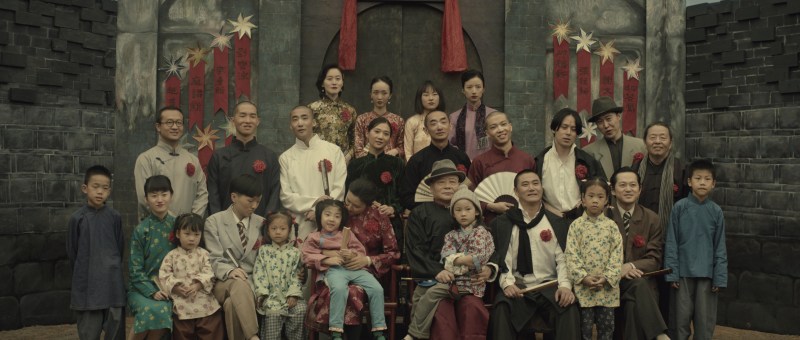
Factory worker inspecting the head of a sex doll during assembly in Zhonghan City, Guangdong Province, China, as seen in Ascension, directed by Jessica Kingdon. Image courtesy of MTV Documentary Films.

“Work hard and all wishes come true” according to a propaganda slogan pasted on a wall in Jessica Kingdon’s interrogation of the Chinese Dream, Ascension (登楼叹, dēng lóu tàn). Working her way through its various layers, Kingdon’s observational doc addresses the ironies of the contemporary society defined by its intense and ever growing wealth inequalities. According to a speech made by a dubious CEO approaching the film’s conclusion, China is a “fair society” his logic being that only the morally responsible are entitled to profit and society will find ways to rob those who’ve acquired their riches though illicit means of their ill-gotten gains while the trickle down economy otherwise ensures “wealth redistribution”. 

His justifications are, it has to be said, hard to accept. Kingdon opens the film with an aerial shot of a rooftop swimming pool in which the trio of women cleaning it appear tiny next to its comparativeness vastness as they care for a facility they may not be entitled to use. Descending to street level, we’re assaulted by PA speakers advertising for labour with promises of comfortable work, some which can be done sitting down, with accommodation in spacious dorms with aircon thrown in. Anyone would think there must be some kind of tremendous labour shortage, but the wages are lower than low, and employers apparently still picky over what kind of people they employ, stating an age cap of only 38 while banning those with criminal records or tattoos along with dyed hair and piercings. The excessively tall are also not welcome hinting at conditions more cramped than the announcements imply. 

Taking her camera inside the factories, Kingdon discovers people reduced to the level of automata, machines among machines mechanically sorting cooked poultry or stamping packaging while watching TV drama on smartphones. Workers complain that their bosses cheat of them of their pay and feel the need to bribe them by buying lunch to curry favour. Yet Kingdon also uncovers the absurdity of the everyday, shifting from a production line producing plastic bottles to an artisan workshop staffed almost entirely by women in cheerful yellow outfits with red gingham aprons crafting uncannily realistic sex dolls presumably for extremely wealthy, sometimes demanding clients. A worker stops to snap a picture of the doll’s nipples with a tape measure next to them to send for approval, while others obsess over the proper colouring for the areola or complain that the chemicals irritate their skin.

Shifting up a gear, she visits a school for bodyguards where the instructor randomly plays with a little goat for some reason hanging around outside and is then stung by a bee. The need for bodyguards is perhaps another symptom of increasing inequality as the super rich discover their “success” has only made them anxious for their safety. On the flip side, another school is busy training butlers for those enamoured of the trappings of feudalism. The instructor explains that one of her clients got a job as a PA right away and his sole responsibility was squeezing his boss’ toothpaste for him, preparing it in a little cup. Meanwhile across town, others teach proper business etiquette most particularly to female employees. A pretty woman is China’s business card, one enthusiastically points out selling the importance of cosmetics, while another even more dubious course in entrepreneurship has its participants “deciding” to earn millions within the year and then triple the amount in the next five. 

While a woman plumps pillows in a fancy hotel suite, painstakingly stripping a rose of its petals to place on a pair of towels folded into the shape of a swan, the wealthy enjoy leisure time at a huge water park which boasts a tunnel ride through the aquarium where “mermaids” swim alongside sharks and stingrays. Others ride a literal “lazy river” sitting in rubber rings styled like frosted donuts. Guests at a fancy French dinner praise American freedom, while others complain that Westerners criticise China’s human rights record but how can you think about human rights when you’re so poor your entire existence is occupied with survival? Billboards at street crossings bear footage of other people crossing, while a picture of Xi Jinping sits in the corner of a garment factory where they sew clothes embroidered with the logo “Keep America Great” and another worker rolls her eyes at claims the place is haunted. China’s greatest export, it seems, is irony. Kingdon’s beautifully composed shots add to the sense of absurdity as does the score veering from eerie synths to jaunty theme park music implying that the entire nation has in a sense become a playground for the rich and powerful built on wilful exploitation and the thoughtless cruelties of intense consumerism. 


Ascension opens the 13th Season of Chicago’s Asian Pop-Up Cinema on Sept. 15 before opening at New York’s IFC Center on Oct. 8 courtesy of MTV Documentary Films.

Anima (莫尔道嘎, Cao Jinling, 2020)

“The trees are not yours. You can’t protect them” an adopted son is repeatedly told, except they are his to the extent that they belong to everyone and the consequences of not protecting them, as he will sadly discover, may prove catastrophic. Set mainly in the 1980s in the remote Inner Mongolian mountain region of Moerdaoga National Forest Park, Cao Jinling’s timely eco drama Anima (莫尔道嘎, Mòěrdàogá) asks what happens when you pull the pegs out of the earth and then take them to market, linking the ‘80s economic reforms with the advent of environmental destruction, but eventually finds a kind of serenity in the beauty of the natural world and man’s innate connection with it. 

Linzi (Wang Chuanjun), so named because he was found abandoned in the forest as a baby, recounts his tale as a letter to the son he has never met beginning with the moment of childhood trauma which forever altered his destiny and set him at odds with adoptive brother Tutu (Si Ligeng). Out playing one winter while the grownups hunted, Linzi fell into an ice cave and found himself face to face with a bear. Though he felt sure the bear would not harm him, it panicked on hearing his mother’s cries. Hoping to save his brother, Tutu shot the bear but their mother was also killed and, as bears are sacred to the indigenous Ewenki tribe, finds himself an outcast for this act of spiritual transgression. The three remaining family members move to the edge of the forest in order to evade the bear’s curse, eventually joining the local logging industry though Linzi finds himself conflicted in his love of nature while all around him are content to ride roughshod over its majesty. 

While Linzi remains a guardian of the forest living a traditional rural life, Tutu is modernity personified falling in with a gang of shady gangsters running an illegal logging and smuggling operation. While the smugglers might be thought of as the bad guys, the logging company are little better. Linzi’s boss expresses exasperation with his reluctance insisting that if they don’t cut the trees down the smugglers will while constantly banging on about his quotas. Obsessed with making money and fearful of an oppressive social order, no one is thinking very much about the long term consequences of deforestation even as Linzi tries to explain to them that it takes a long time to grow a tree and they’re in danger of running out. When the literal flood comes, it will have devastating consequences for all involved. 

Aside from their differing views on the tradition/modernity divide, the relationship between the brothers further declines when Linzi encounters a feisty widow living alone in the forest (Qi Xi), herself transgressively killing bears for reasons of revenge seeing as her late husband was eaten by one. Linzi shyly falls in love with her, but so does Tutu who finds it difficult to accept the idea that his awkward younger brother has got himself a wife. “I am cursed forever” Tutu dramatically cries after having committed a double transgression of killing another bear and presenting its pelt as a wedding present, and then attempting to rape the bride. So traumatised is he by a sense of spiritual corruption that Tutu no longer feels connected to nature, an exile from the natural world, and self-destructively embraces the worst aspects of modernity believing that he deserves no better. 

Yet even Linzi finds himself betraying his ideals in order to feed his family, falling victim to the “tree breath spell” after participating in the removal of a great old tree. People keep telling him that he doesn’t own the trees and therefore has no right to decide what is done with them, but like everyone else he’s a man of the forest continually displaced while his world is dismantled all around him. He tries to warn the loggers they’re going too far, but they don’t listen to him until it’s already too late. The authorities attempt to fix the problem with a program of “reforestation” but if the price of untempered capitalism is the destruction of the natural world it is nothing more than an act of intense self harm. Linzi attempts to hold back the tide, but is himself exiled from modern society, a sprite bound by the forest unable to leave its boundaries and condemned to watch over it for all eternity as if in penance but also in deep love for the wonders of the Earth which few are now privileged to see. 


Anima screens on Aug. 8 at Film at Lincoln Center – Walter Reade Theater as part of this year’s New York Asian Film Festival.

Original trailer (English subtitles)