 Written by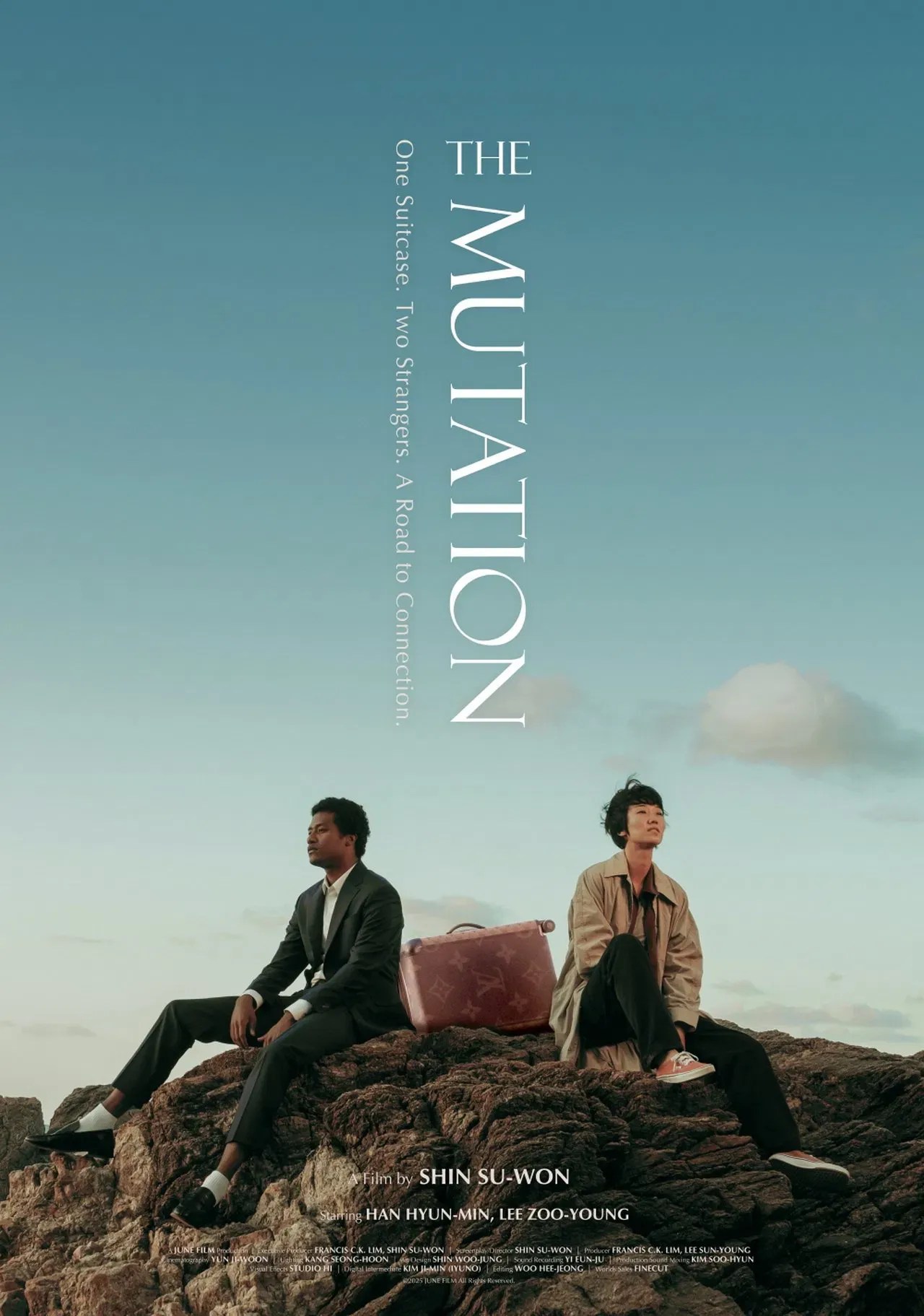
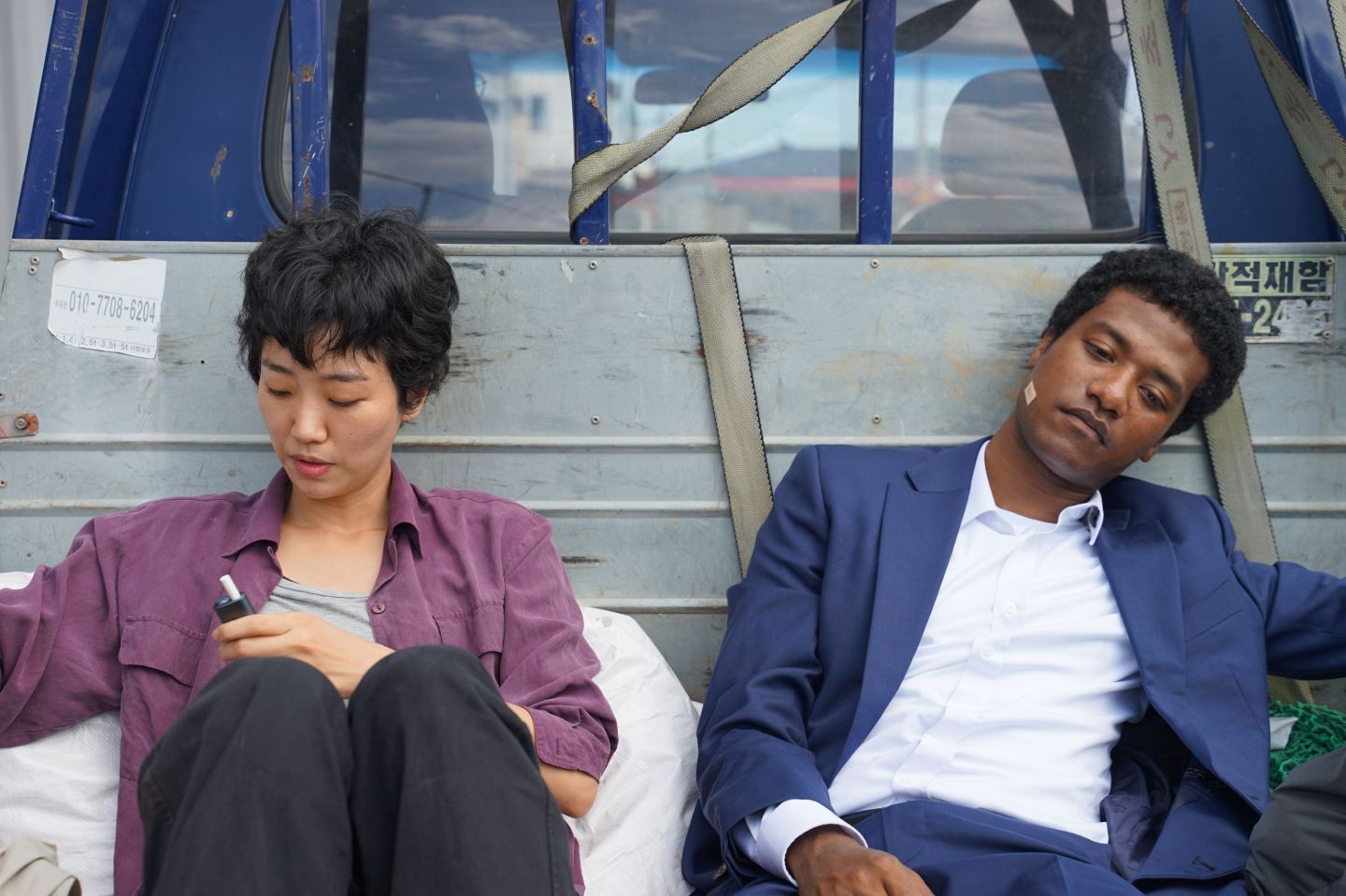
Two people largely excluded from mainstream society bond over a shared sense of loss and loneliness in Shin Su-won’s lighthearted road trip movie, The Mutation (사랑의 탄생). Though the English-language title may sound a little harsh, hinting at some kind of science fiction dystopia, the film is in other ways as the Korean title “The Birth of Love,” implies about self-acceptance and mutual solidarity among those that society has continues to other and reject.
The Korean title is quoted in each of the lives of the protagonists, Se-oh (Han Hyun-min), a man with dark skin who was born to two Korean parents, and Sora (Lee Zoo-young), a gay woman whose former partner took her own life after being pressured into a heteronormative marriage by her conservative mother. Se-oh has been rejected by his family as his father refuses to accept him as his son despite his mother’s assurance that she has remained faithful him. He tries asking an old friend of his mother’s for answers, but she tells him that what matters is only that he was born from love. Sora, meanwhile, discovers a letter written by her late partner Min-ji as a omechild that she titled “the birth of love” and recorded her growing feelings for a female classmate along with the fear that her parents would find out.
Sora’s difference is not visibly obvious in the way that Se-oh’s is, but she still finds that she is excluded from mainstream society. She says that she makes tables because they’re something to be shared rather than used selfishly, but it seems that few people are willing to come to hers despite her instructions to Se-oh that if he got a bigger table for his apartment people would soon come to sit around it. It does however signal her own openness and desire for connection, even if that desire is often rejected or goes unmet. After agreeing to accompany Se-oh on his trip, she too has somewhere she does not have the courage to go alone. On returning to the town where Min-ji lived, she discovers her mother being hassled in the market by a group of religious people who appear to be aware of exactly how her daughter died and why but berate her for not raising her “better”. Min-ji’s mother had thought that if she married, Min-ji would settle down and live a “normal” life, but in the end Min-ji could not live that way. Her mother is now filled with regrets wishing she had accepted her daughter for who she was despite what others may have said in their small and conservative town where the local pastor holds sway.
Min-ji’s mother did not tell Sora of her death for some time nor did she invite her to the funeral, hoping that no one would find out. Se-oh wasn’t invited to his mother’s funeral either and his name is conspicuously absent from the list of official mourners at the funeral hall. He is continually treated as an outsider as strangers automatically address him in English. It never occurs to them to someone who looks like him may have been born and raised in Korea and know no other language, and as such they reject his Koreanness. This has also meant that he has struggled to find employment and has been restricted to doing a series of precarious casual labour jobs, the latest of which is ironically playing the white tiger at a local amusement park. People like me better when I wear a mask, he says, which perhaps something Sora can also understand.
But she also says that Min-ji was the only person she ever knew who didn’t wear one, implying that it may not be possible to survive in this society as an authentic person without some kind of boundary between oneself and others. Nevertheless, through their gentle road trip, the pair begin to come to terms with the past and also with themselves in gaining a level of self-acceptance that allows them to move forward, together or apart. Warm and gentle in spirit, the film makes the most of its idyllic country settings while focusing on the simple power of human connection in the face of a world that can often be harsh and unforgiving of those it perceives to be somehow other.
The Mutation screened as part of this year’s Fantasia International Film Festival.
Trailer (English subtitles)

