The Narrow Road (窄路微塵, Lam Sum, 2022)

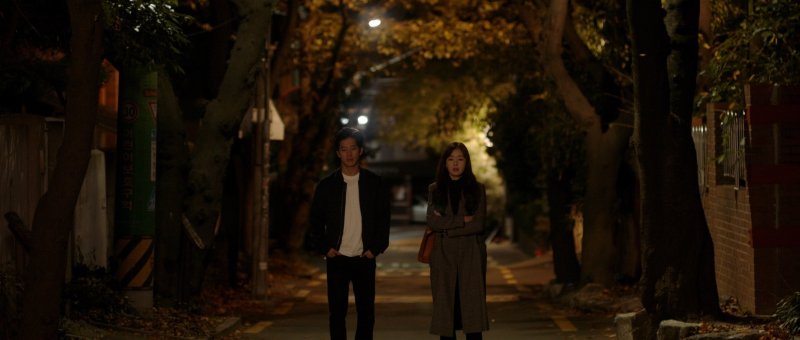
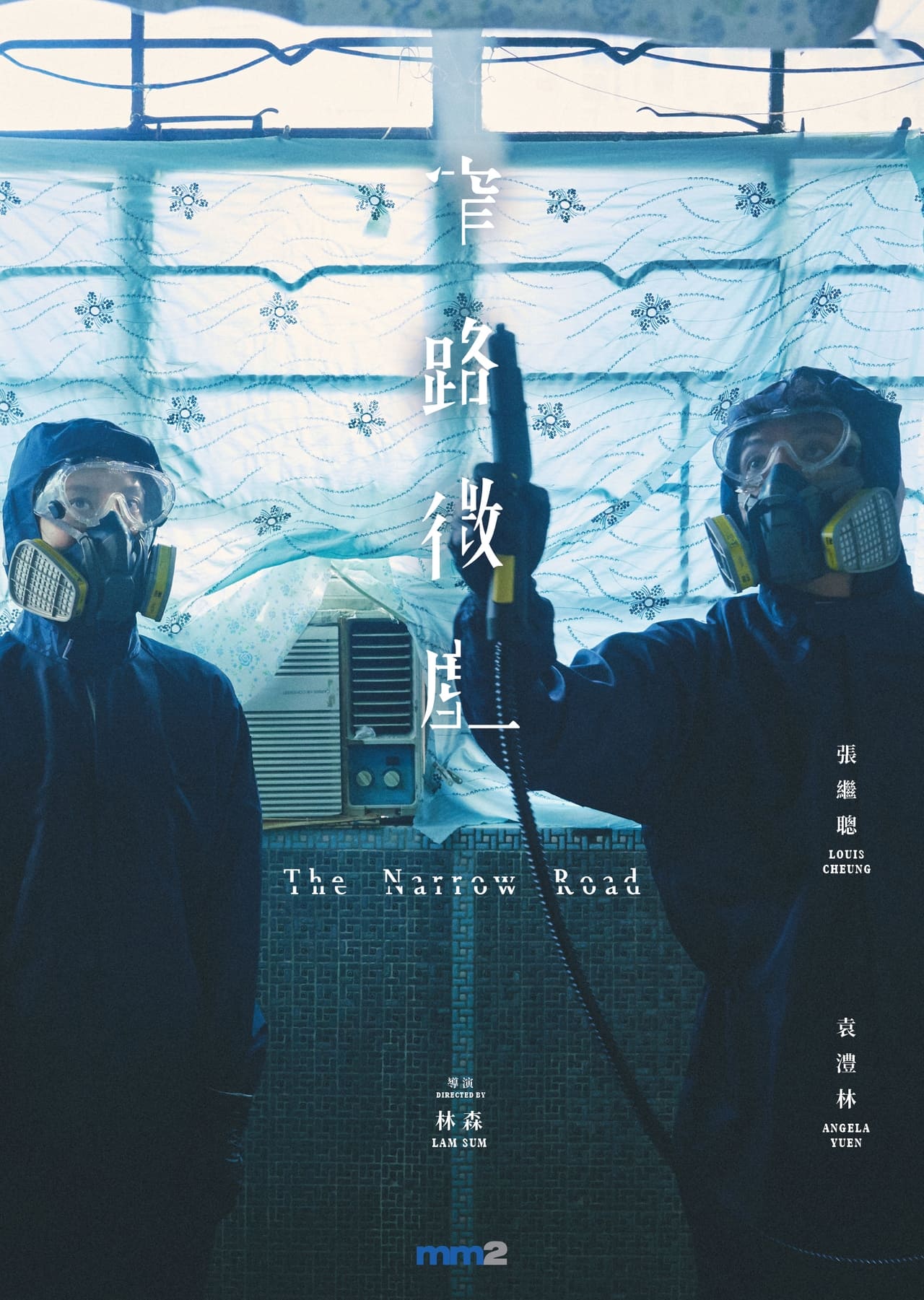
An earnest middle-aged man and a cynical young woman become unlikely friends in pandemic-era Hong Kong in Lam Sum’s melancholy drama, The Narrow Road (窄路微塵). The narrow road is indeed the line they have to walk as they find their already precarious lives straitened by the increasing pressures of life under corona with few possibilities open to them other than to trust in each other and discover unexpected solidarity in their contradictory approaches to life. 

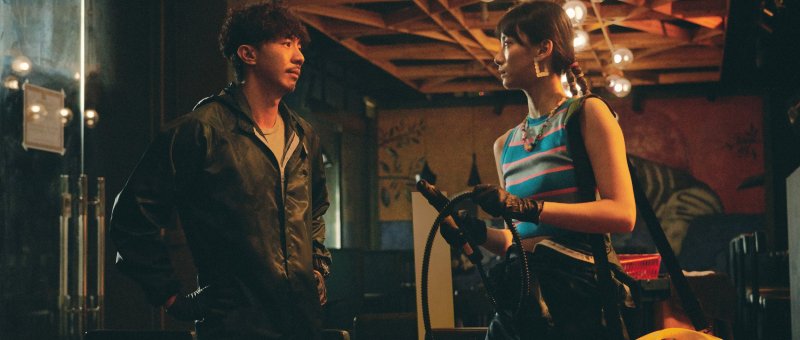
As a customer later suggests, some might say the pandemic is good for those like Chak (Louis Cheung) who runs a one man cleaning business, turning up after hours to disinfect cafes and offices which are still technically open but forced to close early because of the current restrictions. But as we can see Chak is exhausted and his faithful van which has the logo of his company proudly emblazoned on the side is on its last legs. He lives a simple life with his elderly mother who suffers with arthritis but is afraid of the expense of going to the doctor and seems to find joy only in the vague hope of getting lucky on the horses or else the lottery. 

A good-hearted man, Chak’s philosophy is life in that if you work hard and do everything properly then you’ll be alright. Hoping to take advantage of an increase in trade he takes on a young single mother, Candy (Angela Yuen), as an assistant but her outlook is the polar opposite of his as he discovers on spotting her pilfering ice cream bars from a convenience store after the clerk told her the discount had expired because she arrived a new moments after midnight. Cynical because of her experiences, Candy doesn’t see why she or her daughter should go without just because they don’t have money when some have so much they’d hardly notice a little missing, nor does she see the problem with cutting corners when it’s not like anyone notices anyway but Chak points out he’d know and wouldn’t like to feel as if he’d cheated someone or broken his word. 

But then desperate times sometimes call for desperate measures. Chak’s cleaning business is as reliant on a circulating economy as any other as he discovers when the disinfectants he needs for his work are on backorder from a supplier because of pandemic-related delays. When the pair are dispatched to clean up after a lonely death, it plunges Candy into a moment of existential crisis if the result of life is ending up as a stain on someone’s floor to be washed away by a stranger who is themselves faceless and invisible, merely “a cleaner”. As the pair work at night when no one else is around, it’s as if these properties are cleaned by magic, sparkling and new the next day, when the reality is that their work is more important than ever in ensuring public safety not to mention allowing other people to continue operating their businesses confident that they’re doing everything they can to protect their customers.  

In a poignant moment, Candy looks out at the beautiful view from a child’s bedroom in a wealthy family’s apartment and reflects that her living space does not even have a window. Her small daughter Chu eventually draws a picture of one they stick on the wall behind makeshift curtains making do with only the illusion of the light and air they have so far been denied because of their poverty. The world around them seems to be shrinking with businesses across the city closing their doors for good while those with the means to do so are choosing to go abroad for obvious political reasons hoping to start again somewhere else. Chak can only do his best to ride the waves and when even that isn’t possible to keep looking forward even if it means settling for what the moment allows while trying not to let it make him cynical or resentful. The world’s messed up but you don’t have to be, he tries to tell Candy, reminding her that children are sponges and that the lessons she’s teaching her daughter might not serve her well in adulthood. “You’ll hate me when you’re grown up” Candy concedes on doing another midnight flight to another “temporary” situation albeit one which does at least come with a window.

Still as Chak says, they might be smaller than dust but if God doesn’t see them it doesn’t matter as long as they see each other echoing the film’s central message of togetherness and solidarity not just amid the difficult background of the pandemic but as a philosophy for life. Lam’s unshowy yet poetic and beautifully lensed photography captures the sense of shrinking isolation in the early days of COVID-19 while subtly contrasting the fortunes of those like Chak and Candy living in tiny airless spaces who are forced to risk their lives with those who their labour protects. “Are poor people sentenced to death?” Candy asks and forces a concession that perhaps they are by the vagaries of an unfeeling, increasingly capitalistic society. 


The Narrow Road screens in Chicago on Oct. 29 as part of the 15th season of Asian Pop-Up Cinema.

Original trailer (English subtitles)

Shiro – Hero of Heroes (諸葛四郎 – 英雄的英雄, Lin Yu-chun & Chuang Yung-hsin & Liu Yu-shu, 2022)

An earnest young man, grieving son, and feisty princess team up to stop the evil Demon Society from becoming all-powerful rulers of their land in an adaptation of classic Taiwanese comic book Shiro – Hero of Heroes (諸葛四郎 – 英雄的英雄, Zhūgě Sìláng – yīngxióng de yīngxióng). Created by Yeh Hong-Chia in the late 1950s, the series has become a nostalgic touchstone for generations of children and is about to reach new ones with a feature-length 3D CGI animation following Zhuge Shiro (Wang Chen-hua) on another exciting adventure to reunite the magical Dragon and Phoenix swords and stop their awesome power from falling into the wrong hands. 

Unfortunately the Dragon Sword has already been lost, much to the king’s regret. When Demon Society raid the palace during a festival and place a mask over the princess’ face, the king puts the land on lockdown and summons the nation’s locksmiths to try and free her only to realise there’s no way to unpick Demon Society’s diabolical locks without giving in to their demands to surrender the Phoenix Sword. Luckily hero of heroes Zhuge Shiro just happens to be in town on the invitation of his locksmith uncle and pledges to help the king salvage his fracturing relationship with his daughter who resents his hesitation to exchange the sword for her wellbeing and make sure Demon Society doesn’t get its hands on the swords’ unleashed power. 

Though this is in many ways a tale aimed at younger audiences, the incredibly witty script moving to the rhythms of traditional opera includes a series of meta jokes for grownups from a silly reference to a limited edition dart and workplace exploitation to subtle digs at societal authoritarianism along with a small cameo from a wandering cartoonist whose work is censored by the powers that be. Having faced Demon Society several times before, Zhuge Shiro is a pure hearted young man wise beyond his years with a strong sense of justice. His first act of goodness is standing up to an officious guard, General Shan, who won’t let a worried father with a sick child enter the town to find a doctor, while he soon earns the respect of the king through his compassion and emotional intelligence in trying to explain the king’s dilemma to the princess. He does however engage in a little sexism which the princess herself is quick to push back against, pointng out that she’s a skilled fighter herself and does not need protecting but will be joining him on this mission whether he likes it or not. 

Similarly, Zhuge Shiro gains another comrade in Zhen Ping (Chiang Tieh-Cheng) who is originally under the misapprehension that Zhuge Shiro is responsible for his father’s death only to later realise it was all the fault of Demon Society. To reunite the swords and save the kingdom, the trio find themselves battling through the villain’s booby trapped lair and discovering that the swords’ power lies in a different place than they first might have assumed, one Demon Society is largely unable to appreciate and therefore to benefit from even if they had managed to hold both swords in tandem. In other words, it’s brotherhood and justice which eventually enable the trio to prosper while the bumbling masked demons only make fools of themselves in their intense greed and villainy. 

Staying close to the aesthetic of the comic book, the film’s highly stylised designs closely match those of the original characters from back in the late 1950s if perhaps a little cuter and rounder in keeping with contemporary CGI animation while it moves to a comic beat inspired by traditional opera interspersed with a few song and dance numbers and exciting martial arts fight scenes as the trio face off against the minions of Demon Society while standing up for justice. Just as the king learns the real meaning of treasure, the trio discover a brotherly bond and a new mission to rid the land of the evils of Demon Society while accepting that even villains can change their ways and should be allowed a chance to redeem themselves, and those who may seem obviously villainous might be alright on the inside. In any case, Zhuge Shiro embarks on what could be the first of many adventures in charming style taking down the bad guys with good humour and righteousness fuelled by the power of friendship.


Shiro – Hero of Heroes screens in Chicago on Oct. 23 as part of the 15th season of Asian Pop-Up Cinema.

Original trailer (English subtitles)

My Perfect Roommate (룸 쉐어링, Lee Soon-sung, 2022)

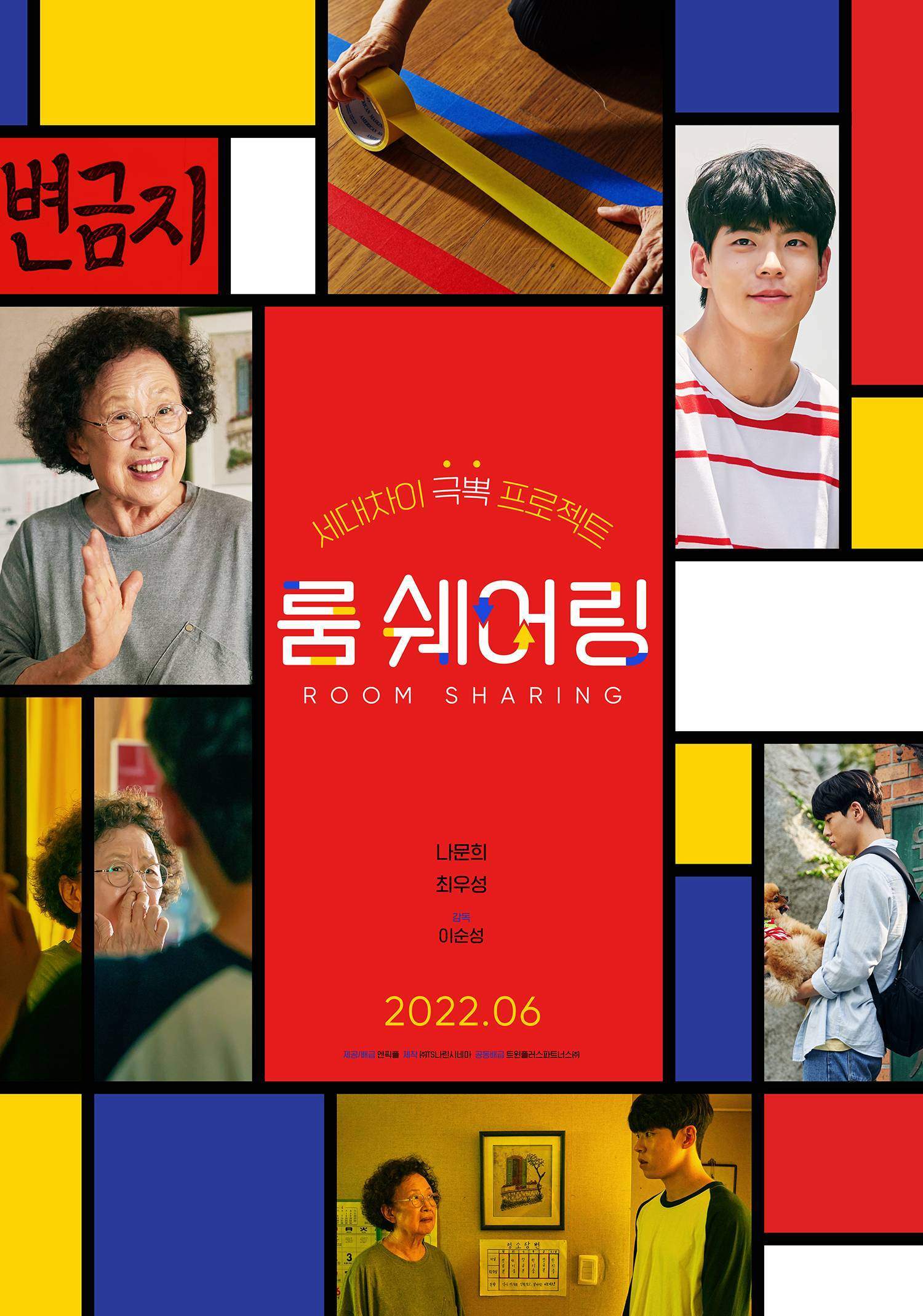
In recent years, an ingenious idea has seen older people living alone paired with youngsters struggling to find affordable housing in the hope of combating loneliness and isolation among the elderly to allow them to continue living independently in their own homes for longer. Some more cynically minded people might say it’s merely the government attempting to shift its own responsibilities onto the community, but it can’t be denied that it’s an interesting solution to the problems of an ageing society that, if it works out, can be enriching for both parties though as the grumpy granny and kindhearted student at the centre of Lee Soon-sung’s My Perfect Roommate (룸 쉐어링, Room Sharing) discover it’s always going to be a difficult adjustment. 

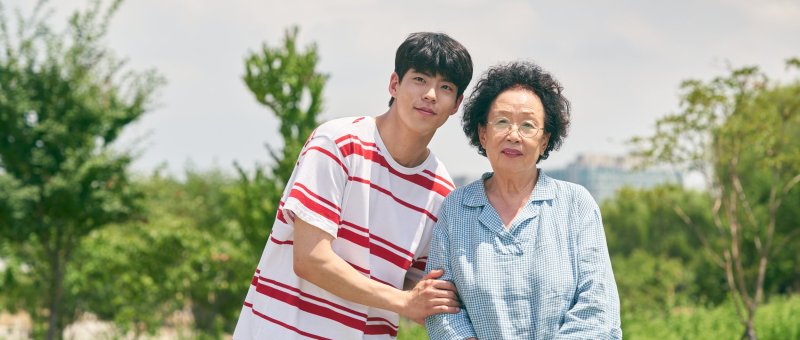
That’s in part because Gum Bun (Na Moon-hee) is an elderly lady very set in her ways who appears to be not entirely happy with the idea of having a young man come to live with her in the first place. Before Ji Woong (Choi Woo-sung), a student on a tight budget, arrives she patterns her home with duct tape to mark out which areas he’s allowed to go into and even goes so far as to forbid him from using her bathroom to do a number two because she just can’t bear the thought of sharing her toilet with a man after all these years living alone. For his part, Ji Woong doesn’t complain and does his best to abide by Gum Bun’s wishes even though at times the arrangement seems exploitative as she makes a point of ordering him to do her housework and even begins cooking him meals so she can charge him for them. 

Yet as Ji Woong’s boss at his part time job clearing houses after someone has died points out, loneliness can come at any age and both Gum Bun and Ji Woong are lonely each in a sense excluded from mainstream society because they do not have families of their own. Gum Bun never married and has only one friend (Choi Sun-ja), a neighbour of the same age who married and had children but feels disconnected from her son who rarely calls or visits. She has also elected to take part in the home sharing programme and enjoys spending time with the young student who lives with her as if he were really her grandson. But Gum Bun struggles to bond with Ji Woong in part because she has had disappointment in her life that has left her embittered and resentful while he is also reserved as he is afraid to disclose that he has no family because of a societal stigma towards orphans.

For these reasons there are trust issues on each side, but also an eventual common ground that allows the pair to generate a kind of familial bond and Gum Bun to open herself up to the world again no longer so afraid of abandonment. As Ji Woong had said about a little dog he agreed to look after for a few days much to Gum Bun’s consternation, if you give something love it will eventually come back to you. “We must help each other in this society” Ji Woong had earnestly said only for Gum Bun to counter that helping other people only leaves you miserable, but even she learns to remember her community spirit helping local children living in poverty while collecting prescriptions for other elderly people along with offering a little medical advice as a former nurse. 

Lee’s warmhearted drama directly tackles a series of societal problems from the ageing population to the difficulties young people face trying to get their start in life, but is also clear that prejudice often contributes to the crushing loneliness that can make life seem not worth living. Gum Bun is written off as a “grumpy granny”, excluded from mainstream society because she never married, while Ji Woong is constantly faced with a degree of suspicion solely because he has no family, embarrassed when friends asks what his father does or when a job application unnecessarily asks for his parents’ names. Ji Woong is over the age of majority, but he’s still pressed by a policeman to call his mum and dad while the guy he got into a fight with protecting Gum Bun calls him an “orphan punk” and gestures to the policeman that he is obviously in the wrong assuming the policeman will immediately agree with him. Both he and Gum Bun are in a sense orphans, left alone to fend for themselves in an often hostile society but eventually discovering an unexpected solidarity and sense of familial warmth that allow them to begin moving forward with their lives.


My Perfect Roommate screens in Chicago on Oct. 1 as part of the 15th season of Asian Pop-Up Cinema.

International trailer (English subtitles)

Director’s Intention (영화의 거리, Kim Min-geun, 2021)

A location scout struggles with memory and landscape when reuniting with a former love in Kim Min-geun’s indie drama, Director’s Intention (영화의 거리, yeonghwaui geoli). The director’s intention is something she’s trying to tease out in trying to find the places that best reflect his feelings, but in doing so she’s also forced to confront herself, her regrets about the past, and her true feelings about her city and her place within it. 

Longtime movie-obsessive Sun-hwa (Lee Sun-hwa) has been working as a location scout in her home city of Busan for quite some time and while moderately successful has not yet hit the big time. Her boss is excited to call her back to the city for a big new job he thinks could even lead to some Hollywood connections, but Sun-hwa isn’t sure she wants to take it because the director, Do-young (Lee Wan), turns out to be an old flame who broke her heart by leaving her behind to chase movie success in Seoul. 

It’s Sun-hwa’s firm opinion that Busan is as good as anywhere else and that filmmaking shouldn’t be limited to a small elite in the capital. She couldn’t understand why Do-young was so keen to leave and was determined to stay making films with those she loves in a place she loves. She accuses him of selfishness, but it is perhaps on another level simply afraid to leave the security of the familiar for the promise of the new, while he is too quick to abandon the old insisting that there are better opportunities to be had elsewhere. At the end of the day what they have is contradictory perspectives that cause each of them a crisis of faith in the relationship, he because she won’t leave with him and she because he won’t stay. “He cared more about his dreams, I cared more about my life” Sun-hwa later explains, justifying her desire to stay and build something on firmer foundations rather than take a gamble on an unlikely success. 

Sun-hwa prides herself on being able to match the emotions from the scene she’s given to a particular place to help the director express his feelings onscreen, but Do-young seems to reject each of her choices simply walking away from each location as in someway unsuitable. She offers him only barbed comments which seem to confuse the other members of the film crew who presumably have no clue what’s going on or of the couple’s former relationship while he says barely anything leaving the question open as to whether he’s here to rekindle an old romance or simply to memorialise it in film. Sun-hwa meanwhile needles him by deliberately selecting painful places filled with their shared memories sure to provoke something if not necessarily the effect Do-young was hoping for. Then again, his key criteria for a pivotal, unwritten scene is that it should look nice but feel empty. 

In any case, as Sun-hwa says there are no places you only see in the movies. Every location has its own story to tell, but can also play host to the stories of others. In the opening scenes, Sun-hwa holds a notebook and surveys a river ominously containing abandoned boots and clothing. She is mistaken for a detective by a panicked local who has in a sense created his own story from what he sees only to be relieved on discovering it to be an illusion. No horrific crime has disrupted the tranquility of this peaceful, rural scene. The only thing that matters is that it’s the right place for the right director and perhaps at the right time. Wander around and you might just find what you’re looking for while in having a firm destination you might ending up missing the perfect spot and never reach what you thought you were searching for. Then again, even if a place no longer exists the feelings surrounding it survive and can perhaps be salvaged even if not quite the same as they once were as Sun-hwa discovers in revisiting her past to scout locations that will either bring an old story to an end or begin it anew.


Director’s Intention in Chicago on Sept. 25 as part of the 15th season of Asian Pop-Up Cinema.

International trailer (English subtitles)

Mother’s Place (엄마의 자리, Ryu Hee-jung, 2022) 

Outdated patriarchal social codes conspire against the emotional bonds of family in Ryu Hee-jung’s touching family drama, Mother’s Place (엄마의 자리, eomma-ui jali). While adult siblings keep secrets from each other to avoid personal embarrassment and fail to resist the demands of otherwise estranged relatives, a teenage girl is forced to mourn the loss of her parents alone feeling as if her place in the family unit was never guaranteed and that she has been abandoned by those closest to her simply because her mother’s was a second marriage. 

High school girl Yuna is called to the hospital by her oldest sister, Jungsun, who is desperately trying to hold it together but receiving little support, to be told that her parents have been involved in a car accident and are in critical condition. Jungsun rings her other sister, Jungwon, to ask her to pick up her children while waiting for her husband to get off work but Jungwon is also busy with her job as a lawyer and ignores her first few calls. Meanwhile, the oldest brother, Junghan, rudely tells her he’s too busy to talk and makes no attempt to travel to the hospital which the other siblings partly understand because they believe him to be in Japan only as it turns out that is not quite the case. After the parents sadly pass away, Jungsun and her sister organise the funeral but are immediately overruled by a grumpy and extremely conservative uncle who happens to be a prominent politician and is outraged that they are holding a joint memorial considering it was a second marriage. Apparently from a somewhat prestigious family, the other relatives intend to bury the father in the family plot and think it would be improper to inter the mother alongside him because his first wife and the mother of the eldest three children already rests there. 

“Things won’t change even if you insist” Yuna is told by her siblings who are minded to simply go along with the uncle’s instructions even though they too were shocked and hurt by the suggestion that a joint funeral is improper, reminding the uncle that she may have been a stepmother but she was their mother too. Orphaned at such a young age, Yuna is then left to deal with her mother’s death all alone while simultaneously prevented from being able to attend her father’s funeral. Her outsider status is already signalled by her name, all of her siblings share the first syllable “Jung” while she obviously does not and while they always acted like a family now it’s like they’re disowning her while disrespecting her mother’s memory in suggesting there was something sordid about her relationship with her father that prevents her being buried next to him in her rightful place as his wife. 

She can’t understand why they would just go along with something so obviously wrong, totally unable to reject the uncle’s intrusion into what should be a matter for the immediate family. When he first arrives, the uncle immediately takes issue with the fact that Jungsun is acting as the chief mourner, insisting her husband (who might otherwise not be considered a member of her father’s family) take over until Junghan arrives because a woman occupying such a role is to him in his extremely conservative thinking inappropriate. A tearful Jungsun just lets it go if internally hurt and irritated given that she’s the one doing all the work of making these arrangements that have so casually been overturned. When Junghan finally shows up with a bruised face, the uncle immediately commandeers him and reveals that he’s invited some professors from a local university along with the intention of getting him a “proper” job though there can be few people who would otherwise think a funeral is an appropriate place for a job interview or professional networking. 

Junghan does however mimic his uncle’s conservative views in his constant digs at Jungwon for not yet being married at a comparatively late age. As will be discovered, Jungwon may have her reasons and they’re ones which she may not have felt comfortable sharing with her family members given the quality of the relationship that exists between them. They are all already holding secrets from each other because of the toxic performativity of their familial roles which leaves them embarrassed and fearful of failing to conform to a societal ideal as seen through the conservative eyes of their uncle and those like him. The older siblings only begin to realise their mistake on witnessing Yuna’s rebellion and fearing for her safety while reflecting on their own emotional bond with her mother and the various ways they are now being forced to deny their love and affection for her. 

Oddly, it’s the surprise appearance of the first wife’s ultra-glamorous sister that gives them permission to question the patriarchal norms expressed by the uncle and begin to re-establish the bonds they share as siblings brokered by an emotional connection and founded in shared memories rather than a simple blood relation. With truths aired and a little more emotional honesty in play, the family is free to remake itself along healthier lines of mutual support and compassion free of the constraints placed on them by outdated social codes. In searching for her mother’s place, Yuna begins to find her own outside of the cold and austere conservatism imposed by those like her uncle. 


Mother’s Place in Chicago on Sept. 24 as part of the 15th season of Asian Pop-Up Cinema.

Fairy (요정, Shin Tack-su, 2021)

The cracks in the foundations of a recent marriage are exposed by a mysterious guest in Shin Taku-su’s marital parable, Fairy (요정, Yojeong). A marriage is necessarily a shared endeavour, but the central couple can’t seem to shift their mindsets from “mine” to “ours” while each pulled in different directions by unfinished business and external responsibilities. What their possibly magic visitor shows them is that their sense of competition is pointless when at the end of the day they could each benefit if only they committed fully to a shared future. 

The central problem Cheol (Kim Ju-hun) and Ran (Ryu Hyun-kyung) have is that when they met they were both owners of cafes in a similar part of town. Now they’ve tied the knot, they’re still running independent businesses which are technically in competition with each other. Ran suggests that maybe they should amalgamate the cafes to focus on growing just one, but really she just means closing Cheol’s because it’s not as profitable as hers is. Cheol appears to go along with the idea even if not entirely happy with it while carrying baggage from his previous marriage along with a sense of emasculation in having moved into Ran’s home while supported by her business more than his own. 

It’s after a brief argument about the business plan and Cheol’s ex-wife that the couple accidentally knock over a young man while driving home having had too much to drink. In order to avoid getting involved with the police, they take him home instead of the hospital but when he comes to the boy, Seok (Kim Sin-bi), only asks them if they can put him up for a bit and help him find work because he’s nowhere else to go. After Seok starts working at Cheol’s cafe it suddenly becomes successful much to Ran’s consternation while the pair’s relationship to him becomes increasingly exploitative even as they become something like a “family” living under one roof. 

If Seok really is a magical spirit, it’s only made him unhappy as his presence necessarily sets people against each other. Unable to see that as a married couple they both benefit from a business doing well, Cheol and Ran begin squabbling over Seok and whose cafe he gets put to work in. Cheol’s unexpected success annoys Ran who is perhaps attached to the sense of independence she feels as a business owner while fearing that Cheol will come to take over her life if she ends up his assistant in his cafe. Yet the film isn’t intending to say that she should be subservient to her husband or that her anxiety is misplaced only that she is still insufficiently committed to the relationship to be able to trust Cheol with her future while he is also reluctant to accept the responsibility while dealing with the failure of his first marriage and a sense of damaged masculinity in being unable to play a paternal role to his daughter nor offer any meaningful financial support to the family he is now separated from. 

While Ran agonises over Cheol’s desire to smooth things over with his ex-wife and daughter, her responsibilities are also split by her devotion to her older sister and her family which is only deepened when her brother-in-law is taken ill and her sister needs her help keeping their business afloat. As she discovers, however, familial relationships can also be exploitative both emotionally and financially even if the intent is not necessarily malicious. As Seok’s presence continues to divide them, it does eventually lead to the realisation that Ran and Cheol only have each other and should be pooling their resources into the shared endeavour that is their marriage despite the risks that necessarily come with that level of commitment. The marriage will only succeed when both partners are on an equal footing and working together towards a shared goal rather than anxious in their roles and responsibilities or constantly vying for the upper hand. A lonely being whether magical or not, it may be Seok who loses out in the end unable to find a place to accept him solely for who he is and not what he offers while ironically showing others the way to find the place to belong that he so sorely seeks.  


Fairy screens in Chicago on Sept. 24 as part of the 15th season of Asian Pop-Up Cinema.

Trailer (no subtitles)

Struggling Man (私はいったい、何と闘っているのか, Toshio Lee, 2021)

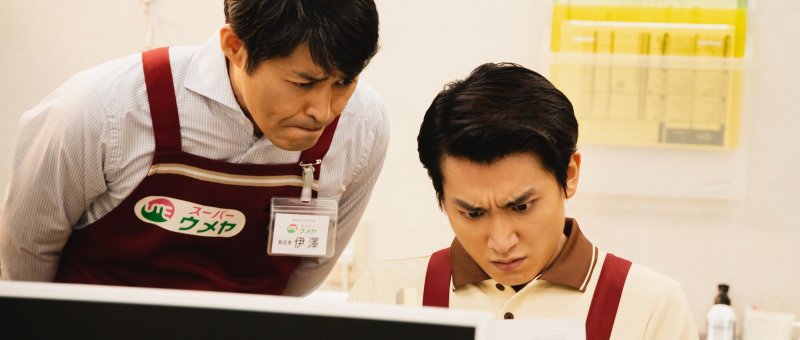
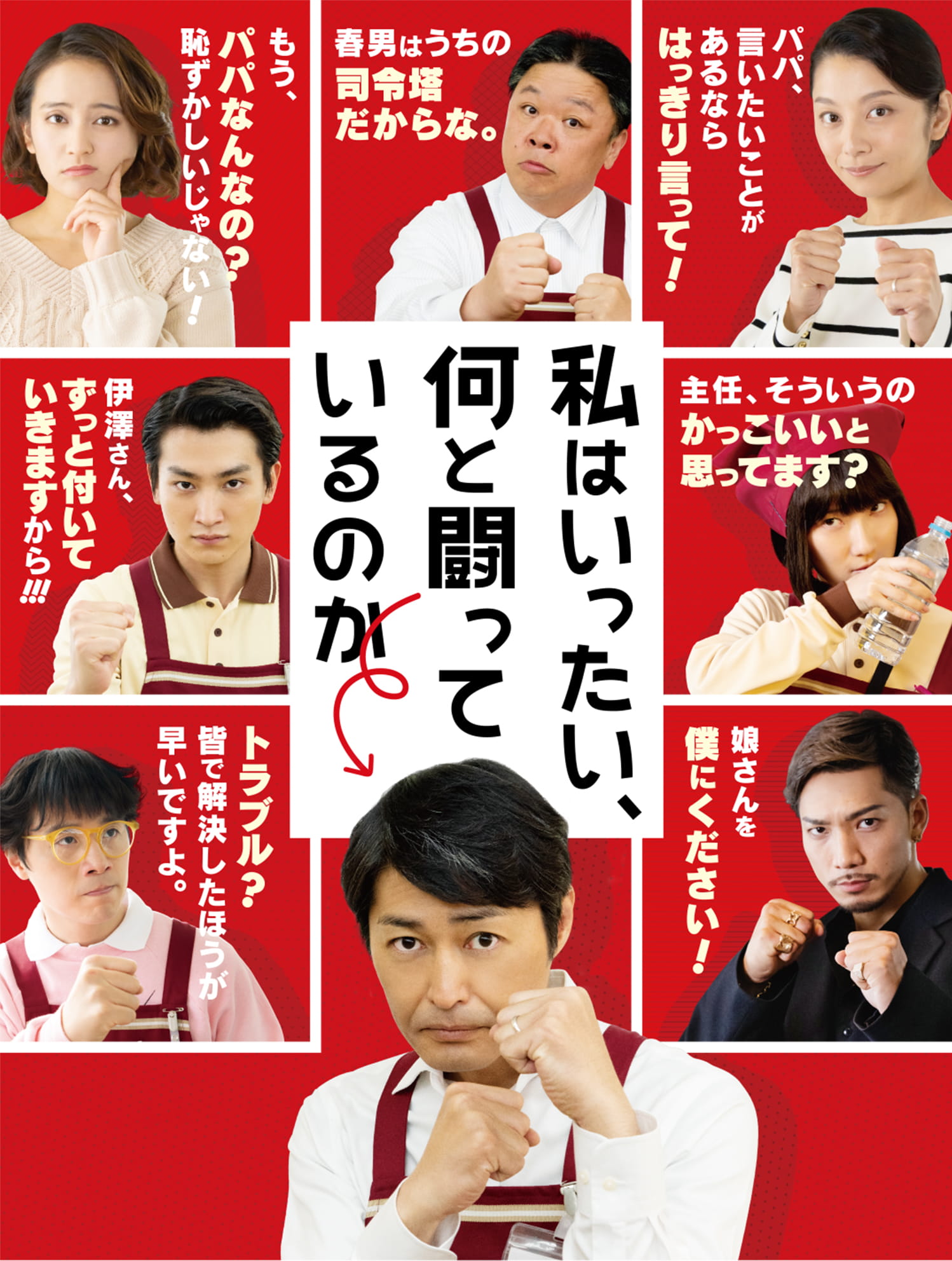
Life is a lonely battlefield for the middle-aged hero of Toshio Lee’s Struggling Man (私はいったい、何と闘っているのか, Watashi wa Ittai Nani to Tatakatteiru no ka). The film’s English-language title and supermarket setting may recall Juzo Itami’s Supermarket Woman, but Lee’s lighthearted dramedy soon takes an unexpected left turn as the hero battles a kind of mid-life crisis of fracturing masculinity as his professional and family lives come under simultaneous threat firstly by his failure to land a long overdue promotion and secondly by his eldest daughter’s impending marriage. 

After 25 years working at the same small-town supermarket, Haruo Izawa (Ken Yasuda) is well respected by his colleagues and often depended on by his boss Mr. Ueda (Hikaru Ijuin) yet harbours an internalised inferiority complex that he has not yet made manager. When Mr. Ueda passes away suddenly, everyone, including Haruo himself, just assumes he’ll finally be getting promoted but head office soon parachute in an extremely strange man from accounts, Nishiguchi (Kentaro Tamura), who knows nothing at all about how to run a supermarket. Haruo ends up with an awkward horizontal promotion to deputy manager while Nishiguchi basically leaves everything up to him. 

Haruo is always being told that he’s too nice but as he later tells another employee, he too is really just thinking of himself as revealed by his ever running interior monologue in which he often imagines himself in situations which will show him in a good light only for things not to pan out as he’d hoped. It’s clear that what he’s experiencing is partly a middle-aged man’s masculinity crisis often comparing himself to others and embarrassed on a personal level in not having achieved his career goals while directly threatened by the presence of his daughter’s new boyfriend fearing that he will lose his patriarchal authority within his own household in which he is already somewhat mocked by an otherwise genuinely loving and supportive family. His anxiety is compounded by the fact that he is a stepfather to the two daughters while he and his perspicacious wife Ritsuko (Eiko Koike) have a son together. The discovery of plane tickets sent by the girls’ estranged birth father in Okinawa with the hope that they will visit unbalances him in his increasing fear of displacement.  

As in the Japanese title of the film, Haruo is always asking himself what it is he seems to be fighting with the obvious answers being an internalised inferiority complex and toxic masculinity while constantly told that he doesn’t help himself with his Mr. Nice Guy approach to life. When he discovers an employee may be defrauding the business, he stops his assistant from reporting it and after discovering the truth decides to help cover it up so they won’t lose their job but later loses out himself when his simple act of kindness and compassion is viewed in bad faith by a potential employer. He tries to make things work with Nishiguchi, but Nishiguchi is a defiantly strange person and so all of Haruo’s attempts to help him integrate into supermarket life backfire. As it turns out, he’s in a constant battle with himself against his better nature but always resolving to be kind and put others first while privately annoyed that the universe often seems to be unkind to him. 

Then again as an old lady running a curry house puts it, happiness is having a full belly and so long as Haruo has a healthy appetite things can’t really be that bad. His life is quite nice, which is something he comes to appreciate more fully while reclaiming his image of himself as a father and along with it a sense of security brokered by a truly selfless act of kindness informed by paternal empathy. Professional validation may be a little harder to win, but lies more in the gentle camaraderie with fellow employees than in ruthless workplace politics or rabid ambition. Life need not be a lonely battle as Haruo begins to learn setting aside his manly stoicism and trusting in his ace detective wife who has been engaging in a similar and apparently victorious battle herself reaffirming her love for the kind of sweets so unexciting no one remembers they’re there which may seem a little plain on the outside but have their own kind of wholesome sweetness. 


Struggling Man streams in the US Sept. 17 – 23 as part of the 15th season of Asian Pop-Up Cinema.

International trailer (English subtitles)

Alivehoon (アライブフーン, Ten Shimoyama, 2022)

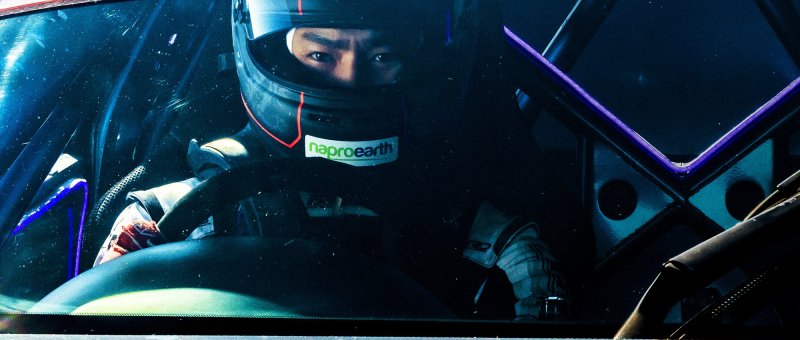
How far can skills learned in simulation be transferred to the “real” world? Ten Shimoyama’s Alivehoon (アライブフーン) sees a top gamer take to the track for real to compete for drift racing glory while battling both his own lack of confidence and that of those around him. What he discovers is that there may not be so much difference as might be assumed, but offline racing is not a solo sport and succeeding means learning to trust in others as well as oneself. 

Koichi’s (Shuhei Nomura) immediate problem is that he doesn’t fit in at his job as a mechanic and is resented by the other employees for failing to pull his weight. All he wants to do is play games and after a lifetime of practice he’s become a champion in the world of e-sports drift racing but secretly harbours the desire to become a “real” race driver. He finally gets the chance to prove himself when his exasperated boss gets him an opportunity to try out for a real team in need of a rookie driver to ensure its survival. Diffident as he is, Koichi agrees and after brief moment of confusion on the track, proves he has what it takes to take his virtual skills to the real world as an aspiring drift racer. 

The main opposition Koichi faces is from those who dismiss him on the grounds that in-game experience is useless in the real world, which in some cases it may be but luckily Koichi does at least know how to drive and after a moment to play things through knows how to translate his skills from the online world to a real life track which of course has much more proximity to mortal danger than he has ever experienced before. That might be one reason that veteran driver Muto (Takanori Jinnai) who retired after a catastrophic crash in the opening sequence does not take him very seriously on witnessing him being physically sick after being driven round the course by a champion racer while his daughter Natsumi (Ai Yoshikawa) is very invested in the idea that it might be possible to turn an e-sports champ into a top rank driver and save the team in the process. 

Team Alive is positioned as the nice guy underdog, trying to win through hard work and fairness in contrast to arrogant hotshot Shibasaki (Shodai Fukuyama) who turns down the chance to join Alive to go with a more lucrative offer from a haughty middle-aged woman (Anna Tsuchiya) who plays only to win. Shibasaki drives dirty with the racing equivalent of kicking dust in Koichi’s eyes but eventually pays a heavy price for his lack of sportsmanship only to be humbled and come to see the merit in the honest and down to earth approach of team Alive. Koichi meanwhile fights an internal battle trying to rediscover a sense of confidence while beginning to find it in the mutual support of his teammates acknowledging that he may be in the driving seat but he’s not alone and the victory does not belong entirely to him. 

The film’s race scenes are supervised by “drift king” Keiichi Tsuchiya and feature real life drivers such as Naoki Nakamura, Daigo Saito and Masato Kawabata driving real courses for added authenticity all shot in camera without the use of CGI or special effects. The neon blue/red lighting and synth score contribute to the retro aesthetic but it has to be said that Koichi seems to take to real life drift racing a little too easily and experiences surprisingly few setbacks before making a fairly perplexing decision in the film’s final moments despite having discovered the value of teamwork along with a new family in team Alive who each value him for who he is as he brings the best in virtual racing to the real world game. Natsumi too earns the respect of her father as he comes to trust and believe in Koichi but is never quite given the chance to prove herself in her own right. In any case there is something heartwarming in the film’s conviction that there are no pointless skills and that working hard to become good at something is its own reward whether you become a champion or not.


Alivehoon screens in Chicago on Sept. 17 as part of the 15th season of Asian Pop-Up Cinema.

Original trailer (English subtitles)
Schemes in Antiques (古董局中局, Derek Kwok, 2021)

Two very different men square off in the race to find a precious Buddha head and reclaim their family honour in an old-fashioned tomb raiding mystery from Derek Kwok, Schemes in Antiques (古董局中局, gǔdǒng jú zhōngjú). The key to the future seems to lie in the past as the heroes approach from opposing sides, one keen to expose a truth and the other seemingly to conceal it but both otherwise unable to escape a problematic family history and be rehabilitated as a member of one of the top five antiquing families in the China of 1992. 

Now a middle-aged drunkard, down on his luck Xu Yuan (Lei Jiayin) lays the blame for his present circumstances solely with his immediate forbears. A member of the Plum Blossom Five, five families who are the ultimate authorities on the authenticity of historical artefacts, Xu Yuan’s grandfather was executed as a traitor during the war for having gifted a precious Buddha head to the Japanese. In a fairly traumatic childhood, Yuan was abandoned by his his dad whom he believes to have been too badly damaged by seeing his grandfather die to be any sort of father while somehow even kids his own age called him scum in the streets because of the shame his grandfather’s transgression had placed on the family. Now running an electronics store which is in its way the opposite of antiques, Yuan has a fairly cynical view of the artefacts trade but is dragged back into it when the granddaughter of the Japanese soldier who received the Buddha head (Lili Matsumoto) insists on returning it to a direct descendent of the Xu family. 

Perhaps surprisingly, the issue isn’t really with the Japanese but the current status of the Buddha head which, after a duel of detection with well dressed rival Yao Buran (Li Xian) who is also trying to redeem his family honour, Yuan quickly realises is a fake suggesting his grandfather wasn’t really a traitor after all while giving rise to the question of what actually happened to the “real” one. When it comes to the antiques trade, perhaps there’s a question mark over the degree to which “authenticity”, whatever that might mean, really matters and if all the Plum Blossom Five are really doing is attempting to assert their authority over an unruly market as the accusation that one head of family in particular has long been knowingly authenticating fakes when it suits them to do so bears out. In something of a plot hole, Yuan is revealed to be an antiques expert despite having been abandoned by his father at a young age but his ability is for some problematic even if admired by his main rival in its ability to expose the hidden truth or as the film later puts it the real within the fake. 

In any case, it’s true enough that the battles of the past are still being fought by the grandchildren of those who started what they couldn’t finish. Yuan is joined in his quest by the feisty granddaughter of another Plum Blossom family (Xin Zhilei) who is also battling her grandfather’s sexism in his refusal to trust her with anything important in the antiques trade. She and Yuan end up squaring off against Yao who is largely playing his own game as they embark on a good old-fashioned treasure hunt in which they solve a series of puzzles set down by Yuan’s father to lead them towards the truth.

Discovering another father figure along the way, Yuan learns to accept his complicated legacy while redeeming his family honour and along with it his self worth in outsmarting just about everyone else to solve the final mystery. There is something refreshingly innocent in these well constructed, defiantly analogue puzzles which rely on cultural knowledge and mental acumen along with a spirit of curiosity, while there’s also a fair amount of running away from bad guys and escaping from collapsing tombs filled with artefacts that might in a sense be cursed even if not quite literally. There are definitely a lot of schemes in antiques, something of which Yuan himself takes full advantage, but they’re also in their own way pieces of a puzzle in which the fakes are less red herrings than gentle pointers towards other truths some of them buried under layers of subterfuge and obfuscation only to be dragged into the light by those with dangerously curious minds.


Schemes in Antiques streams in the US Sept. 10 – 16 as part of the 15th season of Asian Pop-Up Cinema.

International trailer (English subtitles)

The Magical Craftsmanship of Suzhou (天工苏作, Sun Zengtian, 2022)

Suzhou was once such a bustling hub of traditional arts that the guild had to institute a quota system forbidding artisans from taking on too many apprentices lest they generate a monopoly. Times are now very different and such businesses often have trouble recruiting young people willing to learn traditional crafts or are even in a sense reluctant to do so knowing that their industry is in decline and those entering it now may never be able to support themselves fully on an artisan’s earnings alone. 

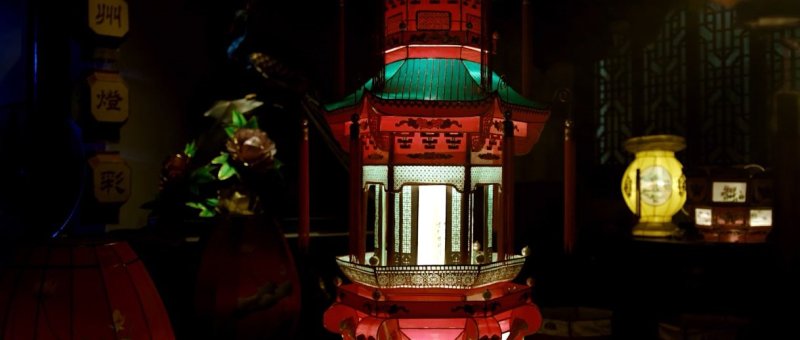
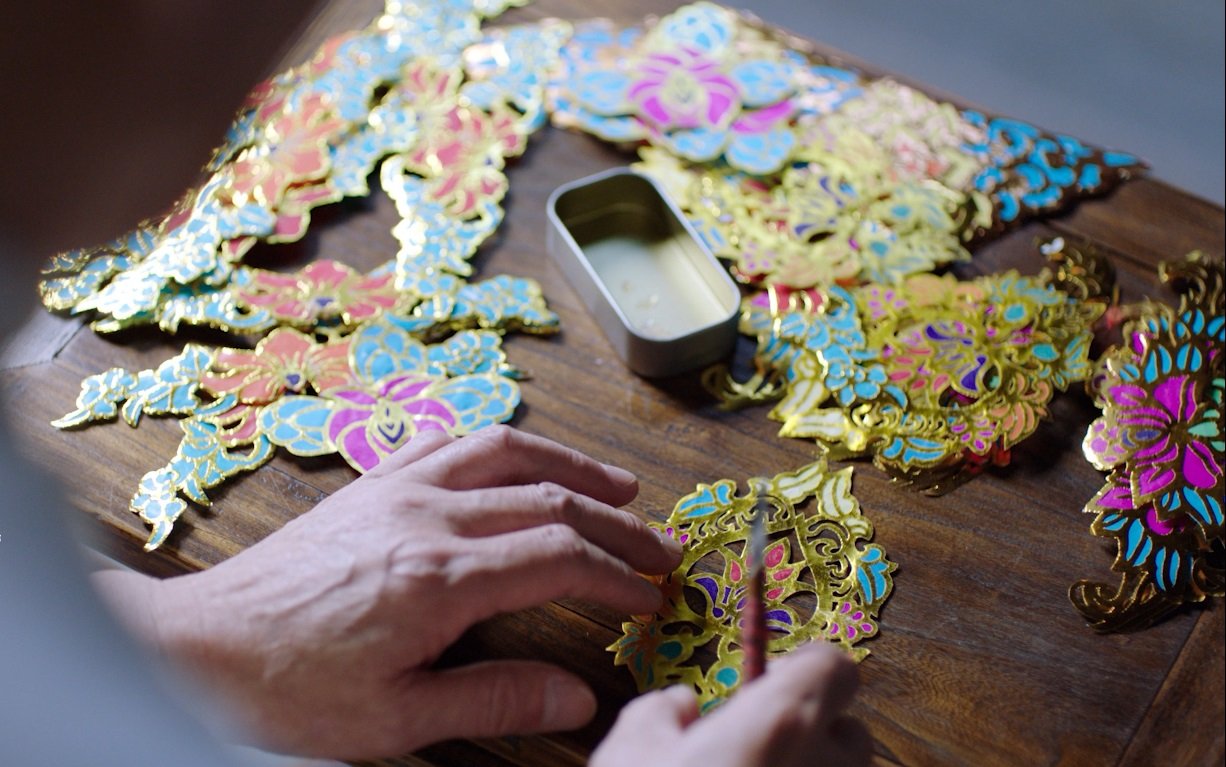
Sun Zengtian’s documentary The Magical Craftsmanship of Suzhou (天工苏作, tiān gōng sū zuō) is however a little more hopeful than some of its subjects examining the still thriving local culture along with some of the efforts and perhaps compromises of those trying to ensure the traditional arts survive. A lantern maker laments that his industry has become so straitened that his small team often have to work to incredibly tight schedules with little time for rest yet he refuses to compromise on quality and is determined not to damage his hard-won reputation as a master of the art. The demand may be more limited than it might have been in the past but is still very much there as the crowds of visitors at a local festival marvel at the spectacle of light illuminating the darkness through the beautiful lantern designs. In any case, he takes pride in showing his daughter some of his work safely installed in a local museum while giving talks in local schools to ensure the next generation is at least familiar with the art of lantern making.

Meanwhile, another man’s business carving intricate designs into olive stones continues to grow while he takes on pupils to pass on his knowledge. Others meticulously craft traditional furniture and aim to reintroduce an element of serenity through simplicity in an increasingly chaotic modern society. A chair can be whipped up in as little as eight minutes by a skilled carpenter, but the wood requires two years of seasoning and a seasoned craftsman to understand the process. Many believe that only a handmade piece can perfectly match the spirituality of the natural materials rather than the soulless mass produced furniture of a similar design. 

For the carpenters, their craft is almost a ritual and for that reason largely unchangeable save for the use of modern sandpaper in place of the leaves their ancestors may have used with a kind of tenderness to protect the wood. Yet for the craft itself may be less important that the end result such as it is for a local architect who sometimes butts heads with his father trying to explain that things cannot always be done like the old days given modern building and employment regulations. Their problem is that many of the craftsmen are now elderly and few are keen to learn their skills while the veterans often find it difficult to follow the plans constructed by young and inexperienced architects sometimes choosing to disregard them in favour of their well honed professional judgement. Yet the young architect feels compromise is the way to go, building traditionally but with the assistance of modern technology while preserving the aesthetic charm of traditional buildings. 

Others look to the international market drawing inspiration from global fashion trends and making innovations of their own such as an embroidery master who has patented her own style and firmly believes her craft to be an art rather than a simple means to support oneself as it had been for her mother and grandmother. She worries about taking on apprentices knowing that there is little scope for them to earn a decent living through handmade embroidery, but there is a poignant moment as she discusses options with a young woman wanting to learn as she sews the needle and the potential apprentice pulls it through. Meanwhile, a pair of female visitors from overseas ask how they might be able to learn traditional weaving. The woman running the store just laughs while the narrator explains that it’s easy to learn but difficult to master and many give up halfway. She is trying to modernise by building an online platform for practitioners in her field but finds it difficult to get the older artists on board. In any case, it seems that the traditional arts are very much alive in Suzhou, not fossilised or stuck in the past but constantly evolving as they fight for their survival along with the pleasures of a simpler existence in a fast moving culture. 


The Magical Craftsmanship of Suzhou screens in Chicago on Sept. 10 as part of the 15th season of Asian Pop-Up Cinema.

Trailer (English subtitles)