A Long Shot (老枪, Gao Peng, 2023)

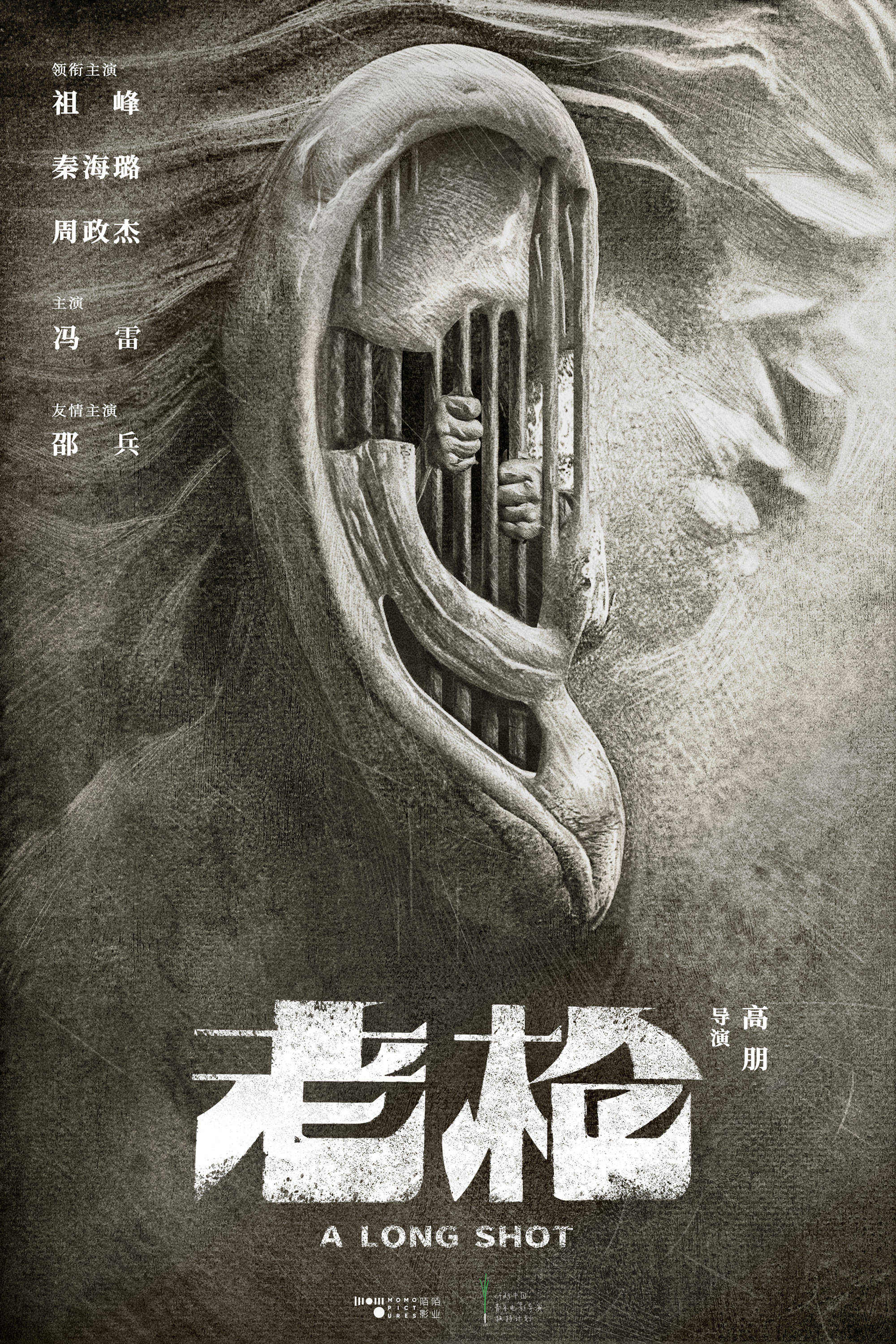
The hero of Gao Peng’s A Long Shot (老枪, lǎo qiāng) is forever reminding himself to “regain your focus”, yet in other ways it’s something that he’s making an active choice not to do and that others wish he wouldn’t. Set amid the chaos of China’s mid-90s economic reforms, the film suggests that Xue Bing has little other option than to tune himself out and avoid being a direct part of the corruption all around him as he has little power to stop it.

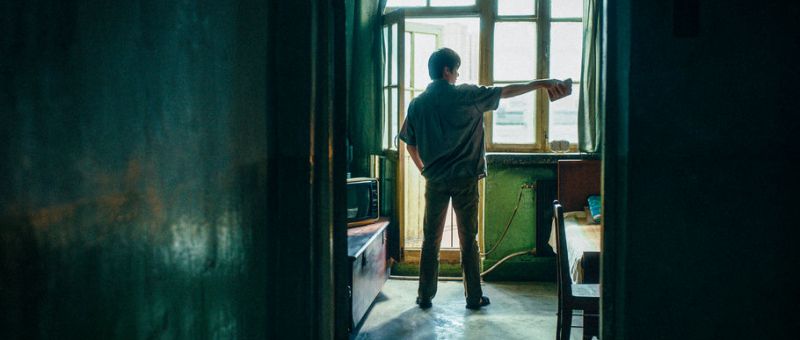
In a prologue set five years before the main action, Xue Bing (Zu Feng) had been a sharpshooter on the national team but is told that he has experienced hearing loss which may affect his balance and is subsequently let go. The hearing loss is perhaps symbolic of the fact that Xue Bing does not listen to the lies and double talk around him and maintains an integrity that is nothing but irritating to his morally compromised colleagues. On the other hand, he later tells Xiao Jun (Zhou Zhengjie), a teenage boy to whom he’s become a kind of father figure, that staring at a bull’s eye all your life isn’t good for your eyes hinting at his problematic hyper focus in which he’s just trying to keep his head down and do the best job he can under the circumstances.

But the circumstances are grim for everyone. Now with shaggy hair and a look of disappointment in his eye, Xue Bing works as a security guard at a moribund ferroalloy factory where the workers haven’t been paid in years as the nation goes through a number of complex economic reforms that are changing the face of the nation and giving rise to a new class of wealthy elites who’ve gained their riches through immoral and exploitative means. With people not being paid, thefts are a common occurrence but the security guards have turned to taking bribes, tacitly turning a blind to equipment going missing if the thieves are willing and able to pay a small fee. Xue Bing doesn’t like to go along with this and avoids joining in, but is powerless against the other guards including his boss Chief Tian (Shao Bing). 

The film frames the factory as a microcosm of the wider society which has become a vicious circle of corruption. But on the other hand, the workers guards, and even in the management see themselves as taking what was rightfully theirs but has been unfairly denied them. The workers steal from their employer because their wages weren’t paid, the guards aren’t getting paid either so they extort the workers and rip off the company, while the management know the factory’s effectively bust so they’re asset stripping while they still can. Chief Tian runs into one of the thieves who’s since started a “trading company” having taken some cues from a Russian working at an equally moribund shipyard where he’s no longer monitored by the authorities and has been selling off warships as scrap hinting at the disintegration of post-war communism and the resulting capitalist free for all that followed. 

Xiao Jun, the son of a woman Xue Bing thinks he’s in a relationship with but the reality is somewhat ambiguous, is caught amid this crossfire as a young man coming of age in complicated times. He resents the corruption he sees around him and bonds with Xue Bing thinking he’s a straight shooter only to be disappointed by his defeated complicity which he also sees as a kind of unmanliness. Xiao Jun’s mother, Jin (Qin Hailu), had been trying to run her own business but later gets a job in a nightclub that seems to be sex work adjacent thanks to her relationship with another corrupt businessman, Mr Zhao. She remarks to Xue Bing that there are so many ways to earn a living these days she doesn’t understand why anyone would go back to the factory, laying bare the wholesale change in the society. Xiao Jun has taken up with a gang of seeming delinquents who frequently loot the factory complex, but even they are only taking what they think is theirs as one of the boy’s fathers was killed in a workplace accident and the family was only given a certificate of commendation rather than financial compensation for the father’s lost wages without which they are unable to support themselves. 

The guards have been told they’ll finally get paid after the company’s 40th anniversary celebrations, with corrupt manager Sun telling Tian he’ll need his help to keep the others in line when he presses him and is finally told they’ll only get two months’ worth of the back pay they’re owed. Xue Bing is told Sun was selling off the lathe machines in order to pay the workers, and it seems like he believes them naively falling for their greater good narrative while Xiao Jun seems on a collision with adult hypocrisy refusing to sign a false confession to get the managers off the hook. Gao lends Xue Bing’s world a greying hopelessness in which the only two choices are to close his eyes and ears or go down fighting, closing with a lengthy shootout in which firecrackers mingle with gunshots masking the sound of rebellion from a continually unheard underclass.


 A Long Shot screened as part of this year’s New York Asian Film Festival.
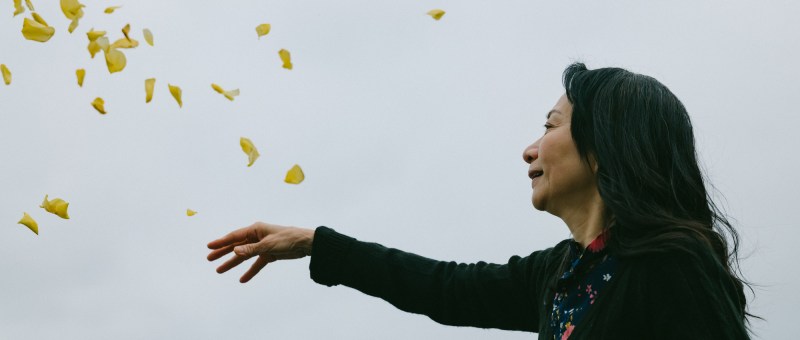
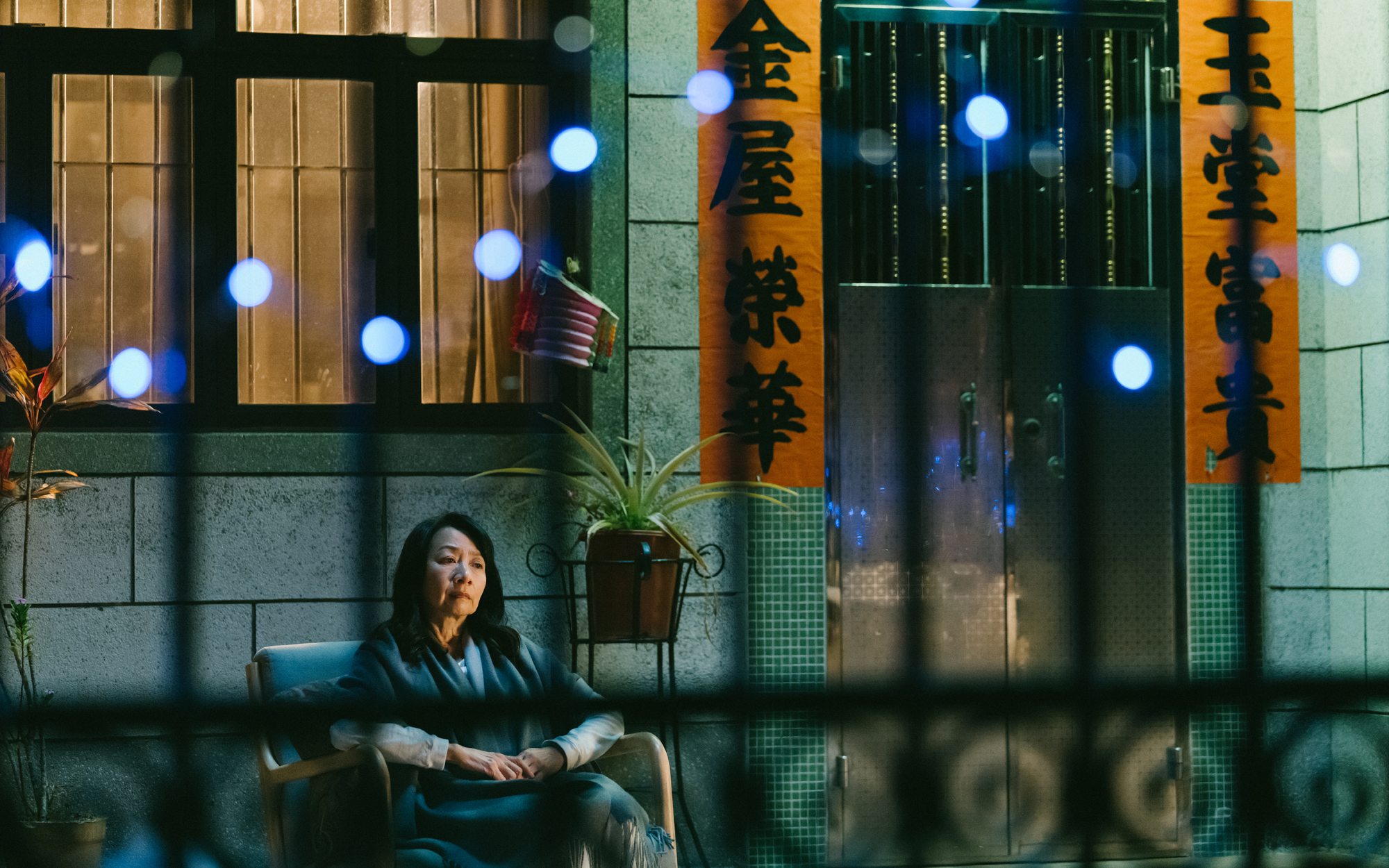
All Shall Be Well (從今以後, Ray Yeung, 2024)

There’s nothing that breaks a family apart as quickly as an inheritance. As a cynical lawyer points out, even mothers and sons fall out when it comes to money, so there’s nothing like it to to focus minds with an us and them mentality to clearly define who is and isn’t included under the umbrella of family. But why is it that meaningless pieces of paper hold so much sway over us when we ought to by be governed by the emotional truths that until a moment earlier ruled our lives?

Angie (Patra Au Ga Man) had been fond of saying “because we’re family.” She never doubted her place in that of her partner who all appear, at least outwardly, to love her and accept her relationship with Pat in the way they’d accept any other marriage. But when Pat (Maggie Li Lin Lin) suddenly passes away in her sleep after one last family celebration the situation changes. Well-meaning family members step in to help with the work that must be done when someone dies, but perhaps unwittingly begin to take over slowly erasing Angie from their lives as not really one of them after all.

Her problems are two-fold. The biggest being that Pat never got round to making a will, nor did she think to put Angie on the deeds to the apartment they shared together or leave her financially provided for seeing as she’d managed all the money they’d made when they owned a factory and ran it together. The secondary problem is that Hong Kong does not recognise same sex marriage and so their relationship was not legally recognised. Had Angie been legally married to Pat, she should have inherited everything anyway because she was her spouse even without a will but with things the way they are she’s at the mercy of Pat’s brother Shing (Tai Bo). She never thought this would be a problem, because they’re family, but slowly realises that perhaps they don’t actually see her that way and with Pat gone no longer feel the need to include her.

Her sister-in-law Mei (Hui So Ying) insists on using a feng shui expert to plan the funeral who quickly puts the kibosh on Angie’s desire to have Pat buried at sea as she’d requested. Leaving aside the possibility that the feng shui master is conning them and receiving financial incentives from the people who run the columbarium, the family quickly begin to ignore Angie’s concerns swayed by the claims that interring her ashes will be more beneficial for her descendants which are Mei and Shing’s children seeing as Angie and Pat had none of their own.

A little disappointed in her kids, Mei at one point insensitively remarks that Angie is lucky not to have any though we’re also told that she almost gave in to parental pressure to marry a man in order to become a mother. Daughter Fanny (Fish Liew) makes lowkey racist remarks about her Indian neighbours as a way of expressing her frustration with her moribund marriage and unsatisfying living arrangements, while son Vincent (Leung Chung Hang) struggled to find employment and now works as an Uber driver thanks to the gift of a car from Angie and Pat which allows him to earn a living. He’s originally upset with his family’s suggestion of kicking Angie out of the apartment, but is also in a difficult position himself when his girlfriend becomes pregnant and they can’t find anywhere habitable to live on the kind of salary an Uber driver can earn. Though in her 60s, Mei is still doing a physically strenuous job as a hotel maid while Shing has taken a position he finds degrading as a nightwatchman at a carpark following the closure of his restaurant some years previously. 

The implication is these socio-economic pressures encourage them the abandon their responsibility to Angie as the beloved aunt they’ve known all their lives. But then there’s also the mild homophobia that rears its head, introducing Angie as Pat’s “best friend” and not allowing her to stand in the front with family at Pat’s funeral as if their relationship wasn’t really real because they were both women. Of course they may have behaved the same way had Pat been a man, squeezing Angie out because she had no legal claim as a common-law spouse, but it certainly seems to make it easier for them to abandon her and take everything she worked so hard to build with Pat as if they were really entitled to it. Shing justifies himself that he has to look after “his” family, which doesn’t include Angie, while cruelly implying that it’s what Pat would have wanted. 

In the end, Angie is left with no other option than to sue for her “rightful” share as a ”dependent” in an effort to force the family to recognise the legitimacy of her relationship with Pat. Thankfully she has another family in her community, though her own still living parents only partially accepted her relationship with Pat again referring to her as a “best friend” and making cracks about how she never married. But her family was Pat, and Pat is gone. Yeung paints a touching picture of grief as Angie reacts all the things she did with Pat but now alone, accompanied only by a sense of absence and comforted by her memories while otherwise exiled from a world that had seemed until then filled with familial love.


All Shall Be Well screened as part of this year’s New York Asian Film Festival.
Trailer (English subtitles)

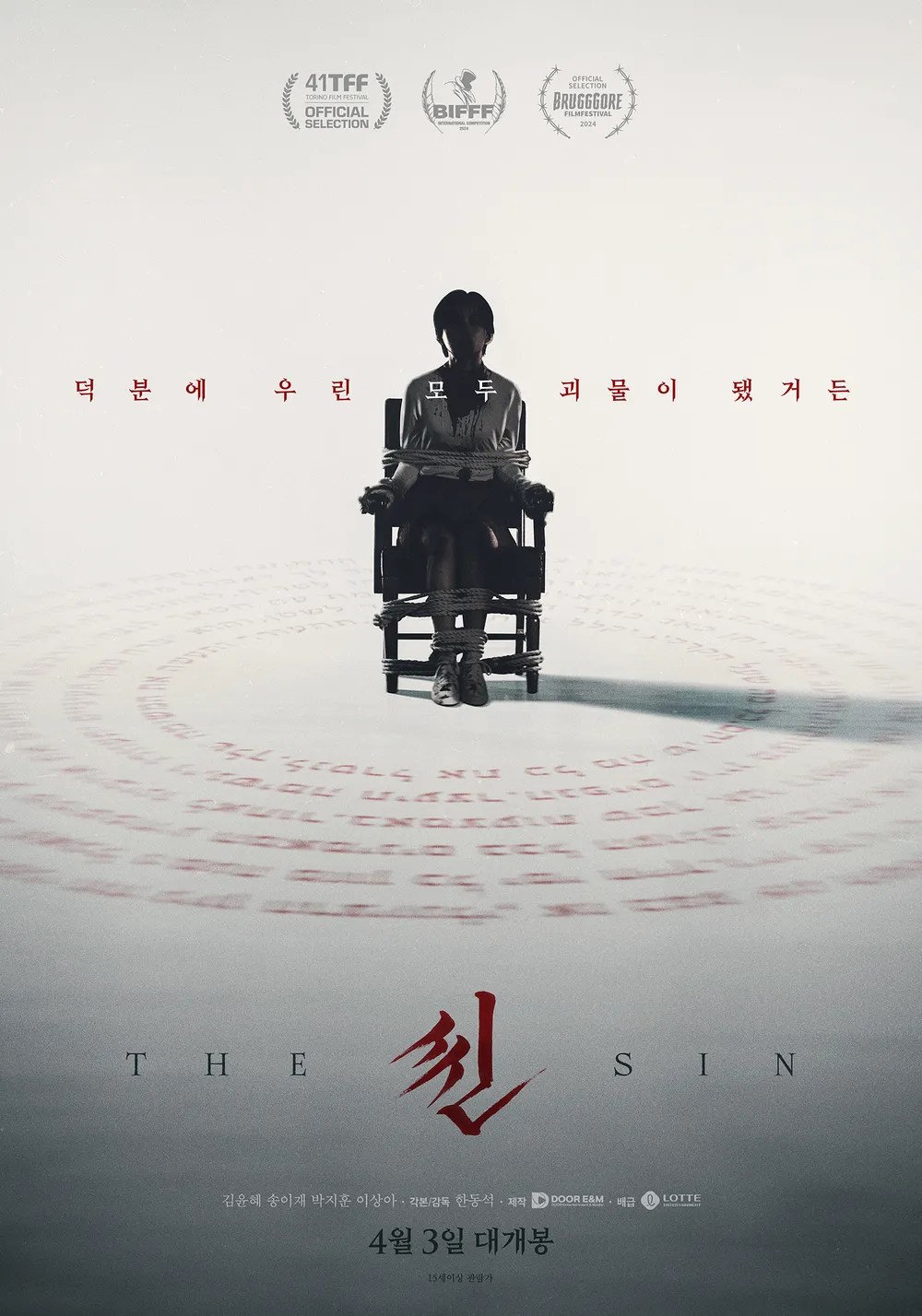
The Sin (씬, Han Dong-seok, 2023)

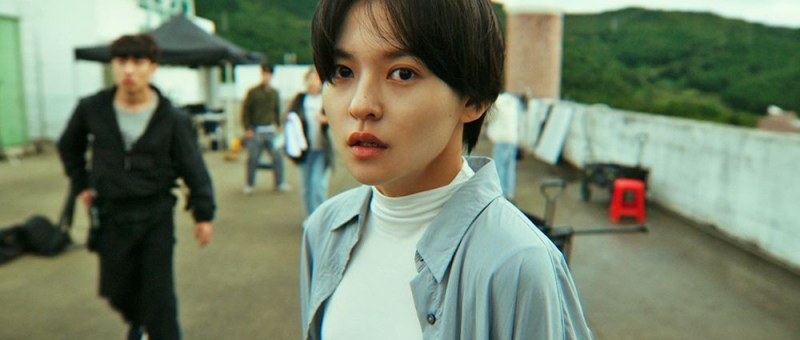
According to the opening title card of Han Dong-seok’s genre-hopping horror, sin is like a lost child that will one day come looking for its parents. The film’s ostensible heroine at times hears voices suggesting that someone or something will eventually come looking her, and later says that she is ready for their arrival, but before that we have to wonder what it is she means and what if anything that is happening is actually real or at least in keeping with our assumptions.

There are many reasons why we begin to feels we can’t trust Si-yeong’s (Kim Yoon-Hye) perspective. Not only is she already somewhat distant and preoccupied on her arrival at a disused university in the mountains but we also later learn that she’s taking a large amount of medication apparently for migraines and PTSD stemming from a barely remembered accident. She also seems less than pleased to encounter former colleague Chae-yoon (Song Yi-Jae) who brings up memories that seem unpleasant to her while there’s a kind of frostiness between them that’s only exacerbated by the fact Si-yeong was not even aware she’d have a co-star in this experimental dance movie directed by a man known for being “unkind” to actors. 

In any case, strange things do indeed begin befalling her from a body dropping right in front of her feet before she enters the building to the eventual murder and suicide of her colleagues who then return as zombie-like creatures. The film cycles rapidly through a series of genres beginning as a slasher with a Suspiria-like sense of eeriness as dancer Si-yeong’s mental state starts to unravel before drifting into the undead, cults, and shamanistic folk horror with the weird symbols dotted around the campus. 

Because things are very wrong on the outside too, Si-yeong even ends up running into a gang of murderous corrupt cops paranoid she’s found their stash of stolen drugs while otherwise pursued by riflemen apparently employed by a vengeful CEO. It’s true enough that we don’t know what’s going on for most of the film, and part of that may be that Si-yeong doesn’t know either because her mental state is unstable. We’re not even really sure if Chae-yoon is real or merely Si-yeong’s projection of her internal conflict, dressed as she is in the same outfit and with the same haircut to the point the two women are often barely distinguishable. Perhaps it’s this unpleasant memory that Si-yeong is trying to avoid, though it’s clear in very general terms that she’s running from something as much as she’s being chased and that her flight may be orchestrated to bring her to a specific location whether physical or spiritual.

What’s chasing her is the apparent “sin” of the title, though everyone might not see it as such or maybe believe their own sins were either justified or will be paid for later. For the purely evil, sin as a concept may not even exist if there’s no prospect of remorse though it’s hard to reconcile the docile, sweet and somewhat etherial Si-yeong with the fragmented memories of a past that may or may not be her own. “Thanks to you, we all became monsters,” she’s later told by someone about to something pretty monstrous but maybe they too were monstrous to begin with, or nobody was, and a well-meaning attempt to exorcise evil from the world has only produced more of it. 

Just when you think you have it all figured out, Han throws in a post-credits sequence pouring more fuel on the fire and hinting at even greater back story in a world ruled by dark and unseen supernatural forces. It doesn’t make sense, but wilfully so and frustrates in a positive way in our desperation to understand something that cannot be understood much as Si-yeong attempts to understand the rapidly disintegrating world around her. The concrete fact does seem to be that one must pay for ones sins, though those who do may not be the ones we’d expect. Gory and incredibly creepy, the film plays with our senses as much as Si-yeong’s, undermines our sense of reality, and finally leaves with the unsettling vision of a pervasive evil lurking in the mirror or the depths or the dark corners of a mind already shrouded in delusion. 


The Sin screened as part of this year’s New York Asian Film Festival.
International trailer (English subtitles)

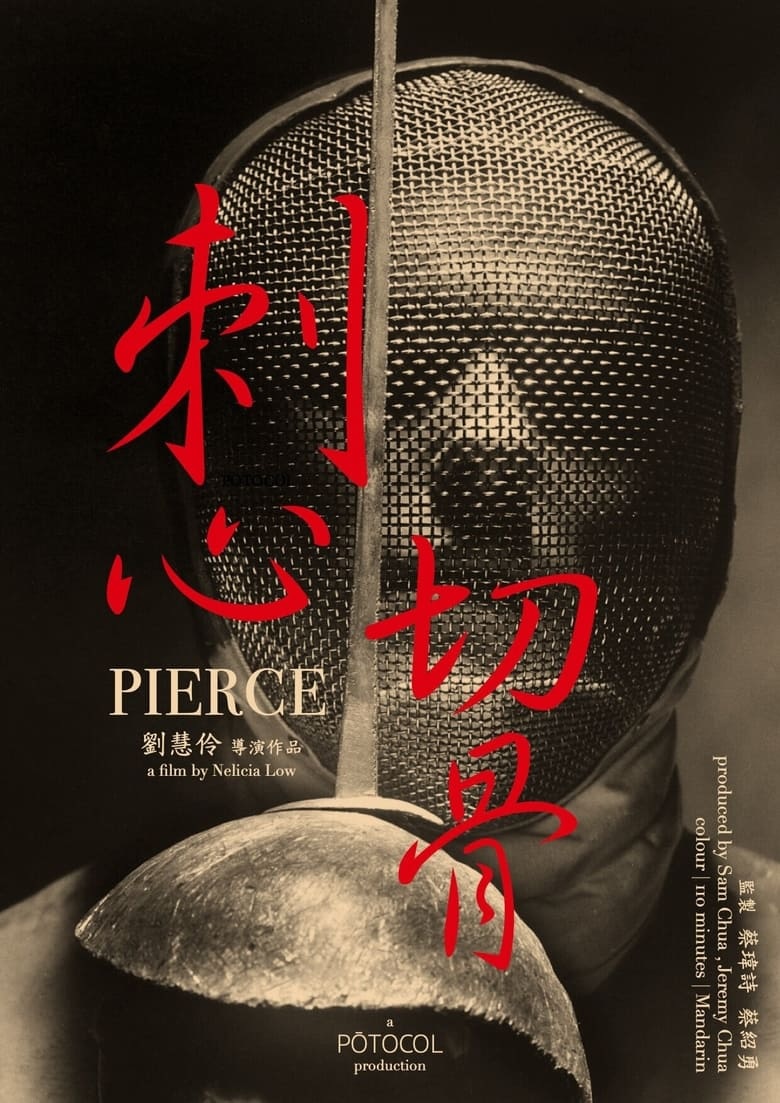
Pierce (刺心切骨, Nelicia Low, 2023)

What are the limits of unconditional love and is it always a good thing? The hero of Nelica Low’s intense fraternal drama Pierce (刺心切骨, cì xīnqiè gǔ) is desperate to believe that his older brother is innocent of a crime he’s been imprisoned for for the last seven years, but in another sense it seems like the fact itself doesn’t matter to him. What he wants is the emotional intimacy of authenticity which is something he doesn’t seem to get from his steely mother intent on crafting a protective bubble of fantasy that may be as much for herself as her son.

In any case, Ai Ling (Ding Ning) is convinced that Zihan (Tsao Yu-ning) was born bad. She needs no convincing that when he stabbed his opponent with a broken blade during a fencing competition he did so knowingly and it was an act of murder rather than an accident as he claims. Zijie (Liu Hsui-fu), her sensitive younger son, is not so sure and feels that his mother’s total rejection of his brother is unfair. He needs to believe in part that Zihan is innocent because he once saved him from drowning though according to his mother if she had not arrived when she did Zihan would happily have watched him die. Ai Ling also says that she suspected Zihan had harmed Zijie during their childhood, but if this is true then Zijie appears not to remember it or perhaps willingly suppresses his memories of cruelty because it would be too difficult for him to accept that his own brother tried to kill him. 

But objectively speaking, there is something not quite right about Zihan who seems to be a charmer with manipulative tendencies. He was once a three time national fencing champion, and as he says fencing is all about figuring out your opponent’s intentions without letting them see your own. Of course, the way he behaves could equally be because of the way his mother behaves towards him. In some senses he too is a broken blade, apparently craving his mother’s approval and affection and perhaps becoming what she believed him to be out of frustration and resentment. He lies all too easily, crashing a dinner party with Ai Ling’s wealthy suitor Zhuang and his family and leaning into her cover story that he had been away studying medicine in the US while adding a touch of his own in a tearful story of wanting to specialise in radiology having watched his father painfully pass away of cancer. 

Of course, even if he is a raging sociopath, that doesn’t necessarily mean he committed an apparently motiveless murder or that he has no feelings at all for his brother who dotes on and idolises him with almost incestuous intensity. Zihan instantly picks up on the fact his brother is gay and that a boy in the fencing club has a crush on him, offering nothing other than support and reassurance of the kind he’d never get from Ai Ling. When Zhuang tries to set Zijie up with a girl and he declines, he broaches the idea he might not be straight but Ai Ling immediately changes the subject implying that probably she already knows but it’s another thing she’s papered over perhaps afraid that it might damage her relationship with Zhuang who appears to come from a wealthy family though they may not be as conservative as she fears them to be. 

In contract to the intimacy Zijie craves, beginning to confess himself, Ai Ling protects and distances herself from others through deliberate misrepresentation. Zhuang seems at least that he would be more upset about the deceit than that Ai Ling has a son who involved in a high profile, violent crime and also appears not to care that Zijie maybe gay while otherwise attempting to bond with him and be a sincere father figure. His love may in fact be unconditional in a way Ai Ling’s clearly is not whereas Zijie finds himself wavering, confronted by contradictory evidence that suggests his brother may not be so innocent after all. Deciding into a Grand Guignol fantasy in its final stretches, Low fills the screen with an ominous red, the billowing curtains creating an artificial dreamscape of ambiguous reality in which the brothers, each of them, discover at least their own truth and the answers they were seeking which may in its way be all they really needed.


Pierce screened as part of this year’s New York Asian Film Festival

Original trailer (English subtitles)

The Yin Yang Master Zero (陰陽師ゼロ, Shimako Sato, 2024)

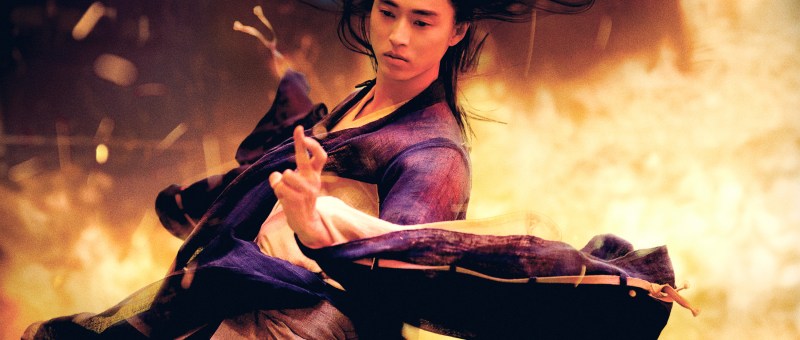
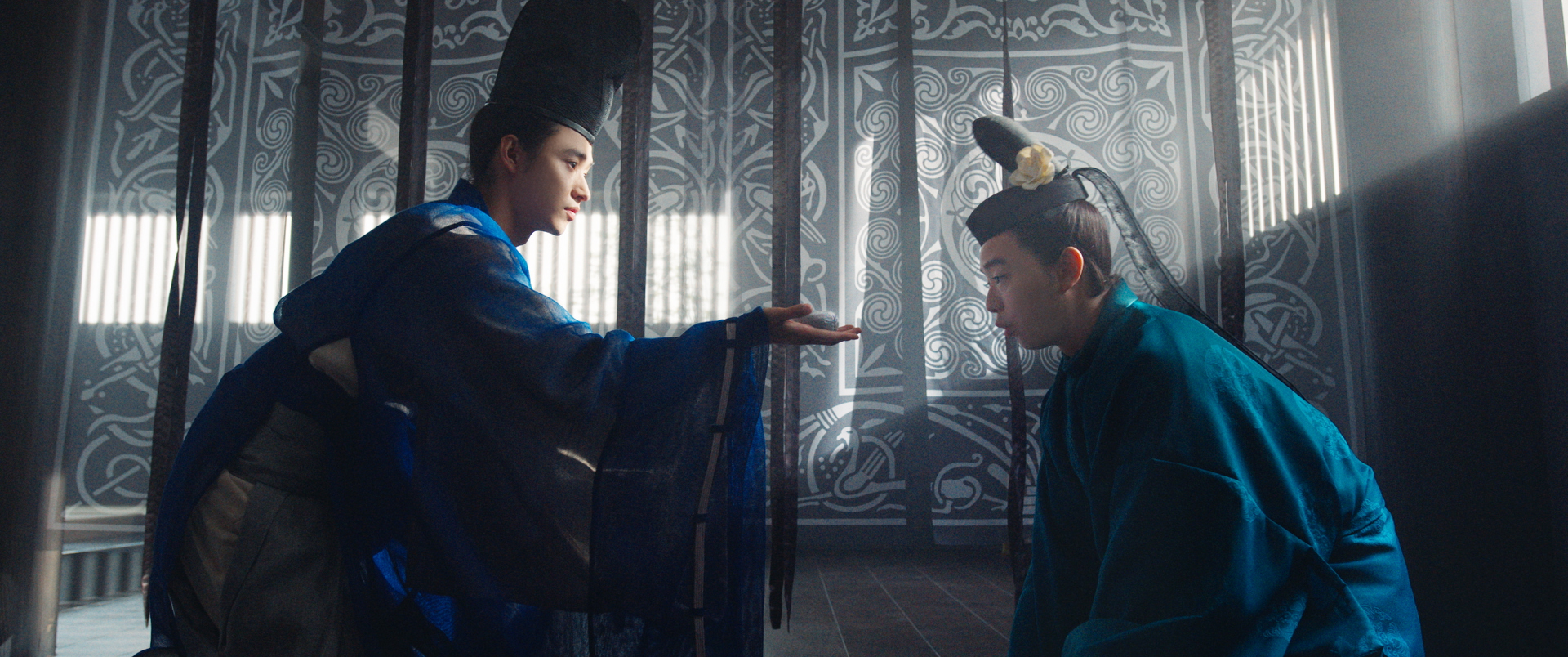
In the Heian era, who was it that kept the social order in check if not the onmyoji or “Yin Yang Master”? Shimako Sato’s big budget fantasy drama is technically a kind of prequel origin story adapted from Baku Yumemakura’s series of novels which were previously adapted as pair of movies in the early 2000s, and introducing the young Abe no Seimei (Kento Yamazaki), a Detective Dee-esque exorcist working as a state magician to protect the nation from supernatural threats such as demons and curses in an era in which ordinary people lived side-by-side with goblins and monsters.

That said, Seimei doesn’t really believe in that sort of thing, though in an ironic twist knows it to have a kind of truth at least, and is sick of being called out to look at a potential goblin infestation that turns out to be nothing more than a creaky old house settling amid the changeable weather. Which is all to say, he is both an earnest scientist looking for rational explanations to strange phenomena and an excellent diviner who can catch a dragon spirit in a bottle. In a touch of the Sherlock Holmes, he’s also gruff and aloof, distinctly uninterested in achieving high position and makes no secret of his contempt for his fellow alchemists insisting the Ying Yang Masters merely perpetuate superstitions to keep people frightened and themselves in employment.

When one of the other alchemists turns up dead of a suspected curse, the cat is set amongst the pigeons as the young apprentices respond to the offer of his higher status spot of they can solve the crime. This of course exposes their own greed and vanity as they each fall over each other desperate for a chance to get another foot on the ladder in a hierarchal system, a step that must be taken if they’re to make it all the way to the position of the emperor’s advisor on spiritual matters. Seimei’s disinterest further arouses suspicion against him with a fellow alchemist already 45 years old and stuck at the bottom rank directly accusing him of the crime perhaps less out of a genuine conviction than a desire to advance himself. 

In any case, Seimei investigates in a more modern, scientific way gaining access to crime scene and corpse ironically through a connection he’s made at court to an influential musician, Hiromasa (Shota Sometani), who hired him to sort out a problem the princess, Yoshiko (Nao Honda), was having with snapping strings on her harp. That turned out to be caused by a giant golden dragon spirit which Seimei later claims represented her feelings for Hiromasa, who is also quietly in love with her, which are somewhat forbidden because of the class difference between them. In this way, the spirits are merely a manifestation of the conflict between personal feelings and the social order as Yoshiko finds herself all but powerless, a princess in a golden cage to be sent wherever she is called with no real say over her fate. 

Fittingly, these feelings are resolved in a kind of artificial reality that Seimei believes to be a space of shared consciousness though he’s also fond of remarking on the malleability of “reality” and the ways in which vision and perspective can be manipulated. Then again, he also says all that matters is what they are seeing and experiencing in that very moment which is as good a benchmark for objective reality as anything else. There is something quite poignant about his developing relationship with Hiromasa which has its homoerotic qualities even as he becomes the “idiot” stand in for the audience, a kind of Watson figure that Seimei can explain everything to so that he can explain it to us. Even we can see the restrictions of the court and the irony in the eventual victory of “order” rather than personal freedom as volatile emotional forces must be put back in their bottles lest they create problems for everyone. Such conditions will doubtless create a series of cases of Seimei and Hiromasa to solve in a potential series starring the ace exorcist and his flautist friend in a Heian society beautifully brought to life by Sato’s sumptuous production design and flair for fantasy action.


The Yin Yang Master Zero screened as part of this year’s New York Asian Film Festival

Original trailer (English subtitles)

Breaking and Re-entering (還錢, Wang Ding-Lin, 2024)

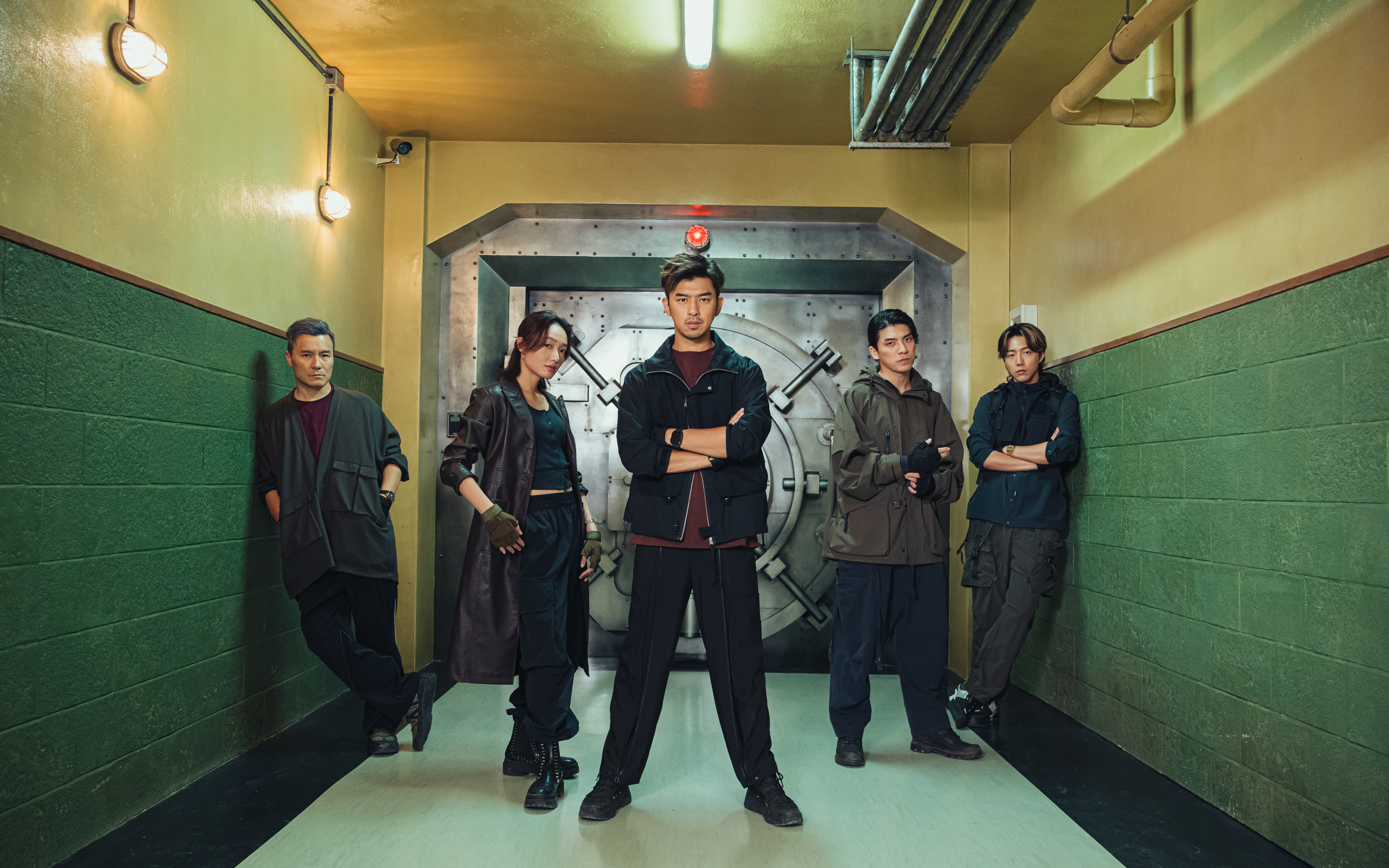
You go to the trouble of planning a massive heist, and then it turns out you have to put it all back again. The gang of theives at the centre of Wang Ding-Lin’s hugely entertaining crime caper Breaking and Re-entering (還錢, huán qián) brand themselves modern day Robin Hoods, pausing for a laugh when they claim to help the poor, “yeah, us”. Yet there is something a little suggestive about this particular gig as they find themselves hired for an inside job by an obnoxious bank chief who claims the most important thing in life is yourself and those around you are merely passengers to be jettisoned at will..

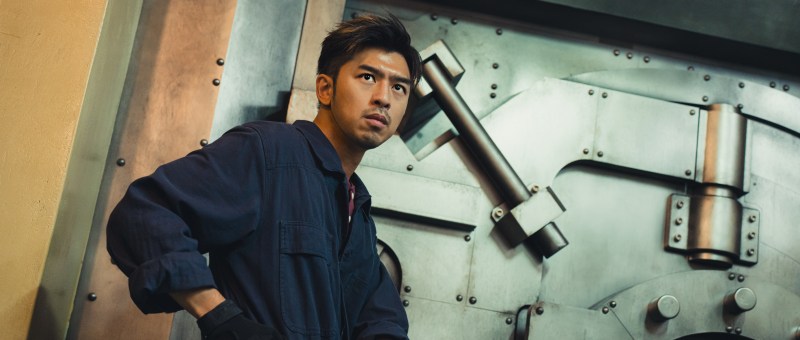
Chen (Wu Kang-ren) is a rich kid who inherited the family bank and thinks he’s hot stuff after studying abroad, speaking Mandarin like foreigner and peppering his speech with English. His big idea is a cryptocurrency called BST and his tagline is “Peace, Love, and Money” while ironically enough he is also claiming to run a charity to help the poor. It’s obvious he’s running some kind of scam and not altogether surprising that he’d plot to rob his own back and then have the thieves bumped off to keep them quiet along with the two employees he’s decided to frame for the crime. Unfortunately for everyone, one of his scapegoats, Shen Shu-wen (Cecilia Choi), is the long lost flame of chief crook Po-chun (Chen Bo-lin) who, having realised Chen plans to bump her off, comes to the conclusion his only option is to mess up Chen’s plan by putting the money back in the vault.  

Of course, Chen is a kind of gang leader too complete with his own chief minion, Hu, though at one point he simply shoots one of his guys in the back of the head after he complains that Chen that doesn’t really value him. By contrast, Po-chun’s gang is a close-knit family, a brotherhood of thieves founded on mutual solidarity and infinite loyalty. Chen’s philosophy maybe that the individual is all, but these men live and die for each other. Nevertheless, Po-chun has a problematic hero complex that sees him, as others put it, aways trying to “take responsibility alone”, sacrificing himself for the group rather than allow his fellow gang members to shoulder some of the burden. That’s presumably one reason he (un)intentionally ghosted Shu-wen after getting arrested and going to prison, convincing himself he was doing the noble thing by avoiding getting Shu-wen mixed up with crime but perhaps also ashamed and insecure unwilling to let her know he met her as part of a heist and his cover personality wasn’t real while never giving much thought to her feelings. Shu-wen spent the last five years looking for him which was apparently a primary motivation for changing her career to work in the bank.

Po-chun’s quest is really one of maturity, to stop being the lone hero and fully integrate into the group by sharing responsibility with the others rather than jump straight to self-sacrifice. As he says through the medium of a montage sequence, their secret weapon is teamwork which is how they’re able to fight back against the well equipped Chen and his minions when the reason Chen flounders is his arrogance and the indifference of his men. That is not to say there isn’t tension in the team, such as the unrequited attraction bruiser Wen-hao has for Po-chun that is quite definitely antagonised by the resurfacing of Shu-wen who seems to have figured out the group dynamics pretty quickly in addition to seeing through Po-chun’s strong man act. 

It’s the warm-hearted, lived-in relationships between the team members that give the film it’s charm along with the quirkiness of the elaborately planned reverse heist and its mild dig at corporate tyranny along with class-based inequality. But most of all what it seems to advocate for is a collective spirit and the triumph of the intellect over the pampered authority of rich kid Chen as Po-chun strategises a way out of his grasp while ending his influence and getting the girl. Wholesome and charming, the film makes the most of its surreal humour along with some hilariously placed reality gags such the infuriating slowness of a “high end automatic door” that ironically prevents a wealthy crook from fleeing the scene.


Breaking and Re-entering screened as part of this year’s New York Asian Film Festival and is also screening as part of the Taiwan Film Festival in Australia

Original trailer (English subtitles)

Suffocating Love (愛的噩夢, Liao Ming-yi, 2024)

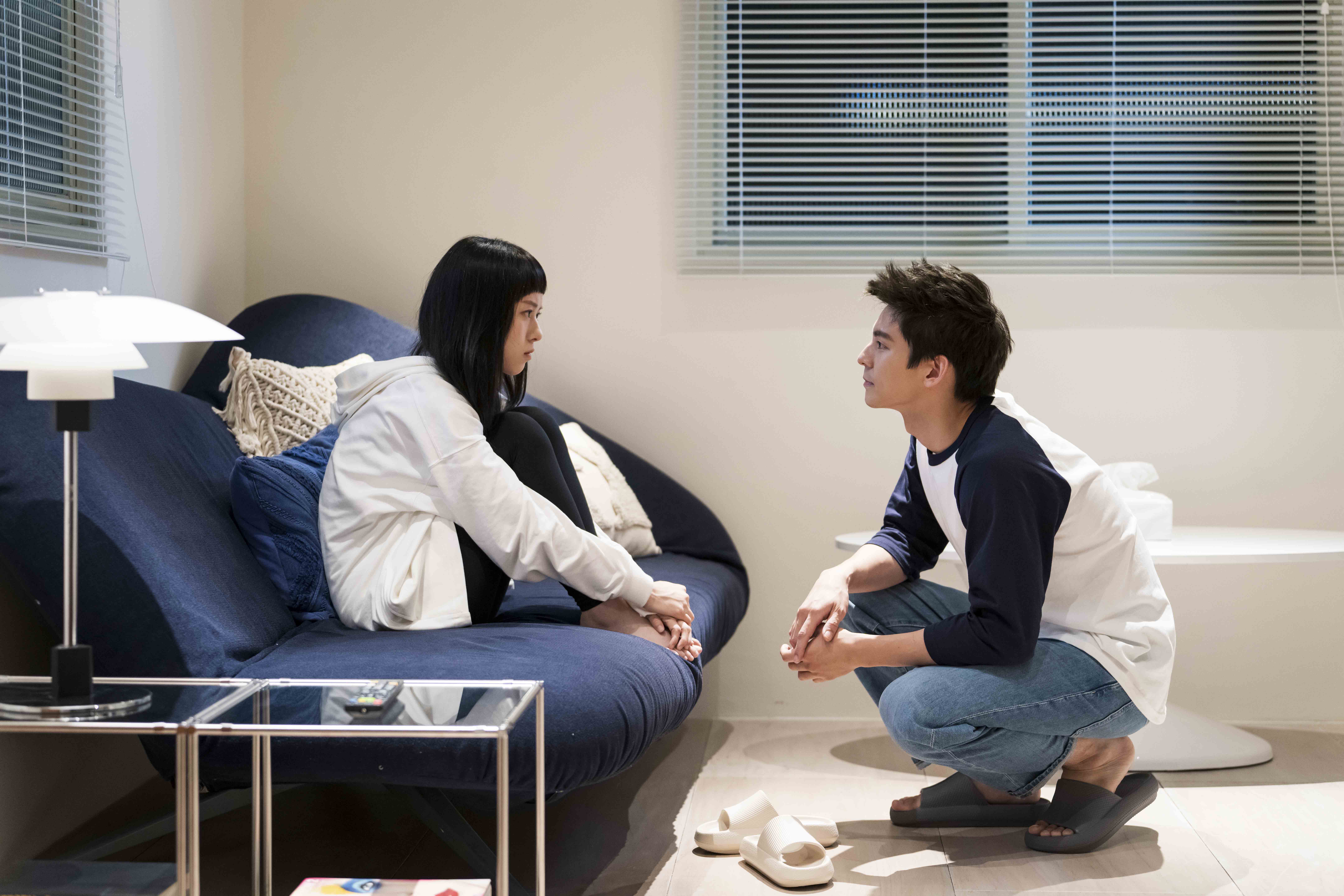
Everything seems to put pressure on M, the cavalier hero of Liao Ming-Yi’s quirky exploration of confused male desire Suffocating Love (愛的噩夢, ài de èmèng). At heart, the problem might be that he doesn’t know what he wants, or he’s just someone who chases the dream of romance and is unsatisfied by its reality. Then again, the Chinese title of the film means something like “nightmare of love”, and it maybe that M (Austin Lin) is simply ill-equipped to deal the pressure of grown-up romance.

Conversely, the pressure he feels might be understandable given the nature of his relationship with Chia-chi, a manic pixie dream girl he falls for after meeting her through a book exchange app. Chia-chi describes herself as having “quirks” though at first they don’t seem to extend much past her vegetarianism, issues connected to a longstanding health condition, and her religiosity. But after dating for a year, M moves into her apartment and is confronted by a series of “rules” he must follow which make it clear that Chia-chi is controlling and possessive in the extreme. M must agree to send her updates every two hours to prove where he is with photographic evidence and reply to her messages right away. To begin with, M thinks it’s a small price to pay in the name of love, but eventually begins to feel the “pressure” of Chia-chi’s ever watchful gaze especially once another woman arrives on the scene. 

If these gender roles were reversed, we would be certain M should leave this abusive relationship though he seems to view it with a kind of nonchalance and only mild but increasing irritation. Ai-hsuan, a high school crush serendipitously turning up at work, offers the fantasy of escape to a more liberating kind of romance that’s tinged with teenage innocence even if Ai-hsuan’s problem is that she has cold feet about an impending marriage to a man she feels she’s grown apart from during their seven year relationship. Of course, this affair doesn’t place much pressure on him because for the moment it’s casual, an illicit bubble of freedom from Chia-Chi’s control in which he can be himself again. 

But is that what he really wants? After being transported to a strange dream realm, a bunny man harking back to the Alice in Wonderland reference that brought M together with Chia-Chi puts a gun to his head and forces him to make a wish at which point he wakes up with an other woman entirely, Kurosawa Yumi, a half-Japanese photographer and social media influencer who was his celebrity crush. The pair don’t live together, but Yumi seems to pop round to change his sheets and cook his dinner which is perhaps more reflective of a male fantasy than M realises even as he describes as her at the woman every man wants, What he wants is a woman who takes care of him domestically, and sexually, but demands nothing from him so that he doesn’t feel “pressured” by emotionally interacting with her or having to accept that she’s a whole, real person (which this Yumi at least obviously is not). 

At this point, events take a rather strange turn with implications of black magic and manipulation beyond the weird dream realm and its Alice-esque butler forcing M to play Russian roulette with his romantic desires. With a gun to his head, can he really say what he wants or will he always be chasing romantic fantasy? In truth, M’s tunnel vision has its share of latent misogyny and a fear of being “controlled” by women if in a less literal way than he wilfully submits to in his relationship with Chia-chi, a generalised conviction that each of his potential matches is manipulating him while it’s clear that his view of them is blinkered by his selfish desires so he’s incapable of seeing them as whole people or really giving much thought to their thoughts and feelings. Is he suffocated by love, or does he himself suffocate it in his reluctance to engage with the reality? In any case, the jury seems to the out on whether or not M is awakening from his nightmare of love or perpetually trapped inside it by external pressures he is ill equipped to bear.


Suffocating Love screened as part of this year’s New York Asian Film Festival.
Original trailer (English subtitles)

The Tenants (세입자, Yoon Eun-Kyung, 2023)

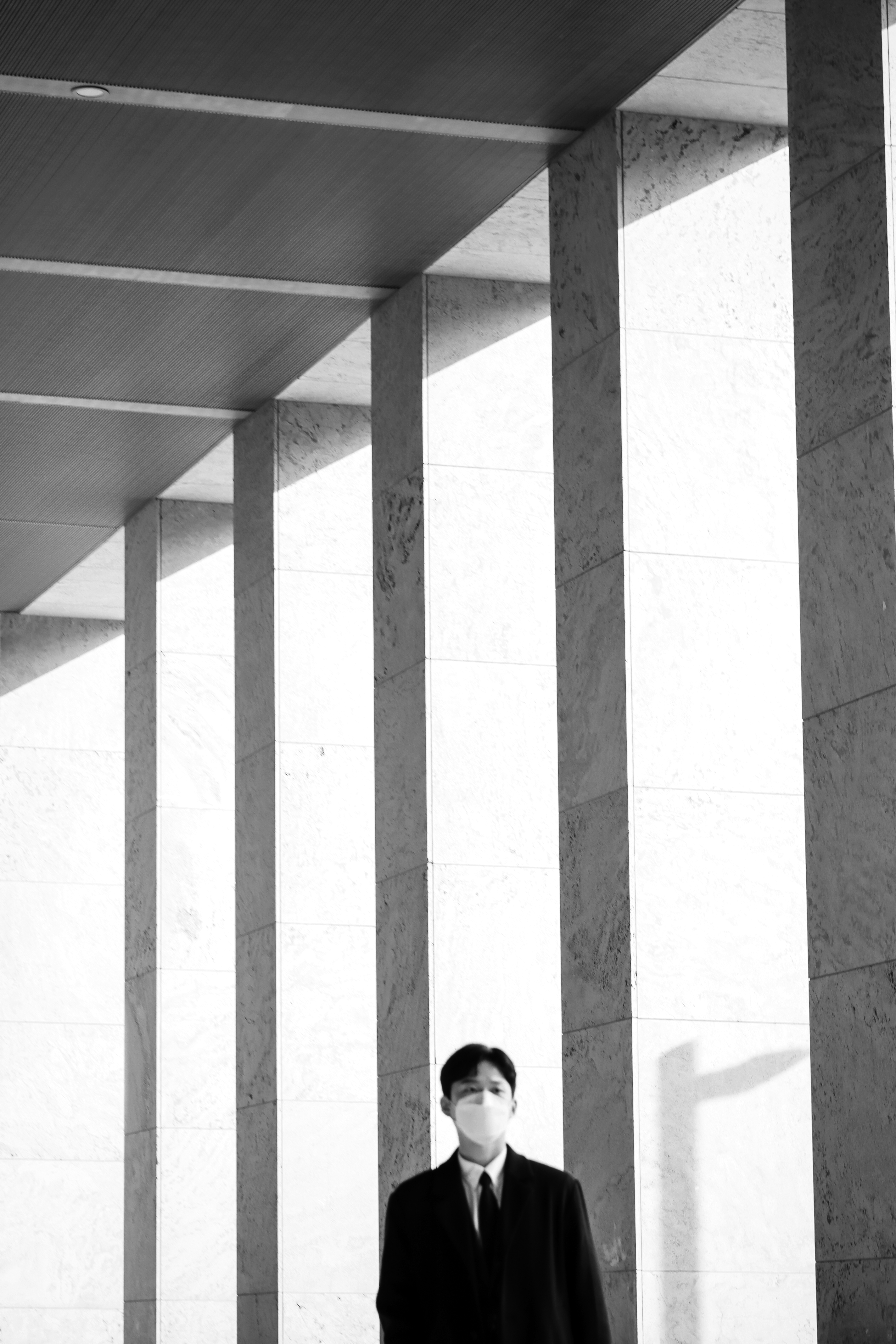
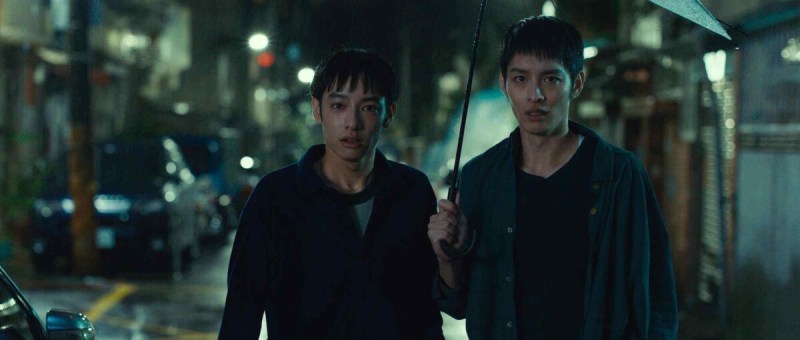
“Think carefully. Think about why you can’t leave here, and what keeps you from leaving,” runs the opening and closing dialogue of Yoon Eun-gyeong’s elegantly lensed monochromatic dystopian drama The Tenants (세입자, Seibja) in which the citizens appear to be trapped in an abusive relationship with a toxic city that offers what it claims are attempts to help the struggling get back on their feet but which are really constraints to prevent them from leaving. 

At least that’s what Shin-dong (Kim Dae-gun), a hard-working if apparently average officer worker, discovers when his landlord, who appears to be a child who has taken over this role from his still living mother, informs him that he wants to remodel the building to attract higher quality tenants and effectively bamboozles him into the idea of moving. Only, in this near future society, moving isn’t an easy thing to do and Shin-dong is struggling to pay his rent already for an apartment he barely occupies considering all the unpaid overtime he does just to show willing in the hope of career advancement. His friend in a similar position informs him of a loophole, that ironically enough as other kinds of tenants have rights, if he sublets part of his apartment his landlord won’t be able to kick him out.

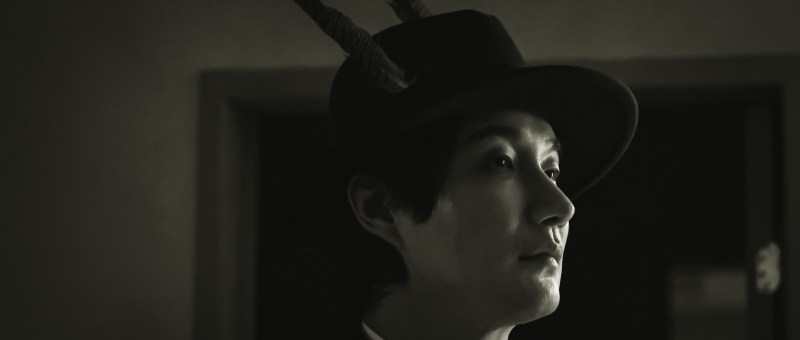
Only the pair of lodgers he acquires are strange in the extreme. A very tall man in an alpine hat with two feathers that looks like bunny ears arrives with a decidedly childlike wife who appears not to speak much Korean and just smiles creepily while standing behind him. To make matters stranger they insist on living in the bathroom, because the wife has bowel issues, which also means Shin-dong has to start using communal facilities which turn out to be much busier than expected with similarly troubled office workers. Meanwhile, he starts to feel like someone is watching him and wakes to find one of the pair staring at him in his sleep.

Understandably, he regrets the arrangement but ironically he’s now in place of a landlord himself and feels awkward about asking the couple to leave while forced to acknowledge that they also have rights as tenants which include those to sublet the part of Shin-dong’s apartment he sublet to them. In this way, his space is literally shrinking but it’s also as if the city is further encroaching on his life. He explains that he’s a solitary person and much prefers to live alone but is prevented from doing so by the socio-economic conditions which surround him. His colleague calls him a hardworking loser who just makes trouble for everyone else with his constant overtime while he has invested in making closer ties with the boss in the hope of getting a promotion that way. 

But it appears the only way out of this toxic city which is literally choking Shin-dong with its low quality air is to get a transfer to the new utopia of Sphere 2, an idyllic future settlement with a purified air system advertised in both Korean and Chinese on his morning commute. The fact that Shin-dong works for a friendly corporate entity titled “Happy Meat” which apparently manufacturers ethical, cultivated meat products adds to the sense of unreality in which everything is somehow fake or a little less than you might have been expecting while things are that marketed as positive attempts at kindness are also in themselves a little bit toxic as Shin-dong works himself harder than the most earnest donkey and gets nothing back in return save the ability to think of himself as someone with the status of “officer worker” which at least confers a degree of respect. 

That might be one reason he’s disgusted by the idea of the attic dweller underclass who are, he’s warned, a little bit dangerous having been driven out of their minds by their dismal circumstances and prone to sometimes violent delusions. A less than helpful medical professional advises him to “reduce his thoughts”, which doesn’t seem like a very good long term solution even in this “zombie-like” city though even when he’s been given a chance to escape Shin-dong is told he’ll have to cancel his lease first, which means getting his tenants to stamp a form agreeing to end their tenancy and also get a form from the the person they’ve sublet to to do the same. It’s tenants all the way down. Shin-dong finds himself staring into the photo of a beach in the eventual hope of escaping to some kind of paradise, but otherwise seems to be trapped inside this hellish yet grey, lifeless dystopia in which it seems the only salvation may lie in madness. 


The Tenants screened as part of this year’s New York Asian Film Festival.
Original trailer (English subtitles)

Love Lies (我談的那場戀愛, Ho Miu-ki, 2024)

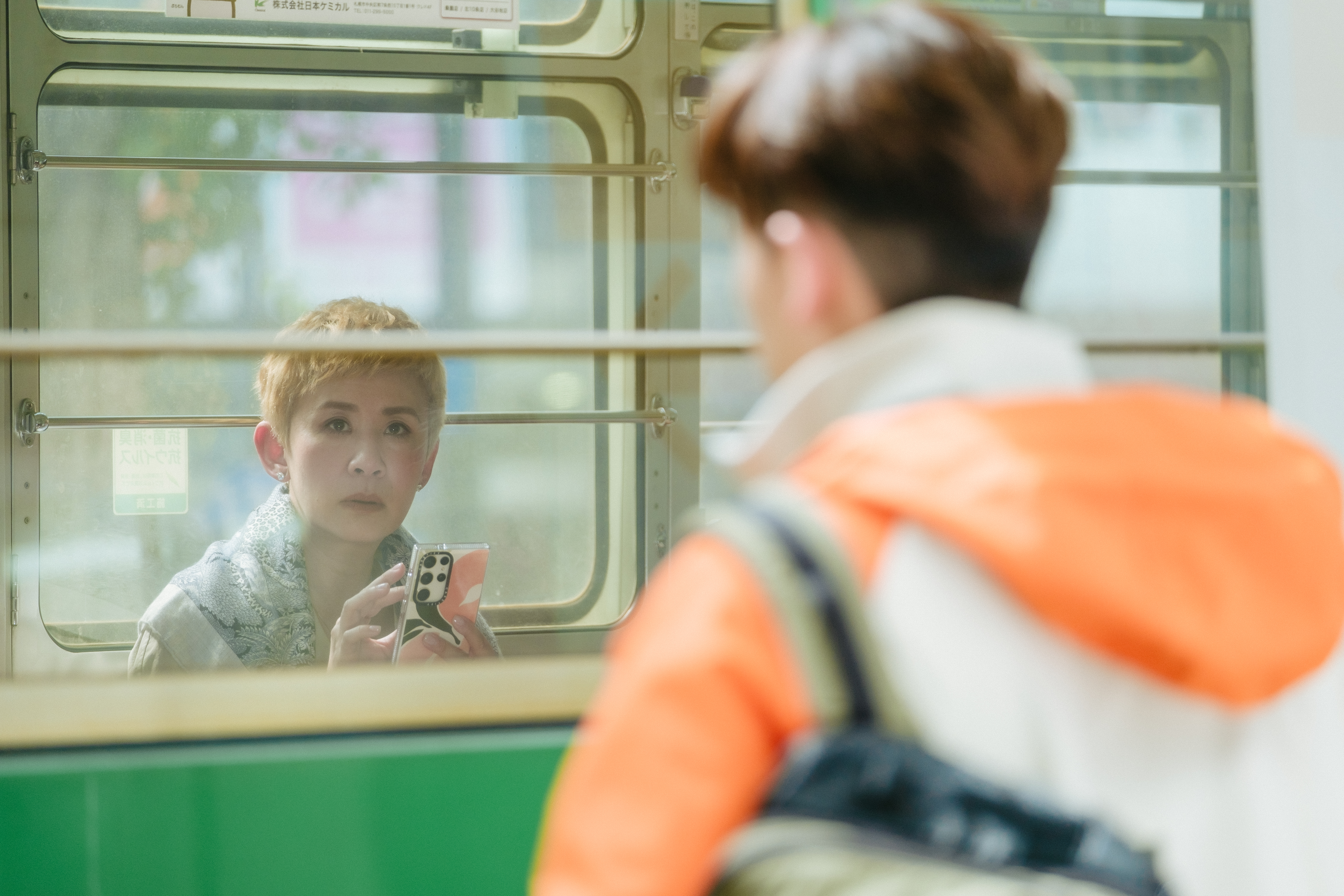
The heroine of Ho Miu-Kei’s cybercrime dramedy Love Lies (我談的那場戀愛) later rejects the idea that she has been deceived for she was only falling in love and love once believed is real which paradoxically hints at the idea of romantic love as fantasy or self-delusion. There is undoubtedly some truth in what she says, if only in the fact that the young man scamming her also begins to fall in love if not exactly with her but with the image of himself as reflected in her eyes. 

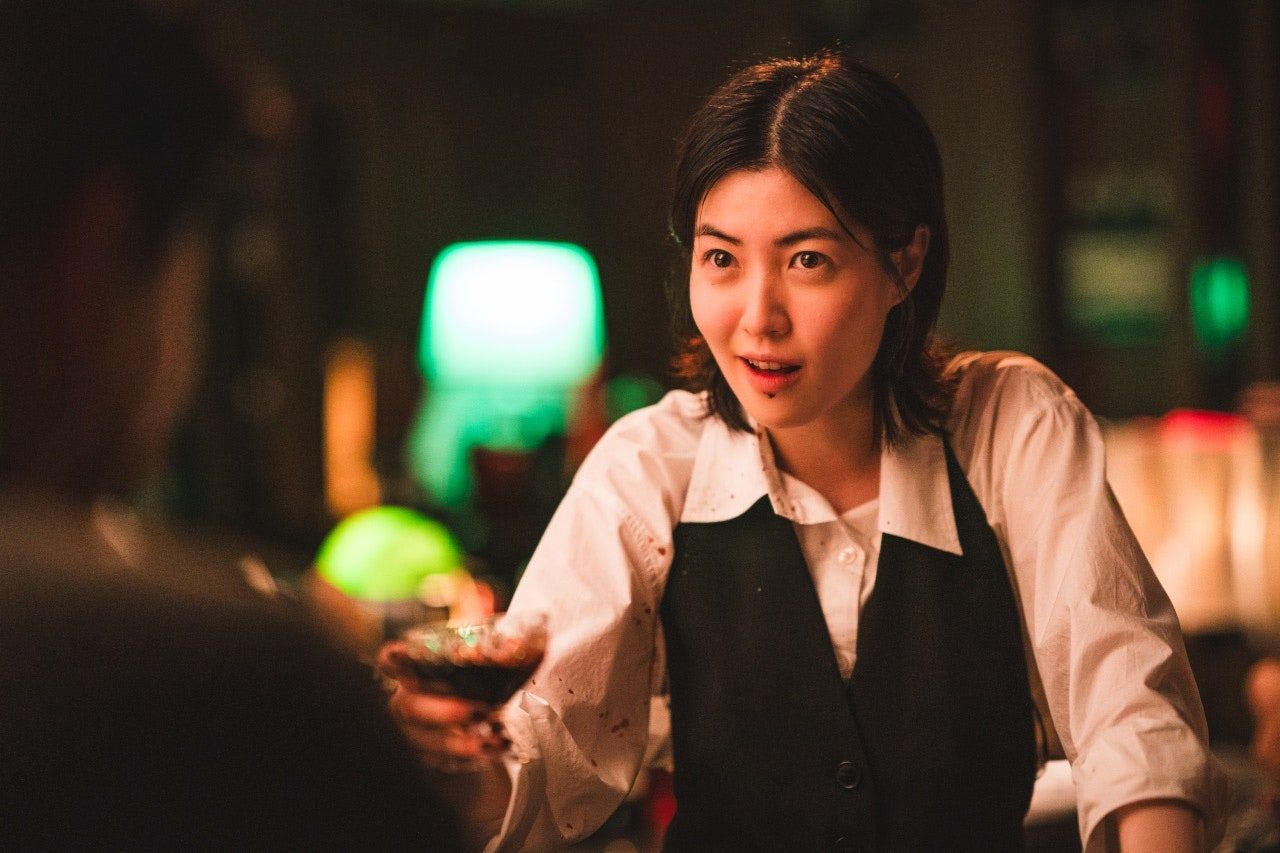
From what we can see of Joe (Cheung Tin-fu), he doesn’t quite fit our image of romance scammer. He isn’t cruel or heartless and has more or less fallen into this kind of work, learning to see it as a kind of game which conveniently allows him to ignore the real human he’s exploiting in order to win. Awkwardly still living with his ex-girlfriend’s family, he’s bonded with her father and seems to be seeking something like familial love and acceptance along with the feeling that he’s wanted and valued by another person. Of course, being a romance scammer gives him what he needs as his targets are drawn into his trap and eventually become dependent on him though it’s obviously not “Joe” they’re dependent on but whoever he claimed to be online who is perhaps all the things he’s like be rather than who he is. 

In any case, he finds himself conflicted while trying to scam Veronica (Sandra Ng), a fantastically rich gynaecologist still struggling to deal with the death of her husband four years previously from whom she was about to get a divorce. Veronica is also not being entirely honest online, posing as a 25-year-old nurse named Linda and using a random photo from the internet while planning to have some idle fun chatting to a stranger in this case a heartbroken French widower named Alain. Like Joe, Veronica is also a little unhappy in herself, explaining that she’s a difficult person who blows off steam by rearranging the goods in convenience stores and has few friends. Being “Linda” also affords her another perspective on herself and a means of reassessing her thoughts about her husband and marriage. 

But this vulnerability is also what makes her vulnerable to the scammers as mastermind Joan (Stephy Tang), who used to be a TV screenwriter, points out in instructing Joe that he’ll really have cracked Veronica when she feels comfortable enough to tell him about her husband. Ho presents the scammers as an unusually well equipped yet old school bunch who have an actual art department to construct props to help Joe sell his fantasy though he’s pretty slow to cotton onto the idea of stalking Veronica’s social media profiles for information he later uses to create a bond with her. 

Though quirky and somewhat wholesome, the film does hint at the dangers of online interaction and the information we choose to share with strangers, perhaps unwisely. Intellectually, Veronica is aware of the potential of scamming but also sees herself as “better” than that, as if an educated, successful woman such as herself should be too smart to fall for something so obviously untrue and is later unwilling to accept that she’s sent large amounts of money to a conman despite the advice of her bank which of course only keeps her in the scam so she can prove to herself that she’s not being conned. 

But the conclusion she finally comes to is that if she fell in love with someone who didn’t really exist, then that doesn’t mean the love itself wasn’t real. In any case, it allowed her to re-engage with lost love and recover herself and her memories of romance while finally beginning to deal with her husband’s death and the end of her marriage which arrived more abruptly than expected. In much the same way, Joe begins to realise that he ended up scamming himself, half in love with the image he created as reflected back to him while more aware of his own needs and desires along with the emotional consequences of the scamming game. To that extent, maybe love itself is a long con or beautiful fantasy but there might also be truth in a lie and a genuine connection between lonely souls beyond all the wilful deception and misrepresentation.


Love Lies screened as part of this year’s New York Asian Film Festival.
Original trailer (English subtitles)

The Killers (더 킬러스, Kim Jong-kwan & Roh Deok & Chang Hang-jun & Lee Myung-se, 2024)

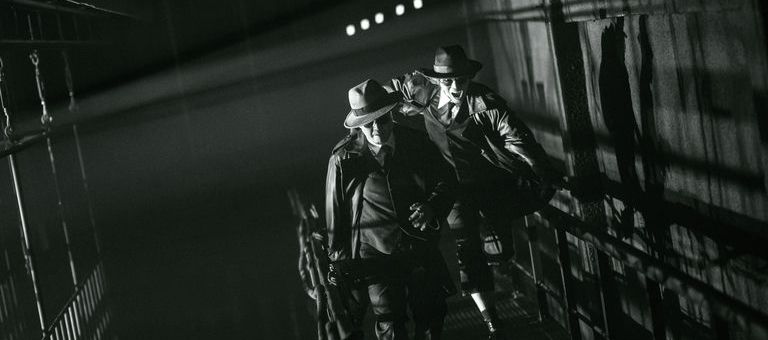
Led by Lee Myung-se, The Killers (더 킬러스) was originally billed as a six-part anthology film featuring different takes on the short story by Ernest Hemingway, but somewhere along the way took a kind of detour and now arrives as a four partner with a looser theme revolving around noir and crime cinema. Frequently referencing the Edward Hopper painting Nighthawks, the film hints at urban loneliness and a haunting sense of futility along with the mythic quality of noir as a tale that tells itself.

At least that’s in part how it is for unreliable the narrator of the first episode, a petty gangster who wakes up in a mysterious bar after being cornered by rival thugs. While in there he meets a similarly lost, middle-aged film director in the middle of a strange date with a fawning young woman who’ve definitely wandered into the wrong place. A sense absurdity is echoed in the fact that the man continues to sit in the bar oblivious to the knife in his back until the bar lady pulls it out for him and exposes the real reason why she lures lonely souls to this strange place out of time. Even so, thanks to her dark initiation the gangster is able to become himself and stand up against the rival thugs who were bullying him with his newfound “feistiness” having overcome something of the futility of black and white, classic noir opening sequence.

That’s something that never really happens for the heroes of part two who are a trio of youngsters trapped in Hell Joseon unable to escape their lives as cut price contract killers working below minimum wage for a chaotic company in which everything has been sub-contracted into oblivion. Ironically, one had dreams of becoming a policeman and another a nun while the third has recently had plastic surgery in the hope of landing an acting gig and claims he’s not in this for the money but to make the world a better place. Seeing their work as a public service, they tell each other that it’s wrong to grumble over their unfair pay because other people get less and are otherwise incapable of standing up for themselves until they take a leaf out of the boss’ book and try a subcontracting of their own which doesn’t quite go to plan.

While the first two episodes had been set in the present day the second two are set during the long years of dictatorship, the first sometime in the 1960s under the rule of President Park as an undercover detective and two men who appear to be unsubtle KCIA agents descend on a noirish, rundown bar with a picture of Nighthawks on the wall waiting for a mysterious fugitive to arrive. They don’t appear to know anything about why their target needs to be caught or who he is save for a daffodil tattoo on his arm and are merely they shady figures of authoritarian power we can infer are hot on the tracks of someone hostile to the regime. In any case, they are they are about to have the tables turned on them in a demonstration of their inefficacy in their power.

It’s the fourth and final piece unmistakably directed by Lee himself, however, that brings the themes to the four as it opens with an allusion to the assassination of President Park as the narrator tells us that it is 1979 and someone sent a bullet into the heart of darkness but the darkness did not die. The two goons who later show up are KCIA thugs working for the new king Chun Doo-hwan come to threaten the denizens of the cafe which include a man called “Smile” because he can’t and a woman called “Voice” because she has none while trapped inside an authoritarian regime. Inhabitants of Diaspora City, a home to the exiled, they have only a small hole to another world which affords them the ability to dream. Relentlessly surreal the segment is marked by Lee’s characteristic visual flair and sense of noirish melancholy that extends all the way out to a world more recognisably our own though no less lonely or oppressive.


The Killers screened as part of this year’s New York Asian Film Festival.