Organ Child (器子, Chieh Shueh Bin, 2024)

How far would a father go for his daughter? There’s an ironic duality at the centre of Organ Child (器子, qìzǐ) in that the vengeful man at its centre and the man he is chasing are basically the same and may have made the same choices were the situation reversed. Nevertheless, a terrible and morally indefensible crime has taken place which will lead to many more of the same as bereaved father Qi-mao (Joseph Chang Hsiao-chuan) stealthily tracks down all those who stole his newborn daughter and sold her to an organ trafficking ring. 

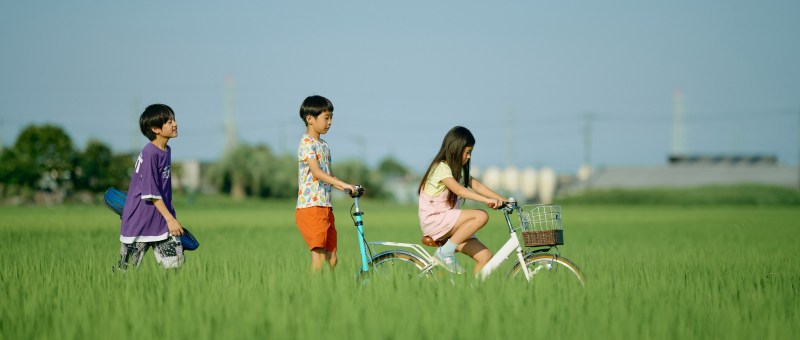
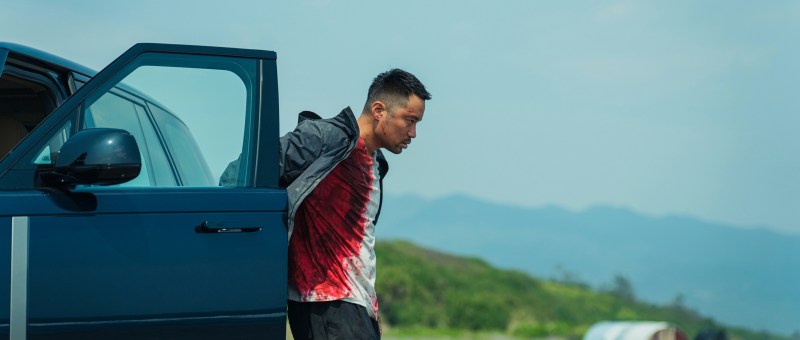
The film is keen to paint Qi-mao as a figure of uncompromised fatherhood through his association with a group of orphaned boys. Working as a baseball coach at the orphanage, he becomes a surrogate father to them and provides a familial environment as he and his wife frequently invite the boys for dinner. When his daughter is born, she automatically gets a whole baseball team of overprotective brothers, but that doesn’t stop her being snatched one day when her mother turns her back for an instant to pick up her bottle. The more Qi-mao searches for his daughter, the more he becomes convinced that she was stolen to order and the hospital is somehow involved. After getting too close to the truth, he’s framed for murder and sent to prison for 18 years during which he plans his bloody revenge.

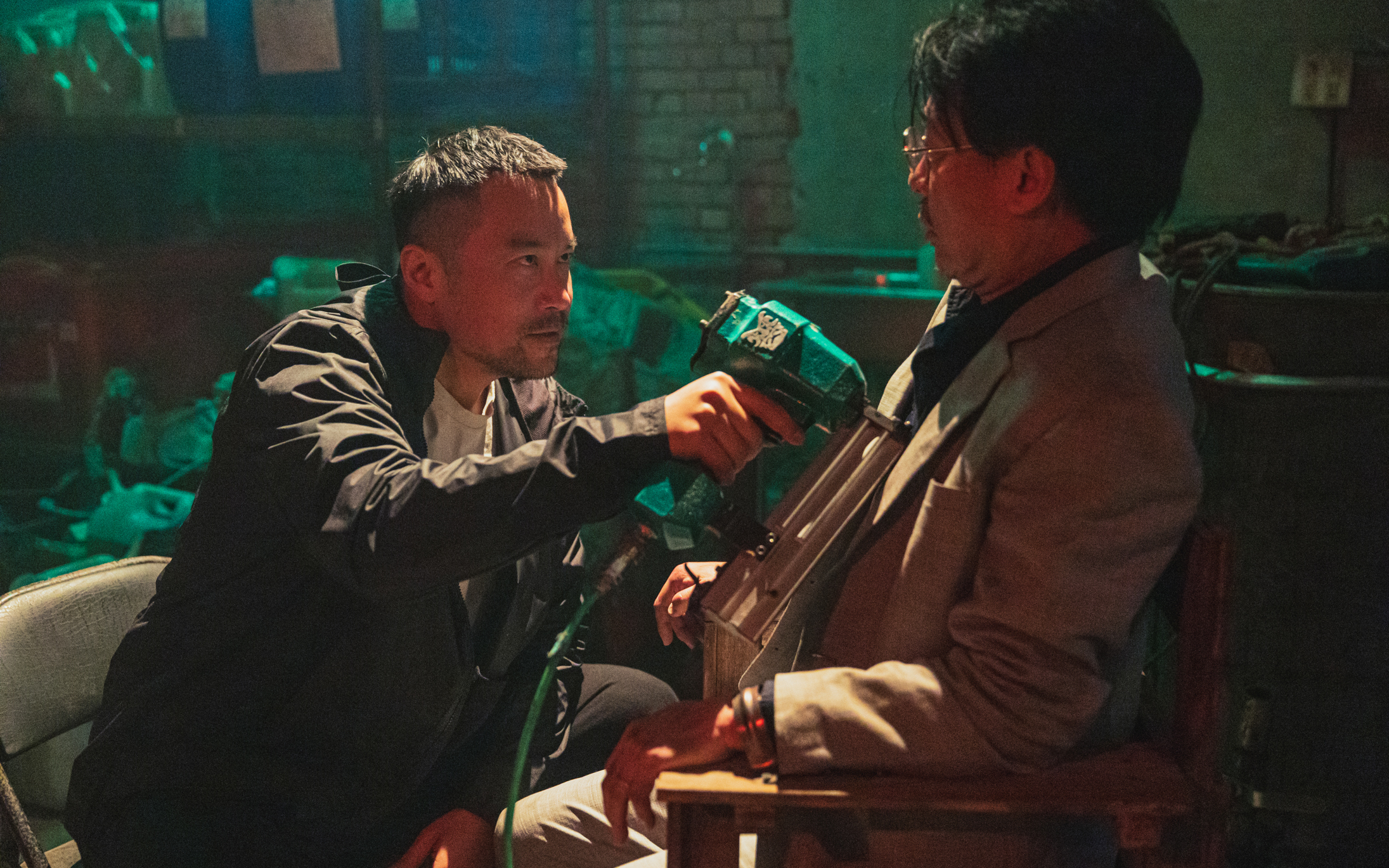
What he uncovers is a vast ring of human trafficking run through the dark web in which rich people can buy poor ones and harvest their organs to save those they love rather than waiting for a good candidate to present themselves. This is apparently what filthy rich businessman Xu did when his newborn daughter needed a heart, so Qi-mao is led to believe his daughter must be dead but is after answers and the location of her body more than to expose the network which appears deeply entrenched among the elite because it so very lucrative. Yet if Qi-mao is going to all this trouble now, perhaps he may have done the same as Xu if the situation were reversed. He appears blasé about putting other people’s children in danger while torturing their parents to get to the truth even if as it turns out he may not have actually intended to harm them. Just like him desperate to save their child, the parents largely give in when they are threatened and promise to tell him everything he wants to know if only he let them go. 

But there is something quite insidious in Xu’s plan given that it may be one thing to buy a living body off a website and never have to think about the person whose life will sacrificed, but quite another to be prepared to kill someone that trusts and loves you. Xu uses his money to employ a poor yet oblivious family while collaborating with a hospital to fake medical records and manipulate his daughter Qiao who thinks the biggest problem in her life is her forbidden romance with the son of one of their servants, again echoing the class divide that makes Xu think he can do what he likes with those he feels to be lesser than himself. The real “family” turns out to be that created by the orphans which is then spread to the younger generation who are eventually freed from their parents’ corruption and the boundaries of class to live in a freer world less bound by capitalistic imperative than simple solidarity. 

But for all that, Qi-mao is orphaned too in realising that even if his daughter were alive and he could still save her, she likely wouldn’t accept the man he’s become. Qi-mao is man of rage and vengeance. He brutally tortures those connected with his daughter’s disappearance and commits acts of heinous violence that render him unable to return to mainstream society despite his position as an idealised father figure to the orphan boys. A subplot about sexual abuse at the orphanage is under explored, but hints at the institutionalised corruption in which the powerless can be exploited by those in power when no one cares enough to stop them. Qi-mao may not really care that much about opposing the system, but certainly does about the boys and his missing daughter as he wades into hell in search of answers but also retribution. 

Organ Child screens 27th July as part of this year’s New York Asian Film Festival.


Trailer (English subtitles)
Behind the Shadows (私家偵探, Jonathan Li Tsz-Chun & Chou Man-Yu, 2025)

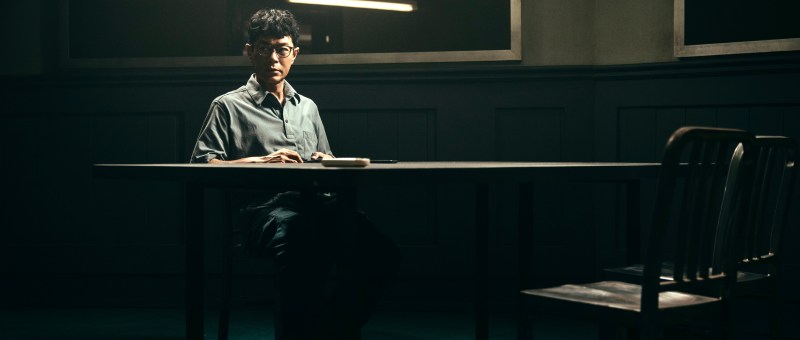
“At our age, we do what we have to do instead of obsessing over the good old days,” according to a put upon wife sick of waiting for her husband to make good on his promises. Jonathan Li Tsz-Chun and Chou Man-Yu’s Malaysia-set drama Behind the Shadows (私家偵探) is in its way as much about the disconnect in modern romance which has now been corrupted by capitalistic desires and frustrated notions of traditional masculinity as its central mystery. 

As someone says, in the old days women hired private detectives to chase their men, but now it’s the other way around. In someways, the parade of men rocking up at Wai-yip’s (Louis Koo Tin-lok) office to hire him to follow their wives, girlfriends, or women with whom they may not actually have much of a connection, all seem to be trying to regain control over their lives by asserting it over a lover they fear has betrayed them. Ironically, this is sort of true of Wai-yip too in that he’s taken to spending his evenings at his friend’s restaurant to escape his moribund marriage. When one customer brings him a photo of his own wife, Kuan (Chrissie Chau Sau-na), little knowing he’s the other man Wai-yip is irate but not as surprised as might be expected. Still, he hands the case off to a junior associate and tries to avoid thinking about it while otherwise passively seething about his wife’s potential betrayal.

But the ironic thing is that Kuan might only have done this to get Wai-yip’s attention and force him to confront their fracturing relationship. While Wai-yip hangs back, tries to act with maturity, and struggles to accept his wife’s decision, she privately wants him to fight back, to shout at her or punch her lover as a sign of manly love. She attacks his masculinity by berating him for being work-shy and refusing to have a child because they can’t afford it, though she can support them all on her salary, while Wai-yip remains hung up on the lost glory of his life in Hong Kong which he gave up to marry Kuan and move to Malaysia. The suggestion is that Wai-yip has been trapped in a kind of limbo, unable to let go of the past and embrace his new life and now Kuan is sick of waiting for him. 

The circumstances of his own marriage and the cynicism of 20 years spent chasing cheating spouses cause Wai-yip to be wary when a man comes and asks him to look for a runaway fiancée. He wonders if they’ve just had a tiff, if she’s left because the man was violent or unfaithful, or if the man is delusional and the woman doesn’t believe herself to be in a relationship with him and so is just happily living her own life. Along with all these anxieties is his sense of responsibility in knowing that this woman may be in danger if he finds her, as will Betty if Wai-yip manages to uncover evidence of her infidelity and relays it back to her gangster boyfriend. Like Kuan, Betty (Renci Yeung Sz-wing) says she just wants a man who will listen to her when she wants to talk and is half-minded to let Wai-yip send the video to find out if the gang boss cares about her enough to actually do anything about it. 

But the consequences of inaction are also brought home to Wai-yip when one of the women he’s following is murdered after he leaves his investigation to chase Kuan and her lover. Trying to makeup for his failure brings him into contact with a zombified cop, Chen (Liu Kuan-ting), whose wife is in a coma after a car accident. While Chen’s solicitous care and repeated pleading that his wife wake up may paint him as a lovelorn man, the marks on her arm that perfectly fit his fingers suggest a violent and controlling past along with a thinly concealed rage that she may have escaped him at last. “There’s nothing much the police can’t do,” he ominously tells Wai-yip while hinting at his desire for authoritarian control as mediated through the patriarchal institution of the police force and his rejection of a woman’s sexual freedom. Wai-yip feels similarly trapped as his own increasing sense of inadequacy deepens the gap between his wife and himself that leaves him unable to have an honest conversation with her about how he really feels and prevents him from healing the rifts within his own marriage even as he chases answers on behalf of other insecure men. What he indeed realises is that it’s time to move on from the past and live in the present, though as it turns out not even he may be strong enough to leave his insecurities behind. 


Behind the Shadows screened as part of this year’s New York Asian Film Festival.

Trailer (Traditional Chinese / English subtitles)

How Dare You? (ふつうの子ども, Mipo O, 2025)

“I told you to shut up about that,” Kokoa’s mother (Kumi Takiuchi) tells her after she gets caught with two other children trying to start an environmental revolution by releasing cows from their paddock. It’s not difficult to see why Kokoa (Ruri) feels so strongly about global warming even if it’s probably her home environment that she most wants to change given adult indifference to climate issues, though Mipo O’s charming family dramedy How Dare You? (ふつうの子ども, Futsu no Kodomo) is less about the issues themselves than the relationships between the children and the adults around them.

The point being that Kokoa hates adults for trashing the world and creating an environment in which she feels it’s impossible to live. Fellow student Yuishi (Tetta Shimada) is drawn to her Greta Thunberg-style speech in class having just embarrassed himself with an essay about his toilet habits and suddenly develops an interest in the environment as a means of getting close to her. Which isn’t to say that he didn’t really care before. In this semi-rural area, he and his friends still go outside every day to catch woodlice to feed his friend Soma’s lizards, and Yuishi is also very keen on animals in general. He’s sympathetic to the cause, but on the other hand, is only really into this because of Kokoa who pretty much ignores him in favour of class bad boy Haruto (Yota Mimoto) who tells her that they need to take “action” to wake the adults up or no one’s going to listen to a bunch of kids whining about methane emissions. 

There is something pleasantly old-fashioned about their tactics which include cutting letters out of magazines to make protest signs they hang up all over town telling people not buy so much stuff, eat meat, or drive cars. But while the other two are increasingly emboldened their actions and their revolutionary activities begin to get out of hand, Yuishi finds himself conflicted. When they spot similar signs springing up made by other kids they don’t know, Kokoa and Haruto are annoyed rather than pleased that more people are joining the cause. Yuishi agrees with a sign saying people should catch the bus because it’s better than driving a car even if buses also pollute while Haruto opposes it. But he also points out that the firework rockets Haruto has bought for another action give off CO2, so perhaps they shouldn’t use them. He tries to deescalate and avoids becoming radicalised, but is eventually bullied into going along with the other two and suggests releasing the local farmer’s cows as their next protest assuming it’s a “nice” thing to do and less aggressive than some of Haruto’s ideas.

But they’re still just children and don’t really understand the consequences of their actions. After all, what’s a wild cow supposed to do? It doesn’t occur to them that the cows could get hurt or end up causing accidents and damage, let alone that they may alienate the local community who are already fed up with their stunts because it’s affecting their livelihoods. Of course, this is also part of the problem. The adults ignore the children because what they’re saying is inconvenient for the way they live their lives under capitalism which isn’t something they think they could change even if they wanted to which they likely don’t. Yuishi’s sympathetic mother is forever reading books about how to raise children well, and so she tries to listen to Yuishi but also “corrects” him in subtle ways like hiding meat in his spring roll after he tells he wants to give up eating it for the environment. Though she may have correctly assumed that he’s not really serious about it and tells him what she’s done after his first bite of the spring roll, there’s no getting around the fact that just as Kokoa said she’s not really listening. Nor does she sort her rubbish and recycling responsibly. When Yuishi looks up global warming on his tablet, his mother remembers being told about this at school too, which just goes to show how long this has been going on and how easily everyone forgot about the ozone layer panic of 1980s and 90s.

Nevertheless, the gradual escalation of the children’s activities towards something akin to ecoterrorism echoing the student protest movement on the 1960s satirises the dangers of radicalisation especially as neither of the boys are really invested in the cause and are only there because they’re each drawn to Kokoa who remains intense and implacable. Their true natures are exposed when they’re caught with only Yuishi stoic and remorseful, admitting it was his idea to release the cows and that he did it because he liked Kokoa and wanted her to like him back, while Haruto spends the entire time crying in his mother’s arms and Kokoa glares at everyone while reciting environmental statistics. Maybe she isn’t overly invested either so much as trying to regain control over her life and using cold hard facts as an escape from her overbearing mother who liked her better when she was “sweet” and ‘cute” and never asked any inconvenient questions. Even so, there is something very charming about the children’s earnestness that’s largely lost on the well-meaning adults around them who may be trying their best in lots of other ways but have already given in to the idea that the world can’t be changed and nothing they do makes a difference so there’s no point doing anything. Yuishi at least has learned some valuable lessons, if only that things go better when you’re straightforward and honest your feelings even if it might be embarrassing in the moment.


How Dare You? screens 20th July as part of this year’s New York Asian Film Festival.

Original trailer (English subtitles)

Somebody (침범, Kim Yeo-jung & Lee Jeong-chan, 2024)

“A mother should do everything to protect her child,” according to one young woman, but are there, or perhaps should there be, limits even to a mother’s love? Adapted from a webtoon, Kim Yeo-jung and Lee Jeong-chan’s Somebody (침범, Chimbeom) is really about what it means to be a family and who it is that gets to be included in one more than it is about its otherwise outlandish premise or how we should deal with young children who have severe mental health issues accompanied by violent tendencies. 

Then again, as So-hyun (Gi So-yoo) herself says she isn’t like the others and in that sense not necessarily good or bad but only what she is. It’s obvious that she has no understanding of conventionally held notions of right and wrong and actively enjoys inflicting pain on others, perhaps because as she later says it’s when she feels people are being most honest. She’s only seven years old, but she’s already been expelled from several schools and nurseries for scaring the other children, and her mother now locks all the sharp implements away at night having previously woken up to So-hyun slashing away at her arms and legs. But in a paradoxical way, it’s abandonment that So-hyun fears the most in knowing that her mother cannot fully accept what she is, while Young-eun (Kwak Sun-young) does her best to “protect” her at the cost of her own mental and physical health. 

So-hyun’s parents’ got a divorce because her father felt she could be better cared for in an institution, while Young-eun was determined to care for her herself despite the fact that So-hyun’s behaviour is not improving even with therapy and she continues to be a threat to those around her. This is particularly true of other girls her age towards whom she becomes jealous when they approach her mother as if they meant to replace her in Young-eun’s affections and So-hyun would lose her home. The film’s Korean title translates more literally as “invasion”, and this fear of being pushed out and excluded that motivates the actions all concerned.

20 years later, we’re introduced to Min (Kwon Yu-ri), who is living with an older woman, Hyun-kyung (Shin Dong-mi), who lost her daughter, it’s implied to suicide, while her own mother lives in a psychiatric institution. Though she is reserved and emotionally distant, Min has taken the place of Hyun-kyung’s daughter only to find it threatened when they take on another young woman, Hae-young (Lee Seol), to help with their business clearing houses after lonely deaths. Min too fears invasion, that Hae-young has come to kick her out and take her place by monopolising Hyun-kyung’s position as their “mother” in this accidental “family” unit. Hyun-kyung too fears abandonment, knowing what it’s like to be left alone and only too happy to become a maternal figure to these two orphaned young women each in search of a place to belong.  

But there’s also a question mark over whether someone like So-hyun whose brain is wired differently can ever be accepted into a conventional family unit. She has no understanding of human empathy, but simultaneously longs to be loved and accepted and is resentful that she doesn’t feel herself to be even by her mother or other maternal figures whom she believes owe her all those things. Min too seems to have a dark past and on discovering that she has become pregnant by an apparently controlling and violent boyfriend struggles with the decision of whether to keep the child. She fears that she may turn out to be like her own mother and does not particularly seem to want to raise it, but at the same time reflects that the baby has done nothing wrong and therefore it’s unfair to prevent it from being born. 

So-hyun also insists that she’s done nothing “wrong,” though her understanding of what “wrong” means is obviously different from most people’s. She expects unconditional love from her mother, and Young-eun gives it to her to the best of her ability despite the fact that she is afraid of her daughter and ultimately at a loss as to how best to protect her and also the outside world. Though at times hamstrung by its webtoon origins, Kim and Lee’s handsomely lensed thriller explores this the irony in this need for maternal acceptance with a genuine sense of poignancy and more than a little sympathy for the “inhuman” So-hyun if also terror of the hell she creates around her in her constant quest to find a place where she can truly be herself.


Somebody screens 20th July as part of this year’s New York Asian Film Festival.

Trailer (English subtitles)
Daughter’s Daughter (女兒的女兒, Huang Xi, 2024)

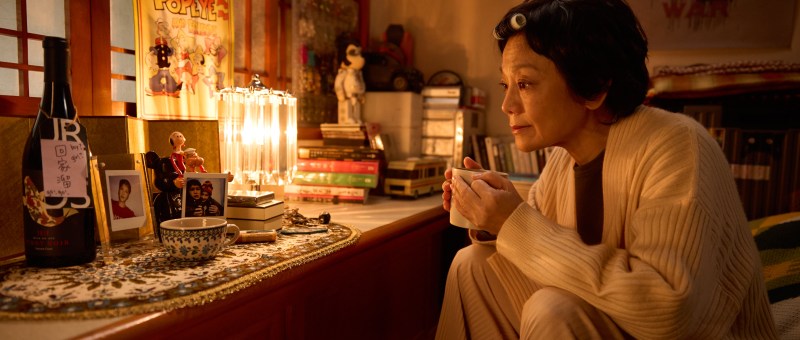
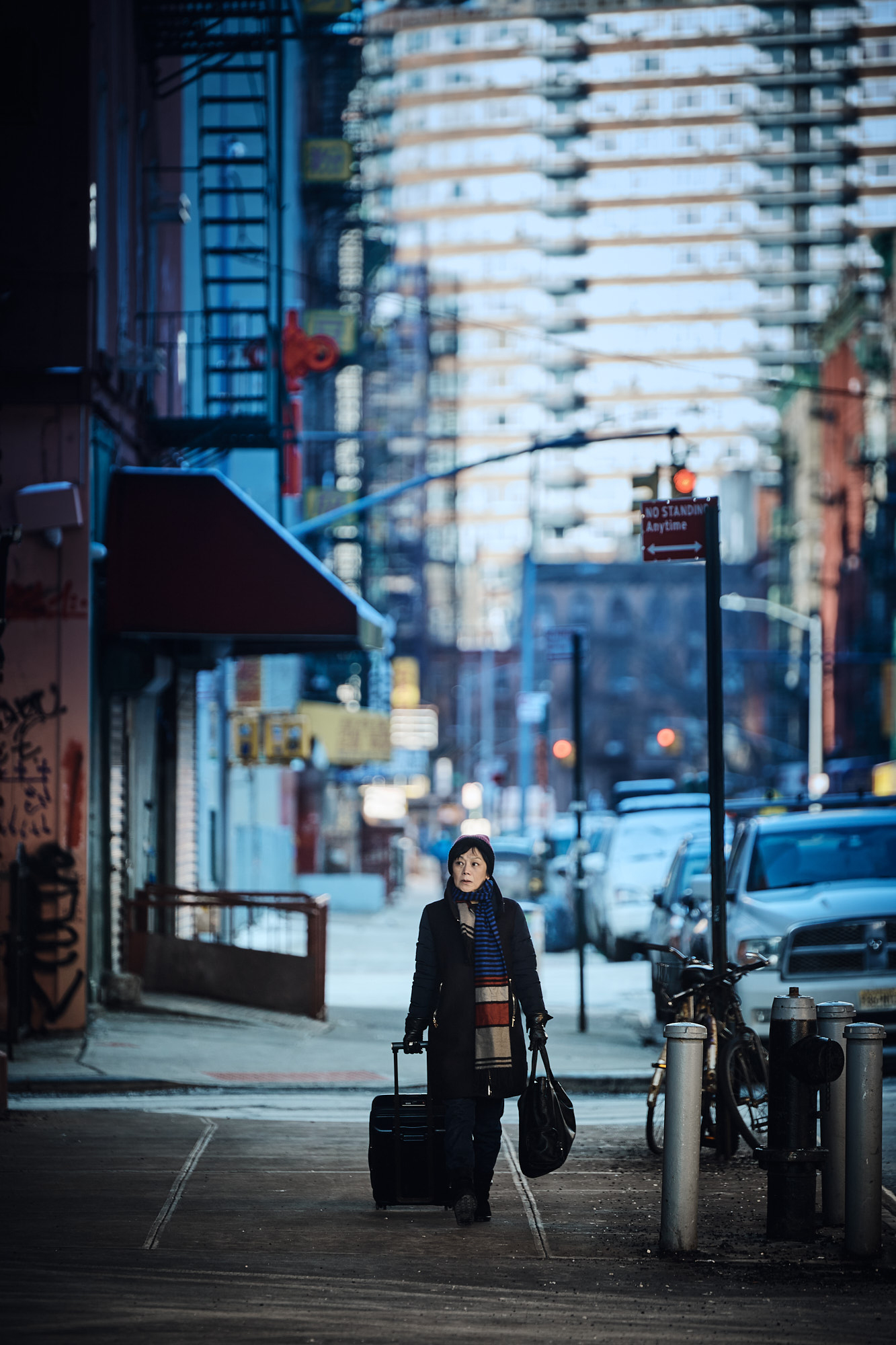
Never having fully dealt with the trauma of her teenage pregnancy and decision to give her child up to be raised by a family friend, 64-year-old divorcee Jin Ai-xia (Sylvia Chang Ai-chia) finds herself in an eerily similar position on on learning that the daughter she raised in Taiwan has been killed in a car accident in New York where she was receiving fertility treatment. The process resulted in a healthy embryo of which Ai-xia now finds herself the “guardian”. She is given four options, keep the embryo in storage and pay to renew the contract when it runs out, find a surrogate to carry to it term, donate it to another couple, or have it destroyed.

The fact that there are eight months left on the contract that her daughter Zuer (Eugenie Liu Yi-er) signed makes this almost another pregnancy which Ai-xia must decide whether or not to continue. Keeping the embryo in storage only defers the decision and traps it in the same mental space in which Ai-xia thinks of Emma (Karena Lam), the daughter she did not raise and tried to put out of her mind. In its consideration of motherhood, the film does shy away from suggesting that it is a kind of burden and requires sacrifice whether willing or not. Later confronted, if gently, by Emma who has unbeknownst to her become a single mother who chose to keep her child, Ai-xia justifies herself that she was 16 and afraid. Most of all, she was afraid the baby would trap her in New York’s Chinatown and that her life would never change after that. She wanted more, so she went along with her mother’s proposed solution of giving her daughter to a childless couple to raise while she returned to Taiwan and never looked back.

Yet it’s Emma who seems to haunt her while she’s in New York trying to sort out Zuer’s affairs while mired in her grief. It’s clear that she feels that she failed both her daughters as her unresolved trauma over separating from Emma left her unable to fully bond with Zuer whom she raised at arms’ length. When Zuer and her same-sex partner Jia-yi (Tracy Chou Tsai-shih) decide to have a child, Ai-xia is against it. It seems there may be some lingering prejudice in her about their relationship as she tells Zuer that the baby won’t be able to explain their family situation, but it’s also partly that she doesn’t want her to be trapped by motherhood as she felt herself to be. She asks her why she and Jia-yi don’t just enjoy their life together rather than complicate with a child. Ai-xia tells Emma that she wanted to live her own life, while expressing the same desire now that she has become a second mother to her own mother, Yan-hua (Ma Ting-Ni), who is living with dementia. Once her mother passes away, she’s looking forward to enjoying her freedom for once. 

Ai-xia rails that no one ever really considered her feelings and that she’s been given this burden without ever really being given an opportunity to ask herself if she wanted it. There’s a minor irony in Yun-hua’s segueing back into the past to tell the 64-year-old Ai-xia that she can’t raise a child at this age as if she were still a pregnant 16-year-old. As an older woman, she reflects that Yun-hua probably didn’t make that decision solely because she was embarrassed by the stigma of teenage pregnancy but genuinely thought it was best for both her daughter and her granddaughter. But now Ai-xia is facing the same choice at the other end of her life knowing that if she chooses to raise Zuer’s baby she may not live long enough to see it to adulthood, nor may she have the energy to look after a small child even if she has the time. 

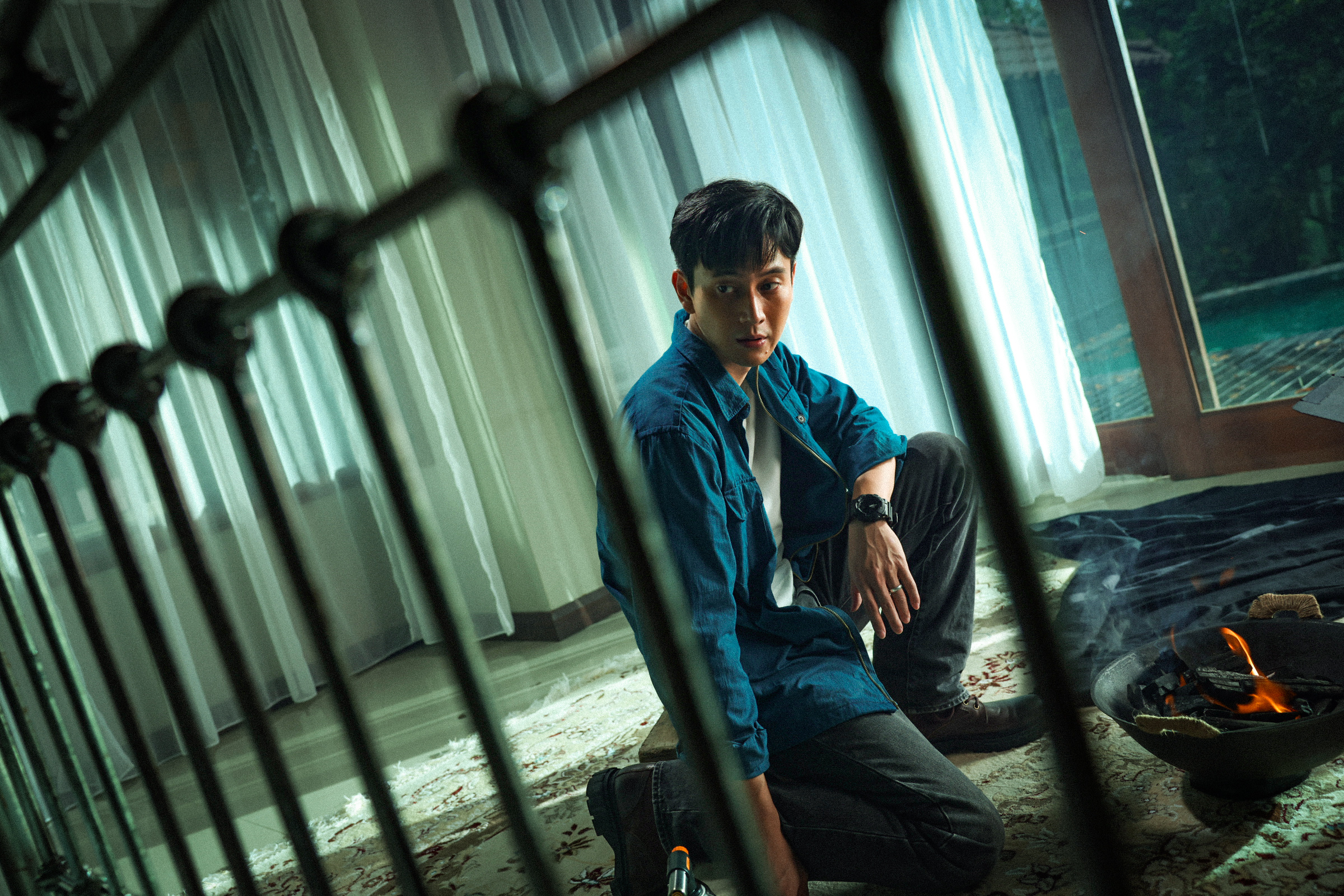
But Ai-xia carries Zuer’s ashes around with her holding them in front of her belly as if they were the embryo and she were already carrying it. Placing the square black container on the airport scanner and watching it travel through the tunnel is oddly like an act of rebirth. Attempting to come to terms with her own complicated maternity, she thrashes out the past with Emma but also really with herself in trying to decide whether or not to continue this maternal legacy despite the sacrifices and compromises it entails. For her, motherhood becomes an act of self-forgiveness in which she learns to understand both her own mother and her daughters along with their shared connection in this ever-increasing line.


Daughter’s Daughter screens 18th July as part of this year’s New York Asian Film Festival.

Trailer (English subtitles)