Scattered Night (흩어진 밤, Kim Sol & Lee Ji-hyoung, 2019)

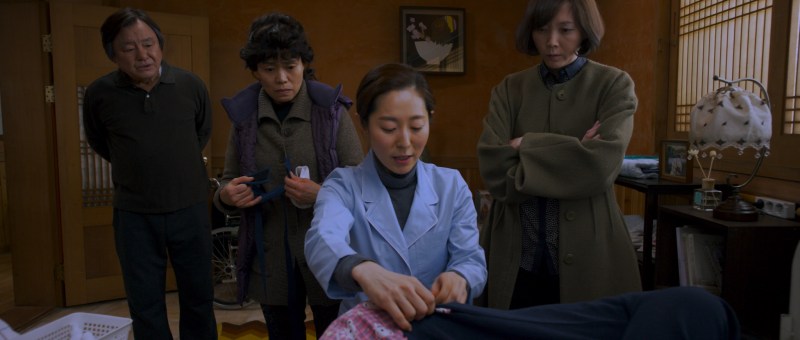
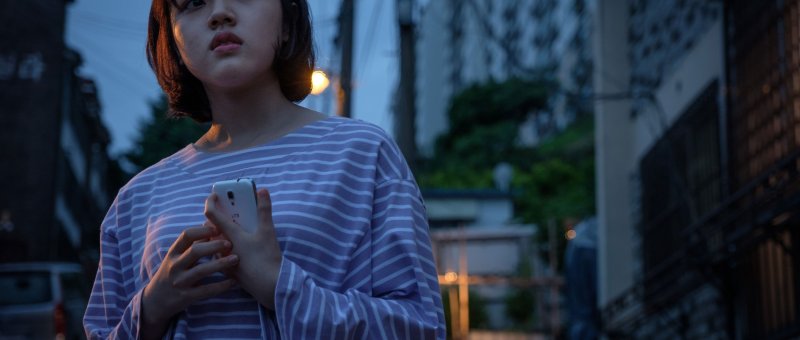
Scattered night still 2Familial collapse has become a major theme in recent Korean indie cinema. Caught in a moment of societal flux, the family itself has come in for question with the young in particular looking for new models and new ways forward. Where Yoon Ga-eun’s The House of Us found an anxious little girl alternately trying to force her warring parents back together and forming a new family of her own as a maternal figure to two neglected sisters, Kim Sol & Lee Jihyoung’s Scattered Night (흩어진 밤, Heuteojin Bam) finds another little girl processing familial failures and pondering her own place in the world unanchored from parental security.

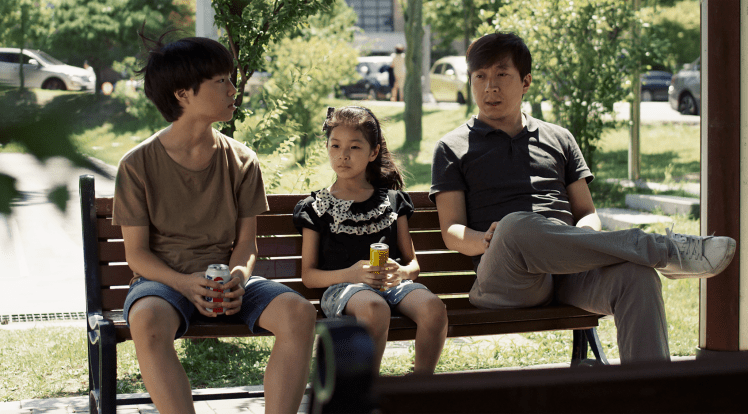
9-year-old Su-min (Moon Seung-a) hasn’t seen her dad in a month, so she’s put out that all he’s done while he’s been home is show some people round their apartment and complain it isn’t clean enough. Unlike her slightly more savvy brother Jin-ho (Choi Junwoo), Su-min hasn’t quite understood that her parents are splitting up and that’s why her dad doesn’t live with them anymore. Perhaps jumping the gun, the parents sit the kids down and try to explain that they’re not getting “divorced” and will still be a “family”, but that mum Yoon-hee (Kim Hyeyoung) and dad Seung-won (Lim Hojun) can’t live together anymore. Quite reasonably asking what’s going to happen to them, the kids get no real reply. Su-min quickly realises that she will definitely be separated from one of her parents, but begins to worry that she may also lose her brother if it ends up that mum and dad are taking one child each.

Already somewhat anxious, Su-min seems to feel disconnected from her mum who is at best undemonstrative, sometimes perhaps resentful of her role as a wife and mother and everything she has been asked to sacrifice in order to fulfil it. Declaring herself bored at home and throwing herself into her career as a teacher at a cram school, Yoon-hee has little time for her daughter but bonds with her son through their shared interest in studying. Too young to join in, Su-min too tries picking up some books to spend “quality time” with her mother only to be dismissed once again and left feeling as if she’s failed some sort of test.

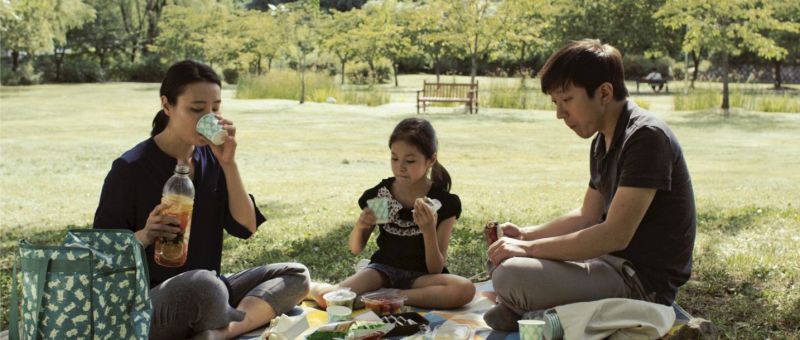
While Su-min agonises over a hypothetical choice of which parent might suit her best, her brother Jin-ho isn’t sure he wants very much to do with the family at all, already thinking of applying to a prestigious grammar school chiefly because it has a dormitory. He skips out on a family picnic to “study” on his own at home, but pushed for an answer always chooses his mother with whom he seems to share a greater affinity. Jin-ho’s clear taking of a side further unsettles his sister who wonders if that means that she will essentially be left with no choice other than to go with her father. Working out all the potential combinations, Su-min asks her brother which he thinks is most likely and gets the response that they will probably both stay with their mother because she will definitely want to stay with them, but remains unconvinced that is really the case. Looking for reassurance, she tells her mum that she’s worried she’ll simply disappear once they sell the apartment, but her mother offers no reply.

Literally displaced in her home environment, Su-min witnesses two children around her own age sitting cheerfully at her family table as if they already owned the place. When she hears her mother tell an estate agent she’s looking for somewhere with two rooms (though preferably one big enough to be divided in two) it fuels her anxiety that she’s being rejected, that her mother only wants one of them and it isn’t her. Meanwhile, her father remains distant, largely refusing to discuss anything but conceding that Su-min ought to have a say in her future and promising to respect her decision.

The sorry truth seems to be that neither parent really wants the kids. Failing to process the end of their marriage, they begin to view the last 15 or so years as a huge mistaken life choice, an embarrassing failure of which the kids are the most obvious proof. They want to start again, but the kids are in the way. Jin-ho overhears his father say that it would have been better if they’d never had him, while his mum regrets that they ever got together in the first place. Despite teaching the children that it’s bad to lie, they make them keep up the pretence of happy families when horrible grandma comes to visit from the US to avoid the disgrace of admitting the marriage has failed.

Neatly mirroring Su-min’s anxiety, Yoon-hee tells grandma that it’s a shame she doesn’t live closer so they could see each other more often, but of course she doesn’t really mean it. Grandma talks up her own faults and professes regret that Yoon-hee couldn’t study abroad because she had to look after her siblings after her father died, but she does so largely as a way of running her daughter down. In any other situation the fact that grandma lives abroad, separated from her daughter by oceans, ought to give Su-min reassurance that familial bonds can overcome geography but the relationship is so obviously toxic as to provide no comfort at all.

Su-min wants agency over her future, to be acknowledged and have some kind of control, but asking her to make such an emotionally difficult decision is an awfully cruel burden to place on a child and one that she is ultimately unwilling to carry. Though the siblings are able to patch up a kind of solidarity, pledging to minimise the “awkwardness” that may arise between them if they are only to see each other once a week, it’s clear that an unscalable wall exists between the generations and the “family” cannot ever be repaired. Su-min and her brother will have to find their own way out of the dark, while their parents remain hopelessly lost looking for the path back to possibility.


Scattered Night was screened as part of the 2019 London Korean Film Festival.

Short clip (English subtitles)

Interview with the directors from Jeonju International Film Festival (English subtitles)
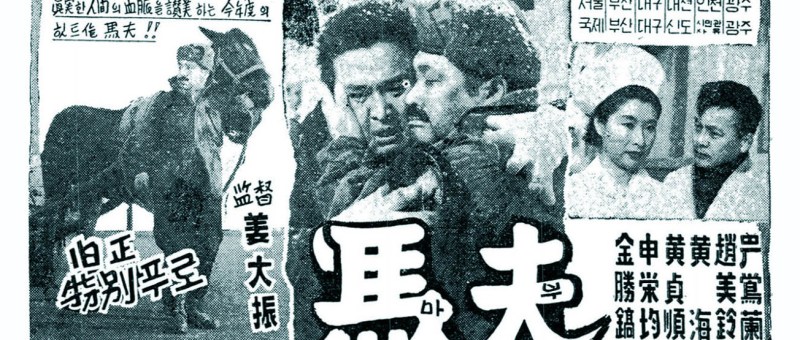
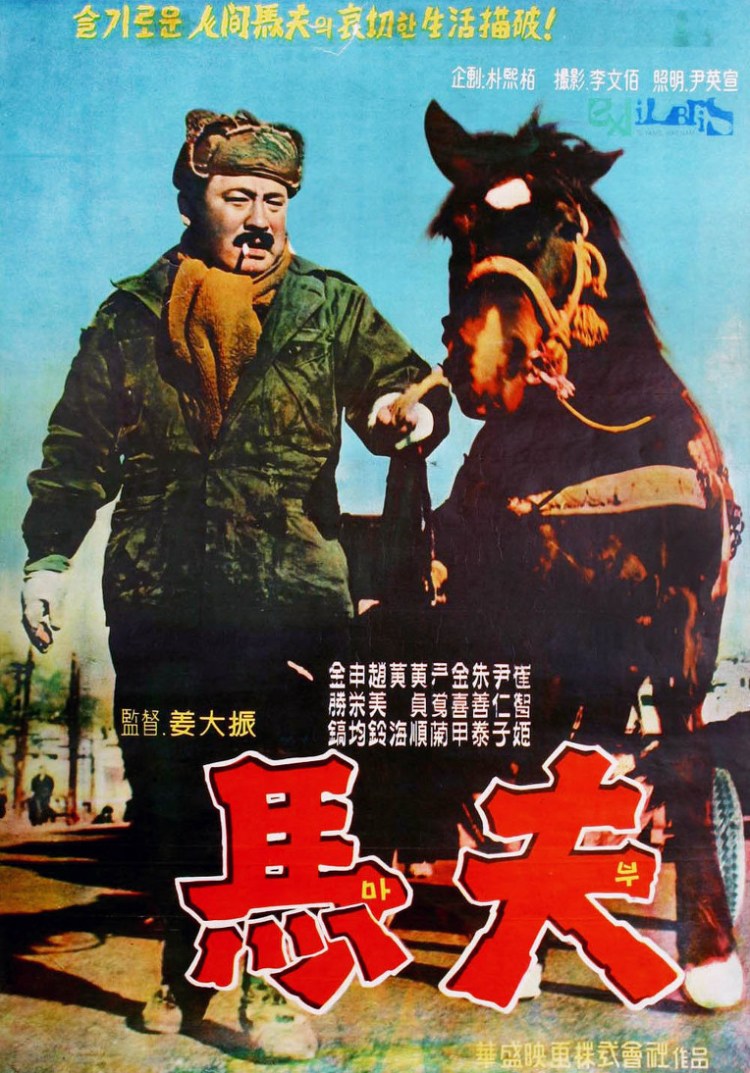
A Coachman (馬夫 / 마부, Kang Dae-jin, 1961)

A coachman poster 1The Korea of 1961 was one of societal flux, mired in post-war poverty but striving towards a brighter economic future. The rising tides of affluence had given birth to a new middle-class with the old feudal attitudes while others were largely left behind on the shores of prosperity. Kang Dae-jin’s A Coachman (馬夫 /마부, Mabu), the first Korean film to win a major international award with the Silver Bear Extraordinary Jury Prize at the 1961 Berlin Film Festival, finds itself at just this juncture as an old man pulling a horse and cart is forced to face up the automobile age while worrying what is to become of his family in the perilous modern society.

Ageing patriarch Chun-sam (Kim Seung-ho) has been guiding a horse and cart since his father died in Manchuria when he was 14. Technically speaking, he is not the owner of his horse, Dragon, but operates it on behalf of the owner, the mistress of an upper middle-class salaryman. As business is slow, she is always threatening to sell the horses which would leave Chun-sam and the other coachmen without a means to support themselves. Meanwhile, Chun-sam’s four children whom he raised alone after his wife passed away at a young age are each looking for different ways out of their impoverished existence. Chun-sam married off his eldest daughter Ok-nyeo (Jo Mi-ryeong) who is deaf and mute to a man he saved during the Korean War but he is abusive and treats her like a servant while openly inviting his mistress into their home. Oldest son Su-eop (Shin Young-kyun) is currently studying to retake the bar exam for the third time, middle daughter Ok-hee (Um Aing-ran) has begun dating a shady salaryman, and youngest boy Soo-up has become a high school delinquent.

Kang opens with an exciting sequence following Soo-up who has attempted to steal a bicycle as he tries to escape from its owner chasing him. Returning home covered in mud, slowing to a walk and putting his student’s cap back on to avoid suspicion, he makes his way from the modern houses of the new city back through traditional Korean homes towards his rather makeshift family abode which they share with the horse stabled in a side room. Chun-sam is obviously not a wealthy man, but the family bear their struggles with fortitude, perhaps to some extent avoiding each other but rarely arguing directly. Even the news that Ok-hee has once again quit her latest job, working in a cafe, in record time is greeted with exasperated acceptance rather than anger or resentment.

Ok-hee quit the cafe to fall in with her ultramodern friend Mi-ja (Choi Ji Hee) who has arranged a double date with a pair of sleazy executives, telling them that Ok-hee is a university graduate and daughter of a wealthy CEO. Intensely ashamed of her working class background as a mere coachman’s daughter, Ok-hee tries to catapult herself into the middle classes by weaponising her sex appeal, too proud to take the long way round through honest work. She rejects the attentions of family friend Chung-soo (Hwang Hae) who is good and kind because he is only a driver, taking little notice of his earnest warning that nothing good ever comes of hanging around with shady types like her boyfriend. He keeps trying to persuade her to take a job in a nearby factory, but she still thinks she’s above that kind of life and is convinced she can get the executive to marry her.

Chang-soo’s interest is of course romantic, but the advice he gives her is honest and altruistic. Unlike his unsavoury money lender father, Chang-soo is a salt of the earth type, but good men are hard to find and trying to escape poverty through marriage is a road fraught with danger as Ok-nyeo discovers. Chun-sam thought he’d done the right thing in marrying her off, believing a match would be hard to come by because of her disability and worrying she’d be left alone with no-one to look after her, but she is forced to endure mistreatment and humiliation at the hands of her husband. Ok-nyeo repeatedly returns to her family home, only able to show them the bruises to explain what’s happening, but Chun-sam always sends her back unable to break with the old patriarchal rules which insist that once married she must forever remain this man’s wife.

Chun-sam faces a similar dilemma of his own when he strikes up a tentative relationship with the kindly maid at his boss’ mansion who often heats up rice wine for him and goes out of her way to give him little treats. The odious moneylender is also after Suwon (Hwang Jung-seun) who is considered “old” to be unmarried at 37, but she favours Chun-sam because, as she says, she has always known him to be a “good man”. The “courtship”, if you could call it that, is innocent in the extreme with Suwon largely taking the lead while Chun-sam lags bashfully behind, childishly excited but also embarrassed because he cannot afford a wife and would be ashamed to ask her to share his life of poverty.

Looked down on by everyone, Chun-sam is forced to go cap in hand to his employer where he is made to “know his place” and reminded he is “just a coachman” with no right to talk back. When Hwang, the boss’ lover, injures Chun-sam through reckless driving, Su-eop becomes fed up with persistent feudalism and intends to have a polite word but is quickly shut down, reminded that he is nothing more than coachman’s son and told that his dreams of becoming a lawyer are not only unrealistic but an offence to the social order.

Su-eop alone takes the conventional route out of poverty in pursuing education and a steady government job, but is repeatedly told that he’s getting above himself and should be content with becoming a coachman like his dad, despite the fact that being a coachman is already close to an obsolete profession given the increasing affordability of the motorcar. He alternates between guilt and despair, wondering if he’s being irresponsible in pinning all his hopes on the bar exam and worrying that he’s not doing enough to support the family.

Yet Chun-sam, forced to consider his own obsolescence, is keen for him to succeed, not only because the family needs him to make a success of himself but because he wants his son to have a better kind of life than he had taking full advantage of the possibilities of the new society. Though their lives are hard, Chun-sam and his family remain kind and honest (even Ok-hee and Suo-up eventually conclude that hard work is the way after all), bonding with others of the same mindset like the maid Suwon who eventually quits her job in protest, and Chang-soo who rejects his father’s underhanded venality for simple human decency. United by friendly solidarity, the family is repaired and resolves to live on as a tiny unit of cheerful resistance against the feudalistic greed and selfishness of the modern society.


A Coachman was screened as part of the 2019 London Korean Film Festival.

Five Flavours Confirms Complete Programme for 2019

Fly Me to the Saitama still 1Poland’s premier showcase for East Asian cinema Five Flavours has confirmed the complete lineup for its 13th edition to take place in Warsaw from 13th to 20th November, 2019. This year’s festival will have a special focus on contemporary Japanese indie cinema as well as a mini retrospective dedicated to Hong Kong’s Fruit Chan.
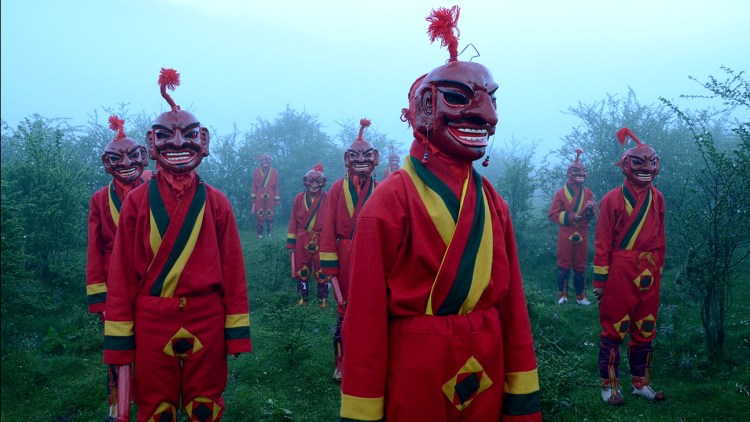
Bhutan 

red phallus still 1

  • The Red Phallus – a 16-year-old girl is mocked by her peers because her father carves wooden phalluses for a living.

China

jinpa 1

  • Balloon – Tibetan-language drama from Pema Tseden (Jinpa) following a sheep farming family.
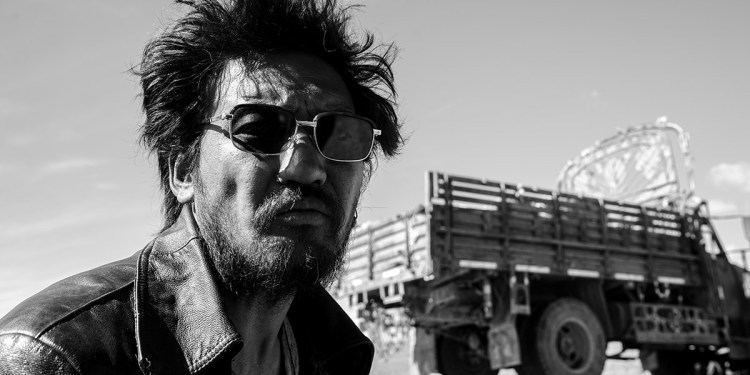
  • Jinpa – philosophical Tibetan western in which a truck driver picks up a vengeful drifter. Review.
  • To Live to Sing – the leader of a struggling Sichuan Opera troupe tries to stave off eviction through impressing a local bureaucrat. Review.

Hong Kong

Still human 1

  • Dumplings – Fruit Chan’s contribution to the Three Extremes omnibus movie in which an ageing TV star hopes to regain her mojo through rejuvenating dumplings. Fruit Chan Retrospective.
  • Durian Durian – a mainland woman comes to Hong Kong to make a living as a sex worker and befriends a local dish washer. Fruit Chan Retrospective
  • Fagara – a young woman discovers the existence of two half-sisters, one from Taiwan and the other mainland China, following the death of her estranged father.
  • Hollywood Hong Kong – a mainland sex worker infiltrates an obese family. Fruit Chan Retrospective
  • Little Cheung – a little boy rides around Hong Kong delivering for his parents’ restaurant. Fruit Chan Retrospective
  • Made in Hong Kong – Fruit Chan’s landmark handover movie. Review. Fruit Chan Retrospective
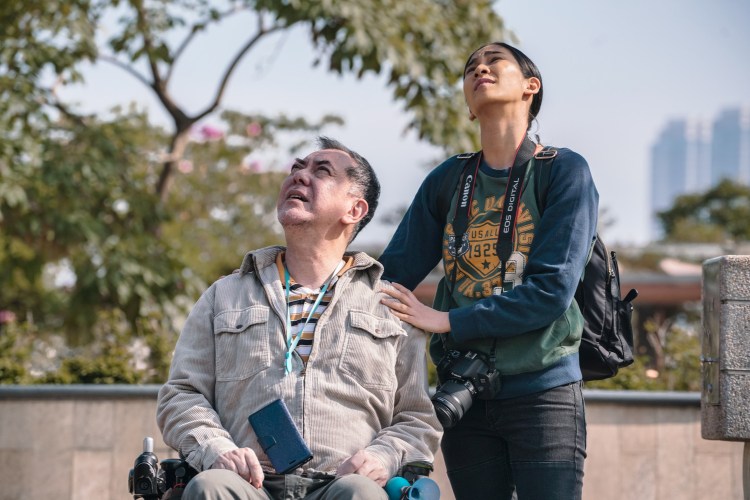
  • Still Human – a grumpy old man makes an unexpected connection with his Filipina carer. Review.
  • Three Husbands – latest from Fruit Chan in which a young woman lives a life at sea with her three husbands. Fruit Chan Retrospective.
  • Throw Down – 2004 Johnnie To classic starring Louis Koo as a former judo champion now a depressed musician and club manager.

Japan

And your bird can sing still 1

  • And Your Bird Can Sing – three melancholy slackers struggle to accept love in Sho Miyake’s adaptation of the Yasushi Sato novel. Review.
  • Blue Hour – a young woman takes her best friend on a roadtrip to her home town but finds old wounds reopening on reuniting with her family. Review.
  • Bone Born Bone – Unmarried pregnant daughter Yuko scandalises her community when she returns home to participate in the bone washing ritual in the second feature from Okinawan comedian Toshiyuki Teruya. Review.
  • Demolition Girl – a high school girl dreams of escaping her small town existence by getting enough money for uni through niche fetish videos of her smashing things. Review.
  • Flowers of Evil – splatter director Noboru Iguchi adapts Shuzo Oshimi’s nihilistic high school manga.
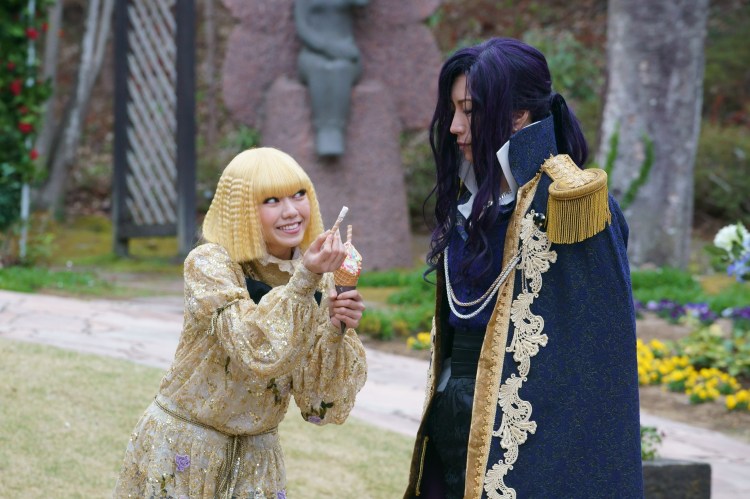
  • Fly Me to the Saitama – absurdist comedy in which the residents of Saitama have become an oppressed minority. Review.
  • Going the Distance – Forced to choose between his wife-to-be, and a “brother” who grew up with him in the same orphanage, Asahi’s life reaches a crisis point in this comedy/drama debut from Yujiro Hamamoto.
  • Mr. Long – a Taiwanese hit man is adopted by a small town in Sabu’s melancholy drama. Review.
  • One Cut of the Dead – Real zombies mess up the shoot for a horror movie in Shinichiro Ueda’s hilarious comedy. Review.
  • The Gun – Masaharu Take adapts Fuminori Nakamura’s nihilistic novel in which a young man’s life changes when he picks up the gun of a fallen yakuza. Review.

Korea

Door lock banner

  • Believer – Korean remake of Johnnie To’s Drug war. Review.
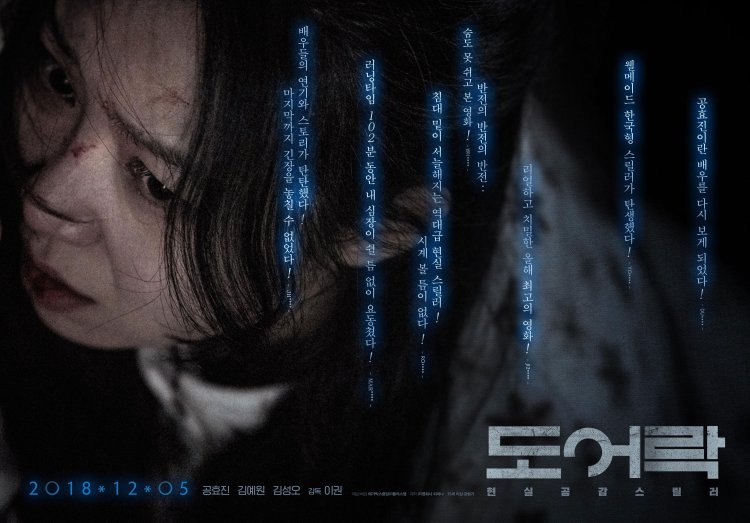
  • Door Lock – remake of Spanish film Sleep Tight in which a woman living alone suspects a stranger has been breaking in to her home. Review.
  • Maggie – surreal drama narrated by a catfish in which a conflicted nurse explores the interplay of truth and trust. Review.
  • The Odd Family: Zombie on Sale – comedy in which a family’s life is disrupted when dad gets bitten by a zombie. Review.

Taiwan

Nina Wu still 1

  • Heavy Craving – a lunch lady hoping to lose weight strikes up unexpected friendships with a deliveryman and cross-dressing student.
  • Nina Wu – psychological drama from Midi Z in which an actress gets her big break but is forced into uncomfortable situations by a difficult director.

Singapore

Wet season still 1

  • Repossession – an ordinary man’s life becomes a nightmare when he loses his cushy corporate job.
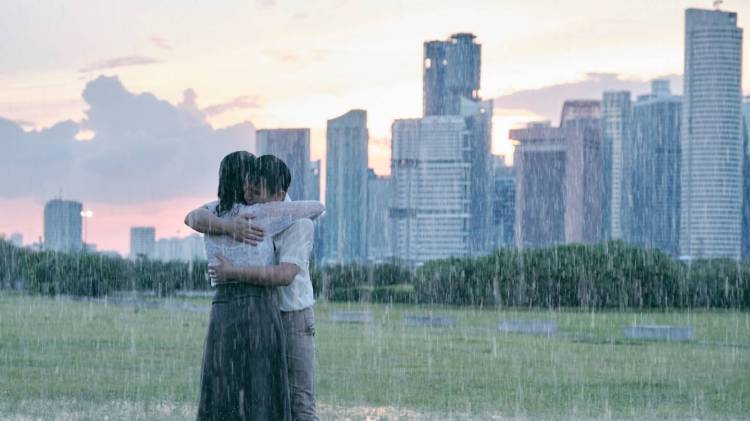
  • Wet Season – Ilo Ilo’s Anthony Chen returns with a monsoon tale in which a Mandarin language teacher is drawn to one of her students. Review.

Thailand

Inhuman Kiss banner 1

  • BNK 48: Girls Don’t Cry – Thamrongrattanarit Nawapol interviews members of the Thai idol group.
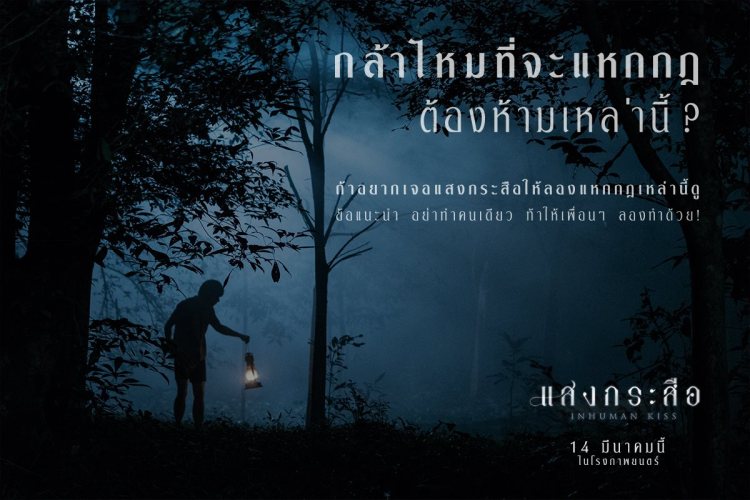
  • Krasue: Inhuman Kiss – an innocent village girl discovers she is a victim of a strange curse in which her head detaches from her body to hunt for blood! Review.
  • Where We Belong – friendship drama starring members of Thai supergroup BNK48.

Vietnam

Furie still 1

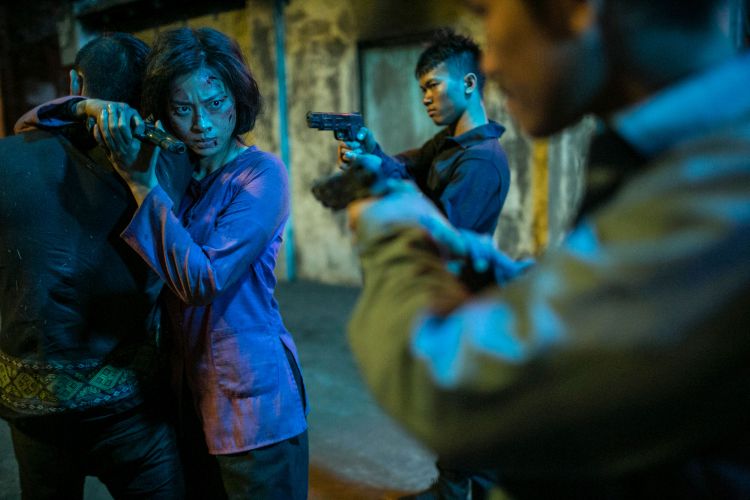
  • Furie – some thugs make a very bad decision when they kidnap a former gangster’s daughter.

Five Flavours takes place in Warsaw from 13th to 20th November 2019. More information on all the films as well as screening times and ticketing links can be found on the official website, and you can keep up to date with all the latest news via the festival’s Facebook PageTwitter Account, Instagram, and YouTube Channels.

A Boy and Sungreen (보희와 녹양, Ahn Ju-young, 2018)

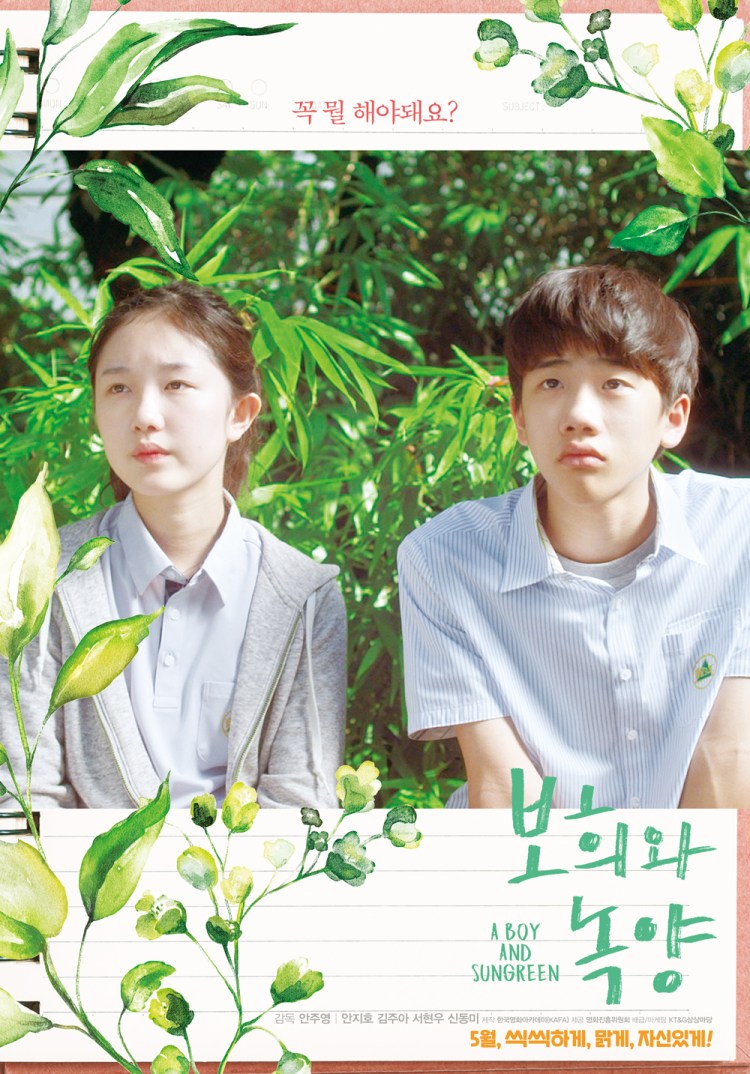
A boy and sungreen poster 1Figuring out who you are is a normal part of growing up, but if you start to suspect that parts of the puzzle have been kept from you it can become an even more complicated business. The hero of Ahn Ju-young’s delightfully charming debut A Boy and Sungreen (보희와 녹양, Boheewa Nokyang) thought he was doing OK. Maybe he worried that he was a little bit weedy and resented being picked on by the snooty kids at school, but he always had his good friend Nok-yang (Kim Ju-a) to hide behind and she always had his back. Realising that his mum (Shin Dong-mi) may have a new romance on the cards entirely destabilises his worldview, sends his anxiety into overdrive, and reawakens a series of as yet unresolved abandonment issues resulting from losing his father at a young age.

What Bo-hee (Ahn Ji-ho) discovers on “running away” to visit a woman he kind of remembers might be his half-sister, is that his mother might have lied to him and the father he thought was dead might actually still be alive. Together with his best friend Nok-yang, he resolves to investigate and find out if his father is still out there somewhere, if he still thinks of him, what sort of man he might be, and, crucially, why he chose to abandon his son. Still upset with his mother and childishly resentful, Bo-hee avoids going home and installs himself at his “half-sister” Nam-hee’s (Kim So-ra), an air hostess who turns out to be a cousin temporarily taken in by Bo-hee’s mum when she ran away from home as a teenager, where is he is cared for by her surprisingly supportive boyfriend Sung-wook (Seo Hyun-woo).

Tellingly, Sung-wook is also an orphan with no family, raised in an orphanage with no parental models yet easily slipping into a positive paternal role. Both Bo-hee and Nok-yang are being raised in single parent families, Bo-hee believing until recently that his father had died, while Nok-yang lost her mother in childbirth and lives with her salty grandma and distant father. In conservative Korean society they each experience a degree of stigma for not having the “full” complement of parents with some of the snooty kids at school even assuming that’s why they’re friends, but the pair largely rejoice in each other’s company and have learned to pay them no mind.

Meanwhile, Bo-hee is experiencing strange anxiety-like attacks which eventually turn out to be something more serious, but neatly underline his intense adolescent confusion. Finding out his mother has a boyfriend not only forces him to confront his father’s absence, but also deepens the sense of anxious rootlessness he feels as someone without an extended family network. As Nok-yang somewhat insensitively puts it, what if the boyfriend turns out to be an “evil stepmother” and pushes him out of his family home, where will he go then? That kind of thinking is what leads him to track down Nam-hee, “certain” that she won’t turn him away because, he believes, they share the same father.

Despite maintaining an intense belief in the power of blood connection, Bo-hee remains distrustful of the idea of family and uncertain in his own identity. Even his name, which is really just “Boy” like the unnamed protagonist of a young adult novel, bothers him in that is uncomfortably close to slightly rude word, not to mention being somewhat unusual. Nok-yang has an unusual name too, but hers has a lovely, if sad, story behind it about her dad seeing rays of sunshine through the trees on the way home from the hospital and deciding to name her after that, whereas Bo-hee’s seems to be random. Thanks to his quest to track down his dad, Bo-hee finally comes to understand the meaning behind his name and accept himself for himself rather than longing to be just like everyone else.

Like all small children, Bo-hee thought everything that happened in his life was somehow his fault, that his dad left because of something he did or that there was just something wrong with him that his dad couldn’t love. What he realises is that his father’s decision was his father’s and nothing to do with him. It wasn’t his fault that his father left and there is nothing about him that means anyone else in his life is likely to leave without warning. In a roundabout way, looking for his dad helps to rebuild a sense of the family he didn’t think he had, becoming more secure in his relationship with his mother, bonding with Sung-wook and Nam-hee, and remembering that whatever happens he and Nok-yang will always be there for each other.


A Boy and Sungreen was screened as part of the 2019 London Korean Film Festival.

International trailer (English subtitles)

Piagol (피아골, Lee Kang-cheon, 1955)

piagol poster 1Under the oppressive regime of Park Chung-hee, “anti-communism” became a national policy and all films, at least implicitly, had to display anti-communist sentiment. In the 1950s, however, despite the immediacy of the war’s end, there might have been more room for nuance. Then again, perhaps not. Lee Kang-cheon’s Piagol (피아골), released just two years after the events it depicts, was among the first to concern itself with the North Korean partisans and was subsequently banned for its supposedly sympathetic depiction of communist guerrilla fighters, finally released only with the addition of the South Korean flag superimposed over the closing scene in order to suggest that the sole surviving partisan had decided to walk towards freedom.

Led by hardline Captain Agari (Lee Ye-chun), the partisans are in a sorry state. The truce has been signed and the war is “over” (or, at any rate, as “over” as it is now). They know no further reinforcements from China or the Soviet Union will be forthcoming, but have decided to continue fighting anyway. Holed up on Mount Jiri, the partisans are involved in an internecine guerrilla conflict with the encroaching South Korean and American forces, but are determined to root out “reactionary” elements and have been taking brutal revenge on local villages they believe to have “betrayed” them to the authorities.

Unlike the later anti-communist films, Lee’s partisans are not rabidly evil or gleefully sadistic but they are casually cruel and wilfully heartless. After the escape sequence which opens the film, a roll is called recording a casualty and a lost rifle. Captain Agari is much more worried about the gun than the man, eventually executing the soldier who dropped it after being shot in the arm for dereliction of duty. Agari’s actions are even harder to defend given that he knows there will be no further reinforcements and he’s down to a handful of men already, but neatly exemplify his lack of human feeling and intense need to enforce both dominance and ideological purity.

Convinced that someone in a nearby village is acting as an informant for the South, Captain Agari decides to carry out a raid to rid it of “reactionary” elements, which is a thinly veiled excuse to sack it. Not all of the partisans are entirely on board, especially as some of them hail from this village originally and have family members still living there. During the raid, Lee focuses on cowardly Captain Agari hiding in a nearby temple while Buddhist statues seem to be giving him the hard stare, before shifting to the same temple now in flames. A baby cries and crawls over the half naked body of its mother, raped and left for dead. Meanwhile, teenage recruit Il-dong (Cho Nam-suk) searches for his mum only to find her dying of a bullet wound in the street. Half delirious she asks him why he shot his own mother while all he can do is cradle her as she dies. Cold as ice partisan Ae-ran (Roh Kyung-hee) blows her whistle to tell him to get moving and brushes off the disapproval of sensitive intellectual Chul-soo (Kim Jin-kyu) with an affirmation that all actions to eradicate reactionaries should be praised.

Ae-ran is one of only two female partisans and seems to have something of a vendetta against the other, Soju (Kim Young-hee), who is berated by Captain Agari for being weak and womanly, “too wimpy for the communist party”. Breaking down in tears, Soju is raped by Agari who, a few moments later, is handed a commendation for heroism from the guerrilla commander and has her transferred to HQ out of the way. Unlike Soju, Ae-ran is presented as overly masculine, tough and unforgiving but, crucially, able to defend herself against Agari and successfully resist his advances. She is, however, softened by the quiet expression of desire for sensitive romantic Chul-soo whom she describes as “like a poet in fairyland”, and is unique among the partisans for her eventual acceptance of defeat as she urges to Chul-soo to go down the mountain and surrender to take advantage of the amnesty proposed by Southern forces, remaining reluctant to go herself in believing there is no way back for her after all she has done in the mountains.

Ae-ran has indeed done quite a lot in the mountains and none of it good. Chul-soo may lament that he has already lost his humanity despite being the only partisan to regularly voice dissent, but Ae-ran does not appear to have had very much of it in the first place. Still, she is “a survivor”. Given that we’ve seen them repeatedly commit atrocities and eventually destroy each other out a series of petty resentments, attempts to cover up crimes, and revenge born of sexual jealousy, you could hardly say that the communists have been shown in a very positive light, but audiences at the time failed to identify the film as sufficiently “anti-communist” because they couldn’t be sure that Ae-ran’s ideological disillusionment had led her to choose freedom in the South, rather than it simply being a case of physical desperation. Unlike the anti-communist films of the ‘60s, Lee refuses to demonise the partisans, depicting them as ideologically committed, cruel, and heartless, but also flawed and human as they succumb to despair on realising they have been abandoned by their nation, marooned in the South somewhere between death and freedom. In this at least, they are victims of their ideology, ruined by emotional austerity and betraying their own revolution even as they attempt to enact it.


Piagol was screened as part of the 2019 London Korean Film Festival.

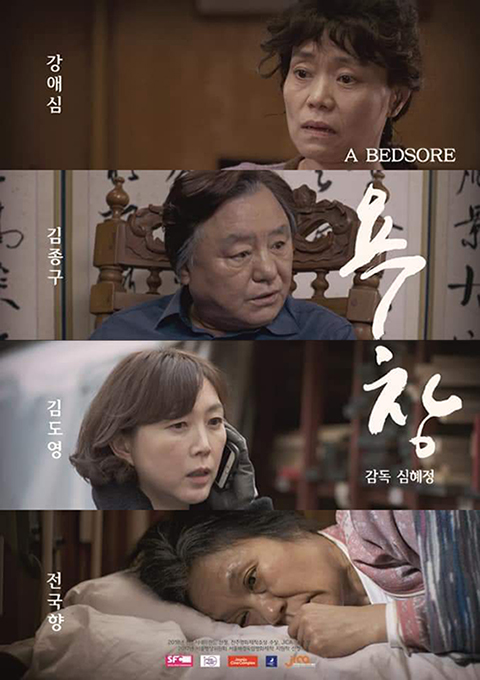
A Bedsore (욕창, Shim Hyejung, 2019)

bedsore posterFamily is supposed to be about mutual responsibility, according to oldest daughter Ji-soo, but in a culture as fiercely patriarchal as Korea’s, there may be differing interpretations of what “responsibility” entails. Shim Hyejung’s A Bedsore (욕창, Yokchang) uses the titular ailment as a metaphor for the festering wounds at the centre of familial relationships, an irritating and potentially dangerous pressure ulcer born of something sitting too long in the same place unaddressed and unresolved. Intensely lonely and unable to connect, the family members struggle with the demands of what it means to be a family and find themselves more often than not guilty and resentful in their filial obligations.

Grandma Gil-soon (Jeon Gukhyang) is bedridden following a cerebral haemorrhage and largely unable to communicate though obviously very much present. The family has hired a live-in carer/housekeeper to look after her as well take care of the domestic tasks because retired patriarch Chang-sik (Kim Jonggu) is a traditional sort which means he’s entirely unable to fend for himself. The trouble starts when Mrs Yu (Kang Aesim) discovers Gil-soon has a nasty bedsore on her back. Rather than deal with it himself, Chang-chik rings his daughter Ji-soo (Kim Doyoung) to come and look in on them, but despite her obvious distress in worrying that perhaps her mother is not receiving proper care and may be in pain, she is also dealing with a moody teenage daughter and a husband who may be having an affair. She wonders why her dad always calls her and not her brother Moon-soo (Kim Jae-rok) or his wife. And then there’s the golden boy middle brother Yong-soo who was the apple of his father’s eye but has made a mess of his life and is currently living as an undocumented migrant in America after doing a midnight flit.

The most obvious problem in the Kang household is that Chang-sik is a product of his times. He does almost nothing to care for his wife and fully expects that a woman will take care of it and him. When there is a problem, he summons Ji-soo and/or his daughter-in-law, never his son, and expects them to take over. He cannot cook or clean and “requires” a woman to fulfil those functions for him so that he can live like a man. This attitude has perhaps contributed to his ongoing confusion regarding Mrs Yu with whom he is on friendlier terms than might be wise for someone who is technically an employee. Somewhere between authoritarian father and jealous suitor, he grows resentful towards her for going out on her days off and irrationally irritated when he realises she may have a boyfriend, eventually leaving Gil-soon on her own to spy on Mrs Yu in a quiet bar where she likes to go dancing.

Though we might initially feel sorry for Chang-sik because he seems so incredibly lonely now that he can no longer communicate with his wife, he quickly loses our sympathy as we realise that it is largely self-pity and that as lonely as he might be, it must be so much worse for Gil-soon who is often left all alone in her room with no stimulation though we can clearly see that she is present and able to engage with the world around her. Mrs Yu does her best to look after her, but is not a trained carer just someone in desperate need of a job. Being an undocumented Korean-Chinese migrant worker also places her in an awkward position with the miserly Chang-sik who, while not a bad man or abusive employer, does perhaps think he has more leverage to exploit her because of her precarious immigration status. We wonder what Gil-soon’s married life must have been like, and if Chang-sik thinks of her as an individual or merely as a woman to be swapped out and replaced now that she can no longer serve him, especially when he announces a bizarre plan to divorce his wife and marry Mrs Yu to make her a legal citizen and ensure she stays in the household.

That particular bombshell obviously does not go down well with the kids, particularly Ji-soo on whom most of the additional burden of care has fallen. She tries to reason with her dad, but he doubles down on the patriarchal norms, telling her it’s all her fault for not pulling her weight as a daughter while she quite reasonably reminds him he had three children but expects her drop everything and sit by her mother’s bedside 24/7. Like her parents and Mrs Yu, Ji-soo is also lonely even within her own family, pushed out by her teenage daughter who keeps bringing her “friend who is a boy” home to play, and her husband who keeps “working late” and takes private phone calls from a young woman. Meanwhile, Moon-soo’s wife does her best to keep the peace between her husband and the father with whom he so obviously does not get on. Though he feels sorry for his mother, Moon-soo seems to be over this whole family thing and ready to sever ties, but that doesn’t stop the couple having a mini panic about the inheritance if their dad goes ahead and marries Mrs Yu after their mum passes away.

The bedsore becomes a metaphor for all the pent up pressures involved with living in a patriarchal social system which expects women to shoulder all domestic burdens. Even Mrs Yu is only working abroad because her husband in China had a stroke and her son can’t find work so she needs to send money home while someone else looks after her grandson. Chang-sik’s first reaction to Ji-soo’s suggestion that perhaps it might be time to think about putting Gil-soon into a home where she can be cared for properly is to ask “what about me?”, not outraged by the suggestion that he is failing in the duty of caring for his wife or seriously concerned for her welfare, but selfish and self-involved. In the end, Chang-sik will discover his house is full of smoke from a fire that’s been smouldering all these long years and dissipating it may take more than merely opening some windows to let it all air out.


A Bedsore was screened as part of the 2019 London Korean Film Festival.

Short interview with director Shim Hyejung from the Jeonju International Film Festival.

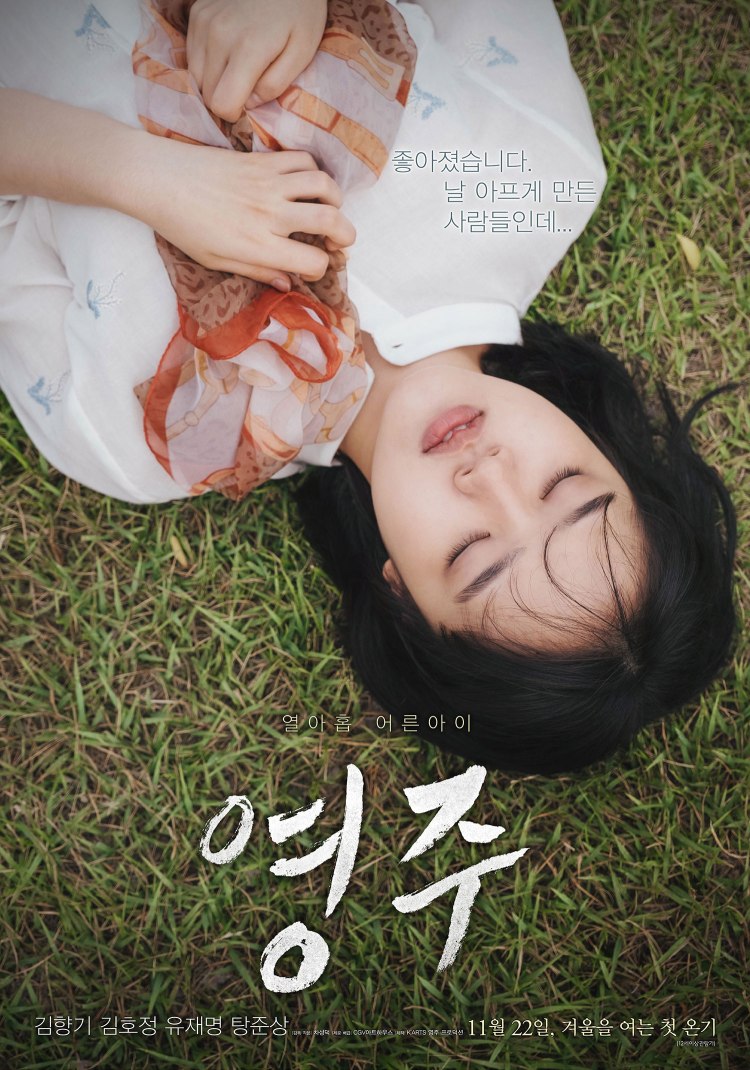
Youngju (영주, Cha Sung-duk, 2018)

Youngju poster 1In the midst of a changing society, the Korean family has come increasingly under the microscope. Where festival favourite Last Child took a pair of grieving parents and saw them unwittingly bond with the boy involved with their own son’s death, Cha Sung-duk’s sensitive indie debut Youngju (영주) finds an orphaned young woman turning to the man who caused the accident which killed her parents in search of some kind of reparation but unexpectedly discovering him to be good and kind if carrying his own burden. Yearning for the warmth of family, she wonders if it would be alright to leave the past behind and embrace this new chance of togetherness, but the truth will out and once known may make her bright new future an impossibility.

19-year-old Youngju (Kim Hyang-gi) lost her parents five years ago and, despite being a minor under Korean law, is the legal guardian for her 15-year-old brother Youngin (Tang Joon-sang). She’s given up her schooling to do a host of part-time jobs in order to support the pair of them while hoping to save for Youngin’s college education, but she’s also being hounded by a domineering aunt who keeps trying to sell the family home out from under her more it seems out of a sense of greed and entitlement than concern for the kids’ wellbeing. Alternating between telling Youngju she needs to take more responsibility and shutting her down by instructing her to “leave these things up to the adults” the aunt is a problematic presence in the kids’ lives leaving them technically not without family but deprived of the support that Korean society expects a family to provide. On a car ride home, Youngju’s aunt tells her to give up and think of her as a mother, only for Youngju to snap back that she’s no longer a child and has no need of a one. The aunt’s “have it your own way” attitude implies she’s made the right decision, but young as she is Youngju can’t know that it doesn’t matter how old you are, everyone still needs a mother at one time or another.

She begins to find one in an unexpected place after hitting rock bottom when Youngin falls in with a bad crowd and gets himself into trouble. As he’s underage, the matter can be settled with a fine, but the kids don’t have that kind of money and Youngju’s attempts to get it lead only to humiliation and betrayal. Resentful of her circumstances, she decides to track down the truck driver who fell asleep at the wheel and caused the traffic accident that killed her parents, hoping to take some kind of revenge by somehow making him pay. Once there she ends up getting a job in their family-run tofu shop where the man’s wife, Hyang-sook (Kim Ho-jung), takes to her immediately with maternal warmth even jokingly referring to her as her younger daughter with a regular customer while delighting in cooking up extra meals for to take home and share with her “family”.

Of course, what Hyang-sook doesn’t know is that Youngju has no family other than Youngin who is trapped in youth detention until she can get the money to get him out. Though the relationship between the siblings is understandably close because they have no one else, it’s also fraught with difficulty and confusion, Youngin feeling guilty and resentful of his older sister’s sacrifices on his behalf, wondering if she’s ashamed of him for not being more help and for constantly getting into trouble. Youngju, meanwhile, keeps her new work family a secret, merely telling her brother that she got the money she needed from her boss rather than their horrible aunt, replying to his question about why anyone would lend them money out of the goodness of their hearts with only “they’re good people”.

The Kims are indeed “good people”, despite whatever preconceptions Youngju might have had about them. Hyang-sook is good and kind, practicing true Christian values of love and forgiveness. Realising that Youngju meant to steal from them, she simply gives her the money because she can see that she’s a “good kid” and seems to be in some kind of desperate difficulty with which she’d like to help her. Hyang-sook takes the melancholy young woman to her heart like a daughter, but Youngju remains uncertain that her forgiveness could extend to the extent of her lies if she knew the real reason she arrived in their lives. Increasingly guilty, she finds herself feeling that she needs to tell the truth but knowing that if she does the fragile sense of family she’s found with the Kims may be irreparably broken. 

Under the Kims’ influence, Youngju encourages her brother that he too needs to try to be better, that they should try “live a better life”, but he understandably feels betrayed by her desire to look for family somewhere else, rejecting their parents’ memory and siding with the architect of all their misfortune. Having made peace with her own tragedy, Hyang-sook may say there’s no point blaming anyone but obviously feels a deep-seated sense of vicarious guilt that for all her pity may make it impossible for Youngju to return to that same level of intimacy as daughter unconditionally loved and supported by kind and forgiving people. In the opening scene, Youngju jokingly asked her brother which of their parents he’d most like to bring back and picked her dad because he was going to take them to a theme park, but it’s grief for her mother(s) that finally overwhelms her, convincing her perhaps that now she really is alone. Even so, the sun rises again and we get the impression that Youngju will be alright in the end, walking sorrowfully off towards a “better life” but perhaps resolved to doing so with no one by her side.


Youngju was screened as part of the 2019 London Korean Film Festival.

Original trailer (English subtitles)

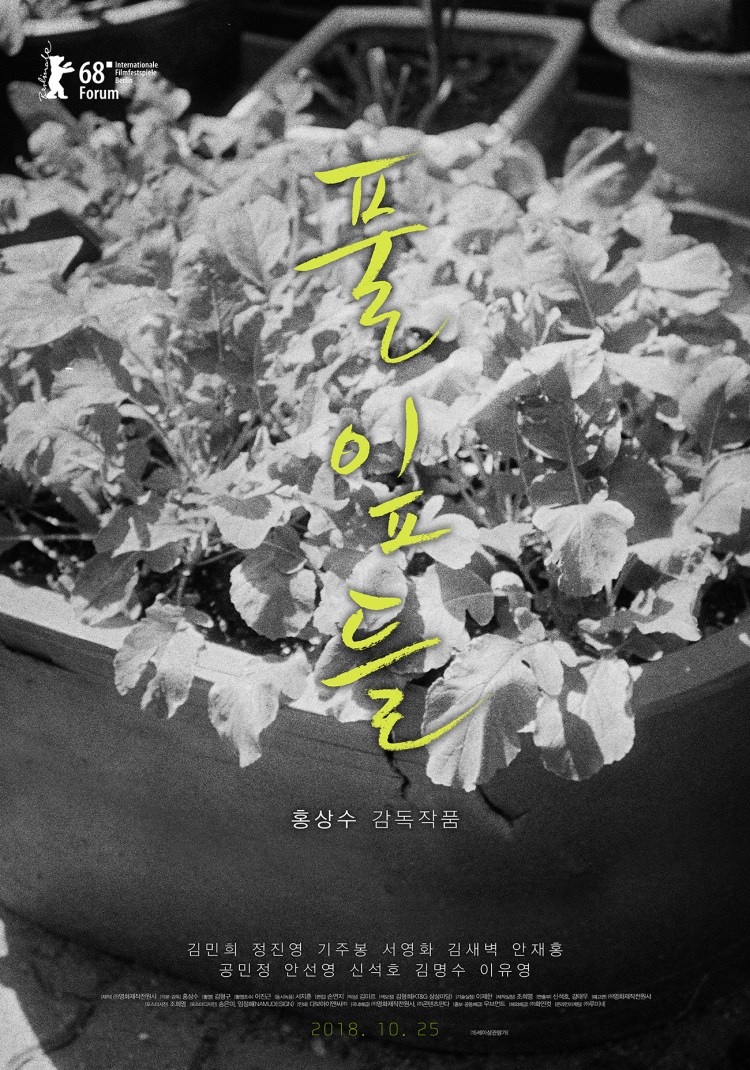
Grass (풀잎들, Hong Sang-soo, 2018)

Grass poster 1You don’t meet nice girls in coffee shops, at least according to the melancholy narrator of a Tom Waits song recalling the flighty lover too free spirited for his wholesome hometown. Like one of the rundown dive bars in Waits’ conceptual universe, the cafe at the centre of Hong Sang-soo’s Grass (풀잎들, Pul-ip-deul) attracts its fair share of lonely drinkers looking for somewhere quiet to pour out their sorrows. Ostensibly a tale of simple eavesdropping abetted by the presence of a laptop, Hong’s narrative is at his most defiantly reflexive as it forces us to question the order of its reality and, in passing, our own.

Unnamed until the closing credits, Areum (Kim Min-hee) sits in a quiet cafe, tucked away in a corner tapping on her laptop and convincing herself she is an invisible observer of the world around her. Listening in on the various conversations of the other customers, she waxes philosophical on life, love, death, and distance by means of a beautifully poetic interior monologue but tells a fellow patron that she is not a writer, only writing, sort of a diary, but not a diary, something unusual for now. The irony is that though Areum feels herself to be far removed from those she is observing, they often complain that they feel “watched” or at any rate anxious under her intense yet abstracted gaze, sometimes challenging her but backing down when faced with her almost total lack of interest in interaction.

The patrons, almost echoes of themselves, are comprised of three couples – one in youth, one middle-age, and one approaching their twilight years. The men drink something cold in a tall glass with a straw, and the women something warm from a pleasantly round cup and saucer. Each of the men is an actor, while at least one of the women is a writer, though all of their conversations have their particular quality of awkwardness with the men largely trying to extract something from the women be it love, or forgiveness, or relief.

Finding herself in an awkward situation familiar to any woman who’s ever tried to work in a coffee shop on her own, Areum is approached by the middle-aged actor (Jung Jin-young) apparently trying to write a screenplay, and propositioned for advice. Having tried and failed to lure his wily writer friend (Kim Sae-byuk) on a 10 day retreat to “collaborate”, he asks Areum if he can come and “observe” her. She turns him down by saying she has a boyfriend, only for the actor to ask to talk to him for his permission, to prove he’s “not some kind of strange guy”.

The older actor (Gi Ju-bong), meanwhile, casually tells his companion (Seo Young-hwa) that he’s recently come out of hospital following a suicide attempt after trying to kill himself for love. Trying to move the conversation on, she tells him that she’s recently moved to a small house near the mountains, but realises her mistake when he fixates on the incidental detail that she’s got a spare room. Brushing off her reticence about a roommate, he repeatedly states that he’s got nowhere else to go in the hope that, as Areum says in her caustic voiceover, she will take pity on him and allow him to live the life of Riley on her dime. The friend is clearly distressed, she doesn’t want this man in her house (her equally strained looks when someone else tries to offer him a room suggest she’s reason to believe he’s trouble) but feels obliged to keep apologising for her refusal to acquiesce to his quite unreasonable request.

According to the maybe fiancée of Areum’s brother, men are cowards when it comes to pain or the need to end things. Areum seems to agree, but has a fairly cynical view on the entirety of human relationships, berating the pair for irresponsibly intending to marry on “love” alone. “We only loved each other” another sad young woman insists while harangued by a drunk middle-aged man intent on blaming her for the suicide of her late lover, neatly reversing the dynamics of the young couple from the cafe arguing about their shared sense of guilt over the death of a friend.

Areum wonders if it’s possible to fall in love with an innocent heart if you’re carrying the weight of someone else’s death. “You insignificant things” she warns the youngsters newly in love “you’ll die someday”, neatly ignoring the fact that so will she. Or perhaps this world will die with her. We begin to wonder if any of this is real or merely a series of manifestations of Areum’s cafe musings, reconstructions of the lives of others imagined from snippets overheard from adjacent tables. Adjacent tables is where Areum’s preferred to be, observing not partaking, a lonely ghost in this haunted cafe where lost souls come to ease their burdens. Yet, finally her resistance crumbles. She accepts an offer of soju and joins the gathering, abandoning her lofty pretensions of distance for a taste of togetherness. “In the end people are emotions…And I long for them now” she realises. “Is it real? It would be nice if it were”.


Grass was screened as part of the 2019 London Korean Film Festival.

Original trailer (English subtitles)

Peppermint Candy (박하사탕, Lee Chang-dong, 1999)

Peppermint Candy 4K posterA wise man once said that the tragedy of life is that you have to live it forwards but it can only be understood in reverse. Lee Chang-dong’s second feature, the poignantly titled Peppermint Candy (박하사탕, Bakha Satang), lays bare the wounded innocence of 20th century Korea through the story of one man betrayed by the world in which he lived, eventually destroying himself in a protracted act of self-harm intended as a perverse attempt either at atonement or grudging conformity with a society he could not resist.

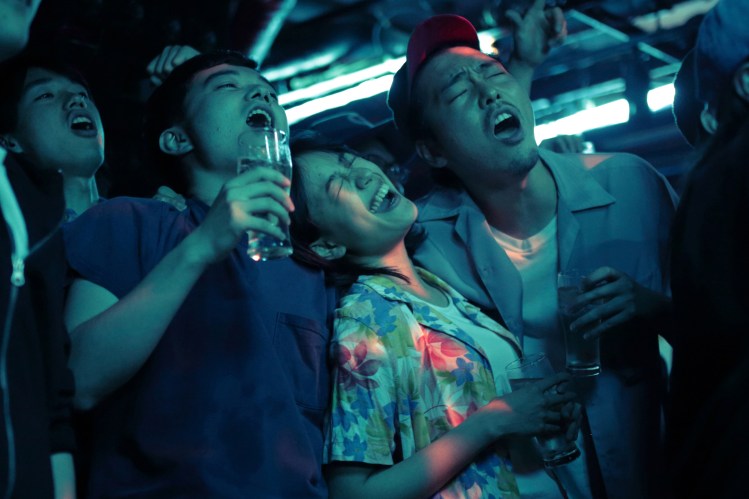
Beginning and ending with a picnic, Lee opens in 1999 as a hopelessly drunk Yong-ho (Sol Kyung-gu) crashes a reunion party he wasn’t technically invited to held to mark 20 years of friendship among former factory workers now approaching middle age. Dressed in a suit which looks somehow wrong on him, Yong-ho hogs the karaoke mic to sing a maudlin song about failed love, dances wildly, and sobs with the crushing hopelessness of a man entirely alone in the world. While his old friends try to reclaim the cheerful atmosphere, he climbs up to a nearby railway bridge where he waits for a train with outstretched arms, screaming “I’m going back” as he prepares to greet it.

Yong-ho does indeed “go back” as the train bears us ceaselessly back into the past, showing us the moments of Yong-ho’s life which struck him like a hammer to the soul and turned him into the defeated figure on the railway bridge, howling into the wind. At 40, Yong-ho is a hollowed out shell of a man, divorced and living in a greenhouse after falling foul of the volatile late ‘90s stock market, subsequently cheated out of all his money and the possibility of a new start by a man he thought was his friend. Given what we later learn about the middle-aged Yong-ho, it’s difficult to believe he had any kind of friends at all, and even if we’re conditioned to pity him as a man already dead he does nothing to earn our sympathy, cheating a poor roadside coffee seller out of a few pennies and then quietly smirking to himself in the safety of his car.

Yet, he begins to soften when a kindly man shows up and tells him that his first love, Sun-im (Moon So-ri) – now apparently this good man’s wife, is close to death and wants to see him one last time never having given up on the man he once was. Given the suit which doesn’t suit him by Sun-Im’s husband so that she won’t realise Yong-ho has made a mess of his life and be upset, Yong-ho stops to pick up a small jar filled with the titular “peppermint candy”, suddenly revealing that perhaps he never quite gave up on that man either and that may be his tragedy.

Before he was an arch capitalist making a few shady bucks in the pre-financial crisis economic boomtown of the newly democratised Korea, Yong-ho was a policeman working for the authoritarian government brutally torturing teenage democracy activists during the dying days of the regime. As a young rookie we see him squeamishly try to resist, only to be pressured into violence and then snap. The suspect fouls Yong-ho’s hand with the kind of smell that never really washes off, but it’s just one more stop on Yong-ho’s journey to spiritual ruination. Finally we reach his breaking point, in Gwangju in 1980, where his soul is forever soiled.

The Gwangju Massacre, in the story of Yong-ho’s life which is also the story of Korea, is the great festering wound which can never be healed. He carries it with him in an intermittent limp that resurfaces at times of emotional difficulty, and convinces himself that he is unworthy of everything good or innocent in the world. He breaks with Sun-im, cruelly betraying her faith in him with a crude gesture that wounds them both equally, mutually understood as a perverse act of kindness. Becoming what he thinks he’s supposed to be, what this society has made him, he wilfully destroys himself in a decades-long act of self harm that leads only back to the train which haunts him throughout all of his encounters, so painfully central to the arc of his life. Literally railroaded by an inexorable fate, Yong-ho lacks the will to resist believing he is no better than the hand he has been dealt but consumed by self-loathing and infinite regret. There is no way back, only forward, but for Yong-ho, and perhaps for Korea, Lee sees only one way out and the soft of heart will not survive it.


Peppermint Candy was screened as part of the 2019 London Korean Film Festival.

Trailer (English subtitles)

The Contact (접속, Chang Yoon-hyun, 1997)

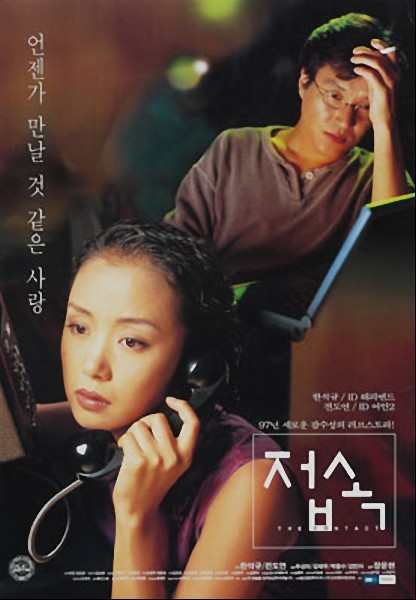
The Contact poster 1Even in 1997, it was supposedly much easier than ever before to make contact with pretty much anyone anywhere in the world, yet most of use chose not to. Twenty years later, perhaps not much has changed as we remain increasingly disconnected in an evermore connected world. Sometimes, however, as a radio host’s opening monologue reminds us, life has you take the long way round and it’s not until you hit a bump in the road that you start to think about what’s really important. The melancholy heroes of Chang Yoon-hyun’s The Contact (접속, Jeopsok) are each reeling from romantic disappointment, but brought together by a series of coincidences eventually find an outlet for their woes in the newfangled world of online chat.

Dong-hyeon (Han Suk-kyu) is the producer of a successful radio show but constantly in trouble with the suits for his uncommercial music choices. When someone anonymously sends in a battered copy of The Velvet Underground’s self titled album, he decides to switch up the order and play Pale Blue Eyes partly out of a sense of nostalgia and partly because he is hoping the woman he suspects may have sent it will be listening.

Meanwhile, across town, Soo-hyeon (Jeon Do-yeon) is sharing a moment with a cheerful young man, Ki-cheol (Choi Cheol-ho), who turns out not to be her boyfriend, but that of her roommate. To get away from the pain of seeing them cosied up together, she goes out for a drive and turns the radio on for company just as Dong-hyeon drops the needle on Pale Blue Eyes. So moved by the song that she only narrowly escapes a multi-car pileup, Soo-hyeon writes in to request it again which leads Dong-hyeon to wonder if she’s his old flame using an alias. Obviously, she isn’t, but excited to get an email from a radio show producer and not wanting to disappoint him she lies and says the request was for her friend who might be the one he’s looking for.

A pair of brokenhearted romantics, Dong-hyeon and Soo-hyeon are old souls who like rainy days and going to the movies in the afternoon but they’re also intensely online and attuned to the possibilities of indirect communication. Despite the “instant” nature of modern technology, the pair send intermittent emails, leave messages on answerphones, and fax each other, only sometimes replying in the moment via IRC but communicating on a much deeper level than they might have meeting face to face. Because they live in a city and have much more than they know in common, they unwittingly slip past each other with improbable frequency but would likely never meet, the act of making “contact” in person all but an impossibility.

The curiously analogue, nostalgia-laden, and above all physical device of the LP brings the pair together through a shared sense of loneliness born of frustrated love as they attempt to support each other through differing stages of romantic grief. While Dong-hyeon remains wilfully trapped in the past, mooning over an old flame while blaming himself for possibly coming between the woman he knew did not love him and the man she did, Soo-hyeon is in the thick of it struggling with her feelings for her roommate’s boyfriend. Calling himself “Happy End” because he’s read about them in books but doesn’t believe they exist in the “real” world, Dong-hyeon gives Soo-hyeon contradictory advice while making an ill-advised romantic overture to straightforward writer Eun-hee (Chu Sang-mi) who, unlike Dong-hyeon and Soo-hyeon, knows exactly what she wants and isn’t afraid to state it directly. “Why can’t you be honest with your feelings?” she repeatedly asks Dong-hyeon, but predictably gets no reply.

Soo-hyeon meanwhile has given herself the rather depressing name of “female 2” online, apparently inspired by a series of walk-on parts in plays, but perhaps hinting at her categorisation of herself as an invisible face in the crowd while also ironically pointing at her awkward position as the third wheel in her friend’s relationship. Berated for his emotional diffidence by Eun-hee, Dong-hyeon nevertheless tells Soo-hyeon she’s better off to forget Ki-cheol if she can’t find the courage to tell him how she really feels but as good as his advice sounds it’s primed to backfire, potentially costing not just one but two friendships and seeing Ki-cheol disappear from her life forever. Braver than Dong-hyeon, she resolves to give it a go and whatever happens it will at least answer a question, putting an end to the continued suffering of being merely friends with the man she loves.

Perhaps out of a sense of guilt for having selfishly prioritised his own feelings with tragic consequences, Dong-hyeon has decided to keep them to himself, but if so it’s also made him casually cruel and infinitely insensitive. Giving up on his romantic dream, he contemplates running away and starting a new life abroad, while Soo-hyeon risks everything in pursuit of love. Not knowing how to connect with her in the offline world, Dong-hyeon once again resorts to the physical in order to make contact, waving a tiny document like a one-way passport to love in order prove his identity and romantic destination. Finally finding the strength to let go of lost love and take a chance on new ones, the pair shift their relationship from digital to analogue as they, ironically, resolve to leave the past behind for more connected future.


The Contact was screened as part of the 2019 London Korean Film Festival.