
Fireworks (打ち上げ花火、下から見るか? 横から見るか?, Akiyuki Shinbo & Nobuyuki Takeuchi, 2017) [Fantasia 2018]

Fireworks posterBack in 1993, Fireworks, Should We See it From the Side or From the Bottom? (打ち上げ花火、下から見るか? 横から見るか?, Uchiage Hanabi, Shita kara Miru ka? Yoko kara Miru ka?), became something of a sliding doors moment for the young Shunji Iwai who received an award from the Directors Guild of Japan for what was in essence a single episode in an anthology TV series dedicated to the idea of “what if”. “What if” is, it has to be said, a constant theme in nostalgic Japanese cinema as slightly older protagonists look back on the hazy days of youth and wonder what might have been if they’d only known then what they know now. Scripted by Hitoshi One (Scoop!) and produced by Shaft, the anime adaption attempts to do something similar, floating in with a gentle summer breeze that could easily be from 30 years ago or yesterday while its conflicted hero ponders where it is he ought to stand to get the most beautiful view of life passing him by.

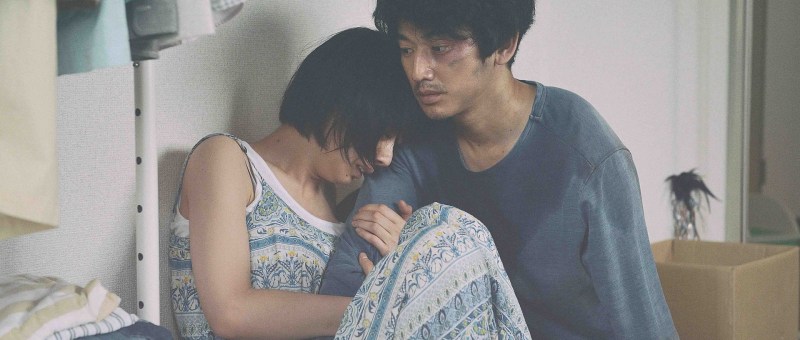
The central dilemma that seems to obsess the boys this particular summer is whether fireworks are flat or three dimensional and whether your perception of them changes depending on where you stand. Norimichi (Masaki Suda) risks falling out with his best friend Yusuke (Mamoru Miyano) and so has avoided revealing the fact that they both have a crush on the same girl – Nazuna (Suzu Hirose), who (neither of them have noticed) has a dilemma of her own. A chance meeting at the swimming pool seems primed to dictate the romantic fate of all concerned. Norimichi and Yusuke race for the affections of Nazuna who, in the original timeline, ends up asking Yusuke to see the summer fireworks with her even though it’s Norimichi she went there to meet.

Unfortunately Yusuke is a flake and nothing goes to plan. He stands Nazuna up to hang with his buddies and figure out the answer to their inane riddle leaving her to run into Norimichi who gets an unexpected glimpse at her inner turmoil. A mysterious orb salvaged by Nazuna from the nearby sea gives Norimichi a chance to start over, be braver, do things differently thanks to the benefit of hindsight, and so he begins a path to idealised romance by manipulating the events around him to finally “save” Nazuna from making a rash decision (or at least from making it alone).

In 1993, Nazuna’s dilemma was perhaps a little more unusual than it might seem now. Her twice married single-mother (Takako Matsu) is planning to marry again which requires the teenage Nazuna to leave her home behind to live with a strange man in a strange town. Though her new step-dad seems nice and is obviously trying his best, Nazuna is not of a mind to give in. She consents to accepting one of the ice-creams he’s bought to curry favour (after all, there’s no need to be “rude”), but is not about to go so far as to say thank you or to enjoy eating it together with the rest of the family when she could guzzle it sulkily in the comfort of her bedroom. Nazuna wants to escape, but her ideas of doing so are childishly naive even if she puts on a sophisticated front by joking about going to Tokyo to work on the fringes of the sex trade by lying about her age. Hence, she asks a boy she likes but barely knows to take her away from this place, but the boy is just a boy and not quite equipped for rescuing damsels in distress from suffering he doesn’t understand.

Like many Japanese teen dramas, Norimichi’s interior monologue takes on a rueful quality, as if he’s eulogising his youth while still inside it. He doesn’t know whether there’s a difference if you look at things from one angle or another because he’s not particularly used to thinking about things and his first few experiments with the orb are pure reactions to events rather than thought through decisions about effects and consequences. Nevertheless, use of the orb shifts him into a philosophical contemplation of what it is to live a life. Finally realising he should probably ask Nazuna what it is she really wants, the process the pair undergo is one of learning to live in the now rather than obsessing about the end of something that might never begin if you never find the courage to start.

In the end their beautiful dream world is ruptured by a drunken old man, shattering into a thousand shards of memory of things that never were. Fireworks wants to ask if you can have a more fulfilling life by simply changing your perspective, but its central messages never quite coalesce. There is something about Iwai’s original concept which inescapably of its time, sliding neatly into the melancholy world of early ‘90s teen drama drenched in nostalgia for an era not yet past. Reaching for poignant philosophising, Fireworks falls short through, ironically enough, focussing too heavily on a single point of view. An oddly “flat” exercise, Shinbo’s adaptation misses the mark in its climactic moments but perhaps manages to offer something to the lovelorn teens of today if only by yanking them back to a more innocent time.


Fireworks was screened as part of Fantasia International Film Festival 2018.

International trailer (English subtitles)

The original 1986 Seiko Matsuda song reprised by Nazuna at a climactic moment.

Lôi Báo (Victor Vu, 2017) [Fantasia 2018]

Lôi Báo posterThe world can be a strange place. Tam (Cuòng Seven) felt safe in his small town surrounded by his wife and son who were determined to support his artistic dream despite its long genesis, but a dark shadow is about to be cast over his otherwise pleasant existence that will threaten to destroy everything he has built. Victor Vu’s Lôi Báo is perhaps Vietnam’s first superhero movie but it’s also a familiar tale of a conflicted man entering middle-age learning to reaccept his responsibilities, both to his wife and son and to his society as he attempts to balance his desire to help others with that of protecting his family. With great power comes great responsibility as the saying goes and Tam is a responsible guy but the past is calling him and he’ll need to face it head on if he’s to put his fracturing family back together.

Six years after his critically acclaimed graphic novel Descendents of the Crossbow, comic book artist Tam has just come out of a period of writer’s block and is working on a new project – an American-style Superhero book about a pure hearted warrior for justice with intense fighting skills and extreme athletic ability. Not many people are convinced by Tam’s desire to create a Vietnamese superhero, but his family support him and that’s all that matters. In fact, they literally support him because his wife Linh’s (Tran Thi Nha Phuong) coffeeshop is the family’s sole source of income. Tam has a tendency to get lost in his work, which is one reason he’s been putting off seeing the doctor about a serious cough that just won’t go away. When he finally decides to get it checked out it’s already too late – he has terminal lung cancer and only a few months left to live. It’s at this point that his life starts to take a strange, unexpected turn. Uncle Ma (Huàng Son), an older man Tam thought was a farmer, is actually a secret mad scientist who has a hidden laboratory in his garden where he continues to research human head transplants. The obvious conclusion presents itself – Tam decides to undergo experimental surgery to abandon his cancer ridden body and move into a nice new model.

Lôi Báo is the latest in the long line of movies indulging in the thoroughly B-movie science of “Cellular Memory”. Illegal head transplantation is already somewhat unethical, but Tam and Ma acquired their donor body through less than ethical means by grabbing a guy who was mysteriously gunned down in a forest where Tam had just tried to commit suicide out of total despair. Of course, the dead “gangster” came with his own share of baggage which leaves Tam feeling much more impulsive had than he had done before and though he seems to have lost the ability to draw, Tam is thrilled that his new body seems to be a much stronger, faster model than his old one. Not quite able to leap tall buildings in a single bound, Tam can now scale them with little difficulty and lift heavy vehicles all alone. Now he no longer needs to draw superhero stories, he can be a hero for real fulfilling his lifelong dream of being able to save lives and protect the vulnerable from evil.

Only, his new body is not quite so altruistic as he once was, and Tam begins to get off on the fame his newfound heroism is bringing him even while it puts his family danger should anyone find out about all the illegal head transplantation action that’s been going down at uncle Ma’s. He also finds himself strangely drawn to a pretty young doctor who might have been something to the dead gangster, further distancing him from Linh and his son Bu. As expected, there was a little more to the gunfight in the woods than a gangster squabble and Tam will have to learn to put body and soul back together while also dealing with the ghosts of his past and a latent discomfort with the idea of being a husband and father which betrays a lack of faith in the idea of “family” itself.

With plenty of high octane action scenes, Lôi Báo more than does its home genre justice, creating a notably mature origin story for a new kind of superhero who accepts that perhaps he’s not the hero in this story after all. Justice is served, the family repaired, the past laid to rest and there might even be a new book in it too. It has been a busy a few months for Tam, but at least he’s learnt the true meaning of heroism – something which will place him in good stead during his eagerly awaited further adventures!


Lôi Báo was screened as part of Fantasia International Film Festival 2018.

Original trailer (English subtitles)
Summer Explorers! 2018 – Japan Foundation London Free Screening Series Returns Aug. 12&18

summer explorers

Following their announcement of a “Pre-Summer Explorers” series of free film screenings, The Japan Foundation London has now announced the main event which will take place on 12th and 18th of August at the Courthouse Hotel and Regent Street Cinemas.

Sunday 12th August, Courthouse Hotel Cinema

2pm / 6.40pm – His Master’s Voice

HIs Master's Voice still 1

A lowly rakugoka forced to give up his dreams returns home only to discover a new purpose through teaching rakugo to a sad little boy.

4.15pm – Giovanni’s Island

Giovanni's Island still 1Heart rending animation inspired by Kenji Miyazawa’s classic Night on the Galactic Railroad. Brothers Junpei and Kanta face the loss of their home when the northern island of Shikotan is reclaimed by Russian troops in the aftermath of the second world war.

Saturday 18th August, Regent Street Cinema

2.30pm – Chieri and Cherry

Chieri and Cherry still 1Charming puppet animation in which Chieri, who has recently lost her father, develops an intense bond with her stuffed toy, Cherry. Travelling to her grandmother’s house for her father’s funeral, Chieri experiences a fantastic adventure which helps her to cope with grief and fear of the future.

3.50pm – Cat Samurai

cat samurai still 1

A mercenary ronin accepts a commission from dog loving yakuza to wipe out the chief pet of a cat loving clan but on being faced with the adorable creature cannot go through with it!

5.50pm – Oshin

Oshin still1

Retelling of the classic ’80s TV drama covering Oshin’s difficult childhood. 7-year-old Oshin is sold away from her poor family and sent to work in a lumber shop where she experiences cruel injustices, finally being falsely accused of stealing. Running away, Oshin ends up in the mountains living with a kind old man and a deserter from the army who begins to teach her how to read and write.

All the screenings are free to attend but must be booked in advance. You can find more information about the screening series on the Japan Foundation’s official website and eflyer and you can keep up with all the latest news via their Twitter Account and Facebook page.

Amiko (あみこ, Yoko Yamanaka, 2017) [Fantasia 2018]

Amiko PosterSome meetings are pivotal, others merely seem so. To melancholy high school girl Amiko (Aira Sunohara), consumed by youthful ennui and a sense of the long dull years stretching out before her, Aomi (Hiroto Oshita) seemed like some kind of heaven sent emissary – a good looking guy who seems to share her existential despair, her taste in music, and her lack of motivation for the business of living. Yet the meeting comes to nothing. After a single night of walking and talking, baring their souls and confessing their anxieties, the pair never talk again. Amiko continues to pine for Aomi, turning him into some kind of absent god, though months have passed with no real contact save her semi-stalking of him online. Eventually, almost a year later, Amiko learns that her one true love has deserted her and run off to Tokyo with another girl. Stunned, she resolves to follow him in the hope of finding out why he chose to renounce all it was she thought they meant to each other to embrace the mediocrity he once claimed to hate.

Amiko is not completely alone, she has a best friend – Kanako (Maiko Mineo), though she confesses that deep down they don’t really understand each other. Aomi too seems to think that Kanako is closed off, not really trusting anyone and living a superficial life. Nevertheless, Kanako does at least provide Amiko with the opportunity to experience the regular high school girl world of gossiping about boys on the telephone and silently resenting other, more popular girls. Claiming that “ordinary poor souls” could never understand the innate connection between herself an Aomi, Amiko decides to keep her long night walk of the soul a secret from her best friend in order to secure its purity.

Amiko, based on their intimate conversation, is convinced that Aomi feels the same way she does, understands her intense sense of existential despair, and is just as bored and disconnected as she feels herself to be. Confessing that he doesn’t actually like sports, in fact he hates being outside, Aomi offers the excuse that it’s easier being told what to do than trying to figure things out on your own. Carried along by the fact he’s good at football and can’t quite find the energy to protest, Aomi drifts on a cloud of his own apathy – one of the cool set of handsome and aloof high school boys popular with those who like unattainable guys. Like Amiko he likes “deep” music, instantly recognising the Radiohead track on her phone, but eventually runs off with the kind of girl Amiko (not so) secretly despises – an airhead popular girl and the “embodiment of mass culture”.

Aomi’s betrayal isn’t just romantic heartbreak, but the severing of a spiritual connection which never really existed in the first place. Rather than deepen the engagement, Amiko opts to leave her night of connection as a mythic encounter, sanctified by its unique quality. Aomi therefore becomes a mythic figure, a composite of Amiko’s various projections of her ideal soulmate, mirroring her own sense of ideological purity. Her new god, however has feet of clay and after tracking him down in the city she’s forced to confront the distance between the image and the reality. Was their connection as real as she thought it was, or only superficial musing on a cool crisp night when there was nothing much else to do?

Deep into her teenage apathy, Amiko talks about those manic, one off days where you just might find yourself doing something crazy out of a sense of cosmic despair. Aomi puts this idea back on the table as a possible motive for his abrupt flight to the city, and Amiko’s random pursuit of him is perhaps its aftershock. Wandering around having mad adventures – joining in with a madman’s (Hisato Takahashi) condemnation of a world of lies and the non-existence of real love, testing the ability of Japanese people to dance spontaneously, and stalking Aomi’s girlfriend, Amiko begins to accept that she may have been mistaken in placing such cosmic importance on what may just have been an inconsequential night filled with accidental profundity. Preferring to maintain the “purity” of her ideal, Amiko remains trapped within her own sense of despair but with a new sense of clarity and a determination not to let the phoniness of the world destroy her essential self.


Amiko was screened as part of Fantasia International Film Festival 2018.

Original trailer (no subtitles)

The Vanished (사라진 밤, Lee Chang-hee, 2018) [Fantasia 2018]

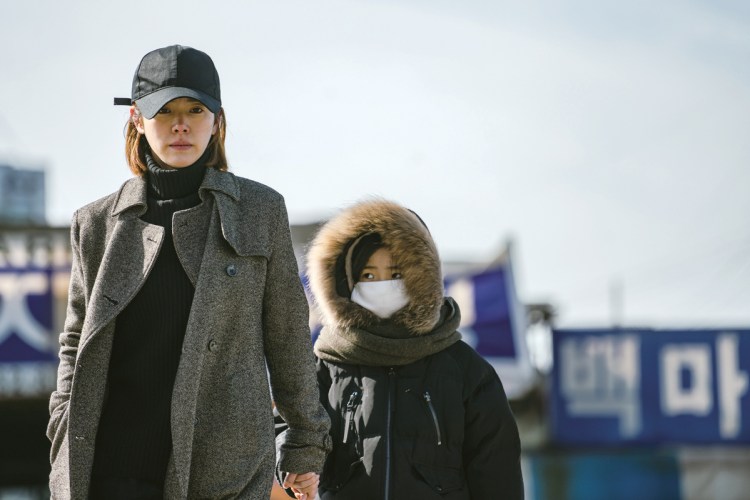
The Vanished posterThe past refuses to die in The Vanished (사라진 밤, Sarajin Bam) – Lee Chang-hee’s remake of the 2012 Spanish thriller, The Body. Ghosts, of one sort or another, torment both of our male leads – a dogged policeman and increasingly unhinged husband, as they try to solve the mystery of a disappearing corpse whilst each battling a degree of latent resentment towards various forces of social oppression. A tale of conflicting bids for vengeance, The Vanished pits an emasculated trophy husband against a controlling career woman wife while the forces of order look on in disapproval but then all is not quite as it seems and perhaps this is not the story we first assumed it to be.

The horror-inflected tale begins in a morgue on a rainy night as a disinterested security guard becomes unexpectedly spooked by his surroundings. Discovering one of the trays open and a body missing, the guard panics and feels himself stalked by something undead before being clubbed on the back of the head and knocked out. Maverick cop with a traumatic past Woo Joong-sik (Kim Sang-Kyung) arrives on the scene and discovers the missing cadaver belonged to prominent businesswoman Yoon Seol-hee (Kim Hee-Ae). The cause of death is thought to have been a heart attack brought on by her workaholic lifestyle but Joong-sik isn’t so sure. He hauls in the “trophy husband” – improbably good-looking university professor and sometime employee of Seol-hee’s pharmaceuticals company, Jin-han (Kim Kang-Woo). Jin-han has come straight from the flat of his pregnant mistress and is understandably on edge as every move he makes only further incriminates him in the “death” of his wife.

Increasingly unhinged, Jin-han is certain that Seol-hee is not really dead and has embarked on an elaborate plan of revenge for his affair with a student, Hye-jin (Han Ji-An). Lee wastes no time in confirming that Jin-han had at least intended to do away with his wife. Jin-han was apparently no longer interested in her money and would have wanted a divorce but believed his wife to be a ruthless woman who would never willingly let him go. Using an experimental anaesthesia drug, he hoped to get rid of her undetected but now fears that she has somehow woken up and wants her revenge. What Jin-han wanted, he claims, was his freedom – Seol-hee, an older career woman, bought him with trinkets, belittles his work, and refuses him all agency. He was tired of playing the toy boy and wanted his life back and so he chose to reassert his manhood through murder.

Of course, all is not quite as it seems. Through Joon-sik’s investigations, Jin-han comes to believe that perhaps Seol-hee planned the whole thing – anticipating that he would try to use the drug against her and engineering a situation in which she would fake her own death just to get back at him. Whether a ghost or not, Seol-hee haunts him, threatens his happy future with the sweet and innocent Hye-jin who calls him professor and respects him as a learned man, and seems set to achieve her goal if only by driving Jin-han out of his mind with worry and confusion.

Meanwhile, Joon-sik is battling another series of oppressive presences in the form a grudge against “the wealthy” possibly relating to a mysterious traumatic incident from his past, and a boss who wants him to find the missing body as quickly as possible and then forget the whole thing given the fact that Seol-hee and Jin-han had been a “celebrity couple” which makes all of this quite embarrassing for everyone. The two men end up engaged in a cat and mouse game as Jin-han becomes convinced that he’s the real victim in all this and is at the centre of an elaborate conspiracy leaving his pregnant girlfriend alone and vulnerable, while Joon-sik continues to push him towards confessing that he took the body and hid it possibly in some kind of fugue state.

“The body” is perhaps a better title as the concept itself comes in for constant reappraisal and we gradually understand that not everyone is talking about the same thing, leaving aside the complete erasure of Seol-hee as a woman with a name who may have been murdered by a vengeful husband (as unpleasant as she is later shown to be) in favour of viewing her simply as a nameless corpse or grudge bearing ghost. Twists pile on twists and history rewrites itself, but the buried past will someday be unearthed and justice served, if with a side order of irony.


The Vanished was screened as part of Fantasia International Film Festival 2018.

Original trailer (Korean subtitles only)

Room Laundering (ルームロンダリング, Kenji Katagiri, 2018) [Fantasia 2018]

Room Laundering posterIn the olden days, when there had been a traumatic incident, holy people would be brought in to perform some kind of ritual to “purify” the air so life could go back to “normal”. These days people don’t believe in ghosts, or at least not in ghosts of that kind, but there is still a degree of discomfort involved in spending time in a place where something unpleasant has happened. Japanese rental laws state that a prospective renter/buyer should be informed if something untoward has occurred in the property, but the law only requires you to tell the next person in line. Therefore, if you can find a person willing to spend a few days in an apartment with a troubled past, they could be quite a useful asset to the unscrupulous estate agent.

Miko Yakumo (Elaiza Ikeda) is just such a woman and has therefore found herself falling into a “room laundering” career thanks to her uncle Goro (Joe Odagiri), a roguish real-estate-broker-cum-underworld-fixer with a sideline in fake IDs for undocumented migrants. Miko’s father died when she was five, and her mother disappeared without warning a few years later leaving her with her grandmother who died when Miko was 18. She’s now 20 and is nominally in her uncle’s care but having dealt with so much loss and abandonment, she prefers to keep to herself, always closed off with a pair of headphones blocking her ears, speaking to no one. The apartment “job” therefore suits her well enough with its clear stipulation to avoid mixing with the neighbours, but there’s one big drawback. Miko has recently developed the ability to see ghosts which is sometimes a problem given the circumstances her new places of residence became vacant.

A tale of learning to deal with the past, Room Laundering (ルームロンダリング) takes its heroine on some long, strange journeys but despite its death laden themes and Miko’s emotional numbness it has its essential warmths even if they’re sometimes harder to see. Miko’s travels chart a course of modern loneliness as she encounters those who’ve found themselves passing away alone, in pain and in sadness – old ladies whose bodies weren’t found until they’d almost all rotted away, neglected children who starved to death after being abandoned, businessmen who killed themselves after getting into debt, a catalogue of human misery seemingly without end. Miko doesn’t find the ghosts scary because she thinks real people are scarier. They lie, and they leave, and they let you down. At least the ghosts will stick around even if you wish they wouldn’t.

Even so, interacting with the recently deceased begins to reawaken Miko’s sense of vitality. Drinking with (or more accurately on behalf of) an insecure punk rocker (Kiyohiko Shibukawa) who took his own life before sending off his demo tape proves an oddly fulfilling experience for the otherwise introverted young woman, while staying in the apartment of a murdered cosplayer (Kaoru Mitsumune) gives her a sense of purpose when she decides to help the unfortunate woman move on by unmasking the real killer. Meanwhile, she also breaks her non-fraternising rule to chat to the geeky boy next-door (Kentaro Ito) and starts to wonder if maybe not all the living are so bad after all.

In dealing with the legacy of abandonment while literally living a transient life, Miko is forced to confront the ghosts of her past and exorcise them in order to escape her self imposed limbo. Only by being on her own can she reach the realisation that she is not alone. Meanwhile, Uncle Goro’s originally shady looking services for migrants without the proper papers begin to look more altruistic than they first seemed. He, like Miko, is helping himself by helping others who are also trapped in a kind of limbo only a more prosaic earthbound one of rigid bureaucracies and xenophobic exploitation. Goro maybe a dodgy estate agent with a sideline in forcing grannies out of their homes to pave the way for “redevelopment” but at least he’s found a better system of room laundering than his colleague who generally just rents to foreigners and visa overstayers he can either evict or extort if things go wrong. It just goes to show a little bit of empathy goes a long way. After all, you’re a long time dead.


Room Laundering was screened as part of the Fantasia International Film Festival 2018.

Original trailer (no subtitles)

I Have a Date with Spring (나와 봄날의 약속, Baek Seung-bin, 2018) [Fantasia 2018]

I have a date with springIf the world was going to end tomorrow, which of your many anxieties would you most like to ease before you go? I Have a Date with Spring ( 나와 봄날의 약속, Nawa Bomnalui Yaksok) is, as its name suggests, a hopeful tale despite its apocalyptic pretence as its lonely film director hero learns to accept the looming presence of death in order to move beyond his creative block. He may need aliens and the promise of knowledge from beyond our world to do it, but in contemplating the many ways in which modern life is unsatisfactory, he can perhaps begin to envisage a world in which it might not be so bad to live.

Depressed director Lee Gwi-dong (Kang Ha-Neul) hasn’t made a film in 10 years. The last decade has seen him struggling with the same script, an apocalyptic tale of the end of the world in which three unhappy individuals are visited by omniscient aliens to help them celebrate their birthdays which happen to fall on the day before the Earth will be destroyed. Sitting in a forest on his own birthday, reminding us that he came here to work and not to die, Gwi-dong is shocked to receive a visitation from four mysterious campers, one of whom claims to be a fan of his earlier work.

The picture Gwi-dong (and by extension Baek Seung-bin) paints of modern Korean society is one marked by extreme loneliness and existential isolation. The death obsessed director is currently sporting a large cast on his arm apparently a result of an act of self harm committed in frustration regarding his own sense of disconnection and personal failure. The three “heroes” of his tales within a tale are all also shy, lonely, and increasingly withdrawn, no longer interested in finding escape from their personal imprisonment. A dreamy high school girl longs for the destruction of the world while a middle-aged professor laments his missed opportunities for romance and a harried housewife feels both guilt and regret in remembering she was once the leader of a militant feminist movement back in college.

Each of them is, like Gwi-dong, “celebrating” a birthday but due to their specific personal circumstances they are each celebrating alone as those close to them are either absent or have entirely forgotten. The aliens, not revealing the imminent destruction of the planet, promise each of them something special in return for trust and time but the gifts they deliver are perhaps not altogether welcome despite their original appearance. The lonely high school girl bonds with the middle-aged alien over a shared sense of childish glee in monsters and adventure, relieved simply to hear the word “friend” but still unsure whether she should trust him and follow his instructions. Meanwhile the housewife, ignored at home by her noisy child and indifferent husband, is glad to be recognised once again and have the power of her youth literally returned to her in the form of a gun but remains unsure if she should use it. The professor, on the other hand, is corrupted by his original encounter but grateful for his “mother’s” gift and commits himself to living fully and finding love despite the potential risks.

As the mysterious older lady at the campsite tells Gwi-dong, we’re all doomed anyway so we might as well go nicely, beautifully – if we can. Through each of his various stories, Gwi-dong learns to see the presence of death, the end of all things, as not such a bad thing after all. It will come, bidden not, and so there seems little point in worrying about it now. Suddenly his creative world expands. No longer thinking only of death he conjures hundreds of other universes each filled with their own stories, certain that one day “spring will come”. Oddly optimistic for a film about the end of the world, I Have a Date with Spring makes the case for reaching out in a sometimes cold world even if it risks being devoured by strange space crabs or suddenly developing painful boils (tiny bubbles of love?) all over your body. You have to go sometime, so you might just as well sit back and see what happens. The Earth is a beautiful place, enjoy it while it lasts.


I Have a Date With Spring was screened as part of Fantasia International Film Festival 2018.

International trailer (English captions/subtitles)

Korean Film Nights 2018: Rebels With a Cause

barefooted Youth posterFollowing on from the Novels on Screen season, the Korean Cultural Centre London is back with another series of free film screenings this time themed around those who have dared to defy the social norms of their times.

19th July – Bungee Jumping of Their Own

1024full-bungee-jumping-of-their-own-posterLee Byung-hun stars as a conflicted high school teacher who begins to see echoes of a woman he loved and lost years ago in a male student.

26th July – The Sea Knows

EWBtY1xr1lnEpnQOKim Ki-young recasts the folly of war as a romantic melodrama in which a Korean conscript to the Japanese army receives harsh treatment from his sadistic superior but later falls in love with a Japanese woman.

2nd August – A Woman Judge

71d8383407a3d1bec2d8eed51ce3a6eeMoon Jeong-suk stars as a determined young woman hellbent on becoming a judge in defiance of social convention which views marriage and motherhood as the only paths to female success. Encouraged by her father but forced to dodge her mother’s constant attempts to marry her off, she pursues her dream in spite of intense disapproval.

9th August – The Barefooted Young

barefooted Youth stillKim Ki-duk (the old one!) draws inspiration from Ko Nakahira’s Dorodarake no Junjo for a tragic tale of love across the class divide as poor boy Du-su (Shin Seong-il) and Ambassador’s daughter Johanna (Um Aeng-ran) meet by chance and fall in love. Faced with the impossibility of their “pure” love in an “impure world” the pair find themselves an impasse, unable to reconcile their true feelings with the demands of the society in which they live. Review.

16th August – Mandala 

Mandala posterIm Kwon-taek’s “artistic breakthrough” stars Ahn Sung-ki as a young man who has abandoned his girlfriend and university studies to become a Buddhist monk but later meets an older man who indulges all of life’s Earthly pleasures such as wine and women.

23rd August – Black Republic

Black Republic still 1Park Kwang-su revisits the democratisation movement in its immediate aftermath as a student who hides from the authorities in a small mining village finds himself at odds with his environment while haunted by the possibility that his longed for revolution will not come to pass.

The Rebels With a Cause season runs throughout July and August. All screenings are free but must be booked in advance and take place at the Korean Cultural Centre in central London. Reservations are currently open for all the films via the links above. You can keep up to date with all the latest screening news via the Korean Cultural Centre and London Korean Film Festival websites and be sure to follow the festival on TwitterFacebookFlickrInstagram and YouTube channels for the most up to date information.

Tickets are also currently on sale for the latest teaser screening for London Korean Film Festival – Claire’s Camera, at Regent Street Cinema on 23rd July, 7pm. The next teaser in the series has not yet been announced but will take place on 30th August.

Buffalo Boys (Mike Wiluan, 2018)

Buffalo Boys PortraitIndonesia is embracing the western in grand style. Following hot on the heals of Marlina the Murderer, Buffalo Boys picks up Hollywood’s most idiosyncratic genre and repurposes it to attack the thing that it ultimately stands for – colonialism, while also reasserting its perhaps more positive messages in the quests for honour, justice, and above all personal freedom. A tale of vengeance, Buffalo Boys makes unexpected revolutionaries of its two returnee heroes as they eventually come to realise that their personal quest must take second place to that of their nation as they attempt to liberate their people from the cruel oppression which has so directly affected the course of their own lives.

California, 1860. Brothers Jamar (Ario Bayu) and Suwo (Yoshi Sudarso) have been raised by their uncle Arana (Tio Pakusadewo), brought up in the precarious frontier environment since travelling to the New World as infants. After a shocking incident on a train leaves Arana injured, he realises it’s time to take the brothers back to their homeland to address the long buried past. Twenty years previously, Arana’s brother and the boys’ father, Hamza, was a Sultan who thought he could placate the Dutch colonisers by acquiescing to their demands, but was cruelly cut down by a vicious Captain, Van Trach, who executed him in cold blood. Arana fled with the children, leaving his wife behind and taking with him only the ancestral dagger to remind them of their legacy.

The boys have returned to avenge their father’s death by killing Van Trach (Reinout Bussemaker), but they find that things have only become worse in the twenty years they’ve been away. The Dutch are cruel masters who brand the native Indonesians like cattle, torturing those who won’t play along with their demands, and displaying the bodies of those deemed to have disobeyed their masters in the streets as examples to the others. The bodies which currently line the trees, belong to those who refused to clear their rice fields to grow opium poppies as the Dutch demanded, preferring to feed their families instead. Not content with beatings, torture, and executions Van Trach has now progressed to mass starvation which begs the question who he thinks will be tending to his poppies with half the population weakened through malnutrition.

As soon as the boys arrive they find themselves embroiled in a small conspiracy which leads them straight to Van Trach when they rescue the daughter of the local village head, Sri (Mikha Tambayong), from a lecherous collaborator. Thinking only of their individual revenge, the boys and their uncle plot and watch Van Trach but are increasingly touched by the plight of their people who struggle to survive under such a corrupt and oppressive regime. Poignantly reuniting with an old friend who has suffered years of brutal torture directly at the hands of Van Trach, the boys are reminded that their father was an honest and just man who would not want them to waste their lives in a pointless quest for vengeance, but to dedicate themselves to the wider cause of justice on behalf not just of themselves but of their people. 

Ironically enough, Jamar and Suwo are two returned “cowboys” who find themselves becoming legendary figureheads for a resistance movement on the behalf of the native local population against the cruel and oppressive colonial occupiers. Heavy stuff aside, Buffalo Boys is less an authentic exploration of the colonial era than a pulp fuelled Eastern western filled with exciting bar fights, adventure and romance. The boys are loosely paired off with the rescued Sri and her feisty sister Kiona (Pevita Pearce) who is the original “buffalo girl”, defying her father to ride buffalos and fire arrows at moving targets though sadly reverts to damsel in distress mode for most of the picture save for smashing a bad guy over the head with a bottle and then being allowed to do a little beheading of her own. Nevertheless, Buffalo Boys is a perfect encapsulation of the positive values of the “cinematic” western in its insistence on individual freedom from political oppression but makes sure to temper its central quest with humanistic virtues, making a case for forgiveness and altruism over coldhearted vengeance as the best way to move forward having made peace with the past.


Buffalo Boys was screened as part of the New York Asian Film Festival 2018.

Original trailer (English subtitles)

Pre-Summer Explorers – Japan Foundation London’s Free Screening Series Returns

summer explorers

Japan Foundation London is back for an additional slice of seasonal fun with another series of free film screenings taking place on 4, 5, and 11th August. All the screenings are free to attend but must be booked in advance.

4th August, Soho Hotel Cinema

5.15pm : NHK WORLD-JAPAN Double Bill (Part 1)

tv_episode_3460973_201709150600_01_large

Two NHK documentaries focussing on traditional subjects. A Tale of Love & Honour: Life in Gion takes a look at the fiercely traditional world of Kyoto’s tea house society, while Living Ninja Legend Masaaki Hatsumi explores the life of an 84-year-old ninja master.

House 

House still 1.jpg

Nobuhiko Obayashi’s famed psychedlic musical horror comedy in which a group of young women decide to take a trip to the country only to find themselves besieged by man eating pianos and creepy cats!

5th August, Courthouse Hotel Cinema

2.15pm: Summer Wars

Summer Wars still 1

Mamoru Hosoda’s breakthrough feature follows the summer adventures of maths genius and moderator of online world Oz Kenji Koiso as he is unexpectedly invited on a trip with his crush, Natsuki, only to be expected to play the part of her fake fiancé whilst also dealing with a vast internet-based conspiracy.

4.30pm: NHK WORLD-JAPAN Double Bill (Part 2)

telephone of the wind

Another two NHK docs: My Small Steps from Hiroshima tells the story of  anti-nuclear campaigner Kaoru Ogura, while The Phone of the Wind: Whispers to Lost Families looks at the disconnected telephone which bereaved families use to call their loved ones lost in the 2011 tsunami.

6.40pm: Kikujiro

Kikujiro still 1A summery treat indeed – Takeshi Kitano’s whimsical gem sees a grumpy middle-aged man forced to take a lonely little boy on a roadtrip to track down his long absent mum whilst also dealing with his own complicated family legacies. Review.

11th August, Soho Hotel Cinema

2.15pm: Only Yesterday 

only yestrday still 1

A disillusioned young woman from Tokyo decides to take a trip to the country and finds herself meditating on her past selves in an underseen gem from the late Isao Takahata.

4.40pm: Napping Princess 

napping princess still

Sleepy high schooler Kokone should be focussing on her university entrance exams or making the most of her last summer holiday but finds herself becoming increasingly entrenched in the strange goings on in her dreamland. Kenji Kamiyama makes his first foray into family animation with this charming coming of tale. Review.

7pm: Mitsuko Delivers

Mitsuko delivers horizontal posterMitsuko, a cheerful woman who likes to help people, has returned to Japan pregnant, broke, and alone after being abandoned by her American boyfriend. Going where the wind blows her, Mitsuko ends up returning to her home town and letting it all hang out while she solves everyone else’s problems in one of Yuya Ishii’s early whimsical comedies.

All the screenings are free to attend but must be booked in advance. On 11th August The Japan Foundation will also be running a brief Japanese language taster session from 3.30 – 6.30pm at Soho Hotel Cinema. You can find more information about the screening series on the Japan Foundation’s official website and eflyer and you can keep up with all the latest news via their Twitter Account and Facebook page.