The Way We Talk (看我今天怎麼說, Adam Wong Sau-Ping, 2024)

In the opening scenes of Adam Wong’s The Way We Talk (看我今天怎麼說), deaf children are being taught in a specialist school but are prohibited from using sign language to communicate with each other. The teacher, who does not sign, reprimands them severely insisting that they must speak to her. Her harsh and authoritarian approach is akin to that taken by colonialising authorities insisting that children must speak their language in an attempt to wipe out that which is spoken in their homes and among their families in a concerted attempt to weaken the bonds of their communities. The teacher claims she’s doing this for their own good, as do some of the children’s parents, because they believe that they will not be able to live “normal” lives if they cannot speak and that signing weakens their ability to do so. 

Of course, this is also motivated by internalised ableism and the stigma surrounding disability. Bella lost her hearing following a childhood illness and received a cochlear implant at an early age. Her mother did not want her to learn sign language because she believed doing so would set her back but instead forced her to listen to lines from television dramas multiple times, beating her with a coat hanger when she failed to repeat them with perfect pronunciation. Her prejudice is later exposed when she discovers that Bella has begun learning to sign as an adult, asking her if she wants to be like “one of those deaf people”. 

Bella had internalised a degree of this stigma herself, receiving financial aid as a kind of poster girl for an organisation promoting cochlear implants for whom she gives what is an incredibly insensitive speech in which she remarks that she believes that thanks to technology like this there will one day be no more deaf people in the world. Later she tries to use the sign language she’s learned in one of their videos but is quickly told off. The way the videos are framed presents the use of cochlear implants as a path towards a “normal” life, the point being that wearers could communicate in a way they describe as “normal”. If they were also signing it would imply that implants didn’t work and people wouldn’t buy them. In a later and even more insensitive ad, Bella is pictured with a caption that says the implants restore “joy and colour” to the wearer’s world as if the lives of deaf people were somehow colourless or devoid of joy.

It’s being called out for these unexamined views that gives Bella pause for thought on encountering Wolf, a tempestuous young man who refused a cochlear implant and is determined to preserve the existence of sign language which is after all his mother tongue. Wolf is frustrated by the march of technology. At Bella’s conference, he’s annoyed by the organisers who tell him they’ve cancelled the sign language interpreter because the captioning machine is good enough while appearing indifferent to his objection that they’ve removed the ability for a deaf person to ask a question. He isn’t against the use of cochlear implants for those who want them, like his friend Alan, but is also determined to preserve deaf culture through the preservation of sign language. 

Alan, meanwhile, has swung in the opposite direction and agrees that speech is essential for integration into mainstream society without really considering that it’s the society that should change to become more inclusive rather than forcing everyone to conform with it. Having been repeatedly turned down for employment, ironically in one case at least because she didn’t know sign language, Bella begins to feel that her dream of becoming an actuary is eternally out of reach. Though she’s secured a job at a high profile company, she feels as if she’s a diversity hire, essentially exploited while the company uses her to improve their image as a caring employer but only ever has her doing busy work as if they don’t trust her with anything important. Her mother had always pushed her to be “normal”, as if her deafness were something shameful to be concealed but it becomes clear that living this way places her under a lot of pressure while she may be more comfortable with communicating through sign language which affords her the freedom to express herself without constraint.

Crucially, the point is that Bella should have the choice to use whichever communication style she likes or all of them together rather than being pushed towards that which best suits a hearing society. Those in charge of decision making often claim they’re acting in the interests of inclusivity, but more often than not their decisions are influenced by a desire to cut costs such as relying on AI captions rather than paying an interpreter. Wolf’s dream of becoming a diving instructor is dealt a blow when the Hong Kong diving agency refuses to allow him to take the exam without a qualified deaf diver to interpret, only there obviously aren’t any because they’d all have been in the same position. With a gentle empathy, Wong exposes the petty prejudices of the hearing society but equally reveals the path towards the claiming of an identity among a strong and vibrant community.


The Way We Talk screened as part of this year’s BFI London Film Festival.

Original trailer (English subtitles)

Don’t Cry, Butterfly (Mưa trên cánh bướm, Linh Duong, 2024)

There’s an odd moment of calm in the opening stretches of Linh Duong’s debut feature, Don’t Cry Butterfly (Mưa trên cánh bướm), as the heroine, Tam, dances alone as if enraptured by the music flooding in from the open air aerobics going on in the square downstairs. The Vietnamese cover of ‘90s dance hit Smile by a band also called Butterfly maintains its distinctive “find my samurai” chorus in English though its vision of idealised masculinity couldn’t be further from the reality of Tam’s laconic and apparently unfaithful husband Thanh who utters precisely one line and only at the film’s conclusion which seems to take place in a possibly imaginary past. 

The irony is that Tam works as a wedding planner. We see her shepherd a couple through rehearsal with business-like efficiency, as they were on some kind of conveyor belt to be rushed in and out as quickly as possible. But for all that the wedding is display of untold extravagance that stands in stark contrast to the reality of Tam’s marriage. Even so, many of the attendees apparently to do not show up because the couple have scheduled their nuptials on an auspicious day which also happens to be that of the cup final. Auspicious it is not for Tam who is passed a phone by her 20-something-daughter Ha revealing Thanh at the football with another woman. In a meta touch, the commentator seems to narrate her discovery while photos soon go viral among her friendship group adding to the sense of displacement and humiliation that eventually send her to a soothsayer for a black magic cure to bring her husband’s affections back to her. 

Ha doesn’t understand her mother’s calmness, why she hasn’t thrown Thanh out or raised hell, but also perhaps does not feel the same sense of failure and despair resulting from the end of a marriage as a woman of her mother’s generation might. Though the other women joke about cutting Thanh’s bits off, they too put up with cheating husbands and the onus is on the woman to change and recapture her husband’s love as if she were somehow at fault for losing it. One of the videos Tam watches online features a middle-aged woman who claims to have reformed herself after her husband’s infidelity insisting that it was her fault for letting herself go but now she’s lost weight and dresses more youthfully so her marriage is repaired. Tam goes the black magic route instead but is tempted by memories of a fantasy romance from the past with her college crush though he ultimately turns out to be a loyal husband to a woman none of them liked. 

The slow drip of poison into her life is manifested by a leak in the ceiling and its surrounding mould which only women can see. Another woman knocks on her door with some irritation and asks if she has a leak too, dragging the landlord who declares himself oblivious unable to see the obvious problems of their society because of course he’s a man so everything seems just fine to him. Eventually he sends some anti-mould paint to placate them, leaving Tam and Ha to apply it though it does little to cover up their mounting unhappiness and despair. Ha, fearing that her parents always wanted a boy, wants to go abroad and is intent on taking her best friend from across the way with her but as in her parents marriage never really thought to ask him if actually wanted to go. Trong seems to have a number of abandonment issues seeing as his mother left choosing to pursue her desires to become a dancer rather be trapped by conventional domesticity. 

In the final and increasingly surreal stretches of the film it becomes clear that the women are drowning amid the floods of a patriarchal culture, no different from the fish in Thanh’s tank that he randomly buries in their houseplants and then simply replaces when they die. As the soothsayer had told her, Tam does indeed live a thankless life in which all her efforts are on the behalf of others leaving nothing for herself while slow poisoned by the mould in her ceiling that eventually threatens to consume her whole or else suck her back to time that at least seemed happier but in retrospect may not have been even at its most idealised.


Don’t Cry, Butterfly screened as part of this year’s BFI London Film Festival

Original trailer (English subtitles)

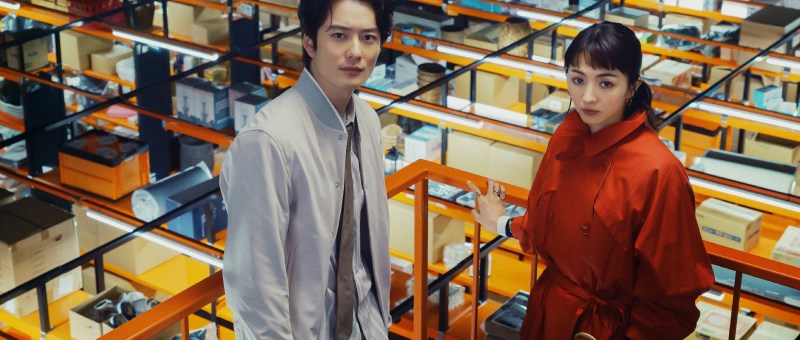
Living in Two Worlds (ぼくが生きてる、ふたつの世界, Mipo O, 2024)

Mipo O had been quietly building a reputation as one of Japan’s most promising young indie directors with such lauded films as The Light Shines Only There but has been on an extended hiatus since 2015’s Being Good. Living in Two Worlds (ぼくが生きてる、ふたつの世界, Boku ga Ikiteru, Futatsu no Sekai) marks her return to filmmaking after taking a break to raise a family and, adapted from from an autobiographical book by Daisuke Igarashi, not only explores the realities faced by the deaf community but the complicated relationship between a son and his mother.

Indeed, at times the issue is less that both of Daisuke’s (Ryo Yoshizawa) parents are deaf as it is that he does not listen. When he becomes a teenager, his mother Akiko (Akiko Oshidari) spends a huge amount of money on a high tech hearing aid because she wants to hear his voice, though most of what he says to her is hurtful and unpleasant. His older self is probably regretful, ashamed of the way he treated his mother in particular but also in regards to his rejection of his family because he felt embarrassed by their difference in what is a fiercely conformist culture. He doesn’t give his mother a letter about parents’ day because he doesn’t want her to come and also thinks it would be pointless because she wouldn’t be able to hear anything anyway. Later he tries to get his grandmother to come with him to a parent teacher meeting about his plans for high school and beyond, telling his mother she’d only be in the way. In fact, the meeting is quite awkward because the teacher talks directly to him without trying to include Akiko while Daisuke makes infrequent signs under the table as if embarrassed to have the teacher see them.

As a young child, Daisuke had interpreted for his mother using sign language publicly despite the awkward attitude towards it at home. His grandmother writes things down on paper instead, telling him that it’s too difficult for her to learn. That doesn’t make sense to his young brain as after all he’s picked it up since birth. But this early tension perhaps contributes to his increasingly conflicted feelings. When he brings a friend home, he asks him why his mother speaks in such a funny way but of course it’s normal to Daisuke and this perhaps innocent question begins to cement for him that his family isn’t “normal” and he isn’t like the other children. Resentment towards his mother only grows to the point he begins to blame all of his problems on her including his failure to get into the better high school though she has done nothing but support and encourage him. As she points out, she never had any choice about her schooling and received little education because her parents thought she’d recover her hearing and refused to send her to a specialist school until she was 14 meaning she was just sat there all day twiddling her thumbs while unable to make friends with hearing children who mostly ignored her.

The parents were also against the idea of her marrying her husband Yosuke (Akito Imai) because he was also deaf, nor did they support their decision to have a child believing two deaf parents would not be able to raise one safely or effectively. Such attitudes lay bare the lingering stigma towards disability which remains even within the family unit. Unable to separate himself from being the child of working class deaf parents, the teenage Daisuke abruptly moves to Tokyo with a vague idea of becoming an actor signalling his internal search for an independent identity. The film hints that his liminal status existing between the worlds of the hearing and the deaf has left him with subpar communication skills as seen in his repeated faux pas at job interviews until he finally tells the truth and is offered a job on the spot. There’s an intimacy involved in his interactions with his parents which often can’t be understood by others, but also a less pleasant undercurrent in the way these interplay with speech and his own decisions of when to switch between dialogue and sign. 

Having gone to Tokyo to escape being the child of deaf parents, he discovers that being “ordinary” doesn’t really suit him either and only begins to accept his identity after meeting a deaf woman at a pachinko parlour who invites him to her class for learning sign language in a more a formal way while another of her pupils gently explains to him that though he means well he sometimes does them a disservice by taking over as a hearing person when he should let them do the things they can do for themselves. The absence of musical score and variation in the sound mix emphasise Daisuke’s transition between worlds and his own attempts to locate himself within them eventually discovering the equilibrium that allows him to realise he was the one who couldn’t hear along though his mother had always been talking to him. Touching but resisting sentimentality, O’s poignant drama never shies away from the failings of its protagonist but equally from those of the society within which he lives that can itself be unwelcoming of difference.


Living in Two Worlds screened as part of this year’s BFI London Film Festival

International trailer (English subtitles)

Stranger Eyes (默視錄, Yeo Siew Hua, 2024)

In some ways consciously and others not, we behave differently if we have an expectation of being observed than if we are confident we are alone. But the line between actions we think of as private and others public is often thinner than we assume and sometimes broken in moments of heightened emotion. A man sits and cries on a park bench, but he does so because he does not think anyone’s looking and feels himself alone though actually someone is watching. They often are, silently and at a distance that can itself be painful.

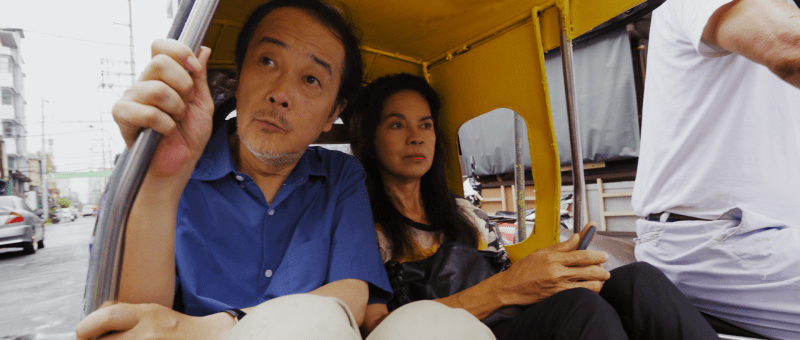
But then Yeo Siew Hua’s elliptical drama eventually suggests we are watched most by no stranger eyes than our own. Its “stalker”, Wu (Lee Kang-sheng), remarks that sometimes he feels as if he only watches himself an idea reinforced by the film’s continual doubling that suggests that we are in some ways caught between a series of overlapping timezones or entering a space of interactive memory. With echoes of Rear Window, the police accompany Shuping (Vera Chen), grandmother of a missing child, as she runs a pair of binoculars over the windows of her apartment block as seen from the balcony opposite while putting herself in the shoes of her observer. She stops on a young girl staring sadly from her window before beginning a strange dance that makes us wonder if Shuping is actually observing her younger self or if her own interiority simply colours what she is seeing. 

Shuping, along with her son Juyang (Wu Chien-ho) and his wife Peiying (Anicca Panna), is scanning the horizon for traces of their missing child, Little Bo, while closely examining old videos looking for signs of anything untoward. The ubiquitous presence of these cameras reminds us that we are often being observed if accidentally and the use of these images could put us at risk. Shuping wants to put a video of the family at the park online but Peiying objects, insisting Bo should have the right to decide when she’s older though the implication is that someone could have seen Bo there and been minded to take her. In any case, the irony is there’s nothing useful either in the videos or, the family initially thinks, in the vast networks of CCTV cameras that exchange our privacy for supposed safety. 

Wu relies firstly on his naked eyes, but then starts sending the family DVDs of videos he’s taken of them for unclear reasons but confronting Juyang and Peiying with the cracks in the foundations of their marriage along with the implication they are unfit parents. Juyang at one point simply walks off and leaves Bo sitting in a supermarket trolley while she cries her head off as if he were half hoping to be free of her. He in turn stalks another woman with a baby in a pushchair who turns to the side for a moment to help a man whose baby is crying, taking her eyes off her daughter long enough for Juyang to pick her up without her noticing. He could have easily have walked off with her, though you could hardly criticise this woman for simply having a chat with her daughter sitting just off to the side technically but perhaps not emotionally out of sight. Peiying meanwhile frets that Bo has been taken from her by some cosmic force because she didn’t love her enough and had considered an abortion before she was born again hinting at the fragility of the relationship between the parents who rarely occupy the same space and seem to live very parallel lives. 

Ironically Peiying feels as if it is only Wu who has truly seen her for everything she is rather than solely as a mother or the persona she adopts as a live-streaming DJ. She says she feels as if Juyang only sees her as air, as if he looks right through her while he looks at other women and seems to feel trapped by domesticity or perhaps by Shuping whose obsessive love for Bo and occasionally overbearing grandmothering seems to annoy both parents in overstepping their boundaries. We observe them just as Wu does, making our judgements in our silence though in this case confident they do not see us and that we are not ourselves currently being observed. But this confidence may also be painful to an observer such as Wu who wants to penetrate the screen while also interacting with his own sense of regret and is unable to make himself visible or express what he feels outside outside of the ghostly act of observation. The watchful soul observes itself as reflected in others who exist only in a world lost to them.


Stranger Eyes screened as part of this year’s BFI London Film Festival

Original trailer (English subtitles)

Crocodile Tears (Air Mata Buaya, Tumpal Tampubolon, 2024)

What happens when the baby wants to break out of the egg? The hero of Tumpal Tampubolon’s Crocodile Tears (Air Mata Buaya) isn’t a baby, he’s a 20-year-old man, but the crocodile zoo where he lives with his mother is also a kind of extended womb in which she keeps him constrained. The film’s title is apparently inspired by the fact that crocodiles protect their young by holding them in their jaws, the same jaws they use to snap at the live chickens Johan (Yusuf Mahardika) and his mother (Marissa Anita) throw over the fences. 

Mama is evidently aware her little boy’s growing up. In the first shot of the film he’s furtively masturbating until he’s interrupted by her screaming for him outside. She scrubs his pants and seems to notice that they’re soiled, taking care to remind him that he should keep himself clean now he’s a grown man, but Johan doesn’t seem to understand telling her that he showers every day. Perhaps he’s smarting a little at her comments having overheard two women complaining about a bad smell while sitting next to him at a restaurant and wondering if he carries the stench of the crocodile park even when in the outside world. Later he takes to wearing some of the perfume he picked up for his mother’s birthday and had also given to his girlfriend Arumi (Zulfa Maharani).

Arumi is a direct threat to Mama who knows that another woman will inevitably replace her. She and Johan still sleep in the same bed. The irony is that her loneliness becomes that of Johan who is terrified of ending up all alone in the crocodile park prevented from having anything like a normal life by his mother’s possessive neediness. He loses his virginity to Arumi, a more worldly woman working in the local karaoke box and on the fringes of the sex trade, and she becomes pregnant though unsure whether or not Johan is the father. He realises he likely isn’t, but like his mother is so lonely that he doesn’t care only begging Arumi not to leave him because he can’t bear the idea of being on his own. 

But despite the obvious conflict and rivalry between them, the past is essentially repeating with each woman oppressed by Indonesia’s oppressively conservative and patriarchal social norms. Mama had Johan at 19 and seemingly unmarried. Though she resented the baby in her womb, when he was born she gave all of herself to him and he became her entire world. There are rumours that Mama may have murdered her husband and fed him to the crocodiles though Johan says he never knew his father. He was told both that he had died before he was born and that his father is the zoo’s white crocodile whom his mother refers to as “Papa” and claims to have a special connection to “mentally”. Now Arumi looks her in the eye and says she will do for her child as she did for Johan, but she too has been railroaded into a marriage through lack of other options. Aside from the stigma attached to unwed motherhood, she is fired from the karaoke bar for shoving a customer who was harassing her with the boss apparently thinking it’s all part of her job and she should have known better than to upset a paying client. 

The two women become almost like crocodiles in a cage snapping in defence of their territory as if knowing only one of them can stay. Plagued by strange visions, as is Arumi later, it seems the choice is really Johan’s of whether to bust out of his shell and symbolically break free of his mother’s womb or abandon the idea of starting his own family with Arumi to stay in there forever. Tumpal Tampubolon cracks up the sense of dread and eeriness  beginning merely with discomfort in this quasi-incestuous relationship and heading into the realms of folk horror with its strange and surreal hallucinations that confront Johan with his Oedipal dilemma as he tries to crawl free only waiting to see if Mama’s jaw will finally snap.


Crocodile Tears screened as part of this year’s BFI London Film Festival

Original trailer (English subtitles)

Black Box Diaries (Shiori Ito, 2024)

Shiori Ito, then using just her first name, made headline news when she decided to go public naming a prominent political journalist with strong ties to then Prime Minister Shinzo Abe as the man who had drugged and raped her following what she believed was an appointment to discuss a potential job working overseas. Using recordings made at the time along with footage filmed more recently, Black Box Diaries is a kind of companion piece to her book Black Box which details her quest for justice in the face of a misogynistic justice system and conservative society.

The reason she’d only used her first name at her original press conference was to protect her family because there is significant social stigma attached not only to being a survivor of sexual assault but for daring to speak out and disrupt the illusion of social harmony. In fact, during the opening sequence which takes place in a long dark tunnel we hear a recorded phone call with Shiori’s sister who pleads with her not to show her face. The families of those who appear in the news often become targets for the media and can end up being ostracised by their communities or losing their jobs and livelihoods. Shiori herself also tearfully remarks on the guilt and uncertainty she feels because she knows that her decision, which she feels necessary, will have a negative impact on her friends and family while she herself continues to receive hate mail from those who call her an opportunist or ask why talks down her country while continuing to live there.

There is an essential irony in the fact that it’s Shiori who ends up in a symbolic prison, having to leave her apartment and stay with a friend unable to venture outside or work for fear of being hounded by the press. Her decision to go public was motivated by the failure to gain justice via the judicial system firstly because the police do not take her attempt to report her assault seriously. At that time (though they’ve since been updated), Japan’s rape laws hadn’t changed since the Meiji era and were rooted not in ideas of consent but only in whether or not physical violence had taken place and the victim had resisted physically. The secondary charge of “quasi-rape” was used in cases such as these when the victim was unable to do so because they had been drugged or incapacitated in some other way. Thus even though Shiori has evidence such as CCTV footage that shows her being physically carried out of the taxi into the hotel and barely able to walk, it does not help her case and nor does DNA on her bra because it only proves that her assailant touched it and nothing else. An investigator describes what happened to her as taking place within a “black box” that no one can ever really see inside.

But for all that, the film touches on the way that other people latch on to her case and try to use it for their own ends such as an offer from Yuriko Koike, the ultraconservative mayor of Tokyo, to join her new political party which she had started to challenge the ruling LDP of which she was once a member in fact serving as a cabinet minister under Shinzo Abe during his first stint as Prime Minister in 2007. The editor of her book also tells her that the reason everything’s moving so quickly is because of the upcoming election and people should have this kind of information before they vote. The Abe administration was plagued by scandal and accusations of cronyism which the suggestions that he personally intervened because Yamaguchi was a friend of his (and coincidentally also had a book coming out which was a biography of Abe) only furthered this narrative. Shiori counters that she wasn’t really interested in politics (of this kind, at least) and was just trying to tell her story in the interests of justice, but is noticeably dejected on watching Abe once again win in a landslide.

His victory seems to stand in for a triumph of patriarchy as Shiori is repeatedly silenced or ignored. The editor also tells her Yamaguchi could stop her book being published because publishing isn’t given the same freedom as the press theoretically has but does not use. Meanwhile, the implication is that the head of the Tokyo Police stopped Yamaguchi’s arrest in order to bolster his own political capital and was in fact rewarded for it later. Shiori seems to develop a friendly relationship with a conflicted policeman who was sympathetic to her case, but even he drunkenly makes a pass at her during an ill-advised phone call that comes off as sexual harassment and is even more inappropriate given the circumstances. The doorman at the hotel meanwhile makes an awkward attempt to centre himself as the hero when agreeing to testify publicly even if it puts his job at risk that she should be grateful it was him who was on duty because he’d always thought the laws surrounding sexual assault were too lenient though he actually did very little to try to help on the night in question even if he did attempt to call the police but was shut down by the hotel.

Nevertheless, his agreement and support bring Shiori to tears while begins to feel isolated and under incredible pressure from those who regard her as someone who can bring real change. Despite an early monologue warning that if she died and they said she took her own life she’d been bumped off, we later see her heading into a very dark place describing the difficulty of living life in her new persona as “that girl who was raped” even if she also receives support from other women oppressed by Japan’s fiercely patriarchal culture. Of course, others call her a traitor to her gender and say they feel sorry for the men she’s accusing. But still she continues undaunted, eventually emerging from the long dark tunnel at the film’s conclusion and continuing to project the sense of support for other women echoed in the opening title cards addressed to those watching who have likely themselves experienced similar trauma.


Black Box Diaries screened as part of this year’s BFI London Film Festival and will be released in UK cinemas 25th October courtesy of Dogwoof.

UK trailer (English subtitles)

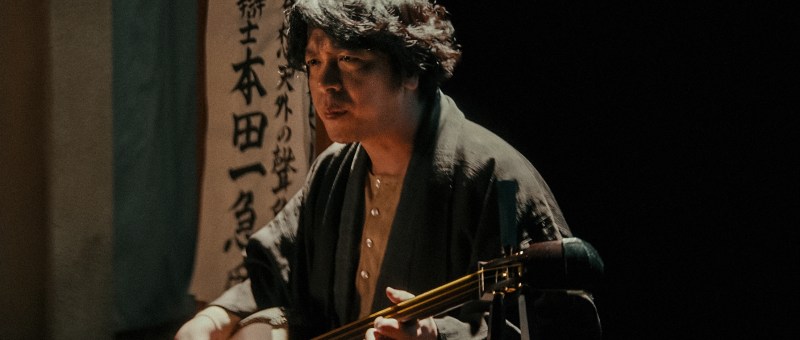
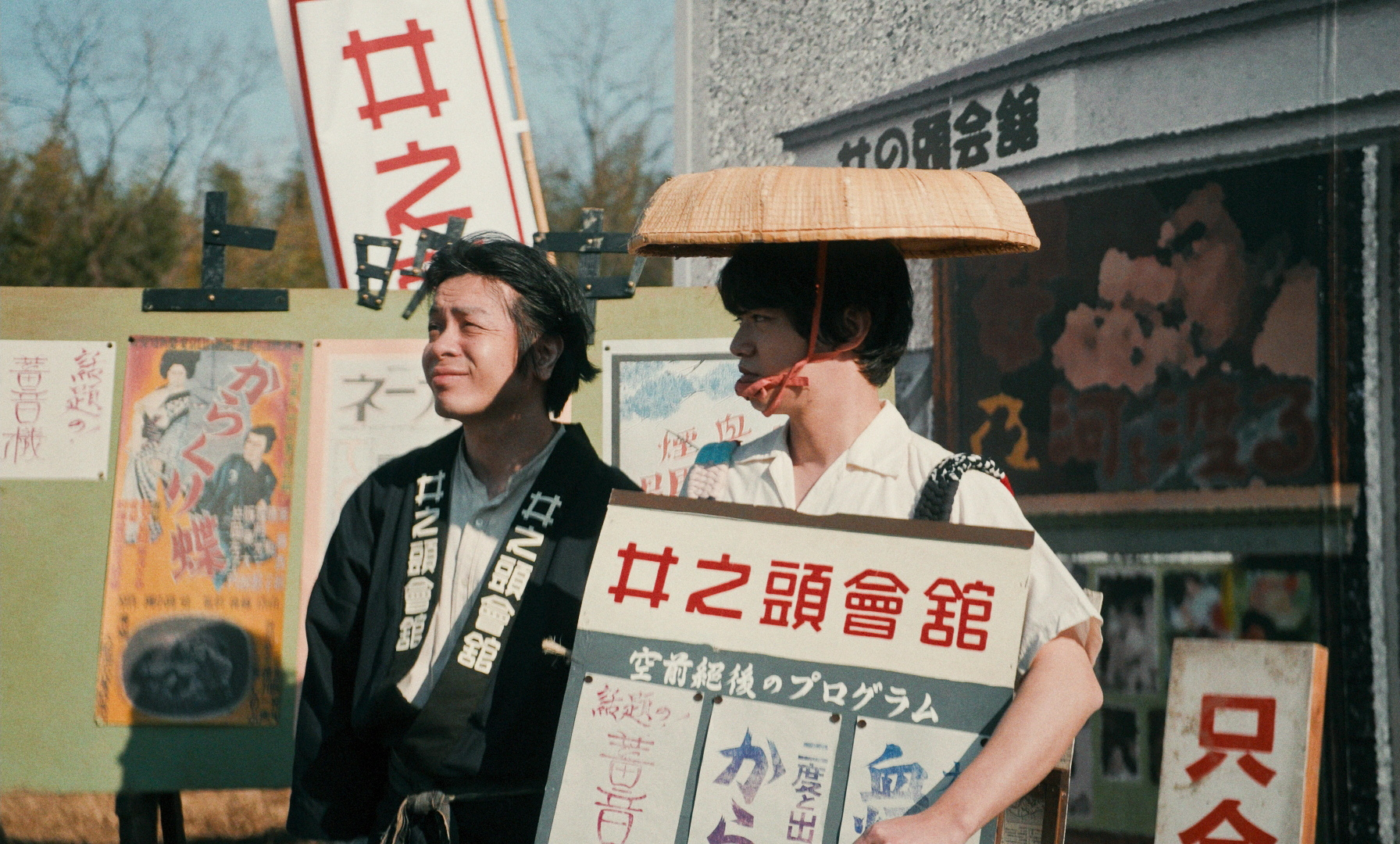
Hoodlum Soldier (兵隊やくざ, Yasuzo Masumura, 1965)

The opening voiceover of Yasuzo Masumura’s Hoodlum Soldier (兵隊やくざ, Heitai Yakuza) explains to us that the settlement we’re looking at is effectively a huge prison in the desert inhabited only the Japanese military from which there is no escape. To ram the point home, the camera lingers on the decomposed skeleton of Japanese infantrymen half-buried in the mud only a short distance from the fort’s borders. This is the fate of the soldier, it seems to tell us with nihilistic futility as if in effect all of these men are already dead while imprisoned inside the death cult that is militarism. 

Yet, our heroes will eventually escape. At least that’s how it seems at the end of the film though there are a further eight instalments in this series. A mismatched pair who develop something akin to a sadomasochistic relationship, they each resist this system in opposing ways. “College boy” Arita (Takahiro Tamura) is just waiting out the end of his contract, continually refusing promotions so that he will be discharged at the end of his three-year term and allowed to return to Tokyo a free man. Omiya (Shintaro Katsu), by contrast, is a man who has no real concept of hierarchy or authority. As he later says, he doesn’t do anything he doesn’t want to do and it’s not so much that he resists authority but is simply indifferent to it.

As Arita explains, the the army is a hierarchy that’s founded on violence. The mildest infraction is dealt with through a process of slapping in which those of higher status assert their authority by inflicting violence on those below. We’re told that laws have recently been put in place to regulate the violence implemented as disciple with excessive force now apparently frowned upon leaving this culture of slapping as the only accepted form of judging an action right or wrong though it’s also clear that these rules are not always respected even by those who made them. The very system is then itself corrupt and unfair, which Arita knows and therefore contrives to live outside of it in so much as he does not participate in this chain of violence.

Neither does Omiya but in an opposing way. On joining the unit, he simply does not react to being slapped by his superior officer and in that way makes it clear that he cannot be controlled by violence. He does not fight back, but only uses to violence to oppose what he sees as injustice and it’s this refusal to just accept the unfairness of army life that makes him a thorn in the side to army command. They assign a reluctant Arita as his mentor, much to his chagrin because he fears that Omiya will get him into trouble and damage his chances of making it to his discharge without incident. But the funny thing is that Omiya does submit himself to Arita’s authority precisely because he does not brutalise him and never uses violence as a means of control. Omiya respects Arita, and therefore listens to him when he explains why a particular course of action is disadvantageous to himself and will only result in further violence. 

To Arita, Omiya at times seems like a bullheaded brawler who thinks a fight is over when someone is knocked out or surrenders and is unable to see the potential for reprisals, but he’s smarter than he gives him credit for and the bond between them is quite genuine even at times homoerotic as they each declare they don’t want to be parted from each other seemingly the only two sane men marooned amid the folly of war in Manchuria. Omiya respects Arita because he does not use violence against him, but in other senses perhaps craves it and is willing to inflict violence on himself in order to save Arita from being forced to do so by the system under which they live which would obviously cause him mental anguish. The power dynamics between them shift as the fortunes of the war decline with Arita eventually declaring that Omiya is now his superior and may issue him orders which he will then obey.

The statement may however be ironic in that they are in the process of escaping the hierarchal society by hijacking its most potent symbol, a train. Omiya declares themselves free of it in pointing out that China stretches to the borders of Russia and Europe as if the whole world were now open to them that they are no longer bound by the walls of the literal prison that is the army camp and the symbolic ones of the militarist society ruled by violence. As Arita had pointed out, the camp ran itself like a prison and was akin to a yakuza society with the different factions often at war with each other. Goverened by macho posturing, every transgression must be solved through violence to approve each man’s status with Omiya’s perpetually high in part because he doesn’t really care very much for the hierarchy only for what he sees as righteousness. 

The two men bond with a Japanese sex worker who they realise is just as trapped as they are by the force that underpins militarism, violent patriarchy. She also feels her situation to be futile, that even if she should return to Japan there will no future for her because of her past in sex work while she currently has no more control than they do and is simply pulled around by her employers to wherever the army goes now that the frontlines are in constant flux and the retreat south has begun. Arita and Omiya free themselves by decoupling from the train leaving the sleeping soldiers yet to awake from the cruel spell of militarism inside while they seek freer futures. Our heroes are men who in effect simply choose to remove themselves from an absurd and destructive social order which speaks just as well to the contemporary society of docile salarymen living in a different kind of prison but perhaps no more free than previous generations while tied to a feudalistic, patriarchal social hierarchy. 


Hoodlum Soldier screened as part of this year’s Camera Japan.

Original trailer (no subtitles)

BFI London Film Festival Confirms Complete Programme for 2024

The BFI London Film Festival returns to cinemas across the city 9th to 20th October. East Asian highlights this year include the latest from Jia Zhangke, Hong Sang-soo, and Tsai Ming-Liang along with the long-awaited return of Mipo O eight years on from Being Good, and Hong Kong LGBTQ+ drama All Shall Be Well.

China

  • Caught by the Tides – Jia Zhangke looks back at the last few decades of Chinese history through the prism of his own work.
  • Youth (Homecoming) – the final instalment in Wang Bing’s documentary series focusing on textile factories in Zhili.

Hong Kong

  • All Shall Be Well – an older woman finds herself in a precarious position when her partner dies suddenly without a will in Ray Yeung’s poignant drama. Review.
  • The Way We Talk – drama from Adam Wong Sau-Ping focussing on three young deaf people navigating contemporary Hong Kong society.

Indonesia

  • Crocodile Tears – intense drama in which the close bond between mother and son operators of a crocodile zoo is disrupted when the son meets a girl.

Japan

  • Black Box Diaries – documentary focussing on Shiori Ito’s quest for justice after being sexually assaulted by a powerful political journalist.
  • The Cats of Gokogu Shrine – latest documentary from Kazuhiro Soda focusing on a shrine in Ushimado that is home to a large number of cats.
  • The Colours Within – latest from Naoko Yamada in which a high school student sees others as colours.
  • Happyend – teenage rebels pursue a passion for electronic music in a near future society.
  • Living in Two Worlds – drama from Mipo O following a child of deaf parents.
  • Manji – new restoration of Yasuzo Masumura’s adaptation of the Tanizaki novel Quicksand.

Singapore

  • Small Hours of the Night – experimental drama drawing on the historic case of a “subversive” tombstone.
  • Stranger Eyes – a couple begin receiving strange videos of themselves after their child is kidnapped in the latest from Yeo Siew Hua (A Land Imagined)

South Korea

  • A Traveler’s Needs – latest from Hong Sang-soo starring Isabelle Huppert as an eccentric French teacher.

Taiwan

  • Abiding Nowhere – 10th instalment in the Walker series in which Lee Kang-sheng relives Xuanzang’s pilgrimage.

Vietnam

  • Don’t Cry, Butterfly – drama in which a woman resorts to witchcraft on learning her husband is having an affair.
  • Viet and Nam – etherial queer romance focussing on two young miners.

The BFI London Film Festival takes place at various venues across the city from 9th to 20th October 2024. Full details for all the films as well as screening times and ticketing information are available via the official website. You can also keep up to date with all the latest news via the festival’s Facebook page, X (formerly Twitter) account,  Instagram, and YouTube channels.

Gifts from the Kitchen (キッチンから花束を, Hisashi Kikuchi, 2024)

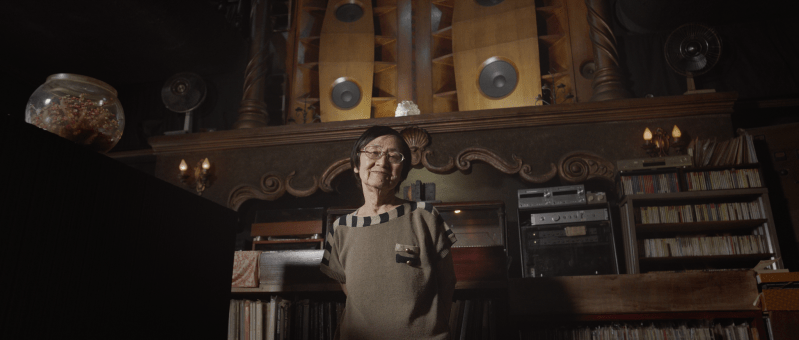
One of the few places offering Chinese-style home cooking, Fumin had become a home from for many during the 50 years its founder worked her kitchen herself. Fumi Sai has now retired, though welcoming one set of guests a day to her home, but there are many who continue to visit the restaurant under the management of her nephew Kazuyoshi and reminisce over their long years of enjoying not just the cooking but a familial relationship with Fumi herself. 

Collaboration with the clientele is cited by many as a reason Fumi’s restaurant became so popular. After a few years of working as a hairdresser, she decided to open a cafe after a friend remarked it was a shame more people didn’t have the opportunity to taste her cooking. Her first location was a tiny bar-style place with a handful of seats at the counter which of course meant that she was able to build up close relationships through talking directly to her customers. Others describe her cooking style as spontaneous, that she would come up with new dishes just by adding something or other to see how it would taste but she also took hints from customers as well sometimes adding their successful requests to the main menu and allowing them to feel as if they were fully involved in the restaurant. It’s this sense of connection brokered by an exchange of tastes that seems to be integral to the degree of warm feeling many have for the place and for Fumi herself.

Director Kikuchi frequently switches between testimonials from regular customers some going back decades and many remarking on the incongruous sight of Fumi herself, a small woman battling a giant wok in the centre of the kitchen. All these years later and despite the expanded capacity there are always queues to get in while customers claim that there are dishes they might not otherwise care for or actively dislike but that Fumi alone can make appetising. She attributes her skill to her upbringing in a Taiwanese family where her sisters joke their father had a gambling problem and didn’t work but did do most of the family cooking. She picks up new ideas on trips to the island nation and on one occasion visits a Taiwanese woman to experience more home cooking who also points out that cooking is imbued with emotion. Fumi’s own enthusiasm and love of the craft finds its way in, delivering care and attention to her customers who just as often may be looking for somewhere to belong as much as a good meal.

The film otherwise does not pry too much into Fumi’s personal life, never stepping too far outside the restaurant save for exploring her relationship with nephew Kazuyoshi and three younger sisters as well as her soon to be 100-year-old mother who was responsible for the restaurant’s constant supply of Taiwanese sausages. Food is a family affair, the now elderly women recalling the dishes they remember from their childhood and putting on a large spread for New Year. Yet the restaurant is also a kind of home for Fumi, one she admits she was reluctant to leave. She’d never considered a successor, but later came round to the idea of entrusting it to her nephew and head chef. 

As other guests remark, food a means of building body and soul. The nourishing wholesomeness of Fumi’s cooking seems to have a positive effect on those who visit the restaurant which was often home to various celebrities from the illustrators and designers of the surrounding area to the top stars of the day such as Tora-san himself, not to mention sustaining her mother to the ripe old age of almost a century. Guests describe her as a radiant character, like someone in an animation, an improbably small woman filled with a warmth that draws others to her offering comfort and connection through food but also an artist whose medium was cooking creating a series of unique dishes that couldn’t be found anywhere else yet quickly offering to teach anyone who wanted to know how to make them. A tribute to a bygone era, Kikuchi captures a sense of nostalgia for simple pleasures but equally of pleasure in the moment for as Fumi says to eat is to live.


Gifts from the Kitchen screened as part of this year’s Camera Japan.

Original trailer (no subtitles)

Till the Day I Can Laugh about My Blues (ブルーを笑えるその日まで, Karin Takeda, 2023)

A lonely, isolated young woman finds refuge in a new friendship only to worry it won’t survive summer’s end in Karin Takeda’s gentle adolescent drama, Till the Day I can Laugh About My Blues (ブルーを笑えるその日まで, Blue Wo Waraeru Sono Hi Made). Opening with a title card reading “to you and me back in the days,” the film has an autobiographical sensibility and boundless empathy for the kids who feel they don’t fit in, that no one notices them, and their lives will never we worth living.

You can tell that Ayako (Miyu Watanabe) is depressed by her opening dialogue, “I don’t like this weather,” said to perfectly blue skies. She says everything in her life is blue, and is so shy that she literally can’t speak. Her class are reading Night on the Galactic Railroad, and though she spends the entire time reading the line that she’s figured out is hers is put off when another student heckles her because of her quiet voice and just stands there gripping the paper while her teacher prompts her with the previous line. He then just moves on to the next student, but more out exasperation than empathy, doing nothing much else to help her. 

It’s not clear if Ayako was always this way or if something led to her becoming withdrawn but the other kids evidently regard her as weird while her former best friend Yuri (Rin Marumoto) has joined up with two popular girls who appear to be bullying her. Ayoko’s parents aren’t much help either, unfairly comparing her to her sister who wants to be a doctor all of which only makes Ayako feel even more useless and inadequate. It’s only when a mysterious old lady gifts her a kaleidoscope that Ayako’s outlook starts to improve and she befriends a another young girl she meets on the rooftop of the school who has a kaleidoscope too.

In discussing the passage of Night on the Galactic Railroad, which is about a friendship between two boys which ends abruptly in tragedy, a teacher asks what the milky way is made of before explaining that if you look at it through a microscope it’s full of tiny stars. Ayako too begins to see tiny stars while looking through the kaleidoscope, refracting her world and beginning to see the beauty of the light between the trees even if she’s cautioned that the patterns are pretty because you never see the same one twice. In any case, Ayako finds a kindred spirit in Aina (Sumi Kokona) but also suspects she may actually be the ghost of a girl who took her own life by jumping off the roof of the school, so their friendship can’t last past the start of the new term.

Like Giovanni in the story, Ayako has to figure out how to go on alone not just without Aina but in her complicated relationship with Yuri too who tells her she doesn’t like and hanging out with mean girls Natsumi and Nao but still joins in when they make fun of her. Some gentle words from a librarian who knows what’s she going through all too well remind her of the point of the story, that the boys still go on travelling together as Campanella still exists in Giovanni’s heart. But before all that she still ponders blowing it all to hell, saving the school goldfish but otherwise letting the place burn while wondering if she’ll ever be able to grow up. 

Shot with an etherial whimsicality, Takeda shoots Ayako’s world in shades of loneliness in which her literal inability to speak is almost a reaction to the fact no one listens. Pondering the fate of a goldfish that died because of another student’s neglect she laments that no one’s kind to you until die, a comment that later seems ironic but echoes her sense of alienation. She thinks her friendship with Aina is like a dream, but like she says not necessarily one they need to wake up from because whichever way you look at it their friendship is “real”, saving each of them and giving them strength to survive until the day they can laugh about their blues smiling at a memory rather than feeling sad and alone while looking for the tiny stars hidden in the fabric of the universe.


Till the Day I Can Laugh about My Blues screened as part of this year’s Camera Japan.

Original trailer (no subtitles)